



We build the software and AI systems that make sustainability strategy operational.

Many sustainability plans stall because nothing is in place to run them day to day. Nearly two decades of this work taught us to build that part too: custom software and AI that turn a sustainability plan into tools your team uses every day.

Where CF Labs Comes From

Council Fire has spent nearly two decades helping leaders turn hard challenges into lasting value. Council Fire Labs builds the software and AI systems that do the same work, in service of a more equitable, sustainable economy.

  1. 01

    Nearly two decades of strategy and implementation.

    We write strategies, lead the engagement that tests them, and work with the boards that fund them, for companies, governments, NGOs, and foundations. That experience shows us early where a plan is likely to slow down.

  2. 02

    Built around the real bottleneck.

    Every engagement starts with the step that is slowing a program down. Often it’s a spreadsheet nobody trusts or a reporting cycle that takes up a whole quarter. Fixing it usually frees up the rest of the strategy.

  3. 03

    Built to last, and to hand over.

    The technology behind this work keeps changing, AI most of all. We release each new capability on its own, then hand it to your team with the training and documentation to run it without us.

On screen: a page of a sustainability strategy reads “Many sustainability plans stall here,” with notes for an eleven-week reporting cycle, two of nine trusted sources, and nobody owning the number. “We build the software that puts them to work.” The page rebuilds itself into an app where those numbers resolve: reporting goes live, nine of nine sources connect, and the Resilience Office owns the number, while an AI draft waits for a person to approve it. Then three tools built by CF Labs: Aptation, the resilience planning platform, and Trovance, each in its own brand with a screen from the live product, and the Stakeholder Engagement Manager. Closing: “Bring the plan. We’ll build the system that runs it.” Scope your build at councilfire.org/labs.

The advisory work behind every build See the work

Chesapeake Watershed Restoration ProfessionalsWatershed restorationEnvironmental Defense Fund · Fisheries Solution CenterOceans & natural resourcesEnvironmental Defense Fund · International ProgramsOceans & natural resourcesLuke’s LobsterOceans & natural resourcesMaryland Clean Energy CenterRenewable energyChesapeake Watershed Restoration ProfessionalsWatershed restorationEnvironmental Defense Fund · Fisheries Solution CenterOceans & natural resourcesEnvironmental Defense Fund · International ProgramsOceans & natural resourcesLuke’s LobsterOceans & natural resourcesMaryland Clean Energy CenterRenewable energyChesapeake Watershed Restoration ProfessionalsWatershed restorationEnvironmental Defense Fund · Fisheries Solution CenterOceans & natural resourcesEnvironmental Defense Fund · International ProgramsOceans & natural resourcesLuke’s LobsterOceans & natural resourcesMaryland Clean Energy CenterRenewable energyChesapeake Watershed Restoration ProfessionalsWatershed restorationEnvironmental Defense Fund · Fisheries Solution CenterOceans & natural resourcesEnvironmental Defense Fund · International ProgramsOceans & natural resourcesLuke’s LobsterOceans & natural resourcesMaryland Clean Energy CenterRenewable energyChesapeake Watershed Restoration ProfessionalsWatershed restorationEnvironmental Defense Fund · Fisheries Solution CenterOceans & natural resourcesEnvironmental Defense Fund · International ProgramsOceans & natural resourcesLuke’s LobsterOceans & natural resourcesMaryland Clean Energy CenterRenewable energyChesapeake Watershed Restoration ProfessionalsWatershed restorationEnvironmental Defense Fund · Fisheries Solution CenterOceans & natural resourcesEnvironmental Defense Fund · International ProgramsOceans & natural resourcesLuke’s LobsterOceans & natural resourcesMaryland Clean Energy CenterRenewable energy

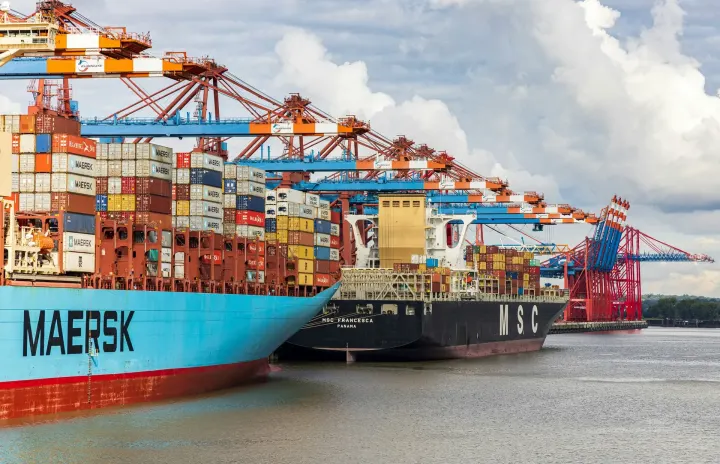
Ports, watersheds, city halls, and boardrooms are where our work happens, and where we’ve spent nearly two decades. The software we build has to work there too.

Examples from CF Labs

A few of the tools we’ve built.

Screens are from the live tools.

Live

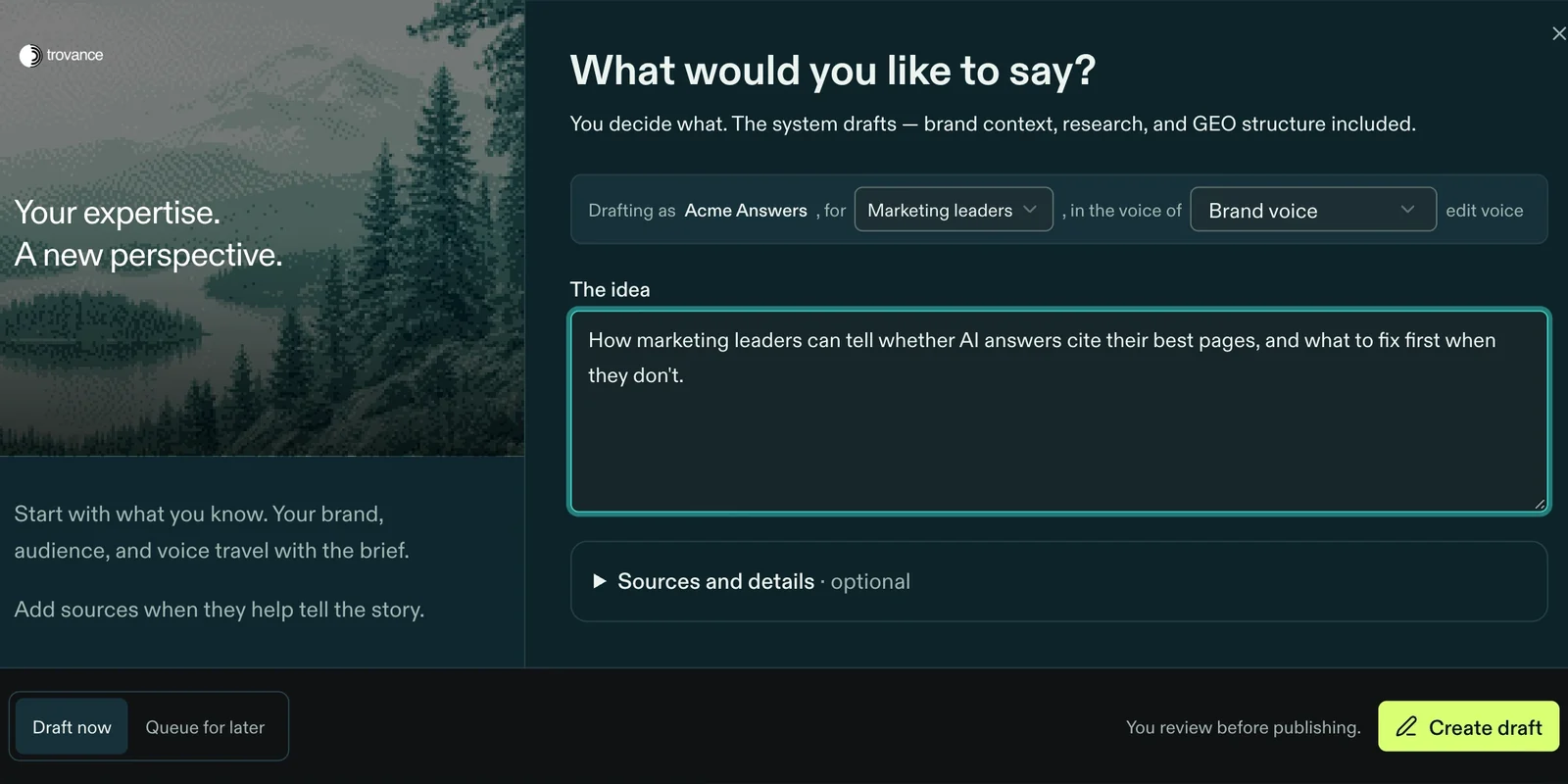
Our own product, built on the same stack we use for client work. Trovance exists because even the best strategy does little if AI can’t find the story in it. It tracks how AI assistants answer the questions buyers ask and turns each gap into a ranked list of work with the evidence behind it.

  • Monitors how ChatGPT, Perplexity, Gemini, and Claude answer the questions your buyers ask
  • Turns every gap into a ranked queue of actions, each with the evidence that earned its place
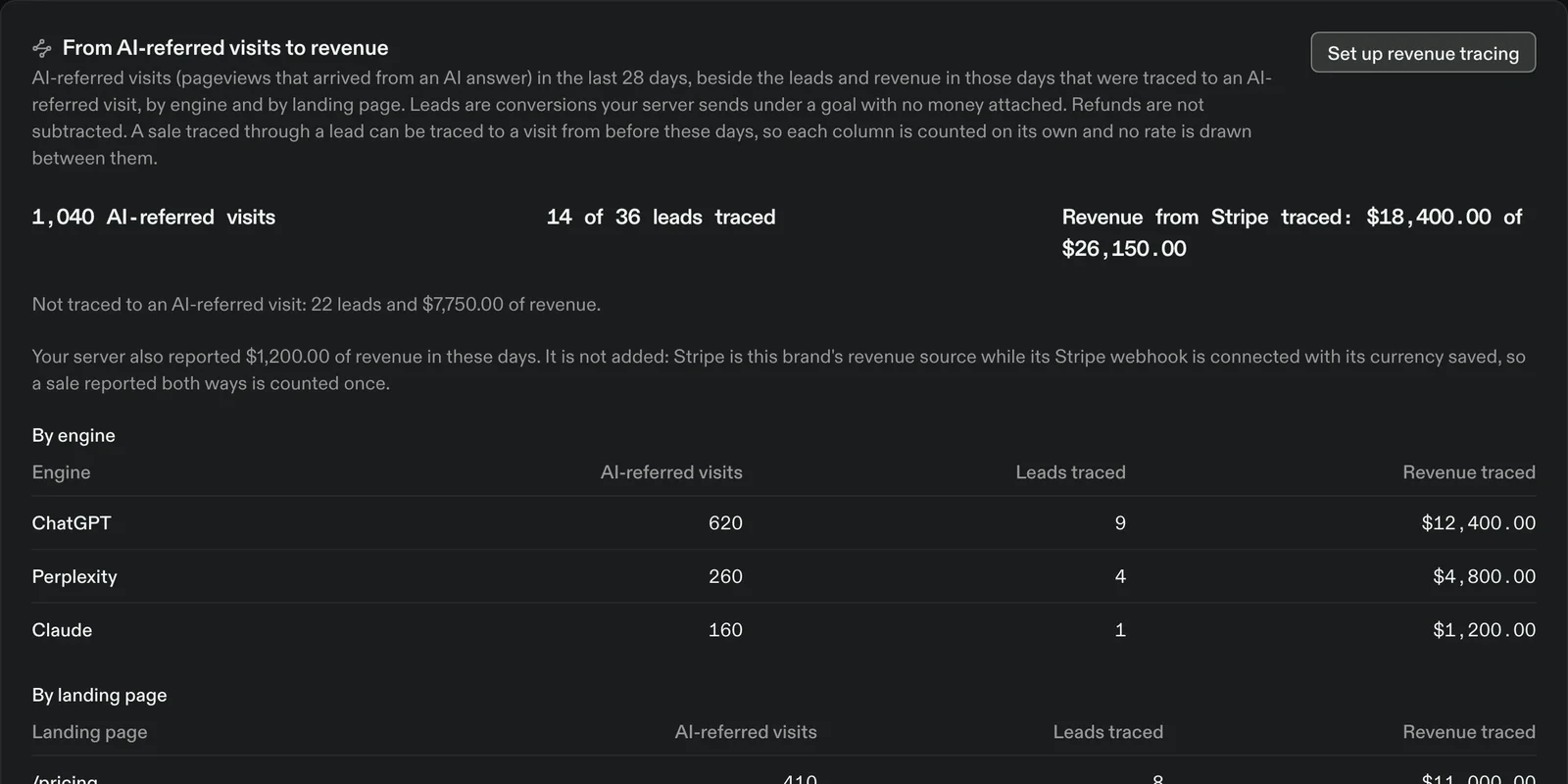
  • Attributes AI-referred visitors to revenue with a first-party, cookieless pixel
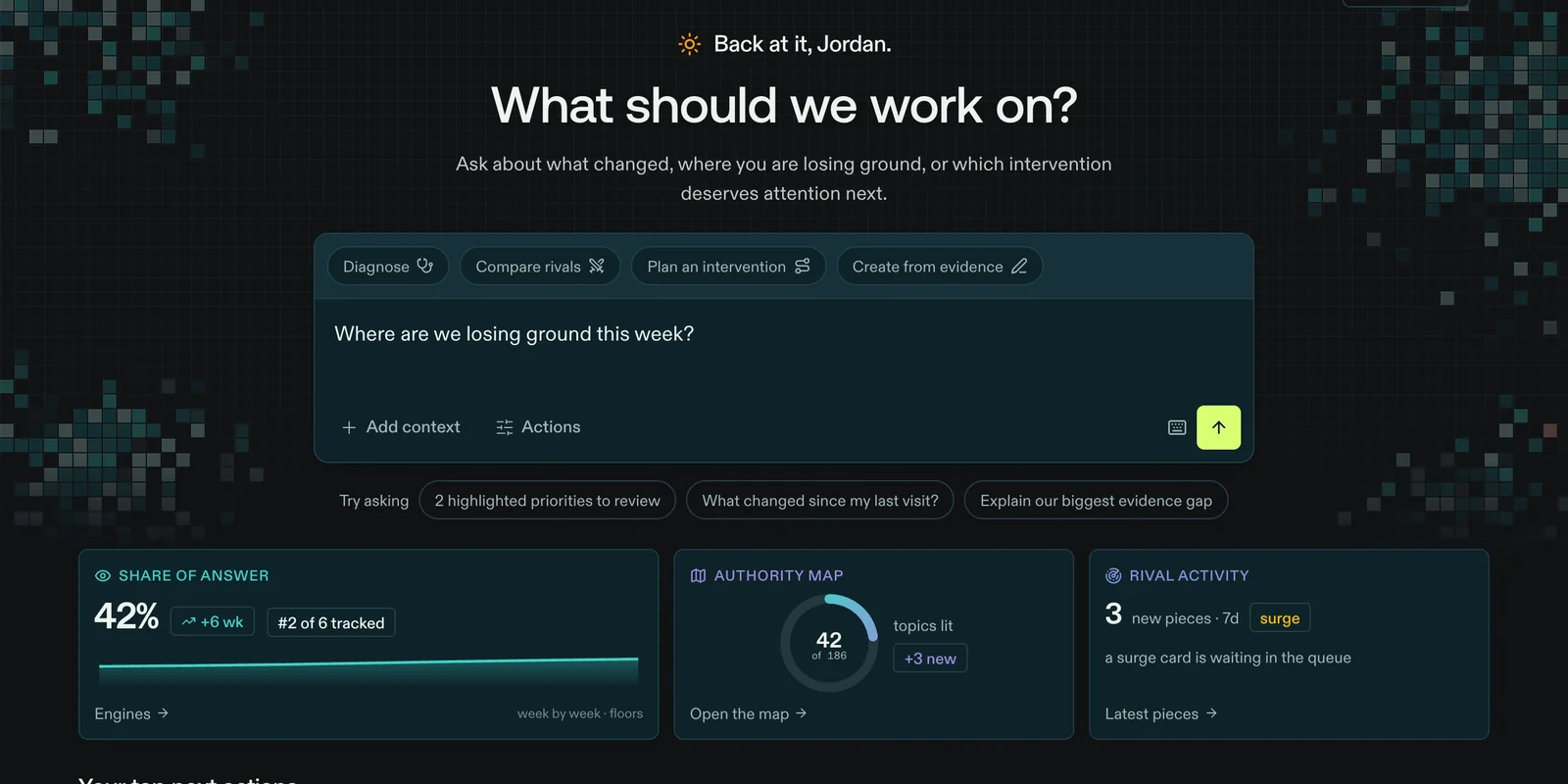
Trovance's home: what to work on this week, share of answer across AI assistants, the authority map and rival activity, on a sample workspaceTrovance's revenue tracing: AI-referred visits by engine and landing page, with the leads and revenue traced to them, on a sample workspaceDrafting in Trovance: the brief for a new piece in the brand's voice, reviewed by a person before it publishes, on a sample workspace
In service

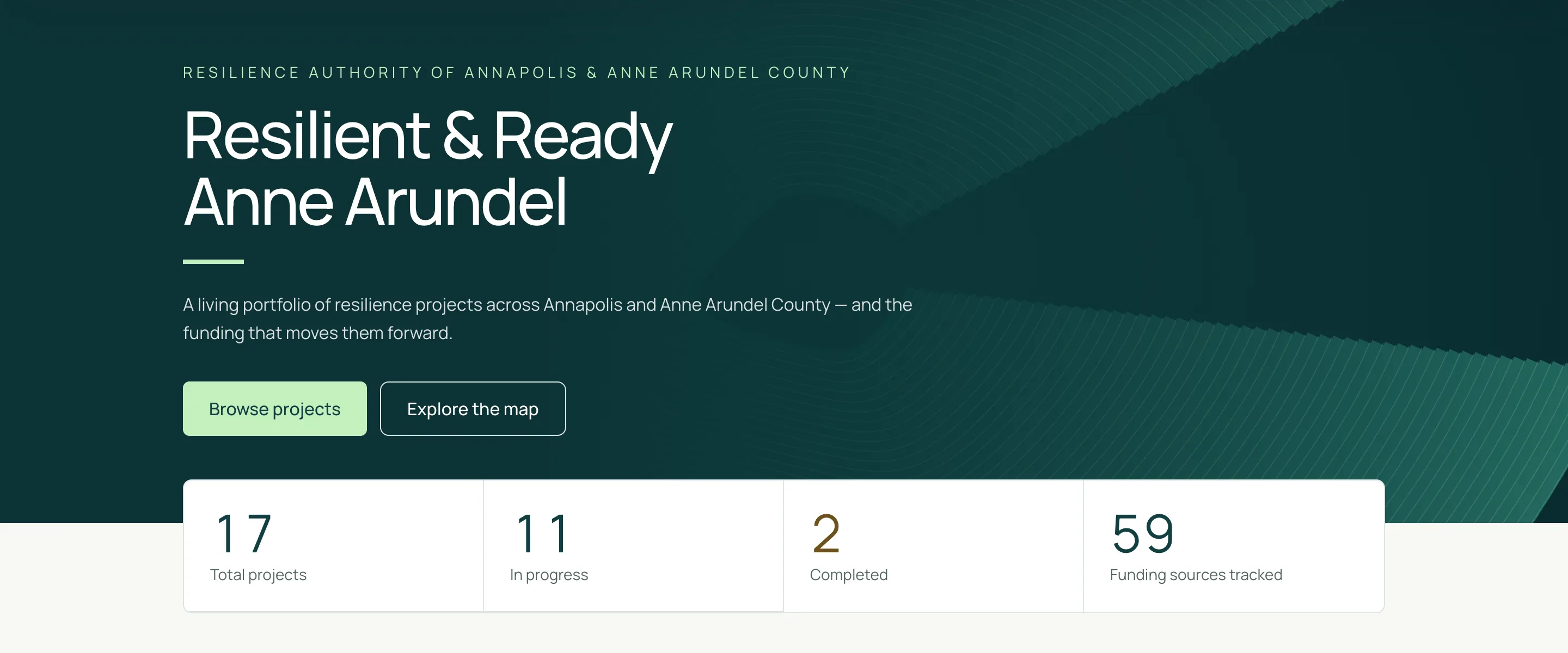
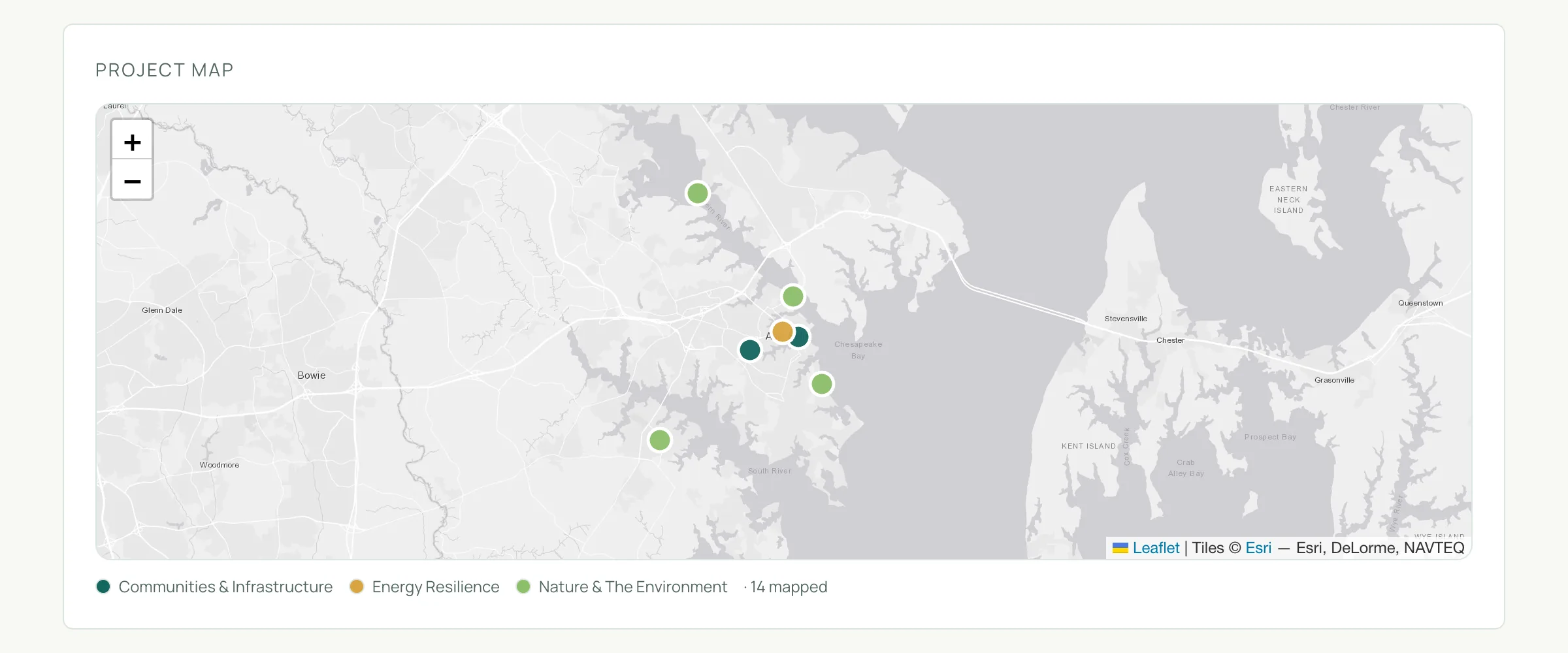
A platform for planning and delivering climate resilience projects. It brings together the climate, resilience, and funding data that usually sits in a dozen spreadsheets, ranks projects against the criteria that matter most, and matches them to the funding that fits. The Resilience Authority of Annapolis & Anne Arundel County runs its portfolio, Resilient & Ready Anne Arundel, on Aptation today.

  • Cross-references climate and resilience data against active funding sources
  • Prioritizes and ranks projects, making the case for what gets funded next
  • Shows impact clearly enough that a funder, a staff planner, and a board member can all follow it
  • Ready to adapt for other jurisdictions
Resilient & Ready Anne Arundel, the Resilience Authority’s public portfolio on Aptation: the overview, with counts of projects and funding sourcesAptation’s project map: the portfolio’s projects across Annapolis and Anne Arundel County, colored by categoryAptation’s portfolio list: projects with their priority, status, and location, filterable by category and status
In development

Stakeholder Engagement Manager

An AI system that reads an organization’s engagement material and scores it against the stakeholder methodology we’ve refined over nearly two decades, producing a ranked list of the gaps that matter most.

  • Ingests plans, meeting records, and outreach material as they are, with a review step before anything is imported
  • Scores coverage against the stakeholder methodology Council Fire has used in advisory work for nearly two decades
  • Produces a ranked gap analysis a team can act on

Screens will follow once the first client teams are using it.

Intake
Methodology score
Ranked gaps01 · Tribal and community consultation02 · Regulator touchpoints03 · Board reporting cadence

How an Engagement Runs

Four phases. Working software in your hands within weeks.

Hover or tap a phase.

01

Scope

We find the bottleneck and define the smallest system that removes it.

A few weeks with your team, mostly listening. You leave knowing exactly what to build next.

What We Build

Software, dashboards, and AI, shaped to how each program runs.

CF Labs builds what a program needs to succeed, whether that’s software, a dashboard, an AI system, or something new. Most of our work so far falls into four kinds.

  1. 01

    Custom software and platforms

    Client portals, internal systems, and portfolio applications shaped around how your program runs, from intake to board report.

    Custom sustainability software
  2. 02

    Dashboards and data infrastructure

    One trusted view of emissions, resilience, or engagement data, with the data pipelines that keep it current.

    Climate data dashboards
  3. 03

    AI and agentic systems

    Assistants and automations that read, score, and draft continuously, with a person deciding what ships. We run them in our own products first.

    AI for sustainability teams
  4. 04

    Tools that ship with the strategy

    Assessments, scorecards, and engagement tooling that turn a recommendation into something a client or a community can pick up and use the same week.

    The free tools we’ve built

Responsible by Design

Building with AI means making real choices: whose data it touches, who it might leave out, what it costs the planet to run.

Three questions guide every build. Who can use the tool? Whose needs and experiences shape its recommendations? Who benefits from the decisions it supports? Here’s how we answer them.

How We Use AI, and What We Owe the Planet

We build to the Montréal Declaration for Responsible AI.

Ten principles, drafted at Université de Montréal with citizens, researchers, and industry at the table. Here is what each one means when CF Labs ships software.

Read the Declaration
  1. 01

    Well-being

    A build has to leave the people who use it, and the communities the program serves, better off. If it only makes a report faster, it is not done.

  2. 02

    Respect for autonomy

    Our systems recommend, your team decides. Nothing nudges a user toward a choice they cannot see the reasoning for.

  3. 03

    Protection of privacy

    Client data is scoped to the people who need it, never used to train models without consent, and deleted on request.

  4. 04

    Solidarity

    We build for everyone touched by the plan, from the signer to the last supplier in the chain.

  5. 05

    Democratic participation

    Engagement tooling is built to bring more voices into the room.

  6. 06

    Equity

    Scoring and prioritization are checked for who they favor before they ship. A model that quietly ranks the wealthiest neighborhoods first is a defect.

  7. 07

    Diversity and inclusion

    Language, access, and local context shape the design from day one.

  8. 08

    Prudence

    We scope the smallest system that solves the bottleneck, test it on real data before it runs unattended, and keep a way to switch it off.

  9. 09

    Responsibility

    A person on your team accepts or rejects every recommendation, and the record shows who did. Automation never absorbs accountability.

  10. 10

    Sustainable development

    Compute has a footprint, and we track it the same way we track cost. It’s the discipline Council Fire asks of a client’s supply chain and has held itself to as a certified B Corp since 2010 and a 1% for the Planet member.

#AroundTheFire

AI and sustainability, in our own words.

All posts
AI search visibility: why climate companies get left outAI assistants now shape B2B shortlists. Why climate and sustainability companies get left out of AI answers, and how to measure and fix it.How to prioritize climate resilience projects that get doneHow to prioritize climate resilience projects so the ranking reaches the budget: shared criteria, open weights, funding fit and honest progress reports.How to track AI referral traffic from ChatGPT & PerplexityHow to track AI referral traffic from ChatGPT, Perplexity, Gemini and Claude in GA4 and Search Console, what goes missing, and how to tie it to revenue.What is a resilience authority, and when do you need one?What a resilience authority is, what Maryland's law lets one do, how the first multi-jurisdictional authority runs in practice, and when to create one.AI share of voice: the metric that replaces rankWhat AI share of voice is, why rank fails in AI answers, how to calculate share of answer across engines and runs, and what it can and cannot predict.How to measure climate resilience progress, honestlyMost resilience reporting counts activity, not risk reduced. How to separate outputs, potential benefits and outcomes, set targets and report pace.How to substantiate environmental claims AI can citeHow to substantiate environmental claims so they survive regulators and get cited by AI: the claim file, the standards, assurance and human review.How to implement a hazard mitigation plan between updatesHazard mitigation plans stall after adoption. What FEMA requires between updates, why actions stall, and how to track each one to the five-year update.How to build resilience into your capital improvement planResilience projects fall out of capital plans that never score climate risk. How to screen, score, phase and fund them, with examples from four states.The AI Sustainability Accelerator: Practical Applications for Resource-Constrained TeamsHow forward-thinking sustainability leaders are using artificial intelligence to do more with less—and why your team can't afford to wait.

Let’s Build It

Bring the plan. We’ll build the system that runs it.

Bring us the strategy that needs infrastructure, or the bottleneck that needs to go. In one scoping call we’ll find the first system worth building and tell you what it takes.