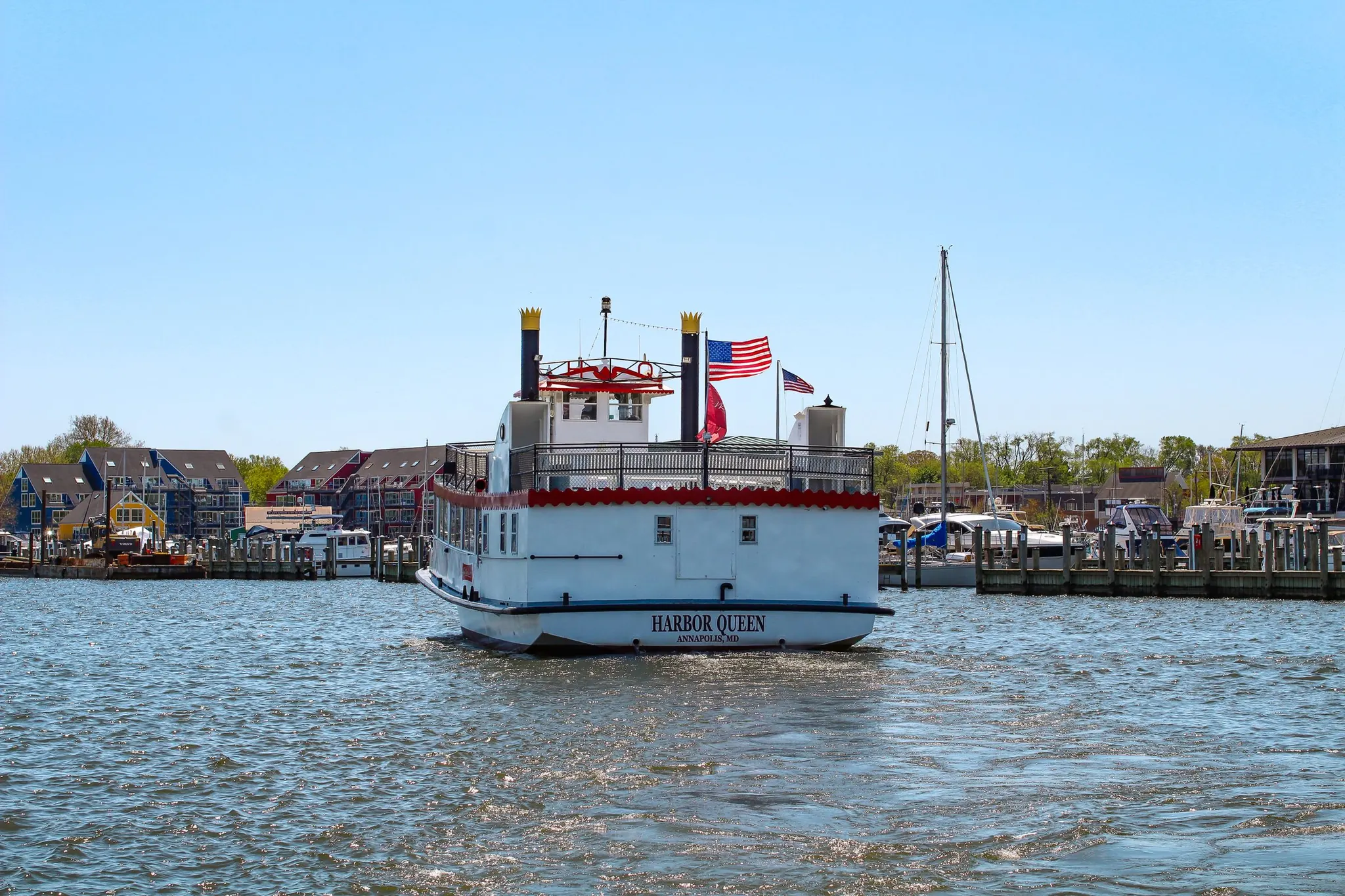
What Phase I produced
A resilience plan built on what residents need and want.
Each of the ten priority sites now has a concept design, a planning-level cost estimate, and an implementation roadmap.
- 38sites of concern identified by residents and community members
- 10priority sites advanced to preliminary concept design
- 18months of community engagement in Phase I
The client
Annapolis has a complicated relationship with water: the city was built on it, depends on it, and is increasingly threatened by it.
The Resilience Authority of Annapolis and Anne Arundel County and the City of Annapolis launched the Annapolis Maritime Resilience Initiative (AMRI) to meet sea level rise, flooding, and shoreline erosion at the scale they demand.
The challenge
Sea level rise is a current reality for coastal communities, reshaping how cities plan, invest, and govern.
For low-lying communities with historic relationships to the water, the challenge is more than technical. It reverberates with social, financial, and political consequences. Resilience planning that doesn’t account for all of those dimensions produces strategies that communities can’t implement and institutions can’t sustain.
In Annapolis, sea level rise, flooding, and shoreline erosion pose growing risks to waterfront neighborhoods, infrastructure, and the broader environment of a city where the relationship between community and coast is both its greatest asset and its most pressing vulnerability.
Our approach
The project started with listening, long before any technical analysis was completed.
The Initiative goes beyond individual interventions to establish a coordinated, watershed-scale approach, so projects reinforce one another and deliver greater collective benefit than any single effort could. Council Fire served as project manager and stakeholder engagement partner throughout the first phase, working alongside the Resilience Authority and the City of Annapolis.
Over an 18-month process, our team built community trust, lowered barriers to participation through bilingual materials and culturally relevant outreach, and worked with key local organizations to ensure diverse and underrepresented perspectives were both heard and integrated into the effort. That engagement generated 38 sites of concern from residents and community members, which became the foundation for all the technical work that followed.
The outcome
From 38 sites of concern to a coordinated suite of projects.
Project partners applied a rigorous evaluation framework to the 38 sites, considering climate vulnerability, ecological function, equity, community interest, and feasibility. Ten priority sites advanced to preliminary concept design, spanning a range of nature-based solutions across landscape types, flooding mechanisms, and intervention strategies. The resulting Phase I Report provides a conceptual design, planning-level cost estimate, anticipated benefits, and implementation roadmap for each site.
The Resilience Authority and its partners now have a clear path forward for pursuing the funding and support needed to advance this coordinated suite of projects, grounded in the community it serves.
In one line
Resilience planning is most durable when the people who live with the risk help define the response.
The people behind the work
Meet the team








More work like this

Work with us
Planning for sea level rise or flooding in your community?
John Ratliff worked on the recovery after Katrina, Sandy, and 9/11, and served as Director of Policy for the Governor of Maryland.