
Council Fire · Hazard Mitigation Planning in Maryland
A hazard mitigation plan update with actions ready to fund, built with the people who live with the risk.
The problem
An approved plan keeps you eligible. Its action table decides what gets built.
Without a current FEMA-approved plan, a local government can’t receive FEMA mitigation project grants, and approval lapses five years after the date on FEMA’s letter (44 CFR 201.6). Ten Maryland plans expire in 2028, Annapolis’s and Baltimore City’s among them; FEMA’s 2025 handbook would have each update scoped, and its funding pursued, by the end of 2026.
What a plan buys you depends on its action table. FEMA’s 2025 policy guide requires every action to name the office responsible, a time frame and funding sources more specific than “federal” or “state,” and every update to report where each of the last plan’s actions stands. In our experience, that table is often a county’s longest project list and the one least connected to its budget.
That table, and the public process that shapes it, is where we work. FEMA’s handbook lets a community hand out an update in pieces, from public outreach to the hazard assessment to compiling the plan, so we fit around your staff and any firm writing the document.
- #1
Action table review
Send us your current plan and its action table. We show which actions lack an owner, a date, a cost or a named funding source, where the last plan’s actions stand, and what it takes to close the gaps before the update starts.
- #2
A public process people trust
Meetings where people already gather, materials in the languages they read, and a comment log that shows how feedback changed the plan, which FEMA’s policy guide asks every plan to document.
- #3
A ranking adopted before scoring
Criteria and weights your planning team agrees on first, with benefits weighed against costs as FEMA requires, so the order of the list survives a council meeting and a funder’s questions.
- #4
A funding path for each priority action
A named program, its match, the design level it expects and its next deadline, drawn from the federal, Maryland and Chesapeake Bay programs we track with dated statuses.
- #5
Tracking between updates
With Aptation, the platform CF Labs built with a Maryland resilience authority, each project from the plan keeps its status, funding and deadlines in one record, so the next update starts from a list instead of a scramble.
How it works
From expiration date to funded actions
- 01
Start from the expiration date
We work back from your plan’s dates in our tracker. FEMA says to allow at least 18 months from kickoff to approval, six of them for state and FEMA review, and Maryland plans go to the Maryland Department of Emergency Management before they reach FEMA.
- 02
Read the last plan first
Every action in the current plan gets a status for each jurisdiction (done, under way, carried forward or dropped, with the reason), and we trace where the plan reached the budget and other local plans, as the update must show.
- 03
Listen before anything is ranked
Residents, businesses and departments name the problems first. In Annapolis, 18 months of bilingual outreach surfaced 38 sites of concern before any technical design began.
- 04
Rank, then match to money
The team scores every action on the agreed criteria and checks funding eligibility only afterward, so the list reflects need rather than what is easiest to fund. Each priority action leaves with a named program and a match.
- 05
Adopt it, then keep it moving
Plain-language summaries and briefings for each governing body that has to adopt the plan, then status updates on a schedule, shared in print, by link or in a public portfolio.
Proof from Maryland
All case studies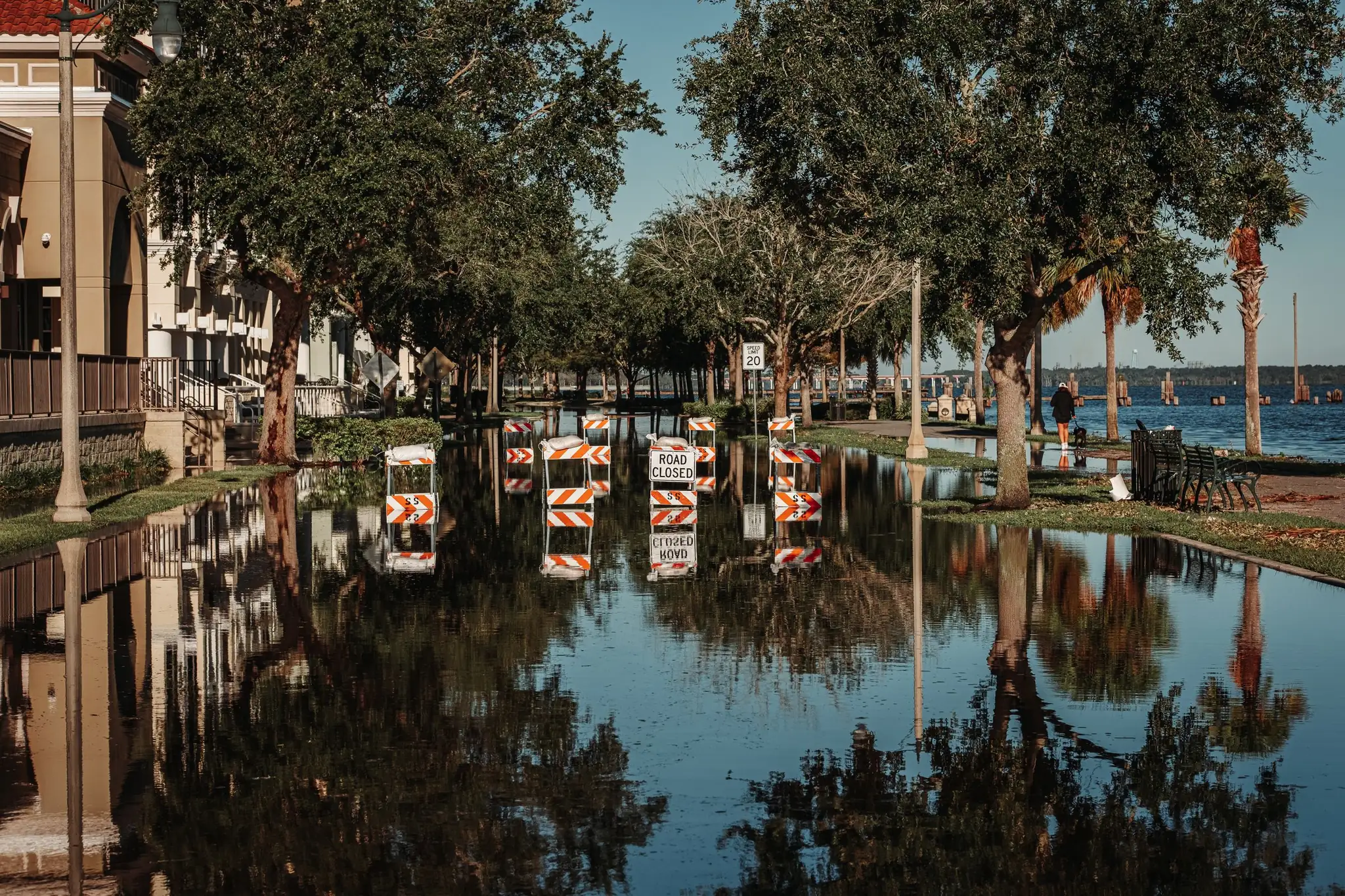 Annapolis Maritime Resilience InitiativeAs implementation and stakeholder engagement partner for Phase I, we ran 18 months of bilingual, culturally relevant outreach. Residents named 38 sites of concern, and ten advanced to preliminary concept design, each with a planning-level cost estimate and an implementation roadmap.AptationThe resilience planning and delivery platform CF Labs built with the Resilience Authority of Annapolis and Anne Arundel County. The Authority’s public portfolio, Resilient & Ready Anne Arundel, runs on it.Hazard mitigation plan trackerFEMA’s plan records for more than 32,000 jurisdictions, read daily, with a page for every Maryland county showing when its plan expires and when the update should start.Maryland resilience funding hub28 federal, Maryland and Chesapeake Bay programs that pay for local flood and climate resilience work, each with a dated status, its deadlines and how Maryland applicants apply.
Who this is for
Maryland counties and cities whose plan expires in 2027 or 2028 and whose update isn’t yet scoped or funded.
Towns in a county’s multi-jurisdictional plan, which FEMA requires to carry at least one action of their own for each hazard.
Emergency managers who want the plan’s actions in the capital budget, not only in the plan.
Resilience authorities and public works departments that carry the plan’s projects to funding.
Planning and engineering firms writing a Maryland plan that want an engagement and funding partner on the team.
Read before you call
All resourcesFAQ
Let’s work together
Tell us where the work is stuck.
A 30-minute call with a Council Fire principal: what you’re working toward, what’s in the way, and whether we’re the right fit.