May 2, 2026
How to Finance Green and Nature-Based Infrastructure for Universities & Research Institutions
Sustainability Strategy
In This Article
Funding pathways and tools for universities to finance green, nature-based infrastructure—grants, ESPCs, green bonds, PPPs.
How to Finance Green and Nature-Based Infrastructure for Universities & Research Institutions
Universities in the U.S. manage 1.8 billion square feet of building space and spend $2.7 billion annually on energy. Transitioning to green and nature-based infrastructure can reduce costs, support research, and meet climate goals, but funding remains a challenge. Here’s how institutions can overcome financial barriers and access funding opportunities:
Challenges: Limited staff expertise, competing budget priorities, debt restrictions, and long payback periods.
Opportunities: Federal grants (e.g., Clean Water State Revolving Fund), tax credits from the Inflation Reduction Act, Energy Savings Performance Contracts (ESPCs), and public-private partnerships.
Creative Financing: Use green bonds, internal carbon fees, and blended finance models to diversify funding.
Support Tools: Leverage EPA resources like the Water Finance Clearinghouse and Financing Alternatives Comparison Tool for planning and funding assistance.
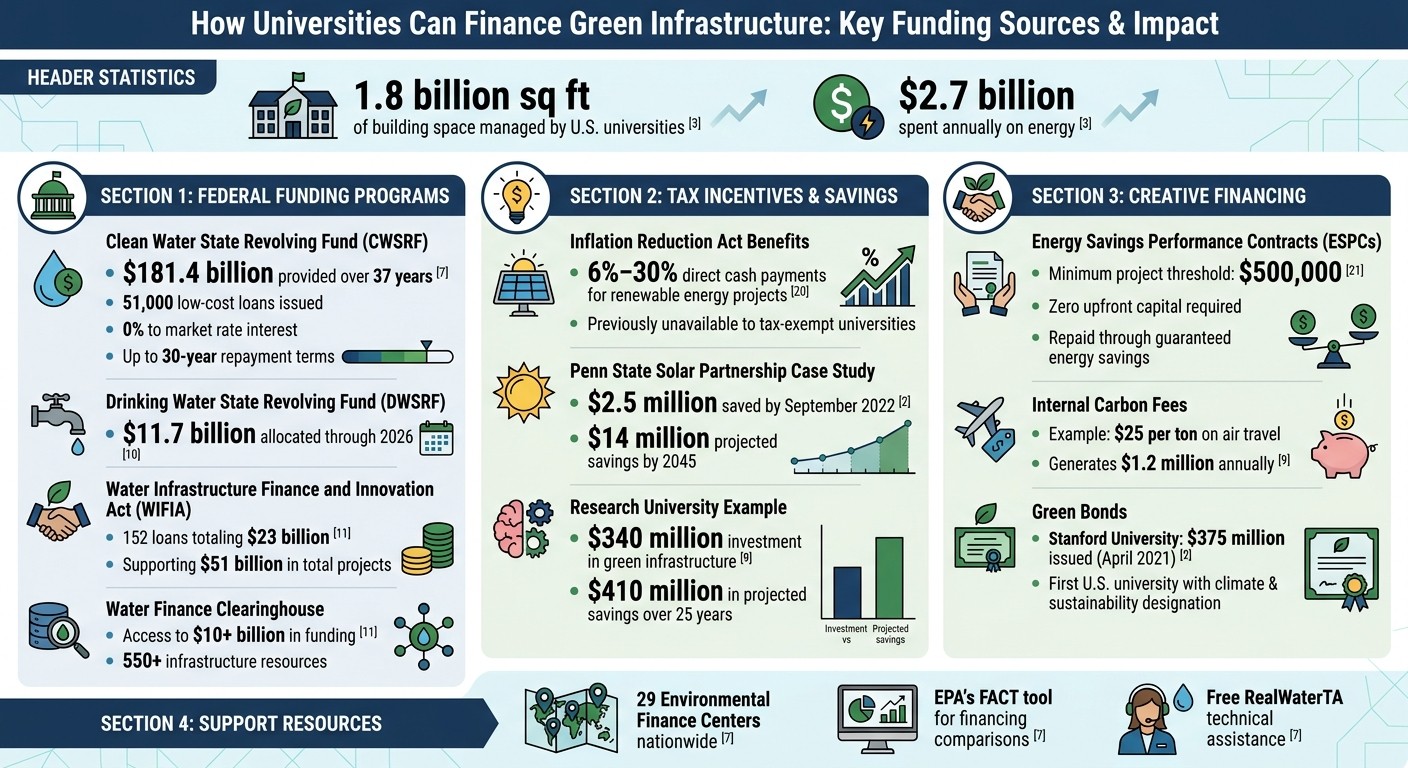
University Green Infrastructure Funding Sources and Financial Impact
Funding Challenges and Opportunities
Financial Barriers to Green Infrastructure Projects
Universities encounter significant hurdles when it comes to funding green infrastructure. A major issue is the lack of staff resources - facilities teams often don’t have the expertise or manpower to juggle complex sustainability projects alongside their regular duties. On top of that, green initiatives frequently clash with other budget priorities, such as educational programs and essential capital projects.
Debt limitations add another layer of difficulty. Many institutions operate under tight borrowing restrictions or are reluctant to take on new debt for projects they see as secondary to academic goals. This reluctance is often amplified by financial decision-makers who view green infrastructure as either too risky or not urgent enough. The Better Buildings Solution Center highlights this challenge, stating:
"Higher education institutions are organizationally complex with many stakeholders, and some CFOs and other decision-makers are resistant to tackling energy projects they perceive as risky or low-priority" [1].
Another deterrent is the uncertainty around returns and the long payback periods associated with these projects. Even when initiatives like energy efficiency upgrades promise long-term savings, decision-makers may be hesitant to invest in projects that take years to deliver measurable results.
Funding Opportunities for Green Infrastructure
Despite these barriers, innovative funding strategies are opening doors for green infrastructure projects. Because these initiatives often address multiple needs - such as lowering energy costs, managing stormwater, advancing research, and meeting climate goals - they can qualify for diverse funding sources like federal grants, state incentives, utility rebates, and philanthropic support.
The Inflation Reduction Act has introduced a game-changing provision for tax-exempt universities. Previously excluded from clean energy tax credits, these institutions can now receive direct cash payments from the IRS, covering 6%–30% of investments in renewable energy projects like solar, wind, geothermal, and EV charging infrastructure [3]. For instance, by September 2022, Pennsylvania State University's solar partnership had already saved $2.5 million, with total savings projected to hit $14 million by 2045 [3].
Another promising option is Energy Savings Performance Contracts (ESPCs). Through these agreements, an Energy Service Company handles the upfront costs of installations and is repaid through guaranteed energy savings. This approach minimizes the need for initial capital and is particularly suited for projects exceeding $500,000 [1].
These funding avenues create opportunities for universities to tap into federal and local resources, making green infrastructure projects more financially viable.
Federal and Local Funding Sources
Federal Grants and Loan Programs
The federal government offers a range of financing options to support water and environmentally focused projects. One of the most prominent is the Clean Water State Revolving Fund (CWSRF), which has provided $181.4 billion in funding through 51,000 low-cost loans over the past 37 years [4]. These loans are ideal for universities looking to implement stormwater management systems, green infrastructure, or water reuse projects. Loan terms are highly favorable, ranging from 0% interest to market rates, with repayment periods of up to 30 years [5].
For universities that manage their own water systems, the Drinking Water State Revolving Fund (DWSRF) offers below-market rate loans to enhance drinking water safety and infrastructure resilience. Both the CWSRF and DWSRF programs received a major funding boost through the Infrastructure Investment and Jobs Act, which allocated $11.7 billion to each program through 2026 [4][5]. A portion of these funds is distributed as grants or principal forgiveness, particularly for projects benefiting underserved communities.
Larger projects may benefit from the Water Infrastructure Finance and Innovation Act (WIFIA) program. This initiative offers long-term, low-cost supplemental loans and has already financed 152 loans totaling $23 billion, supporting projects worth $51 billion overall [6]. Public universities operated by state or local governments are eligible to apply. Additionally, the Green Project Reserve, a component of the CWSRF, focuses on funding projects that incorporate green infrastructure and environmentally progressive solutions [5].
Since these programs are managed at the state level, universities must contact their state’s CWSRF or DWSRF office to confirm eligibility and application details. To simplify the process, the EPA’s EFC Grant Program and RealWaterTA offer free technical assistance. Across the U.S., 29 Environmental Finance Centers are available to provide specialized support [2].
These federal programs serve as a strong foundation for universities to leverage additional state and local funding opportunities.
State and Local Incentives
State and local governments complement federal programs with incentives designed to reduce project costs. For instance, many municipalities offer stormwater fee credits and rebates for green infrastructure, helping universities manage upfront expenses while improving regional water quality.
The Water Finance Clearinghouse, an EPA database, is a valuable tool for identifying funding opportunities. It provides access to over $10 billion in water-related funding and 550+ infrastructure resources [2]. Universities can use this resource to find state-specific grants, tax incentives, and local programs that align with their goals. Additionally, the EPA’s Financing Alternatives Comparison Tool (FACT) helps institutions evaluate funding options, comparing factors like regulatory requirements and interest rates [2].
State-administered revolving funds often include provisions to encourage green infrastructure. Some states offer enhanced loan terms, principal forgiveness, or additional grants for projects that incorporate nature-based solutions. Universities can consult the Managing Wet Weather with Green Infrastructure Municipal Handbook to explore incentives such as development bonuses or reduced stormwater management fees [2].
Early engagement with regional Environmental Finance Centers can simplify the process of securing these funding sources. These centers provide tailored guidance for navigating complex applications and can assist universities in covering establishment costs, including initial maintenance for green infrastructure, as part of their capital financing [2].
Creative Financing Methods for Universities
Public-Private Partnerships (PPPs)
Public-private partnerships (PPPs) offer universities a way to share ownership, management, and maintenance responsibilities with private sector partners who often bring specialized expertise to the table. These arrangements are typically funded through a mix of equity contributions and project finance debt, with the private sector handling upfront construction costs and ongoing maintenance [7][8]. Universities can structure PPPs as joint ventures, concessions, or long-term operating agreements, which helps conserve capital while aligning with environmental, social, and governance (ESG) objectives. However, the long-term nature of these contracts - often spanning decades - makes meticulous contract design essential. The private party's compensation and responsibilities must be clearly defined to ensure mutual benefit [8].
A compelling example of PPP success comes from a research university that invested $340 million in green infrastructure, a move projected to yield $410 million in energy savings and avoided maintenance costs over 25 years [9]. To navigate the complexities of such agreements, universities should engage external experts for solicitation, procurement, and bidding processes. Conducting an early Value-for-Money analysis can also illuminate the long-term cost advantages of pursuing a PPP approach [8].
"A proper risk allocation will lead to a lower 'price' for these risks and results in an overall lower cost of capital for a development project."
– CohnReznick [8]
Incorporating blended finance options alongside PPPs can further diversify funding sources and reduce financial strain.
Blended Finance Models
Blended finance models complement PPPs by combining various funding streams, such as federal, state, and internal university revenues. For example, universities can pair federal direct pay incentives with state-issued green bonds and internal carbon fees [9]. A standout case involves a public research university with 35,000 students that rolled out a 2035 carbon neutrality roadmap. This plan included a $25-per-ton internal carbon fee on air travel, generating $1.2 million annually to support a green revolving fund [9]. These funds enable universities to reinvest savings from quick-win efficiency projects into larger sustainability efforts [1].
Green Bonds and Sustainability-Linked Loans
Green bonds provide another avenue for funding environmentally conscious projects, though issuing them requires strict adherence to environmental and social standards. Universities must secure independent verification, often through organizations like the International Capital Markets Association or the Climate Bond Certification, to ensure compliance [10]. A notable example is Stanford University, which in April 2021 became the first U.S. higher education institution to issue bonds with both climate and sustainability designations. Stanford issued $375 million in debt securities verified by Kestrel Verifiers, funding projects such as energy management systems and affordable housing [10].
"We wanted our ESG designation to demonstrate a more rigorous level of scrutiny than self-regulated bonds. That's why we elected to undergo an external review through an independent party."
– Randy Livingston, Vice President for Business Affairs and CFO, Stanford University [10]
Aligning projects with frameworks like the United Nations' Sustainable Development Goals and the Paris Climate Accord can attract ESG-focused investors. Additionally, provisions such as the Inflation Reduction Act's direct pay mechanism for tax-exempt entities can further enhance project feasibility [9]. Engaging facilities teams early in the design process ensures technical viability, especially for projects aiming to qualify for mechanisms like Energy Savings Performance Contracts, which often require minimum thresholds of $500,000 [1].
Funding & Technical Assistance for Stormwater and Green Infrastructure | Dec 2024
Technical Assistance and Planning Tools
Universities have access to specialized resources designed to help evaluate financing options and simplify project planning for infrastructure projects.
EPA's Financing Alternatives Comparison Tool (FACT)
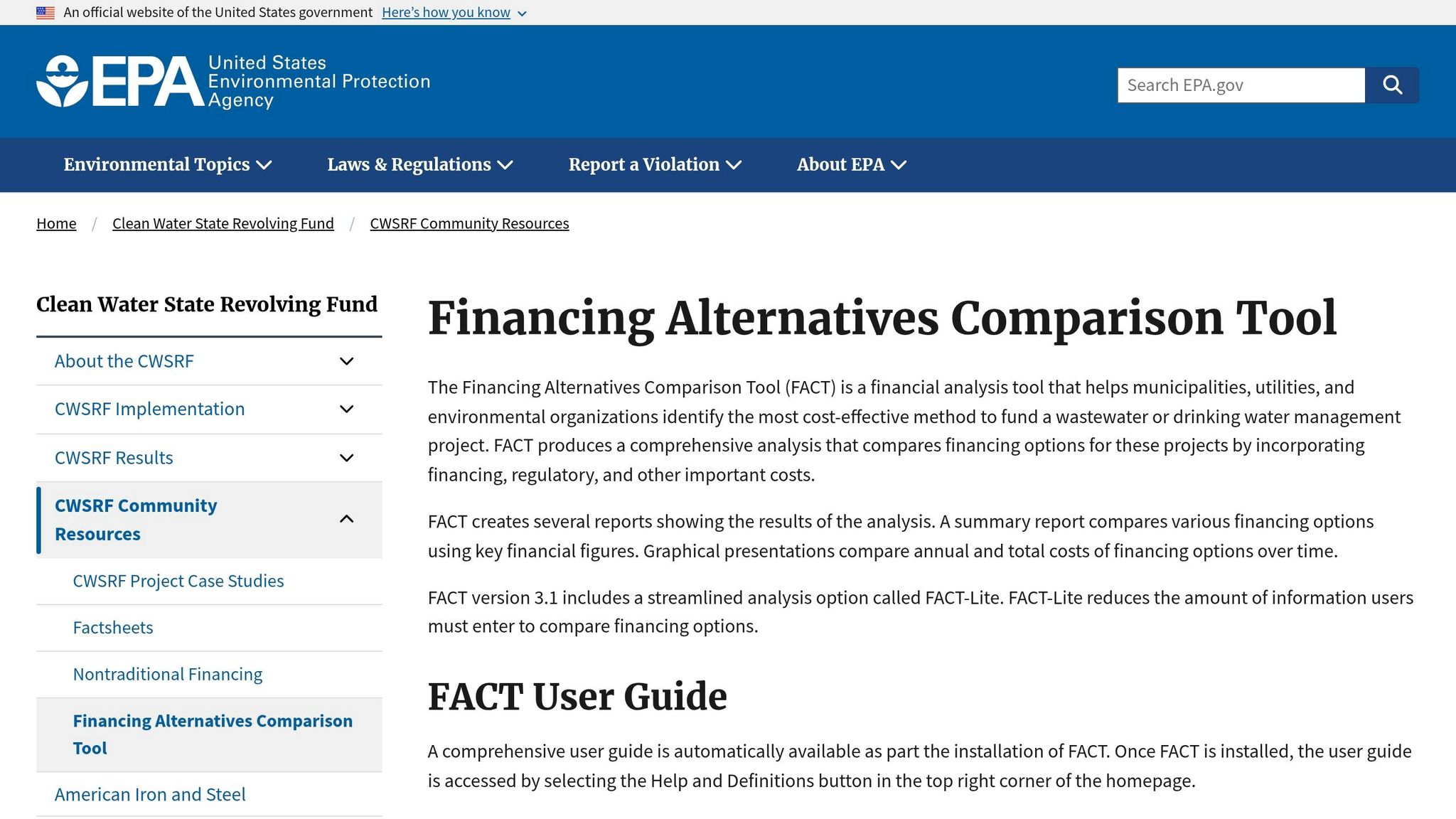
The Financing Alternatives Comparison Tool (FACT) is a valuable resource for universities aiming to identify cost-effective funding strategies for water management and green infrastructure projects. By comparing financing, regulatory, and other related costs, FACT helps institutions make informed decisions [11][14]. This free tool generates detailed reports and visual comparisons of both annual and total financing costs, making it easier to present investment plans to stakeholders [11].
For those seeking a streamlined experience, FACT's "FACT-Lite" feature - introduced in version 3.1 - minimizes data entry requirements while still providing useful comparisons [11]. Before downloading, ensure your system supports Microsoft Access 2000 or newer versions [11].
In addition to FACT, the EPA offers other tools to further enhance planning efforts for green infrastructure.
Water Finance Clearinghouse and Other Resources
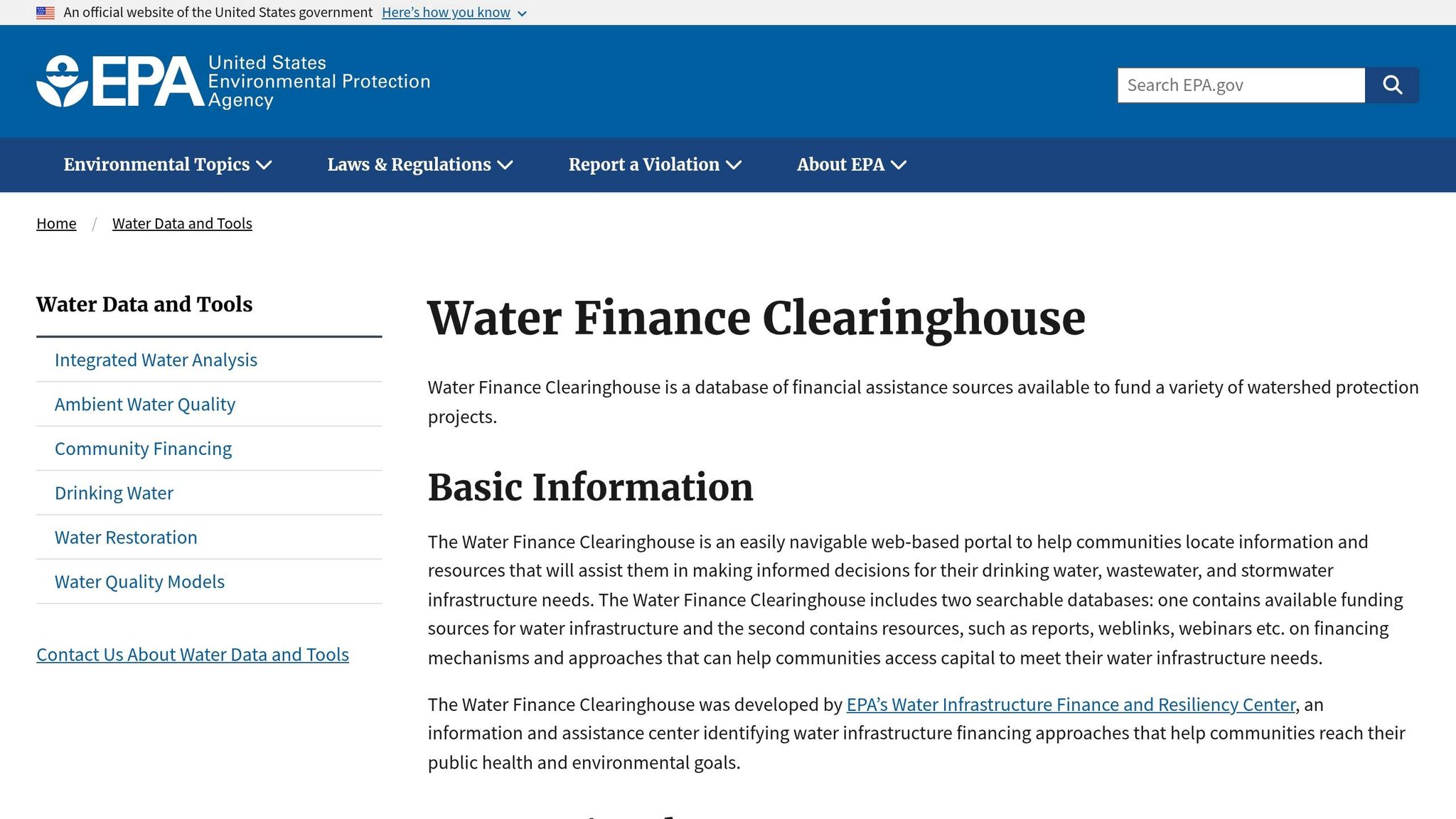
The Water Finance Clearinghouse serves as a centralized hub for water infrastructure funding and technical resources. This free, web-based platform provides access to case studies, webinars, and other materials tailored to green infrastructure projects, allowing universities to find resources that align with their specific needs [13][14].
Another valuable resource is the Environmental Finance Center (EFC) Network, a group of 29 centers hosted by universities such as the University of North Carolina, Wichita State, and the University of Maryland [12][14]. The EFC Network, along with the Guidebook of Financial Tools, offers detailed guidance on approximately 340 financial mechanisms, ranging from traditional revenue generation methods to credit enhancement options [12][15].
Additionally, universities can apply for Real Water Technical Assistance (RealWaterTA), an EPA program that provides free professional support. This program assists with project planning, infrastructure design, and the preparation of applications for federal funding [12][14].
Scaling Green Infrastructure Through Incentive Programs
Universities can accelerate the adoption of green infrastructure by introducing internal incentives that reduce costs and encourage collaboration across departments. These efforts, combined with external funding strategies, help build a unified commitment to sustainability across campuses.
Incentives for Campus Departments and Stakeholders
Campus Green Funds (CGFs) are a key tool for advancing sustainability initiatives. As described by AASHE, these funds "create the financial means for promoting sustainability in all areas of higher education; including academics, operations, administration, and engagement" [16]. By implementing competitive application processes with standardized evaluation criteria, universities can ensure fairness and promote high-quality project proposals.
Green infrastructure also offers opportunities for hands-on learning. Faculty can use these projects as research sites, while students can gain academic credit through participation [16][17]. The EPA's "Design Toolkit - Integrating Green Infrastructure into Campus Planning" provides guidance for assessing site-specific conditions and selecting appropriate solutions, even for those without extensive technical expertise [17]. Design charrettes can turn small ideas into comprehensive campus strategies, and incorporating these projects into curriculum materials further engages both faculty and students [17]. Together, these programs complement external funding sources, creating a robust framework for green infrastructure development.
Reducing Stormwater Management Costs
Beyond fostering project proposals, incentive programs can also cut operational expenses, particularly in stormwater management. Implementing tiered stormwater billing systems can reward departments that incorporate green infrastructure, reducing their costs in the process [14].
Student-led design competitions, such as the EPA's Campus RainWorks Challenge, highlight how these initiatives can lead to tangible savings. For example, at the University of Pennsylvania, landscape designer Mrinalini Verma led a team that won the competition and saw parts of their design implemented on campus. Reflecting on the experience, Verma shared:
"Campus RainWorks is not just a competition for us, we are actually implementing projects on the ground, so funding is a big part of it. I learned how you do cost estimates and how you approach different funding opportunities" [18].
Similarly, at the University of Louisiana at Lafayette, a student team, including architectural designer Lauren Lambert, presented their winning design to the President's Sustainability Council. Lambert noted:
"We had presented our project to the President's Sustainability Council and especially after we won, they are taking it more seriously and are really trying to incorporate the things we talked about on this master plan" [18].
These examples illustrate how incentive programs not only encourage innovation but also drive practical implementation, making green infrastructure a reality on campuses.
Conclusion
Universities and research institutions have a clear path to financing green and nature-based infrastructure. From federal grants and green bonds to Energy Savings Performance Contracts and Green Revolving Funds, the strategies outlined here provide practical ways to turn sustainability ambitions into actionable outcomes.
The financial landscape has shifted significantly in favor of these initiatives. For example, the Inflation Reduction Act's direct pay provisions have made projects that were once financially out of reach now attainable. Analysis confirms that these federal incentives have fundamentally altered the cost dynamics for tax-exempt entities, creating new opportunities for sustainable investments [9].
Success lies in a well-planned approach. Begin with efficiency-focused projects that deliver quick savings, then channel those savings into larger-scale investments like central plant upgrades. Collaboration between facilities and finance teams is essential to merge technical expertise with effective financial planning.
Universities are uniquely positioned to capitalize on long-term green infrastructure investments. With stable ownership of academic buildings, institutions can commit to projects that align with the 20- to 25-year lifecycle typical of green infrastructure. This stability not only supports sustainability goals but also strengthens financial strategies [1]. Additionally, access to resources like the EPA's Water Finance Clearinghouse, which connects institutions to over $10 billion in water funding sources, further expands the possibilities [2].
FAQs
Which campus projects qualify for IRA direct pay?
Universities and research institutions can tap into IRA direct pay for projects focused on green and energy-efficient infrastructure. Eligible initiatives include clean energy upgrades and efforts to address climate challenges. To qualify, these projects must comply with the guidelines set by the U.S. Department of the Treasury and other resources dedicated to sustainable development in higher education.
How do we pick between ESPCs, green bonds, and PPPs?
Choosing the right funding method - Energy Savings Performance Contracts (ESPCs), green bonds, or public-private partnerships (PPPs) - depends on the specific objectives and requirements of your project.
ESPCs are a practical choice for energy efficiency upgrades. They allow improvements to be funded through guaranteed energy savings, eliminating the need for upfront capital.
Green bonds are better suited for large-scale environmental projects. These bonds attract investors focused on sustainability, making them an excellent option for financing initiatives with a clear ecological impact.
PPPs shine in more complex projects where risks, resources, and expertise need to be shared. By partnering with the private sector, these agreements can combine funding and specialized knowledge to tackle challenging initiatives effectively.
What do we need to apply for CWSRF, DWSRF, or WIFIA?
To apply for the Clean Water State Revolving Fund (CWSRF), Drinking Water State Revolving Fund (DWSRF), or WIFIA, it's important to follow the guidelines specific to each program:
For CWSRF, start by reviewing the Green Infrastructure Policy. Reach out to the EPA or your state agency for further details and application assistance.
For DWSRF and WIFIA, proposals should highlight environmental benefits, demonstrate financial viability, and ensure compliance with the program's criteria. Submit your completed application through the appropriate channels as outlined by the program.
Related Blog Posts
Latest Articles
©2025

Narrative Change and Power Building: The Missing Half of Advocacy
Narrative change is the process of disrupting dominant narratives that normalize inequity and advancing new narratives from historically marginalized communities.

Funding Resilience Without Federal Grants
BRIC is unreliable and FEMA is shrinking. Here's how cities fund climate resilience with dedicated revenue, blended finance, and a coordinating authority.

The ESG Blind Spot: How AI Is Finding Risks in Companies Nobody Else Is Watching
Norway's sovereign wealth fund uses AI to screen 7,200 portfolio companies for forced labor and corruption within 24 hours. The real story is the emerging-market coverage gap that traditional ESG data vendors miss — and what it means for any company with a global supply chain.
Narrative Change and Power Building: The Missing Half of Advocacy
Narrative change is the process of disrupting dominant narratives that normalize inequity and advancing new narratives from historically marginalized communities.
Funding Resilience Without Federal Grants
BRIC is unreliable and FEMA is shrinking. Here's how cities fund climate resilience with dedicated revenue, blended finance, and a coordinating authority.
The ESG Blind Spot: How AI Is Finding Risks in Companies Nobody Else Is Watching
Norway's sovereign wealth fund uses AI to screen 7,200 portfolio companies for forced labor and corruption within 24 hours. The real story is the emerging-market coverage gap that traditional ESG data vendors miss — and what it means for any company with a global supply chain.
FAQ
01
What does it really mean to “redefine profit”?
02
What makes Council Fire different?
03
Who does Council Fire work with?
04
What does working with Council Fire actually look like?
05
How does Council Fire help organizations turn big goals into action?
06
How does Council Fire define and measure success?
May 2, 2026
How to Finance Green and Nature-Based Infrastructure for Universities & Research Institutions
Sustainability Strategy
In This Article
Funding pathways and tools for universities to finance green, nature-based infrastructure—grants, ESPCs, green bonds, PPPs.
How to Finance Green and Nature-Based Infrastructure for Universities & Research Institutions
Universities in the U.S. manage 1.8 billion square feet of building space and spend $2.7 billion annually on energy. Transitioning to green and nature-based infrastructure can reduce costs, support research, and meet climate goals, but funding remains a challenge. Here’s how institutions can overcome financial barriers and access funding opportunities:
Challenges: Limited staff expertise, competing budget priorities, debt restrictions, and long payback periods.
Opportunities: Federal grants (e.g., Clean Water State Revolving Fund), tax credits from the Inflation Reduction Act, Energy Savings Performance Contracts (ESPCs), and public-private partnerships.
Creative Financing: Use green bonds, internal carbon fees, and blended finance models to diversify funding.
Support Tools: Leverage EPA resources like the Water Finance Clearinghouse and Financing Alternatives Comparison Tool for planning and funding assistance.
University Green Infrastructure Funding Sources and Financial Impact
Funding Challenges and Opportunities
Financial Barriers to Green Infrastructure Projects
Universities encounter significant hurdles when it comes to funding green infrastructure. A major issue is the lack of staff resources - facilities teams often don’t have the expertise or manpower to juggle complex sustainability projects alongside their regular duties. On top of that, green initiatives frequently clash with other budget priorities, such as educational programs and essential capital projects.
Debt limitations add another layer of difficulty. Many institutions operate under tight borrowing restrictions or are reluctant to take on new debt for projects they see as secondary to academic goals. This reluctance is often amplified by financial decision-makers who view green infrastructure as either too risky or not urgent enough. The Better Buildings Solution Center highlights this challenge, stating:
"Higher education institutions are organizationally complex with many stakeholders, and some CFOs and other decision-makers are resistant to tackling energy projects they perceive as risky or low-priority" [1].
Another deterrent is the uncertainty around returns and the long payback periods associated with these projects. Even when initiatives like energy efficiency upgrades promise long-term savings, decision-makers may be hesitant to invest in projects that take years to deliver measurable results.
Funding Opportunities for Green Infrastructure
Despite these barriers, innovative funding strategies are opening doors for green infrastructure projects. Because these initiatives often address multiple needs - such as lowering energy costs, managing stormwater, advancing research, and meeting climate goals - they can qualify for diverse funding sources like federal grants, state incentives, utility rebates, and philanthropic support.
The Inflation Reduction Act has introduced a game-changing provision for tax-exempt universities. Previously excluded from clean energy tax credits, these institutions can now receive direct cash payments from the IRS, covering 6%–30% of investments in renewable energy projects like solar, wind, geothermal, and EV charging infrastructure [3]. For instance, by September 2022, Pennsylvania State University's solar partnership had already saved $2.5 million, with total savings projected to hit $14 million by 2045 [3].
Another promising option is Energy Savings Performance Contracts (ESPCs). Through these agreements, an Energy Service Company handles the upfront costs of installations and is repaid through guaranteed energy savings. This approach minimizes the need for initial capital and is particularly suited for projects exceeding $500,000 [1].
These funding avenues create opportunities for universities to tap into federal and local resources, making green infrastructure projects more financially viable.
Federal and Local Funding Sources
Federal Grants and Loan Programs
The federal government offers a range of financing options to support water and environmentally focused projects. One of the most prominent is the Clean Water State Revolving Fund (CWSRF), which has provided $181.4 billion in funding through 51,000 low-cost loans over the past 37 years [4]. These loans are ideal for universities looking to implement stormwater management systems, green infrastructure, or water reuse projects. Loan terms are highly favorable, ranging from 0% interest to market rates, with repayment periods of up to 30 years [5].
For universities that manage their own water systems, the Drinking Water State Revolving Fund (DWSRF) offers below-market rate loans to enhance drinking water safety and infrastructure resilience. Both the CWSRF and DWSRF programs received a major funding boost through the Infrastructure Investment and Jobs Act, which allocated $11.7 billion to each program through 2026 [4][5]. A portion of these funds is distributed as grants or principal forgiveness, particularly for projects benefiting underserved communities.
Larger projects may benefit from the Water Infrastructure Finance and Innovation Act (WIFIA) program. This initiative offers long-term, low-cost supplemental loans and has already financed 152 loans totaling $23 billion, supporting projects worth $51 billion overall [6]. Public universities operated by state or local governments are eligible to apply. Additionally, the Green Project Reserve, a component of the CWSRF, focuses on funding projects that incorporate green infrastructure and environmentally progressive solutions [5].
Since these programs are managed at the state level, universities must contact their state’s CWSRF or DWSRF office to confirm eligibility and application details. To simplify the process, the EPA’s EFC Grant Program and RealWaterTA offer free technical assistance. Across the U.S., 29 Environmental Finance Centers are available to provide specialized support [2].
These federal programs serve as a strong foundation for universities to leverage additional state and local funding opportunities.
State and Local Incentives
State and local governments complement federal programs with incentives designed to reduce project costs. For instance, many municipalities offer stormwater fee credits and rebates for green infrastructure, helping universities manage upfront expenses while improving regional water quality.
The Water Finance Clearinghouse, an EPA database, is a valuable tool for identifying funding opportunities. It provides access to over $10 billion in water-related funding and 550+ infrastructure resources [2]. Universities can use this resource to find state-specific grants, tax incentives, and local programs that align with their goals. Additionally, the EPA’s Financing Alternatives Comparison Tool (FACT) helps institutions evaluate funding options, comparing factors like regulatory requirements and interest rates [2].
State-administered revolving funds often include provisions to encourage green infrastructure. Some states offer enhanced loan terms, principal forgiveness, or additional grants for projects that incorporate nature-based solutions. Universities can consult the Managing Wet Weather with Green Infrastructure Municipal Handbook to explore incentives such as development bonuses or reduced stormwater management fees [2].
Early engagement with regional Environmental Finance Centers can simplify the process of securing these funding sources. These centers provide tailored guidance for navigating complex applications and can assist universities in covering establishment costs, including initial maintenance for green infrastructure, as part of their capital financing [2].
Creative Financing Methods for Universities
Public-Private Partnerships (PPPs)
Public-private partnerships (PPPs) offer universities a way to share ownership, management, and maintenance responsibilities with private sector partners who often bring specialized expertise to the table. These arrangements are typically funded through a mix of equity contributions and project finance debt, with the private sector handling upfront construction costs and ongoing maintenance [7][8]. Universities can structure PPPs as joint ventures, concessions, or long-term operating agreements, which helps conserve capital while aligning with environmental, social, and governance (ESG) objectives. However, the long-term nature of these contracts - often spanning decades - makes meticulous contract design essential. The private party's compensation and responsibilities must be clearly defined to ensure mutual benefit [8].
A compelling example of PPP success comes from a research university that invested $340 million in green infrastructure, a move projected to yield $410 million in energy savings and avoided maintenance costs over 25 years [9]. To navigate the complexities of such agreements, universities should engage external experts for solicitation, procurement, and bidding processes. Conducting an early Value-for-Money analysis can also illuminate the long-term cost advantages of pursuing a PPP approach [8].
"A proper risk allocation will lead to a lower 'price' for these risks and results in an overall lower cost of capital for a development project."
– CohnReznick [8]
Incorporating blended finance options alongside PPPs can further diversify funding sources and reduce financial strain.
Blended Finance Models
Blended finance models complement PPPs by combining various funding streams, such as federal, state, and internal university revenues. For example, universities can pair federal direct pay incentives with state-issued green bonds and internal carbon fees [9]. A standout case involves a public research university with 35,000 students that rolled out a 2035 carbon neutrality roadmap. This plan included a $25-per-ton internal carbon fee on air travel, generating $1.2 million annually to support a green revolving fund [9]. These funds enable universities to reinvest savings from quick-win efficiency projects into larger sustainability efforts [1].
Green Bonds and Sustainability-Linked Loans
Green bonds provide another avenue for funding environmentally conscious projects, though issuing them requires strict adherence to environmental and social standards. Universities must secure independent verification, often through organizations like the International Capital Markets Association or the Climate Bond Certification, to ensure compliance [10]. A notable example is Stanford University, which in April 2021 became the first U.S. higher education institution to issue bonds with both climate and sustainability designations. Stanford issued $375 million in debt securities verified by Kestrel Verifiers, funding projects such as energy management systems and affordable housing [10].
"We wanted our ESG designation to demonstrate a more rigorous level of scrutiny than self-regulated bonds. That's why we elected to undergo an external review through an independent party."
– Randy Livingston, Vice President for Business Affairs and CFO, Stanford University [10]
Aligning projects with frameworks like the United Nations' Sustainable Development Goals and the Paris Climate Accord can attract ESG-focused investors. Additionally, provisions such as the Inflation Reduction Act's direct pay mechanism for tax-exempt entities can further enhance project feasibility [9]. Engaging facilities teams early in the design process ensures technical viability, especially for projects aiming to qualify for mechanisms like Energy Savings Performance Contracts, which often require minimum thresholds of $500,000 [1].
Funding & Technical Assistance for Stormwater and Green Infrastructure | Dec 2024
Technical Assistance and Planning Tools
Universities have access to specialized resources designed to help evaluate financing options and simplify project planning for infrastructure projects.
EPA's Financing Alternatives Comparison Tool (FACT)
The Financing Alternatives Comparison Tool (FACT) is a valuable resource for universities aiming to identify cost-effective funding strategies for water management and green infrastructure projects. By comparing financing, regulatory, and other related costs, FACT helps institutions make informed decisions [11][14]. This free tool generates detailed reports and visual comparisons of both annual and total financing costs, making it easier to present investment plans to stakeholders [11].
For those seeking a streamlined experience, FACT's "FACT-Lite" feature - introduced in version 3.1 - minimizes data entry requirements while still providing useful comparisons [11]. Before downloading, ensure your system supports Microsoft Access 2000 or newer versions [11].
In addition to FACT, the EPA offers other tools to further enhance planning efforts for green infrastructure.
Water Finance Clearinghouse and Other Resources
The Water Finance Clearinghouse serves as a centralized hub for water infrastructure funding and technical resources. This free, web-based platform provides access to case studies, webinars, and other materials tailored to green infrastructure projects, allowing universities to find resources that align with their specific needs [13][14].
Another valuable resource is the Environmental Finance Center (EFC) Network, a group of 29 centers hosted by universities such as the University of North Carolina, Wichita State, and the University of Maryland [12][14]. The EFC Network, along with the Guidebook of Financial Tools, offers detailed guidance on approximately 340 financial mechanisms, ranging from traditional revenue generation methods to credit enhancement options [12][15].
Additionally, universities can apply for Real Water Technical Assistance (RealWaterTA), an EPA program that provides free professional support. This program assists with project planning, infrastructure design, and the preparation of applications for federal funding [12][14].
Scaling Green Infrastructure Through Incentive Programs
Universities can accelerate the adoption of green infrastructure by introducing internal incentives that reduce costs and encourage collaboration across departments. These efforts, combined with external funding strategies, help build a unified commitment to sustainability across campuses.
Incentives for Campus Departments and Stakeholders
Campus Green Funds (CGFs) are a key tool for advancing sustainability initiatives. As described by AASHE, these funds "create the financial means for promoting sustainability in all areas of higher education; including academics, operations, administration, and engagement" [16]. By implementing competitive application processes with standardized evaluation criteria, universities can ensure fairness and promote high-quality project proposals.
Green infrastructure also offers opportunities for hands-on learning. Faculty can use these projects as research sites, while students can gain academic credit through participation [16][17]. The EPA's "Design Toolkit - Integrating Green Infrastructure into Campus Planning" provides guidance for assessing site-specific conditions and selecting appropriate solutions, even for those without extensive technical expertise [17]. Design charrettes can turn small ideas into comprehensive campus strategies, and incorporating these projects into curriculum materials further engages both faculty and students [17]. Together, these programs complement external funding sources, creating a robust framework for green infrastructure development.
Reducing Stormwater Management Costs
Beyond fostering project proposals, incentive programs can also cut operational expenses, particularly in stormwater management. Implementing tiered stormwater billing systems can reward departments that incorporate green infrastructure, reducing their costs in the process [14].
Student-led design competitions, such as the EPA's Campus RainWorks Challenge, highlight how these initiatives can lead to tangible savings. For example, at the University of Pennsylvania, landscape designer Mrinalini Verma led a team that won the competition and saw parts of their design implemented on campus. Reflecting on the experience, Verma shared:
"Campus RainWorks is not just a competition for us, we are actually implementing projects on the ground, so funding is a big part of it. I learned how you do cost estimates and how you approach different funding opportunities" [18].
Similarly, at the University of Louisiana at Lafayette, a student team, including architectural designer Lauren Lambert, presented their winning design to the President's Sustainability Council. Lambert noted:
"We had presented our project to the President's Sustainability Council and especially after we won, they are taking it more seriously and are really trying to incorporate the things we talked about on this master plan" [18].
These examples illustrate how incentive programs not only encourage innovation but also drive practical implementation, making green infrastructure a reality on campuses.
Conclusion
Universities and research institutions have a clear path to financing green and nature-based infrastructure. From federal grants and green bonds to Energy Savings Performance Contracts and Green Revolving Funds, the strategies outlined here provide practical ways to turn sustainability ambitions into actionable outcomes.
The financial landscape has shifted significantly in favor of these initiatives. For example, the Inflation Reduction Act's direct pay provisions have made projects that were once financially out of reach now attainable. Analysis confirms that these federal incentives have fundamentally altered the cost dynamics for tax-exempt entities, creating new opportunities for sustainable investments [9].
Success lies in a well-planned approach. Begin with efficiency-focused projects that deliver quick savings, then channel those savings into larger-scale investments like central plant upgrades. Collaboration between facilities and finance teams is essential to merge technical expertise with effective financial planning.
Universities are uniquely positioned to capitalize on long-term green infrastructure investments. With stable ownership of academic buildings, institutions can commit to projects that align with the 20- to 25-year lifecycle typical of green infrastructure. This stability not only supports sustainability goals but also strengthens financial strategies [1]. Additionally, access to resources like the EPA's Water Finance Clearinghouse, which connects institutions to over $10 billion in water funding sources, further expands the possibilities [2].
FAQs
Which campus projects qualify for IRA direct pay?
Universities and research institutions can tap into IRA direct pay for projects focused on green and energy-efficient infrastructure. Eligible initiatives include clean energy upgrades and efforts to address climate challenges. To qualify, these projects must comply with the guidelines set by the U.S. Department of the Treasury and other resources dedicated to sustainable development in higher education.
How do we pick between ESPCs, green bonds, and PPPs?
Choosing the right funding method - Energy Savings Performance Contracts (ESPCs), green bonds, or public-private partnerships (PPPs) - depends on the specific objectives and requirements of your project.
ESPCs are a practical choice for energy efficiency upgrades. They allow improvements to be funded through guaranteed energy savings, eliminating the need for upfront capital.
Green bonds are better suited for large-scale environmental projects. These bonds attract investors focused on sustainability, making them an excellent option for financing initiatives with a clear ecological impact.
PPPs shine in more complex projects where risks, resources, and expertise need to be shared. By partnering with the private sector, these agreements can combine funding and specialized knowledge to tackle challenging initiatives effectively.
What do we need to apply for CWSRF, DWSRF, or WIFIA?
To apply for the Clean Water State Revolving Fund (CWSRF), Drinking Water State Revolving Fund (DWSRF), or WIFIA, it's important to follow the guidelines specific to each program:
For CWSRF, start by reviewing the Green Infrastructure Policy. Reach out to the EPA or your state agency for further details and application assistance.
For DWSRF and WIFIA, proposals should highlight environmental benefits, demonstrate financial viability, and ensure compliance with the program's criteria. Submit your completed application through the appropriate channels as outlined by the program.
Related Blog Posts
Latest Articles
©2025
Narrative Change and Power Building: The Missing Half of Advocacy
Narrative change is the process of disrupting dominant narratives that normalize inequity and advancing new narratives from historically marginalized communities.
Funding Resilience Without Federal Grants
BRIC is unreliable and FEMA is shrinking. Here's how cities fund climate resilience with dedicated revenue, blended finance, and a coordinating authority.
The ESG Blind Spot: How AI Is Finding Risks in Companies Nobody Else Is Watching
Norway's sovereign wealth fund uses AI to screen 7,200 portfolio companies for forced labor and corruption within 24 hours. The real story is the emerging-market coverage gap that traditional ESG data vendors miss — and what it means for any company with a global supply chain.
FAQ
01
What does it really mean to “redefine profit”?
02
What makes Council Fire different?
03
Who does Council Fire work with?
04
What does working with Council Fire actually look like?
05
How does Council Fire help organizations turn big goals into action?
06
How does Council Fire define and measure success?
May 2, 2026
How to Finance Green and Nature-Based Infrastructure for Universities & Research Institutions
Sustainability Strategy
In This Article
Funding pathways and tools for universities to finance green, nature-based infrastructure—grants, ESPCs, green bonds, PPPs.
How to Finance Green and Nature-Based Infrastructure for Universities & Research Institutions
Universities in the U.S. manage 1.8 billion square feet of building space and spend $2.7 billion annually on energy. Transitioning to green and nature-based infrastructure can reduce costs, support research, and meet climate goals, but funding remains a challenge. Here’s how institutions can overcome financial barriers and access funding opportunities:
Challenges: Limited staff expertise, competing budget priorities, debt restrictions, and long payback periods.
Opportunities: Federal grants (e.g., Clean Water State Revolving Fund), tax credits from the Inflation Reduction Act, Energy Savings Performance Contracts (ESPCs), and public-private partnerships.
Creative Financing: Use green bonds, internal carbon fees, and blended finance models to diversify funding.
Support Tools: Leverage EPA resources like the Water Finance Clearinghouse and Financing Alternatives Comparison Tool for planning and funding assistance.
University Green Infrastructure Funding Sources and Financial Impact
Funding Challenges and Opportunities
Financial Barriers to Green Infrastructure Projects
Universities encounter significant hurdles when it comes to funding green infrastructure. A major issue is the lack of staff resources - facilities teams often don’t have the expertise or manpower to juggle complex sustainability projects alongside their regular duties. On top of that, green initiatives frequently clash with other budget priorities, such as educational programs and essential capital projects.
Debt limitations add another layer of difficulty. Many institutions operate under tight borrowing restrictions or are reluctant to take on new debt for projects they see as secondary to academic goals. This reluctance is often amplified by financial decision-makers who view green infrastructure as either too risky or not urgent enough. The Better Buildings Solution Center highlights this challenge, stating:
"Higher education institutions are organizationally complex with many stakeholders, and some CFOs and other decision-makers are resistant to tackling energy projects they perceive as risky or low-priority" [1].
Another deterrent is the uncertainty around returns and the long payback periods associated with these projects. Even when initiatives like energy efficiency upgrades promise long-term savings, decision-makers may be hesitant to invest in projects that take years to deliver measurable results.
Funding Opportunities for Green Infrastructure
Despite these barriers, innovative funding strategies are opening doors for green infrastructure projects. Because these initiatives often address multiple needs - such as lowering energy costs, managing stormwater, advancing research, and meeting climate goals - they can qualify for diverse funding sources like federal grants, state incentives, utility rebates, and philanthropic support.
The Inflation Reduction Act has introduced a game-changing provision for tax-exempt universities. Previously excluded from clean energy tax credits, these institutions can now receive direct cash payments from the IRS, covering 6%–30% of investments in renewable energy projects like solar, wind, geothermal, and EV charging infrastructure [3]. For instance, by September 2022, Pennsylvania State University's solar partnership had already saved $2.5 million, with total savings projected to hit $14 million by 2045 [3].
Another promising option is Energy Savings Performance Contracts (ESPCs). Through these agreements, an Energy Service Company handles the upfront costs of installations and is repaid through guaranteed energy savings. This approach minimizes the need for initial capital and is particularly suited for projects exceeding $500,000 [1].
These funding avenues create opportunities for universities to tap into federal and local resources, making green infrastructure projects more financially viable.
Federal and Local Funding Sources
Federal Grants and Loan Programs
The federal government offers a range of financing options to support water and environmentally focused projects. One of the most prominent is the Clean Water State Revolving Fund (CWSRF), which has provided $181.4 billion in funding through 51,000 low-cost loans over the past 37 years [4]. These loans are ideal for universities looking to implement stormwater management systems, green infrastructure, or water reuse projects. Loan terms are highly favorable, ranging from 0% interest to market rates, with repayment periods of up to 30 years [5].
For universities that manage their own water systems, the Drinking Water State Revolving Fund (DWSRF) offers below-market rate loans to enhance drinking water safety and infrastructure resilience. Both the CWSRF and DWSRF programs received a major funding boost through the Infrastructure Investment and Jobs Act, which allocated $11.7 billion to each program through 2026 [4][5]. A portion of these funds is distributed as grants or principal forgiveness, particularly for projects benefiting underserved communities.
Larger projects may benefit from the Water Infrastructure Finance and Innovation Act (WIFIA) program. This initiative offers long-term, low-cost supplemental loans and has already financed 152 loans totaling $23 billion, supporting projects worth $51 billion overall [6]. Public universities operated by state or local governments are eligible to apply. Additionally, the Green Project Reserve, a component of the CWSRF, focuses on funding projects that incorporate green infrastructure and environmentally progressive solutions [5].
Since these programs are managed at the state level, universities must contact their state’s CWSRF or DWSRF office to confirm eligibility and application details. To simplify the process, the EPA’s EFC Grant Program and RealWaterTA offer free technical assistance. Across the U.S., 29 Environmental Finance Centers are available to provide specialized support [2].
These federal programs serve as a strong foundation for universities to leverage additional state and local funding opportunities.
State and Local Incentives
State and local governments complement federal programs with incentives designed to reduce project costs. For instance, many municipalities offer stormwater fee credits and rebates for green infrastructure, helping universities manage upfront expenses while improving regional water quality.
The Water Finance Clearinghouse, an EPA database, is a valuable tool for identifying funding opportunities. It provides access to over $10 billion in water-related funding and 550+ infrastructure resources [2]. Universities can use this resource to find state-specific grants, tax incentives, and local programs that align with their goals. Additionally, the EPA’s Financing Alternatives Comparison Tool (FACT) helps institutions evaluate funding options, comparing factors like regulatory requirements and interest rates [2].
State-administered revolving funds often include provisions to encourage green infrastructure. Some states offer enhanced loan terms, principal forgiveness, or additional grants for projects that incorporate nature-based solutions. Universities can consult the Managing Wet Weather with Green Infrastructure Municipal Handbook to explore incentives such as development bonuses or reduced stormwater management fees [2].
Early engagement with regional Environmental Finance Centers can simplify the process of securing these funding sources. These centers provide tailored guidance for navigating complex applications and can assist universities in covering establishment costs, including initial maintenance for green infrastructure, as part of their capital financing [2].
Creative Financing Methods for Universities
Public-Private Partnerships (PPPs)
Public-private partnerships (PPPs) offer universities a way to share ownership, management, and maintenance responsibilities with private sector partners who often bring specialized expertise to the table. These arrangements are typically funded through a mix of equity contributions and project finance debt, with the private sector handling upfront construction costs and ongoing maintenance [7][8]. Universities can structure PPPs as joint ventures, concessions, or long-term operating agreements, which helps conserve capital while aligning with environmental, social, and governance (ESG) objectives. However, the long-term nature of these contracts - often spanning decades - makes meticulous contract design essential. The private party's compensation and responsibilities must be clearly defined to ensure mutual benefit [8].
A compelling example of PPP success comes from a research university that invested $340 million in green infrastructure, a move projected to yield $410 million in energy savings and avoided maintenance costs over 25 years [9]. To navigate the complexities of such agreements, universities should engage external experts for solicitation, procurement, and bidding processes. Conducting an early Value-for-Money analysis can also illuminate the long-term cost advantages of pursuing a PPP approach [8].
"A proper risk allocation will lead to a lower 'price' for these risks and results in an overall lower cost of capital for a development project."
– CohnReznick [8]
Incorporating blended finance options alongside PPPs can further diversify funding sources and reduce financial strain.
Blended Finance Models
Blended finance models complement PPPs by combining various funding streams, such as federal, state, and internal university revenues. For example, universities can pair federal direct pay incentives with state-issued green bonds and internal carbon fees [9]. A standout case involves a public research university with 35,000 students that rolled out a 2035 carbon neutrality roadmap. This plan included a $25-per-ton internal carbon fee on air travel, generating $1.2 million annually to support a green revolving fund [9]. These funds enable universities to reinvest savings from quick-win efficiency projects into larger sustainability efforts [1].
Green Bonds and Sustainability-Linked Loans
Green bonds provide another avenue for funding environmentally conscious projects, though issuing them requires strict adherence to environmental and social standards. Universities must secure independent verification, often through organizations like the International Capital Markets Association or the Climate Bond Certification, to ensure compliance [10]. A notable example is Stanford University, which in April 2021 became the first U.S. higher education institution to issue bonds with both climate and sustainability designations. Stanford issued $375 million in debt securities verified by Kestrel Verifiers, funding projects such as energy management systems and affordable housing [10].
"We wanted our ESG designation to demonstrate a more rigorous level of scrutiny than self-regulated bonds. That's why we elected to undergo an external review through an independent party."
– Randy Livingston, Vice President for Business Affairs and CFO, Stanford University [10]
Aligning projects with frameworks like the United Nations' Sustainable Development Goals and the Paris Climate Accord can attract ESG-focused investors. Additionally, provisions such as the Inflation Reduction Act's direct pay mechanism for tax-exempt entities can further enhance project feasibility [9]. Engaging facilities teams early in the design process ensures technical viability, especially for projects aiming to qualify for mechanisms like Energy Savings Performance Contracts, which often require minimum thresholds of $500,000 [1].
Funding & Technical Assistance for Stormwater and Green Infrastructure | Dec 2024
Technical Assistance and Planning Tools
Universities have access to specialized resources designed to help evaluate financing options and simplify project planning for infrastructure projects.
EPA's Financing Alternatives Comparison Tool (FACT)
The Financing Alternatives Comparison Tool (FACT) is a valuable resource for universities aiming to identify cost-effective funding strategies for water management and green infrastructure projects. By comparing financing, regulatory, and other related costs, FACT helps institutions make informed decisions [11][14]. This free tool generates detailed reports and visual comparisons of both annual and total financing costs, making it easier to present investment plans to stakeholders [11].
For those seeking a streamlined experience, FACT's "FACT-Lite" feature - introduced in version 3.1 - minimizes data entry requirements while still providing useful comparisons [11]. Before downloading, ensure your system supports Microsoft Access 2000 or newer versions [11].
In addition to FACT, the EPA offers other tools to further enhance planning efforts for green infrastructure.
Water Finance Clearinghouse and Other Resources
The Water Finance Clearinghouse serves as a centralized hub for water infrastructure funding and technical resources. This free, web-based platform provides access to case studies, webinars, and other materials tailored to green infrastructure projects, allowing universities to find resources that align with their specific needs [13][14].
Another valuable resource is the Environmental Finance Center (EFC) Network, a group of 29 centers hosted by universities such as the University of North Carolina, Wichita State, and the University of Maryland [12][14]. The EFC Network, along with the Guidebook of Financial Tools, offers detailed guidance on approximately 340 financial mechanisms, ranging from traditional revenue generation methods to credit enhancement options [12][15].
Additionally, universities can apply for Real Water Technical Assistance (RealWaterTA), an EPA program that provides free professional support. This program assists with project planning, infrastructure design, and the preparation of applications for federal funding [12][14].
Scaling Green Infrastructure Through Incentive Programs
Universities can accelerate the adoption of green infrastructure by introducing internal incentives that reduce costs and encourage collaboration across departments. These efforts, combined with external funding strategies, help build a unified commitment to sustainability across campuses.
Incentives for Campus Departments and Stakeholders
Campus Green Funds (CGFs) are a key tool for advancing sustainability initiatives. As described by AASHE, these funds "create the financial means for promoting sustainability in all areas of higher education; including academics, operations, administration, and engagement" [16]. By implementing competitive application processes with standardized evaluation criteria, universities can ensure fairness and promote high-quality project proposals.
Green infrastructure also offers opportunities for hands-on learning. Faculty can use these projects as research sites, while students can gain academic credit through participation [16][17]. The EPA's "Design Toolkit - Integrating Green Infrastructure into Campus Planning" provides guidance for assessing site-specific conditions and selecting appropriate solutions, even for those without extensive technical expertise [17]. Design charrettes can turn small ideas into comprehensive campus strategies, and incorporating these projects into curriculum materials further engages both faculty and students [17]. Together, these programs complement external funding sources, creating a robust framework for green infrastructure development.
Reducing Stormwater Management Costs
Beyond fostering project proposals, incentive programs can also cut operational expenses, particularly in stormwater management. Implementing tiered stormwater billing systems can reward departments that incorporate green infrastructure, reducing their costs in the process [14].
Student-led design competitions, such as the EPA's Campus RainWorks Challenge, highlight how these initiatives can lead to tangible savings. For example, at the University of Pennsylvania, landscape designer Mrinalini Verma led a team that won the competition and saw parts of their design implemented on campus. Reflecting on the experience, Verma shared:
"Campus RainWorks is not just a competition for us, we are actually implementing projects on the ground, so funding is a big part of it. I learned how you do cost estimates and how you approach different funding opportunities" [18].
Similarly, at the University of Louisiana at Lafayette, a student team, including architectural designer Lauren Lambert, presented their winning design to the President's Sustainability Council. Lambert noted:
"We had presented our project to the President's Sustainability Council and especially after we won, they are taking it more seriously and are really trying to incorporate the things we talked about on this master plan" [18].
These examples illustrate how incentive programs not only encourage innovation but also drive practical implementation, making green infrastructure a reality on campuses.
Conclusion
Universities and research institutions have a clear path to financing green and nature-based infrastructure. From federal grants and green bonds to Energy Savings Performance Contracts and Green Revolving Funds, the strategies outlined here provide practical ways to turn sustainability ambitions into actionable outcomes.
The financial landscape has shifted significantly in favor of these initiatives. For example, the Inflation Reduction Act's direct pay provisions have made projects that were once financially out of reach now attainable. Analysis confirms that these federal incentives have fundamentally altered the cost dynamics for tax-exempt entities, creating new opportunities for sustainable investments [9].
Success lies in a well-planned approach. Begin with efficiency-focused projects that deliver quick savings, then channel those savings into larger-scale investments like central plant upgrades. Collaboration between facilities and finance teams is essential to merge technical expertise with effective financial planning.
Universities are uniquely positioned to capitalize on long-term green infrastructure investments. With stable ownership of academic buildings, institutions can commit to projects that align with the 20- to 25-year lifecycle typical of green infrastructure. This stability not only supports sustainability goals but also strengthens financial strategies [1]. Additionally, access to resources like the EPA's Water Finance Clearinghouse, which connects institutions to over $10 billion in water funding sources, further expands the possibilities [2].
FAQs
Which campus projects qualify for IRA direct pay?
Universities and research institutions can tap into IRA direct pay for projects focused on green and energy-efficient infrastructure. Eligible initiatives include clean energy upgrades and efforts to address climate challenges. To qualify, these projects must comply with the guidelines set by the U.S. Department of the Treasury and other resources dedicated to sustainable development in higher education.
How do we pick between ESPCs, green bonds, and PPPs?
Choosing the right funding method - Energy Savings Performance Contracts (ESPCs), green bonds, or public-private partnerships (PPPs) - depends on the specific objectives and requirements of your project.
ESPCs are a practical choice for energy efficiency upgrades. They allow improvements to be funded through guaranteed energy savings, eliminating the need for upfront capital.
Green bonds are better suited for large-scale environmental projects. These bonds attract investors focused on sustainability, making them an excellent option for financing initiatives with a clear ecological impact.
PPPs shine in more complex projects where risks, resources, and expertise need to be shared. By partnering with the private sector, these agreements can combine funding and specialized knowledge to tackle challenging initiatives effectively.
What do we need to apply for CWSRF, DWSRF, or WIFIA?
To apply for the Clean Water State Revolving Fund (CWSRF), Drinking Water State Revolving Fund (DWSRF), or WIFIA, it's important to follow the guidelines specific to each program:
For CWSRF, start by reviewing the Green Infrastructure Policy. Reach out to the EPA or your state agency for further details and application assistance.
For DWSRF and WIFIA, proposals should highlight environmental benefits, demonstrate financial viability, and ensure compliance with the program's criteria. Submit your completed application through the appropriate channels as outlined by the program.
Related Blog Posts
Latest Articles
©2025
Narrative Change and Power Building: The Missing Half of Advocacy
Narrative change is the process of disrupting dominant narratives that normalize inequity and advancing new narratives from historically marginalized communities.
Funding Resilience Without Federal Grants
BRIC is unreliable and FEMA is shrinking. Here's how cities fund climate resilience with dedicated revenue, blended finance, and a coordinating authority.
The ESG Blind Spot: How AI Is Finding Risks in Companies Nobody Else Is Watching
Norway's sovereign wealth fund uses AI to screen 7,200 portfolio companies for forced labor and corruption within 24 hours. The real story is the emerging-market coverage gap that traditional ESG data vendors miss — and what it means for any company with a global supply chain.
FAQ
What does it really mean to “redefine profit”?
What makes Council Fire different?
Who does Council Fire work with?
What does working with Council Fire actually look like?
How does Council Fire help organizations turn big goals into action?
How does Council Fire define and measure success?