Apr 7, 2026
Science, Strategy, and Storytelling: Council Fire and UMCES Formalize a Partnership Built for This Moment
In This Article
Council Fire and the University of Maryland Center for Environmental Science (UMCES) have signed a five-year MOU formalizing their strategic partnership. Learn how this collaboration combines world-class environmental research with systems strategy, stakeholder engagement, and transformative storytelling to close the gap between science and institutional action.
Science, Strategy, and Storytelling: Council Fire and UMCES Formalize a Partnership Built for This Moment
For years, we've operated on a shared belief with the University of Maryland Center for Environmental Science (UMCES): the gap between rigorous environmental research and real-world institutional action is one of the most consequential challenges in sustainability today.
It's a gap that shows up across the world.
Peer-reviewed studies pile up while policymakers struggle to translate findings into programs. Climate risk assessments get produced but never integrated into capital planning. Ecosystem health data exists in abundance, but the organizations that need it most, municipalities, port authorities, private-sector operators, often lack the strategic infrastructure to act on it.
Closing that gap requires science, strategy, and storytelling working together. And this week, we made that partnership official.
A Memorandum of Understanding Built on Shared History
Council Fire and UMCES have signed a five-year Memorandum of Understanding (MOU) formalizing and expanding our strategic collaboration.
Our past work together is significant and varied. Just a few examples include ecosystem report cards across the country, including the Chesapeake Bay and Southeast Michigan , resilience and decarbonization frameworks in New England, and joint proposals for national and international initiatives including the Delta Accelerator in Asia and Integrated Futures Amazonia. And Council Fire CEO George Chmael II serves as an advisor to UMCES's Chesapeake Global Collaboratory, helping shape the vision for how research institutions and stakeholders can co-produce solutions to complex socio-environmental challenges.
The MOU takes all of that momentum and gives it structure, enabling Council Fire and UMCES to jointly pursue work across several interconnected domains:
Sustainability reporting and implementation design. Organizations across sectors face growing pressure from frameworks like the CSRD, TCFD, and science-based targets. Combining UMCES's research rigor with Council Fire's sustainability reporting expertise means clients get frameworks grounded in real science, not checkbox compliance.
Applied environmental research and data analysis. UMCES's Integration and Application Network (IAN) pioneered ecosystem health report cards as tools for translating complex scientific data into formats that decision-makers can actually use. These report cards have been produced on every continent, spanning watersheds, coastal systems, and urban environments. Council Fire is contributing the stakeholder engagement and systems thinking expertise needed to turn those assessments into implementation roadmaps.
Program design and execution. From climate resilience planning for coastal municipalities to nature-based solutions strategy for private-sector operators, the partnership enables end-to-end program delivery from data collection through institutional adoption.
Stakeholder engagement and science communication. One of the most persistent barriers in environmental management is the communication gap between researchers and the institutions that need their findings. Complex data and technical language often lead to misinterpretation or disregard of crucial information by the very decision-makers who need it most. Council Fire's work in sustainability storytelling and stakeholder-centered communications addresses this directly.
Education and workforce development. UMCES has awarded nearly 1,000 graduate degrees over its century of operation. The partnership creates new pathways for connecting emerging environmental scientists with the practical strategy skills, stakeholder mapping, institutional design, narrative development, that turn research careers into implementation careers.
Why This Partnership Is Different
There is no shortage of academic-consulting collaborations in the sustainability space. What makes this one distinct is the unique combination of capabilities and the intention behind it.
UMCES: A Century of Environmental Science
UMCES is not a typical university department. Founded in 1925 as a research station on Solomons Island, UMCES has grown into a globally recognized research and education institution with five constituent research locations spanning from the Appalachian Mountains to Baltimore's Inner Harbor.
Its Integration and Application Network has spent more than 20 years developing ecosystem health report cards globally, evolving them from simple science communication tools into comprehensive socio-environmental assessments that incorporate economic, ecological, and social indicators. The Chesapeake Bay Report Card, first released in 2007, remains a benchmark for how complex environmental data can drive management action and public accountability.
Under the leadership of Dr. Fernando Miralles-Wilhelm, who became UMCES's seventh president in July 2024, the institution is expanding its focus on partnerships that bridge research and implementation. A renowned ecosystem hydrologist with over 30 years of experience spanning academia, the private sector, and international development organizations including The Nature Conservancy, the Inter-American Development Bank, and the World Bank, Dr. Miralles-Wilhelm has served as principal investigator on more than $300 million in sponsored research. He also serves as the University System of Maryland's vice chancellor for sustainability.
"The environmental challenges we face are complex, but not insurmountable," said Dr. Miralles-Wilhelm. "This partnership enables us to scale research-driven solutions that support healthy ecosystems, equitable communities, and a sustainable future."
Council Fire: Systems Strategy and Institutional Action
Council Fire is a certified B Corporation and global change agency helping mission-driven leaders design and implement strategies that create long-term environmental, social, and economic value. Our expertise spans climate resilience, sustainable business strategy, oceans and natural resources, energy and water infrastructure, transportation systems, and sustainable communities.
What we bring to this partnership is the ability to translate complex science into institutional action and compelling narrative. We've done it for clients like Environmental Defense Fund, Walton Family Foundation, tMaryland Port Administration, Resilience Authority of Annapolis and Anne Arundel County, and dozens of other public and private sector organizations navigating the intersection of science, policy, and institutional change.
"This partnership reflects a shared belief that transformative solutions are built at the intersection of science, strategy, and storytelling," said George Chmael II, CEO of Council Fire. "Together, we're advancing a new model for impact, where research is made actionable, communities are engaged, and sustainability goals are transformed into real-world results."
The Combination Is the Differentiator
Plenty of research institutions produce excellent science. Plenty of consultancies produce excellent strategy. The challenge is that these two worlds rarely intersect with the kind of depth and continuity that complex environmental problems demand.
UMCES brings world-class environmental research, a global network, and a century of institutional credibility. Council Fire brings domestic and international experience in systems strategy, stakeholder engagement, and the ability to move from scientific insight to institutional action at the speed that today's challenges require.
Together, we can move from insight to implementation faster and at greater scale.
The Chesapeake Bay: Our Home Base and a Global Model
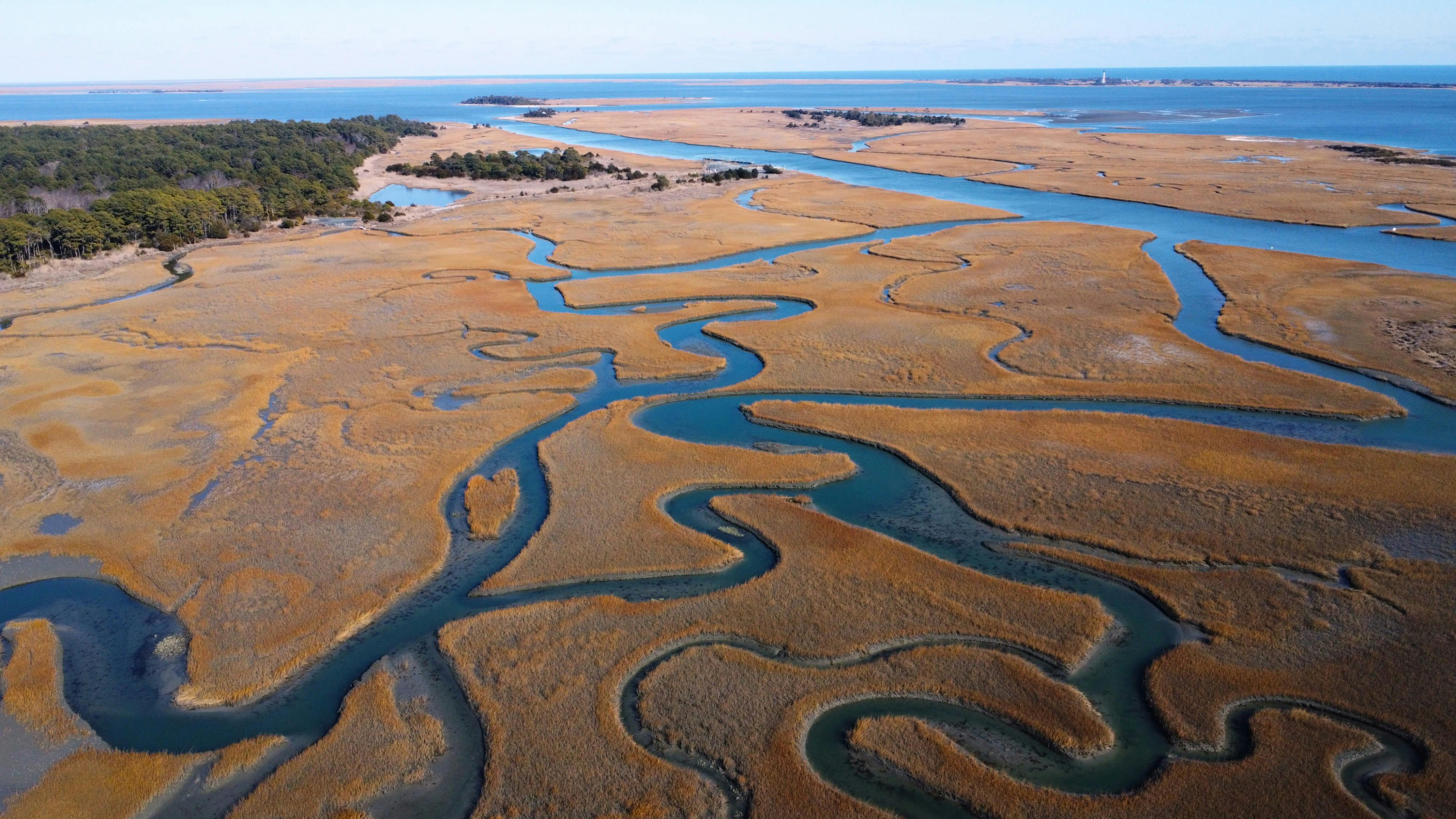
The Chesapeake Bay is the largest estuary in the United States and, according to the U.S. Geological Survey, arguably the best-studied estuary in the world. Its watershed spans more than 64,000 square miles across six states and the District of Columbia, supporting over 18 million people, more than 3,600 species of plants and animals, and an ecosystem restoration effort that has been running for more than four decades.
For both Council Fire and UMCES, the Chesapeake Bay is home. Council Fire is headquartered in Annapolis, Maryland. UMCES operates research facilities across the state, from the Appalachian Laboratory in Frostburg to the Chesapeake Biological Laboratory in Solomons, the oldest publicly supported marine laboratory on the East Coast.
But our partnership extends well beyond the Chesapeake. The frameworks we're developing here, for ecosystem health assessment, climate resilience, science-informed economic transition, and stakeholder-driven implementation, are designed for worldwide application.
The Chesapeake Bay's restoration history is itself a case study in what happens when science, policy, and institutional will converge. The Chesapeake Bay Program, established in 1983, was the first estuary-wide cooperative restoration effort targeted by Congress. The ecosystem report cards UMCES produces each year are used by governors, agency heads, and regional stakeholders to track progress and allocate resources. The lessons learned here have already informed report card processes in Fiji, the Orinoco River Basin, the Mississippi River system, and coastal regions across the globe.
What Council Fire adds to this story is economic and social expertise as well as the strategic translation layer — helping organizations and institutions take the insights generated by UMCES's research and embed them into decision-making processes, capital plans, communications strategies, and governance frameworks.
Closing the Science-to-Action Gap
The challenge that sits at the center of this partnership is well documented in the academic literature. Science-policy interfaces are key mechanisms for translating research into action, yet the gap between knowledge production and institutional implementation remains wide. Researchers produce findings that are often too complex, too jargon-laden, or too disconnected from institutional realities to drive the change they should.
The consequences are significant. Climate adaptation plans sit on shelves. ESG strategies get produced without connection to operational reality. Nature-positive commitments get announced without implementation pathways. Ecosystem health data gets published without the stakeholder processes that would connect it to land-use decisions, infrastructure investments, or policy reforms.
Council Fire and UMCES share a conviction that the solution lies not in producing more research, but in building better pathways from research to action. We're putting systems thinking into practice, pairing every scientific output with a stakeholder engagement strategy, designing sustainability reports that speak the language of institutional decision-makers, and building narrative frameworks that make environmental science feel urgent, relevant, and actionable to the executives, board members, and elected officials who control the levers of institutional change.
What's Ahead
The MOU outlines a five-year framework, but the vision extends well beyond that horizon. Under the agreement, Council Fire and UMCES will co-brand and jointly communicate outcomes of their collaboration through publications, convenings, public reports, and media. Priority areas for the near term include:
Expanding ecosystem report card applications to new geographies and new institutional contexts, including private-sector sustainability assessments and corporate sustainability strategy development.
Developing joint thought leadership for private-sector audiences on topics including sustainability reporting frameworks, nature-based solutions, economic systems change, and science-informed climate resilience.
Contributing to the Chesapeake Global Collaboratory as a platform for global knowledge sharing, innovation in environmental data science, and models for cross-sector collaboration.
Launching co-designed education and training programs that prepare the next generation of sustainability professionals for careers that span research, strategy, and institutional implementation.
Co-developing proposals for national and international initiatives that address climate resilience, sustainable communities, and regenerative economic models.
An Invitation
The challenges ahead are too large for any single discipline or organization. We're grateful to Dr. Fernando Miralles-Wilhelm and the entire UMCES team for this partnership, and we look forward to the work ahead.
If you see opportunities for collaboration, we'd love to hear from you.
Frequently Asked Questions
What does the Council Fire–UMCES Memorandum of Understanding cover?
The five-year MOU formalizes and expands an existing collaboration across five key domains: sustainability reporting and implementation design, applied environmental research and data analysis, program design and execution, stakeholder engagement and science communication, and education and workforce development. A Joint Oversight Committee guides strategic priorities and identifies new opportunities for shared impact.
How does Council Fire's work complement UMCES's research?
UMCES produces world-class environmental research through its network of laboratories and its Integration and Application Network. Council Fire adds the systems strategy, stakeholder engagement, and narrative expertise needed to translate that research into institutional action — embedding scientific findings into decision-making processes, capital plans, and communications strategies that drive real-world outcomes.
What is the Chesapeake Global Collaboratory?
The Chesapeake Global Collaboratory is a UMCES initiative that combines environmental research, data science, and cyberinfrastructure to accelerate solutions to complex socio-environmental problems. It functions as a hub for producing science-based solutions through shared data, tools, and expertise — bringing together researchers, data scientists, social scientists, and communications specialists.
What are ecosystem report cards, and how does Council Fire contribute to them?
Ecosystem report cards are tools developed by UMCES's Integration and Application Network that translate complex environmental data into accessible assessments of ecosystem health. They've been produced for the Chesapeake Bay, Southeast Michigan, Fiji, the Orinoco River Basin, and more. Council Fire contributes its expertise in measuring social and economic impacts, designing and implementing stakeholder engagement plans, and building strategic implementation frameworks that turn report card findings into actionable management decisions.
Can my organization partner with Council Fire and UMCES?
Yes. The MOU is designed to be a platform for broader collaboration. If your organization works in climate resilience, sustainability strategy, nature-based solutions, environmental data science, or related fields, reach out to Council Fire to explore opportunities.
Additional Resources
Climate Resilience & Adaptation: A Strategic Framework for Organizations
Stakeholder Engagement for Sustainability: Principles, Practice, Impact
Nature-Positive Business: Integrating Nature into Corporate Strategy
ESG Reporting & Compliance: The Complete 2026 Strategic Guide
The Future of Sustainability Storytelling Is Not About Climate — It's About Connection
Co-Creating Solutions: Models for Cross-Sector Collaboration
Latest Articles
©2025
Narrative Change and Power Building: The Missing Half of Advocacy
Narrative change is the process of disrupting dominant narratives that normalize inequity and advancing new narratives from historically marginalized communities.

Funding Resilience Without Federal Grants
BRIC is unreliable and FEMA is shrinking. Here's how cities fund climate resilience with dedicated revenue, blended finance, and a coordinating authority.

The ESG Blind Spot: How AI Is Finding Risks in Companies Nobody Else Is Watching
Norway's sovereign wealth fund uses AI to screen 7,200 portfolio companies for forced labor and corruption within 24 hours. The real story is the emerging-market coverage gap that traditional ESG data vendors miss — and what it means for any company with a global supply chain.
Narrative Change and Power Building: The Missing Half of Advocacy
Narrative change is the process of disrupting dominant narratives that normalize inequity and advancing new narratives from historically marginalized communities.
Funding Resilience Without Federal Grants
BRIC is unreliable and FEMA is shrinking. Here's how cities fund climate resilience with dedicated revenue, blended finance, and a coordinating authority.
The ESG Blind Spot: How AI Is Finding Risks in Companies Nobody Else Is Watching
Norway's sovereign wealth fund uses AI to screen 7,200 portfolio companies for forced labor and corruption within 24 hours. The real story is the emerging-market coverage gap that traditional ESG data vendors miss — and what it means for any company with a global supply chain.
FAQ
01
What does it really mean to “redefine profit”?
02
What makes Council Fire different?
03
Who does Council Fire work with?
04
What does working with Council Fire actually look like?
05
How does Council Fire help organizations turn big goals into action?
06
How does Council Fire define and measure success?
Apr 7, 2026
Science, Strategy, and Storytelling: Council Fire and UMCES Formalize a Partnership Built for This Moment
In This Article
Council Fire and the University of Maryland Center for Environmental Science (UMCES) have signed a five-year MOU formalizing their strategic partnership. Learn how this collaboration combines world-class environmental research with systems strategy, stakeholder engagement, and transformative storytelling to close the gap between science and institutional action.
Science, Strategy, and Storytelling: Council Fire and UMCES Formalize a Partnership Built for This Moment
For years, we've operated on a shared belief with the University of Maryland Center for Environmental Science (UMCES): the gap between rigorous environmental research and real-world institutional action is one of the most consequential challenges in sustainability today.
It's a gap that shows up across the world.
Peer-reviewed studies pile up while policymakers struggle to translate findings into programs. Climate risk assessments get produced but never integrated into capital planning. Ecosystem health data exists in abundance, but the organizations that need it most, municipalities, port authorities, private-sector operators, often lack the strategic infrastructure to act on it.
Closing that gap requires science, strategy, and storytelling working together. And this week, we made that partnership official.
A Memorandum of Understanding Built on Shared History
Council Fire and UMCES have signed a five-year Memorandum of Understanding (MOU) formalizing and expanding our strategic collaboration.
Our past work together is significant and varied. Just a few examples include ecosystem report cards across the country, including the Chesapeake Bay and Southeast Michigan , resilience and decarbonization frameworks in New England, and joint proposals for national and international initiatives including the Delta Accelerator in Asia and Integrated Futures Amazonia. And Council Fire CEO George Chmael II serves as an advisor to UMCES's Chesapeake Global Collaboratory, helping shape the vision for how research institutions and stakeholders can co-produce solutions to complex socio-environmental challenges.
The MOU takes all of that momentum and gives it structure, enabling Council Fire and UMCES to jointly pursue work across several interconnected domains:
Sustainability reporting and implementation design. Organizations across sectors face growing pressure from frameworks like the CSRD, TCFD, and science-based targets. Combining UMCES's research rigor with Council Fire's sustainability reporting expertise means clients get frameworks grounded in real science, not checkbox compliance.
Applied environmental research and data analysis. UMCES's Integration and Application Network (IAN) pioneered ecosystem health report cards as tools for translating complex scientific data into formats that decision-makers can actually use. These report cards have been produced on every continent, spanning watersheds, coastal systems, and urban environments. Council Fire is contributing the stakeholder engagement and systems thinking expertise needed to turn those assessments into implementation roadmaps.
Program design and execution. From climate resilience planning for coastal municipalities to nature-based solutions strategy for private-sector operators, the partnership enables end-to-end program delivery from data collection through institutional adoption.
Stakeholder engagement and science communication. One of the most persistent barriers in environmental management is the communication gap between researchers and the institutions that need their findings. Complex data and technical language often lead to misinterpretation or disregard of crucial information by the very decision-makers who need it most. Council Fire's work in sustainability storytelling and stakeholder-centered communications addresses this directly.
Education and workforce development. UMCES has awarded nearly 1,000 graduate degrees over its century of operation. The partnership creates new pathways for connecting emerging environmental scientists with the practical strategy skills, stakeholder mapping, institutional design, narrative development, that turn research careers into implementation careers.
Why This Partnership Is Different
There is no shortage of academic-consulting collaborations in the sustainability space. What makes this one distinct is the unique combination of capabilities and the intention behind it.
UMCES: A Century of Environmental Science
UMCES is not a typical university department. Founded in 1925 as a research station on Solomons Island, UMCES has grown into a globally recognized research and education institution with five constituent research locations spanning from the Appalachian Mountains to Baltimore's Inner Harbor.
Its Integration and Application Network has spent more than 20 years developing ecosystem health report cards globally, evolving them from simple science communication tools into comprehensive socio-environmental assessments that incorporate economic, ecological, and social indicators. The Chesapeake Bay Report Card, first released in 2007, remains a benchmark for how complex environmental data can drive management action and public accountability.
Under the leadership of Dr. Fernando Miralles-Wilhelm, who became UMCES's seventh president in July 2024, the institution is expanding its focus on partnerships that bridge research and implementation. A renowned ecosystem hydrologist with over 30 years of experience spanning academia, the private sector, and international development organizations including The Nature Conservancy, the Inter-American Development Bank, and the World Bank, Dr. Miralles-Wilhelm has served as principal investigator on more than $300 million in sponsored research. He also serves as the University System of Maryland's vice chancellor for sustainability.
"The environmental challenges we face are complex, but not insurmountable," said Dr. Miralles-Wilhelm. "This partnership enables us to scale research-driven solutions that support healthy ecosystems, equitable communities, and a sustainable future."
Council Fire: Systems Strategy and Institutional Action
Council Fire is a certified B Corporation and global change agency helping mission-driven leaders design and implement strategies that create long-term environmental, social, and economic value. Our expertise spans climate resilience, sustainable business strategy, oceans and natural resources, energy and water infrastructure, transportation systems, and sustainable communities.
What we bring to this partnership is the ability to translate complex science into institutional action and compelling narrative. We've done it for clients like Environmental Defense Fund, Walton Family Foundation, tMaryland Port Administration, Resilience Authority of Annapolis and Anne Arundel County, and dozens of other public and private sector organizations navigating the intersection of science, policy, and institutional change.
"This partnership reflects a shared belief that transformative solutions are built at the intersection of science, strategy, and storytelling," said George Chmael II, CEO of Council Fire. "Together, we're advancing a new model for impact, where research is made actionable, communities are engaged, and sustainability goals are transformed into real-world results."
The Combination Is the Differentiator
Plenty of research institutions produce excellent science. Plenty of consultancies produce excellent strategy. The challenge is that these two worlds rarely intersect with the kind of depth and continuity that complex environmental problems demand.
UMCES brings world-class environmental research, a global network, and a century of institutional credibility. Council Fire brings domestic and international experience in systems strategy, stakeholder engagement, and the ability to move from scientific insight to institutional action at the speed that today's challenges require.
Together, we can move from insight to implementation faster and at greater scale.
The Chesapeake Bay: Our Home Base and a Global Model
The Chesapeake Bay is the largest estuary in the United States and, according to the U.S. Geological Survey, arguably the best-studied estuary in the world. Its watershed spans more than 64,000 square miles across six states and the District of Columbia, supporting over 18 million people, more than 3,600 species of plants and animals, and an ecosystem restoration effort that has been running for more than four decades.
For both Council Fire and UMCES, the Chesapeake Bay is home. Council Fire is headquartered in Annapolis, Maryland. UMCES operates research facilities across the state, from the Appalachian Laboratory in Frostburg to the Chesapeake Biological Laboratory in Solomons, the oldest publicly supported marine laboratory on the East Coast.
But our partnership extends well beyond the Chesapeake. The frameworks we're developing here, for ecosystem health assessment, climate resilience, science-informed economic transition, and stakeholder-driven implementation, are designed for worldwide application.
The Chesapeake Bay's restoration history is itself a case study in what happens when science, policy, and institutional will converge. The Chesapeake Bay Program, established in 1983, was the first estuary-wide cooperative restoration effort targeted by Congress. The ecosystem report cards UMCES produces each year are used by governors, agency heads, and regional stakeholders to track progress and allocate resources. The lessons learned here have already informed report card processes in Fiji, the Orinoco River Basin, the Mississippi River system, and coastal regions across the globe.
What Council Fire adds to this story is economic and social expertise as well as the strategic translation layer — helping organizations and institutions take the insights generated by UMCES's research and embed them into decision-making processes, capital plans, communications strategies, and governance frameworks.
Closing the Science-to-Action Gap
The challenge that sits at the center of this partnership is well documented in the academic literature. Science-policy interfaces are key mechanisms for translating research into action, yet the gap between knowledge production and institutional implementation remains wide. Researchers produce findings that are often too complex, too jargon-laden, or too disconnected from institutional realities to drive the change they should.
The consequences are significant. Climate adaptation plans sit on shelves. ESG strategies get produced without connection to operational reality. Nature-positive commitments get announced without implementation pathways. Ecosystem health data gets published without the stakeholder processes that would connect it to land-use decisions, infrastructure investments, or policy reforms.
Council Fire and UMCES share a conviction that the solution lies not in producing more research, but in building better pathways from research to action. We're putting systems thinking into practice, pairing every scientific output with a stakeholder engagement strategy, designing sustainability reports that speak the language of institutional decision-makers, and building narrative frameworks that make environmental science feel urgent, relevant, and actionable to the executives, board members, and elected officials who control the levers of institutional change.
What's Ahead
The MOU outlines a five-year framework, but the vision extends well beyond that horizon. Under the agreement, Council Fire and UMCES will co-brand and jointly communicate outcomes of their collaboration through publications, convenings, public reports, and media. Priority areas for the near term include:
Expanding ecosystem report card applications to new geographies and new institutional contexts, including private-sector sustainability assessments and corporate sustainability strategy development.
Developing joint thought leadership for private-sector audiences on topics including sustainability reporting frameworks, nature-based solutions, economic systems change, and science-informed climate resilience.
Contributing to the Chesapeake Global Collaboratory as a platform for global knowledge sharing, innovation in environmental data science, and models for cross-sector collaboration.
Launching co-designed education and training programs that prepare the next generation of sustainability professionals for careers that span research, strategy, and institutional implementation.
Co-developing proposals for national and international initiatives that address climate resilience, sustainable communities, and regenerative economic models.
An Invitation
The challenges ahead are too large for any single discipline or organization. We're grateful to Dr. Fernando Miralles-Wilhelm and the entire UMCES team for this partnership, and we look forward to the work ahead.
If you see opportunities for collaboration, we'd love to hear from you.
Frequently Asked Questions
What does the Council Fire–UMCES Memorandum of Understanding cover?
The five-year MOU formalizes and expands an existing collaboration across five key domains: sustainability reporting and implementation design, applied environmental research and data analysis, program design and execution, stakeholder engagement and science communication, and education and workforce development. A Joint Oversight Committee guides strategic priorities and identifies new opportunities for shared impact.
How does Council Fire's work complement UMCES's research?
UMCES produces world-class environmental research through its network of laboratories and its Integration and Application Network. Council Fire adds the systems strategy, stakeholder engagement, and narrative expertise needed to translate that research into institutional action — embedding scientific findings into decision-making processes, capital plans, and communications strategies that drive real-world outcomes.
What is the Chesapeake Global Collaboratory?
The Chesapeake Global Collaboratory is a UMCES initiative that combines environmental research, data science, and cyberinfrastructure to accelerate solutions to complex socio-environmental problems. It functions as a hub for producing science-based solutions through shared data, tools, and expertise — bringing together researchers, data scientists, social scientists, and communications specialists.
What are ecosystem report cards, and how does Council Fire contribute to them?
Ecosystem report cards are tools developed by UMCES's Integration and Application Network that translate complex environmental data into accessible assessments of ecosystem health. They've been produced for the Chesapeake Bay, Southeast Michigan, Fiji, the Orinoco River Basin, and more. Council Fire contributes its expertise in measuring social and economic impacts, designing and implementing stakeholder engagement plans, and building strategic implementation frameworks that turn report card findings into actionable management decisions.
Can my organization partner with Council Fire and UMCES?
Yes. The MOU is designed to be a platform for broader collaboration. If your organization works in climate resilience, sustainability strategy, nature-based solutions, environmental data science, or related fields, reach out to Council Fire to explore opportunities.
Additional Resources
Climate Resilience & Adaptation: A Strategic Framework for Organizations
Stakeholder Engagement for Sustainability: Principles, Practice, Impact
Nature-Positive Business: Integrating Nature into Corporate Strategy
ESG Reporting & Compliance: The Complete 2026 Strategic Guide
The Future of Sustainability Storytelling Is Not About Climate — It's About Connection
Co-Creating Solutions: Models for Cross-Sector Collaboration
Latest Articles
©2025
Narrative Change and Power Building: The Missing Half of Advocacy
Narrative change is the process of disrupting dominant narratives that normalize inequity and advancing new narratives from historically marginalized communities.
Funding Resilience Without Federal Grants
BRIC is unreliable and FEMA is shrinking. Here's how cities fund climate resilience with dedicated revenue, blended finance, and a coordinating authority.
The ESG Blind Spot: How AI Is Finding Risks in Companies Nobody Else Is Watching
Norway's sovereign wealth fund uses AI to screen 7,200 portfolio companies for forced labor and corruption within 24 hours. The real story is the emerging-market coverage gap that traditional ESG data vendors miss — and what it means for any company with a global supply chain.
FAQ
01
What does it really mean to “redefine profit”?
02
What makes Council Fire different?
03
Who does Council Fire work with?
04
What does working with Council Fire actually look like?
05
How does Council Fire help organizations turn big goals into action?
06
How does Council Fire define and measure success?
Apr 7, 2026
Science, Strategy, and Storytelling: Council Fire and UMCES Formalize a Partnership Built for This Moment
In This Article
Council Fire and the University of Maryland Center for Environmental Science (UMCES) have signed a five-year MOU formalizing their strategic partnership. Learn how this collaboration combines world-class environmental research with systems strategy, stakeholder engagement, and transformative storytelling to close the gap between science and institutional action.
Science, Strategy, and Storytelling: Council Fire and UMCES Formalize a Partnership Built for This Moment
For years, we've operated on a shared belief with the University of Maryland Center for Environmental Science (UMCES): the gap between rigorous environmental research and real-world institutional action is one of the most consequential challenges in sustainability today.
It's a gap that shows up across the world.
Peer-reviewed studies pile up while policymakers struggle to translate findings into programs. Climate risk assessments get produced but never integrated into capital planning. Ecosystem health data exists in abundance, but the organizations that need it most, municipalities, port authorities, private-sector operators, often lack the strategic infrastructure to act on it.
Closing that gap requires science, strategy, and storytelling working together. And this week, we made that partnership official.
A Memorandum of Understanding Built on Shared History
Council Fire and UMCES have signed a five-year Memorandum of Understanding (MOU) formalizing and expanding our strategic collaboration.
Our past work together is significant and varied. Just a few examples include ecosystem report cards across the country, including the Chesapeake Bay and Southeast Michigan , resilience and decarbonization frameworks in New England, and joint proposals for national and international initiatives including the Delta Accelerator in Asia and Integrated Futures Amazonia. And Council Fire CEO George Chmael II serves as an advisor to UMCES's Chesapeake Global Collaboratory, helping shape the vision for how research institutions and stakeholders can co-produce solutions to complex socio-environmental challenges.
The MOU takes all of that momentum and gives it structure, enabling Council Fire and UMCES to jointly pursue work across several interconnected domains:
Sustainability reporting and implementation design. Organizations across sectors face growing pressure from frameworks like the CSRD, TCFD, and science-based targets. Combining UMCES's research rigor with Council Fire's sustainability reporting expertise means clients get frameworks grounded in real science, not checkbox compliance.
Applied environmental research and data analysis. UMCES's Integration and Application Network (IAN) pioneered ecosystem health report cards as tools for translating complex scientific data into formats that decision-makers can actually use. These report cards have been produced on every continent, spanning watersheds, coastal systems, and urban environments. Council Fire is contributing the stakeholder engagement and systems thinking expertise needed to turn those assessments into implementation roadmaps.
Program design and execution. From climate resilience planning for coastal municipalities to nature-based solutions strategy for private-sector operators, the partnership enables end-to-end program delivery from data collection through institutional adoption.
Stakeholder engagement and science communication. One of the most persistent barriers in environmental management is the communication gap between researchers and the institutions that need their findings. Complex data and technical language often lead to misinterpretation or disregard of crucial information by the very decision-makers who need it most. Council Fire's work in sustainability storytelling and stakeholder-centered communications addresses this directly.
Education and workforce development. UMCES has awarded nearly 1,000 graduate degrees over its century of operation. The partnership creates new pathways for connecting emerging environmental scientists with the practical strategy skills, stakeholder mapping, institutional design, narrative development, that turn research careers into implementation careers.
Why This Partnership Is Different
There is no shortage of academic-consulting collaborations in the sustainability space. What makes this one distinct is the unique combination of capabilities and the intention behind it.
UMCES: A Century of Environmental Science
UMCES is not a typical university department. Founded in 1925 as a research station on Solomons Island, UMCES has grown into a globally recognized research and education institution with five constituent research locations spanning from the Appalachian Mountains to Baltimore's Inner Harbor.
Its Integration and Application Network has spent more than 20 years developing ecosystem health report cards globally, evolving them from simple science communication tools into comprehensive socio-environmental assessments that incorporate economic, ecological, and social indicators. The Chesapeake Bay Report Card, first released in 2007, remains a benchmark for how complex environmental data can drive management action and public accountability.
Under the leadership of Dr. Fernando Miralles-Wilhelm, who became UMCES's seventh president in July 2024, the institution is expanding its focus on partnerships that bridge research and implementation. A renowned ecosystem hydrologist with over 30 years of experience spanning academia, the private sector, and international development organizations including The Nature Conservancy, the Inter-American Development Bank, and the World Bank, Dr. Miralles-Wilhelm has served as principal investigator on more than $300 million in sponsored research. He also serves as the University System of Maryland's vice chancellor for sustainability.
"The environmental challenges we face are complex, but not insurmountable," said Dr. Miralles-Wilhelm. "This partnership enables us to scale research-driven solutions that support healthy ecosystems, equitable communities, and a sustainable future."
Council Fire: Systems Strategy and Institutional Action
Council Fire is a certified B Corporation and global change agency helping mission-driven leaders design and implement strategies that create long-term environmental, social, and economic value. Our expertise spans climate resilience, sustainable business strategy, oceans and natural resources, energy and water infrastructure, transportation systems, and sustainable communities.
What we bring to this partnership is the ability to translate complex science into institutional action and compelling narrative. We've done it for clients like Environmental Defense Fund, Walton Family Foundation, tMaryland Port Administration, Resilience Authority of Annapolis and Anne Arundel County, and dozens of other public and private sector organizations navigating the intersection of science, policy, and institutional change.
"This partnership reflects a shared belief that transformative solutions are built at the intersection of science, strategy, and storytelling," said George Chmael II, CEO of Council Fire. "Together, we're advancing a new model for impact, where research is made actionable, communities are engaged, and sustainability goals are transformed into real-world results."
The Combination Is the Differentiator
Plenty of research institutions produce excellent science. Plenty of consultancies produce excellent strategy. The challenge is that these two worlds rarely intersect with the kind of depth and continuity that complex environmental problems demand.
UMCES brings world-class environmental research, a global network, and a century of institutional credibility. Council Fire brings domestic and international experience in systems strategy, stakeholder engagement, and the ability to move from scientific insight to institutional action at the speed that today's challenges require.
Together, we can move from insight to implementation faster and at greater scale.
The Chesapeake Bay: Our Home Base and a Global Model
The Chesapeake Bay is the largest estuary in the United States and, according to the U.S. Geological Survey, arguably the best-studied estuary in the world. Its watershed spans more than 64,000 square miles across six states and the District of Columbia, supporting over 18 million people, more than 3,600 species of plants and animals, and an ecosystem restoration effort that has been running for more than four decades.
For both Council Fire and UMCES, the Chesapeake Bay is home. Council Fire is headquartered in Annapolis, Maryland. UMCES operates research facilities across the state, from the Appalachian Laboratory in Frostburg to the Chesapeake Biological Laboratory in Solomons, the oldest publicly supported marine laboratory on the East Coast.
But our partnership extends well beyond the Chesapeake. The frameworks we're developing here, for ecosystem health assessment, climate resilience, science-informed economic transition, and stakeholder-driven implementation, are designed for worldwide application.
The Chesapeake Bay's restoration history is itself a case study in what happens when science, policy, and institutional will converge. The Chesapeake Bay Program, established in 1983, was the first estuary-wide cooperative restoration effort targeted by Congress. The ecosystem report cards UMCES produces each year are used by governors, agency heads, and regional stakeholders to track progress and allocate resources. The lessons learned here have already informed report card processes in Fiji, the Orinoco River Basin, the Mississippi River system, and coastal regions across the globe.
What Council Fire adds to this story is economic and social expertise as well as the strategic translation layer — helping organizations and institutions take the insights generated by UMCES's research and embed them into decision-making processes, capital plans, communications strategies, and governance frameworks.
Closing the Science-to-Action Gap
The challenge that sits at the center of this partnership is well documented in the academic literature. Science-policy interfaces are key mechanisms for translating research into action, yet the gap between knowledge production and institutional implementation remains wide. Researchers produce findings that are often too complex, too jargon-laden, or too disconnected from institutional realities to drive the change they should.
The consequences are significant. Climate adaptation plans sit on shelves. ESG strategies get produced without connection to operational reality. Nature-positive commitments get announced without implementation pathways. Ecosystem health data gets published without the stakeholder processes that would connect it to land-use decisions, infrastructure investments, or policy reforms.
Council Fire and UMCES share a conviction that the solution lies not in producing more research, but in building better pathways from research to action. We're putting systems thinking into practice, pairing every scientific output with a stakeholder engagement strategy, designing sustainability reports that speak the language of institutional decision-makers, and building narrative frameworks that make environmental science feel urgent, relevant, and actionable to the executives, board members, and elected officials who control the levers of institutional change.
What's Ahead
The MOU outlines a five-year framework, but the vision extends well beyond that horizon. Under the agreement, Council Fire and UMCES will co-brand and jointly communicate outcomes of their collaboration through publications, convenings, public reports, and media. Priority areas for the near term include:
Expanding ecosystem report card applications to new geographies and new institutional contexts, including private-sector sustainability assessments and corporate sustainability strategy development.
Developing joint thought leadership for private-sector audiences on topics including sustainability reporting frameworks, nature-based solutions, economic systems change, and science-informed climate resilience.
Contributing to the Chesapeake Global Collaboratory as a platform for global knowledge sharing, innovation in environmental data science, and models for cross-sector collaboration.
Launching co-designed education and training programs that prepare the next generation of sustainability professionals for careers that span research, strategy, and institutional implementation.
Co-developing proposals for national and international initiatives that address climate resilience, sustainable communities, and regenerative economic models.
An Invitation
The challenges ahead are too large for any single discipline or organization. We're grateful to Dr. Fernando Miralles-Wilhelm and the entire UMCES team for this partnership, and we look forward to the work ahead.
If you see opportunities for collaboration, we'd love to hear from you.
Frequently Asked Questions
What does the Council Fire–UMCES Memorandum of Understanding cover?
The five-year MOU formalizes and expands an existing collaboration across five key domains: sustainability reporting and implementation design, applied environmental research and data analysis, program design and execution, stakeholder engagement and science communication, and education and workforce development. A Joint Oversight Committee guides strategic priorities and identifies new opportunities for shared impact.
How does Council Fire's work complement UMCES's research?
UMCES produces world-class environmental research through its network of laboratories and its Integration and Application Network. Council Fire adds the systems strategy, stakeholder engagement, and narrative expertise needed to translate that research into institutional action — embedding scientific findings into decision-making processes, capital plans, and communications strategies that drive real-world outcomes.
What is the Chesapeake Global Collaboratory?
The Chesapeake Global Collaboratory is a UMCES initiative that combines environmental research, data science, and cyberinfrastructure to accelerate solutions to complex socio-environmental problems. It functions as a hub for producing science-based solutions through shared data, tools, and expertise — bringing together researchers, data scientists, social scientists, and communications specialists.
What are ecosystem report cards, and how does Council Fire contribute to them?
Ecosystem report cards are tools developed by UMCES's Integration and Application Network that translate complex environmental data into accessible assessments of ecosystem health. They've been produced for the Chesapeake Bay, Southeast Michigan, Fiji, the Orinoco River Basin, and more. Council Fire contributes its expertise in measuring social and economic impacts, designing and implementing stakeholder engagement plans, and building strategic implementation frameworks that turn report card findings into actionable management decisions.
Can my organization partner with Council Fire and UMCES?
Yes. The MOU is designed to be a platform for broader collaboration. If your organization works in climate resilience, sustainability strategy, nature-based solutions, environmental data science, or related fields, reach out to Council Fire to explore opportunities.
Additional Resources
Climate Resilience & Adaptation: A Strategic Framework for Organizations
Stakeholder Engagement for Sustainability: Principles, Practice, Impact
Nature-Positive Business: Integrating Nature into Corporate Strategy
ESG Reporting & Compliance: The Complete 2026 Strategic Guide
The Future of Sustainability Storytelling Is Not About Climate — It's About Connection
Co-Creating Solutions: Models for Cross-Sector Collaboration
Latest Articles
©2025
Narrative Change and Power Building: The Missing Half of Advocacy
Narrative change is the process of disrupting dominant narratives that normalize inequity and advancing new narratives from historically marginalized communities.
Funding Resilience Without Federal Grants
BRIC is unreliable and FEMA is shrinking. Here's how cities fund climate resilience with dedicated revenue, blended finance, and a coordinating authority.
The ESG Blind Spot: How AI Is Finding Risks in Companies Nobody Else Is Watching
Norway's sovereign wealth fund uses AI to screen 7,200 portfolio companies for forced labor and corruption within 24 hours. The real story is the emerging-market coverage gap that traditional ESG data vendors miss — and what it means for any company with a global supply chain.
FAQ
What does it really mean to “redefine profit”?
What makes Council Fire different?
Who does Council Fire work with?
What does working with Council Fire actually look like?
How does Council Fire help organizations turn big goals into action?
How does Council Fire define and measure success?