May 1, 2026
How to Finance Green and Nature-Based Infrastructure for Corporations
ESG Strategy
In This Article
How corporations can fund nature-based infrastructure using green bonds, sustainability-linked loans, and public–private partnerships.
How to Finance Green and Nature-Based Infrastructure for Corporations
Investing in green and nature-based infrastructure is critical for businesses aiming to reduce risks, meet climate goals, and protect ecosystems that support half of the global economy. However, barriers like high upfront costs, long payback periods, and misaligned internal priorities often hinder progress.
Key financing tools can help overcome these challenges:
Green Bonds: Fixed-income instruments for specific projects, offering pricing advantages and credibility through standardized frameworks.
Sustainability-Linked Loans (SLLs): Flexible funding tied to measurable sustainability targets, with financial incentives for success and penalties for failure.
Public-Private Partnerships (PPPs): Collaborative investments that combine public support with private capital to de-risk and scale nature-based solutions.
To succeed, companies must align projects with clear goals, secure stakeholder buy-in, and establish robust monitoring systems for transparency. With these strategies, businesses can integrate nature into their operations while driving measurable outcomes.
IFC Green Bonds: Financing a Sustainable Future in Emerging Markets
Key Financing Tools for Green Infrastructure
Corporations looking to fund green and nature-based infrastructure have three main financing options: green bonds, sustainability-linked loans, and public–private partnerships. Each approach offers unique benefits depending on the project's scope, timeline, and organizational goals. These tools enable businesses to align their funding strategies with environmental goals while managing risk effectively.
Green Bonds: Purpose-Driven Funding
Green bonds are fixed-income instruments designed to support projects like renewable energy, ecosystem restoration, or wastewater management. In 2023, global green bond issuance surpassed $575 billion [2].
To issue green bonds, corporations must create a framework with four key elements: use of proceeds, project evaluation and selection, management of proceeds, and reporting [2]. Aligning the framework with the ICMA Green Bond Principles or the EU Green Bond Standard (effective December 2024) ensures credibility [2]. To further strengthen trust, companies should seek a Second-Party Opinion (SPO) from reputable organizations like Sustainalytics or Cicero to confirm compliance before issuance [2].
One financial advantage of green bonds is the "greenium", a pricing benefit of 2–10 basis points compared to traditional bonds. Additionally, companies can refinance green projects using a 2–3 year lookback period, though investors typically prefer a mix of new and ongoing initiatives [2].
"Green bonds have become a cornerstone of sustainable finance, channelling capital toward projects with environmental benefits." - Council Fire Resources [2]
To manage green bonds effectively, corporations should establish a Green Bond Committee comprising representatives from treasury, sustainability, and business units. This committee oversees project selection and ensures proceeds are earmarked for eligible projects. Annual impact reports are essential to demonstrate measurable outcomes, such as reduced CO₂ emissions, restored habitats, or conserved water resources [2].
Next, let's look at sustainability-linked loans, which tie financial terms to performance.
Sustainability-Linked Loans: Linking Costs to Results
Sustainability-linked loans (SLLs) differ from green bonds by allowing companies to fund general corporate activities while tying interest rates to sustainability performance [3]. Meeting sustainability targets can lower interest rates, while failing to meet them results in higher costs [3].
"The 'reward' of a Margin reduction for achieving ESG targets is now well established, and so is the 'discipline' of a Margin increase for each KPI not achieved." - Dechert [3]
The success of SLLs depends on selecting Key Performance Indicators (KPIs) that are measurable and industry-relevant. Examples include reducing greenhouse gas emissions, improving energy efficiency, or conserving biodiversity. These KPIs must be paired with ambitious Sustainability Performance Targets (SPTs) that go beyond regulatory requirements to drive meaningful progress [3].
A notable trend in SLLs is the reinvestment of at least 50% of margin savings into sustainability initiatives or charitable causes [3]. Companies are also required to work with independent reviewers who verify performance annually and issue ESG compliance certificates [3]. Evidence shows that ambitious targets deliver results - companies participating in the Science Based Targets initiative reduced emissions by an average of 6.4% annually between 2016 and 2020 [5].
For projects that require shared risk and collaboration, public–private partnerships offer a viable solution.
Public–Private Partnerships: Collaborative Investment
Public–private partnerships (PPPs) combine public sector resources with private capital to de-risk investments in nature-based solutions [6]. Public entities may provide concessional funding, guarantees, or regulatory support to create revenue streams, such as payments for ecosystem services or access to carbon markets. Private companies contribute financing, expertise, and operational capabilities.
"Guarantees can be the most catalytic instruments to drive private capital to NbS." - Climate Policy Initiative [6]
Nature-based projects often face challenges in monetization because their benefits, like cleaner air or biodiversity, are public goods. PPPs address these issues by using blended finance tools, such as concessional capital (accepting below-market returns), technical assistance grants, or guarantees to mitigate risks [6]. Governments also play a critical role in building the necessary infrastructure and expertise to attract private investment [6].
To structure successful PPPs, identify stakeholders who benefit from the project, such as utility providers or insurance companies, and involve them in revenue generation models. Early engagement with NGOs, academic experts, and local communities is crucial for securing buy-in and accessing valuable knowledge [4]. Robust Monitoring, Reporting, and Verification (MRV) systems are essential to provide investors with reliable data, fostering long-term confidence [4]. In 2022, governments accounted for 82% of the $200 billion allocated to nature-based solutions, highlighting significant opportunities for private sector involvement through well-structured partnerships [4].
How to Assess Project Viability and Financial Prerequisites
Before seeking financing, it's critical to evaluate whether your project is viable and meets the necessary financial standards. This initial assessment helps distinguish projects that can attract investment from those that cannot.
Evaluating Project Readiness
The ARK Framework offers a structured method to determine if your project is ready for financing [4]. It involves three key steps:
Assess stakeholder support: Ensure you have buy-in from key stakeholders.
Refine operational plans: Integrate nature into your corporate strategy, secure commitments, and finalize plans.
Kick-off with governance: Establish governance structures and reliable monitoring, reporting, and verification (MRV) systems.
To demonstrate the integrity of your project, focus on three critical factors:
Additionality: Show that emissions reductions wouldn't occur without your project.
Permanence: Guarantee that the achieved results will not be reversed.
Leakage prevention: Ensure emissions aren’t simply shifted elsewhere [5].
For instance, companies aligned with the Science Based Targets Initiative (SBTi) reduced emissions by an average of 6.4% annually between 2016 and 2020, surpassing the 4.2% annual reduction required to align with a 1.5°C global warming trajectory [5]. Achieving SBTi standards for your operations is crucial before pursuing nature-based solution credits, as failing to do so could lead to accusations of greenwashing [5].
"Carbon credits must not provide a corporation with an incentive or excuse to delay emission reductions within its own operations and value chain." - Sir Andrew Steer and Craig Hanson, World Resources Institute [5]
Align management incentives with clear sustainability goals [4]. Additionally, engaging Indigenous groups and local communities early is vital - not only to avoid social displacement but also to benefit from their invaluable local knowledge [4].
Once project readiness is confirmed, the next step is to align financial structures in ways that reduce investor risk.
Meeting Financial Requirements
With your project ready, focus on creating stable revenue streams and implementing measures to mitigate risks. For nature-based solutions, identify stakeholders who benefit from the project, such as utility companies seeking cleaner water or insurance agencies aiming to lower climate-related claims. These stakeholders can play a role in revenue generation models [6]. Because nature-based projects often create public goods that are hard to monetize, consider using de-risking mechanisms like guarantees to make the project more attractive to private investors [6].
Develop a Green Finance Framework to clearly define eligible projects, outline how funds will be used, and establish a transparent process for evaluating and selecting projects [8]. To enhance credibility, seek external verification through a Second-Party Opinion (SPO) to confirm alignment with recognized Green Bond or Loan Principles before approaching investors [8].
Key financial practices include:
Tracking funds in a dedicated account or sub-ledger.
Allocating funds to eligible projects within 24 months [8].
For additional support, tools like the EPA's Financing Alternatives Comparison Tool (FACT) can help identify cost-effective funding methods for water or green infrastructure projects [7].
Finally, establish robust MRV systems early. Reliable data from these systems builds long-term confidence among investors and ensures the transparency needed for sustained funding [4].
Maximizing Impact Through Execution
Using Systems Thinking for Better Outcomes
Once financing is secured, the next big challenge is turning those funds into tangible results. This is where systems thinking comes in. By connecting individual projects to broader sustainability goals, companies can ensure that every dollar spent - whether through green bonds, sustainability-linked loans, or public–private partnerships - delivers a measurable environmental return. It’s about seeing the bigger picture, not just isolated efforts.
Broad-scale strategies often outperform single-project approaches when tackling issues like leakage and permanence. For instance, the Rimba Collective unites consumer goods manufacturers, including Unilever, to protect and restore natural landscapes on a large scale. Similarly, General Mills collaborates with farmers to plant wildflower meadows and hedgerows, creating nature-based infrastructure that directly supports pollinators essential for crops like oats and wheat [4]. Aligning management incentives with long-term sustainability goals is another critical step in ensuring lasting impact [4].
"Nature is not an abstract responsibility; it is a tangible asset that businesses can manage, protect and restore for measurable impact, whether or not it directly relates to their value chains." - Esther Sekyoung Choi and Roman Paul Czebiniak, World Resources Institute [4]
However, it’s crucial to recognize that investing in nature-based solutions should complement - not replace - aggressive internal efforts to cut emissions. Companies adhering to Science-Based Targets have reduced their emissions by an average of 6.4% annually, even as industrial emissions overall rose by 3.6% during the same period [5].
To turn these strategies into action, having the right expertise can make all the difference.
Partnering with Council Fire for Success
Bridging the gap between vision and execution often requires expert guidance. Council Fire excels in helping organizations move from ambitious goals to actionable plans that deliver measurable environmental, social, and economic benefits.
Many companies face delays due to "analysis paralysis" in their sustainability reporting [4]. Council Fire addresses this by helping organizations transition quickly from planning to implementation. Their services include stakeholder engagement, climate resilience planning, and tailored ESG strategies.
Nature-based solutions, while promising, often exist in early stages of market development and require specialized knowledge to prove their commercial viability. Council Fire’s systems thinking approach tackles the challenges of green infrastructure, where benefits are spread across many stakeholders and can be difficult to monetize [6]. By using data-driven impact analysis and clear strategic communication, they help companies navigate complexities, resolve conflicting internal KPIs, and secure third-party validation - critical for building investor trust [4].
Comparison of Financing Mechanisms for Corporations
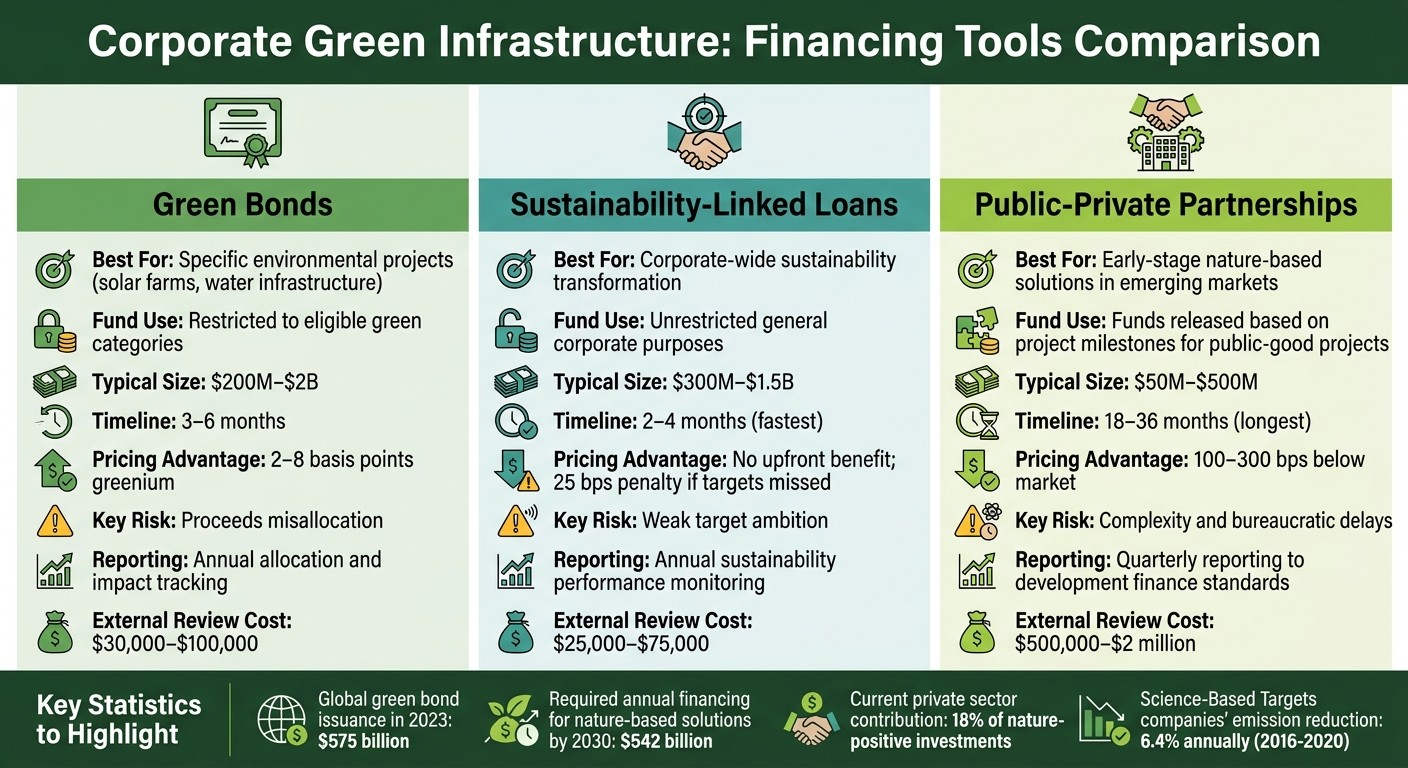
Comparison of Green Bonds, Sustainability-Linked Loans, and Public-Private Partnerships for Corporate Green Infrastructure Financing
Side-by-Side Analysis of Financing Tools
Choosing the right financing mechanism can significantly impact both costs and project timelines. Green bonds are tailored for projects with specific funding needs, such as renewable energy installations or water infrastructure. On the other hand, sustainability-linked loans provide greater flexibility, allowing funds to be used for broader corporate purposes while tying interest rates to meeting sustainability goals, such as reducing emissions. Meanwhile, public-private partnerships are ideal for early-stage, nature-based solutions, where public support helps mitigate risks associated with unproven revenue models. This comparison highlights how each tool serves different strategic goals by aligning financial and environmental priorities.
From a financial perspective, these mechanisms have distinct advantages and trade-offs. Green bonds often enjoy a "greenium", with pricing benefits of 2–8 basis points compared to standard bonds in liquid markets. Sustainability-linked loans lack upfront pricing benefits but impose a 25-basis point interest rate penalty if sustainability targets are missed. Public-private partnerships, frequently structured as blended finance, can achieve interest rate concessions of 100–300 basis points below market rates. However, their complexity often results in extended structuring timelines [9].
Timelines are another critical factor. Sustainability-linked loans typically close within 2–4 months, while green bonds take slightly longer at 3–6 months. Public-private partnerships, due to their multi-party negotiations and intricate structuring, can take anywhere from 18–36 months to finalize. Associated costs for external reviews reflect this complexity: green bonds range from $30,000–$100,000, sustainability-linked loans from $25,000–$75,000, and blended finance deals can escalate to $500,000–$2 million [9]. The table below provides a detailed comparison of these financing tools.
Feature | Green Bonds | Sustainability-Linked Loans | Public-Private Partnerships |
|---|---|---|---|
Best For | Specific environmental projects (e.g., solar farms, water infrastructure) | Corporate-wide sustainability transformation | Early-stage nature-based solutions in emerging markets |
Fund Use | Restricted to eligible green categories | Unrestricted general corporate purposes | Funds released based on project milestones for public-good projects |
Typical Size | $200M–$2B | $300M–$1.5B | $50M–$500M |
Timeline | 3–6 months | 2–4 months | 18–36 months |
Pricing | 2–8 bps greenium | No upfront benefit; 25 bps penalty if targets missed | 100–300 bps below market |
Risk | Proceeds misallocation | Weak target ambition | Complexity and bureaucratic delays |
Reporting | Annual allocation and impact tracking | Annual sustainability performance monitoring | Quarterly reporting to development finance standards |
Conclusion
Investing in green and nature-based infrastructure has shifted from being an optional endeavor to a critical business strategy. With over half of the global economy relying on nature's resources, the private sector’s current contribution - just 18% of all nature-positive investments - is far from sufficient [1]. To hit global climate goals, annual financing for nature-based solutions must nearly triple, reaching $542 billion by 2030 [1]. Tools like green bonds, sustainability-linked loans, and public–private partnerships offer proven ways to align financial goals with environmental progress.
The key to success lies in embedding nature into the heart of business strategies, rather than treating it as a mere compliance issue. Esther Sekyoung Choi and Roman Paul Czebiniak from the World Resources Institute emphasize this point:
"Businesses must treat nature as a strategic asset, essential to driving innovation, building resilience and creating long-term value" [4].
Achieving such integration requires aligning internal incentives and ensuring accountability across all levels of an organization [4].
Equally important is the focus on internal decarbonization. Companies participating in the Science Based Targets initiative have demonstrated this by cutting emissions by an average of 6.4% annually - surpassing the 4.2% reduction needed to stay on track for a 1.5°C future [5]. However, nature financing should complement, not replace, these internal efforts. As Sir Andrew Steer and Craig Hanson caution:
"It is no longer appropriate for emitters to be given the choice to delay action within their own operations by buying offsets elsewhere" [5].
The urgency is undeniable, and the tools are already available. Whether financing a solar farm through green bonds, transforming operations with sustainability-linked loans, or fostering nature-based innovations via public–private partnerships, the time to act is now. With expert guidance from Council Fire, businesses can ensure these financing strategies lead to tangible environmental and economic outcomes - delivering results that go beyond compliance to create lasting value across systems.
FAQs
How do I choose between a green bond and an SLL?
The right option hinges on your company’s objectives and sustainability priorities. Green bonds are designed to support specific environmental projects, offering detailed impact reporting and potential pricing benefits. On the other hand, sustainability-linked loans (SLLs) provide greater flexibility, linking to overall sustainability performance and serving general corporate needs. If your focus is on clear accountability for targeted initiatives, green bonds are the way to go. For a more adaptable approach, SLLs might be the better fit.
What KPIs and targets will investors accept?
Investors are generally open to KPIs and targets that emphasize measurable outcomes across several dimensions, including environmental benefits, financial performance, and stakeholder involvement. Metrics such as ecosystem health, carbon sequestration, and social impact indicators often gain traction, provided they align with the investors' expectations for both risk and return.
How can a nature project generate reliable revenue?
Nature projects can tap into dependable revenue sources by leveraging financing tools such as green bonds, sustainability-linked loans, and public-private partnerships, which supply critical funding. Beyond these, projects can also generate income through payments for ecosystem services (PES) or by trading environmental credits in established markets. These strategies align financial returns with ecological benefits, promoting long-term financial stability while advancing both corporate objectives and environmental priorities.
Related Blog Posts
Latest Articles
©2025

Narrative Change and Power Building: The Missing Half of Advocacy
Narrative change is the process of disrupting dominant narratives that normalize inequity and advancing new narratives from historically marginalized communities.

Funding Resilience Without Federal Grants
BRIC is unreliable and FEMA is shrinking. Here's how cities fund climate resilience with dedicated revenue, blended finance, and a coordinating authority.

The ESG Blind Spot: How AI Is Finding Risks in Companies Nobody Else Is Watching
Norway's sovereign wealth fund uses AI to screen 7,200 portfolio companies for forced labor and corruption within 24 hours. The real story is the emerging-market coverage gap that traditional ESG data vendors miss — and what it means for any company with a global supply chain.
Narrative Change and Power Building: The Missing Half of Advocacy
Narrative change is the process of disrupting dominant narratives that normalize inequity and advancing new narratives from historically marginalized communities.
Funding Resilience Without Federal Grants
BRIC is unreliable and FEMA is shrinking. Here's how cities fund climate resilience with dedicated revenue, blended finance, and a coordinating authority.
The ESG Blind Spot: How AI Is Finding Risks in Companies Nobody Else Is Watching
Norway's sovereign wealth fund uses AI to screen 7,200 portfolio companies for forced labor and corruption within 24 hours. The real story is the emerging-market coverage gap that traditional ESG data vendors miss — and what it means for any company with a global supply chain.
FAQ
01
What does it really mean to “redefine profit”?
02
What makes Council Fire different?
03
Who does Council Fire work with?
04
What does working with Council Fire actually look like?
05
How does Council Fire help organizations turn big goals into action?
06
How does Council Fire define and measure success?
May 1, 2026
How to Finance Green and Nature-Based Infrastructure for Corporations
ESG Strategy
In This Article
How corporations can fund nature-based infrastructure using green bonds, sustainability-linked loans, and public–private partnerships.
How to Finance Green and Nature-Based Infrastructure for Corporations
Investing in green and nature-based infrastructure is critical for businesses aiming to reduce risks, meet climate goals, and protect ecosystems that support half of the global economy. However, barriers like high upfront costs, long payback periods, and misaligned internal priorities often hinder progress.
Key financing tools can help overcome these challenges:
Green Bonds: Fixed-income instruments for specific projects, offering pricing advantages and credibility through standardized frameworks.
Sustainability-Linked Loans (SLLs): Flexible funding tied to measurable sustainability targets, with financial incentives for success and penalties for failure.
Public-Private Partnerships (PPPs): Collaborative investments that combine public support with private capital to de-risk and scale nature-based solutions.
To succeed, companies must align projects with clear goals, secure stakeholder buy-in, and establish robust monitoring systems for transparency. With these strategies, businesses can integrate nature into their operations while driving measurable outcomes.
IFC Green Bonds: Financing a Sustainable Future in Emerging Markets
Key Financing Tools for Green Infrastructure
Corporations looking to fund green and nature-based infrastructure have three main financing options: green bonds, sustainability-linked loans, and public–private partnerships. Each approach offers unique benefits depending on the project's scope, timeline, and organizational goals. These tools enable businesses to align their funding strategies with environmental goals while managing risk effectively.
Green Bonds: Purpose-Driven Funding
Green bonds are fixed-income instruments designed to support projects like renewable energy, ecosystem restoration, or wastewater management. In 2023, global green bond issuance surpassed $575 billion [2].
To issue green bonds, corporations must create a framework with four key elements: use of proceeds, project evaluation and selection, management of proceeds, and reporting [2]. Aligning the framework with the ICMA Green Bond Principles or the EU Green Bond Standard (effective December 2024) ensures credibility [2]. To further strengthen trust, companies should seek a Second-Party Opinion (SPO) from reputable organizations like Sustainalytics or Cicero to confirm compliance before issuance [2].
One financial advantage of green bonds is the "greenium", a pricing benefit of 2–10 basis points compared to traditional bonds. Additionally, companies can refinance green projects using a 2–3 year lookback period, though investors typically prefer a mix of new and ongoing initiatives [2].
"Green bonds have become a cornerstone of sustainable finance, channelling capital toward projects with environmental benefits." - Council Fire Resources [2]
To manage green bonds effectively, corporations should establish a Green Bond Committee comprising representatives from treasury, sustainability, and business units. This committee oversees project selection and ensures proceeds are earmarked for eligible projects. Annual impact reports are essential to demonstrate measurable outcomes, such as reduced CO₂ emissions, restored habitats, or conserved water resources [2].
Next, let's look at sustainability-linked loans, which tie financial terms to performance.
Sustainability-Linked Loans: Linking Costs to Results
Sustainability-linked loans (SLLs) differ from green bonds by allowing companies to fund general corporate activities while tying interest rates to sustainability performance [3]. Meeting sustainability targets can lower interest rates, while failing to meet them results in higher costs [3].
"The 'reward' of a Margin reduction for achieving ESG targets is now well established, and so is the 'discipline' of a Margin increase for each KPI not achieved." - Dechert [3]
The success of SLLs depends on selecting Key Performance Indicators (KPIs) that are measurable and industry-relevant. Examples include reducing greenhouse gas emissions, improving energy efficiency, or conserving biodiversity. These KPIs must be paired with ambitious Sustainability Performance Targets (SPTs) that go beyond regulatory requirements to drive meaningful progress [3].
A notable trend in SLLs is the reinvestment of at least 50% of margin savings into sustainability initiatives or charitable causes [3]. Companies are also required to work with independent reviewers who verify performance annually and issue ESG compliance certificates [3]. Evidence shows that ambitious targets deliver results - companies participating in the Science Based Targets initiative reduced emissions by an average of 6.4% annually between 2016 and 2020 [5].
For projects that require shared risk and collaboration, public–private partnerships offer a viable solution.
Public–Private Partnerships: Collaborative Investment
Public–private partnerships (PPPs) combine public sector resources with private capital to de-risk investments in nature-based solutions [6]. Public entities may provide concessional funding, guarantees, or regulatory support to create revenue streams, such as payments for ecosystem services or access to carbon markets. Private companies contribute financing, expertise, and operational capabilities.
"Guarantees can be the most catalytic instruments to drive private capital to NbS." - Climate Policy Initiative [6]
Nature-based projects often face challenges in monetization because their benefits, like cleaner air or biodiversity, are public goods. PPPs address these issues by using blended finance tools, such as concessional capital (accepting below-market returns), technical assistance grants, or guarantees to mitigate risks [6]. Governments also play a critical role in building the necessary infrastructure and expertise to attract private investment [6].
To structure successful PPPs, identify stakeholders who benefit from the project, such as utility providers or insurance companies, and involve them in revenue generation models. Early engagement with NGOs, academic experts, and local communities is crucial for securing buy-in and accessing valuable knowledge [4]. Robust Monitoring, Reporting, and Verification (MRV) systems are essential to provide investors with reliable data, fostering long-term confidence [4]. In 2022, governments accounted for 82% of the $200 billion allocated to nature-based solutions, highlighting significant opportunities for private sector involvement through well-structured partnerships [4].
How to Assess Project Viability and Financial Prerequisites
Before seeking financing, it's critical to evaluate whether your project is viable and meets the necessary financial standards. This initial assessment helps distinguish projects that can attract investment from those that cannot.
Evaluating Project Readiness
The ARK Framework offers a structured method to determine if your project is ready for financing [4]. It involves three key steps:
Assess stakeholder support: Ensure you have buy-in from key stakeholders.
Refine operational plans: Integrate nature into your corporate strategy, secure commitments, and finalize plans.
Kick-off with governance: Establish governance structures and reliable monitoring, reporting, and verification (MRV) systems.
To demonstrate the integrity of your project, focus on three critical factors:
Additionality: Show that emissions reductions wouldn't occur without your project.
Permanence: Guarantee that the achieved results will not be reversed.
Leakage prevention: Ensure emissions aren’t simply shifted elsewhere [5].
For instance, companies aligned with the Science Based Targets Initiative (SBTi) reduced emissions by an average of 6.4% annually between 2016 and 2020, surpassing the 4.2% annual reduction required to align with a 1.5°C global warming trajectory [5]. Achieving SBTi standards for your operations is crucial before pursuing nature-based solution credits, as failing to do so could lead to accusations of greenwashing [5].
"Carbon credits must not provide a corporation with an incentive or excuse to delay emission reductions within its own operations and value chain." - Sir Andrew Steer and Craig Hanson, World Resources Institute [5]
Align management incentives with clear sustainability goals [4]. Additionally, engaging Indigenous groups and local communities early is vital - not only to avoid social displacement but also to benefit from their invaluable local knowledge [4].
Once project readiness is confirmed, the next step is to align financial structures in ways that reduce investor risk.
Meeting Financial Requirements
With your project ready, focus on creating stable revenue streams and implementing measures to mitigate risks. For nature-based solutions, identify stakeholders who benefit from the project, such as utility companies seeking cleaner water or insurance agencies aiming to lower climate-related claims. These stakeholders can play a role in revenue generation models [6]. Because nature-based projects often create public goods that are hard to monetize, consider using de-risking mechanisms like guarantees to make the project more attractive to private investors [6].
Develop a Green Finance Framework to clearly define eligible projects, outline how funds will be used, and establish a transparent process for evaluating and selecting projects [8]. To enhance credibility, seek external verification through a Second-Party Opinion (SPO) to confirm alignment with recognized Green Bond or Loan Principles before approaching investors [8].
Key financial practices include:
Tracking funds in a dedicated account or sub-ledger.
Allocating funds to eligible projects within 24 months [8].
For additional support, tools like the EPA's Financing Alternatives Comparison Tool (FACT) can help identify cost-effective funding methods for water or green infrastructure projects [7].
Finally, establish robust MRV systems early. Reliable data from these systems builds long-term confidence among investors and ensures the transparency needed for sustained funding [4].
Maximizing Impact Through Execution
Using Systems Thinking for Better Outcomes
Once financing is secured, the next big challenge is turning those funds into tangible results. This is where systems thinking comes in. By connecting individual projects to broader sustainability goals, companies can ensure that every dollar spent - whether through green bonds, sustainability-linked loans, or public–private partnerships - delivers a measurable environmental return. It’s about seeing the bigger picture, not just isolated efforts.
Broad-scale strategies often outperform single-project approaches when tackling issues like leakage and permanence. For instance, the Rimba Collective unites consumer goods manufacturers, including Unilever, to protect and restore natural landscapes on a large scale. Similarly, General Mills collaborates with farmers to plant wildflower meadows and hedgerows, creating nature-based infrastructure that directly supports pollinators essential for crops like oats and wheat [4]. Aligning management incentives with long-term sustainability goals is another critical step in ensuring lasting impact [4].
"Nature is not an abstract responsibility; it is a tangible asset that businesses can manage, protect and restore for measurable impact, whether or not it directly relates to their value chains." - Esther Sekyoung Choi and Roman Paul Czebiniak, World Resources Institute [4]
However, it’s crucial to recognize that investing in nature-based solutions should complement - not replace - aggressive internal efforts to cut emissions. Companies adhering to Science-Based Targets have reduced their emissions by an average of 6.4% annually, even as industrial emissions overall rose by 3.6% during the same period [5].
To turn these strategies into action, having the right expertise can make all the difference.
Partnering with Council Fire for Success
Bridging the gap between vision and execution often requires expert guidance. Council Fire excels in helping organizations move from ambitious goals to actionable plans that deliver measurable environmental, social, and economic benefits.
Many companies face delays due to "analysis paralysis" in their sustainability reporting [4]. Council Fire addresses this by helping organizations transition quickly from planning to implementation. Their services include stakeholder engagement, climate resilience planning, and tailored ESG strategies.
Nature-based solutions, while promising, often exist in early stages of market development and require specialized knowledge to prove their commercial viability. Council Fire’s systems thinking approach tackles the challenges of green infrastructure, where benefits are spread across many stakeholders and can be difficult to monetize [6]. By using data-driven impact analysis and clear strategic communication, they help companies navigate complexities, resolve conflicting internal KPIs, and secure third-party validation - critical for building investor trust [4].
Comparison of Financing Mechanisms for Corporations
Comparison of Green Bonds, Sustainability-Linked Loans, and Public-Private Partnerships for Corporate Green Infrastructure Financing
Side-by-Side Analysis of Financing Tools
Choosing the right financing mechanism can significantly impact both costs and project timelines. Green bonds are tailored for projects with specific funding needs, such as renewable energy installations or water infrastructure. On the other hand, sustainability-linked loans provide greater flexibility, allowing funds to be used for broader corporate purposes while tying interest rates to meeting sustainability goals, such as reducing emissions. Meanwhile, public-private partnerships are ideal for early-stage, nature-based solutions, where public support helps mitigate risks associated with unproven revenue models. This comparison highlights how each tool serves different strategic goals by aligning financial and environmental priorities.
From a financial perspective, these mechanisms have distinct advantages and trade-offs. Green bonds often enjoy a "greenium", with pricing benefits of 2–8 basis points compared to standard bonds in liquid markets. Sustainability-linked loans lack upfront pricing benefits but impose a 25-basis point interest rate penalty if sustainability targets are missed. Public-private partnerships, frequently structured as blended finance, can achieve interest rate concessions of 100–300 basis points below market rates. However, their complexity often results in extended structuring timelines [9].
Timelines are another critical factor. Sustainability-linked loans typically close within 2–4 months, while green bonds take slightly longer at 3–6 months. Public-private partnerships, due to their multi-party negotiations and intricate structuring, can take anywhere from 18–36 months to finalize. Associated costs for external reviews reflect this complexity: green bonds range from $30,000–$100,000, sustainability-linked loans from $25,000–$75,000, and blended finance deals can escalate to $500,000–$2 million [9]. The table below provides a detailed comparison of these financing tools.
Feature | Green Bonds | Sustainability-Linked Loans | Public-Private Partnerships |
|---|---|---|---|
Best For | Specific environmental projects (e.g., solar farms, water infrastructure) | Corporate-wide sustainability transformation | Early-stage nature-based solutions in emerging markets |
Fund Use | Restricted to eligible green categories | Unrestricted general corporate purposes | Funds released based on project milestones for public-good projects |
Typical Size | $200M–$2B | $300M–$1.5B | $50M–$500M |
Timeline | 3–6 months | 2–4 months | 18–36 months |
Pricing | 2–8 bps greenium | No upfront benefit; 25 bps penalty if targets missed | 100–300 bps below market |
Risk | Proceeds misallocation | Weak target ambition | Complexity and bureaucratic delays |
Reporting | Annual allocation and impact tracking | Annual sustainability performance monitoring | Quarterly reporting to development finance standards |
Conclusion
Investing in green and nature-based infrastructure has shifted from being an optional endeavor to a critical business strategy. With over half of the global economy relying on nature's resources, the private sector’s current contribution - just 18% of all nature-positive investments - is far from sufficient [1]. To hit global climate goals, annual financing for nature-based solutions must nearly triple, reaching $542 billion by 2030 [1]. Tools like green bonds, sustainability-linked loans, and public–private partnerships offer proven ways to align financial goals with environmental progress.
The key to success lies in embedding nature into the heart of business strategies, rather than treating it as a mere compliance issue. Esther Sekyoung Choi and Roman Paul Czebiniak from the World Resources Institute emphasize this point:
"Businesses must treat nature as a strategic asset, essential to driving innovation, building resilience and creating long-term value" [4].
Achieving such integration requires aligning internal incentives and ensuring accountability across all levels of an organization [4].
Equally important is the focus on internal decarbonization. Companies participating in the Science Based Targets initiative have demonstrated this by cutting emissions by an average of 6.4% annually - surpassing the 4.2% reduction needed to stay on track for a 1.5°C future [5]. However, nature financing should complement, not replace, these internal efforts. As Sir Andrew Steer and Craig Hanson caution:
"It is no longer appropriate for emitters to be given the choice to delay action within their own operations by buying offsets elsewhere" [5].
The urgency is undeniable, and the tools are already available. Whether financing a solar farm through green bonds, transforming operations with sustainability-linked loans, or fostering nature-based innovations via public–private partnerships, the time to act is now. With expert guidance from Council Fire, businesses can ensure these financing strategies lead to tangible environmental and economic outcomes - delivering results that go beyond compliance to create lasting value across systems.
FAQs
How do I choose between a green bond and an SLL?
The right option hinges on your company’s objectives and sustainability priorities. Green bonds are designed to support specific environmental projects, offering detailed impact reporting and potential pricing benefits. On the other hand, sustainability-linked loans (SLLs) provide greater flexibility, linking to overall sustainability performance and serving general corporate needs. If your focus is on clear accountability for targeted initiatives, green bonds are the way to go. For a more adaptable approach, SLLs might be the better fit.
What KPIs and targets will investors accept?
Investors are generally open to KPIs and targets that emphasize measurable outcomes across several dimensions, including environmental benefits, financial performance, and stakeholder involvement. Metrics such as ecosystem health, carbon sequestration, and social impact indicators often gain traction, provided they align with the investors' expectations for both risk and return.
How can a nature project generate reliable revenue?
Nature projects can tap into dependable revenue sources by leveraging financing tools such as green bonds, sustainability-linked loans, and public-private partnerships, which supply critical funding. Beyond these, projects can also generate income through payments for ecosystem services (PES) or by trading environmental credits in established markets. These strategies align financial returns with ecological benefits, promoting long-term financial stability while advancing both corporate objectives and environmental priorities.
Related Blog Posts
Latest Articles
©2025
Narrative Change and Power Building: The Missing Half of Advocacy
Narrative change is the process of disrupting dominant narratives that normalize inequity and advancing new narratives from historically marginalized communities.
Funding Resilience Without Federal Grants
BRIC is unreliable and FEMA is shrinking. Here's how cities fund climate resilience with dedicated revenue, blended finance, and a coordinating authority.
The ESG Blind Spot: How AI Is Finding Risks in Companies Nobody Else Is Watching
Norway's sovereign wealth fund uses AI to screen 7,200 portfolio companies for forced labor and corruption within 24 hours. The real story is the emerging-market coverage gap that traditional ESG data vendors miss — and what it means for any company with a global supply chain.
FAQ
01
What does it really mean to “redefine profit”?
02
What makes Council Fire different?
03
Who does Council Fire work with?
04
What does working with Council Fire actually look like?
05
How does Council Fire help organizations turn big goals into action?
06
How does Council Fire define and measure success?
May 1, 2026
How to Finance Green and Nature-Based Infrastructure for Corporations
ESG Strategy
In This Article
How corporations can fund nature-based infrastructure using green bonds, sustainability-linked loans, and public–private partnerships.
How to Finance Green and Nature-Based Infrastructure for Corporations
Investing in green and nature-based infrastructure is critical for businesses aiming to reduce risks, meet climate goals, and protect ecosystems that support half of the global economy. However, barriers like high upfront costs, long payback periods, and misaligned internal priorities often hinder progress.
Key financing tools can help overcome these challenges:
Green Bonds: Fixed-income instruments for specific projects, offering pricing advantages and credibility through standardized frameworks.
Sustainability-Linked Loans (SLLs): Flexible funding tied to measurable sustainability targets, with financial incentives for success and penalties for failure.
Public-Private Partnerships (PPPs): Collaborative investments that combine public support with private capital to de-risk and scale nature-based solutions.
To succeed, companies must align projects with clear goals, secure stakeholder buy-in, and establish robust monitoring systems for transparency. With these strategies, businesses can integrate nature into their operations while driving measurable outcomes.
IFC Green Bonds: Financing a Sustainable Future in Emerging Markets
Key Financing Tools for Green Infrastructure
Corporations looking to fund green and nature-based infrastructure have three main financing options: green bonds, sustainability-linked loans, and public–private partnerships. Each approach offers unique benefits depending on the project's scope, timeline, and organizational goals. These tools enable businesses to align their funding strategies with environmental goals while managing risk effectively.
Green Bonds: Purpose-Driven Funding
Green bonds are fixed-income instruments designed to support projects like renewable energy, ecosystem restoration, or wastewater management. In 2023, global green bond issuance surpassed $575 billion [2].
To issue green bonds, corporations must create a framework with four key elements: use of proceeds, project evaluation and selection, management of proceeds, and reporting [2]. Aligning the framework with the ICMA Green Bond Principles or the EU Green Bond Standard (effective December 2024) ensures credibility [2]. To further strengthen trust, companies should seek a Second-Party Opinion (SPO) from reputable organizations like Sustainalytics or Cicero to confirm compliance before issuance [2].
One financial advantage of green bonds is the "greenium", a pricing benefit of 2–10 basis points compared to traditional bonds. Additionally, companies can refinance green projects using a 2–3 year lookback period, though investors typically prefer a mix of new and ongoing initiatives [2].
"Green bonds have become a cornerstone of sustainable finance, channelling capital toward projects with environmental benefits." - Council Fire Resources [2]
To manage green bonds effectively, corporations should establish a Green Bond Committee comprising representatives from treasury, sustainability, and business units. This committee oversees project selection and ensures proceeds are earmarked for eligible projects. Annual impact reports are essential to demonstrate measurable outcomes, such as reduced CO₂ emissions, restored habitats, or conserved water resources [2].
Next, let's look at sustainability-linked loans, which tie financial terms to performance.
Sustainability-Linked Loans: Linking Costs to Results
Sustainability-linked loans (SLLs) differ from green bonds by allowing companies to fund general corporate activities while tying interest rates to sustainability performance [3]. Meeting sustainability targets can lower interest rates, while failing to meet them results in higher costs [3].
"The 'reward' of a Margin reduction for achieving ESG targets is now well established, and so is the 'discipline' of a Margin increase for each KPI not achieved." - Dechert [3]
The success of SLLs depends on selecting Key Performance Indicators (KPIs) that are measurable and industry-relevant. Examples include reducing greenhouse gas emissions, improving energy efficiency, or conserving biodiversity. These KPIs must be paired with ambitious Sustainability Performance Targets (SPTs) that go beyond regulatory requirements to drive meaningful progress [3].
A notable trend in SLLs is the reinvestment of at least 50% of margin savings into sustainability initiatives or charitable causes [3]. Companies are also required to work with independent reviewers who verify performance annually and issue ESG compliance certificates [3]. Evidence shows that ambitious targets deliver results - companies participating in the Science Based Targets initiative reduced emissions by an average of 6.4% annually between 2016 and 2020 [5].
For projects that require shared risk and collaboration, public–private partnerships offer a viable solution.
Public–Private Partnerships: Collaborative Investment
Public–private partnerships (PPPs) combine public sector resources with private capital to de-risk investments in nature-based solutions [6]. Public entities may provide concessional funding, guarantees, or regulatory support to create revenue streams, such as payments for ecosystem services or access to carbon markets. Private companies contribute financing, expertise, and operational capabilities.
"Guarantees can be the most catalytic instruments to drive private capital to NbS." - Climate Policy Initiative [6]
Nature-based projects often face challenges in monetization because their benefits, like cleaner air or biodiversity, are public goods. PPPs address these issues by using blended finance tools, such as concessional capital (accepting below-market returns), technical assistance grants, or guarantees to mitigate risks [6]. Governments also play a critical role in building the necessary infrastructure and expertise to attract private investment [6].
To structure successful PPPs, identify stakeholders who benefit from the project, such as utility providers or insurance companies, and involve them in revenue generation models. Early engagement with NGOs, academic experts, and local communities is crucial for securing buy-in and accessing valuable knowledge [4]. Robust Monitoring, Reporting, and Verification (MRV) systems are essential to provide investors with reliable data, fostering long-term confidence [4]. In 2022, governments accounted for 82% of the $200 billion allocated to nature-based solutions, highlighting significant opportunities for private sector involvement through well-structured partnerships [4].
How to Assess Project Viability and Financial Prerequisites
Before seeking financing, it's critical to evaluate whether your project is viable and meets the necessary financial standards. This initial assessment helps distinguish projects that can attract investment from those that cannot.
Evaluating Project Readiness
The ARK Framework offers a structured method to determine if your project is ready for financing [4]. It involves three key steps:
Assess stakeholder support: Ensure you have buy-in from key stakeholders.
Refine operational plans: Integrate nature into your corporate strategy, secure commitments, and finalize plans.
Kick-off with governance: Establish governance structures and reliable monitoring, reporting, and verification (MRV) systems.
To demonstrate the integrity of your project, focus on three critical factors:
Additionality: Show that emissions reductions wouldn't occur without your project.
Permanence: Guarantee that the achieved results will not be reversed.
Leakage prevention: Ensure emissions aren’t simply shifted elsewhere [5].
For instance, companies aligned with the Science Based Targets Initiative (SBTi) reduced emissions by an average of 6.4% annually between 2016 and 2020, surpassing the 4.2% annual reduction required to align with a 1.5°C global warming trajectory [5]. Achieving SBTi standards for your operations is crucial before pursuing nature-based solution credits, as failing to do so could lead to accusations of greenwashing [5].
"Carbon credits must not provide a corporation with an incentive or excuse to delay emission reductions within its own operations and value chain." - Sir Andrew Steer and Craig Hanson, World Resources Institute [5]
Align management incentives with clear sustainability goals [4]. Additionally, engaging Indigenous groups and local communities early is vital - not only to avoid social displacement but also to benefit from their invaluable local knowledge [4].
Once project readiness is confirmed, the next step is to align financial structures in ways that reduce investor risk.
Meeting Financial Requirements
With your project ready, focus on creating stable revenue streams and implementing measures to mitigate risks. For nature-based solutions, identify stakeholders who benefit from the project, such as utility companies seeking cleaner water or insurance agencies aiming to lower climate-related claims. These stakeholders can play a role in revenue generation models [6]. Because nature-based projects often create public goods that are hard to monetize, consider using de-risking mechanisms like guarantees to make the project more attractive to private investors [6].
Develop a Green Finance Framework to clearly define eligible projects, outline how funds will be used, and establish a transparent process for evaluating and selecting projects [8]. To enhance credibility, seek external verification through a Second-Party Opinion (SPO) to confirm alignment with recognized Green Bond or Loan Principles before approaching investors [8].
Key financial practices include:
Tracking funds in a dedicated account or sub-ledger.
Allocating funds to eligible projects within 24 months [8].
For additional support, tools like the EPA's Financing Alternatives Comparison Tool (FACT) can help identify cost-effective funding methods for water or green infrastructure projects [7].
Finally, establish robust MRV systems early. Reliable data from these systems builds long-term confidence among investors and ensures the transparency needed for sustained funding [4].
Maximizing Impact Through Execution
Using Systems Thinking for Better Outcomes
Once financing is secured, the next big challenge is turning those funds into tangible results. This is where systems thinking comes in. By connecting individual projects to broader sustainability goals, companies can ensure that every dollar spent - whether through green bonds, sustainability-linked loans, or public–private partnerships - delivers a measurable environmental return. It’s about seeing the bigger picture, not just isolated efforts.
Broad-scale strategies often outperform single-project approaches when tackling issues like leakage and permanence. For instance, the Rimba Collective unites consumer goods manufacturers, including Unilever, to protect and restore natural landscapes on a large scale. Similarly, General Mills collaborates with farmers to plant wildflower meadows and hedgerows, creating nature-based infrastructure that directly supports pollinators essential for crops like oats and wheat [4]. Aligning management incentives with long-term sustainability goals is another critical step in ensuring lasting impact [4].
"Nature is not an abstract responsibility; it is a tangible asset that businesses can manage, protect and restore for measurable impact, whether or not it directly relates to their value chains." - Esther Sekyoung Choi and Roman Paul Czebiniak, World Resources Institute [4]
However, it’s crucial to recognize that investing in nature-based solutions should complement - not replace - aggressive internal efforts to cut emissions. Companies adhering to Science-Based Targets have reduced their emissions by an average of 6.4% annually, even as industrial emissions overall rose by 3.6% during the same period [5].
To turn these strategies into action, having the right expertise can make all the difference.
Partnering with Council Fire for Success
Bridging the gap between vision and execution often requires expert guidance. Council Fire excels in helping organizations move from ambitious goals to actionable plans that deliver measurable environmental, social, and economic benefits.
Many companies face delays due to "analysis paralysis" in their sustainability reporting [4]. Council Fire addresses this by helping organizations transition quickly from planning to implementation. Their services include stakeholder engagement, climate resilience planning, and tailored ESG strategies.
Nature-based solutions, while promising, often exist in early stages of market development and require specialized knowledge to prove their commercial viability. Council Fire’s systems thinking approach tackles the challenges of green infrastructure, where benefits are spread across many stakeholders and can be difficult to monetize [6]. By using data-driven impact analysis and clear strategic communication, they help companies navigate complexities, resolve conflicting internal KPIs, and secure third-party validation - critical for building investor trust [4].
Comparison of Financing Mechanisms for Corporations
Comparison of Green Bonds, Sustainability-Linked Loans, and Public-Private Partnerships for Corporate Green Infrastructure Financing
Side-by-Side Analysis of Financing Tools
Choosing the right financing mechanism can significantly impact both costs and project timelines. Green bonds are tailored for projects with specific funding needs, such as renewable energy installations or water infrastructure. On the other hand, sustainability-linked loans provide greater flexibility, allowing funds to be used for broader corporate purposes while tying interest rates to meeting sustainability goals, such as reducing emissions. Meanwhile, public-private partnerships are ideal for early-stage, nature-based solutions, where public support helps mitigate risks associated with unproven revenue models. This comparison highlights how each tool serves different strategic goals by aligning financial and environmental priorities.
From a financial perspective, these mechanisms have distinct advantages and trade-offs. Green bonds often enjoy a "greenium", with pricing benefits of 2–8 basis points compared to standard bonds in liquid markets. Sustainability-linked loans lack upfront pricing benefits but impose a 25-basis point interest rate penalty if sustainability targets are missed. Public-private partnerships, frequently structured as blended finance, can achieve interest rate concessions of 100–300 basis points below market rates. However, their complexity often results in extended structuring timelines [9].
Timelines are another critical factor. Sustainability-linked loans typically close within 2–4 months, while green bonds take slightly longer at 3–6 months. Public-private partnerships, due to their multi-party negotiations and intricate structuring, can take anywhere from 18–36 months to finalize. Associated costs for external reviews reflect this complexity: green bonds range from $30,000–$100,000, sustainability-linked loans from $25,000–$75,000, and blended finance deals can escalate to $500,000–$2 million [9]. The table below provides a detailed comparison of these financing tools.
Feature | Green Bonds | Sustainability-Linked Loans | Public-Private Partnerships |
|---|---|---|---|
Best For | Specific environmental projects (e.g., solar farms, water infrastructure) | Corporate-wide sustainability transformation | Early-stage nature-based solutions in emerging markets |
Fund Use | Restricted to eligible green categories | Unrestricted general corporate purposes | Funds released based on project milestones for public-good projects |
Typical Size | $200M–$2B | $300M–$1.5B | $50M–$500M |
Timeline | 3–6 months | 2–4 months | 18–36 months |
Pricing | 2–8 bps greenium | No upfront benefit; 25 bps penalty if targets missed | 100–300 bps below market |
Risk | Proceeds misallocation | Weak target ambition | Complexity and bureaucratic delays |
Reporting | Annual allocation and impact tracking | Annual sustainability performance monitoring | Quarterly reporting to development finance standards |
Conclusion
Investing in green and nature-based infrastructure has shifted from being an optional endeavor to a critical business strategy. With over half of the global economy relying on nature's resources, the private sector’s current contribution - just 18% of all nature-positive investments - is far from sufficient [1]. To hit global climate goals, annual financing for nature-based solutions must nearly triple, reaching $542 billion by 2030 [1]. Tools like green bonds, sustainability-linked loans, and public–private partnerships offer proven ways to align financial goals with environmental progress.
The key to success lies in embedding nature into the heart of business strategies, rather than treating it as a mere compliance issue. Esther Sekyoung Choi and Roman Paul Czebiniak from the World Resources Institute emphasize this point:
"Businesses must treat nature as a strategic asset, essential to driving innovation, building resilience and creating long-term value" [4].
Achieving such integration requires aligning internal incentives and ensuring accountability across all levels of an organization [4].
Equally important is the focus on internal decarbonization. Companies participating in the Science Based Targets initiative have demonstrated this by cutting emissions by an average of 6.4% annually - surpassing the 4.2% reduction needed to stay on track for a 1.5°C future [5]. However, nature financing should complement, not replace, these internal efforts. As Sir Andrew Steer and Craig Hanson caution:
"It is no longer appropriate for emitters to be given the choice to delay action within their own operations by buying offsets elsewhere" [5].
The urgency is undeniable, and the tools are already available. Whether financing a solar farm through green bonds, transforming operations with sustainability-linked loans, or fostering nature-based innovations via public–private partnerships, the time to act is now. With expert guidance from Council Fire, businesses can ensure these financing strategies lead to tangible environmental and economic outcomes - delivering results that go beyond compliance to create lasting value across systems.
FAQs
How do I choose between a green bond and an SLL?
The right option hinges on your company’s objectives and sustainability priorities. Green bonds are designed to support specific environmental projects, offering detailed impact reporting and potential pricing benefits. On the other hand, sustainability-linked loans (SLLs) provide greater flexibility, linking to overall sustainability performance and serving general corporate needs. If your focus is on clear accountability for targeted initiatives, green bonds are the way to go. For a more adaptable approach, SLLs might be the better fit.
What KPIs and targets will investors accept?
Investors are generally open to KPIs and targets that emphasize measurable outcomes across several dimensions, including environmental benefits, financial performance, and stakeholder involvement. Metrics such as ecosystem health, carbon sequestration, and social impact indicators often gain traction, provided they align with the investors' expectations for both risk and return.
How can a nature project generate reliable revenue?
Nature projects can tap into dependable revenue sources by leveraging financing tools such as green bonds, sustainability-linked loans, and public-private partnerships, which supply critical funding. Beyond these, projects can also generate income through payments for ecosystem services (PES) or by trading environmental credits in established markets. These strategies align financial returns with ecological benefits, promoting long-term financial stability while advancing both corporate objectives and environmental priorities.
Related Blog Posts
Latest Articles
©2025
Narrative Change and Power Building: The Missing Half of Advocacy
Narrative change is the process of disrupting dominant narratives that normalize inequity and advancing new narratives from historically marginalized communities.
Funding Resilience Without Federal Grants
BRIC is unreliable and FEMA is shrinking. Here's how cities fund climate resilience with dedicated revenue, blended finance, and a coordinating authority.
The ESG Blind Spot: How AI Is Finding Risks in Companies Nobody Else Is Watching
Norway's sovereign wealth fund uses AI to screen 7,200 portfolio companies for forced labor and corruption within 24 hours. The real story is the emerging-market coverage gap that traditional ESG data vendors miss — and what it means for any company with a global supply chain.
FAQ
What does it really mean to “redefine profit”?
What makes Council Fire different?
Who does Council Fire work with?
What does working with Council Fire actually look like?
How does Council Fire help organizations turn big goals into action?
How does Council Fire define and measure success?