May 2, 2026
How to Finance Green and Nature-Based Infrastructure for NGOs & Nonprofits
Sustainability Strategy
In This Article
Grants, blended finance, green bonds, crowdfunding and partnerships—practical steps for NGOs to fund and measure nature-based infrastructure.
How to Finance Green and Nature-Based Infrastructure for NGOs & Nonprofits
Green infrastructure projects can protect natural ecosystems while addressing challenges like clean water, flood control, and climate regulation. However, securing funding remains a major obstacle for NGOs and nonprofits.
To bridge the funding gap, organizations must prepare well and explore diverse financial strategies. Here's how to approach it effectively:
Prepare Your Project: Assess financial resources, define clear goals, and create a strong business case with measurable outcomes.
Explore Funding Sources:
Grants: Federal programs (e.g., EPA, USDA), state-level initiatives, and private foundations.
Blended Finance: Combine public, private, and philanthropic funding to reduce risk.
Green Bonds: Access large-scale funding for projects with measurable impacts.
Leverage Modern Tools: Crowdfunding for community engagement and impact investors for scalable funding.
Build Partnerships: Collaborate with consultants, government agencies, and local stakeholders to strengthen proposals and secure resources.
Track and Report Results: Use clear metrics and monitoring systems to demonstrate financial and environmental outcomes, ensuring accountability and future funding opportunities.
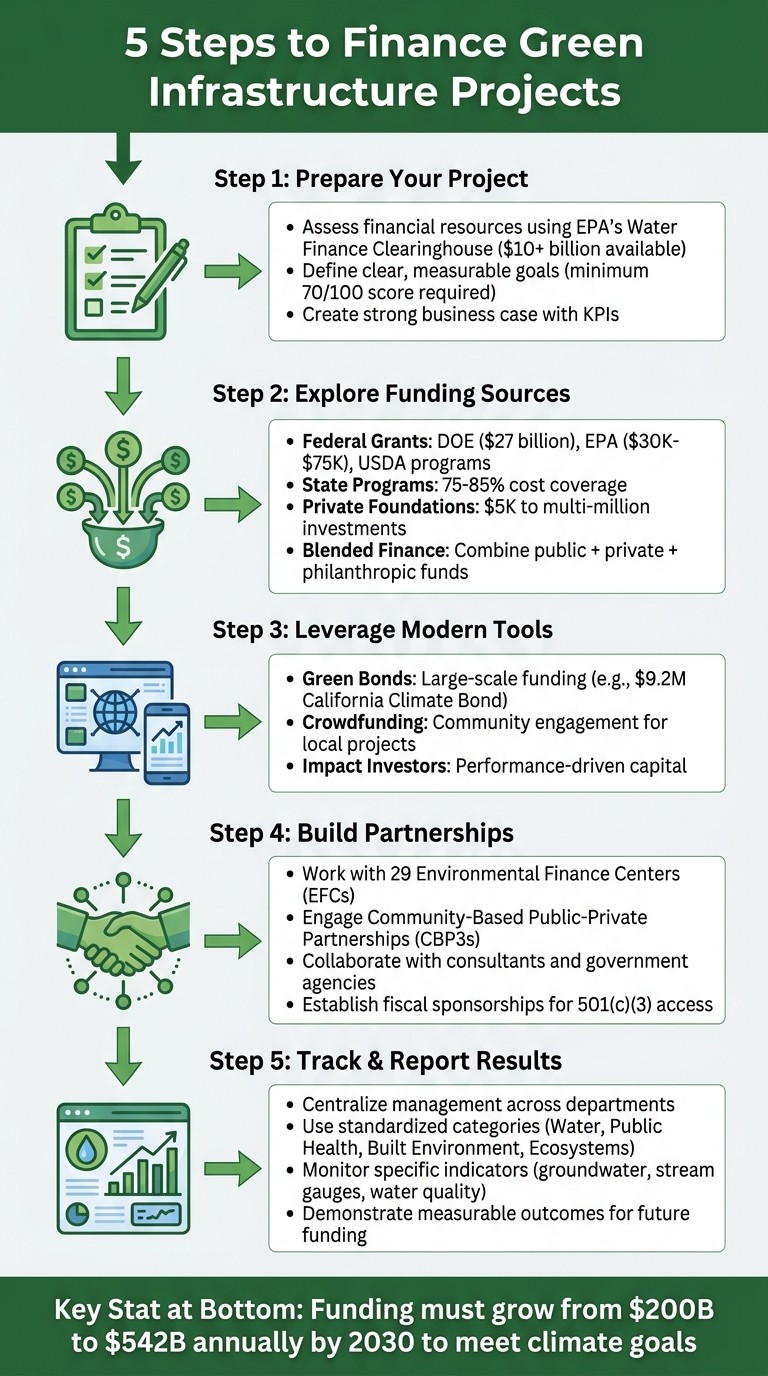
5-Step Guide to Financing Green Infrastructure for Nonprofits
Green Infrastructure Webinar Series | Funding Green Infrastructure
Preparing Your Organization and Project for Funding
Before pursuing funding, it’s essential to evaluate both your organization’s financial health and the readiness of your project.
Evaluating Your Financial Resources and Capacity
Start by taking stock of your current financial resources. Tools like the EPA's Water Finance Clearinghouse can connect you to over $10 billion in water-related funding opportunities and more than 550 resources to compare financing options, such as FACT [1].
Consider the full lifecycle costs of your project, from initial setup to long-term maintenance. Programs like the Clean Water State Revolving Fund can help you assess these costs [1]. Conduct revenue and rate analyses to ensure your project has a sustainable financial foundation. If your organization lacks the expertise to navigate complex federal funding applications, you can seek assistance from one of the 29 Environmental Finance Centers (EFCs) across the country or explore tailored technical support programs like RealWaterTA [1].
Once you’ve established a clear financial baseline, focus on setting specific and measurable goals.
Setting Clear Goals and Measurable Outcomes
Funders expect projects to have clearly defined, measurable objectives. Use frameworks that assess factors such as biodiversity, socioeconomic impacts, ecosystem services, and governance [2].
"Nature investment needs to be transparent and backed by evidence." – Ecologi [2]
Establish science-based benchmarks to measure progress and demonstrate the potential impact of your project. For example, Ecologi requires projects to achieve a minimum score of 70 out of 100 across its assessment pillars to qualify [2]. Incorporate risk considerations, such as natural hazards, climate-related impacts, and site protection, into your objectives. Using tools like remote sensing and satellite imagery can provide credible, verifiable data to support your case.
Green infrastructure projects often deliver multiple benefits, including stormwater management, public health enhancements, and habitat restoration. Frame your objectives to align with these diverse benefits, which can help your project qualify for a broader range of funding opportunities [1].
With your goals clearly defined, the next step is to craft a strong business case that aligns with your organization’s strategy.
Creating a Strong Business Case
Your business case should position your project as a strategic asset that addresses risks and secures resources [3]. With over half of the global economy relying on nature to some extent, funders increasingly view biodiversity loss as a significant global risk [3].
Show how your project mitigates operational and climate risks, such as storm surge protection, flood management, and supply chain security. Align your project outcomes with key performance indicators (KPIs) and implement robust monitoring, reporting, and verification (MRV) systems to provide transparent, quantifiable performance data. For example, some companies now tie up to 30% of senior executive bonuses to meeting sustainability targets [3].
Finally, consider collaborating with Environmental Finance Centers to navigate federal funding requirements and refine your application materials. This thorough preparation will set the stage for exploring diverse funding opportunities in the next steps.
Funding Sources for Green Infrastructure Projects
Once your project is ready, the next step is securing funding. A wide range of options, from grants to innovative financial tools, can help you align funding with the scale and goals of your green initiative.
Finding and Applying for Grants and Donations
Federal agencies are a key source of environmental funding. For instance, the Department of Energy's Greenhouse Gas Reduction Fund offers $27 billion in competitive grants to support clean energy projects through state green banks and community development organizations [5]. The EPA runs several programs, including Environmental Justice Small Grants, which typically range from $30,000 to $75,000 and are tailored for nonprofits [5]. The USDA also contributes through initiatives like the Regional Conservation Partnership Program and Urban Agriculture grants [5].
State-level programs, such as Illinois' GIGO program, provide grants covering up to 75–85% of project costs [4]. To apply, you’ll need to register on SAM.gov and obtain a Unique Entity Identification (UEI) number [4]. Many programs, like GIGO, require a detailed Operations and Maintenance (O&M) plan covering at least ten years post-completion, along with legally binding agreements from all landowners involved in the project [4].
Private foundations also play a significant role. Organizations like the David and Lucile Packard Foundation, Moore Foundation, and Patagonia offer grants ranging from $5,000 for small-scale projects to multi-million-dollar investments for conservation efforts [5].
"Environmental funders are data-oriented. Vague claims of 'environmental benefit' don't hold up to scrutiny." – FindGrants [5]
To strengthen your application, quantify your project’s expected outcomes using precise metrics, such as acres of habitat protected, tons of CO2 reduced, or gallons of stormwater managed annually. For projects requiring additional risk management, blended finance can be an effective strategy.
Using Blended Finance to Reduce Risk
Blended finance combines public funding, private investment, and philanthropic contributions to support projects that exceed the scale of traditional grants. This model shifts risk from nonprofits to private investors through "pay-for-performance" agreements, where repayment is tied to measurable environmental outcomes. This approach aligns well with efforts to establish clear, quantifiable goals, as private capital provides upfront funding, stabilizing cash flow for nonprofits that might otherwise face delays in public grant reimbursements.
For example, in 2024, Mass Audubon launched the "Catalyst Fund" with a $25 million seed gift from MathWorks. By 2025, the fund had raised over $40 million of its $75 million target, protecting more than 6,000 acres of land by leveraging a 9:1 match ratio from other grants and donations [7].
Another example is the 2017 collaboration between DC Water and Quantified Ventures, which issued a $25 million Environmental Impact Bond to fund green infrastructure aimed at reducing sewage overflow. By 2021, the project had successfully reduced stormwater runoff by nearly 20%, meeting the bond’s repayment criteria and demonstrating the effectiveness of the "pay-for-success" approach [6].
"Conservation finance is really built on a three-legged stool of public funding, philanthropy, and private capital." – Peter Howell, Director, Conservation Finance Network [7]
To make blended finance work, identify partners with regulatory obligations, such as water utilities under EPA mandates, as they offer reliable sources for debt repayment. Independent evaluators are essential for verifying environmental outcomes, which trigger repayment in performance-based models. Consider using philanthropic funds for the planning phase and private investments for large-scale implementation. When substantial capital is needed, green bonds can provide a practical solution.
Accessing Green Bonds for Large-Scale Projects
Green bonds are an effective tool for funding large-scale projects that deliver measurable environmental benefits. These fixed-income instruments finance initiatives like habitat restoration, wildfire prevention, and land acquisition [8]. Nonprofits often access green bond funds through state-administered programs supported by voter-approved bond acts [8].
For instance, in February 2026, the California Natural Resources Agency (CNRA) launched the Tribal Nature-Based Solutions Climate Bond 2026 solicitation. Backed by Proposition 4 (Senate Bill 867), this program allocated $9.2 million for projects such as land acquisition and habitat restoration. Eligible nonprofits could apply on behalf of California Native American tribes, with ancestral land return projects requiring a minimum award of $1,000,000 [8]. The application process involved two steps, with awards announced in November 2026 [8].
Another key resource is the Clean Water State Revolving Fund (CWSRF), which channels bond-related financing into water-focused green infrastructure projects, like stormwater management [1]. Local funding sources, such as taxes and water bills, currently cover over 85% of community water infrastructure investments [6]. Debt-financing a $10 million stormwater program over 20 years could result in less than a 1% rate increase, compared to a 14% hike if paid upfront [6].
To tap into green bonds, regularly monitor state grant portals for programs labeled "Climate Bond" or "Green Bond", as these often include nonprofit eligibility windows [8]. Tools like the EPA’s Financing Alternatives Comparison Tool (FACT) can help determine whether bond-funded financing is more cost-effective for your project [1]. Partnering with tribal governments can also enhance your chances of securing bond funds [8].
Modern Financing Tools and Platforms
Nonprofits today have a range of innovative financing methods beyond traditional grants and bonds. These modern tools not only help secure funding but also engage communities and attract investors focused on measurable outcomes. For smaller projects or those needing local support before scaling up, these approaches can be especially impactful. Let’s dive into how crowdfunding engages communities and how impact investors drive scalable funding.
Using Crowdfunding to Engage Communities
Crowdfunding has emerged as a practical way to fund nature-based initiatives while fostering local involvement. This method works particularly well for projects with visible, immediate benefits, such as urban tree planting, community gardens, or coastal wetland restoration [9][10]. By allowing individuals to contribute modest amounts, crowdfunding creates a sense of shared ownership among local participants [9].
"Crowdfunding and community investment have emerged as transformative financing mechanisms for nature-based solutions, marking a shift in how environmental projects are funded." – Robert C. Brears, Founder of Our Future Water [9]
To ensure a successful crowdfunding campaign, it's essential to prepare thoroughly. Start with a clear plan that includes the project location, a detailed budget, and specific equity goals [10]. If your organization lacks 501(c)(3) status, consider partnering with a fiscal sponsor to enhance donor confidence [10].
"Fiscal sponsorship allows you to receive grants and tax-deductible donations through an established nonprofit while you concentrate on planning, community engagement, and on-the-ground work." – Greening Projects [10]
When crafting your campaign, focus on the local community that will benefit directly from the project. Highlight improvements such as better air quality or reduced flooding, and regularly update donors on progress and fund usage [9]. Projects addressing "gaps in shade, access, or safety" often resonate deeply with contributors [10].
Attracting Impact Investors
While crowdfunding taps into grassroots support, impact investors bring the scalable, performance-driven capital needed for broader implementation. These investors prioritize projects that offer both environmental benefits and financial returns. To attract their attention, it’s crucial to demonstrate the project's feasibility and financial sustainability through detailed studies and planning [12].
Impact investors look for initiatives with measurable outcomes, so aligning with clear metrics is essential. This process typically involves identifying the project, structuring its design, conducting feasibility analyses, securing financing, and adhering to rigorous measurement and verification (MRV) standards [12].
The EPA’s Water Finance Clearinghouse is a valuable resource, offering access to over $10 billion in water funding sources and more than 550 tools for green infrastructure projects [1]. Tools like FACT can further validate cost-effectiveness, showing investors that the most efficient strategies have been chosen [1].
"Through our engagement with District residents, contractors, developers, property owners, engineers and beyond, we have identified pre-development loans as a crucial missing piece in the city's clean energy puzzle." – Eli Hopson, CEO, DC Green Bank [11]
Early-stage loans for pre-development tasks - such as energy audits, design plans, and environmental studies - can transform a project from concept to investment-ready [11]. Additionally, the network of 29 Environmental Finance Centers (EFCs) across the U.S. offers free technical assistance to navigate federal funding applications and improve financial structuring [1]. By implementing stringent MRV standards, projects can provide transparent data on greenhouse gas reductions and contributions to broader sustainability goals, further solidifying investor trust [12].
Building Partnerships to Secure Funding
Modern financing tools are just one piece of the puzzle. Strategic partnerships can significantly boost your chances of securing funding while ensuring long-term project success. Nonprofits that team up with experienced consultants, government agencies, and community stakeholders often achieve better results. The key lies in identifying the right partners and knowing when to bring them on board.
Working with Consultants to Strengthen Funding Proposals
Consultants play a critical role in aligning your project’s technical needs with the expectations of funders. Firms like Council Fire help nonprofits craft practical and fundable strategies by blending systems-based approaches with data-driven insights. This ensures that funding proposals address both environmental goals and financial viability - two factors that funders scrutinize carefully.
The 29 Environmental Finance Centers (EFCs) are another valuable resource. These centers assist organizations in refining proposal details, comparing financing options, and identifying the most cost-effective strategies for their specific needs.
Programs like DC Green Bank's "Navigator" loan, introduced in March 2021, provide funding for early-stage project costs such as energy audits, design plans, and engineering consultations. DC Green Bank CEO Eli Hopson highlighted the importance of this funding:
"Through our engagement with District residents, contractors, developers, property owners, engineers and beyond, we have identified pre-development loans as a crucial missing piece in the city's clean energy puzzle." [11]
These loans are especially useful for covering feasibility studies and environmental planning, transforming ideas into actionable, fundable projects.
Engaging Stakeholders for Long-Term Success
Collaborating with local and state-level stakeholders not only helps secure immediate funding but also lays the groundwork for sustainable project success. For example, Community-Based Public-Private Partnerships (CBP3s) allow nonprofits to team up with municipal stormwater programs. These partnerships are particularly effective for implementing green infrastructure retrofits on both public and private lands [1]. Municipalities with established stormwater fees or incentive programs are often eager to support such initiatives.
State-level partnerships can unlock additional opportunities. Working with State Revolving Fund (SRF) administrators, for example, can expand eligibility for green projects. Many SRF programs offer specific incentives to encourage nature-based infrastructure [1]. Additionally, the Water Finance Clearinghouse provides access to over $10 billion in water-related funding sources and more than 550 resources tailored for local infrastructure projects [1].
Community partnerships that bridge cultural and generational divides are also gaining traction. A standout example is the "Generational Preservation: Nurturing Mother Nature" project launched in August 2023 by the Boys and Girls Club of the Yakama Nation and Peacekeeper Society's Master Food Preservers. This initiative combines traditional food preservation techniques with modern green infrastructure, such as greenhouses and rainwater systems. By connecting elders’ knowledge with youth involvement, the project has drawn attention from grant-makers prioritizing Indigenous-led initiatives [13].
For organizations without 501(c)(3) status, formalizing fiscal sponsorships early is crucial. Many green grants require signed sponsorship agreements as part of the application process. This structure allows smaller groups to access funding while focusing on project execution and community engagement [13].
These partnerships not only strengthen your project’s foundation but also position you for effective tracking and reporting of outcomes down the road.
Tracking and Reporting Financial and Environmental Results
Once funding is secured and your green infrastructure project is underway, the focus shifts to accountability. Funders want tangible proof that their investments are yielding both financial and environmental returns. Without a reliable tracking system, you risk undermining trust and jeopardizing future funding. Let’s explore how to create transparent reporting systems that clearly demonstrate your project's impact.
Creating Clear Reporting Systems
The first step to effective tracking is breaking down departmental silos. Nature-based projects often span multiple areas - parks, education, public works - making it difficult to get a cohesive view of investments. Centralizing management under a single office, such as sustainability or resilience, ensures consistent tracking and oversight.
A practical approach involves a two-part framework. Part A assigns clear roles and responsibilities for achieving nature-based goals. Part B establishes an expenditure database to record the actual costs of green infrastructure activities. Standardized categories, like Water (stormwater and flooding), Public Health (heat and air quality), Built Environment (green roofs and streets), and Ecosystems (restoration and biodiversity), simplify reporting and make data easier to analyze [14]. For financial tracking, tools like the EPA's Financing Alternatives Comparison Tool (FACT) can help evaluate funding options. It's also essential to set a baseline year to measure and compare outcomes effectively [14].
Once the framework is in place, the data collected becomes the foundation for showcasing measurable project results.
Using Data to Show Project Results
To demonstrate your project's impact, start by establishing baselines and tracking specific indicators. This allows you to show what changed due to your efforts compared to what would have happened otherwise [16].
A strong example is the Yuba I Forest Resilience Bond, managed by Blue Forest. By 2023, this initiative restored 7,000 acres in the Tahoe National Forest using $4 million in financing. Backed by the Yuba Water Agency and the World Resources Institute, the project cut the anticipated timeline in half - from 10 years to 5 years - and repaid investors with interest. Its success relied on precise monitoring, including groundwater wells to track water levels, stream gauges to measure sediment and turbidity, and water quality metrics like pH and dissolved oxygen levels. These indicators provided clear evidence of ecological improvements [16].
For newer or high-risk projects, an "output-based" reporting approach can be a good starting point. This method focuses on verifying whether activities met established standards, which can help secure initial funding. Over time, as more data is collected, you can transition to "outcome-based" reporting, which highlights specific environmental changes. Blue Forest used this strategy in its 2025 Yuba Aspen and Meadows (YAM) project. With $1.25 million in financing, it restored 670 acres of meadow habitat on USDA Forest Service land. Monitoring included 21 groundwater wells and 13 stream gauges to validate improvements in drought resilience [16].
Complement quantitative data with qualitative evidence, such as before-and-after photos, vegetation studies, and species monitoring. Tracking co-benefits like soil carbon levels, biodiversity changes, and workforce development can also bolster your case for continued funding. As Katie Pownall, Philanthropic Projects Manager at Ecologi, explains:
"Without trust, well-intentioned investments risk becoming greenwashing liabilities, and critical funding fails to reach the projects that need it most" [2].
The financial landscape underscores the urgency for robust tracking. Global funding for nature-based solutions needs to grow from $200 billion to $542 billion annually by 2030 to meet climate and biodiversity goals [14][15]. While cities generate more than 80% of global GDP, urban nature investments remain underfunded due to insufficient data [14]. Reliable tracking and reporting not only validate current investments but also create a strong foundation for securing future funding.
Conclusion
Financing green and nature-based infrastructure isn’t about finding a single perfect solution - it’s about bringing together multiple funding sources into a well-rounded plan. Peter Howell, Director of the Conservation Finance Network, puts it succinctly:
"Conservation finance is really built on a three-legged stool of public funding, philanthropy, and private capital" [7].
Organizations that succeed in this space often blend these three funding streams effectively. Mass Audubon serves as a great example. Through its Catalyst Fund, the organization achieved an impressive 9:1 match ratio - every $1 of seed money attracted $9 from other funding sources. By June 2024, with a $25 million gift from MathWorks, they had raised more than $40 million and safeguarded 6,000 acres [7]. Similarly, Maine’s Sebago Clean Waters program worked with a regional water utility to fund upstream conservation efforts, helping avoid the $2 billion expense of constructing a new filtration plant [7].
Combining payments for water quality, carbon sequestration, and biodiversity can also make projects financially sustainable. For instance, the Soil and Water Outcomes Fund in Iowa merges contributions from downstream water utilities and global companies like Pepsi and Danone into a unified payment system for farmers [7]. As mentioned earlier, robust data tracking plays a crucial role here, providing the evidence needed to justify and sustain these diversified funding approaches.
The potential for funding is growing. In the 2024 US elections, voters approved $16 billion for conservation efforts through 23 ballot measures [7]. The EPA’s Water Finance Clearinghouse also offers access to over $10 billion in water-related funding sources [1]. Demonstrating the economic benefits of your projects and engaging downstream stakeholders who benefit from nature-based solutions are key steps to unlocking these opportunities.
To move forward, focus on building your organization’s ability to track and report measurable results. Then, diversify your funding streams using the approaches outlined here. By combining solid data, strong partnerships, and creative financing tools, you can secure the resources needed to drive impactful sustainability initiatives.
FAQs
What financing option fits my project size and timeline?
When deciding on the right financing option, consider the size and duration of your project. For smaller projects with shorter timelines, grants or short-term loans could be a practical choice. On the other hand, larger or long-term initiatives may be better suited to federal funding programs or specialized loans tailored for such endeavors. Carefully evaluate your project's scope, timeline, and objectives to identify whether grants, federal assistance, or financing for energy-efficient upgrades best match your needs.
What metrics should we track to satisfy funders and investors?
To satisfy funders and investors, it's essential to monitor metrics that showcase the success, longevity, and influence of your projects. Focus on these key areas:
Environmental Benefits: Track enhancements in water quality, stormwater management efficiency, and overall ecosystem health.
Economic Impact: Measure cost reductions, job creation efforts, and contributions to local economic development.
Social Outcomes: Evaluate community involvement, improvements in public health, and increased access to green spaces.
These indicators provide measurable results and align closely with the objectives funders prioritize.
How can a nonprofit use blended finance without taking on too much risk?
Nonprofits have the opportunity to lower risk by tapping into blended finance - a strategy that mixes public or philanthropic funds with private investments. Tools like guarantees, first-loss capital, or concessional financing can make projects more attractive to private investors. By carefully structuring these investments with methods such as sequencing funds or forming strategic partnerships, nonprofits can handle high-risk initiatives more effectively while keeping their own financial risks in check.
Related Blog Posts
Latest Articles
©2025

Narrative Change and Power Building: The Missing Half of Advocacy
Narrative change is the process of disrupting dominant narratives that normalize inequity and advancing new narratives from historically marginalized communities.

Funding Resilience Without Federal Grants
BRIC is unreliable and FEMA is shrinking. Here's how cities fund climate resilience with dedicated revenue, blended finance, and a coordinating authority.

The ESG Blind Spot: How AI Is Finding Risks in Companies Nobody Else Is Watching
Norway's sovereign wealth fund uses AI to screen 7,200 portfolio companies for forced labor and corruption within 24 hours. The real story is the emerging-market coverage gap that traditional ESG data vendors miss — and what it means for any company with a global supply chain.
Narrative Change and Power Building: The Missing Half of Advocacy
Narrative change is the process of disrupting dominant narratives that normalize inequity and advancing new narratives from historically marginalized communities.
Funding Resilience Without Federal Grants
BRIC is unreliable and FEMA is shrinking. Here's how cities fund climate resilience with dedicated revenue, blended finance, and a coordinating authority.
The ESG Blind Spot: How AI Is Finding Risks in Companies Nobody Else Is Watching
Norway's sovereign wealth fund uses AI to screen 7,200 portfolio companies for forced labor and corruption within 24 hours. The real story is the emerging-market coverage gap that traditional ESG data vendors miss — and what it means for any company with a global supply chain.
FAQ
01
What does it really mean to “redefine profit”?
02
What makes Council Fire different?
03
Who does Council Fire work with?
04
What does working with Council Fire actually look like?
05
How does Council Fire help organizations turn big goals into action?
06
How does Council Fire define and measure success?
May 2, 2026
How to Finance Green and Nature-Based Infrastructure for NGOs & Nonprofits
Sustainability Strategy
In This Article
Grants, blended finance, green bonds, crowdfunding and partnerships—practical steps for NGOs to fund and measure nature-based infrastructure.
How to Finance Green and Nature-Based Infrastructure for NGOs & Nonprofits
Green infrastructure projects can protect natural ecosystems while addressing challenges like clean water, flood control, and climate regulation. However, securing funding remains a major obstacle for NGOs and nonprofits.
To bridge the funding gap, organizations must prepare well and explore diverse financial strategies. Here's how to approach it effectively:
Prepare Your Project: Assess financial resources, define clear goals, and create a strong business case with measurable outcomes.
Explore Funding Sources:
Grants: Federal programs (e.g., EPA, USDA), state-level initiatives, and private foundations.
Blended Finance: Combine public, private, and philanthropic funding to reduce risk.
Green Bonds: Access large-scale funding for projects with measurable impacts.
Leverage Modern Tools: Crowdfunding for community engagement and impact investors for scalable funding.
Build Partnerships: Collaborate with consultants, government agencies, and local stakeholders to strengthen proposals and secure resources.
Track and Report Results: Use clear metrics and monitoring systems to demonstrate financial and environmental outcomes, ensuring accountability and future funding opportunities.
5-Step Guide to Financing Green Infrastructure for Nonprofits
Green Infrastructure Webinar Series | Funding Green Infrastructure
Preparing Your Organization and Project for Funding
Before pursuing funding, it’s essential to evaluate both your organization’s financial health and the readiness of your project.
Evaluating Your Financial Resources and Capacity
Start by taking stock of your current financial resources. Tools like the EPA's Water Finance Clearinghouse can connect you to over $10 billion in water-related funding opportunities and more than 550 resources to compare financing options, such as FACT [1].
Consider the full lifecycle costs of your project, from initial setup to long-term maintenance. Programs like the Clean Water State Revolving Fund can help you assess these costs [1]. Conduct revenue and rate analyses to ensure your project has a sustainable financial foundation. If your organization lacks the expertise to navigate complex federal funding applications, you can seek assistance from one of the 29 Environmental Finance Centers (EFCs) across the country or explore tailored technical support programs like RealWaterTA [1].
Once you’ve established a clear financial baseline, focus on setting specific and measurable goals.
Setting Clear Goals and Measurable Outcomes
Funders expect projects to have clearly defined, measurable objectives. Use frameworks that assess factors such as biodiversity, socioeconomic impacts, ecosystem services, and governance [2].
"Nature investment needs to be transparent and backed by evidence." – Ecologi [2]
Establish science-based benchmarks to measure progress and demonstrate the potential impact of your project. For example, Ecologi requires projects to achieve a minimum score of 70 out of 100 across its assessment pillars to qualify [2]. Incorporate risk considerations, such as natural hazards, climate-related impacts, and site protection, into your objectives. Using tools like remote sensing and satellite imagery can provide credible, verifiable data to support your case.
Green infrastructure projects often deliver multiple benefits, including stormwater management, public health enhancements, and habitat restoration. Frame your objectives to align with these diverse benefits, which can help your project qualify for a broader range of funding opportunities [1].
With your goals clearly defined, the next step is to craft a strong business case that aligns with your organization’s strategy.
Creating a Strong Business Case
Your business case should position your project as a strategic asset that addresses risks and secures resources [3]. With over half of the global economy relying on nature to some extent, funders increasingly view biodiversity loss as a significant global risk [3].
Show how your project mitigates operational and climate risks, such as storm surge protection, flood management, and supply chain security. Align your project outcomes with key performance indicators (KPIs) and implement robust monitoring, reporting, and verification (MRV) systems to provide transparent, quantifiable performance data. For example, some companies now tie up to 30% of senior executive bonuses to meeting sustainability targets [3].
Finally, consider collaborating with Environmental Finance Centers to navigate federal funding requirements and refine your application materials. This thorough preparation will set the stage for exploring diverse funding opportunities in the next steps.
Funding Sources for Green Infrastructure Projects
Once your project is ready, the next step is securing funding. A wide range of options, from grants to innovative financial tools, can help you align funding with the scale and goals of your green initiative.
Finding and Applying for Grants and Donations
Federal agencies are a key source of environmental funding. For instance, the Department of Energy's Greenhouse Gas Reduction Fund offers $27 billion in competitive grants to support clean energy projects through state green banks and community development organizations [5]. The EPA runs several programs, including Environmental Justice Small Grants, which typically range from $30,000 to $75,000 and are tailored for nonprofits [5]. The USDA also contributes through initiatives like the Regional Conservation Partnership Program and Urban Agriculture grants [5].
State-level programs, such as Illinois' GIGO program, provide grants covering up to 75–85% of project costs [4]. To apply, you’ll need to register on SAM.gov and obtain a Unique Entity Identification (UEI) number [4]. Many programs, like GIGO, require a detailed Operations and Maintenance (O&M) plan covering at least ten years post-completion, along with legally binding agreements from all landowners involved in the project [4].
Private foundations also play a significant role. Organizations like the David and Lucile Packard Foundation, Moore Foundation, and Patagonia offer grants ranging from $5,000 for small-scale projects to multi-million-dollar investments for conservation efforts [5].
"Environmental funders are data-oriented. Vague claims of 'environmental benefit' don't hold up to scrutiny." – FindGrants [5]
To strengthen your application, quantify your project’s expected outcomes using precise metrics, such as acres of habitat protected, tons of CO2 reduced, or gallons of stormwater managed annually. For projects requiring additional risk management, blended finance can be an effective strategy.
Using Blended Finance to Reduce Risk
Blended finance combines public funding, private investment, and philanthropic contributions to support projects that exceed the scale of traditional grants. This model shifts risk from nonprofits to private investors through "pay-for-performance" agreements, where repayment is tied to measurable environmental outcomes. This approach aligns well with efforts to establish clear, quantifiable goals, as private capital provides upfront funding, stabilizing cash flow for nonprofits that might otherwise face delays in public grant reimbursements.
For example, in 2024, Mass Audubon launched the "Catalyst Fund" with a $25 million seed gift from MathWorks. By 2025, the fund had raised over $40 million of its $75 million target, protecting more than 6,000 acres of land by leveraging a 9:1 match ratio from other grants and donations [7].
Another example is the 2017 collaboration between DC Water and Quantified Ventures, which issued a $25 million Environmental Impact Bond to fund green infrastructure aimed at reducing sewage overflow. By 2021, the project had successfully reduced stormwater runoff by nearly 20%, meeting the bond’s repayment criteria and demonstrating the effectiveness of the "pay-for-success" approach [6].
"Conservation finance is really built on a three-legged stool of public funding, philanthropy, and private capital." – Peter Howell, Director, Conservation Finance Network [7]
To make blended finance work, identify partners with regulatory obligations, such as water utilities under EPA mandates, as they offer reliable sources for debt repayment. Independent evaluators are essential for verifying environmental outcomes, which trigger repayment in performance-based models. Consider using philanthropic funds for the planning phase and private investments for large-scale implementation. When substantial capital is needed, green bonds can provide a practical solution.
Accessing Green Bonds for Large-Scale Projects
Green bonds are an effective tool for funding large-scale projects that deliver measurable environmental benefits. These fixed-income instruments finance initiatives like habitat restoration, wildfire prevention, and land acquisition [8]. Nonprofits often access green bond funds through state-administered programs supported by voter-approved bond acts [8].
For instance, in February 2026, the California Natural Resources Agency (CNRA) launched the Tribal Nature-Based Solutions Climate Bond 2026 solicitation. Backed by Proposition 4 (Senate Bill 867), this program allocated $9.2 million for projects such as land acquisition and habitat restoration. Eligible nonprofits could apply on behalf of California Native American tribes, with ancestral land return projects requiring a minimum award of $1,000,000 [8]. The application process involved two steps, with awards announced in November 2026 [8].
Another key resource is the Clean Water State Revolving Fund (CWSRF), which channels bond-related financing into water-focused green infrastructure projects, like stormwater management [1]. Local funding sources, such as taxes and water bills, currently cover over 85% of community water infrastructure investments [6]. Debt-financing a $10 million stormwater program over 20 years could result in less than a 1% rate increase, compared to a 14% hike if paid upfront [6].
To tap into green bonds, regularly monitor state grant portals for programs labeled "Climate Bond" or "Green Bond", as these often include nonprofit eligibility windows [8]. Tools like the EPA’s Financing Alternatives Comparison Tool (FACT) can help determine whether bond-funded financing is more cost-effective for your project [1]. Partnering with tribal governments can also enhance your chances of securing bond funds [8].
Modern Financing Tools and Platforms
Nonprofits today have a range of innovative financing methods beyond traditional grants and bonds. These modern tools not only help secure funding but also engage communities and attract investors focused on measurable outcomes. For smaller projects or those needing local support before scaling up, these approaches can be especially impactful. Let’s dive into how crowdfunding engages communities and how impact investors drive scalable funding.
Using Crowdfunding to Engage Communities
Crowdfunding has emerged as a practical way to fund nature-based initiatives while fostering local involvement. This method works particularly well for projects with visible, immediate benefits, such as urban tree planting, community gardens, or coastal wetland restoration [9][10]. By allowing individuals to contribute modest amounts, crowdfunding creates a sense of shared ownership among local participants [9].
"Crowdfunding and community investment have emerged as transformative financing mechanisms for nature-based solutions, marking a shift in how environmental projects are funded." – Robert C. Brears, Founder of Our Future Water [9]
To ensure a successful crowdfunding campaign, it's essential to prepare thoroughly. Start with a clear plan that includes the project location, a detailed budget, and specific equity goals [10]. If your organization lacks 501(c)(3) status, consider partnering with a fiscal sponsor to enhance donor confidence [10].
"Fiscal sponsorship allows you to receive grants and tax-deductible donations through an established nonprofit while you concentrate on planning, community engagement, and on-the-ground work." – Greening Projects [10]
When crafting your campaign, focus on the local community that will benefit directly from the project. Highlight improvements such as better air quality or reduced flooding, and regularly update donors on progress and fund usage [9]. Projects addressing "gaps in shade, access, or safety" often resonate deeply with contributors [10].
Attracting Impact Investors
While crowdfunding taps into grassroots support, impact investors bring the scalable, performance-driven capital needed for broader implementation. These investors prioritize projects that offer both environmental benefits and financial returns. To attract their attention, it’s crucial to demonstrate the project's feasibility and financial sustainability through detailed studies and planning [12].
Impact investors look for initiatives with measurable outcomes, so aligning with clear metrics is essential. This process typically involves identifying the project, structuring its design, conducting feasibility analyses, securing financing, and adhering to rigorous measurement and verification (MRV) standards [12].
The EPA’s Water Finance Clearinghouse is a valuable resource, offering access to over $10 billion in water funding sources and more than 550 tools for green infrastructure projects [1]. Tools like FACT can further validate cost-effectiveness, showing investors that the most efficient strategies have been chosen [1].
"Through our engagement with District residents, contractors, developers, property owners, engineers and beyond, we have identified pre-development loans as a crucial missing piece in the city's clean energy puzzle." – Eli Hopson, CEO, DC Green Bank [11]
Early-stage loans for pre-development tasks - such as energy audits, design plans, and environmental studies - can transform a project from concept to investment-ready [11]. Additionally, the network of 29 Environmental Finance Centers (EFCs) across the U.S. offers free technical assistance to navigate federal funding applications and improve financial structuring [1]. By implementing stringent MRV standards, projects can provide transparent data on greenhouse gas reductions and contributions to broader sustainability goals, further solidifying investor trust [12].
Building Partnerships to Secure Funding
Modern financing tools are just one piece of the puzzle. Strategic partnerships can significantly boost your chances of securing funding while ensuring long-term project success. Nonprofits that team up with experienced consultants, government agencies, and community stakeholders often achieve better results. The key lies in identifying the right partners and knowing when to bring them on board.
Working with Consultants to Strengthen Funding Proposals
Consultants play a critical role in aligning your project’s technical needs with the expectations of funders. Firms like Council Fire help nonprofits craft practical and fundable strategies by blending systems-based approaches with data-driven insights. This ensures that funding proposals address both environmental goals and financial viability - two factors that funders scrutinize carefully.
The 29 Environmental Finance Centers (EFCs) are another valuable resource. These centers assist organizations in refining proposal details, comparing financing options, and identifying the most cost-effective strategies for their specific needs.
Programs like DC Green Bank's "Navigator" loan, introduced in March 2021, provide funding for early-stage project costs such as energy audits, design plans, and engineering consultations. DC Green Bank CEO Eli Hopson highlighted the importance of this funding:
"Through our engagement with District residents, contractors, developers, property owners, engineers and beyond, we have identified pre-development loans as a crucial missing piece in the city's clean energy puzzle." [11]
These loans are especially useful for covering feasibility studies and environmental planning, transforming ideas into actionable, fundable projects.
Engaging Stakeholders for Long-Term Success
Collaborating with local and state-level stakeholders not only helps secure immediate funding but also lays the groundwork for sustainable project success. For example, Community-Based Public-Private Partnerships (CBP3s) allow nonprofits to team up with municipal stormwater programs. These partnerships are particularly effective for implementing green infrastructure retrofits on both public and private lands [1]. Municipalities with established stormwater fees or incentive programs are often eager to support such initiatives.
State-level partnerships can unlock additional opportunities. Working with State Revolving Fund (SRF) administrators, for example, can expand eligibility for green projects. Many SRF programs offer specific incentives to encourage nature-based infrastructure [1]. Additionally, the Water Finance Clearinghouse provides access to over $10 billion in water-related funding sources and more than 550 resources tailored for local infrastructure projects [1].
Community partnerships that bridge cultural and generational divides are also gaining traction. A standout example is the "Generational Preservation: Nurturing Mother Nature" project launched in August 2023 by the Boys and Girls Club of the Yakama Nation and Peacekeeper Society's Master Food Preservers. This initiative combines traditional food preservation techniques with modern green infrastructure, such as greenhouses and rainwater systems. By connecting elders’ knowledge with youth involvement, the project has drawn attention from grant-makers prioritizing Indigenous-led initiatives [13].
For organizations without 501(c)(3) status, formalizing fiscal sponsorships early is crucial. Many green grants require signed sponsorship agreements as part of the application process. This structure allows smaller groups to access funding while focusing on project execution and community engagement [13].
These partnerships not only strengthen your project’s foundation but also position you for effective tracking and reporting of outcomes down the road.
Tracking and Reporting Financial and Environmental Results
Once funding is secured and your green infrastructure project is underway, the focus shifts to accountability. Funders want tangible proof that their investments are yielding both financial and environmental returns. Without a reliable tracking system, you risk undermining trust and jeopardizing future funding. Let’s explore how to create transparent reporting systems that clearly demonstrate your project's impact.
Creating Clear Reporting Systems
The first step to effective tracking is breaking down departmental silos. Nature-based projects often span multiple areas - parks, education, public works - making it difficult to get a cohesive view of investments. Centralizing management under a single office, such as sustainability or resilience, ensures consistent tracking and oversight.
A practical approach involves a two-part framework. Part A assigns clear roles and responsibilities for achieving nature-based goals. Part B establishes an expenditure database to record the actual costs of green infrastructure activities. Standardized categories, like Water (stormwater and flooding), Public Health (heat and air quality), Built Environment (green roofs and streets), and Ecosystems (restoration and biodiversity), simplify reporting and make data easier to analyze [14]. For financial tracking, tools like the EPA's Financing Alternatives Comparison Tool (FACT) can help evaluate funding options. It's also essential to set a baseline year to measure and compare outcomes effectively [14].
Once the framework is in place, the data collected becomes the foundation for showcasing measurable project results.
Using Data to Show Project Results
To demonstrate your project's impact, start by establishing baselines and tracking specific indicators. This allows you to show what changed due to your efforts compared to what would have happened otherwise [16].
A strong example is the Yuba I Forest Resilience Bond, managed by Blue Forest. By 2023, this initiative restored 7,000 acres in the Tahoe National Forest using $4 million in financing. Backed by the Yuba Water Agency and the World Resources Institute, the project cut the anticipated timeline in half - from 10 years to 5 years - and repaid investors with interest. Its success relied on precise monitoring, including groundwater wells to track water levels, stream gauges to measure sediment and turbidity, and water quality metrics like pH and dissolved oxygen levels. These indicators provided clear evidence of ecological improvements [16].
For newer or high-risk projects, an "output-based" reporting approach can be a good starting point. This method focuses on verifying whether activities met established standards, which can help secure initial funding. Over time, as more data is collected, you can transition to "outcome-based" reporting, which highlights specific environmental changes. Blue Forest used this strategy in its 2025 Yuba Aspen and Meadows (YAM) project. With $1.25 million in financing, it restored 670 acres of meadow habitat on USDA Forest Service land. Monitoring included 21 groundwater wells and 13 stream gauges to validate improvements in drought resilience [16].
Complement quantitative data with qualitative evidence, such as before-and-after photos, vegetation studies, and species monitoring. Tracking co-benefits like soil carbon levels, biodiversity changes, and workforce development can also bolster your case for continued funding. As Katie Pownall, Philanthropic Projects Manager at Ecologi, explains:
"Without trust, well-intentioned investments risk becoming greenwashing liabilities, and critical funding fails to reach the projects that need it most" [2].
The financial landscape underscores the urgency for robust tracking. Global funding for nature-based solutions needs to grow from $200 billion to $542 billion annually by 2030 to meet climate and biodiversity goals [14][15]. While cities generate more than 80% of global GDP, urban nature investments remain underfunded due to insufficient data [14]. Reliable tracking and reporting not only validate current investments but also create a strong foundation for securing future funding.
Conclusion
Financing green and nature-based infrastructure isn’t about finding a single perfect solution - it’s about bringing together multiple funding sources into a well-rounded plan. Peter Howell, Director of the Conservation Finance Network, puts it succinctly:
"Conservation finance is really built on a three-legged stool of public funding, philanthropy, and private capital" [7].
Organizations that succeed in this space often blend these three funding streams effectively. Mass Audubon serves as a great example. Through its Catalyst Fund, the organization achieved an impressive 9:1 match ratio - every $1 of seed money attracted $9 from other funding sources. By June 2024, with a $25 million gift from MathWorks, they had raised more than $40 million and safeguarded 6,000 acres [7]. Similarly, Maine’s Sebago Clean Waters program worked with a regional water utility to fund upstream conservation efforts, helping avoid the $2 billion expense of constructing a new filtration plant [7].
Combining payments for water quality, carbon sequestration, and biodiversity can also make projects financially sustainable. For instance, the Soil and Water Outcomes Fund in Iowa merges contributions from downstream water utilities and global companies like Pepsi and Danone into a unified payment system for farmers [7]. As mentioned earlier, robust data tracking plays a crucial role here, providing the evidence needed to justify and sustain these diversified funding approaches.
The potential for funding is growing. In the 2024 US elections, voters approved $16 billion for conservation efforts through 23 ballot measures [7]. The EPA’s Water Finance Clearinghouse also offers access to over $10 billion in water-related funding sources [1]. Demonstrating the economic benefits of your projects and engaging downstream stakeholders who benefit from nature-based solutions are key steps to unlocking these opportunities.
To move forward, focus on building your organization’s ability to track and report measurable results. Then, diversify your funding streams using the approaches outlined here. By combining solid data, strong partnerships, and creative financing tools, you can secure the resources needed to drive impactful sustainability initiatives.
FAQs
What financing option fits my project size and timeline?
When deciding on the right financing option, consider the size and duration of your project. For smaller projects with shorter timelines, grants or short-term loans could be a practical choice. On the other hand, larger or long-term initiatives may be better suited to federal funding programs or specialized loans tailored for such endeavors. Carefully evaluate your project's scope, timeline, and objectives to identify whether grants, federal assistance, or financing for energy-efficient upgrades best match your needs.
What metrics should we track to satisfy funders and investors?
To satisfy funders and investors, it's essential to monitor metrics that showcase the success, longevity, and influence of your projects. Focus on these key areas:
Environmental Benefits: Track enhancements in water quality, stormwater management efficiency, and overall ecosystem health.
Economic Impact: Measure cost reductions, job creation efforts, and contributions to local economic development.
Social Outcomes: Evaluate community involvement, improvements in public health, and increased access to green spaces.
These indicators provide measurable results and align closely with the objectives funders prioritize.
How can a nonprofit use blended finance without taking on too much risk?
Nonprofits have the opportunity to lower risk by tapping into blended finance - a strategy that mixes public or philanthropic funds with private investments. Tools like guarantees, first-loss capital, or concessional financing can make projects more attractive to private investors. By carefully structuring these investments with methods such as sequencing funds or forming strategic partnerships, nonprofits can handle high-risk initiatives more effectively while keeping their own financial risks in check.
Related Blog Posts
Latest Articles
©2025
Narrative Change and Power Building: The Missing Half of Advocacy
Narrative change is the process of disrupting dominant narratives that normalize inequity and advancing new narratives from historically marginalized communities.
Funding Resilience Without Federal Grants
BRIC is unreliable and FEMA is shrinking. Here's how cities fund climate resilience with dedicated revenue, blended finance, and a coordinating authority.
The ESG Blind Spot: How AI Is Finding Risks in Companies Nobody Else Is Watching
Norway's sovereign wealth fund uses AI to screen 7,200 portfolio companies for forced labor and corruption within 24 hours. The real story is the emerging-market coverage gap that traditional ESG data vendors miss — and what it means for any company with a global supply chain.
FAQ
01
What does it really mean to “redefine profit”?
02
What makes Council Fire different?
03
Who does Council Fire work with?
04
What does working with Council Fire actually look like?
05
How does Council Fire help organizations turn big goals into action?
06
How does Council Fire define and measure success?
May 2, 2026
How to Finance Green and Nature-Based Infrastructure for NGOs & Nonprofits
Sustainability Strategy
In This Article
Grants, blended finance, green bonds, crowdfunding and partnerships—practical steps for NGOs to fund and measure nature-based infrastructure.
How to Finance Green and Nature-Based Infrastructure for NGOs & Nonprofits
Green infrastructure projects can protect natural ecosystems while addressing challenges like clean water, flood control, and climate regulation. However, securing funding remains a major obstacle for NGOs and nonprofits.
To bridge the funding gap, organizations must prepare well and explore diverse financial strategies. Here's how to approach it effectively:
Prepare Your Project: Assess financial resources, define clear goals, and create a strong business case with measurable outcomes.
Explore Funding Sources:
Grants: Federal programs (e.g., EPA, USDA), state-level initiatives, and private foundations.
Blended Finance: Combine public, private, and philanthropic funding to reduce risk.
Green Bonds: Access large-scale funding for projects with measurable impacts.
Leverage Modern Tools: Crowdfunding for community engagement and impact investors for scalable funding.
Build Partnerships: Collaborate with consultants, government agencies, and local stakeholders to strengthen proposals and secure resources.
Track and Report Results: Use clear metrics and monitoring systems to demonstrate financial and environmental outcomes, ensuring accountability and future funding opportunities.
5-Step Guide to Financing Green Infrastructure for Nonprofits
Green Infrastructure Webinar Series | Funding Green Infrastructure
Preparing Your Organization and Project for Funding
Before pursuing funding, it’s essential to evaluate both your organization’s financial health and the readiness of your project.
Evaluating Your Financial Resources and Capacity
Start by taking stock of your current financial resources. Tools like the EPA's Water Finance Clearinghouse can connect you to over $10 billion in water-related funding opportunities and more than 550 resources to compare financing options, such as FACT [1].
Consider the full lifecycle costs of your project, from initial setup to long-term maintenance. Programs like the Clean Water State Revolving Fund can help you assess these costs [1]. Conduct revenue and rate analyses to ensure your project has a sustainable financial foundation. If your organization lacks the expertise to navigate complex federal funding applications, you can seek assistance from one of the 29 Environmental Finance Centers (EFCs) across the country or explore tailored technical support programs like RealWaterTA [1].
Once you’ve established a clear financial baseline, focus on setting specific and measurable goals.
Setting Clear Goals and Measurable Outcomes
Funders expect projects to have clearly defined, measurable objectives. Use frameworks that assess factors such as biodiversity, socioeconomic impacts, ecosystem services, and governance [2].
"Nature investment needs to be transparent and backed by evidence." – Ecologi [2]
Establish science-based benchmarks to measure progress and demonstrate the potential impact of your project. For example, Ecologi requires projects to achieve a minimum score of 70 out of 100 across its assessment pillars to qualify [2]. Incorporate risk considerations, such as natural hazards, climate-related impacts, and site protection, into your objectives. Using tools like remote sensing and satellite imagery can provide credible, verifiable data to support your case.
Green infrastructure projects often deliver multiple benefits, including stormwater management, public health enhancements, and habitat restoration. Frame your objectives to align with these diverse benefits, which can help your project qualify for a broader range of funding opportunities [1].
With your goals clearly defined, the next step is to craft a strong business case that aligns with your organization’s strategy.
Creating a Strong Business Case
Your business case should position your project as a strategic asset that addresses risks and secures resources [3]. With over half of the global economy relying on nature to some extent, funders increasingly view biodiversity loss as a significant global risk [3].
Show how your project mitigates operational and climate risks, such as storm surge protection, flood management, and supply chain security. Align your project outcomes with key performance indicators (KPIs) and implement robust monitoring, reporting, and verification (MRV) systems to provide transparent, quantifiable performance data. For example, some companies now tie up to 30% of senior executive bonuses to meeting sustainability targets [3].
Finally, consider collaborating with Environmental Finance Centers to navigate federal funding requirements and refine your application materials. This thorough preparation will set the stage for exploring diverse funding opportunities in the next steps.
Funding Sources for Green Infrastructure Projects
Once your project is ready, the next step is securing funding. A wide range of options, from grants to innovative financial tools, can help you align funding with the scale and goals of your green initiative.
Finding and Applying for Grants and Donations
Federal agencies are a key source of environmental funding. For instance, the Department of Energy's Greenhouse Gas Reduction Fund offers $27 billion in competitive grants to support clean energy projects through state green banks and community development organizations [5]. The EPA runs several programs, including Environmental Justice Small Grants, which typically range from $30,000 to $75,000 and are tailored for nonprofits [5]. The USDA also contributes through initiatives like the Regional Conservation Partnership Program and Urban Agriculture grants [5].
State-level programs, such as Illinois' GIGO program, provide grants covering up to 75–85% of project costs [4]. To apply, you’ll need to register on SAM.gov and obtain a Unique Entity Identification (UEI) number [4]. Many programs, like GIGO, require a detailed Operations and Maintenance (O&M) plan covering at least ten years post-completion, along with legally binding agreements from all landowners involved in the project [4].
Private foundations also play a significant role. Organizations like the David and Lucile Packard Foundation, Moore Foundation, and Patagonia offer grants ranging from $5,000 for small-scale projects to multi-million-dollar investments for conservation efforts [5].
"Environmental funders are data-oriented. Vague claims of 'environmental benefit' don't hold up to scrutiny." – FindGrants [5]
To strengthen your application, quantify your project’s expected outcomes using precise metrics, such as acres of habitat protected, tons of CO2 reduced, or gallons of stormwater managed annually. For projects requiring additional risk management, blended finance can be an effective strategy.
Using Blended Finance to Reduce Risk
Blended finance combines public funding, private investment, and philanthropic contributions to support projects that exceed the scale of traditional grants. This model shifts risk from nonprofits to private investors through "pay-for-performance" agreements, where repayment is tied to measurable environmental outcomes. This approach aligns well with efforts to establish clear, quantifiable goals, as private capital provides upfront funding, stabilizing cash flow for nonprofits that might otherwise face delays in public grant reimbursements.
For example, in 2024, Mass Audubon launched the "Catalyst Fund" with a $25 million seed gift from MathWorks. By 2025, the fund had raised over $40 million of its $75 million target, protecting more than 6,000 acres of land by leveraging a 9:1 match ratio from other grants and donations [7].
Another example is the 2017 collaboration between DC Water and Quantified Ventures, which issued a $25 million Environmental Impact Bond to fund green infrastructure aimed at reducing sewage overflow. By 2021, the project had successfully reduced stormwater runoff by nearly 20%, meeting the bond’s repayment criteria and demonstrating the effectiveness of the "pay-for-success" approach [6].
"Conservation finance is really built on a three-legged stool of public funding, philanthropy, and private capital." – Peter Howell, Director, Conservation Finance Network [7]
To make blended finance work, identify partners with regulatory obligations, such as water utilities under EPA mandates, as they offer reliable sources for debt repayment. Independent evaluators are essential for verifying environmental outcomes, which trigger repayment in performance-based models. Consider using philanthropic funds for the planning phase and private investments for large-scale implementation. When substantial capital is needed, green bonds can provide a practical solution.
Accessing Green Bonds for Large-Scale Projects
Green bonds are an effective tool for funding large-scale projects that deliver measurable environmental benefits. These fixed-income instruments finance initiatives like habitat restoration, wildfire prevention, and land acquisition [8]. Nonprofits often access green bond funds through state-administered programs supported by voter-approved bond acts [8].
For instance, in February 2026, the California Natural Resources Agency (CNRA) launched the Tribal Nature-Based Solutions Climate Bond 2026 solicitation. Backed by Proposition 4 (Senate Bill 867), this program allocated $9.2 million for projects such as land acquisition and habitat restoration. Eligible nonprofits could apply on behalf of California Native American tribes, with ancestral land return projects requiring a minimum award of $1,000,000 [8]. The application process involved two steps, with awards announced in November 2026 [8].
Another key resource is the Clean Water State Revolving Fund (CWSRF), which channels bond-related financing into water-focused green infrastructure projects, like stormwater management [1]. Local funding sources, such as taxes and water bills, currently cover over 85% of community water infrastructure investments [6]. Debt-financing a $10 million stormwater program over 20 years could result in less than a 1% rate increase, compared to a 14% hike if paid upfront [6].
To tap into green bonds, regularly monitor state grant portals for programs labeled "Climate Bond" or "Green Bond", as these often include nonprofit eligibility windows [8]. Tools like the EPA’s Financing Alternatives Comparison Tool (FACT) can help determine whether bond-funded financing is more cost-effective for your project [1]. Partnering with tribal governments can also enhance your chances of securing bond funds [8].
Modern Financing Tools and Platforms
Nonprofits today have a range of innovative financing methods beyond traditional grants and bonds. These modern tools not only help secure funding but also engage communities and attract investors focused on measurable outcomes. For smaller projects or those needing local support before scaling up, these approaches can be especially impactful. Let’s dive into how crowdfunding engages communities and how impact investors drive scalable funding.
Using Crowdfunding to Engage Communities
Crowdfunding has emerged as a practical way to fund nature-based initiatives while fostering local involvement. This method works particularly well for projects with visible, immediate benefits, such as urban tree planting, community gardens, or coastal wetland restoration [9][10]. By allowing individuals to contribute modest amounts, crowdfunding creates a sense of shared ownership among local participants [9].
"Crowdfunding and community investment have emerged as transformative financing mechanisms for nature-based solutions, marking a shift in how environmental projects are funded." – Robert C. Brears, Founder of Our Future Water [9]
To ensure a successful crowdfunding campaign, it's essential to prepare thoroughly. Start with a clear plan that includes the project location, a detailed budget, and specific equity goals [10]. If your organization lacks 501(c)(3) status, consider partnering with a fiscal sponsor to enhance donor confidence [10].
"Fiscal sponsorship allows you to receive grants and tax-deductible donations through an established nonprofit while you concentrate on planning, community engagement, and on-the-ground work." – Greening Projects [10]
When crafting your campaign, focus on the local community that will benefit directly from the project. Highlight improvements such as better air quality or reduced flooding, and regularly update donors on progress and fund usage [9]. Projects addressing "gaps in shade, access, or safety" often resonate deeply with contributors [10].
Attracting Impact Investors
While crowdfunding taps into grassroots support, impact investors bring the scalable, performance-driven capital needed for broader implementation. These investors prioritize projects that offer both environmental benefits and financial returns. To attract their attention, it’s crucial to demonstrate the project's feasibility and financial sustainability through detailed studies and planning [12].
Impact investors look for initiatives with measurable outcomes, so aligning with clear metrics is essential. This process typically involves identifying the project, structuring its design, conducting feasibility analyses, securing financing, and adhering to rigorous measurement and verification (MRV) standards [12].
The EPA’s Water Finance Clearinghouse is a valuable resource, offering access to over $10 billion in water funding sources and more than 550 tools for green infrastructure projects [1]. Tools like FACT can further validate cost-effectiveness, showing investors that the most efficient strategies have been chosen [1].
"Through our engagement with District residents, contractors, developers, property owners, engineers and beyond, we have identified pre-development loans as a crucial missing piece in the city's clean energy puzzle." – Eli Hopson, CEO, DC Green Bank [11]
Early-stage loans for pre-development tasks - such as energy audits, design plans, and environmental studies - can transform a project from concept to investment-ready [11]. Additionally, the network of 29 Environmental Finance Centers (EFCs) across the U.S. offers free technical assistance to navigate federal funding applications and improve financial structuring [1]. By implementing stringent MRV standards, projects can provide transparent data on greenhouse gas reductions and contributions to broader sustainability goals, further solidifying investor trust [12].
Building Partnerships to Secure Funding
Modern financing tools are just one piece of the puzzle. Strategic partnerships can significantly boost your chances of securing funding while ensuring long-term project success. Nonprofits that team up with experienced consultants, government agencies, and community stakeholders often achieve better results. The key lies in identifying the right partners and knowing when to bring them on board.
Working with Consultants to Strengthen Funding Proposals
Consultants play a critical role in aligning your project’s technical needs with the expectations of funders. Firms like Council Fire help nonprofits craft practical and fundable strategies by blending systems-based approaches with data-driven insights. This ensures that funding proposals address both environmental goals and financial viability - two factors that funders scrutinize carefully.
The 29 Environmental Finance Centers (EFCs) are another valuable resource. These centers assist organizations in refining proposal details, comparing financing options, and identifying the most cost-effective strategies for their specific needs.
Programs like DC Green Bank's "Navigator" loan, introduced in March 2021, provide funding for early-stage project costs such as energy audits, design plans, and engineering consultations. DC Green Bank CEO Eli Hopson highlighted the importance of this funding:
"Through our engagement with District residents, contractors, developers, property owners, engineers and beyond, we have identified pre-development loans as a crucial missing piece in the city's clean energy puzzle." [11]
These loans are especially useful for covering feasibility studies and environmental planning, transforming ideas into actionable, fundable projects.
Engaging Stakeholders for Long-Term Success
Collaborating with local and state-level stakeholders not only helps secure immediate funding but also lays the groundwork for sustainable project success. For example, Community-Based Public-Private Partnerships (CBP3s) allow nonprofits to team up with municipal stormwater programs. These partnerships are particularly effective for implementing green infrastructure retrofits on both public and private lands [1]. Municipalities with established stormwater fees or incentive programs are often eager to support such initiatives.
State-level partnerships can unlock additional opportunities. Working with State Revolving Fund (SRF) administrators, for example, can expand eligibility for green projects. Many SRF programs offer specific incentives to encourage nature-based infrastructure [1]. Additionally, the Water Finance Clearinghouse provides access to over $10 billion in water-related funding sources and more than 550 resources tailored for local infrastructure projects [1].
Community partnerships that bridge cultural and generational divides are also gaining traction. A standout example is the "Generational Preservation: Nurturing Mother Nature" project launched in August 2023 by the Boys and Girls Club of the Yakama Nation and Peacekeeper Society's Master Food Preservers. This initiative combines traditional food preservation techniques with modern green infrastructure, such as greenhouses and rainwater systems. By connecting elders’ knowledge with youth involvement, the project has drawn attention from grant-makers prioritizing Indigenous-led initiatives [13].
For organizations without 501(c)(3) status, formalizing fiscal sponsorships early is crucial. Many green grants require signed sponsorship agreements as part of the application process. This structure allows smaller groups to access funding while focusing on project execution and community engagement [13].
These partnerships not only strengthen your project’s foundation but also position you for effective tracking and reporting of outcomes down the road.
Tracking and Reporting Financial and Environmental Results
Once funding is secured and your green infrastructure project is underway, the focus shifts to accountability. Funders want tangible proof that their investments are yielding both financial and environmental returns. Without a reliable tracking system, you risk undermining trust and jeopardizing future funding. Let’s explore how to create transparent reporting systems that clearly demonstrate your project's impact.
Creating Clear Reporting Systems
The first step to effective tracking is breaking down departmental silos. Nature-based projects often span multiple areas - parks, education, public works - making it difficult to get a cohesive view of investments. Centralizing management under a single office, such as sustainability or resilience, ensures consistent tracking and oversight.
A practical approach involves a two-part framework. Part A assigns clear roles and responsibilities for achieving nature-based goals. Part B establishes an expenditure database to record the actual costs of green infrastructure activities. Standardized categories, like Water (stormwater and flooding), Public Health (heat and air quality), Built Environment (green roofs and streets), and Ecosystems (restoration and biodiversity), simplify reporting and make data easier to analyze [14]. For financial tracking, tools like the EPA's Financing Alternatives Comparison Tool (FACT) can help evaluate funding options. It's also essential to set a baseline year to measure and compare outcomes effectively [14].
Once the framework is in place, the data collected becomes the foundation for showcasing measurable project results.
Using Data to Show Project Results
To demonstrate your project's impact, start by establishing baselines and tracking specific indicators. This allows you to show what changed due to your efforts compared to what would have happened otherwise [16].
A strong example is the Yuba I Forest Resilience Bond, managed by Blue Forest. By 2023, this initiative restored 7,000 acres in the Tahoe National Forest using $4 million in financing. Backed by the Yuba Water Agency and the World Resources Institute, the project cut the anticipated timeline in half - from 10 years to 5 years - and repaid investors with interest. Its success relied on precise monitoring, including groundwater wells to track water levels, stream gauges to measure sediment and turbidity, and water quality metrics like pH and dissolved oxygen levels. These indicators provided clear evidence of ecological improvements [16].
For newer or high-risk projects, an "output-based" reporting approach can be a good starting point. This method focuses on verifying whether activities met established standards, which can help secure initial funding. Over time, as more data is collected, you can transition to "outcome-based" reporting, which highlights specific environmental changes. Blue Forest used this strategy in its 2025 Yuba Aspen and Meadows (YAM) project. With $1.25 million in financing, it restored 670 acres of meadow habitat on USDA Forest Service land. Monitoring included 21 groundwater wells and 13 stream gauges to validate improvements in drought resilience [16].
Complement quantitative data with qualitative evidence, such as before-and-after photos, vegetation studies, and species monitoring. Tracking co-benefits like soil carbon levels, biodiversity changes, and workforce development can also bolster your case for continued funding. As Katie Pownall, Philanthropic Projects Manager at Ecologi, explains:
"Without trust, well-intentioned investments risk becoming greenwashing liabilities, and critical funding fails to reach the projects that need it most" [2].
The financial landscape underscores the urgency for robust tracking. Global funding for nature-based solutions needs to grow from $200 billion to $542 billion annually by 2030 to meet climate and biodiversity goals [14][15]. While cities generate more than 80% of global GDP, urban nature investments remain underfunded due to insufficient data [14]. Reliable tracking and reporting not only validate current investments but also create a strong foundation for securing future funding.
Conclusion
Financing green and nature-based infrastructure isn’t about finding a single perfect solution - it’s about bringing together multiple funding sources into a well-rounded plan. Peter Howell, Director of the Conservation Finance Network, puts it succinctly:
"Conservation finance is really built on a three-legged stool of public funding, philanthropy, and private capital" [7].
Organizations that succeed in this space often blend these three funding streams effectively. Mass Audubon serves as a great example. Through its Catalyst Fund, the organization achieved an impressive 9:1 match ratio - every $1 of seed money attracted $9 from other funding sources. By June 2024, with a $25 million gift from MathWorks, they had raised more than $40 million and safeguarded 6,000 acres [7]. Similarly, Maine’s Sebago Clean Waters program worked with a regional water utility to fund upstream conservation efforts, helping avoid the $2 billion expense of constructing a new filtration plant [7].
Combining payments for water quality, carbon sequestration, and biodiversity can also make projects financially sustainable. For instance, the Soil and Water Outcomes Fund in Iowa merges contributions from downstream water utilities and global companies like Pepsi and Danone into a unified payment system for farmers [7]. As mentioned earlier, robust data tracking plays a crucial role here, providing the evidence needed to justify and sustain these diversified funding approaches.
The potential for funding is growing. In the 2024 US elections, voters approved $16 billion for conservation efforts through 23 ballot measures [7]. The EPA’s Water Finance Clearinghouse also offers access to over $10 billion in water-related funding sources [1]. Demonstrating the economic benefits of your projects and engaging downstream stakeholders who benefit from nature-based solutions are key steps to unlocking these opportunities.
To move forward, focus on building your organization’s ability to track and report measurable results. Then, diversify your funding streams using the approaches outlined here. By combining solid data, strong partnerships, and creative financing tools, you can secure the resources needed to drive impactful sustainability initiatives.
FAQs
What financing option fits my project size and timeline?
When deciding on the right financing option, consider the size and duration of your project. For smaller projects with shorter timelines, grants or short-term loans could be a practical choice. On the other hand, larger or long-term initiatives may be better suited to federal funding programs or specialized loans tailored for such endeavors. Carefully evaluate your project's scope, timeline, and objectives to identify whether grants, federal assistance, or financing for energy-efficient upgrades best match your needs.
What metrics should we track to satisfy funders and investors?
To satisfy funders and investors, it's essential to monitor metrics that showcase the success, longevity, and influence of your projects. Focus on these key areas:
Environmental Benefits: Track enhancements in water quality, stormwater management efficiency, and overall ecosystem health.
Economic Impact: Measure cost reductions, job creation efforts, and contributions to local economic development.
Social Outcomes: Evaluate community involvement, improvements in public health, and increased access to green spaces.
These indicators provide measurable results and align closely with the objectives funders prioritize.
How can a nonprofit use blended finance without taking on too much risk?
Nonprofits have the opportunity to lower risk by tapping into blended finance - a strategy that mixes public or philanthropic funds with private investments. Tools like guarantees, first-loss capital, or concessional financing can make projects more attractive to private investors. By carefully structuring these investments with methods such as sequencing funds or forming strategic partnerships, nonprofits can handle high-risk initiatives more effectively while keeping their own financial risks in check.
Related Blog Posts
Latest Articles
©2025
Narrative Change and Power Building: The Missing Half of Advocacy
Narrative change is the process of disrupting dominant narratives that normalize inequity and advancing new narratives from historically marginalized communities.
Funding Resilience Without Federal Grants
BRIC is unreliable and FEMA is shrinking. Here's how cities fund climate resilience with dedicated revenue, blended finance, and a coordinating authority.
The ESG Blind Spot: How AI Is Finding Risks in Companies Nobody Else Is Watching
Norway's sovereign wealth fund uses AI to screen 7,200 portfolio companies for forced labor and corruption within 24 hours. The real story is the emerging-market coverage gap that traditional ESG data vendors miss — and what it means for any company with a global supply chain.
FAQ
What does it really mean to “redefine profit”?
What makes Council Fire different?
Who does Council Fire work with?
What does working with Council Fire actually look like?
How does Council Fire help organizations turn big goals into action?
How does Council Fire define and measure success?