Jun 11, 2026
How to Design Green Port Infrastructure for the Future for Municipalities & Government Agencies
Sustainability Strategy
In This Article
Municipalities must redesign ports with electrification, nature-based defenses, and governance to cut emissions and protect communities.
How to Design Green Port Infrastructure for the Future for Municipalities & Government Agencies
Ports are vital for trade but are major pollution sources, impacting nearby communities with health risks like asthma and cancer. Designing greener ports can cut emissions, improve air quality, and align with federal and global policies like the EPA’s $3 billion Clean Ports Program and the IMO’s net-zero goals by 2050. Here's how municipalities and agencies can lead these efforts:
Set Clear Goals: Align with emissions reduction targets (e.g., 20% by 2030, net-zero by 2050) and prioritize high-impact projects like shore power systems for early results.
Effective Governance: Create task forces with utilities, planners, and state agencies to coordinate decisions and streamline funding.
Baseline Assessments: Audit Scope 1–3 emissions, assess climate risks, and analyze operational data to guide investments.
Infrastructure Design: Use a mix of natural (e.g., mangroves) and engineered solutions to improve resilience and reduce costs.
Leverage Technology: Electrify equipment, adopt renewable energy, and use digital tools like 3D planning and real-time data for smarter logistics.
Funding Strategies: Tap into federal programs like the EPA Clean Ports Program and MARAD’s PIDP, ensuring compliance with Buy America rules.
Phased Implementation: Roll out projects in stages, starting with planning, then pilot programs, and finally full-scale deployment.
Municipalities play a key role in reducing port emissions and improving community health by integrating climate resilience, clean energy, and efficient logistics into port operations.
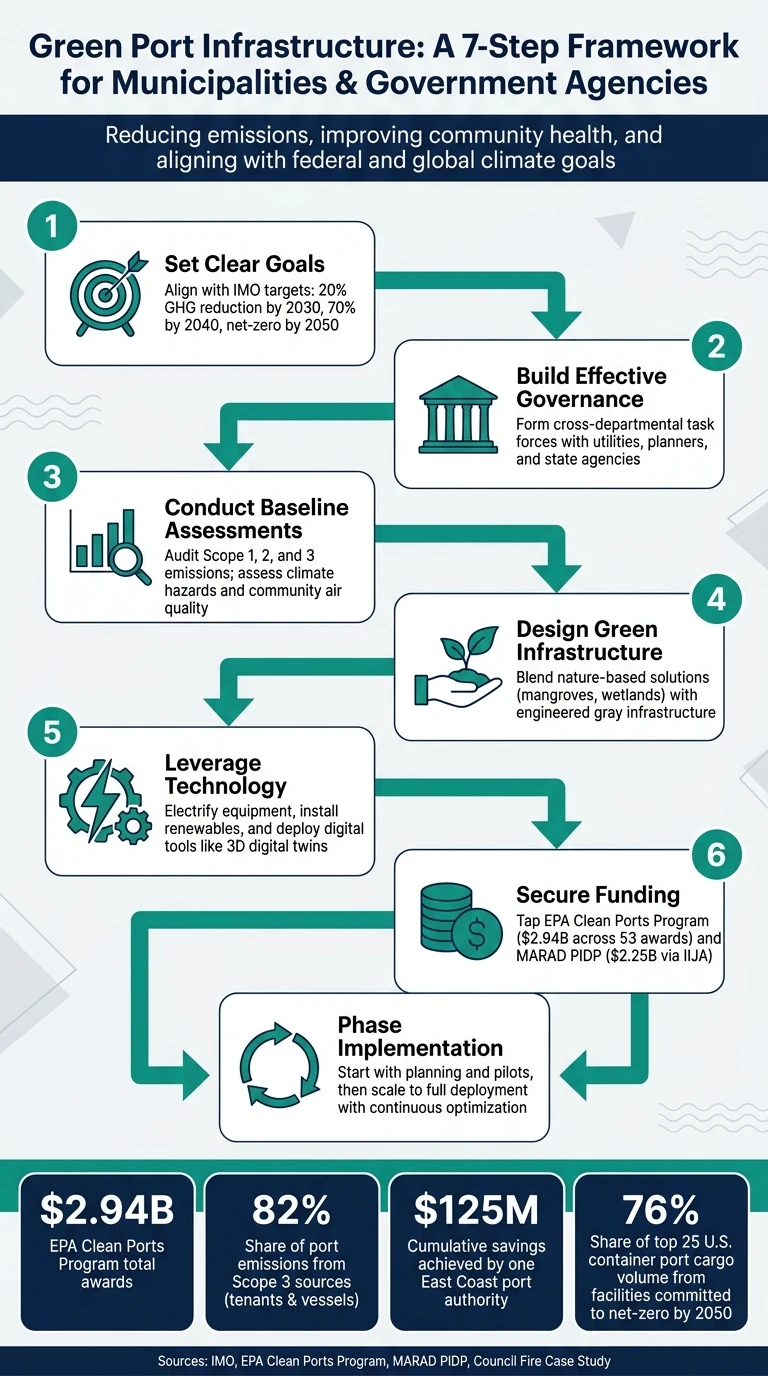
Green Port Infrastructure: 7-Step Framework for Municipalities
Building a Vision and Governance Framework
Setting Clear Sustainability Goals
Before embarking on a green port initiative, municipalities need to define clear, measurable objectives. These goals should align with broader municipal climate action plans and national decarbonization commitments, ensuring that port sustainability efforts are part of a unified strategy rather than isolated projects.
The International Maritime Organization (IMO) provides a valuable framework for setting these goals: a 20% reduction in greenhouse gas (GHG) emissions by 2030, a 70% reduction by 2040 (both compared to 2008 levels), and achieving net-zero emissions by 2050 [1]. Adopting these milestones not only creates a structured path forward but also enhances credibility when seeking federal funding tied to climate performance.
Breaking long-term goals into phased checkpoints for 2030 and 2040 makes them more actionable. For example, focusing on high-traffic berths for early electrification and shore power installation can yield immediate results. A single shore power connection at a busy berth can cut between 1,000 and 3,000 tons of CO₂e annually, providing a visible success that builds political and community support [1].
Sustainability efforts should extend beyond the port authority's direct operations. Requiring tenants to meet zero-emission standards and report progress through lease agreements is an effective way to tackle emissions from visiting vessels, tenant activities, and drayage trucks [1].
Once the goals are established, the next step is creating a governance structure that ensures these plans are effectively implemented.
Building Effective Governance Structures
Technology alone doesn’t solve the challenges of green port projects - fragmented decision-making often plays a bigger role in slowing progress. To avoid this, it’s essential to create formal governance structures that bring the right stakeholders together and keep them engaged throughout the project.
A cross-departmental task force is a practical starting point. This group should include representatives from the port authority, local utilities, municipal planning departments, and state transportation agencies [3]. Early engagement with utilities is particularly critical, as grid upgrades often require years of permitting and construction. Additionally, aligning with national decarbonization policies can help unlock public funding and streamline project approvals [3].
Governance structures should also address both the "business case" and the "value case" for green investments. While some initiatives, like shore power infrastructure, may not deliver immediate financial returns, they provide measurable public health and emissions benefits. Clearly communicating these benefits can help secure public funding for projects that may not meet traditional commercial ROI benchmarks [3].
With governance in place, the next step is conducting a thorough baseline assessment to guide decisions.
Conducting Baseline Assessments
Baseline assessments are essential for setting informed sustainability goals and building a strong case for funding. They provide a clear picture of current conditions, helping to identify priorities and opportunities for cost-effective green investments.
Start with a comprehensive emissions inventory covering Scope 1, 2, and 3 emissions. Using established methodologies like the World Ports Climate Action Program (WPCAP) or the GHG Protocol ensures accuracy. For example, a major East Coast port authority managing 3 million TEUs completed its first GHG inventory between 2021 and 2026. The results were eye-opening: 82% of emissions came from Scope 3 sources, such as tenants and visiting vessels [2].
"The GHG inventory revealed that 82% of emissions were Scope 3 - beyond the authority's direct control. Strategies that only address Scope 1 and 2 miss the majority of impact and the majority of cost-reduction opportunity." - Council Fire Case Study [2]
This data proved invaluable, allowing the port authority to integrate climate considerations into its capital planning. Over five years, this approach delivered $125 million in cumulative savings, including $36 million in avoided costs by designing infrastructure to withstand projected sea-level conditions in 2080 [2].
Key areas to focus on during a baseline assessment include:
Emissions: Quantify Scope 1, 2, and 3 emissions to determine whether to prioritize internal operations or tenant-related activities.
Climate Hazards: Assess sea-level rise projections and storm surge risks to guide infrastructure elevation decisions.
Operational Data: Analyze fuel consumption and energy costs per TEU to support electrification and renewable energy plans.
Community Impact: Measure PM2.5 and NOx levels in nearby neighborhoods to inform environmental justice initiatives and Community Benefits Agreements.
The table below summarizes these categories:
Risk Category | Baseline Data to Collect | Why It Matters |
|---|---|---|
Emissions | Scope 1, 2, and 3 (tenants/vessels) | Identifies focus areas - internal operations vs. tenant lease requirements |
Climate Hazard | Sea-level rise projections, storm surge | Guides elevation standards for berths and electrical infrastructure |
Operational | Fuel consumption, energy cost per TEU | Builds the case for electrification and renewable energy investments |
Community | PM2.5 and NOx levels in local areas | Supports environmental justice and community health goals |
Designing Green and Climate-Ready Infrastructure
Balancing Green and Gray Infrastructure
Effective port infrastructure requires a thoughtful blend of engineered solutions and natural systems. By integrating nature-based solutions (NBS) with traditional gray infrastructure, ports can enhance both resilience and cost-effectiveness.
NBS strategies for port environments generally fall into four categories: working with natural sediment flows, using living shorelines to reduce wave energy, repurposing dredged sediment to create wetlands, and adapting concrete structures to include ecological features. These approaches can complement conventional gray infrastructure such as seawalls, docks, and stormwater systems, creating hybrid strategies that are both functional and environmentally conscious [5].
Here’s a comparison of infrastructure types and their benefits:
Infrastructure Type | Solution Example | Primary Benefit |
|---|---|---|
Gray | Elevated substations | Protection from storm surges |
Green | Mangrove buffers | Wave height reduction (13–66%) |
Hybrid | Ecological breakwaters | Coastal protection + habitat creation |
Green | Vegetated swales | Natural stormwater filtration |
Real-world examples demonstrate the effectiveness of these approaches. At Jakarta’s Batavia Port, local materials and mangroves were used alongside a traditional breakwater to combat land subsidence and rising sea levels. Similarly, Lekki Port in Nigeria incorporated a sandbar breakwater design that worked with natural sediment transport, significantly reducing construction and maintenance costs compared to a purely gray infrastructure approach [5]. These strategies can serve as a blueprint for U.S. ports, enabling municipalities to meet resilience goals while staying within budget constraints.
With these integrated methods in mind, the next step is addressing how to design infrastructure that anticipates and withstands evolving climate risks.
Designing for Climate Risk
With 70% of U.S. port capacity located in FEMA Special Flood Hazard Areas [4], addressing climate risk is no longer optional - it’s a necessity for every capital investment.
One East Coast port authority exemplified this proactive approach by embedding climate resilience into its $800 million capital plan. The authority evaluated projects against future sea-level rise and extreme heat projections through 2080, identifying $120 million in necessary design adjustments. By addressing these risks early, they avoided $36 million in potential retrofit costs [2]. This illustrates how early planning not only mitigates risk but also delivers measurable financial savings - an argument that resonates with budget-conscious municipal leaders.
Equally important are landside connectors, such as roads, rail lines, and pipelines, which are often more vulnerable to flooding than the ports themselves. Despite their critical role, these connectors are frequently overlooked in resilience planning [6]. Effective climate-risk strategies must consider these assets, ensuring they are included in federal funding applications and regulatory compliance efforts.
Using Spatial Planning for Port Development
Structural resilience is just one piece of the puzzle. Spatial planning plays a crucial role in guiding sustainable port development. By mapping opportunities for NBS within the port and its surrounding areas, planners can address governance challenges early and maintain the "social license to operate" - the trust and support of the local community that are essential for project success [5].
Zoning and land-use policies further extend a port’s sustainability efforts. For instance, green lease agreements can require tenants to meet energy efficiency standards, report emissions, and adopt cleaner equipment within designated areas [2]. Digital tools, such as 3D digital twins, add another layer of precision by visualizing how zoning changes, green buffers, and infrastructure upgrades interact across the port district. These tools allow planners, stakeholders, and community members to align on decisions before construction begins.
"Innovative technologies like 3D Digital Twins can bridge the gap between complex data and clear insights, allowing everyone, regardless of expertise, to make well-informed decisions." - Joep Grispen, Director of Technology
Adding Low-Carbon and Smart Technologies
Electrification and Renewable Energy
Cutting carbon emissions from daily port operations is a crucial step forward. For example, an East Coast port authority electrified 65% of its cargo-handling equipment and installed 12 MW of on-site solar power. This effort led to $125 million in cumulative savings and a 52% reduction in Scope 1 and 2 emissions [2]. A standout achievement was the 65% drop in per-unit energy costs for rubber-tired gantry (RTG) cranes after switching from diesel to electric power [2].
Beyond upgrading port-owned equipment, green lease agreements extend the benefits to tenant operations. By requiring tenants to report emissions annually and meet energy efficiency standards, ports can address emissions that fall outside their direct control.
For ports with limited space for on-site renewables, Power Purchase Agreements (PPAs) provide access to zero-emission electricity from off-site generators without requiring significant upfront investment [8]. Pairing on-site renewable installations with battery storage and a microgrid can also ensure a reliable local power supply during outages [7][9]. To manage costs effectively, ports can align equipment upgrades with natural asset replacement cycles, typically planning transitions about 10 years in advance to avoid unnecessary write-offs [2].
Once a cleaner energy supply is in place, ports can focus on leveraging digital tools to optimize operations further.
Digital Tools for Smarter Port Logistics
Digital solutions are transforming port logistics, offering streamlined operations and lower emissions. The concept of "Port 5.0" goes beyond basic digitalization, integrating goods, data, and energy flows into unified platforms [11].
The Port of Brisbane's "2060 Vision" strategy is a prime example. Instead of relying on static, periodically updated plans, Brisbane uses real-time infrastructure and supply chain data to guide its master planning process. This ensures decisions are based on current and projected conditions [10].
"Digital master planning turns the old process inside out. Instead of working from siloed, static data sets, planners can analyse complementary data sets like economic forecasts, trade, regional demographics, traffic, and weather to understand patterns and form predictions." - Michael Houen, Director, Smart Ports, Hatch [10]
A practical approach to implementing these tools involves a four-step roadmap:
Connect: Link existing data sources.
Collect: Build the necessary data infrastructure.
Analyze: Use simulations and scenario testing to uncover insights.
Act: Incorporate findings into strategic decision-making [10].
However, advanced digital systems like 5G networks or large-scale sensor arrays require significant power. To avoid delays, ports should collaborate with utility providers for a grid impact assessment 12–18 months before deployment [8].
While digital systems enhance efficiency, consistent performance tracking ensures these tools deliver tangible results.
Tracking Performance Over Time
Performance tracking is key to turning decarbonization and digital efforts into measurable achievements. Start by conducting a comprehensive greenhouse gas (GHG) inventory based on the GHG Protocol, covering Scope 1, 2, and 3 emissions [2]. This inventory acts as a baseline for measuring future progress. Real-time air quality monitoring provides actionable insights and reinforces trust within the community [1]. Additionally, treating data as a strategic resource - ensuring it is secure, well-organized, and accessible to all stakeholders - prevents it from becoming siloed and underutilized [10].
Funding and Delivering Green Port Projects
Funding Sources for Green Ports
Municipalities aiming to develop green ports can tap into several federal funding programs that support sustainable initiatives, ensuring progress from initial assessments to full-scale implementation.
The EPA Clean Ports Program stands out as the largest funding source, distributing $2.94 billion across 53 awards [12]. This program operates on two tracks: one allocates $2.8 billion for zero-emission equipment and infrastructure, while the other dedicates $58 million to emissions inventories and climate planning [12]. Starting with the planning track is a strategic move - agencies that establish a robust emissions baseline and technical plan often have a better chance of securing larger deployment grants later.
Another key resource is the Port Infrastructure Development Program (PIDP), managed by MARAD under the Department of Transportation. Supported by $2.25 billion from the Infrastructure Investment and Jobs Act (IIJA) for 2022–2026, this program typically covers 80% of eligible project costs, with higher matches available for rural or small ports [13]. For fiscal year 2026, $450 million was allocated, though the application deadline passed on June 1, 2026 [13]. This highlights the importance of staying on top of funding timelines.
Examples of successful funding awards showcase the scale of these programs. In October 2024, the Port Authority of New York and New Jersey received $451,635,800 from the EPA to implement electric cargo handling equipment, zero-emission trucks, shore power systems, and a community air quality monitoring initiative [12]. Smaller projects also benefit; the Municipality of Anchorage (Don Young Port of Alaska) was awarded $1,934,206 for planning activities such as emissions inventories, clean energy assessments, and hydrogen safety analyses [12].
It's worth noting that federal funding under the Build America, Buy America Act requires the use of U.S.-made iron, steel, and manufactured products [12]. Early procurement planning that accounts for these requirements can help avoid unnecessary delays.
These funding sources provide a solid foundation for ports to modernize infrastructure step by step.
A Phased Approach to Implementation
Transforming port infrastructure is a complex process that benefits from a phased approach. This method allows for gradual implementation, minimizing disruptions to ongoing operations while enabling agencies to test new technologies, refine strategies, and build capacity over time.
The MARAD Port Planning and Investment Toolkit is a valuable resource for guiding preplanning, feasibility studies, and funding strategies [14]. Typically, phased rollouts include three key stages: planning and baseline assessments, pilot projects for testing technologies, and full-scale deployment followed by continuous optimization. Aligning equipment upgrades with natural replacement cycles helps manage costs and ensures smoother transitions.
This incremental strategy not only keeps projects financially feasible but also facilitates collaboration across various sectors, creating opportunities for innovative partnerships.
Building Collaborative Partnerships
Collaboration is vital for the success of green port projects. Partnerships between public entities - such as port authorities, regional transit agencies, and state environmental offices - can streamline resources and simplify permitting processes, especially for projects spanning multiple jurisdictions.
Public-private partnerships (P3s) play a significant role in large-scale deployments, such as EV charging infrastructure or microgrid installations. The EPA Clean Ports Program actively encourages partnerships with independent truck owners and near-port communities, making stakeholder engagement a key part of the grant process [12].
On a global level, joining initiatives like the World Ports Climate Action Program (WPCAP) offers opportunities for peer learning and enhances credibility with international shipping lines, which increasingly prioritize sustainability metrics [1]. With the International Maritime Organization (IMO) aiming for a 30% reduction in GHG emissions by 2030 compared to 2008 levels [1], aligning with international standards strengthens a port's competitive edge. Publishing real-time air quality data from community monitoring networks is one way to build trust with local communities and demonstrate accountability to all stakeholders [1].
Conclusion: Taking the Next Steps Toward Greener Ports
Key Steps for Municipalities and Agencies
Advancing green port initiatives requires a clear roadmap, thoughtful planning, and consistent follow-through. To get started, conducting a comprehensive Scope 1–3 emissions audit is essential. This will help identify the most impactful areas for investment. From there, focus on quick, high-impact improvements like installing shore power at busy berths to achieve immediate emissions reductions. These early successes can help build momentum and strengthen public trust.
Flexibility remains critical as plans progress. Agencies need to stay informed about policy changes, utility updates, and compliance requirements to align infrastructure projects with available funding opportunities [8]. Establishing a governance task force that includes representatives from labor unions, utilities, and terminal operators can help resolve potential conflicts and ensure long-term goals remain on track [8]. The potential impact is substantial: about 76% of cargo volume handled by the top 25 U.S. container ports comes from facilities already committed to achieving net-zero emissions by 2050 [8].
For municipalities and agencies looking to act on these insights, Council Fire offers tailored guidance to support every stage of the process.
How Council Fire Supports Sustainable Port Development
Council Fire collaborates with municipalities and government agencies to transform sustainability goals into actionable results. Their approach is designed to align seamlessly with the mission of creating climate-ready, sustainable port operations. Services include:
Comprehensive GHG Audits: Covering Scope 1, 2, and 3 emissions to provide a full picture of environmental impact.
Five-Pillar Strategy Development: Focused on cleaner equipment transitions, shore power systems, clean truck programs, green leases with emissions reporting, and climate-resilient capital planning.
Funding Assistance: Providing detailed benefit–cost analyses and equity scoring to meet federal and state grant criteria.
Stakeholder Engagement: Facilitating neighborhood workshops and advisory panels that include environmental justice groups and labor unions to build community trust and minimize resistance.
For agencies eager to move from planning to execution, Council Fire recommends reinvesting early savings from low-cost upgrades like LED lighting retrofits into larger green infrastructure projects. This practical approach ensures progress while laying the foundation for long-term sustainability.
Green Port Progress Report: Operations
FAQs
What should we do first to start a green port plan?
To begin, develop a thorough emissions inventory that covers every aspect of port operations - this includes vessels, harbor craft, cargo-handling equipment, and rail systems. Rely on widely accepted frameworks like the GHG Protocol to maintain consistency and align with funding requirements. Alongside this, carry out a climate risk assessment to pinpoint vulnerabilities, such as the potential impacts of sea level rise or extreme weather events. These initial steps lay the groundwork for establishing clear targets and crafting a robust decarbonization strategy.
How can we cut Scope 3 port emissions we don’t control?
Ports aiming to cut down on Scope 3 emissions - which often fall outside their direct control - can take proactive steps to make a difference. One effective approach is incorporating zero-emission requirements into tenant lease agreements. This ensures that partners operating within the port align with its sustainability goals.
Keeping a thorough and up-to-date emissions inventory is another key strategy. Not only does this help track progress and pinpoint areas for improvement, but it also plays a crucial role in qualifying for federal funding opportunities. Collaboration with stakeholders is equally important, as it fosters innovation and shared accountability throughout the supply chain.
Investing in infrastructure like shore power is another game-changer. By providing visiting vessels with the ability to power down their auxiliary engines while docked, ports can significantly cut emissions during those periods. These measures together can help ports lead the way in reducing their environmental impact.
Which federal grants best fit planning vs. deployment?
The EPA's Clean Ports Program provides two distinct tracks to support port-related environmental initiatives. The first, the Climate and Air Quality Planning Competition, focuses on activities such as creating emissions inventories and developing strategies to improve resiliency. The second, the Zero-Emission Technology Deployment Competition, is aimed at funding the implementation of infrastructure and equipment to support zero-emission technologies.
Meanwhile, the DOT’s Port Infrastructure Development Program (PIDP) offers funding for both construction projects and planning efforts. However, planning activities typically account for no more than 10% of the allocated funds. To increase the likelihood of securing deployment grants, it's crucial to complete feasibility studies before submitting an application.
Related Blog Posts
How to Build a Climate-Ready Energy & Water Infrastructure Plan for Maritime & Logistics Companies
How to Transition to Renewable Energy Systems at the Local Level for Maritime & Logistics Companies
How to Turn a Strategic Plan into Fundable, Shovel-Ready Projects for Maritime & Logistics Companies
How to Decarbonize Maritime Operations and Supply Chains for Municipalities & Government Agencies
Latest Articles
©2026

Narrative Change and Power Building: The Missing Half of Advocacy
Narrative change is the process of disrupting dominant narratives that normalize inequity and advancing new narratives from historically marginalized communities.

Funding Resilience Without Federal Grants
BRIC is unreliable and FEMA is shrinking. Here's how cities fund climate resilience with dedicated revenue, blended finance, and a coordinating authority.

The ESG Blind Spot: How AI Is Finding Risks in Companies Nobody Else Is Watching
Norway's sovereign wealth fund uses AI to screen 7,200 portfolio companies for forced labor and corruption within 24 hours. The real story is the emerging-market coverage gap that traditional ESG data vendors miss — and what it means for any company with a global supply chain.
Narrative Change and Power Building: The Missing Half of Advocacy
Narrative change is the process of disrupting dominant narratives that normalize inequity and advancing new narratives from historically marginalized communities.
Funding Resilience Without Federal Grants
BRIC is unreliable and FEMA is shrinking. Here's how cities fund climate resilience with dedicated revenue, blended finance, and a coordinating authority.
The ESG Blind Spot: How AI Is Finding Risks in Companies Nobody Else Is Watching
Norway's sovereign wealth fund uses AI to screen 7,200 portfolio companies for forced labor and corruption within 24 hours. The real story is the emerging-market coverage gap that traditional ESG data vendors miss — and what it means for any company with a global supply chain.
FAQ
01
What does it really mean to “redefine profit”?
02
What makes Council Fire different?
03
Who does Council Fire work with?
04
What does working with Council Fire actually look like?
05
How does Council Fire help organizations turn big goals into action?
06
How does Council Fire define and measure success?
07
How does technology fit into Council Fire’s work?
Jun 11, 2026
How to Design Green Port Infrastructure for the Future for Municipalities & Government Agencies
Sustainability Strategy
In This Article
Municipalities must redesign ports with electrification, nature-based defenses, and governance to cut emissions and protect communities.
How to Design Green Port Infrastructure for the Future for Municipalities & Government Agencies
Ports are vital for trade but are major pollution sources, impacting nearby communities with health risks like asthma and cancer. Designing greener ports can cut emissions, improve air quality, and align with federal and global policies like the EPA’s $3 billion Clean Ports Program and the IMO’s net-zero goals by 2050. Here's how municipalities and agencies can lead these efforts:
Set Clear Goals: Align with emissions reduction targets (e.g., 20% by 2030, net-zero by 2050) and prioritize high-impact projects like shore power systems for early results.
Effective Governance: Create task forces with utilities, planners, and state agencies to coordinate decisions and streamline funding.
Baseline Assessments: Audit Scope 1–3 emissions, assess climate risks, and analyze operational data to guide investments.
Infrastructure Design: Use a mix of natural (e.g., mangroves) and engineered solutions to improve resilience and reduce costs.
Leverage Technology: Electrify equipment, adopt renewable energy, and use digital tools like 3D planning and real-time data for smarter logistics.
Funding Strategies: Tap into federal programs like the EPA Clean Ports Program and MARAD’s PIDP, ensuring compliance with Buy America rules.
Phased Implementation: Roll out projects in stages, starting with planning, then pilot programs, and finally full-scale deployment.
Municipalities play a key role in reducing port emissions and improving community health by integrating climate resilience, clean energy, and efficient logistics into port operations.
Green Port Infrastructure: 7-Step Framework for Municipalities
Building a Vision and Governance Framework
Setting Clear Sustainability Goals
Before embarking on a green port initiative, municipalities need to define clear, measurable objectives. These goals should align with broader municipal climate action plans and national decarbonization commitments, ensuring that port sustainability efforts are part of a unified strategy rather than isolated projects.
The International Maritime Organization (IMO) provides a valuable framework for setting these goals: a 20% reduction in greenhouse gas (GHG) emissions by 2030, a 70% reduction by 2040 (both compared to 2008 levels), and achieving net-zero emissions by 2050 [1]. Adopting these milestones not only creates a structured path forward but also enhances credibility when seeking federal funding tied to climate performance.
Breaking long-term goals into phased checkpoints for 2030 and 2040 makes them more actionable. For example, focusing on high-traffic berths for early electrification and shore power installation can yield immediate results. A single shore power connection at a busy berth can cut between 1,000 and 3,000 tons of CO₂e annually, providing a visible success that builds political and community support [1].
Sustainability efforts should extend beyond the port authority's direct operations. Requiring tenants to meet zero-emission standards and report progress through lease agreements is an effective way to tackle emissions from visiting vessels, tenant activities, and drayage trucks [1].
Once the goals are established, the next step is creating a governance structure that ensures these plans are effectively implemented.
Building Effective Governance Structures
Technology alone doesn’t solve the challenges of green port projects - fragmented decision-making often plays a bigger role in slowing progress. To avoid this, it’s essential to create formal governance structures that bring the right stakeholders together and keep them engaged throughout the project.
A cross-departmental task force is a practical starting point. This group should include representatives from the port authority, local utilities, municipal planning departments, and state transportation agencies [3]. Early engagement with utilities is particularly critical, as grid upgrades often require years of permitting and construction. Additionally, aligning with national decarbonization policies can help unlock public funding and streamline project approvals [3].
Governance structures should also address both the "business case" and the "value case" for green investments. While some initiatives, like shore power infrastructure, may not deliver immediate financial returns, they provide measurable public health and emissions benefits. Clearly communicating these benefits can help secure public funding for projects that may not meet traditional commercial ROI benchmarks [3].
With governance in place, the next step is conducting a thorough baseline assessment to guide decisions.
Conducting Baseline Assessments
Baseline assessments are essential for setting informed sustainability goals and building a strong case for funding. They provide a clear picture of current conditions, helping to identify priorities and opportunities for cost-effective green investments.
Start with a comprehensive emissions inventory covering Scope 1, 2, and 3 emissions. Using established methodologies like the World Ports Climate Action Program (WPCAP) or the GHG Protocol ensures accuracy. For example, a major East Coast port authority managing 3 million TEUs completed its first GHG inventory between 2021 and 2026. The results were eye-opening: 82% of emissions came from Scope 3 sources, such as tenants and visiting vessels [2].
"The GHG inventory revealed that 82% of emissions were Scope 3 - beyond the authority's direct control. Strategies that only address Scope 1 and 2 miss the majority of impact and the majority of cost-reduction opportunity." - Council Fire Case Study [2]
This data proved invaluable, allowing the port authority to integrate climate considerations into its capital planning. Over five years, this approach delivered $125 million in cumulative savings, including $36 million in avoided costs by designing infrastructure to withstand projected sea-level conditions in 2080 [2].
Key areas to focus on during a baseline assessment include:
Emissions: Quantify Scope 1, 2, and 3 emissions to determine whether to prioritize internal operations or tenant-related activities.
Climate Hazards: Assess sea-level rise projections and storm surge risks to guide infrastructure elevation decisions.
Operational Data: Analyze fuel consumption and energy costs per TEU to support electrification and renewable energy plans.
Community Impact: Measure PM2.5 and NOx levels in nearby neighborhoods to inform environmental justice initiatives and Community Benefits Agreements.
The table below summarizes these categories:
Risk Category | Baseline Data to Collect | Why It Matters |
|---|---|---|
Emissions | Scope 1, 2, and 3 (tenants/vessels) | Identifies focus areas - internal operations vs. tenant lease requirements |
Climate Hazard | Sea-level rise projections, storm surge | Guides elevation standards for berths and electrical infrastructure |
Operational | Fuel consumption, energy cost per TEU | Builds the case for electrification and renewable energy investments |
Community | PM2.5 and NOx levels in local areas | Supports environmental justice and community health goals |
Designing Green and Climate-Ready Infrastructure
Balancing Green and Gray Infrastructure
Effective port infrastructure requires a thoughtful blend of engineered solutions and natural systems. By integrating nature-based solutions (NBS) with traditional gray infrastructure, ports can enhance both resilience and cost-effectiveness.
NBS strategies for port environments generally fall into four categories: working with natural sediment flows, using living shorelines to reduce wave energy, repurposing dredged sediment to create wetlands, and adapting concrete structures to include ecological features. These approaches can complement conventional gray infrastructure such as seawalls, docks, and stormwater systems, creating hybrid strategies that are both functional and environmentally conscious [5].
Here’s a comparison of infrastructure types and their benefits:
Infrastructure Type | Solution Example | Primary Benefit |
|---|---|---|
Gray | Elevated substations | Protection from storm surges |
Green | Mangrove buffers | Wave height reduction (13–66%) |
Hybrid | Ecological breakwaters | Coastal protection + habitat creation |
Green | Vegetated swales | Natural stormwater filtration |
Real-world examples demonstrate the effectiveness of these approaches. At Jakarta’s Batavia Port, local materials and mangroves were used alongside a traditional breakwater to combat land subsidence and rising sea levels. Similarly, Lekki Port in Nigeria incorporated a sandbar breakwater design that worked with natural sediment transport, significantly reducing construction and maintenance costs compared to a purely gray infrastructure approach [5]. These strategies can serve as a blueprint for U.S. ports, enabling municipalities to meet resilience goals while staying within budget constraints.
With these integrated methods in mind, the next step is addressing how to design infrastructure that anticipates and withstands evolving climate risks.
Designing for Climate Risk
With 70% of U.S. port capacity located in FEMA Special Flood Hazard Areas [4], addressing climate risk is no longer optional - it’s a necessity for every capital investment.
One East Coast port authority exemplified this proactive approach by embedding climate resilience into its $800 million capital plan. The authority evaluated projects against future sea-level rise and extreme heat projections through 2080, identifying $120 million in necessary design adjustments. By addressing these risks early, they avoided $36 million in potential retrofit costs [2]. This illustrates how early planning not only mitigates risk but also delivers measurable financial savings - an argument that resonates with budget-conscious municipal leaders.
Equally important are landside connectors, such as roads, rail lines, and pipelines, which are often more vulnerable to flooding than the ports themselves. Despite their critical role, these connectors are frequently overlooked in resilience planning [6]. Effective climate-risk strategies must consider these assets, ensuring they are included in federal funding applications and regulatory compliance efforts.
Using Spatial Planning for Port Development
Structural resilience is just one piece of the puzzle. Spatial planning plays a crucial role in guiding sustainable port development. By mapping opportunities for NBS within the port and its surrounding areas, planners can address governance challenges early and maintain the "social license to operate" - the trust and support of the local community that are essential for project success [5].
Zoning and land-use policies further extend a port’s sustainability efforts. For instance, green lease agreements can require tenants to meet energy efficiency standards, report emissions, and adopt cleaner equipment within designated areas [2]. Digital tools, such as 3D digital twins, add another layer of precision by visualizing how zoning changes, green buffers, and infrastructure upgrades interact across the port district. These tools allow planners, stakeholders, and community members to align on decisions before construction begins.
"Innovative technologies like 3D Digital Twins can bridge the gap between complex data and clear insights, allowing everyone, regardless of expertise, to make well-informed decisions." - Joep Grispen, Director of Technology
Adding Low-Carbon and Smart Technologies
Electrification and Renewable Energy
Cutting carbon emissions from daily port operations is a crucial step forward. For example, an East Coast port authority electrified 65% of its cargo-handling equipment and installed 12 MW of on-site solar power. This effort led to $125 million in cumulative savings and a 52% reduction in Scope 1 and 2 emissions [2]. A standout achievement was the 65% drop in per-unit energy costs for rubber-tired gantry (RTG) cranes after switching from diesel to electric power [2].
Beyond upgrading port-owned equipment, green lease agreements extend the benefits to tenant operations. By requiring tenants to report emissions annually and meet energy efficiency standards, ports can address emissions that fall outside their direct control.
For ports with limited space for on-site renewables, Power Purchase Agreements (PPAs) provide access to zero-emission electricity from off-site generators without requiring significant upfront investment [8]. Pairing on-site renewable installations with battery storage and a microgrid can also ensure a reliable local power supply during outages [7][9]. To manage costs effectively, ports can align equipment upgrades with natural asset replacement cycles, typically planning transitions about 10 years in advance to avoid unnecessary write-offs [2].
Once a cleaner energy supply is in place, ports can focus on leveraging digital tools to optimize operations further.
Digital Tools for Smarter Port Logistics
Digital solutions are transforming port logistics, offering streamlined operations and lower emissions. The concept of "Port 5.0" goes beyond basic digitalization, integrating goods, data, and energy flows into unified platforms [11].
The Port of Brisbane's "2060 Vision" strategy is a prime example. Instead of relying on static, periodically updated plans, Brisbane uses real-time infrastructure and supply chain data to guide its master planning process. This ensures decisions are based on current and projected conditions [10].
"Digital master planning turns the old process inside out. Instead of working from siloed, static data sets, planners can analyse complementary data sets like economic forecasts, trade, regional demographics, traffic, and weather to understand patterns and form predictions." - Michael Houen, Director, Smart Ports, Hatch [10]
A practical approach to implementing these tools involves a four-step roadmap:
Connect: Link existing data sources.
Collect: Build the necessary data infrastructure.
Analyze: Use simulations and scenario testing to uncover insights.
Act: Incorporate findings into strategic decision-making [10].
However, advanced digital systems like 5G networks or large-scale sensor arrays require significant power. To avoid delays, ports should collaborate with utility providers for a grid impact assessment 12–18 months before deployment [8].
While digital systems enhance efficiency, consistent performance tracking ensures these tools deliver tangible results.
Tracking Performance Over Time
Performance tracking is key to turning decarbonization and digital efforts into measurable achievements. Start by conducting a comprehensive greenhouse gas (GHG) inventory based on the GHG Protocol, covering Scope 1, 2, and 3 emissions [2]. This inventory acts as a baseline for measuring future progress. Real-time air quality monitoring provides actionable insights and reinforces trust within the community [1]. Additionally, treating data as a strategic resource - ensuring it is secure, well-organized, and accessible to all stakeholders - prevents it from becoming siloed and underutilized [10].
Funding and Delivering Green Port Projects
Funding Sources for Green Ports
Municipalities aiming to develop green ports can tap into several federal funding programs that support sustainable initiatives, ensuring progress from initial assessments to full-scale implementation.
The EPA Clean Ports Program stands out as the largest funding source, distributing $2.94 billion across 53 awards [12]. This program operates on two tracks: one allocates $2.8 billion for zero-emission equipment and infrastructure, while the other dedicates $58 million to emissions inventories and climate planning [12]. Starting with the planning track is a strategic move - agencies that establish a robust emissions baseline and technical plan often have a better chance of securing larger deployment grants later.
Another key resource is the Port Infrastructure Development Program (PIDP), managed by MARAD under the Department of Transportation. Supported by $2.25 billion from the Infrastructure Investment and Jobs Act (IIJA) for 2022–2026, this program typically covers 80% of eligible project costs, with higher matches available for rural or small ports [13]. For fiscal year 2026, $450 million was allocated, though the application deadline passed on June 1, 2026 [13]. This highlights the importance of staying on top of funding timelines.
Examples of successful funding awards showcase the scale of these programs. In October 2024, the Port Authority of New York and New Jersey received $451,635,800 from the EPA to implement electric cargo handling equipment, zero-emission trucks, shore power systems, and a community air quality monitoring initiative [12]. Smaller projects also benefit; the Municipality of Anchorage (Don Young Port of Alaska) was awarded $1,934,206 for planning activities such as emissions inventories, clean energy assessments, and hydrogen safety analyses [12].
It's worth noting that federal funding under the Build America, Buy America Act requires the use of U.S.-made iron, steel, and manufactured products [12]. Early procurement planning that accounts for these requirements can help avoid unnecessary delays.
These funding sources provide a solid foundation for ports to modernize infrastructure step by step.
A Phased Approach to Implementation
Transforming port infrastructure is a complex process that benefits from a phased approach. This method allows for gradual implementation, minimizing disruptions to ongoing operations while enabling agencies to test new technologies, refine strategies, and build capacity over time.
The MARAD Port Planning and Investment Toolkit is a valuable resource for guiding preplanning, feasibility studies, and funding strategies [14]. Typically, phased rollouts include three key stages: planning and baseline assessments, pilot projects for testing technologies, and full-scale deployment followed by continuous optimization. Aligning equipment upgrades with natural replacement cycles helps manage costs and ensures smoother transitions.
This incremental strategy not only keeps projects financially feasible but also facilitates collaboration across various sectors, creating opportunities for innovative partnerships.
Building Collaborative Partnerships
Collaboration is vital for the success of green port projects. Partnerships between public entities - such as port authorities, regional transit agencies, and state environmental offices - can streamline resources and simplify permitting processes, especially for projects spanning multiple jurisdictions.
Public-private partnerships (P3s) play a significant role in large-scale deployments, such as EV charging infrastructure or microgrid installations. The EPA Clean Ports Program actively encourages partnerships with independent truck owners and near-port communities, making stakeholder engagement a key part of the grant process [12].
On a global level, joining initiatives like the World Ports Climate Action Program (WPCAP) offers opportunities for peer learning and enhances credibility with international shipping lines, which increasingly prioritize sustainability metrics [1]. With the International Maritime Organization (IMO) aiming for a 30% reduction in GHG emissions by 2030 compared to 2008 levels [1], aligning with international standards strengthens a port's competitive edge. Publishing real-time air quality data from community monitoring networks is one way to build trust with local communities and demonstrate accountability to all stakeholders [1].
Conclusion: Taking the Next Steps Toward Greener Ports
Key Steps for Municipalities and Agencies
Advancing green port initiatives requires a clear roadmap, thoughtful planning, and consistent follow-through. To get started, conducting a comprehensive Scope 1–3 emissions audit is essential. This will help identify the most impactful areas for investment. From there, focus on quick, high-impact improvements like installing shore power at busy berths to achieve immediate emissions reductions. These early successes can help build momentum and strengthen public trust.
Flexibility remains critical as plans progress. Agencies need to stay informed about policy changes, utility updates, and compliance requirements to align infrastructure projects with available funding opportunities [8]. Establishing a governance task force that includes representatives from labor unions, utilities, and terminal operators can help resolve potential conflicts and ensure long-term goals remain on track [8]. The potential impact is substantial: about 76% of cargo volume handled by the top 25 U.S. container ports comes from facilities already committed to achieving net-zero emissions by 2050 [8].
For municipalities and agencies looking to act on these insights, Council Fire offers tailored guidance to support every stage of the process.
How Council Fire Supports Sustainable Port Development
Council Fire collaborates with municipalities and government agencies to transform sustainability goals into actionable results. Their approach is designed to align seamlessly with the mission of creating climate-ready, sustainable port operations. Services include:
Comprehensive GHG Audits: Covering Scope 1, 2, and 3 emissions to provide a full picture of environmental impact.
Five-Pillar Strategy Development: Focused on cleaner equipment transitions, shore power systems, clean truck programs, green leases with emissions reporting, and climate-resilient capital planning.
Funding Assistance: Providing detailed benefit–cost analyses and equity scoring to meet federal and state grant criteria.
Stakeholder Engagement: Facilitating neighborhood workshops and advisory panels that include environmental justice groups and labor unions to build community trust and minimize resistance.
For agencies eager to move from planning to execution, Council Fire recommends reinvesting early savings from low-cost upgrades like LED lighting retrofits into larger green infrastructure projects. This practical approach ensures progress while laying the foundation for long-term sustainability.
Green Port Progress Report: Operations
FAQs
What should we do first to start a green port plan?
To begin, develop a thorough emissions inventory that covers every aspect of port operations - this includes vessels, harbor craft, cargo-handling equipment, and rail systems. Rely on widely accepted frameworks like the GHG Protocol to maintain consistency and align with funding requirements. Alongside this, carry out a climate risk assessment to pinpoint vulnerabilities, such as the potential impacts of sea level rise or extreme weather events. These initial steps lay the groundwork for establishing clear targets and crafting a robust decarbonization strategy.
How can we cut Scope 3 port emissions we don’t control?
Ports aiming to cut down on Scope 3 emissions - which often fall outside their direct control - can take proactive steps to make a difference. One effective approach is incorporating zero-emission requirements into tenant lease agreements. This ensures that partners operating within the port align with its sustainability goals.
Keeping a thorough and up-to-date emissions inventory is another key strategy. Not only does this help track progress and pinpoint areas for improvement, but it also plays a crucial role in qualifying for federal funding opportunities. Collaboration with stakeholders is equally important, as it fosters innovation and shared accountability throughout the supply chain.
Investing in infrastructure like shore power is another game-changer. By providing visiting vessels with the ability to power down their auxiliary engines while docked, ports can significantly cut emissions during those periods. These measures together can help ports lead the way in reducing their environmental impact.
Which federal grants best fit planning vs. deployment?
The EPA's Clean Ports Program provides two distinct tracks to support port-related environmental initiatives. The first, the Climate and Air Quality Planning Competition, focuses on activities such as creating emissions inventories and developing strategies to improve resiliency. The second, the Zero-Emission Technology Deployment Competition, is aimed at funding the implementation of infrastructure and equipment to support zero-emission technologies.
Meanwhile, the DOT’s Port Infrastructure Development Program (PIDP) offers funding for both construction projects and planning efforts. However, planning activities typically account for no more than 10% of the allocated funds. To increase the likelihood of securing deployment grants, it's crucial to complete feasibility studies before submitting an application.
Related Blog Posts
How to Build a Climate-Ready Energy & Water Infrastructure Plan for Maritime & Logistics Companies
How to Transition to Renewable Energy Systems at the Local Level for Maritime & Logistics Companies
How to Turn a Strategic Plan into Fundable, Shovel-Ready Projects for Maritime & Logistics Companies
How to Decarbonize Maritime Operations and Supply Chains for Municipalities & Government Agencies
Latest Articles
©2026
Narrative Change and Power Building: The Missing Half of Advocacy
Narrative change is the process of disrupting dominant narratives that normalize inequity and advancing new narratives from historically marginalized communities.
Funding Resilience Without Federal Grants
BRIC is unreliable and FEMA is shrinking. Here's how cities fund climate resilience with dedicated revenue, blended finance, and a coordinating authority.
The ESG Blind Spot: How AI Is Finding Risks in Companies Nobody Else Is Watching
Norway's sovereign wealth fund uses AI to screen 7,200 portfolio companies for forced labor and corruption within 24 hours. The real story is the emerging-market coverage gap that traditional ESG data vendors miss — and what it means for any company with a global supply chain.
FAQ
01
What does it really mean to “redefine profit”?
02
What makes Council Fire different?
03
Who does Council Fire work with?
04
What does working with Council Fire actually look like?
05
How does Council Fire help organizations turn big goals into action?
06
How does Council Fire define and measure success?
07
How does technology fit into Council Fire’s work?
Jun 11, 2026
How to Design Green Port Infrastructure for the Future for Municipalities & Government Agencies
Sustainability Strategy
In This Article
Municipalities must redesign ports with electrification, nature-based defenses, and governance to cut emissions and protect communities.
How to Design Green Port Infrastructure for the Future for Municipalities & Government Agencies
Ports are vital for trade but are major pollution sources, impacting nearby communities with health risks like asthma and cancer. Designing greener ports can cut emissions, improve air quality, and align with federal and global policies like the EPA’s $3 billion Clean Ports Program and the IMO’s net-zero goals by 2050. Here's how municipalities and agencies can lead these efforts:
Set Clear Goals: Align with emissions reduction targets (e.g., 20% by 2030, net-zero by 2050) and prioritize high-impact projects like shore power systems for early results.
Effective Governance: Create task forces with utilities, planners, and state agencies to coordinate decisions and streamline funding.
Baseline Assessments: Audit Scope 1–3 emissions, assess climate risks, and analyze operational data to guide investments.
Infrastructure Design: Use a mix of natural (e.g., mangroves) and engineered solutions to improve resilience and reduce costs.
Leverage Technology: Electrify equipment, adopt renewable energy, and use digital tools like 3D planning and real-time data for smarter logistics.
Funding Strategies: Tap into federal programs like the EPA Clean Ports Program and MARAD’s PIDP, ensuring compliance with Buy America rules.
Phased Implementation: Roll out projects in stages, starting with planning, then pilot programs, and finally full-scale deployment.
Municipalities play a key role in reducing port emissions and improving community health by integrating climate resilience, clean energy, and efficient logistics into port operations.
Green Port Infrastructure: 7-Step Framework for Municipalities
Building a Vision and Governance Framework
Setting Clear Sustainability Goals
Before embarking on a green port initiative, municipalities need to define clear, measurable objectives. These goals should align with broader municipal climate action plans and national decarbonization commitments, ensuring that port sustainability efforts are part of a unified strategy rather than isolated projects.
The International Maritime Organization (IMO) provides a valuable framework for setting these goals: a 20% reduction in greenhouse gas (GHG) emissions by 2030, a 70% reduction by 2040 (both compared to 2008 levels), and achieving net-zero emissions by 2050 [1]. Adopting these milestones not only creates a structured path forward but also enhances credibility when seeking federal funding tied to climate performance.
Breaking long-term goals into phased checkpoints for 2030 and 2040 makes them more actionable. For example, focusing on high-traffic berths for early electrification and shore power installation can yield immediate results. A single shore power connection at a busy berth can cut between 1,000 and 3,000 tons of CO₂e annually, providing a visible success that builds political and community support [1].
Sustainability efforts should extend beyond the port authority's direct operations. Requiring tenants to meet zero-emission standards and report progress through lease agreements is an effective way to tackle emissions from visiting vessels, tenant activities, and drayage trucks [1].
Once the goals are established, the next step is creating a governance structure that ensures these plans are effectively implemented.
Building Effective Governance Structures
Technology alone doesn’t solve the challenges of green port projects - fragmented decision-making often plays a bigger role in slowing progress. To avoid this, it’s essential to create formal governance structures that bring the right stakeholders together and keep them engaged throughout the project.
A cross-departmental task force is a practical starting point. This group should include representatives from the port authority, local utilities, municipal planning departments, and state transportation agencies [3]. Early engagement with utilities is particularly critical, as grid upgrades often require years of permitting and construction. Additionally, aligning with national decarbonization policies can help unlock public funding and streamline project approvals [3].
Governance structures should also address both the "business case" and the "value case" for green investments. While some initiatives, like shore power infrastructure, may not deliver immediate financial returns, they provide measurable public health and emissions benefits. Clearly communicating these benefits can help secure public funding for projects that may not meet traditional commercial ROI benchmarks [3].
With governance in place, the next step is conducting a thorough baseline assessment to guide decisions.
Conducting Baseline Assessments
Baseline assessments are essential for setting informed sustainability goals and building a strong case for funding. They provide a clear picture of current conditions, helping to identify priorities and opportunities for cost-effective green investments.
Start with a comprehensive emissions inventory covering Scope 1, 2, and 3 emissions. Using established methodologies like the World Ports Climate Action Program (WPCAP) or the GHG Protocol ensures accuracy. For example, a major East Coast port authority managing 3 million TEUs completed its first GHG inventory between 2021 and 2026. The results were eye-opening: 82% of emissions came from Scope 3 sources, such as tenants and visiting vessels [2].
"The GHG inventory revealed that 82% of emissions were Scope 3 - beyond the authority's direct control. Strategies that only address Scope 1 and 2 miss the majority of impact and the majority of cost-reduction opportunity." - Council Fire Case Study [2]
This data proved invaluable, allowing the port authority to integrate climate considerations into its capital planning. Over five years, this approach delivered $125 million in cumulative savings, including $36 million in avoided costs by designing infrastructure to withstand projected sea-level conditions in 2080 [2].
Key areas to focus on during a baseline assessment include:
Emissions: Quantify Scope 1, 2, and 3 emissions to determine whether to prioritize internal operations or tenant-related activities.
Climate Hazards: Assess sea-level rise projections and storm surge risks to guide infrastructure elevation decisions.
Operational Data: Analyze fuel consumption and energy costs per TEU to support electrification and renewable energy plans.
Community Impact: Measure PM2.5 and NOx levels in nearby neighborhoods to inform environmental justice initiatives and Community Benefits Agreements.
The table below summarizes these categories:
Risk Category | Baseline Data to Collect | Why It Matters |
|---|---|---|
Emissions | Scope 1, 2, and 3 (tenants/vessels) | Identifies focus areas - internal operations vs. tenant lease requirements |
Climate Hazard | Sea-level rise projections, storm surge | Guides elevation standards for berths and electrical infrastructure |
Operational | Fuel consumption, energy cost per TEU | Builds the case for electrification and renewable energy investments |
Community | PM2.5 and NOx levels in local areas | Supports environmental justice and community health goals |
Designing Green and Climate-Ready Infrastructure
Balancing Green and Gray Infrastructure
Effective port infrastructure requires a thoughtful blend of engineered solutions and natural systems. By integrating nature-based solutions (NBS) with traditional gray infrastructure, ports can enhance both resilience and cost-effectiveness.
NBS strategies for port environments generally fall into four categories: working with natural sediment flows, using living shorelines to reduce wave energy, repurposing dredged sediment to create wetlands, and adapting concrete structures to include ecological features. These approaches can complement conventional gray infrastructure such as seawalls, docks, and stormwater systems, creating hybrid strategies that are both functional and environmentally conscious [5].
Here’s a comparison of infrastructure types and their benefits:
Infrastructure Type | Solution Example | Primary Benefit |
|---|---|---|
Gray | Elevated substations | Protection from storm surges |
Green | Mangrove buffers | Wave height reduction (13–66%) |
Hybrid | Ecological breakwaters | Coastal protection + habitat creation |
Green | Vegetated swales | Natural stormwater filtration |
Real-world examples demonstrate the effectiveness of these approaches. At Jakarta’s Batavia Port, local materials and mangroves were used alongside a traditional breakwater to combat land subsidence and rising sea levels. Similarly, Lekki Port in Nigeria incorporated a sandbar breakwater design that worked with natural sediment transport, significantly reducing construction and maintenance costs compared to a purely gray infrastructure approach [5]. These strategies can serve as a blueprint for U.S. ports, enabling municipalities to meet resilience goals while staying within budget constraints.
With these integrated methods in mind, the next step is addressing how to design infrastructure that anticipates and withstands evolving climate risks.
Designing for Climate Risk
With 70% of U.S. port capacity located in FEMA Special Flood Hazard Areas [4], addressing climate risk is no longer optional - it’s a necessity for every capital investment.
One East Coast port authority exemplified this proactive approach by embedding climate resilience into its $800 million capital plan. The authority evaluated projects against future sea-level rise and extreme heat projections through 2080, identifying $120 million in necessary design adjustments. By addressing these risks early, they avoided $36 million in potential retrofit costs [2]. This illustrates how early planning not only mitigates risk but also delivers measurable financial savings - an argument that resonates with budget-conscious municipal leaders.
Equally important are landside connectors, such as roads, rail lines, and pipelines, which are often more vulnerable to flooding than the ports themselves. Despite their critical role, these connectors are frequently overlooked in resilience planning [6]. Effective climate-risk strategies must consider these assets, ensuring they are included in federal funding applications and regulatory compliance efforts.
Using Spatial Planning for Port Development
Structural resilience is just one piece of the puzzle. Spatial planning plays a crucial role in guiding sustainable port development. By mapping opportunities for NBS within the port and its surrounding areas, planners can address governance challenges early and maintain the "social license to operate" - the trust and support of the local community that are essential for project success [5].
Zoning and land-use policies further extend a port’s sustainability efforts. For instance, green lease agreements can require tenants to meet energy efficiency standards, report emissions, and adopt cleaner equipment within designated areas [2]. Digital tools, such as 3D digital twins, add another layer of precision by visualizing how zoning changes, green buffers, and infrastructure upgrades interact across the port district. These tools allow planners, stakeholders, and community members to align on decisions before construction begins.
"Innovative technologies like 3D Digital Twins can bridge the gap between complex data and clear insights, allowing everyone, regardless of expertise, to make well-informed decisions." - Joep Grispen, Director of Technology
Adding Low-Carbon and Smart Technologies
Electrification and Renewable Energy
Cutting carbon emissions from daily port operations is a crucial step forward. For example, an East Coast port authority electrified 65% of its cargo-handling equipment and installed 12 MW of on-site solar power. This effort led to $125 million in cumulative savings and a 52% reduction in Scope 1 and 2 emissions [2]. A standout achievement was the 65% drop in per-unit energy costs for rubber-tired gantry (RTG) cranes after switching from diesel to electric power [2].
Beyond upgrading port-owned equipment, green lease agreements extend the benefits to tenant operations. By requiring tenants to report emissions annually and meet energy efficiency standards, ports can address emissions that fall outside their direct control.
For ports with limited space for on-site renewables, Power Purchase Agreements (PPAs) provide access to zero-emission electricity from off-site generators without requiring significant upfront investment [8]. Pairing on-site renewable installations with battery storage and a microgrid can also ensure a reliable local power supply during outages [7][9]. To manage costs effectively, ports can align equipment upgrades with natural asset replacement cycles, typically planning transitions about 10 years in advance to avoid unnecessary write-offs [2].
Once a cleaner energy supply is in place, ports can focus on leveraging digital tools to optimize operations further.
Digital Tools for Smarter Port Logistics
Digital solutions are transforming port logistics, offering streamlined operations and lower emissions. The concept of "Port 5.0" goes beyond basic digitalization, integrating goods, data, and energy flows into unified platforms [11].
The Port of Brisbane's "2060 Vision" strategy is a prime example. Instead of relying on static, periodically updated plans, Brisbane uses real-time infrastructure and supply chain data to guide its master planning process. This ensures decisions are based on current and projected conditions [10].
"Digital master planning turns the old process inside out. Instead of working from siloed, static data sets, planners can analyse complementary data sets like economic forecasts, trade, regional demographics, traffic, and weather to understand patterns and form predictions." - Michael Houen, Director, Smart Ports, Hatch [10]
A practical approach to implementing these tools involves a four-step roadmap:
Connect: Link existing data sources.
Collect: Build the necessary data infrastructure.
Analyze: Use simulations and scenario testing to uncover insights.
Act: Incorporate findings into strategic decision-making [10].
However, advanced digital systems like 5G networks or large-scale sensor arrays require significant power. To avoid delays, ports should collaborate with utility providers for a grid impact assessment 12–18 months before deployment [8].
While digital systems enhance efficiency, consistent performance tracking ensures these tools deliver tangible results.
Tracking Performance Over Time
Performance tracking is key to turning decarbonization and digital efforts into measurable achievements. Start by conducting a comprehensive greenhouse gas (GHG) inventory based on the GHG Protocol, covering Scope 1, 2, and 3 emissions [2]. This inventory acts as a baseline for measuring future progress. Real-time air quality monitoring provides actionable insights and reinforces trust within the community [1]. Additionally, treating data as a strategic resource - ensuring it is secure, well-organized, and accessible to all stakeholders - prevents it from becoming siloed and underutilized [10].
Funding and Delivering Green Port Projects
Funding Sources for Green Ports
Municipalities aiming to develop green ports can tap into several federal funding programs that support sustainable initiatives, ensuring progress from initial assessments to full-scale implementation.
The EPA Clean Ports Program stands out as the largest funding source, distributing $2.94 billion across 53 awards [12]. This program operates on two tracks: one allocates $2.8 billion for zero-emission equipment and infrastructure, while the other dedicates $58 million to emissions inventories and climate planning [12]. Starting with the planning track is a strategic move - agencies that establish a robust emissions baseline and technical plan often have a better chance of securing larger deployment grants later.
Another key resource is the Port Infrastructure Development Program (PIDP), managed by MARAD under the Department of Transportation. Supported by $2.25 billion from the Infrastructure Investment and Jobs Act (IIJA) for 2022–2026, this program typically covers 80% of eligible project costs, with higher matches available for rural or small ports [13]. For fiscal year 2026, $450 million was allocated, though the application deadline passed on June 1, 2026 [13]. This highlights the importance of staying on top of funding timelines.
Examples of successful funding awards showcase the scale of these programs. In October 2024, the Port Authority of New York and New Jersey received $451,635,800 from the EPA to implement electric cargo handling equipment, zero-emission trucks, shore power systems, and a community air quality monitoring initiative [12]. Smaller projects also benefit; the Municipality of Anchorage (Don Young Port of Alaska) was awarded $1,934,206 for planning activities such as emissions inventories, clean energy assessments, and hydrogen safety analyses [12].
It's worth noting that federal funding under the Build America, Buy America Act requires the use of U.S.-made iron, steel, and manufactured products [12]. Early procurement planning that accounts for these requirements can help avoid unnecessary delays.
These funding sources provide a solid foundation for ports to modernize infrastructure step by step.
A Phased Approach to Implementation
Transforming port infrastructure is a complex process that benefits from a phased approach. This method allows for gradual implementation, minimizing disruptions to ongoing operations while enabling agencies to test new technologies, refine strategies, and build capacity over time.
The MARAD Port Planning and Investment Toolkit is a valuable resource for guiding preplanning, feasibility studies, and funding strategies [14]. Typically, phased rollouts include three key stages: planning and baseline assessments, pilot projects for testing technologies, and full-scale deployment followed by continuous optimization. Aligning equipment upgrades with natural replacement cycles helps manage costs and ensures smoother transitions.
This incremental strategy not only keeps projects financially feasible but also facilitates collaboration across various sectors, creating opportunities for innovative partnerships.
Building Collaborative Partnerships
Collaboration is vital for the success of green port projects. Partnerships between public entities - such as port authorities, regional transit agencies, and state environmental offices - can streamline resources and simplify permitting processes, especially for projects spanning multiple jurisdictions.
Public-private partnerships (P3s) play a significant role in large-scale deployments, such as EV charging infrastructure or microgrid installations. The EPA Clean Ports Program actively encourages partnerships with independent truck owners and near-port communities, making stakeholder engagement a key part of the grant process [12].
On a global level, joining initiatives like the World Ports Climate Action Program (WPCAP) offers opportunities for peer learning and enhances credibility with international shipping lines, which increasingly prioritize sustainability metrics [1]. With the International Maritime Organization (IMO) aiming for a 30% reduction in GHG emissions by 2030 compared to 2008 levels [1], aligning with international standards strengthens a port's competitive edge. Publishing real-time air quality data from community monitoring networks is one way to build trust with local communities and demonstrate accountability to all stakeholders [1].
Conclusion: Taking the Next Steps Toward Greener Ports
Key Steps for Municipalities and Agencies
Advancing green port initiatives requires a clear roadmap, thoughtful planning, and consistent follow-through. To get started, conducting a comprehensive Scope 1–3 emissions audit is essential. This will help identify the most impactful areas for investment. From there, focus on quick, high-impact improvements like installing shore power at busy berths to achieve immediate emissions reductions. These early successes can help build momentum and strengthen public trust.
Flexibility remains critical as plans progress. Agencies need to stay informed about policy changes, utility updates, and compliance requirements to align infrastructure projects with available funding opportunities [8]. Establishing a governance task force that includes representatives from labor unions, utilities, and terminal operators can help resolve potential conflicts and ensure long-term goals remain on track [8]. The potential impact is substantial: about 76% of cargo volume handled by the top 25 U.S. container ports comes from facilities already committed to achieving net-zero emissions by 2050 [8].
For municipalities and agencies looking to act on these insights, Council Fire offers tailored guidance to support every stage of the process.
How Council Fire Supports Sustainable Port Development
Council Fire collaborates with municipalities and government agencies to transform sustainability goals into actionable results. Their approach is designed to align seamlessly with the mission of creating climate-ready, sustainable port operations. Services include:
Comprehensive GHG Audits: Covering Scope 1, 2, and 3 emissions to provide a full picture of environmental impact.
Five-Pillar Strategy Development: Focused on cleaner equipment transitions, shore power systems, clean truck programs, green leases with emissions reporting, and climate-resilient capital planning.
Funding Assistance: Providing detailed benefit–cost analyses and equity scoring to meet federal and state grant criteria.
Stakeholder Engagement: Facilitating neighborhood workshops and advisory panels that include environmental justice groups and labor unions to build community trust and minimize resistance.
For agencies eager to move from planning to execution, Council Fire recommends reinvesting early savings from low-cost upgrades like LED lighting retrofits into larger green infrastructure projects. This practical approach ensures progress while laying the foundation for long-term sustainability.
Green Port Progress Report: Operations
FAQs
What should we do first to start a green port plan?
To begin, develop a thorough emissions inventory that covers every aspect of port operations - this includes vessels, harbor craft, cargo-handling equipment, and rail systems. Rely on widely accepted frameworks like the GHG Protocol to maintain consistency and align with funding requirements. Alongside this, carry out a climate risk assessment to pinpoint vulnerabilities, such as the potential impacts of sea level rise or extreme weather events. These initial steps lay the groundwork for establishing clear targets and crafting a robust decarbonization strategy.
How can we cut Scope 3 port emissions we don’t control?
Ports aiming to cut down on Scope 3 emissions - which often fall outside their direct control - can take proactive steps to make a difference. One effective approach is incorporating zero-emission requirements into tenant lease agreements. This ensures that partners operating within the port align with its sustainability goals.
Keeping a thorough and up-to-date emissions inventory is another key strategy. Not only does this help track progress and pinpoint areas for improvement, but it also plays a crucial role in qualifying for federal funding opportunities. Collaboration with stakeholders is equally important, as it fosters innovation and shared accountability throughout the supply chain.
Investing in infrastructure like shore power is another game-changer. By providing visiting vessels with the ability to power down their auxiliary engines while docked, ports can significantly cut emissions during those periods. These measures together can help ports lead the way in reducing their environmental impact.
Which federal grants best fit planning vs. deployment?
The EPA's Clean Ports Program provides two distinct tracks to support port-related environmental initiatives. The first, the Climate and Air Quality Planning Competition, focuses on activities such as creating emissions inventories and developing strategies to improve resiliency. The second, the Zero-Emission Technology Deployment Competition, is aimed at funding the implementation of infrastructure and equipment to support zero-emission technologies.
Meanwhile, the DOT’s Port Infrastructure Development Program (PIDP) offers funding for both construction projects and planning efforts. However, planning activities typically account for no more than 10% of the allocated funds. To increase the likelihood of securing deployment grants, it's crucial to complete feasibility studies before submitting an application.
Related Blog Posts
How to Build a Climate-Ready Energy & Water Infrastructure Plan for Maritime & Logistics Companies
How to Transition to Renewable Energy Systems at the Local Level for Maritime & Logistics Companies
How to Turn a Strategic Plan into Fundable, Shovel-Ready Projects for Maritime & Logistics Companies
How to Decarbonize Maritime Operations and Supply Chains for Municipalities & Government Agencies
Latest Articles
©2026
Narrative Change and Power Building: The Missing Half of Advocacy
Narrative change is the process of disrupting dominant narratives that normalize inequity and advancing new narratives from historically marginalized communities.
Funding Resilience Without Federal Grants
BRIC is unreliable and FEMA is shrinking. Here's how cities fund climate resilience with dedicated revenue, blended finance, and a coordinating authority.
The ESG Blind Spot: How AI Is Finding Risks in Companies Nobody Else Is Watching
Norway's sovereign wealth fund uses AI to screen 7,200 portfolio companies for forced labor and corruption within 24 hours. The real story is the emerging-market coverage gap that traditional ESG data vendors miss — and what it means for any company with a global supply chain.
FAQ
What does it really mean to “redefine profit”?
What makes Council Fire different?
Who does Council Fire work with?
What does working with Council Fire actually look like?
How does Council Fire help organizations turn big goals into action?
How does Council Fire define and measure success?
How does technology fit into Council Fire’s work?