Jun 8, 2026
How to Decarbonize Maritime Operations and Supply Chains for Municipalities & Government Agencies
Sustainability Strategy
In This Article
Roadmap for municipalities to cut port and supply-chain emissions with inventories, shore power, low‑carbon fuels, procurement, and federal funding.
How to Decarbonize Maritime Operations and Supply Chains for Municipalities & Government Agencies
Maritime operations are a significant contributor to greenhouse gas (GHG) emissions, with ports and supply chains being critical areas for action. Public agencies face pressure to meet climate goals, improve air quality, and address community health concerns, particularly in disadvantaged areas near ports. Here's a concise roadmap to tackle these challenges:
Set Clear Emissions Goals: Use tools like emissions inventories to measure Scope 1–3 emissions and align targets with international benchmarks, such as the IMO's goal of a 20–30% GHG reduction by 2030.
Adopt Clean Technologies: Transition to low-carbon fuels like methanol or ammonia, electrify port equipment, and invest in shore power to eliminate emissions from docked vessels.
Leverage Federal Funding: Programs like the EPA's $3 billion Clean Ports Program and the FTA's ferry electrification grants can support zero-emission infrastructure and equipment upgrades.
Engage Stakeholders: Collaborate with terminal operators, shipping lines, and local communities to ensure equitable solutions and align efforts across the supply chain.
Incorporate Emissions Criteria in Procurement: Update leases and contracts to require clean technologies and emissions reporting from tenants and vendors.
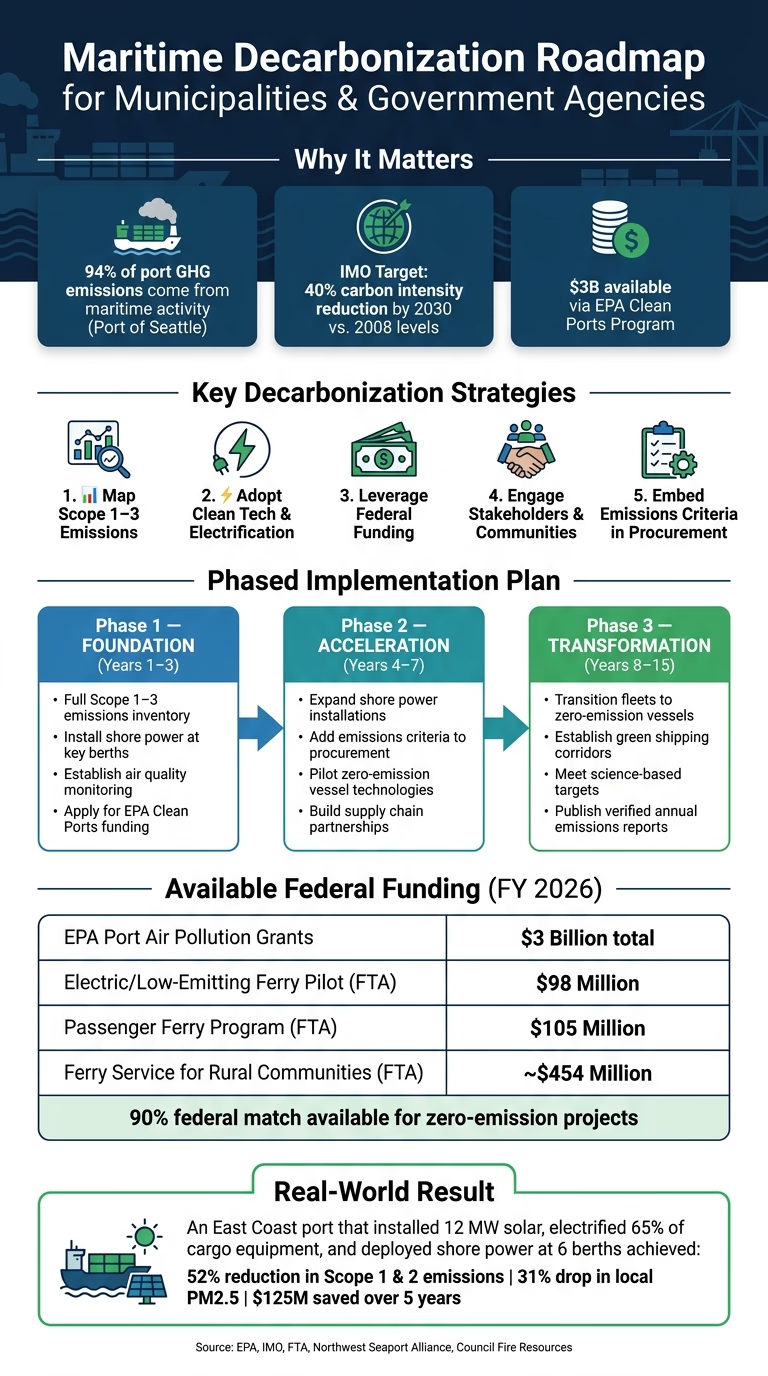
Maritime Decarbonization Roadmap: 3-Phase Action Plan for Municipalities
Ports of Long Beach, Los Angeles, Singapore Renew Green Shipping Corridor Agreement
Mapping Emissions and Setting Decarbonization Goals
To effectively reduce emissions, the first step is understanding where they come from. By defining inventory boundaries, collecting accurate data, and translating this into actionable goals, organizations can set clear targets that guide their decarbonization efforts.
Defining System Boundaries and Key Stakeholders
Determining what should be included in an emissions inventory is critical. A good starting point is dividing emissions into Port Administration (Scope 1 and 2 emissions, such as those from buildings, fleet vehicles, and purchased electricity) and Maritime Activity (Scope 3 emissions, including those from visiting vessels, drayage trucks, cargo handling equipment, and rail). For instance, at the Port of Seattle, maritime activities account for a staggering 94% of greenhouse gas (GHG) emissions, highlighting the need to address areas where direct control is limited[2].
Equally important is identifying the stakeholders connected to these emissions. Groups such as terminal operators, shipping lines, independent truckers, labor unions, utility providers, and local communities all play a role in both contributing to emissions and shaping solutions. The table below outlines how different emission sectors align with their respective stakeholders:
Emission Sector | Typical Scope | Key Stakeholders |
|---|---|---|
Port Administration | Scope 1 & 2 | Port employees, facility managers, utility providers |
Ocean-Going Vessels | Scope 3 | Shipping lines, pilots, terminal operators, fuel suppliers |
Drayage Trucks | Scope 3 | Owner-operators, trucking companies, retail customers |
Cargo Handling Equipment | Scope 3 | Terminal operators, labor unions (ILWU/ILA), equipment OEMs |
Port-Adjacent Communities | N/A (Impacted) | Local residents, environmental justice NGOs, public health agencies |
Engaging these stakeholders early not only improves the accuracy of emissions data but also fosters collaboration, making implementation plans more effective.
Conducting a Maritime Emissions Inventory
For U.S. ports, the EPA's Port Emissions Inventory Guidance remains the go-to methodology for calculating emissions. It covers six key sectors: ocean-going vessels (OGV), harbor craft, cargo handling equipment (CHE), onroad vehicles (primarily drayage trucks), rail locomotives, and recreational marine[3]. The process involves collecting specific data like vessel calls, truck trips, equipment usage hours, fuel types, and engine tiers. Using EPA emissions factors, greenhouse gas outputs can be calculated in CO2e, alongside other pollutants like NOx, SO2, PM2.5, and diesel particulate matter (DPM). For onroad vehicle emissions, the EPA's MOVES4 model provides updated estimates[3].
A practical example of this approach is the 2021 Puget Sound Maritime Air Emissions Inventory (PSEI), conducted by the Puget Sound Maritime Air Forum. This inventory spanned multiple counties and sectors, revealing that while equipment upgrades significantly reduced DPM, achieving substantial GHG reductions will require a large-scale transition away from fossil fuels[4]. Leading ports now conduct such inventories every five years to track trends and assess progress against established baselines.
Setting Science-Based Targets and Metrics
Targets should align with broader climate goals, such as those set by the International Maritime Organization (IMO). The IMO's 2023 strategy aims for at least a 40% reduction in carbon intensity by 2030 (compared to 2008 levels) and net-zero GHG emissions around 2050[6]. To achieve this, emissions targets should be segmented into controllable (Scope 1 and 2) and influenced (Scope 3) categories.
The Northwest Seaport Alliance’s 2026–2030 Clean Air Implementation Plan (CAIP) provides a real-world example. This plan aligns with the Northwest Ports Clean Air Strategy, which uses the 2021 emissions inventory as a baseline and aims to phase out seaport-related emissions by 2050. The alliance has already achieved a 20% reduction in GHG emissions relative to 2005 levels[5].
"To phase out emissions from seaport-related activities by 2050, supporting cleaner air for our local communities and fulfilling our shared responsibility to help limit global temperature rise to 1.5°C." - Northwest Ports Clean Air Strategy[5]
Tracking progress requires robust metrics. Useful measures include emissions per vessel call, emissions per ton-mile of cargo moved, and the percentage of cargo handling equipment meeting Tier 4 or zero-emission standards. These intensity-based metrics ensure consistent performance tracking, even as cargo volumes change, making it easier to communicate progress effectively.
Implementing Clean Technologies and Infrastructure
Upgrading Vessels and Improving Operational Efficiency
Once you’ve established an emissions baseline, the next step is using that data to drive meaningful improvements. For instance, slowing vessel speeds - a practice known as slow steaming - can significantly cut fuel consumption. When paired with strategies like weather routing and trim optimization, these changes lead to measurable emissions reductions without requiring substantial capital investment. Additionally, digital twin technology can simulate port operations, helping identify inefficiencies before they turn into costly problems.
Technical upgrades, such as applying advanced hull coatings to reduce drag, optimizing propeller designs, or installing waste heat recovery systems, also enhance hydrodynamic performance. Ports can further encourage these retrofits by offering incentives, such as reduced dockage fees for vessels meeting Tier III NOx standards or using cleaner fuels. These operational and technical upgrades are essential for achieving maximum impact in your decarbonization efforts.
Adopting Low-Carbon Fuels and Electrification
For short-sea routes and harbor craft, methanol stands out as a practical, near-term fuel option. It remains in liquid form at ambient temperatures, works with existing port infrastructure, and significantly reduces harmful emissions - cutting SOx and particulate matter by 95% and NOx by 80% compared to traditional fuels [7]. For long-distance, deep-sea shipping, green ammonia emerges as a leading candidate. When produced using renewable hydrogen, it can cut lifecycle greenhouse gas emissions by up to 90% [7].
To help prioritize fuel choices, here’s a comparison of their trade-offs:
Fuel Type | Storage Requirement | Best Application | Key Advantage |
|---|---|---|---|
Methanol | Ambient temperature | Short-sea, harbor craft | Low retrofit cost; immediate air quality gains |
Ammonia | -33.4°C | Deep-sea bulk shipping | Up to 90% lifecycle GHG reduction |
LNG | -260°F | Transitional deep-sea | Mature technology; 20–25% lower CO2 than HFO |
Battery-Electric | N/A | Ferries, port equipment | Zero local emissions; lower operating costs |
Electrification is already proving cost-effective for cargo-handling equipment. Take electric rubber-tired gantry (RTG) cranes, for example: they cut per-unit energy costs by 65% compared to diesel-powered models [8]. To manage costs, it’s wise to align equipment upgrades with their natural replacement cycles, avoiding premature retirements. These advancements in low-carbon fuels and electrification are paving the way for broader infrastructure modernization.
Building Supporting Infrastructure
Investing in shore power - also known as cold ironing - is one of the most impactful steps a port can take. This allows docked vessels to connect to the local electrical grid, eliminating emissions from auxiliary engines while at berth. A single high-volume berth equipped with shore power can cut 1,000–3,000 tons of CO2e emissions annually [1]. Prioritizing berths with the highest traffic ensures immediate benefits for surrounding communities.
Collaboration with utility providers is essential to assess grid capacity and plan phased upgrades. Incorporating rooftop solar panels and battery storage systems across terminal buildings can further reduce reliance on the grid while stabilizing energy costs over time. These infrastructure improvements are foundational to achieving decarbonization goals. For example, an East Coast port authority that installed 12 MW of rooftop solar, electrified 65% of its cargo-handling equipment, and deployed shore power at six berths achieved a 52% reduction in Scope 1 and 2 emissions. They also saw a 31% drop in local PM2.5 levels and saved $125 million over five years [8].
"When sustainability generates hard financial returns, it builds organizational commitment that outlasts any individual champion." - Council Fire Resources [8]
Decarbonizing Maritime Supply Chains and Procurement
Adding Emissions Criteria to Procurement
To achieve meaningful reductions in emissions, municipalities need to integrate emissions criteria into contracts, leases, and procurement processes. This approach can drive widespread, system-level change.
One practical step is to update terminal lease templates to include "Green Lease" requirements. These leases would obligate tenants to report emissions annually, adhere to energy efficiency standards, and meet clean equipment benchmarks within specified timelines. Since emissions from tenant operations and vessels at berth represent a significant share of a port authority's carbon footprint, addressing these areas is critical [8].
"Strategies that only address Scope 1 and 2 miss the majority of impact and the majority of cost-reduction opportunity." - Council Fire [8]
Public agencies can also enforce compliance with environmental standards for drayage trucks serving public facilities. For example, setting a deadline for trucks to meet 2010 EPA engine standards, with a roadmap toward zero-emission vehicles, can push the sector forward. Additionally, incentive-based programs like tiered dockage fees reward ships that meet Tier III NOx standards or use low-carbon fuels, creating market signals without imposing strict mandates. To minimize financial strain, clean equipment requirements should align with the natural replacement cycles of existing assets, avoiding unnecessary early retirements.
A collective procurement approach can also address cost barriers for scaling cleaner fuels. In December 2025, the Zero Emission Maritime Buyers Alliance (ZEMBA) announced its second successful procurement tender. Hapag-Lloyd committed to using e-methanol on large dual-fuel containerships, while North Sea Container Line (NCL) introduced the world’s first e-ammonia-powered containership. The tender required fuels to deliver at least 90% GHG reductions on a lifecycle basis, with 17 member contracts aggregating demand for these fuels starting in 2027 [9].
"Collective action among freight buyers through ZEMBA is a proven pathway to help kickstart a strong and competitive clean energy market." - ZEMBA [9]
Embedding emissions criteria into procurement processes paves the way for broader collaboration across the supply chain.
Collaborating Across the Supply Chain
Decarbonizing maritime supply chains requires more than technology upgrades - it demands alignment across stakeholders. Public agencies are uniquely positioned to unite these diverse groups, often by forming "coalitions of the willing" that include port authorities, vessel owners, terminal operators, logistics companies, and cargo owners.
One effective model is the green shipping corridor (GSC), a voluntary partnership along specific trade routes designed to test low- and zero-emission fuels and technologies in operational settings. In October 2025, the Government of Canada and other signatories updated the Global Memorandum of Understanding on Multi-Port Multi-Jurisdiction Green Shipping Corridors. This initiative connects Canadian ports (Prince Rupert, Vancouver, and Edmonton) with key ports in Asia and the Middle East. Participants committed to establishing at least six green corridors by 2025–2026 and increasing the number of zero-emission ships on these routes by 2030. The effort brings together rail companies, renewable energy providers, and port authorities to address the entire supply chain [10].
Municipalities and public agencies play a vital role in these partnerships. Their authority lends credibility, helping to rally private sector participants who might not otherwise collaborate. Formal agreements, such as Memorandums of Understanding (MOUs), ensure alignment on shared goals - like achieving net-zero emissions by 2050 - without requiring legally binding commitments.
"The transition to clean shipping requires system-wide collaboration between ambitious governments and leaders from the private sector, and a strategy to map out multi-stakeholder synergies." - Global MOU on Multi-Port Multi-Jurisdiction Green Shipping Corridors [10]
Tracking Progress with Data and Reporting
To ensure procurement and collaboration efforts succeed, agencies must establish measurable benchmarks. Standardized monitoring plans should track fuel consumption and emissions - including CO₂, CH₄, and N₂O - across all voyages.
Verification is key to maintaining accountability. Emissions reports should be reviewed by an accredited third-party verifier or Recognized Organization (RO). Platforms like the EU's THETIS-MRV and Canada's Carbon Intensity Indicator (CCII) enforce accountability by requiring verified annual emissions reports. If discrepancies arise, companies must develop corrective action plans [11][12][13].
Transparency also plays a critical role. Agencies can build trust by publishing a public sustainability dashboard that shows emissions trends, compliance rates, and progress toward decarbonization targets. This not only holds stakeholders accountable but also signals to the industry that the agency is committed to meaningful change.
Policy, Financing, and Stakeholder Engagement
Using Policy and Regulatory Frameworks
Effective policy tools empower municipalities to drive maritime decarbonization efforts. Introducing a Qualified Climate Action Plan (QCAP) is a key step. This plan outlines clear goals for reducing emissions, strategies for implementation, and standardized methods for accounting greenhouse gases and hazardous air pollutants. In many cases, having a QCAP in place also makes agencies eligible for federal grants[14].
Municipalities can also use zoning and permitting powers to expedite clean infrastructure projects. For instance, streamlining permits for shore power installations, EV charging stations, or hydrogen fueling infrastructure at ports can significantly reduce the time from project approval to construction. Ports located in air quality nonattainment areas - regions failing to meet national air quality standards - can leverage federal policy frameworks for additional funding and prioritization. These areas are especially well-positioned for early action[14].
These policy measures are critical for unlocking financial resources and advancing decarbonization goals.
Accessing Funding and Building a Finance Case
The financial resources available for maritime decarbonization are extensive but highly competitive. Success requires understanding funding programs and crafting strong applications.
The EPA’s Grants to Reduce Air Pollution at Ports program (42 USC 7433) is a major funding source, with $2.25 billion set aside for zero-emission port equipment and infrastructure through September 30, 2027. An additional $750 million is specifically allocated for ports in nonattainment areas[14]. Eligible recipients include port authorities, public agencies, and their private partners.
For ferry operations, the Federal Transit Administration (FTA) offers several funding opportunities. In FY 2026, the FTA announced $657 million in ferry program funding, with $98 million designated for the Electric or Low-Emitting Ferry Pilot Program[15][16]. Projects involving zero-emission equipment or facilities can benefit from a 90% federal match, compared to the standard 80% for general capital projects[15][16].
At the state level, Washington has set a strong example with its Port Electrification Grant program. In August 2024, the Northwest Seaport Alliance received $2.6 million for shore power planning, alongside $28 million from the Washington Legislature for zero-emission infrastructure. Other notable awards included $7 million for the Port of Friday Harbor and $4.3 million for the Port of Everett, funding projects that combine shore power, electric trucks, and cleaner generators. Altogether, Washington’s 2023–2025 biennium grants totaled $26.5 million, with projected greenhouse gas reductions exceeding 140,000 metric tons over 10 years[17].
Funding Program | FY 2026 Available Funding | Key Use |
|---|---|---|
Electric or Low-Emitting Ferry Pilot (FTA) | $98 million | Electric/low-emission ferries, charging infrastructure |
Passenger Ferry Program (FTA) | $105 million | Ferry vessels, terminals, urban areas |
Ferry Service for Rural Communities (FTA) | ~$454 million | Capital, planning, and operations for rural routes |
EPA Port Air Pollution Grants (Total) | $3 billion | Zero-emission port equipment, climate action plans |
To strengthen funding applications, highlight co-benefits like improved air quality and reduced regulatory costs, which can make a compelling case for investment.
Engaging Communities and Stakeholders
While regulations and funding are essential, community engagement ensures that decarbonization projects align with local needs. Projects that skip this step often face delays or opposition. Near-port neighborhoods - frequently home to low-income and BIPOC communities - experience a disproportionate share of port-related air pollution, with maritime activities contributing up to 94% of a port’s total greenhouse gas emissions[2]. Including these communities in the planning process is not just equitable but also practical.
The most effective engagement goes beyond basic public comment periods. Establishing a Community Advisory Panel gives local stakeholders a real voice in project design, fostering trust and surfacing priorities early. For example, the Port of Seattle incorporated this approach when developing its Maritime Climate and Air Action Plan (MCAAP) in 2021. The process included creating a "Community Quick Reference Guide" to simplify technical details for residents in areas like the Duwamish Valley. The plan also committed to installing shore power at all cruise ship berths by 2030[2].
Community Benefits Agreements (CBAs) are another way to formalize commitments tied to specific projects. Agencies should also align with Justice40 requirements, which mandate that 40% of certain federal investment benefits flow to disadvantaged communities[1].
"Sustainability strategies that don't explicitly address community health impacts and provide tangible community benefits will face opposition that undermines implementation." - Council Fire[8]
Transparency is key to building trust. Publishing real-time air quality data - such as PM2.5 and NO₂ levels - in port-adjacent neighborhoods demonstrates accountability and reinforces credibility with the communities most affected by port operations[1].
Conclusion and Implementation Roadmap
Key Takeaways for Municipalities and Agencies
Decarbonizing maritime operations demands a deliberate and phased strategy, focusing on areas under direct control to create momentum for wider supply chain impacts. By combining detailed emissions mapping with clean technology adoption, municipalities and agencies can drive measurable progress.
Central to this effort is reliable data. A complete Scope 1–3 emissions inventory is essential to set actionable targets, allocate resources effectively, and provide transparency for funders and community stakeholders. This data forms the backbone of a phased action plan, ensuring progress is both measurable and impactful.
Phased Action Plan for Decarbonization
A phased approach helps transform strategic goals into tangible outcomes while keeping efforts manageable. Early successes build the foundation for tackling more complex, long-term challenges.
Phase | Timeframe | Priority Actions |
|---|---|---|
Foundation | Years 1–3 | Develop a full Scope 1–3 emissions inventory; install shore power at key berths; establish air quality monitoring; apply for EPA Clean Ports Program funding [1] |
Acceleration | Years 4–7 | Expand shore power installations; incorporate emissions criteria into procurement; pilot low- or zero-emission vessel technologies; foster supply chain partnerships |
Transformation | Years 8–15 | Transition fleets to zero-emission vessels; establish green corridors; meet science-based targets; publish verified annual emissions reports |
The Port of Seattle provides a clear example of long-term commitment. Its Maritime Climate and Air Action Plan (MCAAP), adopted in November 2021, sets ambitious goals: by 2030, all homeport cruise ship calls will connect to shore power, and all port-owned light-duty vehicles will operate on electricity or renewable fuels [2].
Building Capacity for Long-Term Success
Sustained decarbonization relies on strong internal capacity. Agencies should appoint a dedicated sustainability lead or form a cross-departmental team with expertise in emissions tracking, grant writing, and stakeholder engagement. This ensures decarbonization remains a core priority rather than a secondary task vulnerable to budget cuts.
Ongoing monitoring and transparent reporting are equally critical. Agencies that embed decarbonization into their operational framework treat it as an enduring commitment, not a one-time project. This approach strengthens accountability and ensures progress continues over the long haul.
FAQs
How do we choose the right Scope 1–3 boundaries for our port emissions inventory?
To establish Scope 1–3 boundaries, rely on frameworks like the Greenhouse Gas Protocol or the World Ports Climate Action Program (WPCAP) methodology. These approaches account for emissions across six key sectors: ocean-going vessels, harbor craft, cargo-handling equipment, on-road vehicles, rail, and administrative facilities.
Scope 1 encompasses direct emissions, such as those produced by fleet vehicles.
Scope 2 addresses emissions from purchased electricity.
Scope 3 includes indirect emissions, such as those from tenant operations and vessel activities - often the largest contributors to an organization’s carbon footprint.
Which decarbonization projects deliver the fastest air-quality benefits near ports?
To make a noticeable impact on air quality around ports, focus efforts on high-pollution sources such as harbor craft, drayage trucks, and cargo-handling equipment. Transitioning harbor craft to electric power can drastically lower particulate matter emissions. Similarly, replacing outdated diesel drayage trucks with zero-emission alternatives significantly reduces nitrogen oxides and fine particulate pollution. Another effective step is installing shore power systems, which allow docked ships to turn off their auxiliary engines, cutting down emissions and improving conditions for nearby residents.
How can we require cleaner tenant and vessel operations without raising costs too much?
To balance cleaner operations with cost management, it's crucial to align sustainability goals with the natural lifecycle of equipment. For example, timing upgrades - such as replacing yard tractors or cranes - alongside scheduled replacements can help lower capital expenditures. Offering incentive-based programs can also drive change without adding financial strain. Revenue-neutral options, like reduced dockage fees for eco-friendly ships, encourage greener practices. Additionally, implementing green lease requirements can support gradual efficiency improvements over time. To further ease the financial burden, consider tapping into federal funding opportunities, such as the EPA Clean Ports Program, which can help cover infrastructure costs like installing shore power systems.
Related Blog Posts
How to Build a Climate-Ready Energy & Water Infrastructure Plan for Maritime & Logistics Companies
How to Transition to Renewable Energy Systems at the Local Level for Maritime & Logistics Companies
How to Turn a Strategic Plan into Fundable, Shovel-Ready Projects for Maritime & Logistics Companies
How to Align Local Policy with State and Federal Climate Goals for Maritime & Logistics Companies
Latest Articles
©2026

Narrative Change and Power Building: The Missing Half of Advocacy
Narrative change is the process of disrupting dominant narratives that normalize inequity and advancing new narratives from historically marginalized communities.

Funding Resilience Without Federal Grants
BRIC is unreliable and FEMA is shrinking. Here's how cities fund climate resilience with dedicated revenue, blended finance, and a coordinating authority.

The ESG Blind Spot: How AI Is Finding Risks in Companies Nobody Else Is Watching
Norway's sovereign wealth fund uses AI to screen 7,200 portfolio companies for forced labor and corruption within 24 hours. The real story is the emerging-market coverage gap that traditional ESG data vendors miss — and what it means for any company with a global supply chain.
Narrative Change and Power Building: The Missing Half of Advocacy
Narrative change is the process of disrupting dominant narratives that normalize inequity and advancing new narratives from historically marginalized communities.
Funding Resilience Without Federal Grants
BRIC is unreliable and FEMA is shrinking. Here's how cities fund climate resilience with dedicated revenue, blended finance, and a coordinating authority.
The ESG Blind Spot: How AI Is Finding Risks in Companies Nobody Else Is Watching
Norway's sovereign wealth fund uses AI to screen 7,200 portfolio companies for forced labor and corruption within 24 hours. The real story is the emerging-market coverage gap that traditional ESG data vendors miss — and what it means for any company with a global supply chain.
FAQ
01
What does it really mean to “redefine profit”?
02
What makes Council Fire different?
03
Who does Council Fire work with?
04
What does working with Council Fire actually look like?
05
How does Council Fire help organizations turn big goals into action?
06
How does Council Fire define and measure success?
07
How does technology fit into Council Fire’s work?
Jun 8, 2026
How to Decarbonize Maritime Operations and Supply Chains for Municipalities & Government Agencies
Sustainability Strategy
In This Article
Roadmap for municipalities to cut port and supply-chain emissions with inventories, shore power, low‑carbon fuels, procurement, and federal funding.
How to Decarbonize Maritime Operations and Supply Chains for Municipalities & Government Agencies
Maritime operations are a significant contributor to greenhouse gas (GHG) emissions, with ports and supply chains being critical areas for action. Public agencies face pressure to meet climate goals, improve air quality, and address community health concerns, particularly in disadvantaged areas near ports. Here's a concise roadmap to tackle these challenges:
Set Clear Emissions Goals: Use tools like emissions inventories to measure Scope 1–3 emissions and align targets with international benchmarks, such as the IMO's goal of a 20–30% GHG reduction by 2030.
Adopt Clean Technologies: Transition to low-carbon fuels like methanol or ammonia, electrify port equipment, and invest in shore power to eliminate emissions from docked vessels.
Leverage Federal Funding: Programs like the EPA's $3 billion Clean Ports Program and the FTA's ferry electrification grants can support zero-emission infrastructure and equipment upgrades.
Engage Stakeholders: Collaborate with terminal operators, shipping lines, and local communities to ensure equitable solutions and align efforts across the supply chain.
Incorporate Emissions Criteria in Procurement: Update leases and contracts to require clean technologies and emissions reporting from tenants and vendors.
Maritime Decarbonization Roadmap: 3-Phase Action Plan for Municipalities
Ports of Long Beach, Los Angeles, Singapore Renew Green Shipping Corridor Agreement
Mapping Emissions and Setting Decarbonization Goals
To effectively reduce emissions, the first step is understanding where they come from. By defining inventory boundaries, collecting accurate data, and translating this into actionable goals, organizations can set clear targets that guide their decarbonization efforts.
Defining System Boundaries and Key Stakeholders
Determining what should be included in an emissions inventory is critical. A good starting point is dividing emissions into Port Administration (Scope 1 and 2 emissions, such as those from buildings, fleet vehicles, and purchased electricity) and Maritime Activity (Scope 3 emissions, including those from visiting vessels, drayage trucks, cargo handling equipment, and rail). For instance, at the Port of Seattle, maritime activities account for a staggering 94% of greenhouse gas (GHG) emissions, highlighting the need to address areas where direct control is limited[2].
Equally important is identifying the stakeholders connected to these emissions. Groups such as terminal operators, shipping lines, independent truckers, labor unions, utility providers, and local communities all play a role in both contributing to emissions and shaping solutions. The table below outlines how different emission sectors align with their respective stakeholders:
Emission Sector | Typical Scope | Key Stakeholders |
|---|---|---|
Port Administration | Scope 1 & 2 | Port employees, facility managers, utility providers |
Ocean-Going Vessels | Scope 3 | Shipping lines, pilots, terminal operators, fuel suppliers |
Drayage Trucks | Scope 3 | Owner-operators, trucking companies, retail customers |
Cargo Handling Equipment | Scope 3 | Terminal operators, labor unions (ILWU/ILA), equipment OEMs |
Port-Adjacent Communities | N/A (Impacted) | Local residents, environmental justice NGOs, public health agencies |
Engaging these stakeholders early not only improves the accuracy of emissions data but also fosters collaboration, making implementation plans more effective.
Conducting a Maritime Emissions Inventory
For U.S. ports, the EPA's Port Emissions Inventory Guidance remains the go-to methodology for calculating emissions. It covers six key sectors: ocean-going vessels (OGV), harbor craft, cargo handling equipment (CHE), onroad vehicles (primarily drayage trucks), rail locomotives, and recreational marine[3]. The process involves collecting specific data like vessel calls, truck trips, equipment usage hours, fuel types, and engine tiers. Using EPA emissions factors, greenhouse gas outputs can be calculated in CO2e, alongside other pollutants like NOx, SO2, PM2.5, and diesel particulate matter (DPM). For onroad vehicle emissions, the EPA's MOVES4 model provides updated estimates[3].
A practical example of this approach is the 2021 Puget Sound Maritime Air Emissions Inventory (PSEI), conducted by the Puget Sound Maritime Air Forum. This inventory spanned multiple counties and sectors, revealing that while equipment upgrades significantly reduced DPM, achieving substantial GHG reductions will require a large-scale transition away from fossil fuels[4]. Leading ports now conduct such inventories every five years to track trends and assess progress against established baselines.
Setting Science-Based Targets and Metrics
Targets should align with broader climate goals, such as those set by the International Maritime Organization (IMO). The IMO's 2023 strategy aims for at least a 40% reduction in carbon intensity by 2030 (compared to 2008 levels) and net-zero GHG emissions around 2050[6]. To achieve this, emissions targets should be segmented into controllable (Scope 1 and 2) and influenced (Scope 3) categories.
The Northwest Seaport Alliance’s 2026–2030 Clean Air Implementation Plan (CAIP) provides a real-world example. This plan aligns with the Northwest Ports Clean Air Strategy, which uses the 2021 emissions inventory as a baseline and aims to phase out seaport-related emissions by 2050. The alliance has already achieved a 20% reduction in GHG emissions relative to 2005 levels[5].
"To phase out emissions from seaport-related activities by 2050, supporting cleaner air for our local communities and fulfilling our shared responsibility to help limit global temperature rise to 1.5°C." - Northwest Ports Clean Air Strategy[5]
Tracking progress requires robust metrics. Useful measures include emissions per vessel call, emissions per ton-mile of cargo moved, and the percentage of cargo handling equipment meeting Tier 4 or zero-emission standards. These intensity-based metrics ensure consistent performance tracking, even as cargo volumes change, making it easier to communicate progress effectively.
Implementing Clean Technologies and Infrastructure
Upgrading Vessels and Improving Operational Efficiency
Once you’ve established an emissions baseline, the next step is using that data to drive meaningful improvements. For instance, slowing vessel speeds - a practice known as slow steaming - can significantly cut fuel consumption. When paired with strategies like weather routing and trim optimization, these changes lead to measurable emissions reductions without requiring substantial capital investment. Additionally, digital twin technology can simulate port operations, helping identify inefficiencies before they turn into costly problems.
Technical upgrades, such as applying advanced hull coatings to reduce drag, optimizing propeller designs, or installing waste heat recovery systems, also enhance hydrodynamic performance. Ports can further encourage these retrofits by offering incentives, such as reduced dockage fees for vessels meeting Tier III NOx standards or using cleaner fuels. These operational and technical upgrades are essential for achieving maximum impact in your decarbonization efforts.
Adopting Low-Carbon Fuels and Electrification
For short-sea routes and harbor craft, methanol stands out as a practical, near-term fuel option. It remains in liquid form at ambient temperatures, works with existing port infrastructure, and significantly reduces harmful emissions - cutting SOx and particulate matter by 95% and NOx by 80% compared to traditional fuels [7]. For long-distance, deep-sea shipping, green ammonia emerges as a leading candidate. When produced using renewable hydrogen, it can cut lifecycle greenhouse gas emissions by up to 90% [7].
To help prioritize fuel choices, here’s a comparison of their trade-offs:
Fuel Type | Storage Requirement | Best Application | Key Advantage |
|---|---|---|---|
Methanol | Ambient temperature | Short-sea, harbor craft | Low retrofit cost; immediate air quality gains |
Ammonia | -33.4°C | Deep-sea bulk shipping | Up to 90% lifecycle GHG reduction |
LNG | -260°F | Transitional deep-sea | Mature technology; 20–25% lower CO2 than HFO |
Battery-Electric | N/A | Ferries, port equipment | Zero local emissions; lower operating costs |
Electrification is already proving cost-effective for cargo-handling equipment. Take electric rubber-tired gantry (RTG) cranes, for example: they cut per-unit energy costs by 65% compared to diesel-powered models [8]. To manage costs, it’s wise to align equipment upgrades with their natural replacement cycles, avoiding premature retirements. These advancements in low-carbon fuels and electrification are paving the way for broader infrastructure modernization.
Building Supporting Infrastructure
Investing in shore power - also known as cold ironing - is one of the most impactful steps a port can take. This allows docked vessels to connect to the local electrical grid, eliminating emissions from auxiliary engines while at berth. A single high-volume berth equipped with shore power can cut 1,000–3,000 tons of CO2e emissions annually [1]. Prioritizing berths with the highest traffic ensures immediate benefits for surrounding communities.
Collaboration with utility providers is essential to assess grid capacity and plan phased upgrades. Incorporating rooftop solar panels and battery storage systems across terminal buildings can further reduce reliance on the grid while stabilizing energy costs over time. These infrastructure improvements are foundational to achieving decarbonization goals. For example, an East Coast port authority that installed 12 MW of rooftop solar, electrified 65% of its cargo-handling equipment, and deployed shore power at six berths achieved a 52% reduction in Scope 1 and 2 emissions. They also saw a 31% drop in local PM2.5 levels and saved $125 million over five years [8].
"When sustainability generates hard financial returns, it builds organizational commitment that outlasts any individual champion." - Council Fire Resources [8]
Decarbonizing Maritime Supply Chains and Procurement
Adding Emissions Criteria to Procurement
To achieve meaningful reductions in emissions, municipalities need to integrate emissions criteria into contracts, leases, and procurement processes. This approach can drive widespread, system-level change.
One practical step is to update terminal lease templates to include "Green Lease" requirements. These leases would obligate tenants to report emissions annually, adhere to energy efficiency standards, and meet clean equipment benchmarks within specified timelines. Since emissions from tenant operations and vessels at berth represent a significant share of a port authority's carbon footprint, addressing these areas is critical [8].
"Strategies that only address Scope 1 and 2 miss the majority of impact and the majority of cost-reduction opportunity." - Council Fire [8]
Public agencies can also enforce compliance with environmental standards for drayage trucks serving public facilities. For example, setting a deadline for trucks to meet 2010 EPA engine standards, with a roadmap toward zero-emission vehicles, can push the sector forward. Additionally, incentive-based programs like tiered dockage fees reward ships that meet Tier III NOx standards or use low-carbon fuels, creating market signals without imposing strict mandates. To minimize financial strain, clean equipment requirements should align with the natural replacement cycles of existing assets, avoiding unnecessary early retirements.
A collective procurement approach can also address cost barriers for scaling cleaner fuels. In December 2025, the Zero Emission Maritime Buyers Alliance (ZEMBA) announced its second successful procurement tender. Hapag-Lloyd committed to using e-methanol on large dual-fuel containerships, while North Sea Container Line (NCL) introduced the world’s first e-ammonia-powered containership. The tender required fuels to deliver at least 90% GHG reductions on a lifecycle basis, with 17 member contracts aggregating demand for these fuels starting in 2027 [9].
"Collective action among freight buyers through ZEMBA is a proven pathway to help kickstart a strong and competitive clean energy market." - ZEMBA [9]
Embedding emissions criteria into procurement processes paves the way for broader collaboration across the supply chain.
Collaborating Across the Supply Chain
Decarbonizing maritime supply chains requires more than technology upgrades - it demands alignment across stakeholders. Public agencies are uniquely positioned to unite these diverse groups, often by forming "coalitions of the willing" that include port authorities, vessel owners, terminal operators, logistics companies, and cargo owners.
One effective model is the green shipping corridor (GSC), a voluntary partnership along specific trade routes designed to test low- and zero-emission fuels and technologies in operational settings. In October 2025, the Government of Canada and other signatories updated the Global Memorandum of Understanding on Multi-Port Multi-Jurisdiction Green Shipping Corridors. This initiative connects Canadian ports (Prince Rupert, Vancouver, and Edmonton) with key ports in Asia and the Middle East. Participants committed to establishing at least six green corridors by 2025–2026 and increasing the number of zero-emission ships on these routes by 2030. The effort brings together rail companies, renewable energy providers, and port authorities to address the entire supply chain [10].
Municipalities and public agencies play a vital role in these partnerships. Their authority lends credibility, helping to rally private sector participants who might not otherwise collaborate. Formal agreements, such as Memorandums of Understanding (MOUs), ensure alignment on shared goals - like achieving net-zero emissions by 2050 - without requiring legally binding commitments.
"The transition to clean shipping requires system-wide collaboration between ambitious governments and leaders from the private sector, and a strategy to map out multi-stakeholder synergies." - Global MOU on Multi-Port Multi-Jurisdiction Green Shipping Corridors [10]
Tracking Progress with Data and Reporting
To ensure procurement and collaboration efforts succeed, agencies must establish measurable benchmarks. Standardized monitoring plans should track fuel consumption and emissions - including CO₂, CH₄, and N₂O - across all voyages.
Verification is key to maintaining accountability. Emissions reports should be reviewed by an accredited third-party verifier or Recognized Organization (RO). Platforms like the EU's THETIS-MRV and Canada's Carbon Intensity Indicator (CCII) enforce accountability by requiring verified annual emissions reports. If discrepancies arise, companies must develop corrective action plans [11][12][13].
Transparency also plays a critical role. Agencies can build trust by publishing a public sustainability dashboard that shows emissions trends, compliance rates, and progress toward decarbonization targets. This not only holds stakeholders accountable but also signals to the industry that the agency is committed to meaningful change.
Policy, Financing, and Stakeholder Engagement
Using Policy and Regulatory Frameworks
Effective policy tools empower municipalities to drive maritime decarbonization efforts. Introducing a Qualified Climate Action Plan (QCAP) is a key step. This plan outlines clear goals for reducing emissions, strategies for implementation, and standardized methods for accounting greenhouse gases and hazardous air pollutants. In many cases, having a QCAP in place also makes agencies eligible for federal grants[14].
Municipalities can also use zoning and permitting powers to expedite clean infrastructure projects. For instance, streamlining permits for shore power installations, EV charging stations, or hydrogen fueling infrastructure at ports can significantly reduce the time from project approval to construction. Ports located in air quality nonattainment areas - regions failing to meet national air quality standards - can leverage federal policy frameworks for additional funding and prioritization. These areas are especially well-positioned for early action[14].
These policy measures are critical for unlocking financial resources and advancing decarbonization goals.
Accessing Funding and Building a Finance Case
The financial resources available for maritime decarbonization are extensive but highly competitive. Success requires understanding funding programs and crafting strong applications.
The EPA’s Grants to Reduce Air Pollution at Ports program (42 USC 7433) is a major funding source, with $2.25 billion set aside for zero-emission port equipment and infrastructure through September 30, 2027. An additional $750 million is specifically allocated for ports in nonattainment areas[14]. Eligible recipients include port authorities, public agencies, and their private partners.
For ferry operations, the Federal Transit Administration (FTA) offers several funding opportunities. In FY 2026, the FTA announced $657 million in ferry program funding, with $98 million designated for the Electric or Low-Emitting Ferry Pilot Program[15][16]. Projects involving zero-emission equipment or facilities can benefit from a 90% federal match, compared to the standard 80% for general capital projects[15][16].
At the state level, Washington has set a strong example with its Port Electrification Grant program. In August 2024, the Northwest Seaport Alliance received $2.6 million for shore power planning, alongside $28 million from the Washington Legislature for zero-emission infrastructure. Other notable awards included $7 million for the Port of Friday Harbor and $4.3 million for the Port of Everett, funding projects that combine shore power, electric trucks, and cleaner generators. Altogether, Washington’s 2023–2025 biennium grants totaled $26.5 million, with projected greenhouse gas reductions exceeding 140,000 metric tons over 10 years[17].
Funding Program | FY 2026 Available Funding | Key Use |
|---|---|---|
Electric or Low-Emitting Ferry Pilot (FTA) | $98 million | Electric/low-emission ferries, charging infrastructure |
Passenger Ferry Program (FTA) | $105 million | Ferry vessels, terminals, urban areas |
Ferry Service for Rural Communities (FTA) | ~$454 million | Capital, planning, and operations for rural routes |
EPA Port Air Pollution Grants (Total) | $3 billion | Zero-emission port equipment, climate action plans |
To strengthen funding applications, highlight co-benefits like improved air quality and reduced regulatory costs, which can make a compelling case for investment.
Engaging Communities and Stakeholders
While regulations and funding are essential, community engagement ensures that decarbonization projects align with local needs. Projects that skip this step often face delays or opposition. Near-port neighborhoods - frequently home to low-income and BIPOC communities - experience a disproportionate share of port-related air pollution, with maritime activities contributing up to 94% of a port’s total greenhouse gas emissions[2]. Including these communities in the planning process is not just equitable but also practical.
The most effective engagement goes beyond basic public comment periods. Establishing a Community Advisory Panel gives local stakeholders a real voice in project design, fostering trust and surfacing priorities early. For example, the Port of Seattle incorporated this approach when developing its Maritime Climate and Air Action Plan (MCAAP) in 2021. The process included creating a "Community Quick Reference Guide" to simplify technical details for residents in areas like the Duwamish Valley. The plan also committed to installing shore power at all cruise ship berths by 2030[2].
Community Benefits Agreements (CBAs) are another way to formalize commitments tied to specific projects. Agencies should also align with Justice40 requirements, which mandate that 40% of certain federal investment benefits flow to disadvantaged communities[1].
"Sustainability strategies that don't explicitly address community health impacts and provide tangible community benefits will face opposition that undermines implementation." - Council Fire[8]
Transparency is key to building trust. Publishing real-time air quality data - such as PM2.5 and NO₂ levels - in port-adjacent neighborhoods demonstrates accountability and reinforces credibility with the communities most affected by port operations[1].
Conclusion and Implementation Roadmap
Key Takeaways for Municipalities and Agencies
Decarbonizing maritime operations demands a deliberate and phased strategy, focusing on areas under direct control to create momentum for wider supply chain impacts. By combining detailed emissions mapping with clean technology adoption, municipalities and agencies can drive measurable progress.
Central to this effort is reliable data. A complete Scope 1–3 emissions inventory is essential to set actionable targets, allocate resources effectively, and provide transparency for funders and community stakeholders. This data forms the backbone of a phased action plan, ensuring progress is both measurable and impactful.
Phased Action Plan for Decarbonization
A phased approach helps transform strategic goals into tangible outcomes while keeping efforts manageable. Early successes build the foundation for tackling more complex, long-term challenges.
Phase | Timeframe | Priority Actions |
|---|---|---|
Foundation | Years 1–3 | Develop a full Scope 1–3 emissions inventory; install shore power at key berths; establish air quality monitoring; apply for EPA Clean Ports Program funding [1] |
Acceleration | Years 4–7 | Expand shore power installations; incorporate emissions criteria into procurement; pilot low- or zero-emission vessel technologies; foster supply chain partnerships |
Transformation | Years 8–15 | Transition fleets to zero-emission vessels; establish green corridors; meet science-based targets; publish verified annual emissions reports |
The Port of Seattle provides a clear example of long-term commitment. Its Maritime Climate and Air Action Plan (MCAAP), adopted in November 2021, sets ambitious goals: by 2030, all homeport cruise ship calls will connect to shore power, and all port-owned light-duty vehicles will operate on electricity or renewable fuels [2].
Building Capacity for Long-Term Success
Sustained decarbonization relies on strong internal capacity. Agencies should appoint a dedicated sustainability lead or form a cross-departmental team with expertise in emissions tracking, grant writing, and stakeholder engagement. This ensures decarbonization remains a core priority rather than a secondary task vulnerable to budget cuts.
Ongoing monitoring and transparent reporting are equally critical. Agencies that embed decarbonization into their operational framework treat it as an enduring commitment, not a one-time project. This approach strengthens accountability and ensures progress continues over the long haul.
FAQs
How do we choose the right Scope 1–3 boundaries for our port emissions inventory?
To establish Scope 1–3 boundaries, rely on frameworks like the Greenhouse Gas Protocol or the World Ports Climate Action Program (WPCAP) methodology. These approaches account for emissions across six key sectors: ocean-going vessels, harbor craft, cargo-handling equipment, on-road vehicles, rail, and administrative facilities.
Scope 1 encompasses direct emissions, such as those produced by fleet vehicles.
Scope 2 addresses emissions from purchased electricity.
Scope 3 includes indirect emissions, such as those from tenant operations and vessel activities - often the largest contributors to an organization’s carbon footprint.
Which decarbonization projects deliver the fastest air-quality benefits near ports?
To make a noticeable impact on air quality around ports, focus efforts on high-pollution sources such as harbor craft, drayage trucks, and cargo-handling equipment. Transitioning harbor craft to electric power can drastically lower particulate matter emissions. Similarly, replacing outdated diesel drayage trucks with zero-emission alternatives significantly reduces nitrogen oxides and fine particulate pollution. Another effective step is installing shore power systems, which allow docked ships to turn off their auxiliary engines, cutting down emissions and improving conditions for nearby residents.
How can we require cleaner tenant and vessel operations without raising costs too much?
To balance cleaner operations with cost management, it's crucial to align sustainability goals with the natural lifecycle of equipment. For example, timing upgrades - such as replacing yard tractors or cranes - alongside scheduled replacements can help lower capital expenditures. Offering incentive-based programs can also drive change without adding financial strain. Revenue-neutral options, like reduced dockage fees for eco-friendly ships, encourage greener practices. Additionally, implementing green lease requirements can support gradual efficiency improvements over time. To further ease the financial burden, consider tapping into federal funding opportunities, such as the EPA Clean Ports Program, which can help cover infrastructure costs like installing shore power systems.
Related Blog Posts
How to Build a Climate-Ready Energy & Water Infrastructure Plan for Maritime & Logistics Companies
How to Transition to Renewable Energy Systems at the Local Level for Maritime & Logistics Companies
How to Turn a Strategic Plan into Fundable, Shovel-Ready Projects for Maritime & Logistics Companies
How to Align Local Policy with State and Federal Climate Goals for Maritime & Logistics Companies
Latest Articles
©2026
Narrative Change and Power Building: The Missing Half of Advocacy
Narrative change is the process of disrupting dominant narratives that normalize inequity and advancing new narratives from historically marginalized communities.
Funding Resilience Without Federal Grants
BRIC is unreliable and FEMA is shrinking. Here's how cities fund climate resilience with dedicated revenue, blended finance, and a coordinating authority.
The ESG Blind Spot: How AI Is Finding Risks in Companies Nobody Else Is Watching
Norway's sovereign wealth fund uses AI to screen 7,200 portfolio companies for forced labor and corruption within 24 hours. The real story is the emerging-market coverage gap that traditional ESG data vendors miss — and what it means for any company with a global supply chain.
FAQ
01
What does it really mean to “redefine profit”?
02
What makes Council Fire different?
03
Who does Council Fire work with?
04
What does working with Council Fire actually look like?
05
How does Council Fire help organizations turn big goals into action?
06
How does Council Fire define and measure success?
07
How does technology fit into Council Fire’s work?
Jun 8, 2026
How to Decarbonize Maritime Operations and Supply Chains for Municipalities & Government Agencies
Sustainability Strategy
In This Article
Roadmap for municipalities to cut port and supply-chain emissions with inventories, shore power, low‑carbon fuels, procurement, and federal funding.
How to Decarbonize Maritime Operations and Supply Chains for Municipalities & Government Agencies
Maritime operations are a significant contributor to greenhouse gas (GHG) emissions, with ports and supply chains being critical areas for action. Public agencies face pressure to meet climate goals, improve air quality, and address community health concerns, particularly in disadvantaged areas near ports. Here's a concise roadmap to tackle these challenges:
Set Clear Emissions Goals: Use tools like emissions inventories to measure Scope 1–3 emissions and align targets with international benchmarks, such as the IMO's goal of a 20–30% GHG reduction by 2030.
Adopt Clean Technologies: Transition to low-carbon fuels like methanol or ammonia, electrify port equipment, and invest in shore power to eliminate emissions from docked vessels.
Leverage Federal Funding: Programs like the EPA's $3 billion Clean Ports Program and the FTA's ferry electrification grants can support zero-emission infrastructure and equipment upgrades.
Engage Stakeholders: Collaborate with terminal operators, shipping lines, and local communities to ensure equitable solutions and align efforts across the supply chain.
Incorporate Emissions Criteria in Procurement: Update leases and contracts to require clean technologies and emissions reporting from tenants and vendors.
Maritime Decarbonization Roadmap: 3-Phase Action Plan for Municipalities
Ports of Long Beach, Los Angeles, Singapore Renew Green Shipping Corridor Agreement
Mapping Emissions and Setting Decarbonization Goals
To effectively reduce emissions, the first step is understanding where they come from. By defining inventory boundaries, collecting accurate data, and translating this into actionable goals, organizations can set clear targets that guide their decarbonization efforts.
Defining System Boundaries and Key Stakeholders
Determining what should be included in an emissions inventory is critical. A good starting point is dividing emissions into Port Administration (Scope 1 and 2 emissions, such as those from buildings, fleet vehicles, and purchased electricity) and Maritime Activity (Scope 3 emissions, including those from visiting vessels, drayage trucks, cargo handling equipment, and rail). For instance, at the Port of Seattle, maritime activities account for a staggering 94% of greenhouse gas (GHG) emissions, highlighting the need to address areas where direct control is limited[2].
Equally important is identifying the stakeholders connected to these emissions. Groups such as terminal operators, shipping lines, independent truckers, labor unions, utility providers, and local communities all play a role in both contributing to emissions and shaping solutions. The table below outlines how different emission sectors align with their respective stakeholders:
Emission Sector | Typical Scope | Key Stakeholders |
|---|---|---|
Port Administration | Scope 1 & 2 | Port employees, facility managers, utility providers |
Ocean-Going Vessels | Scope 3 | Shipping lines, pilots, terminal operators, fuel suppliers |
Drayage Trucks | Scope 3 | Owner-operators, trucking companies, retail customers |
Cargo Handling Equipment | Scope 3 | Terminal operators, labor unions (ILWU/ILA), equipment OEMs |
Port-Adjacent Communities | N/A (Impacted) | Local residents, environmental justice NGOs, public health agencies |
Engaging these stakeholders early not only improves the accuracy of emissions data but also fosters collaboration, making implementation plans more effective.
Conducting a Maritime Emissions Inventory
For U.S. ports, the EPA's Port Emissions Inventory Guidance remains the go-to methodology for calculating emissions. It covers six key sectors: ocean-going vessels (OGV), harbor craft, cargo handling equipment (CHE), onroad vehicles (primarily drayage trucks), rail locomotives, and recreational marine[3]. The process involves collecting specific data like vessel calls, truck trips, equipment usage hours, fuel types, and engine tiers. Using EPA emissions factors, greenhouse gas outputs can be calculated in CO2e, alongside other pollutants like NOx, SO2, PM2.5, and diesel particulate matter (DPM). For onroad vehicle emissions, the EPA's MOVES4 model provides updated estimates[3].
A practical example of this approach is the 2021 Puget Sound Maritime Air Emissions Inventory (PSEI), conducted by the Puget Sound Maritime Air Forum. This inventory spanned multiple counties and sectors, revealing that while equipment upgrades significantly reduced DPM, achieving substantial GHG reductions will require a large-scale transition away from fossil fuels[4]. Leading ports now conduct such inventories every five years to track trends and assess progress against established baselines.
Setting Science-Based Targets and Metrics
Targets should align with broader climate goals, such as those set by the International Maritime Organization (IMO). The IMO's 2023 strategy aims for at least a 40% reduction in carbon intensity by 2030 (compared to 2008 levels) and net-zero GHG emissions around 2050[6]. To achieve this, emissions targets should be segmented into controllable (Scope 1 and 2) and influenced (Scope 3) categories.
The Northwest Seaport Alliance’s 2026–2030 Clean Air Implementation Plan (CAIP) provides a real-world example. This plan aligns with the Northwest Ports Clean Air Strategy, which uses the 2021 emissions inventory as a baseline and aims to phase out seaport-related emissions by 2050. The alliance has already achieved a 20% reduction in GHG emissions relative to 2005 levels[5].
"To phase out emissions from seaport-related activities by 2050, supporting cleaner air for our local communities and fulfilling our shared responsibility to help limit global temperature rise to 1.5°C." - Northwest Ports Clean Air Strategy[5]
Tracking progress requires robust metrics. Useful measures include emissions per vessel call, emissions per ton-mile of cargo moved, and the percentage of cargo handling equipment meeting Tier 4 or zero-emission standards. These intensity-based metrics ensure consistent performance tracking, even as cargo volumes change, making it easier to communicate progress effectively.
Implementing Clean Technologies and Infrastructure
Upgrading Vessels and Improving Operational Efficiency
Once you’ve established an emissions baseline, the next step is using that data to drive meaningful improvements. For instance, slowing vessel speeds - a practice known as slow steaming - can significantly cut fuel consumption. When paired with strategies like weather routing and trim optimization, these changes lead to measurable emissions reductions without requiring substantial capital investment. Additionally, digital twin technology can simulate port operations, helping identify inefficiencies before they turn into costly problems.
Technical upgrades, such as applying advanced hull coatings to reduce drag, optimizing propeller designs, or installing waste heat recovery systems, also enhance hydrodynamic performance. Ports can further encourage these retrofits by offering incentives, such as reduced dockage fees for vessels meeting Tier III NOx standards or using cleaner fuels. These operational and technical upgrades are essential for achieving maximum impact in your decarbonization efforts.
Adopting Low-Carbon Fuels and Electrification
For short-sea routes and harbor craft, methanol stands out as a practical, near-term fuel option. It remains in liquid form at ambient temperatures, works with existing port infrastructure, and significantly reduces harmful emissions - cutting SOx and particulate matter by 95% and NOx by 80% compared to traditional fuels [7]. For long-distance, deep-sea shipping, green ammonia emerges as a leading candidate. When produced using renewable hydrogen, it can cut lifecycle greenhouse gas emissions by up to 90% [7].
To help prioritize fuel choices, here’s a comparison of their trade-offs:
Fuel Type | Storage Requirement | Best Application | Key Advantage |
|---|---|---|---|
Methanol | Ambient temperature | Short-sea, harbor craft | Low retrofit cost; immediate air quality gains |
Ammonia | -33.4°C | Deep-sea bulk shipping | Up to 90% lifecycle GHG reduction |
LNG | -260°F | Transitional deep-sea | Mature technology; 20–25% lower CO2 than HFO |
Battery-Electric | N/A | Ferries, port equipment | Zero local emissions; lower operating costs |
Electrification is already proving cost-effective for cargo-handling equipment. Take electric rubber-tired gantry (RTG) cranes, for example: they cut per-unit energy costs by 65% compared to diesel-powered models [8]. To manage costs, it’s wise to align equipment upgrades with their natural replacement cycles, avoiding premature retirements. These advancements in low-carbon fuels and electrification are paving the way for broader infrastructure modernization.
Building Supporting Infrastructure
Investing in shore power - also known as cold ironing - is one of the most impactful steps a port can take. This allows docked vessels to connect to the local electrical grid, eliminating emissions from auxiliary engines while at berth. A single high-volume berth equipped with shore power can cut 1,000–3,000 tons of CO2e emissions annually [1]. Prioritizing berths with the highest traffic ensures immediate benefits for surrounding communities.
Collaboration with utility providers is essential to assess grid capacity and plan phased upgrades. Incorporating rooftop solar panels and battery storage systems across terminal buildings can further reduce reliance on the grid while stabilizing energy costs over time. These infrastructure improvements are foundational to achieving decarbonization goals. For example, an East Coast port authority that installed 12 MW of rooftop solar, electrified 65% of its cargo-handling equipment, and deployed shore power at six berths achieved a 52% reduction in Scope 1 and 2 emissions. They also saw a 31% drop in local PM2.5 levels and saved $125 million over five years [8].
"When sustainability generates hard financial returns, it builds organizational commitment that outlasts any individual champion." - Council Fire Resources [8]
Decarbonizing Maritime Supply Chains and Procurement
Adding Emissions Criteria to Procurement
To achieve meaningful reductions in emissions, municipalities need to integrate emissions criteria into contracts, leases, and procurement processes. This approach can drive widespread, system-level change.
One practical step is to update terminal lease templates to include "Green Lease" requirements. These leases would obligate tenants to report emissions annually, adhere to energy efficiency standards, and meet clean equipment benchmarks within specified timelines. Since emissions from tenant operations and vessels at berth represent a significant share of a port authority's carbon footprint, addressing these areas is critical [8].
"Strategies that only address Scope 1 and 2 miss the majority of impact and the majority of cost-reduction opportunity." - Council Fire [8]
Public agencies can also enforce compliance with environmental standards for drayage trucks serving public facilities. For example, setting a deadline for trucks to meet 2010 EPA engine standards, with a roadmap toward zero-emission vehicles, can push the sector forward. Additionally, incentive-based programs like tiered dockage fees reward ships that meet Tier III NOx standards or use low-carbon fuels, creating market signals without imposing strict mandates. To minimize financial strain, clean equipment requirements should align with the natural replacement cycles of existing assets, avoiding unnecessary early retirements.
A collective procurement approach can also address cost barriers for scaling cleaner fuels. In December 2025, the Zero Emission Maritime Buyers Alliance (ZEMBA) announced its second successful procurement tender. Hapag-Lloyd committed to using e-methanol on large dual-fuel containerships, while North Sea Container Line (NCL) introduced the world’s first e-ammonia-powered containership. The tender required fuels to deliver at least 90% GHG reductions on a lifecycle basis, with 17 member contracts aggregating demand for these fuels starting in 2027 [9].
"Collective action among freight buyers through ZEMBA is a proven pathway to help kickstart a strong and competitive clean energy market." - ZEMBA [9]
Embedding emissions criteria into procurement processes paves the way for broader collaboration across the supply chain.
Collaborating Across the Supply Chain
Decarbonizing maritime supply chains requires more than technology upgrades - it demands alignment across stakeholders. Public agencies are uniquely positioned to unite these diverse groups, often by forming "coalitions of the willing" that include port authorities, vessel owners, terminal operators, logistics companies, and cargo owners.
One effective model is the green shipping corridor (GSC), a voluntary partnership along specific trade routes designed to test low- and zero-emission fuels and technologies in operational settings. In October 2025, the Government of Canada and other signatories updated the Global Memorandum of Understanding on Multi-Port Multi-Jurisdiction Green Shipping Corridors. This initiative connects Canadian ports (Prince Rupert, Vancouver, and Edmonton) with key ports in Asia and the Middle East. Participants committed to establishing at least six green corridors by 2025–2026 and increasing the number of zero-emission ships on these routes by 2030. The effort brings together rail companies, renewable energy providers, and port authorities to address the entire supply chain [10].
Municipalities and public agencies play a vital role in these partnerships. Their authority lends credibility, helping to rally private sector participants who might not otherwise collaborate. Formal agreements, such as Memorandums of Understanding (MOUs), ensure alignment on shared goals - like achieving net-zero emissions by 2050 - without requiring legally binding commitments.
"The transition to clean shipping requires system-wide collaboration between ambitious governments and leaders from the private sector, and a strategy to map out multi-stakeholder synergies." - Global MOU on Multi-Port Multi-Jurisdiction Green Shipping Corridors [10]
Tracking Progress with Data and Reporting
To ensure procurement and collaboration efforts succeed, agencies must establish measurable benchmarks. Standardized monitoring plans should track fuel consumption and emissions - including CO₂, CH₄, and N₂O - across all voyages.
Verification is key to maintaining accountability. Emissions reports should be reviewed by an accredited third-party verifier or Recognized Organization (RO). Platforms like the EU's THETIS-MRV and Canada's Carbon Intensity Indicator (CCII) enforce accountability by requiring verified annual emissions reports. If discrepancies arise, companies must develop corrective action plans [11][12][13].
Transparency also plays a critical role. Agencies can build trust by publishing a public sustainability dashboard that shows emissions trends, compliance rates, and progress toward decarbonization targets. This not only holds stakeholders accountable but also signals to the industry that the agency is committed to meaningful change.
Policy, Financing, and Stakeholder Engagement
Using Policy and Regulatory Frameworks
Effective policy tools empower municipalities to drive maritime decarbonization efforts. Introducing a Qualified Climate Action Plan (QCAP) is a key step. This plan outlines clear goals for reducing emissions, strategies for implementation, and standardized methods for accounting greenhouse gases and hazardous air pollutants. In many cases, having a QCAP in place also makes agencies eligible for federal grants[14].
Municipalities can also use zoning and permitting powers to expedite clean infrastructure projects. For instance, streamlining permits for shore power installations, EV charging stations, or hydrogen fueling infrastructure at ports can significantly reduce the time from project approval to construction. Ports located in air quality nonattainment areas - regions failing to meet national air quality standards - can leverage federal policy frameworks for additional funding and prioritization. These areas are especially well-positioned for early action[14].
These policy measures are critical for unlocking financial resources and advancing decarbonization goals.
Accessing Funding and Building a Finance Case
The financial resources available for maritime decarbonization are extensive but highly competitive. Success requires understanding funding programs and crafting strong applications.
The EPA’s Grants to Reduce Air Pollution at Ports program (42 USC 7433) is a major funding source, with $2.25 billion set aside for zero-emission port equipment and infrastructure through September 30, 2027. An additional $750 million is specifically allocated for ports in nonattainment areas[14]. Eligible recipients include port authorities, public agencies, and their private partners.
For ferry operations, the Federal Transit Administration (FTA) offers several funding opportunities. In FY 2026, the FTA announced $657 million in ferry program funding, with $98 million designated for the Electric or Low-Emitting Ferry Pilot Program[15][16]. Projects involving zero-emission equipment or facilities can benefit from a 90% federal match, compared to the standard 80% for general capital projects[15][16].
At the state level, Washington has set a strong example with its Port Electrification Grant program. In August 2024, the Northwest Seaport Alliance received $2.6 million for shore power planning, alongside $28 million from the Washington Legislature for zero-emission infrastructure. Other notable awards included $7 million for the Port of Friday Harbor and $4.3 million for the Port of Everett, funding projects that combine shore power, electric trucks, and cleaner generators. Altogether, Washington’s 2023–2025 biennium grants totaled $26.5 million, with projected greenhouse gas reductions exceeding 140,000 metric tons over 10 years[17].
Funding Program | FY 2026 Available Funding | Key Use |
|---|---|---|
Electric or Low-Emitting Ferry Pilot (FTA) | $98 million | Electric/low-emission ferries, charging infrastructure |
Passenger Ferry Program (FTA) | $105 million | Ferry vessels, terminals, urban areas |
Ferry Service for Rural Communities (FTA) | ~$454 million | Capital, planning, and operations for rural routes |
EPA Port Air Pollution Grants (Total) | $3 billion | Zero-emission port equipment, climate action plans |
To strengthen funding applications, highlight co-benefits like improved air quality and reduced regulatory costs, which can make a compelling case for investment.
Engaging Communities and Stakeholders
While regulations and funding are essential, community engagement ensures that decarbonization projects align with local needs. Projects that skip this step often face delays or opposition. Near-port neighborhoods - frequently home to low-income and BIPOC communities - experience a disproportionate share of port-related air pollution, with maritime activities contributing up to 94% of a port’s total greenhouse gas emissions[2]. Including these communities in the planning process is not just equitable but also practical.
The most effective engagement goes beyond basic public comment periods. Establishing a Community Advisory Panel gives local stakeholders a real voice in project design, fostering trust and surfacing priorities early. For example, the Port of Seattle incorporated this approach when developing its Maritime Climate and Air Action Plan (MCAAP) in 2021. The process included creating a "Community Quick Reference Guide" to simplify technical details for residents in areas like the Duwamish Valley. The plan also committed to installing shore power at all cruise ship berths by 2030[2].
Community Benefits Agreements (CBAs) are another way to formalize commitments tied to specific projects. Agencies should also align with Justice40 requirements, which mandate that 40% of certain federal investment benefits flow to disadvantaged communities[1].
"Sustainability strategies that don't explicitly address community health impacts and provide tangible community benefits will face opposition that undermines implementation." - Council Fire[8]
Transparency is key to building trust. Publishing real-time air quality data - such as PM2.5 and NO₂ levels - in port-adjacent neighborhoods demonstrates accountability and reinforces credibility with the communities most affected by port operations[1].
Conclusion and Implementation Roadmap
Key Takeaways for Municipalities and Agencies
Decarbonizing maritime operations demands a deliberate and phased strategy, focusing on areas under direct control to create momentum for wider supply chain impacts. By combining detailed emissions mapping with clean technology adoption, municipalities and agencies can drive measurable progress.
Central to this effort is reliable data. A complete Scope 1–3 emissions inventory is essential to set actionable targets, allocate resources effectively, and provide transparency for funders and community stakeholders. This data forms the backbone of a phased action plan, ensuring progress is both measurable and impactful.
Phased Action Plan for Decarbonization
A phased approach helps transform strategic goals into tangible outcomes while keeping efforts manageable. Early successes build the foundation for tackling more complex, long-term challenges.
Phase | Timeframe | Priority Actions |
|---|---|---|
Foundation | Years 1–3 | Develop a full Scope 1–3 emissions inventory; install shore power at key berths; establish air quality monitoring; apply for EPA Clean Ports Program funding [1] |
Acceleration | Years 4–7 | Expand shore power installations; incorporate emissions criteria into procurement; pilot low- or zero-emission vessel technologies; foster supply chain partnerships |
Transformation | Years 8–15 | Transition fleets to zero-emission vessels; establish green corridors; meet science-based targets; publish verified annual emissions reports |
The Port of Seattle provides a clear example of long-term commitment. Its Maritime Climate and Air Action Plan (MCAAP), adopted in November 2021, sets ambitious goals: by 2030, all homeport cruise ship calls will connect to shore power, and all port-owned light-duty vehicles will operate on electricity or renewable fuels [2].
Building Capacity for Long-Term Success
Sustained decarbonization relies on strong internal capacity. Agencies should appoint a dedicated sustainability lead or form a cross-departmental team with expertise in emissions tracking, grant writing, and stakeholder engagement. This ensures decarbonization remains a core priority rather than a secondary task vulnerable to budget cuts.
Ongoing monitoring and transparent reporting are equally critical. Agencies that embed decarbonization into their operational framework treat it as an enduring commitment, not a one-time project. This approach strengthens accountability and ensures progress continues over the long haul.
FAQs
How do we choose the right Scope 1–3 boundaries for our port emissions inventory?
To establish Scope 1–3 boundaries, rely on frameworks like the Greenhouse Gas Protocol or the World Ports Climate Action Program (WPCAP) methodology. These approaches account for emissions across six key sectors: ocean-going vessels, harbor craft, cargo-handling equipment, on-road vehicles, rail, and administrative facilities.
Scope 1 encompasses direct emissions, such as those produced by fleet vehicles.
Scope 2 addresses emissions from purchased electricity.
Scope 3 includes indirect emissions, such as those from tenant operations and vessel activities - often the largest contributors to an organization’s carbon footprint.
Which decarbonization projects deliver the fastest air-quality benefits near ports?
To make a noticeable impact on air quality around ports, focus efforts on high-pollution sources such as harbor craft, drayage trucks, and cargo-handling equipment. Transitioning harbor craft to electric power can drastically lower particulate matter emissions. Similarly, replacing outdated diesel drayage trucks with zero-emission alternatives significantly reduces nitrogen oxides and fine particulate pollution. Another effective step is installing shore power systems, which allow docked ships to turn off their auxiliary engines, cutting down emissions and improving conditions for nearby residents.
How can we require cleaner tenant and vessel operations without raising costs too much?
To balance cleaner operations with cost management, it's crucial to align sustainability goals with the natural lifecycle of equipment. For example, timing upgrades - such as replacing yard tractors or cranes - alongside scheduled replacements can help lower capital expenditures. Offering incentive-based programs can also drive change without adding financial strain. Revenue-neutral options, like reduced dockage fees for eco-friendly ships, encourage greener practices. Additionally, implementing green lease requirements can support gradual efficiency improvements over time. To further ease the financial burden, consider tapping into federal funding opportunities, such as the EPA Clean Ports Program, which can help cover infrastructure costs like installing shore power systems.
Related Blog Posts
How to Build a Climate-Ready Energy & Water Infrastructure Plan for Maritime & Logistics Companies
How to Transition to Renewable Energy Systems at the Local Level for Maritime & Logistics Companies
How to Turn a Strategic Plan into Fundable, Shovel-Ready Projects for Maritime & Logistics Companies
How to Align Local Policy with State and Federal Climate Goals for Maritime & Logistics Companies
Latest Articles
©2026
Narrative Change and Power Building: The Missing Half of Advocacy
Narrative change is the process of disrupting dominant narratives that normalize inequity and advancing new narratives from historically marginalized communities.
Funding Resilience Without Federal Grants
BRIC is unreliable and FEMA is shrinking. Here's how cities fund climate resilience with dedicated revenue, blended finance, and a coordinating authority.
The ESG Blind Spot: How AI Is Finding Risks in Companies Nobody Else Is Watching
Norway's sovereign wealth fund uses AI to screen 7,200 portfolio companies for forced labor and corruption within 24 hours. The real story is the emerging-market coverage gap that traditional ESG data vendors miss — and what it means for any company with a global supply chain.
FAQ
What does it really mean to “redefine profit”?
What makes Council Fire different?
Who does Council Fire work with?
What does working with Council Fire actually look like?
How does Council Fire help organizations turn big goals into action?
How does Council Fire define and measure success?
How does technology fit into Council Fire’s work?