Apr 28, 2026
How to Transition to Renewable Energy Systems at the Local Level for Maritime & Logistics Companies
Sustainability Strategy
In This Article
Practical local roadmap for ports to cut emissions: energy audits, solar, shore power, fleet electrification, storage, and funding options.
How to Transition to Renewable Energy Systems at the Local Level for Maritime & Logistics Companies
Why It Matters: Maritime shipping accounts for 3% of global CO2 emissions, and communities near ports face severe health risks like higher asthma rates and shorter life expectancy.
Financial Upside: Electric cranes and vehicles cut fuel and maintenance costs by up to 65%. Ports adopting renewables report millions in savings and reduced emissions.
Steps to Transition:
Audit Energy Use: Map fuel consumption and emissions across operations.
Install Renewables: Solar panels, shore power, and wind-assisted systems can replace fossil fuels.
Electrify Fleets: Transition trucks and equipment to electric models.
Secure Funding: Use federal grants, like the EPA’s $3 billion Clean Ports Program, to offset costs.
Upgrade Infrastructure: Collaborate with utilities to handle increased electricity demand.
Switching to renewable energy not only cuts emissions but also attracts customers, lowers operational costs, and meets net-zero goals. Ports that act now will lead in the future of global trade.
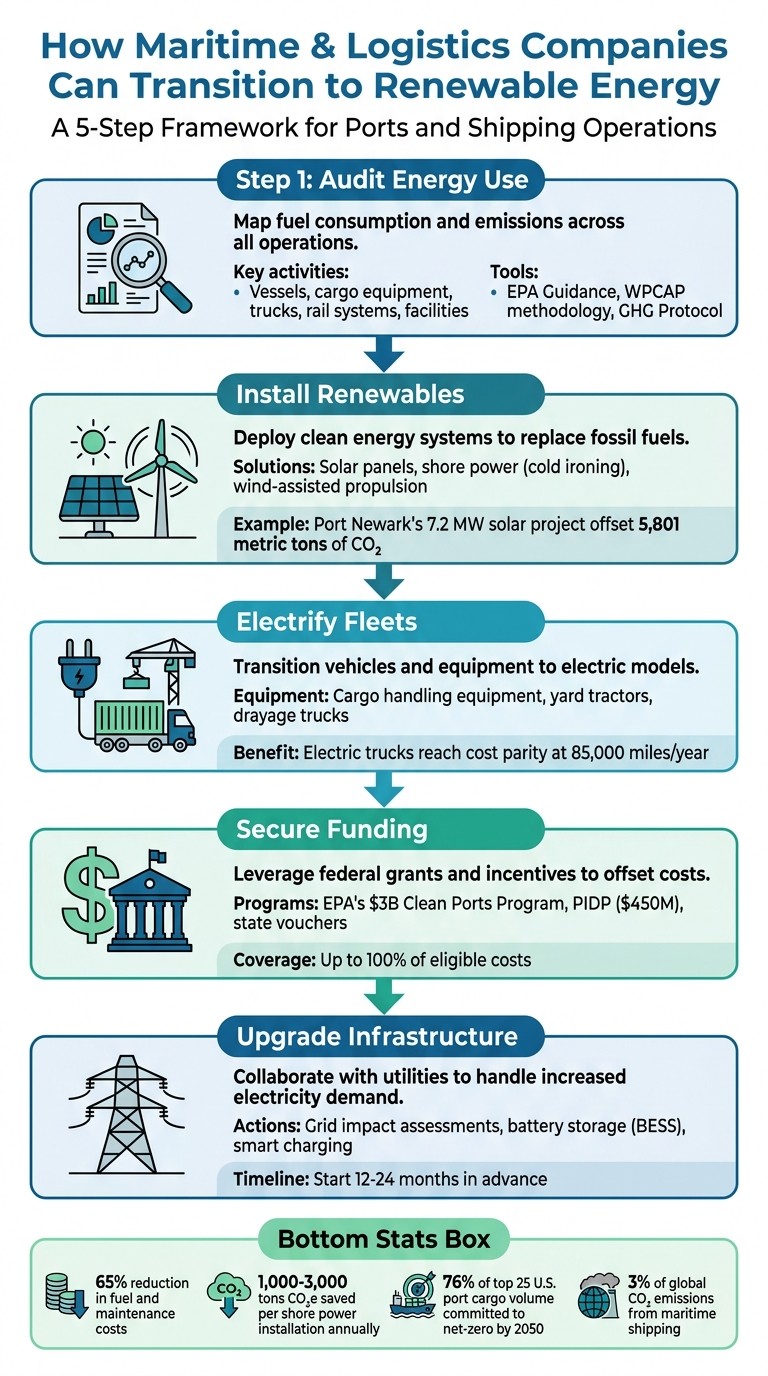
5-Step Process for Maritime Companies to Transition to Renewable Energy
Powering a Green Energy Future from the UK’s Ports
Assessing Current Energy Use and Emissions
Accurate evaluations of energy consumption and emissions are the backbone of any effective transition to renewable energy. They ensure that investments are not only operationally sound but also meet the criteria for federal funding, such as the EPA's $3 billion Clean Ports Program [1]. Without precise data, ports risk missing out on efficiency improvements and financing opportunities.
Running Energy Audits
Start by mapping energy usage across all operational areas - vessels, harbor craft, cargo equipment, trucks, rail systems, and administrative facilities [1][6]. This helps spotlight activities with the highest fuel consumption. For instance, vessels "hoteling" at berth - running auxiliary engines for HVAC, lighting, and refrigeration - can consume significantly more fuel than during propulsion [4].
Using standardized methods ensures compliance with regulatory requirements. Best practices include the EPA's Guidance, WPCAP methodology, and the GHG Protocol [1][6]. These frameworks classify emissions into three categories: Scope 1 (direct emissions like diesel engine outputs), Scope 2 (electricity purchased), and Scope 3 (emissions from tenant and value chain operations). Tenant operations, often a major source of emissions for port authorities, should be audited thoroughly.
The EPA offers downloadable CSV tables to simplify emission calculations for various sources, including ocean-going vessels, harbor craft, and onroad vehicles [6]. For drayage truck emissions, the MOVES4 Model is particularly useful [6]. Collect data such as engine tier, fuel consumption, operating hours, idling times, and trip frequency. This information can reveal inefficiencies, like idling cargo handling equipment or trucks waiting in long queues at terminal gates.
Once audits are complete, use the data to calculate emissions and pinpoint areas with the highest impact.
Calculating Emissions and Identifying High-Impact Sources
After gathering the necessary data, calculate emissions and rank sources based on their impact. Ocean-going vessels at berth typically contribute the most to port emissions, followed by cargo handling equipment and harbor craft [1][6]. For example, installing shore power at a high-traffic berth can cut between 1,000 and 3,000 tons of CO2e annually [1], making it a prime candidate for early action.
Focus on operational modes that consume the most fuel relative to their output. Key examples include vessels maneuvering at low speeds, equipment operating under partial loads, and trucks idling in queues [4][6]. For solar or battery retrofits on vessels, Monte Carlo simulations can provide valuable insights. By combining satellite irradiance data with vessel speed-power curves, these simulations estimate daily energy balances and generator requirements, helping avoid over- or under-investment [4].
Real-time air quality monitors for PM2.5 and nitrogen dioxide (NO2) can also play a critical role. Partnering with local community organizations to deploy these monitors establishes baseline pollution levels, demonstrating the impact of renewable transitions. This transparency builds trust with communities affected by port pollution and aligns with funding requirements like those in the Clean Ports Program, which emphasize environmental justice and community benefit plans [1].
Audit Sector | Key Data Points to Collect | Recommended Methodology/Tool |
|---|---|---|
Ocean-Going Vessels | Transit modes (>1 knot), hoteling loads, auxiliary engine fuel type | EPA Port Emissions Inventory Guidance [6] |
Cargo Handling Equipment | Engine tier, annual hours of operation, fuel consumption | WPCAP / GHG Protocol [1] |
Onroad Vehicles | Drayage truck idling times, trip frequency | EPA MOVES4 Model [6] |
Port Infrastructure | Administrative facility energy use, warehouse lighting/HVAC | GHG Protocol (Scope 2) [1] |
Installing Renewable Energy Systems
To implement renewable energy systems effectively, it's essential to align installations with the findings of energy audits. These systems can include solar power at terminals, electrified fleets and equipment, and wind-assisted propulsion for ships. Each solution targets specific operational needs, helping to cut down on fossil fuel dependency.
Solar Power for Ports and Terminals
Ports are well-suited for solar installations due to their expansive, flat surfaces, such as rooftops and parking areas. Elevated solar canopies over truck lanes and parking lots, for example, can generate energy without disrupting daily operations [3][7].
A notable example is the Port Newark Container Terminal (PNCT), which completed a 7.2 MW solar project spanning 7.8 acres in June 2025. This installation now meets half of the terminal's energy needs and has offset 5,801 metric tons of CO₂ since its first phase in 2023. Rick Cotton, Executive Director of the Port Authority of NY & NJ, described the project as a significant step toward cleaner port operations:
"PNCT's impressive solar installation marks a major step forward in the Port of New York and New Jersey's steadfast transition to cleaner, more sustainable operations" [7].
Combining solar arrays with battery storage enhances resilience by creating islandable microgrids. These systems also allow ports to negotiate better electricity rates through demand response programs. Scheduling energy-intensive tasks, such as cooling refrigerated containers or handling heavy cargo, during peak solar production hours further optimizes energy use and reduces costs [3].
To ensure long-term performance, it’s important to use corrosion-resistant materials and specialized glass coatings to withstand salt spray and harsh weather. Regular cleaning prevents salt and dirt buildup, which can reduce efficiency. A pilot program - lasting six to twelve months on a terminal roof or a set of reefer containers - can validate energy yields and refine maintenance strategies before scaling up [3].
Building on the success of solar systems, electrifying fleets takes sustainability efforts even further.
Converting Fleets and Equipment to Electric
Fleet electrification involves installing shore power systems (also known as cold ironing) for docked vessels and creating charging networks for electric cargo handling equipment, yard tractors, and drayage trucks [1].
One of the main hurdles is grid capacity. Ports must address limited electricity supply, lengthy interconnection timelines, and the high costs tied to infrastructure upgrades [2]. Early coordination with utilities - starting grid impact assessments and interconnection agreements 12 to 24 months in advance - is key to overcoming these challenges [3]. With 76% of cargo volume at the top 25 U.S. container ports coming from facilities committed to net-zero emissions by 2050, electrification is becoming an industry priority [2].
Phased pilot projects allow ports to test electric equipment under real-world conditions, minimizing risks before scaling up [2][3]. Since many electric options for heavy maritime equipment are still unavailable or don’t yet meet regulatory standards, early collaboration with original equipment manufacturers (OEMs) is critical [2]. Funding can be layered by combining federal grants, such as the EPA's $3 billion Clean Ports Program, with state incentives and private financing, reducing upfront costs [1][3].
The success of electrification efforts depends on collaboration among terminal operators, labor unions, utilities, and community groups. Environmental reviews and labor negotiations typically take 12 to 18 months [2]. Creating an electrification task force with representatives from all stakeholders can help resolve conflicts and keep projects on track during the typical three-year implementation timeline [2].
To further boost efficiency, ports can look to wind-assisted propulsion systems for maritime operations.
Wind-Assisted Shipping Technologies
Wind-assisted propulsion systems (WAPS), such as rotor sails and wing sails, offer a way to cut fuel consumption and emissions [8][9]. These technologies are suitable for retrofitting existing ships or incorporating into new builds. They also complement emerging zero-emission fuels like hydrogen and ammonia, which are currently limited by energy density, cost, and production challenges [8].
By the end of 2023, only about 50 large ships out of a global fleet of over 110,000 had adopted wind-assisted technology [8]. This highlights a significant opportunity for early adopters. Before installation, tools like time-domain and statistical simulations can help estimate fuel savings and identify design adjustments to maximize performance while minimizing safety and economic risks [8].
Local success with WAPS requires building onshore expertise to ensure proper operation and maintenance. Training programs, such as WAPS-IT, are essential for developing the necessary skills [8]. Ports must also consider operational challenges, including maneuvering in tight spaces and navigating variable weather conditions, which can impact WAPS performance. Collaborative research between shipowners and equipment suppliers can help address these issues and reduce financial risks [8].
When combined, solar installations, fleet electrification, and wind-assisted propulsion create a comprehensive strategy that significantly reduces emissions while improving efficiency at ports and terminals.
Addressing Transition Challenges
Transitioning to sustainable port operations involves more than just installing renewable energy systems. It requires tackling several hurdles, such as retrofitting existing infrastructure, navigating complex regulations, and securing adequate funding. Careful planning and proactive measures can help overcome these challenges and keep projects on schedule.
Retrofitting Infrastructure for Renewable Energy
Most existing port facilities weren’t built to handle the high energy demands of modern renewable systems like shore power or electric cargo equipment. One of the biggest challenges is grid capacity. Many ports simply don’t have the electrical supply needed to support simultaneous operations, such as powering shore connections, refrigerated containers, and electric cranes [2][10].
A notable example is the Port of Helsingborg in Sweden, which addressed this issue in September 2025 by installing battery storage systems capable of managing peak loads of up to 3 MW. Christina Argelius, the port’s CTO, used simulations to identify weak points in the grid and implemented smart charging systems to optimize energy use [10].
Early collaboration with utility providers is crucial for conducting grid impact assessments and securing interconnection agreements [2]. Battery Energy Storage Systems (BESS) can also play a key role by reducing peak loads, which delays the need for costly grid upgrades and provides additional energy during high-demand periods [2][10].
Physical constraints add another layer of complexity. For instance, adding rooftop solar panels may require strengthening existing structures, and marine environments demand specialized materials, like corrosion-resistant coatings, to withstand saltwater exposure [3]. These considerations highlight the importance of tailored solutions for each port’s specific needs.
While upgrading infrastructure is critical, regulatory compliance is another area that requires close attention.
Meeting Regulatory and Compliance Standards
Renewable energy projects must align with a mix of local, federal, and international regulations. For example, the International Maritime Organization (IMO) aims to cut greenhouse gas emissions by 30% by 2030 compared to 2008 levels [1]. On a state level, California’s At-Berth Rule mandates the use of shore power or emissions capture systems for vessels at dock [1]. Meanwhile, federal oversight is split between agencies like FERC, which regulates wholesale energy markets, and BOEM, which oversees offshore wind permits [11].
Completing a Scope 1-3 emissions inventory is a key step for meeting federal grant requirements and adhering to international standards [1]. Joining initiatives like the World Ports Climate Action Program (WPCAP) can provide valuable resources and peer support for navigating global shipping regulations [1]. However, environmental reviews and labor negotiations can take 12 to 18 months, so creating a roadmap that aligns regulatory milestones with procurement and labor timelines is essential [2].
Supply chain compliance is another critical factor. The One Big Beautiful Bill Act (OBBBA) of July 2025 introduced strict rules disqualifying projects from tax credits if components are sourced from certain countries [11]. Reviewing sourcing strategies early can prevent costly delays and ensure eligibility for federal incentives.
Once compliance and retrofits are addressed, the next major hurdle is funding.
Finding Funding and Financial Support
Electrifying ports is a significant financial undertaking. For example, Swedish port upgrades alone are estimated to cost between $130 million and $180 million [10]. However, multiple funding options are available to ease the burden.
Federal programs like the EPA’s Clean Ports Program offer up to $3 billion in competitive grants, covering as much as 100% of eligible costs. Similarly, the Port Infrastructure Development Program (PIDP) allocated nearly $450 million by December 2025. Additional funding sources include RAISE and INFRA grants for multi-modal infrastructure, as well as state-level initiatives like California’s CORE voucher program, which offsets costs for clean off-road equipment [1][2][12]. Combining these resources can significantly reduce upfront expenses.
Layering funding strategies - such as mixing federal grants with state vouchers and private lease financing - can fill budget gaps and minimize capital investment [1].
"Electrification has moved from a climate goal to a competitive necessity for U.S. ports." – FTI Consulting [2]
To access federal grants, applicants must submit proposals via Grants.gov, have a Unique Entity Identifier (UEI), and maintain an active SAM.gov registration. Since this process can take over a month, it’s wise to start early - at least one month before deadlines [12]. Private companies in logistics should consider forming partnerships with port authorities or local agencies to improve their chances of qualifying for federal funding opportunities [12].
Maintaining Reliability with Renewable Energy
Ensuring reliable power delivery is crucial after installing renewable systems and updating infrastructure. For maritime and logistics operations, where uninterrupted power is essential, renewable setups must handle fluctuating energy supply and sudden demand spikes. This reliability is key to maintaining competitive and efficient port operations.
Adding Energy Storage and Hybrid Systems
Energy storage, particularly battery systems, is central to ensuring renewable energy reliability. Batteries store surplus energy from solar or wind sources, making it available during periods of low production or high demand [3]. This time-shifting capability is especially beneficial for ports managing electric cranes, refrigerated containers, or shore power connections.
Hybrid systems, which combine multiple energy sources, further enhance stability. For example, pairing solar panels with battery storage and existing diesel generators creates a versatile setup. An Energy Management System (EMS) oversees the operation, determining when to draw power from batteries and when to activate generators [4]. This method keeps diesel engines running efficiently, reducing fuel consumption.
In a practical example, a North Atlantic feeder service retrofitted a vessel in April 2024 with 30 kW of solar panels and a 250 kWh battery. This upgrade cut annual fuel use by 8%–12% by reducing generator reliance while at berth [4].
Battery systems also help with peak shaving, absorbing sudden power surges from equipment like electric cranes or refrigerated containers during startup. This reduces dependence on costly grid-sourced peak power and delays expensive grid upgrades [3][4]. Some ports are even developing "islandable" microgrids - integrating solar, storage, and controllable loads - to ensure critical functions remain operational during grid outages [3][4].
Before investing in storage systems, conduct an energy audit to assess hotel loads, generator runtimes, and berth durations [4]. This analysis identifies areas for the quickest return on investment. Additionally, ensure all components, such as PV modules, racking, and battery enclosures, are designed to withstand harsh marine environments with corrosion-resistant coatings [4].
These energy storage and hybrid systems set the stage for tackling seasonal energy fluctuations, which is explored next.
Managing Seasonal and Demand Changes
With reliable energy storage in place, managing seasonal output and demand variations becomes the next priority. Renewable energy production fluctuates with weather and seasons, but port operations must remain constant. Predictive tools play a key role in addressing this challenge.
One straightforward approach is operational load-shifting. This involves scheduling energy-intensive activities, like pre-cooling refrigerated containers or heavy lifting, to coincide with midday solar output peaks. Running pilot programs over 6–12 months helps gather data on seasonal performance, optimizing self-consumption and reducing demand charges [3]. This also provides insights into system behavior during shorter winter days or peak summer cooling demands.
Shore-to-ship power, or "cold ironing", is another effective strategy for managing demand. For instance, in February 2026, the Port of Skagen in Denmark launched a shore-based electricity project for the North Atlantic pelagic fleet. This initiative, spearheaded by Business Developer Jesper Rulffs and the Danish Pelagic Producer Organisation, involved a DKK 26 million (around $3.76 million) investment to replace diesel generators during unloading. Two vessels, including the Lingbank, were retrofitted with shore power systems. The project aims to reduce vessel diesel consumption by 3% to 8% annually, contributing to the port's goal of becoming CO2-neutral by 2030 [13].
"The shift from diesel to shore power during landing operations means we achieve reductions in CO₂ as well as SOₓ, NOₓ and particulate emissions. This improves local air quality and strengthens the long-term competitiveness of the port." – Jesper Rulffs, Business Developer, Port of Skagen [13]
Additionally, predictive analytics tools that leverage satellite irradiance data and weather forecasts can optimize battery charging schedules. These AI-driven systems enable ports to plan operations around expected energy generation, allowing for maintenance and heavy lifts during periods of peak renewable output. This minimizes reliance on backup power sources and maximizes the efficiency of renewable systems [3][4].
Conclusion
The steps outlined earlier - detailed energy audits, renewable energy installations, and infrastructure upgrades - highlight a clear roadmap for ports transitioning to renewable energy. Success lies in adopting a comprehensive strategy: conducting in-depth energy assessments, implementing solar and shore power systems, transitioning fleets to electric vehicles, and establishing hybrid setups supported by battery storage. Electrification is no longer just a climate ambition; it has become a fundamental requirement for ports to stay competitive in global trade [2].
These advancements come with measurable financial and environmental benefits. For instance, electric drayage trucks reach cost parity with diesel counterparts at around 85,000 miles per year [5]. A single shore power installation can cut between 1,000 and 3,000 tons of CO2e annually [1]. Additionally, the EPA's Clean Ports Program offers $3 billion in federal funding to accelerate these transitions. Notably, 76% of container volume at the top 25 U.S. ports comes from facilities committed to achieving net-zero emissions by 2050 [1][2].
"True electrification requires equipment, energy and execution. Ports that plan holistically will remain competitive as conditions evolve." – FTI Consulting [2]
Achieving these goals demands collaboration across multiple stakeholders, including terminal operators, utilities, labor unions, local governments, and community organizations. Early coordination with utilities is particularly important, as grid interconnection processes can take between 2 and 5 years [14]. Addressing workforce retraining, navigating regulatory requirements, and prioritizing community health are also essential to building sustained support for these initiatives.
A phased approach, starting with pilot projects and gradually expanding, offers a practical path forward. By investing early and scaling strategically, ports can achieve decarbonization while securing long-term competitiveness.
FAQs
What should we measure first to build a credible port emissions baseline?
To create a reliable baseline for port emissions, begin by gathering detailed activity data from port operations. This includes information on vessel arrivals, cargo handling processes, and equipment usage. Such data serves as the foundation for estimating emissions and determining the range of mobile source emissions. Precision in collecting this activity data is critical for developing emission inventories that accurately reflect the unique characteristics of port operations.
How do we plan for grid capacity limits when electrifying port equipment and trucks?
To tackle grid capacity challenges, start by assessing the existing infrastructure and engaging with utility providers early to pinpoint necessary upgrades. Energy storage systems, such as batteries, can play a crucial role in balancing supply and demand during high-usage periods. Implementing changes in phases, aligned with grid readiness, and investing in substations and transmission networks are critical steps. Early coordination and thoughtful planning with utilities can help navigate these constraints effectively as electrification progresses.
Which projects usually deliver the fastest payback at a port (solar, shore power, batteries, or WAPS)?
Solar power and shore power projects are often the quickest to deliver financial returns for ports. Solar energy helps lower fuel expenses and reduces emissions, making it an efficient and eco-friendly choice. Similarly, shore power - also known as cold ironing - allows ships to plug into the electrical grid while docked, significantly reducing both operational costs and emissions in a short time frame. On the other hand, investments like batteries and Wind-Assisted Propulsion Systems (WAPS) may require more time to recoup their initial costs due to higher upfront expenses. However, these technologies can offer considerable long-term advantages, both financially and environmentally.
Related Blog Posts
Decarbonizing transportation: EVs, logistics and low‑carbon fuels
How to Build a Corporate Sustainability Strategy Aligned to ROI for Maritime & Logistics Companies
How to Align Stakeholders Around a Shared ESG Vision for Maritime & Logistics Companies
How to Build a Climate-Ready Energy & Water Infrastructure Plan for Maritime & Logistics Companies
Latest Articles
©2025

Narrative Change and Power Building: The Missing Half of Advocacy
Narrative change is the process of disrupting dominant narratives that normalize inequity and advancing new narratives from historically marginalized communities.

Funding Resilience Without Federal Grants
BRIC is unreliable and FEMA is shrinking. Here's how cities fund climate resilience with dedicated revenue, blended finance, and a coordinating authority.

The ESG Blind Spot: How AI Is Finding Risks in Companies Nobody Else Is Watching
Norway's sovereign wealth fund uses AI to screen 7,200 portfolio companies for forced labor and corruption within 24 hours. The real story is the emerging-market coverage gap that traditional ESG data vendors miss — and what it means for any company with a global supply chain.
Narrative Change and Power Building: The Missing Half of Advocacy
Narrative change is the process of disrupting dominant narratives that normalize inequity and advancing new narratives from historically marginalized communities.
Funding Resilience Without Federal Grants
BRIC is unreliable and FEMA is shrinking. Here's how cities fund climate resilience with dedicated revenue, blended finance, and a coordinating authority.
The ESG Blind Spot: How AI Is Finding Risks in Companies Nobody Else Is Watching
Norway's sovereign wealth fund uses AI to screen 7,200 portfolio companies for forced labor and corruption within 24 hours. The real story is the emerging-market coverage gap that traditional ESG data vendors miss — and what it means for any company with a global supply chain.
FAQ
01
What does it really mean to “redefine profit”?
02
What makes Council Fire different?
03
Who does Council Fire work with?
04
What does working with Council Fire actually look like?
05
How does Council Fire help organizations turn big goals into action?
06
How does Council Fire define and measure success?
Apr 28, 2026
How to Transition to Renewable Energy Systems at the Local Level for Maritime & Logistics Companies
Sustainability Strategy
In This Article
Practical local roadmap for ports to cut emissions: energy audits, solar, shore power, fleet electrification, storage, and funding options.
How to Transition to Renewable Energy Systems at the Local Level for Maritime & Logistics Companies
Why It Matters: Maritime shipping accounts for 3% of global CO2 emissions, and communities near ports face severe health risks like higher asthma rates and shorter life expectancy.
Financial Upside: Electric cranes and vehicles cut fuel and maintenance costs by up to 65%. Ports adopting renewables report millions in savings and reduced emissions.
Steps to Transition:
Audit Energy Use: Map fuel consumption and emissions across operations.
Install Renewables: Solar panels, shore power, and wind-assisted systems can replace fossil fuels.
Electrify Fleets: Transition trucks and equipment to electric models.
Secure Funding: Use federal grants, like the EPA’s $3 billion Clean Ports Program, to offset costs.
Upgrade Infrastructure: Collaborate with utilities to handle increased electricity demand.
Switching to renewable energy not only cuts emissions but also attracts customers, lowers operational costs, and meets net-zero goals. Ports that act now will lead in the future of global trade.
5-Step Process for Maritime Companies to Transition to Renewable Energy
Powering a Green Energy Future from the UK’s Ports
Assessing Current Energy Use and Emissions
Accurate evaluations of energy consumption and emissions are the backbone of any effective transition to renewable energy. They ensure that investments are not only operationally sound but also meet the criteria for federal funding, such as the EPA's $3 billion Clean Ports Program [1]. Without precise data, ports risk missing out on efficiency improvements and financing opportunities.
Running Energy Audits
Start by mapping energy usage across all operational areas - vessels, harbor craft, cargo equipment, trucks, rail systems, and administrative facilities [1][6]. This helps spotlight activities with the highest fuel consumption. For instance, vessels "hoteling" at berth - running auxiliary engines for HVAC, lighting, and refrigeration - can consume significantly more fuel than during propulsion [4].
Using standardized methods ensures compliance with regulatory requirements. Best practices include the EPA's Guidance, WPCAP methodology, and the GHG Protocol [1][6]. These frameworks classify emissions into three categories: Scope 1 (direct emissions like diesel engine outputs), Scope 2 (electricity purchased), and Scope 3 (emissions from tenant and value chain operations). Tenant operations, often a major source of emissions for port authorities, should be audited thoroughly.
The EPA offers downloadable CSV tables to simplify emission calculations for various sources, including ocean-going vessels, harbor craft, and onroad vehicles [6]. For drayage truck emissions, the MOVES4 Model is particularly useful [6]. Collect data such as engine tier, fuel consumption, operating hours, idling times, and trip frequency. This information can reveal inefficiencies, like idling cargo handling equipment or trucks waiting in long queues at terminal gates.
Once audits are complete, use the data to calculate emissions and pinpoint areas with the highest impact.
Calculating Emissions and Identifying High-Impact Sources
After gathering the necessary data, calculate emissions and rank sources based on their impact. Ocean-going vessels at berth typically contribute the most to port emissions, followed by cargo handling equipment and harbor craft [1][6]. For example, installing shore power at a high-traffic berth can cut between 1,000 and 3,000 tons of CO2e annually [1], making it a prime candidate for early action.
Focus on operational modes that consume the most fuel relative to their output. Key examples include vessels maneuvering at low speeds, equipment operating under partial loads, and trucks idling in queues [4][6]. For solar or battery retrofits on vessels, Monte Carlo simulations can provide valuable insights. By combining satellite irradiance data with vessel speed-power curves, these simulations estimate daily energy balances and generator requirements, helping avoid over- or under-investment [4].
Real-time air quality monitors for PM2.5 and nitrogen dioxide (NO2) can also play a critical role. Partnering with local community organizations to deploy these monitors establishes baseline pollution levels, demonstrating the impact of renewable transitions. This transparency builds trust with communities affected by port pollution and aligns with funding requirements like those in the Clean Ports Program, which emphasize environmental justice and community benefit plans [1].
Audit Sector | Key Data Points to Collect | Recommended Methodology/Tool |
|---|---|---|
Ocean-Going Vessels | Transit modes (>1 knot), hoteling loads, auxiliary engine fuel type | EPA Port Emissions Inventory Guidance [6] |
Cargo Handling Equipment | Engine tier, annual hours of operation, fuel consumption | WPCAP / GHG Protocol [1] |
Onroad Vehicles | Drayage truck idling times, trip frequency | EPA MOVES4 Model [6] |
Port Infrastructure | Administrative facility energy use, warehouse lighting/HVAC | GHG Protocol (Scope 2) [1] |
Installing Renewable Energy Systems
To implement renewable energy systems effectively, it's essential to align installations with the findings of energy audits. These systems can include solar power at terminals, electrified fleets and equipment, and wind-assisted propulsion for ships. Each solution targets specific operational needs, helping to cut down on fossil fuel dependency.
Solar Power for Ports and Terminals
Ports are well-suited for solar installations due to their expansive, flat surfaces, such as rooftops and parking areas. Elevated solar canopies over truck lanes and parking lots, for example, can generate energy without disrupting daily operations [3][7].
A notable example is the Port Newark Container Terminal (PNCT), which completed a 7.2 MW solar project spanning 7.8 acres in June 2025. This installation now meets half of the terminal's energy needs and has offset 5,801 metric tons of CO₂ since its first phase in 2023. Rick Cotton, Executive Director of the Port Authority of NY & NJ, described the project as a significant step toward cleaner port operations:
"PNCT's impressive solar installation marks a major step forward in the Port of New York and New Jersey's steadfast transition to cleaner, more sustainable operations" [7].
Combining solar arrays with battery storage enhances resilience by creating islandable microgrids. These systems also allow ports to negotiate better electricity rates through demand response programs. Scheduling energy-intensive tasks, such as cooling refrigerated containers or handling heavy cargo, during peak solar production hours further optimizes energy use and reduces costs [3].
To ensure long-term performance, it’s important to use corrosion-resistant materials and specialized glass coatings to withstand salt spray and harsh weather. Regular cleaning prevents salt and dirt buildup, which can reduce efficiency. A pilot program - lasting six to twelve months on a terminal roof or a set of reefer containers - can validate energy yields and refine maintenance strategies before scaling up [3].
Building on the success of solar systems, electrifying fleets takes sustainability efforts even further.
Converting Fleets and Equipment to Electric
Fleet electrification involves installing shore power systems (also known as cold ironing) for docked vessels and creating charging networks for electric cargo handling equipment, yard tractors, and drayage trucks [1].
One of the main hurdles is grid capacity. Ports must address limited electricity supply, lengthy interconnection timelines, and the high costs tied to infrastructure upgrades [2]. Early coordination with utilities - starting grid impact assessments and interconnection agreements 12 to 24 months in advance - is key to overcoming these challenges [3]. With 76% of cargo volume at the top 25 U.S. container ports coming from facilities committed to net-zero emissions by 2050, electrification is becoming an industry priority [2].
Phased pilot projects allow ports to test electric equipment under real-world conditions, minimizing risks before scaling up [2][3]. Since many electric options for heavy maritime equipment are still unavailable or don’t yet meet regulatory standards, early collaboration with original equipment manufacturers (OEMs) is critical [2]. Funding can be layered by combining federal grants, such as the EPA's $3 billion Clean Ports Program, with state incentives and private financing, reducing upfront costs [1][3].
The success of electrification efforts depends on collaboration among terminal operators, labor unions, utilities, and community groups. Environmental reviews and labor negotiations typically take 12 to 18 months [2]. Creating an electrification task force with representatives from all stakeholders can help resolve conflicts and keep projects on track during the typical three-year implementation timeline [2].
To further boost efficiency, ports can look to wind-assisted propulsion systems for maritime operations.
Wind-Assisted Shipping Technologies
Wind-assisted propulsion systems (WAPS), such as rotor sails and wing sails, offer a way to cut fuel consumption and emissions [8][9]. These technologies are suitable for retrofitting existing ships or incorporating into new builds. They also complement emerging zero-emission fuels like hydrogen and ammonia, which are currently limited by energy density, cost, and production challenges [8].
By the end of 2023, only about 50 large ships out of a global fleet of over 110,000 had adopted wind-assisted technology [8]. This highlights a significant opportunity for early adopters. Before installation, tools like time-domain and statistical simulations can help estimate fuel savings and identify design adjustments to maximize performance while minimizing safety and economic risks [8].
Local success with WAPS requires building onshore expertise to ensure proper operation and maintenance. Training programs, such as WAPS-IT, are essential for developing the necessary skills [8]. Ports must also consider operational challenges, including maneuvering in tight spaces and navigating variable weather conditions, which can impact WAPS performance. Collaborative research between shipowners and equipment suppliers can help address these issues and reduce financial risks [8].
When combined, solar installations, fleet electrification, and wind-assisted propulsion create a comprehensive strategy that significantly reduces emissions while improving efficiency at ports and terminals.
Addressing Transition Challenges
Transitioning to sustainable port operations involves more than just installing renewable energy systems. It requires tackling several hurdles, such as retrofitting existing infrastructure, navigating complex regulations, and securing adequate funding. Careful planning and proactive measures can help overcome these challenges and keep projects on schedule.
Retrofitting Infrastructure for Renewable Energy
Most existing port facilities weren’t built to handle the high energy demands of modern renewable systems like shore power or electric cargo equipment. One of the biggest challenges is grid capacity. Many ports simply don’t have the electrical supply needed to support simultaneous operations, such as powering shore connections, refrigerated containers, and electric cranes [2][10].
A notable example is the Port of Helsingborg in Sweden, which addressed this issue in September 2025 by installing battery storage systems capable of managing peak loads of up to 3 MW. Christina Argelius, the port’s CTO, used simulations to identify weak points in the grid and implemented smart charging systems to optimize energy use [10].
Early collaboration with utility providers is crucial for conducting grid impact assessments and securing interconnection agreements [2]. Battery Energy Storage Systems (BESS) can also play a key role by reducing peak loads, which delays the need for costly grid upgrades and provides additional energy during high-demand periods [2][10].
Physical constraints add another layer of complexity. For instance, adding rooftop solar panels may require strengthening existing structures, and marine environments demand specialized materials, like corrosion-resistant coatings, to withstand saltwater exposure [3]. These considerations highlight the importance of tailored solutions for each port’s specific needs.
While upgrading infrastructure is critical, regulatory compliance is another area that requires close attention.
Meeting Regulatory and Compliance Standards
Renewable energy projects must align with a mix of local, federal, and international regulations. For example, the International Maritime Organization (IMO) aims to cut greenhouse gas emissions by 30% by 2030 compared to 2008 levels [1]. On a state level, California’s At-Berth Rule mandates the use of shore power or emissions capture systems for vessels at dock [1]. Meanwhile, federal oversight is split between agencies like FERC, which regulates wholesale energy markets, and BOEM, which oversees offshore wind permits [11].
Completing a Scope 1-3 emissions inventory is a key step for meeting federal grant requirements and adhering to international standards [1]. Joining initiatives like the World Ports Climate Action Program (WPCAP) can provide valuable resources and peer support for navigating global shipping regulations [1]. However, environmental reviews and labor negotiations can take 12 to 18 months, so creating a roadmap that aligns regulatory milestones with procurement and labor timelines is essential [2].
Supply chain compliance is another critical factor. The One Big Beautiful Bill Act (OBBBA) of July 2025 introduced strict rules disqualifying projects from tax credits if components are sourced from certain countries [11]. Reviewing sourcing strategies early can prevent costly delays and ensure eligibility for federal incentives.
Once compliance and retrofits are addressed, the next major hurdle is funding.
Finding Funding and Financial Support
Electrifying ports is a significant financial undertaking. For example, Swedish port upgrades alone are estimated to cost between $130 million and $180 million [10]. However, multiple funding options are available to ease the burden.
Federal programs like the EPA’s Clean Ports Program offer up to $3 billion in competitive grants, covering as much as 100% of eligible costs. Similarly, the Port Infrastructure Development Program (PIDP) allocated nearly $450 million by December 2025. Additional funding sources include RAISE and INFRA grants for multi-modal infrastructure, as well as state-level initiatives like California’s CORE voucher program, which offsets costs for clean off-road equipment [1][2][12]. Combining these resources can significantly reduce upfront expenses.
Layering funding strategies - such as mixing federal grants with state vouchers and private lease financing - can fill budget gaps and minimize capital investment [1].
"Electrification has moved from a climate goal to a competitive necessity for U.S. ports." – FTI Consulting [2]
To access federal grants, applicants must submit proposals via Grants.gov, have a Unique Entity Identifier (UEI), and maintain an active SAM.gov registration. Since this process can take over a month, it’s wise to start early - at least one month before deadlines [12]. Private companies in logistics should consider forming partnerships with port authorities or local agencies to improve their chances of qualifying for federal funding opportunities [12].
Maintaining Reliability with Renewable Energy
Ensuring reliable power delivery is crucial after installing renewable systems and updating infrastructure. For maritime and logistics operations, where uninterrupted power is essential, renewable setups must handle fluctuating energy supply and sudden demand spikes. This reliability is key to maintaining competitive and efficient port operations.
Adding Energy Storage and Hybrid Systems
Energy storage, particularly battery systems, is central to ensuring renewable energy reliability. Batteries store surplus energy from solar or wind sources, making it available during periods of low production or high demand [3]. This time-shifting capability is especially beneficial for ports managing electric cranes, refrigerated containers, or shore power connections.
Hybrid systems, which combine multiple energy sources, further enhance stability. For example, pairing solar panels with battery storage and existing diesel generators creates a versatile setup. An Energy Management System (EMS) oversees the operation, determining when to draw power from batteries and when to activate generators [4]. This method keeps diesel engines running efficiently, reducing fuel consumption.
In a practical example, a North Atlantic feeder service retrofitted a vessel in April 2024 with 30 kW of solar panels and a 250 kWh battery. This upgrade cut annual fuel use by 8%–12% by reducing generator reliance while at berth [4].
Battery systems also help with peak shaving, absorbing sudden power surges from equipment like electric cranes or refrigerated containers during startup. This reduces dependence on costly grid-sourced peak power and delays expensive grid upgrades [3][4]. Some ports are even developing "islandable" microgrids - integrating solar, storage, and controllable loads - to ensure critical functions remain operational during grid outages [3][4].
Before investing in storage systems, conduct an energy audit to assess hotel loads, generator runtimes, and berth durations [4]. This analysis identifies areas for the quickest return on investment. Additionally, ensure all components, such as PV modules, racking, and battery enclosures, are designed to withstand harsh marine environments with corrosion-resistant coatings [4].
These energy storage and hybrid systems set the stage for tackling seasonal energy fluctuations, which is explored next.
Managing Seasonal and Demand Changes
With reliable energy storage in place, managing seasonal output and demand variations becomes the next priority. Renewable energy production fluctuates with weather and seasons, but port operations must remain constant. Predictive tools play a key role in addressing this challenge.
One straightforward approach is operational load-shifting. This involves scheduling energy-intensive activities, like pre-cooling refrigerated containers or heavy lifting, to coincide with midday solar output peaks. Running pilot programs over 6–12 months helps gather data on seasonal performance, optimizing self-consumption and reducing demand charges [3]. This also provides insights into system behavior during shorter winter days or peak summer cooling demands.
Shore-to-ship power, or "cold ironing", is another effective strategy for managing demand. For instance, in February 2026, the Port of Skagen in Denmark launched a shore-based electricity project for the North Atlantic pelagic fleet. This initiative, spearheaded by Business Developer Jesper Rulffs and the Danish Pelagic Producer Organisation, involved a DKK 26 million (around $3.76 million) investment to replace diesel generators during unloading. Two vessels, including the Lingbank, were retrofitted with shore power systems. The project aims to reduce vessel diesel consumption by 3% to 8% annually, contributing to the port's goal of becoming CO2-neutral by 2030 [13].
"The shift from diesel to shore power during landing operations means we achieve reductions in CO₂ as well as SOₓ, NOₓ and particulate emissions. This improves local air quality and strengthens the long-term competitiveness of the port." – Jesper Rulffs, Business Developer, Port of Skagen [13]
Additionally, predictive analytics tools that leverage satellite irradiance data and weather forecasts can optimize battery charging schedules. These AI-driven systems enable ports to plan operations around expected energy generation, allowing for maintenance and heavy lifts during periods of peak renewable output. This minimizes reliance on backup power sources and maximizes the efficiency of renewable systems [3][4].
Conclusion
The steps outlined earlier - detailed energy audits, renewable energy installations, and infrastructure upgrades - highlight a clear roadmap for ports transitioning to renewable energy. Success lies in adopting a comprehensive strategy: conducting in-depth energy assessments, implementing solar and shore power systems, transitioning fleets to electric vehicles, and establishing hybrid setups supported by battery storage. Electrification is no longer just a climate ambition; it has become a fundamental requirement for ports to stay competitive in global trade [2].
These advancements come with measurable financial and environmental benefits. For instance, electric drayage trucks reach cost parity with diesel counterparts at around 85,000 miles per year [5]. A single shore power installation can cut between 1,000 and 3,000 tons of CO2e annually [1]. Additionally, the EPA's Clean Ports Program offers $3 billion in federal funding to accelerate these transitions. Notably, 76% of container volume at the top 25 U.S. ports comes from facilities committed to achieving net-zero emissions by 2050 [1][2].
"True electrification requires equipment, energy and execution. Ports that plan holistically will remain competitive as conditions evolve." – FTI Consulting [2]
Achieving these goals demands collaboration across multiple stakeholders, including terminal operators, utilities, labor unions, local governments, and community organizations. Early coordination with utilities is particularly important, as grid interconnection processes can take between 2 and 5 years [14]. Addressing workforce retraining, navigating regulatory requirements, and prioritizing community health are also essential to building sustained support for these initiatives.
A phased approach, starting with pilot projects and gradually expanding, offers a practical path forward. By investing early and scaling strategically, ports can achieve decarbonization while securing long-term competitiveness.
FAQs
What should we measure first to build a credible port emissions baseline?
To create a reliable baseline for port emissions, begin by gathering detailed activity data from port operations. This includes information on vessel arrivals, cargo handling processes, and equipment usage. Such data serves as the foundation for estimating emissions and determining the range of mobile source emissions. Precision in collecting this activity data is critical for developing emission inventories that accurately reflect the unique characteristics of port operations.
How do we plan for grid capacity limits when electrifying port equipment and trucks?
To tackle grid capacity challenges, start by assessing the existing infrastructure and engaging with utility providers early to pinpoint necessary upgrades. Energy storage systems, such as batteries, can play a crucial role in balancing supply and demand during high-usage periods. Implementing changes in phases, aligned with grid readiness, and investing in substations and transmission networks are critical steps. Early coordination and thoughtful planning with utilities can help navigate these constraints effectively as electrification progresses.
Which projects usually deliver the fastest payback at a port (solar, shore power, batteries, or WAPS)?
Solar power and shore power projects are often the quickest to deliver financial returns for ports. Solar energy helps lower fuel expenses and reduces emissions, making it an efficient and eco-friendly choice. Similarly, shore power - also known as cold ironing - allows ships to plug into the electrical grid while docked, significantly reducing both operational costs and emissions in a short time frame. On the other hand, investments like batteries and Wind-Assisted Propulsion Systems (WAPS) may require more time to recoup their initial costs due to higher upfront expenses. However, these technologies can offer considerable long-term advantages, both financially and environmentally.
Related Blog Posts
Decarbonizing transportation: EVs, logistics and low‑carbon fuels
How to Build a Corporate Sustainability Strategy Aligned to ROI for Maritime & Logistics Companies
How to Align Stakeholders Around a Shared ESG Vision for Maritime & Logistics Companies
How to Build a Climate-Ready Energy & Water Infrastructure Plan for Maritime & Logistics Companies
Latest Articles
©2025
Narrative Change and Power Building: The Missing Half of Advocacy
Narrative change is the process of disrupting dominant narratives that normalize inequity and advancing new narratives from historically marginalized communities.
Funding Resilience Without Federal Grants
BRIC is unreliable and FEMA is shrinking. Here's how cities fund climate resilience with dedicated revenue, blended finance, and a coordinating authority.
The ESG Blind Spot: How AI Is Finding Risks in Companies Nobody Else Is Watching
Norway's sovereign wealth fund uses AI to screen 7,200 portfolio companies for forced labor and corruption within 24 hours. The real story is the emerging-market coverage gap that traditional ESG data vendors miss — and what it means for any company with a global supply chain.
FAQ
01
What does it really mean to “redefine profit”?
02
What makes Council Fire different?
03
Who does Council Fire work with?
04
What does working with Council Fire actually look like?
05
How does Council Fire help organizations turn big goals into action?
06
How does Council Fire define and measure success?
Apr 28, 2026
How to Transition to Renewable Energy Systems at the Local Level for Maritime & Logistics Companies
Sustainability Strategy
In This Article
Practical local roadmap for ports to cut emissions: energy audits, solar, shore power, fleet electrification, storage, and funding options.
How to Transition to Renewable Energy Systems at the Local Level for Maritime & Logistics Companies
Why It Matters: Maritime shipping accounts for 3% of global CO2 emissions, and communities near ports face severe health risks like higher asthma rates and shorter life expectancy.
Financial Upside: Electric cranes and vehicles cut fuel and maintenance costs by up to 65%. Ports adopting renewables report millions in savings and reduced emissions.
Steps to Transition:
Audit Energy Use: Map fuel consumption and emissions across operations.
Install Renewables: Solar panels, shore power, and wind-assisted systems can replace fossil fuels.
Electrify Fleets: Transition trucks and equipment to electric models.
Secure Funding: Use federal grants, like the EPA’s $3 billion Clean Ports Program, to offset costs.
Upgrade Infrastructure: Collaborate with utilities to handle increased electricity demand.
Switching to renewable energy not only cuts emissions but also attracts customers, lowers operational costs, and meets net-zero goals. Ports that act now will lead in the future of global trade.
5-Step Process for Maritime Companies to Transition to Renewable Energy
Powering a Green Energy Future from the UK’s Ports
Assessing Current Energy Use and Emissions
Accurate evaluations of energy consumption and emissions are the backbone of any effective transition to renewable energy. They ensure that investments are not only operationally sound but also meet the criteria for federal funding, such as the EPA's $3 billion Clean Ports Program [1]. Without precise data, ports risk missing out on efficiency improvements and financing opportunities.
Running Energy Audits
Start by mapping energy usage across all operational areas - vessels, harbor craft, cargo equipment, trucks, rail systems, and administrative facilities [1][6]. This helps spotlight activities with the highest fuel consumption. For instance, vessels "hoteling" at berth - running auxiliary engines for HVAC, lighting, and refrigeration - can consume significantly more fuel than during propulsion [4].
Using standardized methods ensures compliance with regulatory requirements. Best practices include the EPA's Guidance, WPCAP methodology, and the GHG Protocol [1][6]. These frameworks classify emissions into three categories: Scope 1 (direct emissions like diesel engine outputs), Scope 2 (electricity purchased), and Scope 3 (emissions from tenant and value chain operations). Tenant operations, often a major source of emissions for port authorities, should be audited thoroughly.
The EPA offers downloadable CSV tables to simplify emission calculations for various sources, including ocean-going vessels, harbor craft, and onroad vehicles [6]. For drayage truck emissions, the MOVES4 Model is particularly useful [6]. Collect data such as engine tier, fuel consumption, operating hours, idling times, and trip frequency. This information can reveal inefficiencies, like idling cargo handling equipment or trucks waiting in long queues at terminal gates.
Once audits are complete, use the data to calculate emissions and pinpoint areas with the highest impact.
Calculating Emissions and Identifying High-Impact Sources
After gathering the necessary data, calculate emissions and rank sources based on their impact. Ocean-going vessels at berth typically contribute the most to port emissions, followed by cargo handling equipment and harbor craft [1][6]. For example, installing shore power at a high-traffic berth can cut between 1,000 and 3,000 tons of CO2e annually [1], making it a prime candidate for early action.
Focus on operational modes that consume the most fuel relative to their output. Key examples include vessels maneuvering at low speeds, equipment operating under partial loads, and trucks idling in queues [4][6]. For solar or battery retrofits on vessels, Monte Carlo simulations can provide valuable insights. By combining satellite irradiance data with vessel speed-power curves, these simulations estimate daily energy balances and generator requirements, helping avoid over- or under-investment [4].
Real-time air quality monitors for PM2.5 and nitrogen dioxide (NO2) can also play a critical role. Partnering with local community organizations to deploy these monitors establishes baseline pollution levels, demonstrating the impact of renewable transitions. This transparency builds trust with communities affected by port pollution and aligns with funding requirements like those in the Clean Ports Program, which emphasize environmental justice and community benefit plans [1].
Audit Sector | Key Data Points to Collect | Recommended Methodology/Tool |
|---|---|---|
Ocean-Going Vessels | Transit modes (>1 knot), hoteling loads, auxiliary engine fuel type | EPA Port Emissions Inventory Guidance [6] |
Cargo Handling Equipment | Engine tier, annual hours of operation, fuel consumption | WPCAP / GHG Protocol [1] |
Onroad Vehicles | Drayage truck idling times, trip frequency | EPA MOVES4 Model [6] |
Port Infrastructure | Administrative facility energy use, warehouse lighting/HVAC | GHG Protocol (Scope 2) [1] |
Installing Renewable Energy Systems
To implement renewable energy systems effectively, it's essential to align installations with the findings of energy audits. These systems can include solar power at terminals, electrified fleets and equipment, and wind-assisted propulsion for ships. Each solution targets specific operational needs, helping to cut down on fossil fuel dependency.
Solar Power for Ports and Terminals
Ports are well-suited for solar installations due to their expansive, flat surfaces, such as rooftops and parking areas. Elevated solar canopies over truck lanes and parking lots, for example, can generate energy without disrupting daily operations [3][7].
A notable example is the Port Newark Container Terminal (PNCT), which completed a 7.2 MW solar project spanning 7.8 acres in June 2025. This installation now meets half of the terminal's energy needs and has offset 5,801 metric tons of CO₂ since its first phase in 2023. Rick Cotton, Executive Director of the Port Authority of NY & NJ, described the project as a significant step toward cleaner port operations:
"PNCT's impressive solar installation marks a major step forward in the Port of New York and New Jersey's steadfast transition to cleaner, more sustainable operations" [7].
Combining solar arrays with battery storage enhances resilience by creating islandable microgrids. These systems also allow ports to negotiate better electricity rates through demand response programs. Scheduling energy-intensive tasks, such as cooling refrigerated containers or handling heavy cargo, during peak solar production hours further optimizes energy use and reduces costs [3].
To ensure long-term performance, it’s important to use corrosion-resistant materials and specialized glass coatings to withstand salt spray and harsh weather. Regular cleaning prevents salt and dirt buildup, which can reduce efficiency. A pilot program - lasting six to twelve months on a terminal roof or a set of reefer containers - can validate energy yields and refine maintenance strategies before scaling up [3].
Building on the success of solar systems, electrifying fleets takes sustainability efforts even further.
Converting Fleets and Equipment to Electric
Fleet electrification involves installing shore power systems (also known as cold ironing) for docked vessels and creating charging networks for electric cargo handling equipment, yard tractors, and drayage trucks [1].
One of the main hurdles is grid capacity. Ports must address limited electricity supply, lengthy interconnection timelines, and the high costs tied to infrastructure upgrades [2]. Early coordination with utilities - starting grid impact assessments and interconnection agreements 12 to 24 months in advance - is key to overcoming these challenges [3]. With 76% of cargo volume at the top 25 U.S. container ports coming from facilities committed to net-zero emissions by 2050, electrification is becoming an industry priority [2].
Phased pilot projects allow ports to test electric equipment under real-world conditions, minimizing risks before scaling up [2][3]. Since many electric options for heavy maritime equipment are still unavailable or don’t yet meet regulatory standards, early collaboration with original equipment manufacturers (OEMs) is critical [2]. Funding can be layered by combining federal grants, such as the EPA's $3 billion Clean Ports Program, with state incentives and private financing, reducing upfront costs [1][3].
The success of electrification efforts depends on collaboration among terminal operators, labor unions, utilities, and community groups. Environmental reviews and labor negotiations typically take 12 to 18 months [2]. Creating an electrification task force with representatives from all stakeholders can help resolve conflicts and keep projects on track during the typical three-year implementation timeline [2].
To further boost efficiency, ports can look to wind-assisted propulsion systems for maritime operations.
Wind-Assisted Shipping Technologies
Wind-assisted propulsion systems (WAPS), such as rotor sails and wing sails, offer a way to cut fuel consumption and emissions [8][9]. These technologies are suitable for retrofitting existing ships or incorporating into new builds. They also complement emerging zero-emission fuels like hydrogen and ammonia, which are currently limited by energy density, cost, and production challenges [8].
By the end of 2023, only about 50 large ships out of a global fleet of over 110,000 had adopted wind-assisted technology [8]. This highlights a significant opportunity for early adopters. Before installation, tools like time-domain and statistical simulations can help estimate fuel savings and identify design adjustments to maximize performance while minimizing safety and economic risks [8].
Local success with WAPS requires building onshore expertise to ensure proper operation and maintenance. Training programs, such as WAPS-IT, are essential for developing the necessary skills [8]. Ports must also consider operational challenges, including maneuvering in tight spaces and navigating variable weather conditions, which can impact WAPS performance. Collaborative research between shipowners and equipment suppliers can help address these issues and reduce financial risks [8].
When combined, solar installations, fleet electrification, and wind-assisted propulsion create a comprehensive strategy that significantly reduces emissions while improving efficiency at ports and terminals.
Addressing Transition Challenges
Transitioning to sustainable port operations involves more than just installing renewable energy systems. It requires tackling several hurdles, such as retrofitting existing infrastructure, navigating complex regulations, and securing adequate funding. Careful planning and proactive measures can help overcome these challenges and keep projects on schedule.
Retrofitting Infrastructure for Renewable Energy
Most existing port facilities weren’t built to handle the high energy demands of modern renewable systems like shore power or electric cargo equipment. One of the biggest challenges is grid capacity. Many ports simply don’t have the electrical supply needed to support simultaneous operations, such as powering shore connections, refrigerated containers, and electric cranes [2][10].
A notable example is the Port of Helsingborg in Sweden, which addressed this issue in September 2025 by installing battery storage systems capable of managing peak loads of up to 3 MW. Christina Argelius, the port’s CTO, used simulations to identify weak points in the grid and implemented smart charging systems to optimize energy use [10].
Early collaboration with utility providers is crucial for conducting grid impact assessments and securing interconnection agreements [2]. Battery Energy Storage Systems (BESS) can also play a key role by reducing peak loads, which delays the need for costly grid upgrades and provides additional energy during high-demand periods [2][10].
Physical constraints add another layer of complexity. For instance, adding rooftop solar panels may require strengthening existing structures, and marine environments demand specialized materials, like corrosion-resistant coatings, to withstand saltwater exposure [3]. These considerations highlight the importance of tailored solutions for each port’s specific needs.
While upgrading infrastructure is critical, regulatory compliance is another area that requires close attention.
Meeting Regulatory and Compliance Standards
Renewable energy projects must align with a mix of local, federal, and international regulations. For example, the International Maritime Organization (IMO) aims to cut greenhouse gas emissions by 30% by 2030 compared to 2008 levels [1]. On a state level, California’s At-Berth Rule mandates the use of shore power or emissions capture systems for vessels at dock [1]. Meanwhile, federal oversight is split between agencies like FERC, which regulates wholesale energy markets, and BOEM, which oversees offshore wind permits [11].
Completing a Scope 1-3 emissions inventory is a key step for meeting federal grant requirements and adhering to international standards [1]. Joining initiatives like the World Ports Climate Action Program (WPCAP) can provide valuable resources and peer support for navigating global shipping regulations [1]. However, environmental reviews and labor negotiations can take 12 to 18 months, so creating a roadmap that aligns regulatory milestones with procurement and labor timelines is essential [2].
Supply chain compliance is another critical factor. The One Big Beautiful Bill Act (OBBBA) of July 2025 introduced strict rules disqualifying projects from tax credits if components are sourced from certain countries [11]. Reviewing sourcing strategies early can prevent costly delays and ensure eligibility for federal incentives.
Once compliance and retrofits are addressed, the next major hurdle is funding.
Finding Funding and Financial Support
Electrifying ports is a significant financial undertaking. For example, Swedish port upgrades alone are estimated to cost between $130 million and $180 million [10]. However, multiple funding options are available to ease the burden.
Federal programs like the EPA’s Clean Ports Program offer up to $3 billion in competitive grants, covering as much as 100% of eligible costs. Similarly, the Port Infrastructure Development Program (PIDP) allocated nearly $450 million by December 2025. Additional funding sources include RAISE and INFRA grants for multi-modal infrastructure, as well as state-level initiatives like California’s CORE voucher program, which offsets costs for clean off-road equipment [1][2][12]. Combining these resources can significantly reduce upfront expenses.
Layering funding strategies - such as mixing federal grants with state vouchers and private lease financing - can fill budget gaps and minimize capital investment [1].
"Electrification has moved from a climate goal to a competitive necessity for U.S. ports." – FTI Consulting [2]
To access federal grants, applicants must submit proposals via Grants.gov, have a Unique Entity Identifier (UEI), and maintain an active SAM.gov registration. Since this process can take over a month, it’s wise to start early - at least one month before deadlines [12]. Private companies in logistics should consider forming partnerships with port authorities or local agencies to improve their chances of qualifying for federal funding opportunities [12].
Maintaining Reliability with Renewable Energy
Ensuring reliable power delivery is crucial after installing renewable systems and updating infrastructure. For maritime and logistics operations, where uninterrupted power is essential, renewable setups must handle fluctuating energy supply and sudden demand spikes. This reliability is key to maintaining competitive and efficient port operations.
Adding Energy Storage and Hybrid Systems
Energy storage, particularly battery systems, is central to ensuring renewable energy reliability. Batteries store surplus energy from solar or wind sources, making it available during periods of low production or high demand [3]. This time-shifting capability is especially beneficial for ports managing electric cranes, refrigerated containers, or shore power connections.
Hybrid systems, which combine multiple energy sources, further enhance stability. For example, pairing solar panels with battery storage and existing diesel generators creates a versatile setup. An Energy Management System (EMS) oversees the operation, determining when to draw power from batteries and when to activate generators [4]. This method keeps diesel engines running efficiently, reducing fuel consumption.
In a practical example, a North Atlantic feeder service retrofitted a vessel in April 2024 with 30 kW of solar panels and a 250 kWh battery. This upgrade cut annual fuel use by 8%–12% by reducing generator reliance while at berth [4].
Battery systems also help with peak shaving, absorbing sudden power surges from equipment like electric cranes or refrigerated containers during startup. This reduces dependence on costly grid-sourced peak power and delays expensive grid upgrades [3][4]. Some ports are even developing "islandable" microgrids - integrating solar, storage, and controllable loads - to ensure critical functions remain operational during grid outages [3][4].
Before investing in storage systems, conduct an energy audit to assess hotel loads, generator runtimes, and berth durations [4]. This analysis identifies areas for the quickest return on investment. Additionally, ensure all components, such as PV modules, racking, and battery enclosures, are designed to withstand harsh marine environments with corrosion-resistant coatings [4].
These energy storage and hybrid systems set the stage for tackling seasonal energy fluctuations, which is explored next.
Managing Seasonal and Demand Changes
With reliable energy storage in place, managing seasonal output and demand variations becomes the next priority. Renewable energy production fluctuates with weather and seasons, but port operations must remain constant. Predictive tools play a key role in addressing this challenge.
One straightforward approach is operational load-shifting. This involves scheduling energy-intensive activities, like pre-cooling refrigerated containers or heavy lifting, to coincide with midday solar output peaks. Running pilot programs over 6–12 months helps gather data on seasonal performance, optimizing self-consumption and reducing demand charges [3]. This also provides insights into system behavior during shorter winter days or peak summer cooling demands.
Shore-to-ship power, or "cold ironing", is another effective strategy for managing demand. For instance, in February 2026, the Port of Skagen in Denmark launched a shore-based electricity project for the North Atlantic pelagic fleet. This initiative, spearheaded by Business Developer Jesper Rulffs and the Danish Pelagic Producer Organisation, involved a DKK 26 million (around $3.76 million) investment to replace diesel generators during unloading. Two vessels, including the Lingbank, were retrofitted with shore power systems. The project aims to reduce vessel diesel consumption by 3% to 8% annually, contributing to the port's goal of becoming CO2-neutral by 2030 [13].
"The shift from diesel to shore power during landing operations means we achieve reductions in CO₂ as well as SOₓ, NOₓ and particulate emissions. This improves local air quality and strengthens the long-term competitiveness of the port." – Jesper Rulffs, Business Developer, Port of Skagen [13]
Additionally, predictive analytics tools that leverage satellite irradiance data and weather forecasts can optimize battery charging schedules. These AI-driven systems enable ports to plan operations around expected energy generation, allowing for maintenance and heavy lifts during periods of peak renewable output. This minimizes reliance on backup power sources and maximizes the efficiency of renewable systems [3][4].
Conclusion
The steps outlined earlier - detailed energy audits, renewable energy installations, and infrastructure upgrades - highlight a clear roadmap for ports transitioning to renewable energy. Success lies in adopting a comprehensive strategy: conducting in-depth energy assessments, implementing solar and shore power systems, transitioning fleets to electric vehicles, and establishing hybrid setups supported by battery storage. Electrification is no longer just a climate ambition; it has become a fundamental requirement for ports to stay competitive in global trade [2].
These advancements come with measurable financial and environmental benefits. For instance, electric drayage trucks reach cost parity with diesel counterparts at around 85,000 miles per year [5]. A single shore power installation can cut between 1,000 and 3,000 tons of CO2e annually [1]. Additionally, the EPA's Clean Ports Program offers $3 billion in federal funding to accelerate these transitions. Notably, 76% of container volume at the top 25 U.S. ports comes from facilities committed to achieving net-zero emissions by 2050 [1][2].
"True electrification requires equipment, energy and execution. Ports that plan holistically will remain competitive as conditions evolve." – FTI Consulting [2]
Achieving these goals demands collaboration across multiple stakeholders, including terminal operators, utilities, labor unions, local governments, and community organizations. Early coordination with utilities is particularly important, as grid interconnection processes can take between 2 and 5 years [14]. Addressing workforce retraining, navigating regulatory requirements, and prioritizing community health are also essential to building sustained support for these initiatives.
A phased approach, starting with pilot projects and gradually expanding, offers a practical path forward. By investing early and scaling strategically, ports can achieve decarbonization while securing long-term competitiveness.
FAQs
What should we measure first to build a credible port emissions baseline?
To create a reliable baseline for port emissions, begin by gathering detailed activity data from port operations. This includes information on vessel arrivals, cargo handling processes, and equipment usage. Such data serves as the foundation for estimating emissions and determining the range of mobile source emissions. Precision in collecting this activity data is critical for developing emission inventories that accurately reflect the unique characteristics of port operations.
How do we plan for grid capacity limits when electrifying port equipment and trucks?
To tackle grid capacity challenges, start by assessing the existing infrastructure and engaging with utility providers early to pinpoint necessary upgrades. Energy storage systems, such as batteries, can play a crucial role in balancing supply and demand during high-usage periods. Implementing changes in phases, aligned with grid readiness, and investing in substations and transmission networks are critical steps. Early coordination and thoughtful planning with utilities can help navigate these constraints effectively as electrification progresses.
Which projects usually deliver the fastest payback at a port (solar, shore power, batteries, or WAPS)?
Solar power and shore power projects are often the quickest to deliver financial returns for ports. Solar energy helps lower fuel expenses and reduces emissions, making it an efficient and eco-friendly choice. Similarly, shore power - also known as cold ironing - allows ships to plug into the electrical grid while docked, significantly reducing both operational costs and emissions in a short time frame. On the other hand, investments like batteries and Wind-Assisted Propulsion Systems (WAPS) may require more time to recoup their initial costs due to higher upfront expenses. However, these technologies can offer considerable long-term advantages, both financially and environmentally.
Related Blog Posts
Decarbonizing transportation: EVs, logistics and low‑carbon fuels
How to Build a Corporate Sustainability Strategy Aligned to ROI for Maritime & Logistics Companies
How to Align Stakeholders Around a Shared ESG Vision for Maritime & Logistics Companies
How to Build a Climate-Ready Energy & Water Infrastructure Plan for Maritime & Logistics Companies
Latest Articles
©2025
Narrative Change and Power Building: The Missing Half of Advocacy
Narrative change is the process of disrupting dominant narratives that normalize inequity and advancing new narratives from historically marginalized communities.
Funding Resilience Without Federal Grants
BRIC is unreliable and FEMA is shrinking. Here's how cities fund climate resilience with dedicated revenue, blended finance, and a coordinating authority.
The ESG Blind Spot: How AI Is Finding Risks in Companies Nobody Else Is Watching
Norway's sovereign wealth fund uses AI to screen 7,200 portfolio companies for forced labor and corruption within 24 hours. The real story is the emerging-market coverage gap that traditional ESG data vendors miss — and what it means for any company with a global supply chain.
FAQ
What does it really mean to “redefine profit”?
What makes Council Fire different?
Who does Council Fire work with?
What does working with Council Fire actually look like?
How does Council Fire help organizations turn big goals into action?
How does Council Fire define and measure success?