Apr 24, 2026
How to Build a Climate-Ready Energy & Water Infrastructure Plan for Maritime & Logistics Companies
Sustainability Strategy
In This Article
Ports must redesign energy and water systems now to survive rising seas, stricter regulations, and extreme weather.
How to Build a Climate-Ready Energy & Water Infrastructure Plan for Maritime & Logistics Companies
Maritime and logistics companies face mounting risks from climate change, including rising sea levels, extreme weather, and regulatory pressures. Here's how to future-proof your energy and water infrastructure:
Assess Risks: Map facilities against climate projections to identify vulnerabilities, including flooding, drought, and heat stress.
Strengthen Infrastructure: Protect critical assets with flood barriers, elevated structures, and resilient designs.
Decarbonize Operations: Transition to low-carbon fuels like methanol and green ammonia, and electrify port equipment.
Adopt Renewable Energy: Install solar panels on terminals and vessels, and explore hybrid microgrids for energy resilience.
Enhance Water Management: Use desalination and water conservation technologies to address water scarcity and saltwater intrusion.
Collaborate with Stakeholders: Work with communities, regulators, and industry groups to align efforts and secure funding.
Key Stats:
Sea levels projected to rise 1–4 feet by 2100.
$223–$768 billion needed globally for port adaptation by 2050.
EPA offers $3 billion in grants for zero-emission port equipment.
Port Resilience Crisis: Can Ports Keep Up with Extreme Weather?
Assessing Climate Risks to Energy and Water Infrastructure
To pinpoint vulnerabilities, conduct asset-level analysis by mapping facilities - such as port terminals, warehouses, pipelines, and water treatment plants - against hazard projections specific to their locations over the next 30 years [5].
This assessment should cover both acute hazards (like hurricanes, coastal flooding, and extreme heat) and chronic risks (such as sea level rise, water stress, and ocean acidification) [5]. Risk is a combination of the likelihood of an event and the severity of its impact [6]. Once risks are clearly outlined, you can delve deeper into evaluating vulnerabilities.
Conducting Vulnerability Assessments
Start by defining the scope of your assessment. Include key facilities, supply chain nodes, offices, warehouses, and critical supplier sites. Then, overlay this information with hazard data from tools like the NOAA Climate Explorer, the IPCC Interactive Atlas, and WRI Aqueduct [5].
Frameworks such as TCFD and ISSB can guide you in evaluating risks across three timeframes: short-term (1–3 years), medium-term (3–10 years), and long-term (10–30+ years) [5]. To account for varying climate futures, use at least two scenarios: an "Orderly Transition" (1.5°C warming) and a "Hot House World" (3°C+ warming) [5].
For each asset, examine two factors:
Sensitivity: How susceptible the asset is to damage.
Adaptive Capacity: The asset’s ability to adjust or recover from disruptions [6].
For example, a coastal fuel storage facility lacking backup power and flood barriers would rank high in sensitivity and low in adaptive capacity. Use a 3x3 risk matrix to map asset-hazard pairs based on probability and impact. Document these risks in a register, detailing the type of hazard, scenario, likelihood, impact, and priority [5][6]. This structured approach helps set the stage for evaluating broader supply chain vulnerabilities.
Analyzing Supply Chain Resilience
Assess both upstream and downstream risks to identify potential cascading failures across interconnected sectors [5][6]. For instance, rail lines critical for transporting oil and coal often run through low-lying areas, making them particularly prone to flooding [3].
Port management organizations can leverage the Ports Resilience Index to perform self-assessments. This tool helps identify baseline disaster preparedness strengths and weaknesses, providing a foundation for tracking progress toward resilience goals [7]. When evaluating water infrastructure, consider backup supply options and conservation technologies [6].
For financial modeling, use ranges instead of fixed estimates to evaluate potential revenue loss, asset damage, and insurance costs under different climate scenarios [5]. Comprehensive mapping of these risks allows for targeted adaptation strategies, including decarbonizing maritime operations and incorporating renewable energy solutions into your infrastructure plans.
Decarbonizing Maritime Operations Through Planning
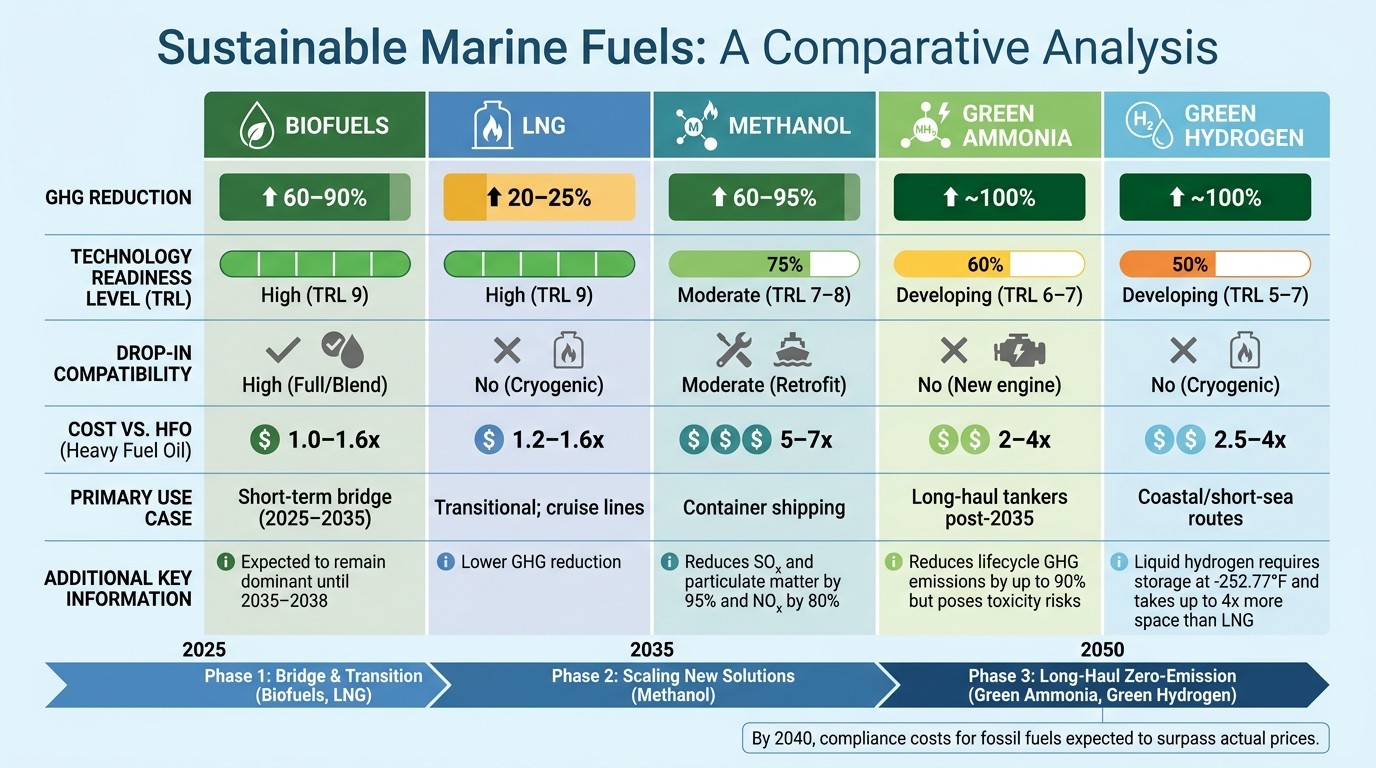
Sustainable Marine Fuels Comparison: GHG Reduction, Costs, and Use Cases
Developing a clear decarbonization roadmap is essential for maritime operations aiming to meet regulatory goals and maintain long-term competitiveness. The International Maritime Organization (IMO) has set ambitious targets: achieving net-zero greenhouse gas (GHG) emissions in international shipping by 2050, with interim goals of at least a 20% reduction by 2030 and 70% by 2040, compared to 2008 levels [2]. Achieving these milestones requires strategic planning across areas like fuel selection, infrastructure upgrades, and operational electrification. By building on climate risk assessments, this roadmap prioritizes emissions reductions while improving fuel adaptability.
Setting Greenhouse Gas Reduction Targets
Once risks are assessed, the next step is setting clear emissions reduction targets that align with a broader climate resilience strategy. Start by creating a detailed emissions baseline covering Scope 1, 2, and 3 emissions across all operations, including ocean-going vessels, harbor craft, cargo handling equipment, drayage trucks, and rail systems [2]. Use established methodologies like the GHG Protocol or WPCAP to ensure consistency and qualify for federal funding opportunities.
Align these targets with the IMO's 2023 Revised GHG Strategy, which includes checkpoints for 2030 and 2040 [2]. For port facilities, factor in tenant emissions by embedding zero-emission requirements into lease agreements. Tailor fuel and technology goals to the specific needs of your fleet - methanol may work well for container ships, while ammonia suits long-haul tankers [2].
By 2040, compliance costs for fossil fuels are expected to surpass their actual prices, making alternative fuels more cost-effective [9]. Additionally, many states are adopting California-inspired regulations, such as the CARB At-Berth Regulation and Advanced Clean Fleets Rule, which require zero-emission drayage trucks by 2035 [2].
Comparing Sustainable Marine Fuels (SMFs)
Choosing the right sustainable marine fuel requires evaluating factors like total cost of ownership, lifecycle emissions, infrastructure compatibility, and safety. A well-to-wake analysis can provide a comprehensive view of lifecycle emissions [10]. Energy density is another consideration - liquid hydrogen, for example, requires storage at -252.77°F and takes up to four times more space than LNG [10].
Fuel Type | GHG Reduction | Technology Readiness | Drop-In Compatibility | Cost vs. HFO | Use Case |
|---|---|---|---|---|---|
Biofuels | 60–90% | High (TRL 9) | High (Full/Blend) | 1.0–1.6x | Short-term bridge (2025–2035) [8] |
LNG | 20–25% | High (TRL 9) | No (Cryogenic) | 1.2–1.6x | |
Methanol | 60–95% | Moderate (TRL 7–8) | Moderate (Retrofit) | 5–7x | |
Green Ammonia | ~100% | Developing (TRL 6–7) | No (New engine) | 2–4x | |
Green Hydrogen | ~100% | Developing (TRL 5–7) | No (Cryogenic) | 2.5–4x | Coastal/short-sea routes [8] |
Biofuels are likely to remain dominant until at least 2035–2038 due to their compatibility with existing infrastructure, while green ammonia and e-methanol are expected to gain traction for deep-sea operations post-2035 [8][9]. Methanol offers additional benefits, such as reducing SOₓ and particulate matter by 95% and NOₓ by 80% [10]. Green ammonia, while capable of reducing lifecycle GHG emissions by up to 90%, poses toxicity risks to humans and aquatic life, necessitating strict handling protocols [10].
To avoid being locked into a single fuel type, design bunkering infrastructure that supports multiple fuel options as technologies evolve [2]. Additionally, ensure biofuel procurement includes a Proof of Sustainability (PoS) to meet stricter lifecycle accounting standards [9].
Once fuel strategies are optimized, the focus can shift to electrifying operations both onboard and at shore.
Electrifying Port and Vessel Operations
Electrification plays a central role in meeting decarbonization goals. Installing shore power at berths can eliminate auxiliary engine emissions during docking, with a single installation at a high-traffic berth cutting 1,000 to 3,000 tons of CO₂e annually [2]. Replace diesel-powered cargo handling equipment, drayage trucks, and yard tractors with battery-electric alternatives [11].
Early collaboration with utilities is crucial to conduct grid impact assessments and secure interconnections, as environmental reviews and approvals can take 12–18 months [11]. Battery energy storage systems (BESS) and on-site renewable energy sources like solar, wave, or tidal power can further reduce reliance on the grid and enhance resilience [11].
In 2023, the top 25 U.S. container ports, which handled over 39 million TEUs, saw 76% of their volume come from ports committed to net-zero emissions by 2050 [11]. The EPA Clean Ports Program offers $3 billion in grants for zero-emission port equipment and infrastructure, covering up to 100% of eligible costs [2][11]. Combining federal grants with state incentives and lease financing can help minimize upfront expenditures [2].
Focus on high-traffic berths first to maximize emissions reductions and improve community health. Include zero-emission equipment requirements in terminal leases to address tenant-controlled emissions [2]. Establishing dedicated electrification task forces - comprising terminal operators, labor unions, and utilities - can help resolve conflicts and align procurement timelines [11].
Integrating Renewable Energy and Water Management Solutions
Expanding on existing electrification goals, the integration of renewable energy and advanced water management systems enhances operational stability and addresses climate challenges. Maritime facilities, with their expansive flat surfaces, are perfectly suited for on-site solar installations. These renewable energy and water strategies not only fortify resilience against climate risks but also help reduce operational costs.
Planning for Renewable Energy Integration
On-site solar power can significantly reduce daytime energy consumption for equipment like cranes and rubber-tired gantry (RTG) cranes. Terminal rooftops, for example, provide excellent solar output potential and offer relatively quick financial returns. However, structural reinforcements may be necessary to support the added weight of solar panels. In areas with limited space, floating photovoltaic (PV) systems present another viable option. These systems benefit from the cooling effect of water, which boosts efficiency, and they also help reduce water evaporation from basins.
Vessels can also adopt solar technology by installing panels on superstructures and refrigerated container roofs. These additions can lower standby energy demands for systems such as HVAC and lighting, effectively extending battery-electric operation during harbor activities. Similarly, container-top PV modules provide flexibility for modular deployment, though their performance may be impacted by salt buildup and shading.
Hybrid microgrids, combining solar power, battery energy storage systems (BESS), and adjustable loads, offer a reliable solution for maintaining operations during grid disruptions. These "islandable" systems can also support demand response strategies, allowing energy-intensive tasks - like pre-cooling refrigerated containers or heavy container handling - to align with peak solar production. This approach maximizes self-consumption of renewable energy. To begin, conduct feasibility studies, including site surveys, solar irradiance analysis, and energy audits, and coordinate early with utility providers for grid connections. Funding strategies used for electrification can also apply here. Start small, such as testing solar on one terminal roof or a few containers, before scaling up to full deployment [12][2].
Implementing Water Conservation Technologies
In tandem with renewable energy, advanced water management systems address issues like water scarcity and saltwater intrusion. Desalination has become a cornerstone of maritime water strategies, with modern systems incorporating high-efficiency pumps and energy-recovery devices to minimize energy use. Cutting-edge brine management techniques, such as Minimal Liquid Discharge (MLD) and Zero-Liquid-Discharge (ZLD) systems, enable the recovery of valuable resources like salts and magnesium.
The industry is also transitioning from traditional thermal desalination methods to membrane-based technologies like Seawater Reverse Osmosis (SWRO). These systems consume less energy while delivering higher-quality water. Floating solar installations can further enhance port operations by generating renewable energy and reducing water evaporation. Additionally, it’s crucial to evaluate infrastructure vulnerabilities related to changing precipitation patterns and saltwater intrusion for long-term resilience. Designing desalination plants with flexible operation to adapt to grids reliant on intermittent renewables and incorporating robust pretreatment systems to protect membranes in harsh marine environments are essential considerations [13][2].
Strengthening Infrastructure to Withstand Climate Impacts
Maritime infrastructure needs substantial upgrades to endure the growing challenges posed by climate change. Rising sea levels and more frequent heavy rainfall events are already leaving their mark; in fact, the heaviest 1% of rainfall events have increased across every U.S. region except Hawaii. California, for instance, faces significant risks, with over 20 power-generating facilities vulnerable to sea level rise and storm surges [3]. These upgrades, alongside efforts in renewable energy and water systems, form a comprehensive strategy to build resilient infrastructure.
Flood-Proofing Critical Structures
Protecting coastal facilities from flooding requires a multi-faceted approach that combines physical upgrades with natural defenses. Key measures include elevating critical assets, such as substations, generators, and control systems, and incrementally raising dock levels to maintain operational efficiency [18]. As Andy Raichle, Executive Vice President of Marine Engineering and Climate Resilience at Bowman, puts it, "Resiliency is fundamentally about the ability to recover from adversity, and we are often tasked with determining the 'right' level of protection" [18].
Natural infrastructure plays a complementary role and offers an economical solution for flood protection. The U.S. government has earmarked $1.467 billion for "Climate-Ready Coasts" initiatives, funding projects like habitat restoration and coastal zone management to act as natural barriers against flooding and storm surges [14]. These efforts also include nature-based stormwater systems, which work alongside physical protections such as flood barriers for energy transmission lines and fuel storage facilities [3][14]. It’s also worth noting that access roads and rail lines serving ports are typically more vulnerable to flooding than the ports themselves, emphasizing the need for a holistic approach [1].
In addition to flood-proofing, modernizing fuel infrastructure is an essential step in supporting cleaner energy transitions.
Building Bunkering Facilities for New Fuels
Adapting infrastructure to accommodate sustainable fuels is vital for achieving the 2023 IMO GHG Strategy's goal of 5–10% sustainable fuel use by 2030 [15]. Fuel-agnostic bunkering facilities should be designed for alternatives such as green methanol, ammonia, and hydrogen, ensuring flexibility as the market evolves.
Handling fuels like ammonia requires rigorous safety protocols, including the use of ISO 5771:2024-compliant rubber hoses, drybreak couplings, and insulation flanges [16]. Before construction, vulnerability assessments should be conducted to address potential impacts from sea level rise and storm surges. This may involve adjustments such as raising site elevations or relocating facilities entirely. Close coordination with the USCG, local fire marshals, and port authorities is crucial to ensuring compliance with the IMO's IGF Code and local safety regulations [2][16].
To offset high capital costs, programs like the EPA's Clean Ports Program offer $3 billion in grants for zero-emission port equipment and infrastructure, which can be paired with state incentives [2]. These upgrades not only advance decarbonization efforts but also strengthen the overall resilience of maritime operations.
Engaging Stakeholders to Drive Collaboration and Innovation
Planning for climate-ready infrastructure cannot happen in isolation. Beyond technical strategies like renewable energy integration, water conservation, and infrastructure upgrades, collaboration with stakeholders is key. Maritime and logistics companies must work with government agencies, community groups, and private sector partners to develop well-rounded solutions. This cooperative approach not only ensures technical adaptations are implemented effectively but also promotes fairness in outcomes.
"The process of working together to understand the vulnerabilities and the relationships between the vulnerabilities made reaching agreement much easier when determining the actions to take to increase resilience." - Lindy Lowe, Program Manager of the Adapting to Rising Tides Program [22]
Building Multi-Stakeholder Collaboration
Collaboration works best when it’s organized and inclusive. A three-step process can make this happen: start with broad community surveys to gather public input, follow up with neighborhood workshops that offer childcare and translation services, and form a stakeholder advisory committee with real decision-making power [21]. One example of this approach is the San Francisco Bay Conservation and Development Commission's Adapting to Rising Tides project, which ran from 2010 to 2014. This initiative brought together groups like the Port of Oakland, East Bay Municipal Utilities District, and local residents. Activities such as field trips to explore the geographic ties between assets led to actionable outcomes, like Oakland International Airport’s flood risk reduction proposals [19].
In February 2026, a Mid-Atlantic coastal city of 28,000 residents adopted a resilience strategy with help from Council Fire consultants. This effort included an 18-member advisory committee featuring local community groups and achieved a 22% survey response rate. Through this collaboration, they identified a significant risk: flooding paired with contamination from a nearby Superfund site. The resulting plan, adopted unanimously, secured $14.7 million in federal and state grants within 18 months [21].
This structured approach doesn’t just tackle immediate challenges - it also sets the stage for long-term workforce and community resilience.
Developing Workforce and Community Resilience
Communities near industrial areas often bear the brunt of climate impacts while lacking the political power to advocate for change [20]. To address this, maritime companies should compensate local experts and empower community leaders - such as faith leaders and block captains - to act as trusted liaisons [20]. In the Mid-Atlantic city project, community hubs were set up at a local church and community center. These hubs were equipped with backup power and cooling systems, providing safe spaces during extreme weather events [21]. Such initiatives strengthen the connection between local communities and broader climate infrastructure efforts.
Transparency is another critical element. Publishing real-time air quality data from neighborhoods near ports and giving community representatives meaningful decision-making roles can build trust and demonstrate a commitment to fairness [2]. Additionally, FEMA estimates that every $1 spent on hazard mitigation saves $6 in disaster costs, making these efforts both socially responsible and financially sound [20]. Beyond risk reduction, resilience projects also create jobs in areas like green infrastructure, weatherization, and renewable energy maintenance, helping to diversify local economies and enhance community capacity [20].
Conclusion
Developing climate-ready energy and water infrastructure is no longer optional - it's a critical step toward maintaining competitive strength. Maritime and logistics companies, responsible for managing over 80% of global goods circulation [4], face mounting challenges from rising sea levels, extreme weather events, and stricter regulations like the EU Emissions Trading System and California's At-Berth rules [2]. Investing in resilience today ensures the continued flow of vessel traffic tomorrow.
A piecemeal approach won't suffice. Instead, adopting a systems-based strategy, such as the 4R framework - Reliability, Redundancy, Robustness, and Recoverability [17] - allows for a more integrated and effective response to operational and supply chain vulnerabilities. Practical steps include performing a Scope 1–3 emissions inventory, fortifying key assets like electrical substations, and installing shore power at high-traffic berths, which can slash up to 3,000 tons of CO₂e annually [2]. These initiatives also open doors to federal funding opportunities, including the EPA's $3 billion Clean Ports Program [2].
"Adapting ports to climate change will need to happen incrementally. The nature of the ship-to-shore interaction limits how much upland facilities can be elevated without making stevedoring inefficient", - Andy Raichle, Executive Vice President of Marine Engineering and Climate Resiliency at Bowman [18].
Incremental upgrades, such as elevating critical infrastructure and creating adaptable bunkering facilities for alternative fuels like green methanol, ammonia, and hydrogen, are essential for meeting shifting market demands [2].
The financial stakes highlight the urgency. Global investment requirements for port adaptation are projected to range between $223 billion and $768 billion by 2050 [4]. At the same time, resilience planning supports broader decarbonization goals, aligning with the International Maritime Organization's aim to achieve net-zero emissions by around 2050 [2].
To translate these strategies into action, companies should prioritize tools like LiDAR surveys to pinpoint vulnerabilities, foster structured collaboration with stakeholders, and capitalize on federal and state funding for critical upgrades. By building climate-ready infrastructure, ports can safeguard their throughput, minimize risks, and position themselves for sustained success in an increasingly unpredictable world.
FAQs
What should I assess first to find my highest climate risks?
To begin addressing climate change challenges, take a close look at your natural and operational vulnerabilities. Some of the major risks to consider include flooding caused by heavy rainfall, damage from rising sea levels, and disruptions linked to hurricanes and heat waves. Evaluate how these climate-related threats could affect your infrastructure and daily operations. By identifying and prioritizing the most pressing risks tied to your location and business activities, you can concentrate your efforts where they are needed most.
How do I choose a marine fuel without locking into one option?
To steer clear of over-reliance on a single marine fuel, adopting a flexible, multi-fuel strategy is key. This approach includes investing in retrofitting vessels to accommodate low-carbon or alternative fuel options, ensuring adaptability in a changing energy landscape. Keeping up with advancements in technology and regulations - such as those outlined by the International Maritime Organization (IMO) - is essential to meet new standards as they emerge. Additionally, securing funding for long-term initiatives can bolster efforts to integrate renewable energy solutions while enhancing operational adaptability.
Where can I find U.S. funding for port electrification and resilience?
The U.S. government is offering funding opportunities to modernize port infrastructure and reduce emissions. Programs like the EPA's Clean Ports Program allocate nearly $3 billion in grants to support zero-emission projects, including port electrification. Similarly, the Department of Transportation's Port Infrastructure Development Program backs efforts such as electrification and the integration of micro-grids. These initiatives aim to strengthen port operations while promoting environmentally friendly practices.
Related Blog Posts
Ports, Policy, and Planet: How Maritime Leaders Can Future-Proof Infrastructure
How to Build a Climate Resilience Plan for Maritime & Logistics Companies
How to Integrate Climate Risk into Infrastructure Planning for Maritime & Logistics Companies
How to Design Coastal Resilience & Flood Mitigation for Maritime & Logistics Companies
Latest Articles
©2025

Narrative Change and Power Building: The Missing Half of Advocacy
Narrative change is the process of disrupting dominant narratives that normalize inequity and advancing new narratives from historically marginalized communities.

Funding Resilience Without Federal Grants
BRIC is unreliable and FEMA is shrinking. Here's how cities fund climate resilience with dedicated revenue, blended finance, and a coordinating authority.

The ESG Blind Spot: How AI Is Finding Risks in Companies Nobody Else Is Watching
Norway's sovereign wealth fund uses AI to screen 7,200 portfolio companies for forced labor and corruption within 24 hours. The real story is the emerging-market coverage gap that traditional ESG data vendors miss — and what it means for any company with a global supply chain.
Narrative Change and Power Building: The Missing Half of Advocacy
Narrative change is the process of disrupting dominant narratives that normalize inequity and advancing new narratives from historically marginalized communities.
Funding Resilience Without Federal Grants
BRIC is unreliable and FEMA is shrinking. Here's how cities fund climate resilience with dedicated revenue, blended finance, and a coordinating authority.
The ESG Blind Spot: How AI Is Finding Risks in Companies Nobody Else Is Watching
Norway's sovereign wealth fund uses AI to screen 7,200 portfolio companies for forced labor and corruption within 24 hours. The real story is the emerging-market coverage gap that traditional ESG data vendors miss — and what it means for any company with a global supply chain.
FAQ
01
What does it really mean to “redefine profit”?
02
What makes Council Fire different?
03
Who does Council Fire work with?
04
What does working with Council Fire actually look like?
05
How does Council Fire help organizations turn big goals into action?
06
How does Council Fire define and measure success?
Apr 24, 2026
How to Build a Climate-Ready Energy & Water Infrastructure Plan for Maritime & Logistics Companies
Sustainability Strategy
In This Article
Ports must redesign energy and water systems now to survive rising seas, stricter regulations, and extreme weather.
How to Build a Climate-Ready Energy & Water Infrastructure Plan for Maritime & Logistics Companies
Maritime and logistics companies face mounting risks from climate change, including rising sea levels, extreme weather, and regulatory pressures. Here's how to future-proof your energy and water infrastructure:
Assess Risks: Map facilities against climate projections to identify vulnerabilities, including flooding, drought, and heat stress.
Strengthen Infrastructure: Protect critical assets with flood barriers, elevated structures, and resilient designs.
Decarbonize Operations: Transition to low-carbon fuels like methanol and green ammonia, and electrify port equipment.
Adopt Renewable Energy: Install solar panels on terminals and vessels, and explore hybrid microgrids for energy resilience.
Enhance Water Management: Use desalination and water conservation technologies to address water scarcity and saltwater intrusion.
Collaborate with Stakeholders: Work with communities, regulators, and industry groups to align efforts and secure funding.
Key Stats:
Sea levels projected to rise 1–4 feet by 2100.
$223–$768 billion needed globally for port adaptation by 2050.
EPA offers $3 billion in grants for zero-emission port equipment.
Port Resilience Crisis: Can Ports Keep Up with Extreme Weather?
Assessing Climate Risks to Energy and Water Infrastructure
To pinpoint vulnerabilities, conduct asset-level analysis by mapping facilities - such as port terminals, warehouses, pipelines, and water treatment plants - against hazard projections specific to their locations over the next 30 years [5].
This assessment should cover both acute hazards (like hurricanes, coastal flooding, and extreme heat) and chronic risks (such as sea level rise, water stress, and ocean acidification) [5]. Risk is a combination of the likelihood of an event and the severity of its impact [6]. Once risks are clearly outlined, you can delve deeper into evaluating vulnerabilities.
Conducting Vulnerability Assessments
Start by defining the scope of your assessment. Include key facilities, supply chain nodes, offices, warehouses, and critical supplier sites. Then, overlay this information with hazard data from tools like the NOAA Climate Explorer, the IPCC Interactive Atlas, and WRI Aqueduct [5].
Frameworks such as TCFD and ISSB can guide you in evaluating risks across three timeframes: short-term (1–3 years), medium-term (3–10 years), and long-term (10–30+ years) [5]. To account for varying climate futures, use at least two scenarios: an "Orderly Transition" (1.5°C warming) and a "Hot House World" (3°C+ warming) [5].
For each asset, examine two factors:
Sensitivity: How susceptible the asset is to damage.
Adaptive Capacity: The asset’s ability to adjust or recover from disruptions [6].
For example, a coastal fuel storage facility lacking backup power and flood barriers would rank high in sensitivity and low in adaptive capacity. Use a 3x3 risk matrix to map asset-hazard pairs based on probability and impact. Document these risks in a register, detailing the type of hazard, scenario, likelihood, impact, and priority [5][6]. This structured approach helps set the stage for evaluating broader supply chain vulnerabilities.
Analyzing Supply Chain Resilience
Assess both upstream and downstream risks to identify potential cascading failures across interconnected sectors [5][6]. For instance, rail lines critical for transporting oil and coal often run through low-lying areas, making them particularly prone to flooding [3].
Port management organizations can leverage the Ports Resilience Index to perform self-assessments. This tool helps identify baseline disaster preparedness strengths and weaknesses, providing a foundation for tracking progress toward resilience goals [7]. When evaluating water infrastructure, consider backup supply options and conservation technologies [6].
For financial modeling, use ranges instead of fixed estimates to evaluate potential revenue loss, asset damage, and insurance costs under different climate scenarios [5]. Comprehensive mapping of these risks allows for targeted adaptation strategies, including decarbonizing maritime operations and incorporating renewable energy solutions into your infrastructure plans.
Decarbonizing Maritime Operations Through Planning
Sustainable Marine Fuels Comparison: GHG Reduction, Costs, and Use Cases
Developing a clear decarbonization roadmap is essential for maritime operations aiming to meet regulatory goals and maintain long-term competitiveness. The International Maritime Organization (IMO) has set ambitious targets: achieving net-zero greenhouse gas (GHG) emissions in international shipping by 2050, with interim goals of at least a 20% reduction by 2030 and 70% by 2040, compared to 2008 levels [2]. Achieving these milestones requires strategic planning across areas like fuel selection, infrastructure upgrades, and operational electrification. By building on climate risk assessments, this roadmap prioritizes emissions reductions while improving fuel adaptability.
Setting Greenhouse Gas Reduction Targets
Once risks are assessed, the next step is setting clear emissions reduction targets that align with a broader climate resilience strategy. Start by creating a detailed emissions baseline covering Scope 1, 2, and 3 emissions across all operations, including ocean-going vessels, harbor craft, cargo handling equipment, drayage trucks, and rail systems [2]. Use established methodologies like the GHG Protocol or WPCAP to ensure consistency and qualify for federal funding opportunities.
Align these targets with the IMO's 2023 Revised GHG Strategy, which includes checkpoints for 2030 and 2040 [2]. For port facilities, factor in tenant emissions by embedding zero-emission requirements into lease agreements. Tailor fuel and technology goals to the specific needs of your fleet - methanol may work well for container ships, while ammonia suits long-haul tankers [2].
By 2040, compliance costs for fossil fuels are expected to surpass their actual prices, making alternative fuels more cost-effective [9]. Additionally, many states are adopting California-inspired regulations, such as the CARB At-Berth Regulation and Advanced Clean Fleets Rule, which require zero-emission drayage trucks by 2035 [2].
Comparing Sustainable Marine Fuels (SMFs)
Choosing the right sustainable marine fuel requires evaluating factors like total cost of ownership, lifecycle emissions, infrastructure compatibility, and safety. A well-to-wake analysis can provide a comprehensive view of lifecycle emissions [10]. Energy density is another consideration - liquid hydrogen, for example, requires storage at -252.77°F and takes up to four times more space than LNG [10].
Fuel Type | GHG Reduction | Technology Readiness | Drop-In Compatibility | Cost vs. HFO | Use Case |
|---|---|---|---|---|---|
Biofuels | 60–90% | High (TRL 9) | High (Full/Blend) | 1.0–1.6x | Short-term bridge (2025–2035) [8] |
LNG | 20–25% | High (TRL 9) | No (Cryogenic) | 1.2–1.6x | |
Methanol | 60–95% | Moderate (TRL 7–8) | Moderate (Retrofit) | 5–7x | |
Green Ammonia | ~100% | Developing (TRL 6–7) | No (New engine) | 2–4x | |
Green Hydrogen | ~100% | Developing (TRL 5–7) | No (Cryogenic) | 2.5–4x | Coastal/short-sea routes [8] |
Biofuels are likely to remain dominant until at least 2035–2038 due to their compatibility with existing infrastructure, while green ammonia and e-methanol are expected to gain traction for deep-sea operations post-2035 [8][9]. Methanol offers additional benefits, such as reducing SOₓ and particulate matter by 95% and NOₓ by 80% [10]. Green ammonia, while capable of reducing lifecycle GHG emissions by up to 90%, poses toxicity risks to humans and aquatic life, necessitating strict handling protocols [10].
To avoid being locked into a single fuel type, design bunkering infrastructure that supports multiple fuel options as technologies evolve [2]. Additionally, ensure biofuel procurement includes a Proof of Sustainability (PoS) to meet stricter lifecycle accounting standards [9].
Once fuel strategies are optimized, the focus can shift to electrifying operations both onboard and at shore.
Electrifying Port and Vessel Operations
Electrification plays a central role in meeting decarbonization goals. Installing shore power at berths can eliminate auxiliary engine emissions during docking, with a single installation at a high-traffic berth cutting 1,000 to 3,000 tons of CO₂e annually [2]. Replace diesel-powered cargo handling equipment, drayage trucks, and yard tractors with battery-electric alternatives [11].
Early collaboration with utilities is crucial to conduct grid impact assessments and secure interconnections, as environmental reviews and approvals can take 12–18 months [11]. Battery energy storage systems (BESS) and on-site renewable energy sources like solar, wave, or tidal power can further reduce reliance on the grid and enhance resilience [11].
In 2023, the top 25 U.S. container ports, which handled over 39 million TEUs, saw 76% of their volume come from ports committed to net-zero emissions by 2050 [11]. The EPA Clean Ports Program offers $3 billion in grants for zero-emission port equipment and infrastructure, covering up to 100% of eligible costs [2][11]. Combining federal grants with state incentives and lease financing can help minimize upfront expenditures [2].
Focus on high-traffic berths first to maximize emissions reductions and improve community health. Include zero-emission equipment requirements in terminal leases to address tenant-controlled emissions [2]. Establishing dedicated electrification task forces - comprising terminal operators, labor unions, and utilities - can help resolve conflicts and align procurement timelines [11].
Integrating Renewable Energy and Water Management Solutions
Expanding on existing electrification goals, the integration of renewable energy and advanced water management systems enhances operational stability and addresses climate challenges. Maritime facilities, with their expansive flat surfaces, are perfectly suited for on-site solar installations. These renewable energy and water strategies not only fortify resilience against climate risks but also help reduce operational costs.
Planning for Renewable Energy Integration
On-site solar power can significantly reduce daytime energy consumption for equipment like cranes and rubber-tired gantry (RTG) cranes. Terminal rooftops, for example, provide excellent solar output potential and offer relatively quick financial returns. However, structural reinforcements may be necessary to support the added weight of solar panels. In areas with limited space, floating photovoltaic (PV) systems present another viable option. These systems benefit from the cooling effect of water, which boosts efficiency, and they also help reduce water evaporation from basins.
Vessels can also adopt solar technology by installing panels on superstructures and refrigerated container roofs. These additions can lower standby energy demands for systems such as HVAC and lighting, effectively extending battery-electric operation during harbor activities. Similarly, container-top PV modules provide flexibility for modular deployment, though their performance may be impacted by salt buildup and shading.
Hybrid microgrids, combining solar power, battery energy storage systems (BESS), and adjustable loads, offer a reliable solution for maintaining operations during grid disruptions. These "islandable" systems can also support demand response strategies, allowing energy-intensive tasks - like pre-cooling refrigerated containers or heavy container handling - to align with peak solar production. This approach maximizes self-consumption of renewable energy. To begin, conduct feasibility studies, including site surveys, solar irradiance analysis, and energy audits, and coordinate early with utility providers for grid connections. Funding strategies used for electrification can also apply here. Start small, such as testing solar on one terminal roof or a few containers, before scaling up to full deployment [12][2].
Implementing Water Conservation Technologies
In tandem with renewable energy, advanced water management systems address issues like water scarcity and saltwater intrusion. Desalination has become a cornerstone of maritime water strategies, with modern systems incorporating high-efficiency pumps and energy-recovery devices to minimize energy use. Cutting-edge brine management techniques, such as Minimal Liquid Discharge (MLD) and Zero-Liquid-Discharge (ZLD) systems, enable the recovery of valuable resources like salts and magnesium.
The industry is also transitioning from traditional thermal desalination methods to membrane-based technologies like Seawater Reverse Osmosis (SWRO). These systems consume less energy while delivering higher-quality water. Floating solar installations can further enhance port operations by generating renewable energy and reducing water evaporation. Additionally, it’s crucial to evaluate infrastructure vulnerabilities related to changing precipitation patterns and saltwater intrusion for long-term resilience. Designing desalination plants with flexible operation to adapt to grids reliant on intermittent renewables and incorporating robust pretreatment systems to protect membranes in harsh marine environments are essential considerations [13][2].
Strengthening Infrastructure to Withstand Climate Impacts
Maritime infrastructure needs substantial upgrades to endure the growing challenges posed by climate change. Rising sea levels and more frequent heavy rainfall events are already leaving their mark; in fact, the heaviest 1% of rainfall events have increased across every U.S. region except Hawaii. California, for instance, faces significant risks, with over 20 power-generating facilities vulnerable to sea level rise and storm surges [3]. These upgrades, alongside efforts in renewable energy and water systems, form a comprehensive strategy to build resilient infrastructure.
Flood-Proofing Critical Structures
Protecting coastal facilities from flooding requires a multi-faceted approach that combines physical upgrades with natural defenses. Key measures include elevating critical assets, such as substations, generators, and control systems, and incrementally raising dock levels to maintain operational efficiency [18]. As Andy Raichle, Executive Vice President of Marine Engineering and Climate Resilience at Bowman, puts it, "Resiliency is fundamentally about the ability to recover from adversity, and we are often tasked with determining the 'right' level of protection" [18].
Natural infrastructure plays a complementary role and offers an economical solution for flood protection. The U.S. government has earmarked $1.467 billion for "Climate-Ready Coasts" initiatives, funding projects like habitat restoration and coastal zone management to act as natural barriers against flooding and storm surges [14]. These efforts also include nature-based stormwater systems, which work alongside physical protections such as flood barriers for energy transmission lines and fuel storage facilities [3][14]. It’s also worth noting that access roads and rail lines serving ports are typically more vulnerable to flooding than the ports themselves, emphasizing the need for a holistic approach [1].
In addition to flood-proofing, modernizing fuel infrastructure is an essential step in supporting cleaner energy transitions.
Building Bunkering Facilities for New Fuels
Adapting infrastructure to accommodate sustainable fuels is vital for achieving the 2023 IMO GHG Strategy's goal of 5–10% sustainable fuel use by 2030 [15]. Fuel-agnostic bunkering facilities should be designed for alternatives such as green methanol, ammonia, and hydrogen, ensuring flexibility as the market evolves.
Handling fuels like ammonia requires rigorous safety protocols, including the use of ISO 5771:2024-compliant rubber hoses, drybreak couplings, and insulation flanges [16]. Before construction, vulnerability assessments should be conducted to address potential impacts from sea level rise and storm surges. This may involve adjustments such as raising site elevations or relocating facilities entirely. Close coordination with the USCG, local fire marshals, and port authorities is crucial to ensuring compliance with the IMO's IGF Code and local safety regulations [2][16].
To offset high capital costs, programs like the EPA's Clean Ports Program offer $3 billion in grants for zero-emission port equipment and infrastructure, which can be paired with state incentives [2]. These upgrades not only advance decarbonization efforts but also strengthen the overall resilience of maritime operations.
Engaging Stakeholders to Drive Collaboration and Innovation
Planning for climate-ready infrastructure cannot happen in isolation. Beyond technical strategies like renewable energy integration, water conservation, and infrastructure upgrades, collaboration with stakeholders is key. Maritime and logistics companies must work with government agencies, community groups, and private sector partners to develop well-rounded solutions. This cooperative approach not only ensures technical adaptations are implemented effectively but also promotes fairness in outcomes.
"The process of working together to understand the vulnerabilities and the relationships between the vulnerabilities made reaching agreement much easier when determining the actions to take to increase resilience." - Lindy Lowe, Program Manager of the Adapting to Rising Tides Program [22]
Building Multi-Stakeholder Collaboration
Collaboration works best when it’s organized and inclusive. A three-step process can make this happen: start with broad community surveys to gather public input, follow up with neighborhood workshops that offer childcare and translation services, and form a stakeholder advisory committee with real decision-making power [21]. One example of this approach is the San Francisco Bay Conservation and Development Commission's Adapting to Rising Tides project, which ran from 2010 to 2014. This initiative brought together groups like the Port of Oakland, East Bay Municipal Utilities District, and local residents. Activities such as field trips to explore the geographic ties between assets led to actionable outcomes, like Oakland International Airport’s flood risk reduction proposals [19].
In February 2026, a Mid-Atlantic coastal city of 28,000 residents adopted a resilience strategy with help from Council Fire consultants. This effort included an 18-member advisory committee featuring local community groups and achieved a 22% survey response rate. Through this collaboration, they identified a significant risk: flooding paired with contamination from a nearby Superfund site. The resulting plan, adopted unanimously, secured $14.7 million in federal and state grants within 18 months [21].
This structured approach doesn’t just tackle immediate challenges - it also sets the stage for long-term workforce and community resilience.
Developing Workforce and Community Resilience
Communities near industrial areas often bear the brunt of climate impacts while lacking the political power to advocate for change [20]. To address this, maritime companies should compensate local experts and empower community leaders - such as faith leaders and block captains - to act as trusted liaisons [20]. In the Mid-Atlantic city project, community hubs were set up at a local church and community center. These hubs were equipped with backup power and cooling systems, providing safe spaces during extreme weather events [21]. Such initiatives strengthen the connection between local communities and broader climate infrastructure efforts.
Transparency is another critical element. Publishing real-time air quality data from neighborhoods near ports and giving community representatives meaningful decision-making roles can build trust and demonstrate a commitment to fairness [2]. Additionally, FEMA estimates that every $1 spent on hazard mitigation saves $6 in disaster costs, making these efforts both socially responsible and financially sound [20]. Beyond risk reduction, resilience projects also create jobs in areas like green infrastructure, weatherization, and renewable energy maintenance, helping to diversify local economies and enhance community capacity [20].
Conclusion
Developing climate-ready energy and water infrastructure is no longer optional - it's a critical step toward maintaining competitive strength. Maritime and logistics companies, responsible for managing over 80% of global goods circulation [4], face mounting challenges from rising sea levels, extreme weather events, and stricter regulations like the EU Emissions Trading System and California's At-Berth rules [2]. Investing in resilience today ensures the continued flow of vessel traffic tomorrow.
A piecemeal approach won't suffice. Instead, adopting a systems-based strategy, such as the 4R framework - Reliability, Redundancy, Robustness, and Recoverability [17] - allows for a more integrated and effective response to operational and supply chain vulnerabilities. Practical steps include performing a Scope 1–3 emissions inventory, fortifying key assets like electrical substations, and installing shore power at high-traffic berths, which can slash up to 3,000 tons of CO₂e annually [2]. These initiatives also open doors to federal funding opportunities, including the EPA's $3 billion Clean Ports Program [2].
"Adapting ports to climate change will need to happen incrementally. The nature of the ship-to-shore interaction limits how much upland facilities can be elevated without making stevedoring inefficient", - Andy Raichle, Executive Vice President of Marine Engineering and Climate Resiliency at Bowman [18].
Incremental upgrades, such as elevating critical infrastructure and creating adaptable bunkering facilities for alternative fuels like green methanol, ammonia, and hydrogen, are essential for meeting shifting market demands [2].
The financial stakes highlight the urgency. Global investment requirements for port adaptation are projected to range between $223 billion and $768 billion by 2050 [4]. At the same time, resilience planning supports broader decarbonization goals, aligning with the International Maritime Organization's aim to achieve net-zero emissions by around 2050 [2].
To translate these strategies into action, companies should prioritize tools like LiDAR surveys to pinpoint vulnerabilities, foster structured collaboration with stakeholders, and capitalize on federal and state funding for critical upgrades. By building climate-ready infrastructure, ports can safeguard their throughput, minimize risks, and position themselves for sustained success in an increasingly unpredictable world.
FAQs
What should I assess first to find my highest climate risks?
To begin addressing climate change challenges, take a close look at your natural and operational vulnerabilities. Some of the major risks to consider include flooding caused by heavy rainfall, damage from rising sea levels, and disruptions linked to hurricanes and heat waves. Evaluate how these climate-related threats could affect your infrastructure and daily operations. By identifying and prioritizing the most pressing risks tied to your location and business activities, you can concentrate your efforts where they are needed most.
How do I choose a marine fuel without locking into one option?
To steer clear of over-reliance on a single marine fuel, adopting a flexible, multi-fuel strategy is key. This approach includes investing in retrofitting vessels to accommodate low-carbon or alternative fuel options, ensuring adaptability in a changing energy landscape. Keeping up with advancements in technology and regulations - such as those outlined by the International Maritime Organization (IMO) - is essential to meet new standards as they emerge. Additionally, securing funding for long-term initiatives can bolster efforts to integrate renewable energy solutions while enhancing operational adaptability.
Where can I find U.S. funding for port electrification and resilience?
The U.S. government is offering funding opportunities to modernize port infrastructure and reduce emissions. Programs like the EPA's Clean Ports Program allocate nearly $3 billion in grants to support zero-emission projects, including port electrification. Similarly, the Department of Transportation's Port Infrastructure Development Program backs efforts such as electrification and the integration of micro-grids. These initiatives aim to strengthen port operations while promoting environmentally friendly practices.
Related Blog Posts
Ports, Policy, and Planet: How Maritime Leaders Can Future-Proof Infrastructure
How to Build a Climate Resilience Plan for Maritime & Logistics Companies
How to Integrate Climate Risk into Infrastructure Planning for Maritime & Logistics Companies
How to Design Coastal Resilience & Flood Mitigation for Maritime & Logistics Companies
Latest Articles
©2025
Narrative Change and Power Building: The Missing Half of Advocacy
Narrative change is the process of disrupting dominant narratives that normalize inequity and advancing new narratives from historically marginalized communities.
Funding Resilience Without Federal Grants
BRIC is unreliable and FEMA is shrinking. Here's how cities fund climate resilience with dedicated revenue, blended finance, and a coordinating authority.
The ESG Blind Spot: How AI Is Finding Risks in Companies Nobody Else Is Watching
Norway's sovereign wealth fund uses AI to screen 7,200 portfolio companies for forced labor and corruption within 24 hours. The real story is the emerging-market coverage gap that traditional ESG data vendors miss — and what it means for any company with a global supply chain.
FAQ
01
What does it really mean to “redefine profit”?
02
What makes Council Fire different?
03
Who does Council Fire work with?
04
What does working with Council Fire actually look like?
05
How does Council Fire help organizations turn big goals into action?
06
How does Council Fire define and measure success?
Apr 24, 2026
How to Build a Climate-Ready Energy & Water Infrastructure Plan for Maritime & Logistics Companies
Sustainability Strategy
In This Article
Ports must redesign energy and water systems now to survive rising seas, stricter regulations, and extreme weather.
How to Build a Climate-Ready Energy & Water Infrastructure Plan for Maritime & Logistics Companies
Maritime and logistics companies face mounting risks from climate change, including rising sea levels, extreme weather, and regulatory pressures. Here's how to future-proof your energy and water infrastructure:
Assess Risks: Map facilities against climate projections to identify vulnerabilities, including flooding, drought, and heat stress.
Strengthen Infrastructure: Protect critical assets with flood barriers, elevated structures, and resilient designs.
Decarbonize Operations: Transition to low-carbon fuels like methanol and green ammonia, and electrify port equipment.
Adopt Renewable Energy: Install solar panels on terminals and vessels, and explore hybrid microgrids for energy resilience.
Enhance Water Management: Use desalination and water conservation technologies to address water scarcity and saltwater intrusion.
Collaborate with Stakeholders: Work with communities, regulators, and industry groups to align efforts and secure funding.
Key Stats:
Sea levels projected to rise 1–4 feet by 2100.
$223–$768 billion needed globally for port adaptation by 2050.
EPA offers $3 billion in grants for zero-emission port equipment.
Port Resilience Crisis: Can Ports Keep Up with Extreme Weather?
Assessing Climate Risks to Energy and Water Infrastructure
To pinpoint vulnerabilities, conduct asset-level analysis by mapping facilities - such as port terminals, warehouses, pipelines, and water treatment plants - against hazard projections specific to their locations over the next 30 years [5].
This assessment should cover both acute hazards (like hurricanes, coastal flooding, and extreme heat) and chronic risks (such as sea level rise, water stress, and ocean acidification) [5]. Risk is a combination of the likelihood of an event and the severity of its impact [6]. Once risks are clearly outlined, you can delve deeper into evaluating vulnerabilities.
Conducting Vulnerability Assessments
Start by defining the scope of your assessment. Include key facilities, supply chain nodes, offices, warehouses, and critical supplier sites. Then, overlay this information with hazard data from tools like the NOAA Climate Explorer, the IPCC Interactive Atlas, and WRI Aqueduct [5].
Frameworks such as TCFD and ISSB can guide you in evaluating risks across three timeframes: short-term (1–3 years), medium-term (3–10 years), and long-term (10–30+ years) [5]. To account for varying climate futures, use at least two scenarios: an "Orderly Transition" (1.5°C warming) and a "Hot House World" (3°C+ warming) [5].
For each asset, examine two factors:
Sensitivity: How susceptible the asset is to damage.
Adaptive Capacity: The asset’s ability to adjust or recover from disruptions [6].
For example, a coastal fuel storage facility lacking backup power and flood barriers would rank high in sensitivity and low in adaptive capacity. Use a 3x3 risk matrix to map asset-hazard pairs based on probability and impact. Document these risks in a register, detailing the type of hazard, scenario, likelihood, impact, and priority [5][6]. This structured approach helps set the stage for evaluating broader supply chain vulnerabilities.
Analyzing Supply Chain Resilience
Assess both upstream and downstream risks to identify potential cascading failures across interconnected sectors [5][6]. For instance, rail lines critical for transporting oil and coal often run through low-lying areas, making them particularly prone to flooding [3].
Port management organizations can leverage the Ports Resilience Index to perform self-assessments. This tool helps identify baseline disaster preparedness strengths and weaknesses, providing a foundation for tracking progress toward resilience goals [7]. When evaluating water infrastructure, consider backup supply options and conservation technologies [6].
For financial modeling, use ranges instead of fixed estimates to evaluate potential revenue loss, asset damage, and insurance costs under different climate scenarios [5]. Comprehensive mapping of these risks allows for targeted adaptation strategies, including decarbonizing maritime operations and incorporating renewable energy solutions into your infrastructure plans.
Decarbonizing Maritime Operations Through Planning
Sustainable Marine Fuels Comparison: GHG Reduction, Costs, and Use Cases
Developing a clear decarbonization roadmap is essential for maritime operations aiming to meet regulatory goals and maintain long-term competitiveness. The International Maritime Organization (IMO) has set ambitious targets: achieving net-zero greenhouse gas (GHG) emissions in international shipping by 2050, with interim goals of at least a 20% reduction by 2030 and 70% by 2040, compared to 2008 levels [2]. Achieving these milestones requires strategic planning across areas like fuel selection, infrastructure upgrades, and operational electrification. By building on climate risk assessments, this roadmap prioritizes emissions reductions while improving fuel adaptability.
Setting Greenhouse Gas Reduction Targets
Once risks are assessed, the next step is setting clear emissions reduction targets that align with a broader climate resilience strategy. Start by creating a detailed emissions baseline covering Scope 1, 2, and 3 emissions across all operations, including ocean-going vessels, harbor craft, cargo handling equipment, drayage trucks, and rail systems [2]. Use established methodologies like the GHG Protocol or WPCAP to ensure consistency and qualify for federal funding opportunities.
Align these targets with the IMO's 2023 Revised GHG Strategy, which includes checkpoints for 2030 and 2040 [2]. For port facilities, factor in tenant emissions by embedding zero-emission requirements into lease agreements. Tailor fuel and technology goals to the specific needs of your fleet - methanol may work well for container ships, while ammonia suits long-haul tankers [2].
By 2040, compliance costs for fossil fuels are expected to surpass their actual prices, making alternative fuels more cost-effective [9]. Additionally, many states are adopting California-inspired regulations, such as the CARB At-Berth Regulation and Advanced Clean Fleets Rule, which require zero-emission drayage trucks by 2035 [2].
Comparing Sustainable Marine Fuels (SMFs)
Choosing the right sustainable marine fuel requires evaluating factors like total cost of ownership, lifecycle emissions, infrastructure compatibility, and safety. A well-to-wake analysis can provide a comprehensive view of lifecycle emissions [10]. Energy density is another consideration - liquid hydrogen, for example, requires storage at -252.77°F and takes up to four times more space than LNG [10].
Fuel Type | GHG Reduction | Technology Readiness | Drop-In Compatibility | Cost vs. HFO | Use Case |
|---|---|---|---|---|---|
Biofuels | 60–90% | High (TRL 9) | High (Full/Blend) | 1.0–1.6x | Short-term bridge (2025–2035) [8] |
LNG | 20–25% | High (TRL 9) | No (Cryogenic) | 1.2–1.6x | |
Methanol | 60–95% | Moderate (TRL 7–8) | Moderate (Retrofit) | 5–7x | |
Green Ammonia | ~100% | Developing (TRL 6–7) | No (New engine) | 2–4x | |
Green Hydrogen | ~100% | Developing (TRL 5–7) | No (Cryogenic) | 2.5–4x | Coastal/short-sea routes [8] |
Biofuels are likely to remain dominant until at least 2035–2038 due to their compatibility with existing infrastructure, while green ammonia and e-methanol are expected to gain traction for deep-sea operations post-2035 [8][9]. Methanol offers additional benefits, such as reducing SOₓ and particulate matter by 95% and NOₓ by 80% [10]. Green ammonia, while capable of reducing lifecycle GHG emissions by up to 90%, poses toxicity risks to humans and aquatic life, necessitating strict handling protocols [10].
To avoid being locked into a single fuel type, design bunkering infrastructure that supports multiple fuel options as technologies evolve [2]. Additionally, ensure biofuel procurement includes a Proof of Sustainability (PoS) to meet stricter lifecycle accounting standards [9].
Once fuel strategies are optimized, the focus can shift to electrifying operations both onboard and at shore.
Electrifying Port and Vessel Operations
Electrification plays a central role in meeting decarbonization goals. Installing shore power at berths can eliminate auxiliary engine emissions during docking, with a single installation at a high-traffic berth cutting 1,000 to 3,000 tons of CO₂e annually [2]. Replace diesel-powered cargo handling equipment, drayage trucks, and yard tractors with battery-electric alternatives [11].
Early collaboration with utilities is crucial to conduct grid impact assessments and secure interconnections, as environmental reviews and approvals can take 12–18 months [11]. Battery energy storage systems (BESS) and on-site renewable energy sources like solar, wave, or tidal power can further reduce reliance on the grid and enhance resilience [11].
In 2023, the top 25 U.S. container ports, which handled over 39 million TEUs, saw 76% of their volume come from ports committed to net-zero emissions by 2050 [11]. The EPA Clean Ports Program offers $3 billion in grants for zero-emission port equipment and infrastructure, covering up to 100% of eligible costs [2][11]. Combining federal grants with state incentives and lease financing can help minimize upfront expenditures [2].
Focus on high-traffic berths first to maximize emissions reductions and improve community health. Include zero-emission equipment requirements in terminal leases to address tenant-controlled emissions [2]. Establishing dedicated electrification task forces - comprising terminal operators, labor unions, and utilities - can help resolve conflicts and align procurement timelines [11].
Integrating Renewable Energy and Water Management Solutions
Expanding on existing electrification goals, the integration of renewable energy and advanced water management systems enhances operational stability and addresses climate challenges. Maritime facilities, with their expansive flat surfaces, are perfectly suited for on-site solar installations. These renewable energy and water strategies not only fortify resilience against climate risks but also help reduce operational costs.
Planning for Renewable Energy Integration
On-site solar power can significantly reduce daytime energy consumption for equipment like cranes and rubber-tired gantry (RTG) cranes. Terminal rooftops, for example, provide excellent solar output potential and offer relatively quick financial returns. However, structural reinforcements may be necessary to support the added weight of solar panels. In areas with limited space, floating photovoltaic (PV) systems present another viable option. These systems benefit from the cooling effect of water, which boosts efficiency, and they also help reduce water evaporation from basins.
Vessels can also adopt solar technology by installing panels on superstructures and refrigerated container roofs. These additions can lower standby energy demands for systems such as HVAC and lighting, effectively extending battery-electric operation during harbor activities. Similarly, container-top PV modules provide flexibility for modular deployment, though their performance may be impacted by salt buildup and shading.
Hybrid microgrids, combining solar power, battery energy storage systems (BESS), and adjustable loads, offer a reliable solution for maintaining operations during grid disruptions. These "islandable" systems can also support demand response strategies, allowing energy-intensive tasks - like pre-cooling refrigerated containers or heavy container handling - to align with peak solar production. This approach maximizes self-consumption of renewable energy. To begin, conduct feasibility studies, including site surveys, solar irradiance analysis, and energy audits, and coordinate early with utility providers for grid connections. Funding strategies used for electrification can also apply here. Start small, such as testing solar on one terminal roof or a few containers, before scaling up to full deployment [12][2].
Implementing Water Conservation Technologies
In tandem with renewable energy, advanced water management systems address issues like water scarcity and saltwater intrusion. Desalination has become a cornerstone of maritime water strategies, with modern systems incorporating high-efficiency pumps and energy-recovery devices to minimize energy use. Cutting-edge brine management techniques, such as Minimal Liquid Discharge (MLD) and Zero-Liquid-Discharge (ZLD) systems, enable the recovery of valuable resources like salts and magnesium.
The industry is also transitioning from traditional thermal desalination methods to membrane-based technologies like Seawater Reverse Osmosis (SWRO). These systems consume less energy while delivering higher-quality water. Floating solar installations can further enhance port operations by generating renewable energy and reducing water evaporation. Additionally, it’s crucial to evaluate infrastructure vulnerabilities related to changing precipitation patterns and saltwater intrusion for long-term resilience. Designing desalination plants with flexible operation to adapt to grids reliant on intermittent renewables and incorporating robust pretreatment systems to protect membranes in harsh marine environments are essential considerations [13][2].
Strengthening Infrastructure to Withstand Climate Impacts
Maritime infrastructure needs substantial upgrades to endure the growing challenges posed by climate change. Rising sea levels and more frequent heavy rainfall events are already leaving their mark; in fact, the heaviest 1% of rainfall events have increased across every U.S. region except Hawaii. California, for instance, faces significant risks, with over 20 power-generating facilities vulnerable to sea level rise and storm surges [3]. These upgrades, alongside efforts in renewable energy and water systems, form a comprehensive strategy to build resilient infrastructure.
Flood-Proofing Critical Structures
Protecting coastal facilities from flooding requires a multi-faceted approach that combines physical upgrades with natural defenses. Key measures include elevating critical assets, such as substations, generators, and control systems, and incrementally raising dock levels to maintain operational efficiency [18]. As Andy Raichle, Executive Vice President of Marine Engineering and Climate Resilience at Bowman, puts it, "Resiliency is fundamentally about the ability to recover from adversity, and we are often tasked with determining the 'right' level of protection" [18].
Natural infrastructure plays a complementary role and offers an economical solution for flood protection. The U.S. government has earmarked $1.467 billion for "Climate-Ready Coasts" initiatives, funding projects like habitat restoration and coastal zone management to act as natural barriers against flooding and storm surges [14]. These efforts also include nature-based stormwater systems, which work alongside physical protections such as flood barriers for energy transmission lines and fuel storage facilities [3][14]. It’s also worth noting that access roads and rail lines serving ports are typically more vulnerable to flooding than the ports themselves, emphasizing the need for a holistic approach [1].
In addition to flood-proofing, modernizing fuel infrastructure is an essential step in supporting cleaner energy transitions.
Building Bunkering Facilities for New Fuels
Adapting infrastructure to accommodate sustainable fuels is vital for achieving the 2023 IMO GHG Strategy's goal of 5–10% sustainable fuel use by 2030 [15]. Fuel-agnostic bunkering facilities should be designed for alternatives such as green methanol, ammonia, and hydrogen, ensuring flexibility as the market evolves.
Handling fuels like ammonia requires rigorous safety protocols, including the use of ISO 5771:2024-compliant rubber hoses, drybreak couplings, and insulation flanges [16]. Before construction, vulnerability assessments should be conducted to address potential impacts from sea level rise and storm surges. This may involve adjustments such as raising site elevations or relocating facilities entirely. Close coordination with the USCG, local fire marshals, and port authorities is crucial to ensuring compliance with the IMO's IGF Code and local safety regulations [2][16].
To offset high capital costs, programs like the EPA's Clean Ports Program offer $3 billion in grants for zero-emission port equipment and infrastructure, which can be paired with state incentives [2]. These upgrades not only advance decarbonization efforts but also strengthen the overall resilience of maritime operations.
Engaging Stakeholders to Drive Collaboration and Innovation
Planning for climate-ready infrastructure cannot happen in isolation. Beyond technical strategies like renewable energy integration, water conservation, and infrastructure upgrades, collaboration with stakeholders is key. Maritime and logistics companies must work with government agencies, community groups, and private sector partners to develop well-rounded solutions. This cooperative approach not only ensures technical adaptations are implemented effectively but also promotes fairness in outcomes.
"The process of working together to understand the vulnerabilities and the relationships between the vulnerabilities made reaching agreement much easier when determining the actions to take to increase resilience." - Lindy Lowe, Program Manager of the Adapting to Rising Tides Program [22]
Building Multi-Stakeholder Collaboration
Collaboration works best when it’s organized and inclusive. A three-step process can make this happen: start with broad community surveys to gather public input, follow up with neighborhood workshops that offer childcare and translation services, and form a stakeholder advisory committee with real decision-making power [21]. One example of this approach is the San Francisco Bay Conservation and Development Commission's Adapting to Rising Tides project, which ran from 2010 to 2014. This initiative brought together groups like the Port of Oakland, East Bay Municipal Utilities District, and local residents. Activities such as field trips to explore the geographic ties between assets led to actionable outcomes, like Oakland International Airport’s flood risk reduction proposals [19].
In February 2026, a Mid-Atlantic coastal city of 28,000 residents adopted a resilience strategy with help from Council Fire consultants. This effort included an 18-member advisory committee featuring local community groups and achieved a 22% survey response rate. Through this collaboration, they identified a significant risk: flooding paired with contamination from a nearby Superfund site. The resulting plan, adopted unanimously, secured $14.7 million in federal and state grants within 18 months [21].
This structured approach doesn’t just tackle immediate challenges - it also sets the stage for long-term workforce and community resilience.
Developing Workforce and Community Resilience
Communities near industrial areas often bear the brunt of climate impacts while lacking the political power to advocate for change [20]. To address this, maritime companies should compensate local experts and empower community leaders - such as faith leaders and block captains - to act as trusted liaisons [20]. In the Mid-Atlantic city project, community hubs were set up at a local church and community center. These hubs were equipped with backup power and cooling systems, providing safe spaces during extreme weather events [21]. Such initiatives strengthen the connection between local communities and broader climate infrastructure efforts.
Transparency is another critical element. Publishing real-time air quality data from neighborhoods near ports and giving community representatives meaningful decision-making roles can build trust and demonstrate a commitment to fairness [2]. Additionally, FEMA estimates that every $1 spent on hazard mitigation saves $6 in disaster costs, making these efforts both socially responsible and financially sound [20]. Beyond risk reduction, resilience projects also create jobs in areas like green infrastructure, weatherization, and renewable energy maintenance, helping to diversify local economies and enhance community capacity [20].
Conclusion
Developing climate-ready energy and water infrastructure is no longer optional - it's a critical step toward maintaining competitive strength. Maritime and logistics companies, responsible for managing over 80% of global goods circulation [4], face mounting challenges from rising sea levels, extreme weather events, and stricter regulations like the EU Emissions Trading System and California's At-Berth rules [2]. Investing in resilience today ensures the continued flow of vessel traffic tomorrow.
A piecemeal approach won't suffice. Instead, adopting a systems-based strategy, such as the 4R framework - Reliability, Redundancy, Robustness, and Recoverability [17] - allows for a more integrated and effective response to operational and supply chain vulnerabilities. Practical steps include performing a Scope 1–3 emissions inventory, fortifying key assets like electrical substations, and installing shore power at high-traffic berths, which can slash up to 3,000 tons of CO₂e annually [2]. These initiatives also open doors to federal funding opportunities, including the EPA's $3 billion Clean Ports Program [2].
"Adapting ports to climate change will need to happen incrementally. The nature of the ship-to-shore interaction limits how much upland facilities can be elevated without making stevedoring inefficient", - Andy Raichle, Executive Vice President of Marine Engineering and Climate Resiliency at Bowman [18].
Incremental upgrades, such as elevating critical infrastructure and creating adaptable bunkering facilities for alternative fuels like green methanol, ammonia, and hydrogen, are essential for meeting shifting market demands [2].
The financial stakes highlight the urgency. Global investment requirements for port adaptation are projected to range between $223 billion and $768 billion by 2050 [4]. At the same time, resilience planning supports broader decarbonization goals, aligning with the International Maritime Organization's aim to achieve net-zero emissions by around 2050 [2].
To translate these strategies into action, companies should prioritize tools like LiDAR surveys to pinpoint vulnerabilities, foster structured collaboration with stakeholders, and capitalize on federal and state funding for critical upgrades. By building climate-ready infrastructure, ports can safeguard their throughput, minimize risks, and position themselves for sustained success in an increasingly unpredictable world.
FAQs
What should I assess first to find my highest climate risks?
To begin addressing climate change challenges, take a close look at your natural and operational vulnerabilities. Some of the major risks to consider include flooding caused by heavy rainfall, damage from rising sea levels, and disruptions linked to hurricanes and heat waves. Evaluate how these climate-related threats could affect your infrastructure and daily operations. By identifying and prioritizing the most pressing risks tied to your location and business activities, you can concentrate your efforts where they are needed most.
How do I choose a marine fuel without locking into one option?
To steer clear of over-reliance on a single marine fuel, adopting a flexible, multi-fuel strategy is key. This approach includes investing in retrofitting vessels to accommodate low-carbon or alternative fuel options, ensuring adaptability in a changing energy landscape. Keeping up with advancements in technology and regulations - such as those outlined by the International Maritime Organization (IMO) - is essential to meet new standards as they emerge. Additionally, securing funding for long-term initiatives can bolster efforts to integrate renewable energy solutions while enhancing operational adaptability.
Where can I find U.S. funding for port electrification and resilience?
The U.S. government is offering funding opportunities to modernize port infrastructure and reduce emissions. Programs like the EPA's Clean Ports Program allocate nearly $3 billion in grants to support zero-emission projects, including port electrification. Similarly, the Department of Transportation's Port Infrastructure Development Program backs efforts such as electrification and the integration of micro-grids. These initiatives aim to strengthen port operations while promoting environmentally friendly practices.
Related Blog Posts
Ports, Policy, and Planet: How Maritime Leaders Can Future-Proof Infrastructure
How to Build a Climate Resilience Plan for Maritime & Logistics Companies
How to Integrate Climate Risk into Infrastructure Planning for Maritime & Logistics Companies
How to Design Coastal Resilience & Flood Mitigation for Maritime & Logistics Companies
Latest Articles
©2025
Narrative Change and Power Building: The Missing Half of Advocacy
Narrative change is the process of disrupting dominant narratives that normalize inequity and advancing new narratives from historically marginalized communities.
Funding Resilience Without Federal Grants
BRIC is unreliable and FEMA is shrinking. Here's how cities fund climate resilience with dedicated revenue, blended finance, and a coordinating authority.
The ESG Blind Spot: How AI Is Finding Risks in Companies Nobody Else Is Watching
Norway's sovereign wealth fund uses AI to screen 7,200 portfolio companies for forced labor and corruption within 24 hours. The real story is the emerging-market coverage gap that traditional ESG data vendors miss — and what it means for any company with a global supply chain.
FAQ
What does it really mean to “redefine profit”?
What makes Council Fire different?
Who does Council Fire work with?
What does working with Council Fire actually look like?
How does Council Fire help organizations turn big goals into action?
How does Council Fire define and measure success?