
Jun 1, 2026
How to Turn a Strategic Plan into Fundable, Shovel-Ready Projects for Maritime & Logistics Companies
Sustainability Strategy
In This Article
Turn port sustainability goals into fundable, shovel-ready projects with ROI-driven business cases, federal grants, and strong governance.
How to Turn a Strategic Plan into Fundable, Shovel-Ready Projects for Maritime & Logistics Companies
Many maritime and logistics companies struggle to move sustainability strategies into actionable, funded projects. To succeed, projects must be fundable - offering clear financial returns and meeting investor criteria - and shovel-ready, with permits and approvals in place. Key challenges include fragmented stakeholders, weak business cases, and long permitting timelines.
This guide provides a clear roadmap to overcome these hurdles, covering:
Breaking down sustainability goals into actionable project pipelines.
Building strong business cases with measurable financial and social benefits.
Securing funding through federal programs and private financing.
Establishing governance, data baselines, and stakeholder engagement for smooth execution.
Managing projects as a portfolio to maximize long-term impact.
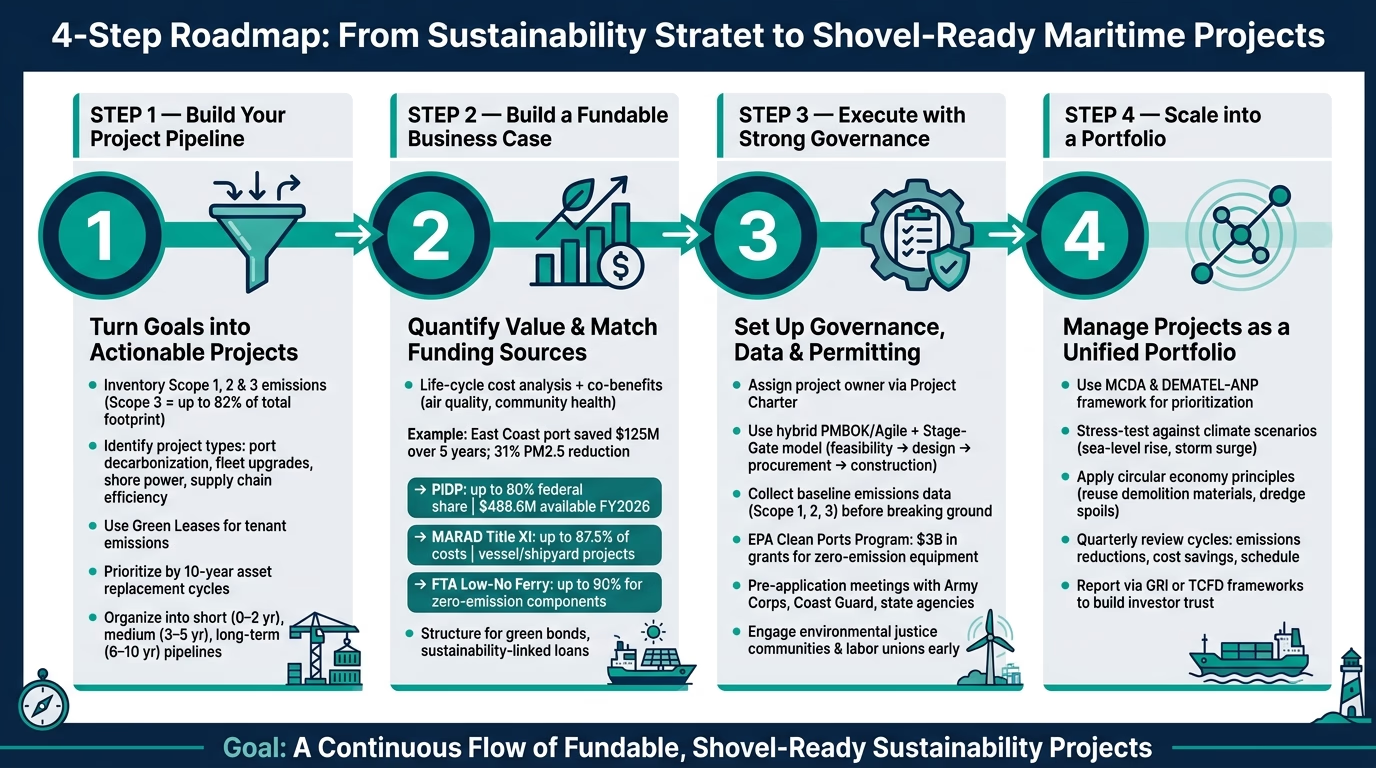
4-Step Roadmap: From Sustainability Strategy to Shovel-Ready Maritime Projects
Can We Make Shipping Green? Financing the Future of Maritime Decarbonisation
Step 1: Turning Sustainability Goals into a Project Pipeline
A sustainability strategy is only as effective as its execution. To move from planning to action, broad sustainability goals must be broken down into tangible, actionable projects.
Identify Core Project Types
Key project categories to focus on include:
Port decarbonization: Transitioning cargo handling equipment to electric power and adopting renewable energy for terminal operations.
Fleet upgrades: Retrofitting vessels with energy-efficient technologies or adopting alternative fuels.
Shore power installations: Building cold ironing infrastructure so ships can connect to the grid instead of using auxiliary engines when docked.
Supply chain efficiency initiatives: For example, implementing clean truck programs to reduce emissions.
A comprehensive inventory of Scope 1, 2, and 3 greenhouse gas emissions is a logical starting point to pinpoint the areas with the highest emissions. For many ports, Scope 3 emissions - stemming from tenant operations and docked vessels - can make up as much as 82% of the total carbon footprint [2]. This suggests that some of the most effective opportunities for reducing emissions might lie outside direct operations. Tools like "Green Leases" - tenant agreements mandating emissions reporting and energy efficiency standards - can be instrumental for addressing these areas [2].
Timing is also key. Aligning projects with natural asset replacement cycles can help control costs. For instance, if yard tractors are scheduled for replacement in three years, that’s an ideal moment to transition to electric models. Planning a project pipeline 10 years into the future ensures clean alternatives can be incorporated as assets reach the end of their lifecycle, keeping expenses manageable [2].
Once project categories are outlined, assessing their broader impacts will help prioritize effectively.
Map Environmental, Social, and Financial Impacts
With a list of potential projects in hand, evaluating their impacts is the next step. A double materiality analysis can provide a balanced view, considering both environmental and financial aspects:
Impact materiality: How the project affects people and the environment, such as improving air quality in port communities.
Financial materiality: How sustainability factors translate into risks or opportunities, such as exposure to future carbon taxes or regulatory fines [3].
For example, carbon emissions directly influence costs related to compliance, stranded asset risks, and access to green financing [3]. Engaging stakeholders - including employees, local communities, and investors - through structured discussions ensures that significant impacts are identified and validated [3][4].
Method | Primary Focus | Key Criteria |
|---|---|---|
Double Materiality | Strategic alignment | Scale, scope, irreplaceability, financial risk [3] |
Stakeholder Engagement | Social impact & prioritization | Interest, influence, and impact exposure [4] |
These assessments feed into a screening matrix, helping quantify each project's strategic and environmental value.
Build a Prioritized Project Pipeline
After assessing impacts, projects can be organized into short-term (0–2 years), medium-term (3–5 years), and long-term (6–10 years) priorities. A simple screening matrix can score projects based on factors like strategic alignment, emissions reduction potential, capital requirements, permitting challenges, and stakeholder readiness. Projects with high impact and lower complexity should be fast-tracked.
Scope 3 projects, despite their potentially higher costs, often warrant prioritization because they tackle the largest portion of emissions [2]. Additionally, achieving quick wins with measurable financial returns is vital for maintaining organizational momentum and building internal support, especially as leadership or project champions change over time. By delivering early successes, the organization can demonstrate its ability to implement sustainability initiatives effectively.
Step 2: Building a Business Case That Attracts Funding
After prioritizing your project pipeline, the next hurdle is securing funding. A compelling business case must go beyond good intentions - it needs to resonate with financial stakeholders.
Quantify Costs, Savings, and Co-Benefits
A persuasive business case combines solid financial analysis with measurable benefits. Start with a life-cycle cost analysis that includes upfront capital, ongoing operational expenses, and long-term savings. Then, integrate additional benefits that investors increasingly value, such as reductions in emissions, improved air quality, and better community health outcomes.
For example, between 2021 and 2026, a major East Coast port authority implemented a sustainability strategy that delivered $125 million in cumulative savings over five years. Electrifying 65% of cargo-handling equipment contributed $48 million in savings, while a 12 MW solar installation added $22 million. Beyond financial returns, the initiative reduced PM2.5 concentrations in nearby communities by 31% [2]. This combination of financial and community benefits is exactly what funders and grant reviewers prioritize.
"When sustainability generates hard financial returns, it builds organizational commitment that outlasts any individual champion." - Council Fire [2]
Quantifying these benefits lays the groundwork for identifying the most suitable funding sources.
Identify Funding and Financing Options
The U.S. offers a range of funding opportunities for sustainability projects in the maritime and logistics sectors. However, matching the right program to the right project requires careful navigation. Below is an overview of three key federal funding mechanisms:
Funding Source | Primary Focus | Max Federal Share | Key Requirement |
|---|---|---|---|
PIDP (46 U.S.C. § 54301) | Port electrification, microgrids, hydrogen refueling, idling reduction, resilience projects [5] | 80% (higher for rural/small ports) [8] | Benefit-Cost Analysis for projects over $11.25M [8] |
MARAD Title XI | Vessel construction and shipyard modernization [9] | Up to 87.5% of actual costs [9] | Creditworthiness; audited financials [6] |
Electric ferries and zero-emission infrastructure [10] | Up to 90% for zero-emission components [10] | Zero-Emission Fleet Transition Plan [10] |
For instance, PIDP alone has $488.6 million available for FY 2026 [8]. However, private port operators must partner with a public entity, such as a state agency or port authority, to access these funds [7]. For vessel-related projects, MARAD Title XI offers loans with terms up to 25 years, though applicants should prepare for requirements like a $5,000 application fee and a pre-application meeting with MARAD [9].
Understanding these funding mechanisms helps align projects with their specific requirements.
Structure Projects to Meet Investor Requirements
Once funding sources are identified and benefits quantified, aligning project documentation with investor expectations becomes essential. Private capital options, such as green bonds and sustainability-linked loans, require clear risk allocation and defined performance metrics among stakeholders, including operators, technology providers, and financiers.
Investor-ready documentation should include audited financials, performance indicators tied to project milestones, and a governance structure that ensures accountability. For federal programs like Title XI, applicants must meet financial covenants such as minimum liquidity and debt service coverage ratios [6]. Additionally, incorporating climate-resilient design elements - like accounting for sea-level rise or storm surge risks - can minimize the potential for stranded assets, a critical concern for sophisticated lenders [2].
Step 3: Moving Projects from Concept to Execution
With funding secured and a solid business case in place, the next step is turning ideas into actionable projects. Many sustainability initiatives falter, not because of funding issues, but due to weak governance, lack of data, or unforeseen permitting challenges. Here’s how to set the stage for success with strong governance and precise planning.
Set Up Governance and Delivery Structures
Start by assigning a clear project owner and defining the decision-making process early on. A project charter is an effective tool for this. It outlines the project sponsor, scope, budget authority, and escalation pathways for resolving potential issues.
For large-scale maritime projects, a hybrid management framework often yields better results. Combining structured, plan-driven methods like PMBOK or PRINCE2 with Agile practices can address both regulatory compliance and technical iterations, such as integrating advanced software for port management systems [11]. This blended approach helps avoid costly rework and ensures smoother execution.
Using a stage-gate model can also keep the project on track. This model requires formal approval at key phases - feasibility, design, procurement, and construction. Each checkpoint ensures critical aspects are reviewed: Is the project still within budget? Are permits progressing as planned? Are stakeholders aligned? For federal digital infrastructure projects, don’t forget to update your facility security plan to address cybersecurity risks before advancing through these gates [5].
Once governance is solidified, the next step is to gather baseline data for your project.
Establish Data Baselines and Performance Metrics
Before breaking ground, collect baseline emissions data, ensuring you include Scope 3 emissions, which can account for up to 82% of total emissions [2]. Skipping this step risks underestimating the true environmental impact.
Programs like the EPA’s Clean Ports Program, which offers $3 billion in grants for zero-emission equipment, require detailed emissions inventories and clear implementation timelines [1]. Building this inventory early not only satisfies grant requirements but also sets a foundation for ongoing ESG reporting. To see immediate results, prioritize shore power and electrification at your busiest berths - this strategy delivers the most substantial emissions reductions and data insights in the short term [1]. For ports near residential areas, consider installing a community air quality monitoring network to track PM2.5 and NO2 levels. This not only builds public trust but also provides independent verification of health improvements [1].
Navigate Permitting and Engage Stakeholders
With governance and data in place, focus on streamlining permitting and engaging stakeholders. Permitting often represents the longest lead time in maritime projects. In the U.S., this typically involves coordination with agencies like the Army Corps of Engineers (for Section 404/10 permits for in-water work), the Coast Guard, state environmental agencies, and local zoning authorities. Holding pre-application meetings with these agencies can help identify potential issues early, saving months on redesigns.
Stakeholder engagement is equally critical. Identify key groups early, including those who are influential, impacted, or need to stay informed. Special attention should be given to environmental justice communities and labor unions. For example, an East Coast port authority handling 3 million TEUs established a Community Advisory Panel from 2021 to 2026. This panel included these groups and led to a community benefits agreement allocating $8 million over ten years for health monitoring and workforce development. As a result, the port achieved a 31% reduction in PM2.5 concentrations and saved $125 million cumulatively [2]. Engaging stakeholders proactively not only reduces opposition but also builds public support, strengthening grant applications and keeping projects on schedule.
Step 4: Scaling Individual Projects into a Portfolio
Once individual projects are funded and ready to go, the next step is to expand their impact by managing them as a unified portfolio. Instead of focusing on isolated wins - like cutting emissions at one berth through a shore power installation - a coordinated portfolio approach can transform your entire operation. Combining efforts like electrification, fleet upgrades, and waste-to-resource initiatives creates a compelling narrative for investors and regulators while maximizing benefits across the board. This strategic alignment also sets the stage for prioritizing projects in ways that optimize the collective impact.
Apply Portfolio-Level Prioritization Tools
Not every project should be treated equally. Tools like Multi-Criteria Decision Analysis (MCDA) help rank projects based on factors such as financial returns, emissions reductions, feasibility, and community benefits. These tools also highlight how projects interconnect, preventing missteps in sequencing that could delay progress. For example, the DEMATEL-ANP framework (Decision Making Trial and Evaluation Laboratory – Analytic Network Process) can reveal how fuel storage upgrades might pave the way for future electrification efforts [12]. Without such insights, starting projects in the wrong order could set back your highest-impact efforts by years.
When balancing competing goals - like cutting upfront costs while maximizing CO₂ reductions - weight-set optimization techniques can clarify trade-offs. These approaches provide a transparent, data-backed rationale for prioritization, which is invaluable when presenting plans to a board or applying for federal grants [13].
Build in Climate Resilience and Circular Economy Principles
Ignoring physical climate risks can undermine the long-term success of a sustainability portfolio. Rising sea levels, storm surges, and extreme heat are already disrupting port operations along the Gulf Coast and Eastern Seaboard. To address these challenges, stress-test every project against credible climate scenarios. At the same time, adopting circular economy principles can reduce costs and attract environmentally focused financing.
The Circular Economy in Port Environments Methodological Handbook offers a practical framework for mapping resource flows and identifying circularity opportunities [14]. For instance, when constructing a new terminal, demolition materials from an old structure could be reused on-site. Similarly, dredge spoils could be redirected into beneficial reuse programs instead of being disposed of in open water. These strategies not only cut waste but also align with green funding criteria.
Use Feedback Loops to Refine the Portfolio Over Time
A sustainability portfolio should evolve as technologies advance, regulations change, and market conditions shift. Establish a formal quarterly review cycle where project teams report on key metrics like emissions reductions, cost savings, and schedule progress. Use these reviews to make necessary adjustments, ensuring the portfolio remains aligned with both your strategic goals and operational realities.
Over time, this approach amplifies the cumulative benefits of your projects. Sharing these outcomes transparently through annual sustainability reports tied to frameworks like GRI or TCFD builds trust with stakeholders and investors. This credibility can simplify future funding efforts, creating a cycle of continuous improvement and growth. By regularly refining the portfolio, you ensure it stays connected to your broader strategy while delivering tangible results.
Conclusion: From Strategy to Action
Transforming a sustainability strategy into actionable, fundable projects involves a clear, step-by-step process. Begin by translating broad commitments into specific, trackable initiatives. Develop business cases grounded in solid financial and operational metrics. From there, focus on execution by setting up strong governance structures, establishing data baselines, and addressing permitting requirements before breaking ground. Treat the entire effort as an evolving portfolio, adapting as regulations change, technology advances, and insights emerge from earlier projects.
This approach delivers results across environmental, operational, financial, and social dimensions.
Council Fire works with companies to turn sustainability goals into structured project pipelines. They specialize in building financial models, creating governance frameworks, and navigating the complexities of U.S. permitting requirements. On the portfolio side, they assist clients in designing tools for prioritization, setting climate resilience benchmarks, and implementing quarterly review processes. This ensures that one successful project leads to a repeatable system for ongoing execution [1][15].
The ultimate aim is to maintain a continuous flow of fundable, shovel-ready projects, each one driving measurable progress toward your sustainability targets. This systematic approach ensures your strategy leads to real, impactful change.
FAQs
What makes a project “shovel-ready” for ports?
A shovel-ready project is one that’s fully prepared to move forward with implementation and funding. For ports, this involves several key elements:
Feasibility studies: These confirm the engineering and construction requirements, backed by precise cost estimates.
Funding strategy: A clear plan outlining investment goals and the availability of matching funds.
Technical merit: Documentation showcasing aspects like resilience and decarbonization evaluations.
Stakeholder support: Securing commitments from tenants, developers, or government partners to prevent potential delays.
How do I prove ROI for decarbonization projects?
To demonstrate ROI for decarbonization efforts, begin by establishing a clear baseline. This involves calculating both your carbon footprint and financial benchmarks. Incorporate defensive metrics such as avoided fines or potential carbon taxes, alongside offensive metrics like fuel cost reductions or revenue from green premiums. Evaluate and prioritize projects using a marginal abatement cost curve, which helps identify the most cost-effective ways to reduce emissions. Enhance this process by integrating environmental data into lifecycle financial models. Finally, use digital tools to monitor and compare actual results against initial forecasts, ensuring measurable progress is documented.
Which U.S. funding programs fit my port project?
The Maritime Administration’s Port Infrastructure Development Program (PIDP) serves as a vital federal funding avenue for capital and planning projects aimed at improving the safety, efficiency, and reliability of goods movement. This program supports a variety of initiatives, including investments in marine terminal equipment, upgrades to intermodal connections, enhancements to infrastructure resilience, and efforts to reduce emissions.
Complementing the PIDP, the EPA’s Clean Ports Program focuses on advancing zero-emission technologies and supporting climate-related planning, with a particular emphasis on decarbonization projects. These programs often encourage collaboration, making state, local, tribal, and private sector partnerships eligible for funding opportunities.
Related Blog Posts
Latest Articles
©2026

Narrative Change and Power Building: The Missing Half of Advocacy
Narrative change is the process of disrupting dominant narratives that normalize inequity and advancing new narratives from historically marginalized communities.

Funding Resilience Without Federal Grants
BRIC is unreliable and FEMA is shrinking. Here's how cities fund climate resilience with dedicated revenue, blended finance, and a coordinating authority.

The ESG Blind Spot: How AI Is Finding Risks in Companies Nobody Else Is Watching
Norway's sovereign wealth fund uses AI to screen 7,200 portfolio companies for forced labor and corruption within 24 hours. The real story is the emerging-market coverage gap that traditional ESG data vendors miss — and what it means for any company with a global supply chain.
Narrative Change and Power Building: The Missing Half of Advocacy
Narrative change is the process of disrupting dominant narratives that normalize inequity and advancing new narratives from historically marginalized communities.
Funding Resilience Without Federal Grants
BRIC is unreliable and FEMA is shrinking. Here's how cities fund climate resilience with dedicated revenue, blended finance, and a coordinating authority.
The ESG Blind Spot: How AI Is Finding Risks in Companies Nobody Else Is Watching
Norway's sovereign wealth fund uses AI to screen 7,200 portfolio companies for forced labor and corruption within 24 hours. The real story is the emerging-market coverage gap that traditional ESG data vendors miss — and what it means for any company with a global supply chain.
FAQ
01
What does it really mean to “redefine profit”?
02
What makes Council Fire different?
03
Who does Council Fire work with?
04
What does working with Council Fire actually look like?
05
How does Council Fire help organizations turn big goals into action?
06
How does Council Fire define and measure success?
07
How does technology fit into Council Fire’s work?
Jun 1, 2026
How to Turn a Strategic Plan into Fundable, Shovel-Ready Projects for Maritime & Logistics Companies
Sustainability Strategy
In This Article
Turn port sustainability goals into fundable, shovel-ready projects with ROI-driven business cases, federal grants, and strong governance.
How to Turn a Strategic Plan into Fundable, Shovel-Ready Projects for Maritime & Logistics Companies
Many maritime and logistics companies struggle to move sustainability strategies into actionable, funded projects. To succeed, projects must be fundable - offering clear financial returns and meeting investor criteria - and shovel-ready, with permits and approvals in place. Key challenges include fragmented stakeholders, weak business cases, and long permitting timelines.
This guide provides a clear roadmap to overcome these hurdles, covering:
Breaking down sustainability goals into actionable project pipelines.
Building strong business cases with measurable financial and social benefits.
Securing funding through federal programs and private financing.
Establishing governance, data baselines, and stakeholder engagement for smooth execution.
Managing projects as a portfolio to maximize long-term impact.
4-Step Roadmap: From Sustainability Strategy to Shovel-Ready Maritime Projects
Can We Make Shipping Green? Financing the Future of Maritime Decarbonisation
Step 1: Turning Sustainability Goals into a Project Pipeline
A sustainability strategy is only as effective as its execution. To move from planning to action, broad sustainability goals must be broken down into tangible, actionable projects.
Identify Core Project Types
Key project categories to focus on include:
Port decarbonization: Transitioning cargo handling equipment to electric power and adopting renewable energy for terminal operations.
Fleet upgrades: Retrofitting vessels with energy-efficient technologies or adopting alternative fuels.
Shore power installations: Building cold ironing infrastructure so ships can connect to the grid instead of using auxiliary engines when docked.
Supply chain efficiency initiatives: For example, implementing clean truck programs to reduce emissions.
A comprehensive inventory of Scope 1, 2, and 3 greenhouse gas emissions is a logical starting point to pinpoint the areas with the highest emissions. For many ports, Scope 3 emissions - stemming from tenant operations and docked vessels - can make up as much as 82% of the total carbon footprint [2]. This suggests that some of the most effective opportunities for reducing emissions might lie outside direct operations. Tools like "Green Leases" - tenant agreements mandating emissions reporting and energy efficiency standards - can be instrumental for addressing these areas [2].
Timing is also key. Aligning projects with natural asset replacement cycles can help control costs. For instance, if yard tractors are scheduled for replacement in three years, that’s an ideal moment to transition to electric models. Planning a project pipeline 10 years into the future ensures clean alternatives can be incorporated as assets reach the end of their lifecycle, keeping expenses manageable [2].
Once project categories are outlined, assessing their broader impacts will help prioritize effectively.
Map Environmental, Social, and Financial Impacts
With a list of potential projects in hand, evaluating their impacts is the next step. A double materiality analysis can provide a balanced view, considering both environmental and financial aspects:
Impact materiality: How the project affects people and the environment, such as improving air quality in port communities.
Financial materiality: How sustainability factors translate into risks or opportunities, such as exposure to future carbon taxes or regulatory fines [3].
For example, carbon emissions directly influence costs related to compliance, stranded asset risks, and access to green financing [3]. Engaging stakeholders - including employees, local communities, and investors - through structured discussions ensures that significant impacts are identified and validated [3][4].
Method | Primary Focus | Key Criteria |
|---|---|---|
Double Materiality | Strategic alignment | Scale, scope, irreplaceability, financial risk [3] |
Stakeholder Engagement | Social impact & prioritization | Interest, influence, and impact exposure [4] |
These assessments feed into a screening matrix, helping quantify each project's strategic and environmental value.
Build a Prioritized Project Pipeline
After assessing impacts, projects can be organized into short-term (0–2 years), medium-term (3–5 years), and long-term (6–10 years) priorities. A simple screening matrix can score projects based on factors like strategic alignment, emissions reduction potential, capital requirements, permitting challenges, and stakeholder readiness. Projects with high impact and lower complexity should be fast-tracked.
Scope 3 projects, despite their potentially higher costs, often warrant prioritization because they tackle the largest portion of emissions [2]. Additionally, achieving quick wins with measurable financial returns is vital for maintaining organizational momentum and building internal support, especially as leadership or project champions change over time. By delivering early successes, the organization can demonstrate its ability to implement sustainability initiatives effectively.
Step 2: Building a Business Case That Attracts Funding
After prioritizing your project pipeline, the next hurdle is securing funding. A compelling business case must go beyond good intentions - it needs to resonate with financial stakeholders.
Quantify Costs, Savings, and Co-Benefits
A persuasive business case combines solid financial analysis with measurable benefits. Start with a life-cycle cost analysis that includes upfront capital, ongoing operational expenses, and long-term savings. Then, integrate additional benefits that investors increasingly value, such as reductions in emissions, improved air quality, and better community health outcomes.
For example, between 2021 and 2026, a major East Coast port authority implemented a sustainability strategy that delivered $125 million in cumulative savings over five years. Electrifying 65% of cargo-handling equipment contributed $48 million in savings, while a 12 MW solar installation added $22 million. Beyond financial returns, the initiative reduced PM2.5 concentrations in nearby communities by 31% [2]. This combination of financial and community benefits is exactly what funders and grant reviewers prioritize.
"When sustainability generates hard financial returns, it builds organizational commitment that outlasts any individual champion." - Council Fire [2]
Quantifying these benefits lays the groundwork for identifying the most suitable funding sources.
Identify Funding and Financing Options
The U.S. offers a range of funding opportunities for sustainability projects in the maritime and logistics sectors. However, matching the right program to the right project requires careful navigation. Below is an overview of three key federal funding mechanisms:
Funding Source | Primary Focus | Max Federal Share | Key Requirement |
|---|---|---|---|
PIDP (46 U.S.C. § 54301) | Port electrification, microgrids, hydrogen refueling, idling reduction, resilience projects [5] | 80% (higher for rural/small ports) [8] | Benefit-Cost Analysis for projects over $11.25M [8] |
MARAD Title XI | Vessel construction and shipyard modernization [9] | Up to 87.5% of actual costs [9] | Creditworthiness; audited financials [6] |
Electric ferries and zero-emission infrastructure [10] | Up to 90% for zero-emission components [10] | Zero-Emission Fleet Transition Plan [10] |
For instance, PIDP alone has $488.6 million available for FY 2026 [8]. However, private port operators must partner with a public entity, such as a state agency or port authority, to access these funds [7]. For vessel-related projects, MARAD Title XI offers loans with terms up to 25 years, though applicants should prepare for requirements like a $5,000 application fee and a pre-application meeting with MARAD [9].
Understanding these funding mechanisms helps align projects with their specific requirements.
Structure Projects to Meet Investor Requirements
Once funding sources are identified and benefits quantified, aligning project documentation with investor expectations becomes essential. Private capital options, such as green bonds and sustainability-linked loans, require clear risk allocation and defined performance metrics among stakeholders, including operators, technology providers, and financiers.
Investor-ready documentation should include audited financials, performance indicators tied to project milestones, and a governance structure that ensures accountability. For federal programs like Title XI, applicants must meet financial covenants such as minimum liquidity and debt service coverage ratios [6]. Additionally, incorporating climate-resilient design elements - like accounting for sea-level rise or storm surge risks - can minimize the potential for stranded assets, a critical concern for sophisticated lenders [2].
Step 3: Moving Projects from Concept to Execution
With funding secured and a solid business case in place, the next step is turning ideas into actionable projects. Many sustainability initiatives falter, not because of funding issues, but due to weak governance, lack of data, or unforeseen permitting challenges. Here’s how to set the stage for success with strong governance and precise planning.
Set Up Governance and Delivery Structures
Start by assigning a clear project owner and defining the decision-making process early on. A project charter is an effective tool for this. It outlines the project sponsor, scope, budget authority, and escalation pathways for resolving potential issues.
For large-scale maritime projects, a hybrid management framework often yields better results. Combining structured, plan-driven methods like PMBOK or PRINCE2 with Agile practices can address both regulatory compliance and technical iterations, such as integrating advanced software for port management systems [11]. This blended approach helps avoid costly rework and ensures smoother execution.
Using a stage-gate model can also keep the project on track. This model requires formal approval at key phases - feasibility, design, procurement, and construction. Each checkpoint ensures critical aspects are reviewed: Is the project still within budget? Are permits progressing as planned? Are stakeholders aligned? For federal digital infrastructure projects, don’t forget to update your facility security plan to address cybersecurity risks before advancing through these gates [5].
Once governance is solidified, the next step is to gather baseline data for your project.
Establish Data Baselines and Performance Metrics
Before breaking ground, collect baseline emissions data, ensuring you include Scope 3 emissions, which can account for up to 82% of total emissions [2]. Skipping this step risks underestimating the true environmental impact.
Programs like the EPA’s Clean Ports Program, which offers $3 billion in grants for zero-emission equipment, require detailed emissions inventories and clear implementation timelines [1]. Building this inventory early not only satisfies grant requirements but also sets a foundation for ongoing ESG reporting. To see immediate results, prioritize shore power and electrification at your busiest berths - this strategy delivers the most substantial emissions reductions and data insights in the short term [1]. For ports near residential areas, consider installing a community air quality monitoring network to track PM2.5 and NO2 levels. This not only builds public trust but also provides independent verification of health improvements [1].
Navigate Permitting and Engage Stakeholders
With governance and data in place, focus on streamlining permitting and engaging stakeholders. Permitting often represents the longest lead time in maritime projects. In the U.S., this typically involves coordination with agencies like the Army Corps of Engineers (for Section 404/10 permits for in-water work), the Coast Guard, state environmental agencies, and local zoning authorities. Holding pre-application meetings with these agencies can help identify potential issues early, saving months on redesigns.
Stakeholder engagement is equally critical. Identify key groups early, including those who are influential, impacted, or need to stay informed. Special attention should be given to environmental justice communities and labor unions. For example, an East Coast port authority handling 3 million TEUs established a Community Advisory Panel from 2021 to 2026. This panel included these groups and led to a community benefits agreement allocating $8 million over ten years for health monitoring and workforce development. As a result, the port achieved a 31% reduction in PM2.5 concentrations and saved $125 million cumulatively [2]. Engaging stakeholders proactively not only reduces opposition but also builds public support, strengthening grant applications and keeping projects on schedule.
Step 4: Scaling Individual Projects into a Portfolio
Once individual projects are funded and ready to go, the next step is to expand their impact by managing them as a unified portfolio. Instead of focusing on isolated wins - like cutting emissions at one berth through a shore power installation - a coordinated portfolio approach can transform your entire operation. Combining efforts like electrification, fleet upgrades, and waste-to-resource initiatives creates a compelling narrative for investors and regulators while maximizing benefits across the board. This strategic alignment also sets the stage for prioritizing projects in ways that optimize the collective impact.
Apply Portfolio-Level Prioritization Tools
Not every project should be treated equally. Tools like Multi-Criteria Decision Analysis (MCDA) help rank projects based on factors such as financial returns, emissions reductions, feasibility, and community benefits. These tools also highlight how projects interconnect, preventing missteps in sequencing that could delay progress. For example, the DEMATEL-ANP framework (Decision Making Trial and Evaluation Laboratory – Analytic Network Process) can reveal how fuel storage upgrades might pave the way for future electrification efforts [12]. Without such insights, starting projects in the wrong order could set back your highest-impact efforts by years.
When balancing competing goals - like cutting upfront costs while maximizing CO₂ reductions - weight-set optimization techniques can clarify trade-offs. These approaches provide a transparent, data-backed rationale for prioritization, which is invaluable when presenting plans to a board or applying for federal grants [13].
Build in Climate Resilience and Circular Economy Principles
Ignoring physical climate risks can undermine the long-term success of a sustainability portfolio. Rising sea levels, storm surges, and extreme heat are already disrupting port operations along the Gulf Coast and Eastern Seaboard. To address these challenges, stress-test every project against credible climate scenarios. At the same time, adopting circular economy principles can reduce costs and attract environmentally focused financing.
The Circular Economy in Port Environments Methodological Handbook offers a practical framework for mapping resource flows and identifying circularity opportunities [14]. For instance, when constructing a new terminal, demolition materials from an old structure could be reused on-site. Similarly, dredge spoils could be redirected into beneficial reuse programs instead of being disposed of in open water. These strategies not only cut waste but also align with green funding criteria.
Use Feedback Loops to Refine the Portfolio Over Time
A sustainability portfolio should evolve as technologies advance, regulations change, and market conditions shift. Establish a formal quarterly review cycle where project teams report on key metrics like emissions reductions, cost savings, and schedule progress. Use these reviews to make necessary adjustments, ensuring the portfolio remains aligned with both your strategic goals and operational realities.
Over time, this approach amplifies the cumulative benefits of your projects. Sharing these outcomes transparently through annual sustainability reports tied to frameworks like GRI or TCFD builds trust with stakeholders and investors. This credibility can simplify future funding efforts, creating a cycle of continuous improvement and growth. By regularly refining the portfolio, you ensure it stays connected to your broader strategy while delivering tangible results.
Conclusion: From Strategy to Action
Transforming a sustainability strategy into actionable, fundable projects involves a clear, step-by-step process. Begin by translating broad commitments into specific, trackable initiatives. Develop business cases grounded in solid financial and operational metrics. From there, focus on execution by setting up strong governance structures, establishing data baselines, and addressing permitting requirements before breaking ground. Treat the entire effort as an evolving portfolio, adapting as regulations change, technology advances, and insights emerge from earlier projects.
This approach delivers results across environmental, operational, financial, and social dimensions.
Council Fire works with companies to turn sustainability goals into structured project pipelines. They specialize in building financial models, creating governance frameworks, and navigating the complexities of U.S. permitting requirements. On the portfolio side, they assist clients in designing tools for prioritization, setting climate resilience benchmarks, and implementing quarterly review processes. This ensures that one successful project leads to a repeatable system for ongoing execution [1][15].
The ultimate aim is to maintain a continuous flow of fundable, shovel-ready projects, each one driving measurable progress toward your sustainability targets. This systematic approach ensures your strategy leads to real, impactful change.
FAQs
What makes a project “shovel-ready” for ports?
A shovel-ready project is one that’s fully prepared to move forward with implementation and funding. For ports, this involves several key elements:
Feasibility studies: These confirm the engineering and construction requirements, backed by precise cost estimates.
Funding strategy: A clear plan outlining investment goals and the availability of matching funds.
Technical merit: Documentation showcasing aspects like resilience and decarbonization evaluations.
Stakeholder support: Securing commitments from tenants, developers, or government partners to prevent potential delays.
How do I prove ROI for decarbonization projects?
To demonstrate ROI for decarbonization efforts, begin by establishing a clear baseline. This involves calculating both your carbon footprint and financial benchmarks. Incorporate defensive metrics such as avoided fines or potential carbon taxes, alongside offensive metrics like fuel cost reductions or revenue from green premiums. Evaluate and prioritize projects using a marginal abatement cost curve, which helps identify the most cost-effective ways to reduce emissions. Enhance this process by integrating environmental data into lifecycle financial models. Finally, use digital tools to monitor and compare actual results against initial forecasts, ensuring measurable progress is documented.
Which U.S. funding programs fit my port project?
The Maritime Administration’s Port Infrastructure Development Program (PIDP) serves as a vital federal funding avenue for capital and planning projects aimed at improving the safety, efficiency, and reliability of goods movement. This program supports a variety of initiatives, including investments in marine terminal equipment, upgrades to intermodal connections, enhancements to infrastructure resilience, and efforts to reduce emissions.
Complementing the PIDP, the EPA’s Clean Ports Program focuses on advancing zero-emission technologies and supporting climate-related planning, with a particular emphasis on decarbonization projects. These programs often encourage collaboration, making state, local, tribal, and private sector partnerships eligible for funding opportunities.
Related Blog Posts
Latest Articles
©2026
Narrative Change and Power Building: The Missing Half of Advocacy
Narrative change is the process of disrupting dominant narratives that normalize inequity and advancing new narratives from historically marginalized communities.
Funding Resilience Without Federal Grants
BRIC is unreliable and FEMA is shrinking. Here's how cities fund climate resilience with dedicated revenue, blended finance, and a coordinating authority.
The ESG Blind Spot: How AI Is Finding Risks in Companies Nobody Else Is Watching
Norway's sovereign wealth fund uses AI to screen 7,200 portfolio companies for forced labor and corruption within 24 hours. The real story is the emerging-market coverage gap that traditional ESG data vendors miss — and what it means for any company with a global supply chain.
FAQ
01
What does it really mean to “redefine profit”?
02
What makes Council Fire different?
03
Who does Council Fire work with?
04
What does working with Council Fire actually look like?
05
How does Council Fire help organizations turn big goals into action?
06
How does Council Fire define and measure success?
07
How does technology fit into Council Fire’s work?
Jun 1, 2026
How to Turn a Strategic Plan into Fundable, Shovel-Ready Projects for Maritime & Logistics Companies
Sustainability Strategy
In This Article
Turn port sustainability goals into fundable, shovel-ready projects with ROI-driven business cases, federal grants, and strong governance.
How to Turn a Strategic Plan into Fundable, Shovel-Ready Projects for Maritime & Logistics Companies
Many maritime and logistics companies struggle to move sustainability strategies into actionable, funded projects. To succeed, projects must be fundable - offering clear financial returns and meeting investor criteria - and shovel-ready, with permits and approvals in place. Key challenges include fragmented stakeholders, weak business cases, and long permitting timelines.
This guide provides a clear roadmap to overcome these hurdles, covering:
Breaking down sustainability goals into actionable project pipelines.
Building strong business cases with measurable financial and social benefits.
Securing funding through federal programs and private financing.
Establishing governance, data baselines, and stakeholder engagement for smooth execution.
Managing projects as a portfolio to maximize long-term impact.
4-Step Roadmap: From Sustainability Strategy to Shovel-Ready Maritime Projects
Can We Make Shipping Green? Financing the Future of Maritime Decarbonisation
Step 1: Turning Sustainability Goals into a Project Pipeline
A sustainability strategy is only as effective as its execution. To move from planning to action, broad sustainability goals must be broken down into tangible, actionable projects.
Identify Core Project Types
Key project categories to focus on include:
Port decarbonization: Transitioning cargo handling equipment to electric power and adopting renewable energy for terminal operations.
Fleet upgrades: Retrofitting vessels with energy-efficient technologies or adopting alternative fuels.
Shore power installations: Building cold ironing infrastructure so ships can connect to the grid instead of using auxiliary engines when docked.
Supply chain efficiency initiatives: For example, implementing clean truck programs to reduce emissions.
A comprehensive inventory of Scope 1, 2, and 3 greenhouse gas emissions is a logical starting point to pinpoint the areas with the highest emissions. For many ports, Scope 3 emissions - stemming from tenant operations and docked vessels - can make up as much as 82% of the total carbon footprint [2]. This suggests that some of the most effective opportunities for reducing emissions might lie outside direct operations. Tools like "Green Leases" - tenant agreements mandating emissions reporting and energy efficiency standards - can be instrumental for addressing these areas [2].
Timing is also key. Aligning projects with natural asset replacement cycles can help control costs. For instance, if yard tractors are scheduled for replacement in three years, that’s an ideal moment to transition to electric models. Planning a project pipeline 10 years into the future ensures clean alternatives can be incorporated as assets reach the end of their lifecycle, keeping expenses manageable [2].
Once project categories are outlined, assessing their broader impacts will help prioritize effectively.
Map Environmental, Social, and Financial Impacts
With a list of potential projects in hand, evaluating their impacts is the next step. A double materiality analysis can provide a balanced view, considering both environmental and financial aspects:
Impact materiality: How the project affects people and the environment, such as improving air quality in port communities.
Financial materiality: How sustainability factors translate into risks or opportunities, such as exposure to future carbon taxes or regulatory fines [3].
For example, carbon emissions directly influence costs related to compliance, stranded asset risks, and access to green financing [3]. Engaging stakeholders - including employees, local communities, and investors - through structured discussions ensures that significant impacts are identified and validated [3][4].
Method | Primary Focus | Key Criteria |
|---|---|---|
Double Materiality | Strategic alignment | Scale, scope, irreplaceability, financial risk [3] |
Stakeholder Engagement | Social impact & prioritization | Interest, influence, and impact exposure [4] |
These assessments feed into a screening matrix, helping quantify each project's strategic and environmental value.
Build a Prioritized Project Pipeline
After assessing impacts, projects can be organized into short-term (0–2 years), medium-term (3–5 years), and long-term (6–10 years) priorities. A simple screening matrix can score projects based on factors like strategic alignment, emissions reduction potential, capital requirements, permitting challenges, and stakeholder readiness. Projects with high impact and lower complexity should be fast-tracked.
Scope 3 projects, despite their potentially higher costs, often warrant prioritization because they tackle the largest portion of emissions [2]. Additionally, achieving quick wins with measurable financial returns is vital for maintaining organizational momentum and building internal support, especially as leadership or project champions change over time. By delivering early successes, the organization can demonstrate its ability to implement sustainability initiatives effectively.
Step 2: Building a Business Case That Attracts Funding
After prioritizing your project pipeline, the next hurdle is securing funding. A compelling business case must go beyond good intentions - it needs to resonate with financial stakeholders.
Quantify Costs, Savings, and Co-Benefits
A persuasive business case combines solid financial analysis with measurable benefits. Start with a life-cycle cost analysis that includes upfront capital, ongoing operational expenses, and long-term savings. Then, integrate additional benefits that investors increasingly value, such as reductions in emissions, improved air quality, and better community health outcomes.
For example, between 2021 and 2026, a major East Coast port authority implemented a sustainability strategy that delivered $125 million in cumulative savings over five years. Electrifying 65% of cargo-handling equipment contributed $48 million in savings, while a 12 MW solar installation added $22 million. Beyond financial returns, the initiative reduced PM2.5 concentrations in nearby communities by 31% [2]. This combination of financial and community benefits is exactly what funders and grant reviewers prioritize.
"When sustainability generates hard financial returns, it builds organizational commitment that outlasts any individual champion." - Council Fire [2]
Quantifying these benefits lays the groundwork for identifying the most suitable funding sources.
Identify Funding and Financing Options
The U.S. offers a range of funding opportunities for sustainability projects in the maritime and logistics sectors. However, matching the right program to the right project requires careful navigation. Below is an overview of three key federal funding mechanisms:
Funding Source | Primary Focus | Max Federal Share | Key Requirement |
|---|---|---|---|
PIDP (46 U.S.C. § 54301) | Port electrification, microgrids, hydrogen refueling, idling reduction, resilience projects [5] | 80% (higher for rural/small ports) [8] | Benefit-Cost Analysis for projects over $11.25M [8] |
MARAD Title XI | Vessel construction and shipyard modernization [9] | Up to 87.5% of actual costs [9] | Creditworthiness; audited financials [6] |
Electric ferries and zero-emission infrastructure [10] | Up to 90% for zero-emission components [10] | Zero-Emission Fleet Transition Plan [10] |
For instance, PIDP alone has $488.6 million available for FY 2026 [8]. However, private port operators must partner with a public entity, such as a state agency or port authority, to access these funds [7]. For vessel-related projects, MARAD Title XI offers loans with terms up to 25 years, though applicants should prepare for requirements like a $5,000 application fee and a pre-application meeting with MARAD [9].
Understanding these funding mechanisms helps align projects with their specific requirements.
Structure Projects to Meet Investor Requirements
Once funding sources are identified and benefits quantified, aligning project documentation with investor expectations becomes essential. Private capital options, such as green bonds and sustainability-linked loans, require clear risk allocation and defined performance metrics among stakeholders, including operators, technology providers, and financiers.
Investor-ready documentation should include audited financials, performance indicators tied to project milestones, and a governance structure that ensures accountability. For federal programs like Title XI, applicants must meet financial covenants such as minimum liquidity and debt service coverage ratios [6]. Additionally, incorporating climate-resilient design elements - like accounting for sea-level rise or storm surge risks - can minimize the potential for stranded assets, a critical concern for sophisticated lenders [2].
Step 3: Moving Projects from Concept to Execution
With funding secured and a solid business case in place, the next step is turning ideas into actionable projects. Many sustainability initiatives falter, not because of funding issues, but due to weak governance, lack of data, or unforeseen permitting challenges. Here’s how to set the stage for success with strong governance and precise planning.
Set Up Governance and Delivery Structures
Start by assigning a clear project owner and defining the decision-making process early on. A project charter is an effective tool for this. It outlines the project sponsor, scope, budget authority, and escalation pathways for resolving potential issues.
For large-scale maritime projects, a hybrid management framework often yields better results. Combining structured, plan-driven methods like PMBOK or PRINCE2 with Agile practices can address both regulatory compliance and technical iterations, such as integrating advanced software for port management systems [11]. This blended approach helps avoid costly rework and ensures smoother execution.
Using a stage-gate model can also keep the project on track. This model requires formal approval at key phases - feasibility, design, procurement, and construction. Each checkpoint ensures critical aspects are reviewed: Is the project still within budget? Are permits progressing as planned? Are stakeholders aligned? For federal digital infrastructure projects, don’t forget to update your facility security plan to address cybersecurity risks before advancing through these gates [5].
Once governance is solidified, the next step is to gather baseline data for your project.
Establish Data Baselines and Performance Metrics
Before breaking ground, collect baseline emissions data, ensuring you include Scope 3 emissions, which can account for up to 82% of total emissions [2]. Skipping this step risks underestimating the true environmental impact.
Programs like the EPA’s Clean Ports Program, which offers $3 billion in grants for zero-emission equipment, require detailed emissions inventories and clear implementation timelines [1]. Building this inventory early not only satisfies grant requirements but also sets a foundation for ongoing ESG reporting. To see immediate results, prioritize shore power and electrification at your busiest berths - this strategy delivers the most substantial emissions reductions and data insights in the short term [1]. For ports near residential areas, consider installing a community air quality monitoring network to track PM2.5 and NO2 levels. This not only builds public trust but also provides independent verification of health improvements [1].
Navigate Permitting and Engage Stakeholders
With governance and data in place, focus on streamlining permitting and engaging stakeholders. Permitting often represents the longest lead time in maritime projects. In the U.S., this typically involves coordination with agencies like the Army Corps of Engineers (for Section 404/10 permits for in-water work), the Coast Guard, state environmental agencies, and local zoning authorities. Holding pre-application meetings with these agencies can help identify potential issues early, saving months on redesigns.
Stakeholder engagement is equally critical. Identify key groups early, including those who are influential, impacted, or need to stay informed. Special attention should be given to environmental justice communities and labor unions. For example, an East Coast port authority handling 3 million TEUs established a Community Advisory Panel from 2021 to 2026. This panel included these groups and led to a community benefits agreement allocating $8 million over ten years for health monitoring and workforce development. As a result, the port achieved a 31% reduction in PM2.5 concentrations and saved $125 million cumulatively [2]. Engaging stakeholders proactively not only reduces opposition but also builds public support, strengthening grant applications and keeping projects on schedule.
Step 4: Scaling Individual Projects into a Portfolio
Once individual projects are funded and ready to go, the next step is to expand their impact by managing them as a unified portfolio. Instead of focusing on isolated wins - like cutting emissions at one berth through a shore power installation - a coordinated portfolio approach can transform your entire operation. Combining efforts like electrification, fleet upgrades, and waste-to-resource initiatives creates a compelling narrative for investors and regulators while maximizing benefits across the board. This strategic alignment also sets the stage for prioritizing projects in ways that optimize the collective impact.
Apply Portfolio-Level Prioritization Tools
Not every project should be treated equally. Tools like Multi-Criteria Decision Analysis (MCDA) help rank projects based on factors such as financial returns, emissions reductions, feasibility, and community benefits. These tools also highlight how projects interconnect, preventing missteps in sequencing that could delay progress. For example, the DEMATEL-ANP framework (Decision Making Trial and Evaluation Laboratory – Analytic Network Process) can reveal how fuel storage upgrades might pave the way for future electrification efforts [12]. Without such insights, starting projects in the wrong order could set back your highest-impact efforts by years.
When balancing competing goals - like cutting upfront costs while maximizing CO₂ reductions - weight-set optimization techniques can clarify trade-offs. These approaches provide a transparent, data-backed rationale for prioritization, which is invaluable when presenting plans to a board or applying for federal grants [13].
Build in Climate Resilience and Circular Economy Principles
Ignoring physical climate risks can undermine the long-term success of a sustainability portfolio. Rising sea levels, storm surges, and extreme heat are already disrupting port operations along the Gulf Coast and Eastern Seaboard. To address these challenges, stress-test every project against credible climate scenarios. At the same time, adopting circular economy principles can reduce costs and attract environmentally focused financing.
The Circular Economy in Port Environments Methodological Handbook offers a practical framework for mapping resource flows and identifying circularity opportunities [14]. For instance, when constructing a new terminal, demolition materials from an old structure could be reused on-site. Similarly, dredge spoils could be redirected into beneficial reuse programs instead of being disposed of in open water. These strategies not only cut waste but also align with green funding criteria.
Use Feedback Loops to Refine the Portfolio Over Time
A sustainability portfolio should evolve as technologies advance, regulations change, and market conditions shift. Establish a formal quarterly review cycle where project teams report on key metrics like emissions reductions, cost savings, and schedule progress. Use these reviews to make necessary adjustments, ensuring the portfolio remains aligned with both your strategic goals and operational realities.
Over time, this approach amplifies the cumulative benefits of your projects. Sharing these outcomes transparently through annual sustainability reports tied to frameworks like GRI or TCFD builds trust with stakeholders and investors. This credibility can simplify future funding efforts, creating a cycle of continuous improvement and growth. By regularly refining the portfolio, you ensure it stays connected to your broader strategy while delivering tangible results.
Conclusion: From Strategy to Action
Transforming a sustainability strategy into actionable, fundable projects involves a clear, step-by-step process. Begin by translating broad commitments into specific, trackable initiatives. Develop business cases grounded in solid financial and operational metrics. From there, focus on execution by setting up strong governance structures, establishing data baselines, and addressing permitting requirements before breaking ground. Treat the entire effort as an evolving portfolio, adapting as regulations change, technology advances, and insights emerge from earlier projects.
This approach delivers results across environmental, operational, financial, and social dimensions.
Council Fire works with companies to turn sustainability goals into structured project pipelines. They specialize in building financial models, creating governance frameworks, and navigating the complexities of U.S. permitting requirements. On the portfolio side, they assist clients in designing tools for prioritization, setting climate resilience benchmarks, and implementing quarterly review processes. This ensures that one successful project leads to a repeatable system for ongoing execution [1][15].
The ultimate aim is to maintain a continuous flow of fundable, shovel-ready projects, each one driving measurable progress toward your sustainability targets. This systematic approach ensures your strategy leads to real, impactful change.
FAQs
What makes a project “shovel-ready” for ports?
A shovel-ready project is one that’s fully prepared to move forward with implementation and funding. For ports, this involves several key elements:
Feasibility studies: These confirm the engineering and construction requirements, backed by precise cost estimates.
Funding strategy: A clear plan outlining investment goals and the availability of matching funds.
Technical merit: Documentation showcasing aspects like resilience and decarbonization evaluations.
Stakeholder support: Securing commitments from tenants, developers, or government partners to prevent potential delays.
How do I prove ROI for decarbonization projects?
To demonstrate ROI for decarbonization efforts, begin by establishing a clear baseline. This involves calculating both your carbon footprint and financial benchmarks. Incorporate defensive metrics such as avoided fines or potential carbon taxes, alongside offensive metrics like fuel cost reductions or revenue from green premiums. Evaluate and prioritize projects using a marginal abatement cost curve, which helps identify the most cost-effective ways to reduce emissions. Enhance this process by integrating environmental data into lifecycle financial models. Finally, use digital tools to monitor and compare actual results against initial forecasts, ensuring measurable progress is documented.
Which U.S. funding programs fit my port project?
The Maritime Administration’s Port Infrastructure Development Program (PIDP) serves as a vital federal funding avenue for capital and planning projects aimed at improving the safety, efficiency, and reliability of goods movement. This program supports a variety of initiatives, including investments in marine terminal equipment, upgrades to intermodal connections, enhancements to infrastructure resilience, and efforts to reduce emissions.
Complementing the PIDP, the EPA’s Clean Ports Program focuses on advancing zero-emission technologies and supporting climate-related planning, with a particular emphasis on decarbonization projects. These programs often encourage collaboration, making state, local, tribal, and private sector partnerships eligible for funding opportunities.
Related Blog Posts
Latest Articles
©2026
Narrative Change and Power Building: The Missing Half of Advocacy
Narrative change is the process of disrupting dominant narratives that normalize inequity and advancing new narratives from historically marginalized communities.
Funding Resilience Without Federal Grants
BRIC is unreliable and FEMA is shrinking. Here's how cities fund climate resilience with dedicated revenue, blended finance, and a coordinating authority.
The ESG Blind Spot: How AI Is Finding Risks in Companies Nobody Else Is Watching
Norway's sovereign wealth fund uses AI to screen 7,200 portfolio companies for forced labor and corruption within 24 hours. The real story is the emerging-market coverage gap that traditional ESG data vendors miss — and what it means for any company with a global supply chain.
FAQ
What does it really mean to “redefine profit”?
What makes Council Fire different?
Who does Council Fire work with?
What does working with Council Fire actually look like?
How does Council Fire help organizations turn big goals into action?
How does Council Fire define and measure success?
How does technology fit into Council Fire’s work?