Jun 4, 2026
How to Align Local Policy with State and Federal Climate Goals for Maritime & Logistics Companies
Sustainability Strategy
In This Article
Align local port rules with state and federal climate targets by mapping regulations, setting GHG baselines, and funding tech upgrades.
How to Align Local Policy with State and Federal Climate Goals for Maritime & Logistics Companies
Maritime and logistics companies face a maze of climate regulations across federal, state, and local levels. Non-compliance can result in fines, restricted port access, or lost certifications, while aligning with policies can unlock tax credits and funding opportunities. Key steps include:
Understand the Regulatory Landscape: Federal laws like the Clean Shipping Act of 2025 mandate emissions cuts, while state programs like California’s LCFS offer financial incentives for low-carbon fuels. Local port rules often set stricter requirements, such as mandatory shore power use.
Set Emissions Baselines: Measure Scope 1, 2, and 3 emissions to establish a starting point. Use tools like the EPA's Port Emissions Inventory Guidance to track fuel use and emissions.
Plan for Compliance Deadlines: Align operational goals with timelines, such as achieving zero emissions at berth by 2030 and full decarbonization by 2050.
Invest in Clean Technologies: Shift to low-carbon fuels, install shore power systems, and electrify cargo equipment. Federal programs like the EPA’s Clean Ports Program can help fund these upgrades.
Monitor and Adjust: Stay updated on policy changes and refine strategies using real-time data and pilot projects.
Early preparation not only ensures compliance but can also reduce costs and improve access to green financing.
Net-Zero Regulations in Shipping: Outcomes from the IMO Climate negotiations
Mapping the Climate Policy Landscape
This section builds on the earlier discussion of layered climate policies, diving into the specifics of federal, state, and local regulations. Each level presents its own challenges and opportunities, often overlapping or even conflicting. Understanding these nuances is key to crafting a compliance strategy that works across the board.
Federal Climate Goals and Their Operational Impacts
The proposed Clean Shipping Act of 2025 (S. 2261) aims to amend the Clean Air Act with a Marine Greenhouse Gas Fuel Standard. This legislation applies to vessels exceeding 400 gross tonnage on voyages between U.S. ports or between U.S. and foreign ports. Its carbon intensity reduction targets are ambitious: a 30% cut from a 2027 baseline by 2030, scaling to 100% by 2050 [4].
To prepare, maritime operators should start tracking their carbon intensity beginning in 2027, as this will determine the baseline for future reductions [4]. Additionally, federal policy mandates zero emissions from vessels at berth or anchorage by January 1, 2035, which will likely require significant investment in port infrastructure [4].
On the incentive side, the Section 45Z Clean Fuel Production Credit - available through 2029 - offers cost relief for biodiesel, renewable diesel, and clean methanol used in maritime operations. However, this credit has a catch: eligible biofuels must be sourced from feedstocks produced in the U.S., Mexico, or Canada [3]. This geographic restriction could complicate fuel procurement strategies, especially for operators relying on imported feedstocks.
State-Level Policies and Their Influence on Maritime Operations
State climate policies vary widely in design and scope. California's Low Carbon Fuel Standard (LCFS) is among the most established, but similar programs exist in Oregon and Washington, with New Mexico’s Clean Transportation Fuel program launching on April 1, 2026 [1]. While maritime operators are often exempt from generating deficits under these programs, they can opt in to generate and sell credits. This creates a potential revenue stream, turning compliance into a financial opportunity [1].
However, conflicts between state and federal policies may complicate compliance. For example, California's LCFS will impose a 20% crop cap starting January 1, 2028, favoring waste-based feedstocks like used cooking oil and tallow. This conflicts with the federal 45Z credit, which supports North American-origin feedstocks regardless of type [1]. Operators relying on imported waste-based feedstocks may face a trade-off: qualifying for state credits but missing out on federal tax benefits - or vice versa. Developing a state policy matrix that outlines feedstock rules, credit values, and opt-in options for each state can help identify and address these conflicts early.
While state frameworks provide broad guidance, local and port-specific regulations often demand immediate attention.
Local and Port-Specific Rules to Watch
Port-level regulations frequently set the most stringent deadlines. For instance, the Port of Seattle's Maritime Climate and Air Action Plan (MCAAP) requires 100% of homeport cruise calls to connect to shore power and mandates a fully electric light-duty fleet - goals that surpass federal requirements [6]. Similarly, the Northwest Ports Clean Air Strategy (NWPCAS), a voluntary collaboration between U.S. and Canadian ports, aims for a 50% reduction in Scope 1, 2, and 3 greenhouse gas emissions by 2030, using 2005 as the baseline [7].
California’s CARB At-Berth Regulation, however, is mandatory and already in effect. Here’s a breakdown of its requirements:
Vessel Type | Compliance Start Date | Requirement |
|---|---|---|
Container, Reefer, Cruise | January 1, 2023 | Use CARB Approved Emission Control Strategy (CAECS) [8] |
Ro-Ro | January 1, 2025 | Use CAECS at all regulated terminals [8] |
Tankers (LA/Long Beach) | January 1, 2025 | Use CAECS at regulated terminals [8] |
Tankers (All other CA) | January 1, 2027 | Use CAECS at all regulated terminals [8] |
Beyond air quality mandates, many port authorities are embedding zero-emission equipment requirements and reporting obligations into terminal lease agreements [5]. This means compliance isn’t just a regulatory issue - it can directly affect your ability to renew or secure port access. Keeping track of these lease-specific mandates alongside formal regulations ensures a clearer understanding of enforceable expectations at each location.
"To phase out emissions from seaport-related activities by 2050, supporting cleaner air for our local communities and fulfilling our shared responsibility to help limit global temperature rise to 1.5°C." - Northwest Ports Clean Air Strategy [7]
Turning Policy Requirements into Operational Goals
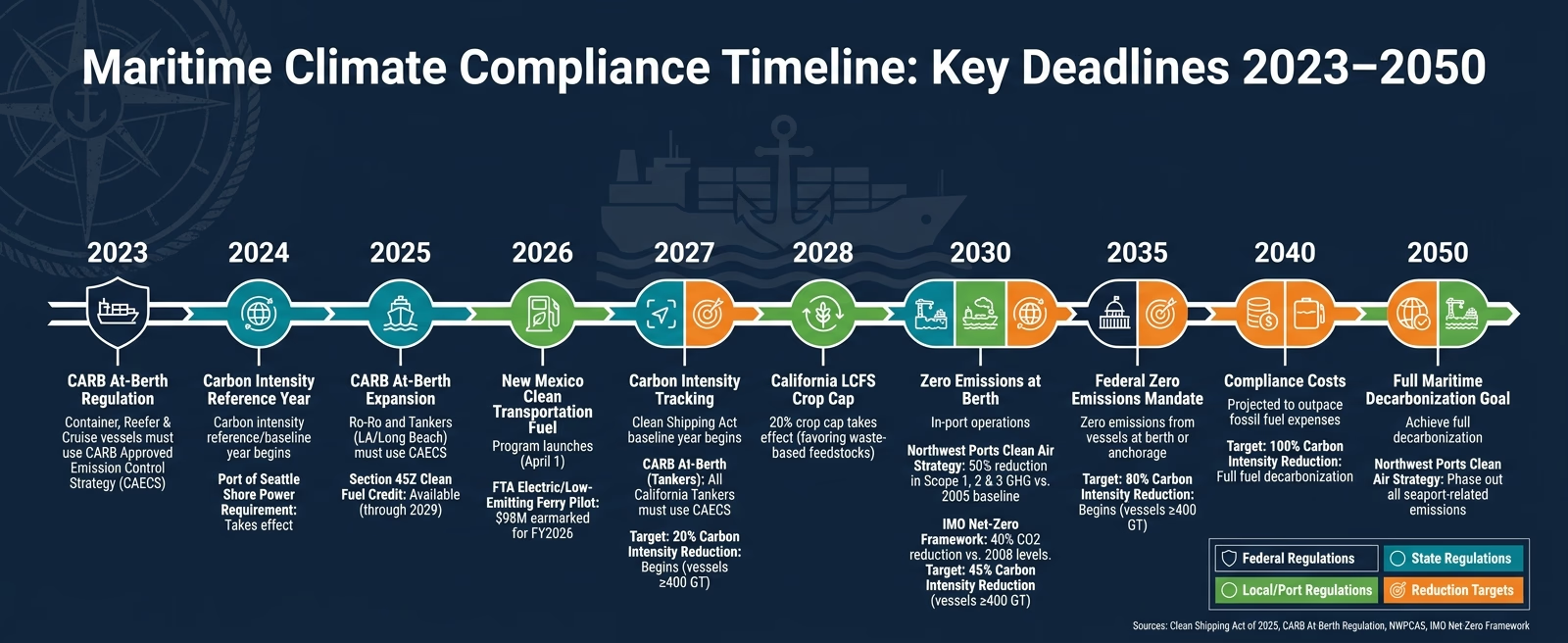
Maritime Climate Compliance Timeline: Key Deadlines 2023–2050
Understanding the policies that shape your industry is just the beginning. The real challenge lies in converting those regulations into actionable steps your team can implement. It all begins with a clear understanding of your current emissions profile.
How to Establish a GHG Emissions Baseline
Before you can reduce emissions, you need an accurate measurement of where you currently stand. This baseline should include Scope 1 (direct emissions from fuel combustion in engines and boilers), Scope 2 (emissions from purchased electricity), and Scope 3 (indirect emissions across your supply chain). Alongside carbon dioxide (CO₂), consider methane (CH₄) and nitrous oxide (N₂O) emissions as well [10]. The EPA's Port Emissions Inventory Guidance offers a reliable method for estimating emissions from mobile sources involved in goods movement [9].
Start by tracking fuel consumption by type, emission factors, distance traveled, cargo carried, time spent at sea, and emissions generated while at berth. Report 100% of emissions from fuel combustion, whether your vessel is in transit or moored [10].
A solid monitoring plan is essential. It should identify all emission sources, such as main engines, auxiliary engines, and boilers, and outline measurement methods for fuel usage and tank levels. Include procedures for addressing data gaps caused by equipment failures, and review the plan annually to keep it up to date [10]. Once your baseline is complete, use it to establish reduction milestones that align with regulatory requirements.
Setting Emissions Targets That Match Policy Timelines
With your baseline established, you can translate policy deadlines into specific reduction goals. For carbon intensity, 2024 serves as the reference year, and the following milestones apply:
Policy Milestone | Target Reduction vs. 2024 Baseline | Scope |
|---|---|---|
2027–2029 | 20% reduction | Carbon intensity, vessels ≥400 GT [2] |
2030 | Zero emissions at berth or anchorage | In-port operations [2] |
2030–2034 | 45% reduction | Carbon intensity, vessels ≥400 GT [2] |
2035–2039 | 80% reduction | Carbon intensity, vessels ≥400 GT [2] |
2040 and after | 100% reduction | Full fuel decarbonization [2] |
These milestones shape operational decisions, from fuel procurement and route planning to infrastructure investments. The 2030 goal of zero emissions during in-port operations is particularly urgent, as it requires significant infrastructure upgrades that can take years to plan and implement. If your fleet operates across multiple states, be aware of varying local deadlines. Early overcompliance can also provide flexibility for meeting stricter future requirements [2].
Choosing the Right Decarbonization Strategies
Once you’ve set your targets, the next step is selecting strategies to meet them. Effective decarbonization often involves a mix of technical improvements, operational adjustments, and fuel transitions [12]. The best approach depends on your fleet’s characteristics, trade routes, and available budget.
One of the most cost-effective methods is slow steaming, where reducing speed can significantly lower fuel consumption and emissions due to the cubic relationship between speed and fuel use [12]. Combining this with route optimization and hull efficiency upgrades can yield further reductions.
For long-term planning, transitioning from heavy fuel oil to low-carbon alternatives like methanol and adopting shore power for port operations will be critical for meeting the 2030 and post-2035 goals. Shore power, for example, is a proven technology that directly addresses the 2030 in-port emissions target, though it requires coordinated investment in port infrastructure. When evaluating options, consider factors such as upfront costs, technology readiness, and the potential for greenhouse gas reductions. A structured decision framework can help prioritize investments that balance compliance with federal, state, and local regulations while staying within budget constraints.
Putting Climate Targets into Projects and Investments
Once emissions targets are set, the next step is turning them into tangible, funded projects.
Designing Projects That Meet Policy and Funding Criteria
The most impactful projects align emissions reduction efforts with available funding opportunities. For instance, the EPA's Clean Ports Program offers nearly $3 billion to support initiatives like zero-emission cargo equipment, drayage trucks, shore power systems, and hydrogen fueling infrastructure [14]. Similarly, ferry operators can leverage the FTA's Electric or Low-Emitting Ferry Pilot Program, which provides up to 90% federal cost-sharing for qualifying vessels and charging infrastructure, with $98 million earmarked for Fiscal Year 2026 [15].
Private logistics companies can access EPA's "Zero-Emission Technology Deployment" funds by collaborating with port authorities or state agencies. This partnership approach simplifies qualification, even if the company itself isn’t a public entity [14]. To strengthen funding proposals, prioritize projects in underserved communities, as these earn additional points during federal grant evaluations. Smaller grants, such as "Climate and Air Quality Planning" funds, can also be used to conduct initial emissions inventories, setting the stage for larger-scale technology deployment awards [14].
A practical approach to project design is to align clean equipment purchases with the natural replacement cycle of existing assets. For example, replacing a diesel-powered rubber-tired gantry (RTG) crane at the end of its life with an electric model avoids the financial burden of early retirement. Electric RTG cranes offer a 65% reduction in per-unit energy costs compared to diesel models [13].
In February 2026, a prominent East Coast port authority managing 3 million TEUs annually reported $125 million in cumulative savings over five years by embedding sustainability into its capital planning. This included electrifying 65% of its cargo handling equipment (saving $48 million in diesel costs) and installing 12 MW of solar power on terminal rooftops. The authority also launched a clean truck initiative mandating 2010 EPA engine standards by 2027, which reduced PM2.5 levels in the surrounding community by 31% [13].
This kind of strategic project design demonstrates how sustainability can yield both environmental and financial rewards.
How Council Fire Helps Companies Act on Sustainability Goals
Council Fire specializes in turning sustainability plans into actionable decarbonization strategies. By working with maritime and logistics companies, Council Fire creates roadmaps that align operational goals with regulatory timelines, funding opportunities, and community needs. Their services include carbon footprint analysis, ESG strategy development, and fostering trust through stakeholder engagement. The East Coast port authority case study mentioned earlier - supported by Council Fire - highlights how integrating equipment electrification, renewable energy, and community health goals can deliver measurable benefits for both the environment and the bottom line [13].
Integrating Climate Goals into Procurement and Capital Planning
To maximize impact, climate strategies should extend beyond sustainability reports and be embedded into procurement contracts and capital budgets. One way to achieve this is by using shadow carbon pricing, which factors future compliance costs into today’s financial decisions. With compliance costs expected to outpace fossil fuel expenses by 2040, this approach offers a proactive way to manage risks [13].
On the procurement side, "green lease" clauses and incentive programs for vessels can help extend climate goals to tenants and third-party operators. This is especially critical since Scope 3 emissions - those generated by external partners - can account for over 80% of a port's total carbon footprint [13]. Financing large-scale upgrades without overburdening capital budgets can be achieved by layering multiple funding sources. Combining federal grants like the Clean Ports Program or Port Infrastructure Development Program (PIDP) with state incentives such as California's CORE program and private lease financing creates a diversified funding strategy [13].
Tracking Progress and Staying Current with Policy Changes
Staying compliant with climate policies is not a one-time task - it requires consistent tracking and performance evaluation. This vigilance ensures that strategic plans translate into measurable actions.
How to Monitor Federal, State, and Local Policy Updates
To stay informed at the federal level, keep an eye on updates from the Treasury and IRS regarding the Section 45Z Clean Fuel Production Credit [3]. On the state level, programs like California's Low Carbon Fuel Standard (LCFS) are evolving. For instance, starting January 1, 2028, a crop cap will push producers toward using waste-based feedstocks [3]. Similar programs in Oregon, Washington, and New Mexico often allow maritime operators to earn credits by opting in [3].
Globally, the IMO's Net-Zero Framework targets a 40% reduction in CO2 emissions by 2030, compared to 2008 levels. However, the IMO's decision in October 2025 to delay formal adoption by one year means the next vote is scheduled for October 2026 [3]. This delay shouldn't be seen as a reason to pause preparations; instead, it offers a brief window to refine strategies.
To stay updated, leverage resources like trade associations, including the Clean Fuels Alliance America and the Maritime Innovation Coalition. Engage in public comment periods, conduct regular internal assessments, and monitor port-specific mandates, such as the Port of Seattle's shore power requirement set for 2024 [3].
Measuring and Reporting Climate Performance
With monitoring systems established, the focus shifts to measuring and documenting progress. Emissions tracking should go beyond annual reports. Dashboards that provide real-time data on fuel consumption, carbon intensity per voyage, and total greenhouse gas emissions (measured in CO2-equivalent) are essential. These metrics align with the Clean Shipping Act of 2025 requirements [16]. Ensuring consistency across internal reporting methods with both EU and IMO frameworks can streamline processes and reduce the need for separate disclosures [16].
Understanding technical nuances is critical. For example, the EU's FuelEU Maritime Regulation employs a well-to-wake lifecycle approach, while the EU Emissions Trading System (ETS) focuses on a tank-to-wake method, which only accounts for on-board combustion [3]. Ships calling at EU ports must accommodate both approaches. Additionally, under current MRV (Monitoring, Reporting, and Verification) rules, physical verification of emissions reports is required at least once every four years [11]. This ensures audit readiness and helps avoid unexpected disruptions.
Using Pilots and Collaboration to Improve Over Time
Testing strategies on a smaller scale can provide valuable insights before broader implementation. For instance, in December 2023, Crowley and Carbon Ridge, with support from MARAD's META program, launched a pilot aboard the container ship Storm. This project tested a second-generation carbon capture system housed in two 40-foot containers, capable of capturing 1 metric ton of CO2 per day from the ship's main engine during operations [17].
Chase Dwyer, CEO of Carbon Ridge, highlighted the significance of this initiative:
"The advancement of the pilot project represents a milestone in the emerging technology for carbon capture. With its potential for significant emissions reductions... ship owners and operators have the opportunity to future-proof their vessels." [17]
Collaboration also plays a key role. Joining networks like the World Ports Climate Action Program (WPCAP) offers access to shared resources, industry insights, and credibility with international shipping lines [5]. Partnering with local universities to install air quality monitors in port-adjacent neighborhoods can build community trust while providing baseline data on pollutants like PM2.5 and NOx. This data is crucial for demonstrating tangible improvements over time [5].
Conclusion: Steps to Align with Climate Policy Across All Levels
To successfully align with climate policies, businesses must view this as an ongoing process that demands consistent attention and adaptation. Companies that embrace early action position themselves for key advantages, including improved funding opportunities, fewer compliance risks, and stronger connections with regulators and local communities.
A logical first step is conducting a detailed emissions inventory that includes Scope 1, 2, and 3 emissions. Notably, Scope 3 emissions - stemming from tenant operations, vessels, and drayage - can make up more than 80% of a port's total carbon footprint. This makes them a critical area for reduction efforts [13]. Following this, companies should strategically plan equipment upgrades to align with asset replacement cycles, reducing costs and avoiding unnecessary early retirements [13].
Early adoption of climate-aligned practices doesn't just ensure compliance; it can also yield measurable financial returns.
"When sustainability generates hard financial returns, it builds organizational commitment that outlasts any individual champion." - Council Fire [13]
For maritime and logistics companies, navigating these challenges requires a structured approach. Council Fire offers a roadmap to turn climate policy awareness into actionable results. By linking comprehensive greenhouse gas (GHG) inventories with funding opportunities - such as EPA Clean Ports Program grants, IRA tax incentives, and DOT RAISE/INFRA funding - businesses can seamlessly connect policy compliance with practical, funded initiatives discussed throughout this article [5][13].
FAQs
What should we do first to comply with federal, state, and port rules?
To tackle emissions effectively, begin with a detailed, port-wide emissions inventory that spans Scope 1, 2, and 3 emissions. This inventory should account for all sources, including vessels, cargo-handling equipment, drayage trucks, and rail operations. Establishing this baseline is not only critical for understanding the current impact but also serves as a key requirement for many federal grant applications.
Once the inventory is in place, set clear, measurable emissions reduction targets. These targets should align with global initiatives, such as the International Maritime Organization's (IMO) 2030 and 2050 goals. To ensure these objectives are met, integrate them into tenant lease agreements, fostering operational consistency across all activities within the port.
How can we avoid conflicts between LCFS credits and the 45Z tax credit?
You can use both the federal 45Z tax credit and state-level Clean Fuel Standard (CFS) programs, such as California's LCFS, without any legal conflict. Since these programs function independently, producers can combine them to improve project economics. However, federal regulations prevent stacking the 45Z credit with specific other federal credits, like 45Q or 45V, for the same facility or fuel within the same tax year.
Which projects are the fastest path to zero emissions at berth?
The fastest path to eliminating emissions while ships are at berth is through the adoption of shore power. This system enables vessels to plug into the local electrical grid, allowing them to turn off their auxiliary engines, which typically run on fossil fuels. By doing so, shore power dramatically cuts greenhouse gas emissions and air pollutants from docked ships. Cruise ships, in particular, are often the biggest contributors to port-related maritime emissions, making the implementation of shore power for these vessels an especially effective measure.
Related Blog Posts
How to Develop a Blue Economy Strategy for Maritime & Logistics Companies
How to Build a Climate-Ready Energy & Water Infrastructure Plan for Maritime & Logistics Companies
How to Transition to Renewable Energy Systems at the Local Level for Maritime & Logistics Companies
How to Turn a Strategic Plan into Fundable, Shovel-Ready Projects for Maritime & Logistics Companies
Latest Articles
©2026

Narrative Change and Power Building: The Missing Half of Advocacy
Narrative change is the process of disrupting dominant narratives that normalize inequity and advancing new narratives from historically marginalized communities.

Funding Resilience Without Federal Grants
BRIC is unreliable and FEMA is shrinking. Here's how cities fund climate resilience with dedicated revenue, blended finance, and a coordinating authority.

The ESG Blind Spot: How AI Is Finding Risks in Companies Nobody Else Is Watching
Norway's sovereign wealth fund uses AI to screen 7,200 portfolio companies for forced labor and corruption within 24 hours. The real story is the emerging-market coverage gap that traditional ESG data vendors miss — and what it means for any company with a global supply chain.
Narrative Change and Power Building: The Missing Half of Advocacy
Narrative change is the process of disrupting dominant narratives that normalize inequity and advancing new narratives from historically marginalized communities.
Funding Resilience Without Federal Grants
BRIC is unreliable and FEMA is shrinking. Here's how cities fund climate resilience with dedicated revenue, blended finance, and a coordinating authority.
The ESG Blind Spot: How AI Is Finding Risks in Companies Nobody Else Is Watching
Norway's sovereign wealth fund uses AI to screen 7,200 portfolio companies for forced labor and corruption within 24 hours. The real story is the emerging-market coverage gap that traditional ESG data vendors miss — and what it means for any company with a global supply chain.
FAQ
01
What does it really mean to “redefine profit”?
02
What makes Council Fire different?
03
Who does Council Fire work with?
04
What does working with Council Fire actually look like?
05
How does Council Fire help organizations turn big goals into action?
06
How does Council Fire define and measure success?
07
How does technology fit into Council Fire’s work?
Jun 4, 2026
How to Align Local Policy with State and Federal Climate Goals for Maritime & Logistics Companies
Sustainability Strategy
In This Article
Align local port rules with state and federal climate targets by mapping regulations, setting GHG baselines, and funding tech upgrades.
How to Align Local Policy with State and Federal Climate Goals for Maritime & Logistics Companies
Maritime and logistics companies face a maze of climate regulations across federal, state, and local levels. Non-compliance can result in fines, restricted port access, or lost certifications, while aligning with policies can unlock tax credits and funding opportunities. Key steps include:
Understand the Regulatory Landscape: Federal laws like the Clean Shipping Act of 2025 mandate emissions cuts, while state programs like California’s LCFS offer financial incentives for low-carbon fuels. Local port rules often set stricter requirements, such as mandatory shore power use.
Set Emissions Baselines: Measure Scope 1, 2, and 3 emissions to establish a starting point. Use tools like the EPA's Port Emissions Inventory Guidance to track fuel use and emissions.
Plan for Compliance Deadlines: Align operational goals with timelines, such as achieving zero emissions at berth by 2030 and full decarbonization by 2050.
Invest in Clean Technologies: Shift to low-carbon fuels, install shore power systems, and electrify cargo equipment. Federal programs like the EPA’s Clean Ports Program can help fund these upgrades.
Monitor and Adjust: Stay updated on policy changes and refine strategies using real-time data and pilot projects.
Early preparation not only ensures compliance but can also reduce costs and improve access to green financing.
Net-Zero Regulations in Shipping: Outcomes from the IMO Climate negotiations
Mapping the Climate Policy Landscape
This section builds on the earlier discussion of layered climate policies, diving into the specifics of federal, state, and local regulations. Each level presents its own challenges and opportunities, often overlapping or even conflicting. Understanding these nuances is key to crafting a compliance strategy that works across the board.
Federal Climate Goals and Their Operational Impacts
The proposed Clean Shipping Act of 2025 (S. 2261) aims to amend the Clean Air Act with a Marine Greenhouse Gas Fuel Standard. This legislation applies to vessels exceeding 400 gross tonnage on voyages between U.S. ports or between U.S. and foreign ports. Its carbon intensity reduction targets are ambitious: a 30% cut from a 2027 baseline by 2030, scaling to 100% by 2050 [4].
To prepare, maritime operators should start tracking their carbon intensity beginning in 2027, as this will determine the baseline for future reductions [4]. Additionally, federal policy mandates zero emissions from vessels at berth or anchorage by January 1, 2035, which will likely require significant investment in port infrastructure [4].
On the incentive side, the Section 45Z Clean Fuel Production Credit - available through 2029 - offers cost relief for biodiesel, renewable diesel, and clean methanol used in maritime operations. However, this credit has a catch: eligible biofuels must be sourced from feedstocks produced in the U.S., Mexico, or Canada [3]. This geographic restriction could complicate fuel procurement strategies, especially for operators relying on imported feedstocks.
State-Level Policies and Their Influence on Maritime Operations
State climate policies vary widely in design and scope. California's Low Carbon Fuel Standard (LCFS) is among the most established, but similar programs exist in Oregon and Washington, with New Mexico’s Clean Transportation Fuel program launching on April 1, 2026 [1]. While maritime operators are often exempt from generating deficits under these programs, they can opt in to generate and sell credits. This creates a potential revenue stream, turning compliance into a financial opportunity [1].
However, conflicts between state and federal policies may complicate compliance. For example, California's LCFS will impose a 20% crop cap starting January 1, 2028, favoring waste-based feedstocks like used cooking oil and tallow. This conflicts with the federal 45Z credit, which supports North American-origin feedstocks regardless of type [1]. Operators relying on imported waste-based feedstocks may face a trade-off: qualifying for state credits but missing out on federal tax benefits - or vice versa. Developing a state policy matrix that outlines feedstock rules, credit values, and opt-in options for each state can help identify and address these conflicts early.
While state frameworks provide broad guidance, local and port-specific regulations often demand immediate attention.
Local and Port-Specific Rules to Watch
Port-level regulations frequently set the most stringent deadlines. For instance, the Port of Seattle's Maritime Climate and Air Action Plan (MCAAP) requires 100% of homeport cruise calls to connect to shore power and mandates a fully electric light-duty fleet - goals that surpass federal requirements [6]. Similarly, the Northwest Ports Clean Air Strategy (NWPCAS), a voluntary collaboration between U.S. and Canadian ports, aims for a 50% reduction in Scope 1, 2, and 3 greenhouse gas emissions by 2030, using 2005 as the baseline [7].
California’s CARB At-Berth Regulation, however, is mandatory and already in effect. Here’s a breakdown of its requirements:
Vessel Type | Compliance Start Date | Requirement |
|---|---|---|
Container, Reefer, Cruise | January 1, 2023 | Use CARB Approved Emission Control Strategy (CAECS) [8] |
Ro-Ro | January 1, 2025 | Use CAECS at all regulated terminals [8] |
Tankers (LA/Long Beach) | January 1, 2025 | Use CAECS at regulated terminals [8] |
Tankers (All other CA) | January 1, 2027 | Use CAECS at all regulated terminals [8] |
Beyond air quality mandates, many port authorities are embedding zero-emission equipment requirements and reporting obligations into terminal lease agreements [5]. This means compliance isn’t just a regulatory issue - it can directly affect your ability to renew or secure port access. Keeping track of these lease-specific mandates alongside formal regulations ensures a clearer understanding of enforceable expectations at each location.
"To phase out emissions from seaport-related activities by 2050, supporting cleaner air for our local communities and fulfilling our shared responsibility to help limit global temperature rise to 1.5°C." - Northwest Ports Clean Air Strategy [7]
Turning Policy Requirements into Operational Goals
Maritime Climate Compliance Timeline: Key Deadlines 2023–2050
Understanding the policies that shape your industry is just the beginning. The real challenge lies in converting those regulations into actionable steps your team can implement. It all begins with a clear understanding of your current emissions profile.
How to Establish a GHG Emissions Baseline
Before you can reduce emissions, you need an accurate measurement of where you currently stand. This baseline should include Scope 1 (direct emissions from fuel combustion in engines and boilers), Scope 2 (emissions from purchased electricity), and Scope 3 (indirect emissions across your supply chain). Alongside carbon dioxide (CO₂), consider methane (CH₄) and nitrous oxide (N₂O) emissions as well [10]. The EPA's Port Emissions Inventory Guidance offers a reliable method for estimating emissions from mobile sources involved in goods movement [9].
Start by tracking fuel consumption by type, emission factors, distance traveled, cargo carried, time spent at sea, and emissions generated while at berth. Report 100% of emissions from fuel combustion, whether your vessel is in transit or moored [10].
A solid monitoring plan is essential. It should identify all emission sources, such as main engines, auxiliary engines, and boilers, and outline measurement methods for fuel usage and tank levels. Include procedures for addressing data gaps caused by equipment failures, and review the plan annually to keep it up to date [10]. Once your baseline is complete, use it to establish reduction milestones that align with regulatory requirements.
Setting Emissions Targets That Match Policy Timelines
With your baseline established, you can translate policy deadlines into specific reduction goals. For carbon intensity, 2024 serves as the reference year, and the following milestones apply:
Policy Milestone | Target Reduction vs. 2024 Baseline | Scope |
|---|---|---|
2027–2029 | 20% reduction | Carbon intensity, vessels ≥400 GT [2] |
2030 | Zero emissions at berth or anchorage | In-port operations [2] |
2030–2034 | 45% reduction | Carbon intensity, vessels ≥400 GT [2] |
2035–2039 | 80% reduction | Carbon intensity, vessels ≥400 GT [2] |
2040 and after | 100% reduction | Full fuel decarbonization [2] |
These milestones shape operational decisions, from fuel procurement and route planning to infrastructure investments. The 2030 goal of zero emissions during in-port operations is particularly urgent, as it requires significant infrastructure upgrades that can take years to plan and implement. If your fleet operates across multiple states, be aware of varying local deadlines. Early overcompliance can also provide flexibility for meeting stricter future requirements [2].
Choosing the Right Decarbonization Strategies
Once you’ve set your targets, the next step is selecting strategies to meet them. Effective decarbonization often involves a mix of technical improvements, operational adjustments, and fuel transitions [12]. The best approach depends on your fleet’s characteristics, trade routes, and available budget.
One of the most cost-effective methods is slow steaming, where reducing speed can significantly lower fuel consumption and emissions due to the cubic relationship between speed and fuel use [12]. Combining this with route optimization and hull efficiency upgrades can yield further reductions.
For long-term planning, transitioning from heavy fuel oil to low-carbon alternatives like methanol and adopting shore power for port operations will be critical for meeting the 2030 and post-2035 goals. Shore power, for example, is a proven technology that directly addresses the 2030 in-port emissions target, though it requires coordinated investment in port infrastructure. When evaluating options, consider factors such as upfront costs, technology readiness, and the potential for greenhouse gas reductions. A structured decision framework can help prioritize investments that balance compliance with federal, state, and local regulations while staying within budget constraints.
Putting Climate Targets into Projects and Investments
Once emissions targets are set, the next step is turning them into tangible, funded projects.
Designing Projects That Meet Policy and Funding Criteria
The most impactful projects align emissions reduction efforts with available funding opportunities. For instance, the EPA's Clean Ports Program offers nearly $3 billion to support initiatives like zero-emission cargo equipment, drayage trucks, shore power systems, and hydrogen fueling infrastructure [14]. Similarly, ferry operators can leverage the FTA's Electric or Low-Emitting Ferry Pilot Program, which provides up to 90% federal cost-sharing for qualifying vessels and charging infrastructure, with $98 million earmarked for Fiscal Year 2026 [15].
Private logistics companies can access EPA's "Zero-Emission Technology Deployment" funds by collaborating with port authorities or state agencies. This partnership approach simplifies qualification, even if the company itself isn’t a public entity [14]. To strengthen funding proposals, prioritize projects in underserved communities, as these earn additional points during federal grant evaluations. Smaller grants, such as "Climate and Air Quality Planning" funds, can also be used to conduct initial emissions inventories, setting the stage for larger-scale technology deployment awards [14].
A practical approach to project design is to align clean equipment purchases with the natural replacement cycle of existing assets. For example, replacing a diesel-powered rubber-tired gantry (RTG) crane at the end of its life with an electric model avoids the financial burden of early retirement. Electric RTG cranes offer a 65% reduction in per-unit energy costs compared to diesel models [13].
In February 2026, a prominent East Coast port authority managing 3 million TEUs annually reported $125 million in cumulative savings over five years by embedding sustainability into its capital planning. This included electrifying 65% of its cargo handling equipment (saving $48 million in diesel costs) and installing 12 MW of solar power on terminal rooftops. The authority also launched a clean truck initiative mandating 2010 EPA engine standards by 2027, which reduced PM2.5 levels in the surrounding community by 31% [13].
This kind of strategic project design demonstrates how sustainability can yield both environmental and financial rewards.
How Council Fire Helps Companies Act on Sustainability Goals
Council Fire specializes in turning sustainability plans into actionable decarbonization strategies. By working with maritime and logistics companies, Council Fire creates roadmaps that align operational goals with regulatory timelines, funding opportunities, and community needs. Their services include carbon footprint analysis, ESG strategy development, and fostering trust through stakeholder engagement. The East Coast port authority case study mentioned earlier - supported by Council Fire - highlights how integrating equipment electrification, renewable energy, and community health goals can deliver measurable benefits for both the environment and the bottom line [13].
Integrating Climate Goals into Procurement and Capital Planning
To maximize impact, climate strategies should extend beyond sustainability reports and be embedded into procurement contracts and capital budgets. One way to achieve this is by using shadow carbon pricing, which factors future compliance costs into today’s financial decisions. With compliance costs expected to outpace fossil fuel expenses by 2040, this approach offers a proactive way to manage risks [13].
On the procurement side, "green lease" clauses and incentive programs for vessels can help extend climate goals to tenants and third-party operators. This is especially critical since Scope 3 emissions - those generated by external partners - can account for over 80% of a port's total carbon footprint [13]. Financing large-scale upgrades without overburdening capital budgets can be achieved by layering multiple funding sources. Combining federal grants like the Clean Ports Program or Port Infrastructure Development Program (PIDP) with state incentives such as California's CORE program and private lease financing creates a diversified funding strategy [13].
Tracking Progress and Staying Current with Policy Changes
Staying compliant with climate policies is not a one-time task - it requires consistent tracking and performance evaluation. This vigilance ensures that strategic plans translate into measurable actions.
How to Monitor Federal, State, and Local Policy Updates
To stay informed at the federal level, keep an eye on updates from the Treasury and IRS regarding the Section 45Z Clean Fuel Production Credit [3]. On the state level, programs like California's Low Carbon Fuel Standard (LCFS) are evolving. For instance, starting January 1, 2028, a crop cap will push producers toward using waste-based feedstocks [3]. Similar programs in Oregon, Washington, and New Mexico often allow maritime operators to earn credits by opting in [3].
Globally, the IMO's Net-Zero Framework targets a 40% reduction in CO2 emissions by 2030, compared to 2008 levels. However, the IMO's decision in October 2025 to delay formal adoption by one year means the next vote is scheduled for October 2026 [3]. This delay shouldn't be seen as a reason to pause preparations; instead, it offers a brief window to refine strategies.
To stay updated, leverage resources like trade associations, including the Clean Fuels Alliance America and the Maritime Innovation Coalition. Engage in public comment periods, conduct regular internal assessments, and monitor port-specific mandates, such as the Port of Seattle's shore power requirement set for 2024 [3].
Measuring and Reporting Climate Performance
With monitoring systems established, the focus shifts to measuring and documenting progress. Emissions tracking should go beyond annual reports. Dashboards that provide real-time data on fuel consumption, carbon intensity per voyage, and total greenhouse gas emissions (measured in CO2-equivalent) are essential. These metrics align with the Clean Shipping Act of 2025 requirements [16]. Ensuring consistency across internal reporting methods with both EU and IMO frameworks can streamline processes and reduce the need for separate disclosures [16].
Understanding technical nuances is critical. For example, the EU's FuelEU Maritime Regulation employs a well-to-wake lifecycle approach, while the EU Emissions Trading System (ETS) focuses on a tank-to-wake method, which only accounts for on-board combustion [3]. Ships calling at EU ports must accommodate both approaches. Additionally, under current MRV (Monitoring, Reporting, and Verification) rules, physical verification of emissions reports is required at least once every four years [11]. This ensures audit readiness and helps avoid unexpected disruptions.
Using Pilots and Collaboration to Improve Over Time
Testing strategies on a smaller scale can provide valuable insights before broader implementation. For instance, in December 2023, Crowley and Carbon Ridge, with support from MARAD's META program, launched a pilot aboard the container ship Storm. This project tested a second-generation carbon capture system housed in two 40-foot containers, capable of capturing 1 metric ton of CO2 per day from the ship's main engine during operations [17].
Chase Dwyer, CEO of Carbon Ridge, highlighted the significance of this initiative:
"The advancement of the pilot project represents a milestone in the emerging technology for carbon capture. With its potential for significant emissions reductions... ship owners and operators have the opportunity to future-proof their vessels." [17]
Collaboration also plays a key role. Joining networks like the World Ports Climate Action Program (WPCAP) offers access to shared resources, industry insights, and credibility with international shipping lines [5]. Partnering with local universities to install air quality monitors in port-adjacent neighborhoods can build community trust while providing baseline data on pollutants like PM2.5 and NOx. This data is crucial for demonstrating tangible improvements over time [5].
Conclusion: Steps to Align with Climate Policy Across All Levels
To successfully align with climate policies, businesses must view this as an ongoing process that demands consistent attention and adaptation. Companies that embrace early action position themselves for key advantages, including improved funding opportunities, fewer compliance risks, and stronger connections with regulators and local communities.
A logical first step is conducting a detailed emissions inventory that includes Scope 1, 2, and 3 emissions. Notably, Scope 3 emissions - stemming from tenant operations, vessels, and drayage - can make up more than 80% of a port's total carbon footprint. This makes them a critical area for reduction efforts [13]. Following this, companies should strategically plan equipment upgrades to align with asset replacement cycles, reducing costs and avoiding unnecessary early retirements [13].
Early adoption of climate-aligned practices doesn't just ensure compliance; it can also yield measurable financial returns.
"When sustainability generates hard financial returns, it builds organizational commitment that outlasts any individual champion." - Council Fire [13]
For maritime and logistics companies, navigating these challenges requires a structured approach. Council Fire offers a roadmap to turn climate policy awareness into actionable results. By linking comprehensive greenhouse gas (GHG) inventories with funding opportunities - such as EPA Clean Ports Program grants, IRA tax incentives, and DOT RAISE/INFRA funding - businesses can seamlessly connect policy compliance with practical, funded initiatives discussed throughout this article [5][13].
FAQs
What should we do first to comply with federal, state, and port rules?
To tackle emissions effectively, begin with a detailed, port-wide emissions inventory that spans Scope 1, 2, and 3 emissions. This inventory should account for all sources, including vessels, cargo-handling equipment, drayage trucks, and rail operations. Establishing this baseline is not only critical for understanding the current impact but also serves as a key requirement for many federal grant applications.
Once the inventory is in place, set clear, measurable emissions reduction targets. These targets should align with global initiatives, such as the International Maritime Organization's (IMO) 2030 and 2050 goals. To ensure these objectives are met, integrate them into tenant lease agreements, fostering operational consistency across all activities within the port.
How can we avoid conflicts between LCFS credits and the 45Z tax credit?
You can use both the federal 45Z tax credit and state-level Clean Fuel Standard (CFS) programs, such as California's LCFS, without any legal conflict. Since these programs function independently, producers can combine them to improve project economics. However, federal regulations prevent stacking the 45Z credit with specific other federal credits, like 45Q or 45V, for the same facility or fuel within the same tax year.
Which projects are the fastest path to zero emissions at berth?
The fastest path to eliminating emissions while ships are at berth is through the adoption of shore power. This system enables vessels to plug into the local electrical grid, allowing them to turn off their auxiliary engines, which typically run on fossil fuels. By doing so, shore power dramatically cuts greenhouse gas emissions and air pollutants from docked ships. Cruise ships, in particular, are often the biggest contributors to port-related maritime emissions, making the implementation of shore power for these vessels an especially effective measure.
Related Blog Posts
How to Develop a Blue Economy Strategy for Maritime & Logistics Companies
How to Build a Climate-Ready Energy & Water Infrastructure Plan for Maritime & Logistics Companies
How to Transition to Renewable Energy Systems at the Local Level for Maritime & Logistics Companies
How to Turn a Strategic Plan into Fundable, Shovel-Ready Projects for Maritime & Logistics Companies
Latest Articles
©2026
Narrative Change and Power Building: The Missing Half of Advocacy
Narrative change is the process of disrupting dominant narratives that normalize inequity and advancing new narratives from historically marginalized communities.
Funding Resilience Without Federal Grants
BRIC is unreliable and FEMA is shrinking. Here's how cities fund climate resilience with dedicated revenue, blended finance, and a coordinating authority.
The ESG Blind Spot: How AI Is Finding Risks in Companies Nobody Else Is Watching
Norway's sovereign wealth fund uses AI to screen 7,200 portfolio companies for forced labor and corruption within 24 hours. The real story is the emerging-market coverage gap that traditional ESG data vendors miss — and what it means for any company with a global supply chain.
FAQ
01
What does it really mean to “redefine profit”?
02
What makes Council Fire different?
03
Who does Council Fire work with?
04
What does working with Council Fire actually look like?
05
How does Council Fire help organizations turn big goals into action?
06
How does Council Fire define and measure success?
07
How does technology fit into Council Fire’s work?
Jun 4, 2026
How to Align Local Policy with State and Federal Climate Goals for Maritime & Logistics Companies
Sustainability Strategy
In This Article
Align local port rules with state and federal climate targets by mapping regulations, setting GHG baselines, and funding tech upgrades.
How to Align Local Policy with State and Federal Climate Goals for Maritime & Logistics Companies
Maritime and logistics companies face a maze of climate regulations across federal, state, and local levels. Non-compliance can result in fines, restricted port access, or lost certifications, while aligning with policies can unlock tax credits and funding opportunities. Key steps include:
Understand the Regulatory Landscape: Federal laws like the Clean Shipping Act of 2025 mandate emissions cuts, while state programs like California’s LCFS offer financial incentives for low-carbon fuels. Local port rules often set stricter requirements, such as mandatory shore power use.
Set Emissions Baselines: Measure Scope 1, 2, and 3 emissions to establish a starting point. Use tools like the EPA's Port Emissions Inventory Guidance to track fuel use and emissions.
Plan for Compliance Deadlines: Align operational goals with timelines, such as achieving zero emissions at berth by 2030 and full decarbonization by 2050.
Invest in Clean Technologies: Shift to low-carbon fuels, install shore power systems, and electrify cargo equipment. Federal programs like the EPA’s Clean Ports Program can help fund these upgrades.
Monitor and Adjust: Stay updated on policy changes and refine strategies using real-time data and pilot projects.
Early preparation not only ensures compliance but can also reduce costs and improve access to green financing.
Net-Zero Regulations in Shipping: Outcomes from the IMO Climate negotiations
Mapping the Climate Policy Landscape
This section builds on the earlier discussion of layered climate policies, diving into the specifics of federal, state, and local regulations. Each level presents its own challenges and opportunities, often overlapping or even conflicting. Understanding these nuances is key to crafting a compliance strategy that works across the board.
Federal Climate Goals and Their Operational Impacts
The proposed Clean Shipping Act of 2025 (S. 2261) aims to amend the Clean Air Act with a Marine Greenhouse Gas Fuel Standard. This legislation applies to vessels exceeding 400 gross tonnage on voyages between U.S. ports or between U.S. and foreign ports. Its carbon intensity reduction targets are ambitious: a 30% cut from a 2027 baseline by 2030, scaling to 100% by 2050 [4].
To prepare, maritime operators should start tracking their carbon intensity beginning in 2027, as this will determine the baseline for future reductions [4]. Additionally, federal policy mandates zero emissions from vessels at berth or anchorage by January 1, 2035, which will likely require significant investment in port infrastructure [4].
On the incentive side, the Section 45Z Clean Fuel Production Credit - available through 2029 - offers cost relief for biodiesel, renewable diesel, and clean methanol used in maritime operations. However, this credit has a catch: eligible biofuels must be sourced from feedstocks produced in the U.S., Mexico, or Canada [3]. This geographic restriction could complicate fuel procurement strategies, especially for operators relying on imported feedstocks.
State-Level Policies and Their Influence on Maritime Operations
State climate policies vary widely in design and scope. California's Low Carbon Fuel Standard (LCFS) is among the most established, but similar programs exist in Oregon and Washington, with New Mexico’s Clean Transportation Fuel program launching on April 1, 2026 [1]. While maritime operators are often exempt from generating deficits under these programs, they can opt in to generate and sell credits. This creates a potential revenue stream, turning compliance into a financial opportunity [1].
However, conflicts between state and federal policies may complicate compliance. For example, California's LCFS will impose a 20% crop cap starting January 1, 2028, favoring waste-based feedstocks like used cooking oil and tallow. This conflicts with the federal 45Z credit, which supports North American-origin feedstocks regardless of type [1]. Operators relying on imported waste-based feedstocks may face a trade-off: qualifying for state credits but missing out on federal tax benefits - or vice versa. Developing a state policy matrix that outlines feedstock rules, credit values, and opt-in options for each state can help identify and address these conflicts early.
While state frameworks provide broad guidance, local and port-specific regulations often demand immediate attention.
Local and Port-Specific Rules to Watch
Port-level regulations frequently set the most stringent deadlines. For instance, the Port of Seattle's Maritime Climate and Air Action Plan (MCAAP) requires 100% of homeport cruise calls to connect to shore power and mandates a fully electric light-duty fleet - goals that surpass federal requirements [6]. Similarly, the Northwest Ports Clean Air Strategy (NWPCAS), a voluntary collaboration between U.S. and Canadian ports, aims for a 50% reduction in Scope 1, 2, and 3 greenhouse gas emissions by 2030, using 2005 as the baseline [7].
California’s CARB At-Berth Regulation, however, is mandatory and already in effect. Here’s a breakdown of its requirements:
Vessel Type | Compliance Start Date | Requirement |
|---|---|---|
Container, Reefer, Cruise | January 1, 2023 | Use CARB Approved Emission Control Strategy (CAECS) [8] |
Ro-Ro | January 1, 2025 | Use CAECS at all regulated terminals [8] |
Tankers (LA/Long Beach) | January 1, 2025 | Use CAECS at regulated terminals [8] |
Tankers (All other CA) | January 1, 2027 | Use CAECS at all regulated terminals [8] |
Beyond air quality mandates, many port authorities are embedding zero-emission equipment requirements and reporting obligations into terminal lease agreements [5]. This means compliance isn’t just a regulatory issue - it can directly affect your ability to renew or secure port access. Keeping track of these lease-specific mandates alongside formal regulations ensures a clearer understanding of enforceable expectations at each location.
"To phase out emissions from seaport-related activities by 2050, supporting cleaner air for our local communities and fulfilling our shared responsibility to help limit global temperature rise to 1.5°C." - Northwest Ports Clean Air Strategy [7]
Turning Policy Requirements into Operational Goals
Maritime Climate Compliance Timeline: Key Deadlines 2023–2050
Understanding the policies that shape your industry is just the beginning. The real challenge lies in converting those regulations into actionable steps your team can implement. It all begins with a clear understanding of your current emissions profile.
How to Establish a GHG Emissions Baseline
Before you can reduce emissions, you need an accurate measurement of where you currently stand. This baseline should include Scope 1 (direct emissions from fuel combustion in engines and boilers), Scope 2 (emissions from purchased electricity), and Scope 3 (indirect emissions across your supply chain). Alongside carbon dioxide (CO₂), consider methane (CH₄) and nitrous oxide (N₂O) emissions as well [10]. The EPA's Port Emissions Inventory Guidance offers a reliable method for estimating emissions from mobile sources involved in goods movement [9].
Start by tracking fuel consumption by type, emission factors, distance traveled, cargo carried, time spent at sea, and emissions generated while at berth. Report 100% of emissions from fuel combustion, whether your vessel is in transit or moored [10].
A solid monitoring plan is essential. It should identify all emission sources, such as main engines, auxiliary engines, and boilers, and outline measurement methods for fuel usage and tank levels. Include procedures for addressing data gaps caused by equipment failures, and review the plan annually to keep it up to date [10]. Once your baseline is complete, use it to establish reduction milestones that align with regulatory requirements.
Setting Emissions Targets That Match Policy Timelines
With your baseline established, you can translate policy deadlines into specific reduction goals. For carbon intensity, 2024 serves as the reference year, and the following milestones apply:
Policy Milestone | Target Reduction vs. 2024 Baseline | Scope |
|---|---|---|
2027–2029 | 20% reduction | Carbon intensity, vessels ≥400 GT [2] |
2030 | Zero emissions at berth or anchorage | In-port operations [2] |
2030–2034 | 45% reduction | Carbon intensity, vessels ≥400 GT [2] |
2035–2039 | 80% reduction | Carbon intensity, vessels ≥400 GT [2] |
2040 and after | 100% reduction | Full fuel decarbonization [2] |
These milestones shape operational decisions, from fuel procurement and route planning to infrastructure investments. The 2030 goal of zero emissions during in-port operations is particularly urgent, as it requires significant infrastructure upgrades that can take years to plan and implement. If your fleet operates across multiple states, be aware of varying local deadlines. Early overcompliance can also provide flexibility for meeting stricter future requirements [2].
Choosing the Right Decarbonization Strategies
Once you’ve set your targets, the next step is selecting strategies to meet them. Effective decarbonization often involves a mix of technical improvements, operational adjustments, and fuel transitions [12]. The best approach depends on your fleet’s characteristics, trade routes, and available budget.
One of the most cost-effective methods is slow steaming, where reducing speed can significantly lower fuel consumption and emissions due to the cubic relationship between speed and fuel use [12]. Combining this with route optimization and hull efficiency upgrades can yield further reductions.
For long-term planning, transitioning from heavy fuel oil to low-carbon alternatives like methanol and adopting shore power for port operations will be critical for meeting the 2030 and post-2035 goals. Shore power, for example, is a proven technology that directly addresses the 2030 in-port emissions target, though it requires coordinated investment in port infrastructure. When evaluating options, consider factors such as upfront costs, technology readiness, and the potential for greenhouse gas reductions. A structured decision framework can help prioritize investments that balance compliance with federal, state, and local regulations while staying within budget constraints.
Putting Climate Targets into Projects and Investments
Once emissions targets are set, the next step is turning them into tangible, funded projects.
Designing Projects That Meet Policy and Funding Criteria
The most impactful projects align emissions reduction efforts with available funding opportunities. For instance, the EPA's Clean Ports Program offers nearly $3 billion to support initiatives like zero-emission cargo equipment, drayage trucks, shore power systems, and hydrogen fueling infrastructure [14]. Similarly, ferry operators can leverage the FTA's Electric or Low-Emitting Ferry Pilot Program, which provides up to 90% federal cost-sharing for qualifying vessels and charging infrastructure, with $98 million earmarked for Fiscal Year 2026 [15].
Private logistics companies can access EPA's "Zero-Emission Technology Deployment" funds by collaborating with port authorities or state agencies. This partnership approach simplifies qualification, even if the company itself isn’t a public entity [14]. To strengthen funding proposals, prioritize projects in underserved communities, as these earn additional points during federal grant evaluations. Smaller grants, such as "Climate and Air Quality Planning" funds, can also be used to conduct initial emissions inventories, setting the stage for larger-scale technology deployment awards [14].
A practical approach to project design is to align clean equipment purchases with the natural replacement cycle of existing assets. For example, replacing a diesel-powered rubber-tired gantry (RTG) crane at the end of its life with an electric model avoids the financial burden of early retirement. Electric RTG cranes offer a 65% reduction in per-unit energy costs compared to diesel models [13].
In February 2026, a prominent East Coast port authority managing 3 million TEUs annually reported $125 million in cumulative savings over five years by embedding sustainability into its capital planning. This included electrifying 65% of its cargo handling equipment (saving $48 million in diesel costs) and installing 12 MW of solar power on terminal rooftops. The authority also launched a clean truck initiative mandating 2010 EPA engine standards by 2027, which reduced PM2.5 levels in the surrounding community by 31% [13].
This kind of strategic project design demonstrates how sustainability can yield both environmental and financial rewards.
How Council Fire Helps Companies Act on Sustainability Goals
Council Fire specializes in turning sustainability plans into actionable decarbonization strategies. By working with maritime and logistics companies, Council Fire creates roadmaps that align operational goals with regulatory timelines, funding opportunities, and community needs. Their services include carbon footprint analysis, ESG strategy development, and fostering trust through stakeholder engagement. The East Coast port authority case study mentioned earlier - supported by Council Fire - highlights how integrating equipment electrification, renewable energy, and community health goals can deliver measurable benefits for both the environment and the bottom line [13].
Integrating Climate Goals into Procurement and Capital Planning
To maximize impact, climate strategies should extend beyond sustainability reports and be embedded into procurement contracts and capital budgets. One way to achieve this is by using shadow carbon pricing, which factors future compliance costs into today’s financial decisions. With compliance costs expected to outpace fossil fuel expenses by 2040, this approach offers a proactive way to manage risks [13].
On the procurement side, "green lease" clauses and incentive programs for vessels can help extend climate goals to tenants and third-party operators. This is especially critical since Scope 3 emissions - those generated by external partners - can account for over 80% of a port's total carbon footprint [13]. Financing large-scale upgrades without overburdening capital budgets can be achieved by layering multiple funding sources. Combining federal grants like the Clean Ports Program or Port Infrastructure Development Program (PIDP) with state incentives such as California's CORE program and private lease financing creates a diversified funding strategy [13].
Tracking Progress and Staying Current with Policy Changes
Staying compliant with climate policies is not a one-time task - it requires consistent tracking and performance evaluation. This vigilance ensures that strategic plans translate into measurable actions.
How to Monitor Federal, State, and Local Policy Updates
To stay informed at the federal level, keep an eye on updates from the Treasury and IRS regarding the Section 45Z Clean Fuel Production Credit [3]. On the state level, programs like California's Low Carbon Fuel Standard (LCFS) are evolving. For instance, starting January 1, 2028, a crop cap will push producers toward using waste-based feedstocks [3]. Similar programs in Oregon, Washington, and New Mexico often allow maritime operators to earn credits by opting in [3].
Globally, the IMO's Net-Zero Framework targets a 40% reduction in CO2 emissions by 2030, compared to 2008 levels. However, the IMO's decision in October 2025 to delay formal adoption by one year means the next vote is scheduled for October 2026 [3]. This delay shouldn't be seen as a reason to pause preparations; instead, it offers a brief window to refine strategies.
To stay updated, leverage resources like trade associations, including the Clean Fuels Alliance America and the Maritime Innovation Coalition. Engage in public comment periods, conduct regular internal assessments, and monitor port-specific mandates, such as the Port of Seattle's shore power requirement set for 2024 [3].
Measuring and Reporting Climate Performance
With monitoring systems established, the focus shifts to measuring and documenting progress. Emissions tracking should go beyond annual reports. Dashboards that provide real-time data on fuel consumption, carbon intensity per voyage, and total greenhouse gas emissions (measured in CO2-equivalent) are essential. These metrics align with the Clean Shipping Act of 2025 requirements [16]. Ensuring consistency across internal reporting methods with both EU and IMO frameworks can streamline processes and reduce the need for separate disclosures [16].
Understanding technical nuances is critical. For example, the EU's FuelEU Maritime Regulation employs a well-to-wake lifecycle approach, while the EU Emissions Trading System (ETS) focuses on a tank-to-wake method, which only accounts for on-board combustion [3]. Ships calling at EU ports must accommodate both approaches. Additionally, under current MRV (Monitoring, Reporting, and Verification) rules, physical verification of emissions reports is required at least once every four years [11]. This ensures audit readiness and helps avoid unexpected disruptions.
Using Pilots and Collaboration to Improve Over Time
Testing strategies on a smaller scale can provide valuable insights before broader implementation. For instance, in December 2023, Crowley and Carbon Ridge, with support from MARAD's META program, launched a pilot aboard the container ship Storm. This project tested a second-generation carbon capture system housed in two 40-foot containers, capable of capturing 1 metric ton of CO2 per day from the ship's main engine during operations [17].
Chase Dwyer, CEO of Carbon Ridge, highlighted the significance of this initiative:
"The advancement of the pilot project represents a milestone in the emerging technology for carbon capture. With its potential for significant emissions reductions... ship owners and operators have the opportunity to future-proof their vessels." [17]
Collaboration also plays a key role. Joining networks like the World Ports Climate Action Program (WPCAP) offers access to shared resources, industry insights, and credibility with international shipping lines [5]. Partnering with local universities to install air quality monitors in port-adjacent neighborhoods can build community trust while providing baseline data on pollutants like PM2.5 and NOx. This data is crucial for demonstrating tangible improvements over time [5].
Conclusion: Steps to Align with Climate Policy Across All Levels
To successfully align with climate policies, businesses must view this as an ongoing process that demands consistent attention and adaptation. Companies that embrace early action position themselves for key advantages, including improved funding opportunities, fewer compliance risks, and stronger connections with regulators and local communities.
A logical first step is conducting a detailed emissions inventory that includes Scope 1, 2, and 3 emissions. Notably, Scope 3 emissions - stemming from tenant operations, vessels, and drayage - can make up more than 80% of a port's total carbon footprint. This makes them a critical area for reduction efforts [13]. Following this, companies should strategically plan equipment upgrades to align with asset replacement cycles, reducing costs and avoiding unnecessary early retirements [13].
Early adoption of climate-aligned practices doesn't just ensure compliance; it can also yield measurable financial returns.
"When sustainability generates hard financial returns, it builds organizational commitment that outlasts any individual champion." - Council Fire [13]
For maritime and logistics companies, navigating these challenges requires a structured approach. Council Fire offers a roadmap to turn climate policy awareness into actionable results. By linking comprehensive greenhouse gas (GHG) inventories with funding opportunities - such as EPA Clean Ports Program grants, IRA tax incentives, and DOT RAISE/INFRA funding - businesses can seamlessly connect policy compliance with practical, funded initiatives discussed throughout this article [5][13].
FAQs
What should we do first to comply with federal, state, and port rules?
To tackle emissions effectively, begin with a detailed, port-wide emissions inventory that spans Scope 1, 2, and 3 emissions. This inventory should account for all sources, including vessels, cargo-handling equipment, drayage trucks, and rail operations. Establishing this baseline is not only critical for understanding the current impact but also serves as a key requirement for many federal grant applications.
Once the inventory is in place, set clear, measurable emissions reduction targets. These targets should align with global initiatives, such as the International Maritime Organization's (IMO) 2030 and 2050 goals. To ensure these objectives are met, integrate them into tenant lease agreements, fostering operational consistency across all activities within the port.
How can we avoid conflicts between LCFS credits and the 45Z tax credit?
You can use both the federal 45Z tax credit and state-level Clean Fuel Standard (CFS) programs, such as California's LCFS, without any legal conflict. Since these programs function independently, producers can combine them to improve project economics. However, federal regulations prevent stacking the 45Z credit with specific other federal credits, like 45Q or 45V, for the same facility or fuel within the same tax year.
Which projects are the fastest path to zero emissions at berth?
The fastest path to eliminating emissions while ships are at berth is through the adoption of shore power. This system enables vessels to plug into the local electrical grid, allowing them to turn off their auxiliary engines, which typically run on fossil fuels. By doing so, shore power dramatically cuts greenhouse gas emissions and air pollutants from docked ships. Cruise ships, in particular, are often the biggest contributors to port-related maritime emissions, making the implementation of shore power for these vessels an especially effective measure.
Related Blog Posts
How to Develop a Blue Economy Strategy for Maritime & Logistics Companies
How to Build a Climate-Ready Energy & Water Infrastructure Plan for Maritime & Logistics Companies
How to Transition to Renewable Energy Systems at the Local Level for Maritime & Logistics Companies
How to Turn a Strategic Plan into Fundable, Shovel-Ready Projects for Maritime & Logistics Companies
Latest Articles
©2026
Narrative Change and Power Building: The Missing Half of Advocacy
Narrative change is the process of disrupting dominant narratives that normalize inequity and advancing new narratives from historically marginalized communities.
Funding Resilience Without Federal Grants
BRIC is unreliable and FEMA is shrinking. Here's how cities fund climate resilience with dedicated revenue, blended finance, and a coordinating authority.
The ESG Blind Spot: How AI Is Finding Risks in Companies Nobody Else Is Watching
Norway's sovereign wealth fund uses AI to screen 7,200 portfolio companies for forced labor and corruption within 24 hours. The real story is the emerging-market coverage gap that traditional ESG data vendors miss — and what it means for any company with a global supply chain.
FAQ
What does it really mean to “redefine profit”?
What makes Council Fire different?
Who does Council Fire work with?
What does working with Council Fire actually look like?
How does Council Fire help organizations turn big goals into action?
How does Council Fire define and measure success?
How does technology fit into Council Fire’s work?