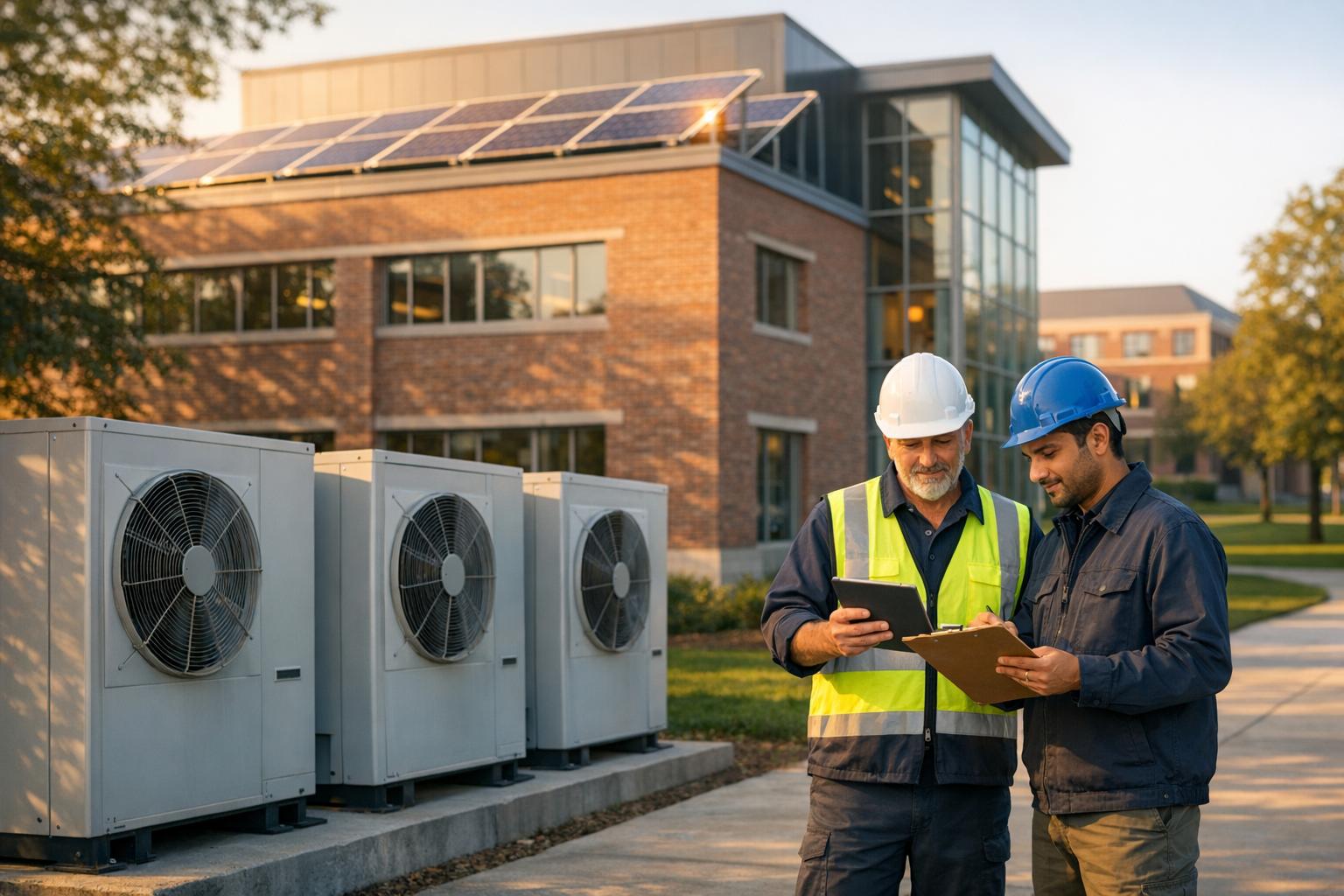
Apr 26, 2026
How to Transition to Renewable Energy Systems at the Local Level for Universities & Research Institutions
Sustainability Strategy
In This Article
Step-by-step guide for universities to audit energy use, deploy heat pumps, solar and PPAs, secure funding, and cut campus emissions.
How to Transition to Renewable Energy Systems at the Local Level for Universities & Research Institutions
Universities are among the largest energy consumers in their regions, with heating and cooling systems often contributing 30–50% of campus emissions. Transitioning to renewable energy is not only a way to reduce emissions but also to mitigate rising utility costs and potential carbon penalties. For example, some institutions face projected penalties of $15 million annually by 2029 unless significant reductions are made. However, the shift to renewables can lead to long-term savings - like one university's $340 million investment in ground-source heat pumps, which is projected to save $410 million over 25 years.
This guide outlines a step-by-step process for universities to reduce emissions, manage costs, and meet climate goals. Key steps include conducting energy audits, setting measurable goals, selecting renewable technologies like heat pumps or solar panels, and leveraging federal incentives such as the Inflation Reduction Act’s direct pay provisions. By involving stakeholders early, phasing projects, and tracking results, universities can reduce emissions while improving financial outcomes and preparing for future growth.
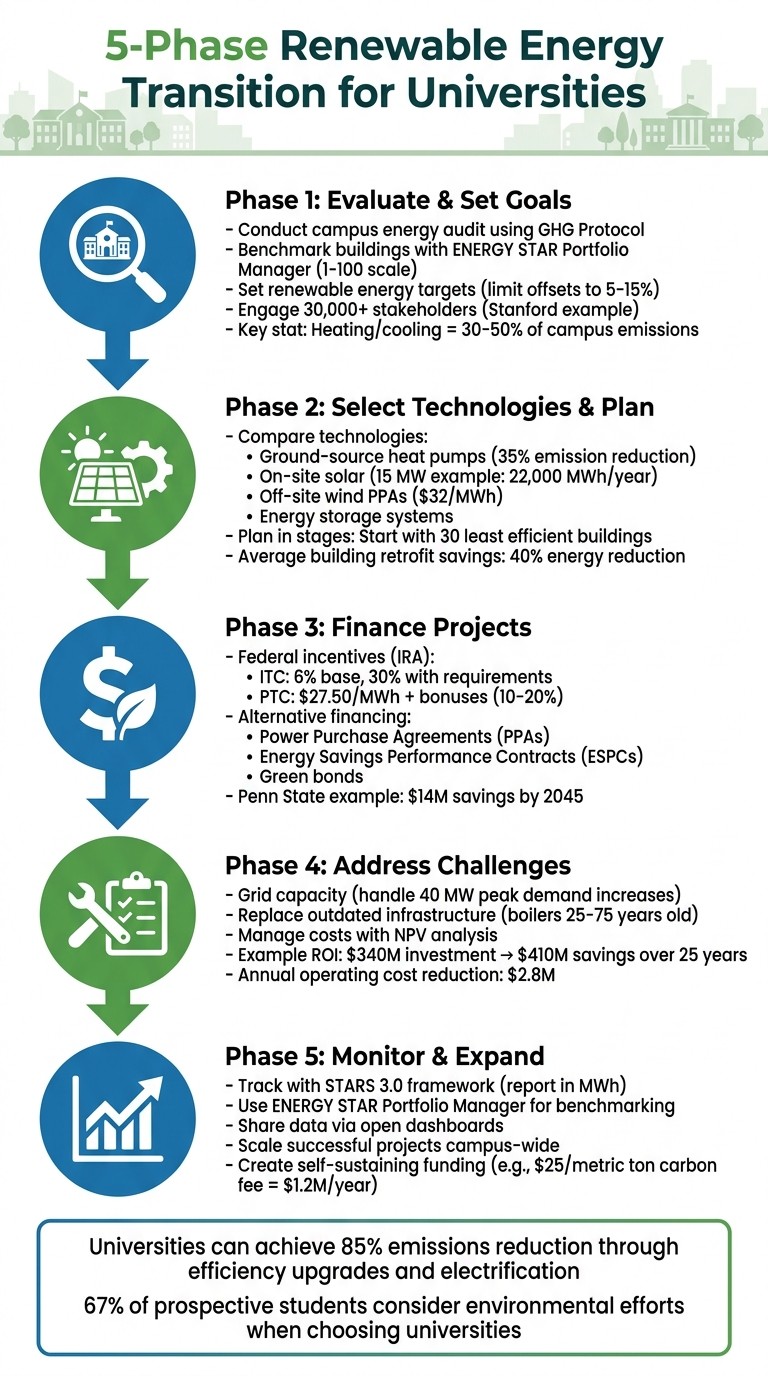
5-Phase Process for University Renewable Energy Transition
Phase 1: Evaluate Current Energy Use and Set Goals
Conduct a Campus Energy Audit
The first step in reducing campus emissions is understanding how energy is used across facilities. Central heating and cooling systems alone often account for 30–50% of emissions [1]. Without detailed data on energy use by building and system, making informed decisions becomes nearly impossible.
To start, use the GHG Protocol to create a detailed emissions inventory. Install fuel meters across campus and benchmark each building's energy performance using the ENERGY STAR Portfolio Manager. This free tool rates buildings on a scale of 1 to 100, with 100 being the most efficient nationwide [6].
For example, in February 2026, a large research university serving 35,000 students conducted a four-month assessment of its annual 185,000 metric tons of CO₂e emissions. By benchmarking buildings, the university identified its 30 least efficient buildings for retrofitting. This effort accelerated its carbon neutrality goal from 2040 to 2035 and spurred the installation of 800 ground-source heat pumps, cutting central plant emissions by 35% [1].
The age and condition of equipment also play a crucial role in planning upgrades. The University of Washington discovered that its central power plant, responsible for 93% of campus emissions, housed boilers between 25 and 75 years old and a turbine from 1968 [3]. Knowing the age of infrastructure helps prioritize replacements to maximize efficiency and minimize maintenance costs.
Community engagement can also uncover immediate savings. Organize "Energy Treasure Hunts", where students, faculty, and staff walk through buildings with checklists to spot energy waste. These events not only build awareness but also identify quick fixes that can fund larger projects [6].
By completing a thorough energy audit, you’ll have the data needed to set precise renewable energy goals in the next phase.
Set Clear Renewable Energy Targets
With a baseline established, it’s time to define renewable energy goals that are both ambitious and achievable. These targets should reflect financial realities, technical limitations, and institutional priorities.
Develop multiple scenarios, ranging from conservative goals like achieving neutrality by 2040 to more aggressive timelines like 2035. Each pathway should include detailed projections for capital costs, emissions reductions, and operational expenses. Don’t overlook federal incentives, such as the Inflation Reduction Act’s direct pay provisions, which can make renewable energy investments more affordable for tax-exempt entities [1].
When planning, limit reliance on carbon offsets to 5–15% of total emissions to maintain credibility [1]. Instead, focus on operational changes that deliver measurable emissions reductions. For instance, one university achieved an 85% drop in emissions through a combination of building efficiency upgrades and central plant electrification, without heavy reliance on offsets [1].
Finally, consider the financial risks of inaction. This analysis can strengthen the case for immediate investment in renewable energy.
With clear goals in place, the next step is to bring stakeholders into the process.
Involve Stakeholders from the Start
Transitioning to renewable energy impacts the entire campus, making early and inclusive engagement essential. Establish a governance structure to ensure decisions are transparent and well-informed.
Stanford University’s Climate Action Plan, for example, engaged over 30,000 community members through working groups and advisory committees [7]. Students, in particular, should have a voice - 67% of prospective students say a university’s environmental efforts influence their decision to attend [6]. Form a Student Advisory Committee to keep them informed about project plans and potential disruptions. One public research university spent eight months engaging stakeholders through open forums and advisory committees, building support for a $340 million renewable energy investment [1].
Transparency is key. Publish emissions data and modeling scenarios on open dashboards for the entire community to access. This builds trust and helps stakeholders understand the trade-offs involved in different strategies. Technical data collection should be handled by facilities teams, engineers, and sustainability staff, while advisory committees focus on evaluating recommendations and presenting proposals to leadership [7].
Don’t forget to involve external experts like licensed engineers or architects to validate technical goals and ensure alignment with broader community needs [6][7].
Phase 2: Select Technologies and Plan Implementation
Compare Renewable Energy Technologies
Using your campus energy audit as a foundation, it's time to evaluate renewable technologies that can tackle your largest sources of emissions. For most universities, the central heating and cooling plant is the primary focus, as it typically contributes between 30% and 50% of total campus emissions [1].
One effective option to consider is ground-source heat pumps, which efficiently manage thermal loads by utilizing underground well fields. A notable example comes from a major research university serving 35,000 students. In February 2026, they completed Phase 1 of an 800-well ground-source heat pump system that now serves 22 buildings. This project cut central plant emissions by 35% and reduced annual operating costs by $2.8 million [1]. While these systems require significant land, they directly address major emission sources.
On-site solar panels are another viable option, offering both functionality and a visible commitment to sustainability. Installing panels on rooftops and parking structures not only generates renewable energy but also provides benefits like covered parking. The same university installed a 15 MW solar array across its parking structures, producing approximately 22,000 MWh annually [1]. However, space limitations may restrict the scale of on-site solar installations. To address larger Scope 2 emissions tied to purchased electricity, off-site wind Power Purchase Agreements (PPAs) can be a powerful tool. For instance, the university secured a 50 MW off-site wind PPA at $32/MWh, which was below its blended grid rate [1].
Energy storage systems can further enhance energy management by smoothing peak demand and boosting campus resilience. Tools like REopt or REopt Lite are invaluable for modeling cost-effective configurations of solar PV and battery storage tailored to your campus needs [8]. These tools, available for free, can help you determine the most efficient setup.
When comparing renewable technologies, avoid relying on outdated cost estimates. Instead, focus on metrics like net present value (NPV), upfront capital costs, and local grid capacity. Be sure to account for federal incentives, such as the Inflation Reduction Act's direct pay provisions for tax-exempt entities, when building financial models [1]. For example, adding a peak demand increase of 40 MW might exceed your local grid's capacity, requiring close collaboration with your utility provider [1].
Once you've chosen your technologies, careful and strategic planning will be essential for successful implementation.
Plan Projects in Stages
With your chosen technologies in hand, the next step is to implement them in a phased approach. This method ensures steady cash flow and minimizes interruptions to campus operations. A proven strategy is to sequence projects for cash flow, starting with measures that deliver immediate savings and using those savings to fund larger, more complex initiatives [1].
"Starting with efficiency measures that generate immediate savings creates a revenue stream that funds larger capital projects. This sequencing also builds organizational confidence as early wins demonstrate feasibility." [1]
Begin by tackling deep building retrofits on the 30 least efficient buildings identified in your energy audit. These retrofits can reduce energy usage by an average of 40% per building [1], significantly lowering your campus's overall energy demand. The cost savings from these retrofits can then be reinvested into larger projects, such as transitioning your central plant.
Geographic staging is another key consideration. Start with upgrades to central utility plants, then move outward to distribution networks, and finally address individual building conversions [3]. If your campus has existing underground tunnel networks, consider repurposing them for new hot water distribution systems. This approach reduces surface disruption and speeds up project timelines [3].
Focus on critical areas first. Ensure reliability for essential facilities such as medical centers, research labs, and data centers before moving on to general-use buildings [3]. For campuses with steam systems, a phased transition might involve localized steam generation for specific needs while gradually shifting the broader campus to low-temperature hot water systems [3].
Phased implementation not only reduces upfront costs but can also lead to long-term financial success. For instance, a $340 million investment in renewable energy projects resulted in projected savings of $410 million over 25 years [1]. This example highlights how thoughtful staging and financial planning can transform ambitious goals into profitable, sustainable outcomes.
Powering Net Zero Webinar - Renewable Energy Solutions for Universities and Colleges
Phase 3: Finance and Fund Renewable Energy Projects
Once your energy audit and technology plans are in place, the next step is securing funding to bring renewable energy projects to life on campus.
Leverage Federal Incentives and Tax Benefits
The Inflation Reduction Act (IRA) has opened up new pathways for universities to access federal funding for renewable energy initiatives. Thanks to the Elective Pay (Direct Pay) provision, tax-exempt institutions can now receive direct cash refunds from the IRS for clean energy tax credits. This allows universities to benefit from credits like the Investment Tax Credit (ITC) and Production Tax Credit (PTC), rather than relying solely on tax deductions [2][11].
The ITC starts with a base rate of 6%, but projects meeting prevailing wage and apprenticeship requirements can see this rate jump to 30%. Projects under 1 MW automatically qualify for this higher rate. Meanwhile, the PTC provides $27.50 per MWh for eligible electricity, with additional bonus credits: 10% for using domestic materials, 10% for projects in energy communities, and up to 20% for those in low-income areas [2][9][11].
Take Pennsylvania State University as an example. In 2022, their solar farm partnership, which supplies 25% of their statewide electricity, had already saved $2.5 million in energy costs. By 2045, the university expects to save a total of $14 million [2]. Similarly, the University of Michigan introduced four electric buses and 32 EV charging stations in 2023, benefiting from the Clean Vehicle Credit. This credit offers savings of up to $7,500 for vehicles under 14,000 pounds and $40,000 for larger vehicles [2][11].
Universities must pre-register with the IRS, secure a registration number, and file Form 990-T along with credit-specific forms, even if they have no tax liability [10]. To maximize these benefits, institutions should carefully plan projects to qualify for bonus credits and consult bond counsel, as using tax-exempt bonds can reduce the federal credits available [13].
While federal incentives provide substantial financial support, exploring additional funding options can address any remaining budget gaps.
Consider Alternative Financing Options
For institutions with limited upfront capital, Power Purchase Agreements (PPAs) offer a practical solution. In this model, a third-party developer installs, owns, and maintains the renewable energy system on campus, while the university agrees to purchase the electricity generated at a fixed rate - often lower than local utility rates.
Energy Savings Performance Contracts (ESPCs) are another option. Here, an Energy Service Company (ESCO) handles the installation and maintenance of energy improvements, with their compensation tied directly to the energy savings achieved. Green bonds also provide a way to raise funds specifically for sustainability projects, appealing to investors who prioritize both environmental and financial returns.
Other strategies include REC arbitrage, where universities sell high-value Renewable Energy Certificates (RECs) generated on-site and purchase lower-cost RECs from other regions to meet sustainability goals [12]. Under Section 179D, tax deductions for energy-efficient building designs can be assigned to architects or engineers in exchange for reduced project fees. Including provisions for this in Requests for Proposals (RFPs) can help capture these savings [13].
"The direct pay election is in lieu of the incentive tax credits that remain available for tax-paying entities. This is great news for nonprofit entities that want to lower their future energy costs and reduce their carbon footprints."
– LaShaun King and Drew Norris, BDO USA [11]
Phase 4: Address Challenges and Ensure Success
With strategic planning and funding in place, the next step is tackling the operational, technical, and regulatory hurdles that can arise during a renewable energy transition. Overcoming these obstacles is critical to ensuring long-term success.
Even with careful preparation, universities often face significant challenges in implementing renewable energy systems. One of the most complex issues revolves around the central heating plant, which demands both technical precision and financial foresight.
Address Technical and Regulatory Challenges
One of the biggest technical hurdles is grid capacity. Many local electric grids are not equipped to handle the sharp increases in peak demand - sometimes up to 40 MW - that full campus electrification requires [1]. For example, the University of Washington is addressing this issue by building a new substation to link Seattle City Light with campus infrastructure. Their Seattle Campus Decarbonization Plan, set for June 2025, also includes innovative solutions like recovering heat from the King County sewer system and Lake Washington. However, large-scale projects like these often hinge on securing permits, which can significantly affect timelines [3].
Another pressing issue is outdated infrastructure. Many universities still rely on steam distribution systems and boilers that are more than 75 years old, making it both technically and financially challenging to switch to cleaner energy sources [3]. For instance, one university faced an estimated $180 million cost to replace its underground steam distribution system [1]. A practical solution is transitioning from steam to hot water distribution, utilizing existing tunnels instead of digging new ones. This approach not only modernizes the system but also cuts costs dramatically [3].
Manage Costs and Demonstrate Value
To manage expenses effectively, it's crucial to look beyond initial costs by conducting a Net Present Value (NPV) analysis. This method can highlight the long-term financial benefits of renewable energy investments. For instance, one major public research university calculated that a $340 million investment would yield $410 million in savings over 25 years. In the first phase alone, transitioning their central plant reduced operating costs by $2.8 million annually [1].
"Starting with efficiency measures that generate immediate savings creates a revenue stream that funds larger capital projects. This sequencing also builds organizational confidence as early wins demonstrate feasibility." [1]
Strategic sequencing plays a key role in managing financial constraints. By beginning with deep retrofits of the least energy-efficient buildings, universities can achieve immediate energy reductions - one institution reported an average 40% reduction per building [1]. These early successes generate utility savings that can fund more extensive capital projects. To keep stakeholders engaged during potential disruptions or fee increases, universities should share progress and modeling data through open dashboards [1].
Phase 5: Monitor Results and Expand Projects
Once energy systems are up and running, it's essential to monitor their performance to confirm the value of your investments and identify where to grow next. Successful universities don’t just gather data - they use it to drive momentum for future advancements.
Track Performance and Emissions Data
Accurate tracking begins with standardized frameworks. For instance, the Sustainability Tracking, Assessment & Rating System (STARS) 3.0 requires energy data to be reported in megawatt-hours (MWh) and normalized by gross floor area (in square feet) as well as full-time equivalent (FTE) student and employee populations [14]. This method allows for fair benchmarking against other institutions rather than relying solely on historical data.
To dig deeper, conduct detailed emissions inventories to locate underperforming buildings or systems that could benefit from retrofits [1]. Tools like ENERGY STAR Portfolio Manager make it easier to compare campus building performance with national benchmarks [1].
"The institutions making real progress on carbon neutrality aren't the ones with the biggest budgets - they're the ones with the best data." - Industry Perspective, Oxmaint [15]
Sharing real-time performance data through open digital dashboards can boost transparency and accountability. For example, the University of California system launched such a dashboard in December 2025 to support its goal of using 100% clean electricity by the same year [1][15]. These insights not only keep stakeholders informed but also guide smart decisions for campus-wide growth.
Prepare for Future Growth
Monitoring renewable energy systems does more than validate initial investments - it sets the stage for strategic expansion. Take lessons from a major research university that, in February 2026, completed Phase 1 of transitioning its central plant. By installing an 800-well ground-source heat pump field serving 22 buildings, the university cut central plant emissions by 35% and saved $2.8 million annually in operating costs. This success created both confidence and funding for future phases [1].
Documenting lessons learned is equally important. A centralized reference library can ensure that all stakeholders have a clear understanding of resources used and energy impacts. Using digital work orders to log maintenance and energy consumption creates a reliable record for future planning [15].
Incorporating renewable energy projects into academic programs can further enhance this process by developing internal expertise. For instance, the University of Massachusetts Amherst’s Carbon Mitigation Taskforce, co-chaired by Ezra Small and Dwayne Breger, unveiled a plan in January 2021 to achieve 100% renewable energy by 2032. Their approach treats the campus as a "living lab", combining hands-on learning with advancing sustainable research [5]. This not only prepares the campus for long-term energy management but also enriches students’ educational experiences.
Early savings from these initiatives can fund even more projects. One university, for example, implemented a $25 per metric ton internal carbon fee on air travel, generating $1.2 million annually to support sustainability efforts [1]. Combining such dedicated revenue streams with cost savings from efficiency improvements creates a self-sustaining funding model for scaling successful renewable projects across campus.
Conclusion
Review of Main Steps
Transitioning to renewable energy on campus involves a structured process with five key phases: conducting an energy audit, setting clear goals with stakeholder input, assessing technologies and planning projects in stages, securing financing, and monitoring performance. It starts with a focused energy audit targeting high-impact systems like central heating and cooling systems [1]. From there, renewable technologies are evaluated, and projects are phased strategically - beginning with efficiency measures that provide immediate cost savings to help fund larger investments, such as central plant conversions. Federal incentives and alternative funding options can be leveraged to secure financing. Technical and regulatory challenges are addressed through transparent cost–benefit analyses, while performance is tracked using standardized frameworks to ensure scalability. This step-by-step approach not only simplifies campus energy transitions but also positions institutions as leaders in addressing climate challenges.
Universities as Climate Leaders
Universities are uniquely positioned to lead the way in climate action. For instance, UMass Amherst, the largest carbon emitter among state agencies in Massachusetts, highlights the importance of transitioning to renewable energy to meet broader decarbonization goals [5]. When campuses successfully transition, they set an example for public institutions across the country.
The concept of a "living laboratory" further amplifies the role of universities in sustainability efforts. By incorporating energy transitions into academic programs, institutions can train future sustainability experts while advancing important research [5]. A prime example is the University of Wisconsin–Madison's 2.25 MW dual-use solar array at Kegonsa Research Campus. Operational since August 2025, this project provides researchers with the opportunity to explore the intersection of renewable energy and agricultural practices [4].
Financially, the case for renewable energy is equally compelling. A $340 million investment in renewable infrastructure can result in $410 million in energy cost savings and avoided maintenance expenses over 25 years [1]. This demonstrates that clean energy solutions not only benefit the environment but also make sound financial sense. These initiatives reinforce the role of universities as pioneers in sustainability, proving that thoughtful planning and smart investments can deliver both environmental progress and economic efficiency.
FAQs
Where should our campus start if we don’t have good energy data yet?
If your campus struggles with inconsistent energy data, the first step is to leverage tools specifically designed for data collection and benchmarking. Platforms tailored for sustainability data management in higher education can streamline the process of organizing and analyzing energy consumption. Additionally, joining benchmarking programs can provide valuable guidance for compiling campus-wide data and setting an energy performance baseline. These efforts create a clearer picture of energy use and highlight areas that need improvement.
How do we choose between heat pumps, solar, and off-site wind PPAs?
Choosing the right energy solutions - whether heat pumps, solar power, or off-site wind PPAs - requires careful consideration of a campus's energy demands, financial constraints, and physical space. Heat pumps are a practical way to cut down on fossil fuel consumption by electrifying heating and cooling systems. Solar energy, through either on-site installations or power purchase agreements (PPAs), offers a source of clean electricity with little to no upfront investment. Meanwhile, off-site wind PPAs allow campuses to tap into large-scale renewable energy without requiring on-campus infrastructure. Combining these approaches strategically can maximize sustainability by integrating efficient thermal systems, local energy production, and external renewable sources.
What’s the fastest way to fund projects without new upfront capital?
The fastest route to financing renewable energy projects without significant upfront costs is by utilizing Power Purchase Agreements (PPAs). These agreements enable universities to install solar energy systems with little to no initial investment. Instead of bearing the installation costs, institutions purchase energy at fixed rates over time. This method not only delivers immediate savings but also offers long-term financial advantages, making it an effective option for campuses looking to shift toward renewable energy while avoiding hefty upfront expenses.
Related Blog Posts
Latest Articles
©2025

Narrative Change and Power Building: The Missing Half of Advocacy
Narrative change is the process of disrupting dominant narratives that normalize inequity and advancing new narratives from historically marginalized communities.

Funding Resilience Without Federal Grants
BRIC is unreliable and FEMA is shrinking. Here's how cities fund climate resilience with dedicated revenue, blended finance, and a coordinating authority.

The ESG Blind Spot: How AI Is Finding Risks in Companies Nobody Else Is Watching
Norway's sovereign wealth fund uses AI to screen 7,200 portfolio companies for forced labor and corruption within 24 hours. The real story is the emerging-market coverage gap that traditional ESG data vendors miss — and what it means for any company with a global supply chain.
Narrative Change and Power Building: The Missing Half of Advocacy
Narrative change is the process of disrupting dominant narratives that normalize inequity and advancing new narratives from historically marginalized communities.
Funding Resilience Without Federal Grants
BRIC is unreliable and FEMA is shrinking. Here's how cities fund climate resilience with dedicated revenue, blended finance, and a coordinating authority.
The ESG Blind Spot: How AI Is Finding Risks in Companies Nobody Else Is Watching
Norway's sovereign wealth fund uses AI to screen 7,200 portfolio companies for forced labor and corruption within 24 hours. The real story is the emerging-market coverage gap that traditional ESG data vendors miss — and what it means for any company with a global supply chain.
FAQ
01
What does it really mean to “redefine profit”?
02
What makes Council Fire different?
03
Who does Council Fire work with?
04
What does working with Council Fire actually look like?
05
How does Council Fire help organizations turn big goals into action?
06
How does Council Fire define and measure success?
Apr 26, 2026
How to Transition to Renewable Energy Systems at the Local Level for Universities & Research Institutions
Sustainability Strategy
In This Article
Step-by-step guide for universities to audit energy use, deploy heat pumps, solar and PPAs, secure funding, and cut campus emissions.
How to Transition to Renewable Energy Systems at the Local Level for Universities & Research Institutions
Universities are among the largest energy consumers in their regions, with heating and cooling systems often contributing 30–50% of campus emissions. Transitioning to renewable energy is not only a way to reduce emissions but also to mitigate rising utility costs and potential carbon penalties. For example, some institutions face projected penalties of $15 million annually by 2029 unless significant reductions are made. However, the shift to renewables can lead to long-term savings - like one university's $340 million investment in ground-source heat pumps, which is projected to save $410 million over 25 years.
This guide outlines a step-by-step process for universities to reduce emissions, manage costs, and meet climate goals. Key steps include conducting energy audits, setting measurable goals, selecting renewable technologies like heat pumps or solar panels, and leveraging federal incentives such as the Inflation Reduction Act’s direct pay provisions. By involving stakeholders early, phasing projects, and tracking results, universities can reduce emissions while improving financial outcomes and preparing for future growth.
5-Phase Process for University Renewable Energy Transition
Phase 1: Evaluate Current Energy Use and Set Goals
Conduct a Campus Energy Audit
The first step in reducing campus emissions is understanding how energy is used across facilities. Central heating and cooling systems alone often account for 30–50% of emissions [1]. Without detailed data on energy use by building and system, making informed decisions becomes nearly impossible.
To start, use the GHG Protocol to create a detailed emissions inventory. Install fuel meters across campus and benchmark each building's energy performance using the ENERGY STAR Portfolio Manager. This free tool rates buildings on a scale of 1 to 100, with 100 being the most efficient nationwide [6].
For example, in February 2026, a large research university serving 35,000 students conducted a four-month assessment of its annual 185,000 metric tons of CO₂e emissions. By benchmarking buildings, the university identified its 30 least efficient buildings for retrofitting. This effort accelerated its carbon neutrality goal from 2040 to 2035 and spurred the installation of 800 ground-source heat pumps, cutting central plant emissions by 35% [1].
The age and condition of equipment also play a crucial role in planning upgrades. The University of Washington discovered that its central power plant, responsible for 93% of campus emissions, housed boilers between 25 and 75 years old and a turbine from 1968 [3]. Knowing the age of infrastructure helps prioritize replacements to maximize efficiency and minimize maintenance costs.
Community engagement can also uncover immediate savings. Organize "Energy Treasure Hunts", where students, faculty, and staff walk through buildings with checklists to spot energy waste. These events not only build awareness but also identify quick fixes that can fund larger projects [6].
By completing a thorough energy audit, you’ll have the data needed to set precise renewable energy goals in the next phase.
Set Clear Renewable Energy Targets
With a baseline established, it’s time to define renewable energy goals that are both ambitious and achievable. These targets should reflect financial realities, technical limitations, and institutional priorities.
Develop multiple scenarios, ranging from conservative goals like achieving neutrality by 2040 to more aggressive timelines like 2035. Each pathway should include detailed projections for capital costs, emissions reductions, and operational expenses. Don’t overlook federal incentives, such as the Inflation Reduction Act’s direct pay provisions, which can make renewable energy investments more affordable for tax-exempt entities [1].
When planning, limit reliance on carbon offsets to 5–15% of total emissions to maintain credibility [1]. Instead, focus on operational changes that deliver measurable emissions reductions. For instance, one university achieved an 85% drop in emissions through a combination of building efficiency upgrades and central plant electrification, without heavy reliance on offsets [1].
Finally, consider the financial risks of inaction. This analysis can strengthen the case for immediate investment in renewable energy.
With clear goals in place, the next step is to bring stakeholders into the process.
Involve Stakeholders from the Start
Transitioning to renewable energy impacts the entire campus, making early and inclusive engagement essential. Establish a governance structure to ensure decisions are transparent and well-informed.
Stanford University’s Climate Action Plan, for example, engaged over 30,000 community members through working groups and advisory committees [7]. Students, in particular, should have a voice - 67% of prospective students say a university’s environmental efforts influence their decision to attend [6]. Form a Student Advisory Committee to keep them informed about project plans and potential disruptions. One public research university spent eight months engaging stakeholders through open forums and advisory committees, building support for a $340 million renewable energy investment [1].
Transparency is key. Publish emissions data and modeling scenarios on open dashboards for the entire community to access. This builds trust and helps stakeholders understand the trade-offs involved in different strategies. Technical data collection should be handled by facilities teams, engineers, and sustainability staff, while advisory committees focus on evaluating recommendations and presenting proposals to leadership [7].
Don’t forget to involve external experts like licensed engineers or architects to validate technical goals and ensure alignment with broader community needs [6][7].
Phase 2: Select Technologies and Plan Implementation
Compare Renewable Energy Technologies
Using your campus energy audit as a foundation, it's time to evaluate renewable technologies that can tackle your largest sources of emissions. For most universities, the central heating and cooling plant is the primary focus, as it typically contributes between 30% and 50% of total campus emissions [1].
One effective option to consider is ground-source heat pumps, which efficiently manage thermal loads by utilizing underground well fields. A notable example comes from a major research university serving 35,000 students. In February 2026, they completed Phase 1 of an 800-well ground-source heat pump system that now serves 22 buildings. This project cut central plant emissions by 35% and reduced annual operating costs by $2.8 million [1]. While these systems require significant land, they directly address major emission sources.
On-site solar panels are another viable option, offering both functionality and a visible commitment to sustainability. Installing panels on rooftops and parking structures not only generates renewable energy but also provides benefits like covered parking. The same university installed a 15 MW solar array across its parking structures, producing approximately 22,000 MWh annually [1]. However, space limitations may restrict the scale of on-site solar installations. To address larger Scope 2 emissions tied to purchased electricity, off-site wind Power Purchase Agreements (PPAs) can be a powerful tool. For instance, the university secured a 50 MW off-site wind PPA at $32/MWh, which was below its blended grid rate [1].
Energy storage systems can further enhance energy management by smoothing peak demand and boosting campus resilience. Tools like REopt or REopt Lite are invaluable for modeling cost-effective configurations of solar PV and battery storage tailored to your campus needs [8]. These tools, available for free, can help you determine the most efficient setup.
When comparing renewable technologies, avoid relying on outdated cost estimates. Instead, focus on metrics like net present value (NPV), upfront capital costs, and local grid capacity. Be sure to account for federal incentives, such as the Inflation Reduction Act's direct pay provisions for tax-exempt entities, when building financial models [1]. For example, adding a peak demand increase of 40 MW might exceed your local grid's capacity, requiring close collaboration with your utility provider [1].
Once you've chosen your technologies, careful and strategic planning will be essential for successful implementation.
Plan Projects in Stages
With your chosen technologies in hand, the next step is to implement them in a phased approach. This method ensures steady cash flow and minimizes interruptions to campus operations. A proven strategy is to sequence projects for cash flow, starting with measures that deliver immediate savings and using those savings to fund larger, more complex initiatives [1].
"Starting with efficiency measures that generate immediate savings creates a revenue stream that funds larger capital projects. This sequencing also builds organizational confidence as early wins demonstrate feasibility." [1]
Begin by tackling deep building retrofits on the 30 least efficient buildings identified in your energy audit. These retrofits can reduce energy usage by an average of 40% per building [1], significantly lowering your campus's overall energy demand. The cost savings from these retrofits can then be reinvested into larger projects, such as transitioning your central plant.
Geographic staging is another key consideration. Start with upgrades to central utility plants, then move outward to distribution networks, and finally address individual building conversions [3]. If your campus has existing underground tunnel networks, consider repurposing them for new hot water distribution systems. This approach reduces surface disruption and speeds up project timelines [3].
Focus on critical areas first. Ensure reliability for essential facilities such as medical centers, research labs, and data centers before moving on to general-use buildings [3]. For campuses with steam systems, a phased transition might involve localized steam generation for specific needs while gradually shifting the broader campus to low-temperature hot water systems [3].
Phased implementation not only reduces upfront costs but can also lead to long-term financial success. For instance, a $340 million investment in renewable energy projects resulted in projected savings of $410 million over 25 years [1]. This example highlights how thoughtful staging and financial planning can transform ambitious goals into profitable, sustainable outcomes.
Powering Net Zero Webinar - Renewable Energy Solutions for Universities and Colleges
Phase 3: Finance and Fund Renewable Energy Projects
Once your energy audit and technology plans are in place, the next step is securing funding to bring renewable energy projects to life on campus.
Leverage Federal Incentives and Tax Benefits
The Inflation Reduction Act (IRA) has opened up new pathways for universities to access federal funding for renewable energy initiatives. Thanks to the Elective Pay (Direct Pay) provision, tax-exempt institutions can now receive direct cash refunds from the IRS for clean energy tax credits. This allows universities to benefit from credits like the Investment Tax Credit (ITC) and Production Tax Credit (PTC), rather than relying solely on tax deductions [2][11].
The ITC starts with a base rate of 6%, but projects meeting prevailing wage and apprenticeship requirements can see this rate jump to 30%. Projects under 1 MW automatically qualify for this higher rate. Meanwhile, the PTC provides $27.50 per MWh for eligible electricity, with additional bonus credits: 10% for using domestic materials, 10% for projects in energy communities, and up to 20% for those in low-income areas [2][9][11].
Take Pennsylvania State University as an example. In 2022, their solar farm partnership, which supplies 25% of their statewide electricity, had already saved $2.5 million in energy costs. By 2045, the university expects to save a total of $14 million [2]. Similarly, the University of Michigan introduced four electric buses and 32 EV charging stations in 2023, benefiting from the Clean Vehicle Credit. This credit offers savings of up to $7,500 for vehicles under 14,000 pounds and $40,000 for larger vehicles [2][11].
Universities must pre-register with the IRS, secure a registration number, and file Form 990-T along with credit-specific forms, even if they have no tax liability [10]. To maximize these benefits, institutions should carefully plan projects to qualify for bonus credits and consult bond counsel, as using tax-exempt bonds can reduce the federal credits available [13].
While federal incentives provide substantial financial support, exploring additional funding options can address any remaining budget gaps.
Consider Alternative Financing Options
For institutions with limited upfront capital, Power Purchase Agreements (PPAs) offer a practical solution. In this model, a third-party developer installs, owns, and maintains the renewable energy system on campus, while the university agrees to purchase the electricity generated at a fixed rate - often lower than local utility rates.
Energy Savings Performance Contracts (ESPCs) are another option. Here, an Energy Service Company (ESCO) handles the installation and maintenance of energy improvements, with their compensation tied directly to the energy savings achieved. Green bonds also provide a way to raise funds specifically for sustainability projects, appealing to investors who prioritize both environmental and financial returns.
Other strategies include REC arbitrage, where universities sell high-value Renewable Energy Certificates (RECs) generated on-site and purchase lower-cost RECs from other regions to meet sustainability goals [12]. Under Section 179D, tax deductions for energy-efficient building designs can be assigned to architects or engineers in exchange for reduced project fees. Including provisions for this in Requests for Proposals (RFPs) can help capture these savings [13].
"The direct pay election is in lieu of the incentive tax credits that remain available for tax-paying entities. This is great news for nonprofit entities that want to lower their future energy costs and reduce their carbon footprints."
– LaShaun King and Drew Norris, BDO USA [11]
Phase 4: Address Challenges and Ensure Success
With strategic planning and funding in place, the next step is tackling the operational, technical, and regulatory hurdles that can arise during a renewable energy transition. Overcoming these obstacles is critical to ensuring long-term success.
Even with careful preparation, universities often face significant challenges in implementing renewable energy systems. One of the most complex issues revolves around the central heating plant, which demands both technical precision and financial foresight.
Address Technical and Regulatory Challenges
One of the biggest technical hurdles is grid capacity. Many local electric grids are not equipped to handle the sharp increases in peak demand - sometimes up to 40 MW - that full campus electrification requires [1]. For example, the University of Washington is addressing this issue by building a new substation to link Seattle City Light with campus infrastructure. Their Seattle Campus Decarbonization Plan, set for June 2025, also includes innovative solutions like recovering heat from the King County sewer system and Lake Washington. However, large-scale projects like these often hinge on securing permits, which can significantly affect timelines [3].
Another pressing issue is outdated infrastructure. Many universities still rely on steam distribution systems and boilers that are more than 75 years old, making it both technically and financially challenging to switch to cleaner energy sources [3]. For instance, one university faced an estimated $180 million cost to replace its underground steam distribution system [1]. A practical solution is transitioning from steam to hot water distribution, utilizing existing tunnels instead of digging new ones. This approach not only modernizes the system but also cuts costs dramatically [3].
Manage Costs and Demonstrate Value
To manage expenses effectively, it's crucial to look beyond initial costs by conducting a Net Present Value (NPV) analysis. This method can highlight the long-term financial benefits of renewable energy investments. For instance, one major public research university calculated that a $340 million investment would yield $410 million in savings over 25 years. In the first phase alone, transitioning their central plant reduced operating costs by $2.8 million annually [1].
"Starting with efficiency measures that generate immediate savings creates a revenue stream that funds larger capital projects. This sequencing also builds organizational confidence as early wins demonstrate feasibility." [1]
Strategic sequencing plays a key role in managing financial constraints. By beginning with deep retrofits of the least energy-efficient buildings, universities can achieve immediate energy reductions - one institution reported an average 40% reduction per building [1]. These early successes generate utility savings that can fund more extensive capital projects. To keep stakeholders engaged during potential disruptions or fee increases, universities should share progress and modeling data through open dashboards [1].
Phase 5: Monitor Results and Expand Projects
Once energy systems are up and running, it's essential to monitor their performance to confirm the value of your investments and identify where to grow next. Successful universities don’t just gather data - they use it to drive momentum for future advancements.
Track Performance and Emissions Data
Accurate tracking begins with standardized frameworks. For instance, the Sustainability Tracking, Assessment & Rating System (STARS) 3.0 requires energy data to be reported in megawatt-hours (MWh) and normalized by gross floor area (in square feet) as well as full-time equivalent (FTE) student and employee populations [14]. This method allows for fair benchmarking against other institutions rather than relying solely on historical data.
To dig deeper, conduct detailed emissions inventories to locate underperforming buildings or systems that could benefit from retrofits [1]. Tools like ENERGY STAR Portfolio Manager make it easier to compare campus building performance with national benchmarks [1].
"The institutions making real progress on carbon neutrality aren't the ones with the biggest budgets - they're the ones with the best data." - Industry Perspective, Oxmaint [15]
Sharing real-time performance data through open digital dashboards can boost transparency and accountability. For example, the University of California system launched such a dashboard in December 2025 to support its goal of using 100% clean electricity by the same year [1][15]. These insights not only keep stakeholders informed but also guide smart decisions for campus-wide growth.
Prepare for Future Growth
Monitoring renewable energy systems does more than validate initial investments - it sets the stage for strategic expansion. Take lessons from a major research university that, in February 2026, completed Phase 1 of transitioning its central plant. By installing an 800-well ground-source heat pump field serving 22 buildings, the university cut central plant emissions by 35% and saved $2.8 million annually in operating costs. This success created both confidence and funding for future phases [1].
Documenting lessons learned is equally important. A centralized reference library can ensure that all stakeholders have a clear understanding of resources used and energy impacts. Using digital work orders to log maintenance and energy consumption creates a reliable record for future planning [15].
Incorporating renewable energy projects into academic programs can further enhance this process by developing internal expertise. For instance, the University of Massachusetts Amherst’s Carbon Mitigation Taskforce, co-chaired by Ezra Small and Dwayne Breger, unveiled a plan in January 2021 to achieve 100% renewable energy by 2032. Their approach treats the campus as a "living lab", combining hands-on learning with advancing sustainable research [5]. This not only prepares the campus for long-term energy management but also enriches students’ educational experiences.
Early savings from these initiatives can fund even more projects. One university, for example, implemented a $25 per metric ton internal carbon fee on air travel, generating $1.2 million annually to support sustainability efforts [1]. Combining such dedicated revenue streams with cost savings from efficiency improvements creates a self-sustaining funding model for scaling successful renewable projects across campus.
Conclusion
Review of Main Steps
Transitioning to renewable energy on campus involves a structured process with five key phases: conducting an energy audit, setting clear goals with stakeholder input, assessing technologies and planning projects in stages, securing financing, and monitoring performance. It starts with a focused energy audit targeting high-impact systems like central heating and cooling systems [1]. From there, renewable technologies are evaluated, and projects are phased strategically - beginning with efficiency measures that provide immediate cost savings to help fund larger investments, such as central plant conversions. Federal incentives and alternative funding options can be leveraged to secure financing. Technical and regulatory challenges are addressed through transparent cost–benefit analyses, while performance is tracked using standardized frameworks to ensure scalability. This step-by-step approach not only simplifies campus energy transitions but also positions institutions as leaders in addressing climate challenges.
Universities as Climate Leaders
Universities are uniquely positioned to lead the way in climate action. For instance, UMass Amherst, the largest carbon emitter among state agencies in Massachusetts, highlights the importance of transitioning to renewable energy to meet broader decarbonization goals [5]. When campuses successfully transition, they set an example for public institutions across the country.
The concept of a "living laboratory" further amplifies the role of universities in sustainability efforts. By incorporating energy transitions into academic programs, institutions can train future sustainability experts while advancing important research [5]. A prime example is the University of Wisconsin–Madison's 2.25 MW dual-use solar array at Kegonsa Research Campus. Operational since August 2025, this project provides researchers with the opportunity to explore the intersection of renewable energy and agricultural practices [4].
Financially, the case for renewable energy is equally compelling. A $340 million investment in renewable infrastructure can result in $410 million in energy cost savings and avoided maintenance expenses over 25 years [1]. This demonstrates that clean energy solutions not only benefit the environment but also make sound financial sense. These initiatives reinforce the role of universities as pioneers in sustainability, proving that thoughtful planning and smart investments can deliver both environmental progress and economic efficiency.
FAQs
Where should our campus start if we don’t have good energy data yet?
If your campus struggles with inconsistent energy data, the first step is to leverage tools specifically designed for data collection and benchmarking. Platforms tailored for sustainability data management in higher education can streamline the process of organizing and analyzing energy consumption. Additionally, joining benchmarking programs can provide valuable guidance for compiling campus-wide data and setting an energy performance baseline. These efforts create a clearer picture of energy use and highlight areas that need improvement.
How do we choose between heat pumps, solar, and off-site wind PPAs?
Choosing the right energy solutions - whether heat pumps, solar power, or off-site wind PPAs - requires careful consideration of a campus's energy demands, financial constraints, and physical space. Heat pumps are a practical way to cut down on fossil fuel consumption by electrifying heating and cooling systems. Solar energy, through either on-site installations or power purchase agreements (PPAs), offers a source of clean electricity with little to no upfront investment. Meanwhile, off-site wind PPAs allow campuses to tap into large-scale renewable energy without requiring on-campus infrastructure. Combining these approaches strategically can maximize sustainability by integrating efficient thermal systems, local energy production, and external renewable sources.
What’s the fastest way to fund projects without new upfront capital?
The fastest route to financing renewable energy projects without significant upfront costs is by utilizing Power Purchase Agreements (PPAs). These agreements enable universities to install solar energy systems with little to no initial investment. Instead of bearing the installation costs, institutions purchase energy at fixed rates over time. This method not only delivers immediate savings but also offers long-term financial advantages, making it an effective option for campuses looking to shift toward renewable energy while avoiding hefty upfront expenses.
Related Blog Posts
Latest Articles
©2025
Narrative Change and Power Building: The Missing Half of Advocacy
Narrative change is the process of disrupting dominant narratives that normalize inequity and advancing new narratives from historically marginalized communities.
Funding Resilience Without Federal Grants
BRIC is unreliable and FEMA is shrinking. Here's how cities fund climate resilience with dedicated revenue, blended finance, and a coordinating authority.
The ESG Blind Spot: How AI Is Finding Risks in Companies Nobody Else Is Watching
Norway's sovereign wealth fund uses AI to screen 7,200 portfolio companies for forced labor and corruption within 24 hours. The real story is the emerging-market coverage gap that traditional ESG data vendors miss — and what it means for any company with a global supply chain.
FAQ
01
What does it really mean to “redefine profit”?
02
What makes Council Fire different?
03
Who does Council Fire work with?
04
What does working with Council Fire actually look like?
05
How does Council Fire help organizations turn big goals into action?
06
How does Council Fire define and measure success?
Apr 26, 2026
How to Transition to Renewable Energy Systems at the Local Level for Universities & Research Institutions
Sustainability Strategy
In This Article
Step-by-step guide for universities to audit energy use, deploy heat pumps, solar and PPAs, secure funding, and cut campus emissions.
How to Transition to Renewable Energy Systems at the Local Level for Universities & Research Institutions
Universities are among the largest energy consumers in their regions, with heating and cooling systems often contributing 30–50% of campus emissions. Transitioning to renewable energy is not only a way to reduce emissions but also to mitigate rising utility costs and potential carbon penalties. For example, some institutions face projected penalties of $15 million annually by 2029 unless significant reductions are made. However, the shift to renewables can lead to long-term savings - like one university's $340 million investment in ground-source heat pumps, which is projected to save $410 million over 25 years.
This guide outlines a step-by-step process for universities to reduce emissions, manage costs, and meet climate goals. Key steps include conducting energy audits, setting measurable goals, selecting renewable technologies like heat pumps or solar panels, and leveraging federal incentives such as the Inflation Reduction Act’s direct pay provisions. By involving stakeholders early, phasing projects, and tracking results, universities can reduce emissions while improving financial outcomes and preparing for future growth.
5-Phase Process for University Renewable Energy Transition
Phase 1: Evaluate Current Energy Use and Set Goals
Conduct a Campus Energy Audit
The first step in reducing campus emissions is understanding how energy is used across facilities. Central heating and cooling systems alone often account for 30–50% of emissions [1]. Without detailed data on energy use by building and system, making informed decisions becomes nearly impossible.
To start, use the GHG Protocol to create a detailed emissions inventory. Install fuel meters across campus and benchmark each building's energy performance using the ENERGY STAR Portfolio Manager. This free tool rates buildings on a scale of 1 to 100, with 100 being the most efficient nationwide [6].
For example, in February 2026, a large research university serving 35,000 students conducted a four-month assessment of its annual 185,000 metric tons of CO₂e emissions. By benchmarking buildings, the university identified its 30 least efficient buildings for retrofitting. This effort accelerated its carbon neutrality goal from 2040 to 2035 and spurred the installation of 800 ground-source heat pumps, cutting central plant emissions by 35% [1].
The age and condition of equipment also play a crucial role in planning upgrades. The University of Washington discovered that its central power plant, responsible for 93% of campus emissions, housed boilers between 25 and 75 years old and a turbine from 1968 [3]. Knowing the age of infrastructure helps prioritize replacements to maximize efficiency and minimize maintenance costs.
Community engagement can also uncover immediate savings. Organize "Energy Treasure Hunts", where students, faculty, and staff walk through buildings with checklists to spot energy waste. These events not only build awareness but also identify quick fixes that can fund larger projects [6].
By completing a thorough energy audit, you’ll have the data needed to set precise renewable energy goals in the next phase.
Set Clear Renewable Energy Targets
With a baseline established, it’s time to define renewable energy goals that are both ambitious and achievable. These targets should reflect financial realities, technical limitations, and institutional priorities.
Develop multiple scenarios, ranging from conservative goals like achieving neutrality by 2040 to more aggressive timelines like 2035. Each pathway should include detailed projections for capital costs, emissions reductions, and operational expenses. Don’t overlook federal incentives, such as the Inflation Reduction Act’s direct pay provisions, which can make renewable energy investments more affordable for tax-exempt entities [1].
When planning, limit reliance on carbon offsets to 5–15% of total emissions to maintain credibility [1]. Instead, focus on operational changes that deliver measurable emissions reductions. For instance, one university achieved an 85% drop in emissions through a combination of building efficiency upgrades and central plant electrification, without heavy reliance on offsets [1].
Finally, consider the financial risks of inaction. This analysis can strengthen the case for immediate investment in renewable energy.
With clear goals in place, the next step is to bring stakeholders into the process.
Involve Stakeholders from the Start
Transitioning to renewable energy impacts the entire campus, making early and inclusive engagement essential. Establish a governance structure to ensure decisions are transparent and well-informed.
Stanford University’s Climate Action Plan, for example, engaged over 30,000 community members through working groups and advisory committees [7]. Students, in particular, should have a voice - 67% of prospective students say a university’s environmental efforts influence their decision to attend [6]. Form a Student Advisory Committee to keep them informed about project plans and potential disruptions. One public research university spent eight months engaging stakeholders through open forums and advisory committees, building support for a $340 million renewable energy investment [1].
Transparency is key. Publish emissions data and modeling scenarios on open dashboards for the entire community to access. This builds trust and helps stakeholders understand the trade-offs involved in different strategies. Technical data collection should be handled by facilities teams, engineers, and sustainability staff, while advisory committees focus on evaluating recommendations and presenting proposals to leadership [7].
Don’t forget to involve external experts like licensed engineers or architects to validate technical goals and ensure alignment with broader community needs [6][7].
Phase 2: Select Technologies and Plan Implementation
Compare Renewable Energy Technologies
Using your campus energy audit as a foundation, it's time to evaluate renewable technologies that can tackle your largest sources of emissions. For most universities, the central heating and cooling plant is the primary focus, as it typically contributes between 30% and 50% of total campus emissions [1].
One effective option to consider is ground-source heat pumps, which efficiently manage thermal loads by utilizing underground well fields. A notable example comes from a major research university serving 35,000 students. In February 2026, they completed Phase 1 of an 800-well ground-source heat pump system that now serves 22 buildings. This project cut central plant emissions by 35% and reduced annual operating costs by $2.8 million [1]. While these systems require significant land, they directly address major emission sources.
On-site solar panels are another viable option, offering both functionality and a visible commitment to sustainability. Installing panels on rooftops and parking structures not only generates renewable energy but also provides benefits like covered parking. The same university installed a 15 MW solar array across its parking structures, producing approximately 22,000 MWh annually [1]. However, space limitations may restrict the scale of on-site solar installations. To address larger Scope 2 emissions tied to purchased electricity, off-site wind Power Purchase Agreements (PPAs) can be a powerful tool. For instance, the university secured a 50 MW off-site wind PPA at $32/MWh, which was below its blended grid rate [1].
Energy storage systems can further enhance energy management by smoothing peak demand and boosting campus resilience. Tools like REopt or REopt Lite are invaluable for modeling cost-effective configurations of solar PV and battery storage tailored to your campus needs [8]. These tools, available for free, can help you determine the most efficient setup.
When comparing renewable technologies, avoid relying on outdated cost estimates. Instead, focus on metrics like net present value (NPV), upfront capital costs, and local grid capacity. Be sure to account for federal incentives, such as the Inflation Reduction Act's direct pay provisions for tax-exempt entities, when building financial models [1]. For example, adding a peak demand increase of 40 MW might exceed your local grid's capacity, requiring close collaboration with your utility provider [1].
Once you've chosen your technologies, careful and strategic planning will be essential for successful implementation.
Plan Projects in Stages
With your chosen technologies in hand, the next step is to implement them in a phased approach. This method ensures steady cash flow and minimizes interruptions to campus operations. A proven strategy is to sequence projects for cash flow, starting with measures that deliver immediate savings and using those savings to fund larger, more complex initiatives [1].
"Starting with efficiency measures that generate immediate savings creates a revenue stream that funds larger capital projects. This sequencing also builds organizational confidence as early wins demonstrate feasibility." [1]
Begin by tackling deep building retrofits on the 30 least efficient buildings identified in your energy audit. These retrofits can reduce energy usage by an average of 40% per building [1], significantly lowering your campus's overall energy demand. The cost savings from these retrofits can then be reinvested into larger projects, such as transitioning your central plant.
Geographic staging is another key consideration. Start with upgrades to central utility plants, then move outward to distribution networks, and finally address individual building conversions [3]. If your campus has existing underground tunnel networks, consider repurposing them for new hot water distribution systems. This approach reduces surface disruption and speeds up project timelines [3].
Focus on critical areas first. Ensure reliability for essential facilities such as medical centers, research labs, and data centers before moving on to general-use buildings [3]. For campuses with steam systems, a phased transition might involve localized steam generation for specific needs while gradually shifting the broader campus to low-temperature hot water systems [3].
Phased implementation not only reduces upfront costs but can also lead to long-term financial success. For instance, a $340 million investment in renewable energy projects resulted in projected savings of $410 million over 25 years [1]. This example highlights how thoughtful staging and financial planning can transform ambitious goals into profitable, sustainable outcomes.
Powering Net Zero Webinar - Renewable Energy Solutions for Universities and Colleges
Phase 3: Finance and Fund Renewable Energy Projects
Once your energy audit and technology plans are in place, the next step is securing funding to bring renewable energy projects to life on campus.
Leverage Federal Incentives and Tax Benefits
The Inflation Reduction Act (IRA) has opened up new pathways for universities to access federal funding for renewable energy initiatives. Thanks to the Elective Pay (Direct Pay) provision, tax-exempt institutions can now receive direct cash refunds from the IRS for clean energy tax credits. This allows universities to benefit from credits like the Investment Tax Credit (ITC) and Production Tax Credit (PTC), rather than relying solely on tax deductions [2][11].
The ITC starts with a base rate of 6%, but projects meeting prevailing wage and apprenticeship requirements can see this rate jump to 30%. Projects under 1 MW automatically qualify for this higher rate. Meanwhile, the PTC provides $27.50 per MWh for eligible electricity, with additional bonus credits: 10% for using domestic materials, 10% for projects in energy communities, and up to 20% for those in low-income areas [2][9][11].
Take Pennsylvania State University as an example. In 2022, their solar farm partnership, which supplies 25% of their statewide electricity, had already saved $2.5 million in energy costs. By 2045, the university expects to save a total of $14 million [2]. Similarly, the University of Michigan introduced four electric buses and 32 EV charging stations in 2023, benefiting from the Clean Vehicle Credit. This credit offers savings of up to $7,500 for vehicles under 14,000 pounds and $40,000 for larger vehicles [2][11].
Universities must pre-register with the IRS, secure a registration number, and file Form 990-T along with credit-specific forms, even if they have no tax liability [10]. To maximize these benefits, institutions should carefully plan projects to qualify for bonus credits and consult bond counsel, as using tax-exempt bonds can reduce the federal credits available [13].
While federal incentives provide substantial financial support, exploring additional funding options can address any remaining budget gaps.
Consider Alternative Financing Options
For institutions with limited upfront capital, Power Purchase Agreements (PPAs) offer a practical solution. In this model, a third-party developer installs, owns, and maintains the renewable energy system on campus, while the university agrees to purchase the electricity generated at a fixed rate - often lower than local utility rates.
Energy Savings Performance Contracts (ESPCs) are another option. Here, an Energy Service Company (ESCO) handles the installation and maintenance of energy improvements, with their compensation tied directly to the energy savings achieved. Green bonds also provide a way to raise funds specifically for sustainability projects, appealing to investors who prioritize both environmental and financial returns.
Other strategies include REC arbitrage, where universities sell high-value Renewable Energy Certificates (RECs) generated on-site and purchase lower-cost RECs from other regions to meet sustainability goals [12]. Under Section 179D, tax deductions for energy-efficient building designs can be assigned to architects or engineers in exchange for reduced project fees. Including provisions for this in Requests for Proposals (RFPs) can help capture these savings [13].
"The direct pay election is in lieu of the incentive tax credits that remain available for tax-paying entities. This is great news for nonprofit entities that want to lower their future energy costs and reduce their carbon footprints."
– LaShaun King and Drew Norris, BDO USA [11]
Phase 4: Address Challenges and Ensure Success
With strategic planning and funding in place, the next step is tackling the operational, technical, and regulatory hurdles that can arise during a renewable energy transition. Overcoming these obstacles is critical to ensuring long-term success.
Even with careful preparation, universities often face significant challenges in implementing renewable energy systems. One of the most complex issues revolves around the central heating plant, which demands both technical precision and financial foresight.
Address Technical and Regulatory Challenges
One of the biggest technical hurdles is grid capacity. Many local electric grids are not equipped to handle the sharp increases in peak demand - sometimes up to 40 MW - that full campus electrification requires [1]. For example, the University of Washington is addressing this issue by building a new substation to link Seattle City Light with campus infrastructure. Their Seattle Campus Decarbonization Plan, set for June 2025, also includes innovative solutions like recovering heat from the King County sewer system and Lake Washington. However, large-scale projects like these often hinge on securing permits, which can significantly affect timelines [3].
Another pressing issue is outdated infrastructure. Many universities still rely on steam distribution systems and boilers that are more than 75 years old, making it both technically and financially challenging to switch to cleaner energy sources [3]. For instance, one university faced an estimated $180 million cost to replace its underground steam distribution system [1]. A practical solution is transitioning from steam to hot water distribution, utilizing existing tunnels instead of digging new ones. This approach not only modernizes the system but also cuts costs dramatically [3].
Manage Costs and Demonstrate Value
To manage expenses effectively, it's crucial to look beyond initial costs by conducting a Net Present Value (NPV) analysis. This method can highlight the long-term financial benefits of renewable energy investments. For instance, one major public research university calculated that a $340 million investment would yield $410 million in savings over 25 years. In the first phase alone, transitioning their central plant reduced operating costs by $2.8 million annually [1].
"Starting with efficiency measures that generate immediate savings creates a revenue stream that funds larger capital projects. This sequencing also builds organizational confidence as early wins demonstrate feasibility." [1]
Strategic sequencing plays a key role in managing financial constraints. By beginning with deep retrofits of the least energy-efficient buildings, universities can achieve immediate energy reductions - one institution reported an average 40% reduction per building [1]. These early successes generate utility savings that can fund more extensive capital projects. To keep stakeholders engaged during potential disruptions or fee increases, universities should share progress and modeling data through open dashboards [1].
Phase 5: Monitor Results and Expand Projects
Once energy systems are up and running, it's essential to monitor their performance to confirm the value of your investments and identify where to grow next. Successful universities don’t just gather data - they use it to drive momentum for future advancements.
Track Performance and Emissions Data
Accurate tracking begins with standardized frameworks. For instance, the Sustainability Tracking, Assessment & Rating System (STARS) 3.0 requires energy data to be reported in megawatt-hours (MWh) and normalized by gross floor area (in square feet) as well as full-time equivalent (FTE) student and employee populations [14]. This method allows for fair benchmarking against other institutions rather than relying solely on historical data.
To dig deeper, conduct detailed emissions inventories to locate underperforming buildings or systems that could benefit from retrofits [1]. Tools like ENERGY STAR Portfolio Manager make it easier to compare campus building performance with national benchmarks [1].
"The institutions making real progress on carbon neutrality aren't the ones with the biggest budgets - they're the ones with the best data." - Industry Perspective, Oxmaint [15]
Sharing real-time performance data through open digital dashboards can boost transparency and accountability. For example, the University of California system launched such a dashboard in December 2025 to support its goal of using 100% clean electricity by the same year [1][15]. These insights not only keep stakeholders informed but also guide smart decisions for campus-wide growth.
Prepare for Future Growth
Monitoring renewable energy systems does more than validate initial investments - it sets the stage for strategic expansion. Take lessons from a major research university that, in February 2026, completed Phase 1 of transitioning its central plant. By installing an 800-well ground-source heat pump field serving 22 buildings, the university cut central plant emissions by 35% and saved $2.8 million annually in operating costs. This success created both confidence and funding for future phases [1].
Documenting lessons learned is equally important. A centralized reference library can ensure that all stakeholders have a clear understanding of resources used and energy impacts. Using digital work orders to log maintenance and energy consumption creates a reliable record for future planning [15].
Incorporating renewable energy projects into academic programs can further enhance this process by developing internal expertise. For instance, the University of Massachusetts Amherst’s Carbon Mitigation Taskforce, co-chaired by Ezra Small and Dwayne Breger, unveiled a plan in January 2021 to achieve 100% renewable energy by 2032. Their approach treats the campus as a "living lab", combining hands-on learning with advancing sustainable research [5]. This not only prepares the campus for long-term energy management but also enriches students’ educational experiences.
Early savings from these initiatives can fund even more projects. One university, for example, implemented a $25 per metric ton internal carbon fee on air travel, generating $1.2 million annually to support sustainability efforts [1]. Combining such dedicated revenue streams with cost savings from efficiency improvements creates a self-sustaining funding model for scaling successful renewable projects across campus.
Conclusion
Review of Main Steps
Transitioning to renewable energy on campus involves a structured process with five key phases: conducting an energy audit, setting clear goals with stakeholder input, assessing technologies and planning projects in stages, securing financing, and monitoring performance. It starts with a focused energy audit targeting high-impact systems like central heating and cooling systems [1]. From there, renewable technologies are evaluated, and projects are phased strategically - beginning with efficiency measures that provide immediate cost savings to help fund larger investments, such as central plant conversions. Federal incentives and alternative funding options can be leveraged to secure financing. Technical and regulatory challenges are addressed through transparent cost–benefit analyses, while performance is tracked using standardized frameworks to ensure scalability. This step-by-step approach not only simplifies campus energy transitions but also positions institutions as leaders in addressing climate challenges.
Universities as Climate Leaders
Universities are uniquely positioned to lead the way in climate action. For instance, UMass Amherst, the largest carbon emitter among state agencies in Massachusetts, highlights the importance of transitioning to renewable energy to meet broader decarbonization goals [5]. When campuses successfully transition, they set an example for public institutions across the country.
The concept of a "living laboratory" further amplifies the role of universities in sustainability efforts. By incorporating energy transitions into academic programs, institutions can train future sustainability experts while advancing important research [5]. A prime example is the University of Wisconsin–Madison's 2.25 MW dual-use solar array at Kegonsa Research Campus. Operational since August 2025, this project provides researchers with the opportunity to explore the intersection of renewable energy and agricultural practices [4].
Financially, the case for renewable energy is equally compelling. A $340 million investment in renewable infrastructure can result in $410 million in energy cost savings and avoided maintenance expenses over 25 years [1]. This demonstrates that clean energy solutions not only benefit the environment but also make sound financial sense. These initiatives reinforce the role of universities as pioneers in sustainability, proving that thoughtful planning and smart investments can deliver both environmental progress and economic efficiency.
FAQs
Where should our campus start if we don’t have good energy data yet?
If your campus struggles with inconsistent energy data, the first step is to leverage tools specifically designed for data collection and benchmarking. Platforms tailored for sustainability data management in higher education can streamline the process of organizing and analyzing energy consumption. Additionally, joining benchmarking programs can provide valuable guidance for compiling campus-wide data and setting an energy performance baseline. These efforts create a clearer picture of energy use and highlight areas that need improvement.
How do we choose between heat pumps, solar, and off-site wind PPAs?
Choosing the right energy solutions - whether heat pumps, solar power, or off-site wind PPAs - requires careful consideration of a campus's energy demands, financial constraints, and physical space. Heat pumps are a practical way to cut down on fossil fuel consumption by electrifying heating and cooling systems. Solar energy, through either on-site installations or power purchase agreements (PPAs), offers a source of clean electricity with little to no upfront investment. Meanwhile, off-site wind PPAs allow campuses to tap into large-scale renewable energy without requiring on-campus infrastructure. Combining these approaches strategically can maximize sustainability by integrating efficient thermal systems, local energy production, and external renewable sources.
What’s the fastest way to fund projects without new upfront capital?
The fastest route to financing renewable energy projects without significant upfront costs is by utilizing Power Purchase Agreements (PPAs). These agreements enable universities to install solar energy systems with little to no initial investment. Instead of bearing the installation costs, institutions purchase energy at fixed rates over time. This method not only delivers immediate savings but also offers long-term financial advantages, making it an effective option for campuses looking to shift toward renewable energy while avoiding hefty upfront expenses.
Related Blog Posts
Latest Articles
©2025
Narrative Change and Power Building: The Missing Half of Advocacy
Narrative change is the process of disrupting dominant narratives that normalize inequity and advancing new narratives from historically marginalized communities.
Funding Resilience Without Federal Grants
BRIC is unreliable and FEMA is shrinking. Here's how cities fund climate resilience with dedicated revenue, blended finance, and a coordinating authority.
The ESG Blind Spot: How AI Is Finding Risks in Companies Nobody Else Is Watching
Norway's sovereign wealth fund uses AI to screen 7,200 portfolio companies for forced labor and corruption within 24 hours. The real story is the emerging-market coverage gap that traditional ESG data vendors miss — and what it means for any company with a global supply chain.
FAQ
What does it really mean to “redefine profit”?
What makes Council Fire different?
Who does Council Fire work with?
What does working with Council Fire actually look like?
How does Council Fire help organizations turn big goals into action?
How does Council Fire define and measure success?