
Apr 26, 2026
How to Transition to Renewable Energy Systems at the Local Level for NGOs & Nonprofits
Sustainability Strategy
In This Article
Practical steps for nonprofits to cut energy costs and emissions using audits, IRA Direct Pay funding, community solar, and scalable tech.
How to Transition to Renewable Energy Systems at the Local Level for NGOs & Nonprofits
Switching to renewable energy can lower operating costs, meet funder expectations, and reduce emissions for nonprofits. Rising energy expenses - now 6-8% of budgets - make this shift both practical and impactful. Federal incentives, like the Inflation Reduction Act, offer nonprofits cash payments covering 30-70% of project costs, simplifying the transition. Here’s how to get started:
Assess Energy Use: Conduct an energy audit to find inefficiencies and prioritize upgrades.
Explore Renewable Options: Solar panels, wind turbines, and community solar programs are viable choices, depending on your location and needs.
Secure Funding: Leverage federal programs, state incentives, and community partnerships to reduce upfront costs.
Build Partnerships: Collaborate with local governments, utilities, and community groups to maximize reach and benefits.
Monitor Progress: Track energy savings and emissions reductions to showcase results and attract future funding.
Renew America's Nonprofits - Energy Efficiency First: Preparing Your Nonprofit for Solar
Assessing Your Organization's Energy Needs
Before diving into renewable energy adoption, it's essential to evaluate your current energy consumption. Start with your largest facility, as this is likely where you'll uncover the most substantial savings opportunities. For instance, completing an organizational carbon footprint assessment can often be accomplished in just 2–3 days[1].
Conducting an Energy Audit
Reach out to your utility provider to see if they offer free or subsidized energy audits for commercial operations. These audits often come with tailored recommendations for improving energy efficiency. A professional audit might reveal inefficiencies like outdated HVAC systems or energy-draining lighting setups that could be costing your organization more than you realize.
While waiting for a professional audit, begin gathering key data. Collect utility bills from the past 12–24 months and expense reports for business travel. This information will help establish baseline emissions across three categories:
Scope 1: Direct emissions from on-site sources.
Scope 2: Emissions from purchased electricity.
Scope 3: Indirect emissions from travel and supply chain activities.
To simplify the process, tools like the EPA's Simplified GHG Emissions Calculator or the CoolClimate Calculator can provide quick estimates without requiring a dedicated sustainability team[1].
Once potential energy-saving measures are identified, prioritize them based on their payback period. For example, as Council Fire highlights:
A $15,000 HVAC upgrade that saves $5,000 annually in energy costs pays for itself in three years and provides $5,000 in yearly savings for future mission delivery[1].
Begin implementing no-cost or low-cost solutions immediately, such as adjusting thermostat schedules, installing lighting controls, or managing plug loads. Once your energy baseline is established, you can move on to exploring renewable energy solutions tailored to your facility's specific needs.
Identifying Local Renewable Energy Resources
Using insights from your energy audit, identify renewable energy options that align with your location. Availability and feasibility of renewable resources can vary widely depending on geographic and site-specific factors.
For solar energy, tools like the NREL's PVWatts Calculator can provide estimates for energy production and cost savings based on your exact address[4]. If wind energy is a potential option, consult resources like WINDExchange and detailed wind resource maps to evaluate local wind potential. Additionally, if your organization owns land or is near brownfields or landfills, the RE-Powering America's Land tool can help identify unique siting opportunities for renewable projects[4].
To make informed decisions, explore the Database of State Incentives for Renewables & Efficiency (DSIRE). This resource offers details on state-specific programs, financial incentives, and net metering policies[4]. These insights can help you determine not only what renewable solutions are technically viable but also what makes financial sense for your organization.
If on-site renewable energy isn't feasible due to factors like shading, roof conditions, or limited space, consider joining a community solar program. These programs allow organizations to benefit from local renewable energy projects without needing to install equipment on their own property.
Finding Funding and Incentives
After determining the renewable energy systems that suit your location, the next step is securing funding. Fortunately, nonprofits now benefit from federal tax credits offered as direct cash payments by the IRS. Miguel Yañez-Barnuevo of EESI describes this as a "game changer" that makes clean energy more accessible for many organizations [5]. Using your energy audit data, you can identify funding options that align with your efficiency goals. With a solid funding strategy, your organization can explore renewable energy solutions tailored to its specific needs.
Federal, State, and Local Grants
The Inflation Reduction Act's Direct Pay program allows nonprofits to claim cash reimbursements covering 30%–70% of project costs [5][8]. The Investment Tax Credit (ITC) provides a baseline 30% credit for installations like solar panels, wind turbines, battery storage, and geothermal heat pumps [5][6]. Additional bonuses, such as credits for energy communities, U.S.-made components, or low-income projects, can significantly increase the overall credit amount [5][7][8].
To claim Direct Pay, pre-register with the IRS at least 120 days before filing by using Forms 990-T and 3800 [6][8]. For solar and wind projects, construction must begin by July 4, 2026, or be completed by December 31, 2027 [6][10].
Beyond federal programs, the Database of State Incentives for Renewables & Efficiency (DSIRE) is a valuable resource for finding state-specific grants and utility-level incentives [7][8]. For example, states like Wisconsin periodically offer competitive grants for energy efficiency and storage projects through public service commissions [6].
Additionally, community solar programs provide further opportunities for incentives.
Community Solar Programs and Tax Credits
If installing renewable energy equipment on-site isn’t possible, community solar programs offer an alternative. These programs not only provide access to renewable energy but also qualify for significant incentives. Nonprofits participating in "qualified low-income economic benefit projects", which include many community solar initiatives, can receive a 20% bonus credit in addition to the baseline 30% ITC [9][10]. This could allow organizations to recover up to 50% of project costs through direct payments.
Standalone battery storage systems are also eligible for the full 30% ITC, even if they aren’t paired with solar panels [9]. These systems remain eligible for the credit through 2032, while solar and wind projects have earlier deadlines for construction [10]. To qualify, the battery storage system must have a minimum nameplate capacity of 5 kilowatt hours [9][10].
For organizations worried about upfront costs, the Greenhouse Gas Reduction Fund offers bridge loans to cover expenses while waiting for IRS reimbursements [8]. Additionally, nonprofits can take advantage of Section 179D tax deductions by transferring them to project designers, such as architects or engineers, in exchange for reduced project costs [5][6]. These funding tools help lower operating expenses, allowing your organization to allocate more resources toward its mission [5].
Choosing the Right Renewable Energy Technology
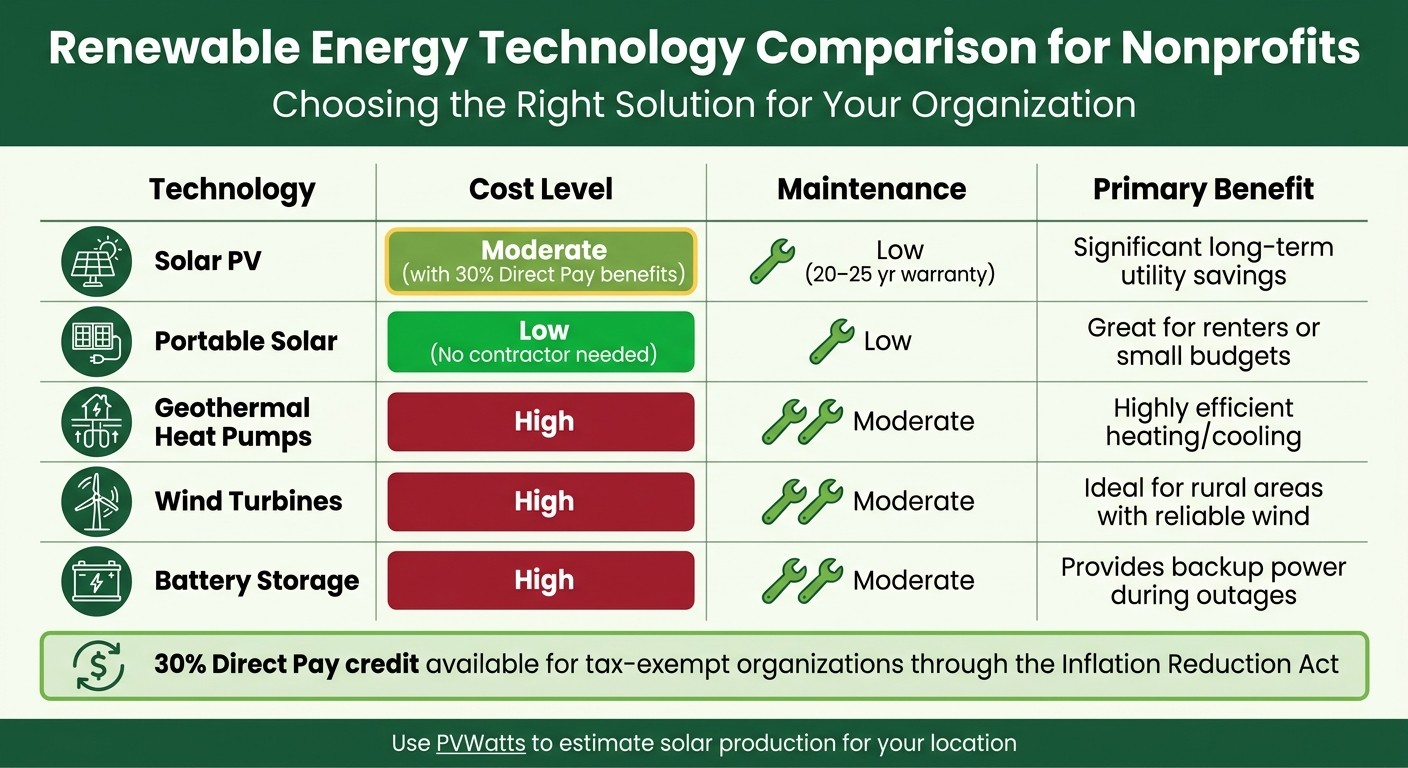
Renewable Energy Technology Comparison for Nonprofits: Costs, Maintenance, and Benefits
Once funding is in place, the next step is selecting the renewable energy technology that aligns with your needs, budget, and physical constraints. For many nonprofits, solar photovoltaic (PV) systems are the go-to choice due to their accessibility, minimal maintenance, and warranties that often span 20–25 years [11]. However, before investing in energy generation, aim for quick efficiency upgrades like LED lighting retrofits and smart thermostats to lower your energy demand [1]. Below, we compare renewable energy technologies and explore scalable, budget-friendly strategies.
Comparing Renewable Energy Options
Each renewable technology serves different purposes, making it essential to evaluate what works best for your organization. For instance, solar PV is ideal for nonprofits with available roof or land space, while portable solar panels provide a simple, low-cost alternative that avoids the need for contractors or structural changes [12][2]. If your organization has substantial heating and cooling needs, geothermal heat pumps offer excellent efficiency, though they come with higher upfront costs and require sufficient ground space [13]. Wind turbines are well-suited for rural areas with steady wind, and biogas systems are most effective for nonprofits near farms or waste facilities [13].
Technology | Cost | Maintenance | Primary Benefit |
|---|---|---|---|
Solar PV | Moderate (with 30% Direct Pay benefits) | Low (20–25 yr warranty) | |
Portable Solar | Low (No contractor needed) | Low | Great for renters or small budgets [12] |
Geothermal Heat Pumps | High | Moderate | Highly efficient heating/cooling [1] |
Wind Turbines | High | Moderate | Ideal for rural areas with reliable wind [13] |
Battery Storage | High | Moderate |
These comparisons can help you identify the best fit for your organization. Tools like PV Watts can estimate solar energy production based on your location and roof space [12]. When planning larger projects, request at least three custom proposals to compare technical details and installer expertise [1].
Prioritizing Scalable and Low-Cost Solutions
Cost and scalability are just as important as technical performance when choosing renewable energy solutions. For nonprofits with limited budgets, community solar subscriptions offer a practical alternative to on-site installations. Similarly, portable solar panels provide immediate cost savings without requiring permanent structural changes, making them perfect for rented spaces or smaller budgets [12][2].
If upfront costs are a concern, consider third-party ownership models like Power Purchase Agreements (PPAs). These arrangements allow you to install solar panels with little to no initial investment. The third party claims the tax credits and passes on savings through reduced utility bills [11][2]. While owning the system outright yields the highest long-term returns - thanks to the 30% Direct Pay credit - PPAs are an excellent option when capital is limited. Additionally, community crowdfunding can help finance direct ownership, maximizing your return on investment over time [2].
Building Community Partnerships
Once funding is secured and the right technology is chosen, forming strong local partnerships becomes the backbone of any successful renewable energy project. Collaborating with local governments, utilities, and community organizations ensures projects deliver meaningful, long-term benefits. A well-rounded, multi-stakeholder team should be assembled early - ideally before finalizing the project design. Clearly defining roles such as Program Manager, Solar Project Owner, Community Outreach Lead, and Solar System Host at the outset helps streamline responsibilities and ensures that each team member can focus their expertise on the areas where it’s most needed [14]. This collaborative approach sets the stage for efficient project development and implementation.
Working with Local Governments and Utilities
Local governments and municipal utilities bring critical resources to the table, including technical expertise on grid infrastructure, billing systems, and streamlined permitting processes [14]. A great example of this is the Columbus Region Green Fund in Ohio, which collaborated with the Columbus Partnership in 2024 to accelerate solar adoption. The Columbus Partnership handled developer procurement and created a dedicated 501(c)(3) entity, Clean Energy Ventures, to own the solar systems. This structure not only separated legal liability from the green bank but also allowed the solar system owner to claim direct pay incentives [14]. Partnerships like these can also unlock access to programs such as net metering or community solar subscriptions, reducing costs for both organizations and the communities they serve.
Identifying potential solar system hosts - such as schools, libraries, churches, community centers, or affordable housing complexes with available rooftops or land - early in the process is equally important [14]. These partnerships provide secure installation sites and signal a strong commitment to the community. Additionally, participating in city sustainability working groups or utility advisory committees can amplify your nonprofit’s influence in local energy planning and policy discussions [3].
Engaging the Community for Shared Benefits
Beyond partnerships with governments and utilities, working directly with local community leaders ensures the benefits of renewable energy projects are shared equitably. Community-Based Organizations (CBOs) are especially valuable as trusted messengers for introducing renewable energy initiatives [15]. These organizations often have deep roots in their neighborhoods, making them invaluable for overcoming skepticism about new programs. For instance, Washington, D.C.’s Solar for All Program, launched in 2016, partnered with local CBOs to recruit low-income households. These organizations provided letters of support and conducted door-to-door outreach, helping residents feel confident in a program that initially seemed "too good to be true" [3].
"CBOs are trusted sources of information in the communities they serve. They are experts in what their communities need and prioritize, and their deep knowledge of historical and cultural contexts allows them to share program information in ways that connect and resonate." – Center for Sustainable Energy [15]
To ensure the success of these partnerships, it’s essential to compensate CBOs for their advisory and outreach efforts [15]. Providing technical training and materials tailored to local concerns - like health, economic justice, or utility costs - can help bridge the gap between renewable energy goals and community priorities. Regular monthly check-ins with partners can also provide valuable feedback, highlight community needs, and identify local events where direct engagement with residents can take place. This hands-on, collaborative approach strengthens trust and ensures that renewable energy projects benefit everyone involved.
Implementing and Monitoring Your Renewable Energy System
Phased Implementation Process
After laying the groundwork with your funding strategy and local partnerships, it's time to roll out your renewable energy project in well-defined phases. Begin with a baseline assessment to measure your organization's greenhouse gas emissions across three key areas: facilities (Scope 1), purchased electricity (Scope 2), and business travel or supply chain operations (Scope 3). Conduct a professional energy audit of your largest facilities to pinpoint the top five conservation measures based on their payback period. This ensures you're targeting the areas with the most significant potential impact first [1].
Before installation begins, make sure all necessary permits are secured, and regulatory requirements are met. A smooth deployment hinges on adhering to clear codes and leveraging automated review tools, especially for battery energy storage systems, which can otherwise cause delays. California's Energy Storage Permitting Guidebook highlights how streamlined processes and automated reviews can enhance safety, reliability, and project timelines [16]. To maximize both economic and social benefits, adopt a structured procurement strategy that includes legal assistance and secure eTendering platforms [17].
Prioritize quick-win measures to show immediate results. Start with no-cost or low-cost solutions to build momentum and gain stakeholder confidence. These initial successes pave the way for larger renewable energy projects, such as solar panels or heat pumps. For tax-exempt entities, the Inflation Reduction Act's "direct pay" provisions can cover 30–70% of these installation costs [1].
Once your system is up and running, the focus shifts to monitoring performance to ensure ongoing savings and efficiency.
Monitoring Energy Performance and ROI
When your renewable energy system becomes operational, establish a regular monitoring routine to track critical metrics and identify any deviations. Tools like the EPA's Simplified GHG Emissions Calculator or the CoolClimate Calculator can help you update your baseline emissions in just a few days. These tools are particularly useful for nonprofits that may lack dedicated sustainability staff, enabling them to measure progress effectively [1].
For more advanced tracking, platforms such as Caret® offer decision-makers the ability to model incentives and outcomes using real-world data. This allows for adjustments that optimize cost-effectiveness [16]. A great example comes from NC GreenPower's Solar+ Schools initiative. Since 2015, this program has installed solar systems in 95 schools, complete with weather stations and data monitoring tools. By 2026, it has provided STEM education to 64,000 students while reducing greenhouse gas emissions by 131,000 tonnes [18].
Incorporate sustainability metrics into your annual reports to highlight your progress. Metrics like total energy consumption, waste diversion rates, and travel emissions can demonstrate your organization's commitment to sustainability. This is increasingly important, as a 2024 survey revealed that 62% of institutional funders now consider sustainability practices when making grant decisions [1].
"Nonprofits that reduce energy consumption through efficiency improvements free up operating dollars for mission delivery. Those that don't are effectively diverting donor resources to utility companies." – Council Fire [1]
Conclusion
Switching to renewable energy offers both financial benefits and the opportunity to align with your organization's mission. By lowering utility expenses, nonprofits can redirect funds to the communities they serve. With energy costs now accounting for 6–8% of nonprofit operating budgets in 2024 - up from 4–5% in 2019 - every dollar saved on electricity becomes a resource to further your cause [1].
The Inflation Reduction Act's "direct pay" provisions make this shift more attainable by allowing tax-exempt organizations to recover 30–70% of clean energy installation costs [1].
Start by conducting a no-cost or subsidized energy audit through your utility provider. This will help identify the top five conservation measures with the fastest payback periods. Simple actions like installing LED lighting and optimizing thermostat schedules can deliver immediate savings and build momentum. Tools like the EPA's Simplified GHG Emissions Calculator are also valuable for establishing a baseline for emissions and tracking progress over time [1]. These practical steps pave the way for a focused and effective transition.
"Sustainability isn't a distraction from your mission - for most nonprofits, it's a prerequisite for credibly advancing it." – Council Fire Resources [1]
With 62% of funders now emphasizing sustainability [1], including even basic energy and waste metrics in your annual reports enhances transparency and strengthens your organization's appeal to future donors.
This transition doesn’t demand a massive upfront investment or a dedicated sustainability team. By starting small, taking advantage of incentives, and building community partnerships, your nonprofit can achieve meaningful results while extending its impact beyond its immediate operations.
FAQs
How do we pick solar, community solar, or a PPA?
Choosing the right energy solution - whether solar installations, community solar, or a Power Purchase Agreement (PPA) - depends on your nonprofit’s specific needs, financial situation, and objectives.
Solar installations provide substantial long-term savings but typically require a significant upfront investment. These systems are ideal for organizations with available roof space and the budget for initial costs.
Community solar offers a more flexible option, allowing multiple participants to share the benefits of solar energy without needing to install panels. This option is great for nonprofits that lack roof space or want to avoid large expenditures.
Power Purchase Agreements (PPAs) eliminate upfront costs by placing the responsibility for installation and maintenance on a third party. Your organization pays only for the electricity generated, making it a practical choice for nonprofits seeking minimal financial risk.
Each option has its advantages, so understanding your nonprofit’s priorities is key to making the best decision.
What do we need to qualify for IRA Direct Pay?
Nonprofits aiming to qualify for IRA Direct Pay must hold tax-exempt status and meet the eligibility criteria to receive direct payments from the IRS for clean energy initiatives. These projects can include solar installations, battery storage systems, or geothermal heat pumps. To ensure compliance, carefully review the IRS guidelines and submit the required application before the designated deadlines.
Which metrics should we report to funders each year?
Each year, make it a priority to report key metrics that reflect your progress. Highlight figures such as energy savings achieved, the renewable energy capacity installed, greenhouse gas emissions reduced, and cost savings from energy efficiency measures. Sharing these numbers not only showcases your impact but also reinforces your commitment to meeting sustainability goals.
Related Blog Posts
Latest Articles
©2025

Narrative Change and Power Building: The Missing Half of Advocacy
Narrative change is the process of disrupting dominant narratives that normalize inequity and advancing new narratives from historically marginalized communities.

Funding Resilience Without Federal Grants
BRIC is unreliable and FEMA is shrinking. Here's how cities fund climate resilience with dedicated revenue, blended finance, and a coordinating authority.

The ESG Blind Spot: How AI Is Finding Risks in Companies Nobody Else Is Watching
Norway's sovereign wealth fund uses AI to screen 7,200 portfolio companies for forced labor and corruption within 24 hours. The real story is the emerging-market coverage gap that traditional ESG data vendors miss — and what it means for any company with a global supply chain.
Narrative Change and Power Building: The Missing Half of Advocacy
Narrative change is the process of disrupting dominant narratives that normalize inequity and advancing new narratives from historically marginalized communities.
Funding Resilience Without Federal Grants
BRIC is unreliable and FEMA is shrinking. Here's how cities fund climate resilience with dedicated revenue, blended finance, and a coordinating authority.
The ESG Blind Spot: How AI Is Finding Risks in Companies Nobody Else Is Watching
Norway's sovereign wealth fund uses AI to screen 7,200 portfolio companies for forced labor and corruption within 24 hours. The real story is the emerging-market coverage gap that traditional ESG data vendors miss — and what it means for any company with a global supply chain.
FAQ
01
What does it really mean to “redefine profit”?
02
What makes Council Fire different?
03
Who does Council Fire work with?
04
What does working with Council Fire actually look like?
05
How does Council Fire help organizations turn big goals into action?
06
How does Council Fire define and measure success?
Apr 26, 2026
How to Transition to Renewable Energy Systems at the Local Level for NGOs & Nonprofits
Sustainability Strategy
In This Article
Practical steps for nonprofits to cut energy costs and emissions using audits, IRA Direct Pay funding, community solar, and scalable tech.
How to Transition to Renewable Energy Systems at the Local Level for NGOs & Nonprofits
Switching to renewable energy can lower operating costs, meet funder expectations, and reduce emissions for nonprofits. Rising energy expenses - now 6-8% of budgets - make this shift both practical and impactful. Federal incentives, like the Inflation Reduction Act, offer nonprofits cash payments covering 30-70% of project costs, simplifying the transition. Here’s how to get started:
Assess Energy Use: Conduct an energy audit to find inefficiencies and prioritize upgrades.
Explore Renewable Options: Solar panels, wind turbines, and community solar programs are viable choices, depending on your location and needs.
Secure Funding: Leverage federal programs, state incentives, and community partnerships to reduce upfront costs.
Build Partnerships: Collaborate with local governments, utilities, and community groups to maximize reach and benefits.
Monitor Progress: Track energy savings and emissions reductions to showcase results and attract future funding.
Renew America's Nonprofits - Energy Efficiency First: Preparing Your Nonprofit for Solar
Assessing Your Organization's Energy Needs
Before diving into renewable energy adoption, it's essential to evaluate your current energy consumption. Start with your largest facility, as this is likely where you'll uncover the most substantial savings opportunities. For instance, completing an organizational carbon footprint assessment can often be accomplished in just 2–3 days[1].
Conducting an Energy Audit
Reach out to your utility provider to see if they offer free or subsidized energy audits for commercial operations. These audits often come with tailored recommendations for improving energy efficiency. A professional audit might reveal inefficiencies like outdated HVAC systems or energy-draining lighting setups that could be costing your organization more than you realize.
While waiting for a professional audit, begin gathering key data. Collect utility bills from the past 12–24 months and expense reports for business travel. This information will help establish baseline emissions across three categories:
Scope 1: Direct emissions from on-site sources.
Scope 2: Emissions from purchased electricity.
Scope 3: Indirect emissions from travel and supply chain activities.
To simplify the process, tools like the EPA's Simplified GHG Emissions Calculator or the CoolClimate Calculator can provide quick estimates without requiring a dedicated sustainability team[1].
Once potential energy-saving measures are identified, prioritize them based on their payback period. For example, as Council Fire highlights:
A $15,000 HVAC upgrade that saves $5,000 annually in energy costs pays for itself in three years and provides $5,000 in yearly savings for future mission delivery[1].
Begin implementing no-cost or low-cost solutions immediately, such as adjusting thermostat schedules, installing lighting controls, or managing plug loads. Once your energy baseline is established, you can move on to exploring renewable energy solutions tailored to your facility's specific needs.
Identifying Local Renewable Energy Resources
Using insights from your energy audit, identify renewable energy options that align with your location. Availability and feasibility of renewable resources can vary widely depending on geographic and site-specific factors.
For solar energy, tools like the NREL's PVWatts Calculator can provide estimates for energy production and cost savings based on your exact address[4]. If wind energy is a potential option, consult resources like WINDExchange and detailed wind resource maps to evaluate local wind potential. Additionally, if your organization owns land or is near brownfields or landfills, the RE-Powering America's Land tool can help identify unique siting opportunities for renewable projects[4].
To make informed decisions, explore the Database of State Incentives for Renewables & Efficiency (DSIRE). This resource offers details on state-specific programs, financial incentives, and net metering policies[4]. These insights can help you determine not only what renewable solutions are technically viable but also what makes financial sense for your organization.
If on-site renewable energy isn't feasible due to factors like shading, roof conditions, or limited space, consider joining a community solar program. These programs allow organizations to benefit from local renewable energy projects without needing to install equipment on their own property.
Finding Funding and Incentives
After determining the renewable energy systems that suit your location, the next step is securing funding. Fortunately, nonprofits now benefit from federal tax credits offered as direct cash payments by the IRS. Miguel Yañez-Barnuevo of EESI describes this as a "game changer" that makes clean energy more accessible for many organizations [5]. Using your energy audit data, you can identify funding options that align with your efficiency goals. With a solid funding strategy, your organization can explore renewable energy solutions tailored to its specific needs.
Federal, State, and Local Grants
The Inflation Reduction Act's Direct Pay program allows nonprofits to claim cash reimbursements covering 30%–70% of project costs [5][8]. The Investment Tax Credit (ITC) provides a baseline 30% credit for installations like solar panels, wind turbines, battery storage, and geothermal heat pumps [5][6]. Additional bonuses, such as credits for energy communities, U.S.-made components, or low-income projects, can significantly increase the overall credit amount [5][7][8].
To claim Direct Pay, pre-register with the IRS at least 120 days before filing by using Forms 990-T and 3800 [6][8]. For solar and wind projects, construction must begin by July 4, 2026, or be completed by December 31, 2027 [6][10].
Beyond federal programs, the Database of State Incentives for Renewables & Efficiency (DSIRE) is a valuable resource for finding state-specific grants and utility-level incentives [7][8]. For example, states like Wisconsin periodically offer competitive grants for energy efficiency and storage projects through public service commissions [6].
Additionally, community solar programs provide further opportunities for incentives.
Community Solar Programs and Tax Credits
If installing renewable energy equipment on-site isn’t possible, community solar programs offer an alternative. These programs not only provide access to renewable energy but also qualify for significant incentives. Nonprofits participating in "qualified low-income economic benefit projects", which include many community solar initiatives, can receive a 20% bonus credit in addition to the baseline 30% ITC [9][10]. This could allow organizations to recover up to 50% of project costs through direct payments.
Standalone battery storage systems are also eligible for the full 30% ITC, even if they aren’t paired with solar panels [9]. These systems remain eligible for the credit through 2032, while solar and wind projects have earlier deadlines for construction [10]. To qualify, the battery storage system must have a minimum nameplate capacity of 5 kilowatt hours [9][10].
For organizations worried about upfront costs, the Greenhouse Gas Reduction Fund offers bridge loans to cover expenses while waiting for IRS reimbursements [8]. Additionally, nonprofits can take advantage of Section 179D tax deductions by transferring them to project designers, such as architects or engineers, in exchange for reduced project costs [5][6]. These funding tools help lower operating expenses, allowing your organization to allocate more resources toward its mission [5].
Choosing the Right Renewable Energy Technology
Renewable Energy Technology Comparison for Nonprofits: Costs, Maintenance, and Benefits
Once funding is in place, the next step is selecting the renewable energy technology that aligns with your needs, budget, and physical constraints. For many nonprofits, solar photovoltaic (PV) systems are the go-to choice due to their accessibility, minimal maintenance, and warranties that often span 20–25 years [11]. However, before investing in energy generation, aim for quick efficiency upgrades like LED lighting retrofits and smart thermostats to lower your energy demand [1]. Below, we compare renewable energy technologies and explore scalable, budget-friendly strategies.
Comparing Renewable Energy Options
Each renewable technology serves different purposes, making it essential to evaluate what works best for your organization. For instance, solar PV is ideal for nonprofits with available roof or land space, while portable solar panels provide a simple, low-cost alternative that avoids the need for contractors or structural changes [12][2]. If your organization has substantial heating and cooling needs, geothermal heat pumps offer excellent efficiency, though they come with higher upfront costs and require sufficient ground space [13]. Wind turbines are well-suited for rural areas with steady wind, and biogas systems are most effective for nonprofits near farms or waste facilities [13].
Technology | Cost | Maintenance | Primary Benefit |
|---|---|---|---|
Solar PV | Moderate (with 30% Direct Pay benefits) | Low (20–25 yr warranty) | |
Portable Solar | Low (No contractor needed) | Low | Great for renters or small budgets [12] |
Geothermal Heat Pumps | High | Moderate | Highly efficient heating/cooling [1] |
Wind Turbines | High | Moderate | Ideal for rural areas with reliable wind [13] |
Battery Storage | High | Moderate |
These comparisons can help you identify the best fit for your organization. Tools like PV Watts can estimate solar energy production based on your location and roof space [12]. When planning larger projects, request at least three custom proposals to compare technical details and installer expertise [1].
Prioritizing Scalable and Low-Cost Solutions
Cost and scalability are just as important as technical performance when choosing renewable energy solutions. For nonprofits with limited budgets, community solar subscriptions offer a practical alternative to on-site installations. Similarly, portable solar panels provide immediate cost savings without requiring permanent structural changes, making them perfect for rented spaces or smaller budgets [12][2].
If upfront costs are a concern, consider third-party ownership models like Power Purchase Agreements (PPAs). These arrangements allow you to install solar panels with little to no initial investment. The third party claims the tax credits and passes on savings through reduced utility bills [11][2]. While owning the system outright yields the highest long-term returns - thanks to the 30% Direct Pay credit - PPAs are an excellent option when capital is limited. Additionally, community crowdfunding can help finance direct ownership, maximizing your return on investment over time [2].
Building Community Partnerships
Once funding is secured and the right technology is chosen, forming strong local partnerships becomes the backbone of any successful renewable energy project. Collaborating with local governments, utilities, and community organizations ensures projects deliver meaningful, long-term benefits. A well-rounded, multi-stakeholder team should be assembled early - ideally before finalizing the project design. Clearly defining roles such as Program Manager, Solar Project Owner, Community Outreach Lead, and Solar System Host at the outset helps streamline responsibilities and ensures that each team member can focus their expertise on the areas where it’s most needed [14]. This collaborative approach sets the stage for efficient project development and implementation.
Working with Local Governments and Utilities
Local governments and municipal utilities bring critical resources to the table, including technical expertise on grid infrastructure, billing systems, and streamlined permitting processes [14]. A great example of this is the Columbus Region Green Fund in Ohio, which collaborated with the Columbus Partnership in 2024 to accelerate solar adoption. The Columbus Partnership handled developer procurement and created a dedicated 501(c)(3) entity, Clean Energy Ventures, to own the solar systems. This structure not only separated legal liability from the green bank but also allowed the solar system owner to claim direct pay incentives [14]. Partnerships like these can also unlock access to programs such as net metering or community solar subscriptions, reducing costs for both organizations and the communities they serve.
Identifying potential solar system hosts - such as schools, libraries, churches, community centers, or affordable housing complexes with available rooftops or land - early in the process is equally important [14]. These partnerships provide secure installation sites and signal a strong commitment to the community. Additionally, participating in city sustainability working groups or utility advisory committees can amplify your nonprofit’s influence in local energy planning and policy discussions [3].
Engaging the Community for Shared Benefits
Beyond partnerships with governments and utilities, working directly with local community leaders ensures the benefits of renewable energy projects are shared equitably. Community-Based Organizations (CBOs) are especially valuable as trusted messengers for introducing renewable energy initiatives [15]. These organizations often have deep roots in their neighborhoods, making them invaluable for overcoming skepticism about new programs. For instance, Washington, D.C.’s Solar for All Program, launched in 2016, partnered with local CBOs to recruit low-income households. These organizations provided letters of support and conducted door-to-door outreach, helping residents feel confident in a program that initially seemed "too good to be true" [3].
"CBOs are trusted sources of information in the communities they serve. They are experts in what their communities need and prioritize, and their deep knowledge of historical and cultural contexts allows them to share program information in ways that connect and resonate." – Center for Sustainable Energy [15]
To ensure the success of these partnerships, it’s essential to compensate CBOs for their advisory and outreach efforts [15]. Providing technical training and materials tailored to local concerns - like health, economic justice, or utility costs - can help bridge the gap between renewable energy goals and community priorities. Regular monthly check-ins with partners can also provide valuable feedback, highlight community needs, and identify local events where direct engagement with residents can take place. This hands-on, collaborative approach strengthens trust and ensures that renewable energy projects benefit everyone involved.
Implementing and Monitoring Your Renewable Energy System
Phased Implementation Process
After laying the groundwork with your funding strategy and local partnerships, it's time to roll out your renewable energy project in well-defined phases. Begin with a baseline assessment to measure your organization's greenhouse gas emissions across three key areas: facilities (Scope 1), purchased electricity (Scope 2), and business travel or supply chain operations (Scope 3). Conduct a professional energy audit of your largest facilities to pinpoint the top five conservation measures based on their payback period. This ensures you're targeting the areas with the most significant potential impact first [1].
Before installation begins, make sure all necessary permits are secured, and regulatory requirements are met. A smooth deployment hinges on adhering to clear codes and leveraging automated review tools, especially for battery energy storage systems, which can otherwise cause delays. California's Energy Storage Permitting Guidebook highlights how streamlined processes and automated reviews can enhance safety, reliability, and project timelines [16]. To maximize both economic and social benefits, adopt a structured procurement strategy that includes legal assistance and secure eTendering platforms [17].
Prioritize quick-win measures to show immediate results. Start with no-cost or low-cost solutions to build momentum and gain stakeholder confidence. These initial successes pave the way for larger renewable energy projects, such as solar panels or heat pumps. For tax-exempt entities, the Inflation Reduction Act's "direct pay" provisions can cover 30–70% of these installation costs [1].
Once your system is up and running, the focus shifts to monitoring performance to ensure ongoing savings and efficiency.
Monitoring Energy Performance and ROI
When your renewable energy system becomes operational, establish a regular monitoring routine to track critical metrics and identify any deviations. Tools like the EPA's Simplified GHG Emissions Calculator or the CoolClimate Calculator can help you update your baseline emissions in just a few days. These tools are particularly useful for nonprofits that may lack dedicated sustainability staff, enabling them to measure progress effectively [1].
For more advanced tracking, platforms such as Caret® offer decision-makers the ability to model incentives and outcomes using real-world data. This allows for adjustments that optimize cost-effectiveness [16]. A great example comes from NC GreenPower's Solar+ Schools initiative. Since 2015, this program has installed solar systems in 95 schools, complete with weather stations and data monitoring tools. By 2026, it has provided STEM education to 64,000 students while reducing greenhouse gas emissions by 131,000 tonnes [18].
Incorporate sustainability metrics into your annual reports to highlight your progress. Metrics like total energy consumption, waste diversion rates, and travel emissions can demonstrate your organization's commitment to sustainability. This is increasingly important, as a 2024 survey revealed that 62% of institutional funders now consider sustainability practices when making grant decisions [1].
"Nonprofits that reduce energy consumption through efficiency improvements free up operating dollars for mission delivery. Those that don't are effectively diverting donor resources to utility companies." – Council Fire [1]
Conclusion
Switching to renewable energy offers both financial benefits and the opportunity to align with your organization's mission. By lowering utility expenses, nonprofits can redirect funds to the communities they serve. With energy costs now accounting for 6–8% of nonprofit operating budgets in 2024 - up from 4–5% in 2019 - every dollar saved on electricity becomes a resource to further your cause [1].
The Inflation Reduction Act's "direct pay" provisions make this shift more attainable by allowing tax-exempt organizations to recover 30–70% of clean energy installation costs [1].
Start by conducting a no-cost or subsidized energy audit through your utility provider. This will help identify the top five conservation measures with the fastest payback periods. Simple actions like installing LED lighting and optimizing thermostat schedules can deliver immediate savings and build momentum. Tools like the EPA's Simplified GHG Emissions Calculator are also valuable for establishing a baseline for emissions and tracking progress over time [1]. These practical steps pave the way for a focused and effective transition.
"Sustainability isn't a distraction from your mission - for most nonprofits, it's a prerequisite for credibly advancing it." – Council Fire Resources [1]
With 62% of funders now emphasizing sustainability [1], including even basic energy and waste metrics in your annual reports enhances transparency and strengthens your organization's appeal to future donors.
This transition doesn’t demand a massive upfront investment or a dedicated sustainability team. By starting small, taking advantage of incentives, and building community partnerships, your nonprofit can achieve meaningful results while extending its impact beyond its immediate operations.
FAQs
How do we pick solar, community solar, or a PPA?
Choosing the right energy solution - whether solar installations, community solar, or a Power Purchase Agreement (PPA) - depends on your nonprofit’s specific needs, financial situation, and objectives.
Solar installations provide substantial long-term savings but typically require a significant upfront investment. These systems are ideal for organizations with available roof space and the budget for initial costs.
Community solar offers a more flexible option, allowing multiple participants to share the benefits of solar energy without needing to install panels. This option is great for nonprofits that lack roof space or want to avoid large expenditures.
Power Purchase Agreements (PPAs) eliminate upfront costs by placing the responsibility for installation and maintenance on a third party. Your organization pays only for the electricity generated, making it a practical choice for nonprofits seeking minimal financial risk.
Each option has its advantages, so understanding your nonprofit’s priorities is key to making the best decision.
What do we need to qualify for IRA Direct Pay?
Nonprofits aiming to qualify for IRA Direct Pay must hold tax-exempt status and meet the eligibility criteria to receive direct payments from the IRS for clean energy initiatives. These projects can include solar installations, battery storage systems, or geothermal heat pumps. To ensure compliance, carefully review the IRS guidelines and submit the required application before the designated deadlines.
Which metrics should we report to funders each year?
Each year, make it a priority to report key metrics that reflect your progress. Highlight figures such as energy savings achieved, the renewable energy capacity installed, greenhouse gas emissions reduced, and cost savings from energy efficiency measures. Sharing these numbers not only showcases your impact but also reinforces your commitment to meeting sustainability goals.
Related Blog Posts
Latest Articles
©2025
Narrative Change and Power Building: The Missing Half of Advocacy
Narrative change is the process of disrupting dominant narratives that normalize inequity and advancing new narratives from historically marginalized communities.
Funding Resilience Without Federal Grants
BRIC is unreliable and FEMA is shrinking. Here's how cities fund climate resilience with dedicated revenue, blended finance, and a coordinating authority.
The ESG Blind Spot: How AI Is Finding Risks in Companies Nobody Else Is Watching
Norway's sovereign wealth fund uses AI to screen 7,200 portfolio companies for forced labor and corruption within 24 hours. The real story is the emerging-market coverage gap that traditional ESG data vendors miss — and what it means for any company with a global supply chain.
FAQ
01
What does it really mean to “redefine profit”?
02
What makes Council Fire different?
03
Who does Council Fire work with?
04
What does working with Council Fire actually look like?
05
How does Council Fire help organizations turn big goals into action?
06
How does Council Fire define and measure success?
Apr 26, 2026
How to Transition to Renewable Energy Systems at the Local Level for NGOs & Nonprofits
Sustainability Strategy
In This Article
Practical steps for nonprofits to cut energy costs and emissions using audits, IRA Direct Pay funding, community solar, and scalable tech.
How to Transition to Renewable Energy Systems at the Local Level for NGOs & Nonprofits
Switching to renewable energy can lower operating costs, meet funder expectations, and reduce emissions for nonprofits. Rising energy expenses - now 6-8% of budgets - make this shift both practical and impactful. Federal incentives, like the Inflation Reduction Act, offer nonprofits cash payments covering 30-70% of project costs, simplifying the transition. Here’s how to get started:
Assess Energy Use: Conduct an energy audit to find inefficiencies and prioritize upgrades.
Explore Renewable Options: Solar panels, wind turbines, and community solar programs are viable choices, depending on your location and needs.
Secure Funding: Leverage federal programs, state incentives, and community partnerships to reduce upfront costs.
Build Partnerships: Collaborate with local governments, utilities, and community groups to maximize reach and benefits.
Monitor Progress: Track energy savings and emissions reductions to showcase results and attract future funding.
Renew America's Nonprofits - Energy Efficiency First: Preparing Your Nonprofit for Solar
Assessing Your Organization's Energy Needs
Before diving into renewable energy adoption, it's essential to evaluate your current energy consumption. Start with your largest facility, as this is likely where you'll uncover the most substantial savings opportunities. For instance, completing an organizational carbon footprint assessment can often be accomplished in just 2–3 days[1].
Conducting an Energy Audit
Reach out to your utility provider to see if they offer free or subsidized energy audits for commercial operations. These audits often come with tailored recommendations for improving energy efficiency. A professional audit might reveal inefficiencies like outdated HVAC systems or energy-draining lighting setups that could be costing your organization more than you realize.
While waiting for a professional audit, begin gathering key data. Collect utility bills from the past 12–24 months and expense reports for business travel. This information will help establish baseline emissions across three categories:
Scope 1: Direct emissions from on-site sources.
Scope 2: Emissions from purchased electricity.
Scope 3: Indirect emissions from travel and supply chain activities.
To simplify the process, tools like the EPA's Simplified GHG Emissions Calculator or the CoolClimate Calculator can provide quick estimates without requiring a dedicated sustainability team[1].
Once potential energy-saving measures are identified, prioritize them based on their payback period. For example, as Council Fire highlights:
A $15,000 HVAC upgrade that saves $5,000 annually in energy costs pays for itself in three years and provides $5,000 in yearly savings for future mission delivery[1].
Begin implementing no-cost or low-cost solutions immediately, such as adjusting thermostat schedules, installing lighting controls, or managing plug loads. Once your energy baseline is established, you can move on to exploring renewable energy solutions tailored to your facility's specific needs.
Identifying Local Renewable Energy Resources
Using insights from your energy audit, identify renewable energy options that align with your location. Availability and feasibility of renewable resources can vary widely depending on geographic and site-specific factors.
For solar energy, tools like the NREL's PVWatts Calculator can provide estimates for energy production and cost savings based on your exact address[4]. If wind energy is a potential option, consult resources like WINDExchange and detailed wind resource maps to evaluate local wind potential. Additionally, if your organization owns land or is near brownfields or landfills, the RE-Powering America's Land tool can help identify unique siting opportunities for renewable projects[4].
To make informed decisions, explore the Database of State Incentives for Renewables & Efficiency (DSIRE). This resource offers details on state-specific programs, financial incentives, and net metering policies[4]. These insights can help you determine not only what renewable solutions are technically viable but also what makes financial sense for your organization.
If on-site renewable energy isn't feasible due to factors like shading, roof conditions, or limited space, consider joining a community solar program. These programs allow organizations to benefit from local renewable energy projects without needing to install equipment on their own property.
Finding Funding and Incentives
After determining the renewable energy systems that suit your location, the next step is securing funding. Fortunately, nonprofits now benefit from federal tax credits offered as direct cash payments by the IRS. Miguel Yañez-Barnuevo of EESI describes this as a "game changer" that makes clean energy more accessible for many organizations [5]. Using your energy audit data, you can identify funding options that align with your efficiency goals. With a solid funding strategy, your organization can explore renewable energy solutions tailored to its specific needs.
Federal, State, and Local Grants
The Inflation Reduction Act's Direct Pay program allows nonprofits to claim cash reimbursements covering 30%–70% of project costs [5][8]. The Investment Tax Credit (ITC) provides a baseline 30% credit for installations like solar panels, wind turbines, battery storage, and geothermal heat pumps [5][6]. Additional bonuses, such as credits for energy communities, U.S.-made components, or low-income projects, can significantly increase the overall credit amount [5][7][8].
To claim Direct Pay, pre-register with the IRS at least 120 days before filing by using Forms 990-T and 3800 [6][8]. For solar and wind projects, construction must begin by July 4, 2026, or be completed by December 31, 2027 [6][10].
Beyond federal programs, the Database of State Incentives for Renewables & Efficiency (DSIRE) is a valuable resource for finding state-specific grants and utility-level incentives [7][8]. For example, states like Wisconsin periodically offer competitive grants for energy efficiency and storage projects through public service commissions [6].
Additionally, community solar programs provide further opportunities for incentives.
Community Solar Programs and Tax Credits
If installing renewable energy equipment on-site isn’t possible, community solar programs offer an alternative. These programs not only provide access to renewable energy but also qualify for significant incentives. Nonprofits participating in "qualified low-income economic benefit projects", which include many community solar initiatives, can receive a 20% bonus credit in addition to the baseline 30% ITC [9][10]. This could allow organizations to recover up to 50% of project costs through direct payments.
Standalone battery storage systems are also eligible for the full 30% ITC, even if they aren’t paired with solar panels [9]. These systems remain eligible for the credit through 2032, while solar and wind projects have earlier deadlines for construction [10]. To qualify, the battery storage system must have a minimum nameplate capacity of 5 kilowatt hours [9][10].
For organizations worried about upfront costs, the Greenhouse Gas Reduction Fund offers bridge loans to cover expenses while waiting for IRS reimbursements [8]. Additionally, nonprofits can take advantage of Section 179D tax deductions by transferring them to project designers, such as architects or engineers, in exchange for reduced project costs [5][6]. These funding tools help lower operating expenses, allowing your organization to allocate more resources toward its mission [5].
Choosing the Right Renewable Energy Technology
Renewable Energy Technology Comparison for Nonprofits: Costs, Maintenance, and Benefits
Once funding is in place, the next step is selecting the renewable energy technology that aligns with your needs, budget, and physical constraints. For many nonprofits, solar photovoltaic (PV) systems are the go-to choice due to their accessibility, minimal maintenance, and warranties that often span 20–25 years [11]. However, before investing in energy generation, aim for quick efficiency upgrades like LED lighting retrofits and smart thermostats to lower your energy demand [1]. Below, we compare renewable energy technologies and explore scalable, budget-friendly strategies.
Comparing Renewable Energy Options
Each renewable technology serves different purposes, making it essential to evaluate what works best for your organization. For instance, solar PV is ideal for nonprofits with available roof or land space, while portable solar panels provide a simple, low-cost alternative that avoids the need for contractors or structural changes [12][2]. If your organization has substantial heating and cooling needs, geothermal heat pumps offer excellent efficiency, though they come with higher upfront costs and require sufficient ground space [13]. Wind turbines are well-suited for rural areas with steady wind, and biogas systems are most effective for nonprofits near farms or waste facilities [13].
Technology | Cost | Maintenance | Primary Benefit |
|---|---|---|---|
Solar PV | Moderate (with 30% Direct Pay benefits) | Low (20–25 yr warranty) | |
Portable Solar | Low (No contractor needed) | Low | Great for renters or small budgets [12] |
Geothermal Heat Pumps | High | Moderate | Highly efficient heating/cooling [1] |
Wind Turbines | High | Moderate | Ideal for rural areas with reliable wind [13] |
Battery Storage | High | Moderate |
These comparisons can help you identify the best fit for your organization. Tools like PV Watts can estimate solar energy production based on your location and roof space [12]. When planning larger projects, request at least three custom proposals to compare technical details and installer expertise [1].
Prioritizing Scalable and Low-Cost Solutions
Cost and scalability are just as important as technical performance when choosing renewable energy solutions. For nonprofits with limited budgets, community solar subscriptions offer a practical alternative to on-site installations. Similarly, portable solar panels provide immediate cost savings without requiring permanent structural changes, making them perfect for rented spaces or smaller budgets [12][2].
If upfront costs are a concern, consider third-party ownership models like Power Purchase Agreements (PPAs). These arrangements allow you to install solar panels with little to no initial investment. The third party claims the tax credits and passes on savings through reduced utility bills [11][2]. While owning the system outright yields the highest long-term returns - thanks to the 30% Direct Pay credit - PPAs are an excellent option when capital is limited. Additionally, community crowdfunding can help finance direct ownership, maximizing your return on investment over time [2].
Building Community Partnerships
Once funding is secured and the right technology is chosen, forming strong local partnerships becomes the backbone of any successful renewable energy project. Collaborating with local governments, utilities, and community organizations ensures projects deliver meaningful, long-term benefits. A well-rounded, multi-stakeholder team should be assembled early - ideally before finalizing the project design. Clearly defining roles such as Program Manager, Solar Project Owner, Community Outreach Lead, and Solar System Host at the outset helps streamline responsibilities and ensures that each team member can focus their expertise on the areas where it’s most needed [14]. This collaborative approach sets the stage for efficient project development and implementation.
Working with Local Governments and Utilities
Local governments and municipal utilities bring critical resources to the table, including technical expertise on grid infrastructure, billing systems, and streamlined permitting processes [14]. A great example of this is the Columbus Region Green Fund in Ohio, which collaborated with the Columbus Partnership in 2024 to accelerate solar adoption. The Columbus Partnership handled developer procurement and created a dedicated 501(c)(3) entity, Clean Energy Ventures, to own the solar systems. This structure not only separated legal liability from the green bank but also allowed the solar system owner to claim direct pay incentives [14]. Partnerships like these can also unlock access to programs such as net metering or community solar subscriptions, reducing costs for both organizations and the communities they serve.
Identifying potential solar system hosts - such as schools, libraries, churches, community centers, or affordable housing complexes with available rooftops or land - early in the process is equally important [14]. These partnerships provide secure installation sites and signal a strong commitment to the community. Additionally, participating in city sustainability working groups or utility advisory committees can amplify your nonprofit’s influence in local energy planning and policy discussions [3].
Engaging the Community for Shared Benefits
Beyond partnerships with governments and utilities, working directly with local community leaders ensures the benefits of renewable energy projects are shared equitably. Community-Based Organizations (CBOs) are especially valuable as trusted messengers for introducing renewable energy initiatives [15]. These organizations often have deep roots in their neighborhoods, making them invaluable for overcoming skepticism about new programs. For instance, Washington, D.C.’s Solar for All Program, launched in 2016, partnered with local CBOs to recruit low-income households. These organizations provided letters of support and conducted door-to-door outreach, helping residents feel confident in a program that initially seemed "too good to be true" [3].
"CBOs are trusted sources of information in the communities they serve. They are experts in what their communities need and prioritize, and their deep knowledge of historical and cultural contexts allows them to share program information in ways that connect and resonate." – Center for Sustainable Energy [15]
To ensure the success of these partnerships, it’s essential to compensate CBOs for their advisory and outreach efforts [15]. Providing technical training and materials tailored to local concerns - like health, economic justice, or utility costs - can help bridge the gap between renewable energy goals and community priorities. Regular monthly check-ins with partners can also provide valuable feedback, highlight community needs, and identify local events where direct engagement with residents can take place. This hands-on, collaborative approach strengthens trust and ensures that renewable energy projects benefit everyone involved.
Implementing and Monitoring Your Renewable Energy System
Phased Implementation Process
After laying the groundwork with your funding strategy and local partnerships, it's time to roll out your renewable energy project in well-defined phases. Begin with a baseline assessment to measure your organization's greenhouse gas emissions across three key areas: facilities (Scope 1), purchased electricity (Scope 2), and business travel or supply chain operations (Scope 3). Conduct a professional energy audit of your largest facilities to pinpoint the top five conservation measures based on their payback period. This ensures you're targeting the areas with the most significant potential impact first [1].
Before installation begins, make sure all necessary permits are secured, and regulatory requirements are met. A smooth deployment hinges on adhering to clear codes and leveraging automated review tools, especially for battery energy storage systems, which can otherwise cause delays. California's Energy Storage Permitting Guidebook highlights how streamlined processes and automated reviews can enhance safety, reliability, and project timelines [16]. To maximize both economic and social benefits, adopt a structured procurement strategy that includes legal assistance and secure eTendering platforms [17].
Prioritize quick-win measures to show immediate results. Start with no-cost or low-cost solutions to build momentum and gain stakeholder confidence. These initial successes pave the way for larger renewable energy projects, such as solar panels or heat pumps. For tax-exempt entities, the Inflation Reduction Act's "direct pay" provisions can cover 30–70% of these installation costs [1].
Once your system is up and running, the focus shifts to monitoring performance to ensure ongoing savings and efficiency.
Monitoring Energy Performance and ROI
When your renewable energy system becomes operational, establish a regular monitoring routine to track critical metrics and identify any deviations. Tools like the EPA's Simplified GHG Emissions Calculator or the CoolClimate Calculator can help you update your baseline emissions in just a few days. These tools are particularly useful for nonprofits that may lack dedicated sustainability staff, enabling them to measure progress effectively [1].
For more advanced tracking, platforms such as Caret® offer decision-makers the ability to model incentives and outcomes using real-world data. This allows for adjustments that optimize cost-effectiveness [16]. A great example comes from NC GreenPower's Solar+ Schools initiative. Since 2015, this program has installed solar systems in 95 schools, complete with weather stations and data monitoring tools. By 2026, it has provided STEM education to 64,000 students while reducing greenhouse gas emissions by 131,000 tonnes [18].
Incorporate sustainability metrics into your annual reports to highlight your progress. Metrics like total energy consumption, waste diversion rates, and travel emissions can demonstrate your organization's commitment to sustainability. This is increasingly important, as a 2024 survey revealed that 62% of institutional funders now consider sustainability practices when making grant decisions [1].
"Nonprofits that reduce energy consumption through efficiency improvements free up operating dollars for mission delivery. Those that don't are effectively diverting donor resources to utility companies." – Council Fire [1]
Conclusion
Switching to renewable energy offers both financial benefits and the opportunity to align with your organization's mission. By lowering utility expenses, nonprofits can redirect funds to the communities they serve. With energy costs now accounting for 6–8% of nonprofit operating budgets in 2024 - up from 4–5% in 2019 - every dollar saved on electricity becomes a resource to further your cause [1].
The Inflation Reduction Act's "direct pay" provisions make this shift more attainable by allowing tax-exempt organizations to recover 30–70% of clean energy installation costs [1].
Start by conducting a no-cost or subsidized energy audit through your utility provider. This will help identify the top five conservation measures with the fastest payback periods. Simple actions like installing LED lighting and optimizing thermostat schedules can deliver immediate savings and build momentum. Tools like the EPA's Simplified GHG Emissions Calculator are also valuable for establishing a baseline for emissions and tracking progress over time [1]. These practical steps pave the way for a focused and effective transition.
"Sustainability isn't a distraction from your mission - for most nonprofits, it's a prerequisite for credibly advancing it." – Council Fire Resources [1]
With 62% of funders now emphasizing sustainability [1], including even basic energy and waste metrics in your annual reports enhances transparency and strengthens your organization's appeal to future donors.
This transition doesn’t demand a massive upfront investment or a dedicated sustainability team. By starting small, taking advantage of incentives, and building community partnerships, your nonprofit can achieve meaningful results while extending its impact beyond its immediate operations.
FAQs
How do we pick solar, community solar, or a PPA?
Choosing the right energy solution - whether solar installations, community solar, or a Power Purchase Agreement (PPA) - depends on your nonprofit’s specific needs, financial situation, and objectives.
Solar installations provide substantial long-term savings but typically require a significant upfront investment. These systems are ideal for organizations with available roof space and the budget for initial costs.
Community solar offers a more flexible option, allowing multiple participants to share the benefits of solar energy without needing to install panels. This option is great for nonprofits that lack roof space or want to avoid large expenditures.
Power Purchase Agreements (PPAs) eliminate upfront costs by placing the responsibility for installation and maintenance on a third party. Your organization pays only for the electricity generated, making it a practical choice for nonprofits seeking minimal financial risk.
Each option has its advantages, so understanding your nonprofit’s priorities is key to making the best decision.
What do we need to qualify for IRA Direct Pay?
Nonprofits aiming to qualify for IRA Direct Pay must hold tax-exempt status and meet the eligibility criteria to receive direct payments from the IRS for clean energy initiatives. These projects can include solar installations, battery storage systems, or geothermal heat pumps. To ensure compliance, carefully review the IRS guidelines and submit the required application before the designated deadlines.
Which metrics should we report to funders each year?
Each year, make it a priority to report key metrics that reflect your progress. Highlight figures such as energy savings achieved, the renewable energy capacity installed, greenhouse gas emissions reduced, and cost savings from energy efficiency measures. Sharing these numbers not only showcases your impact but also reinforces your commitment to meeting sustainability goals.
Related Blog Posts
Latest Articles
©2025
Narrative Change and Power Building: The Missing Half of Advocacy
Narrative change is the process of disrupting dominant narratives that normalize inequity and advancing new narratives from historically marginalized communities.
Funding Resilience Without Federal Grants
BRIC is unreliable and FEMA is shrinking. Here's how cities fund climate resilience with dedicated revenue, blended finance, and a coordinating authority.
The ESG Blind Spot: How AI Is Finding Risks in Companies Nobody Else Is Watching
Norway's sovereign wealth fund uses AI to screen 7,200 portfolio companies for forced labor and corruption within 24 hours. The real story is the emerging-market coverage gap that traditional ESG data vendors miss — and what it means for any company with a global supply chain.
FAQ
What does it really mean to “redefine profit”?
What makes Council Fire different?
Who does Council Fire work with?
What does working with Council Fire actually look like?
How does Council Fire help organizations turn big goals into action?
How does Council Fire define and measure success?