Apr 23, 2026
How to Build a Climate-Ready Energy & Water Infrastructure Plan for Universities & Research Institutions
Sustainability Strategy
In This Article
Six-step guide for universities to audit and modernize energy and water systems, adopt renewables and green infrastructure, secure funding, and track results.
How to Build a Climate-Ready Energy & Water Infrastructure Plan for Universities & Research Institutions
Universities face growing challenges from climate change, including extreme weather, outdated systems, and rising operational costs. To address these, institutions must modernize their energy and water infrastructure to reduce emissions, improve efficiency, and prepare for future risks. Here's how:
Evaluate Current Systems: Conduct energy and water audits, assess emissions, and identify inefficiencies in central plants, which often account for 30–50% of campus emissions.
Plan for Renewable Energy: Transition to technologies like ground-source heat pumps, solar panels, and off-site wind power agreements to cut emissions and save costs.
Improve Water Management: Implement water recycling systems, like sewer mining and reclamation facilities, to reduce potable water use and support resilience.
Incorporate Green Infrastructure: Use rain gardens, green roofs, and permeable pavements to manage stormwater, reduce heat, and enhance campus ecosystems.
Secure Funding: Leverage federal programs, tax credits, and performance contracts to finance upgrades, ensuring long-term savings and efficiency.
Track Progress: Use metering and dashboards to monitor energy, water use, and emissions, refining plans as needed to meet goals.
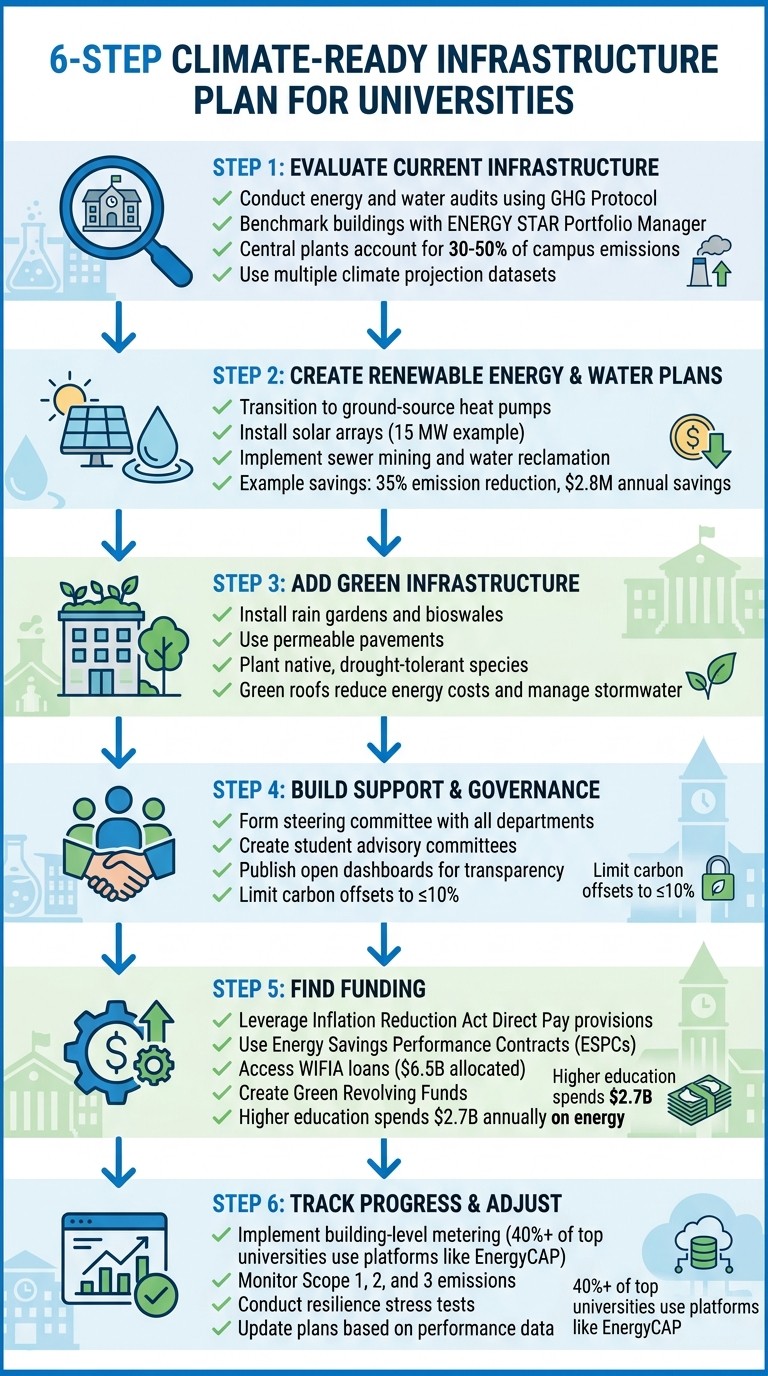
6-Step Climate-Ready Infrastructure Plan for Universities
Sustainable Infrastructure: Strategic Planning (Principle #1)
Step 1: Evaluate Your Current Infrastructure and Climate Risks
Take a close look at your campus’s energy and water systems while identifying potential climate threats. For many universities, central heating and cooling plants are the main contributors to emissions, often accounting for 30% to 50% of total campus emissions [2].
Conducting Energy and Water Audits
Start by creating a detailed emissions inventory using the GHG Protocol. Break the data down by building, system, and fuel type instead of treating the campus as a single unit. This approach helps uncover inefficiencies at a granular level [2].
Next, benchmark each campus building against tools like the ENERGY STAR Portfolio Manager. This step highlights underperforming facilities, allowing you to focus upgrade efforts where they’ll have the greatest impact [2]. For instance, between 2025 and 2026, a large research university assessed 120 buildings, identified the 30 least efficient ones, and reduced energy use in those buildings by 40% [2].
"The central plant is the whole ballgame. For most universities, the central heating system is 30-50% of total emissions. Plans that focus on peripheral measures while deferring the central plant decision will never achieve meaningful reductions."
– Council Fire [2]
Examine load profiles for your central heating and cooling systems to evaluate their performance during different times of the day, across seasons, and during peak demand. Consider the remaining lifespan of your current equipment - aging systems are often inefficient and may be nearing the end of their usefulness. Compare these load profiles with alternative technologies, such as ground-source heat pumps or electric boilers, to identify inefficiencies and potential cost savings [2].
Once you’ve completed the audit, shift your focus to understanding climate risks that could disrupt your systems.
Identifying Climate Risks on Campus
Climate risk assessments require more than analyzing past weather patterns. Use multiple downscaled climate projection datasets instead of relying on a single source. A study by Carnegie Mellon University revealed that cities using only one dataset might underestimate future rainfall, potentially leading to inadequate infrastructure designs [6].
"If cities are assessing climate impacts with only one climate projection dataset to inform stormwater design decisions, they may not adequately protect against future rainfall volumes."
– Carnegie Mellon University [6]
Tailor your analysis to address threats specific to your region. For example, create predictive models to evaluate potential water quality changes - like algal blooms - or assess groundwater conditions, including risks like saltwater intrusion and recharge rates [5]. Conduct extreme precipitation analyses to better understand vulnerabilities in your stormwater and sewer systems [5]. By 2050, many drinking water utilities are expected to face challenges, including a projected 3.6°F increase in maximum 5-day temperatures and water supply stress affecting nearly 100 million people across 19% of systems [6].
Focus on critical infrastructure, prioritizing areas where damage or service disruptions would have the most severe consequences. For example, a pump station failure could impact far more people than the failure of a single building. Florida International University’s "Wall of Wind" facility, designed to test materials against Category 5 winds, is expanding its capabilities by 2025 to simulate storm surges and wave action alongside 200 mph winds [4].
Monitor key environmental factors like sea level, precipitation, temperature, and runoff to develop a baseline for predicting future flooding events. This data allows for a shift from reactive emergency management to proactive infrastructure planning [5].
Step 2: Create Renewable Energy and Water Efficiency Plans
After completing your infrastructure audit, the next step is to design comprehensive plans for renewable energy and water efficiency. These initiatives can significantly lower emissions and operational costs, creating both environmental and financial benefits.
How to Add Renewable Energy to Campus Systems
Central heating and cooling plants are a major source of campus emissions, typically accounting for 30%–50% of the total. Transitioning from natural gas boilers to ground-source heat pumps can make a significant impact. These systems use underground well fields, often installed beneath parking lots or open spaces, to provide efficient heating and cooling solutions[7].
For example, in February 2026, a public research university completed the first phase of a central plant upgrade, installing an 800-well ground-source heat pump field that now serves 22 buildings. This project, combined with a 15 MW solar array and a 50 MW off-site wind power purchase agreement (PPA) priced at $32/MWh, reduced emissions by 35% and cut annual operating costs by $2.8 million. The $340 million investment is projected to generate $410 million in savings over 25 years[2].
Campuses with limited space can explore pyramid drilling, which minimizes the land required for geothermal installations[7]. Solar panels are another effective option, especially when placed on rooftops or parking structure canopies. These setups not only generate electricity but also provide shaded parking areas[2]. If on-site renewable energy capacity is insufficient, off-site PPAs for wind or solar energy can fill the gap, often at rates lower than the grid while eliminating emissions[2].
Start with smaller, quick-win projects like upgrading to LED lighting or improving HVAC controls. These initial steps can deliver immediate cost savings, which can then be reinvested into larger initiatives such as central plant upgrades. Additionally, consider adopting 5th-generation district energy systems, which use low-temperature hot water instead of steam, enabling energy exchange between buildings and reducing distribution losses[7].
While renewable energy systems focus on cutting emissions and costs, efficient water management can further enhance campus sustainability.
How to Reduce Water Use and Recycle Water
Sewer mining is an innovative way to reclaim water by extracting wastewater from municipal sewer lines for on-site treatment. This approach avoids the need for extensive changes to existing plumbing systems. Central utility plants, often the largest consumers of non-potable water on campuses, should be the primary focus, as they typically account for about 34% of total campus water use[8].
A notable example is Emory University in Atlanta, Georgia, which launched the WaterHub in May 2016. This on-site water reclamation facility, developed in collaboration with Sustainable Water and Reeves Young, includes a 2,100 sq. ft. hydroponic greenhouse and outdoor reciprocating wetlands. The facility treats up to 400,000 gallons of wastewater daily, supplying reclaimed water to three central chiller plants, a steam plant, and select residence halls for toilet flushing. Since its inception, the system has reduced potable water demand by 35% and saved 40 million gallons of water. It also features a 50,000-gallon emergency reserve, providing up to seven hours of operational security in case of municipal water disruptions[8].
To minimize costs, place reclamation facilities near large sewer collectors and central utility plants. Early collaboration with local municipal agencies can simplify the permitting process for construction, wastewater pretreatment, and discharge. Designing these facilities as "living labs" that integrate research and educational opportunities can attract research grants and institutional backing[8][7].
Before committing to large-scale reclamation systems, start by upgrading fixtures and installing water meters to reduce overall demand. Incorporating natural biofilters and vegetation into treatment systems can help control odors and blend the facility seamlessly into the campus environment[8].
Step 3: Add Green Infrastructure and Natural Systems
After implementing renewable energy and water efficiency strategies, the next step involves incorporating natural elements to enhance campus resilience. Green infrastructure integrates natural features and small-scale management practices - such as street trees, rain gardens, and vegetated roofs - to manage runoff at its source. This approach not only alleviates stress on downstream watersheds and stormwater systems but also offers additional advantages, like mitigating heat risks and providing natural cooling through increased vegetation[9][10][11].
Designing Green Infrastructure Features
To ensure the long-term success of green infrastructure, assemble a team that includes an arborist, landscape architect, and maintenance staff[11]. Before selecting locations for these features, conduct infiltration testing by digging a test pit and measuring how quickly water drains through the soil. Avoid placing these systems in areas like 100-year floodplains, critical habitats, or over septic fields. Additionally, maintain a distance of at least 100 feet from slopes steeper than 10% to minimize landslide risks[11].
Adopt a Stormwater Management Hierarchy that emphasizes preventing runoff - by protecting natural areas and avoiding soil compaction - over engineered solutions like porous pavement. Prevention strategies are often simpler to implement, more cost-efficient, and better at safeguarding water resources[11]. For regions with heavy rainfall, rain gardens and bioswales are effective for groundwater recharge, while permeable pavements reduce impervious surfaces and filter out suspended solids from stormwater. Green roofs, on the other hand, offer dual benefits: managing stormwater and reducing energy costs by insulating buildings and mitigating urban heat island effects[12][13].
In July 2023, the University of Texas at Arlington (UTA) developed a strategic framework to tackle cloudbursts and extreme heat with support from the U.S. Environmental Protection Agency. This initiative, led by UTA's Office of Facilities Management and Office of Sustainability, involved a collaborative design charrette with students, faculty, and private sector partners. The resulting framework included a prioritization matrix to guide future green infrastructure projects based on their ecological and community impact[9].
For arid regions, rainwater harvesting through cisterns and rain barrels is essential. This allows campuses to reuse captured water for irrigation and toilet flushing[13]. Tucson, Arizona, has implemented a commercial ordinance requiring facilities to meet 50% of their irrigation needs with harvested rainwater[13]. Similarly, Milwaukee, Wisconsin, developed a regional green infrastructure plan estimating that combining porous pavement and bioretention could infiltrate about 4 billion gallons of stormwater annually[13].
Once green infrastructure is in place, the focus shifts to restoring natural ecosystems to amplify these benefits.
Restoring Natural Ecosystems on Campus
Restoring ecosystems begins with planting native, drought-tolerant species that require less water and support local biodiversity[13]. Choose plants suited to your region’s climate - drought-tolerant species work well in arid areas, while deep-rooted plants in rain gardens and bioretention zones improve groundwater recharge[11][13]. Incorporate irrigation controls that respond to real-time soil moisture levels and use meters to monitor outdoor water usage, ensuring efficient water harvesting and distribution[13].
"Hold water where it falls. Encourage the use of innovative on-site water capture and retention strategies." - U.S. Climate Resilience Toolkit[10]
Restoring natural ecosystems offers benefits that extend beyond stormwater management. These practices enhance site aesthetics, improve air quality, support carbon sequestration, and create habitats for local wildlife[11][12]. With projections indicating that 91% of drinking water utilities will experience at least a 3.6°F increase in maximum 5-day period temperatures by 2050, vegetation-based cooling strategies will become even more critical[6]. Engaging maintenance professionals during the design phase ensures these features remain practical and sustainable over time[11].
Step 4: Build Support and Create Governance Structures
Effective climate infrastructure projects go beyond technical know-how - they thrive on broad institutional support and clear governance. Take the example of a public research university with 35,000 students that, between February 2025 and February 2026, accelerated its carbon neutrality goal from 2040 to 2035. The key? Transparent governance structures that fostered campus-wide engagement. By forming a student advisory committee and making all modeling data publicly available on an open dashboard, the university enabled its community to monitor progress in real time, ensuring accountability and trust [2].
How to Get Departments Working Together
Aligning internal departments is just as important as tackling technical hurdles. Small, actionable improvements can build momentum and demonstrate feasibility. For instance, the university introduced a $25-per-ton internal carbon fee on air travel, generating $1.2 million annually for a green revolving fund. This fund empowered departments to independently finance sustainability projects, creating a ripple effect of positive change [2].
A central steering committee is essential for coordination. This committee should include representatives from facilities management, sustainability offices, academic departments, and student groups. Since students often drive sustainability initiatives, formal advisory committees ensure their perspectives are factored into decisions, particularly when addressing tradeoffs like construction inconveniences or fee increases. Open communication about these temporary challenges helps maintain trust [2].
Early collaboration with state higher education offices and local utilities is also critical - especially when projects like campus electrification require grid upgrades. Including maintenance professionals in design discussions ensures that green infrastructure remains practical and functional long-term. A great example of this approach is the University of Minnesota Twin Cities, which, in June 2024, developed its Climate Resilience Plan. By engaging students, faculty, and staff, the university aligned its priorities with the concerns of 80% of its campus community about climate change [1].
How to Share Progress with Stakeholders
Once departments are aligned, transparent communication becomes the cornerstone of trust and continued collaboration. Publishing technical data and progress metrics on an open dashboard builds confidence among faculty, staff, and students. In one case study, clear financial projections played a pivotal role in gaining widespread support for ambitious goals [2].
Regular open forums and town halls provide opportunities to update the community on progress, address concerns, and discuss disruptions caused by projects. Framing climate resilience as essential to the institution's reputation and operational integrity can also help secure funding and attract new talent. Highlighting additional benefits, such as solar arrays doubling as covered parking or green spaces improving community well-being, underscores the broader value of these initiatives.
"Universities face unique scrutiny from students, faculty, and peer institutions. Plans that rely heavily on offsets will be challenged. Setting a cap on offset use (10% or less) forces the institution to invest in real operational change." – Council Fire [2]
Limiting carbon offsets to 10% or less strengthens credibility and ensures a focus on real operational improvements rather than relying on purchased offsets. Incorporating established resilience frameworks into climate risk communication further supports these efforts, positioning climate planning as a natural extension of existing business continuity strategies. This integrated approach reassures stakeholders that the institution is committed to meaningful, long-term change.
Step 5: Find Funding for Climate-Ready Infrastructure
Once broad institutional support is secured, the next hurdle is finding the funding to bring climate-ready projects to life. These infrastructure initiatives often demand substantial investment, but universities have access to more financing options than they might think. With the higher education sector spending around $2.7 billion annually on energy costs, the financial incentive for efficiency upgrades is clear [14]. The challenge lies in structuring these investments so they pay for themselves while advancing sustainability goals.
Exploring Funding Sources for Infrastructure Projects
To make these projects a reality, universities can tap into a variety of funding avenues:
Federal Legislation: Recent laws have opened up new opportunities. The Inflation Reduction Act (IRA) includes "Elective Pay" or "Direct Pay" provisions, enabling tax-exempt institutions to receive direct cash payments from the IRS for clean energy tax credits. This makes projects like solar installations, geothermal systems, EV charging stations, and energy storage more feasible [17]. Additionally, the Bipartisan Infrastructure Law (BIL) provides funding for water infrastructure and climate resilience initiatives [16][17].
Water Infrastructure Programs: The EPA offers resources through the Drinking Water State Revolving Fund (DWSRF) and Clean Water State Revolving Fund (CWSRF) for infrastructure upgrades. For larger projects, the Water Infrastructure Finance and Innovation Act (WIFIA) provides low-cost, long-term loans, with $6.5 billion allocated as of April 2026 and an extra $550 million through the SWIFIA program [15]. Universities should also explore the Database of State Incentives for Renewable Energy (DSIRE) for tax credits and utility rebates that can reduce upfront costs [14].
Energy Savings Performance Contracts (ESPCs): These contracts allow an Energy Service Company (ESCO) to install and maintain equipment with little to no upfront cost. The ESCO is paid from the guaranteed energy savings, making this approach ideal for large-scale projects, particularly those exceeding $500,000 or even $5 million[14]. For example, Delaware State University used this strategy to finance energy efficiency improvements expected to save $24.6 million over 20 years [14].
Planning a Sustainable Long-Term Budget
Identifying funding sources is just the start - creating a budget that ensures long-term sustainability is equally critical. A phased approach can make even ambitious projects financially manageable. Start with smaller, high-impact efficiency measures that deliver immediate savings, which can then be reinvested into larger initiatives like central plant upgrades [2]. This creates a self-sustaining cycle of investment and savings.
Green Revolving Funds (GRFs) are a powerful tool for this strategy. These funds create an internal pool of capital for energy projects, replenished by a portion of the cost savings generated. For instance, the University of Virginia's Building Efficiency Program uses savings from completed retro-commissioning projects to finance future initiatives [14]. Universities can establish these funds through various means, including operating budgets, capital allocations, student green fees, or internal carbon fees - such as a $25-per-ton air travel fee that generated $1.2 million annually for one institution [2].
"The IRA's direct pay provisions for tax-exempt entities made projects financially viable that had been rejected in prior analyses." – Council Fire [2]
When crafting long-term budgets, it’s essential to incorporate current federal and state incentives rather than relying on outdated cost projections. For instance, a major research university’s $340 million investment in climate-ready infrastructure was forecasted to save $410 million in energy costs and avoided maintenance over 25 years, resulting in a positive net present value [2]. This kind of financial modeling not only secures institutional buy-in but also demonstrates that climate action can strengthen the university’s financial health rather than burden it.
Step 6: Track Progress and Adjust Your Plans
After making strides in energy, water, and green infrastructure improvements, the next step is ensuring consistent progress through systematic tracking and flexible planning. Reliable data is key to refining infrastructure investments. Without robust tracking systems, universities risk missing critical insights - such as identifying energy-intensive buildings, verifying the performance of renewable energy installations, or confirming the effectiveness of resilience measures during extreme weather.
How to Set and Measure Performance Metrics
Start by implementing building-level metering systems to capture precise energy and water data. Currently, over 40% of top U.S. universities use platforms like EnergyCAP, which automatically collects utility data and smart meter readings, reducing the risk of manual entry errors [19]. As highlighted in Step 1, comprehensive metering allows for benchmarking against national standards like ENERGY STAR Portfolio Manager, helping institutions identify underperforming assets [2].
Track greenhouse gas emissions across Scope 1 (direct emissions), Scope 2 (purchased energy), and Scope 3 (indirect emissions) categories using the GHG Protocol. For example, one major research university found its annual emissions to be around 185,000 metric tons of CO2e, with its central heating plant responsible for 42% of those emissions before implementing its sustainability roadmap [2].
Monitor metrics like annual energy generation in megawatt-hours (MWh) and the percentage of grid electricity offset through power purchase agreements. For instance, a 15 MW solar array installed across university parking structures can produce approximately 22,000 MWh annually. Tracking inverter data ensures these systems meet performance goals [2]. Financial metrics, such as energy cost savings, Net Present Value (NPV), and revenue from internal carbon fees, should also be measured.
Indiana University provides a great example of progress tracking. As part of its Climate Action Plan to achieve carbon neutrality by 2040, the university expanded its building-level metering nationwide and developed an online platform to transparently track energy consumption and greenhouse gas data. This approach kept stakeholders engaged, even during construction projects [18].
Resilience testing is another crucial element. Conduct stress tests for winter heating systems to uncover vulnerabilities, such as weaknesses in aging steam networks or boilers, before extreme weather conditions cause failures [18].
How to Update Plans Based on Results
Once metrics are in place, use the data to refine your roadmap continuously. For instance, a public research university with 35,000 students updated its financial models to include direct pay provisions from the Inflation Reduction Act. This adjustment revealed that taking action sooner was more cost-effective, enabling the university to move its carbon neutrality target up from 2040 to 2035 [2].
Building-level data can help prioritize investments and establish regular review cycles with input from central sustainability offices and campus implementation teams. For example, deep retrofits in high-energy-use buildings have reduced energy consumption by 40% [2]. Tackling these "energy hogs" first can provide immediate savings, which can then fund larger projects, such as district heating transitions. Indiana University uses a color-coded dashboard (Under Review, In Progress, Ongoing, Completed) to track progress across 12 recommendations, ensuring local challenges are addressed while maintaining overall coordination [18].
If tracking reveals underperforming systems, update institutional design standards to reflect new insights. For example, a ground-source heat pump district system that serves 22 buildings reduced central plant emissions by 35% and saved $2.8 million annually in operating costs. Based on this success, universities could revise building codes to require similar systems for new construction [2]. Collaborating with on-campus researchers to pilot emerging technologies, such as biogas or hydrogen boilers, can also validate innovative solutions before scaling up [18].
Transparency is essential for maintaining trust. Publishing data on public dashboards allows stakeholders to monitor progress. Automated systems can flag utility irregularities - often caused by metering or equipment issues - so institutions can address them early, avoiding costly billing errors or equipment failures [19].
Finally, limit reliance on carbon offsets to no more than 10% of baseline emissions [2]. If tracking shows an overdependence on offsets rather than physical infrastructure improvements, shift the focus toward operational changes. This strategy not only enhances performance but also reinforces the institution’s credibility.
Conclusion: Start Building Climate-Ready Campuses Today
To create climate-ready campuses, prioritizing upgrades to central plants and modernizing thermal systems is essential. Central systems are often responsible for 30%–50% of campus emissions [2]. At the University of Washington, for instance, the central power plant accounts for over 93% of campus emissions [3]. Focusing on peripheral measures while delaying central system improvements fails to deliver the necessary reductions.
The financial stakes are just as pressing. Federal incentives, such as the Inflation Reduction Act's direct pay provisions, have made large-scale decarbonization more financially feasible [2]. Without prompt action, institutions risk facing steep costs. For example, carbon penalties could climb to $15 million annually by 2029 [3]. At the same time, aging boilers - some over 75 years old - are increasingly inefficient and expensive to maintain, further straining budgets.
Universities can achieve significant results by combining emissions inventories, energy retrofits, and strategic financial planning. A detailed emissions inventory helps identify underperforming systems, enabling institutions to sequence projects for maximum impact and positive cash flow. Energy retrofits that reduce consumption by 40% can help fund central plant upgrades [2]. One university's transition to a ground-source heat pump district system led to an 85% reduction in emissions and $2.8 million in annual operating cost savings [2].
The benefits are clear and measurable, highlighting the need for immediate, campus-wide action. Acting now allows universities to avoid penalties, cut operational costs, and build resilient campuses capable of withstanding extreme weather. With the tools, incentives, and strategies already available, the only missing piece is the commitment to start.
FAQs
What projects should we tackle first for the biggest impact?
To achieve meaningful reductions in greenhouse gas emissions, focus on initiatives targeting the largest contributors. For universities, this often involves transitioning heating systems away from natural gas. Replacing gas boilers with electric heat pumps is a critical step. Additionally, modernizing central heating plants and incorporating renewable energy sources into the campus electricity grid are essential measures. These actions not only reduce emissions but also establish a foundation for lasting environmental progress.
How do we choose between on-site renewables and a PPA?
When deciding between on-site renewable energy systems and a Power Purchase Agreement (PPA), several factors come into play, including available space, budget constraints, and energy targets. On-site solutions offer greater control and can lead to cost savings over time, but they require a significant initial investment and sufficient physical space. On the other hand, PPAs involve minimal upfront costs, as a developer manages the installation and maintenance, while you commit to purchasing the energy produced. The right choice will depend on how well each option fits your organization’s financial plans, existing infrastructure, and energy priorities.
What’s the simplest way to fund upgrades with little upfront cost?
The most straightforward approach involves tapping into external funding sources such as government grants, utility incentives, or state and federal programs. Other financing options include green revolving funds, energy savings performance contracts (ESPC), leases, or debt financing. For instance, certain universities successfully fund projects through a mix of grants, auctions, and reimbursements. These strategies allow for climate-focused upgrades with minimal upfront investment, leveraging future savings or external funding to cover costs.
Related Blog Posts
Latest Articles
©2025

Narrative Change and Power Building: The Missing Half of Advocacy
Narrative change is the process of disrupting dominant narratives that normalize inequity and advancing new narratives from historically marginalized communities.

Funding Resilience Without Federal Grants
BRIC is unreliable and FEMA is shrinking. Here's how cities fund climate resilience with dedicated revenue, blended finance, and a coordinating authority.

The ESG Blind Spot: How AI Is Finding Risks in Companies Nobody Else Is Watching
Norway's sovereign wealth fund uses AI to screen 7,200 portfolio companies for forced labor and corruption within 24 hours. The real story is the emerging-market coverage gap that traditional ESG data vendors miss — and what it means for any company with a global supply chain.
Narrative Change and Power Building: The Missing Half of Advocacy
Narrative change is the process of disrupting dominant narratives that normalize inequity and advancing new narratives from historically marginalized communities.
Funding Resilience Without Federal Grants
BRIC is unreliable and FEMA is shrinking. Here's how cities fund climate resilience with dedicated revenue, blended finance, and a coordinating authority.
The ESG Blind Spot: How AI Is Finding Risks in Companies Nobody Else Is Watching
Norway's sovereign wealth fund uses AI to screen 7,200 portfolio companies for forced labor and corruption within 24 hours. The real story is the emerging-market coverage gap that traditional ESG data vendors miss — and what it means for any company with a global supply chain.
FAQ
01
What does it really mean to “redefine profit”?
02
What makes Council Fire different?
03
Who does Council Fire work with?
04
What does working with Council Fire actually look like?
05
How does Council Fire help organizations turn big goals into action?
06
How does Council Fire define and measure success?
Apr 23, 2026
How to Build a Climate-Ready Energy & Water Infrastructure Plan for Universities & Research Institutions
Sustainability Strategy
In This Article
Six-step guide for universities to audit and modernize energy and water systems, adopt renewables and green infrastructure, secure funding, and track results.
How to Build a Climate-Ready Energy & Water Infrastructure Plan for Universities & Research Institutions
Universities face growing challenges from climate change, including extreme weather, outdated systems, and rising operational costs. To address these, institutions must modernize their energy and water infrastructure to reduce emissions, improve efficiency, and prepare for future risks. Here's how:
Evaluate Current Systems: Conduct energy and water audits, assess emissions, and identify inefficiencies in central plants, which often account for 30–50% of campus emissions.
Plan for Renewable Energy: Transition to technologies like ground-source heat pumps, solar panels, and off-site wind power agreements to cut emissions and save costs.
Improve Water Management: Implement water recycling systems, like sewer mining and reclamation facilities, to reduce potable water use and support resilience.
Incorporate Green Infrastructure: Use rain gardens, green roofs, and permeable pavements to manage stormwater, reduce heat, and enhance campus ecosystems.
Secure Funding: Leverage federal programs, tax credits, and performance contracts to finance upgrades, ensuring long-term savings and efficiency.
Track Progress: Use metering and dashboards to monitor energy, water use, and emissions, refining plans as needed to meet goals.
6-Step Climate-Ready Infrastructure Plan for Universities
Sustainable Infrastructure: Strategic Planning (Principle #1)
Step 1: Evaluate Your Current Infrastructure and Climate Risks
Take a close look at your campus’s energy and water systems while identifying potential climate threats. For many universities, central heating and cooling plants are the main contributors to emissions, often accounting for 30% to 50% of total campus emissions [2].
Conducting Energy and Water Audits
Start by creating a detailed emissions inventory using the GHG Protocol. Break the data down by building, system, and fuel type instead of treating the campus as a single unit. This approach helps uncover inefficiencies at a granular level [2].
Next, benchmark each campus building against tools like the ENERGY STAR Portfolio Manager. This step highlights underperforming facilities, allowing you to focus upgrade efforts where they’ll have the greatest impact [2]. For instance, between 2025 and 2026, a large research university assessed 120 buildings, identified the 30 least efficient ones, and reduced energy use in those buildings by 40% [2].
"The central plant is the whole ballgame. For most universities, the central heating system is 30-50% of total emissions. Plans that focus on peripheral measures while deferring the central plant decision will never achieve meaningful reductions."
– Council Fire [2]
Examine load profiles for your central heating and cooling systems to evaluate their performance during different times of the day, across seasons, and during peak demand. Consider the remaining lifespan of your current equipment - aging systems are often inefficient and may be nearing the end of their usefulness. Compare these load profiles with alternative technologies, such as ground-source heat pumps or electric boilers, to identify inefficiencies and potential cost savings [2].
Once you’ve completed the audit, shift your focus to understanding climate risks that could disrupt your systems.
Identifying Climate Risks on Campus
Climate risk assessments require more than analyzing past weather patterns. Use multiple downscaled climate projection datasets instead of relying on a single source. A study by Carnegie Mellon University revealed that cities using only one dataset might underestimate future rainfall, potentially leading to inadequate infrastructure designs [6].
"If cities are assessing climate impacts with only one climate projection dataset to inform stormwater design decisions, they may not adequately protect against future rainfall volumes."
– Carnegie Mellon University [6]
Tailor your analysis to address threats specific to your region. For example, create predictive models to evaluate potential water quality changes - like algal blooms - or assess groundwater conditions, including risks like saltwater intrusion and recharge rates [5]. Conduct extreme precipitation analyses to better understand vulnerabilities in your stormwater and sewer systems [5]. By 2050, many drinking water utilities are expected to face challenges, including a projected 3.6°F increase in maximum 5-day temperatures and water supply stress affecting nearly 100 million people across 19% of systems [6].
Focus on critical infrastructure, prioritizing areas where damage or service disruptions would have the most severe consequences. For example, a pump station failure could impact far more people than the failure of a single building. Florida International University’s "Wall of Wind" facility, designed to test materials against Category 5 winds, is expanding its capabilities by 2025 to simulate storm surges and wave action alongside 200 mph winds [4].
Monitor key environmental factors like sea level, precipitation, temperature, and runoff to develop a baseline for predicting future flooding events. This data allows for a shift from reactive emergency management to proactive infrastructure planning [5].
Step 2: Create Renewable Energy and Water Efficiency Plans
After completing your infrastructure audit, the next step is to design comprehensive plans for renewable energy and water efficiency. These initiatives can significantly lower emissions and operational costs, creating both environmental and financial benefits.
How to Add Renewable Energy to Campus Systems
Central heating and cooling plants are a major source of campus emissions, typically accounting for 30%–50% of the total. Transitioning from natural gas boilers to ground-source heat pumps can make a significant impact. These systems use underground well fields, often installed beneath parking lots or open spaces, to provide efficient heating and cooling solutions[7].
For example, in February 2026, a public research university completed the first phase of a central plant upgrade, installing an 800-well ground-source heat pump field that now serves 22 buildings. This project, combined with a 15 MW solar array and a 50 MW off-site wind power purchase agreement (PPA) priced at $32/MWh, reduced emissions by 35% and cut annual operating costs by $2.8 million. The $340 million investment is projected to generate $410 million in savings over 25 years[2].
Campuses with limited space can explore pyramid drilling, which minimizes the land required for geothermal installations[7]. Solar panels are another effective option, especially when placed on rooftops or parking structure canopies. These setups not only generate electricity but also provide shaded parking areas[2]. If on-site renewable energy capacity is insufficient, off-site PPAs for wind or solar energy can fill the gap, often at rates lower than the grid while eliminating emissions[2].
Start with smaller, quick-win projects like upgrading to LED lighting or improving HVAC controls. These initial steps can deliver immediate cost savings, which can then be reinvested into larger initiatives such as central plant upgrades. Additionally, consider adopting 5th-generation district energy systems, which use low-temperature hot water instead of steam, enabling energy exchange between buildings and reducing distribution losses[7].
While renewable energy systems focus on cutting emissions and costs, efficient water management can further enhance campus sustainability.
How to Reduce Water Use and Recycle Water
Sewer mining is an innovative way to reclaim water by extracting wastewater from municipal sewer lines for on-site treatment. This approach avoids the need for extensive changes to existing plumbing systems. Central utility plants, often the largest consumers of non-potable water on campuses, should be the primary focus, as they typically account for about 34% of total campus water use[8].
A notable example is Emory University in Atlanta, Georgia, which launched the WaterHub in May 2016. This on-site water reclamation facility, developed in collaboration with Sustainable Water and Reeves Young, includes a 2,100 sq. ft. hydroponic greenhouse and outdoor reciprocating wetlands. The facility treats up to 400,000 gallons of wastewater daily, supplying reclaimed water to three central chiller plants, a steam plant, and select residence halls for toilet flushing. Since its inception, the system has reduced potable water demand by 35% and saved 40 million gallons of water. It also features a 50,000-gallon emergency reserve, providing up to seven hours of operational security in case of municipal water disruptions[8].
To minimize costs, place reclamation facilities near large sewer collectors and central utility plants. Early collaboration with local municipal agencies can simplify the permitting process for construction, wastewater pretreatment, and discharge. Designing these facilities as "living labs" that integrate research and educational opportunities can attract research grants and institutional backing[8][7].
Before committing to large-scale reclamation systems, start by upgrading fixtures and installing water meters to reduce overall demand. Incorporating natural biofilters and vegetation into treatment systems can help control odors and blend the facility seamlessly into the campus environment[8].
Step 3: Add Green Infrastructure and Natural Systems
After implementing renewable energy and water efficiency strategies, the next step involves incorporating natural elements to enhance campus resilience. Green infrastructure integrates natural features and small-scale management practices - such as street trees, rain gardens, and vegetated roofs - to manage runoff at its source. This approach not only alleviates stress on downstream watersheds and stormwater systems but also offers additional advantages, like mitigating heat risks and providing natural cooling through increased vegetation[9][10][11].
Designing Green Infrastructure Features
To ensure the long-term success of green infrastructure, assemble a team that includes an arborist, landscape architect, and maintenance staff[11]. Before selecting locations for these features, conduct infiltration testing by digging a test pit and measuring how quickly water drains through the soil. Avoid placing these systems in areas like 100-year floodplains, critical habitats, or over septic fields. Additionally, maintain a distance of at least 100 feet from slopes steeper than 10% to minimize landslide risks[11].
Adopt a Stormwater Management Hierarchy that emphasizes preventing runoff - by protecting natural areas and avoiding soil compaction - over engineered solutions like porous pavement. Prevention strategies are often simpler to implement, more cost-efficient, and better at safeguarding water resources[11]. For regions with heavy rainfall, rain gardens and bioswales are effective for groundwater recharge, while permeable pavements reduce impervious surfaces and filter out suspended solids from stormwater. Green roofs, on the other hand, offer dual benefits: managing stormwater and reducing energy costs by insulating buildings and mitigating urban heat island effects[12][13].
In July 2023, the University of Texas at Arlington (UTA) developed a strategic framework to tackle cloudbursts and extreme heat with support from the U.S. Environmental Protection Agency. This initiative, led by UTA's Office of Facilities Management and Office of Sustainability, involved a collaborative design charrette with students, faculty, and private sector partners. The resulting framework included a prioritization matrix to guide future green infrastructure projects based on their ecological and community impact[9].
For arid regions, rainwater harvesting through cisterns and rain barrels is essential. This allows campuses to reuse captured water for irrigation and toilet flushing[13]. Tucson, Arizona, has implemented a commercial ordinance requiring facilities to meet 50% of their irrigation needs with harvested rainwater[13]. Similarly, Milwaukee, Wisconsin, developed a regional green infrastructure plan estimating that combining porous pavement and bioretention could infiltrate about 4 billion gallons of stormwater annually[13].
Once green infrastructure is in place, the focus shifts to restoring natural ecosystems to amplify these benefits.
Restoring Natural Ecosystems on Campus
Restoring ecosystems begins with planting native, drought-tolerant species that require less water and support local biodiversity[13]. Choose plants suited to your region’s climate - drought-tolerant species work well in arid areas, while deep-rooted plants in rain gardens and bioretention zones improve groundwater recharge[11][13]. Incorporate irrigation controls that respond to real-time soil moisture levels and use meters to monitor outdoor water usage, ensuring efficient water harvesting and distribution[13].
"Hold water where it falls. Encourage the use of innovative on-site water capture and retention strategies." - U.S. Climate Resilience Toolkit[10]
Restoring natural ecosystems offers benefits that extend beyond stormwater management. These practices enhance site aesthetics, improve air quality, support carbon sequestration, and create habitats for local wildlife[11][12]. With projections indicating that 91% of drinking water utilities will experience at least a 3.6°F increase in maximum 5-day period temperatures by 2050, vegetation-based cooling strategies will become even more critical[6]. Engaging maintenance professionals during the design phase ensures these features remain practical and sustainable over time[11].
Step 4: Build Support and Create Governance Structures
Effective climate infrastructure projects go beyond technical know-how - they thrive on broad institutional support and clear governance. Take the example of a public research university with 35,000 students that, between February 2025 and February 2026, accelerated its carbon neutrality goal from 2040 to 2035. The key? Transparent governance structures that fostered campus-wide engagement. By forming a student advisory committee and making all modeling data publicly available on an open dashboard, the university enabled its community to monitor progress in real time, ensuring accountability and trust [2].
How to Get Departments Working Together
Aligning internal departments is just as important as tackling technical hurdles. Small, actionable improvements can build momentum and demonstrate feasibility. For instance, the university introduced a $25-per-ton internal carbon fee on air travel, generating $1.2 million annually for a green revolving fund. This fund empowered departments to independently finance sustainability projects, creating a ripple effect of positive change [2].
A central steering committee is essential for coordination. This committee should include representatives from facilities management, sustainability offices, academic departments, and student groups. Since students often drive sustainability initiatives, formal advisory committees ensure their perspectives are factored into decisions, particularly when addressing tradeoffs like construction inconveniences or fee increases. Open communication about these temporary challenges helps maintain trust [2].
Early collaboration with state higher education offices and local utilities is also critical - especially when projects like campus electrification require grid upgrades. Including maintenance professionals in design discussions ensures that green infrastructure remains practical and functional long-term. A great example of this approach is the University of Minnesota Twin Cities, which, in June 2024, developed its Climate Resilience Plan. By engaging students, faculty, and staff, the university aligned its priorities with the concerns of 80% of its campus community about climate change [1].
How to Share Progress with Stakeholders
Once departments are aligned, transparent communication becomes the cornerstone of trust and continued collaboration. Publishing technical data and progress metrics on an open dashboard builds confidence among faculty, staff, and students. In one case study, clear financial projections played a pivotal role in gaining widespread support for ambitious goals [2].
Regular open forums and town halls provide opportunities to update the community on progress, address concerns, and discuss disruptions caused by projects. Framing climate resilience as essential to the institution's reputation and operational integrity can also help secure funding and attract new talent. Highlighting additional benefits, such as solar arrays doubling as covered parking or green spaces improving community well-being, underscores the broader value of these initiatives.
"Universities face unique scrutiny from students, faculty, and peer institutions. Plans that rely heavily on offsets will be challenged. Setting a cap on offset use (10% or less) forces the institution to invest in real operational change." – Council Fire [2]
Limiting carbon offsets to 10% or less strengthens credibility and ensures a focus on real operational improvements rather than relying on purchased offsets. Incorporating established resilience frameworks into climate risk communication further supports these efforts, positioning climate planning as a natural extension of existing business continuity strategies. This integrated approach reassures stakeholders that the institution is committed to meaningful, long-term change.
Step 5: Find Funding for Climate-Ready Infrastructure
Once broad institutional support is secured, the next hurdle is finding the funding to bring climate-ready projects to life. These infrastructure initiatives often demand substantial investment, but universities have access to more financing options than they might think. With the higher education sector spending around $2.7 billion annually on energy costs, the financial incentive for efficiency upgrades is clear [14]. The challenge lies in structuring these investments so they pay for themselves while advancing sustainability goals.
Exploring Funding Sources for Infrastructure Projects
To make these projects a reality, universities can tap into a variety of funding avenues:
Federal Legislation: Recent laws have opened up new opportunities. The Inflation Reduction Act (IRA) includes "Elective Pay" or "Direct Pay" provisions, enabling tax-exempt institutions to receive direct cash payments from the IRS for clean energy tax credits. This makes projects like solar installations, geothermal systems, EV charging stations, and energy storage more feasible [17]. Additionally, the Bipartisan Infrastructure Law (BIL) provides funding for water infrastructure and climate resilience initiatives [16][17].
Water Infrastructure Programs: The EPA offers resources through the Drinking Water State Revolving Fund (DWSRF) and Clean Water State Revolving Fund (CWSRF) for infrastructure upgrades. For larger projects, the Water Infrastructure Finance and Innovation Act (WIFIA) provides low-cost, long-term loans, with $6.5 billion allocated as of April 2026 and an extra $550 million through the SWIFIA program [15]. Universities should also explore the Database of State Incentives for Renewable Energy (DSIRE) for tax credits and utility rebates that can reduce upfront costs [14].
Energy Savings Performance Contracts (ESPCs): These contracts allow an Energy Service Company (ESCO) to install and maintain equipment with little to no upfront cost. The ESCO is paid from the guaranteed energy savings, making this approach ideal for large-scale projects, particularly those exceeding $500,000 or even $5 million[14]. For example, Delaware State University used this strategy to finance energy efficiency improvements expected to save $24.6 million over 20 years [14].
Planning a Sustainable Long-Term Budget
Identifying funding sources is just the start - creating a budget that ensures long-term sustainability is equally critical. A phased approach can make even ambitious projects financially manageable. Start with smaller, high-impact efficiency measures that deliver immediate savings, which can then be reinvested into larger initiatives like central plant upgrades [2]. This creates a self-sustaining cycle of investment and savings.
Green Revolving Funds (GRFs) are a powerful tool for this strategy. These funds create an internal pool of capital for energy projects, replenished by a portion of the cost savings generated. For instance, the University of Virginia's Building Efficiency Program uses savings from completed retro-commissioning projects to finance future initiatives [14]. Universities can establish these funds through various means, including operating budgets, capital allocations, student green fees, or internal carbon fees - such as a $25-per-ton air travel fee that generated $1.2 million annually for one institution [2].
"The IRA's direct pay provisions for tax-exempt entities made projects financially viable that had been rejected in prior analyses." – Council Fire [2]
When crafting long-term budgets, it’s essential to incorporate current federal and state incentives rather than relying on outdated cost projections. For instance, a major research university’s $340 million investment in climate-ready infrastructure was forecasted to save $410 million in energy costs and avoided maintenance over 25 years, resulting in a positive net present value [2]. This kind of financial modeling not only secures institutional buy-in but also demonstrates that climate action can strengthen the university’s financial health rather than burden it.
Step 6: Track Progress and Adjust Your Plans
After making strides in energy, water, and green infrastructure improvements, the next step is ensuring consistent progress through systematic tracking and flexible planning. Reliable data is key to refining infrastructure investments. Without robust tracking systems, universities risk missing critical insights - such as identifying energy-intensive buildings, verifying the performance of renewable energy installations, or confirming the effectiveness of resilience measures during extreme weather.
How to Set and Measure Performance Metrics
Start by implementing building-level metering systems to capture precise energy and water data. Currently, over 40% of top U.S. universities use platforms like EnergyCAP, which automatically collects utility data and smart meter readings, reducing the risk of manual entry errors [19]. As highlighted in Step 1, comprehensive metering allows for benchmarking against national standards like ENERGY STAR Portfolio Manager, helping institutions identify underperforming assets [2].
Track greenhouse gas emissions across Scope 1 (direct emissions), Scope 2 (purchased energy), and Scope 3 (indirect emissions) categories using the GHG Protocol. For example, one major research university found its annual emissions to be around 185,000 metric tons of CO2e, with its central heating plant responsible for 42% of those emissions before implementing its sustainability roadmap [2].
Monitor metrics like annual energy generation in megawatt-hours (MWh) and the percentage of grid electricity offset through power purchase agreements. For instance, a 15 MW solar array installed across university parking structures can produce approximately 22,000 MWh annually. Tracking inverter data ensures these systems meet performance goals [2]. Financial metrics, such as energy cost savings, Net Present Value (NPV), and revenue from internal carbon fees, should also be measured.
Indiana University provides a great example of progress tracking. As part of its Climate Action Plan to achieve carbon neutrality by 2040, the university expanded its building-level metering nationwide and developed an online platform to transparently track energy consumption and greenhouse gas data. This approach kept stakeholders engaged, even during construction projects [18].
Resilience testing is another crucial element. Conduct stress tests for winter heating systems to uncover vulnerabilities, such as weaknesses in aging steam networks or boilers, before extreme weather conditions cause failures [18].
How to Update Plans Based on Results
Once metrics are in place, use the data to refine your roadmap continuously. For instance, a public research university with 35,000 students updated its financial models to include direct pay provisions from the Inflation Reduction Act. This adjustment revealed that taking action sooner was more cost-effective, enabling the university to move its carbon neutrality target up from 2040 to 2035 [2].
Building-level data can help prioritize investments and establish regular review cycles with input from central sustainability offices and campus implementation teams. For example, deep retrofits in high-energy-use buildings have reduced energy consumption by 40% [2]. Tackling these "energy hogs" first can provide immediate savings, which can then fund larger projects, such as district heating transitions. Indiana University uses a color-coded dashboard (Under Review, In Progress, Ongoing, Completed) to track progress across 12 recommendations, ensuring local challenges are addressed while maintaining overall coordination [18].
If tracking reveals underperforming systems, update institutional design standards to reflect new insights. For example, a ground-source heat pump district system that serves 22 buildings reduced central plant emissions by 35% and saved $2.8 million annually in operating costs. Based on this success, universities could revise building codes to require similar systems for new construction [2]. Collaborating with on-campus researchers to pilot emerging technologies, such as biogas or hydrogen boilers, can also validate innovative solutions before scaling up [18].
Transparency is essential for maintaining trust. Publishing data on public dashboards allows stakeholders to monitor progress. Automated systems can flag utility irregularities - often caused by metering or equipment issues - so institutions can address them early, avoiding costly billing errors or equipment failures [19].
Finally, limit reliance on carbon offsets to no more than 10% of baseline emissions [2]. If tracking shows an overdependence on offsets rather than physical infrastructure improvements, shift the focus toward operational changes. This strategy not only enhances performance but also reinforces the institution’s credibility.
Conclusion: Start Building Climate-Ready Campuses Today
To create climate-ready campuses, prioritizing upgrades to central plants and modernizing thermal systems is essential. Central systems are often responsible for 30%–50% of campus emissions [2]. At the University of Washington, for instance, the central power plant accounts for over 93% of campus emissions [3]. Focusing on peripheral measures while delaying central system improvements fails to deliver the necessary reductions.
The financial stakes are just as pressing. Federal incentives, such as the Inflation Reduction Act's direct pay provisions, have made large-scale decarbonization more financially feasible [2]. Without prompt action, institutions risk facing steep costs. For example, carbon penalties could climb to $15 million annually by 2029 [3]. At the same time, aging boilers - some over 75 years old - are increasingly inefficient and expensive to maintain, further straining budgets.
Universities can achieve significant results by combining emissions inventories, energy retrofits, and strategic financial planning. A detailed emissions inventory helps identify underperforming systems, enabling institutions to sequence projects for maximum impact and positive cash flow. Energy retrofits that reduce consumption by 40% can help fund central plant upgrades [2]. One university's transition to a ground-source heat pump district system led to an 85% reduction in emissions and $2.8 million in annual operating cost savings [2].
The benefits are clear and measurable, highlighting the need for immediate, campus-wide action. Acting now allows universities to avoid penalties, cut operational costs, and build resilient campuses capable of withstanding extreme weather. With the tools, incentives, and strategies already available, the only missing piece is the commitment to start.
FAQs
What projects should we tackle first for the biggest impact?
To achieve meaningful reductions in greenhouse gas emissions, focus on initiatives targeting the largest contributors. For universities, this often involves transitioning heating systems away from natural gas. Replacing gas boilers with electric heat pumps is a critical step. Additionally, modernizing central heating plants and incorporating renewable energy sources into the campus electricity grid are essential measures. These actions not only reduce emissions but also establish a foundation for lasting environmental progress.
How do we choose between on-site renewables and a PPA?
When deciding between on-site renewable energy systems and a Power Purchase Agreement (PPA), several factors come into play, including available space, budget constraints, and energy targets. On-site solutions offer greater control and can lead to cost savings over time, but they require a significant initial investment and sufficient physical space. On the other hand, PPAs involve minimal upfront costs, as a developer manages the installation and maintenance, while you commit to purchasing the energy produced. The right choice will depend on how well each option fits your organization’s financial plans, existing infrastructure, and energy priorities.
What’s the simplest way to fund upgrades with little upfront cost?
The most straightforward approach involves tapping into external funding sources such as government grants, utility incentives, or state and federal programs. Other financing options include green revolving funds, energy savings performance contracts (ESPC), leases, or debt financing. For instance, certain universities successfully fund projects through a mix of grants, auctions, and reimbursements. These strategies allow for climate-focused upgrades with minimal upfront investment, leveraging future savings or external funding to cover costs.
Related Blog Posts
Latest Articles
©2025
Narrative Change and Power Building: The Missing Half of Advocacy
Narrative change is the process of disrupting dominant narratives that normalize inequity and advancing new narratives from historically marginalized communities.
Funding Resilience Without Federal Grants
BRIC is unreliable and FEMA is shrinking. Here's how cities fund climate resilience with dedicated revenue, blended finance, and a coordinating authority.
The ESG Blind Spot: How AI Is Finding Risks in Companies Nobody Else Is Watching
Norway's sovereign wealth fund uses AI to screen 7,200 portfolio companies for forced labor and corruption within 24 hours. The real story is the emerging-market coverage gap that traditional ESG data vendors miss — and what it means for any company with a global supply chain.
FAQ
01
What does it really mean to “redefine profit”?
02
What makes Council Fire different?
03
Who does Council Fire work with?
04
What does working with Council Fire actually look like?
05
How does Council Fire help organizations turn big goals into action?
06
How does Council Fire define and measure success?
Apr 23, 2026
How to Build a Climate-Ready Energy & Water Infrastructure Plan for Universities & Research Institutions
Sustainability Strategy
In This Article
Six-step guide for universities to audit and modernize energy and water systems, adopt renewables and green infrastructure, secure funding, and track results.
How to Build a Climate-Ready Energy & Water Infrastructure Plan for Universities & Research Institutions
Universities face growing challenges from climate change, including extreme weather, outdated systems, and rising operational costs. To address these, institutions must modernize their energy and water infrastructure to reduce emissions, improve efficiency, and prepare for future risks. Here's how:
Evaluate Current Systems: Conduct energy and water audits, assess emissions, and identify inefficiencies in central plants, which often account for 30–50% of campus emissions.
Plan for Renewable Energy: Transition to technologies like ground-source heat pumps, solar panels, and off-site wind power agreements to cut emissions and save costs.
Improve Water Management: Implement water recycling systems, like sewer mining and reclamation facilities, to reduce potable water use and support resilience.
Incorporate Green Infrastructure: Use rain gardens, green roofs, and permeable pavements to manage stormwater, reduce heat, and enhance campus ecosystems.
Secure Funding: Leverage federal programs, tax credits, and performance contracts to finance upgrades, ensuring long-term savings and efficiency.
Track Progress: Use metering and dashboards to monitor energy, water use, and emissions, refining plans as needed to meet goals.
6-Step Climate-Ready Infrastructure Plan for Universities
Sustainable Infrastructure: Strategic Planning (Principle #1)
Step 1: Evaluate Your Current Infrastructure and Climate Risks
Take a close look at your campus’s energy and water systems while identifying potential climate threats. For many universities, central heating and cooling plants are the main contributors to emissions, often accounting for 30% to 50% of total campus emissions [2].
Conducting Energy and Water Audits
Start by creating a detailed emissions inventory using the GHG Protocol. Break the data down by building, system, and fuel type instead of treating the campus as a single unit. This approach helps uncover inefficiencies at a granular level [2].
Next, benchmark each campus building against tools like the ENERGY STAR Portfolio Manager. This step highlights underperforming facilities, allowing you to focus upgrade efforts where they’ll have the greatest impact [2]. For instance, between 2025 and 2026, a large research university assessed 120 buildings, identified the 30 least efficient ones, and reduced energy use in those buildings by 40% [2].
"The central plant is the whole ballgame. For most universities, the central heating system is 30-50% of total emissions. Plans that focus on peripheral measures while deferring the central plant decision will never achieve meaningful reductions."
– Council Fire [2]
Examine load profiles for your central heating and cooling systems to evaluate their performance during different times of the day, across seasons, and during peak demand. Consider the remaining lifespan of your current equipment - aging systems are often inefficient and may be nearing the end of their usefulness. Compare these load profiles with alternative technologies, such as ground-source heat pumps or electric boilers, to identify inefficiencies and potential cost savings [2].
Once you’ve completed the audit, shift your focus to understanding climate risks that could disrupt your systems.
Identifying Climate Risks on Campus
Climate risk assessments require more than analyzing past weather patterns. Use multiple downscaled climate projection datasets instead of relying on a single source. A study by Carnegie Mellon University revealed that cities using only one dataset might underestimate future rainfall, potentially leading to inadequate infrastructure designs [6].
"If cities are assessing climate impacts with only one climate projection dataset to inform stormwater design decisions, they may not adequately protect against future rainfall volumes."
– Carnegie Mellon University [6]
Tailor your analysis to address threats specific to your region. For example, create predictive models to evaluate potential water quality changes - like algal blooms - or assess groundwater conditions, including risks like saltwater intrusion and recharge rates [5]. Conduct extreme precipitation analyses to better understand vulnerabilities in your stormwater and sewer systems [5]. By 2050, many drinking water utilities are expected to face challenges, including a projected 3.6°F increase in maximum 5-day temperatures and water supply stress affecting nearly 100 million people across 19% of systems [6].
Focus on critical infrastructure, prioritizing areas where damage or service disruptions would have the most severe consequences. For example, a pump station failure could impact far more people than the failure of a single building. Florida International University’s "Wall of Wind" facility, designed to test materials against Category 5 winds, is expanding its capabilities by 2025 to simulate storm surges and wave action alongside 200 mph winds [4].
Monitor key environmental factors like sea level, precipitation, temperature, and runoff to develop a baseline for predicting future flooding events. This data allows for a shift from reactive emergency management to proactive infrastructure planning [5].
Step 2: Create Renewable Energy and Water Efficiency Plans
After completing your infrastructure audit, the next step is to design comprehensive plans for renewable energy and water efficiency. These initiatives can significantly lower emissions and operational costs, creating both environmental and financial benefits.
How to Add Renewable Energy to Campus Systems
Central heating and cooling plants are a major source of campus emissions, typically accounting for 30%–50% of the total. Transitioning from natural gas boilers to ground-source heat pumps can make a significant impact. These systems use underground well fields, often installed beneath parking lots or open spaces, to provide efficient heating and cooling solutions[7].
For example, in February 2026, a public research university completed the first phase of a central plant upgrade, installing an 800-well ground-source heat pump field that now serves 22 buildings. This project, combined with a 15 MW solar array and a 50 MW off-site wind power purchase agreement (PPA) priced at $32/MWh, reduced emissions by 35% and cut annual operating costs by $2.8 million. The $340 million investment is projected to generate $410 million in savings over 25 years[2].
Campuses with limited space can explore pyramid drilling, which minimizes the land required for geothermal installations[7]. Solar panels are another effective option, especially when placed on rooftops or parking structure canopies. These setups not only generate electricity but also provide shaded parking areas[2]. If on-site renewable energy capacity is insufficient, off-site PPAs for wind or solar energy can fill the gap, often at rates lower than the grid while eliminating emissions[2].
Start with smaller, quick-win projects like upgrading to LED lighting or improving HVAC controls. These initial steps can deliver immediate cost savings, which can then be reinvested into larger initiatives such as central plant upgrades. Additionally, consider adopting 5th-generation district energy systems, which use low-temperature hot water instead of steam, enabling energy exchange between buildings and reducing distribution losses[7].
While renewable energy systems focus on cutting emissions and costs, efficient water management can further enhance campus sustainability.
How to Reduce Water Use and Recycle Water
Sewer mining is an innovative way to reclaim water by extracting wastewater from municipal sewer lines for on-site treatment. This approach avoids the need for extensive changes to existing plumbing systems. Central utility plants, often the largest consumers of non-potable water on campuses, should be the primary focus, as they typically account for about 34% of total campus water use[8].
A notable example is Emory University in Atlanta, Georgia, which launched the WaterHub in May 2016. This on-site water reclamation facility, developed in collaboration with Sustainable Water and Reeves Young, includes a 2,100 sq. ft. hydroponic greenhouse and outdoor reciprocating wetlands. The facility treats up to 400,000 gallons of wastewater daily, supplying reclaimed water to three central chiller plants, a steam plant, and select residence halls for toilet flushing. Since its inception, the system has reduced potable water demand by 35% and saved 40 million gallons of water. It also features a 50,000-gallon emergency reserve, providing up to seven hours of operational security in case of municipal water disruptions[8].
To minimize costs, place reclamation facilities near large sewer collectors and central utility plants. Early collaboration with local municipal agencies can simplify the permitting process for construction, wastewater pretreatment, and discharge. Designing these facilities as "living labs" that integrate research and educational opportunities can attract research grants and institutional backing[8][7].
Before committing to large-scale reclamation systems, start by upgrading fixtures and installing water meters to reduce overall demand. Incorporating natural biofilters and vegetation into treatment systems can help control odors and blend the facility seamlessly into the campus environment[8].
Step 3: Add Green Infrastructure and Natural Systems
After implementing renewable energy and water efficiency strategies, the next step involves incorporating natural elements to enhance campus resilience. Green infrastructure integrates natural features and small-scale management practices - such as street trees, rain gardens, and vegetated roofs - to manage runoff at its source. This approach not only alleviates stress on downstream watersheds and stormwater systems but also offers additional advantages, like mitigating heat risks and providing natural cooling through increased vegetation[9][10][11].
Designing Green Infrastructure Features
To ensure the long-term success of green infrastructure, assemble a team that includes an arborist, landscape architect, and maintenance staff[11]. Before selecting locations for these features, conduct infiltration testing by digging a test pit and measuring how quickly water drains through the soil. Avoid placing these systems in areas like 100-year floodplains, critical habitats, or over septic fields. Additionally, maintain a distance of at least 100 feet from slopes steeper than 10% to minimize landslide risks[11].
Adopt a Stormwater Management Hierarchy that emphasizes preventing runoff - by protecting natural areas and avoiding soil compaction - over engineered solutions like porous pavement. Prevention strategies are often simpler to implement, more cost-efficient, and better at safeguarding water resources[11]. For regions with heavy rainfall, rain gardens and bioswales are effective for groundwater recharge, while permeable pavements reduce impervious surfaces and filter out suspended solids from stormwater. Green roofs, on the other hand, offer dual benefits: managing stormwater and reducing energy costs by insulating buildings and mitigating urban heat island effects[12][13].
In July 2023, the University of Texas at Arlington (UTA) developed a strategic framework to tackle cloudbursts and extreme heat with support from the U.S. Environmental Protection Agency. This initiative, led by UTA's Office of Facilities Management and Office of Sustainability, involved a collaborative design charrette with students, faculty, and private sector partners. The resulting framework included a prioritization matrix to guide future green infrastructure projects based on their ecological and community impact[9].
For arid regions, rainwater harvesting through cisterns and rain barrels is essential. This allows campuses to reuse captured water for irrigation and toilet flushing[13]. Tucson, Arizona, has implemented a commercial ordinance requiring facilities to meet 50% of their irrigation needs with harvested rainwater[13]. Similarly, Milwaukee, Wisconsin, developed a regional green infrastructure plan estimating that combining porous pavement and bioretention could infiltrate about 4 billion gallons of stormwater annually[13].
Once green infrastructure is in place, the focus shifts to restoring natural ecosystems to amplify these benefits.
Restoring Natural Ecosystems on Campus
Restoring ecosystems begins with planting native, drought-tolerant species that require less water and support local biodiversity[13]. Choose plants suited to your region’s climate - drought-tolerant species work well in arid areas, while deep-rooted plants in rain gardens and bioretention zones improve groundwater recharge[11][13]. Incorporate irrigation controls that respond to real-time soil moisture levels and use meters to monitor outdoor water usage, ensuring efficient water harvesting and distribution[13].
"Hold water where it falls. Encourage the use of innovative on-site water capture and retention strategies." - U.S. Climate Resilience Toolkit[10]
Restoring natural ecosystems offers benefits that extend beyond stormwater management. These practices enhance site aesthetics, improve air quality, support carbon sequestration, and create habitats for local wildlife[11][12]. With projections indicating that 91% of drinking water utilities will experience at least a 3.6°F increase in maximum 5-day period temperatures by 2050, vegetation-based cooling strategies will become even more critical[6]. Engaging maintenance professionals during the design phase ensures these features remain practical and sustainable over time[11].
Step 4: Build Support and Create Governance Structures
Effective climate infrastructure projects go beyond technical know-how - they thrive on broad institutional support and clear governance. Take the example of a public research university with 35,000 students that, between February 2025 and February 2026, accelerated its carbon neutrality goal from 2040 to 2035. The key? Transparent governance structures that fostered campus-wide engagement. By forming a student advisory committee and making all modeling data publicly available on an open dashboard, the university enabled its community to monitor progress in real time, ensuring accountability and trust [2].
How to Get Departments Working Together
Aligning internal departments is just as important as tackling technical hurdles. Small, actionable improvements can build momentum and demonstrate feasibility. For instance, the university introduced a $25-per-ton internal carbon fee on air travel, generating $1.2 million annually for a green revolving fund. This fund empowered departments to independently finance sustainability projects, creating a ripple effect of positive change [2].
A central steering committee is essential for coordination. This committee should include representatives from facilities management, sustainability offices, academic departments, and student groups. Since students often drive sustainability initiatives, formal advisory committees ensure their perspectives are factored into decisions, particularly when addressing tradeoffs like construction inconveniences or fee increases. Open communication about these temporary challenges helps maintain trust [2].
Early collaboration with state higher education offices and local utilities is also critical - especially when projects like campus electrification require grid upgrades. Including maintenance professionals in design discussions ensures that green infrastructure remains practical and functional long-term. A great example of this approach is the University of Minnesota Twin Cities, which, in June 2024, developed its Climate Resilience Plan. By engaging students, faculty, and staff, the university aligned its priorities with the concerns of 80% of its campus community about climate change [1].
How to Share Progress with Stakeholders
Once departments are aligned, transparent communication becomes the cornerstone of trust and continued collaboration. Publishing technical data and progress metrics on an open dashboard builds confidence among faculty, staff, and students. In one case study, clear financial projections played a pivotal role in gaining widespread support for ambitious goals [2].
Regular open forums and town halls provide opportunities to update the community on progress, address concerns, and discuss disruptions caused by projects. Framing climate resilience as essential to the institution's reputation and operational integrity can also help secure funding and attract new talent. Highlighting additional benefits, such as solar arrays doubling as covered parking or green spaces improving community well-being, underscores the broader value of these initiatives.
"Universities face unique scrutiny from students, faculty, and peer institutions. Plans that rely heavily on offsets will be challenged. Setting a cap on offset use (10% or less) forces the institution to invest in real operational change." – Council Fire [2]
Limiting carbon offsets to 10% or less strengthens credibility and ensures a focus on real operational improvements rather than relying on purchased offsets. Incorporating established resilience frameworks into climate risk communication further supports these efforts, positioning climate planning as a natural extension of existing business continuity strategies. This integrated approach reassures stakeholders that the institution is committed to meaningful, long-term change.
Step 5: Find Funding for Climate-Ready Infrastructure
Once broad institutional support is secured, the next hurdle is finding the funding to bring climate-ready projects to life. These infrastructure initiatives often demand substantial investment, but universities have access to more financing options than they might think. With the higher education sector spending around $2.7 billion annually on energy costs, the financial incentive for efficiency upgrades is clear [14]. The challenge lies in structuring these investments so they pay for themselves while advancing sustainability goals.
Exploring Funding Sources for Infrastructure Projects
To make these projects a reality, universities can tap into a variety of funding avenues:
Federal Legislation: Recent laws have opened up new opportunities. The Inflation Reduction Act (IRA) includes "Elective Pay" or "Direct Pay" provisions, enabling tax-exempt institutions to receive direct cash payments from the IRS for clean energy tax credits. This makes projects like solar installations, geothermal systems, EV charging stations, and energy storage more feasible [17]. Additionally, the Bipartisan Infrastructure Law (BIL) provides funding for water infrastructure and climate resilience initiatives [16][17].
Water Infrastructure Programs: The EPA offers resources through the Drinking Water State Revolving Fund (DWSRF) and Clean Water State Revolving Fund (CWSRF) for infrastructure upgrades. For larger projects, the Water Infrastructure Finance and Innovation Act (WIFIA) provides low-cost, long-term loans, with $6.5 billion allocated as of April 2026 and an extra $550 million through the SWIFIA program [15]. Universities should also explore the Database of State Incentives for Renewable Energy (DSIRE) for tax credits and utility rebates that can reduce upfront costs [14].
Energy Savings Performance Contracts (ESPCs): These contracts allow an Energy Service Company (ESCO) to install and maintain equipment with little to no upfront cost. The ESCO is paid from the guaranteed energy savings, making this approach ideal for large-scale projects, particularly those exceeding $500,000 or even $5 million[14]. For example, Delaware State University used this strategy to finance energy efficiency improvements expected to save $24.6 million over 20 years [14].
Planning a Sustainable Long-Term Budget
Identifying funding sources is just the start - creating a budget that ensures long-term sustainability is equally critical. A phased approach can make even ambitious projects financially manageable. Start with smaller, high-impact efficiency measures that deliver immediate savings, which can then be reinvested into larger initiatives like central plant upgrades [2]. This creates a self-sustaining cycle of investment and savings.
Green Revolving Funds (GRFs) are a powerful tool for this strategy. These funds create an internal pool of capital for energy projects, replenished by a portion of the cost savings generated. For instance, the University of Virginia's Building Efficiency Program uses savings from completed retro-commissioning projects to finance future initiatives [14]. Universities can establish these funds through various means, including operating budgets, capital allocations, student green fees, or internal carbon fees - such as a $25-per-ton air travel fee that generated $1.2 million annually for one institution [2].
"The IRA's direct pay provisions for tax-exempt entities made projects financially viable that had been rejected in prior analyses." – Council Fire [2]
When crafting long-term budgets, it’s essential to incorporate current federal and state incentives rather than relying on outdated cost projections. For instance, a major research university’s $340 million investment in climate-ready infrastructure was forecasted to save $410 million in energy costs and avoided maintenance over 25 years, resulting in a positive net present value [2]. This kind of financial modeling not only secures institutional buy-in but also demonstrates that climate action can strengthen the university’s financial health rather than burden it.
Step 6: Track Progress and Adjust Your Plans
After making strides in energy, water, and green infrastructure improvements, the next step is ensuring consistent progress through systematic tracking and flexible planning. Reliable data is key to refining infrastructure investments. Without robust tracking systems, universities risk missing critical insights - such as identifying energy-intensive buildings, verifying the performance of renewable energy installations, or confirming the effectiveness of resilience measures during extreme weather.
How to Set and Measure Performance Metrics
Start by implementing building-level metering systems to capture precise energy and water data. Currently, over 40% of top U.S. universities use platforms like EnergyCAP, which automatically collects utility data and smart meter readings, reducing the risk of manual entry errors [19]. As highlighted in Step 1, comprehensive metering allows for benchmarking against national standards like ENERGY STAR Portfolio Manager, helping institutions identify underperforming assets [2].
Track greenhouse gas emissions across Scope 1 (direct emissions), Scope 2 (purchased energy), and Scope 3 (indirect emissions) categories using the GHG Protocol. For example, one major research university found its annual emissions to be around 185,000 metric tons of CO2e, with its central heating plant responsible for 42% of those emissions before implementing its sustainability roadmap [2].
Monitor metrics like annual energy generation in megawatt-hours (MWh) and the percentage of grid electricity offset through power purchase agreements. For instance, a 15 MW solar array installed across university parking structures can produce approximately 22,000 MWh annually. Tracking inverter data ensures these systems meet performance goals [2]. Financial metrics, such as energy cost savings, Net Present Value (NPV), and revenue from internal carbon fees, should also be measured.
Indiana University provides a great example of progress tracking. As part of its Climate Action Plan to achieve carbon neutrality by 2040, the university expanded its building-level metering nationwide and developed an online platform to transparently track energy consumption and greenhouse gas data. This approach kept stakeholders engaged, even during construction projects [18].
Resilience testing is another crucial element. Conduct stress tests for winter heating systems to uncover vulnerabilities, such as weaknesses in aging steam networks or boilers, before extreme weather conditions cause failures [18].
How to Update Plans Based on Results
Once metrics are in place, use the data to refine your roadmap continuously. For instance, a public research university with 35,000 students updated its financial models to include direct pay provisions from the Inflation Reduction Act. This adjustment revealed that taking action sooner was more cost-effective, enabling the university to move its carbon neutrality target up from 2040 to 2035 [2].
Building-level data can help prioritize investments and establish regular review cycles with input from central sustainability offices and campus implementation teams. For example, deep retrofits in high-energy-use buildings have reduced energy consumption by 40% [2]. Tackling these "energy hogs" first can provide immediate savings, which can then fund larger projects, such as district heating transitions. Indiana University uses a color-coded dashboard (Under Review, In Progress, Ongoing, Completed) to track progress across 12 recommendations, ensuring local challenges are addressed while maintaining overall coordination [18].
If tracking reveals underperforming systems, update institutional design standards to reflect new insights. For example, a ground-source heat pump district system that serves 22 buildings reduced central plant emissions by 35% and saved $2.8 million annually in operating costs. Based on this success, universities could revise building codes to require similar systems for new construction [2]. Collaborating with on-campus researchers to pilot emerging technologies, such as biogas or hydrogen boilers, can also validate innovative solutions before scaling up [18].
Transparency is essential for maintaining trust. Publishing data on public dashboards allows stakeholders to monitor progress. Automated systems can flag utility irregularities - often caused by metering or equipment issues - so institutions can address them early, avoiding costly billing errors or equipment failures [19].
Finally, limit reliance on carbon offsets to no more than 10% of baseline emissions [2]. If tracking shows an overdependence on offsets rather than physical infrastructure improvements, shift the focus toward operational changes. This strategy not only enhances performance but also reinforces the institution’s credibility.
Conclusion: Start Building Climate-Ready Campuses Today
To create climate-ready campuses, prioritizing upgrades to central plants and modernizing thermal systems is essential. Central systems are often responsible for 30%–50% of campus emissions [2]. At the University of Washington, for instance, the central power plant accounts for over 93% of campus emissions [3]. Focusing on peripheral measures while delaying central system improvements fails to deliver the necessary reductions.
The financial stakes are just as pressing. Federal incentives, such as the Inflation Reduction Act's direct pay provisions, have made large-scale decarbonization more financially feasible [2]. Without prompt action, institutions risk facing steep costs. For example, carbon penalties could climb to $15 million annually by 2029 [3]. At the same time, aging boilers - some over 75 years old - are increasingly inefficient and expensive to maintain, further straining budgets.
Universities can achieve significant results by combining emissions inventories, energy retrofits, and strategic financial planning. A detailed emissions inventory helps identify underperforming systems, enabling institutions to sequence projects for maximum impact and positive cash flow. Energy retrofits that reduce consumption by 40% can help fund central plant upgrades [2]. One university's transition to a ground-source heat pump district system led to an 85% reduction in emissions and $2.8 million in annual operating cost savings [2].
The benefits are clear and measurable, highlighting the need for immediate, campus-wide action. Acting now allows universities to avoid penalties, cut operational costs, and build resilient campuses capable of withstanding extreme weather. With the tools, incentives, and strategies already available, the only missing piece is the commitment to start.
FAQs
What projects should we tackle first for the biggest impact?
To achieve meaningful reductions in greenhouse gas emissions, focus on initiatives targeting the largest contributors. For universities, this often involves transitioning heating systems away from natural gas. Replacing gas boilers with electric heat pumps is a critical step. Additionally, modernizing central heating plants and incorporating renewable energy sources into the campus electricity grid are essential measures. These actions not only reduce emissions but also establish a foundation for lasting environmental progress.
How do we choose between on-site renewables and a PPA?
When deciding between on-site renewable energy systems and a Power Purchase Agreement (PPA), several factors come into play, including available space, budget constraints, and energy targets. On-site solutions offer greater control and can lead to cost savings over time, but they require a significant initial investment and sufficient physical space. On the other hand, PPAs involve minimal upfront costs, as a developer manages the installation and maintenance, while you commit to purchasing the energy produced. The right choice will depend on how well each option fits your organization’s financial plans, existing infrastructure, and energy priorities.
What’s the simplest way to fund upgrades with little upfront cost?
The most straightforward approach involves tapping into external funding sources such as government grants, utility incentives, or state and federal programs. Other financing options include green revolving funds, energy savings performance contracts (ESPC), leases, or debt financing. For instance, certain universities successfully fund projects through a mix of grants, auctions, and reimbursements. These strategies allow for climate-focused upgrades with minimal upfront investment, leveraging future savings or external funding to cover costs.
Related Blog Posts
Latest Articles
©2025
Narrative Change and Power Building: The Missing Half of Advocacy
Narrative change is the process of disrupting dominant narratives that normalize inequity and advancing new narratives from historically marginalized communities.
Funding Resilience Without Federal Grants
BRIC is unreliable and FEMA is shrinking. Here's how cities fund climate resilience with dedicated revenue, blended finance, and a coordinating authority.
The ESG Blind Spot: How AI Is Finding Risks in Companies Nobody Else Is Watching
Norway's sovereign wealth fund uses AI to screen 7,200 portfolio companies for forced labor and corruption within 24 hours. The real story is the emerging-market coverage gap that traditional ESG data vendors miss — and what it means for any company with a global supply chain.
FAQ
What does it really mean to “redefine profit”?
What makes Council Fire different?
Who does Council Fire work with?
What does working with Council Fire actually look like?
How does Council Fire help organizations turn big goals into action?
How does Council Fire define and measure success?