
May 31, 2026
How to Turn a Strategic Plan into Fundable, Shovel-Ready Projects for Universities & Research Institutions
Sustainability Strategy
In This Article
Convert campus strategic goals into grant-ready, shovel-ready projects with prioritization, funding alignment, and governance.
How to Turn a Strategic Plan into Fundable, Shovel-Ready Projects for Universities & Research Institutions
Universities often struggle to turn ambitious goals like carbon neutrality into actionable projects that secure funding and deliver results. The key lies in creating projects that are both fundable (aligned with funder priorities, with clear goals and measurable outcomes) and shovel-ready (fully prepared for immediate implementation). This requires detailed planning, technical readiness, and financial structuring.
Key insights include:
Fundable Projects: Must demonstrate quantifiable impact, align with funder priorities, and include detailed budgets, metrics, and institutional support.
Shovel-Ready Projects: Require site assessments, permits, operational plans, financial readiness, and governance structures.
Project Prioritization: Start with cost-effective initiatives, like energy efficiency upgrades, to build momentum and savings for larger projects.
Funding Alignment: Match projects to appropriate funding sources (e.g., green revolving funds, federal grants, or public-private partnerships).
Proposal Packaging: Use SMART objectives, detailed project charters, and compliance with federal guidelines to strengthen grant applications.
What 'Fundable' and 'Shovel-Ready' Mean in Higher Education
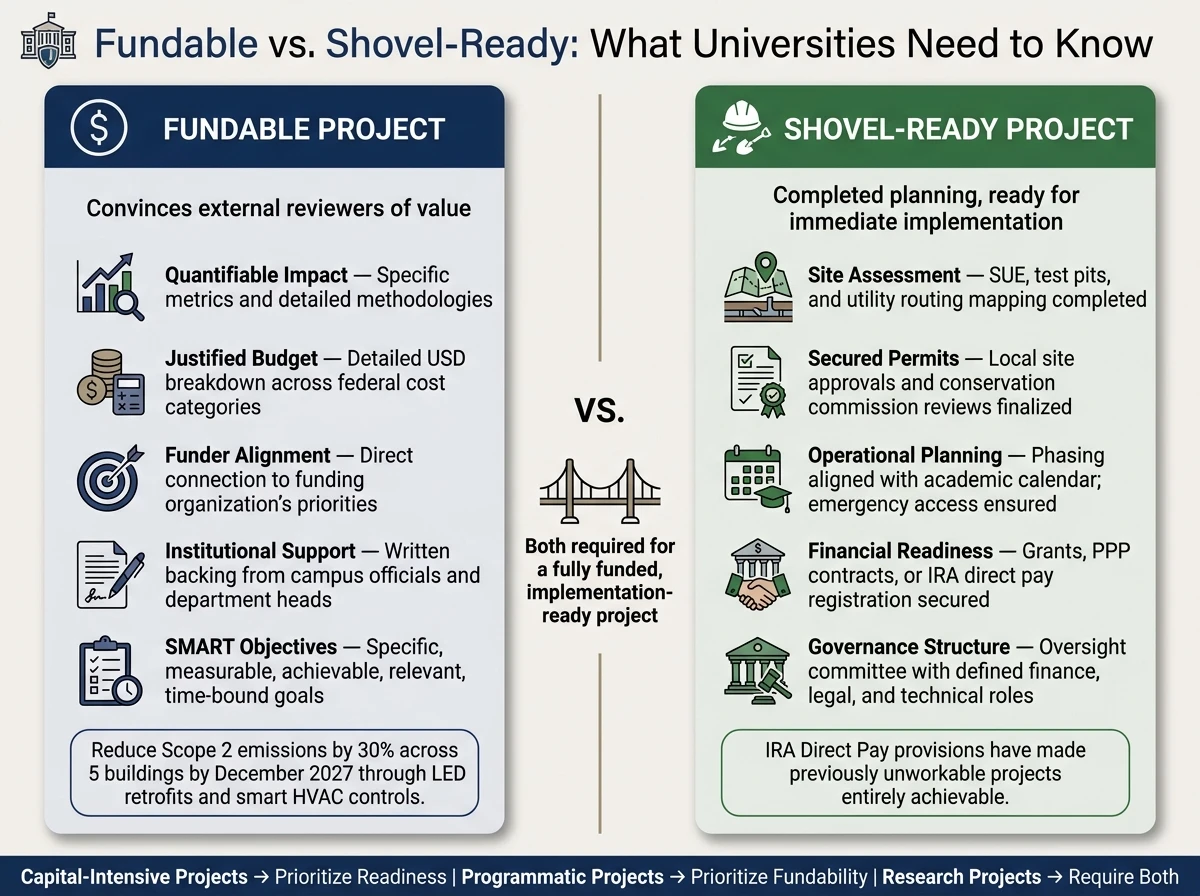
Fundable vs. Shovel-Ready Projects: Key Differences for Universities
Though often used interchangeably, the terms "fundable" and "shovel-ready" refer to very different concepts in higher education. Confusing the two can lead institutions to miss valuable funding opportunities.
What Makes a Project Fundable
A fundable project is one that convinces external reviewers of its value. It should have clear goals, measurable outcomes, a well-justified budget in USD, and a direct connection to the priorities of the funding organization. Funders aren't just supporting projects - they're investing in results they can showcase.
To meet these expectations, projects must demonstrate quantifiable impact. This means providing specific metrics and detailed methodologies. Additionally, written support from institutional leaders, such as campus officials and department heads, strengthens the proposal by showing that the project has backing at multiple levels. For example, Texas A&M University's Aggie Green Fund requires applicants for Major Grants (exceeding $5,000) to submit a comprehensive "Scorecard." This document outlines measurable impacts, a narrative budget explaining major expenses, approvals from institutional bodies, and alignment with the 2018 Sustainability Master Plan [2].
"Universities should model current incentive availability into their capital planning, not rely on outdated cost estimates." - Council Fire [1]
The introduction of IRA direct pay provisions has transformed project feasibility. Projects deemed unworkable just a few years ago may now be entirely achievable.
What Makes a Project Shovel-Ready
A shovel-ready project is one that has completed the planning phase and is ready for immediate implementation. This requires more than just a written scope of work - it demands thorough preparation across multiple areas.
For a project to be shovel-ready, it must include:
Comprehensive site assessments: This involves land surveying, Subsurface Utility Engineering (SUE), and test pits to map underground infrastructure.
Secured permits and approvals: Local site permits and reviews from conservation commissions must be finalized.
Operational planning: Phasing plans should align with the academic calendar to avoid disruptions, and emergency access must be ensured.
Financial readiness: A detailed capital schedule should track funding sources, repayment timelines, and secured incentives like IRA direct pay registration.
Governance structure: An oversight committee with clearly defined roles in finance, legal, and technical areas must be in place.
Readiness Component | Requirement for Immediate Implementation |
|---|---|
Site Assessment | Completed SUE, test pits, and utility routing mapping |
Permitting | Local site approvals and conservation commission reviews secured |
Operations | Phasing plans aligned with academic calendar and emergency access |
Financial | Secured grants, PPP contracts, or IRA direct pay registration |
Governance | Established oversight committee and defined performance KPIs |
Meeting these criteria ensures that a project is truly ready to move forward. However, the specific requirements can vary depending on the nature of the project.
How Fundability and Readiness Differ by Project Type
The importance of fundability versus readiness shifts depending on the type of project. For capital-intensive projects - such as central plant conversions or solar microgrids - technical readiness is key. Funders expect detailed engineering specifications, grid capacity analyses, and risk matrices that evaluate the likelihood and impact of potential issues. These projects often include "quick-win" efficiency measures, creating immediate savings that can help fund more complex phases [1].
For programmatic and academic projects, such as curriculum development or community outreach, fundability takes precedence. These projects rely on SMART objectives, a strong Social Return on Investment (SROI) framework, and alignment with the funder's goals. Research-focused projects fall somewhere in the middle, requiring both rigorous methodologies to secure funding and well-defined implementation plans with milestones and deliverables.
How to Turn Goals into a Structured Project Portfolio
A sustainability strategic plan is only as effective as the projects it inspires. Turning ambitious goals like "achieve carbon neutrality by 2040" into tangible, fundable projects requires a methodical and structured approach.
Breaking Down Long-Term Goals into Shorter-Term Initiatives
To make long-term goals manageable, break them into phased initiatives with clear timelines, sequenced by their potential impact. Start with measures that are both impactful and cost-effective - like LED lighting upgrades or HVAC system optimizations. These early actions not only deliver immediate savings but also build confidence within the organization before moving on to larger, more complex projects, such as electrifying industrial processes or implementing advanced technologies.
"Starting with efficiency measures that generate immediate savings creates a revenue stream that funds larger capital projects. This sequencing also builds organizational confidence as early wins demonstrate feasibility." - Council Fire [1]
Using a Marginal Abatement Cost Curve (MACC) can help rank initiatives based on cost-effectiveness. This ensures that resources are directed toward projects with the highest potential impact [3].
Using Frameworks to Map Activities to Outcomes
Once initiatives are outlined, it's essential to connect specific activities to their intended results. Frameworks like the logic model and the theory of change provide structured ways to map these connections.
The logic model, as defined by the W.K. Kellogg Foundation, offers "a systematic and visual way to present and share relationships among the resources available to operate a program, the activities planned, and the desired outcomes" [4]. It tracks how inputs (like funding and partnerships) are transformed into outputs (e.g., completed projects) and ultimately into measurable outcomes. For example, retrofitting 10 buildings is an output, while achieving a 40% energy reduction across those buildings is an outcome [5].
Logic Model Component | Example in Sustainability Context |
|---|---|
Inputs | Institutional funding, a project team, and strategic partnerships |
Outputs | Installation of an 800-well ground-source heat pump for 22 campus buildings |
Short-term Outcomes | 35% reduction in central plant emissions within the first year |
Medium-term Outcomes | $2.8 million in annual operating savings within 1–3 years |
Long-term Impact | Campus-wide carbon neutrality achieved ahead of schedule |
The theory of change takes this a step further by explaining why the planned activities will lead to the desired outcomes, focusing on the assumptions behind the strategy [5]. Many funders now expect institutions to use both frameworks, as they clarify the path from action to impact. Once outputs and outcomes are well-defined, the next step is organizing these efforts into a cohesive project portfolio.
How to Prioritize and Organize Projects into a Portfolio
With clear outcomes in mind, prioritize projects based on cost-effectiveness, alignment with funding opportunities, and readiness for implementation. Since not all projects can move forward at once, use tools like MACC rankings, grant timelines, and assessments of institutional readiness (e.g., governance, permitting, technical preparation) to determine the order of execution.
Strategically grouping projects into a portfolio - rather than submitting standalone proposals - can also enhance funder confidence. Projects might be clustered by themes (such as energy or transportation), timelines (short-, mid-, or long-term), or funding sources. Establishing internal funding mechanisms can further strengthen the case for external support. For instance, implementing a $25-per-ton internal carbon fee on air travel could generate around $1.2 million annually for a green revolving fund [1]. Such self-sustaining financial models signal a commitment to long-term success rather than reliance on one-off grants [3].
This structured approach transforms high-level sustainability goals into actionable, fundable projects, ensuring progress remains steady and aligned with institutional priorities.
How to Package Projects to Meet Funder Expectations
Once your project portfolio is organized, the next step is presenting each project in a way that aligns perfectly with funder priorities. A well-prepared project package does more than outline your plans - it shows that your institution is ready, capable, and deserving of the investment.
Building Project Charters and Briefs
At the heart of any funding proposal lies the project charter. This document should include key elements such as a problem statement supported by relevant data, clearly defined objectives, a detailed budget broken into standard federal categories (Personnel, Fringe Benefits, Travel, Equipment, Supplies, Contractual, and Indirect Costs), and a timeline with specific milestones. This structured approach ensures that all stakeholders - both internal and external - have a clear understanding of the project's scope, responsibilities, and intended outcomes.
When drafting objectives, use the SMART framework: specific, measurable, achievable, relevant, and time-bound. Funders require precise goals. For example, instead of saying "improve campus sustainability", aim for something like: "Reduce Scope 2 emissions by 30% across five campus buildings by December 2027 through LED retrofits and smart HVAC controls." Additionally, allocate narrative space in your proposal to reflect evaluation criteria weights. For instance, if the "Project Design" section is worth 30 points, dedicate 30% of your proposal to that section. This strategic alignment can often distinguish successful proposals from the rest [9].
Assessing Project Readiness and Fundability
Before submitting a proposal, conduct an internal readiness check to identify and resolve any potential gaps early. This step is critical for bridging the often-overlooked gap between planning and funder approval.
"Grant readiness isn't about having the perfect organization. It's about having the foundational infrastructure that funders check before they'll even consider your program's merits." - Grantsights [8]
Ensure that your SAM.gov registration is up to date (processing can take 2–4 weeks), and verify that your institution has a Unique Entity Identifier (UEI), a board-approved strategic plan, and an accounting system capable of tracking revenue and expenses by funding source. These are baseline requirements that funders review before evaluating the substance of your project [8].
To assess fundability, compare your project against the evaluation criteria in the Notice of Funding Opportunity (NOFO). Projects that excel in high-weighted sections, such as "Project Design" and "Evaluation Plan", are far more competitive [7]. Addressing competitive preference priorities like equity or rural access can also provide an edge, potentially adding 3–10 points to your score. This matters significantly when success rates for programs like those funded by NIH hover around 20–22% [7].
Navigating Compliance and Institutional Constraints
Compliance should be integrated into your project planning from the outset. Federal awards are governed by 2 CFR Part 200 (OMB Uniform Guidance), which outlines requirements for financial management, procurement, and post-award reporting [7].
Two common pitfalls for universities are indirect costs and audit requirements. First, clarify whether a grant’s award ceiling applies to direct costs only or total costs. If your institution does not have a negotiated indirect cost rate, the default de minimis rate is 15% of Modified Total Direct Costs (MTDC) [8]. Second, be mindful of audit requirements: institutions spending $1,000,000 or more in federal awards within a fiscal year must complete a Single Audit under 2 CFR Part 200, Subpart F [8].
"A clean financial audit is your single strongest credential. Organizations with 2+ years of clean financial audits (no findings) are dramatically more competitive than those without audits." - Grantsights [8]
Additionally, letters of support should include concrete commitments, such as dedicated staff, matching funds, or allocated space, to demonstrate institutional buy-in. By assembling a comprehensive package, you not only meet funder expectations but also lay the groundwork for effective project execution.
Funding Pathways and Governance for Project Implementation
Turning strategic sustainability plans into actionable projects requires more than ambition - it demands the right funding sources, solid financial planning, and strong governance. These elements help universities bridge the gap between planning and execution.
Matching Funding Sources to Project Types
The success of any project hinges on aligning it with the right funding mechanism. A mismatch can derail even the most promising initiatives. Here’s a breakdown of how different types of projects can pair with suitable funding sources:
Project Type | Recommended Funding Source | Key Benefit |
|---|---|---|
Energy Efficiency | Green Revolving Fund (GRF) | Self-sustaining; average ROI of 17% |
Renewable Energy | IRA Direct Pay / PPA | 30% cash back; no upfront capital |
Water/Stormwater | CWSRF / WIFIA | Low-interest loans (0% to market rate) |
Large Infrastructure | PPP / Green Bonds | Risk sharing; access to private expertise |
Academic/Research | Internal Carbon Fees | Reliable funding for "Living Lab" projects |
A practical starting point is energy efficiency projects, which yield immediate savings. These savings can then feed into a Green Revolving Fund, creating a cycle of reinvestment for larger projects. For example, one university secured a wind Power Purchase Agreement (PPA) at $32/MWh, significantly below grid rates, without any upfront capital investment [1].
Once funding is aligned, the focus shifts to creating financial models and ensuring long-term sustainability.
Building Financial Models and Post-Grant Plans
Post-grant sustainability is a critical factor for federal reviewers, often accounting for 5% to 15% of proposal scoring points [6]. A vague promise to "seek future funding" will not suffice. Instead, a strong post-grant plan must address three core areas:
Financial Continuity: Secure diversified revenue streams to reduce reliance on grants.
Organizational Continuity: Maintain stable leadership and governance structures.
Programmatic Continuity: Document processes and train staff to ensure smooth transitions [6].
A phased approach works best. Start with 100% grant funding in Year 1, then gradually shift to 40–50% by Year 3, covering the remainder through operating budgets or earned revenue from activities like fee-for-service consulting or licensing educational materials [6].
To strengthen financial models, replace generic letters of support with Memoranda of Understanding (MOUs) that outline specific commitments, including financial contributions or staff time [6]. Also, embed knowledge management during the grant period by documenting workflows and training successors to prevent disruptions if key personnel leave [6].
Effective governance and monitoring systems are equally essential for keeping projects on track.
Setting Up Governance and Monitoring Structures
Good governance does more than ensure compliance - it keeps projects running smoothly and audit-ready. Institutions aiming for grant-readiness typically have a board of directors with 5 to 7 members who bring diverse expertise, such as finance and program management [8].
Internally, two key controls are indispensable:
Segregation of Financial Duties: Ensure that the person approving expenditures is not the same person reconciling accounts [8].
Centralized Award Summaries: Maintain a one-page summary for each grant, highlighting reporting deadlines, key funder contacts, and compliance milestones. Display this summary where the project team can easily access it [11].
For ongoing monitoring, logic models are an underutilized but powerful tool. These visual diagrams link resources and activities to outputs and outcomes, providing a shared framework for tracking progress [8]. Pair this with a robust financial management system that tracks budgeted versus actual expenditures by funding source. Under federal regulations (2 CFR Part 200), this is a baseline requirement [11]. Institutions spending more than $1,000,000 in federal awards in a fiscal year (a threshold increasing from $750,000 in October 2024) must also complete a Single Audit under Subpart F [10].
Conclusion: From Plan to Action
Turning a strategic sustainability plan into tangible, funded projects requires breaking down ambitious long-term goals into actionable steps. This means preparing detailed documentation, aligning initiatives with the right funding sources, and ensuring every project is ready to move forward. A systematic approach makes achieving measurable outcomes possible.
The order in which actions are taken is critical - more so than many organizations might realize. Starting with efficiency projects that deliver immediate cost savings can create the financial momentum needed to support larger, more complex initiatives. These early successes not only generate funding but also build confidence within the organization, proving that the plan is feasible.
For example, in February 2026, a research university with 35,000 students accelerated its carbon neutrality target from 2040 to 2035. Their $340 million sustainability roadmap, featuring an 800-well ground-source heat pump system and a 15 MW solar array, is expected to yield $410 million in energy savings over 25 years [1]. This achievement was possible because the university prioritized project readiness from the outset. By embedding grant readiness into project descriptions, cost assessments, and scoring metrics, they successfully met federal funding criteria, such as those required by FEMA BRIC and EPA grants [12]. Treating readiness as an ongoing discipline, rather than a last-minute scramble, proved key to their success.
The divide between planning and execution narrows when every element - strategy, funding, and implementation - is woven into a seamless, results-oriented process. This is where strategy transforms into meaningful impact.
FAQs
What’s the fastest way to turn a climate goal into a fundable project?
The fastest path involves strategically sequencing investments to maximize cash flow while taking advantage of federal incentives. Begin with efficiency measures that yield quick savings, providing an immediate financial boost that can fund larger initiatives. Integrate federal programs, such as the direct pay provisions under the Inflation Reduction Act, into your financial strategy. Prioritize impactful areas like central heating and cooling systems, and ensure stakeholders clearly understand the financial advantages by presenting metrics such as payback periods and net present value.
What documents prove a project is truly shovel-ready?
To qualify as a shovel-ready project, it's essential to have all pre-development steps finalized and documented. This includes approved designs and proof of site control, such as land titles or authorization from the property owner. Additionally, environmental permits, like a Categorical Exclusion, must be secured.
Other critical components include:
A detailed construction budget outlining costs
A project schedule with clear milestones
An execution plan detailing how the project will be carried out
Evidence of secured financing or commitment letters from funding sources
Stakeholder agreements that confirm the project aligns with local regulations and policies
These elements collectively demonstrate readiness to begin construction without delays.
How do we match each project to the right funding source?
To connect projects with the right funding opportunities, begin by crafting a comprehensive project profile. This should include details such as the type of applicant, the stage of the project, its location, budget, and any existing partnerships. Use this profile to evaluate two critical aspects: thematic fit, which ensures alignment with donor priorities, and legal eligibility, which verifies compliance with registration or activity requirements.
When comparing potential funding sources, consider important factors like cost-sharing requirements, interest rates, and timelines. Tools such as the EPA’s Water Finance Clearinghouse and the Financing Alternatives Comparison Tool can help streamline this evaluation process, providing valuable insights to guide your decision-making.
Related Blog Posts
Latest Articles
©2026

Narrative Change and Power Building: The Missing Half of Advocacy
Narrative change is the process of disrupting dominant narratives that normalize inequity and advancing new narratives from historically marginalized communities.

Funding Resilience Without Federal Grants
BRIC is unreliable and FEMA is shrinking. Here's how cities fund climate resilience with dedicated revenue, blended finance, and a coordinating authority.

The ESG Blind Spot: How AI Is Finding Risks in Companies Nobody Else Is Watching
Norway's sovereign wealth fund uses AI to screen 7,200 portfolio companies for forced labor and corruption within 24 hours. The real story is the emerging-market coverage gap that traditional ESG data vendors miss — and what it means for any company with a global supply chain.
Narrative Change and Power Building: The Missing Half of Advocacy
Narrative change is the process of disrupting dominant narratives that normalize inequity and advancing new narratives from historically marginalized communities.
Funding Resilience Without Federal Grants
BRIC is unreliable and FEMA is shrinking. Here's how cities fund climate resilience with dedicated revenue, blended finance, and a coordinating authority.
The ESG Blind Spot: How AI Is Finding Risks in Companies Nobody Else Is Watching
Norway's sovereign wealth fund uses AI to screen 7,200 portfolio companies for forced labor and corruption within 24 hours. The real story is the emerging-market coverage gap that traditional ESG data vendors miss — and what it means for any company with a global supply chain.
FAQ
01
What does it really mean to “redefine profit”?
02
What makes Council Fire different?
03
Who does Council Fire work with?
04
What does working with Council Fire actually look like?
05
How does Council Fire help organizations turn big goals into action?
06
How does Council Fire define and measure success?
07
How does technology fit into Council Fire’s work?
May 31, 2026
How to Turn a Strategic Plan into Fundable, Shovel-Ready Projects for Universities & Research Institutions
Sustainability Strategy
In This Article
Convert campus strategic goals into grant-ready, shovel-ready projects with prioritization, funding alignment, and governance.
How to Turn a Strategic Plan into Fundable, Shovel-Ready Projects for Universities & Research Institutions
Universities often struggle to turn ambitious goals like carbon neutrality into actionable projects that secure funding and deliver results. The key lies in creating projects that are both fundable (aligned with funder priorities, with clear goals and measurable outcomes) and shovel-ready (fully prepared for immediate implementation). This requires detailed planning, technical readiness, and financial structuring.
Key insights include:
Fundable Projects: Must demonstrate quantifiable impact, align with funder priorities, and include detailed budgets, metrics, and institutional support.
Shovel-Ready Projects: Require site assessments, permits, operational plans, financial readiness, and governance structures.
Project Prioritization: Start with cost-effective initiatives, like energy efficiency upgrades, to build momentum and savings for larger projects.
Funding Alignment: Match projects to appropriate funding sources (e.g., green revolving funds, federal grants, or public-private partnerships).
Proposal Packaging: Use SMART objectives, detailed project charters, and compliance with federal guidelines to strengthen grant applications.
What 'Fundable' and 'Shovel-Ready' Mean in Higher Education
Fundable vs. Shovel-Ready Projects: Key Differences for Universities
Though often used interchangeably, the terms "fundable" and "shovel-ready" refer to very different concepts in higher education. Confusing the two can lead institutions to miss valuable funding opportunities.
What Makes a Project Fundable
A fundable project is one that convinces external reviewers of its value. It should have clear goals, measurable outcomes, a well-justified budget in USD, and a direct connection to the priorities of the funding organization. Funders aren't just supporting projects - they're investing in results they can showcase.
To meet these expectations, projects must demonstrate quantifiable impact. This means providing specific metrics and detailed methodologies. Additionally, written support from institutional leaders, such as campus officials and department heads, strengthens the proposal by showing that the project has backing at multiple levels. For example, Texas A&M University's Aggie Green Fund requires applicants for Major Grants (exceeding $5,000) to submit a comprehensive "Scorecard." This document outlines measurable impacts, a narrative budget explaining major expenses, approvals from institutional bodies, and alignment with the 2018 Sustainability Master Plan [2].
"Universities should model current incentive availability into their capital planning, not rely on outdated cost estimates." - Council Fire [1]
The introduction of IRA direct pay provisions has transformed project feasibility. Projects deemed unworkable just a few years ago may now be entirely achievable.
What Makes a Project Shovel-Ready
A shovel-ready project is one that has completed the planning phase and is ready for immediate implementation. This requires more than just a written scope of work - it demands thorough preparation across multiple areas.
For a project to be shovel-ready, it must include:
Comprehensive site assessments: This involves land surveying, Subsurface Utility Engineering (SUE), and test pits to map underground infrastructure.
Secured permits and approvals: Local site permits and reviews from conservation commissions must be finalized.
Operational planning: Phasing plans should align with the academic calendar to avoid disruptions, and emergency access must be ensured.
Financial readiness: A detailed capital schedule should track funding sources, repayment timelines, and secured incentives like IRA direct pay registration.
Governance structure: An oversight committee with clearly defined roles in finance, legal, and technical areas must be in place.
Readiness Component | Requirement for Immediate Implementation |
|---|---|
Site Assessment | Completed SUE, test pits, and utility routing mapping |
Permitting | Local site approvals and conservation commission reviews secured |
Operations | Phasing plans aligned with academic calendar and emergency access |
Financial | Secured grants, PPP contracts, or IRA direct pay registration |
Governance | Established oversight committee and defined performance KPIs |
Meeting these criteria ensures that a project is truly ready to move forward. However, the specific requirements can vary depending on the nature of the project.
How Fundability and Readiness Differ by Project Type
The importance of fundability versus readiness shifts depending on the type of project. For capital-intensive projects - such as central plant conversions or solar microgrids - technical readiness is key. Funders expect detailed engineering specifications, grid capacity analyses, and risk matrices that evaluate the likelihood and impact of potential issues. These projects often include "quick-win" efficiency measures, creating immediate savings that can help fund more complex phases [1].
For programmatic and academic projects, such as curriculum development or community outreach, fundability takes precedence. These projects rely on SMART objectives, a strong Social Return on Investment (SROI) framework, and alignment with the funder's goals. Research-focused projects fall somewhere in the middle, requiring both rigorous methodologies to secure funding and well-defined implementation plans with milestones and deliverables.
How to Turn Goals into a Structured Project Portfolio
A sustainability strategic plan is only as effective as the projects it inspires. Turning ambitious goals like "achieve carbon neutrality by 2040" into tangible, fundable projects requires a methodical and structured approach.
Breaking Down Long-Term Goals into Shorter-Term Initiatives
To make long-term goals manageable, break them into phased initiatives with clear timelines, sequenced by their potential impact. Start with measures that are both impactful and cost-effective - like LED lighting upgrades or HVAC system optimizations. These early actions not only deliver immediate savings but also build confidence within the organization before moving on to larger, more complex projects, such as electrifying industrial processes or implementing advanced technologies.
"Starting with efficiency measures that generate immediate savings creates a revenue stream that funds larger capital projects. This sequencing also builds organizational confidence as early wins demonstrate feasibility." - Council Fire [1]
Using a Marginal Abatement Cost Curve (MACC) can help rank initiatives based on cost-effectiveness. This ensures that resources are directed toward projects with the highest potential impact [3].
Using Frameworks to Map Activities to Outcomes
Once initiatives are outlined, it's essential to connect specific activities to their intended results. Frameworks like the logic model and the theory of change provide structured ways to map these connections.
The logic model, as defined by the W.K. Kellogg Foundation, offers "a systematic and visual way to present and share relationships among the resources available to operate a program, the activities planned, and the desired outcomes" [4]. It tracks how inputs (like funding and partnerships) are transformed into outputs (e.g., completed projects) and ultimately into measurable outcomes. For example, retrofitting 10 buildings is an output, while achieving a 40% energy reduction across those buildings is an outcome [5].
Logic Model Component | Example in Sustainability Context |
|---|---|
Inputs | Institutional funding, a project team, and strategic partnerships |
Outputs | Installation of an 800-well ground-source heat pump for 22 campus buildings |
Short-term Outcomes | 35% reduction in central plant emissions within the first year |
Medium-term Outcomes | $2.8 million in annual operating savings within 1–3 years |
Long-term Impact | Campus-wide carbon neutrality achieved ahead of schedule |
The theory of change takes this a step further by explaining why the planned activities will lead to the desired outcomes, focusing on the assumptions behind the strategy [5]. Many funders now expect institutions to use both frameworks, as they clarify the path from action to impact. Once outputs and outcomes are well-defined, the next step is organizing these efforts into a cohesive project portfolio.
How to Prioritize and Organize Projects into a Portfolio
With clear outcomes in mind, prioritize projects based on cost-effectiveness, alignment with funding opportunities, and readiness for implementation. Since not all projects can move forward at once, use tools like MACC rankings, grant timelines, and assessments of institutional readiness (e.g., governance, permitting, technical preparation) to determine the order of execution.
Strategically grouping projects into a portfolio - rather than submitting standalone proposals - can also enhance funder confidence. Projects might be clustered by themes (such as energy or transportation), timelines (short-, mid-, or long-term), or funding sources. Establishing internal funding mechanisms can further strengthen the case for external support. For instance, implementing a $25-per-ton internal carbon fee on air travel could generate around $1.2 million annually for a green revolving fund [1]. Such self-sustaining financial models signal a commitment to long-term success rather than reliance on one-off grants [3].
This structured approach transforms high-level sustainability goals into actionable, fundable projects, ensuring progress remains steady and aligned with institutional priorities.
How to Package Projects to Meet Funder Expectations
Once your project portfolio is organized, the next step is presenting each project in a way that aligns perfectly with funder priorities. A well-prepared project package does more than outline your plans - it shows that your institution is ready, capable, and deserving of the investment.
Building Project Charters and Briefs
At the heart of any funding proposal lies the project charter. This document should include key elements such as a problem statement supported by relevant data, clearly defined objectives, a detailed budget broken into standard federal categories (Personnel, Fringe Benefits, Travel, Equipment, Supplies, Contractual, and Indirect Costs), and a timeline with specific milestones. This structured approach ensures that all stakeholders - both internal and external - have a clear understanding of the project's scope, responsibilities, and intended outcomes.
When drafting objectives, use the SMART framework: specific, measurable, achievable, relevant, and time-bound. Funders require precise goals. For example, instead of saying "improve campus sustainability", aim for something like: "Reduce Scope 2 emissions by 30% across five campus buildings by December 2027 through LED retrofits and smart HVAC controls." Additionally, allocate narrative space in your proposal to reflect evaluation criteria weights. For instance, if the "Project Design" section is worth 30 points, dedicate 30% of your proposal to that section. This strategic alignment can often distinguish successful proposals from the rest [9].
Assessing Project Readiness and Fundability
Before submitting a proposal, conduct an internal readiness check to identify and resolve any potential gaps early. This step is critical for bridging the often-overlooked gap between planning and funder approval.
"Grant readiness isn't about having the perfect organization. It's about having the foundational infrastructure that funders check before they'll even consider your program's merits." - Grantsights [8]
Ensure that your SAM.gov registration is up to date (processing can take 2–4 weeks), and verify that your institution has a Unique Entity Identifier (UEI), a board-approved strategic plan, and an accounting system capable of tracking revenue and expenses by funding source. These are baseline requirements that funders review before evaluating the substance of your project [8].
To assess fundability, compare your project against the evaluation criteria in the Notice of Funding Opportunity (NOFO). Projects that excel in high-weighted sections, such as "Project Design" and "Evaluation Plan", are far more competitive [7]. Addressing competitive preference priorities like equity or rural access can also provide an edge, potentially adding 3–10 points to your score. This matters significantly when success rates for programs like those funded by NIH hover around 20–22% [7].
Navigating Compliance and Institutional Constraints
Compliance should be integrated into your project planning from the outset. Federal awards are governed by 2 CFR Part 200 (OMB Uniform Guidance), which outlines requirements for financial management, procurement, and post-award reporting [7].
Two common pitfalls for universities are indirect costs and audit requirements. First, clarify whether a grant’s award ceiling applies to direct costs only or total costs. If your institution does not have a negotiated indirect cost rate, the default de minimis rate is 15% of Modified Total Direct Costs (MTDC) [8]. Second, be mindful of audit requirements: institutions spending $1,000,000 or more in federal awards within a fiscal year must complete a Single Audit under 2 CFR Part 200, Subpart F [8].
"A clean financial audit is your single strongest credential. Organizations with 2+ years of clean financial audits (no findings) are dramatically more competitive than those without audits." - Grantsights [8]
Additionally, letters of support should include concrete commitments, such as dedicated staff, matching funds, or allocated space, to demonstrate institutional buy-in. By assembling a comprehensive package, you not only meet funder expectations but also lay the groundwork for effective project execution.
Funding Pathways and Governance for Project Implementation
Turning strategic sustainability plans into actionable projects requires more than ambition - it demands the right funding sources, solid financial planning, and strong governance. These elements help universities bridge the gap between planning and execution.
Matching Funding Sources to Project Types
The success of any project hinges on aligning it with the right funding mechanism. A mismatch can derail even the most promising initiatives. Here’s a breakdown of how different types of projects can pair with suitable funding sources:
Project Type | Recommended Funding Source | Key Benefit |
|---|---|---|
Energy Efficiency | Green Revolving Fund (GRF) | Self-sustaining; average ROI of 17% |
Renewable Energy | IRA Direct Pay / PPA | 30% cash back; no upfront capital |
Water/Stormwater | CWSRF / WIFIA | Low-interest loans (0% to market rate) |
Large Infrastructure | PPP / Green Bonds | Risk sharing; access to private expertise |
Academic/Research | Internal Carbon Fees | Reliable funding for "Living Lab" projects |
A practical starting point is energy efficiency projects, which yield immediate savings. These savings can then feed into a Green Revolving Fund, creating a cycle of reinvestment for larger projects. For example, one university secured a wind Power Purchase Agreement (PPA) at $32/MWh, significantly below grid rates, without any upfront capital investment [1].
Once funding is aligned, the focus shifts to creating financial models and ensuring long-term sustainability.
Building Financial Models and Post-Grant Plans
Post-grant sustainability is a critical factor for federal reviewers, often accounting for 5% to 15% of proposal scoring points [6]. A vague promise to "seek future funding" will not suffice. Instead, a strong post-grant plan must address three core areas:
Financial Continuity: Secure diversified revenue streams to reduce reliance on grants.
Organizational Continuity: Maintain stable leadership and governance structures.
Programmatic Continuity: Document processes and train staff to ensure smooth transitions [6].
A phased approach works best. Start with 100% grant funding in Year 1, then gradually shift to 40–50% by Year 3, covering the remainder through operating budgets or earned revenue from activities like fee-for-service consulting or licensing educational materials [6].
To strengthen financial models, replace generic letters of support with Memoranda of Understanding (MOUs) that outline specific commitments, including financial contributions or staff time [6]. Also, embed knowledge management during the grant period by documenting workflows and training successors to prevent disruptions if key personnel leave [6].
Effective governance and monitoring systems are equally essential for keeping projects on track.
Setting Up Governance and Monitoring Structures
Good governance does more than ensure compliance - it keeps projects running smoothly and audit-ready. Institutions aiming for grant-readiness typically have a board of directors with 5 to 7 members who bring diverse expertise, such as finance and program management [8].
Internally, two key controls are indispensable:
Segregation of Financial Duties: Ensure that the person approving expenditures is not the same person reconciling accounts [8].
Centralized Award Summaries: Maintain a one-page summary for each grant, highlighting reporting deadlines, key funder contacts, and compliance milestones. Display this summary where the project team can easily access it [11].
For ongoing monitoring, logic models are an underutilized but powerful tool. These visual diagrams link resources and activities to outputs and outcomes, providing a shared framework for tracking progress [8]. Pair this with a robust financial management system that tracks budgeted versus actual expenditures by funding source. Under federal regulations (2 CFR Part 200), this is a baseline requirement [11]. Institutions spending more than $1,000,000 in federal awards in a fiscal year (a threshold increasing from $750,000 in October 2024) must also complete a Single Audit under Subpart F [10].
Conclusion: From Plan to Action
Turning a strategic sustainability plan into tangible, funded projects requires breaking down ambitious long-term goals into actionable steps. This means preparing detailed documentation, aligning initiatives with the right funding sources, and ensuring every project is ready to move forward. A systematic approach makes achieving measurable outcomes possible.
The order in which actions are taken is critical - more so than many organizations might realize. Starting with efficiency projects that deliver immediate cost savings can create the financial momentum needed to support larger, more complex initiatives. These early successes not only generate funding but also build confidence within the organization, proving that the plan is feasible.
For example, in February 2026, a research university with 35,000 students accelerated its carbon neutrality target from 2040 to 2035. Their $340 million sustainability roadmap, featuring an 800-well ground-source heat pump system and a 15 MW solar array, is expected to yield $410 million in energy savings over 25 years [1]. This achievement was possible because the university prioritized project readiness from the outset. By embedding grant readiness into project descriptions, cost assessments, and scoring metrics, they successfully met federal funding criteria, such as those required by FEMA BRIC and EPA grants [12]. Treating readiness as an ongoing discipline, rather than a last-minute scramble, proved key to their success.
The divide between planning and execution narrows when every element - strategy, funding, and implementation - is woven into a seamless, results-oriented process. This is where strategy transforms into meaningful impact.
FAQs
What’s the fastest way to turn a climate goal into a fundable project?
The fastest path involves strategically sequencing investments to maximize cash flow while taking advantage of federal incentives. Begin with efficiency measures that yield quick savings, providing an immediate financial boost that can fund larger initiatives. Integrate federal programs, such as the direct pay provisions under the Inflation Reduction Act, into your financial strategy. Prioritize impactful areas like central heating and cooling systems, and ensure stakeholders clearly understand the financial advantages by presenting metrics such as payback periods and net present value.
What documents prove a project is truly shovel-ready?
To qualify as a shovel-ready project, it's essential to have all pre-development steps finalized and documented. This includes approved designs and proof of site control, such as land titles or authorization from the property owner. Additionally, environmental permits, like a Categorical Exclusion, must be secured.
Other critical components include:
A detailed construction budget outlining costs
A project schedule with clear milestones
An execution plan detailing how the project will be carried out
Evidence of secured financing or commitment letters from funding sources
Stakeholder agreements that confirm the project aligns with local regulations and policies
These elements collectively demonstrate readiness to begin construction without delays.
How do we match each project to the right funding source?
To connect projects with the right funding opportunities, begin by crafting a comprehensive project profile. This should include details such as the type of applicant, the stage of the project, its location, budget, and any existing partnerships. Use this profile to evaluate two critical aspects: thematic fit, which ensures alignment with donor priorities, and legal eligibility, which verifies compliance with registration or activity requirements.
When comparing potential funding sources, consider important factors like cost-sharing requirements, interest rates, and timelines. Tools such as the EPA’s Water Finance Clearinghouse and the Financing Alternatives Comparison Tool can help streamline this evaluation process, providing valuable insights to guide your decision-making.
Related Blog Posts
Latest Articles
©2026
Narrative Change and Power Building: The Missing Half of Advocacy
Narrative change is the process of disrupting dominant narratives that normalize inequity and advancing new narratives from historically marginalized communities.
Funding Resilience Without Federal Grants
BRIC is unreliable and FEMA is shrinking. Here's how cities fund climate resilience with dedicated revenue, blended finance, and a coordinating authority.
The ESG Blind Spot: How AI Is Finding Risks in Companies Nobody Else Is Watching
Norway's sovereign wealth fund uses AI to screen 7,200 portfolio companies for forced labor and corruption within 24 hours. The real story is the emerging-market coverage gap that traditional ESG data vendors miss — and what it means for any company with a global supply chain.
FAQ
01
What does it really mean to “redefine profit”?
02
What makes Council Fire different?
03
Who does Council Fire work with?
04
What does working with Council Fire actually look like?
05
How does Council Fire help organizations turn big goals into action?
06
How does Council Fire define and measure success?
07
How does technology fit into Council Fire’s work?
May 31, 2026
How to Turn a Strategic Plan into Fundable, Shovel-Ready Projects for Universities & Research Institutions
Sustainability Strategy
In This Article
Convert campus strategic goals into grant-ready, shovel-ready projects with prioritization, funding alignment, and governance.
How to Turn a Strategic Plan into Fundable, Shovel-Ready Projects for Universities & Research Institutions
Universities often struggle to turn ambitious goals like carbon neutrality into actionable projects that secure funding and deliver results. The key lies in creating projects that are both fundable (aligned with funder priorities, with clear goals and measurable outcomes) and shovel-ready (fully prepared for immediate implementation). This requires detailed planning, technical readiness, and financial structuring.
Key insights include:
Fundable Projects: Must demonstrate quantifiable impact, align with funder priorities, and include detailed budgets, metrics, and institutional support.
Shovel-Ready Projects: Require site assessments, permits, operational plans, financial readiness, and governance structures.
Project Prioritization: Start with cost-effective initiatives, like energy efficiency upgrades, to build momentum and savings for larger projects.
Funding Alignment: Match projects to appropriate funding sources (e.g., green revolving funds, federal grants, or public-private partnerships).
Proposal Packaging: Use SMART objectives, detailed project charters, and compliance with federal guidelines to strengthen grant applications.
What 'Fundable' and 'Shovel-Ready' Mean in Higher Education
Fundable vs. Shovel-Ready Projects: Key Differences for Universities
Though often used interchangeably, the terms "fundable" and "shovel-ready" refer to very different concepts in higher education. Confusing the two can lead institutions to miss valuable funding opportunities.
What Makes a Project Fundable
A fundable project is one that convinces external reviewers of its value. It should have clear goals, measurable outcomes, a well-justified budget in USD, and a direct connection to the priorities of the funding organization. Funders aren't just supporting projects - they're investing in results they can showcase.
To meet these expectations, projects must demonstrate quantifiable impact. This means providing specific metrics and detailed methodologies. Additionally, written support from institutional leaders, such as campus officials and department heads, strengthens the proposal by showing that the project has backing at multiple levels. For example, Texas A&M University's Aggie Green Fund requires applicants for Major Grants (exceeding $5,000) to submit a comprehensive "Scorecard." This document outlines measurable impacts, a narrative budget explaining major expenses, approvals from institutional bodies, and alignment with the 2018 Sustainability Master Plan [2].
"Universities should model current incentive availability into their capital planning, not rely on outdated cost estimates." - Council Fire [1]
The introduction of IRA direct pay provisions has transformed project feasibility. Projects deemed unworkable just a few years ago may now be entirely achievable.
What Makes a Project Shovel-Ready
A shovel-ready project is one that has completed the planning phase and is ready for immediate implementation. This requires more than just a written scope of work - it demands thorough preparation across multiple areas.
For a project to be shovel-ready, it must include:
Comprehensive site assessments: This involves land surveying, Subsurface Utility Engineering (SUE), and test pits to map underground infrastructure.
Secured permits and approvals: Local site permits and reviews from conservation commissions must be finalized.
Operational planning: Phasing plans should align with the academic calendar to avoid disruptions, and emergency access must be ensured.
Financial readiness: A detailed capital schedule should track funding sources, repayment timelines, and secured incentives like IRA direct pay registration.
Governance structure: An oversight committee with clearly defined roles in finance, legal, and technical areas must be in place.
Readiness Component | Requirement for Immediate Implementation |
|---|---|
Site Assessment | Completed SUE, test pits, and utility routing mapping |
Permitting | Local site approvals and conservation commission reviews secured |
Operations | Phasing plans aligned with academic calendar and emergency access |
Financial | Secured grants, PPP contracts, or IRA direct pay registration |
Governance | Established oversight committee and defined performance KPIs |
Meeting these criteria ensures that a project is truly ready to move forward. However, the specific requirements can vary depending on the nature of the project.
How Fundability and Readiness Differ by Project Type
The importance of fundability versus readiness shifts depending on the type of project. For capital-intensive projects - such as central plant conversions or solar microgrids - technical readiness is key. Funders expect detailed engineering specifications, grid capacity analyses, and risk matrices that evaluate the likelihood and impact of potential issues. These projects often include "quick-win" efficiency measures, creating immediate savings that can help fund more complex phases [1].
For programmatic and academic projects, such as curriculum development or community outreach, fundability takes precedence. These projects rely on SMART objectives, a strong Social Return on Investment (SROI) framework, and alignment with the funder's goals. Research-focused projects fall somewhere in the middle, requiring both rigorous methodologies to secure funding and well-defined implementation plans with milestones and deliverables.
How to Turn Goals into a Structured Project Portfolio
A sustainability strategic plan is only as effective as the projects it inspires. Turning ambitious goals like "achieve carbon neutrality by 2040" into tangible, fundable projects requires a methodical and structured approach.
Breaking Down Long-Term Goals into Shorter-Term Initiatives
To make long-term goals manageable, break them into phased initiatives with clear timelines, sequenced by their potential impact. Start with measures that are both impactful and cost-effective - like LED lighting upgrades or HVAC system optimizations. These early actions not only deliver immediate savings but also build confidence within the organization before moving on to larger, more complex projects, such as electrifying industrial processes or implementing advanced technologies.
"Starting with efficiency measures that generate immediate savings creates a revenue stream that funds larger capital projects. This sequencing also builds organizational confidence as early wins demonstrate feasibility." - Council Fire [1]
Using a Marginal Abatement Cost Curve (MACC) can help rank initiatives based on cost-effectiveness. This ensures that resources are directed toward projects with the highest potential impact [3].
Using Frameworks to Map Activities to Outcomes
Once initiatives are outlined, it's essential to connect specific activities to their intended results. Frameworks like the logic model and the theory of change provide structured ways to map these connections.
The logic model, as defined by the W.K. Kellogg Foundation, offers "a systematic and visual way to present and share relationships among the resources available to operate a program, the activities planned, and the desired outcomes" [4]. It tracks how inputs (like funding and partnerships) are transformed into outputs (e.g., completed projects) and ultimately into measurable outcomes. For example, retrofitting 10 buildings is an output, while achieving a 40% energy reduction across those buildings is an outcome [5].
Logic Model Component | Example in Sustainability Context |
|---|---|
Inputs | Institutional funding, a project team, and strategic partnerships |
Outputs | Installation of an 800-well ground-source heat pump for 22 campus buildings |
Short-term Outcomes | 35% reduction in central plant emissions within the first year |
Medium-term Outcomes | $2.8 million in annual operating savings within 1–3 years |
Long-term Impact | Campus-wide carbon neutrality achieved ahead of schedule |
The theory of change takes this a step further by explaining why the planned activities will lead to the desired outcomes, focusing on the assumptions behind the strategy [5]. Many funders now expect institutions to use both frameworks, as they clarify the path from action to impact. Once outputs and outcomes are well-defined, the next step is organizing these efforts into a cohesive project portfolio.
How to Prioritize and Organize Projects into a Portfolio
With clear outcomes in mind, prioritize projects based on cost-effectiveness, alignment with funding opportunities, and readiness for implementation. Since not all projects can move forward at once, use tools like MACC rankings, grant timelines, and assessments of institutional readiness (e.g., governance, permitting, technical preparation) to determine the order of execution.
Strategically grouping projects into a portfolio - rather than submitting standalone proposals - can also enhance funder confidence. Projects might be clustered by themes (such as energy or transportation), timelines (short-, mid-, or long-term), or funding sources. Establishing internal funding mechanisms can further strengthen the case for external support. For instance, implementing a $25-per-ton internal carbon fee on air travel could generate around $1.2 million annually for a green revolving fund [1]. Such self-sustaining financial models signal a commitment to long-term success rather than reliance on one-off grants [3].
This structured approach transforms high-level sustainability goals into actionable, fundable projects, ensuring progress remains steady and aligned with institutional priorities.
How to Package Projects to Meet Funder Expectations
Once your project portfolio is organized, the next step is presenting each project in a way that aligns perfectly with funder priorities. A well-prepared project package does more than outline your plans - it shows that your institution is ready, capable, and deserving of the investment.
Building Project Charters and Briefs
At the heart of any funding proposal lies the project charter. This document should include key elements such as a problem statement supported by relevant data, clearly defined objectives, a detailed budget broken into standard federal categories (Personnel, Fringe Benefits, Travel, Equipment, Supplies, Contractual, and Indirect Costs), and a timeline with specific milestones. This structured approach ensures that all stakeholders - both internal and external - have a clear understanding of the project's scope, responsibilities, and intended outcomes.
When drafting objectives, use the SMART framework: specific, measurable, achievable, relevant, and time-bound. Funders require precise goals. For example, instead of saying "improve campus sustainability", aim for something like: "Reduce Scope 2 emissions by 30% across five campus buildings by December 2027 through LED retrofits and smart HVAC controls." Additionally, allocate narrative space in your proposal to reflect evaluation criteria weights. For instance, if the "Project Design" section is worth 30 points, dedicate 30% of your proposal to that section. This strategic alignment can often distinguish successful proposals from the rest [9].
Assessing Project Readiness and Fundability
Before submitting a proposal, conduct an internal readiness check to identify and resolve any potential gaps early. This step is critical for bridging the often-overlooked gap between planning and funder approval.
"Grant readiness isn't about having the perfect organization. It's about having the foundational infrastructure that funders check before they'll even consider your program's merits." - Grantsights [8]
Ensure that your SAM.gov registration is up to date (processing can take 2–4 weeks), and verify that your institution has a Unique Entity Identifier (UEI), a board-approved strategic plan, and an accounting system capable of tracking revenue and expenses by funding source. These are baseline requirements that funders review before evaluating the substance of your project [8].
To assess fundability, compare your project against the evaluation criteria in the Notice of Funding Opportunity (NOFO). Projects that excel in high-weighted sections, such as "Project Design" and "Evaluation Plan", are far more competitive [7]. Addressing competitive preference priorities like equity or rural access can also provide an edge, potentially adding 3–10 points to your score. This matters significantly when success rates for programs like those funded by NIH hover around 20–22% [7].
Navigating Compliance and Institutional Constraints
Compliance should be integrated into your project planning from the outset. Federal awards are governed by 2 CFR Part 200 (OMB Uniform Guidance), which outlines requirements for financial management, procurement, and post-award reporting [7].
Two common pitfalls for universities are indirect costs and audit requirements. First, clarify whether a grant’s award ceiling applies to direct costs only or total costs. If your institution does not have a negotiated indirect cost rate, the default de minimis rate is 15% of Modified Total Direct Costs (MTDC) [8]. Second, be mindful of audit requirements: institutions spending $1,000,000 or more in federal awards within a fiscal year must complete a Single Audit under 2 CFR Part 200, Subpart F [8].
"A clean financial audit is your single strongest credential. Organizations with 2+ years of clean financial audits (no findings) are dramatically more competitive than those without audits." - Grantsights [8]
Additionally, letters of support should include concrete commitments, such as dedicated staff, matching funds, or allocated space, to demonstrate institutional buy-in. By assembling a comprehensive package, you not only meet funder expectations but also lay the groundwork for effective project execution.
Funding Pathways and Governance for Project Implementation
Turning strategic sustainability plans into actionable projects requires more than ambition - it demands the right funding sources, solid financial planning, and strong governance. These elements help universities bridge the gap between planning and execution.
Matching Funding Sources to Project Types
The success of any project hinges on aligning it with the right funding mechanism. A mismatch can derail even the most promising initiatives. Here’s a breakdown of how different types of projects can pair with suitable funding sources:
Project Type | Recommended Funding Source | Key Benefit |
|---|---|---|
Energy Efficiency | Green Revolving Fund (GRF) | Self-sustaining; average ROI of 17% |
Renewable Energy | IRA Direct Pay / PPA | 30% cash back; no upfront capital |
Water/Stormwater | CWSRF / WIFIA | Low-interest loans (0% to market rate) |
Large Infrastructure | PPP / Green Bonds | Risk sharing; access to private expertise |
Academic/Research | Internal Carbon Fees | Reliable funding for "Living Lab" projects |
A practical starting point is energy efficiency projects, which yield immediate savings. These savings can then feed into a Green Revolving Fund, creating a cycle of reinvestment for larger projects. For example, one university secured a wind Power Purchase Agreement (PPA) at $32/MWh, significantly below grid rates, without any upfront capital investment [1].
Once funding is aligned, the focus shifts to creating financial models and ensuring long-term sustainability.
Building Financial Models and Post-Grant Plans
Post-grant sustainability is a critical factor for federal reviewers, often accounting for 5% to 15% of proposal scoring points [6]. A vague promise to "seek future funding" will not suffice. Instead, a strong post-grant plan must address three core areas:
Financial Continuity: Secure diversified revenue streams to reduce reliance on grants.
Organizational Continuity: Maintain stable leadership and governance structures.
Programmatic Continuity: Document processes and train staff to ensure smooth transitions [6].
A phased approach works best. Start with 100% grant funding in Year 1, then gradually shift to 40–50% by Year 3, covering the remainder through operating budgets or earned revenue from activities like fee-for-service consulting or licensing educational materials [6].
To strengthen financial models, replace generic letters of support with Memoranda of Understanding (MOUs) that outline specific commitments, including financial contributions or staff time [6]. Also, embed knowledge management during the grant period by documenting workflows and training successors to prevent disruptions if key personnel leave [6].
Effective governance and monitoring systems are equally essential for keeping projects on track.
Setting Up Governance and Monitoring Structures
Good governance does more than ensure compliance - it keeps projects running smoothly and audit-ready. Institutions aiming for grant-readiness typically have a board of directors with 5 to 7 members who bring diverse expertise, such as finance and program management [8].
Internally, two key controls are indispensable:
Segregation of Financial Duties: Ensure that the person approving expenditures is not the same person reconciling accounts [8].
Centralized Award Summaries: Maintain a one-page summary for each grant, highlighting reporting deadlines, key funder contacts, and compliance milestones. Display this summary where the project team can easily access it [11].
For ongoing monitoring, logic models are an underutilized but powerful tool. These visual diagrams link resources and activities to outputs and outcomes, providing a shared framework for tracking progress [8]. Pair this with a robust financial management system that tracks budgeted versus actual expenditures by funding source. Under federal regulations (2 CFR Part 200), this is a baseline requirement [11]. Institutions spending more than $1,000,000 in federal awards in a fiscal year (a threshold increasing from $750,000 in October 2024) must also complete a Single Audit under Subpart F [10].
Conclusion: From Plan to Action
Turning a strategic sustainability plan into tangible, funded projects requires breaking down ambitious long-term goals into actionable steps. This means preparing detailed documentation, aligning initiatives with the right funding sources, and ensuring every project is ready to move forward. A systematic approach makes achieving measurable outcomes possible.
The order in which actions are taken is critical - more so than many organizations might realize. Starting with efficiency projects that deliver immediate cost savings can create the financial momentum needed to support larger, more complex initiatives. These early successes not only generate funding but also build confidence within the organization, proving that the plan is feasible.
For example, in February 2026, a research university with 35,000 students accelerated its carbon neutrality target from 2040 to 2035. Their $340 million sustainability roadmap, featuring an 800-well ground-source heat pump system and a 15 MW solar array, is expected to yield $410 million in energy savings over 25 years [1]. This achievement was possible because the university prioritized project readiness from the outset. By embedding grant readiness into project descriptions, cost assessments, and scoring metrics, they successfully met federal funding criteria, such as those required by FEMA BRIC and EPA grants [12]. Treating readiness as an ongoing discipline, rather than a last-minute scramble, proved key to their success.
The divide between planning and execution narrows when every element - strategy, funding, and implementation - is woven into a seamless, results-oriented process. This is where strategy transforms into meaningful impact.
FAQs
What’s the fastest way to turn a climate goal into a fundable project?
The fastest path involves strategically sequencing investments to maximize cash flow while taking advantage of federal incentives. Begin with efficiency measures that yield quick savings, providing an immediate financial boost that can fund larger initiatives. Integrate federal programs, such as the direct pay provisions under the Inflation Reduction Act, into your financial strategy. Prioritize impactful areas like central heating and cooling systems, and ensure stakeholders clearly understand the financial advantages by presenting metrics such as payback periods and net present value.
What documents prove a project is truly shovel-ready?
To qualify as a shovel-ready project, it's essential to have all pre-development steps finalized and documented. This includes approved designs and proof of site control, such as land titles or authorization from the property owner. Additionally, environmental permits, like a Categorical Exclusion, must be secured.
Other critical components include:
A detailed construction budget outlining costs
A project schedule with clear milestones
An execution plan detailing how the project will be carried out
Evidence of secured financing or commitment letters from funding sources
Stakeholder agreements that confirm the project aligns with local regulations and policies
These elements collectively demonstrate readiness to begin construction without delays.
How do we match each project to the right funding source?
To connect projects with the right funding opportunities, begin by crafting a comprehensive project profile. This should include details such as the type of applicant, the stage of the project, its location, budget, and any existing partnerships. Use this profile to evaluate two critical aspects: thematic fit, which ensures alignment with donor priorities, and legal eligibility, which verifies compliance with registration or activity requirements.
When comparing potential funding sources, consider important factors like cost-sharing requirements, interest rates, and timelines. Tools such as the EPA’s Water Finance Clearinghouse and the Financing Alternatives Comparison Tool can help streamline this evaluation process, providing valuable insights to guide your decision-making.
Related Blog Posts
Latest Articles
©2026
Narrative Change and Power Building: The Missing Half of Advocacy
Narrative change is the process of disrupting dominant narratives that normalize inequity and advancing new narratives from historically marginalized communities.
Funding Resilience Without Federal Grants
BRIC is unreliable and FEMA is shrinking. Here's how cities fund climate resilience with dedicated revenue, blended finance, and a coordinating authority.
The ESG Blind Spot: How AI Is Finding Risks in Companies Nobody Else Is Watching
Norway's sovereign wealth fund uses AI to screen 7,200 portfolio companies for forced labor and corruption within 24 hours. The real story is the emerging-market coverage gap that traditional ESG data vendors miss — and what it means for any company with a global supply chain.
FAQ
What does it really mean to “redefine profit”?
What makes Council Fire different?
Who does Council Fire work with?
What does working with Council Fire actually look like?
How does Council Fire help organizations turn big goals into action?
How does Council Fire define and measure success?
How does technology fit into Council Fire’s work?