May 22, 2026
How to Identify and Secure Funding for Climate Resilience Projects for Municipalities & Government Agencies
Capacity Building
In This Article
How municipalities can assess risks, target BRIC/SRF/green financing, build winning applications, and sustain resilience funding.
How to Identify and Secure Funding for Climate Resilience Projects for Municipalities & Government Agencies
Municipalities and government agencies face a growing need to fund climate resilience projects, but navigating the complex funding landscape can be daunting. Here's how you can secure resources for initiatives like storm protection, flood mitigation, or heat adaptation:
Start with Risk Assessments: Use tools like FEMA’s hazard mitigation plans and NOAA’s climate data to pinpoint local vulnerabilities.
Define Clear Goals: Align your project scope with measurable outcomes, such as hazard reduction and equity impacts, to meet funder expectations.
Target Funding Sources: Explore federal programs like FEMA BRIC, state resources, and alternative options like green bonds or philanthropic grants.
Build Strong Applications: Focus on funder priorities like benefit-cost ratios and compliance with hazard mitigation plans.
Leverage Partnerships: Collaborate with regional authorities, community groups, and technical experts to strengthen your proposals.
Plan for Sustainability: Integrate resilience projects into long-term capital improvement plans to ensure ongoing funding.
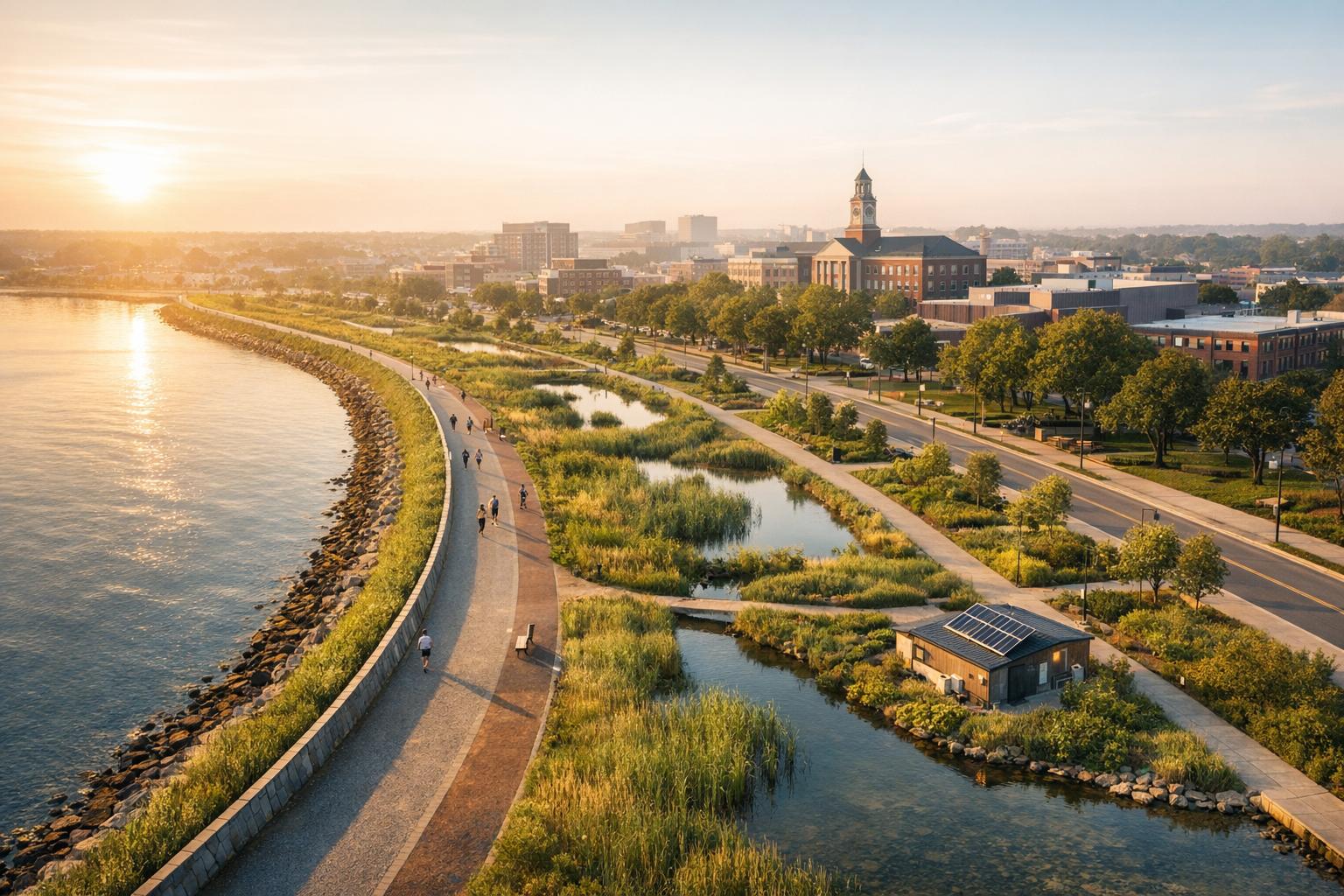
NOAA has a grant program for local communities to deal with climate change
Mapping Resilience Needs to Fundable Project Concepts
Before seeking funding, it's crucial to understand your community's challenges and present them in a way that aligns with what funders value.
Assess Local Climate Risks and Vulnerabilities
A thorough risk assessment hinges on three key components: hazards (such as storms or extreme heat), exposure (which neighborhoods or infrastructure are at risk), and vulnerability (socioeconomic factors that can intensify impacts) [5]. These elements must work together for a complete picture.
"Resilience policies are most effective when they target exposure and vulnerability together." - Manann Donoghoe, Fellow, Brookings Metro [5]
To gather precise data, tools like FEMA's hazard mitigation plans, NOAA's climate data, and the Climate and Hazard Mitigation Planning (CHaMP) tool are invaluable. These resources provide historical and future projections for risks like flooding, wildfires, and extreme heat [6]. However, while the National Risk Index offers insight, it often underestimates social vulnerability. To address this, supplement it with localized socioeconomic data to ensure the most at-risk populations are accounted for [5]. Once you've established a clear risk profile, tailor your project's scope to address these specific challenges.
Define Project Scope, Outcomes, and Co-Benefits
Funders want more than just a description of what you're building - they care about its impact. Start by using localized projections, such as NOAA's sea level rise scenarios or LOCA2 precipitation data, to identify vulnerable infrastructure. Combine this data with the CDC's Social Vulnerability Index (SVI) to highlight areas under socioeconomic stress [1]. Then, prioritize projects using a scoring framework that evaluates factors like hazard reduction, number of beneficiaries, equity impacts, cost-effectiveness, and additional benefits like improved water quality or habitat restoration [1]. This method mirrors the evaluation criteria used by programs like FEMA BRIC and EPA Climate Pollution Reduction Grants.
For instance, a coastal city in the Mid-Atlantic with 28,000 residents applied this framework in 2026. By doing so, they secured $14.7 million in federal and state funding, achieving a benefit-cost ratio of 4.2:1 [1]. Defining clear objectives and aligning them with local and regional plans can significantly boost a project's appeal to funders.
Align Projects with Local and Regional Plans
Standalone projects often face challenges in securing funding. Tying your initiative to existing plans - like hazard mitigation strategies, climate action plans, or regional resilience frameworks - demonstrates that your work is part of a well-thought-out, systematic effort [1].
Treat your local resilience plan as a dynamic resource. By including elements like engineering-level cost estimates, benefit-cost ratios, and equity scoring from the beginning, you can quickly respond to funding opportunities with competitive proposals [1]. Regional collaboration further strengthens your case. For example, coalitions like the Southeast Florida Regional Climate Change Compact allow member counties to present a unified vision for resilience, enhancing individual applications and showcasing collective dedication to funders [5].
Identifying and Prioritizing Funding Sources
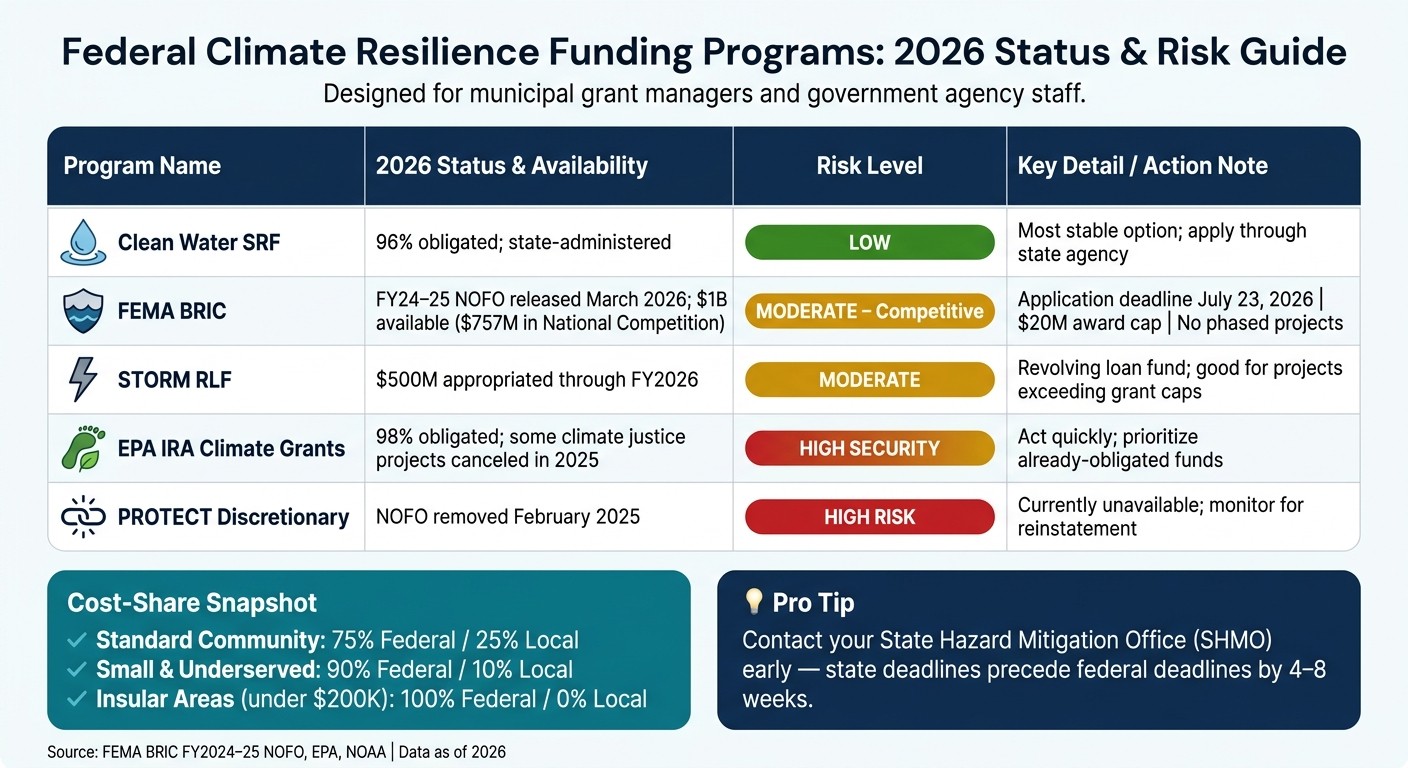
Federal Climate Resilience Funding Programs: 2026 Status & Risk Guide
Once you've established a clear project scope, the next challenge is identifying funding opportunities that align with your goals and risk considerations. It's equally important to prioritize which sources to pursue first, ensuring you meet deadlines and maximize potential support.
Search Federal and State Funding Directories
Start by exploring centralized directories for funding opportunities. For federal programs, Grants.gov is an excellent resource. On the state level, many emergency management and environmental agencies maintain their own grant portals. A critical step is reaching out to your State Hazard Mitigation Office (SHMO) early in the process. This isn't just for guidance - many federal programs, like FEMA BRIC, require state coordination before you can submit a subapplication. Keep in mind that state-level deadlines often precede federal ones by 4–8 weeks, so any delays could result in missing an entire funding cycle [9][4].
This foundational research helps narrow your focus to specific federal grant and loan programs.
Target Key Federal Grant and Loan Programs
Federal funding programs differ in terms of accessibility and reliability. Here's an overview of major programs and their current status as of 2026:
Program | 2026 Status | Risk Level |
|---|---|---|
96% obligated; state-administered | Low | |
FEMA BRIC | FY24-25 NOFO released March 2026; $1B available | Moderate (Competitive) |
STORM RLF | $500M appropriated through FY2026 | Moderate |
EPA IRA Climate Grants | 98% obligated; some climate justice projects canceled in 2025 | High Security |
PROTECT Discretionary | NOFO removed February 2025 | High Risk |
Among these, FEMA BRIC provides $1 billion in funding for FY 2024–2025 projects, with applications due by July 23, 2026 [7]. Of this amount, $757 million is allocated to the National Competition category [7]. However, recent changes to BRIC include a $20 million cap on awards, a prohibition on phased projects, and the removal of standalone hazard mitigation planning grants [4][7]. To maximize your chances, focus on shovel-ready projects that meet BRIC's updated requirements and score well in the National Competition [4].
"When done correctly, mitigation activities save lives and reduce the cost of future disasters... FEMA has reduced bureaucratic hurdles, focused funding on major infrastructure projects and shifted responsibilities to the states." - Karen S. Evans, Senior Official Performing the Duties of the FEMA Administrator [7]
These federal programs are well-suited for projects with strong benefit-cost ratios and equity considerations. But don't stop at traditional grants - there are other financing options to consider.
Explore Philanthropic and Innovative Financing Options
Federal grants are just one piece of the puzzle. Programs like the National Coastal Resilience Fund (NCRF), managed by the National Fish and Wildlife Foundation (NFWF) and NOAA, emphasize nature-based solutions such as wetland restoration and living shorelines. The NCRF uses tools like the Coastal Resilience Evaluation and Siting Tool (CREST) to help applicants identify areas where green infrastructure can deliver the greatest benefits for both communities and ecosystems. Its most recent grant announcements were made in December 2025 [8].
For municipalities seeking alternative funding, options like green bonds and environmental impact bonds are becoming increasingly popular. These financing tools are particularly effective for projects with measurable outcomes that can attract private investment alongside public funds. Pairing these instruments with a strong benefit-cost analysis early in the process can significantly enhance your chances of securing the necessary funding.
Building Competitive Applications Aligned with Funding Criteria
Defining your project scope and identifying funding sources are essential first steps, but aligning your application with funder criteria is what truly sets it apart. To secure funding, it's critical to address funder priorities and ensure your project is ready for submission.
Understand Funder Priorities and Selection Criteria
Every grant program releases a Notice of Funding Opportunity (NOFO), which serves as your roadmap. For BRIC, the 2026 NOFO emphasizes construction-ready projects, support for small and underserved communities, and compliance with FEMA-approved Hazard Mitigation Plans (HMPs). It's important to reference your state's approved HMP specifically, naming its goals and priorities to avoid early disqualification [4].
Another key evaluation criterion for federal resilience grants is building code adoption and enforcement. If your municipality has recently updated its codes, include that information in your application. If not, consider addressing this gap before the next funding cycle [4].
Once you’ve reviewed the funder’s requirements, focus on backing your proposal with measurable outcomes.
Quantify Resilience Benefits and Co-Benefits
Grant reviewers are looking for data, not vague promises. A Benefit-Cost Analysis (BCA) is a requirement for most major BRIC projects, and the strongest applications validate their BCA assumptions early in the process [4].
"Reinforce metrics like BCR, beneficiaries count, and losses avoided to boost your risk-reduction case." - Aubrey Germ and Edward Fernandez, Strategic Resilience Experts, ICF [9]
In addition to the BCA, highlight co-benefits such as reduced emergency response costs, better public health outcomes, or economic growth. These additional benefits strengthen your proposal and can help differentiate your project in a competitive pool.
Prepare Budgets and Match Strategies
After addressing priorities and benefits, ensure your budget and match strategy align with the funder's criteria.
Federal resilience grants typically follow a 75% federal / 25% non-federal cost-share model. However, small and underserved communities may qualify for a more favorable 90% federal / 10% non-federal split, reducing the local funding burden significantly [4]. Determine your jurisdiction’s eligibility early, as it can shape your budget planning.
With BRIC’s federal share capped at $20 million per project, it’s essential to keep your project scope within this limit. For projects exceeding the cap, clearly outline how local funds will cover the excess to demonstrate commitment. Eligible costs often include pre-award application expenses and grant management fees, so be sure to include these in your budget rather than absorbing them separately [4]. If your project approaches the $20 million cap, consider increasing your local match beyond 25% to show dedication and reduce perceived risk for the funder [9].
Cost-Share Type | Federal Share | Non-Federal Match |
|---|---|---|
Standard community | 75% | 25% |
Small, underserved community | 90% | 10% |
Insular areas (awards under $200,000) | 100% (match waived) | 0% |
One effective strategy is to use capacity-building funds to advance your project design to the 90% completion level before the next grant cycle. In the BRIC National Competition, reaching this milestone earns 30 out of 90 possible scoring points - a critical advantage that can significantly improve your chances [4][9].
Leveraging Partnerships and Building Capacity
A strong proposal needs more than just a good idea - it requires the capacity to bring it to life. Building partnerships is just as important as identifying funding opportunities, laying a foundation for the technical expertise that follows.
Engage the Right Partners
Local governments can tap into regional resources for support. Regional Councils of Government (COGs) often include funding coordinators who provide free assistance with tasks like grant writing, application coordination, and identifying matching funds. This is especially valuable for smaller municipalities that may not have dedicated grant staff.
Another approach is forming a multi-jurisdictional resilience authority. This strategy pools resources and presents a unified funding request, which can yield impressive results. For example, one such authority secured $340 million in total funding, including $120 million from authority bonds and $85 million in FEMA BRIC grants. This was achieved by maintaining a dedicated resilience fee to cover local matches [2].
Engaging community-based stakeholders is equally critical. Involving groups such as neighborhood associations, small business owners, and environmental justice advocates through advisory committees can make your application more competitive. Federal reviewers increasingly prioritize equity, and genuine community participation demonstrates alignment with social vulnerability priorities. This involvement not only strengthens your application but also ensures it reflects the needs of those it serves.
"Grant applications backed by dedicated local match perform dramatically better than those depending on annual appropriations." - Council Fire Case Study [2]
Use Technical Assistance and Consulting Support
Once partnerships are in place, technical support can fill capacity gaps. Federal and state programs offer technical assistance (TA) to help municipalities create grant-ready projects. For example, the Local Infrastructure Hub, a collaboration between Cornell Tech and Bloomberg Philanthropies, provides capacity-building support to communities navigating complex federal programs like BRIC and EPA resilience funds.
For more specialized needs, working with organizations like Council Fire can elevate project readiness and improve scoring potential. Effective consulting services might include tailored climate modeling using NOAA data, GIS-based infrastructure mapping, social vulnerability assessments with CDC's Social Vulnerability Index (SVI), and engineering-level Benefit-Cost Analysis (BCA) preparation.
Building a Long-Term Funding Pipeline
Securing a grant is an achievement, but creating a steady funding system is what ensures lasting progress. Successful municipalities embed resilience funding into their regular capital planning, making it a standard part of their operations.
A particularly effective strategy is weaving resilience projects into your long-term Capital Improvement Plan (CIP), ideally with a 20-year implementation framework. This approach demonstrates to federal and state funders that your community is not only committed but also well-prepared and forward-thinking.
Here’s a breakdown of how to align your funding strategy with different time horizons:
Timeline | Funding Mechanism | Key Characteristics |
|---|---|---|
Immediate (0–12 months) | SRF Applications, Utility Fee Adjustments | Leverages existing systems; focuses on water and wastewater needs |
Near-Term (1–3 years) | STORM RLF, Voter-Approved Bonds/Levies | Requires election cycles or longer application processes (10–18 months) |
Long-Term (3+ years) | Regional Bond Programs, State SRF Expansion | Demands collaboration across jurisdictions and legislative support |
Once these timelines are established, maintaining momentum through strong governance is critical. Winning funding is just the beginning - ongoing progress tracking and accountability are what keep projects on course. A well-defined governance structure, with clear leadership roles and transparent decision-making processes, ensures that plans don’t stall.
"A resilience strategy without a clear implementation governance structure - who leads, who decides, how progress is tracked, how the plan adapts - will lose momentum after the initial political enthusiasm fades." - Council Fire [1]
Another key to success is keeping a prioritized project pipeline ready at all times. Projects ranked by their benefit-cost ratio and additional co-benefits should be prepared to move forward as soon as funding opportunities arise. These windows often open and close quickly, and being prepared can make all the difference. Fully developed projects - complete with Benefit-Cost Analyses and equity assessments - are more likely to secure funding. Missing these opportunities can be costly, especially when every dollar not spent on resilience could lead to $33 in lost future economic activity [3]. The stakes for inaction are high, and readiness is the best defense.
FAQs
How do I pick the best resilience project to fund first?
To select the initial resilience project for funding, start by evaluating your community’s specific needs. Focus on affordable yet impactful actions, such as developing emergency response plans or planting trees in areas prone to excessive heat. Use a structured decision framework to ensure the chosen project aligns with available funding, while also factoring in timelines, equity considerations, and resource availability. Conduct a thorough cost-benefit analysis to weigh potential outcomes. Additionally, explore various funding options, such as resilience bonds or collaborative partnerships, to amplify the project’s impact and achieve early, visible success.
Which funding source fits my project (BRIC, SRF, STORM RLF, bonds, or grants)?
When it comes to funding your project, the ideal source largely depends on its focus and goals:
BRIC (Building Resilient Infrastructure and Communities): Best suited for projects aimed at hazard mitigation, such as strengthening infrastructure to withstand natural disasters.
SRF (State Revolving Fund) or Storm RLF (Stormwater Revolving Loan Fund): Perfect for initiatives centered around water management and related improvements.
Bonds: A practical choice for municipalities with the ability to take on debt, offering flexibility for large-scale projects.
Grants: These are a great option for direct funding, especially when your project aligns closely with federal priorities.
Carefully assess your project’s scope and objectives to determine the funding source that aligns best with its needs.
What do I need to make my application “shovel-ready” and competitive?
To position your application as "shovel-ready" and competitive for climate resilience funding, ensure it is thoroughly detailed, supported by robust data, and closely aligned with the specific priorities of the funding source. Emphasize clear outcomes that reduce risks, demonstrate cost-effectiveness through Benefit-Cost Analyses (BCAs), and ensure alignment with frameworks such as Hazard Mitigation Plans (HMPs).
Stay proactive by updating project scopes and data, meeting cost-share and environmental compliance requirements, and enhancing your team's technical expertise to bolster the strength of your application.
Related Blog Posts
Latest Articles
©2025

Narrative Change and Power Building: The Missing Half of Advocacy
Narrative change is the process of disrupting dominant narratives that normalize inequity and advancing new narratives from historically marginalized communities.

Funding Resilience Without Federal Grants
BRIC is unreliable and FEMA is shrinking. Here's how cities fund climate resilience with dedicated revenue, blended finance, and a coordinating authority.

The ESG Blind Spot: How AI Is Finding Risks in Companies Nobody Else Is Watching
Norway's sovereign wealth fund uses AI to screen 7,200 portfolio companies for forced labor and corruption within 24 hours. The real story is the emerging-market coverage gap that traditional ESG data vendors miss — and what it means for any company with a global supply chain.
Narrative Change and Power Building: The Missing Half of Advocacy
Narrative change is the process of disrupting dominant narratives that normalize inequity and advancing new narratives from historically marginalized communities.
Funding Resilience Without Federal Grants
BRIC is unreliable and FEMA is shrinking. Here's how cities fund climate resilience with dedicated revenue, blended finance, and a coordinating authority.
The ESG Blind Spot: How AI Is Finding Risks in Companies Nobody Else Is Watching
Norway's sovereign wealth fund uses AI to screen 7,200 portfolio companies for forced labor and corruption within 24 hours. The real story is the emerging-market coverage gap that traditional ESG data vendors miss — and what it means for any company with a global supply chain.
FAQ
01
What does it really mean to “redefine profit”?
02
What makes Council Fire different?
03
Who does Council Fire work with?
04
What does working with Council Fire actually look like?
05
How does Council Fire help organizations turn big goals into action?
06
How does Council Fire define and measure success?
May 22, 2026
How to Identify and Secure Funding for Climate Resilience Projects for Municipalities & Government Agencies
Capacity Building
In This Article
How municipalities can assess risks, target BRIC/SRF/green financing, build winning applications, and sustain resilience funding.
How to Identify and Secure Funding for Climate Resilience Projects for Municipalities & Government Agencies
Municipalities and government agencies face a growing need to fund climate resilience projects, but navigating the complex funding landscape can be daunting. Here's how you can secure resources for initiatives like storm protection, flood mitigation, or heat adaptation:
Start with Risk Assessments: Use tools like FEMA’s hazard mitigation plans and NOAA’s climate data to pinpoint local vulnerabilities.
Define Clear Goals: Align your project scope with measurable outcomes, such as hazard reduction and equity impacts, to meet funder expectations.
Target Funding Sources: Explore federal programs like FEMA BRIC, state resources, and alternative options like green bonds or philanthropic grants.
Build Strong Applications: Focus on funder priorities like benefit-cost ratios and compliance with hazard mitigation plans.
Leverage Partnerships: Collaborate with regional authorities, community groups, and technical experts to strengthen your proposals.
Plan for Sustainability: Integrate resilience projects into long-term capital improvement plans to ensure ongoing funding.
NOAA has a grant program for local communities to deal with climate change
Mapping Resilience Needs to Fundable Project Concepts
Before seeking funding, it's crucial to understand your community's challenges and present them in a way that aligns with what funders value.
Assess Local Climate Risks and Vulnerabilities
A thorough risk assessment hinges on three key components: hazards (such as storms or extreme heat), exposure (which neighborhoods or infrastructure are at risk), and vulnerability (socioeconomic factors that can intensify impacts) [5]. These elements must work together for a complete picture.
"Resilience policies are most effective when they target exposure and vulnerability together." - Manann Donoghoe, Fellow, Brookings Metro [5]
To gather precise data, tools like FEMA's hazard mitigation plans, NOAA's climate data, and the Climate and Hazard Mitigation Planning (CHaMP) tool are invaluable. These resources provide historical and future projections for risks like flooding, wildfires, and extreme heat [6]. However, while the National Risk Index offers insight, it often underestimates social vulnerability. To address this, supplement it with localized socioeconomic data to ensure the most at-risk populations are accounted for [5]. Once you've established a clear risk profile, tailor your project's scope to address these specific challenges.
Define Project Scope, Outcomes, and Co-Benefits
Funders want more than just a description of what you're building - they care about its impact. Start by using localized projections, such as NOAA's sea level rise scenarios or LOCA2 precipitation data, to identify vulnerable infrastructure. Combine this data with the CDC's Social Vulnerability Index (SVI) to highlight areas under socioeconomic stress [1]. Then, prioritize projects using a scoring framework that evaluates factors like hazard reduction, number of beneficiaries, equity impacts, cost-effectiveness, and additional benefits like improved water quality or habitat restoration [1]. This method mirrors the evaluation criteria used by programs like FEMA BRIC and EPA Climate Pollution Reduction Grants.
For instance, a coastal city in the Mid-Atlantic with 28,000 residents applied this framework in 2026. By doing so, they secured $14.7 million in federal and state funding, achieving a benefit-cost ratio of 4.2:1 [1]. Defining clear objectives and aligning them with local and regional plans can significantly boost a project's appeal to funders.
Align Projects with Local and Regional Plans
Standalone projects often face challenges in securing funding. Tying your initiative to existing plans - like hazard mitigation strategies, climate action plans, or regional resilience frameworks - demonstrates that your work is part of a well-thought-out, systematic effort [1].
Treat your local resilience plan as a dynamic resource. By including elements like engineering-level cost estimates, benefit-cost ratios, and equity scoring from the beginning, you can quickly respond to funding opportunities with competitive proposals [1]. Regional collaboration further strengthens your case. For example, coalitions like the Southeast Florida Regional Climate Change Compact allow member counties to present a unified vision for resilience, enhancing individual applications and showcasing collective dedication to funders [5].
Identifying and Prioritizing Funding Sources
Federal Climate Resilience Funding Programs: 2026 Status & Risk Guide
Once you've established a clear project scope, the next challenge is identifying funding opportunities that align with your goals and risk considerations. It's equally important to prioritize which sources to pursue first, ensuring you meet deadlines and maximize potential support.
Search Federal and State Funding Directories
Start by exploring centralized directories for funding opportunities. For federal programs, Grants.gov is an excellent resource. On the state level, many emergency management and environmental agencies maintain their own grant portals. A critical step is reaching out to your State Hazard Mitigation Office (SHMO) early in the process. This isn't just for guidance - many federal programs, like FEMA BRIC, require state coordination before you can submit a subapplication. Keep in mind that state-level deadlines often precede federal ones by 4–8 weeks, so any delays could result in missing an entire funding cycle [9][4].
This foundational research helps narrow your focus to specific federal grant and loan programs.
Target Key Federal Grant and Loan Programs
Federal funding programs differ in terms of accessibility and reliability. Here's an overview of major programs and their current status as of 2026:
Program | 2026 Status | Risk Level |
|---|---|---|
96% obligated; state-administered | Low | |
FEMA BRIC | FY24-25 NOFO released March 2026; $1B available | Moderate (Competitive) |
STORM RLF | $500M appropriated through FY2026 | Moderate |
EPA IRA Climate Grants | 98% obligated; some climate justice projects canceled in 2025 | High Security |
PROTECT Discretionary | NOFO removed February 2025 | High Risk |
Among these, FEMA BRIC provides $1 billion in funding for FY 2024–2025 projects, with applications due by July 23, 2026 [7]. Of this amount, $757 million is allocated to the National Competition category [7]. However, recent changes to BRIC include a $20 million cap on awards, a prohibition on phased projects, and the removal of standalone hazard mitigation planning grants [4][7]. To maximize your chances, focus on shovel-ready projects that meet BRIC's updated requirements and score well in the National Competition [4].
"When done correctly, mitigation activities save lives and reduce the cost of future disasters... FEMA has reduced bureaucratic hurdles, focused funding on major infrastructure projects and shifted responsibilities to the states." - Karen S. Evans, Senior Official Performing the Duties of the FEMA Administrator [7]
These federal programs are well-suited for projects with strong benefit-cost ratios and equity considerations. But don't stop at traditional grants - there are other financing options to consider.
Explore Philanthropic and Innovative Financing Options
Federal grants are just one piece of the puzzle. Programs like the National Coastal Resilience Fund (NCRF), managed by the National Fish and Wildlife Foundation (NFWF) and NOAA, emphasize nature-based solutions such as wetland restoration and living shorelines. The NCRF uses tools like the Coastal Resilience Evaluation and Siting Tool (CREST) to help applicants identify areas where green infrastructure can deliver the greatest benefits for both communities and ecosystems. Its most recent grant announcements were made in December 2025 [8].
For municipalities seeking alternative funding, options like green bonds and environmental impact bonds are becoming increasingly popular. These financing tools are particularly effective for projects with measurable outcomes that can attract private investment alongside public funds. Pairing these instruments with a strong benefit-cost analysis early in the process can significantly enhance your chances of securing the necessary funding.
Building Competitive Applications Aligned with Funding Criteria
Defining your project scope and identifying funding sources are essential first steps, but aligning your application with funder criteria is what truly sets it apart. To secure funding, it's critical to address funder priorities and ensure your project is ready for submission.
Understand Funder Priorities and Selection Criteria
Every grant program releases a Notice of Funding Opportunity (NOFO), which serves as your roadmap. For BRIC, the 2026 NOFO emphasizes construction-ready projects, support for small and underserved communities, and compliance with FEMA-approved Hazard Mitigation Plans (HMPs). It's important to reference your state's approved HMP specifically, naming its goals and priorities to avoid early disqualification [4].
Another key evaluation criterion for federal resilience grants is building code adoption and enforcement. If your municipality has recently updated its codes, include that information in your application. If not, consider addressing this gap before the next funding cycle [4].
Once you’ve reviewed the funder’s requirements, focus on backing your proposal with measurable outcomes.
Quantify Resilience Benefits and Co-Benefits
Grant reviewers are looking for data, not vague promises. A Benefit-Cost Analysis (BCA) is a requirement for most major BRIC projects, and the strongest applications validate their BCA assumptions early in the process [4].
"Reinforce metrics like BCR, beneficiaries count, and losses avoided to boost your risk-reduction case." - Aubrey Germ and Edward Fernandez, Strategic Resilience Experts, ICF [9]
In addition to the BCA, highlight co-benefits such as reduced emergency response costs, better public health outcomes, or economic growth. These additional benefits strengthen your proposal and can help differentiate your project in a competitive pool.
Prepare Budgets and Match Strategies
After addressing priorities and benefits, ensure your budget and match strategy align with the funder's criteria.
Federal resilience grants typically follow a 75% federal / 25% non-federal cost-share model. However, small and underserved communities may qualify for a more favorable 90% federal / 10% non-federal split, reducing the local funding burden significantly [4]. Determine your jurisdiction’s eligibility early, as it can shape your budget planning.
With BRIC’s federal share capped at $20 million per project, it’s essential to keep your project scope within this limit. For projects exceeding the cap, clearly outline how local funds will cover the excess to demonstrate commitment. Eligible costs often include pre-award application expenses and grant management fees, so be sure to include these in your budget rather than absorbing them separately [4]. If your project approaches the $20 million cap, consider increasing your local match beyond 25% to show dedication and reduce perceived risk for the funder [9].
Cost-Share Type | Federal Share | Non-Federal Match |
|---|---|---|
Standard community | 75% | 25% |
Small, underserved community | 90% | 10% |
Insular areas (awards under $200,000) | 100% (match waived) | 0% |
One effective strategy is to use capacity-building funds to advance your project design to the 90% completion level before the next grant cycle. In the BRIC National Competition, reaching this milestone earns 30 out of 90 possible scoring points - a critical advantage that can significantly improve your chances [4][9].
Leveraging Partnerships and Building Capacity
A strong proposal needs more than just a good idea - it requires the capacity to bring it to life. Building partnerships is just as important as identifying funding opportunities, laying a foundation for the technical expertise that follows.
Engage the Right Partners
Local governments can tap into regional resources for support. Regional Councils of Government (COGs) often include funding coordinators who provide free assistance with tasks like grant writing, application coordination, and identifying matching funds. This is especially valuable for smaller municipalities that may not have dedicated grant staff.
Another approach is forming a multi-jurisdictional resilience authority. This strategy pools resources and presents a unified funding request, which can yield impressive results. For example, one such authority secured $340 million in total funding, including $120 million from authority bonds and $85 million in FEMA BRIC grants. This was achieved by maintaining a dedicated resilience fee to cover local matches [2].
Engaging community-based stakeholders is equally critical. Involving groups such as neighborhood associations, small business owners, and environmental justice advocates through advisory committees can make your application more competitive. Federal reviewers increasingly prioritize equity, and genuine community participation demonstrates alignment with social vulnerability priorities. This involvement not only strengthens your application but also ensures it reflects the needs of those it serves.
"Grant applications backed by dedicated local match perform dramatically better than those depending on annual appropriations." - Council Fire Case Study [2]
Use Technical Assistance and Consulting Support
Once partnerships are in place, technical support can fill capacity gaps. Federal and state programs offer technical assistance (TA) to help municipalities create grant-ready projects. For example, the Local Infrastructure Hub, a collaboration between Cornell Tech and Bloomberg Philanthropies, provides capacity-building support to communities navigating complex federal programs like BRIC and EPA resilience funds.
For more specialized needs, working with organizations like Council Fire can elevate project readiness and improve scoring potential. Effective consulting services might include tailored climate modeling using NOAA data, GIS-based infrastructure mapping, social vulnerability assessments with CDC's Social Vulnerability Index (SVI), and engineering-level Benefit-Cost Analysis (BCA) preparation.
Building a Long-Term Funding Pipeline
Securing a grant is an achievement, but creating a steady funding system is what ensures lasting progress. Successful municipalities embed resilience funding into their regular capital planning, making it a standard part of their operations.
A particularly effective strategy is weaving resilience projects into your long-term Capital Improvement Plan (CIP), ideally with a 20-year implementation framework. This approach demonstrates to federal and state funders that your community is not only committed but also well-prepared and forward-thinking.
Here’s a breakdown of how to align your funding strategy with different time horizons:
Timeline | Funding Mechanism | Key Characteristics |
|---|---|---|
Immediate (0–12 months) | SRF Applications, Utility Fee Adjustments | Leverages existing systems; focuses on water and wastewater needs |
Near-Term (1–3 years) | STORM RLF, Voter-Approved Bonds/Levies | Requires election cycles or longer application processes (10–18 months) |
Long-Term (3+ years) | Regional Bond Programs, State SRF Expansion | Demands collaboration across jurisdictions and legislative support |
Once these timelines are established, maintaining momentum through strong governance is critical. Winning funding is just the beginning - ongoing progress tracking and accountability are what keep projects on course. A well-defined governance structure, with clear leadership roles and transparent decision-making processes, ensures that plans don’t stall.
"A resilience strategy without a clear implementation governance structure - who leads, who decides, how progress is tracked, how the plan adapts - will lose momentum after the initial political enthusiasm fades." - Council Fire [1]
Another key to success is keeping a prioritized project pipeline ready at all times. Projects ranked by their benefit-cost ratio and additional co-benefits should be prepared to move forward as soon as funding opportunities arise. These windows often open and close quickly, and being prepared can make all the difference. Fully developed projects - complete with Benefit-Cost Analyses and equity assessments - are more likely to secure funding. Missing these opportunities can be costly, especially when every dollar not spent on resilience could lead to $33 in lost future economic activity [3]. The stakes for inaction are high, and readiness is the best defense.
FAQs
How do I pick the best resilience project to fund first?
To select the initial resilience project for funding, start by evaluating your community’s specific needs. Focus on affordable yet impactful actions, such as developing emergency response plans or planting trees in areas prone to excessive heat. Use a structured decision framework to ensure the chosen project aligns with available funding, while also factoring in timelines, equity considerations, and resource availability. Conduct a thorough cost-benefit analysis to weigh potential outcomes. Additionally, explore various funding options, such as resilience bonds or collaborative partnerships, to amplify the project’s impact and achieve early, visible success.
Which funding source fits my project (BRIC, SRF, STORM RLF, bonds, or grants)?
When it comes to funding your project, the ideal source largely depends on its focus and goals:
BRIC (Building Resilient Infrastructure and Communities): Best suited for projects aimed at hazard mitigation, such as strengthening infrastructure to withstand natural disasters.
SRF (State Revolving Fund) or Storm RLF (Stormwater Revolving Loan Fund): Perfect for initiatives centered around water management and related improvements.
Bonds: A practical choice for municipalities with the ability to take on debt, offering flexibility for large-scale projects.
Grants: These are a great option for direct funding, especially when your project aligns closely with federal priorities.
Carefully assess your project’s scope and objectives to determine the funding source that aligns best with its needs.
What do I need to make my application “shovel-ready” and competitive?
To position your application as "shovel-ready" and competitive for climate resilience funding, ensure it is thoroughly detailed, supported by robust data, and closely aligned with the specific priorities of the funding source. Emphasize clear outcomes that reduce risks, demonstrate cost-effectiveness through Benefit-Cost Analyses (BCAs), and ensure alignment with frameworks such as Hazard Mitigation Plans (HMPs).
Stay proactive by updating project scopes and data, meeting cost-share and environmental compliance requirements, and enhancing your team's technical expertise to bolster the strength of your application.
Related Blog Posts
Latest Articles
©2025
Narrative Change and Power Building: The Missing Half of Advocacy
Narrative change is the process of disrupting dominant narratives that normalize inequity and advancing new narratives from historically marginalized communities.
Funding Resilience Without Federal Grants
BRIC is unreliable and FEMA is shrinking. Here's how cities fund climate resilience with dedicated revenue, blended finance, and a coordinating authority.
The ESG Blind Spot: How AI Is Finding Risks in Companies Nobody Else Is Watching
Norway's sovereign wealth fund uses AI to screen 7,200 portfolio companies for forced labor and corruption within 24 hours. The real story is the emerging-market coverage gap that traditional ESG data vendors miss — and what it means for any company with a global supply chain.
FAQ
01
What does it really mean to “redefine profit”?
02
What makes Council Fire different?
03
Who does Council Fire work with?
04
What does working with Council Fire actually look like?
05
How does Council Fire help organizations turn big goals into action?
06
How does Council Fire define and measure success?
May 22, 2026
How to Identify and Secure Funding for Climate Resilience Projects for Municipalities & Government Agencies
Capacity Building
In This Article
How municipalities can assess risks, target BRIC/SRF/green financing, build winning applications, and sustain resilience funding.
How to Identify and Secure Funding for Climate Resilience Projects for Municipalities & Government Agencies
Municipalities and government agencies face a growing need to fund climate resilience projects, but navigating the complex funding landscape can be daunting. Here's how you can secure resources for initiatives like storm protection, flood mitigation, or heat adaptation:
Start with Risk Assessments: Use tools like FEMA’s hazard mitigation plans and NOAA’s climate data to pinpoint local vulnerabilities.
Define Clear Goals: Align your project scope with measurable outcomes, such as hazard reduction and equity impacts, to meet funder expectations.
Target Funding Sources: Explore federal programs like FEMA BRIC, state resources, and alternative options like green bonds or philanthropic grants.
Build Strong Applications: Focus on funder priorities like benefit-cost ratios and compliance with hazard mitigation plans.
Leverage Partnerships: Collaborate with regional authorities, community groups, and technical experts to strengthen your proposals.
Plan for Sustainability: Integrate resilience projects into long-term capital improvement plans to ensure ongoing funding.
NOAA has a grant program for local communities to deal with climate change
Mapping Resilience Needs to Fundable Project Concepts
Before seeking funding, it's crucial to understand your community's challenges and present them in a way that aligns with what funders value.
Assess Local Climate Risks and Vulnerabilities
A thorough risk assessment hinges on three key components: hazards (such as storms or extreme heat), exposure (which neighborhoods or infrastructure are at risk), and vulnerability (socioeconomic factors that can intensify impacts) [5]. These elements must work together for a complete picture.
"Resilience policies are most effective when they target exposure and vulnerability together." - Manann Donoghoe, Fellow, Brookings Metro [5]
To gather precise data, tools like FEMA's hazard mitigation plans, NOAA's climate data, and the Climate and Hazard Mitigation Planning (CHaMP) tool are invaluable. These resources provide historical and future projections for risks like flooding, wildfires, and extreme heat [6]. However, while the National Risk Index offers insight, it often underestimates social vulnerability. To address this, supplement it with localized socioeconomic data to ensure the most at-risk populations are accounted for [5]. Once you've established a clear risk profile, tailor your project's scope to address these specific challenges.
Define Project Scope, Outcomes, and Co-Benefits
Funders want more than just a description of what you're building - they care about its impact. Start by using localized projections, such as NOAA's sea level rise scenarios or LOCA2 precipitation data, to identify vulnerable infrastructure. Combine this data with the CDC's Social Vulnerability Index (SVI) to highlight areas under socioeconomic stress [1]. Then, prioritize projects using a scoring framework that evaluates factors like hazard reduction, number of beneficiaries, equity impacts, cost-effectiveness, and additional benefits like improved water quality or habitat restoration [1]. This method mirrors the evaluation criteria used by programs like FEMA BRIC and EPA Climate Pollution Reduction Grants.
For instance, a coastal city in the Mid-Atlantic with 28,000 residents applied this framework in 2026. By doing so, they secured $14.7 million in federal and state funding, achieving a benefit-cost ratio of 4.2:1 [1]. Defining clear objectives and aligning them with local and regional plans can significantly boost a project's appeal to funders.
Align Projects with Local and Regional Plans
Standalone projects often face challenges in securing funding. Tying your initiative to existing plans - like hazard mitigation strategies, climate action plans, or regional resilience frameworks - demonstrates that your work is part of a well-thought-out, systematic effort [1].
Treat your local resilience plan as a dynamic resource. By including elements like engineering-level cost estimates, benefit-cost ratios, and equity scoring from the beginning, you can quickly respond to funding opportunities with competitive proposals [1]. Regional collaboration further strengthens your case. For example, coalitions like the Southeast Florida Regional Climate Change Compact allow member counties to present a unified vision for resilience, enhancing individual applications and showcasing collective dedication to funders [5].
Identifying and Prioritizing Funding Sources
Federal Climate Resilience Funding Programs: 2026 Status & Risk Guide
Once you've established a clear project scope, the next challenge is identifying funding opportunities that align with your goals and risk considerations. It's equally important to prioritize which sources to pursue first, ensuring you meet deadlines and maximize potential support.
Search Federal and State Funding Directories
Start by exploring centralized directories for funding opportunities. For federal programs, Grants.gov is an excellent resource. On the state level, many emergency management and environmental agencies maintain their own grant portals. A critical step is reaching out to your State Hazard Mitigation Office (SHMO) early in the process. This isn't just for guidance - many federal programs, like FEMA BRIC, require state coordination before you can submit a subapplication. Keep in mind that state-level deadlines often precede federal ones by 4–8 weeks, so any delays could result in missing an entire funding cycle [9][4].
This foundational research helps narrow your focus to specific federal grant and loan programs.
Target Key Federal Grant and Loan Programs
Federal funding programs differ in terms of accessibility and reliability. Here's an overview of major programs and their current status as of 2026:
Program | 2026 Status | Risk Level |
|---|---|---|
96% obligated; state-administered | Low | |
FEMA BRIC | FY24-25 NOFO released March 2026; $1B available | Moderate (Competitive) |
STORM RLF | $500M appropriated through FY2026 | Moderate |
EPA IRA Climate Grants | 98% obligated; some climate justice projects canceled in 2025 | High Security |
PROTECT Discretionary | NOFO removed February 2025 | High Risk |
Among these, FEMA BRIC provides $1 billion in funding for FY 2024–2025 projects, with applications due by July 23, 2026 [7]. Of this amount, $757 million is allocated to the National Competition category [7]. However, recent changes to BRIC include a $20 million cap on awards, a prohibition on phased projects, and the removal of standalone hazard mitigation planning grants [4][7]. To maximize your chances, focus on shovel-ready projects that meet BRIC's updated requirements and score well in the National Competition [4].
"When done correctly, mitigation activities save lives and reduce the cost of future disasters... FEMA has reduced bureaucratic hurdles, focused funding on major infrastructure projects and shifted responsibilities to the states." - Karen S. Evans, Senior Official Performing the Duties of the FEMA Administrator [7]
These federal programs are well-suited for projects with strong benefit-cost ratios and equity considerations. But don't stop at traditional grants - there are other financing options to consider.
Explore Philanthropic and Innovative Financing Options
Federal grants are just one piece of the puzzle. Programs like the National Coastal Resilience Fund (NCRF), managed by the National Fish and Wildlife Foundation (NFWF) and NOAA, emphasize nature-based solutions such as wetland restoration and living shorelines. The NCRF uses tools like the Coastal Resilience Evaluation and Siting Tool (CREST) to help applicants identify areas where green infrastructure can deliver the greatest benefits for both communities and ecosystems. Its most recent grant announcements were made in December 2025 [8].
For municipalities seeking alternative funding, options like green bonds and environmental impact bonds are becoming increasingly popular. These financing tools are particularly effective for projects with measurable outcomes that can attract private investment alongside public funds. Pairing these instruments with a strong benefit-cost analysis early in the process can significantly enhance your chances of securing the necessary funding.
Building Competitive Applications Aligned with Funding Criteria
Defining your project scope and identifying funding sources are essential first steps, but aligning your application with funder criteria is what truly sets it apart. To secure funding, it's critical to address funder priorities and ensure your project is ready for submission.
Understand Funder Priorities and Selection Criteria
Every grant program releases a Notice of Funding Opportunity (NOFO), which serves as your roadmap. For BRIC, the 2026 NOFO emphasizes construction-ready projects, support for small and underserved communities, and compliance with FEMA-approved Hazard Mitigation Plans (HMPs). It's important to reference your state's approved HMP specifically, naming its goals and priorities to avoid early disqualification [4].
Another key evaluation criterion for federal resilience grants is building code adoption and enforcement. If your municipality has recently updated its codes, include that information in your application. If not, consider addressing this gap before the next funding cycle [4].
Once you’ve reviewed the funder’s requirements, focus on backing your proposal with measurable outcomes.
Quantify Resilience Benefits and Co-Benefits
Grant reviewers are looking for data, not vague promises. A Benefit-Cost Analysis (BCA) is a requirement for most major BRIC projects, and the strongest applications validate their BCA assumptions early in the process [4].
"Reinforce metrics like BCR, beneficiaries count, and losses avoided to boost your risk-reduction case." - Aubrey Germ and Edward Fernandez, Strategic Resilience Experts, ICF [9]
In addition to the BCA, highlight co-benefits such as reduced emergency response costs, better public health outcomes, or economic growth. These additional benefits strengthen your proposal and can help differentiate your project in a competitive pool.
Prepare Budgets and Match Strategies
After addressing priorities and benefits, ensure your budget and match strategy align with the funder's criteria.
Federal resilience grants typically follow a 75% federal / 25% non-federal cost-share model. However, small and underserved communities may qualify for a more favorable 90% federal / 10% non-federal split, reducing the local funding burden significantly [4]. Determine your jurisdiction’s eligibility early, as it can shape your budget planning.
With BRIC’s federal share capped at $20 million per project, it’s essential to keep your project scope within this limit. For projects exceeding the cap, clearly outline how local funds will cover the excess to demonstrate commitment. Eligible costs often include pre-award application expenses and grant management fees, so be sure to include these in your budget rather than absorbing them separately [4]. If your project approaches the $20 million cap, consider increasing your local match beyond 25% to show dedication and reduce perceived risk for the funder [9].
Cost-Share Type | Federal Share | Non-Federal Match |
|---|---|---|
Standard community | 75% | 25% |
Small, underserved community | 90% | 10% |
Insular areas (awards under $200,000) | 100% (match waived) | 0% |
One effective strategy is to use capacity-building funds to advance your project design to the 90% completion level before the next grant cycle. In the BRIC National Competition, reaching this milestone earns 30 out of 90 possible scoring points - a critical advantage that can significantly improve your chances [4][9].
Leveraging Partnerships and Building Capacity
A strong proposal needs more than just a good idea - it requires the capacity to bring it to life. Building partnerships is just as important as identifying funding opportunities, laying a foundation for the technical expertise that follows.
Engage the Right Partners
Local governments can tap into regional resources for support. Regional Councils of Government (COGs) often include funding coordinators who provide free assistance with tasks like grant writing, application coordination, and identifying matching funds. This is especially valuable for smaller municipalities that may not have dedicated grant staff.
Another approach is forming a multi-jurisdictional resilience authority. This strategy pools resources and presents a unified funding request, which can yield impressive results. For example, one such authority secured $340 million in total funding, including $120 million from authority bonds and $85 million in FEMA BRIC grants. This was achieved by maintaining a dedicated resilience fee to cover local matches [2].
Engaging community-based stakeholders is equally critical. Involving groups such as neighborhood associations, small business owners, and environmental justice advocates through advisory committees can make your application more competitive. Federal reviewers increasingly prioritize equity, and genuine community participation demonstrates alignment with social vulnerability priorities. This involvement not only strengthens your application but also ensures it reflects the needs of those it serves.
"Grant applications backed by dedicated local match perform dramatically better than those depending on annual appropriations." - Council Fire Case Study [2]
Use Technical Assistance and Consulting Support
Once partnerships are in place, technical support can fill capacity gaps. Federal and state programs offer technical assistance (TA) to help municipalities create grant-ready projects. For example, the Local Infrastructure Hub, a collaboration between Cornell Tech and Bloomberg Philanthropies, provides capacity-building support to communities navigating complex federal programs like BRIC and EPA resilience funds.
For more specialized needs, working with organizations like Council Fire can elevate project readiness and improve scoring potential. Effective consulting services might include tailored climate modeling using NOAA data, GIS-based infrastructure mapping, social vulnerability assessments with CDC's Social Vulnerability Index (SVI), and engineering-level Benefit-Cost Analysis (BCA) preparation.
Building a Long-Term Funding Pipeline
Securing a grant is an achievement, but creating a steady funding system is what ensures lasting progress. Successful municipalities embed resilience funding into their regular capital planning, making it a standard part of their operations.
A particularly effective strategy is weaving resilience projects into your long-term Capital Improvement Plan (CIP), ideally with a 20-year implementation framework. This approach demonstrates to federal and state funders that your community is not only committed but also well-prepared and forward-thinking.
Here’s a breakdown of how to align your funding strategy with different time horizons:
Timeline | Funding Mechanism | Key Characteristics |
|---|---|---|
Immediate (0–12 months) | SRF Applications, Utility Fee Adjustments | Leverages existing systems; focuses on water and wastewater needs |
Near-Term (1–3 years) | STORM RLF, Voter-Approved Bonds/Levies | Requires election cycles or longer application processes (10–18 months) |
Long-Term (3+ years) | Regional Bond Programs, State SRF Expansion | Demands collaboration across jurisdictions and legislative support |
Once these timelines are established, maintaining momentum through strong governance is critical. Winning funding is just the beginning - ongoing progress tracking and accountability are what keep projects on course. A well-defined governance structure, with clear leadership roles and transparent decision-making processes, ensures that plans don’t stall.
"A resilience strategy without a clear implementation governance structure - who leads, who decides, how progress is tracked, how the plan adapts - will lose momentum after the initial political enthusiasm fades." - Council Fire [1]
Another key to success is keeping a prioritized project pipeline ready at all times. Projects ranked by their benefit-cost ratio and additional co-benefits should be prepared to move forward as soon as funding opportunities arise. These windows often open and close quickly, and being prepared can make all the difference. Fully developed projects - complete with Benefit-Cost Analyses and equity assessments - are more likely to secure funding. Missing these opportunities can be costly, especially when every dollar not spent on resilience could lead to $33 in lost future economic activity [3]. The stakes for inaction are high, and readiness is the best defense.
FAQs
How do I pick the best resilience project to fund first?
To select the initial resilience project for funding, start by evaluating your community’s specific needs. Focus on affordable yet impactful actions, such as developing emergency response plans or planting trees in areas prone to excessive heat. Use a structured decision framework to ensure the chosen project aligns with available funding, while also factoring in timelines, equity considerations, and resource availability. Conduct a thorough cost-benefit analysis to weigh potential outcomes. Additionally, explore various funding options, such as resilience bonds or collaborative partnerships, to amplify the project’s impact and achieve early, visible success.
Which funding source fits my project (BRIC, SRF, STORM RLF, bonds, or grants)?
When it comes to funding your project, the ideal source largely depends on its focus and goals:
BRIC (Building Resilient Infrastructure and Communities): Best suited for projects aimed at hazard mitigation, such as strengthening infrastructure to withstand natural disasters.
SRF (State Revolving Fund) or Storm RLF (Stormwater Revolving Loan Fund): Perfect for initiatives centered around water management and related improvements.
Bonds: A practical choice for municipalities with the ability to take on debt, offering flexibility for large-scale projects.
Grants: These are a great option for direct funding, especially when your project aligns closely with federal priorities.
Carefully assess your project’s scope and objectives to determine the funding source that aligns best with its needs.
What do I need to make my application “shovel-ready” and competitive?
To position your application as "shovel-ready" and competitive for climate resilience funding, ensure it is thoroughly detailed, supported by robust data, and closely aligned with the specific priorities of the funding source. Emphasize clear outcomes that reduce risks, demonstrate cost-effectiveness through Benefit-Cost Analyses (BCAs), and ensure alignment with frameworks such as Hazard Mitigation Plans (HMPs).
Stay proactive by updating project scopes and data, meeting cost-share and environmental compliance requirements, and enhancing your team's technical expertise to bolster the strength of your application.
Related Blog Posts
Latest Articles
©2025
Narrative Change and Power Building: The Missing Half of Advocacy
Narrative change is the process of disrupting dominant narratives that normalize inequity and advancing new narratives from historically marginalized communities.
Funding Resilience Without Federal Grants
BRIC is unreliable and FEMA is shrinking. Here's how cities fund climate resilience with dedicated revenue, blended finance, and a coordinating authority.
The ESG Blind Spot: How AI Is Finding Risks in Companies Nobody Else Is Watching
Norway's sovereign wealth fund uses AI to screen 7,200 portfolio companies for forced labor and corruption within 24 hours. The real story is the emerging-market coverage gap that traditional ESG data vendors miss — and what it means for any company with a global supply chain.
FAQ
What does it really mean to “redefine profit”?
What makes Council Fire different?
Who does Council Fire work with?
What does working with Council Fire actually look like?
How does Council Fire help organizations turn big goals into action?
How does Council Fire define and measure success?