
May 30, 2026
How to Turn a Strategic Plan into Fundable, Shovel-Ready Projects for Municipalities & Government Agencies
Sustainability Strategy
In This Article
Convert municipal strategies into fundable, shovel-ready projects with audits, feasibility studies, funding, and governance.
How to Turn a Strategic Plan into Fundable, Shovel-Ready Projects for Municipalities & Government Agencies
Turning plans into action requires preparation. Municipalities often face challenges in moving from ambitious goals - like reducing emissions or improving infrastructure - to fully developed, fundable projects. Success depends on two key factors:
Shovel-Ready Projects: These are fully planned and ready for construction once funding is secured.
Fundable Projects: These meet strict grant criteria, including cost-benefit analyses, equity considerations, and technical documentation.
Smaller municipalities often struggle with limited staff and expertise, making this process even harder. By following a structured approach, cities and agencies can transform ideas into actionable projects that attract funding and deliver results.
Key Steps:
Audit Existing Plans: Identify priorities and overlaps in current documents like climate action plans or capital improvement plans.
Set Project Criteria: Use a scoring system to evaluate projects based on environmental, social, operational, and financial factors.
Prepare Feasibility Studies: Include cost estimates, engineering assessments, and public interest evaluations to validate projects.
Secure Diverse Funding: Combine grants, loans, and bonds to finance projects while navigating regulatory requirements.
Engage Stakeholders: Build cross-departmental teams and involve the community to ensure support and transparency.
By following this process, municipalities can effectively bridge the gap between strategic goals and practical implementation, ensuring projects are both ready to build and attractive to funders.
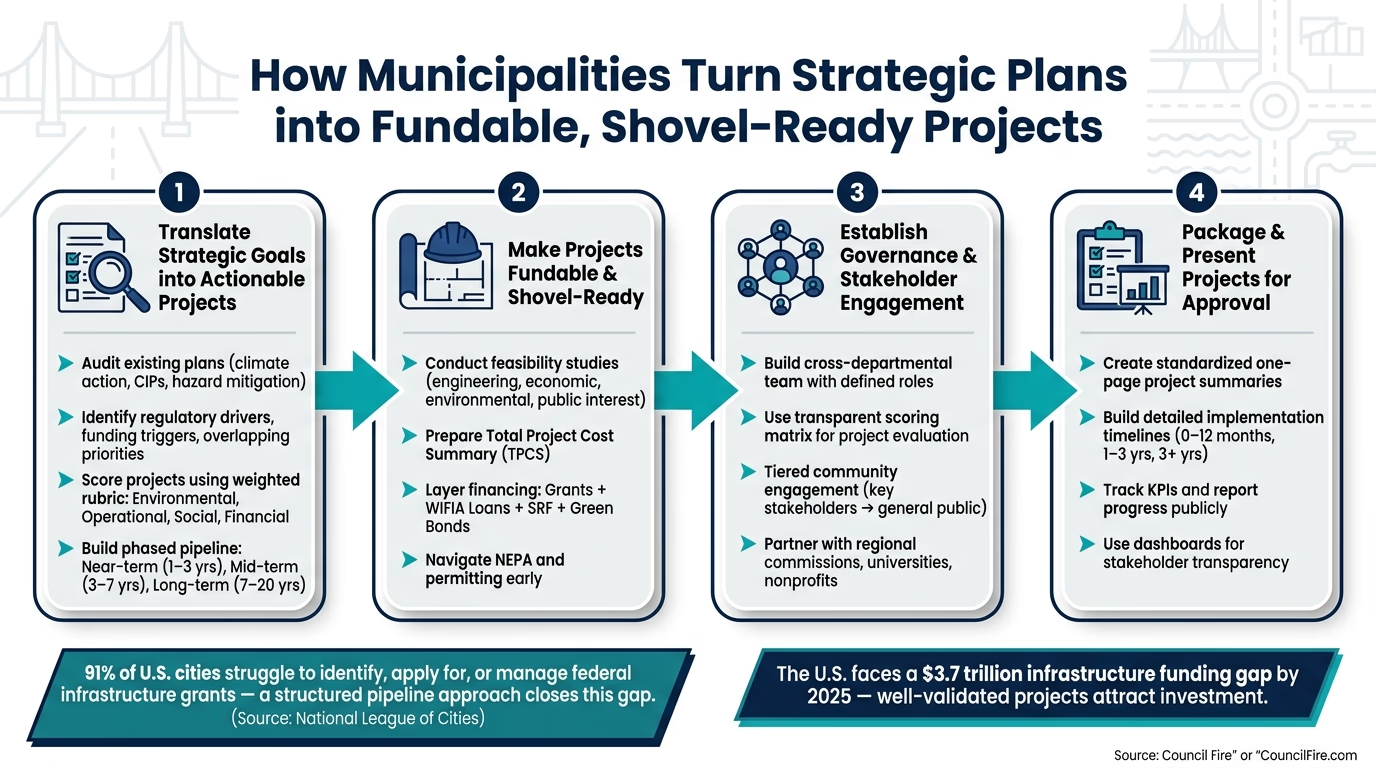
How Municipalities Turn Strategic Plans into Fundable, Shovel-Ready Projects
Grant Readiness Essentials What Funders Want and How to Deliver
Step 1: Translating Strategic Goals into Actionable Projects
A sustainability plan is only as effective as the projects it generates. For many municipalities, the challenge lies in bridging the gap between ambitious climate action plans and concrete, funded projects ready for execution. Overcoming this hurdle requires a structured, methodical approach.
Audit Existing Plans and Mandates
The first step is to review all relevant agency documents - climate action plans, hazard mitigation plans, capital improvement plans (CIPs), stormwater master plans, and any active federal or state grant agreements. This audit helps identify existing commitments and opportunities to anchor actionable projects.
Focus on regulatory drivers (legal mandates that must be met), funding triggers (grants that require matching projects), and overlapping priorities (objectives that appear in multiple plans). These intersections are ideal starting points because they often come with built-in political backing and can qualify for multiple funding sources.
An essential part of this audit is assessing the status of active federal grants. Differentiate between expended funds (already distributed and secure) and obligated funds (legally committed but still subject to delays). This distinction helps prioritize projects that can move forward immediately.
With this groundwork in place, the next step is to create clear, objective criteria for selecting projects.
Define Project Selection Criteria
After mapping commitments, establish a consistent process to evaluate and prioritize potential projects. A weighted scoring rubric helps ensure transparent and objective decision-making for elected officials, grant reviewers, and the public.
Rather than relying solely on traditional cost-benefit analysis, consider a broader framework that includes environmental, operational, social, and financial factors:
Criteria Category | What to Measure |
|---|---|
Environmental | CO₂ reductions per dollar; water conservation; energy efficiency improvements |
Operational | Infrastructure reliability; service delivery enhancements; long-term resilience |
Social | Benefits to underserved communities; public health outcomes; community input |
Financial | Net present value (NPV); federal funding eligibility; financial security levels |
Tailor the weighting of these categories to reflect your agency’s priorities and the specific needs of your community. For example, in March 2026, Portland’s City Council used an equity and climate framework to guide a $1.6 billion, five-year investment through the Portland Clean Energy Community Benefits Fund (PCEF). This initiative prioritized community-led efforts such as energy-efficient upgrades for multi-family housing and expanding tree canopies in underserved areas.
Build a Realistic Project Portfolio
Develop a phased project pipeline organized into near-term (1–3 years), medium-term (3–7 years), and long-term (7–20 years) horizons. This approach ensures steady progress while aligning projects with budget cycles and grant deadlines.
A well-rounded portfolio should also include a mix of project types. Physical infrastructure (e.g., stormwater upgrades, grid improvements), policy reforms (e.g., updated zoning codes, energy standards), and capacity-building initiatives (e.g., technical training, grant navigation) serve distinct purposes and open doors to different funding opportunities. For instance, in January 2026, Colorado awarded $21.6 million across 17 projects, showcasing how a diversified portfolio can attract significant investment [1].
"A resilience strategy without a clear implementation governance structure - who leads, who decides, how progress is tracked, how the plan adapts - will lose momentum after the initial political enthusiasm fades." - Council Fire [1]
Finally, integrate new projects into existing plans, such as CIP updates or transportation corridor strategies. Doing so can increase funding eligibility and accelerate the approval process. By embedding projects within broader frameworks, municipalities can ensure steady momentum and long-term success.
Step 2: Making Projects Fundable and Shovel-Ready
After establishing a project portfolio, the next hurdle is ensuring these projects are both attractive to funders and able to clear regulatory barriers. This means tackling the groundwork well before submitting grant applications or permit requests.
Conduct Feasibility Studies and Cost Estimates
Feasibility studies are essential for turning ideas into viable, fundable projects. These studies should address four key areas: engineering feasibility, economic justification, environmental considerations, and public interest [3]. This process involves geotechnical investigations, utility mapping, traffic impact assessments, and floodplain analyses - steps that help identify potential costs early and avoid unexpected expenses during construction [4].
Economic justification is just as important. Beyond initial enthusiasm, your study must clearly demonstrate the demand for the project and its public benefits, such as job creation, increased tax revenue, or improved community services. As Cortland McCullers, Director of Predevelopment Planning at McCullers Group, aptly states:
"Beautiful renderings raise eyebrows; due diligence raises capital." [4]
The findings should be consolidated into a Total Project Cost Summary (TPCS), which includes a detailed capital stack, sensitivity analyses, and a realistic construction timeline [3]. For complex projects, municipalities may need to allocate $500,000 to over $1 million just to reach a bankable concept [4]. This thorough validation process ensures that strategic ideas evolve into projects funders find appealing. With a well-prepared feasibility study in hand, the next step is securing diverse funding sources.
Secure Funding and Financing
Once the technical and economic groundwork is complete, the focus shifts to assembling a robust financing strategy. A layered approach - combining grants, loans, and bonds - can address different needs and balance tradeoffs. Below is a comparison of common U.S. financing tools:
Financing Tool | Structure | Best For | Key Tradeoff |
|---|---|---|---|
Federal/State Grants | Non-repayable awards | Smaller or underserved communities | Competitive; may require matching funds |
WIFIA Loans | Long-term, low-cost federal loans | Large, regionally significant projects | Complex application process |
State Revolving Funds (SRF) | Low-interest loans with some grants | State-level infrastructure projects | 30–40 year repayment terms |
Green Bonds | Fixed-return debt instruments | Proven, scalable technologies | Issuer bears performance risk |
Environmental Impact Bonds | Outcome-linked financing | Innovative or untested infrastructure | Requires rigorous outcome measurement |
With the U.S. facing a $3.7 trillion infrastructure funding gap by 2025 [2], projects that are well-validated and have clear financing plans are more likely to attract investment. A strong funding strategy also helps streamline regulatory compliance.
Navigate Regulatory and Permitting Requirements
Regulatory delays often stall projects that are otherwise ready to move forward. To avoid this, it’s critical to chart your approval process early and plan for sequential permitting. Start by determining if your project requires a review under the National Environmental Policy Act (NEPA), which is typically triggered by federal funding, land use, or permits [5].
If NEPA applies, consider sponsor-prepared Environmental Impact Statements (EISs), a pathway introduced under the 2023 Fiscal Responsibility Act. This option allows your agency to control the schedule rather than waiting on federal reviewers [5]. For eligible projects, exploring the FAST-41 program can be beneficial. This program provides a public permitting timeline, defines agency responsibilities, and limits the statute of limitations for lawsuits, offering clearer timelines for investors and stakeholders [5].
Additionally, check whether your funding agency has excluded your project from NEPA review requirements. Following the rescission of the Council on Environmental Quality's regulations in April 2025, many agencies updated their procedures, and some projects may now qualify for exclusions [5]. Identifying such opportunities early can save significant time and effort during the approval process.
Step 3: Setting Up Governance and Stakeholder Engagement
Once funding is secured and regulatory requirements are met, the next critical step is establishing strong governance and engaging stakeholders. These elements are essential for keeping projects on track and ensuring their success.
Build a Cross-Departmental Team
Large-scale projects require collaboration across multiple departments - no single team can handle everything alone. Without a clear structure connecting public works, planning, finance, and legal, delays and miscommunication are inevitable. To avoid these pitfalls, create a cross-departmental project team with well-defined roles and responsibilities from the outset. Appoint a project lead who has the authority to coordinate across departments and schedule regular check-ins tied to project milestones rather than arbitrary calendar dates.
For projects like energy retrofits or stormwater management, identify early which department owns specific data sources. For instance, facilities teams often track energy and fuel usage, while fleet managers handle transportation records. This clarity prevents delays during reporting or grant compliance processes.
Implement a transparent scoring matrix to evaluate projects. This matrix should weigh factors such as equity impact, safety concerns, and economic development potential. Publishing these criteria before evaluating projects helps separate policy priorities from individual decisions, fostering trust within the organization.
"The cornerstone of a credible CIP is a transparent, repeatable scoring methodology that removes subjective bias. When every project is scored against the same criteria with the same weights, the CIP defends itself." [7]
Once the internal team is functioning effectively, the next step is to extend collaboration to community stakeholders to ensure broader support.
Engage Communities and Stakeholders
Internal coordination lays the groundwork, but meaningful public engagement ensures wider acceptance and shared ownership of the project. Municipalities that incorporate data-driven public engagement have seen bond referendum approval rates soar to as high as 93% [7].
A tiered approach works best for prioritizing resources. Key stakeholders - such as nearby property owners, tribal governments, or large employers - might require one-on-one interviews, advisory panels, or co-design workshops. Broader community input can be gathered through town halls, online surveys, and focus groups, while general public updates can be shared via newsletters, social media platforms, and dedicated project websites.
Equity and environmental justice should be central to your outreach strategy. Historically underserved communities often bear the brunt of infrastructure challenges but have less access to traditional engagement opportunities. Translating materials, holding meetings in accessible locations, and compensating participants for their time show a genuine commitment to inclusivity rather than token efforts.
Tailor your engagement methods to the project’s timeline. During the planning phase, use focus groups to uncover early concerns. Public forums and mapping exercises can foster shared ownership during drafting. Regular updates during implementation maintain trust, while feedback sessions after project completion demonstrate how community input shaped the final outcome.
Partner with Outside Organizations for Technical Support
Municipal teams often lack the resources to address every technical need. Collaborating with external organizations can bridge these gaps without the expense of adding full-time staff.
Regional planning commissions frequently offer services like GIS mapping, demographic analysis, and grant writing - often at little or no cost. Universities, particularly land-grant institutions, can provide applied research partnerships in areas such as stormwater management, energy efficiency, or transportation planning. Nonprofits focused on environmental or community development goals can also act as trusted intermediaries, especially in communities wary of government-led initiatives.
To formalize these collaborations, create a Partnership Agreement that clearly outlines governance roles, financial responsibilities, and deliverables. This not only protects all parties but also strengthens your case when applying for funding. Many funders now expect to see a Collaborative Stakeholder Structure - a framework that includes lead applicants, co-applicants, and community-nominated members. This demonstrates shared accountability and ensures oversight isn’t concentrated within a single agency [6].
Step 4: Packaging and Presenting Projects for Approval
After establishing solid governance and engaging stakeholders in Step 3, the focus shifts to presenting projects in a way that convinces funders and decision-makers of their viability. A well-prepared project package communicates professionalism and readiness.
Create Standardized Project Summaries
Every project should include a concise, one-page summary that outlines its scope, costs, funding sources, level of preparedness, and timeline. Using a standardized template ensures consistency, making it easier for reviewers to assess and prioritize projects. It also reflects a disciplined approach to project management.
A strong summary should:
Clearly state the project’s objectives.
Provide the total estimated cost and identify funding sources, including any shortfalls.
Highlight the project’s current level of readiness.
Offer a high-level timeline for completion.
For example, a coastal city in the Mid-Atlantic with 28,000 residents developed its resilience strategy as a grant application toolkit aligned with federal funding criteria. This strategic alignment enabled the city to secure $14.7 million in grants within 18 months and complete a 1.2-mile living shoreline project [1].
Once summaries are in place, detailed timelines can further enhance funder confidence.
Build Detailed Implementation Timelines
Funders often require clear, actionable deployment plans. A timeline that maps out planning, design, permitting, and construction phases demonstrates that every step has been thoughtfully planned. Including measurable milestones adds credibility. For instance, a milestone like "Install 50 bioswales in flood-prone neighborhoods by 2027" is far more compelling than a vague promise to "improve stormwater infrastructure."
To make timelines more effective, organize them into three distinct horizons to show both immediate actions and long-term goals:
Timeline Horizon | Duration | Key Activities | Funding Sources |
|---|---|---|---|
Immediate | 0–12 Months | SRF applications, utility fee adjustments, emergency preparedness | Existing budgets, State Revolving Funds (SRF) |
Near-Term | 1–3 Years | Hazard mitigation construction, zoning changes, building code enforcement | STORM RLF, voter-approved bonds, TIF districts |
Long-Term | 3+ Years | Large-scale infrastructure, regional coordination projects | Major bond programs, regional partnerships |
Achieving early wins in the first 12 months is critical for building trust and momentum. Additionally, auditing federal and state funding cycles early ensures your timelines align with key deadlines. For instance, federal programs like the STORM Revolving Loan Fund may require an additional 10–18 months to account for administrative delays.
These timelines naturally set the stage for effective monitoring and reporting practices that maintain accountability.
Track and Report on Progress
Securing funding is just the beginning - tracking progress is vital to ensure projects deliver on their goals. Monitoring key performance indicators (KPIs) provides measurable proof of success. A two-pronged monitoring approach works best: review specific project activities annually while reassessing the broader strategic plan every two to five years.
"A resilience strategy without a clear implementation governance structure - who leads, who decides, how progress is tracked, how the plan adapts - will lose momentum after the initial political enthusiasm fades." - Council Fire Resources [1]
A great example is the Portland Clean Energy Community Benefits Fund (PCEF). In March 2026, the Portland City Council amended the PCEF Climate Investment Plan after conducting its first annual review of the $1.6 billion program. The review allowed the city to incorporate unexpected funds and adjust its priorities to stay aligned with its goal of achieving net-zero carbon emissions by 2050 [8]. Public-facing dashboards, like those used by PCEF, also play a key role in keeping stakeholders informed and maintaining trust between reporting cycles [8].
Conclusion: From Vision to Impact
Transforming a sustainability plan into actionable, funded projects requires a focused, step-by-step approach. This four-stage process includes prioritizing strategic goals, conducting feasibility studies and securing permits to ensure projects are viable, establishing governance and fostering community involvement, and preparing clear summaries and timelines for necessary approvals.
Each stage comes with its own hurdles. The National League of Cities reports that 91% of U.S. cities struggle to effectively identify, apply for, or manage federal infrastructure grants, even when they have well-developed plans in place. A structured pipeline approach helps overcome these challenges by ensuring staff concentrate on the most impactful projects and that those projects are fully prepared when funding opportunities arise.
The benefits of this disciplined process are clear and measurable. Success can be demonstrated through metrics like CO₂e reductions, energy savings, restored ecosystems, and projects delivered on time and within budget. By embedding these metrics into project plans and timelines from the outset, agencies not only strengthen their case for funding but also enhance transparency and accountability to elected officials and the public.
"Resilience isn't a buzzword - it's a blueprint." - Council Fire [9]
This framework provides municipal and agency teams with tools and support at every step, from auditing existing plans to setting up monitoring systems. Now is the time for agencies to evaluate their project pipelines and determine the next steps to turn vision into real-world impact.
FAQs
What qualifies a project as “shovel-ready” vs. just an idea?
A project earns the label shovel-ready when every essential step for construction has been completed. This means detailed planning is in place, engineering work is finalized, zoning approvals are secured, and required studies - such as environmental reviews and site assessments - are finished. Additionally, the project must have a well-defined scope, a set timeline for delivery, and an accurate cost estimate. Unlike a mere concept or idea, a shovel-ready project is ready to transition directly into the construction phase without delay.
What documents and analyses do funders expect in a grant-ready project package?
To secure a grant, your project package needs to showcase its feasibility, financial soundness, and adherence to regulations. Key components include:
Itemized Budget: A detailed breakdown of costs to show where funding will go.
Financial Statements: Evidence of the project's financial health and sustainability.
Engineering Plans and Site Maps: Comprehensive designs and layouts to illustrate the project's technical viability.
Schedules: Timelines that outline project milestones and completion dates.
Proof of Land Ownership or Lease: Documentation confirming rights to use the property involved.
Additionally, include environmental compliance documents, such as NEPA permits, and administrative authorizations, like Council resolutions and records of stakeholder engagement. These materials reassure funders that your project is well-planned, aligns with their goals, and poses minimal risk.
How can a small city build a project pipeline with limited staff and budget?
Small cities can tackle resource challenges by integrating project pipelines directly into their municipal planning processes. Begin with a vulnerability assessment to pinpoint assets most at risk. Following this, use a scoring framework to prioritize projects based on their potential to reduce hazards, cost-efficiency, and the benefits they offer to the community.
From the outset, design projects with grant readiness in mind to improve funding opportunities. For larger-scale initiatives, consider regional collaboration to pool resources and expertise. Additionally, breaking projects into smaller, manageable steps can help generate momentum and secure early funding, setting the stage for long-term success.
Related Blog Posts
Latest Articles
©2026

Narrative Change and Power Building: The Missing Half of Advocacy
Narrative change is the process of disrupting dominant narratives that normalize inequity and advancing new narratives from historically marginalized communities.

Funding Resilience Without Federal Grants
BRIC is unreliable and FEMA is shrinking. Here's how cities fund climate resilience with dedicated revenue, blended finance, and a coordinating authority.

The ESG Blind Spot: How AI Is Finding Risks in Companies Nobody Else Is Watching
Norway's sovereign wealth fund uses AI to screen 7,200 portfolio companies for forced labor and corruption within 24 hours. The real story is the emerging-market coverage gap that traditional ESG data vendors miss — and what it means for any company with a global supply chain.
Narrative Change and Power Building: The Missing Half of Advocacy
Narrative change is the process of disrupting dominant narratives that normalize inequity and advancing new narratives from historically marginalized communities.
Funding Resilience Without Federal Grants
BRIC is unreliable and FEMA is shrinking. Here's how cities fund climate resilience with dedicated revenue, blended finance, and a coordinating authority.
The ESG Blind Spot: How AI Is Finding Risks in Companies Nobody Else Is Watching
Norway's sovereign wealth fund uses AI to screen 7,200 portfolio companies for forced labor and corruption within 24 hours. The real story is the emerging-market coverage gap that traditional ESG data vendors miss — and what it means for any company with a global supply chain.
FAQ
01
What does it really mean to “redefine profit”?
02
What makes Council Fire different?
03
Who does Council Fire work with?
04
What does working with Council Fire actually look like?
05
How does Council Fire help organizations turn big goals into action?
06
How does Council Fire define and measure success?
07
How does technology fit into Council Fire’s work?
May 30, 2026
How to Turn a Strategic Plan into Fundable, Shovel-Ready Projects for Municipalities & Government Agencies
Sustainability Strategy
In This Article
Convert municipal strategies into fundable, shovel-ready projects with audits, feasibility studies, funding, and governance.
How to Turn a Strategic Plan into Fundable, Shovel-Ready Projects for Municipalities & Government Agencies
Turning plans into action requires preparation. Municipalities often face challenges in moving from ambitious goals - like reducing emissions or improving infrastructure - to fully developed, fundable projects. Success depends on two key factors:
Shovel-Ready Projects: These are fully planned and ready for construction once funding is secured.
Fundable Projects: These meet strict grant criteria, including cost-benefit analyses, equity considerations, and technical documentation.
Smaller municipalities often struggle with limited staff and expertise, making this process even harder. By following a structured approach, cities and agencies can transform ideas into actionable projects that attract funding and deliver results.
Key Steps:
Audit Existing Plans: Identify priorities and overlaps in current documents like climate action plans or capital improvement plans.
Set Project Criteria: Use a scoring system to evaluate projects based on environmental, social, operational, and financial factors.
Prepare Feasibility Studies: Include cost estimates, engineering assessments, and public interest evaluations to validate projects.
Secure Diverse Funding: Combine grants, loans, and bonds to finance projects while navigating regulatory requirements.
Engage Stakeholders: Build cross-departmental teams and involve the community to ensure support and transparency.
By following this process, municipalities can effectively bridge the gap between strategic goals and practical implementation, ensuring projects are both ready to build and attractive to funders.
How Municipalities Turn Strategic Plans into Fundable, Shovel-Ready Projects
Grant Readiness Essentials What Funders Want and How to Deliver
Step 1: Translating Strategic Goals into Actionable Projects
A sustainability plan is only as effective as the projects it generates. For many municipalities, the challenge lies in bridging the gap between ambitious climate action plans and concrete, funded projects ready for execution. Overcoming this hurdle requires a structured, methodical approach.
Audit Existing Plans and Mandates
The first step is to review all relevant agency documents - climate action plans, hazard mitigation plans, capital improvement plans (CIPs), stormwater master plans, and any active federal or state grant agreements. This audit helps identify existing commitments and opportunities to anchor actionable projects.
Focus on regulatory drivers (legal mandates that must be met), funding triggers (grants that require matching projects), and overlapping priorities (objectives that appear in multiple plans). These intersections are ideal starting points because they often come with built-in political backing and can qualify for multiple funding sources.
An essential part of this audit is assessing the status of active federal grants. Differentiate between expended funds (already distributed and secure) and obligated funds (legally committed but still subject to delays). This distinction helps prioritize projects that can move forward immediately.
With this groundwork in place, the next step is to create clear, objective criteria for selecting projects.
Define Project Selection Criteria
After mapping commitments, establish a consistent process to evaluate and prioritize potential projects. A weighted scoring rubric helps ensure transparent and objective decision-making for elected officials, grant reviewers, and the public.
Rather than relying solely on traditional cost-benefit analysis, consider a broader framework that includes environmental, operational, social, and financial factors:
Criteria Category | What to Measure |
|---|---|
Environmental | CO₂ reductions per dollar; water conservation; energy efficiency improvements |
Operational | Infrastructure reliability; service delivery enhancements; long-term resilience |
Social | Benefits to underserved communities; public health outcomes; community input |
Financial | Net present value (NPV); federal funding eligibility; financial security levels |
Tailor the weighting of these categories to reflect your agency’s priorities and the specific needs of your community. For example, in March 2026, Portland’s City Council used an equity and climate framework to guide a $1.6 billion, five-year investment through the Portland Clean Energy Community Benefits Fund (PCEF). This initiative prioritized community-led efforts such as energy-efficient upgrades for multi-family housing and expanding tree canopies in underserved areas.
Build a Realistic Project Portfolio
Develop a phased project pipeline organized into near-term (1–3 years), medium-term (3–7 years), and long-term (7–20 years) horizons. This approach ensures steady progress while aligning projects with budget cycles and grant deadlines.
A well-rounded portfolio should also include a mix of project types. Physical infrastructure (e.g., stormwater upgrades, grid improvements), policy reforms (e.g., updated zoning codes, energy standards), and capacity-building initiatives (e.g., technical training, grant navigation) serve distinct purposes and open doors to different funding opportunities. For instance, in January 2026, Colorado awarded $21.6 million across 17 projects, showcasing how a diversified portfolio can attract significant investment [1].
"A resilience strategy without a clear implementation governance structure - who leads, who decides, how progress is tracked, how the plan adapts - will lose momentum after the initial political enthusiasm fades." - Council Fire [1]
Finally, integrate new projects into existing plans, such as CIP updates or transportation corridor strategies. Doing so can increase funding eligibility and accelerate the approval process. By embedding projects within broader frameworks, municipalities can ensure steady momentum and long-term success.
Step 2: Making Projects Fundable and Shovel-Ready
After establishing a project portfolio, the next hurdle is ensuring these projects are both attractive to funders and able to clear regulatory barriers. This means tackling the groundwork well before submitting grant applications or permit requests.
Conduct Feasibility Studies and Cost Estimates
Feasibility studies are essential for turning ideas into viable, fundable projects. These studies should address four key areas: engineering feasibility, economic justification, environmental considerations, and public interest [3]. This process involves geotechnical investigations, utility mapping, traffic impact assessments, and floodplain analyses - steps that help identify potential costs early and avoid unexpected expenses during construction [4].
Economic justification is just as important. Beyond initial enthusiasm, your study must clearly demonstrate the demand for the project and its public benefits, such as job creation, increased tax revenue, or improved community services. As Cortland McCullers, Director of Predevelopment Planning at McCullers Group, aptly states:
"Beautiful renderings raise eyebrows; due diligence raises capital." [4]
The findings should be consolidated into a Total Project Cost Summary (TPCS), which includes a detailed capital stack, sensitivity analyses, and a realistic construction timeline [3]. For complex projects, municipalities may need to allocate $500,000 to over $1 million just to reach a bankable concept [4]. This thorough validation process ensures that strategic ideas evolve into projects funders find appealing. With a well-prepared feasibility study in hand, the next step is securing diverse funding sources.
Secure Funding and Financing
Once the technical and economic groundwork is complete, the focus shifts to assembling a robust financing strategy. A layered approach - combining grants, loans, and bonds - can address different needs and balance tradeoffs. Below is a comparison of common U.S. financing tools:
Financing Tool | Structure | Best For | Key Tradeoff |
|---|---|---|---|
Federal/State Grants | Non-repayable awards | Smaller or underserved communities | Competitive; may require matching funds |
WIFIA Loans | Long-term, low-cost federal loans | Large, regionally significant projects | Complex application process |
State Revolving Funds (SRF) | Low-interest loans with some grants | State-level infrastructure projects | 30–40 year repayment terms |
Green Bonds | Fixed-return debt instruments | Proven, scalable technologies | Issuer bears performance risk |
Environmental Impact Bonds | Outcome-linked financing | Innovative or untested infrastructure | Requires rigorous outcome measurement |
With the U.S. facing a $3.7 trillion infrastructure funding gap by 2025 [2], projects that are well-validated and have clear financing plans are more likely to attract investment. A strong funding strategy also helps streamline regulatory compliance.
Navigate Regulatory and Permitting Requirements
Regulatory delays often stall projects that are otherwise ready to move forward. To avoid this, it’s critical to chart your approval process early and plan for sequential permitting. Start by determining if your project requires a review under the National Environmental Policy Act (NEPA), which is typically triggered by federal funding, land use, or permits [5].
If NEPA applies, consider sponsor-prepared Environmental Impact Statements (EISs), a pathway introduced under the 2023 Fiscal Responsibility Act. This option allows your agency to control the schedule rather than waiting on federal reviewers [5]. For eligible projects, exploring the FAST-41 program can be beneficial. This program provides a public permitting timeline, defines agency responsibilities, and limits the statute of limitations for lawsuits, offering clearer timelines for investors and stakeholders [5].
Additionally, check whether your funding agency has excluded your project from NEPA review requirements. Following the rescission of the Council on Environmental Quality's regulations in April 2025, many agencies updated their procedures, and some projects may now qualify for exclusions [5]. Identifying such opportunities early can save significant time and effort during the approval process.
Step 3: Setting Up Governance and Stakeholder Engagement
Once funding is secured and regulatory requirements are met, the next critical step is establishing strong governance and engaging stakeholders. These elements are essential for keeping projects on track and ensuring their success.
Build a Cross-Departmental Team
Large-scale projects require collaboration across multiple departments - no single team can handle everything alone. Without a clear structure connecting public works, planning, finance, and legal, delays and miscommunication are inevitable. To avoid these pitfalls, create a cross-departmental project team with well-defined roles and responsibilities from the outset. Appoint a project lead who has the authority to coordinate across departments and schedule regular check-ins tied to project milestones rather than arbitrary calendar dates.
For projects like energy retrofits or stormwater management, identify early which department owns specific data sources. For instance, facilities teams often track energy and fuel usage, while fleet managers handle transportation records. This clarity prevents delays during reporting or grant compliance processes.
Implement a transparent scoring matrix to evaluate projects. This matrix should weigh factors such as equity impact, safety concerns, and economic development potential. Publishing these criteria before evaluating projects helps separate policy priorities from individual decisions, fostering trust within the organization.
"The cornerstone of a credible CIP is a transparent, repeatable scoring methodology that removes subjective bias. When every project is scored against the same criteria with the same weights, the CIP defends itself." [7]
Once the internal team is functioning effectively, the next step is to extend collaboration to community stakeholders to ensure broader support.
Engage Communities and Stakeholders
Internal coordination lays the groundwork, but meaningful public engagement ensures wider acceptance and shared ownership of the project. Municipalities that incorporate data-driven public engagement have seen bond referendum approval rates soar to as high as 93% [7].
A tiered approach works best for prioritizing resources. Key stakeholders - such as nearby property owners, tribal governments, or large employers - might require one-on-one interviews, advisory panels, or co-design workshops. Broader community input can be gathered through town halls, online surveys, and focus groups, while general public updates can be shared via newsletters, social media platforms, and dedicated project websites.
Equity and environmental justice should be central to your outreach strategy. Historically underserved communities often bear the brunt of infrastructure challenges but have less access to traditional engagement opportunities. Translating materials, holding meetings in accessible locations, and compensating participants for their time show a genuine commitment to inclusivity rather than token efforts.
Tailor your engagement methods to the project’s timeline. During the planning phase, use focus groups to uncover early concerns. Public forums and mapping exercises can foster shared ownership during drafting. Regular updates during implementation maintain trust, while feedback sessions after project completion demonstrate how community input shaped the final outcome.
Partner with Outside Organizations for Technical Support
Municipal teams often lack the resources to address every technical need. Collaborating with external organizations can bridge these gaps without the expense of adding full-time staff.
Regional planning commissions frequently offer services like GIS mapping, demographic analysis, and grant writing - often at little or no cost. Universities, particularly land-grant institutions, can provide applied research partnerships in areas such as stormwater management, energy efficiency, or transportation planning. Nonprofits focused on environmental or community development goals can also act as trusted intermediaries, especially in communities wary of government-led initiatives.
To formalize these collaborations, create a Partnership Agreement that clearly outlines governance roles, financial responsibilities, and deliverables. This not only protects all parties but also strengthens your case when applying for funding. Many funders now expect to see a Collaborative Stakeholder Structure - a framework that includes lead applicants, co-applicants, and community-nominated members. This demonstrates shared accountability and ensures oversight isn’t concentrated within a single agency [6].
Step 4: Packaging and Presenting Projects for Approval
After establishing solid governance and engaging stakeholders in Step 3, the focus shifts to presenting projects in a way that convinces funders and decision-makers of their viability. A well-prepared project package communicates professionalism and readiness.
Create Standardized Project Summaries
Every project should include a concise, one-page summary that outlines its scope, costs, funding sources, level of preparedness, and timeline. Using a standardized template ensures consistency, making it easier for reviewers to assess and prioritize projects. It also reflects a disciplined approach to project management.
A strong summary should:
Clearly state the project’s objectives.
Provide the total estimated cost and identify funding sources, including any shortfalls.
Highlight the project’s current level of readiness.
Offer a high-level timeline for completion.
For example, a coastal city in the Mid-Atlantic with 28,000 residents developed its resilience strategy as a grant application toolkit aligned with federal funding criteria. This strategic alignment enabled the city to secure $14.7 million in grants within 18 months and complete a 1.2-mile living shoreline project [1].
Once summaries are in place, detailed timelines can further enhance funder confidence.
Build Detailed Implementation Timelines
Funders often require clear, actionable deployment plans. A timeline that maps out planning, design, permitting, and construction phases demonstrates that every step has been thoughtfully planned. Including measurable milestones adds credibility. For instance, a milestone like "Install 50 bioswales in flood-prone neighborhoods by 2027" is far more compelling than a vague promise to "improve stormwater infrastructure."
To make timelines more effective, organize them into three distinct horizons to show both immediate actions and long-term goals:
Timeline Horizon | Duration | Key Activities | Funding Sources |
|---|---|---|---|
Immediate | 0–12 Months | SRF applications, utility fee adjustments, emergency preparedness | Existing budgets, State Revolving Funds (SRF) |
Near-Term | 1–3 Years | Hazard mitigation construction, zoning changes, building code enforcement | STORM RLF, voter-approved bonds, TIF districts |
Long-Term | 3+ Years | Large-scale infrastructure, regional coordination projects | Major bond programs, regional partnerships |
Achieving early wins in the first 12 months is critical for building trust and momentum. Additionally, auditing federal and state funding cycles early ensures your timelines align with key deadlines. For instance, federal programs like the STORM Revolving Loan Fund may require an additional 10–18 months to account for administrative delays.
These timelines naturally set the stage for effective monitoring and reporting practices that maintain accountability.
Track and Report on Progress
Securing funding is just the beginning - tracking progress is vital to ensure projects deliver on their goals. Monitoring key performance indicators (KPIs) provides measurable proof of success. A two-pronged monitoring approach works best: review specific project activities annually while reassessing the broader strategic plan every two to five years.
"A resilience strategy without a clear implementation governance structure - who leads, who decides, how progress is tracked, how the plan adapts - will lose momentum after the initial political enthusiasm fades." - Council Fire Resources [1]
A great example is the Portland Clean Energy Community Benefits Fund (PCEF). In March 2026, the Portland City Council amended the PCEF Climate Investment Plan after conducting its first annual review of the $1.6 billion program. The review allowed the city to incorporate unexpected funds and adjust its priorities to stay aligned with its goal of achieving net-zero carbon emissions by 2050 [8]. Public-facing dashboards, like those used by PCEF, also play a key role in keeping stakeholders informed and maintaining trust between reporting cycles [8].
Conclusion: From Vision to Impact
Transforming a sustainability plan into actionable, funded projects requires a focused, step-by-step approach. This four-stage process includes prioritizing strategic goals, conducting feasibility studies and securing permits to ensure projects are viable, establishing governance and fostering community involvement, and preparing clear summaries and timelines for necessary approvals.
Each stage comes with its own hurdles. The National League of Cities reports that 91% of U.S. cities struggle to effectively identify, apply for, or manage federal infrastructure grants, even when they have well-developed plans in place. A structured pipeline approach helps overcome these challenges by ensuring staff concentrate on the most impactful projects and that those projects are fully prepared when funding opportunities arise.
The benefits of this disciplined process are clear and measurable. Success can be demonstrated through metrics like CO₂e reductions, energy savings, restored ecosystems, and projects delivered on time and within budget. By embedding these metrics into project plans and timelines from the outset, agencies not only strengthen their case for funding but also enhance transparency and accountability to elected officials and the public.
"Resilience isn't a buzzword - it's a blueprint." - Council Fire [9]
This framework provides municipal and agency teams with tools and support at every step, from auditing existing plans to setting up monitoring systems. Now is the time for agencies to evaluate their project pipelines and determine the next steps to turn vision into real-world impact.
FAQs
What qualifies a project as “shovel-ready” vs. just an idea?
A project earns the label shovel-ready when every essential step for construction has been completed. This means detailed planning is in place, engineering work is finalized, zoning approvals are secured, and required studies - such as environmental reviews and site assessments - are finished. Additionally, the project must have a well-defined scope, a set timeline for delivery, and an accurate cost estimate. Unlike a mere concept or idea, a shovel-ready project is ready to transition directly into the construction phase without delay.
What documents and analyses do funders expect in a grant-ready project package?
To secure a grant, your project package needs to showcase its feasibility, financial soundness, and adherence to regulations. Key components include:
Itemized Budget: A detailed breakdown of costs to show where funding will go.
Financial Statements: Evidence of the project's financial health and sustainability.
Engineering Plans and Site Maps: Comprehensive designs and layouts to illustrate the project's technical viability.
Schedules: Timelines that outline project milestones and completion dates.
Proof of Land Ownership or Lease: Documentation confirming rights to use the property involved.
Additionally, include environmental compliance documents, such as NEPA permits, and administrative authorizations, like Council resolutions and records of stakeholder engagement. These materials reassure funders that your project is well-planned, aligns with their goals, and poses minimal risk.
How can a small city build a project pipeline with limited staff and budget?
Small cities can tackle resource challenges by integrating project pipelines directly into their municipal planning processes. Begin with a vulnerability assessment to pinpoint assets most at risk. Following this, use a scoring framework to prioritize projects based on their potential to reduce hazards, cost-efficiency, and the benefits they offer to the community.
From the outset, design projects with grant readiness in mind to improve funding opportunities. For larger-scale initiatives, consider regional collaboration to pool resources and expertise. Additionally, breaking projects into smaller, manageable steps can help generate momentum and secure early funding, setting the stage for long-term success.
Related Blog Posts
Latest Articles
©2026
Narrative Change and Power Building: The Missing Half of Advocacy
Narrative change is the process of disrupting dominant narratives that normalize inequity and advancing new narratives from historically marginalized communities.
Funding Resilience Without Federal Grants
BRIC is unreliable and FEMA is shrinking. Here's how cities fund climate resilience with dedicated revenue, blended finance, and a coordinating authority.
The ESG Blind Spot: How AI Is Finding Risks in Companies Nobody Else Is Watching
Norway's sovereign wealth fund uses AI to screen 7,200 portfolio companies for forced labor and corruption within 24 hours. The real story is the emerging-market coverage gap that traditional ESG data vendors miss — and what it means for any company with a global supply chain.
FAQ
01
What does it really mean to “redefine profit”?
02
What makes Council Fire different?
03
Who does Council Fire work with?
04
What does working with Council Fire actually look like?
05
How does Council Fire help organizations turn big goals into action?
06
How does Council Fire define and measure success?
07
How does technology fit into Council Fire’s work?
May 30, 2026
How to Turn a Strategic Plan into Fundable, Shovel-Ready Projects for Municipalities & Government Agencies
Sustainability Strategy
In This Article
Convert municipal strategies into fundable, shovel-ready projects with audits, feasibility studies, funding, and governance.
How to Turn a Strategic Plan into Fundable, Shovel-Ready Projects for Municipalities & Government Agencies
Turning plans into action requires preparation. Municipalities often face challenges in moving from ambitious goals - like reducing emissions or improving infrastructure - to fully developed, fundable projects. Success depends on two key factors:
Shovel-Ready Projects: These are fully planned and ready for construction once funding is secured.
Fundable Projects: These meet strict grant criteria, including cost-benefit analyses, equity considerations, and technical documentation.
Smaller municipalities often struggle with limited staff and expertise, making this process even harder. By following a structured approach, cities and agencies can transform ideas into actionable projects that attract funding and deliver results.
Key Steps:
Audit Existing Plans: Identify priorities and overlaps in current documents like climate action plans or capital improvement plans.
Set Project Criteria: Use a scoring system to evaluate projects based on environmental, social, operational, and financial factors.
Prepare Feasibility Studies: Include cost estimates, engineering assessments, and public interest evaluations to validate projects.
Secure Diverse Funding: Combine grants, loans, and bonds to finance projects while navigating regulatory requirements.
Engage Stakeholders: Build cross-departmental teams and involve the community to ensure support and transparency.
By following this process, municipalities can effectively bridge the gap between strategic goals and practical implementation, ensuring projects are both ready to build and attractive to funders.
How Municipalities Turn Strategic Plans into Fundable, Shovel-Ready Projects
Grant Readiness Essentials What Funders Want and How to Deliver
Step 1: Translating Strategic Goals into Actionable Projects
A sustainability plan is only as effective as the projects it generates. For many municipalities, the challenge lies in bridging the gap between ambitious climate action plans and concrete, funded projects ready for execution. Overcoming this hurdle requires a structured, methodical approach.
Audit Existing Plans and Mandates
The first step is to review all relevant agency documents - climate action plans, hazard mitigation plans, capital improvement plans (CIPs), stormwater master plans, and any active federal or state grant agreements. This audit helps identify existing commitments and opportunities to anchor actionable projects.
Focus on regulatory drivers (legal mandates that must be met), funding triggers (grants that require matching projects), and overlapping priorities (objectives that appear in multiple plans). These intersections are ideal starting points because they often come with built-in political backing and can qualify for multiple funding sources.
An essential part of this audit is assessing the status of active federal grants. Differentiate between expended funds (already distributed and secure) and obligated funds (legally committed but still subject to delays). This distinction helps prioritize projects that can move forward immediately.
With this groundwork in place, the next step is to create clear, objective criteria for selecting projects.
Define Project Selection Criteria
After mapping commitments, establish a consistent process to evaluate and prioritize potential projects. A weighted scoring rubric helps ensure transparent and objective decision-making for elected officials, grant reviewers, and the public.
Rather than relying solely on traditional cost-benefit analysis, consider a broader framework that includes environmental, operational, social, and financial factors:
Criteria Category | What to Measure |
|---|---|
Environmental | CO₂ reductions per dollar; water conservation; energy efficiency improvements |
Operational | Infrastructure reliability; service delivery enhancements; long-term resilience |
Social | Benefits to underserved communities; public health outcomes; community input |
Financial | Net present value (NPV); federal funding eligibility; financial security levels |
Tailor the weighting of these categories to reflect your agency’s priorities and the specific needs of your community. For example, in March 2026, Portland’s City Council used an equity and climate framework to guide a $1.6 billion, five-year investment through the Portland Clean Energy Community Benefits Fund (PCEF). This initiative prioritized community-led efforts such as energy-efficient upgrades for multi-family housing and expanding tree canopies in underserved areas.
Build a Realistic Project Portfolio
Develop a phased project pipeline organized into near-term (1–3 years), medium-term (3–7 years), and long-term (7–20 years) horizons. This approach ensures steady progress while aligning projects with budget cycles and grant deadlines.
A well-rounded portfolio should also include a mix of project types. Physical infrastructure (e.g., stormwater upgrades, grid improvements), policy reforms (e.g., updated zoning codes, energy standards), and capacity-building initiatives (e.g., technical training, grant navigation) serve distinct purposes and open doors to different funding opportunities. For instance, in January 2026, Colorado awarded $21.6 million across 17 projects, showcasing how a diversified portfolio can attract significant investment [1].
"A resilience strategy without a clear implementation governance structure - who leads, who decides, how progress is tracked, how the plan adapts - will lose momentum after the initial political enthusiasm fades." - Council Fire [1]
Finally, integrate new projects into existing plans, such as CIP updates or transportation corridor strategies. Doing so can increase funding eligibility and accelerate the approval process. By embedding projects within broader frameworks, municipalities can ensure steady momentum and long-term success.
Step 2: Making Projects Fundable and Shovel-Ready
After establishing a project portfolio, the next hurdle is ensuring these projects are both attractive to funders and able to clear regulatory barriers. This means tackling the groundwork well before submitting grant applications or permit requests.
Conduct Feasibility Studies and Cost Estimates
Feasibility studies are essential for turning ideas into viable, fundable projects. These studies should address four key areas: engineering feasibility, economic justification, environmental considerations, and public interest [3]. This process involves geotechnical investigations, utility mapping, traffic impact assessments, and floodplain analyses - steps that help identify potential costs early and avoid unexpected expenses during construction [4].
Economic justification is just as important. Beyond initial enthusiasm, your study must clearly demonstrate the demand for the project and its public benefits, such as job creation, increased tax revenue, or improved community services. As Cortland McCullers, Director of Predevelopment Planning at McCullers Group, aptly states:
"Beautiful renderings raise eyebrows; due diligence raises capital." [4]
The findings should be consolidated into a Total Project Cost Summary (TPCS), which includes a detailed capital stack, sensitivity analyses, and a realistic construction timeline [3]. For complex projects, municipalities may need to allocate $500,000 to over $1 million just to reach a bankable concept [4]. This thorough validation process ensures that strategic ideas evolve into projects funders find appealing. With a well-prepared feasibility study in hand, the next step is securing diverse funding sources.
Secure Funding and Financing
Once the technical and economic groundwork is complete, the focus shifts to assembling a robust financing strategy. A layered approach - combining grants, loans, and bonds - can address different needs and balance tradeoffs. Below is a comparison of common U.S. financing tools:
Financing Tool | Structure | Best For | Key Tradeoff |
|---|---|---|---|
Federal/State Grants | Non-repayable awards | Smaller or underserved communities | Competitive; may require matching funds |
WIFIA Loans | Long-term, low-cost federal loans | Large, regionally significant projects | Complex application process |
State Revolving Funds (SRF) | Low-interest loans with some grants | State-level infrastructure projects | 30–40 year repayment terms |
Green Bonds | Fixed-return debt instruments | Proven, scalable technologies | Issuer bears performance risk |
Environmental Impact Bonds | Outcome-linked financing | Innovative or untested infrastructure | Requires rigorous outcome measurement |
With the U.S. facing a $3.7 trillion infrastructure funding gap by 2025 [2], projects that are well-validated and have clear financing plans are more likely to attract investment. A strong funding strategy also helps streamline regulatory compliance.
Navigate Regulatory and Permitting Requirements
Regulatory delays often stall projects that are otherwise ready to move forward. To avoid this, it’s critical to chart your approval process early and plan for sequential permitting. Start by determining if your project requires a review under the National Environmental Policy Act (NEPA), which is typically triggered by federal funding, land use, or permits [5].
If NEPA applies, consider sponsor-prepared Environmental Impact Statements (EISs), a pathway introduced under the 2023 Fiscal Responsibility Act. This option allows your agency to control the schedule rather than waiting on federal reviewers [5]. For eligible projects, exploring the FAST-41 program can be beneficial. This program provides a public permitting timeline, defines agency responsibilities, and limits the statute of limitations for lawsuits, offering clearer timelines for investors and stakeholders [5].
Additionally, check whether your funding agency has excluded your project from NEPA review requirements. Following the rescission of the Council on Environmental Quality's regulations in April 2025, many agencies updated their procedures, and some projects may now qualify for exclusions [5]. Identifying such opportunities early can save significant time and effort during the approval process.
Step 3: Setting Up Governance and Stakeholder Engagement
Once funding is secured and regulatory requirements are met, the next critical step is establishing strong governance and engaging stakeholders. These elements are essential for keeping projects on track and ensuring their success.
Build a Cross-Departmental Team
Large-scale projects require collaboration across multiple departments - no single team can handle everything alone. Without a clear structure connecting public works, planning, finance, and legal, delays and miscommunication are inevitable. To avoid these pitfalls, create a cross-departmental project team with well-defined roles and responsibilities from the outset. Appoint a project lead who has the authority to coordinate across departments and schedule regular check-ins tied to project milestones rather than arbitrary calendar dates.
For projects like energy retrofits or stormwater management, identify early which department owns specific data sources. For instance, facilities teams often track energy and fuel usage, while fleet managers handle transportation records. This clarity prevents delays during reporting or grant compliance processes.
Implement a transparent scoring matrix to evaluate projects. This matrix should weigh factors such as equity impact, safety concerns, and economic development potential. Publishing these criteria before evaluating projects helps separate policy priorities from individual decisions, fostering trust within the organization.
"The cornerstone of a credible CIP is a transparent, repeatable scoring methodology that removes subjective bias. When every project is scored against the same criteria with the same weights, the CIP defends itself." [7]
Once the internal team is functioning effectively, the next step is to extend collaboration to community stakeholders to ensure broader support.
Engage Communities and Stakeholders
Internal coordination lays the groundwork, but meaningful public engagement ensures wider acceptance and shared ownership of the project. Municipalities that incorporate data-driven public engagement have seen bond referendum approval rates soar to as high as 93% [7].
A tiered approach works best for prioritizing resources. Key stakeholders - such as nearby property owners, tribal governments, or large employers - might require one-on-one interviews, advisory panels, or co-design workshops. Broader community input can be gathered through town halls, online surveys, and focus groups, while general public updates can be shared via newsletters, social media platforms, and dedicated project websites.
Equity and environmental justice should be central to your outreach strategy. Historically underserved communities often bear the brunt of infrastructure challenges but have less access to traditional engagement opportunities. Translating materials, holding meetings in accessible locations, and compensating participants for their time show a genuine commitment to inclusivity rather than token efforts.
Tailor your engagement methods to the project’s timeline. During the planning phase, use focus groups to uncover early concerns. Public forums and mapping exercises can foster shared ownership during drafting. Regular updates during implementation maintain trust, while feedback sessions after project completion demonstrate how community input shaped the final outcome.
Partner with Outside Organizations for Technical Support
Municipal teams often lack the resources to address every technical need. Collaborating with external organizations can bridge these gaps without the expense of adding full-time staff.
Regional planning commissions frequently offer services like GIS mapping, demographic analysis, and grant writing - often at little or no cost. Universities, particularly land-grant institutions, can provide applied research partnerships in areas such as stormwater management, energy efficiency, or transportation planning. Nonprofits focused on environmental or community development goals can also act as trusted intermediaries, especially in communities wary of government-led initiatives.
To formalize these collaborations, create a Partnership Agreement that clearly outlines governance roles, financial responsibilities, and deliverables. This not only protects all parties but also strengthens your case when applying for funding. Many funders now expect to see a Collaborative Stakeholder Structure - a framework that includes lead applicants, co-applicants, and community-nominated members. This demonstrates shared accountability and ensures oversight isn’t concentrated within a single agency [6].
Step 4: Packaging and Presenting Projects for Approval
After establishing solid governance and engaging stakeholders in Step 3, the focus shifts to presenting projects in a way that convinces funders and decision-makers of their viability. A well-prepared project package communicates professionalism and readiness.
Create Standardized Project Summaries
Every project should include a concise, one-page summary that outlines its scope, costs, funding sources, level of preparedness, and timeline. Using a standardized template ensures consistency, making it easier for reviewers to assess and prioritize projects. It also reflects a disciplined approach to project management.
A strong summary should:
Clearly state the project’s objectives.
Provide the total estimated cost and identify funding sources, including any shortfalls.
Highlight the project’s current level of readiness.
Offer a high-level timeline for completion.
For example, a coastal city in the Mid-Atlantic with 28,000 residents developed its resilience strategy as a grant application toolkit aligned with federal funding criteria. This strategic alignment enabled the city to secure $14.7 million in grants within 18 months and complete a 1.2-mile living shoreline project [1].
Once summaries are in place, detailed timelines can further enhance funder confidence.
Build Detailed Implementation Timelines
Funders often require clear, actionable deployment plans. A timeline that maps out planning, design, permitting, and construction phases demonstrates that every step has been thoughtfully planned. Including measurable milestones adds credibility. For instance, a milestone like "Install 50 bioswales in flood-prone neighborhoods by 2027" is far more compelling than a vague promise to "improve stormwater infrastructure."
To make timelines more effective, organize them into three distinct horizons to show both immediate actions and long-term goals:
Timeline Horizon | Duration | Key Activities | Funding Sources |
|---|---|---|---|
Immediate | 0–12 Months | SRF applications, utility fee adjustments, emergency preparedness | Existing budgets, State Revolving Funds (SRF) |
Near-Term | 1–3 Years | Hazard mitigation construction, zoning changes, building code enforcement | STORM RLF, voter-approved bonds, TIF districts |
Long-Term | 3+ Years | Large-scale infrastructure, regional coordination projects | Major bond programs, regional partnerships |
Achieving early wins in the first 12 months is critical for building trust and momentum. Additionally, auditing federal and state funding cycles early ensures your timelines align with key deadlines. For instance, federal programs like the STORM Revolving Loan Fund may require an additional 10–18 months to account for administrative delays.
These timelines naturally set the stage for effective monitoring and reporting practices that maintain accountability.
Track and Report on Progress
Securing funding is just the beginning - tracking progress is vital to ensure projects deliver on their goals. Monitoring key performance indicators (KPIs) provides measurable proof of success. A two-pronged monitoring approach works best: review specific project activities annually while reassessing the broader strategic plan every two to five years.
"A resilience strategy without a clear implementation governance structure - who leads, who decides, how progress is tracked, how the plan adapts - will lose momentum after the initial political enthusiasm fades." - Council Fire Resources [1]
A great example is the Portland Clean Energy Community Benefits Fund (PCEF). In March 2026, the Portland City Council amended the PCEF Climate Investment Plan after conducting its first annual review of the $1.6 billion program. The review allowed the city to incorporate unexpected funds and adjust its priorities to stay aligned with its goal of achieving net-zero carbon emissions by 2050 [8]. Public-facing dashboards, like those used by PCEF, also play a key role in keeping stakeholders informed and maintaining trust between reporting cycles [8].
Conclusion: From Vision to Impact
Transforming a sustainability plan into actionable, funded projects requires a focused, step-by-step approach. This four-stage process includes prioritizing strategic goals, conducting feasibility studies and securing permits to ensure projects are viable, establishing governance and fostering community involvement, and preparing clear summaries and timelines for necessary approvals.
Each stage comes with its own hurdles. The National League of Cities reports that 91% of U.S. cities struggle to effectively identify, apply for, or manage federal infrastructure grants, even when they have well-developed plans in place. A structured pipeline approach helps overcome these challenges by ensuring staff concentrate on the most impactful projects and that those projects are fully prepared when funding opportunities arise.
The benefits of this disciplined process are clear and measurable. Success can be demonstrated through metrics like CO₂e reductions, energy savings, restored ecosystems, and projects delivered on time and within budget. By embedding these metrics into project plans and timelines from the outset, agencies not only strengthen their case for funding but also enhance transparency and accountability to elected officials and the public.
"Resilience isn't a buzzword - it's a blueprint." - Council Fire [9]
This framework provides municipal and agency teams with tools and support at every step, from auditing existing plans to setting up monitoring systems. Now is the time for agencies to evaluate their project pipelines and determine the next steps to turn vision into real-world impact.
FAQs
What qualifies a project as “shovel-ready” vs. just an idea?
A project earns the label shovel-ready when every essential step for construction has been completed. This means detailed planning is in place, engineering work is finalized, zoning approvals are secured, and required studies - such as environmental reviews and site assessments - are finished. Additionally, the project must have a well-defined scope, a set timeline for delivery, and an accurate cost estimate. Unlike a mere concept or idea, a shovel-ready project is ready to transition directly into the construction phase without delay.
What documents and analyses do funders expect in a grant-ready project package?
To secure a grant, your project package needs to showcase its feasibility, financial soundness, and adherence to regulations. Key components include:
Itemized Budget: A detailed breakdown of costs to show where funding will go.
Financial Statements: Evidence of the project's financial health and sustainability.
Engineering Plans and Site Maps: Comprehensive designs and layouts to illustrate the project's technical viability.
Schedules: Timelines that outline project milestones and completion dates.
Proof of Land Ownership or Lease: Documentation confirming rights to use the property involved.
Additionally, include environmental compliance documents, such as NEPA permits, and administrative authorizations, like Council resolutions and records of stakeholder engagement. These materials reassure funders that your project is well-planned, aligns with their goals, and poses minimal risk.
How can a small city build a project pipeline with limited staff and budget?
Small cities can tackle resource challenges by integrating project pipelines directly into their municipal planning processes. Begin with a vulnerability assessment to pinpoint assets most at risk. Following this, use a scoring framework to prioritize projects based on their potential to reduce hazards, cost-efficiency, and the benefits they offer to the community.
From the outset, design projects with grant readiness in mind to improve funding opportunities. For larger-scale initiatives, consider regional collaboration to pool resources and expertise. Additionally, breaking projects into smaller, manageable steps can help generate momentum and secure early funding, setting the stage for long-term success.
Related Blog Posts
Latest Articles
©2026
Narrative Change and Power Building: The Missing Half of Advocacy
Narrative change is the process of disrupting dominant narratives that normalize inequity and advancing new narratives from historically marginalized communities.
Funding Resilience Without Federal Grants
BRIC is unreliable and FEMA is shrinking. Here's how cities fund climate resilience with dedicated revenue, blended finance, and a coordinating authority.
The ESG Blind Spot: How AI Is Finding Risks in Companies Nobody Else Is Watching
Norway's sovereign wealth fund uses AI to screen 7,200 portfolio companies for forced labor and corruption within 24 hours. The real story is the emerging-market coverage gap that traditional ESG data vendors miss — and what it means for any company with a global supply chain.
FAQ
What does it really mean to “redefine profit”?
What makes Council Fire different?
Who does Council Fire work with?
What does working with Council Fire actually look like?
How does Council Fire help organizations turn big goals into action?
How does Council Fire define and measure success?
How does technology fit into Council Fire’s work?