
May 23, 2026
How to Identify and Secure Funding for Climate Resilience Projects for Universities & Research Institutions
Capacity Building
In This Article
Universities must build funding pipelines to assess risks, design fundable resilience projects, and secure federal, philanthropic financing.
How to Identify and Secure Funding for Climate Resilience Projects for Universities & Research Institutions
Universities and research institutions are facing increasing risks from climate-related disruptions like flooding, wildfires, and extreme heat. These challenges demand immediate action, but the question remains: how can institutions fund these necessary changes? Here's a quick guide:
Key Funding Sources: Federal grants (e.g., FEMA BRIC, NOAA, Department of Energy), state programs, philanthropic organizations, private partnerships, and the Inflation Reduction Act (IRA) offer various options.
Essential Steps:
Conduct a detailed risk and needs assessment, factoring in future climate projections and equity considerations.
Develop clear, actionable projects with measurable outcomes, focusing on infrastructure upgrades, research, and community resilience.
Align projects with funders' priorities, emphasizing equity, scalability, and co-benefits.
Application Tips:
Engage with funders early and prepare detailed, realistic proposals.
Build a strong project team with defined governance structures.
Explore diverse funding strategies, including green bonds, internal financing, and partnerships.
A systematic approach - combining thorough planning, collaboration, and diversified funding - can help institutions secure the resources needed to protect their campuses and communities from climate risks.
Climate Resilience Centers Funding Opportunity
Assessing Institutional Needs and Defining Fundable Projects
Understanding your institution's specific needs and vulnerabilities is the first step toward securing funding. Funders want to see that you've pinpointed concrete risks, prioritized the right initiatives, and aligned your goals with theirs.
Conducting a Campus and Research Needs Assessment
Start by updating your Hazard Vulnerability Assessment (HVA) to include future climate projections and equity considerations [2]. This approach uses a climate change coefficient to quantify future hazards and an equity coefficient to account for how certain campus populations might face disproportionate impacts [2].
The University of California system offers a strong example of this methodology. Its Emergency Management Council developed a new HVA framework for its 10 campuses and six health locations. By utilizing the Texas A&M U.S. Climate Vulnerability Index and analyzing 20 distinct population groups, they were able to forecast vulnerabilities through 2050 and identify at-risk census tracts [2].
"For climate change, it's very hard to forecast the effects. We live in complex systems that are inherently unstable... we have to prepare for the risks we can't anticipate." - Amina Assefa, University of California [2]
Take a close look at your central plant. For instance, one public research university evaluated its central plant, benchmarking every building with ENERGY STAR and modeling paths to achieve carbon neutrality. This revealed that three aging boilers - responsible for 42% of total emissions - were the primary culprits. This insight led to a $340 million investment in a ground-source heat pump system, projected to save $410 million in energy and maintenance costs over 25 years [1].
To prepare for both near-term and long-term scenarios (up to 2050), assemble a cross-functional team that includes experts in safety, risk management, emergency management, sustainability, and compliance. Begin with smaller, "quick-win" projects to build momentum for larger capital investments [1].
Once you’ve completed the needs assessment, translate the identified vulnerabilities into actionable project categories.
Identifying Fundable Project Categories
Based on your findings, organize projects into categories that improve infrastructure, advance research, support community resilience, and utilize data-driven tools:
Campus infrastructure upgrades: Examples include converting central plants, flood-proofing, installing backup power systems, and upgrading cooling systems for research facilities.
Applied research programs: Research initiatives that focus on climate adaptation and generate transferable insights, particularly those with regional or community relevance.
Community resilience programs: Year-round efforts like workforce training, resource distribution, or cooling centers that benefit both the campus and surrounding communities.
Data-driven tools and planning: Investments in digital infrastructure, climate modeling platforms, and monitoring systems to support ongoing decision-making.
Funders increasingly expect projects to demonstrate independent utility - meaning they should deliver meaningful results on their own, even if additional phases remain unfunded. Avoid designing projects so narrowly that they only work as part of a larger, hypothetical plan.
Understanding What Funders Look For
Certain criteria consistently stand out to funders, whether they’re federal, state, or philanthropic. Equity outcomes are often the top priority. Projects that benefit under-resourced campus and community populations tend to gain more traction, while those that primarily serve well-funded departments may face challenges.
Scalability and co-benefits are also key. For example, a project that reduces flood risk while also lowering energy costs and supporting research initiatives will likely be more competitive than one with a singular focus. Funders seek investments that tackle multiple challenges at once.
A clear governance structure is another critical element. Clearly define who is responsible for the project, who participates in decision-making, and how community stakeholders are involved. Establishing a formal Collaborative Stakeholder Structure early - one that includes community residents and organizations - demonstrates genuine engagement.
Finally, operational readiness is non-negotiable. Your proposal should include secure site control, a realistic budget, and a solid plan for long-term operations and maintenance. Proposals lacking these elements are unlikely to move forward.
Funding Sources for Climate Resilience Projects
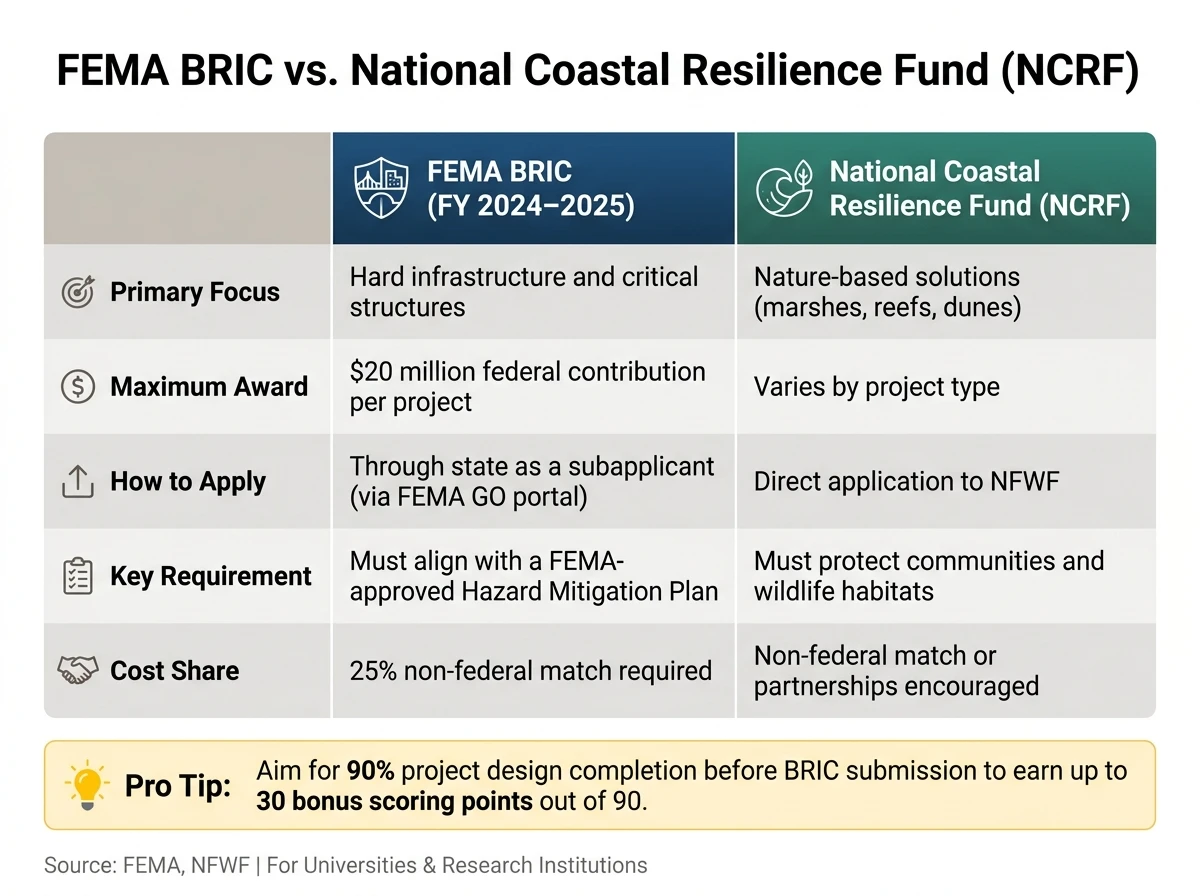
FEMA BRIC vs. National Coastal Resilience Fund: Climate Funding Comparison
With clear project goals and an understanding of funders’ priorities, the next step is finding and securing the right funding.
Federal and State Public Funding
Once project needs are defined, attention shifts to obtaining funding.
The FEMA Building Resilient Infrastructure and Communities (BRIC) program is one of the largest federal pre-disaster mitigation funding sources available to universities. For the FY 2024–2025 cycle, FEMA has earmarked $1 billion, with $757 million allocated for the National Competition. The program provides up to $20 million per project (a reduction from the previous $50 million cap) and requires a 75% federal and 25% non-federal cost-share [4].
Universities cannot apply directly to BRIC. Instead, they must work through state, territorial, or Tribal governments via the FEMA Grant Outcomes (FEMA GO) portal. Engaging with your State Hazard Mitigation Office early is crucial, as states often set internal deadlines 4–8 weeks before the federal submission window (March 25–July 23, 2026) [4][5].
"When done correctly, mitigation activities save lives and reduce the cost of future disasters." - Karen S. Evans, Senior Official Performing the Duties of the FEMA Administrator [4]
For institutions near coastlines, the National Coastal Resilience Fund (NCRF) is another option. Managed by the National Fish and Wildlife Foundation (NFWF), the fund supports nature-based solutions, such as marsh restoration, dunes, and reefs. Unlike BRIC, universities can apply directly to NFWF, typically starting with a pre-proposal. The 2026 Request for Proposals was released on February 20, 2026 [7].
Here’s a quick comparison of the two programs:
Feature | FEMA BRIC (FY 2024–2025) | National Coastal Resilience Fund (NCRF) |
|---|---|---|
Primary Focus | Nature-based solutions (marshes, reefs, dunes) [7] | |
Max Award | $20 million federal contribution per project [4] | Varies by project type [7] |
How to Apply | Through state as a subapplicant [4] | Direct application to NFWF [7] |
Key Requirement | Must align with a FEMA-approved Hazard Mitigation Plan [6] | Must protect communities and wildlife habitats [7] |
Cost Share | Typically 25% non-federal match [6] | Encourages non-federal match or partnerships [7] |
To boost your BRIC application score, aim to have your project design 90% complete before submission. This can earn an additional 30 points out of 90 [6].
Philanthropic and NGO Funding
Philanthropic funding offers flexibility, making it ideal for early-stage efforts like planning, community outreach, and pre-development expenses that federal programs might not cover. For example, conducting a benefit–cost analysis - often a prerequisite for federal grants - can cost between $20,000 and $75,000 [8]. A planning grant can bridge this gap.
The NSF CIVIC Innovation Challenge is a notable example of a program aligning federal and civic-sector goals. Stage 2 awards offer up to $1,000,000 for 12-month pilot projects, but applicants must partner with civic organizations. As the National Science Foundation explains:
"CIVIC flips the community-university dynamic, by empowering communities and researchers to jointly identify civic priorities ripe for innovation and to address these priorities as equal partners." - National Science Foundation [9]
Another opportunity is the Climate Smart Communities Initiative (CSCI), which awards grants ranging from $75,000 to $115,000, with a 2026 budget of $1.5–$2 million. These grants require partnerships between a practitioner, a community-based organization, and a government entity [10]. Additionally, listing your institution in directories like the Registry of Adaptation Practitioners can help you connect with local governments and NGOs looking for technical partners [10].
Private Sector and Internal Financing Options
Universities can also explore internal and private financing options to complement external funding.
A Green Revolving Fund (GRF) is one approach. Funded by internal capital or utility savings, GRFs support energy-efficiency projects that pay for themselves over time. For instance, implementing a $25 per ton internal carbon fee on university air travel could generate approximately $1.2 million annually for a GRF [1].
The Inflation Reduction Act (IRA) introduces another opportunity. Its direct pay provisions allow tax-exempt institutions to receive federal clean energy tax credits as cash payments, reducing the net capital cost of renewable energy projects [1].
For larger infrastructure projects, green bonds and off-site Power Purchase Agreements (PPAs) offer low-cost, long-term financing. Some PPAs can secure energy rates as low as $32 per megawatt-hour, significantly undercutting average grid rates [1]. Combining internal savings, IRA credits, and PPAs can create a strong, diversified funding strategy.
Designing and Presenting Fundable Climate Resilience Projects
After identifying the right funding sources, the next step is crafting a project that stands out. This involves assembling a strong team, aligning the project with funder goals, and backing it with solid technical and financial evidence.
Aligning Projects with Funder Goals and Institutional Plans
Funders prioritize projects that align with their specific missions and objectives. Take California's Regional Wildfire & Landscape Resilience Grants, for example. These grants, part of the state's $10 billion Climate Bond, provide funding between $5,000,000 and $20,000,000 for initiatives that deliver multiple benefits, including wildfire risk reduction, landscape health improvement, and enhanced community resilience [11]. Successful proposals often showcase how grant funds will complement existing investments, whether from state, federal, local, or private sources. Many large programs, such as California's wildfire grants, utilize a two-phase application process, starting with a concise concept proposal. Preparing this summary well ahead of the full application can give you a competitive edge [11].
"Regional Grants will fund collaborative land management partnerships and entities that have developed, planned, and are ready to implement portfolios of multi-benefit projects across a landscape." - California Grants Portal [11]
For funders like the Southeast Climate Adaptation Science Center (SE CASC), which focus on research, it's important to note their budget caps. SE CASC limits project budgets to $120,000 for durations of 6 months to 2 years, while "Pipeline Project Concepts" can range from $500,000 to $1,000,000 [12].
Once your project aligns with funder priorities, shift focus to building a capable team and establishing governance structures for effective execution.
Building Project Teams and Governance Structures
Funders evaluate not only the project itself but also the team behind it. A well-rounded team often includes three key components: a technical adaptation expert, a community-based organization (CBO) to represent local priorities, and a government or institutional partner with the authority to implement the project [10].
Start assembling your team early. This allows enough time to co-develop the budget and workplan, which signals transparency and shared ownership to funders [10]. If your project involves tribal resources, ensure a Tribal member is included as a full investigator. Engage regional Tribal Community Liaisons early to respect sovereign management of data and resources [12].
"The intent of this [Collaborative Stakeholder Structure] is to form localized, place-based partnerships to ensure consistent buy-in and support; shared values and governance; and alleviation of existing power imbalances." - Strategic Growth Council [3]
Formalizing governance within the first year of an implementation grant builds credibility. Clearly defining decision-making roles for residents, faculty, or staff helps ensure the project’s continuity beyond the grant period [3].
Developing Technical and Financial Proposals
With a collaborative team in place, the next step is crafting a detailed technical and financial proposal. Your technical plan should demonstrate a clear understanding of the risks and offer a credible mitigation strategy. Use downscaled climate projections, such as NOAA sea level rise scenarios or LOCA2 precipitation data, to model various risk scenarios (intermediate, intermediate-high, and high). Combine these projections with socioeconomic data, such as the CDC's Social Vulnerability Index, to highlight equity impacts - an important scoring factor in many federal programs [13].
On the financial side, successful proposals often combine multiple funding sources rather than relying on a single grant. For example, blending federal grants like FEMA BRIC or HUD CDBG-DR with state resilience bonds, green bonds, and local utility fees demonstrates financial sustainability [13]. A well-prepared FEMA BRIC application, for instance, can achieve a benefit-cost ratio (BCR) as high as 4.2:1, placing it among the top 15% of applications nationwide [13].
Include detailed cost estimates and clear timelines for near-term, medium-term, and long-term implementation. Proposals that describe shovel-ready projects, with environmental compliance already completed for most sub-projects, tend to score higher in competitive funding rounds [11][13].
Navigating the Funding Process and Securing Awards
Successfully navigating the funding process is essential for advancing climate resilience goals. Once a solid project design is in place, the next step is to secure the necessary funding.
Building a Funding Pipeline and Tracking Opportunities
A proposal can only succeed if it's aimed at the right funding opportunities and submitted on time. To build a dependable funding pipeline, it's crucial to use effective tools and systems.
The NDC Partnership's Climate Funds Explorer is a searchable tool that allows users to filter climate funding opportunities by activity type - whether it's research and development, deployment, or workforce development [14]. For short-term funding calls, the Climate Finance Bulletin is an excellent resource for staying on top of deadlines [14]. If you're targeting U.S. federal funding, the Climate Funding Handbook from Climate Vine provides a detailed map of federal funding opportunities, focusing on research, development, and deployment [15].
Internally, set up a tracking system by assigning a dedicated staff member or grants coordinator to monitor funding opportunities, log deadlines, and flag recurring programs. This approach was key for institutions applying to California's ICARP programs. For example, the ICARP Adaptation Planning Grant Program allocated $25 million over multiple rounds, while its Regional Resilience Planning and Implementation Grant Program provided $250 million to advance regional solutions [16]. Organizations that tracked these funding rounds early were better prepared to submit strong applications.
Once a tracking system is in place, the focus shifts to crafting a proposal that stands out.
Writing Strong Funding Proposals
Identifying the right funding opportunity is just the beginning - your proposal must clearly define the problem, propose a viable solution, and demonstrate your ability to execute the project.
Start with a well-supported problem statement grounded in local data, such as climate risk assessments, vulnerability studies, or infrastructure audits. This shows funders that you understand the specific challenge, not just a general issue. Next, outline a detailed work plan that breaks the project into phases, with clear milestones and responsibilities for each stage.
When it comes to budgeting, make sure costs are realistic and directly tied to the project's activities. If cost-sharing is required, identify those sources early and confirm their availability. Additionally, include an evaluation framework that explains how success will be measured - whether it's through the number of acres restored, tons of carbon sequestered, or students trained.
Participating in "Intent to Apply" surveys can also strengthen your proposal. These surveys not only signal your commitment but also provide an opportunity to receive early technical support. Several California ICARP programs use these surveys to engage potential applicants and offer guidance [16].
After completing your proposal, the next step is to enhance its competitiveness and address potential risks.
Improving Competitiveness and Managing Risks
Engaging with program officers before submitting your proposal can make a significant difference. Reach out with specific questions about eligibility and project scope during the pre-application phase. Program officers often provide valuable guidance that can refine your approach.
Internally, conduct a peer review by having an external colleague evaluate your proposal to identify unclear sections. If your institution has a grants office, leverage their review tools and checklists for additional insights.
On the risk management side, plan for common challenges such as cost-share gaps or delays in decision-making. For example, if a required funding match falls through, have alternative sources lined up. If your project involves multiple partners, establish a written agreement on decision-making authority before the award is announced to avoid conflicts later. Addressing these risks proactively not only strengthens your proposal but also increases your chances of securing funding.
Conclusion: Building Long-Term Funding Capacity for Climate Resilience
Securing funding for climate resilience is not a one-time effort but an evolving process that strengthens with practice. Institutions that consistently secure awards approach funding as a structured, ongoing effort. They regularly evaluate campus vulnerabilities, maintain active tracking of funding opportunities, align projects with funder priorities, and establish cross-functional teams well before deadlines. This continuous effort becomes the backbone of future funding success.
Creating a systematic approach to funding pays off over time. Establishing a dedicated coordinator and forming a Resilience Funding Working Group - comprising representatives from facilities, research, finance, and community engagement - helps integrate funding efforts into the institution's daily operations. This approach leads to more submissions, fewer missed opportunities, and stronger proposals [18][19].
Partnerships also play a critical role in building long-term funding capacity. Aligning campus initiatives with local hazard mitigation plans, collaborating with community-based organizations, and involving utilities as co-funders enhance competitiveness. Federal programs increasingly prioritize regional and equity-focused proposals over standalone applications. For instance, a coastal county resilience authority that brought together 12 municipalities managed to secure $340 million in infrastructure funding over three years, including $85 million in FEMA BRIC grants and $48 million from the Army Corps of Engineers [17]. Universities that engage in regional networks similarly benefit from access to larger investments, complementing their internal capacity-building efforts.
Early successes serve as stepping stones for larger initiatives. Starting with smaller planning grants or pilot projects - designed as the first phase of a broader plan - can yield critical baseline data, test methods, and deliver measurable outcomes that strengthen future federal proposals. As Council Fire Resources explains:
"Starting with efficiency measures that generate immediate savings creates a revenue stream that funds larger capital projects. This sequencing also builds organizational confidence as early wins demonstrate feasibility." - Council Fire Resources [1]
Lastly, documenting institutional knowledge is essential. After each funded project, store budgets, funder feedback, evaluation results, and partner contacts in a central repository. These resources - such as reusable narratives, cost benchmarks, and community engagement strategies - streamline future proposals, making them faster to prepare, more precise, and increasingly competitive.
FAQs
What should we do first to define a fundable resilience project?
To get started, it’s crucial to establish a solid base by assembling a core planning team that represents diverse perspectives and experiences. Begin by crafting a shared vision and drafting a project charter to guide your efforts. Engage directly with the community to pinpoint specific vulnerabilities and address the needs of marginalized groups. This approach ensures the project reflects community priorities and considers equity, which are key factors when seeking funding.
How can a university meet match requirements for federal resilience grants?
To secure federal resilience grants, universities must showcase their capacity to provide matching funds or resources that align with the grant's specific requirements. This can include financial contributions, technical expertise, or in-kind support. For initiatives such as FEMA's Building Resilient Infrastructure and Communities (BRIC) program, it’s crucial to ensure that projects are at least 30% designed and clearly support infrastructure resilience objectives. Early engagement with federal agencies and strict adherence to compliance standards can significantly enhance proposal strength and competitiveness.
What makes a resilience proposal more competitive to funders?
When crafting a resilience proposal, aligning it with the funders' priorities is key to standing out. Demonstrating technical readiness - such as being near shovel-ready - and including measurable outcomes like benefit-cost ratios or societal impacts adds significant weight to the proposal. Using the specific language funders prefer, mapping objectives to their strategic goals, and showcasing capacity through strong partnerships or diverse funding sources further strengthens the proposal. These elements reduce perceived risks and highlight long-term viability.
Related Blog Posts
Latest Articles
©2026

Narrative Change and Power Building: The Missing Half of Advocacy
Narrative change is the process of disrupting dominant narratives that normalize inequity and advancing new narratives from historically marginalized communities.

Funding Resilience Without Federal Grants
BRIC is unreliable and FEMA is shrinking. Here's how cities fund climate resilience with dedicated revenue, blended finance, and a coordinating authority.

The ESG Blind Spot: How AI Is Finding Risks in Companies Nobody Else Is Watching
Norway's sovereign wealth fund uses AI to screen 7,200 portfolio companies for forced labor and corruption within 24 hours. The real story is the emerging-market coverage gap that traditional ESG data vendors miss — and what it means for any company with a global supply chain.
Narrative Change and Power Building: The Missing Half of Advocacy
Narrative change is the process of disrupting dominant narratives that normalize inequity and advancing new narratives from historically marginalized communities.
Funding Resilience Without Federal Grants
BRIC is unreliable and FEMA is shrinking. Here's how cities fund climate resilience with dedicated revenue, blended finance, and a coordinating authority.
The ESG Blind Spot: How AI Is Finding Risks in Companies Nobody Else Is Watching
Norway's sovereign wealth fund uses AI to screen 7,200 portfolio companies for forced labor and corruption within 24 hours. The real story is the emerging-market coverage gap that traditional ESG data vendors miss — and what it means for any company with a global supply chain.
FAQ
01
What does it really mean to “redefine profit”?
02
What makes Council Fire different?
03
Who does Council Fire work with?
04
What does working with Council Fire actually look like?
05
How does Council Fire help organizations turn big goals into action?
06
How does Council Fire define and measure success?
07
How does technology fit into Council Fire’s work?
May 23, 2026
How to Identify and Secure Funding for Climate Resilience Projects for Universities & Research Institutions
Capacity Building
In This Article
Universities must build funding pipelines to assess risks, design fundable resilience projects, and secure federal, philanthropic financing.
How to Identify and Secure Funding for Climate Resilience Projects for Universities & Research Institutions
Universities and research institutions are facing increasing risks from climate-related disruptions like flooding, wildfires, and extreme heat. These challenges demand immediate action, but the question remains: how can institutions fund these necessary changes? Here's a quick guide:
Key Funding Sources: Federal grants (e.g., FEMA BRIC, NOAA, Department of Energy), state programs, philanthropic organizations, private partnerships, and the Inflation Reduction Act (IRA) offer various options.
Essential Steps:
Conduct a detailed risk and needs assessment, factoring in future climate projections and equity considerations.
Develop clear, actionable projects with measurable outcomes, focusing on infrastructure upgrades, research, and community resilience.
Align projects with funders' priorities, emphasizing equity, scalability, and co-benefits.
Application Tips:
Engage with funders early and prepare detailed, realistic proposals.
Build a strong project team with defined governance structures.
Explore diverse funding strategies, including green bonds, internal financing, and partnerships.
A systematic approach - combining thorough planning, collaboration, and diversified funding - can help institutions secure the resources needed to protect their campuses and communities from climate risks.
Climate Resilience Centers Funding Opportunity
Assessing Institutional Needs and Defining Fundable Projects
Understanding your institution's specific needs and vulnerabilities is the first step toward securing funding. Funders want to see that you've pinpointed concrete risks, prioritized the right initiatives, and aligned your goals with theirs.
Conducting a Campus and Research Needs Assessment
Start by updating your Hazard Vulnerability Assessment (HVA) to include future climate projections and equity considerations [2]. This approach uses a climate change coefficient to quantify future hazards and an equity coefficient to account for how certain campus populations might face disproportionate impacts [2].
The University of California system offers a strong example of this methodology. Its Emergency Management Council developed a new HVA framework for its 10 campuses and six health locations. By utilizing the Texas A&M U.S. Climate Vulnerability Index and analyzing 20 distinct population groups, they were able to forecast vulnerabilities through 2050 and identify at-risk census tracts [2].
"For climate change, it's very hard to forecast the effects. We live in complex systems that are inherently unstable... we have to prepare for the risks we can't anticipate." - Amina Assefa, University of California [2]
Take a close look at your central plant. For instance, one public research university evaluated its central plant, benchmarking every building with ENERGY STAR and modeling paths to achieve carbon neutrality. This revealed that three aging boilers - responsible for 42% of total emissions - were the primary culprits. This insight led to a $340 million investment in a ground-source heat pump system, projected to save $410 million in energy and maintenance costs over 25 years [1].
To prepare for both near-term and long-term scenarios (up to 2050), assemble a cross-functional team that includes experts in safety, risk management, emergency management, sustainability, and compliance. Begin with smaller, "quick-win" projects to build momentum for larger capital investments [1].
Once you’ve completed the needs assessment, translate the identified vulnerabilities into actionable project categories.
Identifying Fundable Project Categories
Based on your findings, organize projects into categories that improve infrastructure, advance research, support community resilience, and utilize data-driven tools:
Campus infrastructure upgrades: Examples include converting central plants, flood-proofing, installing backup power systems, and upgrading cooling systems for research facilities.
Applied research programs: Research initiatives that focus on climate adaptation and generate transferable insights, particularly those with regional or community relevance.
Community resilience programs: Year-round efforts like workforce training, resource distribution, or cooling centers that benefit both the campus and surrounding communities.
Data-driven tools and planning: Investments in digital infrastructure, climate modeling platforms, and monitoring systems to support ongoing decision-making.
Funders increasingly expect projects to demonstrate independent utility - meaning they should deliver meaningful results on their own, even if additional phases remain unfunded. Avoid designing projects so narrowly that they only work as part of a larger, hypothetical plan.
Understanding What Funders Look For
Certain criteria consistently stand out to funders, whether they’re federal, state, or philanthropic. Equity outcomes are often the top priority. Projects that benefit under-resourced campus and community populations tend to gain more traction, while those that primarily serve well-funded departments may face challenges.
Scalability and co-benefits are also key. For example, a project that reduces flood risk while also lowering energy costs and supporting research initiatives will likely be more competitive than one with a singular focus. Funders seek investments that tackle multiple challenges at once.
A clear governance structure is another critical element. Clearly define who is responsible for the project, who participates in decision-making, and how community stakeholders are involved. Establishing a formal Collaborative Stakeholder Structure early - one that includes community residents and organizations - demonstrates genuine engagement.
Finally, operational readiness is non-negotiable. Your proposal should include secure site control, a realistic budget, and a solid plan for long-term operations and maintenance. Proposals lacking these elements are unlikely to move forward.
Funding Sources for Climate Resilience Projects
FEMA BRIC vs. National Coastal Resilience Fund: Climate Funding Comparison
With clear project goals and an understanding of funders’ priorities, the next step is finding and securing the right funding.
Federal and State Public Funding
Once project needs are defined, attention shifts to obtaining funding.
The FEMA Building Resilient Infrastructure and Communities (BRIC) program is one of the largest federal pre-disaster mitigation funding sources available to universities. For the FY 2024–2025 cycle, FEMA has earmarked $1 billion, with $757 million allocated for the National Competition. The program provides up to $20 million per project (a reduction from the previous $50 million cap) and requires a 75% federal and 25% non-federal cost-share [4].
Universities cannot apply directly to BRIC. Instead, they must work through state, territorial, or Tribal governments via the FEMA Grant Outcomes (FEMA GO) portal. Engaging with your State Hazard Mitigation Office early is crucial, as states often set internal deadlines 4–8 weeks before the federal submission window (March 25–July 23, 2026) [4][5].
"When done correctly, mitigation activities save lives and reduce the cost of future disasters." - Karen S. Evans, Senior Official Performing the Duties of the FEMA Administrator [4]
For institutions near coastlines, the National Coastal Resilience Fund (NCRF) is another option. Managed by the National Fish and Wildlife Foundation (NFWF), the fund supports nature-based solutions, such as marsh restoration, dunes, and reefs. Unlike BRIC, universities can apply directly to NFWF, typically starting with a pre-proposal. The 2026 Request for Proposals was released on February 20, 2026 [7].
Here’s a quick comparison of the two programs:
Feature | FEMA BRIC (FY 2024–2025) | National Coastal Resilience Fund (NCRF) |
|---|---|---|
Primary Focus | Nature-based solutions (marshes, reefs, dunes) [7] | |
Max Award | $20 million federal contribution per project [4] | Varies by project type [7] |
How to Apply | Through state as a subapplicant [4] | Direct application to NFWF [7] |
Key Requirement | Must align with a FEMA-approved Hazard Mitigation Plan [6] | Must protect communities and wildlife habitats [7] |
Cost Share | Typically 25% non-federal match [6] | Encourages non-federal match or partnerships [7] |
To boost your BRIC application score, aim to have your project design 90% complete before submission. This can earn an additional 30 points out of 90 [6].
Philanthropic and NGO Funding
Philanthropic funding offers flexibility, making it ideal for early-stage efforts like planning, community outreach, and pre-development expenses that federal programs might not cover. For example, conducting a benefit–cost analysis - often a prerequisite for federal grants - can cost between $20,000 and $75,000 [8]. A planning grant can bridge this gap.
The NSF CIVIC Innovation Challenge is a notable example of a program aligning federal and civic-sector goals. Stage 2 awards offer up to $1,000,000 for 12-month pilot projects, but applicants must partner with civic organizations. As the National Science Foundation explains:
"CIVIC flips the community-university dynamic, by empowering communities and researchers to jointly identify civic priorities ripe for innovation and to address these priorities as equal partners." - National Science Foundation [9]
Another opportunity is the Climate Smart Communities Initiative (CSCI), which awards grants ranging from $75,000 to $115,000, with a 2026 budget of $1.5–$2 million. These grants require partnerships between a practitioner, a community-based organization, and a government entity [10]. Additionally, listing your institution in directories like the Registry of Adaptation Practitioners can help you connect with local governments and NGOs looking for technical partners [10].
Private Sector and Internal Financing Options
Universities can also explore internal and private financing options to complement external funding.
A Green Revolving Fund (GRF) is one approach. Funded by internal capital or utility savings, GRFs support energy-efficiency projects that pay for themselves over time. For instance, implementing a $25 per ton internal carbon fee on university air travel could generate approximately $1.2 million annually for a GRF [1].
The Inflation Reduction Act (IRA) introduces another opportunity. Its direct pay provisions allow tax-exempt institutions to receive federal clean energy tax credits as cash payments, reducing the net capital cost of renewable energy projects [1].
For larger infrastructure projects, green bonds and off-site Power Purchase Agreements (PPAs) offer low-cost, long-term financing. Some PPAs can secure energy rates as low as $32 per megawatt-hour, significantly undercutting average grid rates [1]. Combining internal savings, IRA credits, and PPAs can create a strong, diversified funding strategy.
Designing and Presenting Fundable Climate Resilience Projects
After identifying the right funding sources, the next step is crafting a project that stands out. This involves assembling a strong team, aligning the project with funder goals, and backing it with solid technical and financial evidence.
Aligning Projects with Funder Goals and Institutional Plans
Funders prioritize projects that align with their specific missions and objectives. Take California's Regional Wildfire & Landscape Resilience Grants, for example. These grants, part of the state's $10 billion Climate Bond, provide funding between $5,000,000 and $20,000,000 for initiatives that deliver multiple benefits, including wildfire risk reduction, landscape health improvement, and enhanced community resilience [11]. Successful proposals often showcase how grant funds will complement existing investments, whether from state, federal, local, or private sources. Many large programs, such as California's wildfire grants, utilize a two-phase application process, starting with a concise concept proposal. Preparing this summary well ahead of the full application can give you a competitive edge [11].
"Regional Grants will fund collaborative land management partnerships and entities that have developed, planned, and are ready to implement portfolios of multi-benefit projects across a landscape." - California Grants Portal [11]
For funders like the Southeast Climate Adaptation Science Center (SE CASC), which focus on research, it's important to note their budget caps. SE CASC limits project budgets to $120,000 for durations of 6 months to 2 years, while "Pipeline Project Concepts" can range from $500,000 to $1,000,000 [12].
Once your project aligns with funder priorities, shift focus to building a capable team and establishing governance structures for effective execution.
Building Project Teams and Governance Structures
Funders evaluate not only the project itself but also the team behind it. A well-rounded team often includes three key components: a technical adaptation expert, a community-based organization (CBO) to represent local priorities, and a government or institutional partner with the authority to implement the project [10].
Start assembling your team early. This allows enough time to co-develop the budget and workplan, which signals transparency and shared ownership to funders [10]. If your project involves tribal resources, ensure a Tribal member is included as a full investigator. Engage regional Tribal Community Liaisons early to respect sovereign management of data and resources [12].
"The intent of this [Collaborative Stakeholder Structure] is to form localized, place-based partnerships to ensure consistent buy-in and support; shared values and governance; and alleviation of existing power imbalances." - Strategic Growth Council [3]
Formalizing governance within the first year of an implementation grant builds credibility. Clearly defining decision-making roles for residents, faculty, or staff helps ensure the project’s continuity beyond the grant period [3].
Developing Technical and Financial Proposals
With a collaborative team in place, the next step is crafting a detailed technical and financial proposal. Your technical plan should demonstrate a clear understanding of the risks and offer a credible mitigation strategy. Use downscaled climate projections, such as NOAA sea level rise scenarios or LOCA2 precipitation data, to model various risk scenarios (intermediate, intermediate-high, and high). Combine these projections with socioeconomic data, such as the CDC's Social Vulnerability Index, to highlight equity impacts - an important scoring factor in many federal programs [13].
On the financial side, successful proposals often combine multiple funding sources rather than relying on a single grant. For example, blending federal grants like FEMA BRIC or HUD CDBG-DR with state resilience bonds, green bonds, and local utility fees demonstrates financial sustainability [13]. A well-prepared FEMA BRIC application, for instance, can achieve a benefit-cost ratio (BCR) as high as 4.2:1, placing it among the top 15% of applications nationwide [13].
Include detailed cost estimates and clear timelines for near-term, medium-term, and long-term implementation. Proposals that describe shovel-ready projects, with environmental compliance already completed for most sub-projects, tend to score higher in competitive funding rounds [11][13].
Navigating the Funding Process and Securing Awards
Successfully navigating the funding process is essential for advancing climate resilience goals. Once a solid project design is in place, the next step is to secure the necessary funding.
Building a Funding Pipeline and Tracking Opportunities
A proposal can only succeed if it's aimed at the right funding opportunities and submitted on time. To build a dependable funding pipeline, it's crucial to use effective tools and systems.
The NDC Partnership's Climate Funds Explorer is a searchable tool that allows users to filter climate funding opportunities by activity type - whether it's research and development, deployment, or workforce development [14]. For short-term funding calls, the Climate Finance Bulletin is an excellent resource for staying on top of deadlines [14]. If you're targeting U.S. federal funding, the Climate Funding Handbook from Climate Vine provides a detailed map of federal funding opportunities, focusing on research, development, and deployment [15].
Internally, set up a tracking system by assigning a dedicated staff member or grants coordinator to monitor funding opportunities, log deadlines, and flag recurring programs. This approach was key for institutions applying to California's ICARP programs. For example, the ICARP Adaptation Planning Grant Program allocated $25 million over multiple rounds, while its Regional Resilience Planning and Implementation Grant Program provided $250 million to advance regional solutions [16]. Organizations that tracked these funding rounds early were better prepared to submit strong applications.
Once a tracking system is in place, the focus shifts to crafting a proposal that stands out.
Writing Strong Funding Proposals
Identifying the right funding opportunity is just the beginning - your proposal must clearly define the problem, propose a viable solution, and demonstrate your ability to execute the project.
Start with a well-supported problem statement grounded in local data, such as climate risk assessments, vulnerability studies, or infrastructure audits. This shows funders that you understand the specific challenge, not just a general issue. Next, outline a detailed work plan that breaks the project into phases, with clear milestones and responsibilities for each stage.
When it comes to budgeting, make sure costs are realistic and directly tied to the project's activities. If cost-sharing is required, identify those sources early and confirm their availability. Additionally, include an evaluation framework that explains how success will be measured - whether it's through the number of acres restored, tons of carbon sequestered, or students trained.
Participating in "Intent to Apply" surveys can also strengthen your proposal. These surveys not only signal your commitment but also provide an opportunity to receive early technical support. Several California ICARP programs use these surveys to engage potential applicants and offer guidance [16].
After completing your proposal, the next step is to enhance its competitiveness and address potential risks.
Improving Competitiveness and Managing Risks
Engaging with program officers before submitting your proposal can make a significant difference. Reach out with specific questions about eligibility and project scope during the pre-application phase. Program officers often provide valuable guidance that can refine your approach.
Internally, conduct a peer review by having an external colleague evaluate your proposal to identify unclear sections. If your institution has a grants office, leverage their review tools and checklists for additional insights.
On the risk management side, plan for common challenges such as cost-share gaps or delays in decision-making. For example, if a required funding match falls through, have alternative sources lined up. If your project involves multiple partners, establish a written agreement on decision-making authority before the award is announced to avoid conflicts later. Addressing these risks proactively not only strengthens your proposal but also increases your chances of securing funding.
Conclusion: Building Long-Term Funding Capacity for Climate Resilience
Securing funding for climate resilience is not a one-time effort but an evolving process that strengthens with practice. Institutions that consistently secure awards approach funding as a structured, ongoing effort. They regularly evaluate campus vulnerabilities, maintain active tracking of funding opportunities, align projects with funder priorities, and establish cross-functional teams well before deadlines. This continuous effort becomes the backbone of future funding success.
Creating a systematic approach to funding pays off over time. Establishing a dedicated coordinator and forming a Resilience Funding Working Group - comprising representatives from facilities, research, finance, and community engagement - helps integrate funding efforts into the institution's daily operations. This approach leads to more submissions, fewer missed opportunities, and stronger proposals [18][19].
Partnerships also play a critical role in building long-term funding capacity. Aligning campus initiatives with local hazard mitigation plans, collaborating with community-based organizations, and involving utilities as co-funders enhance competitiveness. Federal programs increasingly prioritize regional and equity-focused proposals over standalone applications. For instance, a coastal county resilience authority that brought together 12 municipalities managed to secure $340 million in infrastructure funding over three years, including $85 million in FEMA BRIC grants and $48 million from the Army Corps of Engineers [17]. Universities that engage in regional networks similarly benefit from access to larger investments, complementing their internal capacity-building efforts.
Early successes serve as stepping stones for larger initiatives. Starting with smaller planning grants or pilot projects - designed as the first phase of a broader plan - can yield critical baseline data, test methods, and deliver measurable outcomes that strengthen future federal proposals. As Council Fire Resources explains:
"Starting with efficiency measures that generate immediate savings creates a revenue stream that funds larger capital projects. This sequencing also builds organizational confidence as early wins demonstrate feasibility." - Council Fire Resources [1]
Lastly, documenting institutional knowledge is essential. After each funded project, store budgets, funder feedback, evaluation results, and partner contacts in a central repository. These resources - such as reusable narratives, cost benchmarks, and community engagement strategies - streamline future proposals, making them faster to prepare, more precise, and increasingly competitive.
FAQs
What should we do first to define a fundable resilience project?
To get started, it’s crucial to establish a solid base by assembling a core planning team that represents diverse perspectives and experiences. Begin by crafting a shared vision and drafting a project charter to guide your efforts. Engage directly with the community to pinpoint specific vulnerabilities and address the needs of marginalized groups. This approach ensures the project reflects community priorities and considers equity, which are key factors when seeking funding.
How can a university meet match requirements for federal resilience grants?
To secure federal resilience grants, universities must showcase their capacity to provide matching funds or resources that align with the grant's specific requirements. This can include financial contributions, technical expertise, or in-kind support. For initiatives such as FEMA's Building Resilient Infrastructure and Communities (BRIC) program, it’s crucial to ensure that projects are at least 30% designed and clearly support infrastructure resilience objectives. Early engagement with federal agencies and strict adherence to compliance standards can significantly enhance proposal strength and competitiveness.
What makes a resilience proposal more competitive to funders?
When crafting a resilience proposal, aligning it with the funders' priorities is key to standing out. Demonstrating technical readiness - such as being near shovel-ready - and including measurable outcomes like benefit-cost ratios or societal impacts adds significant weight to the proposal. Using the specific language funders prefer, mapping objectives to their strategic goals, and showcasing capacity through strong partnerships or diverse funding sources further strengthens the proposal. These elements reduce perceived risks and highlight long-term viability.
Related Blog Posts
Latest Articles
©2026
Narrative Change and Power Building: The Missing Half of Advocacy
Narrative change is the process of disrupting dominant narratives that normalize inequity and advancing new narratives from historically marginalized communities.
Funding Resilience Without Federal Grants
BRIC is unreliable and FEMA is shrinking. Here's how cities fund climate resilience with dedicated revenue, blended finance, and a coordinating authority.
The ESG Blind Spot: How AI Is Finding Risks in Companies Nobody Else Is Watching
Norway's sovereign wealth fund uses AI to screen 7,200 portfolio companies for forced labor and corruption within 24 hours. The real story is the emerging-market coverage gap that traditional ESG data vendors miss — and what it means for any company with a global supply chain.
FAQ
01
What does it really mean to “redefine profit”?
02
What makes Council Fire different?
03
Who does Council Fire work with?
04
What does working with Council Fire actually look like?
05
How does Council Fire help organizations turn big goals into action?
06
How does Council Fire define and measure success?
07
How does technology fit into Council Fire’s work?
May 23, 2026
How to Identify and Secure Funding for Climate Resilience Projects for Universities & Research Institutions
Capacity Building
In This Article
Universities must build funding pipelines to assess risks, design fundable resilience projects, and secure federal, philanthropic financing.
How to Identify and Secure Funding for Climate Resilience Projects for Universities & Research Institutions
Universities and research institutions are facing increasing risks from climate-related disruptions like flooding, wildfires, and extreme heat. These challenges demand immediate action, but the question remains: how can institutions fund these necessary changes? Here's a quick guide:
Key Funding Sources: Federal grants (e.g., FEMA BRIC, NOAA, Department of Energy), state programs, philanthropic organizations, private partnerships, and the Inflation Reduction Act (IRA) offer various options.
Essential Steps:
Conduct a detailed risk and needs assessment, factoring in future climate projections and equity considerations.
Develop clear, actionable projects with measurable outcomes, focusing on infrastructure upgrades, research, and community resilience.
Align projects with funders' priorities, emphasizing equity, scalability, and co-benefits.
Application Tips:
Engage with funders early and prepare detailed, realistic proposals.
Build a strong project team with defined governance structures.
Explore diverse funding strategies, including green bonds, internal financing, and partnerships.
A systematic approach - combining thorough planning, collaboration, and diversified funding - can help institutions secure the resources needed to protect their campuses and communities from climate risks.
Climate Resilience Centers Funding Opportunity
Assessing Institutional Needs and Defining Fundable Projects
Understanding your institution's specific needs and vulnerabilities is the first step toward securing funding. Funders want to see that you've pinpointed concrete risks, prioritized the right initiatives, and aligned your goals with theirs.
Conducting a Campus and Research Needs Assessment
Start by updating your Hazard Vulnerability Assessment (HVA) to include future climate projections and equity considerations [2]. This approach uses a climate change coefficient to quantify future hazards and an equity coefficient to account for how certain campus populations might face disproportionate impacts [2].
The University of California system offers a strong example of this methodology. Its Emergency Management Council developed a new HVA framework for its 10 campuses and six health locations. By utilizing the Texas A&M U.S. Climate Vulnerability Index and analyzing 20 distinct population groups, they were able to forecast vulnerabilities through 2050 and identify at-risk census tracts [2].
"For climate change, it's very hard to forecast the effects. We live in complex systems that are inherently unstable... we have to prepare for the risks we can't anticipate." - Amina Assefa, University of California [2]
Take a close look at your central plant. For instance, one public research university evaluated its central plant, benchmarking every building with ENERGY STAR and modeling paths to achieve carbon neutrality. This revealed that three aging boilers - responsible for 42% of total emissions - were the primary culprits. This insight led to a $340 million investment in a ground-source heat pump system, projected to save $410 million in energy and maintenance costs over 25 years [1].
To prepare for both near-term and long-term scenarios (up to 2050), assemble a cross-functional team that includes experts in safety, risk management, emergency management, sustainability, and compliance. Begin with smaller, "quick-win" projects to build momentum for larger capital investments [1].
Once you’ve completed the needs assessment, translate the identified vulnerabilities into actionable project categories.
Identifying Fundable Project Categories
Based on your findings, organize projects into categories that improve infrastructure, advance research, support community resilience, and utilize data-driven tools:
Campus infrastructure upgrades: Examples include converting central plants, flood-proofing, installing backup power systems, and upgrading cooling systems for research facilities.
Applied research programs: Research initiatives that focus on climate adaptation and generate transferable insights, particularly those with regional or community relevance.
Community resilience programs: Year-round efforts like workforce training, resource distribution, or cooling centers that benefit both the campus and surrounding communities.
Data-driven tools and planning: Investments in digital infrastructure, climate modeling platforms, and monitoring systems to support ongoing decision-making.
Funders increasingly expect projects to demonstrate independent utility - meaning they should deliver meaningful results on their own, even if additional phases remain unfunded. Avoid designing projects so narrowly that they only work as part of a larger, hypothetical plan.
Understanding What Funders Look For
Certain criteria consistently stand out to funders, whether they’re federal, state, or philanthropic. Equity outcomes are often the top priority. Projects that benefit under-resourced campus and community populations tend to gain more traction, while those that primarily serve well-funded departments may face challenges.
Scalability and co-benefits are also key. For example, a project that reduces flood risk while also lowering energy costs and supporting research initiatives will likely be more competitive than one with a singular focus. Funders seek investments that tackle multiple challenges at once.
A clear governance structure is another critical element. Clearly define who is responsible for the project, who participates in decision-making, and how community stakeholders are involved. Establishing a formal Collaborative Stakeholder Structure early - one that includes community residents and organizations - demonstrates genuine engagement.
Finally, operational readiness is non-negotiable. Your proposal should include secure site control, a realistic budget, and a solid plan for long-term operations and maintenance. Proposals lacking these elements are unlikely to move forward.
Funding Sources for Climate Resilience Projects
FEMA BRIC vs. National Coastal Resilience Fund: Climate Funding Comparison
With clear project goals and an understanding of funders’ priorities, the next step is finding and securing the right funding.
Federal and State Public Funding
Once project needs are defined, attention shifts to obtaining funding.
The FEMA Building Resilient Infrastructure and Communities (BRIC) program is one of the largest federal pre-disaster mitigation funding sources available to universities. For the FY 2024–2025 cycle, FEMA has earmarked $1 billion, with $757 million allocated for the National Competition. The program provides up to $20 million per project (a reduction from the previous $50 million cap) and requires a 75% federal and 25% non-federal cost-share [4].
Universities cannot apply directly to BRIC. Instead, they must work through state, territorial, or Tribal governments via the FEMA Grant Outcomes (FEMA GO) portal. Engaging with your State Hazard Mitigation Office early is crucial, as states often set internal deadlines 4–8 weeks before the federal submission window (March 25–July 23, 2026) [4][5].
"When done correctly, mitigation activities save lives and reduce the cost of future disasters." - Karen S. Evans, Senior Official Performing the Duties of the FEMA Administrator [4]
For institutions near coastlines, the National Coastal Resilience Fund (NCRF) is another option. Managed by the National Fish and Wildlife Foundation (NFWF), the fund supports nature-based solutions, such as marsh restoration, dunes, and reefs. Unlike BRIC, universities can apply directly to NFWF, typically starting with a pre-proposal. The 2026 Request for Proposals was released on February 20, 2026 [7].
Here’s a quick comparison of the two programs:
Feature | FEMA BRIC (FY 2024–2025) | National Coastal Resilience Fund (NCRF) |
|---|---|---|
Primary Focus | Nature-based solutions (marshes, reefs, dunes) [7] | |
Max Award | $20 million federal contribution per project [4] | Varies by project type [7] |
How to Apply | Through state as a subapplicant [4] | Direct application to NFWF [7] |
Key Requirement | Must align with a FEMA-approved Hazard Mitigation Plan [6] | Must protect communities and wildlife habitats [7] |
Cost Share | Typically 25% non-federal match [6] | Encourages non-federal match or partnerships [7] |
To boost your BRIC application score, aim to have your project design 90% complete before submission. This can earn an additional 30 points out of 90 [6].
Philanthropic and NGO Funding
Philanthropic funding offers flexibility, making it ideal for early-stage efforts like planning, community outreach, and pre-development expenses that federal programs might not cover. For example, conducting a benefit–cost analysis - often a prerequisite for federal grants - can cost between $20,000 and $75,000 [8]. A planning grant can bridge this gap.
The NSF CIVIC Innovation Challenge is a notable example of a program aligning federal and civic-sector goals. Stage 2 awards offer up to $1,000,000 for 12-month pilot projects, but applicants must partner with civic organizations. As the National Science Foundation explains:
"CIVIC flips the community-university dynamic, by empowering communities and researchers to jointly identify civic priorities ripe for innovation and to address these priorities as equal partners." - National Science Foundation [9]
Another opportunity is the Climate Smart Communities Initiative (CSCI), which awards grants ranging from $75,000 to $115,000, with a 2026 budget of $1.5–$2 million. These grants require partnerships between a practitioner, a community-based organization, and a government entity [10]. Additionally, listing your institution in directories like the Registry of Adaptation Practitioners can help you connect with local governments and NGOs looking for technical partners [10].
Private Sector and Internal Financing Options
Universities can also explore internal and private financing options to complement external funding.
A Green Revolving Fund (GRF) is one approach. Funded by internal capital or utility savings, GRFs support energy-efficiency projects that pay for themselves over time. For instance, implementing a $25 per ton internal carbon fee on university air travel could generate approximately $1.2 million annually for a GRF [1].
The Inflation Reduction Act (IRA) introduces another opportunity. Its direct pay provisions allow tax-exempt institutions to receive federal clean energy tax credits as cash payments, reducing the net capital cost of renewable energy projects [1].
For larger infrastructure projects, green bonds and off-site Power Purchase Agreements (PPAs) offer low-cost, long-term financing. Some PPAs can secure energy rates as low as $32 per megawatt-hour, significantly undercutting average grid rates [1]. Combining internal savings, IRA credits, and PPAs can create a strong, diversified funding strategy.
Designing and Presenting Fundable Climate Resilience Projects
After identifying the right funding sources, the next step is crafting a project that stands out. This involves assembling a strong team, aligning the project with funder goals, and backing it with solid technical and financial evidence.
Aligning Projects with Funder Goals and Institutional Plans
Funders prioritize projects that align with their specific missions and objectives. Take California's Regional Wildfire & Landscape Resilience Grants, for example. These grants, part of the state's $10 billion Climate Bond, provide funding between $5,000,000 and $20,000,000 for initiatives that deliver multiple benefits, including wildfire risk reduction, landscape health improvement, and enhanced community resilience [11]. Successful proposals often showcase how grant funds will complement existing investments, whether from state, federal, local, or private sources. Many large programs, such as California's wildfire grants, utilize a two-phase application process, starting with a concise concept proposal. Preparing this summary well ahead of the full application can give you a competitive edge [11].
"Regional Grants will fund collaborative land management partnerships and entities that have developed, planned, and are ready to implement portfolios of multi-benefit projects across a landscape." - California Grants Portal [11]
For funders like the Southeast Climate Adaptation Science Center (SE CASC), which focus on research, it's important to note their budget caps. SE CASC limits project budgets to $120,000 for durations of 6 months to 2 years, while "Pipeline Project Concepts" can range from $500,000 to $1,000,000 [12].
Once your project aligns with funder priorities, shift focus to building a capable team and establishing governance structures for effective execution.
Building Project Teams and Governance Structures
Funders evaluate not only the project itself but also the team behind it. A well-rounded team often includes three key components: a technical adaptation expert, a community-based organization (CBO) to represent local priorities, and a government or institutional partner with the authority to implement the project [10].
Start assembling your team early. This allows enough time to co-develop the budget and workplan, which signals transparency and shared ownership to funders [10]. If your project involves tribal resources, ensure a Tribal member is included as a full investigator. Engage regional Tribal Community Liaisons early to respect sovereign management of data and resources [12].
"The intent of this [Collaborative Stakeholder Structure] is to form localized, place-based partnerships to ensure consistent buy-in and support; shared values and governance; and alleviation of existing power imbalances." - Strategic Growth Council [3]
Formalizing governance within the first year of an implementation grant builds credibility. Clearly defining decision-making roles for residents, faculty, or staff helps ensure the project’s continuity beyond the grant period [3].
Developing Technical and Financial Proposals
With a collaborative team in place, the next step is crafting a detailed technical and financial proposal. Your technical plan should demonstrate a clear understanding of the risks and offer a credible mitigation strategy. Use downscaled climate projections, such as NOAA sea level rise scenarios or LOCA2 precipitation data, to model various risk scenarios (intermediate, intermediate-high, and high). Combine these projections with socioeconomic data, such as the CDC's Social Vulnerability Index, to highlight equity impacts - an important scoring factor in many federal programs [13].
On the financial side, successful proposals often combine multiple funding sources rather than relying on a single grant. For example, blending federal grants like FEMA BRIC or HUD CDBG-DR with state resilience bonds, green bonds, and local utility fees demonstrates financial sustainability [13]. A well-prepared FEMA BRIC application, for instance, can achieve a benefit-cost ratio (BCR) as high as 4.2:1, placing it among the top 15% of applications nationwide [13].
Include detailed cost estimates and clear timelines for near-term, medium-term, and long-term implementation. Proposals that describe shovel-ready projects, with environmental compliance already completed for most sub-projects, tend to score higher in competitive funding rounds [11][13].
Navigating the Funding Process and Securing Awards
Successfully navigating the funding process is essential for advancing climate resilience goals. Once a solid project design is in place, the next step is to secure the necessary funding.
Building a Funding Pipeline and Tracking Opportunities
A proposal can only succeed if it's aimed at the right funding opportunities and submitted on time. To build a dependable funding pipeline, it's crucial to use effective tools and systems.
The NDC Partnership's Climate Funds Explorer is a searchable tool that allows users to filter climate funding opportunities by activity type - whether it's research and development, deployment, or workforce development [14]. For short-term funding calls, the Climate Finance Bulletin is an excellent resource for staying on top of deadlines [14]. If you're targeting U.S. federal funding, the Climate Funding Handbook from Climate Vine provides a detailed map of federal funding opportunities, focusing on research, development, and deployment [15].
Internally, set up a tracking system by assigning a dedicated staff member or grants coordinator to monitor funding opportunities, log deadlines, and flag recurring programs. This approach was key for institutions applying to California's ICARP programs. For example, the ICARP Adaptation Planning Grant Program allocated $25 million over multiple rounds, while its Regional Resilience Planning and Implementation Grant Program provided $250 million to advance regional solutions [16]. Organizations that tracked these funding rounds early were better prepared to submit strong applications.
Once a tracking system is in place, the focus shifts to crafting a proposal that stands out.
Writing Strong Funding Proposals
Identifying the right funding opportunity is just the beginning - your proposal must clearly define the problem, propose a viable solution, and demonstrate your ability to execute the project.
Start with a well-supported problem statement grounded in local data, such as climate risk assessments, vulnerability studies, or infrastructure audits. This shows funders that you understand the specific challenge, not just a general issue. Next, outline a detailed work plan that breaks the project into phases, with clear milestones and responsibilities for each stage.
When it comes to budgeting, make sure costs are realistic and directly tied to the project's activities. If cost-sharing is required, identify those sources early and confirm their availability. Additionally, include an evaluation framework that explains how success will be measured - whether it's through the number of acres restored, tons of carbon sequestered, or students trained.
Participating in "Intent to Apply" surveys can also strengthen your proposal. These surveys not only signal your commitment but also provide an opportunity to receive early technical support. Several California ICARP programs use these surveys to engage potential applicants and offer guidance [16].
After completing your proposal, the next step is to enhance its competitiveness and address potential risks.
Improving Competitiveness and Managing Risks
Engaging with program officers before submitting your proposal can make a significant difference. Reach out with specific questions about eligibility and project scope during the pre-application phase. Program officers often provide valuable guidance that can refine your approach.
Internally, conduct a peer review by having an external colleague evaluate your proposal to identify unclear sections. If your institution has a grants office, leverage their review tools and checklists for additional insights.
On the risk management side, plan for common challenges such as cost-share gaps or delays in decision-making. For example, if a required funding match falls through, have alternative sources lined up. If your project involves multiple partners, establish a written agreement on decision-making authority before the award is announced to avoid conflicts later. Addressing these risks proactively not only strengthens your proposal but also increases your chances of securing funding.
Conclusion: Building Long-Term Funding Capacity for Climate Resilience
Securing funding for climate resilience is not a one-time effort but an evolving process that strengthens with practice. Institutions that consistently secure awards approach funding as a structured, ongoing effort. They regularly evaluate campus vulnerabilities, maintain active tracking of funding opportunities, align projects with funder priorities, and establish cross-functional teams well before deadlines. This continuous effort becomes the backbone of future funding success.
Creating a systematic approach to funding pays off over time. Establishing a dedicated coordinator and forming a Resilience Funding Working Group - comprising representatives from facilities, research, finance, and community engagement - helps integrate funding efforts into the institution's daily operations. This approach leads to more submissions, fewer missed opportunities, and stronger proposals [18][19].
Partnerships also play a critical role in building long-term funding capacity. Aligning campus initiatives with local hazard mitigation plans, collaborating with community-based organizations, and involving utilities as co-funders enhance competitiveness. Federal programs increasingly prioritize regional and equity-focused proposals over standalone applications. For instance, a coastal county resilience authority that brought together 12 municipalities managed to secure $340 million in infrastructure funding over three years, including $85 million in FEMA BRIC grants and $48 million from the Army Corps of Engineers [17]. Universities that engage in regional networks similarly benefit from access to larger investments, complementing their internal capacity-building efforts.
Early successes serve as stepping stones for larger initiatives. Starting with smaller planning grants or pilot projects - designed as the first phase of a broader plan - can yield critical baseline data, test methods, and deliver measurable outcomes that strengthen future federal proposals. As Council Fire Resources explains:
"Starting with efficiency measures that generate immediate savings creates a revenue stream that funds larger capital projects. This sequencing also builds organizational confidence as early wins demonstrate feasibility." - Council Fire Resources [1]
Lastly, documenting institutional knowledge is essential. After each funded project, store budgets, funder feedback, evaluation results, and partner contacts in a central repository. These resources - such as reusable narratives, cost benchmarks, and community engagement strategies - streamline future proposals, making them faster to prepare, more precise, and increasingly competitive.
FAQs
What should we do first to define a fundable resilience project?
To get started, it’s crucial to establish a solid base by assembling a core planning team that represents diverse perspectives and experiences. Begin by crafting a shared vision and drafting a project charter to guide your efforts. Engage directly with the community to pinpoint specific vulnerabilities and address the needs of marginalized groups. This approach ensures the project reflects community priorities and considers equity, which are key factors when seeking funding.
How can a university meet match requirements for federal resilience grants?
To secure federal resilience grants, universities must showcase their capacity to provide matching funds or resources that align with the grant's specific requirements. This can include financial contributions, technical expertise, or in-kind support. For initiatives such as FEMA's Building Resilient Infrastructure and Communities (BRIC) program, it’s crucial to ensure that projects are at least 30% designed and clearly support infrastructure resilience objectives. Early engagement with federal agencies and strict adherence to compliance standards can significantly enhance proposal strength and competitiveness.
What makes a resilience proposal more competitive to funders?
When crafting a resilience proposal, aligning it with the funders' priorities is key to standing out. Demonstrating technical readiness - such as being near shovel-ready - and including measurable outcomes like benefit-cost ratios or societal impacts adds significant weight to the proposal. Using the specific language funders prefer, mapping objectives to their strategic goals, and showcasing capacity through strong partnerships or diverse funding sources further strengthens the proposal. These elements reduce perceived risks and highlight long-term viability.
Related Blog Posts
Latest Articles
©2026
Narrative Change and Power Building: The Missing Half of Advocacy
Narrative change is the process of disrupting dominant narratives that normalize inequity and advancing new narratives from historically marginalized communities.
Funding Resilience Without Federal Grants
BRIC is unreliable and FEMA is shrinking. Here's how cities fund climate resilience with dedicated revenue, blended finance, and a coordinating authority.
The ESG Blind Spot: How AI Is Finding Risks in Companies Nobody Else Is Watching
Norway's sovereign wealth fund uses AI to screen 7,200 portfolio companies for forced labor and corruption within 24 hours. The real story is the emerging-market coverage gap that traditional ESG data vendors miss — and what it means for any company with a global supply chain.
FAQ
What does it really mean to “redefine profit”?
What makes Council Fire different?
Who does Council Fire work with?
What does working with Council Fire actually look like?
How does Council Fire help organizations turn big goals into action?
How does Council Fire define and measure success?
How does technology fit into Council Fire’s work?