
Sep 4, 2026
Leadership Models for ESG Integration
ESG Strategy
In This Article
Compare CEO-led, board-led, and shared-ownership ESG models to pick the governance fit for size, risk, speed, and execution.
Leadership Models for ESG Integration
Most companies do best with a mix: CEO-led works best for fast direction, board-led works best for oversight and staying power, and shared ownership works best when ESG touches many teams. In the data cited, 88% of companies had a board ESG oversight policy by 2023, 71% said ESG was part of company strategy, and 52% said it was built into enterprise risk management.
If I were choosing a model, I’d focus on five tests:
How well ESG links to company goals
Who is answerable for results
How risk is watched
How fast decisions move
How well the model holds up through leadership change
Here’s the short version:
CEO-led: best when one top leader can tie ESG to budgets, people, and business choices
Board-led: best when legal, investor, and risk pressure call for formal oversight
Shared ownership: best when ESG work sits across finance, legal, HR, supply chain, and operations
Quick Comparison
Model | Main strength | Main risk | Best fit |
|---|---|---|---|
CEO-led | Clear direction and fast action | Too much depends on one person | Mid-sized to large firms; capital-heavy sectors |
Board-led | Strong oversight and continuity | Action can slow down or stay at policy level | Large public firms; regulated sectors |
Shared ownership | Deep follow-through across teams | Roles can blur without clear decision rights | Mid- to large-sized firms with cross-functional ESG work |
The core point is simple: the best model is not the one with the best label; it’s the one your company can run with clear roles, steady follow-through, and board support over time.
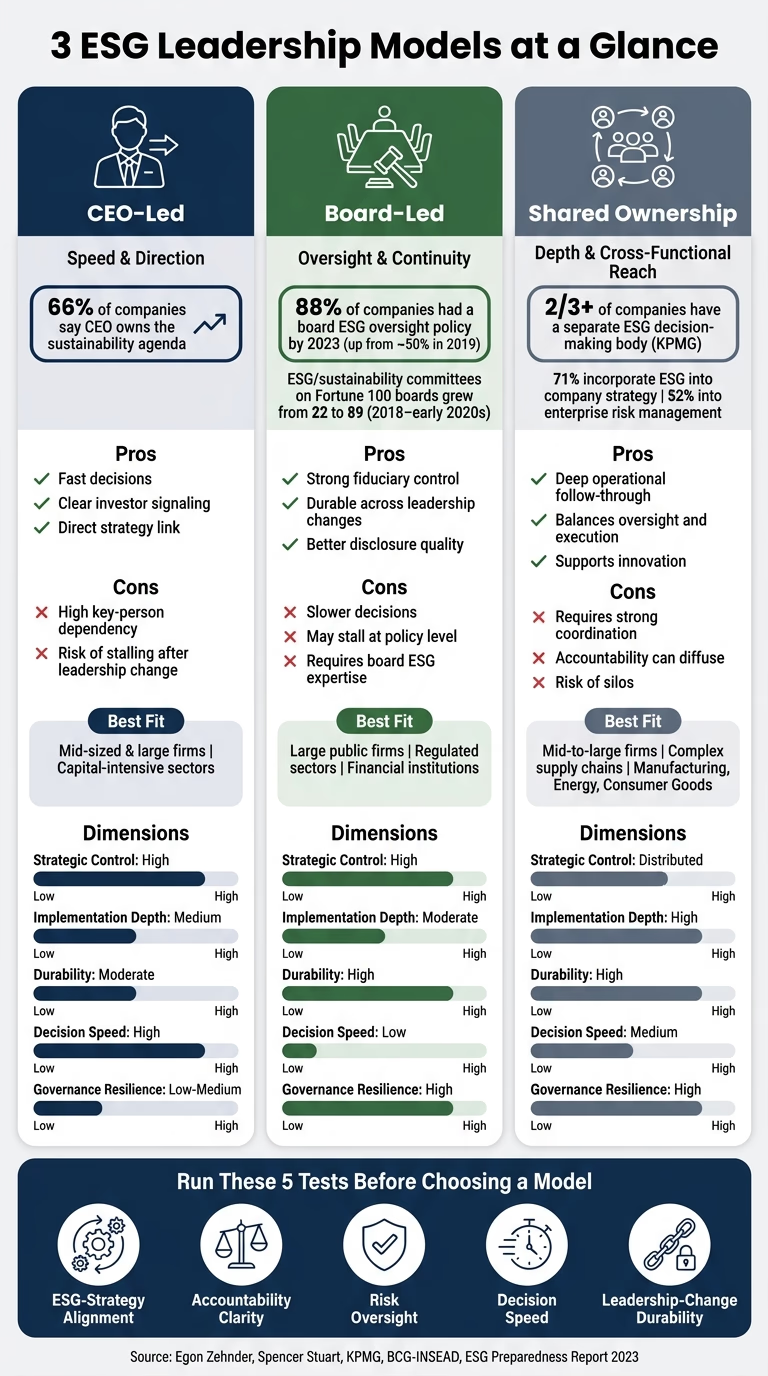
3 ESG Leadership Models: CEO-Led vs Board-Led vs Shared Ownership
1. CEO-Led ESG Integration
In this model, the CEO sets the ESG direction, ties it to business goals, and decides where money, people, and time go. The upside is speed. Decisions can move fast when one leader connects ESG to day-to-day business choices. The risk is just as clear: if too much sits with one person, the model can weaken unless the board and executive team lock it into how the company runs. This approach works best when a single executive can link sustainability to capital deployment and operating decisions.
Strategic Control
When ESG is built into capital planning, talent decisions, and company strategy, it has a better chance of sticking. In an Egon Zehnder survey, 66% of respondents said the CEO owns the sustainability agenda at their company [9].
Salesforce ties ESG metrics to its V2MOM alignment tool, turning CEO intent into companywide accountability. [7]
That kind of top-down link matters. It moves ESG out of a side program and into the core of how the business sets goals and tracks results.
Governance Resilience
A CEO-led model is only as strong as its ability to outlast the current leader. The main weak spot is leader-dependence risk. If employees, investors, or business-unit heads treat ESG as the CEO's project, momentum can fade when leadership changes.
The fix is formal governance. Board-approved ESG policies, standing oversight committees, and ESG metrics tied to executive pay help turn personal drive into company practice. The board needs to set expectations, track progress, and hold the line during leadership transitions.
Implementation Depth
Execution comes down to whether ESG reaches business-unit KPIs, capital planning, and shared ownership across functions. If it stays at the messaging level, the model looks strong on paper but thin in practice. If it flows into budgets, operations, and performance reviews, it starts to shape how the company works.
Flex offers a useful example. Its 2023 CEO transition renewed the company’s sustainability focus and set 2030 science-based targets [8].
Fit by Size and Sector
Centralized decision-making tends to work best when ESG outcomes are shaped by capital allocation and operational scale. That makes this model a strong fit for mid-sized and large companies, especially in capital-intensive sectors like energy, heavy industry, transportation, and agriculture, where ESG choices often involve major investment calls.
It tends to be a weaker fit for highly decentralized companies or heavily regulated industries. In those settings, formal board oversight and broader governance usually need a bigger role.
Dimension | CEO-Led Model |
|---|---|
Strategic control | High - ESG set and driven from the top |
Implementation depth | Strong when cross-functional KPIs are in place |
Durability | Moderate - depends on board backing |
Best fit | Mid-sized and large firms; capital-intensive sectors |
When authority needs a stronger counterweight from formal oversight, board-led integration starts to make more sense.
2. Board-Led ESG Integration
Board-led ESG moves decision-making from a single executive sponsor to the board itself. That changes the center of gravity. The board sets priorities, watches risk, and links ESG to management reviews and capital decisions. Compared with CEO-led integration, this approach is usually slower to move, but it tends to last longer and comes with tighter oversight.
Strategic Authority
Boards weave ESG into company strategy through clear, practical levers. That can mean approving science-based emissions targets, requiring ESG-linked executive compensation, and folding climate scenario analysis into long-range planning. Because boards also oversee CEO succession and performance, they can make ESG fluency a hard requirement for top leadership.
A 2023 ESG preparedness report found that 88% of businesses globally had a board policy for ESG oversight, up from just over half in 2019. [5][6]
Governance Resilience
The biggest strength of this model is staying power. ESG commitments do not rest on one leader’s term in office. They are built into the company’s governing structure. Standing ESG or sustainability committees, clear language in committee charters, and independent assurance for key metrics all help keep the work in place even when leadership changes.
That shift has shown up in board structure. Between 2018 and the early 2020s, ESG/sustainability committees on Fortune 100 boards grew from 22 to 89. [4][10][11]
Execution Depth
This is where the model can run into friction. Boards can point the company in the right direction, but management has to turn that direction into day-to-day discipline. Boards meet on a set schedule and work at a high level. They can guide, press, and approve, but they do not run procurement, product design, or supply chains.
So the weak point is often the handoff from board direction to operating follow-through. A strong policy on paper can stall if management lacks clear ownership, the right incentives, or the staff and systems to carry it out. Closing that gap usually takes:
solid management systems
cross-functional ESG steering committees
ESG metrics built into business-unit performance reviews, not only board dashboards
Fit by Size and Sector
This model works best for large, complex, and heavily regulated companies. That includes multinationals, financial institutions, utilities, energy companies, and transportation firms. In those sectors, ESG choices often bring legal, reputational, and community effects that call for formal board accountability.
Smaller companies usually do better with fewer committees and a tighter ESG agenda focused on material risk.
Dimension | Board-Led Model |
|---|---|
Strategic authority | High - ESG embedded in board mandates and committee charters |
Governance resilience | Strong - persists across CEO transitions |
Execution depth | Moderate - depends on management systems and clear delegation |
Best fit | Large companies; regulated industries; financial institutions |
When ESG responsibility needs to spread across functions instead of sitting mainly at the top, shared ownership starts to make more sense.
3. Shared Ownership ESG Integration
Where CEO-led and board-led models keep authority near the top, shared ownership spreads it across the company. ESG does not sit with one person or one committee. Instead, accountability is shared by the board, the executive team, and line functions. The board sets direction. The CEO or CSO keeps the strategy on track. A cross-functional ESG council helps turn that strategy into day-to-day action. This model tends to work best when ESG has to move through many parts of the business, not just through top-level backing. [21][24]
Strategic Authority
Committee charters and governance guidelines should spell out decision rights. In practice, that usually means a cross-functional ESG steering committee oversees implementation, while the board keeps fiduciary oversight. An identified corporate officer - often a CSO - chairs or co-chairs the ESG council so decisions stay aligned across functions. [17][21][22] On paper, that sounds clean. In practice, it only works when reporting lines and decision rights are clear enough for people to act without second-guessing who owns what.
A KPMG governance study found that more than two-thirds of the companies surveyed have a separate decision-making body for ESG, most commonly called a sustainability committee or council. [23]
Governance Resilience
Shared ownership can hold up well over time because ESG responsibility is spread across roles and committees rather than tied to one leader. Formal charters, documented processes, and regular board reporting help maintain continuity even when people change roles or leave the company. [13][15][17][18]
Execution Depth
The big upside here is operational reach. ESG targets sit inside the functions that control the work, which makes follow-through much more likely. Procurement, finance, and HR should each own the ESG targets tied to the decisions they already make. [14][16][19] Companies can push this further with a line-led operating model, backed by employee communities and project groups that help move work forward. [25]
The downside is fragmentation. When many groups share ownership, confusion can creep in fast. That is why clear decision rights matter so much. RACI matrices for climate risk, supplier screening, and ESG disclosure help define who decides, who executes, and who approves. [16][19]
Fit by Size and Sector
Shared ownership fits mid- to large-sized organizations where ESG runs through operations, supply chains, and people functions. It is often a strong match for manufacturing, energy, infrastructure, and consumer goods, where cross-functional complexity makes distributed ownership a practical choice. [13][14][16][18] Smaller companies often do better with a lean CEO-led model, while highly regulated sectors usually need shared ownership backed by strong board and executive oversight. [13][14][18]
Dimension | Shared Ownership Model |
|---|---|
Strategic authority | Distributed - board sets ambition, ESG council drives implementation |
Governance resilience | Strong - anchored in processes and committees, not individuals |
Execution depth | High - when line functions own ESG targets and clear decision rights exist |
Best fit | Mid- to large-sized firms; sectors with complex, cross-functional ESG risks |
Pros and Cons by Model
Once you look at each model on its own, the next step is simpler: weigh control, durability, and execution. In practice, these models make different tradeoffs across speed, staying power, oversight, and depth of follow-through. The table below gives a quick side-by-side view.
Model | Major Pros | Major Cons | Best-Use Scenario |
|---|---|---|---|
CEO-Led | Fast decisions; clear investor and customer signaling [27][31][32][33] | High key-person dependency; ESG progress can stall after leadership changes; can become personality-driven without oversight [26][28][29][30] | Founder-led or mid-sized firms; high-growth sectors like tech, consumer brands, or renewable energy [26][29][33] |
Board-Led | Strong fiduciary control; durable across leadership changes; stronger disclosure quality [2][1][3][20] | Slower decision-making; may stop at policy; requires board ESG expertise [2][1][3][20] | Public companies and regulated sectors such as financial services, utilities, and healthcare [2][1][3][20] |
Shared Ownership | Built into business-unit operations; balances oversight and execution; supports innovation [1][34][35][12][32] | Requires strong coordination; accountability can diffuse; weak governance creates silos and gaps [2][12][20][36] | Large, multi-business or multi-site organizations; companies with complex supply chains such as manufacturing, energy, consumer goods, logistics, and retail [1][12][34][35] |
The pattern is pretty clear. CEO-led is the fastest. Board-led tends to last longer through leadership turnover. Shared ownership sits in the middle when roles, decision rights, and reporting lines are well defined.
There’s also a practical split in what each model does best. Board-led structures often tighten compliance and reporting. Shared ownership, by contrast, tends to push action deeper into day-to-day operations. That can help teams test new ideas, fix bottlenecks, and move ESG work closer to the places where results are made. This approach allows organizations to rethink profit by aligning operational success with long-term ecosystem and community health.
Use these tradeoffs to match the model to your governance setup and operating complexity.
Which Model Fits Your Organization
The tradeoffs above help match each governance model to the kind of company using it. In plain terms, the best fit comes down to size, governance setup, risk exposure, and which of the five dimensions matters most: strategy integration, accountability, risk oversight, implementation speed, and durability. The matrix below turns that into a practical guide.
Company Profile | Most Suitable Model | Rationale | Key Watch-Outs |
|---|---|---|---|
Small private business (under 100 employees) | CEO-led with board oversight | A single decision-maker can tie ESG to business strategy without adding committee layers. | Key-person risk; document ESG priorities and keep board review in place. |
Mid-sized manufacturer (100–500 employees) | Shared ownership with board oversight | Day-to-day operational impact calls for both top-level oversight and execution at the plant level. | Assign plant-level leaders to own targets such as energy, safety, and waste. |
Large public energy or utilities company | Board-led, with CEO and CSO execution | Heavy regulatory and climate risk call for strong board oversight and a clear transition plan. | ESG can split across risk, strategy, and operations; central coordination and clear KPIs matter. |
Large public financial institution | Board-led through the risk committee, with shared ownership across business lines | ESG sits at the center of credit, investment, and conduct risk, so it should line up with enterprise risk management. | Build ESG into lending, investment policies, and risk models, not just CSR. |
Transportation or logistics company (mid- to large-sized) | Shared ownership under board oversight | Emissions and safety are operating issues; the board sets expectations, while operations leaders carry out the work. | Assign fleet, safety, and climate targets to named leaders. |
Consumer brand or retail company (mid- to large-sized) | Shared ownership with CEO sponsorship and board oversight | Reputation and customer pressure make ESG a business issue; cross-functional ownership across marketing and supply chain helps keep it grounded. | Weak governance can lead to a gap between claims and practice; use verified data and line up messaging with actual operations. |
The numbers back this up. In a Spencer Stuart survey, 71% of respondents said they were incorporating ESG goals into overall company strategy, and 52% had integrated ESG into enterprise risk management [37]. That’s why governance needs to cover both oversight and execution.
The real test isn’t the label on the model. It’s whether people know who owns what, whether decisions stick, and whether execution stays steady over time.
Conclusion
Put side by side, these three models balance speed against staying power, and central control against reach across the business. The best fit depends on governance maturity, sector risk, organizational complexity, and the team's ability to follow through.
A 2025 BCG-INSEAD survey found that 70% of board members said their board is only moderately effective or ineffective at integrating ESG into strategy and governance, and only 47% believed the board had sufficient ESG competence to challenge management effectively. [38] That shortfall helps explain why governance design matters just as much as ESG ambition. If the board lacks the skill or the organization lacks the muscle to carry the work through, even a well-chosen model can stall.
In practice, CEO accountability with board reporting often makes sense when ESG is still in its early phase. Stronger board oversight fits cases where ESG is financially material or under public, investor, or regulatory pressure. Shared ownership tends to work better in large or decentralized businesses, where no single team can carry the full load alone. The right model is the one your organization can run with discipline, quarter after quarter.
FAQs
How do we choose the right ESG leadership model?
Choose the ESG leadership model that fits your company’s size, industry, stage, and business goals. There’s no one-size-fits-all setup, but the right model should give you clear ownership, regular reporting, and accountability.
Smaller companies may work well with full-board oversight. Larger or more complex organizations often need a dedicated committee or a central lead. Either way, ESG should be part of core business decisions, not parked off to the side as a standalone function.
Can a company combine CEO-led, board-led, and shared ownership models?
Yes. Companies can - and often should - combine these models.
A hybrid setup tends to work best when each part has a clear job. The board handles oversight and accountability. The CEO weaves sustainability into business strategy and day-to-day decisions. Shared ownership spreads responsibility across teams, so the work doesn’t get stuck in one corner of the company.
What makes an ESG governance model durable over time?
A durable ESG governance model rests on clear accountability, close ties to business strategy, and disciplined data practices - not surface-level compliance. Sustainability should sit inside corporate strategy, with board oversight and executive pay linked to material targets that have outside validation.
It also calls for financial-grade data rigor, strong internal controls, and a steady flow of information between management and the board. That keeps ESG part of day-to-day decision-making, even as political and economic cycles shift.
Related Blog Posts
Latest Articles
©2026

Narrative Change and Power Building: The Missing Half of Advocacy
Narrative change is the process of disrupting dominant narratives that normalize inequity and advancing new narratives from historically marginalized communities.

Funding Resilience Without Federal Grants
BRIC is unreliable and FEMA is shrinking. Here's how cities fund climate resilience with dedicated revenue, blended finance, and a coordinating authority.

The ESG Blind Spot: How AI Is Finding Risks in Companies Nobody Else Is Watching
Norway's sovereign wealth fund uses AI to screen 7,200 portfolio companies for forced labor and corruption within 24 hours. The real story is the emerging-market coverage gap that traditional ESG data vendors miss — and what it means for any company with a global supply chain.
Narrative Change and Power Building: The Missing Half of Advocacy
Narrative change is the process of disrupting dominant narratives that normalize inequity and advancing new narratives from historically marginalized communities.
Funding Resilience Without Federal Grants
BRIC is unreliable and FEMA is shrinking. Here's how cities fund climate resilience with dedicated revenue, blended finance, and a coordinating authority.
The ESG Blind Spot: How AI Is Finding Risks in Companies Nobody Else Is Watching
Norway's sovereign wealth fund uses AI to screen 7,200 portfolio companies for forced labor and corruption within 24 hours. The real story is the emerging-market coverage gap that traditional ESG data vendors miss — and what it means for any company with a global supply chain.
FAQ
01
What does it really mean to “redefine profit”?
02
What makes Council Fire different?
03
Who does Council Fire work with?
04
What does working with Council Fire actually look like?
05
How does Council Fire help organizations turn big goals into action?
06
How does Council Fire define and measure success?
07
How does technology fit into Council Fire’s work?
Sep 4, 2026
Leadership Models for ESG Integration
ESG Strategy
In This Article
Compare CEO-led, board-led, and shared-ownership ESG models to pick the governance fit for size, risk, speed, and execution.
Leadership Models for ESG Integration
Most companies do best with a mix: CEO-led works best for fast direction, board-led works best for oversight and staying power, and shared ownership works best when ESG touches many teams. In the data cited, 88% of companies had a board ESG oversight policy by 2023, 71% said ESG was part of company strategy, and 52% said it was built into enterprise risk management.
If I were choosing a model, I’d focus on five tests:
How well ESG links to company goals
Who is answerable for results
How risk is watched
How fast decisions move
How well the model holds up through leadership change
Here’s the short version:
CEO-led: best when one top leader can tie ESG to budgets, people, and business choices
Board-led: best when legal, investor, and risk pressure call for formal oversight
Shared ownership: best when ESG work sits across finance, legal, HR, supply chain, and operations
Quick Comparison
Model | Main strength | Main risk | Best fit |
|---|---|---|---|
CEO-led | Clear direction and fast action | Too much depends on one person | Mid-sized to large firms; capital-heavy sectors |
Board-led | Strong oversight and continuity | Action can slow down or stay at policy level | Large public firms; regulated sectors |
Shared ownership | Deep follow-through across teams | Roles can blur without clear decision rights | Mid- to large-sized firms with cross-functional ESG work |
The core point is simple: the best model is not the one with the best label; it’s the one your company can run with clear roles, steady follow-through, and board support over time.
3 ESG Leadership Models: CEO-Led vs Board-Led vs Shared Ownership
1. CEO-Led ESG Integration
In this model, the CEO sets the ESG direction, ties it to business goals, and decides where money, people, and time go. The upside is speed. Decisions can move fast when one leader connects ESG to day-to-day business choices. The risk is just as clear: if too much sits with one person, the model can weaken unless the board and executive team lock it into how the company runs. This approach works best when a single executive can link sustainability to capital deployment and operating decisions.
Strategic Control
When ESG is built into capital planning, talent decisions, and company strategy, it has a better chance of sticking. In an Egon Zehnder survey, 66% of respondents said the CEO owns the sustainability agenda at their company [9].
Salesforce ties ESG metrics to its V2MOM alignment tool, turning CEO intent into companywide accountability. [7]
That kind of top-down link matters. It moves ESG out of a side program and into the core of how the business sets goals and tracks results.
Governance Resilience
A CEO-led model is only as strong as its ability to outlast the current leader. The main weak spot is leader-dependence risk. If employees, investors, or business-unit heads treat ESG as the CEO's project, momentum can fade when leadership changes.
The fix is formal governance. Board-approved ESG policies, standing oversight committees, and ESG metrics tied to executive pay help turn personal drive into company practice. The board needs to set expectations, track progress, and hold the line during leadership transitions.
Implementation Depth
Execution comes down to whether ESG reaches business-unit KPIs, capital planning, and shared ownership across functions. If it stays at the messaging level, the model looks strong on paper but thin in practice. If it flows into budgets, operations, and performance reviews, it starts to shape how the company works.
Flex offers a useful example. Its 2023 CEO transition renewed the company’s sustainability focus and set 2030 science-based targets [8].
Fit by Size and Sector
Centralized decision-making tends to work best when ESG outcomes are shaped by capital allocation and operational scale. That makes this model a strong fit for mid-sized and large companies, especially in capital-intensive sectors like energy, heavy industry, transportation, and agriculture, where ESG choices often involve major investment calls.
It tends to be a weaker fit for highly decentralized companies or heavily regulated industries. In those settings, formal board oversight and broader governance usually need a bigger role.
Dimension | CEO-Led Model |
|---|---|
Strategic control | High - ESG set and driven from the top |
Implementation depth | Strong when cross-functional KPIs are in place |
Durability | Moderate - depends on board backing |
Best fit | Mid-sized and large firms; capital-intensive sectors |
When authority needs a stronger counterweight from formal oversight, board-led integration starts to make more sense.
2. Board-Led ESG Integration
Board-led ESG moves decision-making from a single executive sponsor to the board itself. That changes the center of gravity. The board sets priorities, watches risk, and links ESG to management reviews and capital decisions. Compared with CEO-led integration, this approach is usually slower to move, but it tends to last longer and comes with tighter oversight.
Strategic Authority
Boards weave ESG into company strategy through clear, practical levers. That can mean approving science-based emissions targets, requiring ESG-linked executive compensation, and folding climate scenario analysis into long-range planning. Because boards also oversee CEO succession and performance, they can make ESG fluency a hard requirement for top leadership.
A 2023 ESG preparedness report found that 88% of businesses globally had a board policy for ESG oversight, up from just over half in 2019. [5][6]
Governance Resilience
The biggest strength of this model is staying power. ESG commitments do not rest on one leader’s term in office. They are built into the company’s governing structure. Standing ESG or sustainability committees, clear language in committee charters, and independent assurance for key metrics all help keep the work in place even when leadership changes.
That shift has shown up in board structure. Between 2018 and the early 2020s, ESG/sustainability committees on Fortune 100 boards grew from 22 to 89. [4][10][11]
Execution Depth
This is where the model can run into friction. Boards can point the company in the right direction, but management has to turn that direction into day-to-day discipline. Boards meet on a set schedule and work at a high level. They can guide, press, and approve, but they do not run procurement, product design, or supply chains.
So the weak point is often the handoff from board direction to operating follow-through. A strong policy on paper can stall if management lacks clear ownership, the right incentives, or the staff and systems to carry it out. Closing that gap usually takes:
solid management systems
cross-functional ESG steering committees
ESG metrics built into business-unit performance reviews, not only board dashboards
Fit by Size and Sector
This model works best for large, complex, and heavily regulated companies. That includes multinationals, financial institutions, utilities, energy companies, and transportation firms. In those sectors, ESG choices often bring legal, reputational, and community effects that call for formal board accountability.
Smaller companies usually do better with fewer committees and a tighter ESG agenda focused on material risk.
Dimension | Board-Led Model |
|---|---|
Strategic authority | High - ESG embedded in board mandates and committee charters |
Governance resilience | Strong - persists across CEO transitions |
Execution depth | Moderate - depends on management systems and clear delegation |
Best fit | Large companies; regulated industries; financial institutions |
When ESG responsibility needs to spread across functions instead of sitting mainly at the top, shared ownership starts to make more sense.
3. Shared Ownership ESG Integration
Where CEO-led and board-led models keep authority near the top, shared ownership spreads it across the company. ESG does not sit with one person or one committee. Instead, accountability is shared by the board, the executive team, and line functions. The board sets direction. The CEO or CSO keeps the strategy on track. A cross-functional ESG council helps turn that strategy into day-to-day action. This model tends to work best when ESG has to move through many parts of the business, not just through top-level backing. [21][24]
Strategic Authority
Committee charters and governance guidelines should spell out decision rights. In practice, that usually means a cross-functional ESG steering committee oversees implementation, while the board keeps fiduciary oversight. An identified corporate officer - often a CSO - chairs or co-chairs the ESG council so decisions stay aligned across functions. [17][21][22] On paper, that sounds clean. In practice, it only works when reporting lines and decision rights are clear enough for people to act without second-guessing who owns what.
A KPMG governance study found that more than two-thirds of the companies surveyed have a separate decision-making body for ESG, most commonly called a sustainability committee or council. [23]
Governance Resilience
Shared ownership can hold up well over time because ESG responsibility is spread across roles and committees rather than tied to one leader. Formal charters, documented processes, and regular board reporting help maintain continuity even when people change roles or leave the company. [13][15][17][18]
Execution Depth
The big upside here is operational reach. ESG targets sit inside the functions that control the work, which makes follow-through much more likely. Procurement, finance, and HR should each own the ESG targets tied to the decisions they already make. [14][16][19] Companies can push this further with a line-led operating model, backed by employee communities and project groups that help move work forward. [25]
The downside is fragmentation. When many groups share ownership, confusion can creep in fast. That is why clear decision rights matter so much. RACI matrices for climate risk, supplier screening, and ESG disclosure help define who decides, who executes, and who approves. [16][19]
Fit by Size and Sector
Shared ownership fits mid- to large-sized organizations where ESG runs through operations, supply chains, and people functions. It is often a strong match for manufacturing, energy, infrastructure, and consumer goods, where cross-functional complexity makes distributed ownership a practical choice. [13][14][16][18] Smaller companies often do better with a lean CEO-led model, while highly regulated sectors usually need shared ownership backed by strong board and executive oversight. [13][14][18]
Dimension | Shared Ownership Model |
|---|---|
Strategic authority | Distributed - board sets ambition, ESG council drives implementation |
Governance resilience | Strong - anchored in processes and committees, not individuals |
Execution depth | High - when line functions own ESG targets and clear decision rights exist |
Best fit | Mid- to large-sized firms; sectors with complex, cross-functional ESG risks |
Pros and Cons by Model
Once you look at each model on its own, the next step is simpler: weigh control, durability, and execution. In practice, these models make different tradeoffs across speed, staying power, oversight, and depth of follow-through. The table below gives a quick side-by-side view.
Model | Major Pros | Major Cons | Best-Use Scenario |
|---|---|---|---|
CEO-Led | Fast decisions; clear investor and customer signaling [27][31][32][33] | High key-person dependency; ESG progress can stall after leadership changes; can become personality-driven without oversight [26][28][29][30] | Founder-led or mid-sized firms; high-growth sectors like tech, consumer brands, or renewable energy [26][29][33] |
Board-Led | Strong fiduciary control; durable across leadership changes; stronger disclosure quality [2][1][3][20] | Slower decision-making; may stop at policy; requires board ESG expertise [2][1][3][20] | Public companies and regulated sectors such as financial services, utilities, and healthcare [2][1][3][20] |
Shared Ownership | Built into business-unit operations; balances oversight and execution; supports innovation [1][34][35][12][32] | Requires strong coordination; accountability can diffuse; weak governance creates silos and gaps [2][12][20][36] | Large, multi-business or multi-site organizations; companies with complex supply chains such as manufacturing, energy, consumer goods, logistics, and retail [1][12][34][35] |
The pattern is pretty clear. CEO-led is the fastest. Board-led tends to last longer through leadership turnover. Shared ownership sits in the middle when roles, decision rights, and reporting lines are well defined.
There’s also a practical split in what each model does best. Board-led structures often tighten compliance and reporting. Shared ownership, by contrast, tends to push action deeper into day-to-day operations. That can help teams test new ideas, fix bottlenecks, and move ESG work closer to the places where results are made. This approach allows organizations to rethink profit by aligning operational success with long-term ecosystem and community health.
Use these tradeoffs to match the model to your governance setup and operating complexity.
Which Model Fits Your Organization
The tradeoffs above help match each governance model to the kind of company using it. In plain terms, the best fit comes down to size, governance setup, risk exposure, and which of the five dimensions matters most: strategy integration, accountability, risk oversight, implementation speed, and durability. The matrix below turns that into a practical guide.
Company Profile | Most Suitable Model | Rationale | Key Watch-Outs |
|---|---|---|---|
Small private business (under 100 employees) | CEO-led with board oversight | A single decision-maker can tie ESG to business strategy without adding committee layers. | Key-person risk; document ESG priorities and keep board review in place. |
Mid-sized manufacturer (100–500 employees) | Shared ownership with board oversight | Day-to-day operational impact calls for both top-level oversight and execution at the plant level. | Assign plant-level leaders to own targets such as energy, safety, and waste. |
Large public energy or utilities company | Board-led, with CEO and CSO execution | Heavy regulatory and climate risk call for strong board oversight and a clear transition plan. | ESG can split across risk, strategy, and operations; central coordination and clear KPIs matter. |
Large public financial institution | Board-led through the risk committee, with shared ownership across business lines | ESG sits at the center of credit, investment, and conduct risk, so it should line up with enterprise risk management. | Build ESG into lending, investment policies, and risk models, not just CSR. |
Transportation or logistics company (mid- to large-sized) | Shared ownership under board oversight | Emissions and safety are operating issues; the board sets expectations, while operations leaders carry out the work. | Assign fleet, safety, and climate targets to named leaders. |
Consumer brand or retail company (mid- to large-sized) | Shared ownership with CEO sponsorship and board oversight | Reputation and customer pressure make ESG a business issue; cross-functional ownership across marketing and supply chain helps keep it grounded. | Weak governance can lead to a gap between claims and practice; use verified data and line up messaging with actual operations. |
The numbers back this up. In a Spencer Stuart survey, 71% of respondents said they were incorporating ESG goals into overall company strategy, and 52% had integrated ESG into enterprise risk management [37]. That’s why governance needs to cover both oversight and execution.
The real test isn’t the label on the model. It’s whether people know who owns what, whether decisions stick, and whether execution stays steady over time.
Conclusion
Put side by side, these three models balance speed against staying power, and central control against reach across the business. The best fit depends on governance maturity, sector risk, organizational complexity, and the team's ability to follow through.
A 2025 BCG-INSEAD survey found that 70% of board members said their board is only moderately effective or ineffective at integrating ESG into strategy and governance, and only 47% believed the board had sufficient ESG competence to challenge management effectively. [38] That shortfall helps explain why governance design matters just as much as ESG ambition. If the board lacks the skill or the organization lacks the muscle to carry the work through, even a well-chosen model can stall.
In practice, CEO accountability with board reporting often makes sense when ESG is still in its early phase. Stronger board oversight fits cases where ESG is financially material or under public, investor, or regulatory pressure. Shared ownership tends to work better in large or decentralized businesses, where no single team can carry the full load alone. The right model is the one your organization can run with discipline, quarter after quarter.
FAQs
How do we choose the right ESG leadership model?
Choose the ESG leadership model that fits your company’s size, industry, stage, and business goals. There’s no one-size-fits-all setup, but the right model should give you clear ownership, regular reporting, and accountability.
Smaller companies may work well with full-board oversight. Larger or more complex organizations often need a dedicated committee or a central lead. Either way, ESG should be part of core business decisions, not parked off to the side as a standalone function.
Can a company combine CEO-led, board-led, and shared ownership models?
Yes. Companies can - and often should - combine these models.
A hybrid setup tends to work best when each part has a clear job. The board handles oversight and accountability. The CEO weaves sustainability into business strategy and day-to-day decisions. Shared ownership spreads responsibility across teams, so the work doesn’t get stuck in one corner of the company.
What makes an ESG governance model durable over time?
A durable ESG governance model rests on clear accountability, close ties to business strategy, and disciplined data practices - not surface-level compliance. Sustainability should sit inside corporate strategy, with board oversight and executive pay linked to material targets that have outside validation.
It also calls for financial-grade data rigor, strong internal controls, and a steady flow of information between management and the board. That keeps ESG part of day-to-day decision-making, even as political and economic cycles shift.
Related Blog Posts
Latest Articles
©2026
Narrative Change and Power Building: The Missing Half of Advocacy
Narrative change is the process of disrupting dominant narratives that normalize inequity and advancing new narratives from historically marginalized communities.
Funding Resilience Without Federal Grants
BRIC is unreliable and FEMA is shrinking. Here's how cities fund climate resilience with dedicated revenue, blended finance, and a coordinating authority.
The ESG Blind Spot: How AI Is Finding Risks in Companies Nobody Else Is Watching
Norway's sovereign wealth fund uses AI to screen 7,200 portfolio companies for forced labor and corruption within 24 hours. The real story is the emerging-market coverage gap that traditional ESG data vendors miss — and what it means for any company with a global supply chain.
FAQ
01
What does it really mean to “redefine profit”?
02
What makes Council Fire different?
03
Who does Council Fire work with?
04
What does working with Council Fire actually look like?
05
How does Council Fire help organizations turn big goals into action?
06
How does Council Fire define and measure success?
07
How does technology fit into Council Fire’s work?
Sep 4, 2026
Leadership Models for ESG Integration
ESG Strategy
In This Article
Compare CEO-led, board-led, and shared-ownership ESG models to pick the governance fit for size, risk, speed, and execution.
Leadership Models for ESG Integration
Most companies do best with a mix: CEO-led works best for fast direction, board-led works best for oversight and staying power, and shared ownership works best when ESG touches many teams. In the data cited, 88% of companies had a board ESG oversight policy by 2023, 71% said ESG was part of company strategy, and 52% said it was built into enterprise risk management.
If I were choosing a model, I’d focus on five tests:
How well ESG links to company goals
Who is answerable for results
How risk is watched
How fast decisions move
How well the model holds up through leadership change
Here’s the short version:
CEO-led: best when one top leader can tie ESG to budgets, people, and business choices
Board-led: best when legal, investor, and risk pressure call for formal oversight
Shared ownership: best when ESG work sits across finance, legal, HR, supply chain, and operations
Quick Comparison
Model | Main strength | Main risk | Best fit |
|---|---|---|---|
CEO-led | Clear direction and fast action | Too much depends on one person | Mid-sized to large firms; capital-heavy sectors |
Board-led | Strong oversight and continuity | Action can slow down or stay at policy level | Large public firms; regulated sectors |
Shared ownership | Deep follow-through across teams | Roles can blur without clear decision rights | Mid- to large-sized firms with cross-functional ESG work |
The core point is simple: the best model is not the one with the best label; it’s the one your company can run with clear roles, steady follow-through, and board support over time.
3 ESG Leadership Models: CEO-Led vs Board-Led vs Shared Ownership
1. CEO-Led ESG Integration
In this model, the CEO sets the ESG direction, ties it to business goals, and decides where money, people, and time go. The upside is speed. Decisions can move fast when one leader connects ESG to day-to-day business choices. The risk is just as clear: if too much sits with one person, the model can weaken unless the board and executive team lock it into how the company runs. This approach works best when a single executive can link sustainability to capital deployment and operating decisions.
Strategic Control
When ESG is built into capital planning, talent decisions, and company strategy, it has a better chance of sticking. In an Egon Zehnder survey, 66% of respondents said the CEO owns the sustainability agenda at their company [9].
Salesforce ties ESG metrics to its V2MOM alignment tool, turning CEO intent into companywide accountability. [7]
That kind of top-down link matters. It moves ESG out of a side program and into the core of how the business sets goals and tracks results.
Governance Resilience
A CEO-led model is only as strong as its ability to outlast the current leader. The main weak spot is leader-dependence risk. If employees, investors, or business-unit heads treat ESG as the CEO's project, momentum can fade when leadership changes.
The fix is formal governance. Board-approved ESG policies, standing oversight committees, and ESG metrics tied to executive pay help turn personal drive into company practice. The board needs to set expectations, track progress, and hold the line during leadership transitions.
Implementation Depth
Execution comes down to whether ESG reaches business-unit KPIs, capital planning, and shared ownership across functions. If it stays at the messaging level, the model looks strong on paper but thin in practice. If it flows into budgets, operations, and performance reviews, it starts to shape how the company works.
Flex offers a useful example. Its 2023 CEO transition renewed the company’s sustainability focus and set 2030 science-based targets [8].
Fit by Size and Sector
Centralized decision-making tends to work best when ESG outcomes are shaped by capital allocation and operational scale. That makes this model a strong fit for mid-sized and large companies, especially in capital-intensive sectors like energy, heavy industry, transportation, and agriculture, where ESG choices often involve major investment calls.
It tends to be a weaker fit for highly decentralized companies or heavily regulated industries. In those settings, formal board oversight and broader governance usually need a bigger role.
Dimension | CEO-Led Model |
|---|---|
Strategic control | High - ESG set and driven from the top |
Implementation depth | Strong when cross-functional KPIs are in place |
Durability | Moderate - depends on board backing |
Best fit | Mid-sized and large firms; capital-intensive sectors |
When authority needs a stronger counterweight from formal oversight, board-led integration starts to make more sense.
2. Board-Led ESG Integration
Board-led ESG moves decision-making from a single executive sponsor to the board itself. That changes the center of gravity. The board sets priorities, watches risk, and links ESG to management reviews and capital decisions. Compared with CEO-led integration, this approach is usually slower to move, but it tends to last longer and comes with tighter oversight.
Strategic Authority
Boards weave ESG into company strategy through clear, practical levers. That can mean approving science-based emissions targets, requiring ESG-linked executive compensation, and folding climate scenario analysis into long-range planning. Because boards also oversee CEO succession and performance, they can make ESG fluency a hard requirement for top leadership.
A 2023 ESG preparedness report found that 88% of businesses globally had a board policy for ESG oversight, up from just over half in 2019. [5][6]
Governance Resilience
The biggest strength of this model is staying power. ESG commitments do not rest on one leader’s term in office. They are built into the company’s governing structure. Standing ESG or sustainability committees, clear language in committee charters, and independent assurance for key metrics all help keep the work in place even when leadership changes.
That shift has shown up in board structure. Between 2018 and the early 2020s, ESG/sustainability committees on Fortune 100 boards grew from 22 to 89. [4][10][11]
Execution Depth
This is where the model can run into friction. Boards can point the company in the right direction, but management has to turn that direction into day-to-day discipline. Boards meet on a set schedule and work at a high level. They can guide, press, and approve, but they do not run procurement, product design, or supply chains.
So the weak point is often the handoff from board direction to operating follow-through. A strong policy on paper can stall if management lacks clear ownership, the right incentives, or the staff and systems to carry it out. Closing that gap usually takes:
solid management systems
cross-functional ESG steering committees
ESG metrics built into business-unit performance reviews, not only board dashboards
Fit by Size and Sector
This model works best for large, complex, and heavily regulated companies. That includes multinationals, financial institutions, utilities, energy companies, and transportation firms. In those sectors, ESG choices often bring legal, reputational, and community effects that call for formal board accountability.
Smaller companies usually do better with fewer committees and a tighter ESG agenda focused on material risk.
Dimension | Board-Led Model |
|---|---|
Strategic authority | High - ESG embedded in board mandates and committee charters |
Governance resilience | Strong - persists across CEO transitions |
Execution depth | Moderate - depends on management systems and clear delegation |
Best fit | Large companies; regulated industries; financial institutions |
When ESG responsibility needs to spread across functions instead of sitting mainly at the top, shared ownership starts to make more sense.
3. Shared Ownership ESG Integration
Where CEO-led and board-led models keep authority near the top, shared ownership spreads it across the company. ESG does not sit with one person or one committee. Instead, accountability is shared by the board, the executive team, and line functions. The board sets direction. The CEO or CSO keeps the strategy on track. A cross-functional ESG council helps turn that strategy into day-to-day action. This model tends to work best when ESG has to move through many parts of the business, not just through top-level backing. [21][24]
Strategic Authority
Committee charters and governance guidelines should spell out decision rights. In practice, that usually means a cross-functional ESG steering committee oversees implementation, while the board keeps fiduciary oversight. An identified corporate officer - often a CSO - chairs or co-chairs the ESG council so decisions stay aligned across functions. [17][21][22] On paper, that sounds clean. In practice, it only works when reporting lines and decision rights are clear enough for people to act without second-guessing who owns what.
A KPMG governance study found that more than two-thirds of the companies surveyed have a separate decision-making body for ESG, most commonly called a sustainability committee or council. [23]
Governance Resilience
Shared ownership can hold up well over time because ESG responsibility is spread across roles and committees rather than tied to one leader. Formal charters, documented processes, and regular board reporting help maintain continuity even when people change roles or leave the company. [13][15][17][18]
Execution Depth
The big upside here is operational reach. ESG targets sit inside the functions that control the work, which makes follow-through much more likely. Procurement, finance, and HR should each own the ESG targets tied to the decisions they already make. [14][16][19] Companies can push this further with a line-led operating model, backed by employee communities and project groups that help move work forward. [25]
The downside is fragmentation. When many groups share ownership, confusion can creep in fast. That is why clear decision rights matter so much. RACI matrices for climate risk, supplier screening, and ESG disclosure help define who decides, who executes, and who approves. [16][19]
Fit by Size and Sector
Shared ownership fits mid- to large-sized organizations where ESG runs through operations, supply chains, and people functions. It is often a strong match for manufacturing, energy, infrastructure, and consumer goods, where cross-functional complexity makes distributed ownership a practical choice. [13][14][16][18] Smaller companies often do better with a lean CEO-led model, while highly regulated sectors usually need shared ownership backed by strong board and executive oversight. [13][14][18]
Dimension | Shared Ownership Model |
|---|---|
Strategic authority | Distributed - board sets ambition, ESG council drives implementation |
Governance resilience | Strong - anchored in processes and committees, not individuals |
Execution depth | High - when line functions own ESG targets and clear decision rights exist |
Best fit | Mid- to large-sized firms; sectors with complex, cross-functional ESG risks |
Pros and Cons by Model
Once you look at each model on its own, the next step is simpler: weigh control, durability, and execution. In practice, these models make different tradeoffs across speed, staying power, oversight, and depth of follow-through. The table below gives a quick side-by-side view.
Model | Major Pros | Major Cons | Best-Use Scenario |
|---|---|---|---|
CEO-Led | Fast decisions; clear investor and customer signaling [27][31][32][33] | High key-person dependency; ESG progress can stall after leadership changes; can become personality-driven without oversight [26][28][29][30] | Founder-led or mid-sized firms; high-growth sectors like tech, consumer brands, or renewable energy [26][29][33] |
Board-Led | Strong fiduciary control; durable across leadership changes; stronger disclosure quality [2][1][3][20] | Slower decision-making; may stop at policy; requires board ESG expertise [2][1][3][20] | Public companies and regulated sectors such as financial services, utilities, and healthcare [2][1][3][20] |
Shared Ownership | Built into business-unit operations; balances oversight and execution; supports innovation [1][34][35][12][32] | Requires strong coordination; accountability can diffuse; weak governance creates silos and gaps [2][12][20][36] | Large, multi-business or multi-site organizations; companies with complex supply chains such as manufacturing, energy, consumer goods, logistics, and retail [1][12][34][35] |
The pattern is pretty clear. CEO-led is the fastest. Board-led tends to last longer through leadership turnover. Shared ownership sits in the middle when roles, decision rights, and reporting lines are well defined.
There’s also a practical split in what each model does best. Board-led structures often tighten compliance and reporting. Shared ownership, by contrast, tends to push action deeper into day-to-day operations. That can help teams test new ideas, fix bottlenecks, and move ESG work closer to the places where results are made. This approach allows organizations to rethink profit by aligning operational success with long-term ecosystem and community health.
Use these tradeoffs to match the model to your governance setup and operating complexity.
Which Model Fits Your Organization
The tradeoffs above help match each governance model to the kind of company using it. In plain terms, the best fit comes down to size, governance setup, risk exposure, and which of the five dimensions matters most: strategy integration, accountability, risk oversight, implementation speed, and durability. The matrix below turns that into a practical guide.
Company Profile | Most Suitable Model | Rationale | Key Watch-Outs |
|---|---|---|---|
Small private business (under 100 employees) | CEO-led with board oversight | A single decision-maker can tie ESG to business strategy without adding committee layers. | Key-person risk; document ESG priorities and keep board review in place. |
Mid-sized manufacturer (100–500 employees) | Shared ownership with board oversight | Day-to-day operational impact calls for both top-level oversight and execution at the plant level. | Assign plant-level leaders to own targets such as energy, safety, and waste. |
Large public energy or utilities company | Board-led, with CEO and CSO execution | Heavy regulatory and climate risk call for strong board oversight and a clear transition plan. | ESG can split across risk, strategy, and operations; central coordination and clear KPIs matter. |
Large public financial institution | Board-led through the risk committee, with shared ownership across business lines | ESG sits at the center of credit, investment, and conduct risk, so it should line up with enterprise risk management. | Build ESG into lending, investment policies, and risk models, not just CSR. |
Transportation or logistics company (mid- to large-sized) | Shared ownership under board oversight | Emissions and safety are operating issues; the board sets expectations, while operations leaders carry out the work. | Assign fleet, safety, and climate targets to named leaders. |
Consumer brand or retail company (mid- to large-sized) | Shared ownership with CEO sponsorship and board oversight | Reputation and customer pressure make ESG a business issue; cross-functional ownership across marketing and supply chain helps keep it grounded. | Weak governance can lead to a gap between claims and practice; use verified data and line up messaging with actual operations. |
The numbers back this up. In a Spencer Stuart survey, 71% of respondents said they were incorporating ESG goals into overall company strategy, and 52% had integrated ESG into enterprise risk management [37]. That’s why governance needs to cover both oversight and execution.
The real test isn’t the label on the model. It’s whether people know who owns what, whether decisions stick, and whether execution stays steady over time.
Conclusion
Put side by side, these three models balance speed against staying power, and central control against reach across the business. The best fit depends on governance maturity, sector risk, organizational complexity, and the team's ability to follow through.
A 2025 BCG-INSEAD survey found that 70% of board members said their board is only moderately effective or ineffective at integrating ESG into strategy and governance, and only 47% believed the board had sufficient ESG competence to challenge management effectively. [38] That shortfall helps explain why governance design matters just as much as ESG ambition. If the board lacks the skill or the organization lacks the muscle to carry the work through, even a well-chosen model can stall.
In practice, CEO accountability with board reporting often makes sense when ESG is still in its early phase. Stronger board oversight fits cases where ESG is financially material or under public, investor, or regulatory pressure. Shared ownership tends to work better in large or decentralized businesses, where no single team can carry the full load alone. The right model is the one your organization can run with discipline, quarter after quarter.
FAQs
How do we choose the right ESG leadership model?
Choose the ESG leadership model that fits your company’s size, industry, stage, and business goals. There’s no one-size-fits-all setup, but the right model should give you clear ownership, regular reporting, and accountability.
Smaller companies may work well with full-board oversight. Larger or more complex organizations often need a dedicated committee or a central lead. Either way, ESG should be part of core business decisions, not parked off to the side as a standalone function.
Can a company combine CEO-led, board-led, and shared ownership models?
Yes. Companies can - and often should - combine these models.
A hybrid setup tends to work best when each part has a clear job. The board handles oversight and accountability. The CEO weaves sustainability into business strategy and day-to-day decisions. Shared ownership spreads responsibility across teams, so the work doesn’t get stuck in one corner of the company.
What makes an ESG governance model durable over time?
A durable ESG governance model rests on clear accountability, close ties to business strategy, and disciplined data practices - not surface-level compliance. Sustainability should sit inside corporate strategy, with board oversight and executive pay linked to material targets that have outside validation.
It also calls for financial-grade data rigor, strong internal controls, and a steady flow of information between management and the board. That keeps ESG part of day-to-day decision-making, even as political and economic cycles shift.
Related Blog Posts
Latest Articles
©2026
Narrative Change and Power Building: The Missing Half of Advocacy
Narrative change is the process of disrupting dominant narratives that normalize inequity and advancing new narratives from historically marginalized communities.
Funding Resilience Without Federal Grants
BRIC is unreliable and FEMA is shrinking. Here's how cities fund climate resilience with dedicated revenue, blended finance, and a coordinating authority.
The ESG Blind Spot: How AI Is Finding Risks in Companies Nobody Else Is Watching
Norway's sovereign wealth fund uses AI to screen 7,200 portfolio companies for forced labor and corruption within 24 hours. The real story is the emerging-market coverage gap that traditional ESG data vendors miss — and what it means for any company with a global supply chain.
FAQ
What does it really mean to “redefine profit”?
What makes Council Fire different?
Who does Council Fire work with?
What does working with Council Fire actually look like?
How does Council Fire help organizations turn big goals into action?
How does Council Fire define and measure success?
How does technology fit into Council Fire’s work?