
Jun 5, 2026
How to Build Resilience Governance Models That Balance Risk and Equity for Corporations
ESG Strategy
In This Article
Steps to build corporate resilience governance that balances operational risk and stakeholder equity with assessments, roles, and metrics.
How to Build Resilience Governance Models That Balance Risk and Equity for Corporations
Balancing risk and equity in corporate resilience governance is essential for long-term success. Companies often focus more on financial stability than on the well-being of their workforce or communities during crises. Resilience governance aims to address this by creating systems that protect both financial priorities and stakeholder equity. Here's how to get started:
Identify risks and gaps: Map out risks across operations, climate, social factors, and more. Use tools like scenario analysis to understand vulnerabilities and equity gaps.
Engage stakeholders: Understand the needs of employees, suppliers, and communities, especially those with high impact but low influence.
Measure equity: Track metrics like pay gaps, safety records, and community impact to establish a baseline.
Design governance structures: Assign clear roles, integrate equity into risk policies, and form cross-functional teams.
Track progress: Use dashboards and assessments to monitor resilience and equity metrics, aligning with ESG standards.
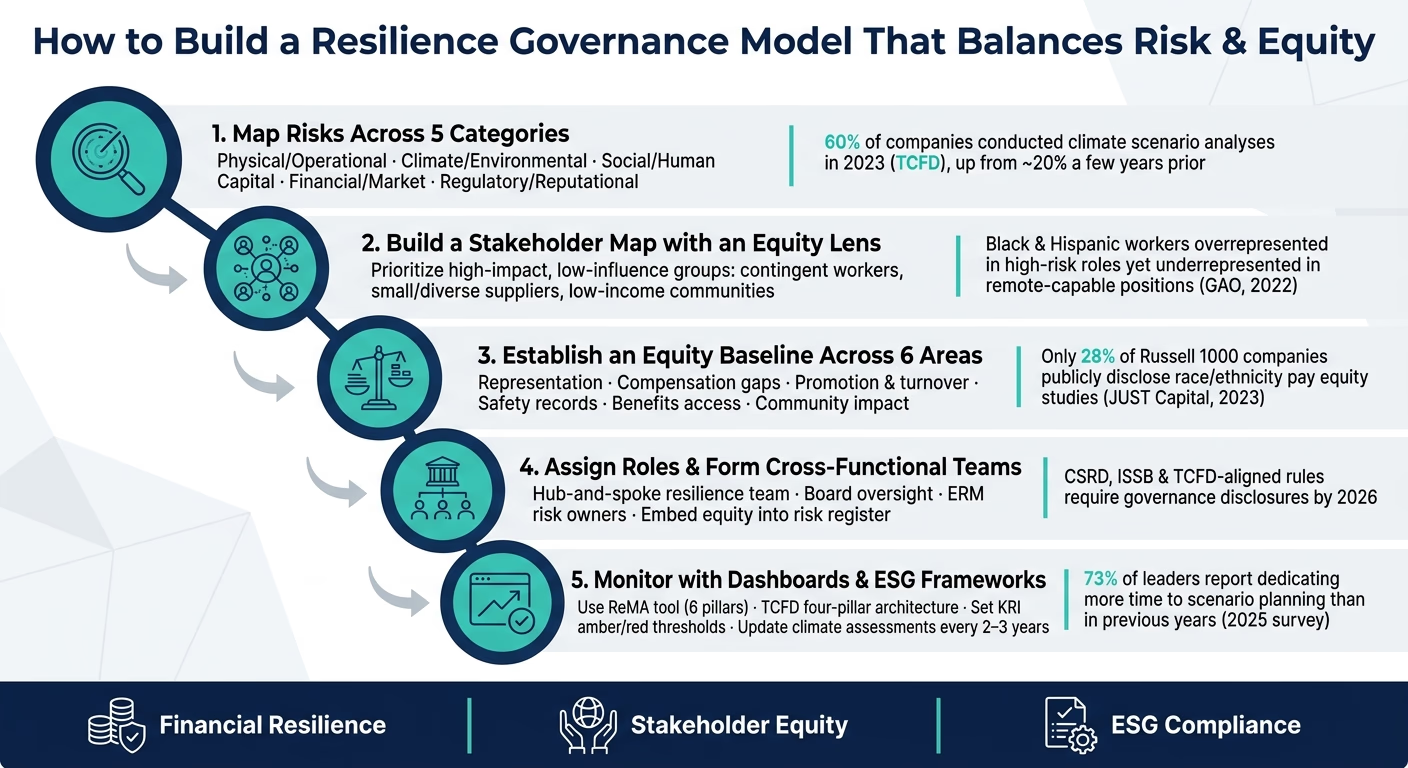
Resilience Governance Model: 5 Steps to Balance Risk & Equity
Enterprise Resilience and Systemic Level Risk Management
Mapping Risks, Stakeholders, and Equity Gaps
Before setting up a governance model that balances priorities, it’s crucial to map out risks, identify affected stakeholders, and pinpoint existing equity gaps. These steps lay the groundwork for crafting a thoughtful governance structure.
Run a Risk and Resilience Assessment
A comprehensive risk assessment should address at least five categories: physical/operational, climate/environmental, social/human capital, financial/market, and regulatory/reputational. These risks are often interconnected. For instance, a flood impacting a Gulf Coast warehouse doesn’t just disrupt operations - it also raises safety concerns for workers, jeopardizes supply chains, and highlights potential equity issues if the surrounding community lacks emergency resources.
Scenario analysis is a powerful tool for this process. Develop at least three scenarios to stress test your operations: one focused on climate risks (e.g., a spike in 100°F days affecting outdoor workers in the Southwest), one operational (e.g., a major port closure disrupting imports from smaller suppliers), and one social (e.g., a labor organizing campaign sparked by unsafe working conditions). For each scenario, evaluate who is most vulnerable and who has limited resources, such as savings, benefits, or alternative job options. According to the Task Force on Climate-related Financial Disclosures (TCFD), nearly 60% of surveyed companies conducted climate-related scenario analyses in 2023, a sharp rise from about 20% just a few years earlier. This shift underscores how essential these assessments have become.
Build a Stakeholder Map
Simply listing stakeholders isn’t enough - you need to understand their influence and interests. Group stakeholders into categories such as hourly versus salaried employees, unionized versus non-unionized workers, full-time versus contingent staff, tier-1 versus tier-2 suppliers, and local communities near your facilities. Then, position them on an influence-interest matrix, adding an equity lens to prioritize attention.
Focus on groups with high impact but low influence, such as temporary warehouse workers, small minority-owned suppliers, or low-income communities near industrial hubs. These groups often bear the brunt of operational or environmental risks but have little say in decision-making. A 2022 U.S. Government Accountability Office report highlights how Black and Hispanic workers are overrepresented in high-risk jobs like food processing and warehousing, yet underrepresented in roles that can be performed remotely. This disparity points to where equity issues are most pressing. The table below outlines typical influence and impact levels by stakeholder type:
Stakeholder Type | Typical Influence | Typical Impact from Corporate Decisions |
|---|---|---|
Regulatory Agencies | High | High |
Senior Employees / Management | High | Medium |
Local Communities | Medium | Medium–High |
Contingent / Contract Workers | Low | High |
Small / Diverse Suppliers | Low | High |
Environmental NGOs | Medium | Low |
For stakeholders who are hard to engage directly - like workers buried deep within supply chains - consider relying on proxies such as trade unions, NGOs, or academic experts to surface their concerns.
Measure Current Equity Performance
With stakeholders and risks identified, the next step is establishing a baseline. Without one, tracking progress or holding decision-makers accountable becomes impossible. A thorough equity baseline should cover six key areas: representation at different job levels, compensation disparities, promotion and turnover rates, worker safety records, access to benefits, and community impact metrics like local hiring rates.
Pay equity analysis is a logical starting point, but it needs to go beyond surface-level data. Break it down by job type, level, gender, and race/ethnicity to uncover hidden disparities. A 2023 analysis by JUST Capital found that only 28% of Russell 1000 companies publicly disclosed race/ethnicity pay equity studies, signaling that most organizations lack this foundational data. Safety metrics should receive similar scrutiny. For example, the AFL-CIO reported that in 2022, the fatal work injury rate for agricultural workers exceeded 19 per 100,000 - far above the national average of 3.7 per 100,000. Industries employing large numbers of low-wage and migrant workers often show similar patterns. Disaggregating your safety data by location, role, and worker type can reveal whether your operations mirror these trends.
These findings should feed directly into your corporate risk register, explicitly naming equity-related risks and assigning clear accountability. This analysis becomes the backbone of your governance model, ensuring decisions are informed by a clear understanding of risks and equity gaps.
Designing a Resilience Governance Model
Once you've mapped out risks, stakeholders, and equity gaps, the next step is to translate these insights into a functional governance structure. This involves defining responsibilities, decision-making processes, and ensuring equity remains a priority throughout.
Assign Clear Roles and Responsibilities
For resilience governance to succeed, accountability has to start at the top. Boards play a critical role in overseeing sustainability and resilience efforts, integrating these priorities into strategy, risk management, and internal controls.
"The corporate governance framework should provide incentives for companies and their investors to make decisions and manage their risks, in a way that contributes to the sustainability and resilience of the corporation." - OECD [1]
One powerful tool at the board's disposal is executive compensation. By tying leadership pay and nominations to measurable sustainability targets - especially those linked to financially significant risks and long-term goals - boards send a clear message that equity and resilience are non-negotiable priorities [1]. Beyond incentives, boards should also establish confidential whistleblowing channels. These allow employees and community members to report concerns directly to independent board members, such as through audit or ethics committees, without fear of retaliation [1].
Within the organization, the Enterprise Risk Management (ERM) framework should assign specific risk owners to oversee climate and social risks. These roles should include defined risk appetites and clear monitoring triggers [5]. Risks that lack ownership often get overlooked, so clarity here is essential.
This board-driven approach naturally sets the stage for collaboration across departments.
Form Cross-Functional Governance Teams
Resilience isn't something one department can handle alone. A hub-and-spoke model can be effective: a central resilience team with representatives from finance, risk, operations, strategy, and sustainability [6]. This team should report to senior operational leadership, not just the sustainability function, to ensure it has real influence [6].
Instead of creating a separate resilience committee, integrate resilience oversight into existing board committees, such as audit, risk, compensation, and strategy [6]. This prevents resilience from being isolated and ensures it becomes a core part of business decisions. To maintain progress, set a deliberate pace - monthly steering committees and quarterly working groups can help balance accountability with workload [6].
"Climate resilience cannot be achieved alone. Companies consistently reported that their greatest vulnerabilities often lie outside their direct control - in supply chains, infrastructure systems, workforce communities, and natural ecosystems." - Center for Climate and Energy Solutions (C2ES) [6]
A practical approach is to align resilience goals with the priorities of each department. For example, finance teams respond well to ROI-focused discussions, engineers to technical risks, and operations to continuity planning [6]. Tailoring the message ensures equity concerns resonate across the organization.
Policies must then reinforce these teamwork efforts by embedding equity considerations.
Embed Equity into Risk Policies
Equity gaps identified in your risk mapping should be explicitly included in your risk register. Categories like climate resilience, environmental justice, and social equity should sit alongside traditional risks, not as afterthoughts [5]. This approach is becoming more than just good practice - mandatory disclosure frameworks like CSRD, ISSB, and TCFD-aligned rules will require companies to document their governance arrangements for risk oversight by 2026 [5].
"Climate risk assessment is not an environmental exercise - it is an enterprise risk management exercise with financial consequences." - Council Fire [5]
Equity should also guide how resources are allocated. Incorporating resilience findings into business continuity plans and capital allocation frameworks ensures that what you've learned about vulnerable stakeholders directly informs where investments are made [5]. Evaluate sustainability data - such as human capital policies, diversity strategies, and community impact - with the same rigor applied to financial reporting [1]. This ensures equity considerations are not only acknowledged but acted upon.
Putting Resilience and Equity into Practice
With governance roles clearly outlined and equity woven into risk policies, the next step is bringing these principles to life in everyday operations - not just leaving them on paper.
Integrate Governance into Core Business Processes
Once governance roles are established and equity considerations are embedded, the challenge lies in making governance an active part of daily business operations. A practical governance model must align seamlessly with the organization's core activities. One effective approach is forming a Resilience Council, led by a senior executive, to unify departments and ensure collaboration during disruptions.
This council should include leaders from key areas such as HR, finance, legal, communications, and operations, ensuring all business impacts are represented. A lack of such integration can lead to significant issues, as demonstrated by Southwest Airlines in December 2022. Its scheduling system failure highlighted the risks of siloed operations among IT, crew scheduling, and customer service, resulting in widespread flight cancellations and financial losses [7]. On the other hand, Cleveland Clinic offers a valuable example of success. Its cross-functional council - comprising clinical, IT, HR, and communications leaders - enabled resource reallocation and consistent messaging throughout the COVID-19 pandemic from 2020 to 2022 [7].
As Scott Balentine, Disaster Recovery Program Manager at Methodist Le Bonheur Healthcare, aptly noted:
"Governance serves as the bridge between policy and execution." [7]
With governance integrated into operations, the next step is leveraging measurable data to guide progress.
Use Data and Reporting Tools to Track Progress
Tracking resilience and equity requires robust tools like executive dashboards that display standardized metrics such as Recovery Time Objectives (RTOs) and downtime percentages [7]. A useful resource in this process is the Resilience Maturity Assessment (ReMA) tool, developed by the UNDRR and the Corporate Chief Resilience Officers (CCRO) network. This tool evaluates organizational capacity across six key pillars: Governance, Culture, Organization, Operating Model, Value Chain, and Capacity [8]. It not only benchmarks performance against industry standards but also highlights specific gaps, helping boards prioritize their investments.
Operational Pillar | What to Track | Goal |
|---|---|---|
Governance | Resilience management approach | Formalized policy and methodology [8] |
Culture | Top management involvement | Strategic recognition and high awareness [8] |
Organization | Roles and responsibilities | Cross-functional liaison and risk alignment [8] |
Operating Model | Business activity integration | Resilience designed into core activities [8] |
Value Chain | Supplier and customer resilience | Supply chain continuity analysis [8] |
Capacity | Resource limitations | Understanding efficacy and resource gaps [8] |
While dashboards and assessments provide valuable insights, embedding accountability ensures these efforts translate into meaningful and lasting change.
Build a Culture of Accountability
Strong structures alone won't suffice; resilience and equity must be ingrained into the organization's culture. This includes incorporating preparedness goals into employee performance reviews and CEO metrics [7]. Accountability ensures that resilience becomes a shared responsibility across all levels of the organization.
Training plays a critical role as well. Regular enterprise-wide tabletop exercises and live simulations allow teams to practice decision-making under pressure before crises occur [7]. This approach is becoming the norm - according to a 2025 survey, 73% of leaders report dedicating more time to scenario planning than in previous years [2]. The aim is to shift from a compliance-focused mindset to what experts call a "living element" - where resilience is not a box to check but an integral part of the organization's culture [7].
Tracking Results and Refining the Model Over Time
Once governance becomes part of daily operations, it’s crucial to monitor results and refine the model regularly. Accountability paired with measurable outcomes ensures your governance framework remains effective in promoting resilience and equity. The first step is to establish clear, outcome-based metrics.
Set Resilience and Equity Metrics
To gauge progress, track whether workers earn living wages, local communities are actively involved in decision-making, and your supply chain demonstrates improved stability. A foundational set of 19 sector-agnostic metrics can help measure progress across the workforce, local communities, and value chain workers [9]. These metrics clarify responsibilities and make tracking progress more straightforward.
On the financial side, resilience can be quantified through metrics like revenue at risk, adaptation capital expenditures (CapEx), and potential asset impairment. Climate risk assessments should cover three time frames - short-term (0–3 years), medium-term (3–10 years), and long-term (10–30+ years) - and model two scenarios: an orderly transition (1.5°C/2°C) and a high physical risk scenario (3°C+). These assessments should be updated every two to three years to reflect changes in climate science and policy [5].
With these tools in place, focus on identifying which groups remain vulnerable.
Assess Who Bears the Risks and Who Gets the Benefits
Even a well-designed governance model can unintentionally concentrate harm on certain groups. To uncover these disparities, analyze social and operational metrics by workforce demographics, supply chain tiers, and community locations [10].
Use a double materiality approach to measure both how sustainability issues impact your company and how your company affects society [4]. When direct engagement with vulnerable groups, such as deep-tier supply chain workers, isn’t possible, rely on trusted proxies like NGOs or trade unions to represent their interests [4]. Once feedback is gathered, ensure it’s acted upon.
"One-way data extraction without follow-up is both ethically questionable and practically counterproductive." - Council Fire [4]
Closing the loop by reporting back to stakeholders on how their input has shaped governance decisions not only strengthens ethical practices but also enhances the quality of future data [4].
Align Reporting with ESG Standards
To validate internal metrics and drive continuous improvement, align your reporting with established ESG standards. Link your internal metrics to recognized external frameworks. The TCFD four-pillar architecture - covering Governance, Strategy, Risk Management, and Metrics and Targets - has emerged as a global standard. It’s now integrated into frameworks like ISSB (IFRS S2), CSRD (ESRS E1), and California’s SB 253, which mandates Scope 1 and 2 reporting starting in 2026 [10]. Structuring your disclosures around this framework ensures clarity for investors, regulators, and other stakeholders.
"Climate risk is financial risk. If the assessment sits in the sustainability department and never reaches the CFO, risk committee, or board agenda, it's not fulfilling its purpose." - Council Fire [5]
Set Key Risk Indicator (KRI) thresholds with defined "amber" and "red" triggers. For instance, a Tier 1 supplier audit coverage falling below 60% or a significant deviation in the gender pay gap could signal a need for immediate action [10]. Supplement this with a continuous improvement log that tracks annual materiality reassessments, quarterly KRI reviews, and lessons learned from incidents [10]. This transforms your governance model into a living system that evolves and improves with each cycle.
Conclusion: Making Equity Central to Resilience Governance
Resilience governance requires a long-term commitment. It’s not about quick fixes but about continuously evaluating, refining, and embedding equity across all levels of an organization. The steps outlined earlier provide a roadmap: identify risks and equity gaps, establish governance structures with clear roles, integrate equity into daily practices, and measure progress using defined benchmarks.
Equity must be more than a box to check - it should be treated as a fundamental governance capability. As Benja Stig Fagerland puts it:
"Corporate Diversity Responsibility (CDR) ... embeds [diversity and inclusion] as governance capacities that enhance innovation, legitimacy, and systemic resilience." [3]
The Integrated Model for Sustainable Development (IMSD) offers a practical framework for achieving this. Its five pillars - Climate Sustainability, Social Sustainability, Governance Integration, Collaborative Partnerships, and Implementation & Monitoring - show that financial, social, and environmental goals can work together. When governance is designed with intention, these priorities don’t compete; they strengthen one another [3].
FAQs
Where should we start if we have no resilience governance today?
To get started, clearly define the scope of your efforts by identifying key physical assets, digital systems, and supply chains that are crucial to your operations. Bring together a cross-functional leadership team that includes key figures such as the CEO, CIO, and experts in sustainability. Conduct a thorough vulnerability assessment to gauge exposure, sensitivity, and the ability to adapt to potential challenges. Use a risk prioritization matrix that considers both likelihood and impact, and incorporate equity mapping to ensure the needs of diverse stakeholders are addressed effectively.
How do we measure equity in a way leaders can act on?
To measure equity in a meaningful way, leaders need to move past intentions and establish a structured framework for governance. This starts with conducting a thorough audit to pinpoint where decision-making power resides - whether in areas like budgeting, strategic planning, or hiring practices. Tools such as equity mapping can then be employed to evaluate how these decisions impact various demographic groups.
Setting specific, time-bound goals is another essential step. By analyzing disaggregated data, organizations can monitor progress and identify areas where adjustments are needed. Ultimately, the true measure of equity lies in the level of influence that underrepresented groups hold over key outcomes.
How do we embed equity into ERM and board oversight without adding bureaucracy?
To incorporate equity into Enterprise Risk Management (ERM) and board oversight without overcomplicating processes, focus on integrating these priorities into your current governance framework. For example, expand the responsibilities of existing committees, such as audit or nominating committees, to include oversight of sustainability and equitable risk outcomes. Leverage your ERM framework to identify and evaluate ESG risks, using tools like a 3x3 matrix to prioritize them effectively. Additionally, align executive compensation with sustainability key performance indicators (KPIs) to promote accountability while avoiding unnecessary redundancies.
Related Blog Posts
Latest Articles
©2026

Narrative Change and Power Building: The Missing Half of Advocacy
Narrative change is the process of disrupting dominant narratives that normalize inequity and advancing new narratives from historically marginalized communities.

Funding Resilience Without Federal Grants
BRIC is unreliable and FEMA is shrinking. Here's how cities fund climate resilience with dedicated revenue, blended finance, and a coordinating authority.

The ESG Blind Spot: How AI Is Finding Risks in Companies Nobody Else Is Watching
Norway's sovereign wealth fund uses AI to screen 7,200 portfolio companies for forced labor and corruption within 24 hours. The real story is the emerging-market coverage gap that traditional ESG data vendors miss — and what it means for any company with a global supply chain.
Narrative Change and Power Building: The Missing Half of Advocacy
Narrative change is the process of disrupting dominant narratives that normalize inequity and advancing new narratives from historically marginalized communities.
Funding Resilience Without Federal Grants
BRIC is unreliable and FEMA is shrinking. Here's how cities fund climate resilience with dedicated revenue, blended finance, and a coordinating authority.
The ESG Blind Spot: How AI Is Finding Risks in Companies Nobody Else Is Watching
Norway's sovereign wealth fund uses AI to screen 7,200 portfolio companies for forced labor and corruption within 24 hours. The real story is the emerging-market coverage gap that traditional ESG data vendors miss — and what it means for any company with a global supply chain.
FAQ
01
What does it really mean to “redefine profit”?
02
What makes Council Fire different?
03
Who does Council Fire work with?
04
What does working with Council Fire actually look like?
05
How does Council Fire help organizations turn big goals into action?
06
How does Council Fire define and measure success?
07
How does technology fit into Council Fire’s work?
Jun 5, 2026
How to Build Resilience Governance Models That Balance Risk and Equity for Corporations
ESG Strategy
In This Article
Steps to build corporate resilience governance that balances operational risk and stakeholder equity with assessments, roles, and metrics.
How to Build Resilience Governance Models That Balance Risk and Equity for Corporations
Balancing risk and equity in corporate resilience governance is essential for long-term success. Companies often focus more on financial stability than on the well-being of their workforce or communities during crises. Resilience governance aims to address this by creating systems that protect both financial priorities and stakeholder equity. Here's how to get started:
Identify risks and gaps: Map out risks across operations, climate, social factors, and more. Use tools like scenario analysis to understand vulnerabilities and equity gaps.
Engage stakeholders: Understand the needs of employees, suppliers, and communities, especially those with high impact but low influence.
Measure equity: Track metrics like pay gaps, safety records, and community impact to establish a baseline.
Design governance structures: Assign clear roles, integrate equity into risk policies, and form cross-functional teams.
Track progress: Use dashboards and assessments to monitor resilience and equity metrics, aligning with ESG standards.
Resilience Governance Model: 5 Steps to Balance Risk & Equity
Enterprise Resilience and Systemic Level Risk Management
Mapping Risks, Stakeholders, and Equity Gaps
Before setting up a governance model that balances priorities, it’s crucial to map out risks, identify affected stakeholders, and pinpoint existing equity gaps. These steps lay the groundwork for crafting a thoughtful governance structure.
Run a Risk and Resilience Assessment
A comprehensive risk assessment should address at least five categories: physical/operational, climate/environmental, social/human capital, financial/market, and regulatory/reputational. These risks are often interconnected. For instance, a flood impacting a Gulf Coast warehouse doesn’t just disrupt operations - it also raises safety concerns for workers, jeopardizes supply chains, and highlights potential equity issues if the surrounding community lacks emergency resources.
Scenario analysis is a powerful tool for this process. Develop at least three scenarios to stress test your operations: one focused on climate risks (e.g., a spike in 100°F days affecting outdoor workers in the Southwest), one operational (e.g., a major port closure disrupting imports from smaller suppliers), and one social (e.g., a labor organizing campaign sparked by unsafe working conditions). For each scenario, evaluate who is most vulnerable and who has limited resources, such as savings, benefits, or alternative job options. According to the Task Force on Climate-related Financial Disclosures (TCFD), nearly 60% of surveyed companies conducted climate-related scenario analyses in 2023, a sharp rise from about 20% just a few years earlier. This shift underscores how essential these assessments have become.
Build a Stakeholder Map
Simply listing stakeholders isn’t enough - you need to understand their influence and interests. Group stakeholders into categories such as hourly versus salaried employees, unionized versus non-unionized workers, full-time versus contingent staff, tier-1 versus tier-2 suppliers, and local communities near your facilities. Then, position them on an influence-interest matrix, adding an equity lens to prioritize attention.
Focus on groups with high impact but low influence, such as temporary warehouse workers, small minority-owned suppliers, or low-income communities near industrial hubs. These groups often bear the brunt of operational or environmental risks but have little say in decision-making. A 2022 U.S. Government Accountability Office report highlights how Black and Hispanic workers are overrepresented in high-risk jobs like food processing and warehousing, yet underrepresented in roles that can be performed remotely. This disparity points to where equity issues are most pressing. The table below outlines typical influence and impact levels by stakeholder type:
Stakeholder Type | Typical Influence | Typical Impact from Corporate Decisions |
|---|---|---|
Regulatory Agencies | High | High |
Senior Employees / Management | High | Medium |
Local Communities | Medium | Medium–High |
Contingent / Contract Workers | Low | High |
Small / Diverse Suppliers | Low | High |
Environmental NGOs | Medium | Low |
For stakeholders who are hard to engage directly - like workers buried deep within supply chains - consider relying on proxies such as trade unions, NGOs, or academic experts to surface their concerns.
Measure Current Equity Performance
With stakeholders and risks identified, the next step is establishing a baseline. Without one, tracking progress or holding decision-makers accountable becomes impossible. A thorough equity baseline should cover six key areas: representation at different job levels, compensation disparities, promotion and turnover rates, worker safety records, access to benefits, and community impact metrics like local hiring rates.
Pay equity analysis is a logical starting point, but it needs to go beyond surface-level data. Break it down by job type, level, gender, and race/ethnicity to uncover hidden disparities. A 2023 analysis by JUST Capital found that only 28% of Russell 1000 companies publicly disclosed race/ethnicity pay equity studies, signaling that most organizations lack this foundational data. Safety metrics should receive similar scrutiny. For example, the AFL-CIO reported that in 2022, the fatal work injury rate for agricultural workers exceeded 19 per 100,000 - far above the national average of 3.7 per 100,000. Industries employing large numbers of low-wage and migrant workers often show similar patterns. Disaggregating your safety data by location, role, and worker type can reveal whether your operations mirror these trends.
These findings should feed directly into your corporate risk register, explicitly naming equity-related risks and assigning clear accountability. This analysis becomes the backbone of your governance model, ensuring decisions are informed by a clear understanding of risks and equity gaps.
Designing a Resilience Governance Model
Once you've mapped out risks, stakeholders, and equity gaps, the next step is to translate these insights into a functional governance structure. This involves defining responsibilities, decision-making processes, and ensuring equity remains a priority throughout.
Assign Clear Roles and Responsibilities
For resilience governance to succeed, accountability has to start at the top. Boards play a critical role in overseeing sustainability and resilience efforts, integrating these priorities into strategy, risk management, and internal controls.
"The corporate governance framework should provide incentives for companies and their investors to make decisions and manage their risks, in a way that contributes to the sustainability and resilience of the corporation." - OECD [1]
One powerful tool at the board's disposal is executive compensation. By tying leadership pay and nominations to measurable sustainability targets - especially those linked to financially significant risks and long-term goals - boards send a clear message that equity and resilience are non-negotiable priorities [1]. Beyond incentives, boards should also establish confidential whistleblowing channels. These allow employees and community members to report concerns directly to independent board members, such as through audit or ethics committees, without fear of retaliation [1].
Within the organization, the Enterprise Risk Management (ERM) framework should assign specific risk owners to oversee climate and social risks. These roles should include defined risk appetites and clear monitoring triggers [5]. Risks that lack ownership often get overlooked, so clarity here is essential.
This board-driven approach naturally sets the stage for collaboration across departments.
Form Cross-Functional Governance Teams
Resilience isn't something one department can handle alone. A hub-and-spoke model can be effective: a central resilience team with representatives from finance, risk, operations, strategy, and sustainability [6]. This team should report to senior operational leadership, not just the sustainability function, to ensure it has real influence [6].
Instead of creating a separate resilience committee, integrate resilience oversight into existing board committees, such as audit, risk, compensation, and strategy [6]. This prevents resilience from being isolated and ensures it becomes a core part of business decisions. To maintain progress, set a deliberate pace - monthly steering committees and quarterly working groups can help balance accountability with workload [6].
"Climate resilience cannot be achieved alone. Companies consistently reported that their greatest vulnerabilities often lie outside their direct control - in supply chains, infrastructure systems, workforce communities, and natural ecosystems." - Center for Climate and Energy Solutions (C2ES) [6]
A practical approach is to align resilience goals with the priorities of each department. For example, finance teams respond well to ROI-focused discussions, engineers to technical risks, and operations to continuity planning [6]. Tailoring the message ensures equity concerns resonate across the organization.
Policies must then reinforce these teamwork efforts by embedding equity considerations.
Embed Equity into Risk Policies
Equity gaps identified in your risk mapping should be explicitly included in your risk register. Categories like climate resilience, environmental justice, and social equity should sit alongside traditional risks, not as afterthoughts [5]. This approach is becoming more than just good practice - mandatory disclosure frameworks like CSRD, ISSB, and TCFD-aligned rules will require companies to document their governance arrangements for risk oversight by 2026 [5].
"Climate risk assessment is not an environmental exercise - it is an enterprise risk management exercise with financial consequences." - Council Fire [5]
Equity should also guide how resources are allocated. Incorporating resilience findings into business continuity plans and capital allocation frameworks ensures that what you've learned about vulnerable stakeholders directly informs where investments are made [5]. Evaluate sustainability data - such as human capital policies, diversity strategies, and community impact - with the same rigor applied to financial reporting [1]. This ensures equity considerations are not only acknowledged but acted upon.
Putting Resilience and Equity into Practice
With governance roles clearly outlined and equity woven into risk policies, the next step is bringing these principles to life in everyday operations - not just leaving them on paper.
Integrate Governance into Core Business Processes
Once governance roles are established and equity considerations are embedded, the challenge lies in making governance an active part of daily business operations. A practical governance model must align seamlessly with the organization's core activities. One effective approach is forming a Resilience Council, led by a senior executive, to unify departments and ensure collaboration during disruptions.
This council should include leaders from key areas such as HR, finance, legal, communications, and operations, ensuring all business impacts are represented. A lack of such integration can lead to significant issues, as demonstrated by Southwest Airlines in December 2022. Its scheduling system failure highlighted the risks of siloed operations among IT, crew scheduling, and customer service, resulting in widespread flight cancellations and financial losses [7]. On the other hand, Cleveland Clinic offers a valuable example of success. Its cross-functional council - comprising clinical, IT, HR, and communications leaders - enabled resource reallocation and consistent messaging throughout the COVID-19 pandemic from 2020 to 2022 [7].
As Scott Balentine, Disaster Recovery Program Manager at Methodist Le Bonheur Healthcare, aptly noted:
"Governance serves as the bridge between policy and execution." [7]
With governance integrated into operations, the next step is leveraging measurable data to guide progress.
Use Data and Reporting Tools to Track Progress
Tracking resilience and equity requires robust tools like executive dashboards that display standardized metrics such as Recovery Time Objectives (RTOs) and downtime percentages [7]. A useful resource in this process is the Resilience Maturity Assessment (ReMA) tool, developed by the UNDRR and the Corporate Chief Resilience Officers (CCRO) network. This tool evaluates organizational capacity across six key pillars: Governance, Culture, Organization, Operating Model, Value Chain, and Capacity [8]. It not only benchmarks performance against industry standards but also highlights specific gaps, helping boards prioritize their investments.
Operational Pillar | What to Track | Goal |
|---|---|---|
Governance | Resilience management approach | Formalized policy and methodology [8] |
Culture | Top management involvement | Strategic recognition and high awareness [8] |
Organization | Roles and responsibilities | Cross-functional liaison and risk alignment [8] |
Operating Model | Business activity integration | Resilience designed into core activities [8] |
Value Chain | Supplier and customer resilience | Supply chain continuity analysis [8] |
Capacity | Resource limitations | Understanding efficacy and resource gaps [8] |
While dashboards and assessments provide valuable insights, embedding accountability ensures these efforts translate into meaningful and lasting change.
Build a Culture of Accountability
Strong structures alone won't suffice; resilience and equity must be ingrained into the organization's culture. This includes incorporating preparedness goals into employee performance reviews and CEO metrics [7]. Accountability ensures that resilience becomes a shared responsibility across all levels of the organization.
Training plays a critical role as well. Regular enterprise-wide tabletop exercises and live simulations allow teams to practice decision-making under pressure before crises occur [7]. This approach is becoming the norm - according to a 2025 survey, 73% of leaders report dedicating more time to scenario planning than in previous years [2]. The aim is to shift from a compliance-focused mindset to what experts call a "living element" - where resilience is not a box to check but an integral part of the organization's culture [7].
Tracking Results and Refining the Model Over Time
Once governance becomes part of daily operations, it’s crucial to monitor results and refine the model regularly. Accountability paired with measurable outcomes ensures your governance framework remains effective in promoting resilience and equity. The first step is to establish clear, outcome-based metrics.
Set Resilience and Equity Metrics
To gauge progress, track whether workers earn living wages, local communities are actively involved in decision-making, and your supply chain demonstrates improved stability. A foundational set of 19 sector-agnostic metrics can help measure progress across the workforce, local communities, and value chain workers [9]. These metrics clarify responsibilities and make tracking progress more straightforward.
On the financial side, resilience can be quantified through metrics like revenue at risk, adaptation capital expenditures (CapEx), and potential asset impairment. Climate risk assessments should cover three time frames - short-term (0–3 years), medium-term (3–10 years), and long-term (10–30+ years) - and model two scenarios: an orderly transition (1.5°C/2°C) and a high physical risk scenario (3°C+). These assessments should be updated every two to three years to reflect changes in climate science and policy [5].
With these tools in place, focus on identifying which groups remain vulnerable.
Assess Who Bears the Risks and Who Gets the Benefits
Even a well-designed governance model can unintentionally concentrate harm on certain groups. To uncover these disparities, analyze social and operational metrics by workforce demographics, supply chain tiers, and community locations [10].
Use a double materiality approach to measure both how sustainability issues impact your company and how your company affects society [4]. When direct engagement with vulnerable groups, such as deep-tier supply chain workers, isn’t possible, rely on trusted proxies like NGOs or trade unions to represent their interests [4]. Once feedback is gathered, ensure it’s acted upon.
"One-way data extraction without follow-up is both ethically questionable and practically counterproductive." - Council Fire [4]
Closing the loop by reporting back to stakeholders on how their input has shaped governance decisions not only strengthens ethical practices but also enhances the quality of future data [4].
Align Reporting with ESG Standards
To validate internal metrics and drive continuous improvement, align your reporting with established ESG standards. Link your internal metrics to recognized external frameworks. The TCFD four-pillar architecture - covering Governance, Strategy, Risk Management, and Metrics and Targets - has emerged as a global standard. It’s now integrated into frameworks like ISSB (IFRS S2), CSRD (ESRS E1), and California’s SB 253, which mandates Scope 1 and 2 reporting starting in 2026 [10]. Structuring your disclosures around this framework ensures clarity for investors, regulators, and other stakeholders.
"Climate risk is financial risk. If the assessment sits in the sustainability department and never reaches the CFO, risk committee, or board agenda, it's not fulfilling its purpose." - Council Fire [5]
Set Key Risk Indicator (KRI) thresholds with defined "amber" and "red" triggers. For instance, a Tier 1 supplier audit coverage falling below 60% or a significant deviation in the gender pay gap could signal a need for immediate action [10]. Supplement this with a continuous improvement log that tracks annual materiality reassessments, quarterly KRI reviews, and lessons learned from incidents [10]. This transforms your governance model into a living system that evolves and improves with each cycle.
Conclusion: Making Equity Central to Resilience Governance
Resilience governance requires a long-term commitment. It’s not about quick fixes but about continuously evaluating, refining, and embedding equity across all levels of an organization. The steps outlined earlier provide a roadmap: identify risks and equity gaps, establish governance structures with clear roles, integrate equity into daily practices, and measure progress using defined benchmarks.
Equity must be more than a box to check - it should be treated as a fundamental governance capability. As Benja Stig Fagerland puts it:
"Corporate Diversity Responsibility (CDR) ... embeds [diversity and inclusion] as governance capacities that enhance innovation, legitimacy, and systemic resilience." [3]
The Integrated Model for Sustainable Development (IMSD) offers a practical framework for achieving this. Its five pillars - Climate Sustainability, Social Sustainability, Governance Integration, Collaborative Partnerships, and Implementation & Monitoring - show that financial, social, and environmental goals can work together. When governance is designed with intention, these priorities don’t compete; they strengthen one another [3].
FAQs
Where should we start if we have no resilience governance today?
To get started, clearly define the scope of your efforts by identifying key physical assets, digital systems, and supply chains that are crucial to your operations. Bring together a cross-functional leadership team that includes key figures such as the CEO, CIO, and experts in sustainability. Conduct a thorough vulnerability assessment to gauge exposure, sensitivity, and the ability to adapt to potential challenges. Use a risk prioritization matrix that considers both likelihood and impact, and incorporate equity mapping to ensure the needs of diverse stakeholders are addressed effectively.
How do we measure equity in a way leaders can act on?
To measure equity in a meaningful way, leaders need to move past intentions and establish a structured framework for governance. This starts with conducting a thorough audit to pinpoint where decision-making power resides - whether in areas like budgeting, strategic planning, or hiring practices. Tools such as equity mapping can then be employed to evaluate how these decisions impact various demographic groups.
Setting specific, time-bound goals is another essential step. By analyzing disaggregated data, organizations can monitor progress and identify areas where adjustments are needed. Ultimately, the true measure of equity lies in the level of influence that underrepresented groups hold over key outcomes.
How do we embed equity into ERM and board oversight without adding bureaucracy?
To incorporate equity into Enterprise Risk Management (ERM) and board oversight without overcomplicating processes, focus on integrating these priorities into your current governance framework. For example, expand the responsibilities of existing committees, such as audit or nominating committees, to include oversight of sustainability and equitable risk outcomes. Leverage your ERM framework to identify and evaluate ESG risks, using tools like a 3x3 matrix to prioritize them effectively. Additionally, align executive compensation with sustainability key performance indicators (KPIs) to promote accountability while avoiding unnecessary redundancies.
Related Blog Posts
Latest Articles
©2026
Narrative Change and Power Building: The Missing Half of Advocacy
Narrative change is the process of disrupting dominant narratives that normalize inequity and advancing new narratives from historically marginalized communities.
Funding Resilience Without Federal Grants
BRIC is unreliable and FEMA is shrinking. Here's how cities fund climate resilience with dedicated revenue, blended finance, and a coordinating authority.
The ESG Blind Spot: How AI Is Finding Risks in Companies Nobody Else Is Watching
Norway's sovereign wealth fund uses AI to screen 7,200 portfolio companies for forced labor and corruption within 24 hours. The real story is the emerging-market coverage gap that traditional ESG data vendors miss — and what it means for any company with a global supply chain.
FAQ
01
What does it really mean to “redefine profit”?
02
What makes Council Fire different?
03
Who does Council Fire work with?
04
What does working with Council Fire actually look like?
05
How does Council Fire help organizations turn big goals into action?
06
How does Council Fire define and measure success?
07
How does technology fit into Council Fire’s work?
Jun 5, 2026
How to Build Resilience Governance Models That Balance Risk and Equity for Corporations
ESG Strategy
In This Article
Steps to build corporate resilience governance that balances operational risk and stakeholder equity with assessments, roles, and metrics.
How to Build Resilience Governance Models That Balance Risk and Equity for Corporations
Balancing risk and equity in corporate resilience governance is essential for long-term success. Companies often focus more on financial stability than on the well-being of their workforce or communities during crises. Resilience governance aims to address this by creating systems that protect both financial priorities and stakeholder equity. Here's how to get started:
Identify risks and gaps: Map out risks across operations, climate, social factors, and more. Use tools like scenario analysis to understand vulnerabilities and equity gaps.
Engage stakeholders: Understand the needs of employees, suppliers, and communities, especially those with high impact but low influence.
Measure equity: Track metrics like pay gaps, safety records, and community impact to establish a baseline.
Design governance structures: Assign clear roles, integrate equity into risk policies, and form cross-functional teams.
Track progress: Use dashboards and assessments to monitor resilience and equity metrics, aligning with ESG standards.
Resilience Governance Model: 5 Steps to Balance Risk & Equity
Enterprise Resilience and Systemic Level Risk Management
Mapping Risks, Stakeholders, and Equity Gaps
Before setting up a governance model that balances priorities, it’s crucial to map out risks, identify affected stakeholders, and pinpoint existing equity gaps. These steps lay the groundwork for crafting a thoughtful governance structure.
Run a Risk and Resilience Assessment
A comprehensive risk assessment should address at least five categories: physical/operational, climate/environmental, social/human capital, financial/market, and regulatory/reputational. These risks are often interconnected. For instance, a flood impacting a Gulf Coast warehouse doesn’t just disrupt operations - it also raises safety concerns for workers, jeopardizes supply chains, and highlights potential equity issues if the surrounding community lacks emergency resources.
Scenario analysis is a powerful tool for this process. Develop at least three scenarios to stress test your operations: one focused on climate risks (e.g., a spike in 100°F days affecting outdoor workers in the Southwest), one operational (e.g., a major port closure disrupting imports from smaller suppliers), and one social (e.g., a labor organizing campaign sparked by unsafe working conditions). For each scenario, evaluate who is most vulnerable and who has limited resources, such as savings, benefits, or alternative job options. According to the Task Force on Climate-related Financial Disclosures (TCFD), nearly 60% of surveyed companies conducted climate-related scenario analyses in 2023, a sharp rise from about 20% just a few years earlier. This shift underscores how essential these assessments have become.
Build a Stakeholder Map
Simply listing stakeholders isn’t enough - you need to understand their influence and interests. Group stakeholders into categories such as hourly versus salaried employees, unionized versus non-unionized workers, full-time versus contingent staff, tier-1 versus tier-2 suppliers, and local communities near your facilities. Then, position them on an influence-interest matrix, adding an equity lens to prioritize attention.
Focus on groups with high impact but low influence, such as temporary warehouse workers, small minority-owned suppliers, or low-income communities near industrial hubs. These groups often bear the brunt of operational or environmental risks but have little say in decision-making. A 2022 U.S. Government Accountability Office report highlights how Black and Hispanic workers are overrepresented in high-risk jobs like food processing and warehousing, yet underrepresented in roles that can be performed remotely. This disparity points to where equity issues are most pressing. The table below outlines typical influence and impact levels by stakeholder type:
Stakeholder Type | Typical Influence | Typical Impact from Corporate Decisions |
|---|---|---|
Regulatory Agencies | High | High |
Senior Employees / Management | High | Medium |
Local Communities | Medium | Medium–High |
Contingent / Contract Workers | Low | High |
Small / Diverse Suppliers | Low | High |
Environmental NGOs | Medium | Low |
For stakeholders who are hard to engage directly - like workers buried deep within supply chains - consider relying on proxies such as trade unions, NGOs, or academic experts to surface their concerns.
Measure Current Equity Performance
With stakeholders and risks identified, the next step is establishing a baseline. Without one, tracking progress or holding decision-makers accountable becomes impossible. A thorough equity baseline should cover six key areas: representation at different job levels, compensation disparities, promotion and turnover rates, worker safety records, access to benefits, and community impact metrics like local hiring rates.
Pay equity analysis is a logical starting point, but it needs to go beyond surface-level data. Break it down by job type, level, gender, and race/ethnicity to uncover hidden disparities. A 2023 analysis by JUST Capital found that only 28% of Russell 1000 companies publicly disclosed race/ethnicity pay equity studies, signaling that most organizations lack this foundational data. Safety metrics should receive similar scrutiny. For example, the AFL-CIO reported that in 2022, the fatal work injury rate for agricultural workers exceeded 19 per 100,000 - far above the national average of 3.7 per 100,000. Industries employing large numbers of low-wage and migrant workers often show similar patterns. Disaggregating your safety data by location, role, and worker type can reveal whether your operations mirror these trends.
These findings should feed directly into your corporate risk register, explicitly naming equity-related risks and assigning clear accountability. This analysis becomes the backbone of your governance model, ensuring decisions are informed by a clear understanding of risks and equity gaps.
Designing a Resilience Governance Model
Once you've mapped out risks, stakeholders, and equity gaps, the next step is to translate these insights into a functional governance structure. This involves defining responsibilities, decision-making processes, and ensuring equity remains a priority throughout.
Assign Clear Roles and Responsibilities
For resilience governance to succeed, accountability has to start at the top. Boards play a critical role in overseeing sustainability and resilience efforts, integrating these priorities into strategy, risk management, and internal controls.
"The corporate governance framework should provide incentives for companies and their investors to make decisions and manage their risks, in a way that contributes to the sustainability and resilience of the corporation." - OECD [1]
One powerful tool at the board's disposal is executive compensation. By tying leadership pay and nominations to measurable sustainability targets - especially those linked to financially significant risks and long-term goals - boards send a clear message that equity and resilience are non-negotiable priorities [1]. Beyond incentives, boards should also establish confidential whistleblowing channels. These allow employees and community members to report concerns directly to independent board members, such as through audit or ethics committees, without fear of retaliation [1].
Within the organization, the Enterprise Risk Management (ERM) framework should assign specific risk owners to oversee climate and social risks. These roles should include defined risk appetites and clear monitoring triggers [5]. Risks that lack ownership often get overlooked, so clarity here is essential.
This board-driven approach naturally sets the stage for collaboration across departments.
Form Cross-Functional Governance Teams
Resilience isn't something one department can handle alone. A hub-and-spoke model can be effective: a central resilience team with representatives from finance, risk, operations, strategy, and sustainability [6]. This team should report to senior operational leadership, not just the sustainability function, to ensure it has real influence [6].
Instead of creating a separate resilience committee, integrate resilience oversight into existing board committees, such as audit, risk, compensation, and strategy [6]. This prevents resilience from being isolated and ensures it becomes a core part of business decisions. To maintain progress, set a deliberate pace - monthly steering committees and quarterly working groups can help balance accountability with workload [6].
"Climate resilience cannot be achieved alone. Companies consistently reported that their greatest vulnerabilities often lie outside their direct control - in supply chains, infrastructure systems, workforce communities, and natural ecosystems." - Center for Climate and Energy Solutions (C2ES) [6]
A practical approach is to align resilience goals with the priorities of each department. For example, finance teams respond well to ROI-focused discussions, engineers to technical risks, and operations to continuity planning [6]. Tailoring the message ensures equity concerns resonate across the organization.
Policies must then reinforce these teamwork efforts by embedding equity considerations.
Embed Equity into Risk Policies
Equity gaps identified in your risk mapping should be explicitly included in your risk register. Categories like climate resilience, environmental justice, and social equity should sit alongside traditional risks, not as afterthoughts [5]. This approach is becoming more than just good practice - mandatory disclosure frameworks like CSRD, ISSB, and TCFD-aligned rules will require companies to document their governance arrangements for risk oversight by 2026 [5].
"Climate risk assessment is not an environmental exercise - it is an enterprise risk management exercise with financial consequences." - Council Fire [5]
Equity should also guide how resources are allocated. Incorporating resilience findings into business continuity plans and capital allocation frameworks ensures that what you've learned about vulnerable stakeholders directly informs where investments are made [5]. Evaluate sustainability data - such as human capital policies, diversity strategies, and community impact - with the same rigor applied to financial reporting [1]. This ensures equity considerations are not only acknowledged but acted upon.
Putting Resilience and Equity into Practice
With governance roles clearly outlined and equity woven into risk policies, the next step is bringing these principles to life in everyday operations - not just leaving them on paper.
Integrate Governance into Core Business Processes
Once governance roles are established and equity considerations are embedded, the challenge lies in making governance an active part of daily business operations. A practical governance model must align seamlessly with the organization's core activities. One effective approach is forming a Resilience Council, led by a senior executive, to unify departments and ensure collaboration during disruptions.
This council should include leaders from key areas such as HR, finance, legal, communications, and operations, ensuring all business impacts are represented. A lack of such integration can lead to significant issues, as demonstrated by Southwest Airlines in December 2022. Its scheduling system failure highlighted the risks of siloed operations among IT, crew scheduling, and customer service, resulting in widespread flight cancellations and financial losses [7]. On the other hand, Cleveland Clinic offers a valuable example of success. Its cross-functional council - comprising clinical, IT, HR, and communications leaders - enabled resource reallocation and consistent messaging throughout the COVID-19 pandemic from 2020 to 2022 [7].
As Scott Balentine, Disaster Recovery Program Manager at Methodist Le Bonheur Healthcare, aptly noted:
"Governance serves as the bridge between policy and execution." [7]
With governance integrated into operations, the next step is leveraging measurable data to guide progress.
Use Data and Reporting Tools to Track Progress
Tracking resilience and equity requires robust tools like executive dashboards that display standardized metrics such as Recovery Time Objectives (RTOs) and downtime percentages [7]. A useful resource in this process is the Resilience Maturity Assessment (ReMA) tool, developed by the UNDRR and the Corporate Chief Resilience Officers (CCRO) network. This tool evaluates organizational capacity across six key pillars: Governance, Culture, Organization, Operating Model, Value Chain, and Capacity [8]. It not only benchmarks performance against industry standards but also highlights specific gaps, helping boards prioritize their investments.
Operational Pillar | What to Track | Goal |
|---|---|---|
Governance | Resilience management approach | Formalized policy and methodology [8] |
Culture | Top management involvement | Strategic recognition and high awareness [8] |
Organization | Roles and responsibilities | Cross-functional liaison and risk alignment [8] |
Operating Model | Business activity integration | Resilience designed into core activities [8] |
Value Chain | Supplier and customer resilience | Supply chain continuity analysis [8] |
Capacity | Resource limitations | Understanding efficacy and resource gaps [8] |
While dashboards and assessments provide valuable insights, embedding accountability ensures these efforts translate into meaningful and lasting change.
Build a Culture of Accountability
Strong structures alone won't suffice; resilience and equity must be ingrained into the organization's culture. This includes incorporating preparedness goals into employee performance reviews and CEO metrics [7]. Accountability ensures that resilience becomes a shared responsibility across all levels of the organization.
Training plays a critical role as well. Regular enterprise-wide tabletop exercises and live simulations allow teams to practice decision-making under pressure before crises occur [7]. This approach is becoming the norm - according to a 2025 survey, 73% of leaders report dedicating more time to scenario planning than in previous years [2]. The aim is to shift from a compliance-focused mindset to what experts call a "living element" - where resilience is not a box to check but an integral part of the organization's culture [7].
Tracking Results and Refining the Model Over Time
Once governance becomes part of daily operations, it’s crucial to monitor results and refine the model regularly. Accountability paired with measurable outcomes ensures your governance framework remains effective in promoting resilience and equity. The first step is to establish clear, outcome-based metrics.
Set Resilience and Equity Metrics
To gauge progress, track whether workers earn living wages, local communities are actively involved in decision-making, and your supply chain demonstrates improved stability. A foundational set of 19 sector-agnostic metrics can help measure progress across the workforce, local communities, and value chain workers [9]. These metrics clarify responsibilities and make tracking progress more straightforward.
On the financial side, resilience can be quantified through metrics like revenue at risk, adaptation capital expenditures (CapEx), and potential asset impairment. Climate risk assessments should cover three time frames - short-term (0–3 years), medium-term (3–10 years), and long-term (10–30+ years) - and model two scenarios: an orderly transition (1.5°C/2°C) and a high physical risk scenario (3°C+). These assessments should be updated every two to three years to reflect changes in climate science and policy [5].
With these tools in place, focus on identifying which groups remain vulnerable.
Assess Who Bears the Risks and Who Gets the Benefits
Even a well-designed governance model can unintentionally concentrate harm on certain groups. To uncover these disparities, analyze social and operational metrics by workforce demographics, supply chain tiers, and community locations [10].
Use a double materiality approach to measure both how sustainability issues impact your company and how your company affects society [4]. When direct engagement with vulnerable groups, such as deep-tier supply chain workers, isn’t possible, rely on trusted proxies like NGOs or trade unions to represent their interests [4]. Once feedback is gathered, ensure it’s acted upon.
"One-way data extraction without follow-up is both ethically questionable and practically counterproductive." - Council Fire [4]
Closing the loop by reporting back to stakeholders on how their input has shaped governance decisions not only strengthens ethical practices but also enhances the quality of future data [4].
Align Reporting with ESG Standards
To validate internal metrics and drive continuous improvement, align your reporting with established ESG standards. Link your internal metrics to recognized external frameworks. The TCFD four-pillar architecture - covering Governance, Strategy, Risk Management, and Metrics and Targets - has emerged as a global standard. It’s now integrated into frameworks like ISSB (IFRS S2), CSRD (ESRS E1), and California’s SB 253, which mandates Scope 1 and 2 reporting starting in 2026 [10]. Structuring your disclosures around this framework ensures clarity for investors, regulators, and other stakeholders.
"Climate risk is financial risk. If the assessment sits in the sustainability department and never reaches the CFO, risk committee, or board agenda, it's not fulfilling its purpose." - Council Fire [5]
Set Key Risk Indicator (KRI) thresholds with defined "amber" and "red" triggers. For instance, a Tier 1 supplier audit coverage falling below 60% or a significant deviation in the gender pay gap could signal a need for immediate action [10]. Supplement this with a continuous improvement log that tracks annual materiality reassessments, quarterly KRI reviews, and lessons learned from incidents [10]. This transforms your governance model into a living system that evolves and improves with each cycle.
Conclusion: Making Equity Central to Resilience Governance
Resilience governance requires a long-term commitment. It’s not about quick fixes but about continuously evaluating, refining, and embedding equity across all levels of an organization. The steps outlined earlier provide a roadmap: identify risks and equity gaps, establish governance structures with clear roles, integrate equity into daily practices, and measure progress using defined benchmarks.
Equity must be more than a box to check - it should be treated as a fundamental governance capability. As Benja Stig Fagerland puts it:
"Corporate Diversity Responsibility (CDR) ... embeds [diversity and inclusion] as governance capacities that enhance innovation, legitimacy, and systemic resilience." [3]
The Integrated Model for Sustainable Development (IMSD) offers a practical framework for achieving this. Its five pillars - Climate Sustainability, Social Sustainability, Governance Integration, Collaborative Partnerships, and Implementation & Monitoring - show that financial, social, and environmental goals can work together. When governance is designed with intention, these priorities don’t compete; they strengthen one another [3].
FAQs
Where should we start if we have no resilience governance today?
To get started, clearly define the scope of your efforts by identifying key physical assets, digital systems, and supply chains that are crucial to your operations. Bring together a cross-functional leadership team that includes key figures such as the CEO, CIO, and experts in sustainability. Conduct a thorough vulnerability assessment to gauge exposure, sensitivity, and the ability to adapt to potential challenges. Use a risk prioritization matrix that considers both likelihood and impact, and incorporate equity mapping to ensure the needs of diverse stakeholders are addressed effectively.
How do we measure equity in a way leaders can act on?
To measure equity in a meaningful way, leaders need to move past intentions and establish a structured framework for governance. This starts with conducting a thorough audit to pinpoint where decision-making power resides - whether in areas like budgeting, strategic planning, or hiring practices. Tools such as equity mapping can then be employed to evaluate how these decisions impact various demographic groups.
Setting specific, time-bound goals is another essential step. By analyzing disaggregated data, organizations can monitor progress and identify areas where adjustments are needed. Ultimately, the true measure of equity lies in the level of influence that underrepresented groups hold over key outcomes.
How do we embed equity into ERM and board oversight without adding bureaucracy?
To incorporate equity into Enterprise Risk Management (ERM) and board oversight without overcomplicating processes, focus on integrating these priorities into your current governance framework. For example, expand the responsibilities of existing committees, such as audit or nominating committees, to include oversight of sustainability and equitable risk outcomes. Leverage your ERM framework to identify and evaluate ESG risks, using tools like a 3x3 matrix to prioritize them effectively. Additionally, align executive compensation with sustainability key performance indicators (KPIs) to promote accountability while avoiding unnecessary redundancies.
Related Blog Posts
Latest Articles
©2026
Narrative Change and Power Building: The Missing Half of Advocacy
Narrative change is the process of disrupting dominant narratives that normalize inequity and advancing new narratives from historically marginalized communities.
Funding Resilience Without Federal Grants
BRIC is unreliable and FEMA is shrinking. Here's how cities fund climate resilience with dedicated revenue, blended finance, and a coordinating authority.
The ESG Blind Spot: How AI Is Finding Risks in Companies Nobody Else Is Watching
Norway's sovereign wealth fund uses AI to screen 7,200 portfolio companies for forced labor and corruption within 24 hours. The real story is the emerging-market coverage gap that traditional ESG data vendors miss — and what it means for any company with a global supply chain.
FAQ
What does it really mean to “redefine profit”?
What makes Council Fire different?
Who does Council Fire work with?
What does working with Council Fire actually look like?
How does Council Fire help organizations turn big goals into action?
How does Council Fire define and measure success?
How does technology fit into Council Fire’s work?