
May 9, 2026
How to Facilitate Cross-Sector Collaboration for Climate Action for Foundations & Philanthropic Organizations
Sustainability Strategy
In This Article
Guidance for foundations to convene partners, set shared KPIs, and use blended finance and technology to accelerate cross‑sector climate action.
How to Facilitate Cross-Sector Collaboration for Climate Action for Foundations & Philanthropic Organizations
In 2024, global temperatures exceeded 1.5°C above pre-industrial levels for the first time, underscoring the urgency of climate action. With the economic cost of inaction projected to reach $38 trillion annually by 2050, collaboration across governments, businesses, nonprofits, and philanthropic organizations is essential. Foundations play a critical role by providing risk-tolerant funding, building trust, and coordinating diverse stakeholders to achieve shared goals.
Key takeaways for fostering effective partnerships include:
Establish shared goals and metrics: Align stakeholders on clear objectives and use measurable KPIs to track progress.
Engage diverse stakeholders: Identify partners with varying strengths, from ambitious advocates to cautious participants, and prioritize leaders who balance ambition with implementation.
Build trust through transparency: Share data openly, define roles clearly, and use public tracking to ensure accountability.
Leverage funding and technology: Use creative funding models like blended finance and impact investing to scale solutions, while incorporating tools like IoT and AI for better outcomes.
Case studies, such as the 2026 Regional Climate Compact and the Energy Savers Loan Fund, highlight the transformative impact of cross-sector collaboration. These efforts demonstrate that trust, early wins, and strategic partnerships can drive meaningful progress in addressing climate challenges. The time to act is now.
Driving climate and environmental sustainability through cross-sector collaboration
Setting Shared Goals and Metrics
Establishing common objectives and measurable outcomes is crucial for foundations driving cross-sector climate initiatives. Partnerships often falter when goals are misaligned, so foundations must define clear, shared goals and standardized metrics from the start to ensure effective collaboration.
Aligning Partners on Climate Targets
Choosing the right collaborative structure is the first step in aligning climate goals. Different structures work for different levels of commitment: simpler exchanges suit low-stakes efforts, while deeper collaborations are better for high-stakes initiatives [2]. The David and Lucile Packard Foundation, which manages over 60 collaborative projects across five program areas, demonstrates how tailored structures serve varying needs [2].
Carol Larson, President and CEO of the foundation, underscores the importance of strategic collaboration:
"When people approach us about collaborating, I have to ask: Is this a truly strategic use of collaboration? There's a need to be clear about the opportunity, because it involves a lot of time and grant dollars" [2].
Keeping decision-making flexible attracts a broader range of partners and lays the groundwork for precise performance tracking.
Creating Key Performance Indicators (KPIs)
KPIs should be rooted in data from technology trends, capital flows, policy changes, market conditions, and regional contexts [3]. Metrics need to be relevant and actionable, ensuring they provide a clear measure of progress toward climate objectives. Philanthropic networks can be excellent resources for understanding how others track similar initiatives and which metrics prove most effective [3].
To streamline operations, define roles clearly from the outset. For example, one partner might act as the lead funder, directing strategy, while others handle scheduling, communications, or evaluation [2]. This division of responsibilities prevents overlap and ensures accountability for each metric. For goals outside a foundation's expertise, partnering with funders who bring relevant experience can mitigate risk [2]. Reliable metrics also enable transparent reporting, which is key to building trust.
Building Trust Through Transparent Reporting
Openly sharing data and outcomes fosters trust and reduces risks associated with large-scale climate investments [3]. Transparency allows funders to make better-informed decisions and strengthens collaboration [3].
Clear exit strategies further enhance transparency and reduce potential conflicts [2]. By defining how and when partners can step away, foundations enable honest discussions about investment levels without causing misunderstandings. For example, ClimateWorks transitioned to a "2.0" model that accommodates both joint and individual funding decisions. This approach shows how flexible structures can balance accountability with partner independence [2].
Bringing Together Stakeholders from Different Sectors
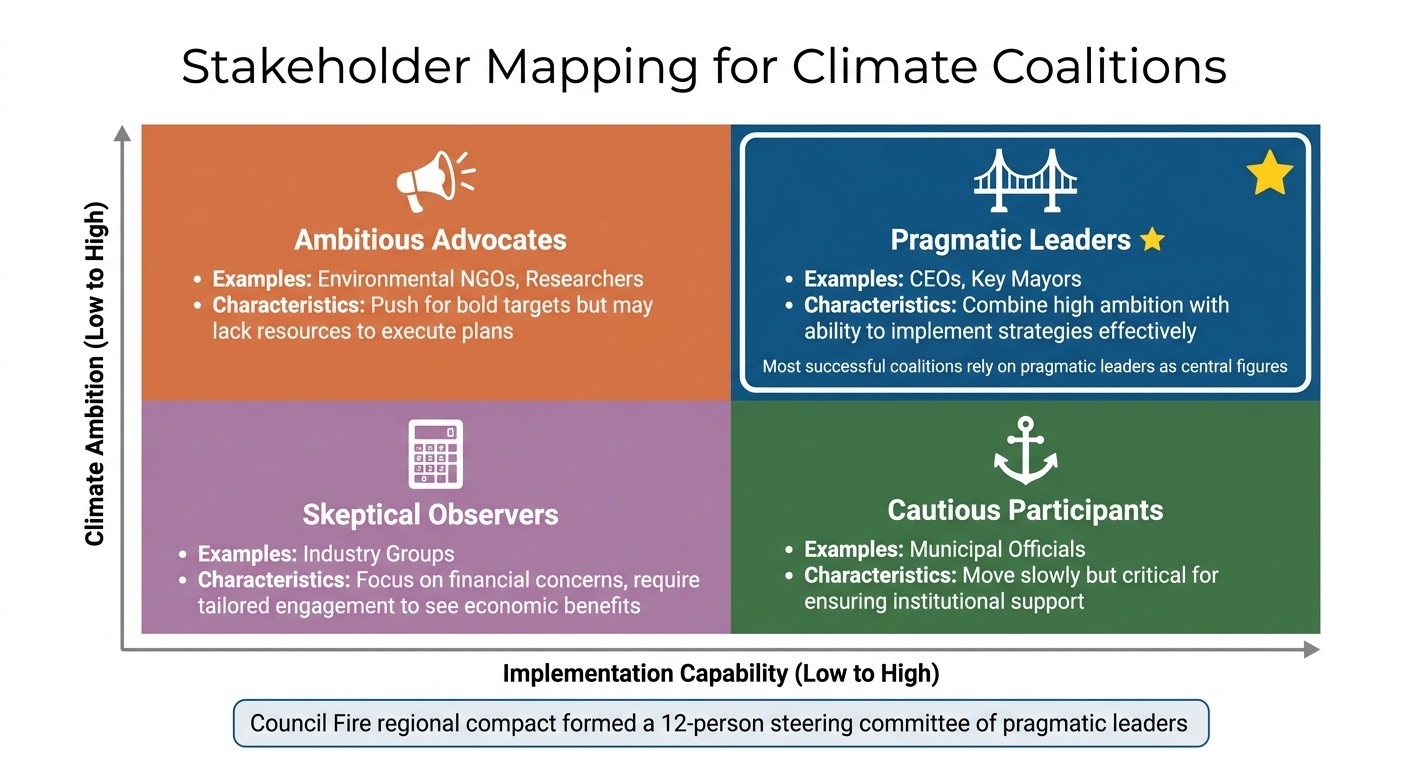
Four Stakeholder Types in Climate Coalitions: Ambition vs Implementation Matrix
Addressing climate challenges effectively requires collaboration among government officials, business leaders, nonprofit organizations, and community members - groups that often operate in silos. The process begins with a detailed landscape assessment to understand the dynamics before bringing stakeholders together. For instance, in February 2026, Council Fire facilitated a regional climate compact for a metropolitan area of 1.8 million people by conducting 65 individual interviews with leaders from various sectors beforehand [4]. These interviews uncovered priorities, organizational constraints, and levels of interest, which laid the groundwork for forming a coalition. The coalition eventually included 14 municipalities, 12 businesses, 5 NGOs, and 4 academic institutions [4].
Identifying the Right Partners
To build an effective coalition, stakeholders must be categorized based on their climate ambitions and their ability to implement solutions. Different groups bring different strengths and challenges:
Ambitious advocates: Environmental NGOs and researchers often push for bold targets but may lack the resources to execute plans.
Pragmatic leaders: CEOs and key mayors often combine high ambition with the ability to implement strategies effectively.
Cautious participants: Municipal officials tend to move more slowly but are critical for ensuring institutional support.
Skeptical observers: Industry groups often focus on financial concerns and require tailored engagement to see the economic benefits [4].
The most successful coalitions rely on pragmatic leaders as central figures, bridging the gap between ambitious advocates and cautious participants [4]. For example, the Council Fire regional compact formed a 12-person steering committee composed of pragmatic leaders, ensuring they could mediate between various groups [4].
This structured approach to stakeholder mapping creates a strong foundation for trust and collaboration.
Creating Platforms for Open Dialogue
Building trust is essential before diving into formal negotiations. As Council Fire highlights:
"Start with trust, not targets. Stakeholders who'd been talking past each other for years needed facilitated dialogue before they could negotiate shared commitments" [4].
Small-group discussions among core partners should come first, followed by larger working groups and public forums. Additionally, it’s important to compensate community members and grassroots leaders for their time and expertise during the planning stages [5].
The Fund for Shared Insight’s participatory climate initiative (2020–2022) exemplifies this approach. Consultants Katy Love and Winifred Olliff interviewed 40 individuals from underrepresented communities, forming a 12-member Design Team and a 14-member Grantmaking Group composed of individuals with lived experience from the U.S. Southeast and Kōlea regions [5]. They used the "Gradients of Agreement" tool to build consensus rather than relying on majority votes, successfully distributing $2 million in grants to 35 grassroots organizations [5]. As the Fund for Shared Insight notes:
"Trust people with lived experience to make decisions that affect them and to identify their own needs and priorities" [5].
These trust-building measures lay the groundwork for effective partnerships.
Developing Public-Private Partnerships
Once trust is established and the right partners are identified, public-private partnerships can deliver meaningful results. Early wins are crucial to maintaining momentum and engagement. For instance, the Council Fire regional compact launched a clean energy procurement initiative, aggregating 420 GWh of demand across 12 businesses and 14 municipalities. This effort secured renewable energy pricing 18% below retail rates, providing immediate financial benefits while advancing climate objectives [4].
Accountability is another cornerstone of successful partnerships. Instead of relying on legal contracts, these partnerships often use public commitments and transparent progress tracking to foster accountability. The regional compact, for example, set a target of reducing emissions by 50% by 2030 and publishes annual progress reports to ensure transparency [4]. As Council Fire explains:
"Public commitments with public tracking are surprisingly powerful" [4].
Mobilizing Funding and Technology for Climate Solutions
Turning climate commitments into meaningful action requires more than collaboration - it demands smart funding strategies and advanced technology. Relying solely on traditional grants won't cut it. Foundations need to embrace creative funding models and technological advancements to drive lasting change.
New Approaches to Climate Funding
Blended finance is a game-changer, using philanthropic funds to reduce risks and attract commercial investments. A great example of this is the David and Lucile Packard Foundation’s $6.5 million low-interest loan to SunFunder in August 2018. This early investment served as a springboard, helping SunFunder build credibility and attract larger public and private investments. The result? Expanded solar energy systems in developing countries, showcasing how philanthropic capital can unlock broader funding opportunities [6].
Multi-funder coalitions amplify impact by pooling resources to tackle challenges that exceed the capacity of any one organization. For instance, in August 2018, foundations like MacArthur, Hewlett, Packard, and Good Energies joined forces with the Grantham Environmental Trust, the Indian government, and the Overseas Private Investment Corporation to create the U.S.-India Clean Energy Finance facility. Together, they contributed $20 million in grants to support renewable energy companies in India. Susan Phinney Silver from the Packard Foundation highlighted the power of collaboration:
"By harnessing the collective resources of funders, we can fill capital gaps and move the needle in the climate fight beyond what any one foundation could do alone" [6].
Impact investing broadens the scope of climate funding. The MacArthur Foundation’s $26 million investment in the Energy Savers Loan Fund is a prime example. This initiative became the largest multifamily energy efficiency program in the U.S., projected to cut greenhouse gas emissions by up to 500,000 metric tons. At the same time, it made housing more affordable for low-income families. This approach underscores how well-structured financial models can align environmental goals with social benefits [6].
These innovative funding strategies pave the way for leveraging technology to supercharge climate solutions.
Using Technology to Scale Climate Solutions
Strategic use of technology can significantly accelerate climate progress. Investing in shared digital platforms, for example, supports ongoing innovation and ensures scalable results across various research areas [7]. These platforms enable seamless collaboration across sectors, shortening the timeline from discovery to practical application.
Real-world initiatives have shown how technology, when paired with thoughtful funding, can simultaneously boost incomes and cut emissions. These examples highlight a crucial point: for technology to make a real difference, financial mechanisms must ensure that adoption is both feasible and appealing for end users. Together, smart funding and strategic technology deployment create a powerful combination for tackling climate challenges.
Case Studies: Successful Cross-Sector Climate Partnerships
Examples of Effective Collaborations
The Regional Climate Compact stands out as a powerful example of stakeholder collaboration. In February 2026, Council Fire brought together 35 organizations, including 14 municipalities, 12 businesses, 5 NGOs, and 4 academic institutions, across a metropolitan region of 1.8 million people. Through targeted stakeholder interviews, this coalition set a shared goal of reducing emissions by 50% by 2030, with commitments collectively surpassing that target at 52%. The compact attracted $280 million in investments, including $120 million for municipal infrastructure and $65 million in federal grants. Additionally, a clean energy procurement initiative aggregated 420 GWh of demand, enabling renewable energy pricing 18% below retail rates and saving $12 million annually. The partnership also introduced a community solar program benefiting 2,400 low-income households with 15% guaranteed savings on electricity bills and launched a workforce program that achieved an 85% job placement rate for its first cohort of 340 participants [4].
The Energy Savers Loan Fund illustrates how impact investing can drive both environmental and social progress. With $26 million from the MacArthur Foundation, this initiative created innovative financing solutions for multifamily affordable housing. The program became the largest of its kind in the U.S., projected to reduce greenhouse gas emissions by 500,000 metric tons while improving affordability for low-income families [6].
Another success story is SunFunder's expansion, showcasing the role of catalytic capital. The David and Lucile Packard Foundation provided $6.5 million in early, low-interest loans, helping this clean energy lending intermediary build credibility. This initial support paved the way for larger public and private investments, ultimately enabling the expansion of solar energy systems in developing countries [6].
These collaborations highlight how strategic partnerships can deliver immediate benefits while setting the stage for long-term climate solutions.
Lessons for Future Partnerships
Examining these examples uncovers valuable insights for developing future collaborations.
One key takeaway is that trust must come before targets. Council Fire emphasized this approach:
"Start with trust, not targets. Stakeholders who'd been talking past each other for years needed facilitated dialogue before they could negotiate shared commitments" [4].
This process involved extensive one-on-one interviews and small-group discussions to build trust before formal agreements were made.
Another critical factor was focusing on pragmatic leaders. These partnerships avoided extremes - neither overly ambitious advocates nor overly cautious skeptics dominated. Instead, they relied on leaders who balanced ambition with practical implementation, gaining credibility and fostering genuine buy-in across diverse stakeholders [4].
Achieving early wins also proved vital for maintaining momentum. For instance, the regional compact's clean energy collaborative delivered $12 million in annual savings, boosting confidence in longer-term goals. Similarly, coordinated grant applications secured $48 million in FEMA and DOE funding that might have been missed if municipalities had worked independently [4].
Susan Phinney Silver from the Packard Foundation summed up the broader principle:
"By harnessing the collective resources of funders, we can fill capital gaps and move the needle in the climate fight beyond what any one foundation could do alone" [6].
How Council Fire Supports Cross-Sector Climate Action
Planning and Stakeholder Engagement Services
Council Fire guides foundations through the intricate process of climate collaboration by conducting detailed stakeholder mapping and strategic engagement. This begins with in-depth assessments, including one-on-one interviews with leaders from government, business, academia, and nonprofits. These conversations uncover each stakeholder's priorities, limitations, and willingness to engage, providing a clear picture of the collaborative landscape. Stakeholders are then categorized based on their climate ambition and focus on practical implementation, helping to identify those best positioned to drive meaningful progress.
The focus is on "pragmatic leaders" who balance ambitious climate goals with a realistic approach to implementation. Council Fire explains the importance of this balance:
"Coalitions led by the most ambitious voices alienate pragmatists and never achieve the breadth needed for regional impact. Coalitions led by cautious participants set targets too low to matter" [4].
The engagement process begins with small, trust-building discussions and gradually expands to larger working groups and public forums. This phased approach ensures that every step of collaboration is intentional and geared toward achieving practical results.
Data-Driven Climate Solutions
After building strong stakeholder relationships, Council Fire uses data-driven strategies to turn climate commitments into measurable outcomes. Their approach emphasizes transparency through tools like annual progress reports and public tracking of commitments, fostering a sense of peer accountability rather than relying on legal enforcement. As Council Fire puts it:
"Public commitments with public tracking are surprisingly powerful" [4].
This method has yielded impressive results. For instance, coordinated regional efforts secured $48 million in FEMA and DOE grants - funding that individual municipalities likely wouldn't have accessed on their own [4]. Additionally, a shared vulnerability assessment methodology provided a comprehensive understanding of regional risks, streamlining resources for effective implementation.
Creating Long-Term Value
Through targeted engagement and transparent metrics, Council Fire delivers lasting value across environmental, social, and economic dimensions. Their approach facilitates coordinated climate investments while producing compounding benefits. Beyond financial returns, their initiatives include workforce programs with high placement rates in clean energy jobs and community solar projects that guarantee at least 15% savings on electricity bills for low-income households.
This layered value creation is made possible by reducing duplication and aligning resources effectively. Early successes build trust and momentum, laying the groundwork for achieving larger, transformative goals over time.
Conclusion
Achieving the scale of climate action required can't be done in isolation. Fragmented efforts often lead to disjointed grant applications, clashing goals, and missed opportunities. To move forward effectively, foundations and philanthropic organizations must serve as connectors, uniting government, business, and civil society around shared climate objectives.
The power of collaboration is evident in the results. Coordinated efforts yield achievements that isolated actions simply cannot. For instance, initiatives led by Council Fire have unlocked hundreds of millions of dollars in combined investments and federal grants - outcomes that wouldn't have been possible without unified approaches [4]. Similarly, the Drive Electric Leapfrogging Partnership in Kenya and Rwanda successfully deployed over 200 e-motorbikes in February 2025. This effort not only reduced emissions but also boosted drivers' take-home pay by an impressive 41% [1]. These examples highlight how cross-sector partnerships amplify impact far beyond what any single group could achieve alone.
Building these successes starts with trust. It’s not about setting lofty public goals but about fostering one-on-one connections, prioritizing leaders who combine ambition with practical implementation strategies, and ensuring transparency through progress tracking. Leveraging data-driven insights and accountability mechanisms allows foundations to create lasting and measurable change.
The stakes couldn’t be higher. Without action, climate inaction could result in $38 trillion in annual damages by 2050 [1]. Yet, the momentum for change is growing. Climate mitigation funding from foundations reached $4.8 billion in 2023, nearly triple the amount in 2019 [1]. This demonstrates a clear opportunity for your foundation to step into a transformative role - facilitating partnerships, offering patient capital, and creating systems of accountability that turn commitments into tangible outcomes.
The question isn’t whether action is possible but how quickly partnerships can be built to shape regional climate initiatives for the decades ahead. The time to act is now.
FAQs
How do we choose the right partners for a climate coalition?
Choosing the ideal partners for a climate coalition means finding organizations that align with your objectives, principles, and areas of expertise. Look for collaborators who prioritize trust, equitable governance, and sustained cooperation. Bringing together a mix of stakeholders - such as NGOs, government bodies, and private companies - can amplify efforts by combining resources and knowledge. When assessing potential partners, consider their commitment to climate goals, openness in their operations, and readiness to participate in collaborative decision-making.
What KPIs should we use to measure cross-sector climate progress?
Key performance indicators (KPIs) for assessing progress in cross-sector climate initiatives focus on collaboration and measurable outcomes:
Investment unlocked: Funds generated through partnerships, like regional climate compacts, that support climate action.
Partnership growth and strength: Expansion and effectiveness of joint ventures and alliances working toward shared goals.
Scalability: The ability to extend efforts across various regions, industries, and funding structures.
Systemic change: Achievements such as policy alignment and minimizing redundant efforts.
Shared climate goals: Tangible outcomes like measurable reductions in emissions.
These KPIs offer a well-rounded perspective on the effectiveness of collaborative climate strategies.
How can a foundation use blended finance without taking on too much risk?
Foundations can reduce risks in blended finance by building strategic partnerships and employing risk-layering techniques. This method integrates concessional public or philanthropic funds with private investments to bring in more financial resources. By mitigating risks, improving market incentives, and encouraging policy adjustments, foundations not only draw private capital but also protect their own investments through structured agreements and shared-risk approaches.
Related Blog Posts
Latest Articles
©2025

Narrative Change and Power Building: The Missing Half of Advocacy
Narrative change is the process of disrupting dominant narratives that normalize inequity and advancing new narratives from historically marginalized communities.

Funding Resilience Without Federal Grants
BRIC is unreliable and FEMA is shrinking. Here's how cities fund climate resilience with dedicated revenue, blended finance, and a coordinating authority.

The ESG Blind Spot: How AI Is Finding Risks in Companies Nobody Else Is Watching
Norway's sovereign wealth fund uses AI to screen 7,200 portfolio companies for forced labor and corruption within 24 hours. The real story is the emerging-market coverage gap that traditional ESG data vendors miss — and what it means for any company with a global supply chain.
Narrative Change and Power Building: The Missing Half of Advocacy
Narrative change is the process of disrupting dominant narratives that normalize inequity and advancing new narratives from historically marginalized communities.
Funding Resilience Without Federal Grants
BRIC is unreliable and FEMA is shrinking. Here's how cities fund climate resilience with dedicated revenue, blended finance, and a coordinating authority.
The ESG Blind Spot: How AI Is Finding Risks in Companies Nobody Else Is Watching
Norway's sovereign wealth fund uses AI to screen 7,200 portfolio companies for forced labor and corruption within 24 hours. The real story is the emerging-market coverage gap that traditional ESG data vendors miss — and what it means for any company with a global supply chain.
FAQ
01
What does it really mean to “redefine profit”?
02
What makes Council Fire different?
03
Who does Council Fire work with?
04
What does working with Council Fire actually look like?
05
How does Council Fire help organizations turn big goals into action?
06
How does Council Fire define and measure success?
May 9, 2026
How to Facilitate Cross-Sector Collaboration for Climate Action for Foundations & Philanthropic Organizations
Sustainability Strategy
In This Article
Guidance for foundations to convene partners, set shared KPIs, and use blended finance and technology to accelerate cross‑sector climate action.
How to Facilitate Cross-Sector Collaboration for Climate Action for Foundations & Philanthropic Organizations
In 2024, global temperatures exceeded 1.5°C above pre-industrial levels for the first time, underscoring the urgency of climate action. With the economic cost of inaction projected to reach $38 trillion annually by 2050, collaboration across governments, businesses, nonprofits, and philanthropic organizations is essential. Foundations play a critical role by providing risk-tolerant funding, building trust, and coordinating diverse stakeholders to achieve shared goals.
Key takeaways for fostering effective partnerships include:
Establish shared goals and metrics: Align stakeholders on clear objectives and use measurable KPIs to track progress.
Engage diverse stakeholders: Identify partners with varying strengths, from ambitious advocates to cautious participants, and prioritize leaders who balance ambition with implementation.
Build trust through transparency: Share data openly, define roles clearly, and use public tracking to ensure accountability.
Leverage funding and technology: Use creative funding models like blended finance and impact investing to scale solutions, while incorporating tools like IoT and AI for better outcomes.
Case studies, such as the 2026 Regional Climate Compact and the Energy Savers Loan Fund, highlight the transformative impact of cross-sector collaboration. These efforts demonstrate that trust, early wins, and strategic partnerships can drive meaningful progress in addressing climate challenges. The time to act is now.
Driving climate and environmental sustainability through cross-sector collaboration
Setting Shared Goals and Metrics
Establishing common objectives and measurable outcomes is crucial for foundations driving cross-sector climate initiatives. Partnerships often falter when goals are misaligned, so foundations must define clear, shared goals and standardized metrics from the start to ensure effective collaboration.
Aligning Partners on Climate Targets
Choosing the right collaborative structure is the first step in aligning climate goals. Different structures work for different levels of commitment: simpler exchanges suit low-stakes efforts, while deeper collaborations are better for high-stakes initiatives [2]. The David and Lucile Packard Foundation, which manages over 60 collaborative projects across five program areas, demonstrates how tailored structures serve varying needs [2].
Carol Larson, President and CEO of the foundation, underscores the importance of strategic collaboration:
"When people approach us about collaborating, I have to ask: Is this a truly strategic use of collaboration? There's a need to be clear about the opportunity, because it involves a lot of time and grant dollars" [2].
Keeping decision-making flexible attracts a broader range of partners and lays the groundwork for precise performance tracking.
Creating Key Performance Indicators (KPIs)
KPIs should be rooted in data from technology trends, capital flows, policy changes, market conditions, and regional contexts [3]. Metrics need to be relevant and actionable, ensuring they provide a clear measure of progress toward climate objectives. Philanthropic networks can be excellent resources for understanding how others track similar initiatives and which metrics prove most effective [3].
To streamline operations, define roles clearly from the outset. For example, one partner might act as the lead funder, directing strategy, while others handle scheduling, communications, or evaluation [2]. This division of responsibilities prevents overlap and ensures accountability for each metric. For goals outside a foundation's expertise, partnering with funders who bring relevant experience can mitigate risk [2]. Reliable metrics also enable transparent reporting, which is key to building trust.
Building Trust Through Transparent Reporting
Openly sharing data and outcomes fosters trust and reduces risks associated with large-scale climate investments [3]. Transparency allows funders to make better-informed decisions and strengthens collaboration [3].
Clear exit strategies further enhance transparency and reduce potential conflicts [2]. By defining how and when partners can step away, foundations enable honest discussions about investment levels without causing misunderstandings. For example, ClimateWorks transitioned to a "2.0" model that accommodates both joint and individual funding decisions. This approach shows how flexible structures can balance accountability with partner independence [2].
Bringing Together Stakeholders from Different Sectors
Four Stakeholder Types in Climate Coalitions: Ambition vs Implementation Matrix
Addressing climate challenges effectively requires collaboration among government officials, business leaders, nonprofit organizations, and community members - groups that often operate in silos. The process begins with a detailed landscape assessment to understand the dynamics before bringing stakeholders together. For instance, in February 2026, Council Fire facilitated a regional climate compact for a metropolitan area of 1.8 million people by conducting 65 individual interviews with leaders from various sectors beforehand [4]. These interviews uncovered priorities, organizational constraints, and levels of interest, which laid the groundwork for forming a coalition. The coalition eventually included 14 municipalities, 12 businesses, 5 NGOs, and 4 academic institutions [4].
Identifying the Right Partners
To build an effective coalition, stakeholders must be categorized based on their climate ambitions and their ability to implement solutions. Different groups bring different strengths and challenges:
Ambitious advocates: Environmental NGOs and researchers often push for bold targets but may lack the resources to execute plans.
Pragmatic leaders: CEOs and key mayors often combine high ambition with the ability to implement strategies effectively.
Cautious participants: Municipal officials tend to move more slowly but are critical for ensuring institutional support.
Skeptical observers: Industry groups often focus on financial concerns and require tailored engagement to see the economic benefits [4].
The most successful coalitions rely on pragmatic leaders as central figures, bridging the gap between ambitious advocates and cautious participants [4]. For example, the Council Fire regional compact formed a 12-person steering committee composed of pragmatic leaders, ensuring they could mediate between various groups [4].
This structured approach to stakeholder mapping creates a strong foundation for trust and collaboration.
Creating Platforms for Open Dialogue
Building trust is essential before diving into formal negotiations. As Council Fire highlights:
"Start with trust, not targets. Stakeholders who'd been talking past each other for years needed facilitated dialogue before they could negotiate shared commitments" [4].
Small-group discussions among core partners should come first, followed by larger working groups and public forums. Additionally, it’s important to compensate community members and grassroots leaders for their time and expertise during the planning stages [5].
The Fund for Shared Insight’s participatory climate initiative (2020–2022) exemplifies this approach. Consultants Katy Love and Winifred Olliff interviewed 40 individuals from underrepresented communities, forming a 12-member Design Team and a 14-member Grantmaking Group composed of individuals with lived experience from the U.S. Southeast and Kōlea regions [5]. They used the "Gradients of Agreement" tool to build consensus rather than relying on majority votes, successfully distributing $2 million in grants to 35 grassroots organizations [5]. As the Fund for Shared Insight notes:
"Trust people with lived experience to make decisions that affect them and to identify their own needs and priorities" [5].
These trust-building measures lay the groundwork for effective partnerships.
Developing Public-Private Partnerships
Once trust is established and the right partners are identified, public-private partnerships can deliver meaningful results. Early wins are crucial to maintaining momentum and engagement. For instance, the Council Fire regional compact launched a clean energy procurement initiative, aggregating 420 GWh of demand across 12 businesses and 14 municipalities. This effort secured renewable energy pricing 18% below retail rates, providing immediate financial benefits while advancing climate objectives [4].
Accountability is another cornerstone of successful partnerships. Instead of relying on legal contracts, these partnerships often use public commitments and transparent progress tracking to foster accountability. The regional compact, for example, set a target of reducing emissions by 50% by 2030 and publishes annual progress reports to ensure transparency [4]. As Council Fire explains:
"Public commitments with public tracking are surprisingly powerful" [4].
Mobilizing Funding and Technology for Climate Solutions
Turning climate commitments into meaningful action requires more than collaboration - it demands smart funding strategies and advanced technology. Relying solely on traditional grants won't cut it. Foundations need to embrace creative funding models and technological advancements to drive lasting change.
New Approaches to Climate Funding
Blended finance is a game-changer, using philanthropic funds to reduce risks and attract commercial investments. A great example of this is the David and Lucile Packard Foundation’s $6.5 million low-interest loan to SunFunder in August 2018. This early investment served as a springboard, helping SunFunder build credibility and attract larger public and private investments. The result? Expanded solar energy systems in developing countries, showcasing how philanthropic capital can unlock broader funding opportunities [6].
Multi-funder coalitions amplify impact by pooling resources to tackle challenges that exceed the capacity of any one organization. For instance, in August 2018, foundations like MacArthur, Hewlett, Packard, and Good Energies joined forces with the Grantham Environmental Trust, the Indian government, and the Overseas Private Investment Corporation to create the U.S.-India Clean Energy Finance facility. Together, they contributed $20 million in grants to support renewable energy companies in India. Susan Phinney Silver from the Packard Foundation highlighted the power of collaboration:
"By harnessing the collective resources of funders, we can fill capital gaps and move the needle in the climate fight beyond what any one foundation could do alone" [6].
Impact investing broadens the scope of climate funding. The MacArthur Foundation’s $26 million investment in the Energy Savers Loan Fund is a prime example. This initiative became the largest multifamily energy efficiency program in the U.S., projected to cut greenhouse gas emissions by up to 500,000 metric tons. At the same time, it made housing more affordable for low-income families. This approach underscores how well-structured financial models can align environmental goals with social benefits [6].
These innovative funding strategies pave the way for leveraging technology to supercharge climate solutions.
Using Technology to Scale Climate Solutions
Strategic use of technology can significantly accelerate climate progress. Investing in shared digital platforms, for example, supports ongoing innovation and ensures scalable results across various research areas [7]. These platforms enable seamless collaboration across sectors, shortening the timeline from discovery to practical application.
Real-world initiatives have shown how technology, when paired with thoughtful funding, can simultaneously boost incomes and cut emissions. These examples highlight a crucial point: for technology to make a real difference, financial mechanisms must ensure that adoption is both feasible and appealing for end users. Together, smart funding and strategic technology deployment create a powerful combination for tackling climate challenges.
Case Studies: Successful Cross-Sector Climate Partnerships
Examples of Effective Collaborations
The Regional Climate Compact stands out as a powerful example of stakeholder collaboration. In February 2026, Council Fire brought together 35 organizations, including 14 municipalities, 12 businesses, 5 NGOs, and 4 academic institutions, across a metropolitan region of 1.8 million people. Through targeted stakeholder interviews, this coalition set a shared goal of reducing emissions by 50% by 2030, with commitments collectively surpassing that target at 52%. The compact attracted $280 million in investments, including $120 million for municipal infrastructure and $65 million in federal grants. Additionally, a clean energy procurement initiative aggregated 420 GWh of demand, enabling renewable energy pricing 18% below retail rates and saving $12 million annually. The partnership also introduced a community solar program benefiting 2,400 low-income households with 15% guaranteed savings on electricity bills and launched a workforce program that achieved an 85% job placement rate for its first cohort of 340 participants [4].
The Energy Savers Loan Fund illustrates how impact investing can drive both environmental and social progress. With $26 million from the MacArthur Foundation, this initiative created innovative financing solutions for multifamily affordable housing. The program became the largest of its kind in the U.S., projected to reduce greenhouse gas emissions by 500,000 metric tons while improving affordability for low-income families [6].
Another success story is SunFunder's expansion, showcasing the role of catalytic capital. The David and Lucile Packard Foundation provided $6.5 million in early, low-interest loans, helping this clean energy lending intermediary build credibility. This initial support paved the way for larger public and private investments, ultimately enabling the expansion of solar energy systems in developing countries [6].
These collaborations highlight how strategic partnerships can deliver immediate benefits while setting the stage for long-term climate solutions.
Lessons for Future Partnerships
Examining these examples uncovers valuable insights for developing future collaborations.
One key takeaway is that trust must come before targets. Council Fire emphasized this approach:
"Start with trust, not targets. Stakeholders who'd been talking past each other for years needed facilitated dialogue before they could negotiate shared commitments" [4].
This process involved extensive one-on-one interviews and small-group discussions to build trust before formal agreements were made.
Another critical factor was focusing on pragmatic leaders. These partnerships avoided extremes - neither overly ambitious advocates nor overly cautious skeptics dominated. Instead, they relied on leaders who balanced ambition with practical implementation, gaining credibility and fostering genuine buy-in across diverse stakeholders [4].
Achieving early wins also proved vital for maintaining momentum. For instance, the regional compact's clean energy collaborative delivered $12 million in annual savings, boosting confidence in longer-term goals. Similarly, coordinated grant applications secured $48 million in FEMA and DOE funding that might have been missed if municipalities had worked independently [4].
Susan Phinney Silver from the Packard Foundation summed up the broader principle:
"By harnessing the collective resources of funders, we can fill capital gaps and move the needle in the climate fight beyond what any one foundation could do alone" [6].
How Council Fire Supports Cross-Sector Climate Action
Planning and Stakeholder Engagement Services
Council Fire guides foundations through the intricate process of climate collaboration by conducting detailed stakeholder mapping and strategic engagement. This begins with in-depth assessments, including one-on-one interviews with leaders from government, business, academia, and nonprofits. These conversations uncover each stakeholder's priorities, limitations, and willingness to engage, providing a clear picture of the collaborative landscape. Stakeholders are then categorized based on their climate ambition and focus on practical implementation, helping to identify those best positioned to drive meaningful progress.
The focus is on "pragmatic leaders" who balance ambitious climate goals with a realistic approach to implementation. Council Fire explains the importance of this balance:
"Coalitions led by the most ambitious voices alienate pragmatists and never achieve the breadth needed for regional impact. Coalitions led by cautious participants set targets too low to matter" [4].
The engagement process begins with small, trust-building discussions and gradually expands to larger working groups and public forums. This phased approach ensures that every step of collaboration is intentional and geared toward achieving practical results.
Data-Driven Climate Solutions
After building strong stakeholder relationships, Council Fire uses data-driven strategies to turn climate commitments into measurable outcomes. Their approach emphasizes transparency through tools like annual progress reports and public tracking of commitments, fostering a sense of peer accountability rather than relying on legal enforcement. As Council Fire puts it:
"Public commitments with public tracking are surprisingly powerful" [4].
This method has yielded impressive results. For instance, coordinated regional efforts secured $48 million in FEMA and DOE grants - funding that individual municipalities likely wouldn't have accessed on their own [4]. Additionally, a shared vulnerability assessment methodology provided a comprehensive understanding of regional risks, streamlining resources for effective implementation.
Creating Long-Term Value
Through targeted engagement and transparent metrics, Council Fire delivers lasting value across environmental, social, and economic dimensions. Their approach facilitates coordinated climate investments while producing compounding benefits. Beyond financial returns, their initiatives include workforce programs with high placement rates in clean energy jobs and community solar projects that guarantee at least 15% savings on electricity bills for low-income households.
This layered value creation is made possible by reducing duplication and aligning resources effectively. Early successes build trust and momentum, laying the groundwork for achieving larger, transformative goals over time.
Conclusion
Achieving the scale of climate action required can't be done in isolation. Fragmented efforts often lead to disjointed grant applications, clashing goals, and missed opportunities. To move forward effectively, foundations and philanthropic organizations must serve as connectors, uniting government, business, and civil society around shared climate objectives.
The power of collaboration is evident in the results. Coordinated efforts yield achievements that isolated actions simply cannot. For instance, initiatives led by Council Fire have unlocked hundreds of millions of dollars in combined investments and federal grants - outcomes that wouldn't have been possible without unified approaches [4]. Similarly, the Drive Electric Leapfrogging Partnership in Kenya and Rwanda successfully deployed over 200 e-motorbikes in February 2025. This effort not only reduced emissions but also boosted drivers' take-home pay by an impressive 41% [1]. These examples highlight how cross-sector partnerships amplify impact far beyond what any single group could achieve alone.
Building these successes starts with trust. It’s not about setting lofty public goals but about fostering one-on-one connections, prioritizing leaders who combine ambition with practical implementation strategies, and ensuring transparency through progress tracking. Leveraging data-driven insights and accountability mechanisms allows foundations to create lasting and measurable change.
The stakes couldn’t be higher. Without action, climate inaction could result in $38 trillion in annual damages by 2050 [1]. Yet, the momentum for change is growing. Climate mitigation funding from foundations reached $4.8 billion in 2023, nearly triple the amount in 2019 [1]. This demonstrates a clear opportunity for your foundation to step into a transformative role - facilitating partnerships, offering patient capital, and creating systems of accountability that turn commitments into tangible outcomes.
The question isn’t whether action is possible but how quickly partnerships can be built to shape regional climate initiatives for the decades ahead. The time to act is now.
FAQs
How do we choose the right partners for a climate coalition?
Choosing the ideal partners for a climate coalition means finding organizations that align with your objectives, principles, and areas of expertise. Look for collaborators who prioritize trust, equitable governance, and sustained cooperation. Bringing together a mix of stakeholders - such as NGOs, government bodies, and private companies - can amplify efforts by combining resources and knowledge. When assessing potential partners, consider their commitment to climate goals, openness in their operations, and readiness to participate in collaborative decision-making.
What KPIs should we use to measure cross-sector climate progress?
Key performance indicators (KPIs) for assessing progress in cross-sector climate initiatives focus on collaboration and measurable outcomes:
Investment unlocked: Funds generated through partnerships, like regional climate compacts, that support climate action.
Partnership growth and strength: Expansion and effectiveness of joint ventures and alliances working toward shared goals.
Scalability: The ability to extend efforts across various regions, industries, and funding structures.
Systemic change: Achievements such as policy alignment and minimizing redundant efforts.
Shared climate goals: Tangible outcomes like measurable reductions in emissions.
These KPIs offer a well-rounded perspective on the effectiveness of collaborative climate strategies.
How can a foundation use blended finance without taking on too much risk?
Foundations can reduce risks in blended finance by building strategic partnerships and employing risk-layering techniques. This method integrates concessional public or philanthropic funds with private investments to bring in more financial resources. By mitigating risks, improving market incentives, and encouraging policy adjustments, foundations not only draw private capital but also protect their own investments through structured agreements and shared-risk approaches.
Related Blog Posts
Latest Articles
©2025
Narrative Change and Power Building: The Missing Half of Advocacy
Narrative change is the process of disrupting dominant narratives that normalize inequity and advancing new narratives from historically marginalized communities.
Funding Resilience Without Federal Grants
BRIC is unreliable and FEMA is shrinking. Here's how cities fund climate resilience with dedicated revenue, blended finance, and a coordinating authority.
The ESG Blind Spot: How AI Is Finding Risks in Companies Nobody Else Is Watching
Norway's sovereign wealth fund uses AI to screen 7,200 portfolio companies for forced labor and corruption within 24 hours. The real story is the emerging-market coverage gap that traditional ESG data vendors miss — and what it means for any company with a global supply chain.
FAQ
01
What does it really mean to “redefine profit”?
02
What makes Council Fire different?
03
Who does Council Fire work with?
04
What does working with Council Fire actually look like?
05
How does Council Fire help organizations turn big goals into action?
06
How does Council Fire define and measure success?
May 9, 2026
How to Facilitate Cross-Sector Collaboration for Climate Action for Foundations & Philanthropic Organizations
Sustainability Strategy
In This Article
Guidance for foundations to convene partners, set shared KPIs, and use blended finance and technology to accelerate cross‑sector climate action.
How to Facilitate Cross-Sector Collaboration for Climate Action for Foundations & Philanthropic Organizations
In 2024, global temperatures exceeded 1.5°C above pre-industrial levels for the first time, underscoring the urgency of climate action. With the economic cost of inaction projected to reach $38 trillion annually by 2050, collaboration across governments, businesses, nonprofits, and philanthropic organizations is essential. Foundations play a critical role by providing risk-tolerant funding, building trust, and coordinating diverse stakeholders to achieve shared goals.
Key takeaways for fostering effective partnerships include:
Establish shared goals and metrics: Align stakeholders on clear objectives and use measurable KPIs to track progress.
Engage diverse stakeholders: Identify partners with varying strengths, from ambitious advocates to cautious participants, and prioritize leaders who balance ambition with implementation.
Build trust through transparency: Share data openly, define roles clearly, and use public tracking to ensure accountability.
Leverage funding and technology: Use creative funding models like blended finance and impact investing to scale solutions, while incorporating tools like IoT and AI for better outcomes.
Case studies, such as the 2026 Regional Climate Compact and the Energy Savers Loan Fund, highlight the transformative impact of cross-sector collaboration. These efforts demonstrate that trust, early wins, and strategic partnerships can drive meaningful progress in addressing climate challenges. The time to act is now.
Driving climate and environmental sustainability through cross-sector collaboration
Setting Shared Goals and Metrics
Establishing common objectives and measurable outcomes is crucial for foundations driving cross-sector climate initiatives. Partnerships often falter when goals are misaligned, so foundations must define clear, shared goals and standardized metrics from the start to ensure effective collaboration.
Aligning Partners on Climate Targets
Choosing the right collaborative structure is the first step in aligning climate goals. Different structures work for different levels of commitment: simpler exchanges suit low-stakes efforts, while deeper collaborations are better for high-stakes initiatives [2]. The David and Lucile Packard Foundation, which manages over 60 collaborative projects across five program areas, demonstrates how tailored structures serve varying needs [2].
Carol Larson, President and CEO of the foundation, underscores the importance of strategic collaboration:
"When people approach us about collaborating, I have to ask: Is this a truly strategic use of collaboration? There's a need to be clear about the opportunity, because it involves a lot of time and grant dollars" [2].
Keeping decision-making flexible attracts a broader range of partners and lays the groundwork for precise performance tracking.
Creating Key Performance Indicators (KPIs)
KPIs should be rooted in data from technology trends, capital flows, policy changes, market conditions, and regional contexts [3]. Metrics need to be relevant and actionable, ensuring they provide a clear measure of progress toward climate objectives. Philanthropic networks can be excellent resources for understanding how others track similar initiatives and which metrics prove most effective [3].
To streamline operations, define roles clearly from the outset. For example, one partner might act as the lead funder, directing strategy, while others handle scheduling, communications, or evaluation [2]. This division of responsibilities prevents overlap and ensures accountability for each metric. For goals outside a foundation's expertise, partnering with funders who bring relevant experience can mitigate risk [2]. Reliable metrics also enable transparent reporting, which is key to building trust.
Building Trust Through Transparent Reporting
Openly sharing data and outcomes fosters trust and reduces risks associated with large-scale climate investments [3]. Transparency allows funders to make better-informed decisions and strengthens collaboration [3].
Clear exit strategies further enhance transparency and reduce potential conflicts [2]. By defining how and when partners can step away, foundations enable honest discussions about investment levels without causing misunderstandings. For example, ClimateWorks transitioned to a "2.0" model that accommodates both joint and individual funding decisions. This approach shows how flexible structures can balance accountability with partner independence [2].
Bringing Together Stakeholders from Different Sectors
Four Stakeholder Types in Climate Coalitions: Ambition vs Implementation Matrix
Addressing climate challenges effectively requires collaboration among government officials, business leaders, nonprofit organizations, and community members - groups that often operate in silos. The process begins with a detailed landscape assessment to understand the dynamics before bringing stakeholders together. For instance, in February 2026, Council Fire facilitated a regional climate compact for a metropolitan area of 1.8 million people by conducting 65 individual interviews with leaders from various sectors beforehand [4]. These interviews uncovered priorities, organizational constraints, and levels of interest, which laid the groundwork for forming a coalition. The coalition eventually included 14 municipalities, 12 businesses, 5 NGOs, and 4 academic institutions [4].
Identifying the Right Partners
To build an effective coalition, stakeholders must be categorized based on their climate ambitions and their ability to implement solutions. Different groups bring different strengths and challenges:
Ambitious advocates: Environmental NGOs and researchers often push for bold targets but may lack the resources to execute plans.
Pragmatic leaders: CEOs and key mayors often combine high ambition with the ability to implement strategies effectively.
Cautious participants: Municipal officials tend to move more slowly but are critical for ensuring institutional support.
Skeptical observers: Industry groups often focus on financial concerns and require tailored engagement to see the economic benefits [4].
The most successful coalitions rely on pragmatic leaders as central figures, bridging the gap between ambitious advocates and cautious participants [4]. For example, the Council Fire regional compact formed a 12-person steering committee composed of pragmatic leaders, ensuring they could mediate between various groups [4].
This structured approach to stakeholder mapping creates a strong foundation for trust and collaboration.
Creating Platforms for Open Dialogue
Building trust is essential before diving into formal negotiations. As Council Fire highlights:
"Start with trust, not targets. Stakeholders who'd been talking past each other for years needed facilitated dialogue before they could negotiate shared commitments" [4].
Small-group discussions among core partners should come first, followed by larger working groups and public forums. Additionally, it’s important to compensate community members and grassroots leaders for their time and expertise during the planning stages [5].
The Fund for Shared Insight’s participatory climate initiative (2020–2022) exemplifies this approach. Consultants Katy Love and Winifred Olliff interviewed 40 individuals from underrepresented communities, forming a 12-member Design Team and a 14-member Grantmaking Group composed of individuals with lived experience from the U.S. Southeast and Kōlea regions [5]. They used the "Gradients of Agreement" tool to build consensus rather than relying on majority votes, successfully distributing $2 million in grants to 35 grassroots organizations [5]. As the Fund for Shared Insight notes:
"Trust people with lived experience to make decisions that affect them and to identify their own needs and priorities" [5].
These trust-building measures lay the groundwork for effective partnerships.
Developing Public-Private Partnerships
Once trust is established and the right partners are identified, public-private partnerships can deliver meaningful results. Early wins are crucial to maintaining momentum and engagement. For instance, the Council Fire regional compact launched a clean energy procurement initiative, aggregating 420 GWh of demand across 12 businesses and 14 municipalities. This effort secured renewable energy pricing 18% below retail rates, providing immediate financial benefits while advancing climate objectives [4].
Accountability is another cornerstone of successful partnerships. Instead of relying on legal contracts, these partnerships often use public commitments and transparent progress tracking to foster accountability. The regional compact, for example, set a target of reducing emissions by 50% by 2030 and publishes annual progress reports to ensure transparency [4]. As Council Fire explains:
"Public commitments with public tracking are surprisingly powerful" [4].
Mobilizing Funding and Technology for Climate Solutions
Turning climate commitments into meaningful action requires more than collaboration - it demands smart funding strategies and advanced technology. Relying solely on traditional grants won't cut it. Foundations need to embrace creative funding models and technological advancements to drive lasting change.
New Approaches to Climate Funding
Blended finance is a game-changer, using philanthropic funds to reduce risks and attract commercial investments. A great example of this is the David and Lucile Packard Foundation’s $6.5 million low-interest loan to SunFunder in August 2018. This early investment served as a springboard, helping SunFunder build credibility and attract larger public and private investments. The result? Expanded solar energy systems in developing countries, showcasing how philanthropic capital can unlock broader funding opportunities [6].
Multi-funder coalitions amplify impact by pooling resources to tackle challenges that exceed the capacity of any one organization. For instance, in August 2018, foundations like MacArthur, Hewlett, Packard, and Good Energies joined forces with the Grantham Environmental Trust, the Indian government, and the Overseas Private Investment Corporation to create the U.S.-India Clean Energy Finance facility. Together, they contributed $20 million in grants to support renewable energy companies in India. Susan Phinney Silver from the Packard Foundation highlighted the power of collaboration:
"By harnessing the collective resources of funders, we can fill capital gaps and move the needle in the climate fight beyond what any one foundation could do alone" [6].
Impact investing broadens the scope of climate funding. The MacArthur Foundation’s $26 million investment in the Energy Savers Loan Fund is a prime example. This initiative became the largest multifamily energy efficiency program in the U.S., projected to cut greenhouse gas emissions by up to 500,000 metric tons. At the same time, it made housing more affordable for low-income families. This approach underscores how well-structured financial models can align environmental goals with social benefits [6].
These innovative funding strategies pave the way for leveraging technology to supercharge climate solutions.
Using Technology to Scale Climate Solutions
Strategic use of technology can significantly accelerate climate progress. Investing in shared digital platforms, for example, supports ongoing innovation and ensures scalable results across various research areas [7]. These platforms enable seamless collaboration across sectors, shortening the timeline from discovery to practical application.
Real-world initiatives have shown how technology, when paired with thoughtful funding, can simultaneously boost incomes and cut emissions. These examples highlight a crucial point: for technology to make a real difference, financial mechanisms must ensure that adoption is both feasible and appealing for end users. Together, smart funding and strategic technology deployment create a powerful combination for tackling climate challenges.
Case Studies: Successful Cross-Sector Climate Partnerships
Examples of Effective Collaborations
The Regional Climate Compact stands out as a powerful example of stakeholder collaboration. In February 2026, Council Fire brought together 35 organizations, including 14 municipalities, 12 businesses, 5 NGOs, and 4 academic institutions, across a metropolitan region of 1.8 million people. Through targeted stakeholder interviews, this coalition set a shared goal of reducing emissions by 50% by 2030, with commitments collectively surpassing that target at 52%. The compact attracted $280 million in investments, including $120 million for municipal infrastructure and $65 million in federal grants. Additionally, a clean energy procurement initiative aggregated 420 GWh of demand, enabling renewable energy pricing 18% below retail rates and saving $12 million annually. The partnership also introduced a community solar program benefiting 2,400 low-income households with 15% guaranteed savings on electricity bills and launched a workforce program that achieved an 85% job placement rate for its first cohort of 340 participants [4].
The Energy Savers Loan Fund illustrates how impact investing can drive both environmental and social progress. With $26 million from the MacArthur Foundation, this initiative created innovative financing solutions for multifamily affordable housing. The program became the largest of its kind in the U.S., projected to reduce greenhouse gas emissions by 500,000 metric tons while improving affordability for low-income families [6].
Another success story is SunFunder's expansion, showcasing the role of catalytic capital. The David and Lucile Packard Foundation provided $6.5 million in early, low-interest loans, helping this clean energy lending intermediary build credibility. This initial support paved the way for larger public and private investments, ultimately enabling the expansion of solar energy systems in developing countries [6].
These collaborations highlight how strategic partnerships can deliver immediate benefits while setting the stage for long-term climate solutions.
Lessons for Future Partnerships
Examining these examples uncovers valuable insights for developing future collaborations.
One key takeaway is that trust must come before targets. Council Fire emphasized this approach:
"Start with trust, not targets. Stakeholders who'd been talking past each other for years needed facilitated dialogue before they could negotiate shared commitments" [4].
This process involved extensive one-on-one interviews and small-group discussions to build trust before formal agreements were made.
Another critical factor was focusing on pragmatic leaders. These partnerships avoided extremes - neither overly ambitious advocates nor overly cautious skeptics dominated. Instead, they relied on leaders who balanced ambition with practical implementation, gaining credibility and fostering genuine buy-in across diverse stakeholders [4].
Achieving early wins also proved vital for maintaining momentum. For instance, the regional compact's clean energy collaborative delivered $12 million in annual savings, boosting confidence in longer-term goals. Similarly, coordinated grant applications secured $48 million in FEMA and DOE funding that might have been missed if municipalities had worked independently [4].
Susan Phinney Silver from the Packard Foundation summed up the broader principle:
"By harnessing the collective resources of funders, we can fill capital gaps and move the needle in the climate fight beyond what any one foundation could do alone" [6].
How Council Fire Supports Cross-Sector Climate Action
Planning and Stakeholder Engagement Services
Council Fire guides foundations through the intricate process of climate collaboration by conducting detailed stakeholder mapping and strategic engagement. This begins with in-depth assessments, including one-on-one interviews with leaders from government, business, academia, and nonprofits. These conversations uncover each stakeholder's priorities, limitations, and willingness to engage, providing a clear picture of the collaborative landscape. Stakeholders are then categorized based on their climate ambition and focus on practical implementation, helping to identify those best positioned to drive meaningful progress.
The focus is on "pragmatic leaders" who balance ambitious climate goals with a realistic approach to implementation. Council Fire explains the importance of this balance:
"Coalitions led by the most ambitious voices alienate pragmatists and never achieve the breadth needed for regional impact. Coalitions led by cautious participants set targets too low to matter" [4].
The engagement process begins with small, trust-building discussions and gradually expands to larger working groups and public forums. This phased approach ensures that every step of collaboration is intentional and geared toward achieving practical results.
Data-Driven Climate Solutions
After building strong stakeholder relationships, Council Fire uses data-driven strategies to turn climate commitments into measurable outcomes. Their approach emphasizes transparency through tools like annual progress reports and public tracking of commitments, fostering a sense of peer accountability rather than relying on legal enforcement. As Council Fire puts it:
"Public commitments with public tracking are surprisingly powerful" [4].
This method has yielded impressive results. For instance, coordinated regional efforts secured $48 million in FEMA and DOE grants - funding that individual municipalities likely wouldn't have accessed on their own [4]. Additionally, a shared vulnerability assessment methodology provided a comprehensive understanding of regional risks, streamlining resources for effective implementation.
Creating Long-Term Value
Through targeted engagement and transparent metrics, Council Fire delivers lasting value across environmental, social, and economic dimensions. Their approach facilitates coordinated climate investments while producing compounding benefits. Beyond financial returns, their initiatives include workforce programs with high placement rates in clean energy jobs and community solar projects that guarantee at least 15% savings on electricity bills for low-income households.
This layered value creation is made possible by reducing duplication and aligning resources effectively. Early successes build trust and momentum, laying the groundwork for achieving larger, transformative goals over time.
Conclusion
Achieving the scale of climate action required can't be done in isolation. Fragmented efforts often lead to disjointed grant applications, clashing goals, and missed opportunities. To move forward effectively, foundations and philanthropic organizations must serve as connectors, uniting government, business, and civil society around shared climate objectives.
The power of collaboration is evident in the results. Coordinated efforts yield achievements that isolated actions simply cannot. For instance, initiatives led by Council Fire have unlocked hundreds of millions of dollars in combined investments and federal grants - outcomes that wouldn't have been possible without unified approaches [4]. Similarly, the Drive Electric Leapfrogging Partnership in Kenya and Rwanda successfully deployed over 200 e-motorbikes in February 2025. This effort not only reduced emissions but also boosted drivers' take-home pay by an impressive 41% [1]. These examples highlight how cross-sector partnerships amplify impact far beyond what any single group could achieve alone.
Building these successes starts with trust. It’s not about setting lofty public goals but about fostering one-on-one connections, prioritizing leaders who combine ambition with practical implementation strategies, and ensuring transparency through progress tracking. Leveraging data-driven insights and accountability mechanisms allows foundations to create lasting and measurable change.
The stakes couldn’t be higher. Without action, climate inaction could result in $38 trillion in annual damages by 2050 [1]. Yet, the momentum for change is growing. Climate mitigation funding from foundations reached $4.8 billion in 2023, nearly triple the amount in 2019 [1]. This demonstrates a clear opportunity for your foundation to step into a transformative role - facilitating partnerships, offering patient capital, and creating systems of accountability that turn commitments into tangible outcomes.
The question isn’t whether action is possible but how quickly partnerships can be built to shape regional climate initiatives for the decades ahead. The time to act is now.
FAQs
How do we choose the right partners for a climate coalition?
Choosing the ideal partners for a climate coalition means finding organizations that align with your objectives, principles, and areas of expertise. Look for collaborators who prioritize trust, equitable governance, and sustained cooperation. Bringing together a mix of stakeholders - such as NGOs, government bodies, and private companies - can amplify efforts by combining resources and knowledge. When assessing potential partners, consider their commitment to climate goals, openness in their operations, and readiness to participate in collaborative decision-making.
What KPIs should we use to measure cross-sector climate progress?
Key performance indicators (KPIs) for assessing progress in cross-sector climate initiatives focus on collaboration and measurable outcomes:
Investment unlocked: Funds generated through partnerships, like regional climate compacts, that support climate action.
Partnership growth and strength: Expansion and effectiveness of joint ventures and alliances working toward shared goals.
Scalability: The ability to extend efforts across various regions, industries, and funding structures.
Systemic change: Achievements such as policy alignment and minimizing redundant efforts.
Shared climate goals: Tangible outcomes like measurable reductions in emissions.
These KPIs offer a well-rounded perspective on the effectiveness of collaborative climate strategies.
How can a foundation use blended finance without taking on too much risk?
Foundations can reduce risks in blended finance by building strategic partnerships and employing risk-layering techniques. This method integrates concessional public or philanthropic funds with private investments to bring in more financial resources. By mitigating risks, improving market incentives, and encouraging policy adjustments, foundations not only draw private capital but also protect their own investments through structured agreements and shared-risk approaches.
Related Blog Posts
Latest Articles
©2025
Narrative Change and Power Building: The Missing Half of Advocacy
Narrative change is the process of disrupting dominant narratives that normalize inequity and advancing new narratives from historically marginalized communities.
Funding Resilience Without Federal Grants
BRIC is unreliable and FEMA is shrinking. Here's how cities fund climate resilience with dedicated revenue, blended finance, and a coordinating authority.
The ESG Blind Spot: How AI Is Finding Risks in Companies Nobody Else Is Watching
Norway's sovereign wealth fund uses AI to screen 7,200 portfolio companies for forced labor and corruption within 24 hours. The real story is the emerging-market coverage gap that traditional ESG data vendors miss — and what it means for any company with a global supply chain.
FAQ
What does it really mean to “redefine profit”?
What makes Council Fire different?
Who does Council Fire work with?
What does working with Council Fire actually look like?
How does Council Fire help organizations turn big goals into action?
How does Council Fire define and measure success?