
May 8, 2026
How to Facilitate Cross-Sector Collaboration for Climate Action for NGOs & Nonprofits
Sustainability Strategy
In This Article
Steps for NGOs to build cross-sector climate partnerships: trust, SMART goals, shared data, governance, funding and equity.
How to Facilitate Cross-Sector Collaboration for Climate Action for NGOs & Nonprofits
Tackling climate change requires collaboration across sectors, and NGOs and nonprofits play a key role in bridging businesses, governments, and communities. Here's how to drive impactful partnerships:
Start with trust: Build relationships through open dialogue before setting targets.
Set SMART goals: Define Specific, Measurable, Achievable, Relevant, and Time-bound objectives to align stakeholders and track progress.
Leverage data and technology: Use platforms like Climate TRACE for emissions tracking or Open Supply Hub for supply chain transparency.
Ensure equity: Involve marginalized communities in decision-making and prioritize inclusive outcomes.
Establish governance: Create clear decision-making structures and publish annual progress reports to maintain accountability.
Secure funding: Pool resources, apply for joint grants, and focus on cost-saving initiatives to attract investment.
Overcome challenges: Address misaligned priorities, resource constraints, and organizational differences with structured frameworks and transparent processes.
Example: A coalition of 35 organizations recently achieved a 50% emissions reduction target, secured $280M in funding, and saved $12M annually through renewable energy initiatives - all by aligning efforts and fostering trust.
This guide offers practical steps to replicate such success, from setting shared goals to navigating common obstacles.
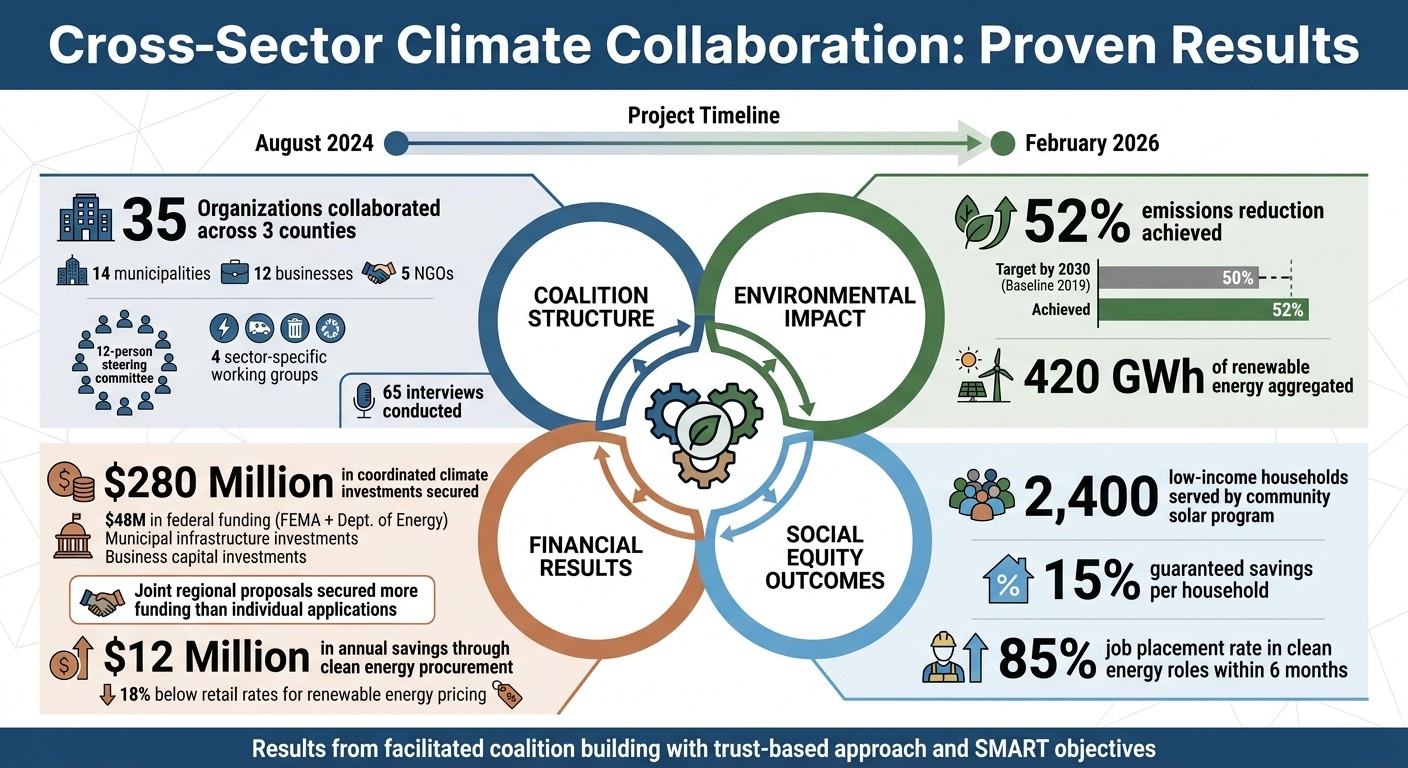
Regional Climate Coalition Success Metrics: $280M Investment and 52% Emissions Reduction
Setting Shared Goals and Metrics for Climate Action
Aligning Stakeholder Priorities
Building consensus among stakeholders often begins with understanding their priorities. Between August 2024 and February 2026, Council Fire facilitated a coalition that conducted 65 interviews across 35 organizations to lay the groundwork for a regional climate compact [1]. These conversations uncovered shared interests that were not immediately obvious in public statements.
To effectively manage diverse viewpoints, stakeholders can be categorized by their ambition and pragmatism. Pragmatic leaders who can act as bridges between ambitious advocates and more cautious participants often play a crucial role in maintaining balance [1]. Coalitions dominated by ambitious voices risk alienating more cautious members, while overly conservative groups may set goals that fail to drive meaningful progress.
Small-group discussions are another essential step in building trust and aligning objectives. It's critical to define the coalition's purpose clearly - whether that’s sending political signals, aligning standards, coordinating technical implementation, or mobilizing finance. A vague mission can lead to misaligned expectations and hinder success [2].
These efforts lay the foundation for setting clear, actionable objectives.
Creating SMART Climate Objectives
Once trust is established, shared priorities can be translated into Specific, Measurable, Achievable, Relevant, and Time-bound (SMART) objectives. For example, the compact set a target of reducing emissions by 50% by 2030, based on a 2019 baseline, with commitments ultimately reaching 52% [1].
Rather than focusing on isolated improvements, objectives should address broader, systemic challenges. For instance, instead of aiming for incremental corporate changes, initiatives might focus on decarbonizing entire industries or overhauling regional infrastructure [5]. The coalition's structured approach - led by a 12-person steering committee, supported by four sector-specific working groups, and informed by public forums - ensured that goals were both ambitious and realistic [1].
Adopting a phased approach allows objectives to evolve over time. A case in point is the SIDS Lighthouses Initiative, which progressively increased its renewable energy targets for 2020, 2023, and 2030, demonstrating how coalitions can scale their ambitions as momentum builds [2]. Early successes, such as a joint procurement program, can also help build confidence and sustain engagement. These "quick wins" not only validate the coalition's efforts but also encourage stakeholders to remain committed to long-term goals [1].
Clearly defined objectives are the backbone of effective tracking and accountability systems, ensuring sustained progress in climate action.
Setting Up Metrics and Reporting Systems
With SMART objectives in place, the next step is to establish consistent metrics to track progress. Standardized methodologies are essential for accurate and comparable data. For example, the regional compact implemented a joint vulnerability assessment, which reduced redundant municipal costs and provided a unified data framework [1].
Transparent reporting is equally important. Publishing annual progress reports fosters accountability, even in the absence of legal enforcement mechanisms. As Council Fire aptly notes:
"Public commitments with public tracking are surprisingly powerful" [1].
This transparency helped unlock $280 million in coordinated investments across municipal infrastructure, business capital, and federal grants [1]. Additionally, a clean energy procurement initiative aggregated demand for 420 GWh of renewable energy, securing prices 18% below retail rates and saving participants $12 million annually [1].
Metrics should reflect multiple dimensions of value to maintain stakeholder engagement. Alongside tracking emissions reductions, it's important to measure economic benefits, social equity outcomes, and infrastructure improvements. A regional workforce program, for instance, achieved an 85% job placement rate in clean energy roles within six months of its launch, highlighting both community impact and labor support [1]. Without clear evidence of these outcomes, it becomes difficult for the broader community to assess the coalition's effectiveness or hold it accountable [2].
Driving climate and environmental sustainability through cross-sector collaboration in the Caribbean
Building Multi-Stakeholder Engagement Platforms
To move from setting goals and metrics to tangible climate action, it's essential to create platforms where diverse voices can contribute meaningfully.
Recruiting Stakeholders Across Sectors
The first step in building an engagement platform is identifying who needs to participate and understanding their priorities. Interviews revealed that stakeholders generally fall into three categories based on their levels of ambition and pragmatism [1]. On one end, ambitious advocates - often NGOs and researchers - push for bold climate goals. On the other, cautious participants - typically businesses and risk-averse officials - focus on what’s feasible. The sweet spot lies with pragmatic leaders, who balance ambition with a focus on implementation. As Council Fire explains:
"Centering pragmatic leaders - ambitious but implementation-focused - produced both ambition and buy-in" [1].
To organize stakeholders effectively, use an Influence × Impact matrix to classify them into three tiers:
Tier 1: High influence and high impact stakeholders, who require close collaboration through regular workshops and discussions.
Tier 2: Stakeholders with moderate influence or impact, engaged through surveys and focus groups.
Tier 3: Stakeholders with lower influence or impact, kept informed through newsletters and public updates.
Involving a mix of supportive and critical stakeholders ensures well-rounded perspectives, which enhances credibility and minimizes blind spots. Once stakeholders are identified, the next step is establishing clear and fair decision-making processes.
Designing Fair Decision-Making Processes
Creating a fair structure for decision-making is just as important as deciding who participates. A phased governance model, led by pragmatic leaders, can help maintain balance and prevent dominance by either overly ambitious advocates or skeptical participants [1].
Practical measures can remove barriers to participation, such as offering modest compensation or expense reimbursements for community members, NGOs, and others who might otherwise be excluded. Providing various engagement formats - like online, in-person, and phone options - and offering materials in multiple languages can significantly improve participation. Aim for at least a 30% response rate in surveys to ensure meaningful representation [6].
Transparency is key to building trust. Instead of relying on legal enforcement, use public commitments and annual progress reports to demonstrate accountability. When conflicts arise - such as differing priorities between financial risks and local impacts - document these tensions clearly. Use transparent criteria to explain decisions and, most importantly, close the loop by sharing engagement results with participants. As Council Fire warns:
"Failing to close the loop is the fastest way to destroy engagement quality in future cycles. Stakeholders who feel ignored won't participate again" [6].
Fair processes lay the groundwork, but equity must be woven into the platform from the beginning to ensure meaningful outcomes.
Prioritizing Equity and Justice
Equity isn’t an add-on - it needs to be a core part of the engagement platform. For example, a regional compact created an "Equitable Access" working group that implemented environmental justice screening for all proposed projects. They also reserved governance seats for environmental justice representatives, granting them full voting power [1].
This approach delivered tangible results, such as significant cost savings and improved workforce placement rates [1]. These outcomes highlight that centering equity not only reflects ethical responsibility but also drives measurable success.
True equity goes beyond consultation to co-creation. Marginalized communities should be treated as partners in shaping solutions, not just as groups to inform. This partnership builds trust and ensures long-term resilience in climate action. Targeted programs, such as those focusing on weatherization for low-income households, community solar initiatives, and electric vehicle access, ensure that the benefits of climate action reach those who need them the most - not just those with existing resources.
Using Technology and Data for Better Collaboration
Once your engagement platform is in place, the next step is to harness digital tools to improve transparency, monitor progress, and ensure accountability. Technology plays a key role in driving actionable, data-informed climate initiatives while fostering effective collaboration across sectors. These strategies seamlessly integrate with your engagement framework, enhancing clarity and responsibility.
Choosing Digital Collaboration Tools
Selecting the right digital platforms is crucial. Look for tools that guarantee data sovereignty, ensuring your organization retains full ownership and control over its data [7].
Take Climate TRACE as an example. This platform processes over 90 trillion bytes of data from a network of more than 300 satellites and 11,000 sensors, tracking emissions from 745 million sources globally. It provides monthly emissions data with just a two-month delay. At COP30 in Brazil in November 2025, Climate TRACE introduced a solution mapping tool to estimate greenhouse gas reductions for these sources [8].
For supply chain transparency, platforms like Open Supply Hub are invaluable. In April 2026, it launched "OS Hub Spotlight" with 10 founding partners, connecting previously siloed datasets. This tool allows organizations to access and evaluate supply chain data tied to specific production facilities on one platform [8]. Similarly, PACT, which includes over 150 stakeholders from 2,500 companies, focuses on standardized Scope 3 data exchange for product-level carbon footprinting. As Giulia Saladino from Unilever highlighted:
"PACT has been instrumental in accelerating PCF [Product Carbon Footprint] data exchange across value chains, and in tackling significant challenges across value chains" [7].
Creating Data-Sharing Agreements
Building trust through strong data-sharing agreements is essential. These agreements should define precise, measurable indicators to track progress and avoid superficial claims of success, often referred to as "greenwashing" [2].
To ensure smooth coordination, establish a secretariat or assign an existing organization to oversee data-sharing processes and manage participants [2]. Clearly outline whether data-sharing responsibilities are collective or individual, and specify who will handle data security and protection [2].
Transparency is key to fostering trust, yet public reporting in climate collaborations remains rare [2]. Centralized platforms like the UN Climate Change's Global Climate Action Portal can be used to publish reports and maintain accountability [2]. The PACT framework offers a strong example, emphasizing:
"each organization is the sole owner of and exercises sovereignty over its data, with full control over who has access to any data-point" [7].
Managing Cybersecurity and Data Privacy
With digital tools in place, safeguarding data and ensuring privacy is critical. By October 2025, cybersecurity had become a central topic in international cooperation discussions, standing alongside climate action [9]. To address this, include specific protocols for protecting sensitive information.
Adopt tiered consent systems to categorize data based on necessity, statistical use, and targeting, giving partners control over non-essential tracking [4]. Any collected data, such as internet log details or visitor behavior, should be anonymized and unlinked from personal identifiers [4].
For projects involving remote technologies - like solar-powered clinics or distributed renewable energy systems - secure broadband connectivity is vital to link these systems to centralized platforms safely [9]. Establish a formal monitoring and evaluation framework with clear indicators to track outcomes while maintaining data integrity [2]. To further reinforce security, consider forming a dedicated board or scientific advisory panel to oversee data protection and resolve technical disputes [2].
As Dong Kwan Kim, Vice-Chairman of Hanwha Group, remarked:
"NGOs and nonprofit organizations... can also hold the public and private sectors accountable by promoting their own transparency" [9].
Setting Up Governance and Accountability Systems
Once your technology and data systems are established, the next step is to create governance structures that define decision-making processes, track progress, and manage disagreements. Effective governance ensures that initial plans translate into long-term action.
Creating Governance Frameworks
Start with a steering committee made up of practical leaders who combine ambition with hands-on experience. For example, in February 2026, Council Fire facilitated a coalition of 35 organizations spanning three counties. This group included 14 municipalities, 12 businesses, and 5 NGOs. They began with a 12-person steering committee focused on crafting shared principles before expanding to a wider group [1].
To maintain alignment while leveraging expertise, organize working groups tailored to specific domains. The Council Fire coalition established four such groups, enabling each sector to focus on its strengths while contributing to the collective goal of reducing emissions by 50% by 2030. This approach unlocked $280 million in climate investments, including $48 million in federal funding from FEMA and the Department of Energy. By submitting joint regional proposals instead of competing individually, the coalition maximized its funding opportunities [1].
Ensure that environmental justice and marginalized communities have representation in decision-making. This inclusion fosters solutions that address diverse needs [1][5]. Clearly document roles, responsibilities, and long-term goals in formal agreements. For example, Marmara University's Civil Society Organizations Research and Application Center partnered with Istanbul Anatolian High School in 2023. Their "Social and Scientific Cooperation Protocol" outlined a clear framework for joint educational and research initiatives on climate change [4].
These governance frameworks provide the structure needed for transparency and accountability, supported by robust monitoring and evaluation systems.
Setting Up Monitoring and Evaluation Systems
Cross-sector partnerships often struggle with legal enforcement, so prioritize peer accountability instead. Publish annual progress reports that detail each partner's commitments and achievements. This approach proved effective for the 35-organization coalition, which surpassed its target by achieving a 52% aggregate emissions reduction [1].
Standardize methodologies for tasks like emissions tracking and vulnerability assessments to avoid duplication and ensure comparability. For instance, the Council Fire coalition conducted a joint vulnerability assessment across 28 municipalities, saving time and resources while maintaining consistency [1].
Celebrate early wins to build momentum. Design your monitoring system to highlight measurable successes quickly. The coalition’s clean energy procurement initiative, for example, secured renewable energy pricing 18% below retail rates, saving participants $12 million annually. Similarly, their workforce transition program achieved an 85% job placement rate in clean energy roles within six months by connecting community colleges, unions, and employers through clear labor agreements [1].
Incorporate equity measures into your evaluation framework. The coalition's community solar program served 2,400 low-income households, guaranteeing each a 15% savings. This demonstrates how monitoring can track both environmental and social progress [1].
A well-structured monitoring system not only tracks progress but also equips the partnership to handle conflicts effectively.
Resolving Conflicts Between Partners
Anticipate potential conflicts by classifying stakeholders into groups such as ambitious advocates, pragmatic leaders, cautious participants, and skeptical observers. This categorization helps facilitate informed discussions [1]. Focus governance efforts on pragmatic leaders who can bridge these groups.
Establish clear escalation procedures, ensuring the lead NGO intervenes only in major disputes or funding issues. For example, SquareOne Villages in Oregon employed this model across four tiny-home communities. Residents managed their own villages while the lead partnership stepped in only for significant conflicts or funding matters [10].
Invest in dedicated coordination resources, such as staff or a third-party facilitator, to manage data, track commitments, and address concerns proactively. The Council Fire coalition successfully coordinated 35 organizations by maintaining this capacity [1]. When disagreements occur, refer to documented cooperation protocols and shared principles to guide resolution. These frameworks provide a common foundation for addressing disputes while keeping the partnership’s overarching objectives in focus.
Solving Common Collaboration Challenges
Despite having strong governance, cross-sector partnerships often encounter predictable hurdles. Recognizing these challenges and preparing practical solutions can help keep collaborations productive and effective.
Handling Misaligned Incentives and Priorities
The differing timelines of businesses, governments, and climate initiatives often lead to conflicts in priorities. While businesses focus on quarterly results, governments operate on multi-year cycles, and climate action demands long-term planning.
To address this, clearly define the roles of each sector:
Governments can establish mandates and regulations.
NGOs can pinpoint urgent regional issues and ensure accountability.
The private sector can contribute scalable technology and expertise in communication [9].
Framing climate action in terms of its impact on businesses and vice versa can also align interests. For instance, in 2019, the Hanwha Group collaborated with the Viet Nam Environment Administration and the Global Green Growth Institute on the "Clean Up Mekong" campaign. Hanwha donated solar-powered boats capable of collecting 400–500 kg of waste daily from the Mekong River. Dong Kwan Kim, Vice-Chairman of Hanwha Group, emphasized:
"Collaboration across sectors is crucial in the fight against climate change... Working together is no longer optional - it is an imperative." [9]
Transparency is another key to fostering trust and ensuring alignment. NGOs can hold both public and private sectors accountable for their commitments, creating a sense of peer accountability. The World Economic Forum’s Global Plastic Action Partnership exemplifies this approach. Since 2018, it has partnered with 25 countries across Latin America, Africa, and Southeast Asia, mobilizing $3.17 billion to combat plastic pollution, benefiting over 1.5 billion people and improving the livelihoods of 12,000 informal waste workers [9].
By defining roles and promoting transparency, partnerships can overcome incentive misalignments and focus on addressing funding gaps.
Managing Resource Constraints and Funding Gaps
Limited budgets can hinder progress, but pooling resources and coordinating funding strategies can turn these challenges into opportunities.
One effective approach is securing anchor funding from community foundations or philanthropic partners. This initial funding can cover essential tasks like landscape assessments and stakeholder mapping, helping partnerships establish credibility before seeking larger grants [1]. Forming collaboratives can also allow smaller organizations to aggregate demand for resources like clean energy, unlocking competitive pricing typically reserved for larger entities [1].
Submitting joint regional proposals for federal or international funding is another strategy. By presenting a united front, partnerships can increase their chances of securing high-value awards. For example, in February 2026, a coalition of 35 organizations submitted coordinated proposals and secured $48 million in FEMA and Department of Energy funding - far more than individual organizations could have achieved alone [1].
Strategy | Financial Benefit | Primary Resource Source |
|---|---|---|
Pooled Procurement | 18% reduction in energy costs | Aggregated demand from partners |
Coordinated Grants | Higher success rate for awards | Federal/International agencies |
Anchor Funding | Covers startup costs | Community foundations |
Building internal expertise can also reduce reliance on costly consultants. Training "Climate Strategists" within organizations and leveraging free online tools, such as carbon calculators, can lower technical assessment costs. For example, the Change Climate Project has directed over $20 million toward climate solutions through corporate transition budgets, demonstrating the value of internal capacity building [3][11][12].
Focusing on projects with measurable financial savings in the early stages can further build confidence. A clean energy procurement initiative, for instance, aggregated 420 GWh of demand, achieved renewable energy pricing 18% below retail rates, and saved participants $12 million annually [1].
While resource pooling is essential, aligning organizational cultures is equally critical for seamless collaboration.
Bridging Organizational and Cultural Differences
The varying cultures, timelines, and leadership styles of NGOs, businesses, and government agencies can lead to misunderstandings that slow progress.
Formalized knowledge-sharing protocols can help bridge these gaps. For example, Marmara University's collaboration with the Sustainable Living School and Akbank in 2023 produced an Impact Analysis Report for the Sustainable Living Festival. The findings were shared via a podcast on Karnaval Radio, promoting sustainable practices and advancing global goals like SDG 12, 13, and 17 [4]. Such structured collaborations improve mutual understanding of communication styles and decision-making processes.
Utilizing multi-stakeholder platforms like RE100 or the Global Plastic Action Partnership can also align partners around shared goals, such as renewable energy or circular economy targets [9]. These frameworks provide common benchmarks that reduce cultural friction.
Training programs are another way to align competencies across sectors. Events like "Circular Economy Weeks" or technical training sessions (e.g., Life Cycle Assessment with OpenLCA) help team members develop shared expertise, making collaboration smoother [4].
Lastly, intergovernmental organizations can act as neutral intermediaries to facilitate collaboration between private corporations and government agencies. These organizations help navigate complex processes and translate between different organizational cultures [9].
Paul Hawken, founder of Project Drawdown, highlights the importance of uniting diverse groups:
"Whatever scale, people want to address this, they want to do something, they want to feel empowered, they want to feel effective, and the best way to do that is to get together and share what everyone knows." [12]
Conclusion
Building effective climate partnerships starts with trust and clear objectives. The most successful collaborations often begin with facilitated, one-on-one discussions aimed at resolving misunderstandings before formal agreements are reached [1]. This approach helps NGOs and nonprofits unite diverse stakeholders around shared goals, while also respecting the unique challenges faced by each sector.
A systemic approach can deliver measurable outcomes. For instance, in February 2026, 35 organizations collectively secured $280 million in climate investments. Their joint clean energy procurement initiative achieved renewable energy pricing 18% below retail rates, resulting in $12 million in annual savings [1]. These achievements were made possible by eliminating redundant efforts, pooling resources effectively, and prioritizing leaders who balanced ambition with practical implementation.
"Start with trust, not targets. Stakeholders who'd been talking past each other for years needed facilitated dialogue before they could negotiate shared commitments."
Council Fire Resources [1]
Transparency and accountability are essential for maintaining momentum. Even without legal enforcement, public tracking of commitments ensures progress. Annual progress reports create a sense of peer accountability that drives results. For example, a regional compact achieved a 50% emissions reduction target by 2030, with aggregated individual commitments reaching 52%, thanks to the visibility of progress among signatories and the public [1]. This level of transparency fosters actionable steps and sustained collaboration.
With trust and measurable success as a foundation, organizations can take practical steps to advance climate solutions. This includes conducting stakeholder assessments to align ambition with feasibility, achieving early wins to demonstrate value, and designing governance structures that give all parties a voice. By adopting these strategies, NGOs and nonprofits can shift from isolated efforts to coordinated regional or global initiatives that deliver lasting change.
FAQs
How do we start building trust with partners who don’t agree on priorities?
Building trust with partners who may have different priorities begins by identifying shared goals and promoting mutual understanding. Open and honest communication is key - take the time to clarify each partner's objectives and highlight areas where long-term outcomes align. Starting with smaller, aligned networks or groups can pave the way for stronger collaboration. Over time, demonstrating transparency, encouraging participation from all sides, and fostering shared decision-making builds credibility and helps bridge gaps effectively.
What metrics should we track beyond emissions to keep partners engaged?
Tracking more than just emissions is crucial for understanding the broader impact of climate initiatives. Metrics that focus on collaboration effectiveness and partner engagement provide valuable insights. Key indicators to monitor include:
Aligned goals among members: This shows how well partners are working toward common objectives.
Coordinated investments: For instance, partnerships have unlocked $280 million, demonstrating the power of pooled resources.
Regional climate strategies: Tracking these ensures that efforts are tailored to specific local needs and conditions.
Additionally, consider monitoring the diversity and number of participating organizations, the extent of shared resources, and the scope of joint initiatives. Together, these metrics offer a clear picture of partnership strength, resource mobilization, and the collective progress being made toward shared climate goals.
How can we share climate data safely without losing control of it?
Sharing climate data securely while retaining control hinges on robust governance, trust, and well-defined collaboration frameworks. Establishing clear roles and aligning objectives among partners is key, alongside transparent decision-making processes that foster accountability. Building inclusive, enduring partnerships with shared governance models helps ensure both data security and effective control. By prioritizing collaboration as a leadership focus - bolstered by trust, governance structures, and blended finance - organizations can facilitate secure and meaningful data sharing across various sectors.
Related Blog Posts
Latest Articles
©2025

Narrative Change and Power Building: The Missing Half of Advocacy
Narrative change is the process of disrupting dominant narratives that normalize inequity and advancing new narratives from historically marginalized communities.

Funding Resilience Without Federal Grants
BRIC is unreliable and FEMA is shrinking. Here's how cities fund climate resilience with dedicated revenue, blended finance, and a coordinating authority.

The ESG Blind Spot: How AI Is Finding Risks in Companies Nobody Else Is Watching
Norway's sovereign wealth fund uses AI to screen 7,200 portfolio companies for forced labor and corruption within 24 hours. The real story is the emerging-market coverage gap that traditional ESG data vendors miss — and what it means for any company with a global supply chain.
Narrative Change and Power Building: The Missing Half of Advocacy
Narrative change is the process of disrupting dominant narratives that normalize inequity and advancing new narratives from historically marginalized communities.
Funding Resilience Without Federal Grants
BRIC is unreliable and FEMA is shrinking. Here's how cities fund climate resilience with dedicated revenue, blended finance, and a coordinating authority.
The ESG Blind Spot: How AI Is Finding Risks in Companies Nobody Else Is Watching
Norway's sovereign wealth fund uses AI to screen 7,200 portfolio companies for forced labor and corruption within 24 hours. The real story is the emerging-market coverage gap that traditional ESG data vendors miss — and what it means for any company with a global supply chain.
FAQ
01
What does it really mean to “redefine profit”?
02
What makes Council Fire different?
03
Who does Council Fire work with?
04
What does working with Council Fire actually look like?
05
How does Council Fire help organizations turn big goals into action?
06
How does Council Fire define and measure success?
May 8, 2026
How to Facilitate Cross-Sector Collaboration for Climate Action for NGOs & Nonprofits
Sustainability Strategy
In This Article
Steps for NGOs to build cross-sector climate partnerships: trust, SMART goals, shared data, governance, funding and equity.
How to Facilitate Cross-Sector Collaboration for Climate Action for NGOs & Nonprofits
Tackling climate change requires collaboration across sectors, and NGOs and nonprofits play a key role in bridging businesses, governments, and communities. Here's how to drive impactful partnerships:
Start with trust: Build relationships through open dialogue before setting targets.
Set SMART goals: Define Specific, Measurable, Achievable, Relevant, and Time-bound objectives to align stakeholders and track progress.
Leverage data and technology: Use platforms like Climate TRACE for emissions tracking or Open Supply Hub for supply chain transparency.
Ensure equity: Involve marginalized communities in decision-making and prioritize inclusive outcomes.
Establish governance: Create clear decision-making structures and publish annual progress reports to maintain accountability.
Secure funding: Pool resources, apply for joint grants, and focus on cost-saving initiatives to attract investment.
Overcome challenges: Address misaligned priorities, resource constraints, and organizational differences with structured frameworks and transparent processes.
Example: A coalition of 35 organizations recently achieved a 50% emissions reduction target, secured $280M in funding, and saved $12M annually through renewable energy initiatives - all by aligning efforts and fostering trust.
This guide offers practical steps to replicate such success, from setting shared goals to navigating common obstacles.
Regional Climate Coalition Success Metrics: $280M Investment and 52% Emissions Reduction
Setting Shared Goals and Metrics for Climate Action
Aligning Stakeholder Priorities
Building consensus among stakeholders often begins with understanding their priorities. Between August 2024 and February 2026, Council Fire facilitated a coalition that conducted 65 interviews across 35 organizations to lay the groundwork for a regional climate compact [1]. These conversations uncovered shared interests that were not immediately obvious in public statements.
To effectively manage diverse viewpoints, stakeholders can be categorized by their ambition and pragmatism. Pragmatic leaders who can act as bridges between ambitious advocates and more cautious participants often play a crucial role in maintaining balance [1]. Coalitions dominated by ambitious voices risk alienating more cautious members, while overly conservative groups may set goals that fail to drive meaningful progress.
Small-group discussions are another essential step in building trust and aligning objectives. It's critical to define the coalition's purpose clearly - whether that’s sending political signals, aligning standards, coordinating technical implementation, or mobilizing finance. A vague mission can lead to misaligned expectations and hinder success [2].
These efforts lay the foundation for setting clear, actionable objectives.
Creating SMART Climate Objectives
Once trust is established, shared priorities can be translated into Specific, Measurable, Achievable, Relevant, and Time-bound (SMART) objectives. For example, the compact set a target of reducing emissions by 50% by 2030, based on a 2019 baseline, with commitments ultimately reaching 52% [1].
Rather than focusing on isolated improvements, objectives should address broader, systemic challenges. For instance, instead of aiming for incremental corporate changes, initiatives might focus on decarbonizing entire industries or overhauling regional infrastructure [5]. The coalition's structured approach - led by a 12-person steering committee, supported by four sector-specific working groups, and informed by public forums - ensured that goals were both ambitious and realistic [1].
Adopting a phased approach allows objectives to evolve over time. A case in point is the SIDS Lighthouses Initiative, which progressively increased its renewable energy targets for 2020, 2023, and 2030, demonstrating how coalitions can scale their ambitions as momentum builds [2]. Early successes, such as a joint procurement program, can also help build confidence and sustain engagement. These "quick wins" not only validate the coalition's efforts but also encourage stakeholders to remain committed to long-term goals [1].
Clearly defined objectives are the backbone of effective tracking and accountability systems, ensuring sustained progress in climate action.
Setting Up Metrics and Reporting Systems
With SMART objectives in place, the next step is to establish consistent metrics to track progress. Standardized methodologies are essential for accurate and comparable data. For example, the regional compact implemented a joint vulnerability assessment, which reduced redundant municipal costs and provided a unified data framework [1].
Transparent reporting is equally important. Publishing annual progress reports fosters accountability, even in the absence of legal enforcement mechanisms. As Council Fire aptly notes:
"Public commitments with public tracking are surprisingly powerful" [1].
This transparency helped unlock $280 million in coordinated investments across municipal infrastructure, business capital, and federal grants [1]. Additionally, a clean energy procurement initiative aggregated demand for 420 GWh of renewable energy, securing prices 18% below retail rates and saving participants $12 million annually [1].
Metrics should reflect multiple dimensions of value to maintain stakeholder engagement. Alongside tracking emissions reductions, it's important to measure economic benefits, social equity outcomes, and infrastructure improvements. A regional workforce program, for instance, achieved an 85% job placement rate in clean energy roles within six months of its launch, highlighting both community impact and labor support [1]. Without clear evidence of these outcomes, it becomes difficult for the broader community to assess the coalition's effectiveness or hold it accountable [2].
Driving climate and environmental sustainability through cross-sector collaboration in the Caribbean
Building Multi-Stakeholder Engagement Platforms
To move from setting goals and metrics to tangible climate action, it's essential to create platforms where diverse voices can contribute meaningfully.
Recruiting Stakeholders Across Sectors
The first step in building an engagement platform is identifying who needs to participate and understanding their priorities. Interviews revealed that stakeholders generally fall into three categories based on their levels of ambition and pragmatism [1]. On one end, ambitious advocates - often NGOs and researchers - push for bold climate goals. On the other, cautious participants - typically businesses and risk-averse officials - focus on what’s feasible. The sweet spot lies with pragmatic leaders, who balance ambition with a focus on implementation. As Council Fire explains:
"Centering pragmatic leaders - ambitious but implementation-focused - produced both ambition and buy-in" [1].
To organize stakeholders effectively, use an Influence × Impact matrix to classify them into three tiers:
Tier 1: High influence and high impact stakeholders, who require close collaboration through regular workshops and discussions.
Tier 2: Stakeholders with moderate influence or impact, engaged through surveys and focus groups.
Tier 3: Stakeholders with lower influence or impact, kept informed through newsletters and public updates.
Involving a mix of supportive and critical stakeholders ensures well-rounded perspectives, which enhances credibility and minimizes blind spots. Once stakeholders are identified, the next step is establishing clear and fair decision-making processes.
Designing Fair Decision-Making Processes
Creating a fair structure for decision-making is just as important as deciding who participates. A phased governance model, led by pragmatic leaders, can help maintain balance and prevent dominance by either overly ambitious advocates or skeptical participants [1].
Practical measures can remove barriers to participation, such as offering modest compensation or expense reimbursements for community members, NGOs, and others who might otherwise be excluded. Providing various engagement formats - like online, in-person, and phone options - and offering materials in multiple languages can significantly improve participation. Aim for at least a 30% response rate in surveys to ensure meaningful representation [6].
Transparency is key to building trust. Instead of relying on legal enforcement, use public commitments and annual progress reports to demonstrate accountability. When conflicts arise - such as differing priorities between financial risks and local impacts - document these tensions clearly. Use transparent criteria to explain decisions and, most importantly, close the loop by sharing engagement results with participants. As Council Fire warns:
"Failing to close the loop is the fastest way to destroy engagement quality in future cycles. Stakeholders who feel ignored won't participate again" [6].
Fair processes lay the groundwork, but equity must be woven into the platform from the beginning to ensure meaningful outcomes.
Prioritizing Equity and Justice
Equity isn’t an add-on - it needs to be a core part of the engagement platform. For example, a regional compact created an "Equitable Access" working group that implemented environmental justice screening for all proposed projects. They also reserved governance seats for environmental justice representatives, granting them full voting power [1].
This approach delivered tangible results, such as significant cost savings and improved workforce placement rates [1]. These outcomes highlight that centering equity not only reflects ethical responsibility but also drives measurable success.
True equity goes beyond consultation to co-creation. Marginalized communities should be treated as partners in shaping solutions, not just as groups to inform. This partnership builds trust and ensures long-term resilience in climate action. Targeted programs, such as those focusing on weatherization for low-income households, community solar initiatives, and electric vehicle access, ensure that the benefits of climate action reach those who need them the most - not just those with existing resources.
Using Technology and Data for Better Collaboration
Once your engagement platform is in place, the next step is to harness digital tools to improve transparency, monitor progress, and ensure accountability. Technology plays a key role in driving actionable, data-informed climate initiatives while fostering effective collaboration across sectors. These strategies seamlessly integrate with your engagement framework, enhancing clarity and responsibility.
Choosing Digital Collaboration Tools
Selecting the right digital platforms is crucial. Look for tools that guarantee data sovereignty, ensuring your organization retains full ownership and control over its data [7].
Take Climate TRACE as an example. This platform processes over 90 trillion bytes of data from a network of more than 300 satellites and 11,000 sensors, tracking emissions from 745 million sources globally. It provides monthly emissions data with just a two-month delay. At COP30 in Brazil in November 2025, Climate TRACE introduced a solution mapping tool to estimate greenhouse gas reductions for these sources [8].
For supply chain transparency, platforms like Open Supply Hub are invaluable. In April 2026, it launched "OS Hub Spotlight" with 10 founding partners, connecting previously siloed datasets. This tool allows organizations to access and evaluate supply chain data tied to specific production facilities on one platform [8]. Similarly, PACT, which includes over 150 stakeholders from 2,500 companies, focuses on standardized Scope 3 data exchange for product-level carbon footprinting. As Giulia Saladino from Unilever highlighted:
"PACT has been instrumental in accelerating PCF [Product Carbon Footprint] data exchange across value chains, and in tackling significant challenges across value chains" [7].
Creating Data-Sharing Agreements
Building trust through strong data-sharing agreements is essential. These agreements should define precise, measurable indicators to track progress and avoid superficial claims of success, often referred to as "greenwashing" [2].
To ensure smooth coordination, establish a secretariat or assign an existing organization to oversee data-sharing processes and manage participants [2]. Clearly outline whether data-sharing responsibilities are collective or individual, and specify who will handle data security and protection [2].
Transparency is key to fostering trust, yet public reporting in climate collaborations remains rare [2]. Centralized platforms like the UN Climate Change's Global Climate Action Portal can be used to publish reports and maintain accountability [2]. The PACT framework offers a strong example, emphasizing:
"each organization is the sole owner of and exercises sovereignty over its data, with full control over who has access to any data-point" [7].
Managing Cybersecurity and Data Privacy
With digital tools in place, safeguarding data and ensuring privacy is critical. By October 2025, cybersecurity had become a central topic in international cooperation discussions, standing alongside climate action [9]. To address this, include specific protocols for protecting sensitive information.
Adopt tiered consent systems to categorize data based on necessity, statistical use, and targeting, giving partners control over non-essential tracking [4]. Any collected data, such as internet log details or visitor behavior, should be anonymized and unlinked from personal identifiers [4].
For projects involving remote technologies - like solar-powered clinics or distributed renewable energy systems - secure broadband connectivity is vital to link these systems to centralized platforms safely [9]. Establish a formal monitoring and evaluation framework with clear indicators to track outcomes while maintaining data integrity [2]. To further reinforce security, consider forming a dedicated board or scientific advisory panel to oversee data protection and resolve technical disputes [2].
As Dong Kwan Kim, Vice-Chairman of Hanwha Group, remarked:
"NGOs and nonprofit organizations... can also hold the public and private sectors accountable by promoting their own transparency" [9].
Setting Up Governance and Accountability Systems
Once your technology and data systems are established, the next step is to create governance structures that define decision-making processes, track progress, and manage disagreements. Effective governance ensures that initial plans translate into long-term action.
Creating Governance Frameworks
Start with a steering committee made up of practical leaders who combine ambition with hands-on experience. For example, in February 2026, Council Fire facilitated a coalition of 35 organizations spanning three counties. This group included 14 municipalities, 12 businesses, and 5 NGOs. They began with a 12-person steering committee focused on crafting shared principles before expanding to a wider group [1].
To maintain alignment while leveraging expertise, organize working groups tailored to specific domains. The Council Fire coalition established four such groups, enabling each sector to focus on its strengths while contributing to the collective goal of reducing emissions by 50% by 2030. This approach unlocked $280 million in climate investments, including $48 million in federal funding from FEMA and the Department of Energy. By submitting joint regional proposals instead of competing individually, the coalition maximized its funding opportunities [1].
Ensure that environmental justice and marginalized communities have representation in decision-making. This inclusion fosters solutions that address diverse needs [1][5]. Clearly document roles, responsibilities, and long-term goals in formal agreements. For example, Marmara University's Civil Society Organizations Research and Application Center partnered with Istanbul Anatolian High School in 2023. Their "Social and Scientific Cooperation Protocol" outlined a clear framework for joint educational and research initiatives on climate change [4].
These governance frameworks provide the structure needed for transparency and accountability, supported by robust monitoring and evaluation systems.
Setting Up Monitoring and Evaluation Systems
Cross-sector partnerships often struggle with legal enforcement, so prioritize peer accountability instead. Publish annual progress reports that detail each partner's commitments and achievements. This approach proved effective for the 35-organization coalition, which surpassed its target by achieving a 52% aggregate emissions reduction [1].
Standardize methodologies for tasks like emissions tracking and vulnerability assessments to avoid duplication and ensure comparability. For instance, the Council Fire coalition conducted a joint vulnerability assessment across 28 municipalities, saving time and resources while maintaining consistency [1].
Celebrate early wins to build momentum. Design your monitoring system to highlight measurable successes quickly. The coalition’s clean energy procurement initiative, for example, secured renewable energy pricing 18% below retail rates, saving participants $12 million annually. Similarly, their workforce transition program achieved an 85% job placement rate in clean energy roles within six months by connecting community colleges, unions, and employers through clear labor agreements [1].
Incorporate equity measures into your evaluation framework. The coalition's community solar program served 2,400 low-income households, guaranteeing each a 15% savings. This demonstrates how monitoring can track both environmental and social progress [1].
A well-structured monitoring system not only tracks progress but also equips the partnership to handle conflicts effectively.
Resolving Conflicts Between Partners
Anticipate potential conflicts by classifying stakeholders into groups such as ambitious advocates, pragmatic leaders, cautious participants, and skeptical observers. This categorization helps facilitate informed discussions [1]. Focus governance efforts on pragmatic leaders who can bridge these groups.
Establish clear escalation procedures, ensuring the lead NGO intervenes only in major disputes or funding issues. For example, SquareOne Villages in Oregon employed this model across four tiny-home communities. Residents managed their own villages while the lead partnership stepped in only for significant conflicts or funding matters [10].
Invest in dedicated coordination resources, such as staff or a third-party facilitator, to manage data, track commitments, and address concerns proactively. The Council Fire coalition successfully coordinated 35 organizations by maintaining this capacity [1]. When disagreements occur, refer to documented cooperation protocols and shared principles to guide resolution. These frameworks provide a common foundation for addressing disputes while keeping the partnership’s overarching objectives in focus.
Solving Common Collaboration Challenges
Despite having strong governance, cross-sector partnerships often encounter predictable hurdles. Recognizing these challenges and preparing practical solutions can help keep collaborations productive and effective.
Handling Misaligned Incentives and Priorities
The differing timelines of businesses, governments, and climate initiatives often lead to conflicts in priorities. While businesses focus on quarterly results, governments operate on multi-year cycles, and climate action demands long-term planning.
To address this, clearly define the roles of each sector:
Governments can establish mandates and regulations.
NGOs can pinpoint urgent regional issues and ensure accountability.
The private sector can contribute scalable technology and expertise in communication [9].
Framing climate action in terms of its impact on businesses and vice versa can also align interests. For instance, in 2019, the Hanwha Group collaborated with the Viet Nam Environment Administration and the Global Green Growth Institute on the "Clean Up Mekong" campaign. Hanwha donated solar-powered boats capable of collecting 400–500 kg of waste daily from the Mekong River. Dong Kwan Kim, Vice-Chairman of Hanwha Group, emphasized:
"Collaboration across sectors is crucial in the fight against climate change... Working together is no longer optional - it is an imperative." [9]
Transparency is another key to fostering trust and ensuring alignment. NGOs can hold both public and private sectors accountable for their commitments, creating a sense of peer accountability. The World Economic Forum’s Global Plastic Action Partnership exemplifies this approach. Since 2018, it has partnered with 25 countries across Latin America, Africa, and Southeast Asia, mobilizing $3.17 billion to combat plastic pollution, benefiting over 1.5 billion people and improving the livelihoods of 12,000 informal waste workers [9].
By defining roles and promoting transparency, partnerships can overcome incentive misalignments and focus on addressing funding gaps.
Managing Resource Constraints and Funding Gaps
Limited budgets can hinder progress, but pooling resources and coordinating funding strategies can turn these challenges into opportunities.
One effective approach is securing anchor funding from community foundations or philanthropic partners. This initial funding can cover essential tasks like landscape assessments and stakeholder mapping, helping partnerships establish credibility before seeking larger grants [1]. Forming collaboratives can also allow smaller organizations to aggregate demand for resources like clean energy, unlocking competitive pricing typically reserved for larger entities [1].
Submitting joint regional proposals for federal or international funding is another strategy. By presenting a united front, partnerships can increase their chances of securing high-value awards. For example, in February 2026, a coalition of 35 organizations submitted coordinated proposals and secured $48 million in FEMA and Department of Energy funding - far more than individual organizations could have achieved alone [1].
Strategy | Financial Benefit | Primary Resource Source |
|---|---|---|
Pooled Procurement | 18% reduction in energy costs | Aggregated demand from partners |
Coordinated Grants | Higher success rate for awards | Federal/International agencies |
Anchor Funding | Covers startup costs | Community foundations |
Building internal expertise can also reduce reliance on costly consultants. Training "Climate Strategists" within organizations and leveraging free online tools, such as carbon calculators, can lower technical assessment costs. For example, the Change Climate Project has directed over $20 million toward climate solutions through corporate transition budgets, demonstrating the value of internal capacity building [3][11][12].
Focusing on projects with measurable financial savings in the early stages can further build confidence. A clean energy procurement initiative, for instance, aggregated 420 GWh of demand, achieved renewable energy pricing 18% below retail rates, and saved participants $12 million annually [1].
While resource pooling is essential, aligning organizational cultures is equally critical for seamless collaboration.
Bridging Organizational and Cultural Differences
The varying cultures, timelines, and leadership styles of NGOs, businesses, and government agencies can lead to misunderstandings that slow progress.
Formalized knowledge-sharing protocols can help bridge these gaps. For example, Marmara University's collaboration with the Sustainable Living School and Akbank in 2023 produced an Impact Analysis Report for the Sustainable Living Festival. The findings were shared via a podcast on Karnaval Radio, promoting sustainable practices and advancing global goals like SDG 12, 13, and 17 [4]. Such structured collaborations improve mutual understanding of communication styles and decision-making processes.
Utilizing multi-stakeholder platforms like RE100 or the Global Plastic Action Partnership can also align partners around shared goals, such as renewable energy or circular economy targets [9]. These frameworks provide common benchmarks that reduce cultural friction.
Training programs are another way to align competencies across sectors. Events like "Circular Economy Weeks" or technical training sessions (e.g., Life Cycle Assessment with OpenLCA) help team members develop shared expertise, making collaboration smoother [4].
Lastly, intergovernmental organizations can act as neutral intermediaries to facilitate collaboration between private corporations and government agencies. These organizations help navigate complex processes and translate between different organizational cultures [9].
Paul Hawken, founder of Project Drawdown, highlights the importance of uniting diverse groups:
"Whatever scale, people want to address this, they want to do something, they want to feel empowered, they want to feel effective, and the best way to do that is to get together and share what everyone knows." [12]
Conclusion
Building effective climate partnerships starts with trust and clear objectives. The most successful collaborations often begin with facilitated, one-on-one discussions aimed at resolving misunderstandings before formal agreements are reached [1]. This approach helps NGOs and nonprofits unite diverse stakeholders around shared goals, while also respecting the unique challenges faced by each sector.
A systemic approach can deliver measurable outcomes. For instance, in February 2026, 35 organizations collectively secured $280 million in climate investments. Their joint clean energy procurement initiative achieved renewable energy pricing 18% below retail rates, resulting in $12 million in annual savings [1]. These achievements were made possible by eliminating redundant efforts, pooling resources effectively, and prioritizing leaders who balanced ambition with practical implementation.
"Start with trust, not targets. Stakeholders who'd been talking past each other for years needed facilitated dialogue before they could negotiate shared commitments."
Council Fire Resources [1]
Transparency and accountability are essential for maintaining momentum. Even without legal enforcement, public tracking of commitments ensures progress. Annual progress reports create a sense of peer accountability that drives results. For example, a regional compact achieved a 50% emissions reduction target by 2030, with aggregated individual commitments reaching 52%, thanks to the visibility of progress among signatories and the public [1]. This level of transparency fosters actionable steps and sustained collaboration.
With trust and measurable success as a foundation, organizations can take practical steps to advance climate solutions. This includes conducting stakeholder assessments to align ambition with feasibility, achieving early wins to demonstrate value, and designing governance structures that give all parties a voice. By adopting these strategies, NGOs and nonprofits can shift from isolated efforts to coordinated regional or global initiatives that deliver lasting change.
FAQs
How do we start building trust with partners who don’t agree on priorities?
Building trust with partners who may have different priorities begins by identifying shared goals and promoting mutual understanding. Open and honest communication is key - take the time to clarify each partner's objectives and highlight areas where long-term outcomes align. Starting with smaller, aligned networks or groups can pave the way for stronger collaboration. Over time, demonstrating transparency, encouraging participation from all sides, and fostering shared decision-making builds credibility and helps bridge gaps effectively.
What metrics should we track beyond emissions to keep partners engaged?
Tracking more than just emissions is crucial for understanding the broader impact of climate initiatives. Metrics that focus on collaboration effectiveness and partner engagement provide valuable insights. Key indicators to monitor include:
Aligned goals among members: This shows how well partners are working toward common objectives.
Coordinated investments: For instance, partnerships have unlocked $280 million, demonstrating the power of pooled resources.
Regional climate strategies: Tracking these ensures that efforts are tailored to specific local needs and conditions.
Additionally, consider monitoring the diversity and number of participating organizations, the extent of shared resources, and the scope of joint initiatives. Together, these metrics offer a clear picture of partnership strength, resource mobilization, and the collective progress being made toward shared climate goals.
How can we share climate data safely without losing control of it?
Sharing climate data securely while retaining control hinges on robust governance, trust, and well-defined collaboration frameworks. Establishing clear roles and aligning objectives among partners is key, alongside transparent decision-making processes that foster accountability. Building inclusive, enduring partnerships with shared governance models helps ensure both data security and effective control. By prioritizing collaboration as a leadership focus - bolstered by trust, governance structures, and blended finance - organizations can facilitate secure and meaningful data sharing across various sectors.
Related Blog Posts
Latest Articles
©2025
Narrative Change and Power Building: The Missing Half of Advocacy
Narrative change is the process of disrupting dominant narratives that normalize inequity and advancing new narratives from historically marginalized communities.
Funding Resilience Without Federal Grants
BRIC is unreliable and FEMA is shrinking. Here's how cities fund climate resilience with dedicated revenue, blended finance, and a coordinating authority.
The ESG Blind Spot: How AI Is Finding Risks in Companies Nobody Else Is Watching
Norway's sovereign wealth fund uses AI to screen 7,200 portfolio companies for forced labor and corruption within 24 hours. The real story is the emerging-market coverage gap that traditional ESG data vendors miss — and what it means for any company with a global supply chain.
FAQ
01
What does it really mean to “redefine profit”?
02
What makes Council Fire different?
03
Who does Council Fire work with?
04
What does working with Council Fire actually look like?
05
How does Council Fire help organizations turn big goals into action?
06
How does Council Fire define and measure success?
May 8, 2026
How to Facilitate Cross-Sector Collaboration for Climate Action for NGOs & Nonprofits
Sustainability Strategy
In This Article
Steps for NGOs to build cross-sector climate partnerships: trust, SMART goals, shared data, governance, funding and equity.
How to Facilitate Cross-Sector Collaboration for Climate Action for NGOs & Nonprofits
Tackling climate change requires collaboration across sectors, and NGOs and nonprofits play a key role in bridging businesses, governments, and communities. Here's how to drive impactful partnerships:
Start with trust: Build relationships through open dialogue before setting targets.
Set SMART goals: Define Specific, Measurable, Achievable, Relevant, and Time-bound objectives to align stakeholders and track progress.
Leverage data and technology: Use platforms like Climate TRACE for emissions tracking or Open Supply Hub for supply chain transparency.
Ensure equity: Involve marginalized communities in decision-making and prioritize inclusive outcomes.
Establish governance: Create clear decision-making structures and publish annual progress reports to maintain accountability.
Secure funding: Pool resources, apply for joint grants, and focus on cost-saving initiatives to attract investment.
Overcome challenges: Address misaligned priorities, resource constraints, and organizational differences with structured frameworks and transparent processes.
Example: A coalition of 35 organizations recently achieved a 50% emissions reduction target, secured $280M in funding, and saved $12M annually through renewable energy initiatives - all by aligning efforts and fostering trust.
This guide offers practical steps to replicate such success, from setting shared goals to navigating common obstacles.
Regional Climate Coalition Success Metrics: $280M Investment and 52% Emissions Reduction
Setting Shared Goals and Metrics for Climate Action
Aligning Stakeholder Priorities
Building consensus among stakeholders often begins with understanding their priorities. Between August 2024 and February 2026, Council Fire facilitated a coalition that conducted 65 interviews across 35 organizations to lay the groundwork for a regional climate compact [1]. These conversations uncovered shared interests that were not immediately obvious in public statements.
To effectively manage diverse viewpoints, stakeholders can be categorized by their ambition and pragmatism. Pragmatic leaders who can act as bridges between ambitious advocates and more cautious participants often play a crucial role in maintaining balance [1]. Coalitions dominated by ambitious voices risk alienating more cautious members, while overly conservative groups may set goals that fail to drive meaningful progress.
Small-group discussions are another essential step in building trust and aligning objectives. It's critical to define the coalition's purpose clearly - whether that’s sending political signals, aligning standards, coordinating technical implementation, or mobilizing finance. A vague mission can lead to misaligned expectations and hinder success [2].
These efforts lay the foundation for setting clear, actionable objectives.
Creating SMART Climate Objectives
Once trust is established, shared priorities can be translated into Specific, Measurable, Achievable, Relevant, and Time-bound (SMART) objectives. For example, the compact set a target of reducing emissions by 50% by 2030, based on a 2019 baseline, with commitments ultimately reaching 52% [1].
Rather than focusing on isolated improvements, objectives should address broader, systemic challenges. For instance, instead of aiming for incremental corporate changes, initiatives might focus on decarbonizing entire industries or overhauling regional infrastructure [5]. The coalition's structured approach - led by a 12-person steering committee, supported by four sector-specific working groups, and informed by public forums - ensured that goals were both ambitious and realistic [1].
Adopting a phased approach allows objectives to evolve over time. A case in point is the SIDS Lighthouses Initiative, which progressively increased its renewable energy targets for 2020, 2023, and 2030, demonstrating how coalitions can scale their ambitions as momentum builds [2]. Early successes, such as a joint procurement program, can also help build confidence and sustain engagement. These "quick wins" not only validate the coalition's efforts but also encourage stakeholders to remain committed to long-term goals [1].
Clearly defined objectives are the backbone of effective tracking and accountability systems, ensuring sustained progress in climate action.
Setting Up Metrics and Reporting Systems
With SMART objectives in place, the next step is to establish consistent metrics to track progress. Standardized methodologies are essential for accurate and comparable data. For example, the regional compact implemented a joint vulnerability assessment, which reduced redundant municipal costs and provided a unified data framework [1].
Transparent reporting is equally important. Publishing annual progress reports fosters accountability, even in the absence of legal enforcement mechanisms. As Council Fire aptly notes:
"Public commitments with public tracking are surprisingly powerful" [1].
This transparency helped unlock $280 million in coordinated investments across municipal infrastructure, business capital, and federal grants [1]. Additionally, a clean energy procurement initiative aggregated demand for 420 GWh of renewable energy, securing prices 18% below retail rates and saving participants $12 million annually [1].
Metrics should reflect multiple dimensions of value to maintain stakeholder engagement. Alongside tracking emissions reductions, it's important to measure economic benefits, social equity outcomes, and infrastructure improvements. A regional workforce program, for instance, achieved an 85% job placement rate in clean energy roles within six months of its launch, highlighting both community impact and labor support [1]. Without clear evidence of these outcomes, it becomes difficult for the broader community to assess the coalition's effectiveness or hold it accountable [2].
Driving climate and environmental sustainability through cross-sector collaboration in the Caribbean
Building Multi-Stakeholder Engagement Platforms
To move from setting goals and metrics to tangible climate action, it's essential to create platforms where diverse voices can contribute meaningfully.
Recruiting Stakeholders Across Sectors
The first step in building an engagement platform is identifying who needs to participate and understanding their priorities. Interviews revealed that stakeholders generally fall into three categories based on their levels of ambition and pragmatism [1]. On one end, ambitious advocates - often NGOs and researchers - push for bold climate goals. On the other, cautious participants - typically businesses and risk-averse officials - focus on what’s feasible. The sweet spot lies with pragmatic leaders, who balance ambition with a focus on implementation. As Council Fire explains:
"Centering pragmatic leaders - ambitious but implementation-focused - produced both ambition and buy-in" [1].
To organize stakeholders effectively, use an Influence × Impact matrix to classify them into three tiers:
Tier 1: High influence and high impact stakeholders, who require close collaboration through regular workshops and discussions.
Tier 2: Stakeholders with moderate influence or impact, engaged through surveys and focus groups.
Tier 3: Stakeholders with lower influence or impact, kept informed through newsletters and public updates.
Involving a mix of supportive and critical stakeholders ensures well-rounded perspectives, which enhances credibility and minimizes blind spots. Once stakeholders are identified, the next step is establishing clear and fair decision-making processes.
Designing Fair Decision-Making Processes
Creating a fair structure for decision-making is just as important as deciding who participates. A phased governance model, led by pragmatic leaders, can help maintain balance and prevent dominance by either overly ambitious advocates or skeptical participants [1].
Practical measures can remove barriers to participation, such as offering modest compensation or expense reimbursements for community members, NGOs, and others who might otherwise be excluded. Providing various engagement formats - like online, in-person, and phone options - and offering materials in multiple languages can significantly improve participation. Aim for at least a 30% response rate in surveys to ensure meaningful representation [6].
Transparency is key to building trust. Instead of relying on legal enforcement, use public commitments and annual progress reports to demonstrate accountability. When conflicts arise - such as differing priorities between financial risks and local impacts - document these tensions clearly. Use transparent criteria to explain decisions and, most importantly, close the loop by sharing engagement results with participants. As Council Fire warns:
"Failing to close the loop is the fastest way to destroy engagement quality in future cycles. Stakeholders who feel ignored won't participate again" [6].
Fair processes lay the groundwork, but equity must be woven into the platform from the beginning to ensure meaningful outcomes.
Prioritizing Equity and Justice
Equity isn’t an add-on - it needs to be a core part of the engagement platform. For example, a regional compact created an "Equitable Access" working group that implemented environmental justice screening for all proposed projects. They also reserved governance seats for environmental justice representatives, granting them full voting power [1].
This approach delivered tangible results, such as significant cost savings and improved workforce placement rates [1]. These outcomes highlight that centering equity not only reflects ethical responsibility but also drives measurable success.
True equity goes beyond consultation to co-creation. Marginalized communities should be treated as partners in shaping solutions, not just as groups to inform. This partnership builds trust and ensures long-term resilience in climate action. Targeted programs, such as those focusing on weatherization for low-income households, community solar initiatives, and electric vehicle access, ensure that the benefits of climate action reach those who need them the most - not just those with existing resources.
Using Technology and Data for Better Collaboration
Once your engagement platform is in place, the next step is to harness digital tools to improve transparency, monitor progress, and ensure accountability. Technology plays a key role in driving actionable, data-informed climate initiatives while fostering effective collaboration across sectors. These strategies seamlessly integrate with your engagement framework, enhancing clarity and responsibility.
Choosing Digital Collaboration Tools
Selecting the right digital platforms is crucial. Look for tools that guarantee data sovereignty, ensuring your organization retains full ownership and control over its data [7].
Take Climate TRACE as an example. This platform processes over 90 trillion bytes of data from a network of more than 300 satellites and 11,000 sensors, tracking emissions from 745 million sources globally. It provides monthly emissions data with just a two-month delay. At COP30 in Brazil in November 2025, Climate TRACE introduced a solution mapping tool to estimate greenhouse gas reductions for these sources [8].
For supply chain transparency, platforms like Open Supply Hub are invaluable. In April 2026, it launched "OS Hub Spotlight" with 10 founding partners, connecting previously siloed datasets. This tool allows organizations to access and evaluate supply chain data tied to specific production facilities on one platform [8]. Similarly, PACT, which includes over 150 stakeholders from 2,500 companies, focuses on standardized Scope 3 data exchange for product-level carbon footprinting. As Giulia Saladino from Unilever highlighted:
"PACT has been instrumental in accelerating PCF [Product Carbon Footprint] data exchange across value chains, and in tackling significant challenges across value chains" [7].
Creating Data-Sharing Agreements
Building trust through strong data-sharing agreements is essential. These agreements should define precise, measurable indicators to track progress and avoid superficial claims of success, often referred to as "greenwashing" [2].
To ensure smooth coordination, establish a secretariat or assign an existing organization to oversee data-sharing processes and manage participants [2]. Clearly outline whether data-sharing responsibilities are collective or individual, and specify who will handle data security and protection [2].
Transparency is key to fostering trust, yet public reporting in climate collaborations remains rare [2]. Centralized platforms like the UN Climate Change's Global Climate Action Portal can be used to publish reports and maintain accountability [2]. The PACT framework offers a strong example, emphasizing:
"each organization is the sole owner of and exercises sovereignty over its data, with full control over who has access to any data-point" [7].
Managing Cybersecurity and Data Privacy
With digital tools in place, safeguarding data and ensuring privacy is critical. By October 2025, cybersecurity had become a central topic in international cooperation discussions, standing alongside climate action [9]. To address this, include specific protocols for protecting sensitive information.
Adopt tiered consent systems to categorize data based on necessity, statistical use, and targeting, giving partners control over non-essential tracking [4]. Any collected data, such as internet log details or visitor behavior, should be anonymized and unlinked from personal identifiers [4].
For projects involving remote technologies - like solar-powered clinics or distributed renewable energy systems - secure broadband connectivity is vital to link these systems to centralized platforms safely [9]. Establish a formal monitoring and evaluation framework with clear indicators to track outcomes while maintaining data integrity [2]. To further reinforce security, consider forming a dedicated board or scientific advisory panel to oversee data protection and resolve technical disputes [2].
As Dong Kwan Kim, Vice-Chairman of Hanwha Group, remarked:
"NGOs and nonprofit organizations... can also hold the public and private sectors accountable by promoting their own transparency" [9].
Setting Up Governance and Accountability Systems
Once your technology and data systems are established, the next step is to create governance structures that define decision-making processes, track progress, and manage disagreements. Effective governance ensures that initial plans translate into long-term action.
Creating Governance Frameworks
Start with a steering committee made up of practical leaders who combine ambition with hands-on experience. For example, in February 2026, Council Fire facilitated a coalition of 35 organizations spanning three counties. This group included 14 municipalities, 12 businesses, and 5 NGOs. They began with a 12-person steering committee focused on crafting shared principles before expanding to a wider group [1].
To maintain alignment while leveraging expertise, organize working groups tailored to specific domains. The Council Fire coalition established four such groups, enabling each sector to focus on its strengths while contributing to the collective goal of reducing emissions by 50% by 2030. This approach unlocked $280 million in climate investments, including $48 million in federal funding from FEMA and the Department of Energy. By submitting joint regional proposals instead of competing individually, the coalition maximized its funding opportunities [1].
Ensure that environmental justice and marginalized communities have representation in decision-making. This inclusion fosters solutions that address diverse needs [1][5]. Clearly document roles, responsibilities, and long-term goals in formal agreements. For example, Marmara University's Civil Society Organizations Research and Application Center partnered with Istanbul Anatolian High School in 2023. Their "Social and Scientific Cooperation Protocol" outlined a clear framework for joint educational and research initiatives on climate change [4].
These governance frameworks provide the structure needed for transparency and accountability, supported by robust monitoring and evaluation systems.
Setting Up Monitoring and Evaluation Systems
Cross-sector partnerships often struggle with legal enforcement, so prioritize peer accountability instead. Publish annual progress reports that detail each partner's commitments and achievements. This approach proved effective for the 35-organization coalition, which surpassed its target by achieving a 52% aggregate emissions reduction [1].
Standardize methodologies for tasks like emissions tracking and vulnerability assessments to avoid duplication and ensure comparability. For instance, the Council Fire coalition conducted a joint vulnerability assessment across 28 municipalities, saving time and resources while maintaining consistency [1].
Celebrate early wins to build momentum. Design your monitoring system to highlight measurable successes quickly. The coalition’s clean energy procurement initiative, for example, secured renewable energy pricing 18% below retail rates, saving participants $12 million annually. Similarly, their workforce transition program achieved an 85% job placement rate in clean energy roles within six months by connecting community colleges, unions, and employers through clear labor agreements [1].
Incorporate equity measures into your evaluation framework. The coalition's community solar program served 2,400 low-income households, guaranteeing each a 15% savings. This demonstrates how monitoring can track both environmental and social progress [1].
A well-structured monitoring system not only tracks progress but also equips the partnership to handle conflicts effectively.
Resolving Conflicts Between Partners
Anticipate potential conflicts by classifying stakeholders into groups such as ambitious advocates, pragmatic leaders, cautious participants, and skeptical observers. This categorization helps facilitate informed discussions [1]. Focus governance efforts on pragmatic leaders who can bridge these groups.
Establish clear escalation procedures, ensuring the lead NGO intervenes only in major disputes or funding issues. For example, SquareOne Villages in Oregon employed this model across four tiny-home communities. Residents managed their own villages while the lead partnership stepped in only for significant conflicts or funding matters [10].
Invest in dedicated coordination resources, such as staff or a third-party facilitator, to manage data, track commitments, and address concerns proactively. The Council Fire coalition successfully coordinated 35 organizations by maintaining this capacity [1]. When disagreements occur, refer to documented cooperation protocols and shared principles to guide resolution. These frameworks provide a common foundation for addressing disputes while keeping the partnership’s overarching objectives in focus.
Solving Common Collaboration Challenges
Despite having strong governance, cross-sector partnerships often encounter predictable hurdles. Recognizing these challenges and preparing practical solutions can help keep collaborations productive and effective.
Handling Misaligned Incentives and Priorities
The differing timelines of businesses, governments, and climate initiatives often lead to conflicts in priorities. While businesses focus on quarterly results, governments operate on multi-year cycles, and climate action demands long-term planning.
To address this, clearly define the roles of each sector:
Governments can establish mandates and regulations.
NGOs can pinpoint urgent regional issues and ensure accountability.
The private sector can contribute scalable technology and expertise in communication [9].
Framing climate action in terms of its impact on businesses and vice versa can also align interests. For instance, in 2019, the Hanwha Group collaborated with the Viet Nam Environment Administration and the Global Green Growth Institute on the "Clean Up Mekong" campaign. Hanwha donated solar-powered boats capable of collecting 400–500 kg of waste daily from the Mekong River. Dong Kwan Kim, Vice-Chairman of Hanwha Group, emphasized:
"Collaboration across sectors is crucial in the fight against climate change... Working together is no longer optional - it is an imperative." [9]
Transparency is another key to fostering trust and ensuring alignment. NGOs can hold both public and private sectors accountable for their commitments, creating a sense of peer accountability. The World Economic Forum’s Global Plastic Action Partnership exemplifies this approach. Since 2018, it has partnered with 25 countries across Latin America, Africa, and Southeast Asia, mobilizing $3.17 billion to combat plastic pollution, benefiting over 1.5 billion people and improving the livelihoods of 12,000 informal waste workers [9].
By defining roles and promoting transparency, partnerships can overcome incentive misalignments and focus on addressing funding gaps.
Managing Resource Constraints and Funding Gaps
Limited budgets can hinder progress, but pooling resources and coordinating funding strategies can turn these challenges into opportunities.
One effective approach is securing anchor funding from community foundations or philanthropic partners. This initial funding can cover essential tasks like landscape assessments and stakeholder mapping, helping partnerships establish credibility before seeking larger grants [1]. Forming collaboratives can also allow smaller organizations to aggregate demand for resources like clean energy, unlocking competitive pricing typically reserved for larger entities [1].
Submitting joint regional proposals for federal or international funding is another strategy. By presenting a united front, partnerships can increase their chances of securing high-value awards. For example, in February 2026, a coalition of 35 organizations submitted coordinated proposals and secured $48 million in FEMA and Department of Energy funding - far more than individual organizations could have achieved alone [1].
Strategy | Financial Benefit | Primary Resource Source |
|---|---|---|
Pooled Procurement | 18% reduction in energy costs | Aggregated demand from partners |
Coordinated Grants | Higher success rate for awards | Federal/International agencies |
Anchor Funding | Covers startup costs | Community foundations |
Building internal expertise can also reduce reliance on costly consultants. Training "Climate Strategists" within organizations and leveraging free online tools, such as carbon calculators, can lower technical assessment costs. For example, the Change Climate Project has directed over $20 million toward climate solutions through corporate transition budgets, demonstrating the value of internal capacity building [3][11][12].
Focusing on projects with measurable financial savings in the early stages can further build confidence. A clean energy procurement initiative, for instance, aggregated 420 GWh of demand, achieved renewable energy pricing 18% below retail rates, and saved participants $12 million annually [1].
While resource pooling is essential, aligning organizational cultures is equally critical for seamless collaboration.
Bridging Organizational and Cultural Differences
The varying cultures, timelines, and leadership styles of NGOs, businesses, and government agencies can lead to misunderstandings that slow progress.
Formalized knowledge-sharing protocols can help bridge these gaps. For example, Marmara University's collaboration with the Sustainable Living School and Akbank in 2023 produced an Impact Analysis Report for the Sustainable Living Festival. The findings were shared via a podcast on Karnaval Radio, promoting sustainable practices and advancing global goals like SDG 12, 13, and 17 [4]. Such structured collaborations improve mutual understanding of communication styles and decision-making processes.
Utilizing multi-stakeholder platforms like RE100 or the Global Plastic Action Partnership can also align partners around shared goals, such as renewable energy or circular economy targets [9]. These frameworks provide common benchmarks that reduce cultural friction.
Training programs are another way to align competencies across sectors. Events like "Circular Economy Weeks" or technical training sessions (e.g., Life Cycle Assessment with OpenLCA) help team members develop shared expertise, making collaboration smoother [4].
Lastly, intergovernmental organizations can act as neutral intermediaries to facilitate collaboration between private corporations and government agencies. These organizations help navigate complex processes and translate between different organizational cultures [9].
Paul Hawken, founder of Project Drawdown, highlights the importance of uniting diverse groups:
"Whatever scale, people want to address this, they want to do something, they want to feel empowered, they want to feel effective, and the best way to do that is to get together and share what everyone knows." [12]
Conclusion
Building effective climate partnerships starts with trust and clear objectives. The most successful collaborations often begin with facilitated, one-on-one discussions aimed at resolving misunderstandings before formal agreements are reached [1]. This approach helps NGOs and nonprofits unite diverse stakeholders around shared goals, while also respecting the unique challenges faced by each sector.
A systemic approach can deliver measurable outcomes. For instance, in February 2026, 35 organizations collectively secured $280 million in climate investments. Their joint clean energy procurement initiative achieved renewable energy pricing 18% below retail rates, resulting in $12 million in annual savings [1]. These achievements were made possible by eliminating redundant efforts, pooling resources effectively, and prioritizing leaders who balanced ambition with practical implementation.
"Start with trust, not targets. Stakeholders who'd been talking past each other for years needed facilitated dialogue before they could negotiate shared commitments."
Council Fire Resources [1]
Transparency and accountability are essential for maintaining momentum. Even without legal enforcement, public tracking of commitments ensures progress. Annual progress reports create a sense of peer accountability that drives results. For example, a regional compact achieved a 50% emissions reduction target by 2030, with aggregated individual commitments reaching 52%, thanks to the visibility of progress among signatories and the public [1]. This level of transparency fosters actionable steps and sustained collaboration.
With trust and measurable success as a foundation, organizations can take practical steps to advance climate solutions. This includes conducting stakeholder assessments to align ambition with feasibility, achieving early wins to demonstrate value, and designing governance structures that give all parties a voice. By adopting these strategies, NGOs and nonprofits can shift from isolated efforts to coordinated regional or global initiatives that deliver lasting change.
FAQs
How do we start building trust with partners who don’t agree on priorities?
Building trust with partners who may have different priorities begins by identifying shared goals and promoting mutual understanding. Open and honest communication is key - take the time to clarify each partner's objectives and highlight areas where long-term outcomes align. Starting with smaller, aligned networks or groups can pave the way for stronger collaboration. Over time, demonstrating transparency, encouraging participation from all sides, and fostering shared decision-making builds credibility and helps bridge gaps effectively.
What metrics should we track beyond emissions to keep partners engaged?
Tracking more than just emissions is crucial for understanding the broader impact of climate initiatives. Metrics that focus on collaboration effectiveness and partner engagement provide valuable insights. Key indicators to monitor include:
Aligned goals among members: This shows how well partners are working toward common objectives.
Coordinated investments: For instance, partnerships have unlocked $280 million, demonstrating the power of pooled resources.
Regional climate strategies: Tracking these ensures that efforts are tailored to specific local needs and conditions.
Additionally, consider monitoring the diversity and number of participating organizations, the extent of shared resources, and the scope of joint initiatives. Together, these metrics offer a clear picture of partnership strength, resource mobilization, and the collective progress being made toward shared climate goals.
How can we share climate data safely without losing control of it?
Sharing climate data securely while retaining control hinges on robust governance, trust, and well-defined collaboration frameworks. Establishing clear roles and aligning objectives among partners is key, alongside transparent decision-making processes that foster accountability. Building inclusive, enduring partnerships with shared governance models helps ensure both data security and effective control. By prioritizing collaboration as a leadership focus - bolstered by trust, governance structures, and blended finance - organizations can facilitate secure and meaningful data sharing across various sectors.
Related Blog Posts
Latest Articles
©2025
Narrative Change and Power Building: The Missing Half of Advocacy
Narrative change is the process of disrupting dominant narratives that normalize inequity and advancing new narratives from historically marginalized communities.
Funding Resilience Without Federal Grants
BRIC is unreliable and FEMA is shrinking. Here's how cities fund climate resilience with dedicated revenue, blended finance, and a coordinating authority.
The ESG Blind Spot: How AI Is Finding Risks in Companies Nobody Else Is Watching
Norway's sovereign wealth fund uses AI to screen 7,200 portfolio companies for forced labor and corruption within 24 hours. The real story is the emerging-market coverage gap that traditional ESG data vendors miss — and what it means for any company with a global supply chain.
FAQ
What does it really mean to “redefine profit”?
What makes Council Fire different?
Who does Council Fire work with?
What does working with Council Fire actually look like?
How does Council Fire help organizations turn big goals into action?
How does Council Fire define and measure success?