
May 7, 2026
How to Facilitate Cross-Sector Collaboration for Climate Action for Corporations
ESG Strategy
In This Article
Corporate climate partnerships need measurable science-based goals, shared metrics, and transparent governance to turn pledges into action.
How to Facilitate Cross-Sector Collaboration for Climate Action for Corporations
Collaboration is the key to tackling climate change, but most corporate partnerships fail to deliver results. Despite 90% of companies supporting sustainable partnerships, only 47% actively participate, and 75% of these efforts fall short. Why? Lack of clear goals, poor accountability, and misaligned priorities.
To succeed, corporations must:
Set measurable goals aligned with science-based targets (e.g., cutting Scope 3 emissions by 2.5% annually).
Standardize metrics to track progress and ensure transparency.
Engage stakeholders like governments, NGOs, and local communities early through trust-building and clear roles.
Structure partnerships with governance frameworks that balance decision-making and adapt to change.
Real-world examples, like Microsoft’s internal carbon fee or Apple’s supplier energy program, show how clear targets and collaboration platforms can drive measurable progress. By focusing on shared accountability, transparent reporting, and expert guidance, corporations can turn climate pledges into action.
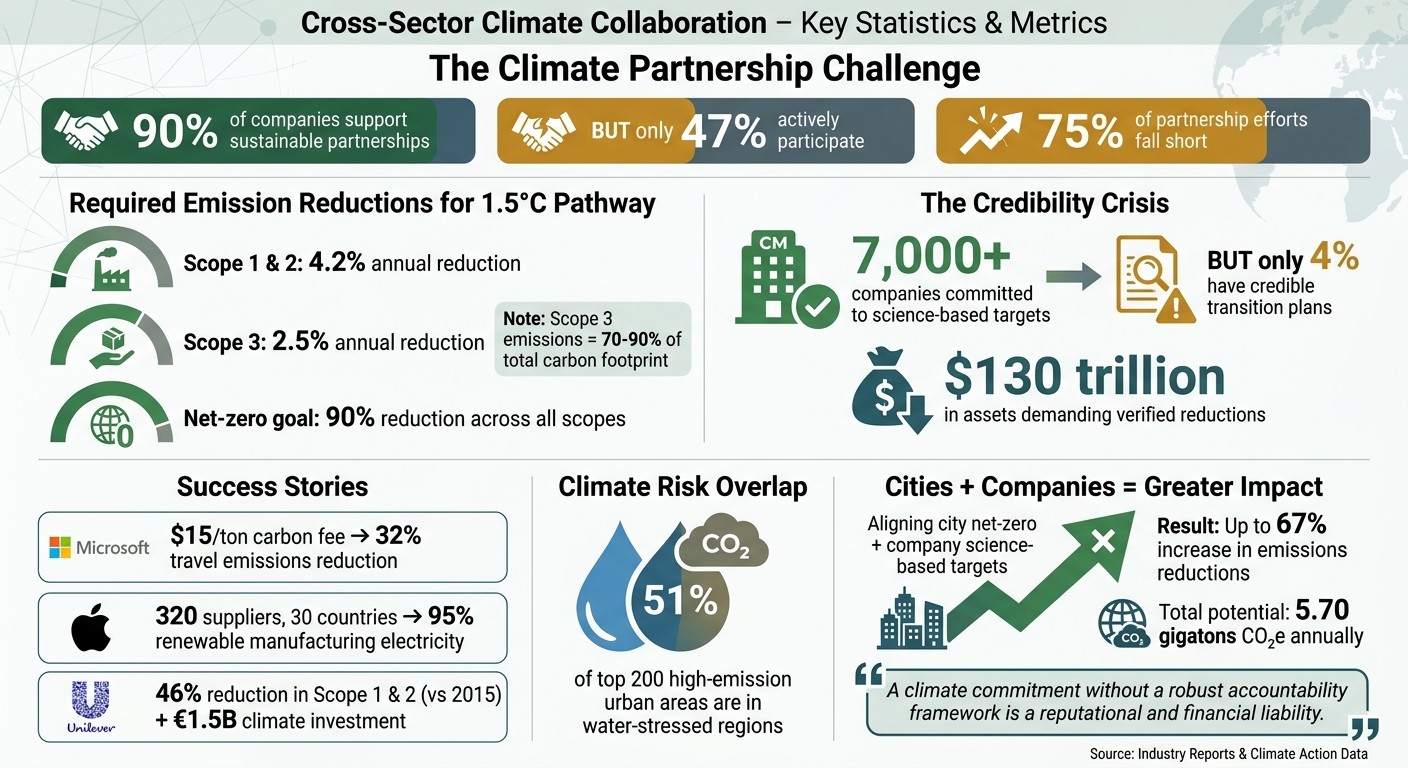
Cross-Sector Climate Collaboration Statistics and Key Metrics for Corporations
No Company Can Fight Climate Change Alone
Setting Clear Goals and Metrics for Collaboration
Effective cross-sector climate partnerships thrive on shared, measurable objectives that all participants understand and commit to. Without clearly defined targets, collaborations risk becoming vague and ineffective. To avoid this, partners should align corporate goals with global frameworks such as the Paris Agreement and the UN Sustainable Development Goals.
By early 2026, over 7,000 companies had committed to or set science-based targets [2]. Yet, only 4% of the largest publicly listed companies have created credible transition plans to support their net-zero pledges [4]. This gap underscores the difficulty in turning promises into measurable, actionable results. Investors managing more than $130 trillion in assets now demand verified emissions reductions instead of aspirational claims [4], making standardized goal-setting both a strategic necessity and a financial priority. Below, we explore how to define and implement these goals effectively.
Defining Science-Based Targets
Science-based targets provide companies with a clear, measurable framework for reducing greenhouse gas emissions in alignment with climate science [6]. These targets ensure that corporate efforts lead to meaningful progress rather than arbitrary reductions.
The process begins with submitting a formal commitment letter to the Science Based Targets initiative (SBTi), which allows companies 24 months to submit and validate their targets [2][6]. During this time, businesses must inventory their Scope 1, 2, and 3 emissions, with a mandatory Scope 3 target if these emissions exceed 40% of the total. Notably, Scope 3 emissions often account for 70% to 90% of a company’s carbon footprint [2][4].
To align with a 1.5°C pathway, companies need to achieve annual reductions of 4.2% in Scope 1 and 2 emissions and 2.5% in Scope 3 emissions [2]. For net-zero goals, a 90% reduction across all scopes is required before relying on carbon removals for any remaining emissions [2][4]. Validation fees vary, ranging from about $1,000 for small businesses to $9,500–$14,500 or more for larger enterprises, depending on the complexity of the targets [2].
Major corporations provide valuable examples of these principles in action. By 2025, Microsoft introduced an internal carbon fee of $15 per metric ton of Scope 3 emissions, reducing travel-related emissions by 32% [4]. Likewise, Unilever linked 25% of its executive long-term incentive pay to sustainability goals in 2024. By late 2025, this approach helped cut Scope 1 and 2 emissions by 46% compared to 2015 levels, alongside a €1.5 billion ($1.6 billion) commitment for climate-focused projects through 2027 [4].
These well-defined targets build trust and accountability, ensuring all partners work toward common, measurable goals. With goals in place, the next step is to establish consistent metrics to track progress across all collaborators.
Standardizing Metrics for Success
Once goals are established, standardized metrics are essential for tracking progress and maintaining accountability. Effective collaborations often extend beyond carbon metrics to address related environmental challenges, such as water usage and biodiversity. This is especially relevant given that 51% of the top 200 urban areas with the largest greenhouse gas emissions are located in regions with high water stress [3]. Industry-specific approaches are also crucial for sectors with unique challenges.
Many companies adopt cross-sector methods using standards from organizations like the IPCC and IEA [6]. These frameworks allow partners from different industries to compare progress meaningfully. For heavy-emitting sectors like cement, steel, or power generation, the Sectoral Decarbonization Approach (SDA) offers tailored, intensity-based metrics, such as CO₂ equivalent per megawatt-hour [2][6].
Apple’s Supplier Clean Energy Program highlights the value of standardized metrics in partnerships. By 2025, Apple had engaged 320 suppliers across 30 countries in renewable energy commitments, leading to over 95% of its direct manufacturing electricity coming from renewable sources [4]. Clear metrics enabled suppliers of various sizes and locations to adopt consistent renewable energy practices.
Collaborations between cities and companies can further amplify impact. Research shows that aligning targets between cities with net-zero commitments and companies with science-based goals could increase emissions reductions by up to 67%, achieving 5.70 gigatons of CO₂ equivalent annually [3]. This collective momentum stems from shared metrics and timelines, creating regional progress that isolated efforts cannot match.
The shift from voluntary to mandatory reporting - under frameworks like the EU Corporate Sustainability Reporting Directive (CSRD) - is also driving the need for standardized metrics.
"A climate commitment without a robust accountability framework is a reputational and financial liability." – Sustainability Atlas [4]
For cross-sector partnerships, establishing shared, verifiable metrics from the outset is essential. These metrics not only ensure accountability but also support transparent reporting and continuous improvement.
Engaging Key Stakeholders for Effective Partnerships
Creating impactful climate partnerships means bringing together governments, NGOs, academic institutions, and local communities. But the real challenge is figuring out who to prioritize and how to keep such a diverse group aligned over time.
A good starting point is mapping stakeholders based on their climate goals and ability to implement them. This process helps identify pragmatic leaders - those who can bridge the gap between visionary advocates and more cautious participants. By focusing on these leaders, partnerships can build a foundation for collaboration and trust.
Take, for example, the regional climate compact Council Fire launched in February 2026. This effort brought together 35 organizations in a metro area of 1.8 million people. After conducting 65 one-on-one stakeholder interviews, the coalition rallied around pragmatic leaders, setting a goal to cut emissions by 50% by 2030. They coordinated $280 million in climate investments and initiated a community solar program that now benefits 2,400 low-income households [7]. This example highlights how targeted stakeholder mapping and phased collaboration can lead to measurable climate action.
One expert from Council Fire put it succinctly:
"Start with trust, not targets. Stakeholders who'd been talking past each other for years needed facilitated dialogue before they could negotiate shared commitments." – Council Fire Resources [7]
This insight underscores the importance of trust-building. Instead of diving straight into commitments, partnerships should begin with individual conversations to identify shared goals, organizational constraints, and each party's willingness to engage. Only then can meaningful collaboration take root.
Building Platforms for Collaboration
Structured collaboration platforms are essential for keeping partnerships organized and effective. These platforms should evolve in phases, starting with small steering committees, expanding to focused working groups, and eventually including broader public forums.
The Council Fire regional compact is a strong example of this phased approach. It established four cross-sector working groups, each addressing a key area: emissions reduction, climate resilience, workforce transition, and equitable access. These groups included representatives from 14 municipalities, 12 businesses, 5 NGOs, and 4 academic institutions [7]. Dedicated coordination staff and clear governance norms ensured the groups operated efficiently from the outset.
Early successes are crucial for maintaining momentum. For instance, the compact launched a clean energy procurement initiative that aggregated 420 gigawatt-hours of demand, securing renewable energy pricing 18% below retail rates and saving participants $12 million annually [7]. Additionally, the compact’s collective efforts secured $48 million in federal grants from FEMA and the Department of Energy, thanks to regional proposals that outperformed individual applications. A workforce program also achieved an 85% job placement rate in clean energy roles within six months for its first cohort of 340 participants [7].
To ensure fairness, the compact integrated environmental justice representatives into its governance structure. This approach ensured projects were screened for equitable access and that underserved communities directly benefited. As these platforms grow, maintaining transparency becomes key to sustaining trust among stakeholders.
Building Trust Through Transparency
Transparency is the glue that holds partnerships together. Clear communication, well-defined roles, and public accountability ensure that alliances stay focused on advancing climate goals.
Council Fire emphasizes "accountability without enforcement." This means relying on public commitment tracking rather than legal penalties to keep partners motivated [7]. Stakeholders make their commitments public and report their progress annually through shared platforms. This peer accountability model leverages reputational pressure to drive results.
"Design for accountability without enforcement. Public commitments with public tracking are surprisingly powerful." – Council Fire Resources [7]
For transparency to work, standardized methodologies are essential. Partners need to understand their specific roles - whether contributing funds, providing technical expertise, shaping policy, or engaging communities. Clearly defined working groups with regular reporting schedules keep everyone on the same page and informed about progress and challenges.
Beyond individual efforts, climate alliances act as system-level influencers. They set industry standards, signal collective demand for sustainable products, and amplify global climate ambitions [8]. For example, platforms like the First Movers Coalition unite countries, companies, and individuals to accelerate the shift away from fossil fuels. By pooling demand for green technologies, these alliances reduce risks for investors and pave the way for industry-wide transformation.
Structuring Partnerships for Long-Term Success
Creating a partnership is just the beginning; maintaining it over time requires thoughtful planning and adaptability. Beyond setting clear goals and building trust, long-term success hinges on structured governance and the ability to adjust to shifting priorities and external changes. Climate-focused collaborations that achieve lasting results are those designed with solid governance frameworks and the flexibility to adapt over time.
Governance and Oversight
Good governance prioritizes clarity over unnecessary bureaucracy. Successful cross-sector partnerships often involve tri-sector coalitions, bringing together businesses, civil society organizations (CSOs), and government entities. Governments typically provide funding and facilitation, businesses contribute technical knowledge, and CSOs ensure local engagement and representation. Research analyzing 221 journal articles on cross-sector partnerships highlights the value of formalizing these roles through permanent coalitions, rather than relying on temporary networks, to create stability and preserve institutional knowledge [9].
Establishing permanent tri-sector coalitions with clearly defined roles, voting procedures, and conflict resolution mechanisms ensures balanced decision-making. These structures are particularly important for addressing non-compliance, as approximately 92% of Sustainable Development Goal targets align directly with international human rights obligations [9]. While trust is essential, relying on it alone can be risky. Robust oversight mechanisms, including formal sanctioning protocols, provide the necessary accountability to ensure that partnerships stay on course. This governance approach also lays the groundwork for adaptive monitoring, allowing collaborations to remain effective as circumstances evolve.
Monitoring and Adapting Progress
As climate goals, technologies, and regulations continue to shift, partnerships must stay flexible to remain relevant. Standardized reporting frameworks, such as the GHG Protocol or the Science Based Targets initiative, make it possible to compare and aggregate data across diverse partners. Independent third-party verification adds an extra layer of credibility to reported outcomes, ensuring transparency and trust. These frameworks not only track progress but also help partnerships adjust strategies as external conditions change.
Effective monitoring goes beyond data collection - it encourages honest evaluations of progress. Regular activities, such as quarterly working groups, annual steering reviews, and stakeholder surveys, create opportunities for continuous improvement and alignment.
Partnerships often evolve through distinct stages. They may begin as philanthropic (focused on one-way resource flows), transition to transactional (with clear reciprocal exchanges), and progress to integrative (where activities merge). Ultimately, the most successful collaborations become transformational, emphasizing shared learning and systemic innovation [9]. Regular evaluations ensure that governance structures remain relevant and effective, enabling necessary adjustments to keep the partnership moving forward.
Building Capacity and Ensuring Accountability
A solid governance structure alone isn't enough to drive climate strategies forward - it must be paired with the expertise to execute and the tools to monitor progress effectively. Appointing executive sponsors and forming dedicated sustainability teams ensures that corporate strategies align with climate goals. These teams should bring specialized knowledge in areas like GHG accounting, supply chain analysis, and decarbonization planning.
For many companies, accurately measuring emissions - particularly Scope 3 emissions - remains a significant challenge. Early investment in GHG accounting capabilities is essential. Implementing an Inventory Management Plan (IMP) can help maintain consistency, accuracy, and transparency in emissions reporting over time. Without a reliable foundation like this, even the best partnerships may struggle to showcase measurable progress.
Climate action also requires extending capacity-building efforts beyond the company itself. Engaging suppliers and customers to meet science-based targets is critical since these groups often account for the bulk of a corporation's carbon footprint. Tying executive KPIs directly to GHG reduction targets ensures accountability at the leadership level, embedding climate priorities into top-tier decision-making.
Facilitating Knowledge Sharing
Collaboration thrives when partners actively learn from one another. Multi-stakeholder platforms such as the World Economic Forum's GAEA (Giving to Amplify Earth Action) bring together corporations, public entities, and philanthropic organizations to share practical climate insights. These platforms help break down barriers between sectors, enabling the flow of technical expertise from businesses, community engagement strategies from civil organizations, and regulatory insights from governments.
Open data networks further enhance this collaboration. Resources like Climate Watch and Resource Watch offer standardized emissions data, national climate commitments, and environmental risk assessments. By sharing these datasets, organizations eliminate the need to build their own data systems, saving time and resources. Regular training sessions, workshops, and collaborative meetings transform this shared information into actionable strategies that can be applied across operations.
Implementing Transparent Reporting Systems
Accountability hinges on visibility. Companies must regularly report on emissions data, progress toward climate goals, and key metrics using standardized frameworks such as the GHG Protocol or TCFD (Task Force on Climate-related Financial Disclosures). These frameworks ensure that data is comparable across industries and partnerships, making it easier to aggregate results and pinpoint areas where interventions are most effective.
To build trust and credibility, third-party verification of climate data is essential. Independent audits help counter greenwashing and reinforce confidence among stakeholders. Publishing these verified results annually - complete with specific timelines tied to decarbonization milestones - keeps momentum high and progress measurable. Centralized digital dashboards offer real-time access to updates for all partners, replacing outdated quarterly reports with continuous transparency. This approach improves problem detection and allows for quicker adjustments to strategies.
With these systems in place, organizations are better equipped to implement expert-driven climate strategies in the next phase.
Using Expert Consulting to Implement Collaboration Strategies
Expert consulting plays a critical role in transforming climate ambitions into coordinated actions. Even with strong capacity and accountability systems in place, many organizations find it challenging to align cross-sector efforts effectively. Consulting firms bridge this gap by offering specialized tools like stakeholder mapping, strategy design, and facilitation to turn multi-party climate goals into measurable achievements.
Customizing Strategies for Corporations
Successful collaboration begins with a deep understanding of the stakeholders involved. Council Fire uses one-on-one interviews with leaders from businesses, government agencies, and NGOs to uncover climate priorities, operational challenges, and each entity's readiness to participate. This process helps consultants map stakeholders along dimensions like "level of ambition" versus "level of pragmatism", identifying four key groups: ambitious advocates, pragmatic leaders, cautious participants, and skeptical observers [7].
Pragmatic leaders - those who combine ambition with action - are positioned as the core steering group. This group ensures that visionary goals are balanced with practical execution. For instance, in a recent project, pragmatic leaders played a pivotal role in establishing a 50% emissions reduction target by 2030 [7]. Insights from these stakeholder assessments guide the creation of phased action plans tailored to each corporation's needs.
Translating Goals Into Action Plans
Once stakeholder insights are gathered, consultants develop phased action plans designed to achieve both immediate results and long-term transformation. These plans often begin with small steering committees to establish trust and governance norms before expanding to larger working groups and public engagement. Early successes - such as high-visibility projects that deliver measurable cost savings within months - are vital for maintaining momentum.
The Council Fire regional compact illustrates this approach, achieving outcomes like significant cost savings, improved funding opportunities, and streamlined workforce integration [7].
"Start with trust, not targets. Stakeholders who'd been talking past each other for years needed facilitated dialogue before they could negotiate shared commitments." - Council Fire [7]
Consultants also introduce standardized tools, such as joint vulnerability assessments, to streamline efforts and provide consistent regional risk data. This systems-based approach ensures alignment with broader frameworks like the Paris Climate Agreement while addressing operational realities. By facilitating collaboration and eliminating fragmented efforts, expert consulting helps organizations achieve collective impact, laying the groundwork for sustained climate progress [7].
Conclusion: Key Takeaways and Action Steps
This section distills practical strategies and examples from earlier discussions into actionable steps for corporations aiming to make meaningful progress on climate action.
Collaboration across industries and sectors is no longer just a recommendation - it's a necessity for companies committed to addressing climate challenges. While 90% of executives acknowledge the importance of partnerships for sustainability, only 47% of organizations are actively involved in such efforts [1]. This gap highlights both a hurdle and an opportunity for businesses ready to move beyond isolated approaches. Here’s how to turn climate pledges into tangible outcomes:
Start by setting clear decarbonization goals before forming partnerships. Pinpoint the specific challenges you face - whether it’s improving data transparency, building technical capabilities, or sharing costs for new technologies. Then, select partners strategically. For instance, NGOs can enhance credibility, R&D institutions can provide technical expertise, and industry peers can work together to establish consistent standards. Evaluate whether joining an established coalition, like the First Movers Coalition, might be more effective than creating a new one, which should be reserved for addressing niche or unmet needs.
Gaining senior leadership support early is critical. Executives must view climate initiatives as central to the company’s strategy. A 2021 study revealed that only 1% of directors at Fortune 100 companies in the U.S. had sustainability-related expertise [5], underscoring the importance of developing leadership with the right skills. Additionally, involve legal teams from the beginning to navigate antitrust concerns while ensuring sufficient data-sharing to engage potential collaborators effectively.
Building trust is key, and transparency is the foundation. Shared, standardized metrics can help. A notable example comes from the 2023 Sustainable Markets Initiative Health Systems Task Force, where GSK and 11 other healthcare companies implemented joint supplier sustainability standards and developed green energy purchasing agreements in India and China [1]. Similarly, H&M Group partnered with a university in Hong Kong to co-invest €6 million in textile recycling technology, sharing both financial risk and the rewards of innovation [1].
Finally, remember that while 82% of public-private partnerships focus on external issues like infrastructure and standards, only 38% address internal challenges such as data transparency [1]. Prioritize building trust and aligning on shared metrics over achieving quick results. Start small - steering committees and early wins can lay the groundwork for broader, long-term progress. By focusing on these fundamentals, corporations can ensure their climate initiatives deliver lasting impact.
FAQs
How do we choose the right partners for a climate collaboration?
To create meaningful collaborations, choose partners aligned with your objectives and equipped with complementary skills. Leverage existing networks to strengthen connections and ensure the partnership operates smoothly by establishing clear governance structures, well-defined roles, and inclusive decision-making processes. By designing partnerships with scalability in mind, you can position them to expand across different regions, industries, and funding approaches. These strategies enable partnerships to evolve and grow, supporting shared climate goals effectively over time.
What’s the fastest way to measure and reduce Scope 3 emissions with suppliers?
To effectively measure and cut Scope 3 emissions with suppliers, start by concentrating on the most impactful areas, like purchased goods and services. Gathering precise supplier data is essential for this process. Engage suppliers by establishing clear decarbonization targets, integrating sustainability standards into procurement decisions, and promoting collaboration through focused initiatives. These actions, when combined, streamline the measurement process and drive substantial emission reductions.
How do we prevent a partnership from becoming 'talk only' with no results?
To ensure partnerships move beyond mere discussions, it's crucial to set clear goals, define roles, and establish governance structures right from the beginning. Aim for specific, measurable targets that everyone can rally around. Keep communication open and transparent, and prioritize building trust through early successes and steady collaboration. Structuring partnerships with scalability and long-term vision in mind is key to achieving impactful climate action. These steps turn conversations into tangible progress.
Related Blog Posts
Latest Articles
©2025

Narrative Change and Power Building: The Missing Half of Advocacy
Narrative change is the process of disrupting dominant narratives that normalize inequity and advancing new narratives from historically marginalized communities.

Funding Resilience Without Federal Grants
BRIC is unreliable and FEMA is shrinking. Here's how cities fund climate resilience with dedicated revenue, blended finance, and a coordinating authority.

The ESG Blind Spot: How AI Is Finding Risks in Companies Nobody Else Is Watching
Norway's sovereign wealth fund uses AI to screen 7,200 portfolio companies for forced labor and corruption within 24 hours. The real story is the emerging-market coverage gap that traditional ESG data vendors miss — and what it means for any company with a global supply chain.
Narrative Change and Power Building: The Missing Half of Advocacy
Narrative change is the process of disrupting dominant narratives that normalize inequity and advancing new narratives from historically marginalized communities.
Funding Resilience Without Federal Grants
BRIC is unreliable and FEMA is shrinking. Here's how cities fund climate resilience with dedicated revenue, blended finance, and a coordinating authority.
The ESG Blind Spot: How AI Is Finding Risks in Companies Nobody Else Is Watching
Norway's sovereign wealth fund uses AI to screen 7,200 portfolio companies for forced labor and corruption within 24 hours. The real story is the emerging-market coverage gap that traditional ESG data vendors miss — and what it means for any company with a global supply chain.
FAQ
01
What does it really mean to “redefine profit”?
02
What makes Council Fire different?
03
Who does Council Fire work with?
04
What does working with Council Fire actually look like?
05
How does Council Fire help organizations turn big goals into action?
06
How does Council Fire define and measure success?
May 7, 2026
How to Facilitate Cross-Sector Collaboration for Climate Action for Corporations
ESG Strategy
In This Article
Corporate climate partnerships need measurable science-based goals, shared metrics, and transparent governance to turn pledges into action.
How to Facilitate Cross-Sector Collaboration for Climate Action for Corporations
Collaboration is the key to tackling climate change, but most corporate partnerships fail to deliver results. Despite 90% of companies supporting sustainable partnerships, only 47% actively participate, and 75% of these efforts fall short. Why? Lack of clear goals, poor accountability, and misaligned priorities.
To succeed, corporations must:
Set measurable goals aligned with science-based targets (e.g., cutting Scope 3 emissions by 2.5% annually).
Standardize metrics to track progress and ensure transparency.
Engage stakeholders like governments, NGOs, and local communities early through trust-building and clear roles.
Structure partnerships with governance frameworks that balance decision-making and adapt to change.
Real-world examples, like Microsoft’s internal carbon fee or Apple’s supplier energy program, show how clear targets and collaboration platforms can drive measurable progress. By focusing on shared accountability, transparent reporting, and expert guidance, corporations can turn climate pledges into action.
Cross-Sector Climate Collaboration Statistics and Key Metrics for Corporations
No Company Can Fight Climate Change Alone
Setting Clear Goals and Metrics for Collaboration
Effective cross-sector climate partnerships thrive on shared, measurable objectives that all participants understand and commit to. Without clearly defined targets, collaborations risk becoming vague and ineffective. To avoid this, partners should align corporate goals with global frameworks such as the Paris Agreement and the UN Sustainable Development Goals.
By early 2026, over 7,000 companies had committed to or set science-based targets [2]. Yet, only 4% of the largest publicly listed companies have created credible transition plans to support their net-zero pledges [4]. This gap underscores the difficulty in turning promises into measurable, actionable results. Investors managing more than $130 trillion in assets now demand verified emissions reductions instead of aspirational claims [4], making standardized goal-setting both a strategic necessity and a financial priority. Below, we explore how to define and implement these goals effectively.
Defining Science-Based Targets
Science-based targets provide companies with a clear, measurable framework for reducing greenhouse gas emissions in alignment with climate science [6]. These targets ensure that corporate efforts lead to meaningful progress rather than arbitrary reductions.
The process begins with submitting a formal commitment letter to the Science Based Targets initiative (SBTi), which allows companies 24 months to submit and validate their targets [2][6]. During this time, businesses must inventory their Scope 1, 2, and 3 emissions, with a mandatory Scope 3 target if these emissions exceed 40% of the total. Notably, Scope 3 emissions often account for 70% to 90% of a company’s carbon footprint [2][4].
To align with a 1.5°C pathway, companies need to achieve annual reductions of 4.2% in Scope 1 and 2 emissions and 2.5% in Scope 3 emissions [2]. For net-zero goals, a 90% reduction across all scopes is required before relying on carbon removals for any remaining emissions [2][4]. Validation fees vary, ranging from about $1,000 for small businesses to $9,500–$14,500 or more for larger enterprises, depending on the complexity of the targets [2].
Major corporations provide valuable examples of these principles in action. By 2025, Microsoft introduced an internal carbon fee of $15 per metric ton of Scope 3 emissions, reducing travel-related emissions by 32% [4]. Likewise, Unilever linked 25% of its executive long-term incentive pay to sustainability goals in 2024. By late 2025, this approach helped cut Scope 1 and 2 emissions by 46% compared to 2015 levels, alongside a €1.5 billion ($1.6 billion) commitment for climate-focused projects through 2027 [4].
These well-defined targets build trust and accountability, ensuring all partners work toward common, measurable goals. With goals in place, the next step is to establish consistent metrics to track progress across all collaborators.
Standardizing Metrics for Success
Once goals are established, standardized metrics are essential for tracking progress and maintaining accountability. Effective collaborations often extend beyond carbon metrics to address related environmental challenges, such as water usage and biodiversity. This is especially relevant given that 51% of the top 200 urban areas with the largest greenhouse gas emissions are located in regions with high water stress [3]. Industry-specific approaches are also crucial for sectors with unique challenges.
Many companies adopt cross-sector methods using standards from organizations like the IPCC and IEA [6]. These frameworks allow partners from different industries to compare progress meaningfully. For heavy-emitting sectors like cement, steel, or power generation, the Sectoral Decarbonization Approach (SDA) offers tailored, intensity-based metrics, such as CO₂ equivalent per megawatt-hour [2][6].
Apple’s Supplier Clean Energy Program highlights the value of standardized metrics in partnerships. By 2025, Apple had engaged 320 suppliers across 30 countries in renewable energy commitments, leading to over 95% of its direct manufacturing electricity coming from renewable sources [4]. Clear metrics enabled suppliers of various sizes and locations to adopt consistent renewable energy practices.
Collaborations between cities and companies can further amplify impact. Research shows that aligning targets between cities with net-zero commitments and companies with science-based goals could increase emissions reductions by up to 67%, achieving 5.70 gigatons of CO₂ equivalent annually [3]. This collective momentum stems from shared metrics and timelines, creating regional progress that isolated efforts cannot match.
The shift from voluntary to mandatory reporting - under frameworks like the EU Corporate Sustainability Reporting Directive (CSRD) - is also driving the need for standardized metrics.
"A climate commitment without a robust accountability framework is a reputational and financial liability." – Sustainability Atlas [4]
For cross-sector partnerships, establishing shared, verifiable metrics from the outset is essential. These metrics not only ensure accountability but also support transparent reporting and continuous improvement.
Engaging Key Stakeholders for Effective Partnerships
Creating impactful climate partnerships means bringing together governments, NGOs, academic institutions, and local communities. But the real challenge is figuring out who to prioritize and how to keep such a diverse group aligned over time.
A good starting point is mapping stakeholders based on their climate goals and ability to implement them. This process helps identify pragmatic leaders - those who can bridge the gap between visionary advocates and more cautious participants. By focusing on these leaders, partnerships can build a foundation for collaboration and trust.
Take, for example, the regional climate compact Council Fire launched in February 2026. This effort brought together 35 organizations in a metro area of 1.8 million people. After conducting 65 one-on-one stakeholder interviews, the coalition rallied around pragmatic leaders, setting a goal to cut emissions by 50% by 2030. They coordinated $280 million in climate investments and initiated a community solar program that now benefits 2,400 low-income households [7]. This example highlights how targeted stakeholder mapping and phased collaboration can lead to measurable climate action.
One expert from Council Fire put it succinctly:
"Start with trust, not targets. Stakeholders who'd been talking past each other for years needed facilitated dialogue before they could negotiate shared commitments." – Council Fire Resources [7]
This insight underscores the importance of trust-building. Instead of diving straight into commitments, partnerships should begin with individual conversations to identify shared goals, organizational constraints, and each party's willingness to engage. Only then can meaningful collaboration take root.
Building Platforms for Collaboration
Structured collaboration platforms are essential for keeping partnerships organized and effective. These platforms should evolve in phases, starting with small steering committees, expanding to focused working groups, and eventually including broader public forums.
The Council Fire regional compact is a strong example of this phased approach. It established four cross-sector working groups, each addressing a key area: emissions reduction, climate resilience, workforce transition, and equitable access. These groups included representatives from 14 municipalities, 12 businesses, 5 NGOs, and 4 academic institutions [7]. Dedicated coordination staff and clear governance norms ensured the groups operated efficiently from the outset.
Early successes are crucial for maintaining momentum. For instance, the compact launched a clean energy procurement initiative that aggregated 420 gigawatt-hours of demand, securing renewable energy pricing 18% below retail rates and saving participants $12 million annually [7]. Additionally, the compact’s collective efforts secured $48 million in federal grants from FEMA and the Department of Energy, thanks to regional proposals that outperformed individual applications. A workforce program also achieved an 85% job placement rate in clean energy roles within six months for its first cohort of 340 participants [7].
To ensure fairness, the compact integrated environmental justice representatives into its governance structure. This approach ensured projects were screened for equitable access and that underserved communities directly benefited. As these platforms grow, maintaining transparency becomes key to sustaining trust among stakeholders.
Building Trust Through Transparency
Transparency is the glue that holds partnerships together. Clear communication, well-defined roles, and public accountability ensure that alliances stay focused on advancing climate goals.
Council Fire emphasizes "accountability without enforcement." This means relying on public commitment tracking rather than legal penalties to keep partners motivated [7]. Stakeholders make their commitments public and report their progress annually through shared platforms. This peer accountability model leverages reputational pressure to drive results.
"Design for accountability without enforcement. Public commitments with public tracking are surprisingly powerful." – Council Fire Resources [7]
For transparency to work, standardized methodologies are essential. Partners need to understand their specific roles - whether contributing funds, providing technical expertise, shaping policy, or engaging communities. Clearly defined working groups with regular reporting schedules keep everyone on the same page and informed about progress and challenges.
Beyond individual efforts, climate alliances act as system-level influencers. They set industry standards, signal collective demand for sustainable products, and amplify global climate ambitions [8]. For example, platforms like the First Movers Coalition unite countries, companies, and individuals to accelerate the shift away from fossil fuels. By pooling demand for green technologies, these alliances reduce risks for investors and pave the way for industry-wide transformation.
Structuring Partnerships for Long-Term Success
Creating a partnership is just the beginning; maintaining it over time requires thoughtful planning and adaptability. Beyond setting clear goals and building trust, long-term success hinges on structured governance and the ability to adjust to shifting priorities and external changes. Climate-focused collaborations that achieve lasting results are those designed with solid governance frameworks and the flexibility to adapt over time.
Governance and Oversight
Good governance prioritizes clarity over unnecessary bureaucracy. Successful cross-sector partnerships often involve tri-sector coalitions, bringing together businesses, civil society organizations (CSOs), and government entities. Governments typically provide funding and facilitation, businesses contribute technical knowledge, and CSOs ensure local engagement and representation. Research analyzing 221 journal articles on cross-sector partnerships highlights the value of formalizing these roles through permanent coalitions, rather than relying on temporary networks, to create stability and preserve institutional knowledge [9].
Establishing permanent tri-sector coalitions with clearly defined roles, voting procedures, and conflict resolution mechanisms ensures balanced decision-making. These structures are particularly important for addressing non-compliance, as approximately 92% of Sustainable Development Goal targets align directly with international human rights obligations [9]. While trust is essential, relying on it alone can be risky. Robust oversight mechanisms, including formal sanctioning protocols, provide the necessary accountability to ensure that partnerships stay on course. This governance approach also lays the groundwork for adaptive monitoring, allowing collaborations to remain effective as circumstances evolve.
Monitoring and Adapting Progress
As climate goals, technologies, and regulations continue to shift, partnerships must stay flexible to remain relevant. Standardized reporting frameworks, such as the GHG Protocol or the Science Based Targets initiative, make it possible to compare and aggregate data across diverse partners. Independent third-party verification adds an extra layer of credibility to reported outcomes, ensuring transparency and trust. These frameworks not only track progress but also help partnerships adjust strategies as external conditions change.
Effective monitoring goes beyond data collection - it encourages honest evaluations of progress. Regular activities, such as quarterly working groups, annual steering reviews, and stakeholder surveys, create opportunities for continuous improvement and alignment.
Partnerships often evolve through distinct stages. They may begin as philanthropic (focused on one-way resource flows), transition to transactional (with clear reciprocal exchanges), and progress to integrative (where activities merge). Ultimately, the most successful collaborations become transformational, emphasizing shared learning and systemic innovation [9]. Regular evaluations ensure that governance structures remain relevant and effective, enabling necessary adjustments to keep the partnership moving forward.
Building Capacity and Ensuring Accountability
A solid governance structure alone isn't enough to drive climate strategies forward - it must be paired with the expertise to execute and the tools to monitor progress effectively. Appointing executive sponsors and forming dedicated sustainability teams ensures that corporate strategies align with climate goals. These teams should bring specialized knowledge in areas like GHG accounting, supply chain analysis, and decarbonization planning.
For many companies, accurately measuring emissions - particularly Scope 3 emissions - remains a significant challenge. Early investment in GHG accounting capabilities is essential. Implementing an Inventory Management Plan (IMP) can help maintain consistency, accuracy, and transparency in emissions reporting over time. Without a reliable foundation like this, even the best partnerships may struggle to showcase measurable progress.
Climate action also requires extending capacity-building efforts beyond the company itself. Engaging suppliers and customers to meet science-based targets is critical since these groups often account for the bulk of a corporation's carbon footprint. Tying executive KPIs directly to GHG reduction targets ensures accountability at the leadership level, embedding climate priorities into top-tier decision-making.
Facilitating Knowledge Sharing
Collaboration thrives when partners actively learn from one another. Multi-stakeholder platforms such as the World Economic Forum's GAEA (Giving to Amplify Earth Action) bring together corporations, public entities, and philanthropic organizations to share practical climate insights. These platforms help break down barriers between sectors, enabling the flow of technical expertise from businesses, community engagement strategies from civil organizations, and regulatory insights from governments.
Open data networks further enhance this collaboration. Resources like Climate Watch and Resource Watch offer standardized emissions data, national climate commitments, and environmental risk assessments. By sharing these datasets, organizations eliminate the need to build their own data systems, saving time and resources. Regular training sessions, workshops, and collaborative meetings transform this shared information into actionable strategies that can be applied across operations.
Implementing Transparent Reporting Systems
Accountability hinges on visibility. Companies must regularly report on emissions data, progress toward climate goals, and key metrics using standardized frameworks such as the GHG Protocol or TCFD (Task Force on Climate-related Financial Disclosures). These frameworks ensure that data is comparable across industries and partnerships, making it easier to aggregate results and pinpoint areas where interventions are most effective.
To build trust and credibility, third-party verification of climate data is essential. Independent audits help counter greenwashing and reinforce confidence among stakeholders. Publishing these verified results annually - complete with specific timelines tied to decarbonization milestones - keeps momentum high and progress measurable. Centralized digital dashboards offer real-time access to updates for all partners, replacing outdated quarterly reports with continuous transparency. This approach improves problem detection and allows for quicker adjustments to strategies.
With these systems in place, organizations are better equipped to implement expert-driven climate strategies in the next phase.
Using Expert Consulting to Implement Collaboration Strategies
Expert consulting plays a critical role in transforming climate ambitions into coordinated actions. Even with strong capacity and accountability systems in place, many organizations find it challenging to align cross-sector efforts effectively. Consulting firms bridge this gap by offering specialized tools like stakeholder mapping, strategy design, and facilitation to turn multi-party climate goals into measurable achievements.
Customizing Strategies for Corporations
Successful collaboration begins with a deep understanding of the stakeholders involved. Council Fire uses one-on-one interviews with leaders from businesses, government agencies, and NGOs to uncover climate priorities, operational challenges, and each entity's readiness to participate. This process helps consultants map stakeholders along dimensions like "level of ambition" versus "level of pragmatism", identifying four key groups: ambitious advocates, pragmatic leaders, cautious participants, and skeptical observers [7].
Pragmatic leaders - those who combine ambition with action - are positioned as the core steering group. This group ensures that visionary goals are balanced with practical execution. For instance, in a recent project, pragmatic leaders played a pivotal role in establishing a 50% emissions reduction target by 2030 [7]. Insights from these stakeholder assessments guide the creation of phased action plans tailored to each corporation's needs.
Translating Goals Into Action Plans
Once stakeholder insights are gathered, consultants develop phased action plans designed to achieve both immediate results and long-term transformation. These plans often begin with small steering committees to establish trust and governance norms before expanding to larger working groups and public engagement. Early successes - such as high-visibility projects that deliver measurable cost savings within months - are vital for maintaining momentum.
The Council Fire regional compact illustrates this approach, achieving outcomes like significant cost savings, improved funding opportunities, and streamlined workforce integration [7].
"Start with trust, not targets. Stakeholders who'd been talking past each other for years needed facilitated dialogue before they could negotiate shared commitments." - Council Fire [7]
Consultants also introduce standardized tools, such as joint vulnerability assessments, to streamline efforts and provide consistent regional risk data. This systems-based approach ensures alignment with broader frameworks like the Paris Climate Agreement while addressing operational realities. By facilitating collaboration and eliminating fragmented efforts, expert consulting helps organizations achieve collective impact, laying the groundwork for sustained climate progress [7].
Conclusion: Key Takeaways and Action Steps
This section distills practical strategies and examples from earlier discussions into actionable steps for corporations aiming to make meaningful progress on climate action.
Collaboration across industries and sectors is no longer just a recommendation - it's a necessity for companies committed to addressing climate challenges. While 90% of executives acknowledge the importance of partnerships for sustainability, only 47% of organizations are actively involved in such efforts [1]. This gap highlights both a hurdle and an opportunity for businesses ready to move beyond isolated approaches. Here’s how to turn climate pledges into tangible outcomes:
Start by setting clear decarbonization goals before forming partnerships. Pinpoint the specific challenges you face - whether it’s improving data transparency, building technical capabilities, or sharing costs for new technologies. Then, select partners strategically. For instance, NGOs can enhance credibility, R&D institutions can provide technical expertise, and industry peers can work together to establish consistent standards. Evaluate whether joining an established coalition, like the First Movers Coalition, might be more effective than creating a new one, which should be reserved for addressing niche or unmet needs.
Gaining senior leadership support early is critical. Executives must view climate initiatives as central to the company’s strategy. A 2021 study revealed that only 1% of directors at Fortune 100 companies in the U.S. had sustainability-related expertise [5], underscoring the importance of developing leadership with the right skills. Additionally, involve legal teams from the beginning to navigate antitrust concerns while ensuring sufficient data-sharing to engage potential collaborators effectively.
Building trust is key, and transparency is the foundation. Shared, standardized metrics can help. A notable example comes from the 2023 Sustainable Markets Initiative Health Systems Task Force, where GSK and 11 other healthcare companies implemented joint supplier sustainability standards and developed green energy purchasing agreements in India and China [1]. Similarly, H&M Group partnered with a university in Hong Kong to co-invest €6 million in textile recycling technology, sharing both financial risk and the rewards of innovation [1].
Finally, remember that while 82% of public-private partnerships focus on external issues like infrastructure and standards, only 38% address internal challenges such as data transparency [1]. Prioritize building trust and aligning on shared metrics over achieving quick results. Start small - steering committees and early wins can lay the groundwork for broader, long-term progress. By focusing on these fundamentals, corporations can ensure their climate initiatives deliver lasting impact.
FAQs
How do we choose the right partners for a climate collaboration?
To create meaningful collaborations, choose partners aligned with your objectives and equipped with complementary skills. Leverage existing networks to strengthen connections and ensure the partnership operates smoothly by establishing clear governance structures, well-defined roles, and inclusive decision-making processes. By designing partnerships with scalability in mind, you can position them to expand across different regions, industries, and funding approaches. These strategies enable partnerships to evolve and grow, supporting shared climate goals effectively over time.
What’s the fastest way to measure and reduce Scope 3 emissions with suppliers?
To effectively measure and cut Scope 3 emissions with suppliers, start by concentrating on the most impactful areas, like purchased goods and services. Gathering precise supplier data is essential for this process. Engage suppliers by establishing clear decarbonization targets, integrating sustainability standards into procurement decisions, and promoting collaboration through focused initiatives. These actions, when combined, streamline the measurement process and drive substantial emission reductions.
How do we prevent a partnership from becoming 'talk only' with no results?
To ensure partnerships move beyond mere discussions, it's crucial to set clear goals, define roles, and establish governance structures right from the beginning. Aim for specific, measurable targets that everyone can rally around. Keep communication open and transparent, and prioritize building trust through early successes and steady collaboration. Structuring partnerships with scalability and long-term vision in mind is key to achieving impactful climate action. These steps turn conversations into tangible progress.
Related Blog Posts
Latest Articles
©2025
Narrative Change and Power Building: The Missing Half of Advocacy
Narrative change is the process of disrupting dominant narratives that normalize inequity and advancing new narratives from historically marginalized communities.
Funding Resilience Without Federal Grants
BRIC is unreliable and FEMA is shrinking. Here's how cities fund climate resilience with dedicated revenue, blended finance, and a coordinating authority.
The ESG Blind Spot: How AI Is Finding Risks in Companies Nobody Else Is Watching
Norway's sovereign wealth fund uses AI to screen 7,200 portfolio companies for forced labor and corruption within 24 hours. The real story is the emerging-market coverage gap that traditional ESG data vendors miss — and what it means for any company with a global supply chain.
FAQ
01
What does it really mean to “redefine profit”?
02
What makes Council Fire different?
03
Who does Council Fire work with?
04
What does working with Council Fire actually look like?
05
How does Council Fire help organizations turn big goals into action?
06
How does Council Fire define and measure success?
May 7, 2026
How to Facilitate Cross-Sector Collaboration for Climate Action for Corporations
ESG Strategy
In This Article
Corporate climate partnerships need measurable science-based goals, shared metrics, and transparent governance to turn pledges into action.
How to Facilitate Cross-Sector Collaboration for Climate Action for Corporations
Collaboration is the key to tackling climate change, but most corporate partnerships fail to deliver results. Despite 90% of companies supporting sustainable partnerships, only 47% actively participate, and 75% of these efforts fall short. Why? Lack of clear goals, poor accountability, and misaligned priorities.
To succeed, corporations must:
Set measurable goals aligned with science-based targets (e.g., cutting Scope 3 emissions by 2.5% annually).
Standardize metrics to track progress and ensure transparency.
Engage stakeholders like governments, NGOs, and local communities early through trust-building and clear roles.
Structure partnerships with governance frameworks that balance decision-making and adapt to change.
Real-world examples, like Microsoft’s internal carbon fee or Apple’s supplier energy program, show how clear targets and collaboration platforms can drive measurable progress. By focusing on shared accountability, transparent reporting, and expert guidance, corporations can turn climate pledges into action.
Cross-Sector Climate Collaboration Statistics and Key Metrics for Corporations
No Company Can Fight Climate Change Alone
Setting Clear Goals and Metrics for Collaboration
Effective cross-sector climate partnerships thrive on shared, measurable objectives that all participants understand and commit to. Without clearly defined targets, collaborations risk becoming vague and ineffective. To avoid this, partners should align corporate goals with global frameworks such as the Paris Agreement and the UN Sustainable Development Goals.
By early 2026, over 7,000 companies had committed to or set science-based targets [2]. Yet, only 4% of the largest publicly listed companies have created credible transition plans to support their net-zero pledges [4]. This gap underscores the difficulty in turning promises into measurable, actionable results. Investors managing more than $130 trillion in assets now demand verified emissions reductions instead of aspirational claims [4], making standardized goal-setting both a strategic necessity and a financial priority. Below, we explore how to define and implement these goals effectively.
Defining Science-Based Targets
Science-based targets provide companies with a clear, measurable framework for reducing greenhouse gas emissions in alignment with climate science [6]. These targets ensure that corporate efforts lead to meaningful progress rather than arbitrary reductions.
The process begins with submitting a formal commitment letter to the Science Based Targets initiative (SBTi), which allows companies 24 months to submit and validate their targets [2][6]. During this time, businesses must inventory their Scope 1, 2, and 3 emissions, with a mandatory Scope 3 target if these emissions exceed 40% of the total. Notably, Scope 3 emissions often account for 70% to 90% of a company’s carbon footprint [2][4].
To align with a 1.5°C pathway, companies need to achieve annual reductions of 4.2% in Scope 1 and 2 emissions and 2.5% in Scope 3 emissions [2]. For net-zero goals, a 90% reduction across all scopes is required before relying on carbon removals for any remaining emissions [2][4]. Validation fees vary, ranging from about $1,000 for small businesses to $9,500–$14,500 or more for larger enterprises, depending on the complexity of the targets [2].
Major corporations provide valuable examples of these principles in action. By 2025, Microsoft introduced an internal carbon fee of $15 per metric ton of Scope 3 emissions, reducing travel-related emissions by 32% [4]. Likewise, Unilever linked 25% of its executive long-term incentive pay to sustainability goals in 2024. By late 2025, this approach helped cut Scope 1 and 2 emissions by 46% compared to 2015 levels, alongside a €1.5 billion ($1.6 billion) commitment for climate-focused projects through 2027 [4].
These well-defined targets build trust and accountability, ensuring all partners work toward common, measurable goals. With goals in place, the next step is to establish consistent metrics to track progress across all collaborators.
Standardizing Metrics for Success
Once goals are established, standardized metrics are essential for tracking progress and maintaining accountability. Effective collaborations often extend beyond carbon metrics to address related environmental challenges, such as water usage and biodiversity. This is especially relevant given that 51% of the top 200 urban areas with the largest greenhouse gas emissions are located in regions with high water stress [3]. Industry-specific approaches are also crucial for sectors with unique challenges.
Many companies adopt cross-sector methods using standards from organizations like the IPCC and IEA [6]. These frameworks allow partners from different industries to compare progress meaningfully. For heavy-emitting sectors like cement, steel, or power generation, the Sectoral Decarbonization Approach (SDA) offers tailored, intensity-based metrics, such as CO₂ equivalent per megawatt-hour [2][6].
Apple’s Supplier Clean Energy Program highlights the value of standardized metrics in partnerships. By 2025, Apple had engaged 320 suppliers across 30 countries in renewable energy commitments, leading to over 95% of its direct manufacturing electricity coming from renewable sources [4]. Clear metrics enabled suppliers of various sizes and locations to adopt consistent renewable energy practices.
Collaborations between cities and companies can further amplify impact. Research shows that aligning targets between cities with net-zero commitments and companies with science-based goals could increase emissions reductions by up to 67%, achieving 5.70 gigatons of CO₂ equivalent annually [3]. This collective momentum stems from shared metrics and timelines, creating regional progress that isolated efforts cannot match.
The shift from voluntary to mandatory reporting - under frameworks like the EU Corporate Sustainability Reporting Directive (CSRD) - is also driving the need for standardized metrics.
"A climate commitment without a robust accountability framework is a reputational and financial liability." – Sustainability Atlas [4]
For cross-sector partnerships, establishing shared, verifiable metrics from the outset is essential. These metrics not only ensure accountability but also support transparent reporting and continuous improvement.
Engaging Key Stakeholders for Effective Partnerships
Creating impactful climate partnerships means bringing together governments, NGOs, academic institutions, and local communities. But the real challenge is figuring out who to prioritize and how to keep such a diverse group aligned over time.
A good starting point is mapping stakeholders based on their climate goals and ability to implement them. This process helps identify pragmatic leaders - those who can bridge the gap between visionary advocates and more cautious participants. By focusing on these leaders, partnerships can build a foundation for collaboration and trust.
Take, for example, the regional climate compact Council Fire launched in February 2026. This effort brought together 35 organizations in a metro area of 1.8 million people. After conducting 65 one-on-one stakeholder interviews, the coalition rallied around pragmatic leaders, setting a goal to cut emissions by 50% by 2030. They coordinated $280 million in climate investments and initiated a community solar program that now benefits 2,400 low-income households [7]. This example highlights how targeted stakeholder mapping and phased collaboration can lead to measurable climate action.
One expert from Council Fire put it succinctly:
"Start with trust, not targets. Stakeholders who'd been talking past each other for years needed facilitated dialogue before they could negotiate shared commitments." – Council Fire Resources [7]
This insight underscores the importance of trust-building. Instead of diving straight into commitments, partnerships should begin with individual conversations to identify shared goals, organizational constraints, and each party's willingness to engage. Only then can meaningful collaboration take root.
Building Platforms for Collaboration
Structured collaboration platforms are essential for keeping partnerships organized and effective. These platforms should evolve in phases, starting with small steering committees, expanding to focused working groups, and eventually including broader public forums.
The Council Fire regional compact is a strong example of this phased approach. It established four cross-sector working groups, each addressing a key area: emissions reduction, climate resilience, workforce transition, and equitable access. These groups included representatives from 14 municipalities, 12 businesses, 5 NGOs, and 4 academic institutions [7]. Dedicated coordination staff and clear governance norms ensured the groups operated efficiently from the outset.
Early successes are crucial for maintaining momentum. For instance, the compact launched a clean energy procurement initiative that aggregated 420 gigawatt-hours of demand, securing renewable energy pricing 18% below retail rates and saving participants $12 million annually [7]. Additionally, the compact’s collective efforts secured $48 million in federal grants from FEMA and the Department of Energy, thanks to regional proposals that outperformed individual applications. A workforce program also achieved an 85% job placement rate in clean energy roles within six months for its first cohort of 340 participants [7].
To ensure fairness, the compact integrated environmental justice representatives into its governance structure. This approach ensured projects were screened for equitable access and that underserved communities directly benefited. As these platforms grow, maintaining transparency becomes key to sustaining trust among stakeholders.
Building Trust Through Transparency
Transparency is the glue that holds partnerships together. Clear communication, well-defined roles, and public accountability ensure that alliances stay focused on advancing climate goals.
Council Fire emphasizes "accountability without enforcement." This means relying on public commitment tracking rather than legal penalties to keep partners motivated [7]. Stakeholders make their commitments public and report their progress annually through shared platforms. This peer accountability model leverages reputational pressure to drive results.
"Design for accountability without enforcement. Public commitments with public tracking are surprisingly powerful." – Council Fire Resources [7]
For transparency to work, standardized methodologies are essential. Partners need to understand their specific roles - whether contributing funds, providing technical expertise, shaping policy, or engaging communities. Clearly defined working groups with regular reporting schedules keep everyone on the same page and informed about progress and challenges.
Beyond individual efforts, climate alliances act as system-level influencers. They set industry standards, signal collective demand for sustainable products, and amplify global climate ambitions [8]. For example, platforms like the First Movers Coalition unite countries, companies, and individuals to accelerate the shift away from fossil fuels. By pooling demand for green technologies, these alliances reduce risks for investors and pave the way for industry-wide transformation.
Structuring Partnerships for Long-Term Success
Creating a partnership is just the beginning; maintaining it over time requires thoughtful planning and adaptability. Beyond setting clear goals and building trust, long-term success hinges on structured governance and the ability to adjust to shifting priorities and external changes. Climate-focused collaborations that achieve lasting results are those designed with solid governance frameworks and the flexibility to adapt over time.
Governance and Oversight
Good governance prioritizes clarity over unnecessary bureaucracy. Successful cross-sector partnerships often involve tri-sector coalitions, bringing together businesses, civil society organizations (CSOs), and government entities. Governments typically provide funding and facilitation, businesses contribute technical knowledge, and CSOs ensure local engagement and representation. Research analyzing 221 journal articles on cross-sector partnerships highlights the value of formalizing these roles through permanent coalitions, rather than relying on temporary networks, to create stability and preserve institutional knowledge [9].
Establishing permanent tri-sector coalitions with clearly defined roles, voting procedures, and conflict resolution mechanisms ensures balanced decision-making. These structures are particularly important for addressing non-compliance, as approximately 92% of Sustainable Development Goal targets align directly with international human rights obligations [9]. While trust is essential, relying on it alone can be risky. Robust oversight mechanisms, including formal sanctioning protocols, provide the necessary accountability to ensure that partnerships stay on course. This governance approach also lays the groundwork for adaptive monitoring, allowing collaborations to remain effective as circumstances evolve.
Monitoring and Adapting Progress
As climate goals, technologies, and regulations continue to shift, partnerships must stay flexible to remain relevant. Standardized reporting frameworks, such as the GHG Protocol or the Science Based Targets initiative, make it possible to compare and aggregate data across diverse partners. Independent third-party verification adds an extra layer of credibility to reported outcomes, ensuring transparency and trust. These frameworks not only track progress but also help partnerships adjust strategies as external conditions change.
Effective monitoring goes beyond data collection - it encourages honest evaluations of progress. Regular activities, such as quarterly working groups, annual steering reviews, and stakeholder surveys, create opportunities for continuous improvement and alignment.
Partnerships often evolve through distinct stages. They may begin as philanthropic (focused on one-way resource flows), transition to transactional (with clear reciprocal exchanges), and progress to integrative (where activities merge). Ultimately, the most successful collaborations become transformational, emphasizing shared learning and systemic innovation [9]. Regular evaluations ensure that governance structures remain relevant and effective, enabling necessary adjustments to keep the partnership moving forward.
Building Capacity and Ensuring Accountability
A solid governance structure alone isn't enough to drive climate strategies forward - it must be paired with the expertise to execute and the tools to monitor progress effectively. Appointing executive sponsors and forming dedicated sustainability teams ensures that corporate strategies align with climate goals. These teams should bring specialized knowledge in areas like GHG accounting, supply chain analysis, and decarbonization planning.
For many companies, accurately measuring emissions - particularly Scope 3 emissions - remains a significant challenge. Early investment in GHG accounting capabilities is essential. Implementing an Inventory Management Plan (IMP) can help maintain consistency, accuracy, and transparency in emissions reporting over time. Without a reliable foundation like this, even the best partnerships may struggle to showcase measurable progress.
Climate action also requires extending capacity-building efforts beyond the company itself. Engaging suppliers and customers to meet science-based targets is critical since these groups often account for the bulk of a corporation's carbon footprint. Tying executive KPIs directly to GHG reduction targets ensures accountability at the leadership level, embedding climate priorities into top-tier decision-making.
Facilitating Knowledge Sharing
Collaboration thrives when partners actively learn from one another. Multi-stakeholder platforms such as the World Economic Forum's GAEA (Giving to Amplify Earth Action) bring together corporations, public entities, and philanthropic organizations to share practical climate insights. These platforms help break down barriers between sectors, enabling the flow of technical expertise from businesses, community engagement strategies from civil organizations, and regulatory insights from governments.
Open data networks further enhance this collaboration. Resources like Climate Watch and Resource Watch offer standardized emissions data, national climate commitments, and environmental risk assessments. By sharing these datasets, organizations eliminate the need to build their own data systems, saving time and resources. Regular training sessions, workshops, and collaborative meetings transform this shared information into actionable strategies that can be applied across operations.
Implementing Transparent Reporting Systems
Accountability hinges on visibility. Companies must regularly report on emissions data, progress toward climate goals, and key metrics using standardized frameworks such as the GHG Protocol or TCFD (Task Force on Climate-related Financial Disclosures). These frameworks ensure that data is comparable across industries and partnerships, making it easier to aggregate results and pinpoint areas where interventions are most effective.
To build trust and credibility, third-party verification of climate data is essential. Independent audits help counter greenwashing and reinforce confidence among stakeholders. Publishing these verified results annually - complete with specific timelines tied to decarbonization milestones - keeps momentum high and progress measurable. Centralized digital dashboards offer real-time access to updates for all partners, replacing outdated quarterly reports with continuous transparency. This approach improves problem detection and allows for quicker adjustments to strategies.
With these systems in place, organizations are better equipped to implement expert-driven climate strategies in the next phase.
Using Expert Consulting to Implement Collaboration Strategies
Expert consulting plays a critical role in transforming climate ambitions into coordinated actions. Even with strong capacity and accountability systems in place, many organizations find it challenging to align cross-sector efforts effectively. Consulting firms bridge this gap by offering specialized tools like stakeholder mapping, strategy design, and facilitation to turn multi-party climate goals into measurable achievements.
Customizing Strategies for Corporations
Successful collaboration begins with a deep understanding of the stakeholders involved. Council Fire uses one-on-one interviews with leaders from businesses, government agencies, and NGOs to uncover climate priorities, operational challenges, and each entity's readiness to participate. This process helps consultants map stakeholders along dimensions like "level of ambition" versus "level of pragmatism", identifying four key groups: ambitious advocates, pragmatic leaders, cautious participants, and skeptical observers [7].
Pragmatic leaders - those who combine ambition with action - are positioned as the core steering group. This group ensures that visionary goals are balanced with practical execution. For instance, in a recent project, pragmatic leaders played a pivotal role in establishing a 50% emissions reduction target by 2030 [7]. Insights from these stakeholder assessments guide the creation of phased action plans tailored to each corporation's needs.
Translating Goals Into Action Plans
Once stakeholder insights are gathered, consultants develop phased action plans designed to achieve both immediate results and long-term transformation. These plans often begin with small steering committees to establish trust and governance norms before expanding to larger working groups and public engagement. Early successes - such as high-visibility projects that deliver measurable cost savings within months - are vital for maintaining momentum.
The Council Fire regional compact illustrates this approach, achieving outcomes like significant cost savings, improved funding opportunities, and streamlined workforce integration [7].
"Start with trust, not targets. Stakeholders who'd been talking past each other for years needed facilitated dialogue before they could negotiate shared commitments." - Council Fire [7]
Consultants also introduce standardized tools, such as joint vulnerability assessments, to streamline efforts and provide consistent regional risk data. This systems-based approach ensures alignment with broader frameworks like the Paris Climate Agreement while addressing operational realities. By facilitating collaboration and eliminating fragmented efforts, expert consulting helps organizations achieve collective impact, laying the groundwork for sustained climate progress [7].
Conclusion: Key Takeaways and Action Steps
This section distills practical strategies and examples from earlier discussions into actionable steps for corporations aiming to make meaningful progress on climate action.
Collaboration across industries and sectors is no longer just a recommendation - it's a necessity for companies committed to addressing climate challenges. While 90% of executives acknowledge the importance of partnerships for sustainability, only 47% of organizations are actively involved in such efforts [1]. This gap highlights both a hurdle and an opportunity for businesses ready to move beyond isolated approaches. Here’s how to turn climate pledges into tangible outcomes:
Start by setting clear decarbonization goals before forming partnerships. Pinpoint the specific challenges you face - whether it’s improving data transparency, building technical capabilities, or sharing costs for new technologies. Then, select partners strategically. For instance, NGOs can enhance credibility, R&D institutions can provide technical expertise, and industry peers can work together to establish consistent standards. Evaluate whether joining an established coalition, like the First Movers Coalition, might be more effective than creating a new one, which should be reserved for addressing niche or unmet needs.
Gaining senior leadership support early is critical. Executives must view climate initiatives as central to the company’s strategy. A 2021 study revealed that only 1% of directors at Fortune 100 companies in the U.S. had sustainability-related expertise [5], underscoring the importance of developing leadership with the right skills. Additionally, involve legal teams from the beginning to navigate antitrust concerns while ensuring sufficient data-sharing to engage potential collaborators effectively.
Building trust is key, and transparency is the foundation. Shared, standardized metrics can help. A notable example comes from the 2023 Sustainable Markets Initiative Health Systems Task Force, where GSK and 11 other healthcare companies implemented joint supplier sustainability standards and developed green energy purchasing agreements in India and China [1]. Similarly, H&M Group partnered with a university in Hong Kong to co-invest €6 million in textile recycling technology, sharing both financial risk and the rewards of innovation [1].
Finally, remember that while 82% of public-private partnerships focus on external issues like infrastructure and standards, only 38% address internal challenges such as data transparency [1]. Prioritize building trust and aligning on shared metrics over achieving quick results. Start small - steering committees and early wins can lay the groundwork for broader, long-term progress. By focusing on these fundamentals, corporations can ensure their climate initiatives deliver lasting impact.
FAQs
How do we choose the right partners for a climate collaboration?
To create meaningful collaborations, choose partners aligned with your objectives and equipped with complementary skills. Leverage existing networks to strengthen connections and ensure the partnership operates smoothly by establishing clear governance structures, well-defined roles, and inclusive decision-making processes. By designing partnerships with scalability in mind, you can position them to expand across different regions, industries, and funding approaches. These strategies enable partnerships to evolve and grow, supporting shared climate goals effectively over time.
What’s the fastest way to measure and reduce Scope 3 emissions with suppliers?
To effectively measure and cut Scope 3 emissions with suppliers, start by concentrating on the most impactful areas, like purchased goods and services. Gathering precise supplier data is essential for this process. Engage suppliers by establishing clear decarbonization targets, integrating sustainability standards into procurement decisions, and promoting collaboration through focused initiatives. These actions, when combined, streamline the measurement process and drive substantial emission reductions.
How do we prevent a partnership from becoming 'talk only' with no results?
To ensure partnerships move beyond mere discussions, it's crucial to set clear goals, define roles, and establish governance structures right from the beginning. Aim for specific, measurable targets that everyone can rally around. Keep communication open and transparent, and prioritize building trust through early successes and steady collaboration. Structuring partnerships with scalability and long-term vision in mind is key to achieving impactful climate action. These steps turn conversations into tangible progress.
Related Blog Posts
Latest Articles
©2025
Narrative Change and Power Building: The Missing Half of Advocacy
Narrative change is the process of disrupting dominant narratives that normalize inequity and advancing new narratives from historically marginalized communities.
Funding Resilience Without Federal Grants
BRIC is unreliable and FEMA is shrinking. Here's how cities fund climate resilience with dedicated revenue, blended finance, and a coordinating authority.
The ESG Blind Spot: How AI Is Finding Risks in Companies Nobody Else Is Watching
Norway's sovereign wealth fund uses AI to screen 7,200 portfolio companies for forced labor and corruption within 24 hours. The real story is the emerging-market coverage gap that traditional ESG data vendors miss — and what it means for any company with a global supply chain.
FAQ
What does it really mean to “redefine profit”?
What makes Council Fire different?
Who does Council Fire work with?
What does working with Council Fire actually look like?
How does Council Fire help organizations turn big goals into action?
How does Council Fire define and measure success?