
Apr 5, 2026
How to Embed Equity in Local Resilience Planning for Maritime & Logistics Companies
ESG Strategy
In This Article
Equity-driven resilience secures maritime operations: audits, inclusive governance, and targeted investment to protect communities.
How to Embed Equity in Local Resilience Planning for Maritime & Logistics Companies
Maritime and logistics companies, responsible for moving over 80% of global trade, face increasing disruptions from natural disasters, geopolitical tensions, and other crises. To maintain stability and trust, equity must be integrated into resilience planning. This means ensuring fair resource distribution, inclusive decision-making, and addressing structural inequalities.
Key Takeaways:
Why Equity Matters: Companies prioritizing fairness retain up to 74% service capability during major disruptions and avoid losing customer trust, with 73% of consumers reducing spending with untrusted brands.
Types of Equity: Focus on distributive (fair resource allocation), procedural (inclusive decision-making), systemic (addressing structural issues), and recognitional (valuing diverse experiences).
Challenges: Workforce shortages, geographic inequalities, and trust deficits hinder equitable resilience.
Solutions: Conduct equity audits, use data tools (e.g., SAP, Oracle TMS), co-create strategies with stakeholders, and invest in fair infrastructure and governance.
Embedding equity into resilience planning not only safeguards operations during crises but also strengthens community ties and long-term business performance.
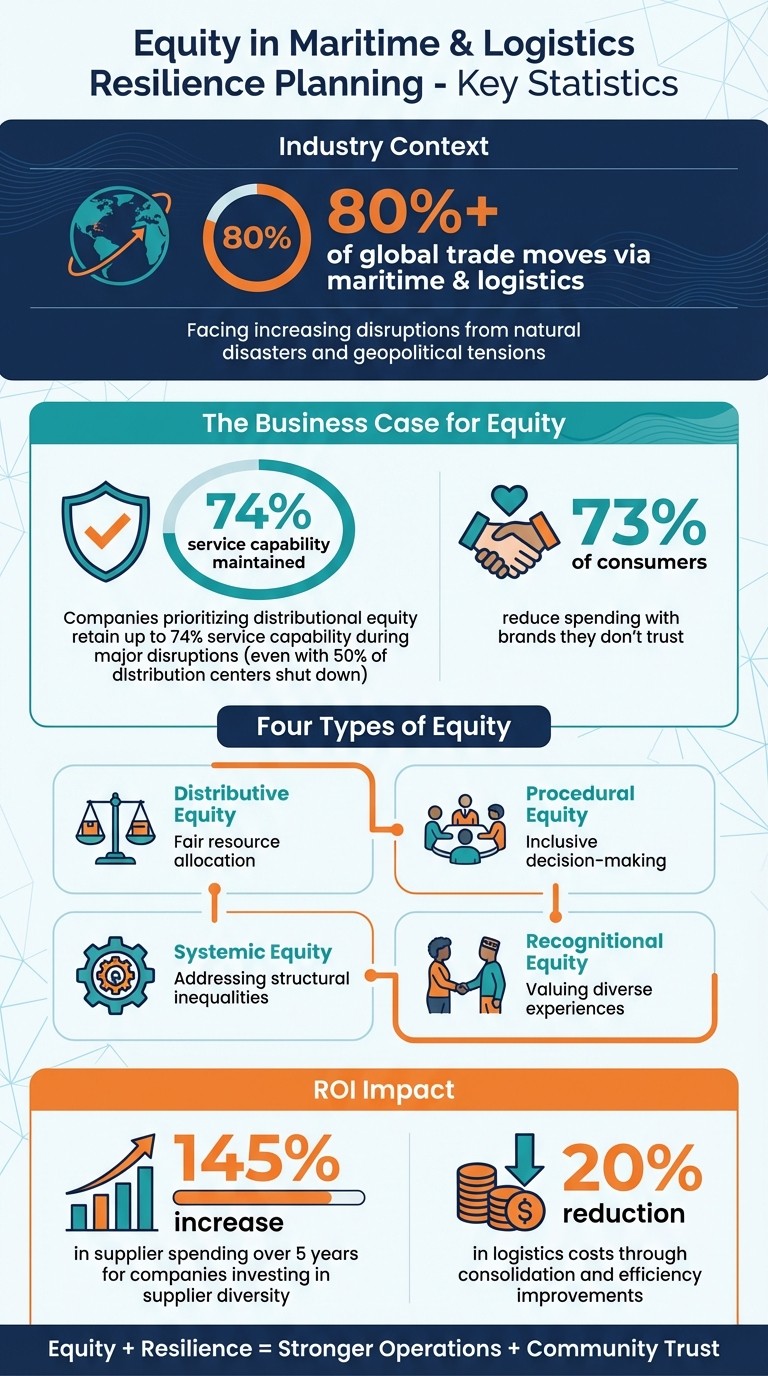
Key Equity Statistics in Maritime Logistics Resilience Planning
What Equity Means in Resilience Planning
Equity in resilience planning ensures that everyone - from frontline workers to port communities - has access to resources, a voice in decision-making, and protection during disruptions. It recognizes that vulnerabilities vary and aims to provide tailored support to achieve comparable outcomes for all.
In the maritime and logistics sectors, equity is more than a moral obligation - it strengthens operational resilience. Research has shown that prioritizing fairness in resource distribution can help maintain service levels during disruptions [4]. This highlights that equity is not just about doing the right thing; it’s also a practical necessity for sustained operations.
4 Types of Equity: Distributive, Procedural, Systemic, and Recognitional
To address gaps in resilience planning, it’s essential to understand equity through four key lenses:
Distributive equity focuses on fair resource allocation. In logistics, this means ensuring that emergency supplies, protective gear, and recovery efforts are distributed based on need rather than existing infrastructure advantages. For example, during a port closure, equitable practices would ensure timely deliveries to both affluent coastal areas and underserved inland communities.
Procedural equity ensures inclusive decision-making. This involves giving a voice to critical stakeholders, such as warehouse workers, truck drivers, dockworkers, and local community members, in shaping resilience strategies.
Systemic equity addresses the structural causes of inequality. In maritime logistics, this includes tackling the high transport costs and poor connectivity faced by vulnerable economies like Small Island Developing States and Least Developed Countries[1].
Recognitional equity values the diverse experiences and knowledge of all groups. This means integrating the insights of frontline workers with analytical expertise to create responses that reflect real-world complexities.
These dimensions provide a framework for identifying where resilience plans may need adjustment and improvement.
Equity Challenges in Maritime and Logistics
Despite the importance of equity, the maritime and logistics sectors face several challenges that can weaken resilience if left unaddressed.
One major issue is the lack of workforce diversity and localized labor shortages. These shortages often vary across urban areas, forcing companies to juggle delivery efficiency with fair resource distribution [4]. When efficiency takes precedence over equity, trust can erode, potentially harming long-term customer relationships.
Geographic inequality presents another obstacle. Vulnerable economies frequently bear transport costs that consume a significant portion of their GDP while seeing minimal improvements in connectivity [1]. For global companies, these disparities create structural vulnerabilities that are more likely to collapse during widespread disruptions.
Adding to these challenges is a growing trust deficit among customers. Surveys reveal that 73% of customers are less likely to spend money with companies they don’t trust [3]. As Michael Luguje, Head of Ghana Ports and Harbours, aptly noted:
"The COVID-19 pandemic took the entire world and ports by surprise. It woke us up to the reality that building resilience against such shocks should henceforth be a daily routine" [1].
Embedding equity into everyday resilience planning is crucial to addressing these vulnerabilities and ensuring long-term stability in maritime and logistics operations.
How to Identify Equity Gaps in Your Resilience Planning
Pinpointing equity gaps in resilience planning involves taking a closer look at who benefits from existing strategies and who is left out. This process uncovers disparities in resource allocation, decision-making participation, and barriers that limit inclusion. By addressing these factors, organizations can move from recognizing vulnerabilities to implementing fair and effective solutions.
Running a Baseline Equity Audit
Start by mapping all stakeholders - workers, communities, suppliers, and customers - to understand who relies on your operations and who faces the highest risks during disruptions. This creates a clear picture of vulnerabilities across the board.
Next, examine how resources have been distributed historically. For example, are emergency supplies concentrated at major ports while inland areas are overlooked? Do coastal facilities receive more protective infrastructure than inland distribution centers? These patterns can highlight whether certain regions, workforce groups, or customer segments are consistently underserved, despite their higher vulnerability.
Another critical step is identifying barriers to stakeholder participation. Factors like language differences, inconvenient meeting times, poor connectivity, or insufficient notice for consultations can exclude key voices. Documenting these challenges and actively working to remove them is a vital step toward procedural fairness.
The insights gained from this audit pave the way for targeted actions that enhance both resilience and fairness.
Tools for Measuring Equity
After identifying disparities through audits, leverage specialized tools to quantify and address them. Analytics-enabled logistics platforms, such as monday.com, SAP, or Oracle TMS, can uncover patterns in route efficiency, carrier performance, and inventory distribution [5]. These tools provide the data needed to detect and address inequities in resource distribution.
For coastal operations, the Resilience Adaptation Feasibility Tool (RAFT) offers a structured approach to equity assessment. This tool includes three phases: an initial scorecard to evaluate social and economic factors, a resilience action checklist, and a one-year implementation phase [7]. By following this framework, organizations can measure equity at both operational and community levels.
When adopting new technologies, consider complexity as a potential barrier. Research shows that high complexity often prevents smaller partners or less tech-savvy staff from using innovative tools effectively, leading to procedural inequities in areas like maritime logistics [6]. Designing systems with user-friendliness in mind is essential to ensure everyone can participate.
Mobile accessibility is another key focus. Field workers and drivers need real-time access to data to close the information gap between office planners and frontline operators [5]. Systems that lack mobile compatibility risk unintentionally creating new equity gaps.
How to Build Stakeholder Engagement That Includes Everyone
Addressing equity gaps is just the beginning - true resilience requires actively involving all stakeholders. By bringing frontline stakeholders into the process of resilience planning, organizations not only strengthen their ability to adapt but also promote fairness and inclusion. In the maritime and logistics industries, for example, on-demand labor pools represent a key group whose involvement is essential [8].
Co-Creating Solutions with Stakeholders
Collaborating with stakeholders leads to more practical and effective resilience strategies compared to traditional top-down approaches. A great example is modern warehousing, where operations now combine storage with dynamic processes. This includes shared stock pools and the use of integrated Warehouse Management System platforms, which streamline operations and improve efficiency [8].
Making Engagement Accessible to All Groups
To ensure that every voice is heard, it’s crucial to design engagement methods that are easy for everyone to participate in. This is especially important for on-demand labor pools, whose firsthand experiences during periods of high demand can provide valuable insights [8].
How to Build Equity into Resilience Strategies and Infrastructure
After engaging stakeholders, the next step is to weave equity into your operational systems and infrastructure investments. This involves crafting resilience strategies that safeguard not just your business but also the communities you impact. Building on earlier stakeholder engagement methods, these approaches ensure equity becomes a core element of resilience planning.
Applying Targeted Universalism in Resilience Efforts
Targeted universalism focuses on setting shared goals while tailoring strategies to the specific needs of different groups. By leveraging insights from stakeholder engagement, this approach aligns operational capacity with equitable outcomes. It ensures that resilience initiatives address challenges faced by diverse communities, creating benefits that are broadly inclusive.
Dynamic resilience models play a key role here, redistributing resources during disruptions to maintain stable service levels and prioritize vulnerable populations. A real-world example comes from ABM Industries, which expanded its supplier network to include local and underrepresented vendors. This move not only mitigates supply chain risks but also bolsters economic stability within the community. With such targeted resilience measures in place, the next step is ensuring that infrastructure investments and governance practices adhere to these equity principles.
Equitable Infrastructure Investment and Governance
Decisions around infrastructure have a profound impact on who reaps the benefits of resilience strategies. A risk management perspective highlights vulnerabilities at critical points, such as major ports, which handle over 80% of global trade by volume [1]. Directing investments toward fortifying these high-risk areas safeguards operations while supporting the communities that rely on them for economic opportunities.
Governance structures are equally vital. For example, bp enhanced its procurement processes by introducing predictive purchasing tools and a "Pay by Invoice" system, reducing monthly invoices from 500 to fewer than 10 [2]. These digital tools not only streamline operations but also enforce equitable purchasing policies, ensuring that resilience investments align with broader equity objectives. Transparent governance practices are key to maintaining stakeholder trust and fostering long-term operational success.
How to Maintain Equity in Resilience Planning Over Time
Ensuring equity in resilience planning is not a one-time task - it demands consistent effort and strong governance. By building on earlier equity assessments and community engagement, organizations can maintain trust and strengthen their operations against future challenges.
Establishing Coordinated Governance Frameworks
To keep equity at the forefront, permanent governance structures are essential, especially as priorities shift over time. The Yale Center for Environmental Justice offers a nine-step framework designed to embed equity into all phases of resilience planning. A key component of this framework is the creation of a Resilience Assessment and Prioritization Plan, developed in close collaboration with low-income communities and communities of color [9].
"Centering Equity in Climate Change Resilience Planning outlines a nine-step framework that is grounded in developing partnerships between municipalities and low-income communities and communities of color that have historically been excluded from planning processes." - Yale Center for Environmental Justice [9]
Maritime companies, for instance, can form Environmental Justice Working Groups, either as internal teams or external advisory bodies, to oversee resilience projects. These groups play a critical role in ensuring that resilience investments do not disproportionately impact marginalized communities [9]. By fostering ongoing partnerships between corporate entities, municipal planners, and local organizations, these governance structures go beyond one-off consultations. Instead, they evolve with the needs of the communities and the projects themselves [9]. Such systems also set the stage for addressing the financial hurdles that often threaten equity-focused initiatives.
Overcoming Funding and Resource Challenges
Financial limitations are a common roadblock for equity initiatives, but careful resource management can ensure their longevity. Studies show that prioritizing distributional equity in logistics operations can preserve up to 74% of service capability, even in scenarios where half of the distribution centers are shut down [4].
To manage budget pressures, companies can adopt strategies like flexible payment systems and resource consolidation. For instance, consolidating shipments, combining logistics services, and improving trucking efficiency can cut logistics costs by as much as 20% [3]. Additionally, aligning resilience funding with existing Diversity, Equity, and Inclusion (DEI) programs can create financial efficiencies, helping equity initiatives stay on track despite tight budgets [9]. Collaborative efforts with suppliers and partners can also spread costs and resources, enabling companies to achieve resilience goals without shouldering the entire financial burden [3].
Conclusion
Integrating equity into resilience planning is more than just a moral obligation for maritime and logistics companies - it's a smart business move. When disruptions occur, organizations that focus on fair resource distribution and inclusive decision-making not only sustain smoother operations but also build trust within the communities they serve. These strategies make a compelling business case.
Consider this: 73% of customers are less likely to spend money with companies they don't trust [3], and companies that invest in supplier diversity have experienced a 145% increase in supplier spending over five years [2]. These aren't abstract ideals - they're tangible results that enhance profitability while strengthening community ties. Equitable practices do more than foster resilience; they also fuel customer loyalty and revenue growth.
For maritime and logistics companies, balancing efficiency with equity isn't a trade-off - it’s a synergy. Achieving this balance requires ongoing stakeholder engagement, equitable infrastructure investments, and well-coordinated governance. By committing to these principles, leveraging visibility tools, and refining processes over time, organizations can create resilience systems that benefit everyone - not just in times of crisis, but every day.
The message is clear: weaving equity into resilience planning isn't just preparation for uncertainty - it's a blueprint for stronger, more effective operations that support both business goals and community well-being. Start implementing these measures now to ensure your organization thrives in both stable and challenging times.
FAQs
What does “equity” mean in resilience planning?
In resilience planning, equity is about making sure that historically underserved communities have fair access to resources, decision-making processes, and resilience initiatives. This means tackling systemic inequalities by actively involving these communities and addressing their specific needs. For instance, equity emphasizes including low-income groups and communities of color - frequently left out of traditional planning efforts - to develop strategies that are inclusive and fair, ultimately enhancing resilience for everyone.
How do I find equity gaps in our supply chain fast?
To pinpoint equity gaps in your supply chain, consider leveraging the 7-C's of logistics: Connect, Create, Customize, Coordinate, Consolidate, Collaborate, and Contribute. This framework helps improve operational efficiency while revealing disparities. Alongside this, monitor critical KPIs like on-time delivery and inventory-to-sales ratios. These metrics can highlight issues such as delays or uneven resource allocation. By combining these approaches, you can identify and address gaps in access, participation, and fairness within your supply chain.
Which metrics show equity improves disruption performance?
Metrics that highlight the role of equity in disruption performance often focus on social equity within disaster mitigation efforts. Key indicators include participation rates among low-income or minority communities and the effectiveness of resource distribution. These measurements are essential for assessing how well disaster resilience programs ensure fair engagement and allocate resources equitably during times of disruption.
Related Blog Posts
How to Build a Climate Resilience Plan for Maritime & Logistics Companies
How to Co-Design Climate-Ready Communities with Residents for Maritime & Logistics Companies
How to Embed Equity in Local Resilience Planning for Municipalities & Government Agencies
How to Embed Equity in Local Resilience Planning for Corporations
Latest Articles
©2025

Narrative Change and Power Building: The Missing Half of Advocacy
Narrative change is the process of disrupting dominant narratives that normalize inequity and advancing new narratives from historically marginalized communities.

Funding Resilience Without Federal Grants
BRIC is unreliable and FEMA is shrinking. Here's how cities fund climate resilience with dedicated revenue, blended finance, and a coordinating authority.

The ESG Blind Spot: How AI Is Finding Risks in Companies Nobody Else Is Watching
Norway's sovereign wealth fund uses AI to screen 7,200 portfolio companies for forced labor and corruption within 24 hours. The real story is the emerging-market coverage gap that traditional ESG data vendors miss — and what it means for any company with a global supply chain.
Narrative Change and Power Building: The Missing Half of Advocacy
Narrative change is the process of disrupting dominant narratives that normalize inequity and advancing new narratives from historically marginalized communities.
Funding Resilience Without Federal Grants
BRIC is unreliable and FEMA is shrinking. Here's how cities fund climate resilience with dedicated revenue, blended finance, and a coordinating authority.
The ESG Blind Spot: How AI Is Finding Risks in Companies Nobody Else Is Watching
Norway's sovereign wealth fund uses AI to screen 7,200 portfolio companies for forced labor and corruption within 24 hours. The real story is the emerging-market coverage gap that traditional ESG data vendors miss — and what it means for any company with a global supply chain.
FAQ
01
What does it really mean to “redefine profit”?
02
What makes Council Fire different?
03
Who does Council Fire work with?
04
What does working with Council Fire actually look like?
05
How does Council Fire help organizations turn big goals into action?
06
How does Council Fire define and measure success?
Apr 5, 2026
How to Embed Equity in Local Resilience Planning for Maritime & Logistics Companies
ESG Strategy
In This Article
Equity-driven resilience secures maritime operations: audits, inclusive governance, and targeted investment to protect communities.
How to Embed Equity in Local Resilience Planning for Maritime & Logistics Companies
Maritime and logistics companies, responsible for moving over 80% of global trade, face increasing disruptions from natural disasters, geopolitical tensions, and other crises. To maintain stability and trust, equity must be integrated into resilience planning. This means ensuring fair resource distribution, inclusive decision-making, and addressing structural inequalities.
Key Takeaways:
Why Equity Matters: Companies prioritizing fairness retain up to 74% service capability during major disruptions and avoid losing customer trust, with 73% of consumers reducing spending with untrusted brands.
Types of Equity: Focus on distributive (fair resource allocation), procedural (inclusive decision-making), systemic (addressing structural issues), and recognitional (valuing diverse experiences).
Challenges: Workforce shortages, geographic inequalities, and trust deficits hinder equitable resilience.
Solutions: Conduct equity audits, use data tools (e.g., SAP, Oracle TMS), co-create strategies with stakeholders, and invest in fair infrastructure and governance.
Embedding equity into resilience planning not only safeguards operations during crises but also strengthens community ties and long-term business performance.
Key Equity Statistics in Maritime Logistics Resilience Planning
What Equity Means in Resilience Planning
Equity in resilience planning ensures that everyone - from frontline workers to port communities - has access to resources, a voice in decision-making, and protection during disruptions. It recognizes that vulnerabilities vary and aims to provide tailored support to achieve comparable outcomes for all.
In the maritime and logistics sectors, equity is more than a moral obligation - it strengthens operational resilience. Research has shown that prioritizing fairness in resource distribution can help maintain service levels during disruptions [4]. This highlights that equity is not just about doing the right thing; it’s also a practical necessity for sustained operations.
4 Types of Equity: Distributive, Procedural, Systemic, and Recognitional
To address gaps in resilience planning, it’s essential to understand equity through four key lenses:
Distributive equity focuses on fair resource allocation. In logistics, this means ensuring that emergency supplies, protective gear, and recovery efforts are distributed based on need rather than existing infrastructure advantages. For example, during a port closure, equitable practices would ensure timely deliveries to both affluent coastal areas and underserved inland communities.
Procedural equity ensures inclusive decision-making. This involves giving a voice to critical stakeholders, such as warehouse workers, truck drivers, dockworkers, and local community members, in shaping resilience strategies.
Systemic equity addresses the structural causes of inequality. In maritime logistics, this includes tackling the high transport costs and poor connectivity faced by vulnerable economies like Small Island Developing States and Least Developed Countries[1].
Recognitional equity values the diverse experiences and knowledge of all groups. This means integrating the insights of frontline workers with analytical expertise to create responses that reflect real-world complexities.
These dimensions provide a framework for identifying where resilience plans may need adjustment and improvement.
Equity Challenges in Maritime and Logistics
Despite the importance of equity, the maritime and logistics sectors face several challenges that can weaken resilience if left unaddressed.
One major issue is the lack of workforce diversity and localized labor shortages. These shortages often vary across urban areas, forcing companies to juggle delivery efficiency with fair resource distribution [4]. When efficiency takes precedence over equity, trust can erode, potentially harming long-term customer relationships.
Geographic inequality presents another obstacle. Vulnerable economies frequently bear transport costs that consume a significant portion of their GDP while seeing minimal improvements in connectivity [1]. For global companies, these disparities create structural vulnerabilities that are more likely to collapse during widespread disruptions.
Adding to these challenges is a growing trust deficit among customers. Surveys reveal that 73% of customers are less likely to spend money with companies they don’t trust [3]. As Michael Luguje, Head of Ghana Ports and Harbours, aptly noted:
"The COVID-19 pandemic took the entire world and ports by surprise. It woke us up to the reality that building resilience against such shocks should henceforth be a daily routine" [1].
Embedding equity into everyday resilience planning is crucial to addressing these vulnerabilities and ensuring long-term stability in maritime and logistics operations.
How to Identify Equity Gaps in Your Resilience Planning
Pinpointing equity gaps in resilience planning involves taking a closer look at who benefits from existing strategies and who is left out. This process uncovers disparities in resource allocation, decision-making participation, and barriers that limit inclusion. By addressing these factors, organizations can move from recognizing vulnerabilities to implementing fair and effective solutions.
Running a Baseline Equity Audit
Start by mapping all stakeholders - workers, communities, suppliers, and customers - to understand who relies on your operations and who faces the highest risks during disruptions. This creates a clear picture of vulnerabilities across the board.
Next, examine how resources have been distributed historically. For example, are emergency supplies concentrated at major ports while inland areas are overlooked? Do coastal facilities receive more protective infrastructure than inland distribution centers? These patterns can highlight whether certain regions, workforce groups, or customer segments are consistently underserved, despite their higher vulnerability.
Another critical step is identifying barriers to stakeholder participation. Factors like language differences, inconvenient meeting times, poor connectivity, or insufficient notice for consultations can exclude key voices. Documenting these challenges and actively working to remove them is a vital step toward procedural fairness.
The insights gained from this audit pave the way for targeted actions that enhance both resilience and fairness.
Tools for Measuring Equity
After identifying disparities through audits, leverage specialized tools to quantify and address them. Analytics-enabled logistics platforms, such as monday.com, SAP, or Oracle TMS, can uncover patterns in route efficiency, carrier performance, and inventory distribution [5]. These tools provide the data needed to detect and address inequities in resource distribution.
For coastal operations, the Resilience Adaptation Feasibility Tool (RAFT) offers a structured approach to equity assessment. This tool includes three phases: an initial scorecard to evaluate social and economic factors, a resilience action checklist, and a one-year implementation phase [7]. By following this framework, organizations can measure equity at both operational and community levels.
When adopting new technologies, consider complexity as a potential barrier. Research shows that high complexity often prevents smaller partners or less tech-savvy staff from using innovative tools effectively, leading to procedural inequities in areas like maritime logistics [6]. Designing systems with user-friendliness in mind is essential to ensure everyone can participate.
Mobile accessibility is another key focus. Field workers and drivers need real-time access to data to close the information gap between office planners and frontline operators [5]. Systems that lack mobile compatibility risk unintentionally creating new equity gaps.
How to Build Stakeholder Engagement That Includes Everyone
Addressing equity gaps is just the beginning - true resilience requires actively involving all stakeholders. By bringing frontline stakeholders into the process of resilience planning, organizations not only strengthen their ability to adapt but also promote fairness and inclusion. In the maritime and logistics industries, for example, on-demand labor pools represent a key group whose involvement is essential [8].
Co-Creating Solutions with Stakeholders
Collaborating with stakeholders leads to more practical and effective resilience strategies compared to traditional top-down approaches. A great example is modern warehousing, where operations now combine storage with dynamic processes. This includes shared stock pools and the use of integrated Warehouse Management System platforms, which streamline operations and improve efficiency [8].
Making Engagement Accessible to All Groups
To ensure that every voice is heard, it’s crucial to design engagement methods that are easy for everyone to participate in. This is especially important for on-demand labor pools, whose firsthand experiences during periods of high demand can provide valuable insights [8].
How to Build Equity into Resilience Strategies and Infrastructure
After engaging stakeholders, the next step is to weave equity into your operational systems and infrastructure investments. This involves crafting resilience strategies that safeguard not just your business but also the communities you impact. Building on earlier stakeholder engagement methods, these approaches ensure equity becomes a core element of resilience planning.
Applying Targeted Universalism in Resilience Efforts
Targeted universalism focuses on setting shared goals while tailoring strategies to the specific needs of different groups. By leveraging insights from stakeholder engagement, this approach aligns operational capacity with equitable outcomes. It ensures that resilience initiatives address challenges faced by diverse communities, creating benefits that are broadly inclusive.
Dynamic resilience models play a key role here, redistributing resources during disruptions to maintain stable service levels and prioritize vulnerable populations. A real-world example comes from ABM Industries, which expanded its supplier network to include local and underrepresented vendors. This move not only mitigates supply chain risks but also bolsters economic stability within the community. With such targeted resilience measures in place, the next step is ensuring that infrastructure investments and governance practices adhere to these equity principles.
Equitable Infrastructure Investment and Governance
Decisions around infrastructure have a profound impact on who reaps the benefits of resilience strategies. A risk management perspective highlights vulnerabilities at critical points, such as major ports, which handle over 80% of global trade by volume [1]. Directing investments toward fortifying these high-risk areas safeguards operations while supporting the communities that rely on them for economic opportunities.
Governance structures are equally vital. For example, bp enhanced its procurement processes by introducing predictive purchasing tools and a "Pay by Invoice" system, reducing monthly invoices from 500 to fewer than 10 [2]. These digital tools not only streamline operations but also enforce equitable purchasing policies, ensuring that resilience investments align with broader equity objectives. Transparent governance practices are key to maintaining stakeholder trust and fostering long-term operational success.
How to Maintain Equity in Resilience Planning Over Time
Ensuring equity in resilience planning is not a one-time task - it demands consistent effort and strong governance. By building on earlier equity assessments and community engagement, organizations can maintain trust and strengthen their operations against future challenges.
Establishing Coordinated Governance Frameworks
To keep equity at the forefront, permanent governance structures are essential, especially as priorities shift over time. The Yale Center for Environmental Justice offers a nine-step framework designed to embed equity into all phases of resilience planning. A key component of this framework is the creation of a Resilience Assessment and Prioritization Plan, developed in close collaboration with low-income communities and communities of color [9].
"Centering Equity in Climate Change Resilience Planning outlines a nine-step framework that is grounded in developing partnerships between municipalities and low-income communities and communities of color that have historically been excluded from planning processes." - Yale Center for Environmental Justice [9]
Maritime companies, for instance, can form Environmental Justice Working Groups, either as internal teams or external advisory bodies, to oversee resilience projects. These groups play a critical role in ensuring that resilience investments do not disproportionately impact marginalized communities [9]. By fostering ongoing partnerships between corporate entities, municipal planners, and local organizations, these governance structures go beyond one-off consultations. Instead, they evolve with the needs of the communities and the projects themselves [9]. Such systems also set the stage for addressing the financial hurdles that often threaten equity-focused initiatives.
Overcoming Funding and Resource Challenges
Financial limitations are a common roadblock for equity initiatives, but careful resource management can ensure their longevity. Studies show that prioritizing distributional equity in logistics operations can preserve up to 74% of service capability, even in scenarios where half of the distribution centers are shut down [4].
To manage budget pressures, companies can adopt strategies like flexible payment systems and resource consolidation. For instance, consolidating shipments, combining logistics services, and improving trucking efficiency can cut logistics costs by as much as 20% [3]. Additionally, aligning resilience funding with existing Diversity, Equity, and Inclusion (DEI) programs can create financial efficiencies, helping equity initiatives stay on track despite tight budgets [9]. Collaborative efforts with suppliers and partners can also spread costs and resources, enabling companies to achieve resilience goals without shouldering the entire financial burden [3].
Conclusion
Integrating equity into resilience planning is more than just a moral obligation for maritime and logistics companies - it's a smart business move. When disruptions occur, organizations that focus on fair resource distribution and inclusive decision-making not only sustain smoother operations but also build trust within the communities they serve. These strategies make a compelling business case.
Consider this: 73% of customers are less likely to spend money with companies they don't trust [3], and companies that invest in supplier diversity have experienced a 145% increase in supplier spending over five years [2]. These aren't abstract ideals - they're tangible results that enhance profitability while strengthening community ties. Equitable practices do more than foster resilience; they also fuel customer loyalty and revenue growth.
For maritime and logistics companies, balancing efficiency with equity isn't a trade-off - it’s a synergy. Achieving this balance requires ongoing stakeholder engagement, equitable infrastructure investments, and well-coordinated governance. By committing to these principles, leveraging visibility tools, and refining processes over time, organizations can create resilience systems that benefit everyone - not just in times of crisis, but every day.
The message is clear: weaving equity into resilience planning isn't just preparation for uncertainty - it's a blueprint for stronger, more effective operations that support both business goals and community well-being. Start implementing these measures now to ensure your organization thrives in both stable and challenging times.
FAQs
What does “equity” mean in resilience planning?
In resilience planning, equity is about making sure that historically underserved communities have fair access to resources, decision-making processes, and resilience initiatives. This means tackling systemic inequalities by actively involving these communities and addressing their specific needs. For instance, equity emphasizes including low-income groups and communities of color - frequently left out of traditional planning efforts - to develop strategies that are inclusive and fair, ultimately enhancing resilience for everyone.
How do I find equity gaps in our supply chain fast?
To pinpoint equity gaps in your supply chain, consider leveraging the 7-C's of logistics: Connect, Create, Customize, Coordinate, Consolidate, Collaborate, and Contribute. This framework helps improve operational efficiency while revealing disparities. Alongside this, monitor critical KPIs like on-time delivery and inventory-to-sales ratios. These metrics can highlight issues such as delays or uneven resource allocation. By combining these approaches, you can identify and address gaps in access, participation, and fairness within your supply chain.
Which metrics show equity improves disruption performance?
Metrics that highlight the role of equity in disruption performance often focus on social equity within disaster mitigation efforts. Key indicators include participation rates among low-income or minority communities and the effectiveness of resource distribution. These measurements are essential for assessing how well disaster resilience programs ensure fair engagement and allocate resources equitably during times of disruption.
Related Blog Posts
How to Build a Climate Resilience Plan for Maritime & Logistics Companies
How to Co-Design Climate-Ready Communities with Residents for Maritime & Logistics Companies
How to Embed Equity in Local Resilience Planning for Municipalities & Government Agencies
How to Embed Equity in Local Resilience Planning for Corporations
Latest Articles
©2025
Narrative Change and Power Building: The Missing Half of Advocacy
Narrative change is the process of disrupting dominant narratives that normalize inequity and advancing new narratives from historically marginalized communities.
Funding Resilience Without Federal Grants
BRIC is unreliable and FEMA is shrinking. Here's how cities fund climate resilience with dedicated revenue, blended finance, and a coordinating authority.
The ESG Blind Spot: How AI Is Finding Risks in Companies Nobody Else Is Watching
Norway's sovereign wealth fund uses AI to screen 7,200 portfolio companies for forced labor and corruption within 24 hours. The real story is the emerging-market coverage gap that traditional ESG data vendors miss — and what it means for any company with a global supply chain.
FAQ
01
What does it really mean to “redefine profit”?
02
What makes Council Fire different?
03
Who does Council Fire work with?
04
What does working with Council Fire actually look like?
05
How does Council Fire help organizations turn big goals into action?
06
How does Council Fire define and measure success?
Apr 5, 2026
How to Embed Equity in Local Resilience Planning for Maritime & Logistics Companies
ESG Strategy
In This Article
Equity-driven resilience secures maritime operations: audits, inclusive governance, and targeted investment to protect communities.
How to Embed Equity in Local Resilience Planning for Maritime & Logistics Companies
Maritime and logistics companies, responsible for moving over 80% of global trade, face increasing disruptions from natural disasters, geopolitical tensions, and other crises. To maintain stability and trust, equity must be integrated into resilience planning. This means ensuring fair resource distribution, inclusive decision-making, and addressing structural inequalities.
Key Takeaways:
Why Equity Matters: Companies prioritizing fairness retain up to 74% service capability during major disruptions and avoid losing customer trust, with 73% of consumers reducing spending with untrusted brands.
Types of Equity: Focus on distributive (fair resource allocation), procedural (inclusive decision-making), systemic (addressing structural issues), and recognitional (valuing diverse experiences).
Challenges: Workforce shortages, geographic inequalities, and trust deficits hinder equitable resilience.
Solutions: Conduct equity audits, use data tools (e.g., SAP, Oracle TMS), co-create strategies with stakeholders, and invest in fair infrastructure and governance.
Embedding equity into resilience planning not only safeguards operations during crises but also strengthens community ties and long-term business performance.
Key Equity Statistics in Maritime Logistics Resilience Planning
What Equity Means in Resilience Planning
Equity in resilience planning ensures that everyone - from frontline workers to port communities - has access to resources, a voice in decision-making, and protection during disruptions. It recognizes that vulnerabilities vary and aims to provide tailored support to achieve comparable outcomes for all.
In the maritime and logistics sectors, equity is more than a moral obligation - it strengthens operational resilience. Research has shown that prioritizing fairness in resource distribution can help maintain service levels during disruptions [4]. This highlights that equity is not just about doing the right thing; it’s also a practical necessity for sustained operations.
4 Types of Equity: Distributive, Procedural, Systemic, and Recognitional
To address gaps in resilience planning, it’s essential to understand equity through four key lenses:
Distributive equity focuses on fair resource allocation. In logistics, this means ensuring that emergency supplies, protective gear, and recovery efforts are distributed based on need rather than existing infrastructure advantages. For example, during a port closure, equitable practices would ensure timely deliveries to both affluent coastal areas and underserved inland communities.
Procedural equity ensures inclusive decision-making. This involves giving a voice to critical stakeholders, such as warehouse workers, truck drivers, dockworkers, and local community members, in shaping resilience strategies.
Systemic equity addresses the structural causes of inequality. In maritime logistics, this includes tackling the high transport costs and poor connectivity faced by vulnerable economies like Small Island Developing States and Least Developed Countries[1].
Recognitional equity values the diverse experiences and knowledge of all groups. This means integrating the insights of frontline workers with analytical expertise to create responses that reflect real-world complexities.
These dimensions provide a framework for identifying where resilience plans may need adjustment and improvement.
Equity Challenges in Maritime and Logistics
Despite the importance of equity, the maritime and logistics sectors face several challenges that can weaken resilience if left unaddressed.
One major issue is the lack of workforce diversity and localized labor shortages. These shortages often vary across urban areas, forcing companies to juggle delivery efficiency with fair resource distribution [4]. When efficiency takes precedence over equity, trust can erode, potentially harming long-term customer relationships.
Geographic inequality presents another obstacle. Vulnerable economies frequently bear transport costs that consume a significant portion of their GDP while seeing minimal improvements in connectivity [1]. For global companies, these disparities create structural vulnerabilities that are more likely to collapse during widespread disruptions.
Adding to these challenges is a growing trust deficit among customers. Surveys reveal that 73% of customers are less likely to spend money with companies they don’t trust [3]. As Michael Luguje, Head of Ghana Ports and Harbours, aptly noted:
"The COVID-19 pandemic took the entire world and ports by surprise. It woke us up to the reality that building resilience against such shocks should henceforth be a daily routine" [1].
Embedding equity into everyday resilience planning is crucial to addressing these vulnerabilities and ensuring long-term stability in maritime and logistics operations.
How to Identify Equity Gaps in Your Resilience Planning
Pinpointing equity gaps in resilience planning involves taking a closer look at who benefits from existing strategies and who is left out. This process uncovers disparities in resource allocation, decision-making participation, and barriers that limit inclusion. By addressing these factors, organizations can move from recognizing vulnerabilities to implementing fair and effective solutions.
Running a Baseline Equity Audit
Start by mapping all stakeholders - workers, communities, suppliers, and customers - to understand who relies on your operations and who faces the highest risks during disruptions. This creates a clear picture of vulnerabilities across the board.
Next, examine how resources have been distributed historically. For example, are emergency supplies concentrated at major ports while inland areas are overlooked? Do coastal facilities receive more protective infrastructure than inland distribution centers? These patterns can highlight whether certain regions, workforce groups, or customer segments are consistently underserved, despite their higher vulnerability.
Another critical step is identifying barriers to stakeholder participation. Factors like language differences, inconvenient meeting times, poor connectivity, or insufficient notice for consultations can exclude key voices. Documenting these challenges and actively working to remove them is a vital step toward procedural fairness.
The insights gained from this audit pave the way for targeted actions that enhance both resilience and fairness.
Tools for Measuring Equity
After identifying disparities through audits, leverage specialized tools to quantify and address them. Analytics-enabled logistics platforms, such as monday.com, SAP, or Oracle TMS, can uncover patterns in route efficiency, carrier performance, and inventory distribution [5]. These tools provide the data needed to detect and address inequities in resource distribution.
For coastal operations, the Resilience Adaptation Feasibility Tool (RAFT) offers a structured approach to equity assessment. This tool includes three phases: an initial scorecard to evaluate social and economic factors, a resilience action checklist, and a one-year implementation phase [7]. By following this framework, organizations can measure equity at both operational and community levels.
When adopting new technologies, consider complexity as a potential barrier. Research shows that high complexity often prevents smaller partners or less tech-savvy staff from using innovative tools effectively, leading to procedural inequities in areas like maritime logistics [6]. Designing systems with user-friendliness in mind is essential to ensure everyone can participate.
Mobile accessibility is another key focus. Field workers and drivers need real-time access to data to close the information gap between office planners and frontline operators [5]. Systems that lack mobile compatibility risk unintentionally creating new equity gaps.
How to Build Stakeholder Engagement That Includes Everyone
Addressing equity gaps is just the beginning - true resilience requires actively involving all stakeholders. By bringing frontline stakeholders into the process of resilience planning, organizations not only strengthen their ability to adapt but also promote fairness and inclusion. In the maritime and logistics industries, for example, on-demand labor pools represent a key group whose involvement is essential [8].
Co-Creating Solutions with Stakeholders
Collaborating with stakeholders leads to more practical and effective resilience strategies compared to traditional top-down approaches. A great example is modern warehousing, where operations now combine storage with dynamic processes. This includes shared stock pools and the use of integrated Warehouse Management System platforms, which streamline operations and improve efficiency [8].
Making Engagement Accessible to All Groups
To ensure that every voice is heard, it’s crucial to design engagement methods that are easy for everyone to participate in. This is especially important for on-demand labor pools, whose firsthand experiences during periods of high demand can provide valuable insights [8].
How to Build Equity into Resilience Strategies and Infrastructure
After engaging stakeholders, the next step is to weave equity into your operational systems and infrastructure investments. This involves crafting resilience strategies that safeguard not just your business but also the communities you impact. Building on earlier stakeholder engagement methods, these approaches ensure equity becomes a core element of resilience planning.
Applying Targeted Universalism in Resilience Efforts
Targeted universalism focuses on setting shared goals while tailoring strategies to the specific needs of different groups. By leveraging insights from stakeholder engagement, this approach aligns operational capacity with equitable outcomes. It ensures that resilience initiatives address challenges faced by diverse communities, creating benefits that are broadly inclusive.
Dynamic resilience models play a key role here, redistributing resources during disruptions to maintain stable service levels and prioritize vulnerable populations. A real-world example comes from ABM Industries, which expanded its supplier network to include local and underrepresented vendors. This move not only mitigates supply chain risks but also bolsters economic stability within the community. With such targeted resilience measures in place, the next step is ensuring that infrastructure investments and governance practices adhere to these equity principles.
Equitable Infrastructure Investment and Governance
Decisions around infrastructure have a profound impact on who reaps the benefits of resilience strategies. A risk management perspective highlights vulnerabilities at critical points, such as major ports, which handle over 80% of global trade by volume [1]. Directing investments toward fortifying these high-risk areas safeguards operations while supporting the communities that rely on them for economic opportunities.
Governance structures are equally vital. For example, bp enhanced its procurement processes by introducing predictive purchasing tools and a "Pay by Invoice" system, reducing monthly invoices from 500 to fewer than 10 [2]. These digital tools not only streamline operations but also enforce equitable purchasing policies, ensuring that resilience investments align with broader equity objectives. Transparent governance practices are key to maintaining stakeholder trust and fostering long-term operational success.
How to Maintain Equity in Resilience Planning Over Time
Ensuring equity in resilience planning is not a one-time task - it demands consistent effort and strong governance. By building on earlier equity assessments and community engagement, organizations can maintain trust and strengthen their operations against future challenges.
Establishing Coordinated Governance Frameworks
To keep equity at the forefront, permanent governance structures are essential, especially as priorities shift over time. The Yale Center for Environmental Justice offers a nine-step framework designed to embed equity into all phases of resilience planning. A key component of this framework is the creation of a Resilience Assessment and Prioritization Plan, developed in close collaboration with low-income communities and communities of color [9].
"Centering Equity in Climate Change Resilience Planning outlines a nine-step framework that is grounded in developing partnerships between municipalities and low-income communities and communities of color that have historically been excluded from planning processes." - Yale Center for Environmental Justice [9]
Maritime companies, for instance, can form Environmental Justice Working Groups, either as internal teams or external advisory bodies, to oversee resilience projects. These groups play a critical role in ensuring that resilience investments do not disproportionately impact marginalized communities [9]. By fostering ongoing partnerships between corporate entities, municipal planners, and local organizations, these governance structures go beyond one-off consultations. Instead, they evolve with the needs of the communities and the projects themselves [9]. Such systems also set the stage for addressing the financial hurdles that often threaten equity-focused initiatives.
Overcoming Funding and Resource Challenges
Financial limitations are a common roadblock for equity initiatives, but careful resource management can ensure their longevity. Studies show that prioritizing distributional equity in logistics operations can preserve up to 74% of service capability, even in scenarios where half of the distribution centers are shut down [4].
To manage budget pressures, companies can adopt strategies like flexible payment systems and resource consolidation. For instance, consolidating shipments, combining logistics services, and improving trucking efficiency can cut logistics costs by as much as 20% [3]. Additionally, aligning resilience funding with existing Diversity, Equity, and Inclusion (DEI) programs can create financial efficiencies, helping equity initiatives stay on track despite tight budgets [9]. Collaborative efforts with suppliers and partners can also spread costs and resources, enabling companies to achieve resilience goals without shouldering the entire financial burden [3].
Conclusion
Integrating equity into resilience planning is more than just a moral obligation for maritime and logistics companies - it's a smart business move. When disruptions occur, organizations that focus on fair resource distribution and inclusive decision-making not only sustain smoother operations but also build trust within the communities they serve. These strategies make a compelling business case.
Consider this: 73% of customers are less likely to spend money with companies they don't trust [3], and companies that invest in supplier diversity have experienced a 145% increase in supplier spending over five years [2]. These aren't abstract ideals - they're tangible results that enhance profitability while strengthening community ties. Equitable practices do more than foster resilience; they also fuel customer loyalty and revenue growth.
For maritime and logistics companies, balancing efficiency with equity isn't a trade-off - it’s a synergy. Achieving this balance requires ongoing stakeholder engagement, equitable infrastructure investments, and well-coordinated governance. By committing to these principles, leveraging visibility tools, and refining processes over time, organizations can create resilience systems that benefit everyone - not just in times of crisis, but every day.
The message is clear: weaving equity into resilience planning isn't just preparation for uncertainty - it's a blueprint for stronger, more effective operations that support both business goals and community well-being. Start implementing these measures now to ensure your organization thrives in both stable and challenging times.
FAQs
What does “equity” mean in resilience planning?
In resilience planning, equity is about making sure that historically underserved communities have fair access to resources, decision-making processes, and resilience initiatives. This means tackling systemic inequalities by actively involving these communities and addressing their specific needs. For instance, equity emphasizes including low-income groups and communities of color - frequently left out of traditional planning efforts - to develop strategies that are inclusive and fair, ultimately enhancing resilience for everyone.
How do I find equity gaps in our supply chain fast?
To pinpoint equity gaps in your supply chain, consider leveraging the 7-C's of logistics: Connect, Create, Customize, Coordinate, Consolidate, Collaborate, and Contribute. This framework helps improve operational efficiency while revealing disparities. Alongside this, monitor critical KPIs like on-time delivery and inventory-to-sales ratios. These metrics can highlight issues such as delays or uneven resource allocation. By combining these approaches, you can identify and address gaps in access, participation, and fairness within your supply chain.
Which metrics show equity improves disruption performance?
Metrics that highlight the role of equity in disruption performance often focus on social equity within disaster mitigation efforts. Key indicators include participation rates among low-income or minority communities and the effectiveness of resource distribution. These measurements are essential for assessing how well disaster resilience programs ensure fair engagement and allocate resources equitably during times of disruption.
Related Blog Posts
How to Build a Climate Resilience Plan for Maritime & Logistics Companies
How to Co-Design Climate-Ready Communities with Residents for Maritime & Logistics Companies
How to Embed Equity in Local Resilience Planning for Municipalities & Government Agencies
How to Embed Equity in Local Resilience Planning for Corporations
Latest Articles
©2025
Narrative Change and Power Building: The Missing Half of Advocacy
Narrative change is the process of disrupting dominant narratives that normalize inequity and advancing new narratives from historically marginalized communities.
Funding Resilience Without Federal Grants
BRIC is unreliable and FEMA is shrinking. Here's how cities fund climate resilience with dedicated revenue, blended finance, and a coordinating authority.
The ESG Blind Spot: How AI Is Finding Risks in Companies Nobody Else Is Watching
Norway's sovereign wealth fund uses AI to screen 7,200 portfolio companies for forced labor and corruption within 24 hours. The real story is the emerging-market coverage gap that traditional ESG data vendors miss — and what it means for any company with a global supply chain.
FAQ
What does it really mean to “redefine profit”?
What makes Council Fire different?
Who does Council Fire work with?
What does working with Council Fire actually look like?
How does Council Fire help organizations turn big goals into action?
How does Council Fire define and measure success?