
Apr 3, 2026
How to Embed Equity in Local Resilience Planning for Municipalities & Government Agencies
Sustainability Strategy
In This Article
Guide for municipalities to assess vulnerabilities, engage residents, prioritize equitable projects, secure funding, and track outcomes.
How to Embed Equity in Local Resilience Planning for Municipalities & Government Agencies
Embedding equity in resilience planning ensures resources target the most vulnerable communities, addressing systemic disparities and improving outcomes for those most affected by climate risks. Here’s how municipalities and government agencies can integrate equity into their strategies:
Assess Community Vulnerabilities: Use tools like social vulnerability indices and community input to identify areas with high risk and limited resources.
Engage Communities: Involve residents through participatory mapping, storytelling, and workshops held in trusted spaces. Offer childcare, meals, and translation services to increase accessibility.
Prioritize Equity in Projects: Focus on initiatives that directly benefit underserved areas, such as cooling centers or affordable housing protections, while preventing displacement.
Secure Funding and Partnerships: Combine federal grants (e.g., FEMA BRIC), municipal bonds, and local contributions to ensure long-term project viability.
Track Outcomes: Use disaggregated data to monitor who benefits from investments, ensuring transparency and accountability.
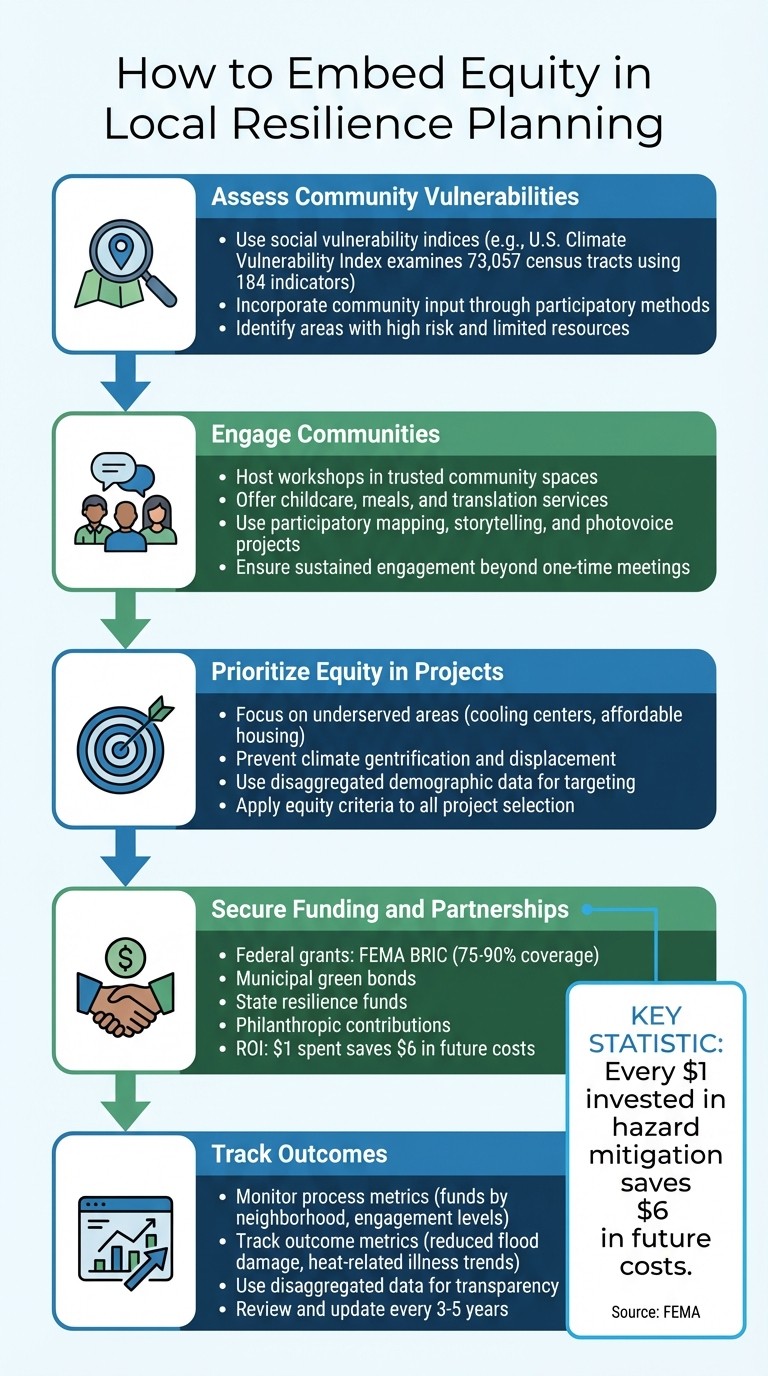
5-Step Framework for Embedding Equity in Local Resilience Planning
Identifying Community Vulnerabilities Using Equity-Based Methods
Using Social Vulnerability Indices for Risk Assessment
Social vulnerability indices are essential tools for pinpointing populations most at risk by evaluating hazard exposure, community sensitivity, and their ability to adapt [1][2].
For example, the U.S. Climate Vulnerability Index examines 73,057 census tracts using 184 indicators across seven distinct categories, providing a granular view of neighborhood-level vulnerabilities [3]. With census tracts averaging around 4,000 residents, this approach uncovers disparities that broader county-level data often misses. By combining baseline vulnerability data - such as health conditions, poverty levels, and housing quality - with projections for extreme climate events, municipalities can identify areas at heightened risk. This layered analysis incorporates diverse factors like life expectancy, flood risk, and linguistic isolation, all mapped onto a single, comparable scale [3]. Adding historical inequity markers, such as redlining and the presence of local organizations, further refines these assessments [3].
This method ensures resources are directed to areas where high climate exposure overlaps with heightened social sensitivity and limited adaptive capacity. It also facilitates tracking to confirm that frontline communities are receiving the intended support [1]. Beyond technical data, incorporating community input enriches these assessments with real-world perspectives.
Engaging Communities Through Mapping and Storytelling
While technical data provides a critical foundation, it often lacks the personal context that residents can offer [1][4]. Community mapping sessions fill this gap by inviting residents to identify local hazards, essential resources like cooling centers, and vulnerable areas that official datasets might miss [1]. Storytelling circles provide another avenue for residents to share personal experiences with disasters, shedding light on how social systems may exacerbate inequities [4]. Additionally, photovoice projects empower individuals to document climate impacts and neighborhood strengths through their own perspectives [1].
Holding these sessions in trusted community spaces encourages participation. Offering childcare, meals, and professional translation services further reduces barriers to involvement. Sustained engagement - not limited to one-time public meetings - ensures community voices remain part of both planning and implementation [1]. These insights, grounded in lived experience, complement technical assessments, creating a more comprehensive understanding of adaptive capacity and climate sensitivity.
Measuring Adaptive Capacity and Climate Sensitivity
Using an equity lens to assess vulnerabilities ensures that both adaptive capacity and climate sensitivity align with the specific needs of each community. Sensitivity assessments consider factors like housing quality, demographic data - including poverty levels and linguistic isolation - and the state of critical infrastructure [1]. Adaptive capacity evaluations, on the other hand, focus on social networks, municipal resources, grant eligibility, and natural features such as tree canopy coverage and wetlands [1].
The EPA’s Equitable Resilience Builder tool supports these efforts with resources like indicator card sorting, participatory mapping, and storytelling exercises, all designed to evaluate built, natural, and social systems equitably [2]. Tracking details such as disability rates and access to transportation helps identify those most at risk [1]. Assessing mutual aid networks, local emergency preparedness, and the proximity of cooling centers to vulnerable populations further strengthens planning efforts. Regular updates to these assessments - ideally every 3–5 years - ensure they remain relevant as new climate data and emerging risks come to light [1].
Involving All Stakeholders in the Planning Process
Building Trust Through Community Partnerships
For municipalities, forming partnerships with trusted community-based organizations is essential to connect with historically excluded groups. These partnerships act as a bridge between city agencies and communities often left out of the conversation, including low-income neighborhoods, communities of color, immigrant populations, and the elderly.
Formalizing these relationships can make them even more effective. For instance, from 2024 to 2026, the Yale Center for Environmental Justice collaborated with the Governor's Council on Climate Change Equity and Environmental Justice Working Group in Connecticut. Together, they created a nine-step framework to help municipalities prioritize equity in their Resilience Assessment and Prioritization Plans [5].
Local connectors, such as block captains, faith leaders, and community health workers, play a vital role in building trust. Hiring and compensating these individuals for their expertise ensures consistent communication and demonstrates respect for their contributions. This trust sets the stage for workshops that are both accessible and inclusive.
Designing Inclusive Workshops for Marginalized Groups
The success of workshops hinges on accessibility. Hosting them in familiar and welcoming places - like community centers, schools, churches, or housing complexes - encourages participation. Addressing practical barriers, such as offering childcare, food, translation services, and fair compensation, ensures a broader range of voices is heard.
One-off meetings rarely build lasting trust. Instead, maintaining consistent dialogue throughout both planning and implementation phases fosters deeper community engagement. As this trust grows, incorporating residents' local knowledge into policy decisions becomes not just possible but essential.
Valuing Local Knowledge in Decision-Making
Local knowledge is a cornerstone of equitable resilience planning. It provides insights that technical data alone cannot capture, shaping how projects are prioritized and resources are allocated. For example, in December 2024, the EPA introduced the Equitable Resilience Builder tool. Developed through participatory research in communities across the U.S., this tool uses methods like storytelling and mapping to document lived experiences with disasters. It then offers actionable guidance for weaving these experiences into technical assessments [4].
"Inclusive planning grounded in environmental and climate justice results in more resilient communities."
– Yale Center for Environmental Justice [5]
Residents' firsthand insights - such as identifying flood-prone areas, noting where elderly populations may lack cooling options, or highlighting language barriers in emergency communications - are invaluable. These perspectives enhance vulnerability assessments and adaptive capacity evaluations. To ensure these contributions lead to meaningful outcomes, municipalities should establish formal representation for frontline communities on decision-making bodies and oversight committees. This approach ensures that local voices directly shape policies and resilience strategies.
Creating Resilience Strategies That Center Equity
Prioritizing Projects for Vulnerable Populations
Turning community insights into actionable projects starts with mapping vulnerabilities at the local level. This involves pinpointing neighborhoods where residents - such as the elderly, low-income families, or those facing language barriers - are at heightened risk from hazards like flooding or extreme heat, often without adequate resources or support.
Equity criteria play a key role in this process, ensuring that projects provide the greatest benefits to communities on the frontlines of climate challenges. For instance, adding urban tree canopies and bioswales in underserved areas prone to heat islands can address both environmental risks and long-standing neglect. Similarly, implementing multilingual early warning systems can help immigrant populations stay informed and safe during emergencies.
However, it's crucial to address climate gentrification, where improvements like these inadvertently drive up property values, pushing out the very people they aim to protect. To counter this, infrastructure projects should be paired with measures such as affordable housing protections. Tracking outcomes with disaggregated demographic data ensures transparency about who truly benefits from resilience investments over time. This approach not only promotes fairness but also makes financial sense.
By establishing these criteria, planners can create structured equity playbooks to guide their efforts.
Using Equity Playbooks in Your Planning
Once projects are prioritized, equity playbooks provide a framework to ensure fairness is woven into every phase of planning. Tools like the EPA's Equitable Resilience Builder (ERB) are available to help municipalities conduct inclusive hazard assessments [2].
Equity goals should be integrated into broader capital plans and departmental budgets, rather than treated as separate initiatives. Combining funding sources is key to sustaining these efforts. Federal grants, such as FEMA's Building Resilient Infrastructure and Communities (BRIC) program, can cover a significant portion (75–90%) of project costs. Pairing these with municipal green bonds and philanthropic contributions can provide the financial stability needed for long-term equity-focused resilience work [1].
Working with Council Fire for Stakeholder Engagement
Council Fire enhances stakeholder engagement by ensuring that community voices shape resilience strategies. With decades of experience in systems-thinking and participatory methods, they help municipalities address social, economic, and environmental resilience simultaneously, always prioritizing the needs of vulnerable populations.
"Building resilience requires more than infrastructure upgrades. It demands social cohesion, equitable resource distribution, and governance structures that center the people most vulnerable to climate impacts." – Council Fire [1]
Council Fire's expertise has supported municipalities across the nation in crafting comprehensive resilience plans. For example, they helped a coastal county establish a Municipal Resilience Authority, securing $340 million for infrastructure projects. In another case, they worked with a mid-Atlantic coastal city to develop a strategy protecting 28,000 residents from climate-related risks [1]. Their participatory approach - using tools like community mapping, storytelling circles, and photovoice projects - ensures that local knowledge informs decision-making and builds genuine partnerships with frontline communities.
Putting Equity-Driven Resilience Plans into Action
Setting Up Flexible Implementation Processes
To make resilience plans more actionable, divide the process into manageable phases. Begin with immediate steps, then focus on priorities for the next 1–3 years, and finally, outline long-term investments spanning beyond five years [1]. This phased approach allows for early successes that build confidence and momentum.
Think of your resilience plan as a dynamic guide that evolves with changing circumstances. Plan for comprehensive reviews every 3–5 years to include updated climate data, insights from recent events, and fresh community input [1]. Between these major updates, conduct quarterly reviews of active projects to identify any challenges early and make adjustments as needed.
Assigning clear accountability is essential to keeping projects on track. Specific departments or organizations should take ownership of each initiative. For example, instead of setting broad goals like "improve flood management", aim for concrete targets such as "install 50 bioswales in flood-prone neighborhoods by 2027" [1]. Integrate these specific goals into capital plans and budgets to ensure they’re prioritized.
Once the plan is structured and responsibilities are clear, the next step is ensuring consistent funding and building strong partnerships.
Allocating Resources and Building Partnerships
Diversify funding sources to maintain financial stability for long-term equity efforts. Federal programs like FEMA's Building Resilient Infrastructure and Communities (BRIC) can cover a significant portion of project costs - typically 75% to 90% [1]. Pair these with state resilience funds, municipal green bonds, and philanthropic grants to fill funding gaps. To unlock federal funds, secure local matching contributions early in the process.
Prioritize resources for the most vulnerable areas by using vulnerability mapping that identifies zones with high exposure, sensitivity, and limited adaptive capacity [1]. Work closely with trusted community figures such as faith leaders or block captains, who have established connections in marginalized neighborhoods. Additionally, hire local residents and compensate them for their time and expertise, ensuring that community members are directly involved in shaping solutions [1]. Investments in hazard mitigation yield significant returns, with every $1 spent saving $6 in future costs [1].
After funding and partnerships are secured, it’s crucial to measure how these investments translate into meaningful outcomes for the community.
Tracking Equity Outcomes Over Time
To ensure resilience efforts are equitable, track who benefits from your investments. Use disaggregated demographic data to monitor both process metrics - such as the distribution of funds by neighborhood and engagement levels in frontline communities - and outcome metrics, like reductions in flood damage claims or heat-related illnesses [1]. This dual focus assesses both the efficiency of your efforts and their tangible impact on community well-being.
Community surveys are a valuable tool for capturing qualitative insights into residents’ feelings of safety and preparedness over time [1]. When combined with quantitative data, these surveys offer a fuller understanding of whether equity goals are being met. Update your tracking strategies during each 3–5 year review to address new priorities and risks, ensuring your measurement approach remains as adaptable as the communities it serves.
Metric Type | What to Track | Why It Matters |
|---|---|---|
Process Metrics | Dollars invested by geographic area; residents from frontline communities engaged; percentage of benefits reaching low-income populations [1] | Ensures resources are reaching the intended communities |
Outcome Metrics | Trends in heat-related illness; reduced flood damage claims in high-vulnerability zones; community survey data on perceived safety [1] | Reflects the actual impact on community resilience and overall well-being |
Conclusion
Summary of Methods and Tools
Incorporating equity into resilience planning requires addressing social and economic vulnerabilities alongside physical infrastructure. Start with comprehensive vulnerability assessments that go beyond physical risks to include factors like housing quality, poverty levels, and community support systems. These assessments should also account for adaptive capacities, such as access to social networks and financial resources. Engage communities meaningfully by hosting meetings in accessible, familiar spaces and offering supports like childcare, translation services, and fair compensation for participation.
Effective resilience strategies should focus on frontline communities. Use targeted vulnerability mapping to identify areas of greatest need, combine affordable housing protections with infrastructure improvements, and assign clear, measurable responsibilities for implementation. The economic case is strong - investing in hazard mitigation offers significant returns. To fund these efforts, blend federal resources with state programs, municipal bonds, and contributions from philanthropic organizations to ensure sustained, long-term investments.
With these foundations in place, municipalities can begin taking immediate steps to advance equity-centered resilience planning.
Next Steps for Municipalities and Agencies
Municipalities can make tangible progress by starting with the tools and resources they already have. Develop emergency communication plans, plant trees in urban heat islands to reduce temperatures, or conduct community mapping to identify local hazards. Treat resilience planning as an evolving process, revisiting and updating strategies every 3–5 years based on new climate data and community input [1].
For those ready to scale up their efforts, partnering with experienced consultants can simplify navigating complex federal grant requirements and conducting detailed vulnerability assessments. Council Fire, with its decades of experience in climate resilience and community-focused planning, has helped municipalities turn ambitious goals into actionable results. From protecting tens of thousands of residents with comprehensive resilience frameworks to securing hundreds of millions in infrastructure funding through innovative governance models [1], the key to success lies in centering the needs and voices of your most vulnerable populations.
Greening on the Ground: Community-Driven Strategies for Achieving Climate Resilience and Equity
FAQs
Which equity metrics should we track?
Key metrics for equity in local resilience planning focus on understanding community vulnerabilities, exposure to climate risks, and existing social inequities. These include factors like the vulnerability of marginalized populations, the fairness of resource distribution, and accessibility to essential services. Additionally, social equity indicators - such as the level of community participation in decision-making processes and the strength of social cohesion - play a crucial role. Monitoring these metrics allows for identifying disparities and ensures that resilience strategies are designed to tackle systemic inequities effectively.
How do we prevent climate gentrification?
Preventing climate gentrification demands a commitment to fairness in resilience planning to safeguard vulnerable communities from displacement or heightened risks. This involves several critical actions: understanding community vulnerabilities, ensuring fair allocation of resources, and strengthening social bonds. By involving a wide range of stakeholders, resilience efforts can be tailored to meet the needs of everyone, particularly those most at risk. Incorporating social justice principles and tackling systemic inequities are key to developing solutions that are both inclusive and long-lasting.
What data do we need to map vulnerability?
To identify vulnerability effectively, you must gather data across three key areas: social vulnerabilities, climate hazards, and neighborhood-specific factors. This involves creating maps of hazard zones, forecasting future climate scenarios, and evaluating factors like socioeconomic status, geographic location, and exposure to threats such as floods, heatwaves, hurricanes, wildfires, droughts, and rising sea levels. Taking a thorough approach ensures the most at-risk communities are pinpointed, enabling the development of focused and effective resilience strategies.
Related Blog Posts
How to Build a Climate Resilience Plan for Municipalities & Government Agencies
How to Build a Climate Resilience Plan for Universities & Research Institutions
How to Integrate Climate Risk into Infrastructure Planning for Municipalities & Government Agencies
How to Co-Design Climate-Ready Communities with Residents for Municipalities & Government Agencies
Latest Articles
©2025

Narrative Change and Power Building: The Missing Half of Advocacy
Narrative change is the process of disrupting dominant narratives that normalize inequity and advancing new narratives from historically marginalized communities.

Funding Resilience Without Federal Grants
BRIC is unreliable and FEMA is shrinking. Here's how cities fund climate resilience with dedicated revenue, blended finance, and a coordinating authority.

The ESG Blind Spot: How AI Is Finding Risks in Companies Nobody Else Is Watching
Norway's sovereign wealth fund uses AI to screen 7,200 portfolio companies for forced labor and corruption within 24 hours. The real story is the emerging-market coverage gap that traditional ESG data vendors miss — and what it means for any company with a global supply chain.
Narrative Change and Power Building: The Missing Half of Advocacy
Narrative change is the process of disrupting dominant narratives that normalize inequity and advancing new narratives from historically marginalized communities.
Funding Resilience Without Federal Grants
BRIC is unreliable and FEMA is shrinking. Here's how cities fund climate resilience with dedicated revenue, blended finance, and a coordinating authority.
The ESG Blind Spot: How AI Is Finding Risks in Companies Nobody Else Is Watching
Norway's sovereign wealth fund uses AI to screen 7,200 portfolio companies for forced labor and corruption within 24 hours. The real story is the emerging-market coverage gap that traditional ESG data vendors miss — and what it means for any company with a global supply chain.
FAQ
01
What does it really mean to “redefine profit”?
02
What makes Council Fire different?
03
Who does Council Fire work with?
04
What does working with Council Fire actually look like?
05
How does Council Fire help organizations turn big goals into action?
06
How does Council Fire define and measure success?
Apr 3, 2026
How to Embed Equity in Local Resilience Planning for Municipalities & Government Agencies
Sustainability Strategy
In This Article
Guide for municipalities to assess vulnerabilities, engage residents, prioritize equitable projects, secure funding, and track outcomes.
How to Embed Equity in Local Resilience Planning for Municipalities & Government Agencies
Embedding equity in resilience planning ensures resources target the most vulnerable communities, addressing systemic disparities and improving outcomes for those most affected by climate risks. Here’s how municipalities and government agencies can integrate equity into their strategies:
Assess Community Vulnerabilities: Use tools like social vulnerability indices and community input to identify areas with high risk and limited resources.
Engage Communities: Involve residents through participatory mapping, storytelling, and workshops held in trusted spaces. Offer childcare, meals, and translation services to increase accessibility.
Prioritize Equity in Projects: Focus on initiatives that directly benefit underserved areas, such as cooling centers or affordable housing protections, while preventing displacement.
Secure Funding and Partnerships: Combine federal grants (e.g., FEMA BRIC), municipal bonds, and local contributions to ensure long-term project viability.
Track Outcomes: Use disaggregated data to monitor who benefits from investments, ensuring transparency and accountability.
5-Step Framework for Embedding Equity in Local Resilience Planning
Identifying Community Vulnerabilities Using Equity-Based Methods
Using Social Vulnerability Indices for Risk Assessment
Social vulnerability indices are essential tools for pinpointing populations most at risk by evaluating hazard exposure, community sensitivity, and their ability to adapt [1][2].
For example, the U.S. Climate Vulnerability Index examines 73,057 census tracts using 184 indicators across seven distinct categories, providing a granular view of neighborhood-level vulnerabilities [3]. With census tracts averaging around 4,000 residents, this approach uncovers disparities that broader county-level data often misses. By combining baseline vulnerability data - such as health conditions, poverty levels, and housing quality - with projections for extreme climate events, municipalities can identify areas at heightened risk. This layered analysis incorporates diverse factors like life expectancy, flood risk, and linguistic isolation, all mapped onto a single, comparable scale [3]. Adding historical inequity markers, such as redlining and the presence of local organizations, further refines these assessments [3].
This method ensures resources are directed to areas where high climate exposure overlaps with heightened social sensitivity and limited adaptive capacity. It also facilitates tracking to confirm that frontline communities are receiving the intended support [1]. Beyond technical data, incorporating community input enriches these assessments with real-world perspectives.
Engaging Communities Through Mapping and Storytelling
While technical data provides a critical foundation, it often lacks the personal context that residents can offer [1][4]. Community mapping sessions fill this gap by inviting residents to identify local hazards, essential resources like cooling centers, and vulnerable areas that official datasets might miss [1]. Storytelling circles provide another avenue for residents to share personal experiences with disasters, shedding light on how social systems may exacerbate inequities [4]. Additionally, photovoice projects empower individuals to document climate impacts and neighborhood strengths through their own perspectives [1].
Holding these sessions in trusted community spaces encourages participation. Offering childcare, meals, and professional translation services further reduces barriers to involvement. Sustained engagement - not limited to one-time public meetings - ensures community voices remain part of both planning and implementation [1]. These insights, grounded in lived experience, complement technical assessments, creating a more comprehensive understanding of adaptive capacity and climate sensitivity.
Measuring Adaptive Capacity and Climate Sensitivity
Using an equity lens to assess vulnerabilities ensures that both adaptive capacity and climate sensitivity align with the specific needs of each community. Sensitivity assessments consider factors like housing quality, demographic data - including poverty levels and linguistic isolation - and the state of critical infrastructure [1]. Adaptive capacity evaluations, on the other hand, focus on social networks, municipal resources, grant eligibility, and natural features such as tree canopy coverage and wetlands [1].
The EPA’s Equitable Resilience Builder tool supports these efforts with resources like indicator card sorting, participatory mapping, and storytelling exercises, all designed to evaluate built, natural, and social systems equitably [2]. Tracking details such as disability rates and access to transportation helps identify those most at risk [1]. Assessing mutual aid networks, local emergency preparedness, and the proximity of cooling centers to vulnerable populations further strengthens planning efforts. Regular updates to these assessments - ideally every 3–5 years - ensure they remain relevant as new climate data and emerging risks come to light [1].
Involving All Stakeholders in the Planning Process
Building Trust Through Community Partnerships
For municipalities, forming partnerships with trusted community-based organizations is essential to connect with historically excluded groups. These partnerships act as a bridge between city agencies and communities often left out of the conversation, including low-income neighborhoods, communities of color, immigrant populations, and the elderly.
Formalizing these relationships can make them even more effective. For instance, from 2024 to 2026, the Yale Center for Environmental Justice collaborated with the Governor's Council on Climate Change Equity and Environmental Justice Working Group in Connecticut. Together, they created a nine-step framework to help municipalities prioritize equity in their Resilience Assessment and Prioritization Plans [5].
Local connectors, such as block captains, faith leaders, and community health workers, play a vital role in building trust. Hiring and compensating these individuals for their expertise ensures consistent communication and demonstrates respect for their contributions. This trust sets the stage for workshops that are both accessible and inclusive.
Designing Inclusive Workshops for Marginalized Groups
The success of workshops hinges on accessibility. Hosting them in familiar and welcoming places - like community centers, schools, churches, or housing complexes - encourages participation. Addressing practical barriers, such as offering childcare, food, translation services, and fair compensation, ensures a broader range of voices is heard.
One-off meetings rarely build lasting trust. Instead, maintaining consistent dialogue throughout both planning and implementation phases fosters deeper community engagement. As this trust grows, incorporating residents' local knowledge into policy decisions becomes not just possible but essential.
Valuing Local Knowledge in Decision-Making
Local knowledge is a cornerstone of equitable resilience planning. It provides insights that technical data alone cannot capture, shaping how projects are prioritized and resources are allocated. For example, in December 2024, the EPA introduced the Equitable Resilience Builder tool. Developed through participatory research in communities across the U.S., this tool uses methods like storytelling and mapping to document lived experiences with disasters. It then offers actionable guidance for weaving these experiences into technical assessments [4].
"Inclusive planning grounded in environmental and climate justice results in more resilient communities."
– Yale Center for Environmental Justice [5]
Residents' firsthand insights - such as identifying flood-prone areas, noting where elderly populations may lack cooling options, or highlighting language barriers in emergency communications - are invaluable. These perspectives enhance vulnerability assessments and adaptive capacity evaluations. To ensure these contributions lead to meaningful outcomes, municipalities should establish formal representation for frontline communities on decision-making bodies and oversight committees. This approach ensures that local voices directly shape policies and resilience strategies.
Creating Resilience Strategies That Center Equity
Prioritizing Projects for Vulnerable Populations
Turning community insights into actionable projects starts with mapping vulnerabilities at the local level. This involves pinpointing neighborhoods where residents - such as the elderly, low-income families, or those facing language barriers - are at heightened risk from hazards like flooding or extreme heat, often without adequate resources or support.
Equity criteria play a key role in this process, ensuring that projects provide the greatest benefits to communities on the frontlines of climate challenges. For instance, adding urban tree canopies and bioswales in underserved areas prone to heat islands can address both environmental risks and long-standing neglect. Similarly, implementing multilingual early warning systems can help immigrant populations stay informed and safe during emergencies.
However, it's crucial to address climate gentrification, where improvements like these inadvertently drive up property values, pushing out the very people they aim to protect. To counter this, infrastructure projects should be paired with measures such as affordable housing protections. Tracking outcomes with disaggregated demographic data ensures transparency about who truly benefits from resilience investments over time. This approach not only promotes fairness but also makes financial sense.
By establishing these criteria, planners can create structured equity playbooks to guide their efforts.
Using Equity Playbooks in Your Planning
Once projects are prioritized, equity playbooks provide a framework to ensure fairness is woven into every phase of planning. Tools like the EPA's Equitable Resilience Builder (ERB) are available to help municipalities conduct inclusive hazard assessments [2].
Equity goals should be integrated into broader capital plans and departmental budgets, rather than treated as separate initiatives. Combining funding sources is key to sustaining these efforts. Federal grants, such as FEMA's Building Resilient Infrastructure and Communities (BRIC) program, can cover a significant portion (75–90%) of project costs. Pairing these with municipal green bonds and philanthropic contributions can provide the financial stability needed for long-term equity-focused resilience work [1].
Working with Council Fire for Stakeholder Engagement
Council Fire enhances stakeholder engagement by ensuring that community voices shape resilience strategies. With decades of experience in systems-thinking and participatory methods, they help municipalities address social, economic, and environmental resilience simultaneously, always prioritizing the needs of vulnerable populations.
"Building resilience requires more than infrastructure upgrades. It demands social cohesion, equitable resource distribution, and governance structures that center the people most vulnerable to climate impacts." – Council Fire [1]
Council Fire's expertise has supported municipalities across the nation in crafting comprehensive resilience plans. For example, they helped a coastal county establish a Municipal Resilience Authority, securing $340 million for infrastructure projects. In another case, they worked with a mid-Atlantic coastal city to develop a strategy protecting 28,000 residents from climate-related risks [1]. Their participatory approach - using tools like community mapping, storytelling circles, and photovoice projects - ensures that local knowledge informs decision-making and builds genuine partnerships with frontline communities.
Putting Equity-Driven Resilience Plans into Action
Setting Up Flexible Implementation Processes
To make resilience plans more actionable, divide the process into manageable phases. Begin with immediate steps, then focus on priorities for the next 1–3 years, and finally, outline long-term investments spanning beyond five years [1]. This phased approach allows for early successes that build confidence and momentum.
Think of your resilience plan as a dynamic guide that evolves with changing circumstances. Plan for comprehensive reviews every 3–5 years to include updated climate data, insights from recent events, and fresh community input [1]. Between these major updates, conduct quarterly reviews of active projects to identify any challenges early and make adjustments as needed.
Assigning clear accountability is essential to keeping projects on track. Specific departments or organizations should take ownership of each initiative. For example, instead of setting broad goals like "improve flood management", aim for concrete targets such as "install 50 bioswales in flood-prone neighborhoods by 2027" [1]. Integrate these specific goals into capital plans and budgets to ensure they’re prioritized.
Once the plan is structured and responsibilities are clear, the next step is ensuring consistent funding and building strong partnerships.
Allocating Resources and Building Partnerships
Diversify funding sources to maintain financial stability for long-term equity efforts. Federal programs like FEMA's Building Resilient Infrastructure and Communities (BRIC) can cover a significant portion of project costs - typically 75% to 90% [1]. Pair these with state resilience funds, municipal green bonds, and philanthropic grants to fill funding gaps. To unlock federal funds, secure local matching contributions early in the process.
Prioritize resources for the most vulnerable areas by using vulnerability mapping that identifies zones with high exposure, sensitivity, and limited adaptive capacity [1]. Work closely with trusted community figures such as faith leaders or block captains, who have established connections in marginalized neighborhoods. Additionally, hire local residents and compensate them for their time and expertise, ensuring that community members are directly involved in shaping solutions [1]. Investments in hazard mitigation yield significant returns, with every $1 spent saving $6 in future costs [1].
After funding and partnerships are secured, it’s crucial to measure how these investments translate into meaningful outcomes for the community.
Tracking Equity Outcomes Over Time
To ensure resilience efforts are equitable, track who benefits from your investments. Use disaggregated demographic data to monitor both process metrics - such as the distribution of funds by neighborhood and engagement levels in frontline communities - and outcome metrics, like reductions in flood damage claims or heat-related illnesses [1]. This dual focus assesses both the efficiency of your efforts and their tangible impact on community well-being.
Community surveys are a valuable tool for capturing qualitative insights into residents’ feelings of safety and preparedness over time [1]. When combined with quantitative data, these surveys offer a fuller understanding of whether equity goals are being met. Update your tracking strategies during each 3–5 year review to address new priorities and risks, ensuring your measurement approach remains as adaptable as the communities it serves.
Metric Type | What to Track | Why It Matters |
|---|---|---|
Process Metrics | Dollars invested by geographic area; residents from frontline communities engaged; percentage of benefits reaching low-income populations [1] | Ensures resources are reaching the intended communities |
Outcome Metrics | Trends in heat-related illness; reduced flood damage claims in high-vulnerability zones; community survey data on perceived safety [1] | Reflects the actual impact on community resilience and overall well-being |
Conclusion
Summary of Methods and Tools
Incorporating equity into resilience planning requires addressing social and economic vulnerabilities alongside physical infrastructure. Start with comprehensive vulnerability assessments that go beyond physical risks to include factors like housing quality, poverty levels, and community support systems. These assessments should also account for adaptive capacities, such as access to social networks and financial resources. Engage communities meaningfully by hosting meetings in accessible, familiar spaces and offering supports like childcare, translation services, and fair compensation for participation.
Effective resilience strategies should focus on frontline communities. Use targeted vulnerability mapping to identify areas of greatest need, combine affordable housing protections with infrastructure improvements, and assign clear, measurable responsibilities for implementation. The economic case is strong - investing in hazard mitigation offers significant returns. To fund these efforts, blend federal resources with state programs, municipal bonds, and contributions from philanthropic organizations to ensure sustained, long-term investments.
With these foundations in place, municipalities can begin taking immediate steps to advance equity-centered resilience planning.
Next Steps for Municipalities and Agencies
Municipalities can make tangible progress by starting with the tools and resources they already have. Develop emergency communication plans, plant trees in urban heat islands to reduce temperatures, or conduct community mapping to identify local hazards. Treat resilience planning as an evolving process, revisiting and updating strategies every 3–5 years based on new climate data and community input [1].
For those ready to scale up their efforts, partnering with experienced consultants can simplify navigating complex federal grant requirements and conducting detailed vulnerability assessments. Council Fire, with its decades of experience in climate resilience and community-focused planning, has helped municipalities turn ambitious goals into actionable results. From protecting tens of thousands of residents with comprehensive resilience frameworks to securing hundreds of millions in infrastructure funding through innovative governance models [1], the key to success lies in centering the needs and voices of your most vulnerable populations.
Greening on the Ground: Community-Driven Strategies for Achieving Climate Resilience and Equity
FAQs
Which equity metrics should we track?
Key metrics for equity in local resilience planning focus on understanding community vulnerabilities, exposure to climate risks, and existing social inequities. These include factors like the vulnerability of marginalized populations, the fairness of resource distribution, and accessibility to essential services. Additionally, social equity indicators - such as the level of community participation in decision-making processes and the strength of social cohesion - play a crucial role. Monitoring these metrics allows for identifying disparities and ensures that resilience strategies are designed to tackle systemic inequities effectively.
How do we prevent climate gentrification?
Preventing climate gentrification demands a commitment to fairness in resilience planning to safeguard vulnerable communities from displacement or heightened risks. This involves several critical actions: understanding community vulnerabilities, ensuring fair allocation of resources, and strengthening social bonds. By involving a wide range of stakeholders, resilience efforts can be tailored to meet the needs of everyone, particularly those most at risk. Incorporating social justice principles and tackling systemic inequities are key to developing solutions that are both inclusive and long-lasting.
What data do we need to map vulnerability?
To identify vulnerability effectively, you must gather data across three key areas: social vulnerabilities, climate hazards, and neighborhood-specific factors. This involves creating maps of hazard zones, forecasting future climate scenarios, and evaluating factors like socioeconomic status, geographic location, and exposure to threats such as floods, heatwaves, hurricanes, wildfires, droughts, and rising sea levels. Taking a thorough approach ensures the most at-risk communities are pinpointed, enabling the development of focused and effective resilience strategies.
Related Blog Posts
How to Build a Climate Resilience Plan for Municipalities & Government Agencies
How to Build a Climate Resilience Plan for Universities & Research Institutions
How to Integrate Climate Risk into Infrastructure Planning for Municipalities & Government Agencies
How to Co-Design Climate-Ready Communities with Residents for Municipalities & Government Agencies
Latest Articles
©2025
Narrative Change and Power Building: The Missing Half of Advocacy
Narrative change is the process of disrupting dominant narratives that normalize inequity and advancing new narratives from historically marginalized communities.
Funding Resilience Without Federal Grants
BRIC is unreliable and FEMA is shrinking. Here's how cities fund climate resilience with dedicated revenue, blended finance, and a coordinating authority.
The ESG Blind Spot: How AI Is Finding Risks in Companies Nobody Else Is Watching
Norway's sovereign wealth fund uses AI to screen 7,200 portfolio companies for forced labor and corruption within 24 hours. The real story is the emerging-market coverage gap that traditional ESG data vendors miss — and what it means for any company with a global supply chain.
FAQ
01
What does it really mean to “redefine profit”?
02
What makes Council Fire different?
03
Who does Council Fire work with?
04
What does working with Council Fire actually look like?
05
How does Council Fire help organizations turn big goals into action?
06
How does Council Fire define and measure success?
Apr 3, 2026
How to Embed Equity in Local Resilience Planning for Municipalities & Government Agencies
Sustainability Strategy
In This Article
Guide for municipalities to assess vulnerabilities, engage residents, prioritize equitable projects, secure funding, and track outcomes.
How to Embed Equity in Local Resilience Planning for Municipalities & Government Agencies
Embedding equity in resilience planning ensures resources target the most vulnerable communities, addressing systemic disparities and improving outcomes for those most affected by climate risks. Here’s how municipalities and government agencies can integrate equity into their strategies:
Assess Community Vulnerabilities: Use tools like social vulnerability indices and community input to identify areas with high risk and limited resources.
Engage Communities: Involve residents through participatory mapping, storytelling, and workshops held in trusted spaces. Offer childcare, meals, and translation services to increase accessibility.
Prioritize Equity in Projects: Focus on initiatives that directly benefit underserved areas, such as cooling centers or affordable housing protections, while preventing displacement.
Secure Funding and Partnerships: Combine federal grants (e.g., FEMA BRIC), municipal bonds, and local contributions to ensure long-term project viability.
Track Outcomes: Use disaggregated data to monitor who benefits from investments, ensuring transparency and accountability.
5-Step Framework for Embedding Equity in Local Resilience Planning
Identifying Community Vulnerabilities Using Equity-Based Methods
Using Social Vulnerability Indices for Risk Assessment
Social vulnerability indices are essential tools for pinpointing populations most at risk by evaluating hazard exposure, community sensitivity, and their ability to adapt [1][2].
For example, the U.S. Climate Vulnerability Index examines 73,057 census tracts using 184 indicators across seven distinct categories, providing a granular view of neighborhood-level vulnerabilities [3]. With census tracts averaging around 4,000 residents, this approach uncovers disparities that broader county-level data often misses. By combining baseline vulnerability data - such as health conditions, poverty levels, and housing quality - with projections for extreme climate events, municipalities can identify areas at heightened risk. This layered analysis incorporates diverse factors like life expectancy, flood risk, and linguistic isolation, all mapped onto a single, comparable scale [3]. Adding historical inequity markers, such as redlining and the presence of local organizations, further refines these assessments [3].
This method ensures resources are directed to areas where high climate exposure overlaps with heightened social sensitivity and limited adaptive capacity. It also facilitates tracking to confirm that frontline communities are receiving the intended support [1]. Beyond technical data, incorporating community input enriches these assessments with real-world perspectives.
Engaging Communities Through Mapping and Storytelling
While technical data provides a critical foundation, it often lacks the personal context that residents can offer [1][4]. Community mapping sessions fill this gap by inviting residents to identify local hazards, essential resources like cooling centers, and vulnerable areas that official datasets might miss [1]. Storytelling circles provide another avenue for residents to share personal experiences with disasters, shedding light on how social systems may exacerbate inequities [4]. Additionally, photovoice projects empower individuals to document climate impacts and neighborhood strengths through their own perspectives [1].
Holding these sessions in trusted community spaces encourages participation. Offering childcare, meals, and professional translation services further reduces barriers to involvement. Sustained engagement - not limited to one-time public meetings - ensures community voices remain part of both planning and implementation [1]. These insights, grounded in lived experience, complement technical assessments, creating a more comprehensive understanding of adaptive capacity and climate sensitivity.
Measuring Adaptive Capacity and Climate Sensitivity
Using an equity lens to assess vulnerabilities ensures that both adaptive capacity and climate sensitivity align with the specific needs of each community. Sensitivity assessments consider factors like housing quality, demographic data - including poverty levels and linguistic isolation - and the state of critical infrastructure [1]. Adaptive capacity evaluations, on the other hand, focus on social networks, municipal resources, grant eligibility, and natural features such as tree canopy coverage and wetlands [1].
The EPA’s Equitable Resilience Builder tool supports these efforts with resources like indicator card sorting, participatory mapping, and storytelling exercises, all designed to evaluate built, natural, and social systems equitably [2]. Tracking details such as disability rates and access to transportation helps identify those most at risk [1]. Assessing mutual aid networks, local emergency preparedness, and the proximity of cooling centers to vulnerable populations further strengthens planning efforts. Regular updates to these assessments - ideally every 3–5 years - ensure they remain relevant as new climate data and emerging risks come to light [1].
Involving All Stakeholders in the Planning Process
Building Trust Through Community Partnerships
For municipalities, forming partnerships with trusted community-based organizations is essential to connect with historically excluded groups. These partnerships act as a bridge between city agencies and communities often left out of the conversation, including low-income neighborhoods, communities of color, immigrant populations, and the elderly.
Formalizing these relationships can make them even more effective. For instance, from 2024 to 2026, the Yale Center for Environmental Justice collaborated with the Governor's Council on Climate Change Equity and Environmental Justice Working Group in Connecticut. Together, they created a nine-step framework to help municipalities prioritize equity in their Resilience Assessment and Prioritization Plans [5].
Local connectors, such as block captains, faith leaders, and community health workers, play a vital role in building trust. Hiring and compensating these individuals for their expertise ensures consistent communication and demonstrates respect for their contributions. This trust sets the stage for workshops that are both accessible and inclusive.
Designing Inclusive Workshops for Marginalized Groups
The success of workshops hinges on accessibility. Hosting them in familiar and welcoming places - like community centers, schools, churches, or housing complexes - encourages participation. Addressing practical barriers, such as offering childcare, food, translation services, and fair compensation, ensures a broader range of voices is heard.
One-off meetings rarely build lasting trust. Instead, maintaining consistent dialogue throughout both planning and implementation phases fosters deeper community engagement. As this trust grows, incorporating residents' local knowledge into policy decisions becomes not just possible but essential.
Valuing Local Knowledge in Decision-Making
Local knowledge is a cornerstone of equitable resilience planning. It provides insights that technical data alone cannot capture, shaping how projects are prioritized and resources are allocated. For example, in December 2024, the EPA introduced the Equitable Resilience Builder tool. Developed through participatory research in communities across the U.S., this tool uses methods like storytelling and mapping to document lived experiences with disasters. It then offers actionable guidance for weaving these experiences into technical assessments [4].
"Inclusive planning grounded in environmental and climate justice results in more resilient communities."
– Yale Center for Environmental Justice [5]
Residents' firsthand insights - such as identifying flood-prone areas, noting where elderly populations may lack cooling options, or highlighting language barriers in emergency communications - are invaluable. These perspectives enhance vulnerability assessments and adaptive capacity evaluations. To ensure these contributions lead to meaningful outcomes, municipalities should establish formal representation for frontline communities on decision-making bodies and oversight committees. This approach ensures that local voices directly shape policies and resilience strategies.
Creating Resilience Strategies That Center Equity
Prioritizing Projects for Vulnerable Populations
Turning community insights into actionable projects starts with mapping vulnerabilities at the local level. This involves pinpointing neighborhoods where residents - such as the elderly, low-income families, or those facing language barriers - are at heightened risk from hazards like flooding or extreme heat, often without adequate resources or support.
Equity criteria play a key role in this process, ensuring that projects provide the greatest benefits to communities on the frontlines of climate challenges. For instance, adding urban tree canopies and bioswales in underserved areas prone to heat islands can address both environmental risks and long-standing neglect. Similarly, implementing multilingual early warning systems can help immigrant populations stay informed and safe during emergencies.
However, it's crucial to address climate gentrification, where improvements like these inadvertently drive up property values, pushing out the very people they aim to protect. To counter this, infrastructure projects should be paired with measures such as affordable housing protections. Tracking outcomes with disaggregated demographic data ensures transparency about who truly benefits from resilience investments over time. This approach not only promotes fairness but also makes financial sense.
By establishing these criteria, planners can create structured equity playbooks to guide their efforts.
Using Equity Playbooks in Your Planning
Once projects are prioritized, equity playbooks provide a framework to ensure fairness is woven into every phase of planning. Tools like the EPA's Equitable Resilience Builder (ERB) are available to help municipalities conduct inclusive hazard assessments [2].
Equity goals should be integrated into broader capital plans and departmental budgets, rather than treated as separate initiatives. Combining funding sources is key to sustaining these efforts. Federal grants, such as FEMA's Building Resilient Infrastructure and Communities (BRIC) program, can cover a significant portion (75–90%) of project costs. Pairing these with municipal green bonds and philanthropic contributions can provide the financial stability needed for long-term equity-focused resilience work [1].
Working with Council Fire for Stakeholder Engagement
Council Fire enhances stakeholder engagement by ensuring that community voices shape resilience strategies. With decades of experience in systems-thinking and participatory methods, they help municipalities address social, economic, and environmental resilience simultaneously, always prioritizing the needs of vulnerable populations.
"Building resilience requires more than infrastructure upgrades. It demands social cohesion, equitable resource distribution, and governance structures that center the people most vulnerable to climate impacts." – Council Fire [1]
Council Fire's expertise has supported municipalities across the nation in crafting comprehensive resilience plans. For example, they helped a coastal county establish a Municipal Resilience Authority, securing $340 million for infrastructure projects. In another case, they worked with a mid-Atlantic coastal city to develop a strategy protecting 28,000 residents from climate-related risks [1]. Their participatory approach - using tools like community mapping, storytelling circles, and photovoice projects - ensures that local knowledge informs decision-making and builds genuine partnerships with frontline communities.
Putting Equity-Driven Resilience Plans into Action
Setting Up Flexible Implementation Processes
To make resilience plans more actionable, divide the process into manageable phases. Begin with immediate steps, then focus on priorities for the next 1–3 years, and finally, outline long-term investments spanning beyond five years [1]. This phased approach allows for early successes that build confidence and momentum.
Think of your resilience plan as a dynamic guide that evolves with changing circumstances. Plan for comprehensive reviews every 3–5 years to include updated climate data, insights from recent events, and fresh community input [1]. Between these major updates, conduct quarterly reviews of active projects to identify any challenges early and make adjustments as needed.
Assigning clear accountability is essential to keeping projects on track. Specific departments or organizations should take ownership of each initiative. For example, instead of setting broad goals like "improve flood management", aim for concrete targets such as "install 50 bioswales in flood-prone neighborhoods by 2027" [1]. Integrate these specific goals into capital plans and budgets to ensure they’re prioritized.
Once the plan is structured and responsibilities are clear, the next step is ensuring consistent funding and building strong partnerships.
Allocating Resources and Building Partnerships
Diversify funding sources to maintain financial stability for long-term equity efforts. Federal programs like FEMA's Building Resilient Infrastructure and Communities (BRIC) can cover a significant portion of project costs - typically 75% to 90% [1]. Pair these with state resilience funds, municipal green bonds, and philanthropic grants to fill funding gaps. To unlock federal funds, secure local matching contributions early in the process.
Prioritize resources for the most vulnerable areas by using vulnerability mapping that identifies zones with high exposure, sensitivity, and limited adaptive capacity [1]. Work closely with trusted community figures such as faith leaders or block captains, who have established connections in marginalized neighborhoods. Additionally, hire local residents and compensate them for their time and expertise, ensuring that community members are directly involved in shaping solutions [1]. Investments in hazard mitigation yield significant returns, with every $1 spent saving $6 in future costs [1].
After funding and partnerships are secured, it’s crucial to measure how these investments translate into meaningful outcomes for the community.
Tracking Equity Outcomes Over Time
To ensure resilience efforts are equitable, track who benefits from your investments. Use disaggregated demographic data to monitor both process metrics - such as the distribution of funds by neighborhood and engagement levels in frontline communities - and outcome metrics, like reductions in flood damage claims or heat-related illnesses [1]. This dual focus assesses both the efficiency of your efforts and their tangible impact on community well-being.
Community surveys are a valuable tool for capturing qualitative insights into residents’ feelings of safety and preparedness over time [1]. When combined with quantitative data, these surveys offer a fuller understanding of whether equity goals are being met. Update your tracking strategies during each 3–5 year review to address new priorities and risks, ensuring your measurement approach remains as adaptable as the communities it serves.
Metric Type | What to Track | Why It Matters |
|---|---|---|
Process Metrics | Dollars invested by geographic area; residents from frontline communities engaged; percentage of benefits reaching low-income populations [1] | Ensures resources are reaching the intended communities |
Outcome Metrics | Trends in heat-related illness; reduced flood damage claims in high-vulnerability zones; community survey data on perceived safety [1] | Reflects the actual impact on community resilience and overall well-being |
Conclusion
Summary of Methods and Tools
Incorporating equity into resilience planning requires addressing social and economic vulnerabilities alongside physical infrastructure. Start with comprehensive vulnerability assessments that go beyond physical risks to include factors like housing quality, poverty levels, and community support systems. These assessments should also account for adaptive capacities, such as access to social networks and financial resources. Engage communities meaningfully by hosting meetings in accessible, familiar spaces and offering supports like childcare, translation services, and fair compensation for participation.
Effective resilience strategies should focus on frontline communities. Use targeted vulnerability mapping to identify areas of greatest need, combine affordable housing protections with infrastructure improvements, and assign clear, measurable responsibilities for implementation. The economic case is strong - investing in hazard mitigation offers significant returns. To fund these efforts, blend federal resources with state programs, municipal bonds, and contributions from philanthropic organizations to ensure sustained, long-term investments.
With these foundations in place, municipalities can begin taking immediate steps to advance equity-centered resilience planning.
Next Steps for Municipalities and Agencies
Municipalities can make tangible progress by starting with the tools and resources they already have. Develop emergency communication plans, plant trees in urban heat islands to reduce temperatures, or conduct community mapping to identify local hazards. Treat resilience planning as an evolving process, revisiting and updating strategies every 3–5 years based on new climate data and community input [1].
For those ready to scale up their efforts, partnering with experienced consultants can simplify navigating complex federal grant requirements and conducting detailed vulnerability assessments. Council Fire, with its decades of experience in climate resilience and community-focused planning, has helped municipalities turn ambitious goals into actionable results. From protecting tens of thousands of residents with comprehensive resilience frameworks to securing hundreds of millions in infrastructure funding through innovative governance models [1], the key to success lies in centering the needs and voices of your most vulnerable populations.
Greening on the Ground: Community-Driven Strategies for Achieving Climate Resilience and Equity
FAQs
Which equity metrics should we track?
Key metrics for equity in local resilience planning focus on understanding community vulnerabilities, exposure to climate risks, and existing social inequities. These include factors like the vulnerability of marginalized populations, the fairness of resource distribution, and accessibility to essential services. Additionally, social equity indicators - such as the level of community participation in decision-making processes and the strength of social cohesion - play a crucial role. Monitoring these metrics allows for identifying disparities and ensures that resilience strategies are designed to tackle systemic inequities effectively.
How do we prevent climate gentrification?
Preventing climate gentrification demands a commitment to fairness in resilience planning to safeguard vulnerable communities from displacement or heightened risks. This involves several critical actions: understanding community vulnerabilities, ensuring fair allocation of resources, and strengthening social bonds. By involving a wide range of stakeholders, resilience efforts can be tailored to meet the needs of everyone, particularly those most at risk. Incorporating social justice principles and tackling systemic inequities are key to developing solutions that are both inclusive and long-lasting.
What data do we need to map vulnerability?
To identify vulnerability effectively, you must gather data across three key areas: social vulnerabilities, climate hazards, and neighborhood-specific factors. This involves creating maps of hazard zones, forecasting future climate scenarios, and evaluating factors like socioeconomic status, geographic location, and exposure to threats such as floods, heatwaves, hurricanes, wildfires, droughts, and rising sea levels. Taking a thorough approach ensures the most at-risk communities are pinpointed, enabling the development of focused and effective resilience strategies.
Related Blog Posts
How to Build a Climate Resilience Plan for Municipalities & Government Agencies
How to Build a Climate Resilience Plan for Universities & Research Institutions
How to Integrate Climate Risk into Infrastructure Planning for Municipalities & Government Agencies
How to Co-Design Climate-Ready Communities with Residents for Municipalities & Government Agencies
Latest Articles
©2025
Narrative Change and Power Building: The Missing Half of Advocacy
Narrative change is the process of disrupting dominant narratives that normalize inequity and advancing new narratives from historically marginalized communities.
Funding Resilience Without Federal Grants
BRIC is unreliable and FEMA is shrinking. Here's how cities fund climate resilience with dedicated revenue, blended finance, and a coordinating authority.
The ESG Blind Spot: How AI Is Finding Risks in Companies Nobody Else Is Watching
Norway's sovereign wealth fund uses AI to screen 7,200 portfolio companies for forced labor and corruption within 24 hours. The real story is the emerging-market coverage gap that traditional ESG data vendors miss — and what it means for any company with a global supply chain.
FAQ
What does it really mean to “redefine profit”?
What makes Council Fire different?
Who does Council Fire work with?
What does working with Council Fire actually look like?
How does Council Fire help organizations turn big goals into action?
How does Council Fire define and measure success?