Jun 11, 2026
How to Design Green Port Infrastructure for the Future for Corporations
Sustainability Strategy
In This Article
Ports must electrify, deploy renewables, and embrace nature-based, low-carbon design to secure trade and meet emissions rules.
How to Design Green Port Infrastructure for the Future for Corporations
Ports are at the forefront of global trade but also contribute heavily to emissions. Transitioning to greener infrastructure is no longer optional - it’s a business and regulatory necessity. Here’s how ports can modernize operations while meeting environmental goals and improving financial outcomes:
Key Focus Areas: Reducing emissions (Scope 1-3), switching to electric equipment, and integrating renewable energy systems.
Regulatory Drivers: Compliance with IMO’s emission reduction targets (20% by 2030, 70% by 2040) and EPA’s $3 billion Clean Ports Program.
Case Study: An East Coast port saved $125M in five years by installing solar panels and electrifying 65% of its equipment, cutting emissions by 52%.
Action Steps: Conduct emissions audits, set measurable goals, engage stakeholders early (e.g., utilities, labor unions), and prioritize high-impact upgrades like shore power systems.
With phased implementation, data-driven monitoring, and regional collaboration, ports can achieve net-zero goals while staying competitive in a changing industry.
Green Port Progress Report: Operations
Building a Strategic Plan for Green Port Design
A green port project requires more than good intentions; it demands a clear, actionable plan. Success hinges on starting with reliable data, setting concrete targets, and involving key players from the outset.
Conducting a Baseline Assessment
The first step is to establish a comprehensive understanding of your current environmental impact. This begins with a Scope 1, 2, and 3 emissions inventory based on frameworks like the GHG Protocol or the World Ports Climate Action Program (WPCAP). This approach ensures you account for not only direct port operations but also the broader emissions footprint, which is crucial for managing the full impact [5][2]. Additionally, energy audits of facilities can identify immediate opportunities for improvement, such as upgrading to LED lighting, optimizing HVAC systems, and improving building insulation [3]. Real-time monitoring of pollutants like PM2.5 and NO2 not only builds community trust but also supports grant applications and regulatory compliance [2].
With these insights, ports can establish specific, data-backed sustainability goals.
Setting Measurable Sustainability Goals
Baseline data sets the stage for defining clear and measurable targets. Aligning these goals with the IMO 2023 Revised GHG Strategy - which calls for a 20% emissions reduction by 2030, 70% by 2040, and net-zero by 2050 - ensures credibility with stakeholders such as regulators and investors [5][2]. For California-based ports, integrating regional regulations alongside these benchmarks adds another layer of compliance [2].
Take the Port of Los Angeles as an example. Over a 20-year collaboration with Ramboll, the port developed advanced GHG inventories and electrification strategies, enabling it to meet strict California regulations while maintaining cargo throughput [6]. Goals should also align with federal funding programs like the EPA's Clean Ports Program, which prioritizes detailed emissions inventories and community benefit plans [2].
Once goals are in place, the next challenge is ensuring all stakeholders are aligned and engaged.
Engaging Stakeholders in the Planning Process
Stakeholder collaboration often determines the success or failure of green port initiatives. For instance, utilities play a pivotal role in large-scale electrification projects. Grid impact assessments and interconnection agreements can take 12–18 months to finalize, making early engagement essential [4]. Delaying these discussions until equipment is ready for installation can derail timelines.
Other critical stakeholders include terminal operators, labor unions, and local communities. Establishing dedicated task forces can help coordinate efforts, resolve procurement challenges, and keep projects on track [4]. Community engagement is particularly important, as neighborhoods near ports often experience higher rates of asthma and cardiovascular disease due to poor air quality. Real-time air quality monitoring and partnerships with local groups can address these concerns while fostering trust [2].
Incorporating zero-emission mandates and energy efficiency standards into terminal leases is another way to manage Scope 3 emissions effectively. By making these commitments contractual, ports can ensure long-term accountability [2][3].
Stakeholder Group | Primary Role in Green Planning | Key Engagement Strategy |
|---|---|---|
Utilities | Grid capacity & renewables integration | Early grid impact assessments (12–18 months lead time) [4] |
Labor Unions | Workforce transition planning | Dedicated electrification task forces [4] |
Terminal Operators | Scope 3 emissions reduction | |
Local Communities | Air quality accountability | Real-time PM2.5/NO2 monitoring partnerships [2] |
Designing Energy-Efficient and Low-Carbon Port Systems
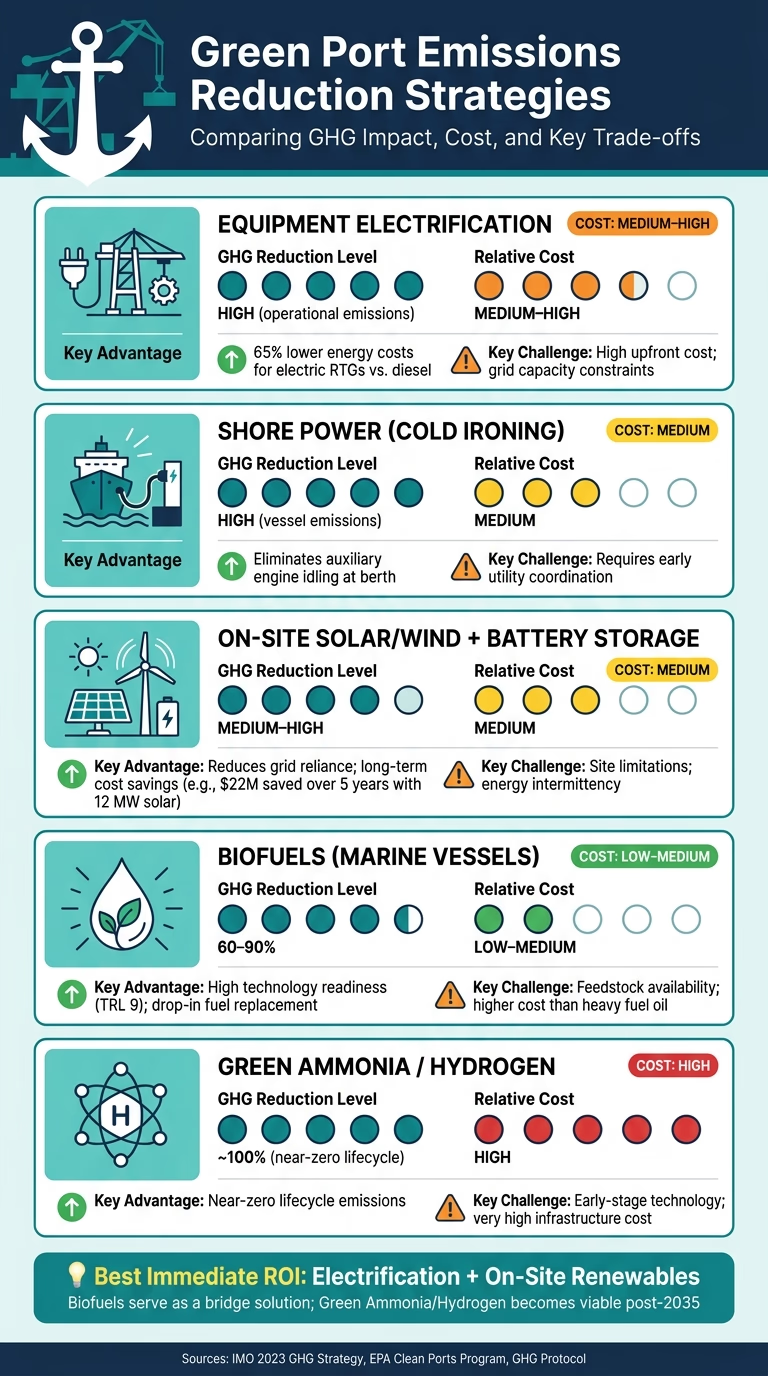
Green Port Emissions Reduction Strategies: Cost vs. Impact Comparison
Adapting port operations to meet sustainability goals involves upgrading equipment and rethinking energy sources. To cut emissions effectively, ports need to focus on both improving energy efficiency and transitioning to cleaner energy.
Electrification and Equipment Upgrades
Switching from diesel-powered equipment to electric or hybrid alternatives is a practical first step. Electric rubber-tired gantry cranes (RTGs), yard tractors, and forklifts are already in use in large-scale operations. These electric models not only cost about 35% less to operate per hour compared to their diesel counterparts, but electric RTGs also slash energy costs by 65% per unit versus diesel versions [3].
A phased 10-year replacement plan allows ports to align equipment upgrades with the natural lifecycle of their machinery, helping to manage capital expenses [3]. Retiring diesel equipment too early can be both expensive and politically tricky, so careful planning is essential.
Another impactful move is installing shore power systems - also known as cold ironing - which let docked vessels connect to the local grid and shut down their auxiliary engines. This approach significantly reduces air pollution around ports. Focusing on high-traffic berths first ensures maximum emissions reduction without requiring a full-scale port-wide overhaul right away [2].
"Installing shore power at marine terminals so that cruise and cargo ships can turn off their engines while at dock is a key part of the Port of Seattle's commitment to becoming the greenest Port in North America." - Fred Felleman, Commissioner, Port of Seattle [7]
However, electrification comes with its own challenges, including increased peak power demand. By 2050, combined investments from ports and utilities could range between $208 million and $457 million to meet these new energy needs [7]. To make these upgrades truly effective, it’s critical to pair them with clean energy sources.
Integrating Renewable Energy and Smart Grid Systems
Clean energy solutions are a natural complement to electrification. On-site renewable energy generation, such as solar and wind, can bolster these efforts. Hybrid Renewable Energy Systems (HRES), which combine sources like solar, wind, hydrogen, and biofuels with Energy Storage Systems (ESS), provide a reliable and flexible power supply [8].
One practical example is installing rooftop solar panels on terminal buildings and warehouses. An East Coast port authority achieved $22 million in energy cost savings over five years by integrating 12 megawatts (MW) of solar energy across its rooftops. Pairing this with battery storage and a microgrid helped manage peak demand, reduce reliance on the grid, and maintain operations during outages [3].
Increasingly, ports are transforming into integrated energy hubs - producing, storing, and distributing renewable energy. This shift not only cuts emissions but also opens up new revenue opportunities, making a strong business case for renewable energy investments [9].
Comparing Emissions Reduction Options
When evaluating different strategies, ports must consider the balance between cost, emissions reduction, and overall performance. The table below illustrates the trade-offs among key approaches:
Strategy | GHG Reduction | Key Advantage | Key Challenge | Relative Cost |
|---|---|---|---|---|
Equipment Electrification | High (operational) | 65% lower energy costs for RTGs [3] | High upfront cost; grid capacity [7] | Medium–High |
Shore Power | High (vessel emissions) | Cuts auxiliary engine idling at dock [7] | Requires utility coordination | Medium |
On-Site Solar/Wind + Storage | Medium–High | Reduces grid reliance; long-term savings [3] | Site limitations; intermittency [8] | Medium |
Biofuels (marine vessels) | 60–90% | High readiness level (TRL 9); drop-in fuel [3] | Feedstock availability; higher cost than HFO [3] | Low–Medium |
Green Ammonia/Hydrogen | ~100% | Near-zero lifecycle emissions [3] | Early-stage tech; very high cost [3] | High |
For most ports, electrification combined with on-site renewable energy offers the best immediate return. Biofuels can act as a transitional solution for marine vessels, while advanced options like green ammonia become more practical in the coming decades. These measures lay the groundwork for future innovations in eco-friendly construction and climate-resilient infrastructure.
Eco-Friendly Construction and Climate-Resilient Port Design
Port infrastructure needs a complete overhaul to meet the demands of sustainability and climate adaptability. Beyond energy system upgrades, the focus must extend to rethinking how ports are built and designed. From docks to terminals and seawalls, every component of a port's physical structure should reflect modern priorities for environmental responsibility and resilience.
Choosing Low-Carbon Construction Materials
Port construction has traditionally relied on materials like standard concrete and virgin steel, both of which carry significant carbon footprints. A shift to alternatives such as recycled steel and low-carbon concrete - created using blended cement mixes with fly ash or slag - can drastically cut the embodied carbon in new facilities. To maximize efficiency, these material changes should align with scheduled asset replacements, ensuring retrofits occur only when necessary. For example, upgrading materials during a terminal expansion or seawall replacement can avoid unnecessary disruptions while lowering emissions [3].
Another approach involves modular and compact designs, such as multi-story energy storage systems. These designs minimize material waste and simplify future updates [1]. Beyond material choices, integrating nature-based solutions into port construction enhances both sustainability and climate resilience.
Adding Nature-Based Solutions to Port Design
Nature-based solutions offer a powerful complement to material innovations, boosting coastal resilience while benefiting the environment. These strategies include:
Working with natural sediment flows to stabilize shorelines
Incorporating living shorelines and artificial reefs to reduce wave energy and curb erosion
Reusing dredged sediment for wetland restoration rather than discarding it as waste
Enhancing existing infrastructure with features like habitat panels to support marine ecosystems [10]
Hybrid infrastructure, which merges traditional hard structures with nature-based enhancements, is gaining traction. For instance, a seawall can be retrofitted with habitat panels while nearby wetlands are restored to absorb storm surges. This approach improves resilience without the need for complete reconstruction.
Conventional vs. Eco-Engineered Port Design: A Comparison
Feature | Conventional Port Design | Eco-Engineered Design |
|---|---|---|
Primary Materials | Virgin concrete, standard steel | Recycled steel, low-carbon concrete |
Climate Resilience | Relies on hard barriers (seawalls, levees) | Combines hard barriers with living buffers and wetlands |
Ecosystem Impact | Displaces or degrades coastal habitats | Supports or restores local biodiversity [10] |
Carbon Footprint | High embodied carbon | Reduced embodied carbon through material selection [3] |
Long-Term Maintenance | Ongoing structural repairs as climate stress increases | Natural systems can self-repair and adapt over time [10] |
Design Flexibility | Fixed, monolithic structures | Modular and adaptable layouts [1] |
This comparison highlights how eco-engineered designs not only reduce environmental harm but also offer greater adaptability and long-term benefits. By blending innovative materials and nature-based solutions, ports can evolve into sustainable hubs that stand resilient against future challenges.
Putting Green Port Plans Into Action and Scaling Results
Designing a green port is one thing. Turning that vision into reality without disrupting daily operations is an entirely different challenge.
Using a Phased Implementation Approach
Rolling out sustainability upgrades works best when done in phases, prioritizing projects by their impact and urgency. Start with initiatives that yield immediate, measurable results - without requiring a complete operational halt. For instance, installing shore power at high-traffic berths can significantly cut emissions of PM2.5 and NOx right where the reductions matter most [2].
These early successes not only provide tangible benefits but also build momentum for larger investments in later phases. Timing is key: align upgrades with scheduled equipment replacements, as discussed in the construction section. This approach ensures that outdated systems are replaced with low-carbon alternatives when they naturally reach the end of their lifecycle. By phasing in these changes, ports can establish a foundation for tracking progress effectively.
Tracking Performance with Data and Digital Tools
To manage progress, you need to measure it. Start by establishing a baseline emissions inventory for Scope 1–3 emissions to serve as a benchmark for all future improvements.
Digital tools and real-time monitoring systems are invaluable here. They allow ports to track the performance of renewable energy sources and energy storage systems, pinpointing inefficiencies before they become major issues [8][11]. A notable example is the Port Integrated Multi-Energy System (PIMES), which in 2024 achieved impressive results: cutting 1,885 tons of CO2 emissions and reaching charge-discharge efficiencies of 99.15% in its energy storage operations [11]. Publicly accessible community air quality monitoring networks further enhance accountability, fostering trust among local communities and regulators [2]. When ports coordinate these efforts regionally, the potential for impact grows exponentially.
Partnering Across Regional Port Networks
Collaboration is essential. With maritime transport handling over 80% of global trade by volume [12], isolated sustainability efforts by individual ports won't achieve the transformative changes needed. Regional cooperation is the way forward.
Building on phased upgrades and robust performance tracking, ports can scale their efforts through partnerships. Standardizing equipment designs and interconnection protocols early is crucial - especially for technologies like shore power, where compatibility across terminals is non-negotiable [4]. Establishing electrification task forces that include terminal operators, labor unions, and utility providers can preempt procurement and implementation delays [4]. As the industry moves toward "Port 5.0" - a vision of intelligent integration of goods, data, and energy - shared infrastructure and aligned standards will be the backbone that turns regional scaling from an idea into a reality [12].
Conclusion: Leading the Shift to Future-Ready Ports
Transforming port infrastructure to align with green initiatives demands a deliberate, step-by-step approach. Strategies like establishing a Scope 1–3 emissions baseline, synchronizing upgrades with natural asset lifecycles, implementing phased electrification, and fostering regional partnerships are designed to deliver both environmental benefits and financial returns. These efforts lay the groundwork for meaningful changes in port operations.
As highlighted earlier, leading ports have already demonstrated that targeted green initiatives can result in measurable savings and emissions reductions. This underscores that environmental strategies can directly enhance financial performance.
The urgency to act is clear. 76% of the top 25 U.S. container ports by volume have pledged to achieve net-zero emissions by 2050 [4]. Additionally, the International Maritime Organization's carbon pricing mechanism is anticipated to roll out in 2027 [2]. Ports that delay these upgrades risk not only regulatory penalties but also losing cargo traffic to competitors that are more future-ready.
"The ports that invest now will attract the next generation of vessel traffic. Those that don't will watch cargo shift to competitors." - Council Fire Resources [2]
This guide has shown that forward-thinking investments in sustainable port design do more than meet regulatory requirements - they also ensure long-term business viability. By embracing green infrastructure, ports can secure a competitive edge and bolster economic resilience. Preparing for evolving trade flows, stricter regulations, and higher infrastructure standards requires decisive action today. The choices made now will determine which ports thrive in the years ahead.
FAQs
Where should we start to cut Scope 1–3 port emissions fastest?
To effectively manage and reduce emissions, begin by developing a comprehensive emissions baseline that encompasses all operational aspects, such as vessels, harbor craft, cargo handling equipment, drayage trucks, and rail systems. Rely on established frameworks like the GHG Protocol to ensure the data is precise and meets the criteria for federal funding opportunities.
Next, focus on high-impact changes by prioritizing the installation of shore power systems at berths with significant traffic. This step minimizes emissions from docked vessels. Additionally, transition cargo handling equipment to electric-powered alternatives to further reduce operational emissions.
Lastly, address Scope 3 emissions by incorporating zero-emission requirements into tenant lease agreements. This ensures that third-party operations align with broader sustainability goals, creating a more comprehensive approach to emissions reduction.
How do we plan for the extra electric load from shore power and equipment electrification?
Planning for a higher electrical load calls for proactive steps and collaboration with utility providers. Begin by setting an energy baseline and performing a detailed load forecast to understand future needs. Partner with local utilities to evaluate how increased demand might affect the grid and to secure necessary interconnections.
To handle peak loads effectively, consider integrating distributed energy resources such as solar panels, battery storage systems, or hybrid microgrids. Additionally, focus on designing infrastructure that can scale as demand grows, ensuring it remains resilient and adaptable to long-term requirements.
What upgrades usually deliver the best ROI in the first phase?
Transitioning cargo handling equipment to electric models is a smart starting point when upgrading port infrastructure. Swapping out diesel-powered machinery, such as yard tractors, for electric alternatives can lead to significant savings. These electric models not only reduce energy consumption but also lower maintenance and oil-related expenses, saving up to $3,000 annually per vehicle.
Another impactful step is installing shore power at the busiest berth. This upgrade allows ships to plug into electrical power while docked, significantly cutting fuel costs and emissions, making it a win for both the environment and operational efficiency.
Related Blog Posts
How to Build a Climate-Ready Energy & Water Infrastructure Plan for Maritime & Logistics Companies
How to Transition to Renewable Energy Systems at the Local Level for Maritime & Logistics Companies
How to Turn a Strategic Plan into Fundable, Shovel-Ready Projects for Maritime & Logistics Companies
How to Align Local Policy with State and Federal Climate Goals for Maritime & Logistics Companies
Latest Articles
©2026

Narrative Change and Power Building: The Missing Half of Advocacy
Narrative change is the process of disrupting dominant narratives that normalize inequity and advancing new narratives from historically marginalized communities.

Funding Resilience Without Federal Grants
BRIC is unreliable and FEMA is shrinking. Here's how cities fund climate resilience with dedicated revenue, blended finance, and a coordinating authority.

The ESG Blind Spot: How AI Is Finding Risks in Companies Nobody Else Is Watching
Norway's sovereign wealth fund uses AI to screen 7,200 portfolio companies for forced labor and corruption within 24 hours. The real story is the emerging-market coverage gap that traditional ESG data vendors miss — and what it means for any company with a global supply chain.
Narrative Change and Power Building: The Missing Half of Advocacy
Narrative change is the process of disrupting dominant narratives that normalize inequity and advancing new narratives from historically marginalized communities.
Funding Resilience Without Federal Grants
BRIC is unreliable and FEMA is shrinking. Here's how cities fund climate resilience with dedicated revenue, blended finance, and a coordinating authority.
The ESG Blind Spot: How AI Is Finding Risks in Companies Nobody Else Is Watching
Norway's sovereign wealth fund uses AI to screen 7,200 portfolio companies for forced labor and corruption within 24 hours. The real story is the emerging-market coverage gap that traditional ESG data vendors miss — and what it means for any company with a global supply chain.
FAQ
01
What does it really mean to “redefine profit”?
02
What makes Council Fire different?
03
Who does Council Fire work with?
04
What does working with Council Fire actually look like?
05
How does Council Fire help organizations turn big goals into action?
06
How does Council Fire define and measure success?
07
How does technology fit into Council Fire’s work?
Jun 11, 2026
How to Design Green Port Infrastructure for the Future for Corporations
Sustainability Strategy
In This Article
Ports must electrify, deploy renewables, and embrace nature-based, low-carbon design to secure trade and meet emissions rules.
How to Design Green Port Infrastructure for the Future for Corporations
Ports are at the forefront of global trade but also contribute heavily to emissions. Transitioning to greener infrastructure is no longer optional - it’s a business and regulatory necessity. Here’s how ports can modernize operations while meeting environmental goals and improving financial outcomes:
Key Focus Areas: Reducing emissions (Scope 1-3), switching to electric equipment, and integrating renewable energy systems.
Regulatory Drivers: Compliance with IMO’s emission reduction targets (20% by 2030, 70% by 2040) and EPA’s $3 billion Clean Ports Program.
Case Study: An East Coast port saved $125M in five years by installing solar panels and electrifying 65% of its equipment, cutting emissions by 52%.
Action Steps: Conduct emissions audits, set measurable goals, engage stakeholders early (e.g., utilities, labor unions), and prioritize high-impact upgrades like shore power systems.
With phased implementation, data-driven monitoring, and regional collaboration, ports can achieve net-zero goals while staying competitive in a changing industry.
Green Port Progress Report: Operations
Building a Strategic Plan for Green Port Design
A green port project requires more than good intentions; it demands a clear, actionable plan. Success hinges on starting with reliable data, setting concrete targets, and involving key players from the outset.
Conducting a Baseline Assessment
The first step is to establish a comprehensive understanding of your current environmental impact. This begins with a Scope 1, 2, and 3 emissions inventory based on frameworks like the GHG Protocol or the World Ports Climate Action Program (WPCAP). This approach ensures you account for not only direct port operations but also the broader emissions footprint, which is crucial for managing the full impact [5][2]. Additionally, energy audits of facilities can identify immediate opportunities for improvement, such as upgrading to LED lighting, optimizing HVAC systems, and improving building insulation [3]. Real-time monitoring of pollutants like PM2.5 and NO2 not only builds community trust but also supports grant applications and regulatory compliance [2].
With these insights, ports can establish specific, data-backed sustainability goals.
Setting Measurable Sustainability Goals
Baseline data sets the stage for defining clear and measurable targets. Aligning these goals with the IMO 2023 Revised GHG Strategy - which calls for a 20% emissions reduction by 2030, 70% by 2040, and net-zero by 2050 - ensures credibility with stakeholders such as regulators and investors [5][2]. For California-based ports, integrating regional regulations alongside these benchmarks adds another layer of compliance [2].
Take the Port of Los Angeles as an example. Over a 20-year collaboration with Ramboll, the port developed advanced GHG inventories and electrification strategies, enabling it to meet strict California regulations while maintaining cargo throughput [6]. Goals should also align with federal funding programs like the EPA's Clean Ports Program, which prioritizes detailed emissions inventories and community benefit plans [2].
Once goals are in place, the next challenge is ensuring all stakeholders are aligned and engaged.
Engaging Stakeholders in the Planning Process
Stakeholder collaboration often determines the success or failure of green port initiatives. For instance, utilities play a pivotal role in large-scale electrification projects. Grid impact assessments and interconnection agreements can take 12–18 months to finalize, making early engagement essential [4]. Delaying these discussions until equipment is ready for installation can derail timelines.
Other critical stakeholders include terminal operators, labor unions, and local communities. Establishing dedicated task forces can help coordinate efforts, resolve procurement challenges, and keep projects on track [4]. Community engagement is particularly important, as neighborhoods near ports often experience higher rates of asthma and cardiovascular disease due to poor air quality. Real-time air quality monitoring and partnerships with local groups can address these concerns while fostering trust [2].
Incorporating zero-emission mandates and energy efficiency standards into terminal leases is another way to manage Scope 3 emissions effectively. By making these commitments contractual, ports can ensure long-term accountability [2][3].
Stakeholder Group | Primary Role in Green Planning | Key Engagement Strategy |
|---|---|---|
Utilities | Grid capacity & renewables integration | Early grid impact assessments (12–18 months lead time) [4] |
Labor Unions | Workforce transition planning | Dedicated electrification task forces [4] |
Terminal Operators | Scope 3 emissions reduction | |
Local Communities | Air quality accountability | Real-time PM2.5/NO2 monitoring partnerships [2] |
Designing Energy-Efficient and Low-Carbon Port Systems
Green Port Emissions Reduction Strategies: Cost vs. Impact Comparison
Adapting port operations to meet sustainability goals involves upgrading equipment and rethinking energy sources. To cut emissions effectively, ports need to focus on both improving energy efficiency and transitioning to cleaner energy.
Electrification and Equipment Upgrades
Switching from diesel-powered equipment to electric or hybrid alternatives is a practical first step. Electric rubber-tired gantry cranes (RTGs), yard tractors, and forklifts are already in use in large-scale operations. These electric models not only cost about 35% less to operate per hour compared to their diesel counterparts, but electric RTGs also slash energy costs by 65% per unit versus diesel versions [3].
A phased 10-year replacement plan allows ports to align equipment upgrades with the natural lifecycle of their machinery, helping to manage capital expenses [3]. Retiring diesel equipment too early can be both expensive and politically tricky, so careful planning is essential.
Another impactful move is installing shore power systems - also known as cold ironing - which let docked vessels connect to the local grid and shut down their auxiliary engines. This approach significantly reduces air pollution around ports. Focusing on high-traffic berths first ensures maximum emissions reduction without requiring a full-scale port-wide overhaul right away [2].
"Installing shore power at marine terminals so that cruise and cargo ships can turn off their engines while at dock is a key part of the Port of Seattle's commitment to becoming the greenest Port in North America." - Fred Felleman, Commissioner, Port of Seattle [7]
However, electrification comes with its own challenges, including increased peak power demand. By 2050, combined investments from ports and utilities could range between $208 million and $457 million to meet these new energy needs [7]. To make these upgrades truly effective, it’s critical to pair them with clean energy sources.
Integrating Renewable Energy and Smart Grid Systems
Clean energy solutions are a natural complement to electrification. On-site renewable energy generation, such as solar and wind, can bolster these efforts. Hybrid Renewable Energy Systems (HRES), which combine sources like solar, wind, hydrogen, and biofuels with Energy Storage Systems (ESS), provide a reliable and flexible power supply [8].
One practical example is installing rooftop solar panels on terminal buildings and warehouses. An East Coast port authority achieved $22 million in energy cost savings over five years by integrating 12 megawatts (MW) of solar energy across its rooftops. Pairing this with battery storage and a microgrid helped manage peak demand, reduce reliance on the grid, and maintain operations during outages [3].
Increasingly, ports are transforming into integrated energy hubs - producing, storing, and distributing renewable energy. This shift not only cuts emissions but also opens up new revenue opportunities, making a strong business case for renewable energy investments [9].
Comparing Emissions Reduction Options
When evaluating different strategies, ports must consider the balance between cost, emissions reduction, and overall performance. The table below illustrates the trade-offs among key approaches:
Strategy | GHG Reduction | Key Advantage | Key Challenge | Relative Cost |
|---|---|---|---|---|
Equipment Electrification | High (operational) | 65% lower energy costs for RTGs [3] | High upfront cost; grid capacity [7] | Medium–High |
Shore Power | High (vessel emissions) | Cuts auxiliary engine idling at dock [7] | Requires utility coordination | Medium |
On-Site Solar/Wind + Storage | Medium–High | Reduces grid reliance; long-term savings [3] | Site limitations; intermittency [8] | Medium |
Biofuels (marine vessels) | 60–90% | High readiness level (TRL 9); drop-in fuel [3] | Feedstock availability; higher cost than HFO [3] | Low–Medium |
Green Ammonia/Hydrogen | ~100% | Near-zero lifecycle emissions [3] | Early-stage tech; very high cost [3] | High |
For most ports, electrification combined with on-site renewable energy offers the best immediate return. Biofuels can act as a transitional solution for marine vessels, while advanced options like green ammonia become more practical in the coming decades. These measures lay the groundwork for future innovations in eco-friendly construction and climate-resilient infrastructure.
Eco-Friendly Construction and Climate-Resilient Port Design
Port infrastructure needs a complete overhaul to meet the demands of sustainability and climate adaptability. Beyond energy system upgrades, the focus must extend to rethinking how ports are built and designed. From docks to terminals and seawalls, every component of a port's physical structure should reflect modern priorities for environmental responsibility and resilience.
Choosing Low-Carbon Construction Materials
Port construction has traditionally relied on materials like standard concrete and virgin steel, both of which carry significant carbon footprints. A shift to alternatives such as recycled steel and low-carbon concrete - created using blended cement mixes with fly ash or slag - can drastically cut the embodied carbon in new facilities. To maximize efficiency, these material changes should align with scheduled asset replacements, ensuring retrofits occur only when necessary. For example, upgrading materials during a terminal expansion or seawall replacement can avoid unnecessary disruptions while lowering emissions [3].
Another approach involves modular and compact designs, such as multi-story energy storage systems. These designs minimize material waste and simplify future updates [1]. Beyond material choices, integrating nature-based solutions into port construction enhances both sustainability and climate resilience.
Adding Nature-Based Solutions to Port Design
Nature-based solutions offer a powerful complement to material innovations, boosting coastal resilience while benefiting the environment. These strategies include:
Working with natural sediment flows to stabilize shorelines
Incorporating living shorelines and artificial reefs to reduce wave energy and curb erosion
Reusing dredged sediment for wetland restoration rather than discarding it as waste
Enhancing existing infrastructure with features like habitat panels to support marine ecosystems [10]
Hybrid infrastructure, which merges traditional hard structures with nature-based enhancements, is gaining traction. For instance, a seawall can be retrofitted with habitat panels while nearby wetlands are restored to absorb storm surges. This approach improves resilience without the need for complete reconstruction.
Conventional vs. Eco-Engineered Port Design: A Comparison
Feature | Conventional Port Design | Eco-Engineered Design |
|---|---|---|
Primary Materials | Virgin concrete, standard steel | Recycled steel, low-carbon concrete |
Climate Resilience | Relies on hard barriers (seawalls, levees) | Combines hard barriers with living buffers and wetlands |
Ecosystem Impact | Displaces or degrades coastal habitats | Supports or restores local biodiversity [10] |
Carbon Footprint | High embodied carbon | Reduced embodied carbon through material selection [3] |
Long-Term Maintenance | Ongoing structural repairs as climate stress increases | Natural systems can self-repair and adapt over time [10] |
Design Flexibility | Fixed, monolithic structures | Modular and adaptable layouts [1] |
This comparison highlights how eco-engineered designs not only reduce environmental harm but also offer greater adaptability and long-term benefits. By blending innovative materials and nature-based solutions, ports can evolve into sustainable hubs that stand resilient against future challenges.
Putting Green Port Plans Into Action and Scaling Results
Designing a green port is one thing. Turning that vision into reality without disrupting daily operations is an entirely different challenge.
Using a Phased Implementation Approach
Rolling out sustainability upgrades works best when done in phases, prioritizing projects by their impact and urgency. Start with initiatives that yield immediate, measurable results - without requiring a complete operational halt. For instance, installing shore power at high-traffic berths can significantly cut emissions of PM2.5 and NOx right where the reductions matter most [2].
These early successes not only provide tangible benefits but also build momentum for larger investments in later phases. Timing is key: align upgrades with scheduled equipment replacements, as discussed in the construction section. This approach ensures that outdated systems are replaced with low-carbon alternatives when they naturally reach the end of their lifecycle. By phasing in these changes, ports can establish a foundation for tracking progress effectively.
Tracking Performance with Data and Digital Tools
To manage progress, you need to measure it. Start by establishing a baseline emissions inventory for Scope 1–3 emissions to serve as a benchmark for all future improvements.
Digital tools and real-time monitoring systems are invaluable here. They allow ports to track the performance of renewable energy sources and energy storage systems, pinpointing inefficiencies before they become major issues [8][11]. A notable example is the Port Integrated Multi-Energy System (PIMES), which in 2024 achieved impressive results: cutting 1,885 tons of CO2 emissions and reaching charge-discharge efficiencies of 99.15% in its energy storage operations [11]. Publicly accessible community air quality monitoring networks further enhance accountability, fostering trust among local communities and regulators [2]. When ports coordinate these efforts regionally, the potential for impact grows exponentially.
Partnering Across Regional Port Networks
Collaboration is essential. With maritime transport handling over 80% of global trade by volume [12], isolated sustainability efforts by individual ports won't achieve the transformative changes needed. Regional cooperation is the way forward.
Building on phased upgrades and robust performance tracking, ports can scale their efforts through partnerships. Standardizing equipment designs and interconnection protocols early is crucial - especially for technologies like shore power, where compatibility across terminals is non-negotiable [4]. Establishing electrification task forces that include terminal operators, labor unions, and utility providers can preempt procurement and implementation delays [4]. As the industry moves toward "Port 5.0" - a vision of intelligent integration of goods, data, and energy - shared infrastructure and aligned standards will be the backbone that turns regional scaling from an idea into a reality [12].
Conclusion: Leading the Shift to Future-Ready Ports
Transforming port infrastructure to align with green initiatives demands a deliberate, step-by-step approach. Strategies like establishing a Scope 1–3 emissions baseline, synchronizing upgrades with natural asset lifecycles, implementing phased electrification, and fostering regional partnerships are designed to deliver both environmental benefits and financial returns. These efforts lay the groundwork for meaningful changes in port operations.
As highlighted earlier, leading ports have already demonstrated that targeted green initiatives can result in measurable savings and emissions reductions. This underscores that environmental strategies can directly enhance financial performance.
The urgency to act is clear. 76% of the top 25 U.S. container ports by volume have pledged to achieve net-zero emissions by 2050 [4]. Additionally, the International Maritime Organization's carbon pricing mechanism is anticipated to roll out in 2027 [2]. Ports that delay these upgrades risk not only regulatory penalties but also losing cargo traffic to competitors that are more future-ready.
"The ports that invest now will attract the next generation of vessel traffic. Those that don't will watch cargo shift to competitors." - Council Fire Resources [2]
This guide has shown that forward-thinking investments in sustainable port design do more than meet regulatory requirements - they also ensure long-term business viability. By embracing green infrastructure, ports can secure a competitive edge and bolster economic resilience. Preparing for evolving trade flows, stricter regulations, and higher infrastructure standards requires decisive action today. The choices made now will determine which ports thrive in the years ahead.
FAQs
Where should we start to cut Scope 1–3 port emissions fastest?
To effectively manage and reduce emissions, begin by developing a comprehensive emissions baseline that encompasses all operational aspects, such as vessels, harbor craft, cargo handling equipment, drayage trucks, and rail systems. Rely on established frameworks like the GHG Protocol to ensure the data is precise and meets the criteria for federal funding opportunities.
Next, focus on high-impact changes by prioritizing the installation of shore power systems at berths with significant traffic. This step minimizes emissions from docked vessels. Additionally, transition cargo handling equipment to electric-powered alternatives to further reduce operational emissions.
Lastly, address Scope 3 emissions by incorporating zero-emission requirements into tenant lease agreements. This ensures that third-party operations align with broader sustainability goals, creating a more comprehensive approach to emissions reduction.
How do we plan for the extra electric load from shore power and equipment electrification?
Planning for a higher electrical load calls for proactive steps and collaboration with utility providers. Begin by setting an energy baseline and performing a detailed load forecast to understand future needs. Partner with local utilities to evaluate how increased demand might affect the grid and to secure necessary interconnections.
To handle peak loads effectively, consider integrating distributed energy resources such as solar panels, battery storage systems, or hybrid microgrids. Additionally, focus on designing infrastructure that can scale as demand grows, ensuring it remains resilient and adaptable to long-term requirements.
What upgrades usually deliver the best ROI in the first phase?
Transitioning cargo handling equipment to electric models is a smart starting point when upgrading port infrastructure. Swapping out diesel-powered machinery, such as yard tractors, for electric alternatives can lead to significant savings. These electric models not only reduce energy consumption but also lower maintenance and oil-related expenses, saving up to $3,000 annually per vehicle.
Another impactful step is installing shore power at the busiest berth. This upgrade allows ships to plug into electrical power while docked, significantly cutting fuel costs and emissions, making it a win for both the environment and operational efficiency.
Related Blog Posts
How to Build a Climate-Ready Energy & Water Infrastructure Plan for Maritime & Logistics Companies
How to Transition to Renewable Energy Systems at the Local Level for Maritime & Logistics Companies
How to Turn a Strategic Plan into Fundable, Shovel-Ready Projects for Maritime & Logistics Companies
How to Align Local Policy with State and Federal Climate Goals for Maritime & Logistics Companies
Latest Articles
©2026
Narrative Change and Power Building: The Missing Half of Advocacy
Narrative change is the process of disrupting dominant narratives that normalize inequity and advancing new narratives from historically marginalized communities.
Funding Resilience Without Federal Grants
BRIC is unreliable and FEMA is shrinking. Here's how cities fund climate resilience with dedicated revenue, blended finance, and a coordinating authority.
The ESG Blind Spot: How AI Is Finding Risks in Companies Nobody Else Is Watching
Norway's sovereign wealth fund uses AI to screen 7,200 portfolio companies for forced labor and corruption within 24 hours. The real story is the emerging-market coverage gap that traditional ESG data vendors miss — and what it means for any company with a global supply chain.
FAQ
01
What does it really mean to “redefine profit”?
02
What makes Council Fire different?
03
Who does Council Fire work with?
04
What does working with Council Fire actually look like?
05
How does Council Fire help organizations turn big goals into action?
06
How does Council Fire define and measure success?
07
How does technology fit into Council Fire’s work?
Jun 11, 2026
How to Design Green Port Infrastructure for the Future for Corporations
Sustainability Strategy
In This Article
Ports must electrify, deploy renewables, and embrace nature-based, low-carbon design to secure trade and meet emissions rules.
How to Design Green Port Infrastructure for the Future for Corporations
Ports are at the forefront of global trade but also contribute heavily to emissions. Transitioning to greener infrastructure is no longer optional - it’s a business and regulatory necessity. Here’s how ports can modernize operations while meeting environmental goals and improving financial outcomes:
Key Focus Areas: Reducing emissions (Scope 1-3), switching to electric equipment, and integrating renewable energy systems.
Regulatory Drivers: Compliance with IMO’s emission reduction targets (20% by 2030, 70% by 2040) and EPA’s $3 billion Clean Ports Program.
Case Study: An East Coast port saved $125M in five years by installing solar panels and electrifying 65% of its equipment, cutting emissions by 52%.
Action Steps: Conduct emissions audits, set measurable goals, engage stakeholders early (e.g., utilities, labor unions), and prioritize high-impact upgrades like shore power systems.
With phased implementation, data-driven monitoring, and regional collaboration, ports can achieve net-zero goals while staying competitive in a changing industry.
Green Port Progress Report: Operations
Building a Strategic Plan for Green Port Design
A green port project requires more than good intentions; it demands a clear, actionable plan. Success hinges on starting with reliable data, setting concrete targets, and involving key players from the outset.
Conducting a Baseline Assessment
The first step is to establish a comprehensive understanding of your current environmental impact. This begins with a Scope 1, 2, and 3 emissions inventory based on frameworks like the GHG Protocol or the World Ports Climate Action Program (WPCAP). This approach ensures you account for not only direct port operations but also the broader emissions footprint, which is crucial for managing the full impact [5][2]. Additionally, energy audits of facilities can identify immediate opportunities for improvement, such as upgrading to LED lighting, optimizing HVAC systems, and improving building insulation [3]. Real-time monitoring of pollutants like PM2.5 and NO2 not only builds community trust but also supports grant applications and regulatory compliance [2].
With these insights, ports can establish specific, data-backed sustainability goals.
Setting Measurable Sustainability Goals
Baseline data sets the stage for defining clear and measurable targets. Aligning these goals with the IMO 2023 Revised GHG Strategy - which calls for a 20% emissions reduction by 2030, 70% by 2040, and net-zero by 2050 - ensures credibility with stakeholders such as regulators and investors [5][2]. For California-based ports, integrating regional regulations alongside these benchmarks adds another layer of compliance [2].
Take the Port of Los Angeles as an example. Over a 20-year collaboration with Ramboll, the port developed advanced GHG inventories and electrification strategies, enabling it to meet strict California regulations while maintaining cargo throughput [6]. Goals should also align with federal funding programs like the EPA's Clean Ports Program, which prioritizes detailed emissions inventories and community benefit plans [2].
Once goals are in place, the next challenge is ensuring all stakeholders are aligned and engaged.
Engaging Stakeholders in the Planning Process
Stakeholder collaboration often determines the success or failure of green port initiatives. For instance, utilities play a pivotal role in large-scale electrification projects. Grid impact assessments and interconnection agreements can take 12–18 months to finalize, making early engagement essential [4]. Delaying these discussions until equipment is ready for installation can derail timelines.
Other critical stakeholders include terminal operators, labor unions, and local communities. Establishing dedicated task forces can help coordinate efforts, resolve procurement challenges, and keep projects on track [4]. Community engagement is particularly important, as neighborhoods near ports often experience higher rates of asthma and cardiovascular disease due to poor air quality. Real-time air quality monitoring and partnerships with local groups can address these concerns while fostering trust [2].
Incorporating zero-emission mandates and energy efficiency standards into terminal leases is another way to manage Scope 3 emissions effectively. By making these commitments contractual, ports can ensure long-term accountability [2][3].
Stakeholder Group | Primary Role in Green Planning | Key Engagement Strategy |
|---|---|---|
Utilities | Grid capacity & renewables integration | Early grid impact assessments (12–18 months lead time) [4] |
Labor Unions | Workforce transition planning | Dedicated electrification task forces [4] |
Terminal Operators | Scope 3 emissions reduction | |
Local Communities | Air quality accountability | Real-time PM2.5/NO2 monitoring partnerships [2] |
Designing Energy-Efficient and Low-Carbon Port Systems
Green Port Emissions Reduction Strategies: Cost vs. Impact Comparison
Adapting port operations to meet sustainability goals involves upgrading equipment and rethinking energy sources. To cut emissions effectively, ports need to focus on both improving energy efficiency and transitioning to cleaner energy.
Electrification and Equipment Upgrades
Switching from diesel-powered equipment to electric or hybrid alternatives is a practical first step. Electric rubber-tired gantry cranes (RTGs), yard tractors, and forklifts are already in use in large-scale operations. These electric models not only cost about 35% less to operate per hour compared to their diesel counterparts, but electric RTGs also slash energy costs by 65% per unit versus diesel versions [3].
A phased 10-year replacement plan allows ports to align equipment upgrades with the natural lifecycle of their machinery, helping to manage capital expenses [3]. Retiring diesel equipment too early can be both expensive and politically tricky, so careful planning is essential.
Another impactful move is installing shore power systems - also known as cold ironing - which let docked vessels connect to the local grid and shut down their auxiliary engines. This approach significantly reduces air pollution around ports. Focusing on high-traffic berths first ensures maximum emissions reduction without requiring a full-scale port-wide overhaul right away [2].
"Installing shore power at marine terminals so that cruise and cargo ships can turn off their engines while at dock is a key part of the Port of Seattle's commitment to becoming the greenest Port in North America." - Fred Felleman, Commissioner, Port of Seattle [7]
However, electrification comes with its own challenges, including increased peak power demand. By 2050, combined investments from ports and utilities could range between $208 million and $457 million to meet these new energy needs [7]. To make these upgrades truly effective, it’s critical to pair them with clean energy sources.
Integrating Renewable Energy and Smart Grid Systems
Clean energy solutions are a natural complement to electrification. On-site renewable energy generation, such as solar and wind, can bolster these efforts. Hybrid Renewable Energy Systems (HRES), which combine sources like solar, wind, hydrogen, and biofuels with Energy Storage Systems (ESS), provide a reliable and flexible power supply [8].
One practical example is installing rooftop solar panels on terminal buildings and warehouses. An East Coast port authority achieved $22 million in energy cost savings over five years by integrating 12 megawatts (MW) of solar energy across its rooftops. Pairing this with battery storage and a microgrid helped manage peak demand, reduce reliance on the grid, and maintain operations during outages [3].
Increasingly, ports are transforming into integrated energy hubs - producing, storing, and distributing renewable energy. This shift not only cuts emissions but also opens up new revenue opportunities, making a strong business case for renewable energy investments [9].
Comparing Emissions Reduction Options
When evaluating different strategies, ports must consider the balance between cost, emissions reduction, and overall performance. The table below illustrates the trade-offs among key approaches:
Strategy | GHG Reduction | Key Advantage | Key Challenge | Relative Cost |
|---|---|---|---|---|
Equipment Electrification | High (operational) | 65% lower energy costs for RTGs [3] | High upfront cost; grid capacity [7] | Medium–High |
Shore Power | High (vessel emissions) | Cuts auxiliary engine idling at dock [7] | Requires utility coordination | Medium |
On-Site Solar/Wind + Storage | Medium–High | Reduces grid reliance; long-term savings [3] | Site limitations; intermittency [8] | Medium |
Biofuels (marine vessels) | 60–90% | High readiness level (TRL 9); drop-in fuel [3] | Feedstock availability; higher cost than HFO [3] | Low–Medium |
Green Ammonia/Hydrogen | ~100% | Near-zero lifecycle emissions [3] | Early-stage tech; very high cost [3] | High |
For most ports, electrification combined with on-site renewable energy offers the best immediate return. Biofuels can act as a transitional solution for marine vessels, while advanced options like green ammonia become more practical in the coming decades. These measures lay the groundwork for future innovations in eco-friendly construction and climate-resilient infrastructure.
Eco-Friendly Construction and Climate-Resilient Port Design
Port infrastructure needs a complete overhaul to meet the demands of sustainability and climate adaptability. Beyond energy system upgrades, the focus must extend to rethinking how ports are built and designed. From docks to terminals and seawalls, every component of a port's physical structure should reflect modern priorities for environmental responsibility and resilience.
Choosing Low-Carbon Construction Materials
Port construction has traditionally relied on materials like standard concrete and virgin steel, both of which carry significant carbon footprints. A shift to alternatives such as recycled steel and low-carbon concrete - created using blended cement mixes with fly ash or slag - can drastically cut the embodied carbon in new facilities. To maximize efficiency, these material changes should align with scheduled asset replacements, ensuring retrofits occur only when necessary. For example, upgrading materials during a terminal expansion or seawall replacement can avoid unnecessary disruptions while lowering emissions [3].
Another approach involves modular and compact designs, such as multi-story energy storage systems. These designs minimize material waste and simplify future updates [1]. Beyond material choices, integrating nature-based solutions into port construction enhances both sustainability and climate resilience.
Adding Nature-Based Solutions to Port Design
Nature-based solutions offer a powerful complement to material innovations, boosting coastal resilience while benefiting the environment. These strategies include:
Working with natural sediment flows to stabilize shorelines
Incorporating living shorelines and artificial reefs to reduce wave energy and curb erosion
Reusing dredged sediment for wetland restoration rather than discarding it as waste
Enhancing existing infrastructure with features like habitat panels to support marine ecosystems [10]
Hybrid infrastructure, which merges traditional hard structures with nature-based enhancements, is gaining traction. For instance, a seawall can be retrofitted with habitat panels while nearby wetlands are restored to absorb storm surges. This approach improves resilience without the need for complete reconstruction.
Conventional vs. Eco-Engineered Port Design: A Comparison
Feature | Conventional Port Design | Eco-Engineered Design |
|---|---|---|
Primary Materials | Virgin concrete, standard steel | Recycled steel, low-carbon concrete |
Climate Resilience | Relies on hard barriers (seawalls, levees) | Combines hard barriers with living buffers and wetlands |
Ecosystem Impact | Displaces or degrades coastal habitats | Supports or restores local biodiversity [10] |
Carbon Footprint | High embodied carbon | Reduced embodied carbon through material selection [3] |
Long-Term Maintenance | Ongoing structural repairs as climate stress increases | Natural systems can self-repair and adapt over time [10] |
Design Flexibility | Fixed, monolithic structures | Modular and adaptable layouts [1] |
This comparison highlights how eco-engineered designs not only reduce environmental harm but also offer greater adaptability and long-term benefits. By blending innovative materials and nature-based solutions, ports can evolve into sustainable hubs that stand resilient against future challenges.
Putting Green Port Plans Into Action and Scaling Results
Designing a green port is one thing. Turning that vision into reality without disrupting daily operations is an entirely different challenge.
Using a Phased Implementation Approach
Rolling out sustainability upgrades works best when done in phases, prioritizing projects by their impact and urgency. Start with initiatives that yield immediate, measurable results - without requiring a complete operational halt. For instance, installing shore power at high-traffic berths can significantly cut emissions of PM2.5 and NOx right where the reductions matter most [2].
These early successes not only provide tangible benefits but also build momentum for larger investments in later phases. Timing is key: align upgrades with scheduled equipment replacements, as discussed in the construction section. This approach ensures that outdated systems are replaced with low-carbon alternatives when they naturally reach the end of their lifecycle. By phasing in these changes, ports can establish a foundation for tracking progress effectively.
Tracking Performance with Data and Digital Tools
To manage progress, you need to measure it. Start by establishing a baseline emissions inventory for Scope 1–3 emissions to serve as a benchmark for all future improvements.
Digital tools and real-time monitoring systems are invaluable here. They allow ports to track the performance of renewable energy sources and energy storage systems, pinpointing inefficiencies before they become major issues [8][11]. A notable example is the Port Integrated Multi-Energy System (PIMES), which in 2024 achieved impressive results: cutting 1,885 tons of CO2 emissions and reaching charge-discharge efficiencies of 99.15% in its energy storage operations [11]. Publicly accessible community air quality monitoring networks further enhance accountability, fostering trust among local communities and regulators [2]. When ports coordinate these efforts regionally, the potential for impact grows exponentially.
Partnering Across Regional Port Networks
Collaboration is essential. With maritime transport handling over 80% of global trade by volume [12], isolated sustainability efforts by individual ports won't achieve the transformative changes needed. Regional cooperation is the way forward.
Building on phased upgrades and robust performance tracking, ports can scale their efforts through partnerships. Standardizing equipment designs and interconnection protocols early is crucial - especially for technologies like shore power, where compatibility across terminals is non-negotiable [4]. Establishing electrification task forces that include terminal operators, labor unions, and utility providers can preempt procurement and implementation delays [4]. As the industry moves toward "Port 5.0" - a vision of intelligent integration of goods, data, and energy - shared infrastructure and aligned standards will be the backbone that turns regional scaling from an idea into a reality [12].
Conclusion: Leading the Shift to Future-Ready Ports
Transforming port infrastructure to align with green initiatives demands a deliberate, step-by-step approach. Strategies like establishing a Scope 1–3 emissions baseline, synchronizing upgrades with natural asset lifecycles, implementing phased electrification, and fostering regional partnerships are designed to deliver both environmental benefits and financial returns. These efforts lay the groundwork for meaningful changes in port operations.
As highlighted earlier, leading ports have already demonstrated that targeted green initiatives can result in measurable savings and emissions reductions. This underscores that environmental strategies can directly enhance financial performance.
The urgency to act is clear. 76% of the top 25 U.S. container ports by volume have pledged to achieve net-zero emissions by 2050 [4]. Additionally, the International Maritime Organization's carbon pricing mechanism is anticipated to roll out in 2027 [2]. Ports that delay these upgrades risk not only regulatory penalties but also losing cargo traffic to competitors that are more future-ready.
"The ports that invest now will attract the next generation of vessel traffic. Those that don't will watch cargo shift to competitors." - Council Fire Resources [2]
This guide has shown that forward-thinking investments in sustainable port design do more than meet regulatory requirements - they also ensure long-term business viability. By embracing green infrastructure, ports can secure a competitive edge and bolster economic resilience. Preparing for evolving trade flows, stricter regulations, and higher infrastructure standards requires decisive action today. The choices made now will determine which ports thrive in the years ahead.
FAQs
Where should we start to cut Scope 1–3 port emissions fastest?
To effectively manage and reduce emissions, begin by developing a comprehensive emissions baseline that encompasses all operational aspects, such as vessels, harbor craft, cargo handling equipment, drayage trucks, and rail systems. Rely on established frameworks like the GHG Protocol to ensure the data is precise and meets the criteria for federal funding opportunities.
Next, focus on high-impact changes by prioritizing the installation of shore power systems at berths with significant traffic. This step minimizes emissions from docked vessels. Additionally, transition cargo handling equipment to electric-powered alternatives to further reduce operational emissions.
Lastly, address Scope 3 emissions by incorporating zero-emission requirements into tenant lease agreements. This ensures that third-party operations align with broader sustainability goals, creating a more comprehensive approach to emissions reduction.
How do we plan for the extra electric load from shore power and equipment electrification?
Planning for a higher electrical load calls for proactive steps and collaboration with utility providers. Begin by setting an energy baseline and performing a detailed load forecast to understand future needs. Partner with local utilities to evaluate how increased demand might affect the grid and to secure necessary interconnections.
To handle peak loads effectively, consider integrating distributed energy resources such as solar panels, battery storage systems, or hybrid microgrids. Additionally, focus on designing infrastructure that can scale as demand grows, ensuring it remains resilient and adaptable to long-term requirements.
What upgrades usually deliver the best ROI in the first phase?
Transitioning cargo handling equipment to electric models is a smart starting point when upgrading port infrastructure. Swapping out diesel-powered machinery, such as yard tractors, for electric alternatives can lead to significant savings. These electric models not only reduce energy consumption but also lower maintenance and oil-related expenses, saving up to $3,000 annually per vehicle.
Another impactful step is installing shore power at the busiest berth. This upgrade allows ships to plug into electrical power while docked, significantly cutting fuel costs and emissions, making it a win for both the environment and operational efficiency.
Related Blog Posts
How to Build a Climate-Ready Energy & Water Infrastructure Plan for Maritime & Logistics Companies
How to Transition to Renewable Energy Systems at the Local Level for Maritime & Logistics Companies
How to Turn a Strategic Plan into Fundable, Shovel-Ready Projects for Maritime & Logistics Companies
How to Align Local Policy with State and Federal Climate Goals for Maritime & Logistics Companies
Latest Articles
©2026
Narrative Change and Power Building: The Missing Half of Advocacy
Narrative change is the process of disrupting dominant narratives that normalize inequity and advancing new narratives from historically marginalized communities.
Funding Resilience Without Federal Grants
BRIC is unreliable and FEMA is shrinking. Here's how cities fund climate resilience with dedicated revenue, blended finance, and a coordinating authority.
The ESG Blind Spot: How AI Is Finding Risks in Companies Nobody Else Is Watching
Norway's sovereign wealth fund uses AI to screen 7,200 portfolio companies for forced labor and corruption within 24 hours. The real story is the emerging-market coverage gap that traditional ESG data vendors miss — and what it means for any company with a global supply chain.
FAQ
What does it really mean to “redefine profit”?
What makes Council Fire different?
Who does Council Fire work with?
What does working with Council Fire actually look like?
How does Council Fire help organizations turn big goals into action?
How does Council Fire define and measure success?
How does technology fit into Council Fire’s work?