Jun 10, 2026
How to Decarbonize Maritime Operations and Supply Chains for Foundations & Philanthropic Organizations
Sustainability Strategy
In This Article
Foundations can drive maritime decarbonization by funding clean fuels, electrifying ports, backing IMO policy, and centering equity.
How to Decarbonize Maritime Operations and Supply Chains for Foundations & Philanthropic Organizations
Maritime shipping, responsible for transporting 90% of global trade, emits approximately 3% of worldwide greenhouse gases annually - comparable to the aviation industry. Without intervention, these emissions could increase by 40% by 2050. This pollution also causes over 60,000 premature deaths and nearly 2 million cases of childhood asthma each year, disproportionately affecting port communities.
Philanthropic organizations have a unique opportunity to address this challenge by funding low-carbon technologies, supporting policy advocacy, and promoting equity-focused initiatives. Key strategies include:
Investing in Alternative Fuels: Support development of biofuels, green ammonia, and hydrogen to reduce emissions from deep-sea vessels.
Electrifying Ports: Fund shore power systems and zero-emission cargo handling equipment to cut port-related emissions.
Advocating for Global Policies: Push for an emissions levy and a Global Fuel Standard through the International Maritime Organization (IMO).
Building Green Shipping Corridors: Focus on specific trade routes to pilot clean technologies and foster collaboration.
Prioritizing Equity: Improve air quality in port communities and ensure workforce retraining for a fair transition.
Although the maritime sector requires $2.6 trillion annually to achieve net-zero emissions by 2050, philanthropic funding - currently less than 1% of climate philanthropy - can play a critical role in reducing risks for early projects and attracting larger investments. By aligning funding with clear metrics and equitable outcomes, foundations can drive impactful change in this essential industry.
Understanding Maritime Emissions and Where to Act
Mapping the Sources of Maritime Emissions
Maritime emissions stem from every phase of the shipping process, starting when a vessel departs port and continuing until goods reach their final destination. To direct philanthropic resources effectively, it’s crucial to grasp this entire emissions landscape.
These emissions are classified into three categories. Scope 1 covers direct emissions, such as those from fuel burned by ships and port equipment. Scope 2 includes indirect emissions, like those from purchased electricity used in port operations. Scope 3, often the largest and most overlooked category, accounts for upstream and downstream activities - shipbuilding, cargo handling, and the trucking or rail transport that moves goods inland. Notably, over 90% of a brand's carbon footprint typically lies in these upstream and downstream processes [5].
Fuel combustion at sea is the primary contributor. The majority of ships rely on heavy fuel oil (HFO), a highly carbon-intensive byproduct of oil refining. Burning HFO not only produces CO₂ but also releases harmful pollutants like sulfur oxides, nitrogen oxides, and fine particulate matter, which disproportionately affect port communities. Additionally, vessel construction has a significant emissions impact; steel, which makes up 75–80% of a ship's weight, is responsible for 7–9% of global greenhouse gas emissions due to its energy-intensive production process.
By mapping these sources, it becomes easier to pinpoint the areas with the highest potential for reducing emissions.
Prioritizing High-Impact Areas for Decarbonization
From the emissions breakdown, three focus areas emerge as critical for decarbonization: deep-sea vessel propulsion, port electrification, and global policy advocacy.
Deep-sea vessels, including bulk carriers, container ships, and tankers, are the largest emitters of maritime greenhouse gases. Decarbonizing these ships is particularly challenging because their long voyages demand energy-dense fuels. This is where philanthropic funding can play a key role by supporting early-stage development of alternative fuel technologies, paving the way for private investment later. The table below highlights key alternative fuels and their potential:
Fuel Type | GHG Reduction | Technology Readiness | Cost (vs. HFO) | Ideal Use |
|---|---|---|---|---|
Biofuels | 60–90% | High (TRL 9) | 1.0–1.6x | Short-term bridge (2025–2035) |
Green Ammonia | ~100% | Developing (TRL 6–7) | 2–4x | Long-haul tankers post-2035 |
Green Hydrogen | ~100% | Developing (TRL 5–7) | 2.5–4x | Coastal/short-sea routes |
Equity concerns should also guide decision-making. Port communities - often low-income and communities of color - bear a disproportionate health burden from shipping-related pollution. Investments in port electrification and zero-emission cargo handling can tackle both climate change and public health issues, offering some of the highest returns for philanthropic funding [5].
Lastly, the International Maritime Organization (IMO) presents a unique opportunity for large-scale impact through policy advocacy. As the sole global regulator for maritime shipping, the IMO provides a centralized platform for driving change. Jason Anderson of ClimateWorks Foundation explains:
"In some ways, maritime shipping isn't that hard to decarbonize... the IMO gives you a place to have these conversations and a focal point." [1]
Supporting independent technical research and aiding climate-vulnerable nations in IMO negotiations can help shift global standards, achieving outcomes that individual private investments cannot.
How is the shipping industry doing on decarbonisation?
Low-Carbon Technologies for Maritime Operations
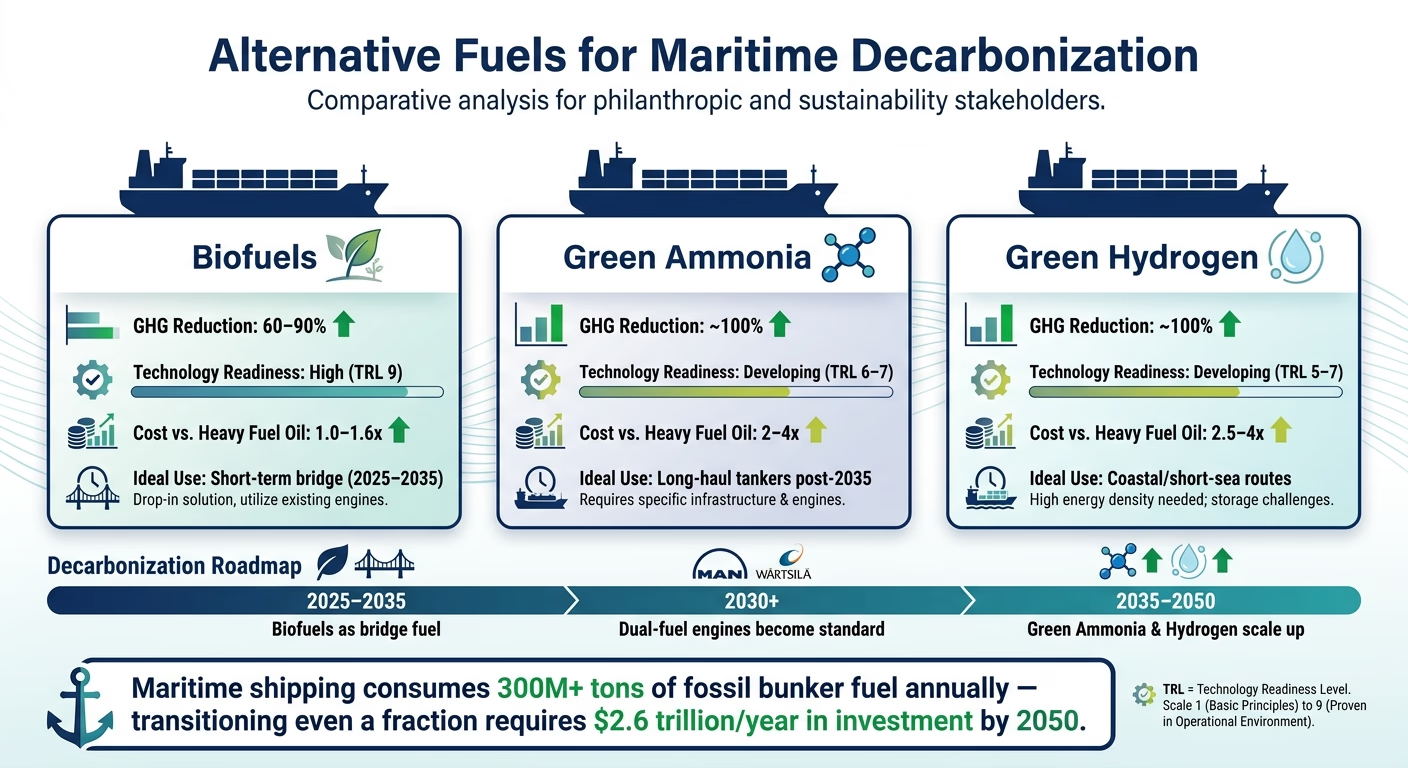
Alternative Fuels for Maritime Decarbonization: Cost, Readiness & Impact
Funding Alternative Fuel Development
Every year, the maritime industry consumes over 300 million tons of fossil-based bunker fuel - a staggering figure that underscores the sector's reliance on traditional energy sources [7]. Transitioning even a portion of this to cleaner fuels requires significant financial backing, and philanthropic foundations are uniquely positioned to help bridge this funding gap.
Alternative fuels for shipping come in two primary forms: bio-derived fuels (like biodiesel, bio-methanol, and renewable natural gas) and synthetic e-fuels (such as green ammonia and e-methanol). Biofuels, while readily available and compatible with existing engines, face challenges such as limited feedstock and competition from other transportation sectors. On the other hand, e-fuels hold greater promise for the future but are hindered by a classic supply-demand dilemma. Producers are hesitant to scale up without committed buyers, while ship operators are reluctant to invest in these fuels without a stable supply [6].
Philanthropic funding can play a transformative role here. By investing in research and development, supporting pilot projects on specific trade routes, and conducting in-depth market analyses, foundations can help overcome these hurdles [3]. Advocacy efforts, such as promoting policies like the U.S. 45Z Clean Fuel Production Credit (which provides tax incentives for low-carbon fuels based on lifecycle emissions), can further encourage adoption [6][7].
"The flexibility of blending in low-carbon alternative fuels will be especially critical given the 30-plus-year operating life of most commercial ships." - John Steelman, Clean Air Task Force [8]
A.P. Moller-Maersk offers a compelling example of industry leadership, having invested in 18 dual-fuel methanol container vessels as part of its commitment to use 15–20% green fuel by 2030 [7]. This type of corporate initiative signals a clear direction for the market, highlighting where early philanthropic support can have the greatest impact.
While alternative fuels are a cornerstone of maritime decarbonization, boosting vessel efficiency and adopting hybrid propulsion systems can further accelerate progress.
Improving Vessel Efficiency and Hybrid Propulsion
Enhancing vessel efficiency offers an immediate way to cut fuel consumption. For instance, reducing ship speeds by 10–30% can lower fuel use by as much as 20–50% [8]. This operational adjustment doesn’t require new technology - just policy incentives and a commitment to change.
Engine manufacturers like MAN and Wärtsilä are also driving innovation, with dual-fuel engines - designed to run on methanol or ammonia alongside traditional fuels - expected to become standard in the near future [8]. Foundations can support this technological shift by funding research into advanced propulsion systems, route optimization software, and hybrid technologies that reduce fuel consumption during low-speed operations and port approaches. Additionally, developing carbon tracking tools to provide verified efficiency data can make retrofitting vessels more appealing to shipowners and financiers [1].
Efficiency upgrades don’t just lower emissions. They also reduce ocean noise pollution and improve air quality in coastal areas, delivering benefits that align with broader environmental and social equity goals many foundations already prioritize [1].
Port emissions, another significant contributor to maritime pollution, represent a complementary area for decarbonization efforts.
Cutting Emissions at Ports
Ports are both major sources of emissions and promising opportunities for targeted decarbonization investments. Diesel-powered equipment like cranes, trucks, and cargo handlers generates significant pollution, affecting both the climate and nearby communities.
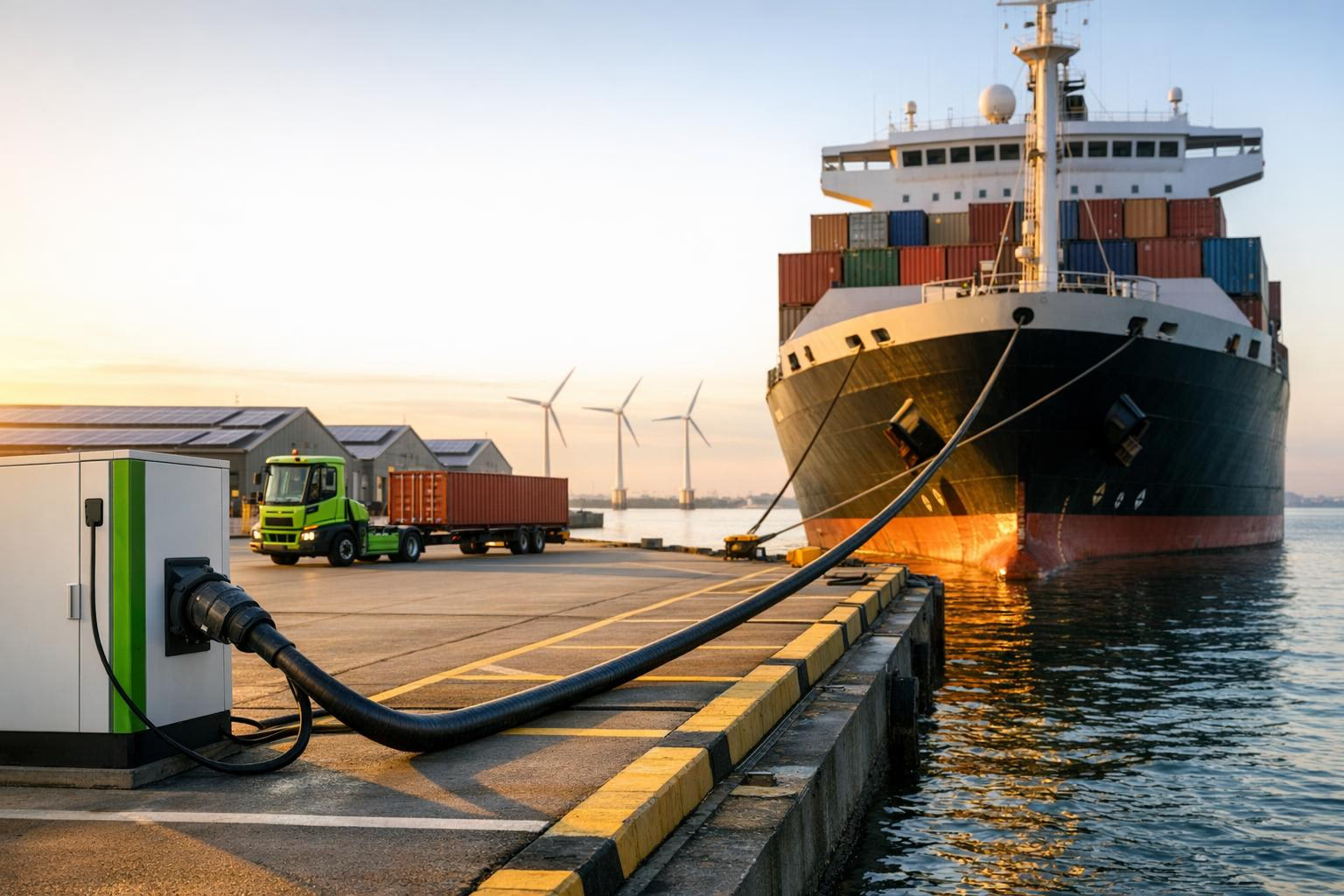
Electrifying port operations and integrating renewable energy can drastically reduce emissions. For example, shore power systems - also known as cold ironing - allow docked vessels to plug into the local electrical grid, eliminating the need to run their engines. Likewise, battery-electric cranes and yard trucks can address equipment-level emissions directly.
The Detroit/Wayne County Port Authority offers a real-world example of this strategy in action. Its 2024 Decarbonization and Air Quality Improvement Plan aims to transition all vessels and port equipment to biodiesel, battery-electric, or hydrogen power by 2040 [7]. Similarly, the ClimateWorks Foundation’s "Ports for People" initiative brings together port authorities, local governments, and community stakeholders to advance zero-emission shipping goals [1]. These efforts show how port decarbonization can address both climate and public health concerns, particularly in communities disproportionately affected by shipping-related pollution.
Building Collaboration and Policy Support for System-Level Change
Decarbonizing maritime shipping is an enormous challenge that no single organization can tackle alone. The industry encompasses a vast network of stakeholders, including ports, vessel owners, fuel suppliers, cargo companies, regulators, and local communities, all operating across different regions and legal systems. Achieving scalable decarbonization requires coordinated efforts across sectors and strategic policy initiatives.
Developing Green Shipping Corridors
Green shipping corridors focus on specific trade routes where stakeholders - ports, carriers, and fuel providers - work together to implement and test low- and zero-emission technologies in real-world scenarios. Instead of attempting to overhaul the global fleet all at once, these corridors narrow the scope to high-visibility routes. This approach allows for testing alternative fuels, measuring outcomes, and building a strong case for broader industry adoption.
"Green corridors simplify this complex challenge by focusing efforts on specific promising routes." - Aspen Institute and Global Maritime Forum Report [1]
Foundations can play a crucial role in facilitating these efforts. By acting as neutral conveners, they bring together key players, such as terminal operators, vessel owners, fuel producers, and cargo companies. They can also support the development of emissions inventories, lifecycle assessment tools, and transparent tracking systems. These foundational efforts help establish trust in the data and create a solid basis for the policy changes needed to expand these initiatives across the sector.
Supporting Policies and Standards for Maritime Decarbonization
Technology alone cannot achieve net-zero shipping; policy provides the necessary framework for systemic change. The International Maritime Organization (IMO) serves as the primary global platform for setting maritime regulations, enabling industry-wide discussions and agreements. These policies work hand-in-hand with technological and operational innovations, creating a unified path for transformation.
Two key policy priorities stand out for philanthropic support: a universal greenhouse gas levy and a Global Fuel Standard. The levy would set a fixed price on shipping emissions, helping to bridge the cost gap between fossil fuels and cleaner e-fuels. Meanwhile, the Global Fuel Standard would mandate a gradual reduction in the carbon intensity of marine fuels through 2050. As Femke Spiegelenberg of the Global Maritime Forum notes:
"Only a universal price on greenhouse gas emissions with targeted rewards for e-fuels can close the price gap."
These mechanisms provide both financial incentives and regulatory pathways for the industry to transition.
A recent example of policy influence occurred in April 2023 when the Climate Emergency Shipping Coalition contributed technical analysis and advocacy during IMO negotiations. This effort led to a majority of member states endorsing a net-zero framework, including a proposed emissions levy and a global fuel standard. IMO Secretary-General Arsenio Dominguez highlighted the significance of this progress:
"This progress represents another significant step in our collective efforts to combat climate change, modernize shipping and demonstrates that IMO delivers on its commitments." [2]
Using Philanthropic Capital to Attract Co-Investment
The financial gap in maritime decarbonization is staggering. Current philanthropic investment in shipping emissions ranges from $16 million to $33 million annually - less than 1% of total climate philanthropy. Meanwhile, the sector requires an estimated $2.6 trillion per year in combined public and private investment to reach net-zero emissions by 2050. Currently, total climate funding for shipping is only about $6 billion annually, representing just 0.2% of what is needed [3].
Philanthropic funding can play a pivotal role by de-risking early-stage projects that may not attract commercial investors. Grants and program-related investments can fund technical analyses, pilot projects, and coalition-building efforts, reducing uncertainty and encouraging private capital to step in. Organizations such as ClimateWorks Foundation and the UN Foundation are already leveraging philanthropic resources to align diplomacy, technical expertise, and stakeholder collaboration across regions [5]. For foundations with limited maritime expertise, partnering with these intermediaries can amplify their impact quickly.
The ultimate aim is not merely to fund individual projects but to create an environment where larger investments feel secure. By reducing initial risks, these collaborative funding models can unlock the resources needed for the operational and technological advancements discussed in subsequent sections.
Tracking Progress and Ensuring a Just Transition
Securing funding and launching pilot projects are important milestones, but the real challenge lies in determining if these initiatives are effective. This requires well-defined metrics and a commitment to equitable outcomes.
Setting Clear Metrics for Decarbonization Progress
To build on earlier discussions around financing and technology, the use of clear, actionable metrics is crucial. These metrics need to capture more than just carbon emissions. For instance, carbon intensity, expressed as grams of CO2 equivalent per deadweight ton per nautical mile (g CO2e/dwt/nm), is a widely recognized standard for measuring how efficiently a vessel transports cargo relative to its emissions [4]. The IMO's Carbon Intensity Indicator (CII) further simplifies this by assigning grades from A to E, enabling foundations to encourage their grantees and shipping partners to prioritize fleets with "A" or "B" ratings [4].
Another critical metric is the fuel mix. Monitoring the share of zero and near-zero emission (ZNZ) fuels in a fleet’s energy consumption reveals whether the transition is gaining traction. For port-based operations, tracking the percentage of electricity used at berth instead of diesel-powered auxiliary engines highlights progress in adopting shore power solutions [4]. Below is a summary of key indicators worth monitoring in a decarbonization portfolio:
Metric Category | Key Performance Indicator |
|---|---|
Climate | Carbon intensity (g CO2e/dwt/nm) |
Vessel Efficiency | IMO CII Grade (A–E) |
Fuel Transition | % of ZNZ fuels in total fuel mix |
Supply Chain | Emissions per TEU per nautical mile |
Community Health | Reduction in diesel particulate matter near ports |
Energy | % of electricity used at berth |
Additionally, foundations must demand full lifecycle emissions reporting for alternative fuels, from production to combustion. For example, while LNG offers lower tailpipe emissions, methane leaks during handling can offset these benefits. Similarly, ammonia poses health risks if not managed properly. Focusing solely on tailpipe emissions ignores these upstream issues [4].
Centering Equity in Maritime Decarbonization
If mishandled, decarbonization efforts can leave vulnerable groups behind. Improving air quality in port communities - often areas with low-income populations and communities of color - must be a priority [9].
"Many of these neighborhoods are low wealth and communities of color, and ports have the responsibility to work with the cargo owners and fleets to support a timely and equitable move toward zero emissions and cleaner air." - Margot Brown, Senior Vice President, Justice & Equity, Environmental Defense Fund [9]
Foundations can integrate equity into their grantmaking by requiring measurable community health outcomes, such as reductions in diesel particulate matter, as part of project deliverables. Aligning with initiatives like the U.S. Justice40 Initiative, which ensures 40% of benefits from certain federal investments go to disadvantaged communities, provides a structured approach for domestic programs [9]. The ClimateWorks Foundation's Ports for People initiative exemplifies this approach by involving port communities, port authorities, and local governments in shaping zero-emission shipping strategies [1].
Workforce development is another essential element. As vessel technologies evolve, seafarers and port workers need retraining to adapt. Including up-skilling programs in decarbonization grants from the outset ensures the transition creates opportunities rather than displacing workers [10][11]. Equity-focused measures help guide the evaluation of scalable decarbonization strategies.
Using Evaluation to Improve and Scale Efforts
Evaluation is not just about accountability; it’s a tool for learning and scaling successful initiatives. Treating green shipping corridors as pilot projects with clear before-and-after data collection provides the evidence needed to attract larger investors and influence policymakers [11]. Rigorous evaluation reduces risk for private investors and informs broader policy decisions.
"A globally equitable transition considers disparities between nations and whether action taken to address climate change would exacerbate or explicitly seek to mitigate them." - UNCTAD (as cited by the Maersk Mc-Kinney Moller Center) [11]
To achieve this, grant agreements should include Scope 1, 2, and 3 emissions reporting from the start, alongside metrics for community health and workforce development. Robust monitoring ensures funds are used effectively and not absorbed into general budgets without impact [10]. When evaluations demonstrate success, foundations can leverage pilot results to attract blended finance partners, moving projects from initial demonstrations to large-scale deployment.
Conclusion: A Practical Roadmap for Maritime Decarbonization
Maritime shipping, responsible for moving about 90% of global trade and producing roughly 3% of worldwide greenhouse gas emissions, stands out as a critical sector in the fight against climate change [1][4]. Addressing this challenge presents both a pressing need and a strategic opportunity.
The path forward is well-defined. Jason Anderson of ClimateWorks Foundation highlights the sector's unique advantage:
"In some ways, maritime shipping isn't that hard to decarbonize. Industries like cement and steel don't have a global regulator, so the IMO gives you a place to have these conversations and a focal point." [1]
This centralized governance through the International Maritime Organization (IMO) provides a platform for coordinated action. Foundations and stakeholders should align around net-zero targets by 2050, with interim milestones set for 2030 and 2040 [4]. Key priorities include supporting binding IMO policies, such as a global fuel standard and emissions pricing mechanisms, while investing in green shipping corridors to test sustainable solutions. Additionally, engaging cargo owners is essential to drive market demand for cleaner practices.
The financial scale of this transition is massive, with an estimated $2.6 trillion per year needed to achieve net-zero shipping by 2050 [3]. While philanthropic funding alone cannot close this gap, it plays a crucial role in reducing risks for early-stage projects, attracting public and private co-investments, and accelerating progress.
Equity considerations must remain at the forefront. Shipping-related air pollution contributes to over 60,000 premature deaths and nearly 2 million cases of childhood asthma annually [5]. Ensuring that the transition prioritizes frontline port communities and climate-vulnerable nations is essential. As ORCA underscores:
"Philanthropy can help accelerate zero-emission fuel adoption, embed just transition principles, and strengthen IMO standards." [5]
This comprehensive approach - combining innovation, policy reform, and equity-focused investments - offers a practical framework for change. By treating strategic funding, policy advocacy, technological advancements, and community accountability as interconnected tools, stakeholders can drive meaningful, measurable progress across the global maritime industry.
FAQs
Where should a foundation start to cut shipping emissions fastest?
Foundations seeking to drive meaningful change in the shipping industry should prioritize policy advocacy both at the national level and within the International Maritime Organization. Backing global regulations, such as emissions pricing and stringent fuel standards, plays a critical role in advancing decarbonization efforts. Another impactful approach is funding green shipping corridors, which create opportunities for zero-emission vessels to operate between key ports. By concentrating on these targeted strategies, foundations can help catalyze significant progress toward reducing emissions across the entire sector.
How can we fund clean marine fuels without picking the wrong winner?
To make meaningful progress in reducing emissions, funding should prioritize technology-neutral strategies and flexible solutions. For instance, dual-fuel ship designs offer adaptability to shifting fuel markets, ensuring vessels remain viable as the energy landscape evolves. It's also crucial to invest in reliable tracking and certification systems to accurately measure and verify the life-cycle carbon intensity of various fuels.
Additionally, financial approaches like blended finance and impact investing can play a key role in supporting energy-saving retrofits and operational efficiency upgrades. These investments not only deliver immediate reductions in emissions but also provide the flexibility to accommodate future advancements in fuel technology.
What metrics prove real carbon, health, and equity impact near ports?
Key metrics to assess environmental and social impacts include Scope 1, 2, and 3 emissions, which provide a comprehensive view of carbon footprints. For the shipping industry, fleet-level carbon intensity (measured in gCO2/dwt/nm) and vessel-specific Carbon Intensity Indicator (CII) ratings are crucial for evaluating carbon emissions.
Health impacts are monitored by measuring air pollutants such as particulate matter (PM), nitrogen oxides (NOx), sulfur oxides (SOx), carbon monoxide (CO), and hydrocarbons (HC). These pollutants directly affect air quality and public health, especially in areas near ports.
Equity impacts are analyzed through health-related outcomes in nearby communities. Key indicators include childhood asthma rates, hospital visits, and the likelihood of reduced cancer risks. These metrics highlight the importance of addressing environmental justice for populations most affected by port operations.
Related Blog Posts
How to Build a Climate-Ready Energy & Water Infrastructure Plan for Maritime & Logistics Companies
How to Decarbonize Maritime Operations and Supply Chains for Municipalities & Government Agencies
How to Decarbonize Maritime Operations and Supply Chains for Corporations
How to Decarbonize Maritime Operations and Supply Chains for NGOs & Nonprofits
Latest Articles
©2026

Narrative Change and Power Building: The Missing Half of Advocacy
Narrative change is the process of disrupting dominant narratives that normalize inequity and advancing new narratives from historically marginalized communities.

Funding Resilience Without Federal Grants
BRIC is unreliable and FEMA is shrinking. Here's how cities fund climate resilience with dedicated revenue, blended finance, and a coordinating authority.

The ESG Blind Spot: How AI Is Finding Risks in Companies Nobody Else Is Watching
Norway's sovereign wealth fund uses AI to screen 7,200 portfolio companies for forced labor and corruption within 24 hours. The real story is the emerging-market coverage gap that traditional ESG data vendors miss — and what it means for any company with a global supply chain.
Narrative Change and Power Building: The Missing Half of Advocacy
Narrative change is the process of disrupting dominant narratives that normalize inequity and advancing new narratives from historically marginalized communities.
Funding Resilience Without Federal Grants
BRIC is unreliable and FEMA is shrinking. Here's how cities fund climate resilience with dedicated revenue, blended finance, and a coordinating authority.
The ESG Blind Spot: How AI Is Finding Risks in Companies Nobody Else Is Watching
Norway's sovereign wealth fund uses AI to screen 7,200 portfolio companies for forced labor and corruption within 24 hours. The real story is the emerging-market coverage gap that traditional ESG data vendors miss — and what it means for any company with a global supply chain.
FAQ
01
What does it really mean to “redefine profit”?
02
What makes Council Fire different?
03
Who does Council Fire work with?
04
What does working with Council Fire actually look like?
05
How does Council Fire help organizations turn big goals into action?
06
How does Council Fire define and measure success?
07
How does technology fit into Council Fire’s work?
Jun 10, 2026
How to Decarbonize Maritime Operations and Supply Chains for Foundations & Philanthropic Organizations
Sustainability Strategy
In This Article
Foundations can drive maritime decarbonization by funding clean fuels, electrifying ports, backing IMO policy, and centering equity.
How to Decarbonize Maritime Operations and Supply Chains for Foundations & Philanthropic Organizations
Maritime shipping, responsible for transporting 90% of global trade, emits approximately 3% of worldwide greenhouse gases annually - comparable to the aviation industry. Without intervention, these emissions could increase by 40% by 2050. This pollution also causes over 60,000 premature deaths and nearly 2 million cases of childhood asthma each year, disproportionately affecting port communities.
Philanthropic organizations have a unique opportunity to address this challenge by funding low-carbon technologies, supporting policy advocacy, and promoting equity-focused initiatives. Key strategies include:
Investing in Alternative Fuels: Support development of biofuels, green ammonia, and hydrogen to reduce emissions from deep-sea vessels.
Electrifying Ports: Fund shore power systems and zero-emission cargo handling equipment to cut port-related emissions.
Advocating for Global Policies: Push for an emissions levy and a Global Fuel Standard through the International Maritime Organization (IMO).
Building Green Shipping Corridors: Focus on specific trade routes to pilot clean technologies and foster collaboration.
Prioritizing Equity: Improve air quality in port communities and ensure workforce retraining for a fair transition.
Although the maritime sector requires $2.6 trillion annually to achieve net-zero emissions by 2050, philanthropic funding - currently less than 1% of climate philanthropy - can play a critical role in reducing risks for early projects and attracting larger investments. By aligning funding with clear metrics and equitable outcomes, foundations can drive impactful change in this essential industry.
Understanding Maritime Emissions and Where to Act
Mapping the Sources of Maritime Emissions
Maritime emissions stem from every phase of the shipping process, starting when a vessel departs port and continuing until goods reach their final destination. To direct philanthropic resources effectively, it’s crucial to grasp this entire emissions landscape.
These emissions are classified into three categories. Scope 1 covers direct emissions, such as those from fuel burned by ships and port equipment. Scope 2 includes indirect emissions, like those from purchased electricity used in port operations. Scope 3, often the largest and most overlooked category, accounts for upstream and downstream activities - shipbuilding, cargo handling, and the trucking or rail transport that moves goods inland. Notably, over 90% of a brand's carbon footprint typically lies in these upstream and downstream processes [5].
Fuel combustion at sea is the primary contributor. The majority of ships rely on heavy fuel oil (HFO), a highly carbon-intensive byproduct of oil refining. Burning HFO not only produces CO₂ but also releases harmful pollutants like sulfur oxides, nitrogen oxides, and fine particulate matter, which disproportionately affect port communities. Additionally, vessel construction has a significant emissions impact; steel, which makes up 75–80% of a ship's weight, is responsible for 7–9% of global greenhouse gas emissions due to its energy-intensive production process.
By mapping these sources, it becomes easier to pinpoint the areas with the highest potential for reducing emissions.
Prioritizing High-Impact Areas for Decarbonization
From the emissions breakdown, three focus areas emerge as critical for decarbonization: deep-sea vessel propulsion, port electrification, and global policy advocacy.
Deep-sea vessels, including bulk carriers, container ships, and tankers, are the largest emitters of maritime greenhouse gases. Decarbonizing these ships is particularly challenging because their long voyages demand energy-dense fuels. This is where philanthropic funding can play a key role by supporting early-stage development of alternative fuel technologies, paving the way for private investment later. The table below highlights key alternative fuels and their potential:
Fuel Type | GHG Reduction | Technology Readiness | Cost (vs. HFO) | Ideal Use |
|---|---|---|---|---|
Biofuels | 60–90% | High (TRL 9) | 1.0–1.6x | Short-term bridge (2025–2035) |
Green Ammonia | ~100% | Developing (TRL 6–7) | 2–4x | Long-haul tankers post-2035 |
Green Hydrogen | ~100% | Developing (TRL 5–7) | 2.5–4x | Coastal/short-sea routes |
Equity concerns should also guide decision-making. Port communities - often low-income and communities of color - bear a disproportionate health burden from shipping-related pollution. Investments in port electrification and zero-emission cargo handling can tackle both climate change and public health issues, offering some of the highest returns for philanthropic funding [5].
Lastly, the International Maritime Organization (IMO) presents a unique opportunity for large-scale impact through policy advocacy. As the sole global regulator for maritime shipping, the IMO provides a centralized platform for driving change. Jason Anderson of ClimateWorks Foundation explains:
"In some ways, maritime shipping isn't that hard to decarbonize... the IMO gives you a place to have these conversations and a focal point." [1]
Supporting independent technical research and aiding climate-vulnerable nations in IMO negotiations can help shift global standards, achieving outcomes that individual private investments cannot.
How is the shipping industry doing on decarbonisation?
Low-Carbon Technologies for Maritime Operations
Alternative Fuels for Maritime Decarbonization: Cost, Readiness & Impact
Funding Alternative Fuel Development
Every year, the maritime industry consumes over 300 million tons of fossil-based bunker fuel - a staggering figure that underscores the sector's reliance on traditional energy sources [7]. Transitioning even a portion of this to cleaner fuels requires significant financial backing, and philanthropic foundations are uniquely positioned to help bridge this funding gap.
Alternative fuels for shipping come in two primary forms: bio-derived fuels (like biodiesel, bio-methanol, and renewable natural gas) and synthetic e-fuels (such as green ammonia and e-methanol). Biofuels, while readily available and compatible with existing engines, face challenges such as limited feedstock and competition from other transportation sectors. On the other hand, e-fuels hold greater promise for the future but are hindered by a classic supply-demand dilemma. Producers are hesitant to scale up without committed buyers, while ship operators are reluctant to invest in these fuels without a stable supply [6].
Philanthropic funding can play a transformative role here. By investing in research and development, supporting pilot projects on specific trade routes, and conducting in-depth market analyses, foundations can help overcome these hurdles [3]. Advocacy efforts, such as promoting policies like the U.S. 45Z Clean Fuel Production Credit (which provides tax incentives for low-carbon fuels based on lifecycle emissions), can further encourage adoption [6][7].
"The flexibility of blending in low-carbon alternative fuels will be especially critical given the 30-plus-year operating life of most commercial ships." - John Steelman, Clean Air Task Force [8]
A.P. Moller-Maersk offers a compelling example of industry leadership, having invested in 18 dual-fuel methanol container vessels as part of its commitment to use 15–20% green fuel by 2030 [7]. This type of corporate initiative signals a clear direction for the market, highlighting where early philanthropic support can have the greatest impact.
While alternative fuels are a cornerstone of maritime decarbonization, boosting vessel efficiency and adopting hybrid propulsion systems can further accelerate progress.
Improving Vessel Efficiency and Hybrid Propulsion
Enhancing vessel efficiency offers an immediate way to cut fuel consumption. For instance, reducing ship speeds by 10–30% can lower fuel use by as much as 20–50% [8]. This operational adjustment doesn’t require new technology - just policy incentives and a commitment to change.
Engine manufacturers like MAN and Wärtsilä are also driving innovation, with dual-fuel engines - designed to run on methanol or ammonia alongside traditional fuels - expected to become standard in the near future [8]. Foundations can support this technological shift by funding research into advanced propulsion systems, route optimization software, and hybrid technologies that reduce fuel consumption during low-speed operations and port approaches. Additionally, developing carbon tracking tools to provide verified efficiency data can make retrofitting vessels more appealing to shipowners and financiers [1].
Efficiency upgrades don’t just lower emissions. They also reduce ocean noise pollution and improve air quality in coastal areas, delivering benefits that align with broader environmental and social equity goals many foundations already prioritize [1].
Port emissions, another significant contributor to maritime pollution, represent a complementary area for decarbonization efforts.
Cutting Emissions at Ports
Ports are both major sources of emissions and promising opportunities for targeted decarbonization investments. Diesel-powered equipment like cranes, trucks, and cargo handlers generates significant pollution, affecting both the climate and nearby communities.
Electrifying port operations and integrating renewable energy can drastically reduce emissions. For example, shore power systems - also known as cold ironing - allow docked vessels to plug into the local electrical grid, eliminating the need to run their engines. Likewise, battery-electric cranes and yard trucks can address equipment-level emissions directly.
The Detroit/Wayne County Port Authority offers a real-world example of this strategy in action. Its 2024 Decarbonization and Air Quality Improvement Plan aims to transition all vessels and port equipment to biodiesel, battery-electric, or hydrogen power by 2040 [7]. Similarly, the ClimateWorks Foundation’s "Ports for People" initiative brings together port authorities, local governments, and community stakeholders to advance zero-emission shipping goals [1]. These efforts show how port decarbonization can address both climate and public health concerns, particularly in communities disproportionately affected by shipping-related pollution.
Building Collaboration and Policy Support for System-Level Change
Decarbonizing maritime shipping is an enormous challenge that no single organization can tackle alone. The industry encompasses a vast network of stakeholders, including ports, vessel owners, fuel suppliers, cargo companies, regulators, and local communities, all operating across different regions and legal systems. Achieving scalable decarbonization requires coordinated efforts across sectors and strategic policy initiatives.
Developing Green Shipping Corridors
Green shipping corridors focus on specific trade routes where stakeholders - ports, carriers, and fuel providers - work together to implement and test low- and zero-emission technologies in real-world scenarios. Instead of attempting to overhaul the global fleet all at once, these corridors narrow the scope to high-visibility routes. This approach allows for testing alternative fuels, measuring outcomes, and building a strong case for broader industry adoption.
"Green corridors simplify this complex challenge by focusing efforts on specific promising routes." - Aspen Institute and Global Maritime Forum Report [1]
Foundations can play a crucial role in facilitating these efforts. By acting as neutral conveners, they bring together key players, such as terminal operators, vessel owners, fuel producers, and cargo companies. They can also support the development of emissions inventories, lifecycle assessment tools, and transparent tracking systems. These foundational efforts help establish trust in the data and create a solid basis for the policy changes needed to expand these initiatives across the sector.
Supporting Policies and Standards for Maritime Decarbonization
Technology alone cannot achieve net-zero shipping; policy provides the necessary framework for systemic change. The International Maritime Organization (IMO) serves as the primary global platform for setting maritime regulations, enabling industry-wide discussions and agreements. These policies work hand-in-hand with technological and operational innovations, creating a unified path for transformation.
Two key policy priorities stand out for philanthropic support: a universal greenhouse gas levy and a Global Fuel Standard. The levy would set a fixed price on shipping emissions, helping to bridge the cost gap between fossil fuels and cleaner e-fuels. Meanwhile, the Global Fuel Standard would mandate a gradual reduction in the carbon intensity of marine fuels through 2050. As Femke Spiegelenberg of the Global Maritime Forum notes:
"Only a universal price on greenhouse gas emissions with targeted rewards for e-fuels can close the price gap."
These mechanisms provide both financial incentives and regulatory pathways for the industry to transition.
A recent example of policy influence occurred in April 2023 when the Climate Emergency Shipping Coalition contributed technical analysis and advocacy during IMO negotiations. This effort led to a majority of member states endorsing a net-zero framework, including a proposed emissions levy and a global fuel standard. IMO Secretary-General Arsenio Dominguez highlighted the significance of this progress:
"This progress represents another significant step in our collective efforts to combat climate change, modernize shipping and demonstrates that IMO delivers on its commitments." [2]
Using Philanthropic Capital to Attract Co-Investment
The financial gap in maritime decarbonization is staggering. Current philanthropic investment in shipping emissions ranges from $16 million to $33 million annually - less than 1% of total climate philanthropy. Meanwhile, the sector requires an estimated $2.6 trillion per year in combined public and private investment to reach net-zero emissions by 2050. Currently, total climate funding for shipping is only about $6 billion annually, representing just 0.2% of what is needed [3].
Philanthropic funding can play a pivotal role by de-risking early-stage projects that may not attract commercial investors. Grants and program-related investments can fund technical analyses, pilot projects, and coalition-building efforts, reducing uncertainty and encouraging private capital to step in. Organizations such as ClimateWorks Foundation and the UN Foundation are already leveraging philanthropic resources to align diplomacy, technical expertise, and stakeholder collaboration across regions [5]. For foundations with limited maritime expertise, partnering with these intermediaries can amplify their impact quickly.
The ultimate aim is not merely to fund individual projects but to create an environment where larger investments feel secure. By reducing initial risks, these collaborative funding models can unlock the resources needed for the operational and technological advancements discussed in subsequent sections.
Tracking Progress and Ensuring a Just Transition
Securing funding and launching pilot projects are important milestones, but the real challenge lies in determining if these initiatives are effective. This requires well-defined metrics and a commitment to equitable outcomes.
Setting Clear Metrics for Decarbonization Progress
To build on earlier discussions around financing and technology, the use of clear, actionable metrics is crucial. These metrics need to capture more than just carbon emissions. For instance, carbon intensity, expressed as grams of CO2 equivalent per deadweight ton per nautical mile (g CO2e/dwt/nm), is a widely recognized standard for measuring how efficiently a vessel transports cargo relative to its emissions [4]. The IMO's Carbon Intensity Indicator (CII) further simplifies this by assigning grades from A to E, enabling foundations to encourage their grantees and shipping partners to prioritize fleets with "A" or "B" ratings [4].
Another critical metric is the fuel mix. Monitoring the share of zero and near-zero emission (ZNZ) fuels in a fleet’s energy consumption reveals whether the transition is gaining traction. For port-based operations, tracking the percentage of electricity used at berth instead of diesel-powered auxiliary engines highlights progress in adopting shore power solutions [4]. Below is a summary of key indicators worth monitoring in a decarbonization portfolio:
Metric Category | Key Performance Indicator |
|---|---|
Climate | Carbon intensity (g CO2e/dwt/nm) |
Vessel Efficiency | IMO CII Grade (A–E) |
Fuel Transition | % of ZNZ fuels in total fuel mix |
Supply Chain | Emissions per TEU per nautical mile |
Community Health | Reduction in diesel particulate matter near ports |
Energy | % of electricity used at berth |
Additionally, foundations must demand full lifecycle emissions reporting for alternative fuels, from production to combustion. For example, while LNG offers lower tailpipe emissions, methane leaks during handling can offset these benefits. Similarly, ammonia poses health risks if not managed properly. Focusing solely on tailpipe emissions ignores these upstream issues [4].
Centering Equity in Maritime Decarbonization
If mishandled, decarbonization efforts can leave vulnerable groups behind. Improving air quality in port communities - often areas with low-income populations and communities of color - must be a priority [9].
"Many of these neighborhoods are low wealth and communities of color, and ports have the responsibility to work with the cargo owners and fleets to support a timely and equitable move toward zero emissions and cleaner air." - Margot Brown, Senior Vice President, Justice & Equity, Environmental Defense Fund [9]
Foundations can integrate equity into their grantmaking by requiring measurable community health outcomes, such as reductions in diesel particulate matter, as part of project deliverables. Aligning with initiatives like the U.S. Justice40 Initiative, which ensures 40% of benefits from certain federal investments go to disadvantaged communities, provides a structured approach for domestic programs [9]. The ClimateWorks Foundation's Ports for People initiative exemplifies this approach by involving port communities, port authorities, and local governments in shaping zero-emission shipping strategies [1].
Workforce development is another essential element. As vessel technologies evolve, seafarers and port workers need retraining to adapt. Including up-skilling programs in decarbonization grants from the outset ensures the transition creates opportunities rather than displacing workers [10][11]. Equity-focused measures help guide the evaluation of scalable decarbonization strategies.
Using Evaluation to Improve and Scale Efforts
Evaluation is not just about accountability; it’s a tool for learning and scaling successful initiatives. Treating green shipping corridors as pilot projects with clear before-and-after data collection provides the evidence needed to attract larger investors and influence policymakers [11]. Rigorous evaluation reduces risk for private investors and informs broader policy decisions.
"A globally equitable transition considers disparities between nations and whether action taken to address climate change would exacerbate or explicitly seek to mitigate them." - UNCTAD (as cited by the Maersk Mc-Kinney Moller Center) [11]
To achieve this, grant agreements should include Scope 1, 2, and 3 emissions reporting from the start, alongside metrics for community health and workforce development. Robust monitoring ensures funds are used effectively and not absorbed into general budgets without impact [10]. When evaluations demonstrate success, foundations can leverage pilot results to attract blended finance partners, moving projects from initial demonstrations to large-scale deployment.
Conclusion: A Practical Roadmap for Maritime Decarbonization
Maritime shipping, responsible for moving about 90% of global trade and producing roughly 3% of worldwide greenhouse gas emissions, stands out as a critical sector in the fight against climate change [1][4]. Addressing this challenge presents both a pressing need and a strategic opportunity.
The path forward is well-defined. Jason Anderson of ClimateWorks Foundation highlights the sector's unique advantage:
"In some ways, maritime shipping isn't that hard to decarbonize. Industries like cement and steel don't have a global regulator, so the IMO gives you a place to have these conversations and a focal point." [1]
This centralized governance through the International Maritime Organization (IMO) provides a platform for coordinated action. Foundations and stakeholders should align around net-zero targets by 2050, with interim milestones set for 2030 and 2040 [4]. Key priorities include supporting binding IMO policies, such as a global fuel standard and emissions pricing mechanisms, while investing in green shipping corridors to test sustainable solutions. Additionally, engaging cargo owners is essential to drive market demand for cleaner practices.
The financial scale of this transition is massive, with an estimated $2.6 trillion per year needed to achieve net-zero shipping by 2050 [3]. While philanthropic funding alone cannot close this gap, it plays a crucial role in reducing risks for early-stage projects, attracting public and private co-investments, and accelerating progress.
Equity considerations must remain at the forefront. Shipping-related air pollution contributes to over 60,000 premature deaths and nearly 2 million cases of childhood asthma annually [5]. Ensuring that the transition prioritizes frontline port communities and climate-vulnerable nations is essential. As ORCA underscores:
"Philanthropy can help accelerate zero-emission fuel adoption, embed just transition principles, and strengthen IMO standards." [5]
This comprehensive approach - combining innovation, policy reform, and equity-focused investments - offers a practical framework for change. By treating strategic funding, policy advocacy, technological advancements, and community accountability as interconnected tools, stakeholders can drive meaningful, measurable progress across the global maritime industry.
FAQs
Where should a foundation start to cut shipping emissions fastest?
Foundations seeking to drive meaningful change in the shipping industry should prioritize policy advocacy both at the national level and within the International Maritime Organization. Backing global regulations, such as emissions pricing and stringent fuel standards, plays a critical role in advancing decarbonization efforts. Another impactful approach is funding green shipping corridors, which create opportunities for zero-emission vessels to operate between key ports. By concentrating on these targeted strategies, foundations can help catalyze significant progress toward reducing emissions across the entire sector.
How can we fund clean marine fuels without picking the wrong winner?
To make meaningful progress in reducing emissions, funding should prioritize technology-neutral strategies and flexible solutions. For instance, dual-fuel ship designs offer adaptability to shifting fuel markets, ensuring vessels remain viable as the energy landscape evolves. It's also crucial to invest in reliable tracking and certification systems to accurately measure and verify the life-cycle carbon intensity of various fuels.
Additionally, financial approaches like blended finance and impact investing can play a key role in supporting energy-saving retrofits and operational efficiency upgrades. These investments not only deliver immediate reductions in emissions but also provide the flexibility to accommodate future advancements in fuel technology.
What metrics prove real carbon, health, and equity impact near ports?
Key metrics to assess environmental and social impacts include Scope 1, 2, and 3 emissions, which provide a comprehensive view of carbon footprints. For the shipping industry, fleet-level carbon intensity (measured in gCO2/dwt/nm) and vessel-specific Carbon Intensity Indicator (CII) ratings are crucial for evaluating carbon emissions.
Health impacts are monitored by measuring air pollutants such as particulate matter (PM), nitrogen oxides (NOx), sulfur oxides (SOx), carbon monoxide (CO), and hydrocarbons (HC). These pollutants directly affect air quality and public health, especially in areas near ports.
Equity impacts are analyzed through health-related outcomes in nearby communities. Key indicators include childhood asthma rates, hospital visits, and the likelihood of reduced cancer risks. These metrics highlight the importance of addressing environmental justice for populations most affected by port operations.
Related Blog Posts
How to Build a Climate-Ready Energy & Water Infrastructure Plan for Maritime & Logistics Companies
How to Decarbonize Maritime Operations and Supply Chains for Municipalities & Government Agencies
How to Decarbonize Maritime Operations and Supply Chains for Corporations
How to Decarbonize Maritime Operations and Supply Chains for NGOs & Nonprofits
Latest Articles
©2026
Narrative Change and Power Building: The Missing Half of Advocacy
Narrative change is the process of disrupting dominant narratives that normalize inequity and advancing new narratives from historically marginalized communities.
Funding Resilience Without Federal Grants
BRIC is unreliable and FEMA is shrinking. Here's how cities fund climate resilience with dedicated revenue, blended finance, and a coordinating authority.
The ESG Blind Spot: How AI Is Finding Risks in Companies Nobody Else Is Watching
Norway's sovereign wealth fund uses AI to screen 7,200 portfolio companies for forced labor and corruption within 24 hours. The real story is the emerging-market coverage gap that traditional ESG data vendors miss — and what it means for any company with a global supply chain.
FAQ
01
What does it really mean to “redefine profit”?
02
What makes Council Fire different?
03
Who does Council Fire work with?
04
What does working with Council Fire actually look like?
05
How does Council Fire help organizations turn big goals into action?
06
How does Council Fire define and measure success?
07
How does technology fit into Council Fire’s work?
Jun 10, 2026
How to Decarbonize Maritime Operations and Supply Chains for Foundations & Philanthropic Organizations
Sustainability Strategy
In This Article
Foundations can drive maritime decarbonization by funding clean fuels, electrifying ports, backing IMO policy, and centering equity.
How to Decarbonize Maritime Operations and Supply Chains for Foundations & Philanthropic Organizations
Maritime shipping, responsible for transporting 90% of global trade, emits approximately 3% of worldwide greenhouse gases annually - comparable to the aviation industry. Without intervention, these emissions could increase by 40% by 2050. This pollution also causes over 60,000 premature deaths and nearly 2 million cases of childhood asthma each year, disproportionately affecting port communities.
Philanthropic organizations have a unique opportunity to address this challenge by funding low-carbon technologies, supporting policy advocacy, and promoting equity-focused initiatives. Key strategies include:
Investing in Alternative Fuels: Support development of biofuels, green ammonia, and hydrogen to reduce emissions from deep-sea vessels.
Electrifying Ports: Fund shore power systems and zero-emission cargo handling equipment to cut port-related emissions.
Advocating for Global Policies: Push for an emissions levy and a Global Fuel Standard through the International Maritime Organization (IMO).
Building Green Shipping Corridors: Focus on specific trade routes to pilot clean technologies and foster collaboration.
Prioritizing Equity: Improve air quality in port communities and ensure workforce retraining for a fair transition.
Although the maritime sector requires $2.6 trillion annually to achieve net-zero emissions by 2050, philanthropic funding - currently less than 1% of climate philanthropy - can play a critical role in reducing risks for early projects and attracting larger investments. By aligning funding with clear metrics and equitable outcomes, foundations can drive impactful change in this essential industry.
Understanding Maritime Emissions and Where to Act
Mapping the Sources of Maritime Emissions
Maritime emissions stem from every phase of the shipping process, starting when a vessel departs port and continuing until goods reach their final destination. To direct philanthropic resources effectively, it’s crucial to grasp this entire emissions landscape.
These emissions are classified into three categories. Scope 1 covers direct emissions, such as those from fuel burned by ships and port equipment. Scope 2 includes indirect emissions, like those from purchased electricity used in port operations. Scope 3, often the largest and most overlooked category, accounts for upstream and downstream activities - shipbuilding, cargo handling, and the trucking or rail transport that moves goods inland. Notably, over 90% of a brand's carbon footprint typically lies in these upstream and downstream processes [5].
Fuel combustion at sea is the primary contributor. The majority of ships rely on heavy fuel oil (HFO), a highly carbon-intensive byproduct of oil refining. Burning HFO not only produces CO₂ but also releases harmful pollutants like sulfur oxides, nitrogen oxides, and fine particulate matter, which disproportionately affect port communities. Additionally, vessel construction has a significant emissions impact; steel, which makes up 75–80% of a ship's weight, is responsible for 7–9% of global greenhouse gas emissions due to its energy-intensive production process.
By mapping these sources, it becomes easier to pinpoint the areas with the highest potential for reducing emissions.
Prioritizing High-Impact Areas for Decarbonization
From the emissions breakdown, three focus areas emerge as critical for decarbonization: deep-sea vessel propulsion, port electrification, and global policy advocacy.
Deep-sea vessels, including bulk carriers, container ships, and tankers, are the largest emitters of maritime greenhouse gases. Decarbonizing these ships is particularly challenging because their long voyages demand energy-dense fuels. This is where philanthropic funding can play a key role by supporting early-stage development of alternative fuel technologies, paving the way for private investment later. The table below highlights key alternative fuels and their potential:
Fuel Type | GHG Reduction | Technology Readiness | Cost (vs. HFO) | Ideal Use |
|---|---|---|---|---|
Biofuels | 60–90% | High (TRL 9) | 1.0–1.6x | Short-term bridge (2025–2035) |
Green Ammonia | ~100% | Developing (TRL 6–7) | 2–4x | Long-haul tankers post-2035 |
Green Hydrogen | ~100% | Developing (TRL 5–7) | 2.5–4x | Coastal/short-sea routes |
Equity concerns should also guide decision-making. Port communities - often low-income and communities of color - bear a disproportionate health burden from shipping-related pollution. Investments in port electrification and zero-emission cargo handling can tackle both climate change and public health issues, offering some of the highest returns for philanthropic funding [5].
Lastly, the International Maritime Organization (IMO) presents a unique opportunity for large-scale impact through policy advocacy. As the sole global regulator for maritime shipping, the IMO provides a centralized platform for driving change. Jason Anderson of ClimateWorks Foundation explains:
"In some ways, maritime shipping isn't that hard to decarbonize... the IMO gives you a place to have these conversations and a focal point." [1]
Supporting independent technical research and aiding climate-vulnerable nations in IMO negotiations can help shift global standards, achieving outcomes that individual private investments cannot.
How is the shipping industry doing on decarbonisation?
Low-Carbon Technologies for Maritime Operations
Alternative Fuels for Maritime Decarbonization: Cost, Readiness & Impact
Funding Alternative Fuel Development
Every year, the maritime industry consumes over 300 million tons of fossil-based bunker fuel - a staggering figure that underscores the sector's reliance on traditional energy sources [7]. Transitioning even a portion of this to cleaner fuels requires significant financial backing, and philanthropic foundations are uniquely positioned to help bridge this funding gap.
Alternative fuels for shipping come in two primary forms: bio-derived fuels (like biodiesel, bio-methanol, and renewable natural gas) and synthetic e-fuels (such as green ammonia and e-methanol). Biofuels, while readily available and compatible with existing engines, face challenges such as limited feedstock and competition from other transportation sectors. On the other hand, e-fuels hold greater promise for the future but are hindered by a classic supply-demand dilemma. Producers are hesitant to scale up without committed buyers, while ship operators are reluctant to invest in these fuels without a stable supply [6].
Philanthropic funding can play a transformative role here. By investing in research and development, supporting pilot projects on specific trade routes, and conducting in-depth market analyses, foundations can help overcome these hurdles [3]. Advocacy efforts, such as promoting policies like the U.S. 45Z Clean Fuel Production Credit (which provides tax incentives for low-carbon fuels based on lifecycle emissions), can further encourage adoption [6][7].
"The flexibility of blending in low-carbon alternative fuels will be especially critical given the 30-plus-year operating life of most commercial ships." - John Steelman, Clean Air Task Force [8]
A.P. Moller-Maersk offers a compelling example of industry leadership, having invested in 18 dual-fuel methanol container vessels as part of its commitment to use 15–20% green fuel by 2030 [7]. This type of corporate initiative signals a clear direction for the market, highlighting where early philanthropic support can have the greatest impact.
While alternative fuels are a cornerstone of maritime decarbonization, boosting vessel efficiency and adopting hybrid propulsion systems can further accelerate progress.
Improving Vessel Efficiency and Hybrid Propulsion
Enhancing vessel efficiency offers an immediate way to cut fuel consumption. For instance, reducing ship speeds by 10–30% can lower fuel use by as much as 20–50% [8]. This operational adjustment doesn’t require new technology - just policy incentives and a commitment to change.
Engine manufacturers like MAN and Wärtsilä are also driving innovation, with dual-fuel engines - designed to run on methanol or ammonia alongside traditional fuels - expected to become standard in the near future [8]. Foundations can support this technological shift by funding research into advanced propulsion systems, route optimization software, and hybrid technologies that reduce fuel consumption during low-speed operations and port approaches. Additionally, developing carbon tracking tools to provide verified efficiency data can make retrofitting vessels more appealing to shipowners and financiers [1].
Efficiency upgrades don’t just lower emissions. They also reduce ocean noise pollution and improve air quality in coastal areas, delivering benefits that align with broader environmental and social equity goals many foundations already prioritize [1].
Port emissions, another significant contributor to maritime pollution, represent a complementary area for decarbonization efforts.
Cutting Emissions at Ports
Ports are both major sources of emissions and promising opportunities for targeted decarbonization investments. Diesel-powered equipment like cranes, trucks, and cargo handlers generates significant pollution, affecting both the climate and nearby communities.
Electrifying port operations and integrating renewable energy can drastically reduce emissions. For example, shore power systems - also known as cold ironing - allow docked vessels to plug into the local electrical grid, eliminating the need to run their engines. Likewise, battery-electric cranes and yard trucks can address equipment-level emissions directly.
The Detroit/Wayne County Port Authority offers a real-world example of this strategy in action. Its 2024 Decarbonization and Air Quality Improvement Plan aims to transition all vessels and port equipment to biodiesel, battery-electric, or hydrogen power by 2040 [7]. Similarly, the ClimateWorks Foundation’s "Ports for People" initiative brings together port authorities, local governments, and community stakeholders to advance zero-emission shipping goals [1]. These efforts show how port decarbonization can address both climate and public health concerns, particularly in communities disproportionately affected by shipping-related pollution.
Building Collaboration and Policy Support for System-Level Change
Decarbonizing maritime shipping is an enormous challenge that no single organization can tackle alone. The industry encompasses a vast network of stakeholders, including ports, vessel owners, fuel suppliers, cargo companies, regulators, and local communities, all operating across different regions and legal systems. Achieving scalable decarbonization requires coordinated efforts across sectors and strategic policy initiatives.
Developing Green Shipping Corridors
Green shipping corridors focus on specific trade routes where stakeholders - ports, carriers, and fuel providers - work together to implement and test low- and zero-emission technologies in real-world scenarios. Instead of attempting to overhaul the global fleet all at once, these corridors narrow the scope to high-visibility routes. This approach allows for testing alternative fuels, measuring outcomes, and building a strong case for broader industry adoption.
"Green corridors simplify this complex challenge by focusing efforts on specific promising routes." - Aspen Institute and Global Maritime Forum Report [1]
Foundations can play a crucial role in facilitating these efforts. By acting as neutral conveners, they bring together key players, such as terminal operators, vessel owners, fuel producers, and cargo companies. They can also support the development of emissions inventories, lifecycle assessment tools, and transparent tracking systems. These foundational efforts help establish trust in the data and create a solid basis for the policy changes needed to expand these initiatives across the sector.
Supporting Policies and Standards for Maritime Decarbonization
Technology alone cannot achieve net-zero shipping; policy provides the necessary framework for systemic change. The International Maritime Organization (IMO) serves as the primary global platform for setting maritime regulations, enabling industry-wide discussions and agreements. These policies work hand-in-hand with technological and operational innovations, creating a unified path for transformation.
Two key policy priorities stand out for philanthropic support: a universal greenhouse gas levy and a Global Fuel Standard. The levy would set a fixed price on shipping emissions, helping to bridge the cost gap between fossil fuels and cleaner e-fuels. Meanwhile, the Global Fuel Standard would mandate a gradual reduction in the carbon intensity of marine fuels through 2050. As Femke Spiegelenberg of the Global Maritime Forum notes:
"Only a universal price on greenhouse gas emissions with targeted rewards for e-fuels can close the price gap."
These mechanisms provide both financial incentives and regulatory pathways for the industry to transition.
A recent example of policy influence occurred in April 2023 when the Climate Emergency Shipping Coalition contributed technical analysis and advocacy during IMO negotiations. This effort led to a majority of member states endorsing a net-zero framework, including a proposed emissions levy and a global fuel standard. IMO Secretary-General Arsenio Dominguez highlighted the significance of this progress:
"This progress represents another significant step in our collective efforts to combat climate change, modernize shipping and demonstrates that IMO delivers on its commitments." [2]
Using Philanthropic Capital to Attract Co-Investment
The financial gap in maritime decarbonization is staggering. Current philanthropic investment in shipping emissions ranges from $16 million to $33 million annually - less than 1% of total climate philanthropy. Meanwhile, the sector requires an estimated $2.6 trillion per year in combined public and private investment to reach net-zero emissions by 2050. Currently, total climate funding for shipping is only about $6 billion annually, representing just 0.2% of what is needed [3].
Philanthropic funding can play a pivotal role by de-risking early-stage projects that may not attract commercial investors. Grants and program-related investments can fund technical analyses, pilot projects, and coalition-building efforts, reducing uncertainty and encouraging private capital to step in. Organizations such as ClimateWorks Foundation and the UN Foundation are already leveraging philanthropic resources to align diplomacy, technical expertise, and stakeholder collaboration across regions [5]. For foundations with limited maritime expertise, partnering with these intermediaries can amplify their impact quickly.
The ultimate aim is not merely to fund individual projects but to create an environment where larger investments feel secure. By reducing initial risks, these collaborative funding models can unlock the resources needed for the operational and technological advancements discussed in subsequent sections.
Tracking Progress and Ensuring a Just Transition
Securing funding and launching pilot projects are important milestones, but the real challenge lies in determining if these initiatives are effective. This requires well-defined metrics and a commitment to equitable outcomes.
Setting Clear Metrics for Decarbonization Progress
To build on earlier discussions around financing and technology, the use of clear, actionable metrics is crucial. These metrics need to capture more than just carbon emissions. For instance, carbon intensity, expressed as grams of CO2 equivalent per deadweight ton per nautical mile (g CO2e/dwt/nm), is a widely recognized standard for measuring how efficiently a vessel transports cargo relative to its emissions [4]. The IMO's Carbon Intensity Indicator (CII) further simplifies this by assigning grades from A to E, enabling foundations to encourage their grantees and shipping partners to prioritize fleets with "A" or "B" ratings [4].
Another critical metric is the fuel mix. Monitoring the share of zero and near-zero emission (ZNZ) fuels in a fleet’s energy consumption reveals whether the transition is gaining traction. For port-based operations, tracking the percentage of electricity used at berth instead of diesel-powered auxiliary engines highlights progress in adopting shore power solutions [4]. Below is a summary of key indicators worth monitoring in a decarbonization portfolio:
Metric Category | Key Performance Indicator |
|---|---|
Climate | Carbon intensity (g CO2e/dwt/nm) |
Vessel Efficiency | IMO CII Grade (A–E) |
Fuel Transition | % of ZNZ fuels in total fuel mix |
Supply Chain | Emissions per TEU per nautical mile |
Community Health | Reduction in diesel particulate matter near ports |
Energy | % of electricity used at berth |
Additionally, foundations must demand full lifecycle emissions reporting for alternative fuels, from production to combustion. For example, while LNG offers lower tailpipe emissions, methane leaks during handling can offset these benefits. Similarly, ammonia poses health risks if not managed properly. Focusing solely on tailpipe emissions ignores these upstream issues [4].
Centering Equity in Maritime Decarbonization
If mishandled, decarbonization efforts can leave vulnerable groups behind. Improving air quality in port communities - often areas with low-income populations and communities of color - must be a priority [9].
"Many of these neighborhoods are low wealth and communities of color, and ports have the responsibility to work with the cargo owners and fleets to support a timely and equitable move toward zero emissions and cleaner air." - Margot Brown, Senior Vice President, Justice & Equity, Environmental Defense Fund [9]
Foundations can integrate equity into their grantmaking by requiring measurable community health outcomes, such as reductions in diesel particulate matter, as part of project deliverables. Aligning with initiatives like the U.S. Justice40 Initiative, which ensures 40% of benefits from certain federal investments go to disadvantaged communities, provides a structured approach for domestic programs [9]. The ClimateWorks Foundation's Ports for People initiative exemplifies this approach by involving port communities, port authorities, and local governments in shaping zero-emission shipping strategies [1].
Workforce development is another essential element. As vessel technologies evolve, seafarers and port workers need retraining to adapt. Including up-skilling programs in decarbonization grants from the outset ensures the transition creates opportunities rather than displacing workers [10][11]. Equity-focused measures help guide the evaluation of scalable decarbonization strategies.
Using Evaluation to Improve and Scale Efforts
Evaluation is not just about accountability; it’s a tool for learning and scaling successful initiatives. Treating green shipping corridors as pilot projects with clear before-and-after data collection provides the evidence needed to attract larger investors and influence policymakers [11]. Rigorous evaluation reduces risk for private investors and informs broader policy decisions.
"A globally equitable transition considers disparities between nations and whether action taken to address climate change would exacerbate or explicitly seek to mitigate them." - UNCTAD (as cited by the Maersk Mc-Kinney Moller Center) [11]
To achieve this, grant agreements should include Scope 1, 2, and 3 emissions reporting from the start, alongside metrics for community health and workforce development. Robust monitoring ensures funds are used effectively and not absorbed into general budgets without impact [10]. When evaluations demonstrate success, foundations can leverage pilot results to attract blended finance partners, moving projects from initial demonstrations to large-scale deployment.
Conclusion: A Practical Roadmap for Maritime Decarbonization
Maritime shipping, responsible for moving about 90% of global trade and producing roughly 3% of worldwide greenhouse gas emissions, stands out as a critical sector in the fight against climate change [1][4]. Addressing this challenge presents both a pressing need and a strategic opportunity.
The path forward is well-defined. Jason Anderson of ClimateWorks Foundation highlights the sector's unique advantage:
"In some ways, maritime shipping isn't that hard to decarbonize. Industries like cement and steel don't have a global regulator, so the IMO gives you a place to have these conversations and a focal point." [1]
This centralized governance through the International Maritime Organization (IMO) provides a platform for coordinated action. Foundations and stakeholders should align around net-zero targets by 2050, with interim milestones set for 2030 and 2040 [4]. Key priorities include supporting binding IMO policies, such as a global fuel standard and emissions pricing mechanisms, while investing in green shipping corridors to test sustainable solutions. Additionally, engaging cargo owners is essential to drive market demand for cleaner practices.
The financial scale of this transition is massive, with an estimated $2.6 trillion per year needed to achieve net-zero shipping by 2050 [3]. While philanthropic funding alone cannot close this gap, it plays a crucial role in reducing risks for early-stage projects, attracting public and private co-investments, and accelerating progress.
Equity considerations must remain at the forefront. Shipping-related air pollution contributes to over 60,000 premature deaths and nearly 2 million cases of childhood asthma annually [5]. Ensuring that the transition prioritizes frontline port communities and climate-vulnerable nations is essential. As ORCA underscores:
"Philanthropy can help accelerate zero-emission fuel adoption, embed just transition principles, and strengthen IMO standards." [5]
This comprehensive approach - combining innovation, policy reform, and equity-focused investments - offers a practical framework for change. By treating strategic funding, policy advocacy, technological advancements, and community accountability as interconnected tools, stakeholders can drive meaningful, measurable progress across the global maritime industry.
FAQs
Where should a foundation start to cut shipping emissions fastest?
Foundations seeking to drive meaningful change in the shipping industry should prioritize policy advocacy both at the national level and within the International Maritime Organization. Backing global regulations, such as emissions pricing and stringent fuel standards, plays a critical role in advancing decarbonization efforts. Another impactful approach is funding green shipping corridors, which create opportunities for zero-emission vessels to operate between key ports. By concentrating on these targeted strategies, foundations can help catalyze significant progress toward reducing emissions across the entire sector.
How can we fund clean marine fuels without picking the wrong winner?
To make meaningful progress in reducing emissions, funding should prioritize technology-neutral strategies and flexible solutions. For instance, dual-fuel ship designs offer adaptability to shifting fuel markets, ensuring vessels remain viable as the energy landscape evolves. It's also crucial to invest in reliable tracking and certification systems to accurately measure and verify the life-cycle carbon intensity of various fuels.
Additionally, financial approaches like blended finance and impact investing can play a key role in supporting energy-saving retrofits and operational efficiency upgrades. These investments not only deliver immediate reductions in emissions but also provide the flexibility to accommodate future advancements in fuel technology.
What metrics prove real carbon, health, and equity impact near ports?
Key metrics to assess environmental and social impacts include Scope 1, 2, and 3 emissions, which provide a comprehensive view of carbon footprints. For the shipping industry, fleet-level carbon intensity (measured in gCO2/dwt/nm) and vessel-specific Carbon Intensity Indicator (CII) ratings are crucial for evaluating carbon emissions.
Health impacts are monitored by measuring air pollutants such as particulate matter (PM), nitrogen oxides (NOx), sulfur oxides (SOx), carbon monoxide (CO), and hydrocarbons (HC). These pollutants directly affect air quality and public health, especially in areas near ports.
Equity impacts are analyzed through health-related outcomes in nearby communities. Key indicators include childhood asthma rates, hospital visits, and the likelihood of reduced cancer risks. These metrics highlight the importance of addressing environmental justice for populations most affected by port operations.
Related Blog Posts
How to Build a Climate-Ready Energy & Water Infrastructure Plan for Maritime & Logistics Companies
How to Decarbonize Maritime Operations and Supply Chains for Municipalities & Government Agencies
How to Decarbonize Maritime Operations and Supply Chains for Corporations
How to Decarbonize Maritime Operations and Supply Chains for NGOs & Nonprofits
Latest Articles
©2026
Narrative Change and Power Building: The Missing Half of Advocacy
Narrative change is the process of disrupting dominant narratives that normalize inequity and advancing new narratives from historically marginalized communities.
Funding Resilience Without Federal Grants
BRIC is unreliable and FEMA is shrinking. Here's how cities fund climate resilience with dedicated revenue, blended finance, and a coordinating authority.
The ESG Blind Spot: How AI Is Finding Risks in Companies Nobody Else Is Watching
Norway's sovereign wealth fund uses AI to screen 7,200 portfolio companies for forced labor and corruption within 24 hours. The real story is the emerging-market coverage gap that traditional ESG data vendors miss — and what it means for any company with a global supply chain.
FAQ
What does it really mean to “redefine profit”?
What makes Council Fire different?
Who does Council Fire work with?
What does working with Council Fire actually look like?
How does Council Fire help organizations turn big goals into action?
How does Council Fire define and measure success?
How does technology fit into Council Fire’s work?