
Feb 28, 2026
How to Design a Circular Supply Chain Roadmap for Foundations & Philanthropic Organizations
Sustainability Strategy
In This Article
Practical steps for foundations to build a circular supply chain: audit materials, set mission-aligned goals, engage partners, secure funding, and track KPIs.
How to Design a Circular Supply Chain Roadmap for Foundations & Philanthropic Organizations
Rethinking supply chains through circular strategies can help foundations and philanthropic organizations align their operations with their mission while reducing waste and costs. A circular supply chain keeps materials in use through reuse, repair, and recycling, moving away from the "take-make-dispose" model. For organizations focused on climate action or social equity, this approach not only supports environmental goals but also strengthens resilience and operational efficiency.
Key Steps to Build a Circular Supply Chain:
Audit Your Supply Chain: Identify gaps in transparency, material flows, and waste streams.
Set Mission-Aligned Goals: Focus on reducing reliance on finite resources or creating local jobs through circular practices.
Engage Stakeholders: Involve suppliers, employees, and community partners to ensure collaboration and data sharing.
Choose Circular Strategies: Match materials with reuse, repair, or recycling options based on their condition and priorities.
Secure Funding: Explore blended finance models and partnerships with corporations or impact investors.
Monitor Progress: Use data-driven metrics like reuse rates and waste diversion percentages to track and improve performance.
By adopting these steps, organizations can create supply chains that not only conserve resources but also amplify their mission's impact. Circularity is an ongoing process, and each improvement contributes to long-term benefits for communities and the planet.
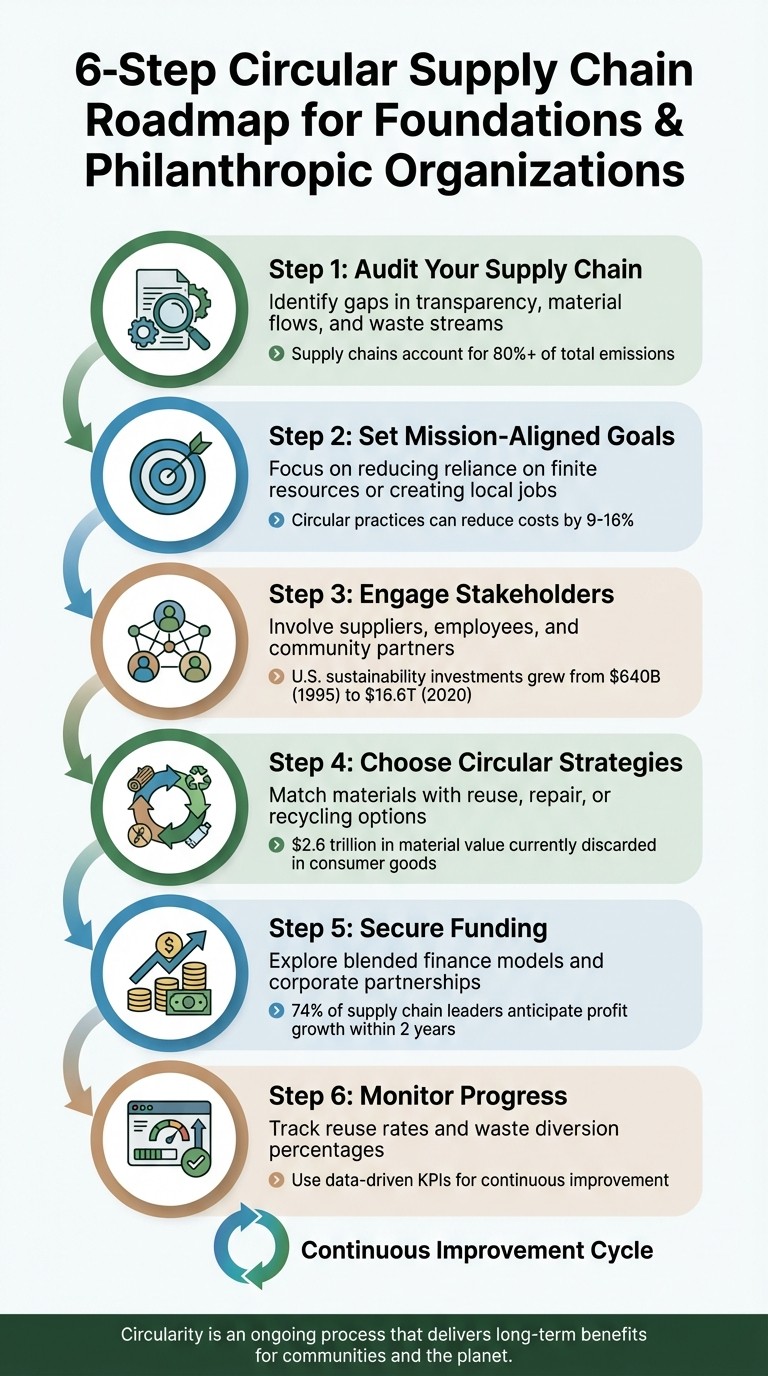
6-Step Circular Supply Chain Roadmap for Philanthropic Organizations
Building a circular supply chain
Assessing Your Organization's Current Supply Chain
Taking a closer look at your existing supply chain is the first step in creating a roadmap toward a circular model that aligns with your organization's goals. Begin by evaluating how transparent your data is across all operations. Can you track the composition of materials, pinpoint product locations, and manage end-of-life disassembly? These elements are crucial for ensuring the multidirectional flow of information required for a circular transformation to succeed [2].
A detailed audit can help you identify where your current practices fall short of circular principles. Traditional linear models often lack the transparency needed for circularity. In contrast, circular systems ensure materials are tracked not only as they move forward to end users but also as they return through recovery, refurbishment, and recycling channels [2].
Conducting a Supply Chain Audit
Dive into your procurement processes, vendor partnerships, and product lifecycle management. Determine whether your organization prioritizes recycled or non-virgin materials or continues to depend on new raw materials. Evaluate whether your products are designed for single use or multiple lifecycles. Some humanitarian organizations have effectively used the 3W Mapping methodology - tracking Who is doing What and Where - to monitor circular practices. This approach has helped them achieve both financial and environmental goals by identifying stakeholder roles and addressing gaps in circular loops, which is especially valuable for organizations operating in diverse locations [3].
Once you’ve gathered insights from the audit, the next step is to map out the journey of every material in your supply chain.
Mapping Material Flows and Waste Streams
Track all materials entering and leaving your organization, from office supplies and event materials to grantee resources and operational equipment. Pinpoint where waste accumulates and determine whether it ends up in landfills or is recovered for reuse. Develop a visual map that traces the lifecycle of materials - from procurement and usage to disposal or recovery. Document key metrics such as quantities, costs, and destinations for each waste stream.
For consumer goods companies, supply chains typically account for over 80% of total emissions [1]. By understanding your material flows, you can identify the areas with the greatest environmental impact. Moreover, adopting circular practices can reduce costs by 9–16% [3], making a thorough supply chain assessment not just a sustainability move but also a financially strategic one.
Setting Goals That Align with Your Mission
Turn your supply chain insights into actionable, mission-focused goals that deliver both environmental and social benefits. Your circular supply chain objectives should directly support the outcomes you care about most, ensuring your efforts go beyond operational improvements to amplify your mission’s impact.
Start by identifying circular practices that directly advance your core mission. For instance, if your organization is committed to climate action, focus on goals that reduce reliance on finite natural resources [1]. This not only strengthens material security but also helps safeguard against supply chain disruptions. Similarly, if equity and community development are central to your mission, explore circular strategies like creating local jobs through repair, refurbishment, or material recovery programs.
Connecting Circular Goals to Philanthropic Priorities
Use your supply chain analysis to establish clear, mission-driven targets that align with your values. Each circular objective should tie directly to a specific mission outcome. For example, if your organization advocates for environmental justice, a goal to eliminate single-use materials from grantee toolkits can help reduce waste in underserved areas. Position these circular goals as essential mission actions rather than simple operational changes.
Think about how your material choices reflect your organization’s values. For example, switching to reusable conference materials signals a strong commitment to sustainability while also cutting costs over time. Encourage grantees to adopt and report on circular practices, which can amplify the collective impact of your efforts. By aligning these goals with your mission, you create a foundation for tracking progress through meaningful and measurable KPIs.
Creating Key Performance Indicators (KPIs)
Design concise metrics that integrate seamlessly into your existing sustainability programs [4]. These KPIs should work within your current ESG frameworks rather than requiring a separate system [4]. As Andrew Morlet, CEO of the Ellen MacArthur Foundation, explains, "Many businesses are starting to embrace this opportunity, but for the transition to happen at scale and speed they need accurate data and clear analysis" [4].
Track indicators like material reuse rates, waste diversion percentages, and the proportion of recycled content in the goods you purchase. For organizations using a variety of materials, calculate the circularity of each component individually, then use a weighted average to assess overall performance [4]. Financial KPIs can also be valuable, measuring cost savings from circular practices or revenue generated through repair and resale channels [4]. These metrics not only help you gauge progress but also guide strategic adjustments as you refine your approach. Focus your dashboard on metrics that drive decisions, ensuring your goals remain actionable and impactful for engaging partners and advancing your circular strategy.
Engaging Stakeholders and Building Partnerships
A circular supply chain thrives on robust collaboration across all levels. Since a significant portion of brand emissions originates from supply chains, it’s crucial to involve suppliers, vendors, community organizations, and investors in the process [5]. Transitioning from linear to circular models requires open sharing of key data, such as material composition, location, and disassembly options, among all network participants [1].
Identifying Your Stakeholder Network
Begin by identifying everyone connected to your supply chain, from vendors supplying office materials to community organizations benefiting from your grants. Key groups to consider include:
Suppliers: Provide transparency about material composition and end-of-life options.
Employees: Act as internal advocates, driving adoption and spotting areas for improvement.
Investors: Increasingly prioritize sustainability, with U.S. sustainability-focused investments growing from $640 billion in 1995 to $16.6 trillion in 2020 [5].
Community partners: Collaborate on local repair, refurbishment, or material recovery programs that align with both environmental and social goals.
Focus on stakeholders who control the materials you use most often or those who can help close supply chain loops. For instance, if your organization distributes educational materials to grantees, your network might include printers, packaging suppliers, distribution partners, and recipient organizations. Each connection offers a chance to embed circular practices into your operations.
Once your network is mapped, the next step is to cultivate partnerships that transform these connections into valuable assets for your circular supply chain.
Building Collaborative Relationships
Leverage your stakeholder analysis to develop partnerships that foster circular practices. Move beyond traditional one-way supplier relationships to form dynamic networks where information and materials flow freely [1]. Share your circular goals openly and encourage partners to contribute their ideas. Offer tangible incentives to those who meet your circularity targets, such as preferred vendor status, extended contracts, or recognition in impact reports [5].
Support your partners with targeted training to help them understand the benefits and requirements of circular practices. Many suppliers may need guidance to adapt, so workshops and collaborative problem-solving sessions can be highly effective. When challenges arise - whether due to conflicting interests or technical hurdles - consider bringing in circular supply chain consultants to provide neutral advice and align diverse priorities [5].
These efforts not only advance circular practices but also strengthen your commitment to sustainability. Keep in mind that 74% of supply chain leaders anticipate profit growth within two years by adopting circular economy principles. Framing circularity as a shared opportunity, rather than a compliance requirement, can motivate stakeholders to fully embrace the transition [5].
Designing Your Circular Supply Chain Framework
Once stakeholders are aligned, it’s time to craft your circular supply chain framework. This step involves selecting strategies for managing materials and creating systems to recapture and reuse them. The aim is to move away from the traditional linear model - where materials flow from production to consumption and then to waste - and adopt a circular, two-way system where resources are continuously reused and repurposed [6]. By leveraging stakeholder collaboration, this framework turns your circular supply chain strategy into actionable processes, helping to retain resources and reduce environmental impact.
Start by conducting a Life Cycle Assessment (LCA) to identify opportunities for reuse, repair, or recycling that add value and contribute to social goals [6]. Based on these insights, assign the most suitable circular strategy to each material type. Common strategies include direct reuse, repair, and recycling. For nonprofit or philanthropic organizations, donation and reuse often align best with their mission.
"A circular supply chain lets you turn waste into value. Instead of throwing away unsold or returned items, you find a second life for them - through donation, reuse, or recycling" [7].
Consider this: nearly 80% of the material value in fast-moving consumer goods - estimated at $2.6 trillion - is currently discarded [7]. By adopting circular practices, your organization can reclaim a portion of this value while advancing its social impact goals.
Selecting Circular Strategies for Your Materials
To match materials with the right circular strategy, consider their condition and your organizational priorities. Items like educational supplies, office furniture, or event materials often lend themselves well to reuse or donation, benefiting grantees, schools, or community partners [7]. Even unconventional items, such as retired fixtures or incomplete sets, can have a second life [7]. For electronics, tools, or equipment needing minor fixes, repair and refurbishment are practical solutions. Materials that can’t be reused or repaired should be directed toward recycling.
Organize your material streams into three categories: those ready for resale or donation, those requiring repair, and those destined for recycling [6]. Predictive analytics can help forecast return volumes, preventing bottlenecks and ensuring smoother operations [6]. Incentivize returns through programs like buy-back initiatives, store credits, or recognition in impact reports [6][7]. Maintaining strong post-sale connections with customers also extends product lifespans, as highlighted by industry experts [7].
Building Reverse Logistics Systems
After optimizing material use, the next step is to realign your supply chain with effective reverse logistics. These systems create pathways for recovering materials. Simplify the return process by offering convenient options such as drop-off locations or prepaid mailers [6]. Your reverse logistics system should include clear sorting processes to direct incoming items toward donation, repair, recycling, or, when necessary, responsible disposal [8].
The success of reverse logistics hinges on seamless information sharing. Data about material composition and disassembly options must flow freely among all partners [2][1]. This ongoing transparency transforms a linear supply chain into a dynamic network where materials, information, and value circulate continuously [1]. By fostering these multidirectional flows, you create a resilient system that supports both environmental and operational goals.
Securing Funding for Circular Supply Chain Projects
Once your circular supply chain framework is in place, the next challenge is finding the financial resources to bring it to life. Shifting toward a circular economy demands significant capital, and traditional funding methods often fall short. Philanthropic organizations can explore blended finance strategies, which combine charitable and private investments to reduce risks and unlock larger funding pools. While managing the expectations of diverse stakeholders can be complex, the payoff is a stronger financial foundation for scaling these transformative supply chain initiatives.
Using Blended Finance Approaches
Blended finance merges philanthropic funding with private investments to support projects that might be too risky for conventional financing. For example, grant funding can help absorb early-stage risks, making these projects more appealing to commercial investors. This approach has proven successful in pilot programs and early circular economy ventures. Government grants are another option, helping to offset initial costs, though they often come with strict compliance requirements and administrative overhead.
Another avenue to explore is service-based models, where revenue is generated on an ongoing basis by charging for circular services. These models not only provide a steady income stream but also align with the principles of a circular economy by emphasizing reuse and resource efficiency.
These financial strategies set the stage for building partnerships that can amplify the impact and viability of circular supply chain projects.
Partnering with Corporations and Investors
Collaborating with corporations can provide both financial backing and operational expertise for circular supply chain efforts. Look for companies whose sustainability goals align with your mission. By co-investing, you can share costs while also expanding the project's reach and impact. However, ensure that agreements clearly define how benefits are shared and address data privacy concerns.
Impact investors are another key group to engage. These investors are drawn to projects with measurable environmental and social benefits, making circular supply chains an appealing option. Establishing multi-stakeholder platforms can further strengthen these efforts, combining funding with technical expertise to optimize resources and share costs effectively.
A great example of this approach is the NextCycle Washington platform. Funded by the Washington Departments of Ecology and Commerce, along with King County, this public-private partnership supported over 50 organizations in its first year. These organizations developed business ideas aimed at addressing municipal waste streams [9]. Platforms like this bring together foundations, corporations, investors, and technical experts, creating a collaborative ecosystem to fund and implement circular supply chain transformations.
Monitoring and Evaluating Progress
Once your circular supply chain initiatives are funded and underway, staying on track requires diligent monitoring and evaluation. Without reliable data systems, decision-making can falter. It’s essential to establish measurable baselines from the start and implement tools that transform raw data into meaningful insights. This ensures your efforts remain aligned with your mission-driven circular strategy.
Setting Up Data-Driven Baselines
Begin by assessing material flows, waste production, and resource usage within your supply chain. For instance, Cisco Systems integrates a Circular Design Principles assessment into all new product and packaging designs, requiring a minimum 75% compliance rate. This approach led to the creation of the Cisco Nexus 9332D-H2R switch, which incorporates 75% post-consumer recycled content - a direct result of these iterative evaluations.
Similarly, Interface Inc. tracked metrics like the percentage of recycled and bio-based materials and landfill diversion rates. This data-centric approach not only supported their circular initiatives but also fueled the success of their "ReEntry" program, which focuses on closing the loop in carpet production.
Once benchmarks are firmly in place, the focus shifts to leveraging this data to foster ongoing improvement.
Creating Feedback Loops for Continuous Improvement
Data should inform action. Establish feedback mechanisms within your operations to ensure continuous improvement. These could include regular check-ins with partners, anonymous surveys at critical milestones, or advisory committees offering strategic guidance. The Siegel Family Endowment exemplifies this with a multi-tiered approach: informal check-ins via program officers, annual surveys conducted by external consultants, and optional anonymized one-on-one interviews. They close the loop by publishing an annual "You Spoke, We Listened" report, which details changes made based on grantee feedback [10].
"We want to show our grantees that their input leads to real change." – Kyla Kasharian, Senior Associate for Knowledge and Impact, Siegel Family Endowment [10]
Patterns emerging from your data will reveal whether your strategy needs adjustment or if improvements are needed in the feedback process itself. Digital tools like IoT sensors can play a crucial role, offering real-time data on material flows and enabling automated adjustments to logistics and waste reduction efforts. Regular evaluations of your data collection methods are vital to ensure they produce actionable insights and avoid unnecessary effort.
Conclusion
Creating a circular supply chain roadmap goes beyond just resource conservation - it’s about extracting maximum value from every material. As John Holm, Senior Vice President of Partnership Development at Pyxera Global, aptly states: "Circularity is not just a green buzzword. In many ways, it's a cost-efficient way to make the most of the materials you've already sourced" [7].
Transitioning from the traditional "take-make-dispose" model to a circular approach requires leveraging the full potential of resources. This shift depends on cohesive leadership across supply chain operations, sustainability initiatives, and financial planning [2]. Without this alignment, securing the necessary resources - both financial and human - becomes a significant challenge.
A strong foundation begins with audits and data-driven strategies. Regular supply chain audits that map supplier networks, even down to the smallest tiers, can uncover vulnerabilities before they escalate into major issues [11]. Digital twin simulations provide a virtual testing ground, allowing you to explore potential scenarios and outcomes before committing real-world resources [11]. Additionally, maintaining open feedback loops with stakeholders ensures your approach adapts to changing conditions and remains practical [1]. These tools collectively guide actionable steps toward a more efficient and sustainable supply chain.
By aligning insights from audits and key performance indicators (KPIs), organizations can turn data into impactful changes. For mission-driven organizations, this approach naturally complements their goals - amplifying their impact while cutting costs.
Start this journey by auditing your supply chain, setting measurable KPIs, and engaging your stakeholders. Circularity is not an endpoint but an ongoing process, and every step forward brings enduring benefits to your organization and the communities it touches.
FAQs
Where should we start if we lack supply chain data?
If supply chain data is unavailable, begin by evaluating your existing supply chain using frameworks tailored to circular design. Pay particular attention to design principles, reverse logistics, and packaging solutions that align with circular practices. Policy roadmaps and strategies specific to your industry can serve as helpful guides. Start with qualitative assessments and foster collaboration to establish a solid base for gathering more detailed data in the future.
Which materials should we prioritize for circularity first?
Start by prioritizing materials that are already widely recyclable, fit seamlessly into existing recycling systems, and have a strong potential for reuse. Examples like plastics, packaging, and electronics stand out since they are significant contributors to waste yet benefit from established recycling processes. Concentrating on these materials not only cuts down waste but also enhances resource efficiency and meets regulatory expectations. Moreover, incorporating design strategies that focus on reuse - such as creating modular or recyclable components - lays the groundwork for building a truly circular supply chain.
How do we fund circular projects without draining our budget?
You can support circular projects without overextending your budget by tapping into government incentives, collaborating with suppliers and waste processors, and exploring creative financial approaches. Tools such as AI, IoT, and blockchain can streamline operations and cut costs. Moreover, many businesses experience profit increases through circular strategies, helping to balance upfront expenses and make these efforts more economically feasible.
Related Blog Posts
How to Design a Circular Supply Chain Roadmap for Municipalities & Government Agencies
How to Design a Circular Supply Chain Roadmap for Corporations
How to Design a Circular Supply Chain Roadmap for NGOs & Nonprofits
How to Design a Circular Supply Chain Roadmap for Universities & Research Institutions
Latest Articles
©2025



FAQ
01
What does it really mean to “redefine profit”?
02
What makes Council Fire different?
03
Who does Council Fire you work with?
04
What does working with Council Fire actually look like?
05
How does Council Fire help organizations turn big goals into action?
06
How does Council Fire define and measure success?
Feb 28, 2026
How to Design a Circular Supply Chain Roadmap for Foundations & Philanthropic Organizations
Sustainability Strategy
In This Article
Practical steps for foundations to build a circular supply chain: audit materials, set mission-aligned goals, engage partners, secure funding, and track KPIs.
How to Design a Circular Supply Chain Roadmap for Foundations & Philanthropic Organizations
Rethinking supply chains through circular strategies can help foundations and philanthropic organizations align their operations with their mission while reducing waste and costs. A circular supply chain keeps materials in use through reuse, repair, and recycling, moving away from the "take-make-dispose" model. For organizations focused on climate action or social equity, this approach not only supports environmental goals but also strengthens resilience and operational efficiency.
Key Steps to Build a Circular Supply Chain:
Audit Your Supply Chain: Identify gaps in transparency, material flows, and waste streams.
Set Mission-Aligned Goals: Focus on reducing reliance on finite resources or creating local jobs through circular practices.
Engage Stakeholders: Involve suppliers, employees, and community partners to ensure collaboration and data sharing.
Choose Circular Strategies: Match materials with reuse, repair, or recycling options based on their condition and priorities.
Secure Funding: Explore blended finance models and partnerships with corporations or impact investors.
Monitor Progress: Use data-driven metrics like reuse rates and waste diversion percentages to track and improve performance.
By adopting these steps, organizations can create supply chains that not only conserve resources but also amplify their mission's impact. Circularity is an ongoing process, and each improvement contributes to long-term benefits for communities and the planet.
6-Step Circular Supply Chain Roadmap for Philanthropic Organizations
Building a circular supply chain
Assessing Your Organization's Current Supply Chain
Taking a closer look at your existing supply chain is the first step in creating a roadmap toward a circular model that aligns with your organization's goals. Begin by evaluating how transparent your data is across all operations. Can you track the composition of materials, pinpoint product locations, and manage end-of-life disassembly? These elements are crucial for ensuring the multidirectional flow of information required for a circular transformation to succeed [2].
A detailed audit can help you identify where your current practices fall short of circular principles. Traditional linear models often lack the transparency needed for circularity. In contrast, circular systems ensure materials are tracked not only as they move forward to end users but also as they return through recovery, refurbishment, and recycling channels [2].
Conducting a Supply Chain Audit
Dive into your procurement processes, vendor partnerships, and product lifecycle management. Determine whether your organization prioritizes recycled or non-virgin materials or continues to depend on new raw materials. Evaluate whether your products are designed for single use or multiple lifecycles. Some humanitarian organizations have effectively used the 3W Mapping methodology - tracking Who is doing What and Where - to monitor circular practices. This approach has helped them achieve both financial and environmental goals by identifying stakeholder roles and addressing gaps in circular loops, which is especially valuable for organizations operating in diverse locations [3].
Once you’ve gathered insights from the audit, the next step is to map out the journey of every material in your supply chain.
Mapping Material Flows and Waste Streams
Track all materials entering and leaving your organization, from office supplies and event materials to grantee resources and operational equipment. Pinpoint where waste accumulates and determine whether it ends up in landfills or is recovered for reuse. Develop a visual map that traces the lifecycle of materials - from procurement and usage to disposal or recovery. Document key metrics such as quantities, costs, and destinations for each waste stream.
For consumer goods companies, supply chains typically account for over 80% of total emissions [1]. By understanding your material flows, you can identify the areas with the greatest environmental impact. Moreover, adopting circular practices can reduce costs by 9–16% [3], making a thorough supply chain assessment not just a sustainability move but also a financially strategic one.
Setting Goals That Align with Your Mission
Turn your supply chain insights into actionable, mission-focused goals that deliver both environmental and social benefits. Your circular supply chain objectives should directly support the outcomes you care about most, ensuring your efforts go beyond operational improvements to amplify your mission’s impact.
Start by identifying circular practices that directly advance your core mission. For instance, if your organization is committed to climate action, focus on goals that reduce reliance on finite natural resources [1]. This not only strengthens material security but also helps safeguard against supply chain disruptions. Similarly, if equity and community development are central to your mission, explore circular strategies like creating local jobs through repair, refurbishment, or material recovery programs.
Connecting Circular Goals to Philanthropic Priorities
Use your supply chain analysis to establish clear, mission-driven targets that align with your values. Each circular objective should tie directly to a specific mission outcome. For example, if your organization advocates for environmental justice, a goal to eliminate single-use materials from grantee toolkits can help reduce waste in underserved areas. Position these circular goals as essential mission actions rather than simple operational changes.
Think about how your material choices reflect your organization’s values. For example, switching to reusable conference materials signals a strong commitment to sustainability while also cutting costs over time. Encourage grantees to adopt and report on circular practices, which can amplify the collective impact of your efforts. By aligning these goals with your mission, you create a foundation for tracking progress through meaningful and measurable KPIs.
Creating Key Performance Indicators (KPIs)
Design concise metrics that integrate seamlessly into your existing sustainability programs [4]. These KPIs should work within your current ESG frameworks rather than requiring a separate system [4]. As Andrew Morlet, CEO of the Ellen MacArthur Foundation, explains, "Many businesses are starting to embrace this opportunity, but for the transition to happen at scale and speed they need accurate data and clear analysis" [4].
Track indicators like material reuse rates, waste diversion percentages, and the proportion of recycled content in the goods you purchase. For organizations using a variety of materials, calculate the circularity of each component individually, then use a weighted average to assess overall performance [4]. Financial KPIs can also be valuable, measuring cost savings from circular practices or revenue generated through repair and resale channels [4]. These metrics not only help you gauge progress but also guide strategic adjustments as you refine your approach. Focus your dashboard on metrics that drive decisions, ensuring your goals remain actionable and impactful for engaging partners and advancing your circular strategy.
Engaging Stakeholders and Building Partnerships
A circular supply chain thrives on robust collaboration across all levels. Since a significant portion of brand emissions originates from supply chains, it’s crucial to involve suppliers, vendors, community organizations, and investors in the process [5]. Transitioning from linear to circular models requires open sharing of key data, such as material composition, location, and disassembly options, among all network participants [1].
Identifying Your Stakeholder Network
Begin by identifying everyone connected to your supply chain, from vendors supplying office materials to community organizations benefiting from your grants. Key groups to consider include:
Suppliers: Provide transparency about material composition and end-of-life options.
Employees: Act as internal advocates, driving adoption and spotting areas for improvement.
Investors: Increasingly prioritize sustainability, with U.S. sustainability-focused investments growing from $640 billion in 1995 to $16.6 trillion in 2020 [5].
Community partners: Collaborate on local repair, refurbishment, or material recovery programs that align with both environmental and social goals.
Focus on stakeholders who control the materials you use most often or those who can help close supply chain loops. For instance, if your organization distributes educational materials to grantees, your network might include printers, packaging suppliers, distribution partners, and recipient organizations. Each connection offers a chance to embed circular practices into your operations.
Once your network is mapped, the next step is to cultivate partnerships that transform these connections into valuable assets for your circular supply chain.
Building Collaborative Relationships
Leverage your stakeholder analysis to develop partnerships that foster circular practices. Move beyond traditional one-way supplier relationships to form dynamic networks where information and materials flow freely [1]. Share your circular goals openly and encourage partners to contribute their ideas. Offer tangible incentives to those who meet your circularity targets, such as preferred vendor status, extended contracts, or recognition in impact reports [5].
Support your partners with targeted training to help them understand the benefits and requirements of circular practices. Many suppliers may need guidance to adapt, so workshops and collaborative problem-solving sessions can be highly effective. When challenges arise - whether due to conflicting interests or technical hurdles - consider bringing in circular supply chain consultants to provide neutral advice and align diverse priorities [5].
These efforts not only advance circular practices but also strengthen your commitment to sustainability. Keep in mind that 74% of supply chain leaders anticipate profit growth within two years by adopting circular economy principles. Framing circularity as a shared opportunity, rather than a compliance requirement, can motivate stakeholders to fully embrace the transition [5].
Designing Your Circular Supply Chain Framework
Once stakeholders are aligned, it’s time to craft your circular supply chain framework. This step involves selecting strategies for managing materials and creating systems to recapture and reuse them. The aim is to move away from the traditional linear model - where materials flow from production to consumption and then to waste - and adopt a circular, two-way system where resources are continuously reused and repurposed [6]. By leveraging stakeholder collaboration, this framework turns your circular supply chain strategy into actionable processes, helping to retain resources and reduce environmental impact.
Start by conducting a Life Cycle Assessment (LCA) to identify opportunities for reuse, repair, or recycling that add value and contribute to social goals [6]. Based on these insights, assign the most suitable circular strategy to each material type. Common strategies include direct reuse, repair, and recycling. For nonprofit or philanthropic organizations, donation and reuse often align best with their mission.
"A circular supply chain lets you turn waste into value. Instead of throwing away unsold or returned items, you find a second life for them - through donation, reuse, or recycling" [7].
Consider this: nearly 80% of the material value in fast-moving consumer goods - estimated at $2.6 trillion - is currently discarded [7]. By adopting circular practices, your organization can reclaim a portion of this value while advancing its social impact goals.
Selecting Circular Strategies for Your Materials
To match materials with the right circular strategy, consider their condition and your organizational priorities. Items like educational supplies, office furniture, or event materials often lend themselves well to reuse or donation, benefiting grantees, schools, or community partners [7]. Even unconventional items, such as retired fixtures or incomplete sets, can have a second life [7]. For electronics, tools, or equipment needing minor fixes, repair and refurbishment are practical solutions. Materials that can’t be reused or repaired should be directed toward recycling.
Organize your material streams into three categories: those ready for resale or donation, those requiring repair, and those destined for recycling [6]. Predictive analytics can help forecast return volumes, preventing bottlenecks and ensuring smoother operations [6]. Incentivize returns through programs like buy-back initiatives, store credits, or recognition in impact reports [6][7]. Maintaining strong post-sale connections with customers also extends product lifespans, as highlighted by industry experts [7].
Building Reverse Logistics Systems
After optimizing material use, the next step is to realign your supply chain with effective reverse logistics. These systems create pathways for recovering materials. Simplify the return process by offering convenient options such as drop-off locations or prepaid mailers [6]. Your reverse logistics system should include clear sorting processes to direct incoming items toward donation, repair, recycling, or, when necessary, responsible disposal [8].
The success of reverse logistics hinges on seamless information sharing. Data about material composition and disassembly options must flow freely among all partners [2][1]. This ongoing transparency transforms a linear supply chain into a dynamic network where materials, information, and value circulate continuously [1]. By fostering these multidirectional flows, you create a resilient system that supports both environmental and operational goals.
Securing Funding for Circular Supply Chain Projects
Once your circular supply chain framework is in place, the next challenge is finding the financial resources to bring it to life. Shifting toward a circular economy demands significant capital, and traditional funding methods often fall short. Philanthropic organizations can explore blended finance strategies, which combine charitable and private investments to reduce risks and unlock larger funding pools. While managing the expectations of diverse stakeholders can be complex, the payoff is a stronger financial foundation for scaling these transformative supply chain initiatives.
Using Blended Finance Approaches
Blended finance merges philanthropic funding with private investments to support projects that might be too risky for conventional financing. For example, grant funding can help absorb early-stage risks, making these projects more appealing to commercial investors. This approach has proven successful in pilot programs and early circular economy ventures. Government grants are another option, helping to offset initial costs, though they often come with strict compliance requirements and administrative overhead.
Another avenue to explore is service-based models, where revenue is generated on an ongoing basis by charging for circular services. These models not only provide a steady income stream but also align with the principles of a circular economy by emphasizing reuse and resource efficiency.
These financial strategies set the stage for building partnerships that can amplify the impact and viability of circular supply chain projects.
Partnering with Corporations and Investors
Collaborating with corporations can provide both financial backing and operational expertise for circular supply chain efforts. Look for companies whose sustainability goals align with your mission. By co-investing, you can share costs while also expanding the project's reach and impact. However, ensure that agreements clearly define how benefits are shared and address data privacy concerns.
Impact investors are another key group to engage. These investors are drawn to projects with measurable environmental and social benefits, making circular supply chains an appealing option. Establishing multi-stakeholder platforms can further strengthen these efforts, combining funding with technical expertise to optimize resources and share costs effectively.
A great example of this approach is the NextCycle Washington platform. Funded by the Washington Departments of Ecology and Commerce, along with King County, this public-private partnership supported over 50 organizations in its first year. These organizations developed business ideas aimed at addressing municipal waste streams [9]. Platforms like this bring together foundations, corporations, investors, and technical experts, creating a collaborative ecosystem to fund and implement circular supply chain transformations.
Monitoring and Evaluating Progress
Once your circular supply chain initiatives are funded and underway, staying on track requires diligent monitoring and evaluation. Without reliable data systems, decision-making can falter. It’s essential to establish measurable baselines from the start and implement tools that transform raw data into meaningful insights. This ensures your efforts remain aligned with your mission-driven circular strategy.
Setting Up Data-Driven Baselines
Begin by assessing material flows, waste production, and resource usage within your supply chain. For instance, Cisco Systems integrates a Circular Design Principles assessment into all new product and packaging designs, requiring a minimum 75% compliance rate. This approach led to the creation of the Cisco Nexus 9332D-H2R switch, which incorporates 75% post-consumer recycled content - a direct result of these iterative evaluations.
Similarly, Interface Inc. tracked metrics like the percentage of recycled and bio-based materials and landfill diversion rates. This data-centric approach not only supported their circular initiatives but also fueled the success of their "ReEntry" program, which focuses on closing the loop in carpet production.
Once benchmarks are firmly in place, the focus shifts to leveraging this data to foster ongoing improvement.
Creating Feedback Loops for Continuous Improvement
Data should inform action. Establish feedback mechanisms within your operations to ensure continuous improvement. These could include regular check-ins with partners, anonymous surveys at critical milestones, or advisory committees offering strategic guidance. The Siegel Family Endowment exemplifies this with a multi-tiered approach: informal check-ins via program officers, annual surveys conducted by external consultants, and optional anonymized one-on-one interviews. They close the loop by publishing an annual "You Spoke, We Listened" report, which details changes made based on grantee feedback [10].
"We want to show our grantees that their input leads to real change." – Kyla Kasharian, Senior Associate for Knowledge and Impact, Siegel Family Endowment [10]
Patterns emerging from your data will reveal whether your strategy needs adjustment or if improvements are needed in the feedback process itself. Digital tools like IoT sensors can play a crucial role, offering real-time data on material flows and enabling automated adjustments to logistics and waste reduction efforts. Regular evaluations of your data collection methods are vital to ensure they produce actionable insights and avoid unnecessary effort.
Conclusion
Creating a circular supply chain roadmap goes beyond just resource conservation - it’s about extracting maximum value from every material. As John Holm, Senior Vice President of Partnership Development at Pyxera Global, aptly states: "Circularity is not just a green buzzword. In many ways, it's a cost-efficient way to make the most of the materials you've already sourced" [7].
Transitioning from the traditional "take-make-dispose" model to a circular approach requires leveraging the full potential of resources. This shift depends on cohesive leadership across supply chain operations, sustainability initiatives, and financial planning [2]. Without this alignment, securing the necessary resources - both financial and human - becomes a significant challenge.
A strong foundation begins with audits and data-driven strategies. Regular supply chain audits that map supplier networks, even down to the smallest tiers, can uncover vulnerabilities before they escalate into major issues [11]. Digital twin simulations provide a virtual testing ground, allowing you to explore potential scenarios and outcomes before committing real-world resources [11]. Additionally, maintaining open feedback loops with stakeholders ensures your approach adapts to changing conditions and remains practical [1]. These tools collectively guide actionable steps toward a more efficient and sustainable supply chain.
By aligning insights from audits and key performance indicators (KPIs), organizations can turn data into impactful changes. For mission-driven organizations, this approach naturally complements their goals - amplifying their impact while cutting costs.
Start this journey by auditing your supply chain, setting measurable KPIs, and engaging your stakeholders. Circularity is not an endpoint but an ongoing process, and every step forward brings enduring benefits to your organization and the communities it touches.
FAQs
Where should we start if we lack supply chain data?
If supply chain data is unavailable, begin by evaluating your existing supply chain using frameworks tailored to circular design. Pay particular attention to design principles, reverse logistics, and packaging solutions that align with circular practices. Policy roadmaps and strategies specific to your industry can serve as helpful guides. Start with qualitative assessments and foster collaboration to establish a solid base for gathering more detailed data in the future.
Which materials should we prioritize for circularity first?
Start by prioritizing materials that are already widely recyclable, fit seamlessly into existing recycling systems, and have a strong potential for reuse. Examples like plastics, packaging, and electronics stand out since they are significant contributors to waste yet benefit from established recycling processes. Concentrating on these materials not only cuts down waste but also enhances resource efficiency and meets regulatory expectations. Moreover, incorporating design strategies that focus on reuse - such as creating modular or recyclable components - lays the groundwork for building a truly circular supply chain.
How do we fund circular projects without draining our budget?
You can support circular projects without overextending your budget by tapping into government incentives, collaborating with suppliers and waste processors, and exploring creative financial approaches. Tools such as AI, IoT, and blockchain can streamline operations and cut costs. Moreover, many businesses experience profit increases through circular strategies, helping to balance upfront expenses and make these efforts more economically feasible.
Related Blog Posts
How to Design a Circular Supply Chain Roadmap for Municipalities & Government Agencies
How to Design a Circular Supply Chain Roadmap for Corporations
How to Design a Circular Supply Chain Roadmap for NGOs & Nonprofits
How to Design a Circular Supply Chain Roadmap for Universities & Research Institutions
FAQ
01
What does it really mean to “redefine profit”?
02
What makes Council Fire different?
03
Who does Council Fire you work with?
04
What does working with Council Fire actually look like?
05
How does Council Fire help organizations turn big goals into action?
06
How does Council Fire define and measure success?
Feb 28, 2026
How to Design a Circular Supply Chain Roadmap for Foundations & Philanthropic Organizations
Sustainability Strategy
In This Article
Practical steps for foundations to build a circular supply chain: audit materials, set mission-aligned goals, engage partners, secure funding, and track KPIs.
How to Design a Circular Supply Chain Roadmap for Foundations & Philanthropic Organizations
Rethinking supply chains through circular strategies can help foundations and philanthropic organizations align their operations with their mission while reducing waste and costs. A circular supply chain keeps materials in use through reuse, repair, and recycling, moving away from the "take-make-dispose" model. For organizations focused on climate action or social equity, this approach not only supports environmental goals but also strengthens resilience and operational efficiency.
Key Steps to Build a Circular Supply Chain:
Audit Your Supply Chain: Identify gaps in transparency, material flows, and waste streams.
Set Mission-Aligned Goals: Focus on reducing reliance on finite resources or creating local jobs through circular practices.
Engage Stakeholders: Involve suppliers, employees, and community partners to ensure collaboration and data sharing.
Choose Circular Strategies: Match materials with reuse, repair, or recycling options based on their condition and priorities.
Secure Funding: Explore blended finance models and partnerships with corporations or impact investors.
Monitor Progress: Use data-driven metrics like reuse rates and waste diversion percentages to track and improve performance.
By adopting these steps, organizations can create supply chains that not only conserve resources but also amplify their mission's impact. Circularity is an ongoing process, and each improvement contributes to long-term benefits for communities and the planet.
6-Step Circular Supply Chain Roadmap for Philanthropic Organizations
Building a circular supply chain
Assessing Your Organization's Current Supply Chain
Taking a closer look at your existing supply chain is the first step in creating a roadmap toward a circular model that aligns with your organization's goals. Begin by evaluating how transparent your data is across all operations. Can you track the composition of materials, pinpoint product locations, and manage end-of-life disassembly? These elements are crucial for ensuring the multidirectional flow of information required for a circular transformation to succeed [2].
A detailed audit can help you identify where your current practices fall short of circular principles. Traditional linear models often lack the transparency needed for circularity. In contrast, circular systems ensure materials are tracked not only as they move forward to end users but also as they return through recovery, refurbishment, and recycling channels [2].
Conducting a Supply Chain Audit
Dive into your procurement processes, vendor partnerships, and product lifecycle management. Determine whether your organization prioritizes recycled or non-virgin materials or continues to depend on new raw materials. Evaluate whether your products are designed for single use or multiple lifecycles. Some humanitarian organizations have effectively used the 3W Mapping methodology - tracking Who is doing What and Where - to monitor circular practices. This approach has helped them achieve both financial and environmental goals by identifying stakeholder roles and addressing gaps in circular loops, which is especially valuable for organizations operating in diverse locations [3].
Once you’ve gathered insights from the audit, the next step is to map out the journey of every material in your supply chain.
Mapping Material Flows and Waste Streams
Track all materials entering and leaving your organization, from office supplies and event materials to grantee resources and operational equipment. Pinpoint where waste accumulates and determine whether it ends up in landfills or is recovered for reuse. Develop a visual map that traces the lifecycle of materials - from procurement and usage to disposal or recovery. Document key metrics such as quantities, costs, and destinations for each waste stream.
For consumer goods companies, supply chains typically account for over 80% of total emissions [1]. By understanding your material flows, you can identify the areas with the greatest environmental impact. Moreover, adopting circular practices can reduce costs by 9–16% [3], making a thorough supply chain assessment not just a sustainability move but also a financially strategic one.
Setting Goals That Align with Your Mission
Turn your supply chain insights into actionable, mission-focused goals that deliver both environmental and social benefits. Your circular supply chain objectives should directly support the outcomes you care about most, ensuring your efforts go beyond operational improvements to amplify your mission’s impact.
Start by identifying circular practices that directly advance your core mission. For instance, if your organization is committed to climate action, focus on goals that reduce reliance on finite natural resources [1]. This not only strengthens material security but also helps safeguard against supply chain disruptions. Similarly, if equity and community development are central to your mission, explore circular strategies like creating local jobs through repair, refurbishment, or material recovery programs.
Connecting Circular Goals to Philanthropic Priorities
Use your supply chain analysis to establish clear, mission-driven targets that align with your values. Each circular objective should tie directly to a specific mission outcome. For example, if your organization advocates for environmental justice, a goal to eliminate single-use materials from grantee toolkits can help reduce waste in underserved areas. Position these circular goals as essential mission actions rather than simple operational changes.
Think about how your material choices reflect your organization’s values. For example, switching to reusable conference materials signals a strong commitment to sustainability while also cutting costs over time. Encourage grantees to adopt and report on circular practices, which can amplify the collective impact of your efforts. By aligning these goals with your mission, you create a foundation for tracking progress through meaningful and measurable KPIs.
Creating Key Performance Indicators (KPIs)
Design concise metrics that integrate seamlessly into your existing sustainability programs [4]. These KPIs should work within your current ESG frameworks rather than requiring a separate system [4]. As Andrew Morlet, CEO of the Ellen MacArthur Foundation, explains, "Many businesses are starting to embrace this opportunity, but for the transition to happen at scale and speed they need accurate data and clear analysis" [4].
Track indicators like material reuse rates, waste diversion percentages, and the proportion of recycled content in the goods you purchase. For organizations using a variety of materials, calculate the circularity of each component individually, then use a weighted average to assess overall performance [4]. Financial KPIs can also be valuable, measuring cost savings from circular practices or revenue generated through repair and resale channels [4]. These metrics not only help you gauge progress but also guide strategic adjustments as you refine your approach. Focus your dashboard on metrics that drive decisions, ensuring your goals remain actionable and impactful for engaging partners and advancing your circular strategy.
Engaging Stakeholders and Building Partnerships
A circular supply chain thrives on robust collaboration across all levels. Since a significant portion of brand emissions originates from supply chains, it’s crucial to involve suppliers, vendors, community organizations, and investors in the process [5]. Transitioning from linear to circular models requires open sharing of key data, such as material composition, location, and disassembly options, among all network participants [1].
Identifying Your Stakeholder Network
Begin by identifying everyone connected to your supply chain, from vendors supplying office materials to community organizations benefiting from your grants. Key groups to consider include:
Suppliers: Provide transparency about material composition and end-of-life options.
Employees: Act as internal advocates, driving adoption and spotting areas for improvement.
Investors: Increasingly prioritize sustainability, with U.S. sustainability-focused investments growing from $640 billion in 1995 to $16.6 trillion in 2020 [5].
Community partners: Collaborate on local repair, refurbishment, or material recovery programs that align with both environmental and social goals.
Focus on stakeholders who control the materials you use most often or those who can help close supply chain loops. For instance, if your organization distributes educational materials to grantees, your network might include printers, packaging suppliers, distribution partners, and recipient organizations. Each connection offers a chance to embed circular practices into your operations.
Once your network is mapped, the next step is to cultivate partnerships that transform these connections into valuable assets for your circular supply chain.
Building Collaborative Relationships
Leverage your stakeholder analysis to develop partnerships that foster circular practices. Move beyond traditional one-way supplier relationships to form dynamic networks where information and materials flow freely [1]. Share your circular goals openly and encourage partners to contribute their ideas. Offer tangible incentives to those who meet your circularity targets, such as preferred vendor status, extended contracts, or recognition in impact reports [5].
Support your partners with targeted training to help them understand the benefits and requirements of circular practices. Many suppliers may need guidance to adapt, so workshops and collaborative problem-solving sessions can be highly effective. When challenges arise - whether due to conflicting interests or technical hurdles - consider bringing in circular supply chain consultants to provide neutral advice and align diverse priorities [5].
These efforts not only advance circular practices but also strengthen your commitment to sustainability. Keep in mind that 74% of supply chain leaders anticipate profit growth within two years by adopting circular economy principles. Framing circularity as a shared opportunity, rather than a compliance requirement, can motivate stakeholders to fully embrace the transition [5].
Designing Your Circular Supply Chain Framework
Once stakeholders are aligned, it’s time to craft your circular supply chain framework. This step involves selecting strategies for managing materials and creating systems to recapture and reuse them. The aim is to move away from the traditional linear model - where materials flow from production to consumption and then to waste - and adopt a circular, two-way system where resources are continuously reused and repurposed [6]. By leveraging stakeholder collaboration, this framework turns your circular supply chain strategy into actionable processes, helping to retain resources and reduce environmental impact.
Start by conducting a Life Cycle Assessment (LCA) to identify opportunities for reuse, repair, or recycling that add value and contribute to social goals [6]. Based on these insights, assign the most suitable circular strategy to each material type. Common strategies include direct reuse, repair, and recycling. For nonprofit or philanthropic organizations, donation and reuse often align best with their mission.
"A circular supply chain lets you turn waste into value. Instead of throwing away unsold or returned items, you find a second life for them - through donation, reuse, or recycling" [7].
Consider this: nearly 80% of the material value in fast-moving consumer goods - estimated at $2.6 trillion - is currently discarded [7]. By adopting circular practices, your organization can reclaim a portion of this value while advancing its social impact goals.
Selecting Circular Strategies for Your Materials
To match materials with the right circular strategy, consider their condition and your organizational priorities. Items like educational supplies, office furniture, or event materials often lend themselves well to reuse or donation, benefiting grantees, schools, or community partners [7]. Even unconventional items, such as retired fixtures or incomplete sets, can have a second life [7]. For electronics, tools, or equipment needing minor fixes, repair and refurbishment are practical solutions. Materials that can’t be reused or repaired should be directed toward recycling.
Organize your material streams into three categories: those ready for resale or donation, those requiring repair, and those destined for recycling [6]. Predictive analytics can help forecast return volumes, preventing bottlenecks and ensuring smoother operations [6]. Incentivize returns through programs like buy-back initiatives, store credits, or recognition in impact reports [6][7]. Maintaining strong post-sale connections with customers also extends product lifespans, as highlighted by industry experts [7].
Building Reverse Logistics Systems
After optimizing material use, the next step is to realign your supply chain with effective reverse logistics. These systems create pathways for recovering materials. Simplify the return process by offering convenient options such as drop-off locations or prepaid mailers [6]. Your reverse logistics system should include clear sorting processes to direct incoming items toward donation, repair, recycling, or, when necessary, responsible disposal [8].
The success of reverse logistics hinges on seamless information sharing. Data about material composition and disassembly options must flow freely among all partners [2][1]. This ongoing transparency transforms a linear supply chain into a dynamic network where materials, information, and value circulate continuously [1]. By fostering these multidirectional flows, you create a resilient system that supports both environmental and operational goals.
Securing Funding for Circular Supply Chain Projects
Once your circular supply chain framework is in place, the next challenge is finding the financial resources to bring it to life. Shifting toward a circular economy demands significant capital, and traditional funding methods often fall short. Philanthropic organizations can explore blended finance strategies, which combine charitable and private investments to reduce risks and unlock larger funding pools. While managing the expectations of diverse stakeholders can be complex, the payoff is a stronger financial foundation for scaling these transformative supply chain initiatives.
Using Blended Finance Approaches
Blended finance merges philanthropic funding with private investments to support projects that might be too risky for conventional financing. For example, grant funding can help absorb early-stage risks, making these projects more appealing to commercial investors. This approach has proven successful in pilot programs and early circular economy ventures. Government grants are another option, helping to offset initial costs, though they often come with strict compliance requirements and administrative overhead.
Another avenue to explore is service-based models, where revenue is generated on an ongoing basis by charging for circular services. These models not only provide a steady income stream but also align with the principles of a circular economy by emphasizing reuse and resource efficiency.
These financial strategies set the stage for building partnerships that can amplify the impact and viability of circular supply chain projects.
Partnering with Corporations and Investors
Collaborating with corporations can provide both financial backing and operational expertise for circular supply chain efforts. Look for companies whose sustainability goals align with your mission. By co-investing, you can share costs while also expanding the project's reach and impact. However, ensure that agreements clearly define how benefits are shared and address data privacy concerns.
Impact investors are another key group to engage. These investors are drawn to projects with measurable environmental and social benefits, making circular supply chains an appealing option. Establishing multi-stakeholder platforms can further strengthen these efforts, combining funding with technical expertise to optimize resources and share costs effectively.
A great example of this approach is the NextCycle Washington platform. Funded by the Washington Departments of Ecology and Commerce, along with King County, this public-private partnership supported over 50 organizations in its first year. These organizations developed business ideas aimed at addressing municipal waste streams [9]. Platforms like this bring together foundations, corporations, investors, and technical experts, creating a collaborative ecosystem to fund and implement circular supply chain transformations.
Monitoring and Evaluating Progress
Once your circular supply chain initiatives are funded and underway, staying on track requires diligent monitoring and evaluation. Without reliable data systems, decision-making can falter. It’s essential to establish measurable baselines from the start and implement tools that transform raw data into meaningful insights. This ensures your efforts remain aligned with your mission-driven circular strategy.
Setting Up Data-Driven Baselines
Begin by assessing material flows, waste production, and resource usage within your supply chain. For instance, Cisco Systems integrates a Circular Design Principles assessment into all new product and packaging designs, requiring a minimum 75% compliance rate. This approach led to the creation of the Cisco Nexus 9332D-H2R switch, which incorporates 75% post-consumer recycled content - a direct result of these iterative evaluations.
Similarly, Interface Inc. tracked metrics like the percentage of recycled and bio-based materials and landfill diversion rates. This data-centric approach not only supported their circular initiatives but also fueled the success of their "ReEntry" program, which focuses on closing the loop in carpet production.
Once benchmarks are firmly in place, the focus shifts to leveraging this data to foster ongoing improvement.
Creating Feedback Loops for Continuous Improvement
Data should inform action. Establish feedback mechanisms within your operations to ensure continuous improvement. These could include regular check-ins with partners, anonymous surveys at critical milestones, or advisory committees offering strategic guidance. The Siegel Family Endowment exemplifies this with a multi-tiered approach: informal check-ins via program officers, annual surveys conducted by external consultants, and optional anonymized one-on-one interviews. They close the loop by publishing an annual "You Spoke, We Listened" report, which details changes made based on grantee feedback [10].
"We want to show our grantees that their input leads to real change." – Kyla Kasharian, Senior Associate for Knowledge and Impact, Siegel Family Endowment [10]
Patterns emerging from your data will reveal whether your strategy needs adjustment or if improvements are needed in the feedback process itself. Digital tools like IoT sensors can play a crucial role, offering real-time data on material flows and enabling automated adjustments to logistics and waste reduction efforts. Regular evaluations of your data collection methods are vital to ensure they produce actionable insights and avoid unnecessary effort.
Conclusion
Creating a circular supply chain roadmap goes beyond just resource conservation - it’s about extracting maximum value from every material. As John Holm, Senior Vice President of Partnership Development at Pyxera Global, aptly states: "Circularity is not just a green buzzword. In many ways, it's a cost-efficient way to make the most of the materials you've already sourced" [7].
Transitioning from the traditional "take-make-dispose" model to a circular approach requires leveraging the full potential of resources. This shift depends on cohesive leadership across supply chain operations, sustainability initiatives, and financial planning [2]. Without this alignment, securing the necessary resources - both financial and human - becomes a significant challenge.
A strong foundation begins with audits and data-driven strategies. Regular supply chain audits that map supplier networks, even down to the smallest tiers, can uncover vulnerabilities before they escalate into major issues [11]. Digital twin simulations provide a virtual testing ground, allowing you to explore potential scenarios and outcomes before committing real-world resources [11]. Additionally, maintaining open feedback loops with stakeholders ensures your approach adapts to changing conditions and remains practical [1]. These tools collectively guide actionable steps toward a more efficient and sustainable supply chain.
By aligning insights from audits and key performance indicators (KPIs), organizations can turn data into impactful changes. For mission-driven organizations, this approach naturally complements their goals - amplifying their impact while cutting costs.
Start this journey by auditing your supply chain, setting measurable KPIs, and engaging your stakeholders. Circularity is not an endpoint but an ongoing process, and every step forward brings enduring benefits to your organization and the communities it touches.
FAQs
Where should we start if we lack supply chain data?
If supply chain data is unavailable, begin by evaluating your existing supply chain using frameworks tailored to circular design. Pay particular attention to design principles, reverse logistics, and packaging solutions that align with circular practices. Policy roadmaps and strategies specific to your industry can serve as helpful guides. Start with qualitative assessments and foster collaboration to establish a solid base for gathering more detailed data in the future.
Which materials should we prioritize for circularity first?
Start by prioritizing materials that are already widely recyclable, fit seamlessly into existing recycling systems, and have a strong potential for reuse. Examples like plastics, packaging, and electronics stand out since they are significant contributors to waste yet benefit from established recycling processes. Concentrating on these materials not only cuts down waste but also enhances resource efficiency and meets regulatory expectations. Moreover, incorporating design strategies that focus on reuse - such as creating modular or recyclable components - lays the groundwork for building a truly circular supply chain.
How do we fund circular projects without draining our budget?
You can support circular projects without overextending your budget by tapping into government incentives, collaborating with suppliers and waste processors, and exploring creative financial approaches. Tools such as AI, IoT, and blockchain can streamline operations and cut costs. Moreover, many businesses experience profit increases through circular strategies, helping to balance upfront expenses and make these efforts more economically feasible.
Related Blog Posts
How to Design a Circular Supply Chain Roadmap for Municipalities & Government Agencies
How to Design a Circular Supply Chain Roadmap for Corporations
How to Design a Circular Supply Chain Roadmap for NGOs & Nonprofits
How to Design a Circular Supply Chain Roadmap for Universities & Research Institutions
FAQ
What does it really mean to “redefine profit”?
What makes Council Fire different?
Who does Council Fire you work with?
What does working with Council Fire actually look like?
How does Council Fire help organizations turn big goals into action?
How does Council Fire define and measure success?