
Feb 27, 2026
How to Design a Circular Supply Chain Roadmap for NGOs & Nonprofits
Sustainability Strategy
In This Article
Guide for NGOs to build circular supply chains: audit materials, set measurable goals, use the 9R framework, partner with suppliers, and track progress.
How to Design a Circular Supply Chain Roadmap for NGOs & Nonprofits
NGOs and nonprofits can reduce waste, cut costs, and improve resource use by shifting from a linear to a circular supply chain model. This approach focuses on keeping materials in use for as long as possible through strategies like repair, reuse, and recycling. Here's how to get started:
Audit your supply chain: Identify inefficiencies, waste, and areas for improvement.
Set clear goals: Define measurable targets like reducing landfill waste or extending equipment lifespan.
Use the 9R Framework: Apply strategies such as refusing unnecessary materials, repairing equipment, and recycling as a last resort.
Partner with suppliers: Work with vendors who align with circular principles and prioritize resource efficiency.
Track progress: Use tools like the Material Circularity Indicator to measure impact and refine your approach.
Circular supply chains help nonprofits do more with limited resources while supporting long-term sustainability goals. By focusing on reducing waste and reusing materials, organizations can lower costs, improve resilience, and achieve greater impact with fewer resources.
EP. 15: All Things Circular Podcast - Nonprofit Organizations & Liquidations Claudia Freed EAL Green
Assess Your Current Supply Chain and Set Goals
Taking stock of your current operations involves examining where your materials come from, how they flow through your system, and where they end up. This evaluation helps spot inefficiencies and waste that circular strategies can address, laying the groundwork for targeted improvements.
Conduct a Baseline Audit
Start by defining the scope of your audit. Focus on a specific area - this could be a program location, a type of waste like plastics, or even your entire procurement system. Narrowing the focus allows for more actionable insights.
For NGOs and nonprofits, the Waste Value Chain Analysis (WVCA) provides a structured framework. The WVCA maps waste from its source to its final disposal in five steps: scoping the project, profiling local waste laws and infrastructure, identifying key stakeholders (including informal sector participants through a "snowball" method, where initial interviews lead to additional contacts), mapping material flows, and identifying system gaps [5].
Don't overlook informal sector data. In many regions, waste pickers and scrap dealers play a vital role in recovering materials, yet their contributions often go undocumented. Recognizing their work prevents duplicating existing recovery efforts and ensures a more accurate picture of your supply chain.
Document where materials are located, what they’re made of, and how they can be disassembled. This level of traceability is critical for designing effective circular loops, especially considering that supply chains contribute to over 80% of greenhouse gas emissions for many consumer goods companies [1].
Assess the economic value of materials within your system. For example, PET plastic bottles might be worth $0.05–$0.07 per pound when collected, but their value increases to $0.25 per pound when aggregated. Similarly, broken HDPE pallets can rise in value from $9 to nearly $16 per pound after processing [5]. These figures highlight where value is either lost or captured, guiding where improvements can make the most impact.
The insights from your audit not only expose inefficiencies but also reveal opportunities for meaningful change. With this information in hand, you can set clear circular economy goals to drive progress.
Define Your Circular Supply Chain Goals
Turn your audit findings into measurable, actionable targets. Avoid vague objectives like "reduce waste" and aim for specific goals, such as "divert 50% of office supplies from landfills by December 2027" or "extend the average lifespan of program equipment by 18 months."
Organize your goals around two key areas: enablers and outcomes. Enablers focus on the internal factors that support circularity, such as strategy, innovation, team capabilities, and operational processes. Outcomes, on the other hand, measure the actual circular performance of products, materials, water, and energy use [6]. Tracking both ensures you're building the right systems while achieving visible results.
Tie these goals to internal incentives. For example, link employee performance evaluations and bonuses to specific circular outcomes [3]. This alignment motivates teams to prioritize sustainability.
Finally, set timelines that reflect your available resources. Since nonprofits often operate on tight budgets, focus on a mix of quick wins and longer-term initiatives. A phased approach - starting with high-impact, low-cost changes - builds momentum and demonstrates value to stakeholders effectively.
Design Your Roadmap Using the 9R Framework
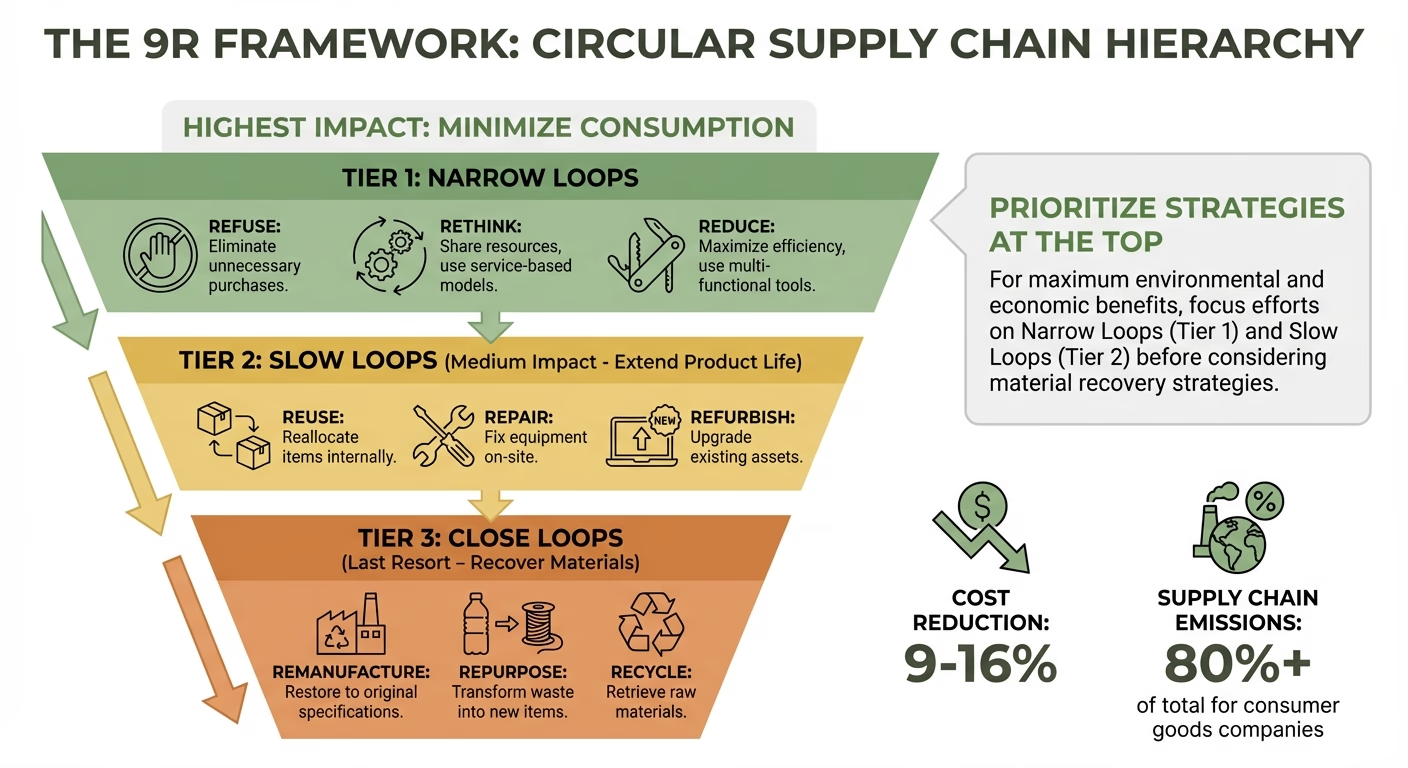
9R Framework for Circular Supply Chains in Nonprofits
The 9R framework - refuse, rethink, reduce, reuse, repair, refurbish, remanufacture, repurpose, and recycle - provides a structured way to transition from a linear "take-make-waste" model to a more circular supply chain. These strategies are arranged hierarchically, meaning their impact varies. Approaches like refusing, rethinking, and reducing (narrowing loops) promote higher circularity and require fewer resources, while options like remanufacturing, repurposing, and recycling (closing loops) should be reserved as last resorts [9][10].
For NGOs, this framework not only boosts environmental outcomes but also reduces costs by 9–16% [7], while building resilience against fluctuating resource prices [10]. By aligning these strategies with your organization's goals and capacity, you can address inefficiencies identified in baseline audits, achieving both environmental and financial benefits.
Narrow Loops: Minimize Consumption
The first step is to evaluate what’s truly necessary. Refusing unnecessary purchases and rethinking resource access can eliminate waste before it even enters your system. For example, instead of equipping every field office with its own tools, consider sharing resources across locations or adopting service-based models where you pay for access instead of owning equipment.
Reducing material use involves maximizing efficiency. This could mean opting for multi-functional tools or lighter materials that reduce transportation fuel needs. For organizations distributing supplies to remote areas, switching to concentrated products with less packaging can lower shipping costs and emissions while maintaining impact. By focusing on minimizing consumption, you not only conserve resources but also pave the way for extending product lifespans.
Slow Loops: Extend Product Life
Prolonging the life of equipment preserves its value and delays expensive replacements. Reusing items internally - like reallocating laptops from headquarters to field offices - gives these assets a second life without extra processing. Training staff to repair equipment on-site can further prevent premature disposal, especially in remote or resource-scarce settings [7][4].
Refurbishing provides another layer of value by upgrading existing assets. For instance, take-back programs can encourage users to return equipment for refurbishment or donation. A noteworthy example comes from December 2025, when the World Food Programme in Venezuela turned used wooden logistics pallets into furniture for offices and community centers [2]. This demonstrates how extending product life can create practical solutions even with limited resources.
Close Loops: Recover and Recycle Materials
When items reach the end of their usable life, closing loops helps recover material value. Remanufacturing restores products to their original specifications, while repurposing transforms waste into new, functional items - like converting old tent fabric into sandbags. Finally, recycling retrieves raw materials to feed new production cycles.
"Reverse logistics is what closes the loop, making it circular."
Corey Dehmey, CEO, Sustainable Electronics Recycling International[8]
To close loops effectively, establish reverse logistics by partnering with local recyclers or suppliers who can process returned materials. However, keep in mind that while recycling is important, it should remain a fallback option. Prioritizing narrow and slow loops typically yields greater environmental and economic benefits with lower infrastructure demands.
Build Partnerships and Select Suppliers
Circular supply chains demand a shift in mindset, extending well beyond your own operations. For many organizations, supply chains contribute to over 80% of their total greenhouse gas emissions [1]. Transitioning from a linear to a circular model involves rethinking how you work with suppliers. Instead of treating vendors as separate entities, consider them partners in a collaborative network where resources, information, and funding flow in both directions [11][1]. This approach positions your organization as a driving force for systemic change, encouraging your network to embrace circular practices that ripple beyond your immediate operations [1]. A critical step in this process is evaluating suppliers for their alignment with circular principles.
Evaluate Suppliers for Sustainability
Incorporate circularity into your supplier qualification processes and agreements [11]. This means looking beyond cost considerations to assess how suppliers manage resources, reduce waste, and design products for durability and reuse.
Core Circular Metrics for Supplier Evaluation | Description |
|---|---|
Material Recycling Rate | Measures the percentage of materials that can be recycled at the end of their lifecycle. |
Renewable Content | Tracks the proportion of renewable or non-virgin materials used in production. |
Resource Efficiency | Evaluates reductions in energy, water, and raw material usage per unit produced. |
Recycling Potential | Assesses how easily a product can be taken apart and its components recovered. |
Circular Training | Determines whether suppliers provide training to build internal expertise in circular practices. |
Clearly communicate your circularity goals to suppliers and reward those who excel [3]. Incentive structures can motivate suppliers to actively participate in shared circular initiatives and demonstrate measurable progress [11].
Form Partnerships That Advance Your Mission
Supplier evaluations are just the beginning. Strategic partnerships can deepen the adoption of circular practices across your network. By offering guidance and training, you can help suppliers build the skills and knowledge needed to support a circular economy [11]. This kind of investment creates a supply base that aligns with your objectives and can even propose innovative solutions to enhance circularity.
Collaborate with social enterprises and like-minded organizations to strengthen your mission. For example, Council Fire specializes in connecting nonprofits with suppliers that prioritize resource efficiency and sustainability. These partnerships ensure that your procurement strategies not only align with your values but also contribute to environmental progress.
Implement Tools and Metrics to Track Progress
Once supplier partnerships are in place, the next step is to monitor and measure the effectiveness of your circular initiatives. Without clear metrics, it's impossible to showcase results to stakeholders or pinpoint areas for improvement. Fortunately, several free and accessible tools can help you track progress effectively.
One option is the Material Circularity Indicator (MCI), a free Excel-based tool designed to evaluate the circularity of material flows. It assesses product composition and end-of-life outcomes, offering a straightforward way to compare circularity scores among suppliers or products. This tool can guide procurement decisions by providing data-driven insights, eliminating the need for costly software [12].
Another valuable resource is the Circulytics framework, which organizes metrics into two categories: Enablers and Outcomes [6]. While the official submission platform closed in August 2023, the methodology and indicator sets remain freely available. Enabler metrics focus on aspects like strategy, innovation, and operations, making them ideal for nonprofits or organizations with limited data capacity. Once these are in place, you can transition to more detailed Outcome metrics, which cover areas like materials, water, energy, and product performance [6].
"Measuring and reporting on progress towards circular economy outcomes is a key driver in the transition... It plays a powerful role in setting direction, showing progress, identifying opportunities, and demonstrating impact." - Ellen MacArthur Foundation [14]
To align with your circular goals, consider shifting from traditional Key Performance Indicators (KPIs) to Key Value Indicators (KVIs). These metrics emphasize upstream successes, such as product return rates for reuse or the percentage of recycled materials in your supply chain, rather than focusing solely on downstream waste collection [13].
"Train design teams to take existing tools, learn how to implement them, to tailor and customise them around a particular problem or context." - Anne Asensio, Vice President of Design Experience at Dassault Systèmes [13]
To build organizational support, start with simple tools like decision trees or ideation canvases. These can help teams understand and adapt existing frameworks to suit specific challenges, laying the groundwork for meaningful progress.
Case Studies: Nonprofits with Circular Supply Chains
Real-world examples offer the clearest insight into how circular principles can be applied effectively. These case studies highlight how organizations have achieved measurable outcomes by embracing circular practices.
Toronto's Procurement Framework
Between June 2018 and November 2025, the City of Toronto reallocated a $2.7 billion procurement budget to prioritize circular economy practices - all without requiring additional funding [15].
This was achieved by embedding circular requirements directly into procurement documents. For instance, in 2020, when the city sought parklet structures for the King Street Transit Priority Corridor, the Request for Proposal (RFP) encouraged designs that utilized reclaimed or recyclable materials, with provisions for sustainable reuse at the end of their lifecycle. Impressively, all 21 bid submissions adhered to these circular design principles [15][19].
To address gaps in expertise, Toronto established a Circular Economy Working Group that brought together 11 divisions. The city also developed e-learning modules to train staff on incorporating circularity into procurement processes. This collaborative effort culminated in the adoption of a 10-Year Circular Economy Road Map in November 2025 [15][20][21].
The Partners in Project Green Material Exchange program further demonstrated the benefits of circular practices. This initiative facilitated 142 exchanges, diverting 723 tons of material from landfills and generating an estimated $625,000 in value [18]. Notable successes included Air Canada donating 10,000 retired duvets to nonprofits in the Greater Toronto Area in April 2018 and Maple Leaf Foods repurposing 1.6 tons of used paraffin wax into "Bio-Bricks", a firewood alternative, through Décor Group of Companies in May 2018 [17].
"We are thrilled to be part of the initiative that helps to support the local community, and to be working towards more sustainable solutions." - Chelsea Quirke, Manager of Environmental Management Waste Programs at Air Canada [17]
"With small adjustments to our manufacturing process, we are able to repurpose the used material and ensure it has a second life." - Maurizio Bruno, co-founder of Décor Group [17]
By integrating circular criteria into procurement processes and fostering collaboration across divisions, NGOs can replicate Toronto's approach to drive sustainable outcomes.
Rural Community Food Systems
While urban initiatives like Toronto's showcase large-scale impact, rural projects offer equally innovative examples of circular solutions. In early 2023, the Recycling Council of Alberta (RCA) launched an initiative to transition food value chains across western Canada and the three Territories from linear to circular models. This effort targeted the $20 billion worth of food wasted annually in Canada - approximately $1,300 per household [16].
Instead of relying on centralized infrastructure, the RCA developed a Food Rescue Organization Map to connect businesses, farms, and nonprofits. This network redirected edible surplus food to vulnerable populations while channeling non-consumable waste toward livestock feed or composting [16]. By fostering local partnerships, the initiative minimized transportation waste and closed nutrient loops within rural communities.
These examples demonstrate how nonprofits with limited resources can implement circular practices by leveraging local networks and focusing on resource mapping. Through collaboration and targeted engagement, even small organizations can create meaningful impact.
These case studies provide a clear framework for nonprofits to adapt circular principles into actionable strategies, proving that impactful change is possible regardless of scale or budget.
Work with Council Fire to Execute Your Roadmap
Once you've crafted your circular supply chain roadmap, the real challenge lies in turning it into action. Council Fire collaborates with NGOs and nonprofits to bring circular economy strategies to life, ensuring they become measurable and operational rather than just theoretical plans. By combining systems thinking with stakeholder engagement, Council Fire transforms strategies into actionable steps that drive meaningful change.
Their five-phase approach - assessment, design, implementation, measurement, and optimization - lays the groundwork for sustainable supply chains. During the assessment phase, the team maps material flows and conducts stakeholder analyses to pinpoint key areas for impactful interventions. The design phase emphasizes modularity, material selection, and disassembly planning, ensuring products and services are built for durability and recovery. Implementation focuses on putting these plans into action, leveraging reverse logistics and pilot programs to enable product take-back and reuse. This method ensures a smooth transition from strategy to execution.
Council Fire places a strong emphasis on measurement and optimization, setting it apart from others. By developing tailored KPIs in areas like materials, waste diversion, product lifecycle, environmental impact, and economic performance, they provide data that integrates seamlessly into ESG reporting frameworks. This approach not only demonstrates environmental benefits but also highlights economic value. Beyond the numbers, Council Fire helps organizations engage the right partners, a critical step for achieving long-term success.
Recognizing the challenges nonprofits face - such as limited budgets and complex community relationships - Council Fire also excels in stakeholder engagement and partnership building. They assist organizations in activating local networks, ensuring that circular initiatives deliver lasting value across environmental, social, and economic dimensions.
For organizations seeking tailored support, Council Fire offers custom consulting services designed to align with specific missions and available resources. By combining expertise in climate resilience, circular economy practices, and strategic communication, they help build supply chains that reduce waste, improve resource efficiency, and deliver measurable outcomes that align with sustainability goals.
Conclusion
Crafting a circular supply chain requires thoughtful planning and consistent execution. Begin by auditing your current operations to identify inefficiencies and opportunities. Use the 9R Framework to establish clear goals - whether that means reducing consumption through narrow loops, extending product life through slow loops, or recovering materials through closed loops. Collaborate with suppliers who share your commitment to sustainability, and establish metrics to measure progress in areas like material efficiency, waste reduction, and environmental impact. These actions align with the goal of achieving more with limited resources.
Shifting from a linear model to a regenerative, closed-loop system reduces reliance on virgin materials and minimizes waste. Circular principles allow you to break free from finite resource extraction while lessening exposure to price fluctuations [1]. This shift transforms waste disposal from a cost burden into an opportunity for generating value through reuse and material recovery [8].
Adopting circularity strengthens resilience, lowers costs, and reduces emissions [1]. By eliminating waste, keeping materials in use at their highest value, and supporting natural system regeneration [3], your organization can further its mission while ensuring long-term sustainability. Combining established frameworks with strategic partnerships can lead to tangible progress in achieving these goals.
Execute your plan with care and precision. Work with experienced partners to simplify stakeholder coordination, navigate regulatory requirements, and integrate the necessary technologies. With expert guidance, your roadmap can translate into measurable and lasting results.
Take the first step toward a resource-efficient, waste-free supply chain today.
FAQs
Where should we start if we have limited time and budget?
If you're working with limited time and budget, concentrate on practical, impactful steps to develop a circular supply chain. Begin by creating products with reuse and recyclability in mind - this approach cuts down on waste and lowers resource expenses without requiring significant investment. Additionally, implement a straightforward reverse logistics system to gather and recycle used products, utilizing current partnerships and available technology. These measures allow you to make meaningful progress while staying within your limitations.
What data is needed for a baseline circularity audit?
To begin a baseline circularity audit, collect detailed data on how resources are used, waste is generated, and recycling is managed. Focus on key areas such as:
Material flows: Track the movement of materials through your processes, including recycling rates and the types of waste produced.
Product disassembly: Assess any challenges or limitations in breaking down products for recycling or reuse.
Resource and energy use: Measure resource consumption, energy usage, and emissions to pinpoint inefficiencies.
Stakeholder involvement: Evaluate how effectively stakeholders contribute to circular practices within the supply chain.
This information is essential for spotting gaps and uncovering ways to improve circularity across your operations.
How do we set up reverse logistics for returns and take-back?
Setting up reverse logistics means establishing a system to handle the return of goods for purposes such as recovering value, recycling, or proper disposal. To get started, it’s essential to outline clear objectives, develop detailed procedures for managing returns, and establish accessible collection points. Incorporating tracking tools can streamline the process and provide visibility. It's equally important to keep stakeholders informed and ensure that strategies align with circular economy principles, reducing waste while boosting resource recovery.
Related Blog Posts
Latest Articles
©2026

Narrative Change and Power Building: The Missing Half of Advocacy
Narrative change is the process of disrupting dominant narratives that normalize inequity and advancing new narratives from historically marginalized communities.

Funding Resilience Without Federal Grants
BRIC is unreliable and FEMA is shrinking. Here's how cities fund climate resilience with dedicated revenue, blended finance, and a coordinating authority.

The ESG Blind Spot: How AI Is Finding Risks in Companies Nobody Else Is Watching
Norway's sovereign wealth fund uses AI to screen 7,200 portfolio companies for forced labor and corruption within 24 hours. The real story is the emerging-market coverage gap that traditional ESG data vendors miss — and what it means for any company with a global supply chain.
Narrative Change and Power Building: The Missing Half of Advocacy
Narrative change is the process of disrupting dominant narratives that normalize inequity and advancing new narratives from historically marginalized communities.
Funding Resilience Without Federal Grants
BRIC is unreliable and FEMA is shrinking. Here's how cities fund climate resilience with dedicated revenue, blended finance, and a coordinating authority.
The ESG Blind Spot: How AI Is Finding Risks in Companies Nobody Else Is Watching
Norway's sovereign wealth fund uses AI to screen 7,200 portfolio companies for forced labor and corruption within 24 hours. The real story is the emerging-market coverage gap that traditional ESG data vendors miss — and what it means for any company with a global supply chain.
FAQ
01
What does it really mean to “redefine profit”?
02
What makes Council Fire different?
03
Who does Council Fire work with?
04
What does working with Council Fire actually look like?
05
How does Council Fire help organizations turn big goals into action?
06
How does Council Fire define and measure success?
07
How does technology fit into Council Fire’s work?
Feb 27, 2026
How to Design a Circular Supply Chain Roadmap for NGOs & Nonprofits
Sustainability Strategy
In This Article
Guide for NGOs to build circular supply chains: audit materials, set measurable goals, use the 9R framework, partner with suppliers, and track progress.
How to Design a Circular Supply Chain Roadmap for NGOs & Nonprofits
NGOs and nonprofits can reduce waste, cut costs, and improve resource use by shifting from a linear to a circular supply chain model. This approach focuses on keeping materials in use for as long as possible through strategies like repair, reuse, and recycling. Here's how to get started:
Audit your supply chain: Identify inefficiencies, waste, and areas for improvement.
Set clear goals: Define measurable targets like reducing landfill waste or extending equipment lifespan.
Use the 9R Framework: Apply strategies such as refusing unnecessary materials, repairing equipment, and recycling as a last resort.
Partner with suppliers: Work with vendors who align with circular principles and prioritize resource efficiency.
Track progress: Use tools like the Material Circularity Indicator to measure impact and refine your approach.
Circular supply chains help nonprofits do more with limited resources while supporting long-term sustainability goals. By focusing on reducing waste and reusing materials, organizations can lower costs, improve resilience, and achieve greater impact with fewer resources.
EP. 15: All Things Circular Podcast - Nonprofit Organizations & Liquidations Claudia Freed EAL Green
Assess Your Current Supply Chain and Set Goals
Taking stock of your current operations involves examining where your materials come from, how they flow through your system, and where they end up. This evaluation helps spot inefficiencies and waste that circular strategies can address, laying the groundwork for targeted improvements.
Conduct a Baseline Audit
Start by defining the scope of your audit. Focus on a specific area - this could be a program location, a type of waste like plastics, or even your entire procurement system. Narrowing the focus allows for more actionable insights.
For NGOs and nonprofits, the Waste Value Chain Analysis (WVCA) provides a structured framework. The WVCA maps waste from its source to its final disposal in five steps: scoping the project, profiling local waste laws and infrastructure, identifying key stakeholders (including informal sector participants through a "snowball" method, where initial interviews lead to additional contacts), mapping material flows, and identifying system gaps [5].
Don't overlook informal sector data. In many regions, waste pickers and scrap dealers play a vital role in recovering materials, yet their contributions often go undocumented. Recognizing their work prevents duplicating existing recovery efforts and ensures a more accurate picture of your supply chain.
Document where materials are located, what they’re made of, and how they can be disassembled. This level of traceability is critical for designing effective circular loops, especially considering that supply chains contribute to over 80% of greenhouse gas emissions for many consumer goods companies [1].
Assess the economic value of materials within your system. For example, PET plastic bottles might be worth $0.05–$0.07 per pound when collected, but their value increases to $0.25 per pound when aggregated. Similarly, broken HDPE pallets can rise in value from $9 to nearly $16 per pound after processing [5]. These figures highlight where value is either lost or captured, guiding where improvements can make the most impact.
The insights from your audit not only expose inefficiencies but also reveal opportunities for meaningful change. With this information in hand, you can set clear circular economy goals to drive progress.
Define Your Circular Supply Chain Goals
Turn your audit findings into measurable, actionable targets. Avoid vague objectives like "reduce waste" and aim for specific goals, such as "divert 50% of office supplies from landfills by December 2027" or "extend the average lifespan of program equipment by 18 months."
Organize your goals around two key areas: enablers and outcomes. Enablers focus on the internal factors that support circularity, such as strategy, innovation, team capabilities, and operational processes. Outcomes, on the other hand, measure the actual circular performance of products, materials, water, and energy use [6]. Tracking both ensures you're building the right systems while achieving visible results.
Tie these goals to internal incentives. For example, link employee performance evaluations and bonuses to specific circular outcomes [3]. This alignment motivates teams to prioritize sustainability.
Finally, set timelines that reflect your available resources. Since nonprofits often operate on tight budgets, focus on a mix of quick wins and longer-term initiatives. A phased approach - starting with high-impact, low-cost changes - builds momentum and demonstrates value to stakeholders effectively.
Design Your Roadmap Using the 9R Framework
9R Framework for Circular Supply Chains in Nonprofits
The 9R framework - refuse, rethink, reduce, reuse, repair, refurbish, remanufacture, repurpose, and recycle - provides a structured way to transition from a linear "take-make-waste" model to a more circular supply chain. These strategies are arranged hierarchically, meaning their impact varies. Approaches like refusing, rethinking, and reducing (narrowing loops) promote higher circularity and require fewer resources, while options like remanufacturing, repurposing, and recycling (closing loops) should be reserved as last resorts [9][10].
For NGOs, this framework not only boosts environmental outcomes but also reduces costs by 9–16% [7], while building resilience against fluctuating resource prices [10]. By aligning these strategies with your organization's goals and capacity, you can address inefficiencies identified in baseline audits, achieving both environmental and financial benefits.
Narrow Loops: Minimize Consumption
The first step is to evaluate what’s truly necessary. Refusing unnecessary purchases and rethinking resource access can eliminate waste before it even enters your system. For example, instead of equipping every field office with its own tools, consider sharing resources across locations or adopting service-based models where you pay for access instead of owning equipment.
Reducing material use involves maximizing efficiency. This could mean opting for multi-functional tools or lighter materials that reduce transportation fuel needs. For organizations distributing supplies to remote areas, switching to concentrated products with less packaging can lower shipping costs and emissions while maintaining impact. By focusing on minimizing consumption, you not only conserve resources but also pave the way for extending product lifespans.
Slow Loops: Extend Product Life
Prolonging the life of equipment preserves its value and delays expensive replacements. Reusing items internally - like reallocating laptops from headquarters to field offices - gives these assets a second life without extra processing. Training staff to repair equipment on-site can further prevent premature disposal, especially in remote or resource-scarce settings [7][4].
Refurbishing provides another layer of value by upgrading existing assets. For instance, take-back programs can encourage users to return equipment for refurbishment or donation. A noteworthy example comes from December 2025, when the World Food Programme in Venezuela turned used wooden logistics pallets into furniture for offices and community centers [2]. This demonstrates how extending product life can create practical solutions even with limited resources.
Close Loops: Recover and Recycle Materials
When items reach the end of their usable life, closing loops helps recover material value. Remanufacturing restores products to their original specifications, while repurposing transforms waste into new, functional items - like converting old tent fabric into sandbags. Finally, recycling retrieves raw materials to feed new production cycles.
"Reverse logistics is what closes the loop, making it circular."
Corey Dehmey, CEO, Sustainable Electronics Recycling International[8]
To close loops effectively, establish reverse logistics by partnering with local recyclers or suppliers who can process returned materials. However, keep in mind that while recycling is important, it should remain a fallback option. Prioritizing narrow and slow loops typically yields greater environmental and economic benefits with lower infrastructure demands.
Build Partnerships and Select Suppliers
Circular supply chains demand a shift in mindset, extending well beyond your own operations. For many organizations, supply chains contribute to over 80% of their total greenhouse gas emissions [1]. Transitioning from a linear to a circular model involves rethinking how you work with suppliers. Instead of treating vendors as separate entities, consider them partners in a collaborative network where resources, information, and funding flow in both directions [11][1]. This approach positions your organization as a driving force for systemic change, encouraging your network to embrace circular practices that ripple beyond your immediate operations [1]. A critical step in this process is evaluating suppliers for their alignment with circular principles.
Evaluate Suppliers for Sustainability
Incorporate circularity into your supplier qualification processes and agreements [11]. This means looking beyond cost considerations to assess how suppliers manage resources, reduce waste, and design products for durability and reuse.
Core Circular Metrics for Supplier Evaluation | Description |
|---|---|
Material Recycling Rate | Measures the percentage of materials that can be recycled at the end of their lifecycle. |
Renewable Content | Tracks the proportion of renewable or non-virgin materials used in production. |
Resource Efficiency | Evaluates reductions in energy, water, and raw material usage per unit produced. |
Recycling Potential | Assesses how easily a product can be taken apart and its components recovered. |
Circular Training | Determines whether suppliers provide training to build internal expertise in circular practices. |
Clearly communicate your circularity goals to suppliers and reward those who excel [3]. Incentive structures can motivate suppliers to actively participate in shared circular initiatives and demonstrate measurable progress [11].
Form Partnerships That Advance Your Mission
Supplier evaluations are just the beginning. Strategic partnerships can deepen the adoption of circular practices across your network. By offering guidance and training, you can help suppliers build the skills and knowledge needed to support a circular economy [11]. This kind of investment creates a supply base that aligns with your objectives and can even propose innovative solutions to enhance circularity.
Collaborate with social enterprises and like-minded organizations to strengthen your mission. For example, Council Fire specializes in connecting nonprofits with suppliers that prioritize resource efficiency and sustainability. These partnerships ensure that your procurement strategies not only align with your values but also contribute to environmental progress.
Implement Tools and Metrics to Track Progress
Once supplier partnerships are in place, the next step is to monitor and measure the effectiveness of your circular initiatives. Without clear metrics, it's impossible to showcase results to stakeholders or pinpoint areas for improvement. Fortunately, several free and accessible tools can help you track progress effectively.
One option is the Material Circularity Indicator (MCI), a free Excel-based tool designed to evaluate the circularity of material flows. It assesses product composition and end-of-life outcomes, offering a straightforward way to compare circularity scores among suppliers or products. This tool can guide procurement decisions by providing data-driven insights, eliminating the need for costly software [12].
Another valuable resource is the Circulytics framework, which organizes metrics into two categories: Enablers and Outcomes [6]. While the official submission platform closed in August 2023, the methodology and indicator sets remain freely available. Enabler metrics focus on aspects like strategy, innovation, and operations, making them ideal for nonprofits or organizations with limited data capacity. Once these are in place, you can transition to more detailed Outcome metrics, which cover areas like materials, water, energy, and product performance [6].
"Measuring and reporting on progress towards circular economy outcomes is a key driver in the transition... It plays a powerful role in setting direction, showing progress, identifying opportunities, and demonstrating impact." - Ellen MacArthur Foundation [14]
To align with your circular goals, consider shifting from traditional Key Performance Indicators (KPIs) to Key Value Indicators (KVIs). These metrics emphasize upstream successes, such as product return rates for reuse or the percentage of recycled materials in your supply chain, rather than focusing solely on downstream waste collection [13].
"Train design teams to take existing tools, learn how to implement them, to tailor and customise them around a particular problem or context." - Anne Asensio, Vice President of Design Experience at Dassault Systèmes [13]
To build organizational support, start with simple tools like decision trees or ideation canvases. These can help teams understand and adapt existing frameworks to suit specific challenges, laying the groundwork for meaningful progress.
Case Studies: Nonprofits with Circular Supply Chains
Real-world examples offer the clearest insight into how circular principles can be applied effectively. These case studies highlight how organizations have achieved measurable outcomes by embracing circular practices.
Toronto's Procurement Framework
Between June 2018 and November 2025, the City of Toronto reallocated a $2.7 billion procurement budget to prioritize circular economy practices - all without requiring additional funding [15].
This was achieved by embedding circular requirements directly into procurement documents. For instance, in 2020, when the city sought parklet structures for the King Street Transit Priority Corridor, the Request for Proposal (RFP) encouraged designs that utilized reclaimed or recyclable materials, with provisions for sustainable reuse at the end of their lifecycle. Impressively, all 21 bid submissions adhered to these circular design principles [15][19].
To address gaps in expertise, Toronto established a Circular Economy Working Group that brought together 11 divisions. The city also developed e-learning modules to train staff on incorporating circularity into procurement processes. This collaborative effort culminated in the adoption of a 10-Year Circular Economy Road Map in November 2025 [15][20][21].
The Partners in Project Green Material Exchange program further demonstrated the benefits of circular practices. This initiative facilitated 142 exchanges, diverting 723 tons of material from landfills and generating an estimated $625,000 in value [18]. Notable successes included Air Canada donating 10,000 retired duvets to nonprofits in the Greater Toronto Area in April 2018 and Maple Leaf Foods repurposing 1.6 tons of used paraffin wax into "Bio-Bricks", a firewood alternative, through Décor Group of Companies in May 2018 [17].
"We are thrilled to be part of the initiative that helps to support the local community, and to be working towards more sustainable solutions." - Chelsea Quirke, Manager of Environmental Management Waste Programs at Air Canada [17]
"With small adjustments to our manufacturing process, we are able to repurpose the used material and ensure it has a second life." - Maurizio Bruno, co-founder of Décor Group [17]
By integrating circular criteria into procurement processes and fostering collaboration across divisions, NGOs can replicate Toronto's approach to drive sustainable outcomes.
Rural Community Food Systems
While urban initiatives like Toronto's showcase large-scale impact, rural projects offer equally innovative examples of circular solutions. In early 2023, the Recycling Council of Alberta (RCA) launched an initiative to transition food value chains across western Canada and the three Territories from linear to circular models. This effort targeted the $20 billion worth of food wasted annually in Canada - approximately $1,300 per household [16].
Instead of relying on centralized infrastructure, the RCA developed a Food Rescue Organization Map to connect businesses, farms, and nonprofits. This network redirected edible surplus food to vulnerable populations while channeling non-consumable waste toward livestock feed or composting [16]. By fostering local partnerships, the initiative minimized transportation waste and closed nutrient loops within rural communities.
These examples demonstrate how nonprofits with limited resources can implement circular practices by leveraging local networks and focusing on resource mapping. Through collaboration and targeted engagement, even small organizations can create meaningful impact.
These case studies provide a clear framework for nonprofits to adapt circular principles into actionable strategies, proving that impactful change is possible regardless of scale or budget.
Work with Council Fire to Execute Your Roadmap
Once you've crafted your circular supply chain roadmap, the real challenge lies in turning it into action. Council Fire collaborates with NGOs and nonprofits to bring circular economy strategies to life, ensuring they become measurable and operational rather than just theoretical plans. By combining systems thinking with stakeholder engagement, Council Fire transforms strategies into actionable steps that drive meaningful change.
Their five-phase approach - assessment, design, implementation, measurement, and optimization - lays the groundwork for sustainable supply chains. During the assessment phase, the team maps material flows and conducts stakeholder analyses to pinpoint key areas for impactful interventions. The design phase emphasizes modularity, material selection, and disassembly planning, ensuring products and services are built for durability and recovery. Implementation focuses on putting these plans into action, leveraging reverse logistics and pilot programs to enable product take-back and reuse. This method ensures a smooth transition from strategy to execution.
Council Fire places a strong emphasis on measurement and optimization, setting it apart from others. By developing tailored KPIs in areas like materials, waste diversion, product lifecycle, environmental impact, and economic performance, they provide data that integrates seamlessly into ESG reporting frameworks. This approach not only demonstrates environmental benefits but also highlights economic value. Beyond the numbers, Council Fire helps organizations engage the right partners, a critical step for achieving long-term success.
Recognizing the challenges nonprofits face - such as limited budgets and complex community relationships - Council Fire also excels in stakeholder engagement and partnership building. They assist organizations in activating local networks, ensuring that circular initiatives deliver lasting value across environmental, social, and economic dimensions.
For organizations seeking tailored support, Council Fire offers custom consulting services designed to align with specific missions and available resources. By combining expertise in climate resilience, circular economy practices, and strategic communication, they help build supply chains that reduce waste, improve resource efficiency, and deliver measurable outcomes that align with sustainability goals.
Conclusion
Crafting a circular supply chain requires thoughtful planning and consistent execution. Begin by auditing your current operations to identify inefficiencies and opportunities. Use the 9R Framework to establish clear goals - whether that means reducing consumption through narrow loops, extending product life through slow loops, or recovering materials through closed loops. Collaborate with suppliers who share your commitment to sustainability, and establish metrics to measure progress in areas like material efficiency, waste reduction, and environmental impact. These actions align with the goal of achieving more with limited resources.
Shifting from a linear model to a regenerative, closed-loop system reduces reliance on virgin materials and minimizes waste. Circular principles allow you to break free from finite resource extraction while lessening exposure to price fluctuations [1]. This shift transforms waste disposal from a cost burden into an opportunity for generating value through reuse and material recovery [8].
Adopting circularity strengthens resilience, lowers costs, and reduces emissions [1]. By eliminating waste, keeping materials in use at their highest value, and supporting natural system regeneration [3], your organization can further its mission while ensuring long-term sustainability. Combining established frameworks with strategic partnerships can lead to tangible progress in achieving these goals.
Execute your plan with care and precision. Work with experienced partners to simplify stakeholder coordination, navigate regulatory requirements, and integrate the necessary technologies. With expert guidance, your roadmap can translate into measurable and lasting results.
Take the first step toward a resource-efficient, waste-free supply chain today.
FAQs
Where should we start if we have limited time and budget?
If you're working with limited time and budget, concentrate on practical, impactful steps to develop a circular supply chain. Begin by creating products with reuse and recyclability in mind - this approach cuts down on waste and lowers resource expenses without requiring significant investment. Additionally, implement a straightforward reverse logistics system to gather and recycle used products, utilizing current partnerships and available technology. These measures allow you to make meaningful progress while staying within your limitations.
What data is needed for a baseline circularity audit?
To begin a baseline circularity audit, collect detailed data on how resources are used, waste is generated, and recycling is managed. Focus on key areas such as:
Material flows: Track the movement of materials through your processes, including recycling rates and the types of waste produced.
Product disassembly: Assess any challenges or limitations in breaking down products for recycling or reuse.
Resource and energy use: Measure resource consumption, energy usage, and emissions to pinpoint inefficiencies.
Stakeholder involvement: Evaluate how effectively stakeholders contribute to circular practices within the supply chain.
This information is essential for spotting gaps and uncovering ways to improve circularity across your operations.
How do we set up reverse logistics for returns and take-back?
Setting up reverse logistics means establishing a system to handle the return of goods for purposes such as recovering value, recycling, or proper disposal. To get started, it’s essential to outline clear objectives, develop detailed procedures for managing returns, and establish accessible collection points. Incorporating tracking tools can streamline the process and provide visibility. It's equally important to keep stakeholders informed and ensure that strategies align with circular economy principles, reducing waste while boosting resource recovery.
Related Blog Posts
Latest Articles
©2026
Narrative Change and Power Building: The Missing Half of Advocacy
Narrative change is the process of disrupting dominant narratives that normalize inequity and advancing new narratives from historically marginalized communities.
Funding Resilience Without Federal Grants
BRIC is unreliable and FEMA is shrinking. Here's how cities fund climate resilience with dedicated revenue, blended finance, and a coordinating authority.
The ESG Blind Spot: How AI Is Finding Risks in Companies Nobody Else Is Watching
Norway's sovereign wealth fund uses AI to screen 7,200 portfolio companies for forced labor and corruption within 24 hours. The real story is the emerging-market coverage gap that traditional ESG data vendors miss — and what it means for any company with a global supply chain.
FAQ
01
What does it really mean to “redefine profit”?
02
What makes Council Fire different?
03
Who does Council Fire work with?
04
What does working with Council Fire actually look like?
05
How does Council Fire help organizations turn big goals into action?
06
How does Council Fire define and measure success?
07
How does technology fit into Council Fire’s work?
Feb 27, 2026
How to Design a Circular Supply Chain Roadmap for NGOs & Nonprofits
Sustainability Strategy
In This Article
Guide for NGOs to build circular supply chains: audit materials, set measurable goals, use the 9R framework, partner with suppliers, and track progress.
How to Design a Circular Supply Chain Roadmap for NGOs & Nonprofits
NGOs and nonprofits can reduce waste, cut costs, and improve resource use by shifting from a linear to a circular supply chain model. This approach focuses on keeping materials in use for as long as possible through strategies like repair, reuse, and recycling. Here's how to get started:
Audit your supply chain: Identify inefficiencies, waste, and areas for improvement.
Set clear goals: Define measurable targets like reducing landfill waste or extending equipment lifespan.
Use the 9R Framework: Apply strategies such as refusing unnecessary materials, repairing equipment, and recycling as a last resort.
Partner with suppliers: Work with vendors who align with circular principles and prioritize resource efficiency.
Track progress: Use tools like the Material Circularity Indicator to measure impact and refine your approach.
Circular supply chains help nonprofits do more with limited resources while supporting long-term sustainability goals. By focusing on reducing waste and reusing materials, organizations can lower costs, improve resilience, and achieve greater impact with fewer resources.
EP. 15: All Things Circular Podcast - Nonprofit Organizations & Liquidations Claudia Freed EAL Green
Assess Your Current Supply Chain and Set Goals
Taking stock of your current operations involves examining where your materials come from, how they flow through your system, and where they end up. This evaluation helps spot inefficiencies and waste that circular strategies can address, laying the groundwork for targeted improvements.
Conduct a Baseline Audit
Start by defining the scope of your audit. Focus on a specific area - this could be a program location, a type of waste like plastics, or even your entire procurement system. Narrowing the focus allows for more actionable insights.
For NGOs and nonprofits, the Waste Value Chain Analysis (WVCA) provides a structured framework. The WVCA maps waste from its source to its final disposal in five steps: scoping the project, profiling local waste laws and infrastructure, identifying key stakeholders (including informal sector participants through a "snowball" method, where initial interviews lead to additional contacts), mapping material flows, and identifying system gaps [5].
Don't overlook informal sector data. In many regions, waste pickers and scrap dealers play a vital role in recovering materials, yet their contributions often go undocumented. Recognizing their work prevents duplicating existing recovery efforts and ensures a more accurate picture of your supply chain.
Document where materials are located, what they’re made of, and how they can be disassembled. This level of traceability is critical for designing effective circular loops, especially considering that supply chains contribute to over 80% of greenhouse gas emissions for many consumer goods companies [1].
Assess the economic value of materials within your system. For example, PET plastic bottles might be worth $0.05–$0.07 per pound when collected, but their value increases to $0.25 per pound when aggregated. Similarly, broken HDPE pallets can rise in value from $9 to nearly $16 per pound after processing [5]. These figures highlight where value is either lost or captured, guiding where improvements can make the most impact.
The insights from your audit not only expose inefficiencies but also reveal opportunities for meaningful change. With this information in hand, you can set clear circular economy goals to drive progress.
Define Your Circular Supply Chain Goals
Turn your audit findings into measurable, actionable targets. Avoid vague objectives like "reduce waste" and aim for specific goals, such as "divert 50% of office supplies from landfills by December 2027" or "extend the average lifespan of program equipment by 18 months."
Organize your goals around two key areas: enablers and outcomes. Enablers focus on the internal factors that support circularity, such as strategy, innovation, team capabilities, and operational processes. Outcomes, on the other hand, measure the actual circular performance of products, materials, water, and energy use [6]. Tracking both ensures you're building the right systems while achieving visible results.
Tie these goals to internal incentives. For example, link employee performance evaluations and bonuses to specific circular outcomes [3]. This alignment motivates teams to prioritize sustainability.
Finally, set timelines that reflect your available resources. Since nonprofits often operate on tight budgets, focus on a mix of quick wins and longer-term initiatives. A phased approach - starting with high-impact, low-cost changes - builds momentum and demonstrates value to stakeholders effectively.
Design Your Roadmap Using the 9R Framework
9R Framework for Circular Supply Chains in Nonprofits
The 9R framework - refuse, rethink, reduce, reuse, repair, refurbish, remanufacture, repurpose, and recycle - provides a structured way to transition from a linear "take-make-waste" model to a more circular supply chain. These strategies are arranged hierarchically, meaning their impact varies. Approaches like refusing, rethinking, and reducing (narrowing loops) promote higher circularity and require fewer resources, while options like remanufacturing, repurposing, and recycling (closing loops) should be reserved as last resorts [9][10].
For NGOs, this framework not only boosts environmental outcomes but also reduces costs by 9–16% [7], while building resilience against fluctuating resource prices [10]. By aligning these strategies with your organization's goals and capacity, you can address inefficiencies identified in baseline audits, achieving both environmental and financial benefits.
Narrow Loops: Minimize Consumption
The first step is to evaluate what’s truly necessary. Refusing unnecessary purchases and rethinking resource access can eliminate waste before it even enters your system. For example, instead of equipping every field office with its own tools, consider sharing resources across locations or adopting service-based models where you pay for access instead of owning equipment.
Reducing material use involves maximizing efficiency. This could mean opting for multi-functional tools or lighter materials that reduce transportation fuel needs. For organizations distributing supplies to remote areas, switching to concentrated products with less packaging can lower shipping costs and emissions while maintaining impact. By focusing on minimizing consumption, you not only conserve resources but also pave the way for extending product lifespans.
Slow Loops: Extend Product Life
Prolonging the life of equipment preserves its value and delays expensive replacements. Reusing items internally - like reallocating laptops from headquarters to field offices - gives these assets a second life without extra processing. Training staff to repair equipment on-site can further prevent premature disposal, especially in remote or resource-scarce settings [7][4].
Refurbishing provides another layer of value by upgrading existing assets. For instance, take-back programs can encourage users to return equipment for refurbishment or donation. A noteworthy example comes from December 2025, when the World Food Programme in Venezuela turned used wooden logistics pallets into furniture for offices and community centers [2]. This demonstrates how extending product life can create practical solutions even with limited resources.
Close Loops: Recover and Recycle Materials
When items reach the end of their usable life, closing loops helps recover material value. Remanufacturing restores products to their original specifications, while repurposing transforms waste into new, functional items - like converting old tent fabric into sandbags. Finally, recycling retrieves raw materials to feed new production cycles.
"Reverse logistics is what closes the loop, making it circular."
Corey Dehmey, CEO, Sustainable Electronics Recycling International[8]
To close loops effectively, establish reverse logistics by partnering with local recyclers or suppliers who can process returned materials. However, keep in mind that while recycling is important, it should remain a fallback option. Prioritizing narrow and slow loops typically yields greater environmental and economic benefits with lower infrastructure demands.
Build Partnerships and Select Suppliers
Circular supply chains demand a shift in mindset, extending well beyond your own operations. For many organizations, supply chains contribute to over 80% of their total greenhouse gas emissions [1]. Transitioning from a linear to a circular model involves rethinking how you work with suppliers. Instead of treating vendors as separate entities, consider them partners in a collaborative network where resources, information, and funding flow in both directions [11][1]. This approach positions your organization as a driving force for systemic change, encouraging your network to embrace circular practices that ripple beyond your immediate operations [1]. A critical step in this process is evaluating suppliers for their alignment with circular principles.
Evaluate Suppliers for Sustainability
Incorporate circularity into your supplier qualification processes and agreements [11]. This means looking beyond cost considerations to assess how suppliers manage resources, reduce waste, and design products for durability and reuse.
Core Circular Metrics for Supplier Evaluation | Description |
|---|---|
Material Recycling Rate | Measures the percentage of materials that can be recycled at the end of their lifecycle. |
Renewable Content | Tracks the proportion of renewable or non-virgin materials used in production. |
Resource Efficiency | Evaluates reductions in energy, water, and raw material usage per unit produced. |
Recycling Potential | Assesses how easily a product can be taken apart and its components recovered. |
Circular Training | Determines whether suppliers provide training to build internal expertise in circular practices. |
Clearly communicate your circularity goals to suppliers and reward those who excel [3]. Incentive structures can motivate suppliers to actively participate in shared circular initiatives and demonstrate measurable progress [11].
Form Partnerships That Advance Your Mission
Supplier evaluations are just the beginning. Strategic partnerships can deepen the adoption of circular practices across your network. By offering guidance and training, you can help suppliers build the skills and knowledge needed to support a circular economy [11]. This kind of investment creates a supply base that aligns with your objectives and can even propose innovative solutions to enhance circularity.
Collaborate with social enterprises and like-minded organizations to strengthen your mission. For example, Council Fire specializes in connecting nonprofits with suppliers that prioritize resource efficiency and sustainability. These partnerships ensure that your procurement strategies not only align with your values but also contribute to environmental progress.
Implement Tools and Metrics to Track Progress
Once supplier partnerships are in place, the next step is to monitor and measure the effectiveness of your circular initiatives. Without clear metrics, it's impossible to showcase results to stakeholders or pinpoint areas for improvement. Fortunately, several free and accessible tools can help you track progress effectively.
One option is the Material Circularity Indicator (MCI), a free Excel-based tool designed to evaluate the circularity of material flows. It assesses product composition and end-of-life outcomes, offering a straightforward way to compare circularity scores among suppliers or products. This tool can guide procurement decisions by providing data-driven insights, eliminating the need for costly software [12].
Another valuable resource is the Circulytics framework, which organizes metrics into two categories: Enablers and Outcomes [6]. While the official submission platform closed in August 2023, the methodology and indicator sets remain freely available. Enabler metrics focus on aspects like strategy, innovation, and operations, making them ideal for nonprofits or organizations with limited data capacity. Once these are in place, you can transition to more detailed Outcome metrics, which cover areas like materials, water, energy, and product performance [6].
"Measuring and reporting on progress towards circular economy outcomes is a key driver in the transition... It plays a powerful role in setting direction, showing progress, identifying opportunities, and demonstrating impact." - Ellen MacArthur Foundation [14]
To align with your circular goals, consider shifting from traditional Key Performance Indicators (KPIs) to Key Value Indicators (KVIs). These metrics emphasize upstream successes, such as product return rates for reuse or the percentage of recycled materials in your supply chain, rather than focusing solely on downstream waste collection [13].
"Train design teams to take existing tools, learn how to implement them, to tailor and customise them around a particular problem or context." - Anne Asensio, Vice President of Design Experience at Dassault Systèmes [13]
To build organizational support, start with simple tools like decision trees or ideation canvases. These can help teams understand and adapt existing frameworks to suit specific challenges, laying the groundwork for meaningful progress.
Case Studies: Nonprofits with Circular Supply Chains
Real-world examples offer the clearest insight into how circular principles can be applied effectively. These case studies highlight how organizations have achieved measurable outcomes by embracing circular practices.
Toronto's Procurement Framework
Between June 2018 and November 2025, the City of Toronto reallocated a $2.7 billion procurement budget to prioritize circular economy practices - all without requiring additional funding [15].
This was achieved by embedding circular requirements directly into procurement documents. For instance, in 2020, when the city sought parklet structures for the King Street Transit Priority Corridor, the Request for Proposal (RFP) encouraged designs that utilized reclaimed or recyclable materials, with provisions for sustainable reuse at the end of their lifecycle. Impressively, all 21 bid submissions adhered to these circular design principles [15][19].
To address gaps in expertise, Toronto established a Circular Economy Working Group that brought together 11 divisions. The city also developed e-learning modules to train staff on incorporating circularity into procurement processes. This collaborative effort culminated in the adoption of a 10-Year Circular Economy Road Map in November 2025 [15][20][21].
The Partners in Project Green Material Exchange program further demonstrated the benefits of circular practices. This initiative facilitated 142 exchanges, diverting 723 tons of material from landfills and generating an estimated $625,000 in value [18]. Notable successes included Air Canada donating 10,000 retired duvets to nonprofits in the Greater Toronto Area in April 2018 and Maple Leaf Foods repurposing 1.6 tons of used paraffin wax into "Bio-Bricks", a firewood alternative, through Décor Group of Companies in May 2018 [17].
"We are thrilled to be part of the initiative that helps to support the local community, and to be working towards more sustainable solutions." - Chelsea Quirke, Manager of Environmental Management Waste Programs at Air Canada [17]
"With small adjustments to our manufacturing process, we are able to repurpose the used material and ensure it has a second life." - Maurizio Bruno, co-founder of Décor Group [17]
By integrating circular criteria into procurement processes and fostering collaboration across divisions, NGOs can replicate Toronto's approach to drive sustainable outcomes.
Rural Community Food Systems
While urban initiatives like Toronto's showcase large-scale impact, rural projects offer equally innovative examples of circular solutions. In early 2023, the Recycling Council of Alberta (RCA) launched an initiative to transition food value chains across western Canada and the three Territories from linear to circular models. This effort targeted the $20 billion worth of food wasted annually in Canada - approximately $1,300 per household [16].
Instead of relying on centralized infrastructure, the RCA developed a Food Rescue Organization Map to connect businesses, farms, and nonprofits. This network redirected edible surplus food to vulnerable populations while channeling non-consumable waste toward livestock feed or composting [16]. By fostering local partnerships, the initiative minimized transportation waste and closed nutrient loops within rural communities.
These examples demonstrate how nonprofits with limited resources can implement circular practices by leveraging local networks and focusing on resource mapping. Through collaboration and targeted engagement, even small organizations can create meaningful impact.
These case studies provide a clear framework for nonprofits to adapt circular principles into actionable strategies, proving that impactful change is possible regardless of scale or budget.
Work with Council Fire to Execute Your Roadmap
Once you've crafted your circular supply chain roadmap, the real challenge lies in turning it into action. Council Fire collaborates with NGOs and nonprofits to bring circular economy strategies to life, ensuring they become measurable and operational rather than just theoretical plans. By combining systems thinking with stakeholder engagement, Council Fire transforms strategies into actionable steps that drive meaningful change.
Their five-phase approach - assessment, design, implementation, measurement, and optimization - lays the groundwork for sustainable supply chains. During the assessment phase, the team maps material flows and conducts stakeholder analyses to pinpoint key areas for impactful interventions. The design phase emphasizes modularity, material selection, and disassembly planning, ensuring products and services are built for durability and recovery. Implementation focuses on putting these plans into action, leveraging reverse logistics and pilot programs to enable product take-back and reuse. This method ensures a smooth transition from strategy to execution.
Council Fire places a strong emphasis on measurement and optimization, setting it apart from others. By developing tailored KPIs in areas like materials, waste diversion, product lifecycle, environmental impact, and economic performance, they provide data that integrates seamlessly into ESG reporting frameworks. This approach not only demonstrates environmental benefits but also highlights economic value. Beyond the numbers, Council Fire helps organizations engage the right partners, a critical step for achieving long-term success.
Recognizing the challenges nonprofits face - such as limited budgets and complex community relationships - Council Fire also excels in stakeholder engagement and partnership building. They assist organizations in activating local networks, ensuring that circular initiatives deliver lasting value across environmental, social, and economic dimensions.
For organizations seeking tailored support, Council Fire offers custom consulting services designed to align with specific missions and available resources. By combining expertise in climate resilience, circular economy practices, and strategic communication, they help build supply chains that reduce waste, improve resource efficiency, and deliver measurable outcomes that align with sustainability goals.
Conclusion
Crafting a circular supply chain requires thoughtful planning and consistent execution. Begin by auditing your current operations to identify inefficiencies and opportunities. Use the 9R Framework to establish clear goals - whether that means reducing consumption through narrow loops, extending product life through slow loops, or recovering materials through closed loops. Collaborate with suppliers who share your commitment to sustainability, and establish metrics to measure progress in areas like material efficiency, waste reduction, and environmental impact. These actions align with the goal of achieving more with limited resources.
Shifting from a linear model to a regenerative, closed-loop system reduces reliance on virgin materials and minimizes waste. Circular principles allow you to break free from finite resource extraction while lessening exposure to price fluctuations [1]. This shift transforms waste disposal from a cost burden into an opportunity for generating value through reuse and material recovery [8].
Adopting circularity strengthens resilience, lowers costs, and reduces emissions [1]. By eliminating waste, keeping materials in use at their highest value, and supporting natural system regeneration [3], your organization can further its mission while ensuring long-term sustainability. Combining established frameworks with strategic partnerships can lead to tangible progress in achieving these goals.
Execute your plan with care and precision. Work with experienced partners to simplify stakeholder coordination, navigate regulatory requirements, and integrate the necessary technologies. With expert guidance, your roadmap can translate into measurable and lasting results.
Take the first step toward a resource-efficient, waste-free supply chain today.
FAQs
Where should we start if we have limited time and budget?
If you're working with limited time and budget, concentrate on practical, impactful steps to develop a circular supply chain. Begin by creating products with reuse and recyclability in mind - this approach cuts down on waste and lowers resource expenses without requiring significant investment. Additionally, implement a straightforward reverse logistics system to gather and recycle used products, utilizing current partnerships and available technology. These measures allow you to make meaningful progress while staying within your limitations.
What data is needed for a baseline circularity audit?
To begin a baseline circularity audit, collect detailed data on how resources are used, waste is generated, and recycling is managed. Focus on key areas such as:
Material flows: Track the movement of materials through your processes, including recycling rates and the types of waste produced.
Product disassembly: Assess any challenges or limitations in breaking down products for recycling or reuse.
Resource and energy use: Measure resource consumption, energy usage, and emissions to pinpoint inefficiencies.
Stakeholder involvement: Evaluate how effectively stakeholders contribute to circular practices within the supply chain.
This information is essential for spotting gaps and uncovering ways to improve circularity across your operations.
How do we set up reverse logistics for returns and take-back?
Setting up reverse logistics means establishing a system to handle the return of goods for purposes such as recovering value, recycling, or proper disposal. To get started, it’s essential to outline clear objectives, develop detailed procedures for managing returns, and establish accessible collection points. Incorporating tracking tools can streamline the process and provide visibility. It's equally important to keep stakeholders informed and ensure that strategies align with circular economy principles, reducing waste while boosting resource recovery.
Related Blog Posts
Latest Articles
©2026
Narrative Change and Power Building: The Missing Half of Advocacy
Narrative change is the process of disrupting dominant narratives that normalize inequity and advancing new narratives from historically marginalized communities.
Funding Resilience Without Federal Grants
BRIC is unreliable and FEMA is shrinking. Here's how cities fund climate resilience with dedicated revenue, blended finance, and a coordinating authority.
The ESG Blind Spot: How AI Is Finding Risks in Companies Nobody Else Is Watching
Norway's sovereign wealth fund uses AI to screen 7,200 portfolio companies for forced labor and corruption within 24 hours. The real story is the emerging-market coverage gap that traditional ESG data vendors miss — and what it means for any company with a global supply chain.
FAQ
What does it really mean to “redefine profit”?
What makes Council Fire different?
Who does Council Fire work with?
What does working with Council Fire actually look like?
How does Council Fire help organizations turn big goals into action?
How does Council Fire define and measure success?
How does technology fit into Council Fire’s work?