
Jun 5, 2026
How to Build Resilience Governance Models That Balance Risk and Equity for Municipalities & Government Agencies
Capacity Building
In This Article
Embed equity into resilience governance so municipalities protect vulnerable communities while balancing risk, funding, and participation.
How to Build Resilience Governance Models That Balance Risk and Equity for Municipalities & Government Agencies
Resilience governance is about creating systems that help cities and agencies handle sudden disasters and long-term challenges while addressing social inequities. Municipalities face risks like extreme weather, aging infrastructure, and economic instability, which often hit low-income and marginalized communities hardest. Building effective governance requires balancing risk management with equity to ensure that vulnerable populations are prioritized.
Key Takeaways:
Resilience governance involves making decisions on who manages risks, how funding is allocated, and which communities benefit.
Equity matters: Low-income areas often face higher risks but receive less investment. Federal programs like FEMA's BRIC are shifting to reward equitable outcomes.
Risk and equity integration: Tools like equity-weighted scoring frameworks and data-driven analyses can guide fairer investments.
Governance models: Options include centralized offices, distributed departmental roles, or regional authorities, each suited to different municipal needs.
Community participation: Engaging affected communities in decisions ensures fairer outcomes and builds trust.
By embedding equity into every decision, municipalities can create resilient systems that protect all residents, not just the wealthiest.
Understanding Risk and Equity in Resilience Governance
How Risk Is Defined in Municipal Contexts
Municipal risk stems from four key factors: hazard, exposure, vulnerability, and capacity. These encompass the threat itself, what is at risk, the community's sensitivity (shaped by elements like housing quality and income), and its ability to recover from disruptions [5].
To effectively govern resilience, municipalities must address both acute shocks - such as hurricanes or ice storms - and chronic stresses, like persistent poverty, aging infrastructure, or urban heat. These stressors often compound over time, gradually weakening a community's ability to recover. This framework for understanding risk naturally aligns with the need to integrate equity principles, which are explored further below.
Equity and Justice Frameworks in Resilience
Resilience governance hinges on three interconnected dimensions of equity:
Procedural equity: Ensures inclusive participation in decision-making processes.
Distributive equity: Focuses on the fair allocation of resources and protections.
Recognitional equity: Acknowledges historical injustices, such as redlining, that have contributed to current vulnerabilities [5].
These principles are increasingly reflected in federal initiatives. For instance, the Justice40 Initiative mandates that 40% of the benefits from certain federal investments should reach disadvantaged communities [5]. Similarly, programs like FEMA's BRIC (Building Resilient Infrastructure and Communities) grant now incentivize municipalities to demonstrate equitable outcomes alongside traditional risk reduction. Grounding resilience planning in these equity principles - endorsed by organizations like the Yale Center for Environmental Justice - creates stronger, more inclusive communities [6]. Without this approach, a narrow focus on risk alone risks deepening existing disparities.
How Risk-Only Approaches Can Worsen Inequities
Traditional risk management often evaluates harm in terms of monetary losses. When benefit-cost analyses (BCA) prioritize property values, wealthier neighborhoods with higher-value assets tend to receive more investment. As RAND has pointed out:
"Benefit–cost and risk analyses are currently biased toward wealthy communities, while underserved populations face challenges meeting BRIC criteria." [5]
This bias results in a troubling trend. Low-income neighborhoods and communities of color often face greater exposure to disasters but receive less proactive investment. Even when resilience projects are implemented, they can lead to climate gentrification, raising property values and displacing the very residents they aim to protect.
The table below highlights the differences between conventional risk management and an equity-centered approach:
Feature | Conventional Risk Management | Equity-Centered Resilience Governance |
|---|---|---|
Primary Metric | Asset/property value damage | Community well-being & social resources |
Focus | Acute shocks (e.g., floods, fires) | Shocks + chronic stresses (e.g., poverty, lack of infrastructure) |
Decision-Making | Top-down/technical | Collaborative with historically excluded groups |
Outcome Goal | Protection of high-value tax base | Equitable distribution of safety and recovery capacity |
To move beyond asset-focused models, municipalities must recognize social systems - such as community networks, access to services, and language support - as critical components of resilience infrastructure, rather than treating them as secondary concerns.
The Resilient Maryland Strategy: A Whole-of-Government Approach to Disasters and Climate Change
How to Design Resilience Governance Models
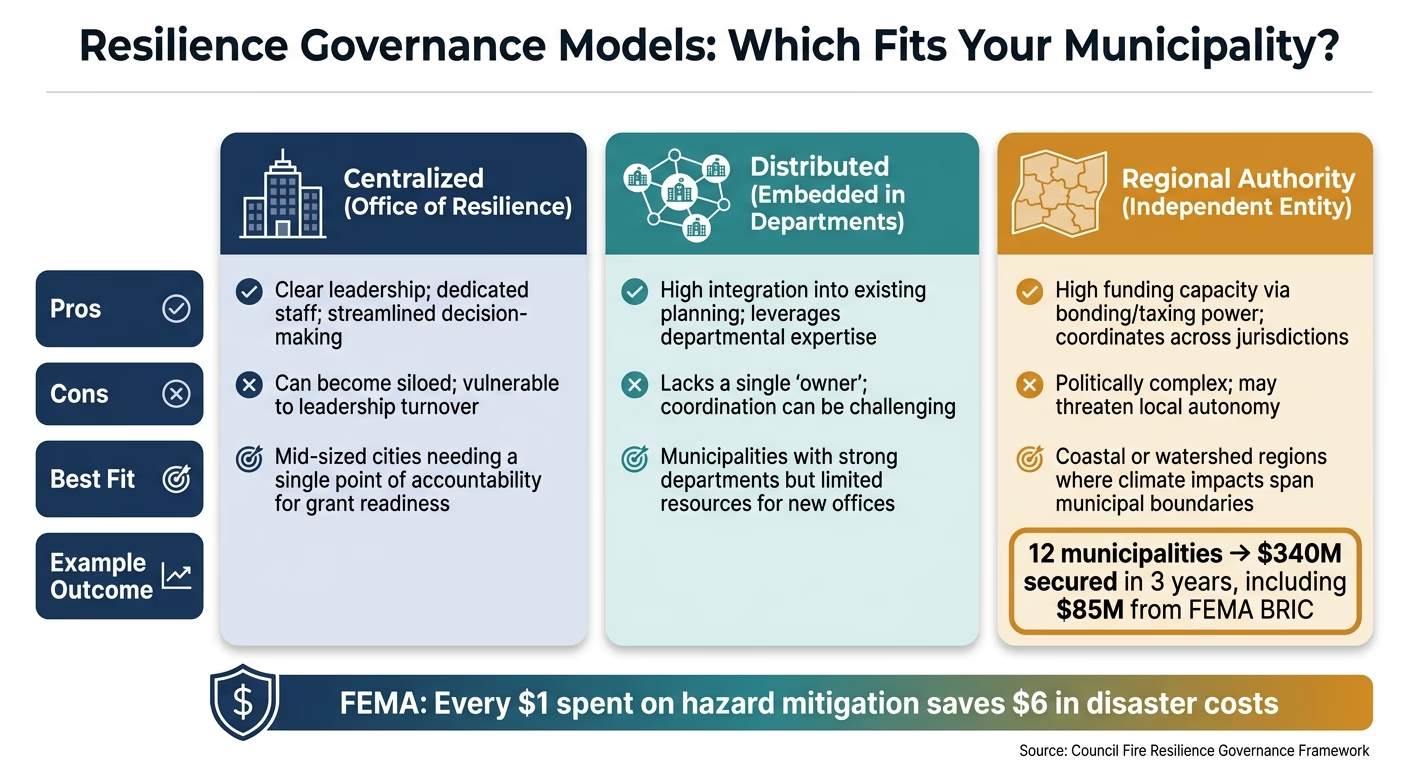
Resilience Governance Models Compared: Centralized vs. Distributed vs. Regional
Mapping Your Current Governance Structure
The first step in designing a resilience governance model is to assess your current structure. This involves a thorough evaluation of how resilience responsibilities are distributed across departments, identifying areas where political turnover disrupts progress, and pinpointing how budget limitations hinder action. By reviewing charters, ordinances, and departmental roles, you can uncover where resilience efforts currently sit within your organization.
Often, resilience serves as a unifying concept, connecting departments like Public Works, Planning, and Public Health around shared objectives, even when they operate with different priorities and frameworks [2].
This mapping process should also dig deeper to uncover systemic issues. Historical zoning practices, corporate tax incentives, and neglect of infrastructure in certain areas frequently exacerbate community risks. Combining existing infrastructure maps with Social Vulnerability Index (SVI) data can highlight where climate risks overlap with socioeconomic vulnerabilities. These insights help identify where governance gaps have the most critical consequences.
Once these gaps are clear, the next step is embedding equity and risk into your governance framework.
Embedding Equity and Risk into Decision-Making
To build an effective resilience governance model, equity and risk must be integrated into every decision - not as separate considerations, but as a unified approach.
One proven method is using an equity-weighted multi-criteria scoring framework. This tool evaluates projects based on multiple factors, such as hazard severity, the number of beneficiaries, equity impact, and additional benefits, rather than focusing solely on cost-effectiveness or hazard reduction. For instance, a mid-Atlantic city with 28,000 residents applied this framework to prioritize a $14.7 million project pipeline. Within 18 months, they secured full grant funding, enabling the construction of a 1.2-mile living shoreline and the launch of a voluntary buyout program for 23 properties prone to repeated flooding [4].
Structural equity also requires rethinking who gets a seat at the table. Including frontline community representatives as voting members in resilience committees ensures that local knowledge directly informs policy decisions. Additionally, when designing funding mechanisms like resilience fees, incorporating means-tested exemptions for low-income property owners can help prevent deepening existing disparities [1].
"Equity must be structural, not aspirational." - Council Fire [1]
With equity and risk embedded into your decision-making, the next step is to explore governance models that align with your community’s needs.
Comparing Governance Structures
After mapping your current structure and integrating equity and risk, the next task is to select a governance model - centralized, distributed, or regional - that best suits your community’s size, risk profile, and political landscape. There’s no one-size-fits-all solution; the right model depends on your unique circumstances. The table below outlines the strengths and challenges of three common approaches:
Governance Model | Pros | Cons | Best-Fit Conditions |
|---|---|---|---|
Centralized (e.g., Office of Resilience) | Clear leadership; dedicated staff; streamlined decision-making | Can become siloed; vulnerable to turnover | Mid-sized cities needing a single point of accountability for grant readiness |
Distributed (Embedded in departments) | High integration into existing planning; leverages departmental expertise | Lacks a single "owner"; coordination can be challenging | Municipalities with strong departments but limited resources for new offices |
Regional Authority (Independent entity) | High funding capacity via bonding/taxing power; coordinates across jurisdictions | Politically complex; may threaten local autonomy | Coastal or watershed regions where climate impacts span municipal boundaries |
The regional model can be particularly effective in areas with shared climate challenges. For example, a coastal county with 12 municipalities created an independent authority governed by a 15-member board - one representative per municipality and three county appointees. This authority was empowered to issue revenue bonds and implement a resilience fee based on impervious surface area. The result? The county generated $14 million annually and secured $340 million in infrastructure funding within three years, including $85 million from FEMA’s BRIC program. Importantly, local land use and building codes remained under municipal control, which helped secure political support for the initiative [1].
Tools for Balancing Risk and Equity in Day-to-Day Governance
Equity-Centered Risk Assessment Tools
Once a governance model is in place, equity and risk considerations need to guide daily operations, not just inform strategic plans. Thankfully, several practical tools are available to help municipalities achieve this balance effectively.
One accessible option is the Equitable Resilience Builder (ERB), a free app from the EPA. This tool facilitates inclusive hazard assessments by incorporating participatory mapping, indicator card sorting, and community connections diagramming. What makes it stand out is its focus on qualitative data, using trauma-informed engagement and storytelling to capture local insights that traditional quantitative methods often overlook [8].
"Disasters and climate change can cause or worsen environmental and human health problems in ways that often reflect historic societal inequalities." - EPA [8]
For more data-driven analysis, FEMA's Resilience Analysis and Planning Tool (RAPT) offers over 100 preloaded data layers that include demographics, infrastructure, and hazard exposure. When paired with the Community Resilience Challenges Index (CRCI) - which uses peer-reviewed indicators to highlight community-specific resilience barriers - these tools provide planners with a deeper understanding of risks beyond basic asset damage assessments [9].
The following table summarizes the key tools and their primary functions:
Tool | Primary Function | Key Strength |
|---|---|---|
Equitable Resilience Builder (ERB) | Inclusive hazard assessment | Participatory mapping & trauma-informed engagement [8] |
Resilience Analysis & Planning Tool (RAPT) | GIS data analysis | 100+ preloaded population, infrastructure & hazard layers [9] |
National Risk Index (NRI) | Hazard risk identification | Tracks risk across 18 natural hazards at the community level [9] |
Community Resilience Challenges Index (CRCI) | Identifying resilience barriers | Peer-reviewed indicators of community-specific challenges [9] |
These tools provide the foundation for using data to drive equitable resilience investments.
Using Data to Guide Equitable Resilience Investments
The real value of these tools lies in turning their data into actionable investment decisions. A key shift is moving from asset-based metrics, which prioritize high-value properties, to social-based metrics that focus on the needs of vulnerable populations [5].
For example, overlaying hazard data from the National Risk Index (NRI) with socioeconomic indicators like income levels, housing instability, and health vulnerabilities helps identify areas where human needs and physical risks overlap. The NRI tracks risks from 18 natural hazards and integrates smoothly into broader resilience planning [9]. This combined approach reveals insights that traditional risk maps often miss, such as pinpointing where the most urgent human needs align with the greatest physical dangers.
Standard benefit–cost analyses often favor wealthier neighborhoods due to higher property values. Replacing or supplementing these analyses with metrics that emphasize community well-being - like health outcomes, displacement risks, and access to essential services - helps prioritize investments more equitably [5].
Armed with these data-driven insights, policymakers can embed equity into daily governance decisions.
Policy Levers and Iterative Governance Cycles
The data collected through these tools informs policy mechanisms that integrate equity into routine governance. One effective spatial planning strategy is the Restrict-Condition-Promote (RCP) framework, which organizes land use decisions based on risk levels. For example:
Development is restricted in high-risk zones.
It is conditioned on risk-reduction measures, such as improved drainage, in moderate-risk areas.
It is promoted through incentives in safer locations [10].
This framework has been applied in places like Beira, Mozambique, where drainage infrastructure was aligned with land-use planning. U.S. municipalities managing flood-prone or climate-stressed areas could adopt similar strategies [10].
In addition to spatial planning, root cause analysis can uncover the historical policies - such as exclusionary zoning or underfunded infrastructure - that led to current vulnerabilities. For instance, Mount Vernon, New York, used a "Policy and Systems Change Compass" in 2024–2025 to evaluate policy options. The city ultimately enacted a mandatory healthy housing inspection ordinance targeting lead and mold, as it offered the best balance of public health impact and political feasibility [7].
"Risk-informed planning is no longer optional; it is essential to ensure the cities we build today remain resilient and livable for the decades to come." - World Bank [10]
The process doesn’t end with implementation. Governance should operate as a continuous cycle - assess, act, measure, and revise - rather than as a one-time effort. Tools like the ERB are designed to support this approach by allowing municipalities to choose activities based on local priorities, implement them, and then use the results to adapt their strategies in the next cycle [8]. This iterative model ensures that governance remains flexible and responsive without requiring constant structural overhauls.
Stakeholder Collaboration in Resilience Governance
Collaborative Governance Models
To ensure resilience initiatives are inclusive and effective, governance structures must actively empower diverse groups. Technical expertise alone isn’t enough - it must be translated into actionable plans that prioritize equity.
One successful approach is the independent resilience authority, a legally distinct public entity with its own board and funding. A coastal county implemented this model in February 2026, creating a 15-member board with 12 municipal representatives and 3 county appointees. This authority introduced a resilience fee aimed at addressing inequities and, within three years, secured $340 million for critical projects. This funding included $85 million from FEMA's BRIC program and $120 million in bonds issued by the authority. These resources supported a regional stormwater master plan and the establishment of eight community resilience hubs in areas facing environmental justice challenges [1].
This governance model prioritizes equity by incorporating diverse representation on its board, employing fair funding strategies, and using equity-focused criteria to score projects. As a result, resources are directed toward communities that are most vulnerable and least equipped to recover from disasters. These structured frameworks pave the way for more community-driven participation in resilience planning.
Structuring Meaningful Community Participation
Engaging marginalized communities requires thoughtful and inclusive processes. The Spectrum of Community Engagement to Ownership provides a roadmap for agencies to move beyond basic outreach and toward deeper collaboration, where communities play an active role in identifying problems and crafting solutions [12].
A standout example comes from Austin, Texas. In December 2022, the City of Austin’s Office of Sustainability partnered with the nonprofit Go! Austin/Vamos! Austin (GAVA) and researchers from UT Austin to engage residents in two zip codes, 78744 and 78753. GAVA organized 23 community meetings - most conducted in Spanish - to involve residents in designing adaptive capacity indicators. These indicators accounted for 30% of the city’s biennial survey. The process resulted in a bilingual household preparedness guide for Dove Springs and a multi-hazard risk map that combined flood, heat, and wildfire data with social vulnerability indices. These tools directly enhanced the community’s resilience and preparedness [11].
This success was rooted in a reflexive co-production framework, which operates in three phases: Recognize, Reflect, and Respond. This approach encourages both government agencies and community partners to continuously challenge their assumptions, moving beyond treating equity as a mere checkbox [11]. To ensure meaningful participation, engagement strategies must be tailored to eliminate barriers and foster genuine collaboration.
Engagement Protocols for Risk and Equity Decisions
Even the best-intentioned engagement efforts can fall short if logistical barriers aren’t addressed. Effective communication goes beyond translating materials - it involves holding meetings in neighborhood spaces, offering accessible venues, and providing childcare, meals, and compensation for participants [12].
"Marginalization [is] the status quo practice of current systems that have been historically designed to exclude certain populations... if concerted efforts are not made to break down existing barriers to participation, then by default marginalization occurs." - Rosa González, Founder, Facilitating Power [12]
Closing the feedback loop is another critical element. Communities often experience "engagement fatigue" when their input is solicited but not acted upon. Agencies must establish clear channels to report back on how feedback influenced decisions, even when outcomes differ from residents' expectations. The USDN Nexus Diagram provides a practical guide for tracking engagement cycles and ensuring that past input informs future planning [11].
Internal preparation is equally important. Agencies should first examine historical policies that have contributed to current inequities and work toward internal alignment across departments. Engaging with communities without addressing these foundational issues can lead to mistrust that’s hard to overcome. By laying this groundwork, agencies can build trust and foster more productive collaborations.
Conclusion: Building Resilience Governance for Equitable Outcomes
Creating effective resilience governance goes beyond good intentions; it demands equity woven into every aspect - from board representation and fee structures to project evaluation and community involvement. When equity is treated as an afterthought, vulnerable populations are inevitably overlooked.
The data speaks volumes: governance models that integrate dedicated funding, regional collaboration, and equity-focused decision-making yield impressive outcomes. FEMA reports that for every $1 spent on hazard mitigation, $6 is saved in disaster-related costs [3]. These benefits multiply when investments prioritize frontline communities grappling with compounded risks like flooding, historical contamination, and social vulnerabilities.
"Building resilience requires more than infrastructure upgrades. It demands social cohesion, equitable resource distribution, and governance structures that center the people most vulnerable to climate impacts." - Council Fire [1]
The key to turning plans into impactful action lies in systems thinking - recognizing how interconnected challenges like flooding, housing stability, stormwater management, and public health influence one another. Addressing these issues in isolation leads to fragmented solutions that often fail to endure.
Council Fire combines technical know-how, participatory engagement, and actionable planning to help municipalities transition from vision to implementation. Whether it's establishing an independent resilience authority, embedding equity into project prioritization, or fostering trust-based collaboration across regions, the focus remains unwavering: designing governance structures that are inclusive, resilient, and serve every resident - not just the most vocal or the most resourced.
FAQs
How do we pick the right governance model for our city?
To begin, evaluate your city’s specific challenges by conducting a vulnerability analysis. This will help identify areas most at risk and prioritize action. Next, map out your policy ecosystem to uncover opportunities for collaboration. Consider frameworks such as independent authorities, joint powers authorities, or cross-departmental committees - each offering ways to balance regional coordination with maintaining local control.
Emphasize creating structures that clearly define responsibilities, establish sustainable funding sources, and uplift frontline communities. By embedding equity into the core of decision-making processes, rather than treating it as a secondary concern, you can ensure fair and inclusive outcomes.
How can we fund resilience without burdening low-income residents?
Municipalities have the opportunity to explore forward-thinking revenue strategies that shift the financial burden away from residents and onto larger entities. For example, Portland, Oregon, has implemented a gross receipts tax targeting major retailers, while Boulder, Colorado, enforces a carbon tax that primarily affects industrial users. These approaches not only generate revenue but also align with broader policy goals, such as environmental accountability.
Additionally, federal initiatives like the Clean Water and Drinking Water State Revolving Funds provide critical support. These programs offer grants or forgivable loans aimed at assisting underserved communities, ensuring access to essential resources. Beyond this, public-private partnerships can bring additional funding and expertise to the table, while exempting low-income residents from certain taxes helps to ensure fairness and equity in municipal finance. Together, these strategies illustrate how cities can balance fiscal responsibility with social and environmental priorities.
How can we prevent resilience projects from causing displacement?
Municipalities can help prevent displacement by combining infrastructure improvements with affordable housing safeguards. Resilience projects often boost property values, which can unintentionally push out underserved populations. To counter this, it's crucial to prioritize these communities while protecting them from economic pressures. One effective approach is introducing equity-focused measures, such as means-tested tax exemptions for low-income property owners. These steps ensure that funding strategies don’t place an undue financial strain on the very groups most impacted by climate challenges.
Related Blog Posts
How to Co-Design Climate-Ready Communities with Residents for Municipalities & Government Agencies
How to Embed Equity in Local Resilience Planning for Municipalities & Government Agencies
How to Embed Equity in Local Resilience Planning for Corporations
How to Embed Equity in Local Resilience Planning for NGOs & Nonprofits
Latest Articles
©2026

Narrative Change and Power Building: The Missing Half of Advocacy
Narrative change is the process of disrupting dominant narratives that normalize inequity and advancing new narratives from historically marginalized communities.

Funding Resilience Without Federal Grants
BRIC is unreliable and FEMA is shrinking. Here's how cities fund climate resilience with dedicated revenue, blended finance, and a coordinating authority.

The ESG Blind Spot: How AI Is Finding Risks in Companies Nobody Else Is Watching
Norway's sovereign wealth fund uses AI to screen 7,200 portfolio companies for forced labor and corruption within 24 hours. The real story is the emerging-market coverage gap that traditional ESG data vendors miss — and what it means for any company with a global supply chain.
Narrative Change and Power Building: The Missing Half of Advocacy
Narrative change is the process of disrupting dominant narratives that normalize inequity and advancing new narratives from historically marginalized communities.
Funding Resilience Without Federal Grants
BRIC is unreliable and FEMA is shrinking. Here's how cities fund climate resilience with dedicated revenue, blended finance, and a coordinating authority.
The ESG Blind Spot: How AI Is Finding Risks in Companies Nobody Else Is Watching
Norway's sovereign wealth fund uses AI to screen 7,200 portfolio companies for forced labor and corruption within 24 hours. The real story is the emerging-market coverage gap that traditional ESG data vendors miss — and what it means for any company with a global supply chain.
FAQ
01
What does it really mean to “redefine profit”?
02
What makes Council Fire different?
03
Who does Council Fire work with?
04
What does working with Council Fire actually look like?
05
How does Council Fire help organizations turn big goals into action?
06
How does Council Fire define and measure success?
07
How does technology fit into Council Fire’s work?
Jun 5, 2026
How to Build Resilience Governance Models That Balance Risk and Equity for Municipalities & Government Agencies
Capacity Building
In This Article
Embed equity into resilience governance so municipalities protect vulnerable communities while balancing risk, funding, and participation.
How to Build Resilience Governance Models That Balance Risk and Equity for Municipalities & Government Agencies
Resilience governance is about creating systems that help cities and agencies handle sudden disasters and long-term challenges while addressing social inequities. Municipalities face risks like extreme weather, aging infrastructure, and economic instability, which often hit low-income and marginalized communities hardest. Building effective governance requires balancing risk management with equity to ensure that vulnerable populations are prioritized.
Key Takeaways:
Resilience governance involves making decisions on who manages risks, how funding is allocated, and which communities benefit.
Equity matters: Low-income areas often face higher risks but receive less investment. Federal programs like FEMA's BRIC are shifting to reward equitable outcomes.
Risk and equity integration: Tools like equity-weighted scoring frameworks and data-driven analyses can guide fairer investments.
Governance models: Options include centralized offices, distributed departmental roles, or regional authorities, each suited to different municipal needs.
Community participation: Engaging affected communities in decisions ensures fairer outcomes and builds trust.
By embedding equity into every decision, municipalities can create resilient systems that protect all residents, not just the wealthiest.
Understanding Risk and Equity in Resilience Governance
How Risk Is Defined in Municipal Contexts
Municipal risk stems from four key factors: hazard, exposure, vulnerability, and capacity. These encompass the threat itself, what is at risk, the community's sensitivity (shaped by elements like housing quality and income), and its ability to recover from disruptions [5].
To effectively govern resilience, municipalities must address both acute shocks - such as hurricanes or ice storms - and chronic stresses, like persistent poverty, aging infrastructure, or urban heat. These stressors often compound over time, gradually weakening a community's ability to recover. This framework for understanding risk naturally aligns with the need to integrate equity principles, which are explored further below.
Equity and Justice Frameworks in Resilience
Resilience governance hinges on three interconnected dimensions of equity:
Procedural equity: Ensures inclusive participation in decision-making processes.
Distributive equity: Focuses on the fair allocation of resources and protections.
Recognitional equity: Acknowledges historical injustices, such as redlining, that have contributed to current vulnerabilities [5].
These principles are increasingly reflected in federal initiatives. For instance, the Justice40 Initiative mandates that 40% of the benefits from certain federal investments should reach disadvantaged communities [5]. Similarly, programs like FEMA's BRIC (Building Resilient Infrastructure and Communities) grant now incentivize municipalities to demonstrate equitable outcomes alongside traditional risk reduction. Grounding resilience planning in these equity principles - endorsed by organizations like the Yale Center for Environmental Justice - creates stronger, more inclusive communities [6]. Without this approach, a narrow focus on risk alone risks deepening existing disparities.
How Risk-Only Approaches Can Worsen Inequities
Traditional risk management often evaluates harm in terms of monetary losses. When benefit-cost analyses (BCA) prioritize property values, wealthier neighborhoods with higher-value assets tend to receive more investment. As RAND has pointed out:
"Benefit–cost and risk analyses are currently biased toward wealthy communities, while underserved populations face challenges meeting BRIC criteria." [5]
This bias results in a troubling trend. Low-income neighborhoods and communities of color often face greater exposure to disasters but receive less proactive investment. Even when resilience projects are implemented, they can lead to climate gentrification, raising property values and displacing the very residents they aim to protect.
The table below highlights the differences between conventional risk management and an equity-centered approach:
Feature | Conventional Risk Management | Equity-Centered Resilience Governance |
|---|---|---|
Primary Metric | Asset/property value damage | Community well-being & social resources |
Focus | Acute shocks (e.g., floods, fires) | Shocks + chronic stresses (e.g., poverty, lack of infrastructure) |
Decision-Making | Top-down/technical | Collaborative with historically excluded groups |
Outcome Goal | Protection of high-value tax base | Equitable distribution of safety and recovery capacity |
To move beyond asset-focused models, municipalities must recognize social systems - such as community networks, access to services, and language support - as critical components of resilience infrastructure, rather than treating them as secondary concerns.
The Resilient Maryland Strategy: A Whole-of-Government Approach to Disasters and Climate Change
How to Design Resilience Governance Models
Resilience Governance Models Compared: Centralized vs. Distributed vs. Regional
Mapping Your Current Governance Structure
The first step in designing a resilience governance model is to assess your current structure. This involves a thorough evaluation of how resilience responsibilities are distributed across departments, identifying areas where political turnover disrupts progress, and pinpointing how budget limitations hinder action. By reviewing charters, ordinances, and departmental roles, you can uncover where resilience efforts currently sit within your organization.
Often, resilience serves as a unifying concept, connecting departments like Public Works, Planning, and Public Health around shared objectives, even when they operate with different priorities and frameworks [2].
This mapping process should also dig deeper to uncover systemic issues. Historical zoning practices, corporate tax incentives, and neglect of infrastructure in certain areas frequently exacerbate community risks. Combining existing infrastructure maps with Social Vulnerability Index (SVI) data can highlight where climate risks overlap with socioeconomic vulnerabilities. These insights help identify where governance gaps have the most critical consequences.
Once these gaps are clear, the next step is embedding equity and risk into your governance framework.
Embedding Equity and Risk into Decision-Making
To build an effective resilience governance model, equity and risk must be integrated into every decision - not as separate considerations, but as a unified approach.
One proven method is using an equity-weighted multi-criteria scoring framework. This tool evaluates projects based on multiple factors, such as hazard severity, the number of beneficiaries, equity impact, and additional benefits, rather than focusing solely on cost-effectiveness or hazard reduction. For instance, a mid-Atlantic city with 28,000 residents applied this framework to prioritize a $14.7 million project pipeline. Within 18 months, they secured full grant funding, enabling the construction of a 1.2-mile living shoreline and the launch of a voluntary buyout program for 23 properties prone to repeated flooding [4].
Structural equity also requires rethinking who gets a seat at the table. Including frontline community representatives as voting members in resilience committees ensures that local knowledge directly informs policy decisions. Additionally, when designing funding mechanisms like resilience fees, incorporating means-tested exemptions for low-income property owners can help prevent deepening existing disparities [1].
"Equity must be structural, not aspirational." - Council Fire [1]
With equity and risk embedded into your decision-making, the next step is to explore governance models that align with your community’s needs.
Comparing Governance Structures
After mapping your current structure and integrating equity and risk, the next task is to select a governance model - centralized, distributed, or regional - that best suits your community’s size, risk profile, and political landscape. There’s no one-size-fits-all solution; the right model depends on your unique circumstances. The table below outlines the strengths and challenges of three common approaches:
Governance Model | Pros | Cons | Best-Fit Conditions |
|---|---|---|---|
Centralized (e.g., Office of Resilience) | Clear leadership; dedicated staff; streamlined decision-making | Can become siloed; vulnerable to turnover | Mid-sized cities needing a single point of accountability for grant readiness |
Distributed (Embedded in departments) | High integration into existing planning; leverages departmental expertise | Lacks a single "owner"; coordination can be challenging | Municipalities with strong departments but limited resources for new offices |
Regional Authority (Independent entity) | High funding capacity via bonding/taxing power; coordinates across jurisdictions | Politically complex; may threaten local autonomy | Coastal or watershed regions where climate impacts span municipal boundaries |
The regional model can be particularly effective in areas with shared climate challenges. For example, a coastal county with 12 municipalities created an independent authority governed by a 15-member board - one representative per municipality and three county appointees. This authority was empowered to issue revenue bonds and implement a resilience fee based on impervious surface area. The result? The county generated $14 million annually and secured $340 million in infrastructure funding within three years, including $85 million from FEMA’s BRIC program. Importantly, local land use and building codes remained under municipal control, which helped secure political support for the initiative [1].
Tools for Balancing Risk and Equity in Day-to-Day Governance
Equity-Centered Risk Assessment Tools
Once a governance model is in place, equity and risk considerations need to guide daily operations, not just inform strategic plans. Thankfully, several practical tools are available to help municipalities achieve this balance effectively.
One accessible option is the Equitable Resilience Builder (ERB), a free app from the EPA. This tool facilitates inclusive hazard assessments by incorporating participatory mapping, indicator card sorting, and community connections diagramming. What makes it stand out is its focus on qualitative data, using trauma-informed engagement and storytelling to capture local insights that traditional quantitative methods often overlook [8].
"Disasters and climate change can cause or worsen environmental and human health problems in ways that often reflect historic societal inequalities." - EPA [8]
For more data-driven analysis, FEMA's Resilience Analysis and Planning Tool (RAPT) offers over 100 preloaded data layers that include demographics, infrastructure, and hazard exposure. When paired with the Community Resilience Challenges Index (CRCI) - which uses peer-reviewed indicators to highlight community-specific resilience barriers - these tools provide planners with a deeper understanding of risks beyond basic asset damage assessments [9].
The following table summarizes the key tools and their primary functions:
Tool | Primary Function | Key Strength |
|---|---|---|
Equitable Resilience Builder (ERB) | Inclusive hazard assessment | Participatory mapping & trauma-informed engagement [8] |
Resilience Analysis & Planning Tool (RAPT) | GIS data analysis | 100+ preloaded population, infrastructure & hazard layers [9] |
National Risk Index (NRI) | Hazard risk identification | Tracks risk across 18 natural hazards at the community level [9] |
Community Resilience Challenges Index (CRCI) | Identifying resilience barriers | Peer-reviewed indicators of community-specific challenges [9] |
These tools provide the foundation for using data to drive equitable resilience investments.
Using Data to Guide Equitable Resilience Investments
The real value of these tools lies in turning their data into actionable investment decisions. A key shift is moving from asset-based metrics, which prioritize high-value properties, to social-based metrics that focus on the needs of vulnerable populations [5].
For example, overlaying hazard data from the National Risk Index (NRI) with socioeconomic indicators like income levels, housing instability, and health vulnerabilities helps identify areas where human needs and physical risks overlap. The NRI tracks risks from 18 natural hazards and integrates smoothly into broader resilience planning [9]. This combined approach reveals insights that traditional risk maps often miss, such as pinpointing where the most urgent human needs align with the greatest physical dangers.
Standard benefit–cost analyses often favor wealthier neighborhoods due to higher property values. Replacing or supplementing these analyses with metrics that emphasize community well-being - like health outcomes, displacement risks, and access to essential services - helps prioritize investments more equitably [5].
Armed with these data-driven insights, policymakers can embed equity into daily governance decisions.
Policy Levers and Iterative Governance Cycles
The data collected through these tools informs policy mechanisms that integrate equity into routine governance. One effective spatial planning strategy is the Restrict-Condition-Promote (RCP) framework, which organizes land use decisions based on risk levels. For example:
Development is restricted in high-risk zones.
It is conditioned on risk-reduction measures, such as improved drainage, in moderate-risk areas.
It is promoted through incentives in safer locations [10].
This framework has been applied in places like Beira, Mozambique, where drainage infrastructure was aligned with land-use planning. U.S. municipalities managing flood-prone or climate-stressed areas could adopt similar strategies [10].
In addition to spatial planning, root cause analysis can uncover the historical policies - such as exclusionary zoning or underfunded infrastructure - that led to current vulnerabilities. For instance, Mount Vernon, New York, used a "Policy and Systems Change Compass" in 2024–2025 to evaluate policy options. The city ultimately enacted a mandatory healthy housing inspection ordinance targeting lead and mold, as it offered the best balance of public health impact and political feasibility [7].
"Risk-informed planning is no longer optional; it is essential to ensure the cities we build today remain resilient and livable for the decades to come." - World Bank [10]
The process doesn’t end with implementation. Governance should operate as a continuous cycle - assess, act, measure, and revise - rather than as a one-time effort. Tools like the ERB are designed to support this approach by allowing municipalities to choose activities based on local priorities, implement them, and then use the results to adapt their strategies in the next cycle [8]. This iterative model ensures that governance remains flexible and responsive without requiring constant structural overhauls.
Stakeholder Collaboration in Resilience Governance
Collaborative Governance Models
To ensure resilience initiatives are inclusive and effective, governance structures must actively empower diverse groups. Technical expertise alone isn’t enough - it must be translated into actionable plans that prioritize equity.
One successful approach is the independent resilience authority, a legally distinct public entity with its own board and funding. A coastal county implemented this model in February 2026, creating a 15-member board with 12 municipal representatives and 3 county appointees. This authority introduced a resilience fee aimed at addressing inequities and, within three years, secured $340 million for critical projects. This funding included $85 million from FEMA's BRIC program and $120 million in bonds issued by the authority. These resources supported a regional stormwater master plan and the establishment of eight community resilience hubs in areas facing environmental justice challenges [1].
This governance model prioritizes equity by incorporating diverse representation on its board, employing fair funding strategies, and using equity-focused criteria to score projects. As a result, resources are directed toward communities that are most vulnerable and least equipped to recover from disasters. These structured frameworks pave the way for more community-driven participation in resilience planning.
Structuring Meaningful Community Participation
Engaging marginalized communities requires thoughtful and inclusive processes. The Spectrum of Community Engagement to Ownership provides a roadmap for agencies to move beyond basic outreach and toward deeper collaboration, where communities play an active role in identifying problems and crafting solutions [12].
A standout example comes from Austin, Texas. In December 2022, the City of Austin’s Office of Sustainability partnered with the nonprofit Go! Austin/Vamos! Austin (GAVA) and researchers from UT Austin to engage residents in two zip codes, 78744 and 78753. GAVA organized 23 community meetings - most conducted in Spanish - to involve residents in designing adaptive capacity indicators. These indicators accounted for 30% of the city’s biennial survey. The process resulted in a bilingual household preparedness guide for Dove Springs and a multi-hazard risk map that combined flood, heat, and wildfire data with social vulnerability indices. These tools directly enhanced the community’s resilience and preparedness [11].
This success was rooted in a reflexive co-production framework, which operates in three phases: Recognize, Reflect, and Respond. This approach encourages both government agencies and community partners to continuously challenge their assumptions, moving beyond treating equity as a mere checkbox [11]. To ensure meaningful participation, engagement strategies must be tailored to eliminate barriers and foster genuine collaboration.
Engagement Protocols for Risk and Equity Decisions
Even the best-intentioned engagement efforts can fall short if logistical barriers aren’t addressed. Effective communication goes beyond translating materials - it involves holding meetings in neighborhood spaces, offering accessible venues, and providing childcare, meals, and compensation for participants [12].
"Marginalization [is] the status quo practice of current systems that have been historically designed to exclude certain populations... if concerted efforts are not made to break down existing barriers to participation, then by default marginalization occurs." - Rosa González, Founder, Facilitating Power [12]
Closing the feedback loop is another critical element. Communities often experience "engagement fatigue" when their input is solicited but not acted upon. Agencies must establish clear channels to report back on how feedback influenced decisions, even when outcomes differ from residents' expectations. The USDN Nexus Diagram provides a practical guide for tracking engagement cycles and ensuring that past input informs future planning [11].
Internal preparation is equally important. Agencies should first examine historical policies that have contributed to current inequities and work toward internal alignment across departments. Engaging with communities without addressing these foundational issues can lead to mistrust that’s hard to overcome. By laying this groundwork, agencies can build trust and foster more productive collaborations.
Conclusion: Building Resilience Governance for Equitable Outcomes
Creating effective resilience governance goes beyond good intentions; it demands equity woven into every aspect - from board representation and fee structures to project evaluation and community involvement. When equity is treated as an afterthought, vulnerable populations are inevitably overlooked.
The data speaks volumes: governance models that integrate dedicated funding, regional collaboration, and equity-focused decision-making yield impressive outcomes. FEMA reports that for every $1 spent on hazard mitigation, $6 is saved in disaster-related costs [3]. These benefits multiply when investments prioritize frontline communities grappling with compounded risks like flooding, historical contamination, and social vulnerabilities.
"Building resilience requires more than infrastructure upgrades. It demands social cohesion, equitable resource distribution, and governance structures that center the people most vulnerable to climate impacts." - Council Fire [1]
The key to turning plans into impactful action lies in systems thinking - recognizing how interconnected challenges like flooding, housing stability, stormwater management, and public health influence one another. Addressing these issues in isolation leads to fragmented solutions that often fail to endure.
Council Fire combines technical know-how, participatory engagement, and actionable planning to help municipalities transition from vision to implementation. Whether it's establishing an independent resilience authority, embedding equity into project prioritization, or fostering trust-based collaboration across regions, the focus remains unwavering: designing governance structures that are inclusive, resilient, and serve every resident - not just the most vocal or the most resourced.
FAQs
How do we pick the right governance model for our city?
To begin, evaluate your city’s specific challenges by conducting a vulnerability analysis. This will help identify areas most at risk and prioritize action. Next, map out your policy ecosystem to uncover opportunities for collaboration. Consider frameworks such as independent authorities, joint powers authorities, or cross-departmental committees - each offering ways to balance regional coordination with maintaining local control.
Emphasize creating structures that clearly define responsibilities, establish sustainable funding sources, and uplift frontline communities. By embedding equity into the core of decision-making processes, rather than treating it as a secondary concern, you can ensure fair and inclusive outcomes.
How can we fund resilience without burdening low-income residents?
Municipalities have the opportunity to explore forward-thinking revenue strategies that shift the financial burden away from residents and onto larger entities. For example, Portland, Oregon, has implemented a gross receipts tax targeting major retailers, while Boulder, Colorado, enforces a carbon tax that primarily affects industrial users. These approaches not only generate revenue but also align with broader policy goals, such as environmental accountability.
Additionally, federal initiatives like the Clean Water and Drinking Water State Revolving Funds provide critical support. These programs offer grants or forgivable loans aimed at assisting underserved communities, ensuring access to essential resources. Beyond this, public-private partnerships can bring additional funding and expertise to the table, while exempting low-income residents from certain taxes helps to ensure fairness and equity in municipal finance. Together, these strategies illustrate how cities can balance fiscal responsibility with social and environmental priorities.
How can we prevent resilience projects from causing displacement?
Municipalities can help prevent displacement by combining infrastructure improvements with affordable housing safeguards. Resilience projects often boost property values, which can unintentionally push out underserved populations. To counter this, it's crucial to prioritize these communities while protecting them from economic pressures. One effective approach is introducing equity-focused measures, such as means-tested tax exemptions for low-income property owners. These steps ensure that funding strategies don’t place an undue financial strain on the very groups most impacted by climate challenges.
Related Blog Posts
How to Co-Design Climate-Ready Communities with Residents for Municipalities & Government Agencies
How to Embed Equity in Local Resilience Planning for Municipalities & Government Agencies
How to Embed Equity in Local Resilience Planning for Corporations
How to Embed Equity in Local Resilience Planning for NGOs & Nonprofits
Latest Articles
©2026
Narrative Change and Power Building: The Missing Half of Advocacy
Narrative change is the process of disrupting dominant narratives that normalize inequity and advancing new narratives from historically marginalized communities.
Funding Resilience Without Federal Grants
BRIC is unreliable and FEMA is shrinking. Here's how cities fund climate resilience with dedicated revenue, blended finance, and a coordinating authority.
The ESG Blind Spot: How AI Is Finding Risks in Companies Nobody Else Is Watching
Norway's sovereign wealth fund uses AI to screen 7,200 portfolio companies for forced labor and corruption within 24 hours. The real story is the emerging-market coverage gap that traditional ESG data vendors miss — and what it means for any company with a global supply chain.
FAQ
01
What does it really mean to “redefine profit”?
02
What makes Council Fire different?
03
Who does Council Fire work with?
04
What does working with Council Fire actually look like?
05
How does Council Fire help organizations turn big goals into action?
06
How does Council Fire define and measure success?
07
How does technology fit into Council Fire’s work?
Jun 5, 2026
How to Build Resilience Governance Models That Balance Risk and Equity for Municipalities & Government Agencies
Capacity Building
In This Article
Embed equity into resilience governance so municipalities protect vulnerable communities while balancing risk, funding, and participation.
How to Build Resilience Governance Models That Balance Risk and Equity for Municipalities & Government Agencies
Resilience governance is about creating systems that help cities and agencies handle sudden disasters and long-term challenges while addressing social inequities. Municipalities face risks like extreme weather, aging infrastructure, and economic instability, which often hit low-income and marginalized communities hardest. Building effective governance requires balancing risk management with equity to ensure that vulnerable populations are prioritized.
Key Takeaways:
Resilience governance involves making decisions on who manages risks, how funding is allocated, and which communities benefit.
Equity matters: Low-income areas often face higher risks but receive less investment. Federal programs like FEMA's BRIC are shifting to reward equitable outcomes.
Risk and equity integration: Tools like equity-weighted scoring frameworks and data-driven analyses can guide fairer investments.
Governance models: Options include centralized offices, distributed departmental roles, or regional authorities, each suited to different municipal needs.
Community participation: Engaging affected communities in decisions ensures fairer outcomes and builds trust.
By embedding equity into every decision, municipalities can create resilient systems that protect all residents, not just the wealthiest.
Understanding Risk and Equity in Resilience Governance
How Risk Is Defined in Municipal Contexts
Municipal risk stems from four key factors: hazard, exposure, vulnerability, and capacity. These encompass the threat itself, what is at risk, the community's sensitivity (shaped by elements like housing quality and income), and its ability to recover from disruptions [5].
To effectively govern resilience, municipalities must address both acute shocks - such as hurricanes or ice storms - and chronic stresses, like persistent poverty, aging infrastructure, or urban heat. These stressors often compound over time, gradually weakening a community's ability to recover. This framework for understanding risk naturally aligns with the need to integrate equity principles, which are explored further below.
Equity and Justice Frameworks in Resilience
Resilience governance hinges on three interconnected dimensions of equity:
Procedural equity: Ensures inclusive participation in decision-making processes.
Distributive equity: Focuses on the fair allocation of resources and protections.
Recognitional equity: Acknowledges historical injustices, such as redlining, that have contributed to current vulnerabilities [5].
These principles are increasingly reflected in federal initiatives. For instance, the Justice40 Initiative mandates that 40% of the benefits from certain federal investments should reach disadvantaged communities [5]. Similarly, programs like FEMA's BRIC (Building Resilient Infrastructure and Communities) grant now incentivize municipalities to demonstrate equitable outcomes alongside traditional risk reduction. Grounding resilience planning in these equity principles - endorsed by organizations like the Yale Center for Environmental Justice - creates stronger, more inclusive communities [6]. Without this approach, a narrow focus on risk alone risks deepening existing disparities.
How Risk-Only Approaches Can Worsen Inequities
Traditional risk management often evaluates harm in terms of monetary losses. When benefit-cost analyses (BCA) prioritize property values, wealthier neighborhoods with higher-value assets tend to receive more investment. As RAND has pointed out:
"Benefit–cost and risk analyses are currently biased toward wealthy communities, while underserved populations face challenges meeting BRIC criteria." [5]
This bias results in a troubling trend. Low-income neighborhoods and communities of color often face greater exposure to disasters but receive less proactive investment. Even when resilience projects are implemented, they can lead to climate gentrification, raising property values and displacing the very residents they aim to protect.
The table below highlights the differences between conventional risk management and an equity-centered approach:
Feature | Conventional Risk Management | Equity-Centered Resilience Governance |
|---|---|---|
Primary Metric | Asset/property value damage | Community well-being & social resources |
Focus | Acute shocks (e.g., floods, fires) | Shocks + chronic stresses (e.g., poverty, lack of infrastructure) |
Decision-Making | Top-down/technical | Collaborative with historically excluded groups |
Outcome Goal | Protection of high-value tax base | Equitable distribution of safety and recovery capacity |
To move beyond asset-focused models, municipalities must recognize social systems - such as community networks, access to services, and language support - as critical components of resilience infrastructure, rather than treating them as secondary concerns.
The Resilient Maryland Strategy: A Whole-of-Government Approach to Disasters and Climate Change
How to Design Resilience Governance Models
Resilience Governance Models Compared: Centralized vs. Distributed vs. Regional
Mapping Your Current Governance Structure
The first step in designing a resilience governance model is to assess your current structure. This involves a thorough evaluation of how resilience responsibilities are distributed across departments, identifying areas where political turnover disrupts progress, and pinpointing how budget limitations hinder action. By reviewing charters, ordinances, and departmental roles, you can uncover where resilience efforts currently sit within your organization.
Often, resilience serves as a unifying concept, connecting departments like Public Works, Planning, and Public Health around shared objectives, even when they operate with different priorities and frameworks [2].
This mapping process should also dig deeper to uncover systemic issues. Historical zoning practices, corporate tax incentives, and neglect of infrastructure in certain areas frequently exacerbate community risks. Combining existing infrastructure maps with Social Vulnerability Index (SVI) data can highlight where climate risks overlap with socioeconomic vulnerabilities. These insights help identify where governance gaps have the most critical consequences.
Once these gaps are clear, the next step is embedding equity and risk into your governance framework.
Embedding Equity and Risk into Decision-Making
To build an effective resilience governance model, equity and risk must be integrated into every decision - not as separate considerations, but as a unified approach.
One proven method is using an equity-weighted multi-criteria scoring framework. This tool evaluates projects based on multiple factors, such as hazard severity, the number of beneficiaries, equity impact, and additional benefits, rather than focusing solely on cost-effectiveness or hazard reduction. For instance, a mid-Atlantic city with 28,000 residents applied this framework to prioritize a $14.7 million project pipeline. Within 18 months, they secured full grant funding, enabling the construction of a 1.2-mile living shoreline and the launch of a voluntary buyout program for 23 properties prone to repeated flooding [4].
Structural equity also requires rethinking who gets a seat at the table. Including frontline community representatives as voting members in resilience committees ensures that local knowledge directly informs policy decisions. Additionally, when designing funding mechanisms like resilience fees, incorporating means-tested exemptions for low-income property owners can help prevent deepening existing disparities [1].
"Equity must be structural, not aspirational." - Council Fire [1]
With equity and risk embedded into your decision-making, the next step is to explore governance models that align with your community’s needs.
Comparing Governance Structures
After mapping your current structure and integrating equity and risk, the next task is to select a governance model - centralized, distributed, or regional - that best suits your community’s size, risk profile, and political landscape. There’s no one-size-fits-all solution; the right model depends on your unique circumstances. The table below outlines the strengths and challenges of three common approaches:
Governance Model | Pros | Cons | Best-Fit Conditions |
|---|---|---|---|
Centralized (e.g., Office of Resilience) | Clear leadership; dedicated staff; streamlined decision-making | Can become siloed; vulnerable to turnover | Mid-sized cities needing a single point of accountability for grant readiness |
Distributed (Embedded in departments) | High integration into existing planning; leverages departmental expertise | Lacks a single "owner"; coordination can be challenging | Municipalities with strong departments but limited resources for new offices |
Regional Authority (Independent entity) | High funding capacity via bonding/taxing power; coordinates across jurisdictions | Politically complex; may threaten local autonomy | Coastal or watershed regions where climate impacts span municipal boundaries |
The regional model can be particularly effective in areas with shared climate challenges. For example, a coastal county with 12 municipalities created an independent authority governed by a 15-member board - one representative per municipality and three county appointees. This authority was empowered to issue revenue bonds and implement a resilience fee based on impervious surface area. The result? The county generated $14 million annually and secured $340 million in infrastructure funding within three years, including $85 million from FEMA’s BRIC program. Importantly, local land use and building codes remained under municipal control, which helped secure political support for the initiative [1].
Tools for Balancing Risk and Equity in Day-to-Day Governance
Equity-Centered Risk Assessment Tools
Once a governance model is in place, equity and risk considerations need to guide daily operations, not just inform strategic plans. Thankfully, several practical tools are available to help municipalities achieve this balance effectively.
One accessible option is the Equitable Resilience Builder (ERB), a free app from the EPA. This tool facilitates inclusive hazard assessments by incorporating participatory mapping, indicator card sorting, and community connections diagramming. What makes it stand out is its focus on qualitative data, using trauma-informed engagement and storytelling to capture local insights that traditional quantitative methods often overlook [8].
"Disasters and climate change can cause or worsen environmental and human health problems in ways that often reflect historic societal inequalities." - EPA [8]
For more data-driven analysis, FEMA's Resilience Analysis and Planning Tool (RAPT) offers over 100 preloaded data layers that include demographics, infrastructure, and hazard exposure. When paired with the Community Resilience Challenges Index (CRCI) - which uses peer-reviewed indicators to highlight community-specific resilience barriers - these tools provide planners with a deeper understanding of risks beyond basic asset damage assessments [9].
The following table summarizes the key tools and their primary functions:
Tool | Primary Function | Key Strength |
|---|---|---|
Equitable Resilience Builder (ERB) | Inclusive hazard assessment | Participatory mapping & trauma-informed engagement [8] |
Resilience Analysis & Planning Tool (RAPT) | GIS data analysis | 100+ preloaded population, infrastructure & hazard layers [9] |
National Risk Index (NRI) | Hazard risk identification | Tracks risk across 18 natural hazards at the community level [9] |
Community Resilience Challenges Index (CRCI) | Identifying resilience barriers | Peer-reviewed indicators of community-specific challenges [9] |
These tools provide the foundation for using data to drive equitable resilience investments.
Using Data to Guide Equitable Resilience Investments
The real value of these tools lies in turning their data into actionable investment decisions. A key shift is moving from asset-based metrics, which prioritize high-value properties, to social-based metrics that focus on the needs of vulnerable populations [5].
For example, overlaying hazard data from the National Risk Index (NRI) with socioeconomic indicators like income levels, housing instability, and health vulnerabilities helps identify areas where human needs and physical risks overlap. The NRI tracks risks from 18 natural hazards and integrates smoothly into broader resilience planning [9]. This combined approach reveals insights that traditional risk maps often miss, such as pinpointing where the most urgent human needs align with the greatest physical dangers.
Standard benefit–cost analyses often favor wealthier neighborhoods due to higher property values. Replacing or supplementing these analyses with metrics that emphasize community well-being - like health outcomes, displacement risks, and access to essential services - helps prioritize investments more equitably [5].
Armed with these data-driven insights, policymakers can embed equity into daily governance decisions.
Policy Levers and Iterative Governance Cycles
The data collected through these tools informs policy mechanisms that integrate equity into routine governance. One effective spatial planning strategy is the Restrict-Condition-Promote (RCP) framework, which organizes land use decisions based on risk levels. For example:
Development is restricted in high-risk zones.
It is conditioned on risk-reduction measures, such as improved drainage, in moderate-risk areas.
It is promoted through incentives in safer locations [10].
This framework has been applied in places like Beira, Mozambique, where drainage infrastructure was aligned with land-use planning. U.S. municipalities managing flood-prone or climate-stressed areas could adopt similar strategies [10].
In addition to spatial planning, root cause analysis can uncover the historical policies - such as exclusionary zoning or underfunded infrastructure - that led to current vulnerabilities. For instance, Mount Vernon, New York, used a "Policy and Systems Change Compass" in 2024–2025 to evaluate policy options. The city ultimately enacted a mandatory healthy housing inspection ordinance targeting lead and mold, as it offered the best balance of public health impact and political feasibility [7].
"Risk-informed planning is no longer optional; it is essential to ensure the cities we build today remain resilient and livable for the decades to come." - World Bank [10]
The process doesn’t end with implementation. Governance should operate as a continuous cycle - assess, act, measure, and revise - rather than as a one-time effort. Tools like the ERB are designed to support this approach by allowing municipalities to choose activities based on local priorities, implement them, and then use the results to adapt their strategies in the next cycle [8]. This iterative model ensures that governance remains flexible and responsive without requiring constant structural overhauls.
Stakeholder Collaboration in Resilience Governance
Collaborative Governance Models
To ensure resilience initiatives are inclusive and effective, governance structures must actively empower diverse groups. Technical expertise alone isn’t enough - it must be translated into actionable plans that prioritize equity.
One successful approach is the independent resilience authority, a legally distinct public entity with its own board and funding. A coastal county implemented this model in February 2026, creating a 15-member board with 12 municipal representatives and 3 county appointees. This authority introduced a resilience fee aimed at addressing inequities and, within three years, secured $340 million for critical projects. This funding included $85 million from FEMA's BRIC program and $120 million in bonds issued by the authority. These resources supported a regional stormwater master plan and the establishment of eight community resilience hubs in areas facing environmental justice challenges [1].
This governance model prioritizes equity by incorporating diverse representation on its board, employing fair funding strategies, and using equity-focused criteria to score projects. As a result, resources are directed toward communities that are most vulnerable and least equipped to recover from disasters. These structured frameworks pave the way for more community-driven participation in resilience planning.
Structuring Meaningful Community Participation
Engaging marginalized communities requires thoughtful and inclusive processes. The Spectrum of Community Engagement to Ownership provides a roadmap for agencies to move beyond basic outreach and toward deeper collaboration, where communities play an active role in identifying problems and crafting solutions [12].
A standout example comes from Austin, Texas. In December 2022, the City of Austin’s Office of Sustainability partnered with the nonprofit Go! Austin/Vamos! Austin (GAVA) and researchers from UT Austin to engage residents in two zip codes, 78744 and 78753. GAVA organized 23 community meetings - most conducted in Spanish - to involve residents in designing adaptive capacity indicators. These indicators accounted for 30% of the city’s biennial survey. The process resulted in a bilingual household preparedness guide for Dove Springs and a multi-hazard risk map that combined flood, heat, and wildfire data with social vulnerability indices. These tools directly enhanced the community’s resilience and preparedness [11].
This success was rooted in a reflexive co-production framework, which operates in three phases: Recognize, Reflect, and Respond. This approach encourages both government agencies and community partners to continuously challenge their assumptions, moving beyond treating equity as a mere checkbox [11]. To ensure meaningful participation, engagement strategies must be tailored to eliminate barriers and foster genuine collaboration.
Engagement Protocols for Risk and Equity Decisions
Even the best-intentioned engagement efforts can fall short if logistical barriers aren’t addressed. Effective communication goes beyond translating materials - it involves holding meetings in neighborhood spaces, offering accessible venues, and providing childcare, meals, and compensation for participants [12].
"Marginalization [is] the status quo practice of current systems that have been historically designed to exclude certain populations... if concerted efforts are not made to break down existing barriers to participation, then by default marginalization occurs." - Rosa González, Founder, Facilitating Power [12]
Closing the feedback loop is another critical element. Communities often experience "engagement fatigue" when their input is solicited but not acted upon. Agencies must establish clear channels to report back on how feedback influenced decisions, even when outcomes differ from residents' expectations. The USDN Nexus Diagram provides a practical guide for tracking engagement cycles and ensuring that past input informs future planning [11].
Internal preparation is equally important. Agencies should first examine historical policies that have contributed to current inequities and work toward internal alignment across departments. Engaging with communities without addressing these foundational issues can lead to mistrust that’s hard to overcome. By laying this groundwork, agencies can build trust and foster more productive collaborations.
Conclusion: Building Resilience Governance for Equitable Outcomes
Creating effective resilience governance goes beyond good intentions; it demands equity woven into every aspect - from board representation and fee structures to project evaluation and community involvement. When equity is treated as an afterthought, vulnerable populations are inevitably overlooked.
The data speaks volumes: governance models that integrate dedicated funding, regional collaboration, and equity-focused decision-making yield impressive outcomes. FEMA reports that for every $1 spent on hazard mitigation, $6 is saved in disaster-related costs [3]. These benefits multiply when investments prioritize frontline communities grappling with compounded risks like flooding, historical contamination, and social vulnerabilities.
"Building resilience requires more than infrastructure upgrades. It demands social cohesion, equitable resource distribution, and governance structures that center the people most vulnerable to climate impacts." - Council Fire [1]
The key to turning plans into impactful action lies in systems thinking - recognizing how interconnected challenges like flooding, housing stability, stormwater management, and public health influence one another. Addressing these issues in isolation leads to fragmented solutions that often fail to endure.
Council Fire combines technical know-how, participatory engagement, and actionable planning to help municipalities transition from vision to implementation. Whether it's establishing an independent resilience authority, embedding equity into project prioritization, or fostering trust-based collaboration across regions, the focus remains unwavering: designing governance structures that are inclusive, resilient, and serve every resident - not just the most vocal or the most resourced.
FAQs
How do we pick the right governance model for our city?
To begin, evaluate your city’s specific challenges by conducting a vulnerability analysis. This will help identify areas most at risk and prioritize action. Next, map out your policy ecosystem to uncover opportunities for collaboration. Consider frameworks such as independent authorities, joint powers authorities, or cross-departmental committees - each offering ways to balance regional coordination with maintaining local control.
Emphasize creating structures that clearly define responsibilities, establish sustainable funding sources, and uplift frontline communities. By embedding equity into the core of decision-making processes, rather than treating it as a secondary concern, you can ensure fair and inclusive outcomes.
How can we fund resilience without burdening low-income residents?
Municipalities have the opportunity to explore forward-thinking revenue strategies that shift the financial burden away from residents and onto larger entities. For example, Portland, Oregon, has implemented a gross receipts tax targeting major retailers, while Boulder, Colorado, enforces a carbon tax that primarily affects industrial users. These approaches not only generate revenue but also align with broader policy goals, such as environmental accountability.
Additionally, federal initiatives like the Clean Water and Drinking Water State Revolving Funds provide critical support. These programs offer grants or forgivable loans aimed at assisting underserved communities, ensuring access to essential resources. Beyond this, public-private partnerships can bring additional funding and expertise to the table, while exempting low-income residents from certain taxes helps to ensure fairness and equity in municipal finance. Together, these strategies illustrate how cities can balance fiscal responsibility with social and environmental priorities.
How can we prevent resilience projects from causing displacement?
Municipalities can help prevent displacement by combining infrastructure improvements with affordable housing safeguards. Resilience projects often boost property values, which can unintentionally push out underserved populations. To counter this, it's crucial to prioritize these communities while protecting them from economic pressures. One effective approach is introducing equity-focused measures, such as means-tested tax exemptions for low-income property owners. These steps ensure that funding strategies don’t place an undue financial strain on the very groups most impacted by climate challenges.
Related Blog Posts
How to Co-Design Climate-Ready Communities with Residents for Municipalities & Government Agencies
How to Embed Equity in Local Resilience Planning for Municipalities & Government Agencies
How to Embed Equity in Local Resilience Planning for Corporations
How to Embed Equity in Local Resilience Planning for NGOs & Nonprofits
Latest Articles
©2026
Narrative Change and Power Building: The Missing Half of Advocacy
Narrative change is the process of disrupting dominant narratives that normalize inequity and advancing new narratives from historically marginalized communities.
Funding Resilience Without Federal Grants
BRIC is unreliable and FEMA is shrinking. Here's how cities fund climate resilience with dedicated revenue, blended finance, and a coordinating authority.
The ESG Blind Spot: How AI Is Finding Risks in Companies Nobody Else Is Watching
Norway's sovereign wealth fund uses AI to screen 7,200 portfolio companies for forced labor and corruption within 24 hours. The real story is the emerging-market coverage gap that traditional ESG data vendors miss — and what it means for any company with a global supply chain.
FAQ
What does it really mean to “redefine profit”?
What makes Council Fire different?
Who does Council Fire work with?
What does working with Council Fire actually look like?
How does Council Fire help organizations turn big goals into action?
How does Council Fire define and measure success?
How does technology fit into Council Fire’s work?