
Apr 4, 2026
How to Embed Equity in Local Resilience Planning for NGOs & Nonprofits
Capacity Building
In This Article
Practical steps for NGOs to center equity in local resilience—assess vulnerabilities, build partnerships, share power, and track outcomes.
How to Embed Equity in Local Resilience Planning for NGOs & Nonprofits
When disasters strike, marginalized communities often face the greatest risks and challenges in recovery. To address these disparities, NGOs and nonprofits must integrate equity into local resilience planning. This involves prioritizing vulnerable populations, ensuring fair resource distribution, and empowering community leadership.
Key steps include:
Conducting equity-focused vulnerability assessments to identify at-risk populations.
Building trust-based partnerships with marginalized groups.
Designing decision-making processes that give frontline communities real influence.
Implementing equity-centered strategies to prevent displacement and ensure resources reach those in need.
Using tools like the EPA’s Equitable Resilience Builder and leveraging federal funding for support.
Resilience planning isn’t just about infrastructure - it’s about centering the voices of those most affected. By addressing systemic inequities, organizations can create solutions that protect and uplift vulnerable communities while saving costs in disaster recovery.
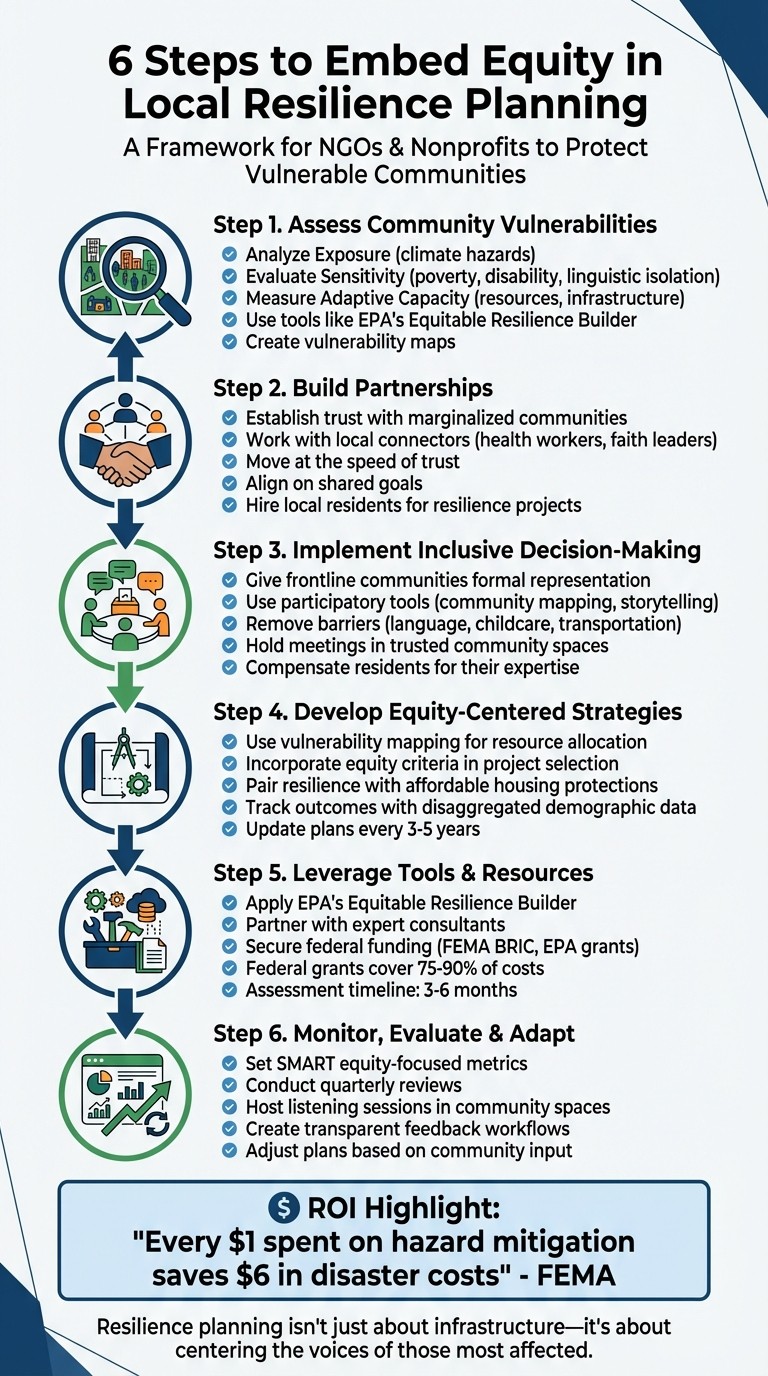
6 Steps to Embed Equity in Local Resilience Planning for NGOs
Advancing Racial Equity in Our Communities: Local Resilience Planning
Assess Community Vulnerabilities and Inequities
Understanding who is vulnerable and why requires digging deeper than surface-level data to address systemic inequities. A thorough assessment should focus on three key areas: Exposure (identifying neighborhoods most at risk of climate hazards), Sensitivity (determining which populations are most susceptible to harm), and Adaptive Capacity (pinpointing communities with limited ability to respond effectively) [2].
For Sensitivity, consider factors like poverty levels, disability rates, linguistic isolation, and access to essential services such as transportation and healthcare. When analyzing Adaptive Capacity, evaluate the availability of financial resources, insurance coverage, social support networks, and green infrastructure (like urban tree coverage). Housing conditions - such as the age of buildings, construction quality, and cooling capabilities - can also highlight residents who are particularly at risk [2]. By using spatial data, you can create vulnerability maps to visually represent areas where high hazard exposure overlaps with low adaptive capacity. These maps can guide decision-making and help prioritize interventions.
How to Conduct Equity-Focused Assessments
To ensure a comprehensive and inclusive analysis, combine quantitative data (e.g., FEMA flood maps, NOAA storm records, and downscaled climate models from the NOAA Climate Explorer) with participatory methods. Techniques like community mapping, storytelling circles, and photovoice projects can capture local perspectives and nuances that raw data alone might miss [2]. The EPA's Equitable Resilience Builder (ERB) is a free tool designed to help organizations evaluate local hazards and the resilience of built, natural, and social systems in an inclusive way [4].
These participatory approaches not only provide richer insights but also ensure that community knowledge shapes the assessment process, rather than serving as a mere afterthought [4]. Using trauma-informed methods can further respect historical inequities and avoid causing additional harm [4].
Include Diverse Stakeholders in Assessments
To validate findings and ensure accuracy, directly involve frontline communities in the assessment process. These groups - such as low-income neighborhoods, communities of color, elderly populations, immigrant communities, and people with disabilities - often face the greatest climate-related challenges [2]. Engage with residents in familiar, trusted spaces like community centers, churches, or schools, rather than asking them to visit government offices [2].
Make participation accessible by offering childcare, food, and translation services at all sessions [2]. Recognize the value of community members' time and expertise by compensating them, whether they are residents, block captains, or faith leaders [2]. Employ local health workers and connectors who can serve as bridges between your organization and the community [2]. Avoid relying on single public meetings; instead, maintain ongoing communication through multiple touchpoints throughout both the assessment and implementation phases [2].
Build Partnerships with Marginalized Communities
Creating meaningful partnerships with marginalized communities requires a deliberate focus on relationship-building that values their expertise and lived experiences. The aim is not to simply gather information from residents but to collaborate with them in developing solutions.
Establish Trust and Build Relationships
Trust is the cornerstone of equitable partnerships, and it can't be hurried to meet project deadlines or funding requirements. A great example of this is the City and County of Honolulu's Resilience Office and their Community Kūkākūkā Process, which ran from May 2020 to December 2021. Through this initiative, they engaged in virtual one-on-one and small group "talk story" sessions with 32 community-based organizations and over 60 leaders, collectively representing more than 414,000 residents. This process treated residents as essential contributors with unique knowledge and connections [3].
"Move at the speed of trust." - City and County of Honolulu Office of Climate Change, Sustainability and Resiliency [3]
To foster trust, it's important to work with respected local connectors, such as community health workers, block captains, and faith leaders. These individuals act as bridges, helping organizations navigate cultural nuances and historical contexts that influence how communities interact with external institutions. Building this cultural awareness also involves recognizing systemic racism and working toward equitable, multicultural norms [3].
Once trust is established, it becomes easier to align shared goals with community priorities.
Align on Shared Goals
After building trust, the next step is ensuring that your objectives align with what the community values and needs. This means going beyond token consultation or asking for approval on pre-made plans. Instead, create opportunities for residents to actively shape project designs [5]. Aligning resilience projects with community priorities is also critical to prevent unintended consequences, like displacement [2].
Economic alignment plays a key role in strengthening these partnerships. For example, hiring local residents for jobs in green infrastructure or weatherization projects can provide immediate, visible benefits. When community members see direct advantages, such as job creation, they are more likely to become engaged partners. Using disaggregated demographic data ensures that resources are directed to high-need areas first, rather than being disproportionately allocated to more politically connected neighborhoods [2].
These efforts not only strengthen partnerships but also build on insights from equity-focused assessments, creating a foundation for long-term resilience.
Implement Inclusive Decision-Making Processes
By integrating insights from equity-focused assessments and established community partnerships, inclusive governance structures pave the way for stronger, more resilient strategies. Once partnerships with marginalized communities are in place, the next step is ensuring these relationships lead to real decision-making power. Traditional models often concentrate authority far from frontline communities, leaving those most affected with minimal influence over decisions that directly shape their lives. Changing this requires deliberate structural adjustments.
"Building resilience... demands social cohesion, equitable resource distribution, and governance structures that center the people most vulnerable to climate impacts." - Council Fire [2]
Inclusive decision-making isn't about hosting a single public meeting; it's about fostering continuous dialogue throughout planning and implementation while ensuring formal decision-making bodies include representatives from at-risk and underrepresented communities. When these communities are empowered to lead resilience planning, their perspectives and needs become central to the process.
Design Participatory Governance Models
Participatory governance involves creating systems where marginalized communities actively shape decisions rather than merely offering input. To achieve this, it’s essential to identify who needs to be involved. Frontline communities should have formal representation in governance bodies, not just advisory roles. This could mean reserving seats on planning committees for residents of specific neighborhoods or forming community councils with authority over resource allocation.
Replace traditional top-down approaches with methods that draw on residents' local knowledge. Use participatory tools like community mapping (where residents identify local hazards and resources), storytelling circles, or photovoice projects to guide decision-making. These methods prioritize lived experiences alongside technical expertise, ensuring that voices often overlooked in formal meetings are heard and valued.
Additionally, hire and fairly compensate community organizers, block captains, or faith leaders from targeted areas to act as co-leaders in the planning process. Recognizing and paying residents for their contributions not only validates their expertise but also fosters genuine, equitable participation.
Remove Barriers to Participation
Representation alone is insufficient if people face barriers to participating. Common obstacles include language barriers, inconvenient meeting times or locations, lack of transportation or childcare, and venues that are not accessible for individuals with disabilities.
Bring the process to the community rather than expecting residents to come to government offices. Hold meetings in trusted local spaces, such as community centers or churches, and provide essential supports to ensure full participation. Outreach materials should be available in multiple languages, and events should include real-time interpretation services, including American Sign Language (ASL).
Schedule meetings at different times and days to accommodate varying work schedules, or incorporate planning discussions into existing community events. Ensure venues comply with ADA standards and offer a clear process for requesting accommodations in advance. Monitor participation metrics, such as attendance and engagement levels, to identify and address gaps.
"One public meeting isn't engagement. Plan ongoing dialogue through the planning and implementation phases." - Council Fire [2]
Removing these barriers requires both time and financial investment. Inclusive planning is a continuous process rather than a one-time goal. This investment yields significant returns: FEMA estimates that every $1 spent on hazard mitigation saves $6 in avoided disaster costs [2]. More importantly, empowering marginalized communities with genuine decision-making authority ensures resilience plans directly address their needs, while reducing risks like displacement through green gentrification.
Develop Equity-Centered Strategies
Equity should play a role in every stage of resilience planning, from the initial design phase to knowledge sharing, policy creation, and implementation [6]. By prioritizing inclusive governance, these strategies ensure that equity remains a guiding principle throughout the entire process.
"An equitable approach to climate resilience... ensures that people are treated according to their needs and with consideration of both current and historical contexts and of relative advantages or disadvantages." - MIT LCAU [6]
This method shifts away from traditional top-down approaches, creating a space where community knowledge and technical expertise are equally valued [6]. By rooting solutions in local practices, it addresses genuine needs while avoiding unintended consequences like displacement caused by climate gentrification.
Add Equity to Resilience Frameworks
To build equity into resilience planning, several actionable steps can be taken:
Use vulnerability mapping to identify high-need areas. This involves analyzing climate exposure, population sensitivity, and adaptive capacity to allocate resources effectively [2].
Incorporate equity criteria into project selection. Evaluate how much of the benefits will reach low-income and frontline communities to ensure fair distribution [2].
Design multi-faceted strategies that address overlapping vulnerabilities. For example:
Infrastructure upgrades, such as improving stormwater systems in flood-prone neighborhoods or expanding tree canopies in urban heat islands.
Social initiatives, like creating multilingual early warning systems and fostering neighborhood emergency networks.
Economic measures, such as generating local jobs through green infrastructure projects and weatherization programs.
Ecosystem-based approaches, including restoring wetlands and floodplains to act as natural barriers.
Pairing resilience projects with affordable housing protections is critical to prevent displacement [2]. For instance, improvements like green infrastructure or flood barriers can increase property values, potentially pushing out the very communities they aim to support. Tools such as rent stabilization policies, community land trusts, and right-of-first-refusal ordinances can help ensure long-term benefits for current residents.
Accountability is key. Track outcomes using disaggregated demographic data to monitor who benefits from resilience investments. Breaking down metrics by race, income, language, disability status, and neighborhood provides insights into whether strategies are reaching vulnerable populations. For example, if a heat response plan reduces overall emergency room visits but fails to improve outcomes in the most affected neighborhoods, adjustments are necessary to achieve true equity [2].
Learn from Case Studies
Practical examples can provide valuable insights into embedding equity in resilience planning. The Yale Center for Environmental Justice, in collaboration with Connecticut's Governor's Council on Climate Change (GC3), developed a framework that prioritizes equity throughout the municipal resilience planning process [1]. This approach builds partnerships between local governments and historically excluded communities, including low-income groups and communities of color, offering a clear model for turning equity-focused planning into tangible strategies.
"Inclusive planning grounded in environmental and climate justice results in more resilient communities." - Yale Center for Environmental Justice [1]
This model has been successfully applied across several Connecticut municipalities, proving that equity-centered planning is both feasible and scalable. Federal funding often supports such efforts, with grants covering 75–90% of resilience project costs [2]. Additionally, FEMA estimates that every $1 spent on hazard mitigation saves $6 in disaster-related costs, underscoring the financial sense of proactive planning [2].
Resilience plans should be treated as dynamic, evolving documents. Regular updates - every 3–5 years - allow for adjustments based on new climate data, lessons learned from past events, and ongoing community input [2]. Embedding resilience goals into existing budgets and capital improvement plans, with clear milestones like "Install 50 bioswales in flood-prone neighborhoods by 2027", ensures that equity commitments transition from ideas to actionable outcomes [2].
Use Tools and Resources for Equitable Planning
Turning ideas into action requires the right set of tools and expert support. NGOs and nonprofits can make significant strides in equity-focused resilience planning by leveraging established frameworks and professional guidance. Below, we explore two key resources that can help: the Equitable Resilience Builder and expert consulting services from Council Fire.
Apply the Equitable Resilience Builder
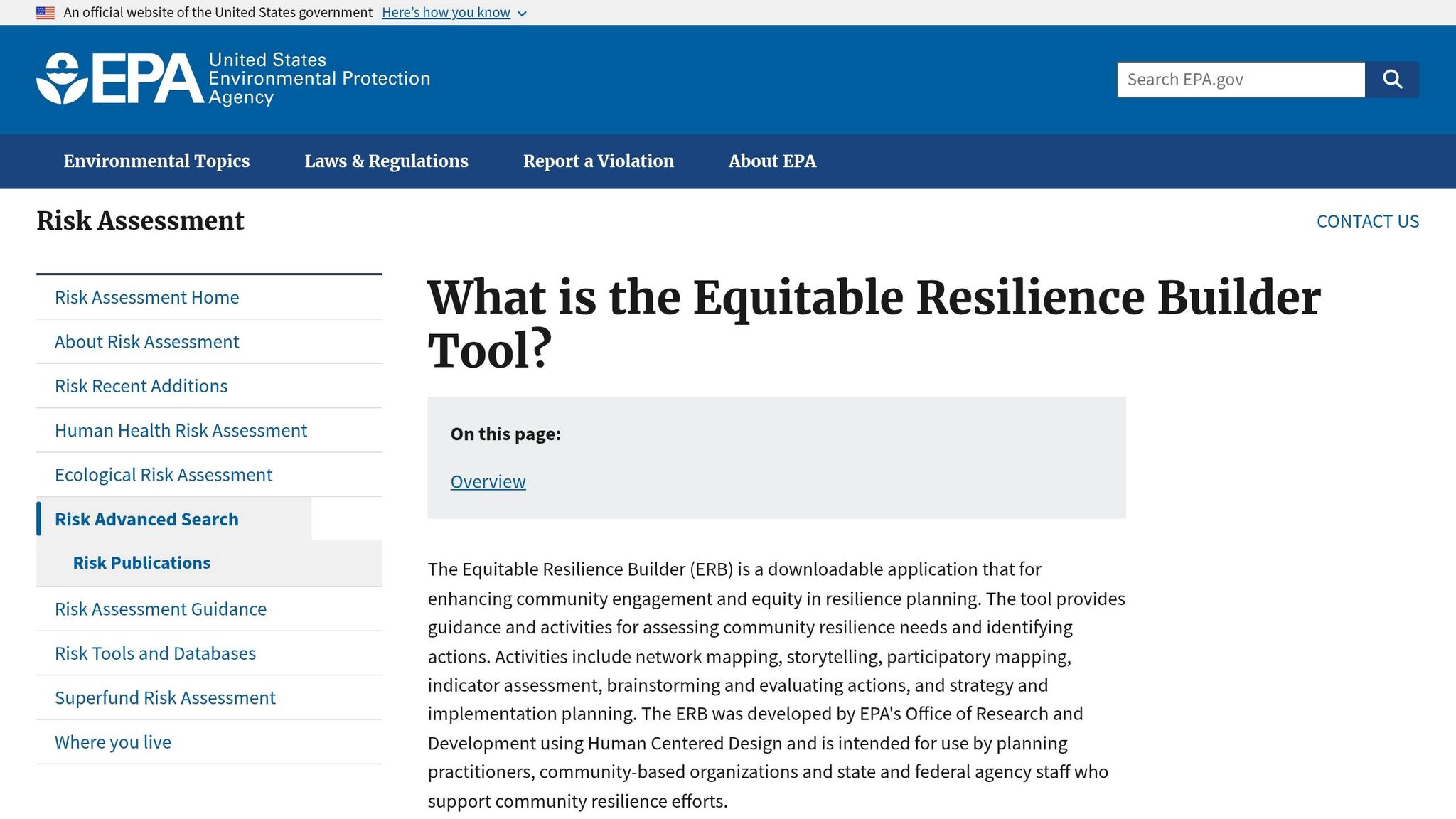
The Equitable Resilience Builder (ERB), launched by the EPA on November 16, 2023, is a downloadable tool designed to assess local hazards through an equity-focused lens [4]. This tool evaluates built, natural, and social systems to identify vulnerabilities tied to social inequalities [4].
"ERB promotes equitable resilience planning through relationships, recognition, information, and action." - US EPA [4]
The ERB toolkit offers a variety of activities, such as community connections diagramming, storytelling circles, photovoice projects, and participatory mapping [4]. These approaches not only gather valuable local insights but also help strengthen community ties [7]. Additionally, the ERB incorporates trauma-informed engagement practices, ensuring that the planning process is sensitive to the experiences of marginalized communities and avoids causing further harm [4]. To foster genuine involvement, organizations are encouraged to hire and fairly compensate community members for their time and expertise, ensuring participation is collaborative rather than exploitative [2].
Work with Experts Like Council Fire
Partnering with experienced consultants can significantly enhance resilience planning efforts. Organizations like Council Fire bring years of expertise in climate adaptation and community engagement. Their involvement can help streamline the process and ensure that equity considerations remain central throughout [2].
Typically, initial resilience planning efforts, guided by experts, can complete an assessment within 3 to 6 months, depending on the organization's size and its readiness to provide data [2]. Consultants also help secure diverse funding sources, including federal grants such as FEMA's Building Resilient Infrastructure and Communities (BRIC) program and EPA Environmental Justice grants, as well as municipal bonds and philanthropic contributions. Federal grants often cover 75% to 90% of project expenses, making even ambitious resilience plans financially manageable [2]. These expert-driven strategies ensure that resources are effectively aligned with the needs of frontline communities [2].
Monitor, Evaluate, and Adapt Plans
Resilience plans thrive on continuous monitoring and refinement to ensure equity-focused strategies stay effective as circumstances and community dynamics shift. Once strategies are in motion, the next essential step involves tracking progress, evaluating outcomes, and making necessary adjustments. This phase depends on identifying the right metrics and fostering authentic feedback loops with the communities these efforts aim to support. By doing so, plans remain aligned with the evolving needs of the people they serve.
Set Equity-Focused Metrics and Indicators
To truly measure the impact of resilience strategies, equity-focused metrics should evaluate both processes and outcomes, especially for marginalized communities. Process metrics highlight participation and benefits distribution, such as the percentage of leadership roles held by residents from frontline communities, investment levels in specific neighborhoods, or how feedback from underrepresented groups has influenced plan adjustments. Outcome metrics, on the other hand, assess tangible results - like reductions in heat-related illnesses in underserved areas, fewer flood damage claims after interventions, improved evacuation capacity for at-risk populations, or shorter power outages in vulnerable sectors [2].
"Building resilience requires more than infrastructure upgrades. It demands social cohesion, equitable resource distribution, and governance structures that center the people most vulnerable to climate impacts." – Council Fire [2]
Metrics should follow the SMART framework: Specific, Measurable, Achievable, Relevant, and Time-bound. For instance, instead of vague objectives like "enhance community safety", set clear goals such as "Increase participation from low-income communities by 30% within 12 months" or "Install 50 bioswales in flood-prone neighborhoods by 2027" [2]. Disaggregating data is also crucial to ensure benefits reach all vulnerable groups.
Establish baseline measurements and conduct quarterly reviews for ongoing projects. Update the full resilience plan every 3–5 years to reflect new climate data, lessons from recent events, and direct community insights [2]. Additionally, pair infrastructure metrics with data on affordable housing to guard against climate gentrification, ensuring that improvements don't displace the very residents they aim to protect. These metrics not only quantify progress but also pinpoint areas needing further attention, forming the backbone of meaningful feedback and adjustments.
Adjust Plans Based on Community Feedback
Metrics and data hold little value if they don’t lead to real-world improvements. Community feedback should actively shape plan revisions rather than serve as a mere formality. This means working with residents to interpret data, understand its implications in their daily lives, and identify which findings demand action.
Develop consistent feedback mechanisms that go beyond occasional surveys. Host quarterly listening sessions in accessible community spaces like schools, churches, or neighborhood centers instead of limiting them to government offices. Incorporate diverse participatory methods to capture both qualitative insights and quantitative data [9]. Ensure accessibility by addressing barriers like transportation and childcare, and provide fair compensation for participants' time.
Create a transparent workflow that tracks feedback from collection through analysis, decision-making, and implementation. This openness fosters trust and accountability. When communities see visible changes resulting from their input, they are more likely to stay engaged [8].
Leverage centralized tools like Notion, Google Docs, or Asana to organize monitoring data and manage feedback effectively [8]. Use these platforms to maintain templates, checklists, and role assignments, ensuring no detail is overlooked. Remember, resilience plans are not static - they should evolve as new insights emerge and as you learn what strategies yield the best results [2].
Conclusion
Equitable resilience planning goes beyond being a moral responsibility; it’s also a practical approach to creating stronger, more inclusive communities. By focusing on thorough assessments, collaborative partnerships, and flexible strategies, embedding equity into resilience efforts ensures that the most vulnerable populations are prioritized. True resilience isn’t just about upgrading infrastructure - it’s about fostering genuine partnerships, inclusive governance, and decision-making that centers those most at risk.
In addition to economic advantages, equitable planning addresses issues like climate gentrification by ensuring that investments enhance the safety and stability of frontline communities rather than displacing them. Combining infrastructure improvements with affordable housing safeguards is crucial for supporting existing residents.
For organizations with tight budgets, impactful yet affordable steps can include mapping cooling centers, developing neighborhood emergency communication plans, or training volunteer Community Emergency Response Teams. Sustaining larger projects often requires blending resources from federal programs - such as FEMA’s BRIC initiative or EPA Environmental Justice grants - with state and private funding sources.
It’s important to view resilience plans as adaptable tools that evolve with updated climate data and ongoing community input [2]. The people within these communities hold critical knowledge about their own challenges and needs. By compensating residents for their time, hosting meetings in accessible spaces like churches or community centers, and addressing barriers such as childcare and transportation, nonprofits and NGOs can build trust and encourage meaningful participation.
FAQs
How do we identify our most vulnerable communities with limited data?
To pinpoint vulnerable communities when data is scarce, rely on tools that highlight social vulnerabilities and draw from local knowledge. Begin with neighborhood-level evaluations, using resources such as social vulnerability indexes for a foundational understanding. Collaborate with local residents and organizations to bridge data gaps and gather qualitative insights. By focusing on factors like exposure, sensitivity, and the ability to adapt, you can shape resilience strategies effectively, even with minimal data, by prioritizing key indicators and community-driven knowledge.
How can we share decision-making power without slowing projects down?
Inclusive and efficient practices make it possible to share decision-making power without unnecessary delays. Engaging marginalized communities early allows their perspectives to be incorporated smoothly into the process. Trust and social cohesion grow when strategies are developed collaboratively with stakeholders. By prioritizing clear communication and using cooperative frameworks, misunderstandings can be minimized. These efforts ensure that a wide range of voices are considered while keeping projects on track.
How do we prevent resilience investments from causing displacement?
Preventing displacement hinges on integrating equity into resilience planning, with a focus on supporting the most vulnerable populations. Effective strategies involve evaluating community vulnerabilities, involving residents in key decisions, and safeguarding affordable housing along with local resources. Policies must tackle systemic inequalities, ensure fair distribution of resources, and create solutions that bolster resilience without displacing residents. Active community involvement is essential to avoid gentrification and to ensure that investments uplift and stabilize existing neighborhoods rather than displacing them.
Related Blog Posts
How to Build a Climate Resilience Plan for NGOs & Nonprofits
How to Co-Design Climate-Ready Communities with Residents for Municipalities & Government Agencies
How to Embed Equity in Local Resilience Planning for Municipalities & Government Agencies
How to Embed Equity in Local Resilience Planning for Corporations
Latest Articles
©2025

Narrative Change and Power Building: The Missing Half of Advocacy
Narrative change is the process of disrupting dominant narratives that normalize inequity and advancing new narratives from historically marginalized communities.

Funding Resilience Without Federal Grants
BRIC is unreliable and FEMA is shrinking. Here's how cities fund climate resilience with dedicated revenue, blended finance, and a coordinating authority.

The ESG Blind Spot: How AI Is Finding Risks in Companies Nobody Else Is Watching
Norway's sovereign wealth fund uses AI to screen 7,200 portfolio companies for forced labor and corruption within 24 hours. The real story is the emerging-market coverage gap that traditional ESG data vendors miss — and what it means for any company with a global supply chain.
Narrative Change and Power Building: The Missing Half of Advocacy
Narrative change is the process of disrupting dominant narratives that normalize inequity and advancing new narratives from historically marginalized communities.
Funding Resilience Without Federal Grants
BRIC is unreliable and FEMA is shrinking. Here's how cities fund climate resilience with dedicated revenue, blended finance, and a coordinating authority.
The ESG Blind Spot: How AI Is Finding Risks in Companies Nobody Else Is Watching
Norway's sovereign wealth fund uses AI to screen 7,200 portfolio companies for forced labor and corruption within 24 hours. The real story is the emerging-market coverage gap that traditional ESG data vendors miss — and what it means for any company with a global supply chain.
FAQ
01
What does it really mean to “redefine profit”?
02
What makes Council Fire different?
03
Who does Council Fire work with?
04
What does working with Council Fire actually look like?
05
How does Council Fire help organizations turn big goals into action?
06
How does Council Fire define and measure success?
Apr 4, 2026
How to Embed Equity in Local Resilience Planning for NGOs & Nonprofits
Capacity Building
In This Article
Practical steps for NGOs to center equity in local resilience—assess vulnerabilities, build partnerships, share power, and track outcomes.
How to Embed Equity in Local Resilience Planning for NGOs & Nonprofits
When disasters strike, marginalized communities often face the greatest risks and challenges in recovery. To address these disparities, NGOs and nonprofits must integrate equity into local resilience planning. This involves prioritizing vulnerable populations, ensuring fair resource distribution, and empowering community leadership.
Key steps include:
Conducting equity-focused vulnerability assessments to identify at-risk populations.
Building trust-based partnerships with marginalized groups.
Designing decision-making processes that give frontline communities real influence.
Implementing equity-centered strategies to prevent displacement and ensure resources reach those in need.
Using tools like the EPA’s Equitable Resilience Builder and leveraging federal funding for support.
Resilience planning isn’t just about infrastructure - it’s about centering the voices of those most affected. By addressing systemic inequities, organizations can create solutions that protect and uplift vulnerable communities while saving costs in disaster recovery.
6 Steps to Embed Equity in Local Resilience Planning for NGOs
Advancing Racial Equity in Our Communities: Local Resilience Planning
Assess Community Vulnerabilities and Inequities
Understanding who is vulnerable and why requires digging deeper than surface-level data to address systemic inequities. A thorough assessment should focus on three key areas: Exposure (identifying neighborhoods most at risk of climate hazards), Sensitivity (determining which populations are most susceptible to harm), and Adaptive Capacity (pinpointing communities with limited ability to respond effectively) [2].
For Sensitivity, consider factors like poverty levels, disability rates, linguistic isolation, and access to essential services such as transportation and healthcare. When analyzing Adaptive Capacity, evaluate the availability of financial resources, insurance coverage, social support networks, and green infrastructure (like urban tree coverage). Housing conditions - such as the age of buildings, construction quality, and cooling capabilities - can also highlight residents who are particularly at risk [2]. By using spatial data, you can create vulnerability maps to visually represent areas where high hazard exposure overlaps with low adaptive capacity. These maps can guide decision-making and help prioritize interventions.
How to Conduct Equity-Focused Assessments
To ensure a comprehensive and inclusive analysis, combine quantitative data (e.g., FEMA flood maps, NOAA storm records, and downscaled climate models from the NOAA Climate Explorer) with participatory methods. Techniques like community mapping, storytelling circles, and photovoice projects can capture local perspectives and nuances that raw data alone might miss [2]. The EPA's Equitable Resilience Builder (ERB) is a free tool designed to help organizations evaluate local hazards and the resilience of built, natural, and social systems in an inclusive way [4].
These participatory approaches not only provide richer insights but also ensure that community knowledge shapes the assessment process, rather than serving as a mere afterthought [4]. Using trauma-informed methods can further respect historical inequities and avoid causing additional harm [4].
Include Diverse Stakeholders in Assessments
To validate findings and ensure accuracy, directly involve frontline communities in the assessment process. These groups - such as low-income neighborhoods, communities of color, elderly populations, immigrant communities, and people with disabilities - often face the greatest climate-related challenges [2]. Engage with residents in familiar, trusted spaces like community centers, churches, or schools, rather than asking them to visit government offices [2].
Make participation accessible by offering childcare, food, and translation services at all sessions [2]. Recognize the value of community members' time and expertise by compensating them, whether they are residents, block captains, or faith leaders [2]. Employ local health workers and connectors who can serve as bridges between your organization and the community [2]. Avoid relying on single public meetings; instead, maintain ongoing communication through multiple touchpoints throughout both the assessment and implementation phases [2].
Build Partnerships with Marginalized Communities
Creating meaningful partnerships with marginalized communities requires a deliberate focus on relationship-building that values their expertise and lived experiences. The aim is not to simply gather information from residents but to collaborate with them in developing solutions.
Establish Trust and Build Relationships
Trust is the cornerstone of equitable partnerships, and it can't be hurried to meet project deadlines or funding requirements. A great example of this is the City and County of Honolulu's Resilience Office and their Community Kūkākūkā Process, which ran from May 2020 to December 2021. Through this initiative, they engaged in virtual one-on-one and small group "talk story" sessions with 32 community-based organizations and over 60 leaders, collectively representing more than 414,000 residents. This process treated residents as essential contributors with unique knowledge and connections [3].
"Move at the speed of trust." - City and County of Honolulu Office of Climate Change, Sustainability and Resiliency [3]
To foster trust, it's important to work with respected local connectors, such as community health workers, block captains, and faith leaders. These individuals act as bridges, helping organizations navigate cultural nuances and historical contexts that influence how communities interact with external institutions. Building this cultural awareness also involves recognizing systemic racism and working toward equitable, multicultural norms [3].
Once trust is established, it becomes easier to align shared goals with community priorities.
Align on Shared Goals
After building trust, the next step is ensuring that your objectives align with what the community values and needs. This means going beyond token consultation or asking for approval on pre-made plans. Instead, create opportunities for residents to actively shape project designs [5]. Aligning resilience projects with community priorities is also critical to prevent unintended consequences, like displacement [2].
Economic alignment plays a key role in strengthening these partnerships. For example, hiring local residents for jobs in green infrastructure or weatherization projects can provide immediate, visible benefits. When community members see direct advantages, such as job creation, they are more likely to become engaged partners. Using disaggregated demographic data ensures that resources are directed to high-need areas first, rather than being disproportionately allocated to more politically connected neighborhoods [2].
These efforts not only strengthen partnerships but also build on insights from equity-focused assessments, creating a foundation for long-term resilience.
Implement Inclusive Decision-Making Processes
By integrating insights from equity-focused assessments and established community partnerships, inclusive governance structures pave the way for stronger, more resilient strategies. Once partnerships with marginalized communities are in place, the next step is ensuring these relationships lead to real decision-making power. Traditional models often concentrate authority far from frontline communities, leaving those most affected with minimal influence over decisions that directly shape their lives. Changing this requires deliberate structural adjustments.
"Building resilience... demands social cohesion, equitable resource distribution, and governance structures that center the people most vulnerable to climate impacts." - Council Fire [2]
Inclusive decision-making isn't about hosting a single public meeting; it's about fostering continuous dialogue throughout planning and implementation while ensuring formal decision-making bodies include representatives from at-risk and underrepresented communities. When these communities are empowered to lead resilience planning, their perspectives and needs become central to the process.
Design Participatory Governance Models
Participatory governance involves creating systems where marginalized communities actively shape decisions rather than merely offering input. To achieve this, it’s essential to identify who needs to be involved. Frontline communities should have formal representation in governance bodies, not just advisory roles. This could mean reserving seats on planning committees for residents of specific neighborhoods or forming community councils with authority over resource allocation.
Replace traditional top-down approaches with methods that draw on residents' local knowledge. Use participatory tools like community mapping (where residents identify local hazards and resources), storytelling circles, or photovoice projects to guide decision-making. These methods prioritize lived experiences alongside technical expertise, ensuring that voices often overlooked in formal meetings are heard and valued.
Additionally, hire and fairly compensate community organizers, block captains, or faith leaders from targeted areas to act as co-leaders in the planning process. Recognizing and paying residents for their contributions not only validates their expertise but also fosters genuine, equitable participation.
Remove Barriers to Participation
Representation alone is insufficient if people face barriers to participating. Common obstacles include language barriers, inconvenient meeting times or locations, lack of transportation or childcare, and venues that are not accessible for individuals with disabilities.
Bring the process to the community rather than expecting residents to come to government offices. Hold meetings in trusted local spaces, such as community centers or churches, and provide essential supports to ensure full participation. Outreach materials should be available in multiple languages, and events should include real-time interpretation services, including American Sign Language (ASL).
Schedule meetings at different times and days to accommodate varying work schedules, or incorporate planning discussions into existing community events. Ensure venues comply with ADA standards and offer a clear process for requesting accommodations in advance. Monitor participation metrics, such as attendance and engagement levels, to identify and address gaps.
"One public meeting isn't engagement. Plan ongoing dialogue through the planning and implementation phases." - Council Fire [2]
Removing these barriers requires both time and financial investment. Inclusive planning is a continuous process rather than a one-time goal. This investment yields significant returns: FEMA estimates that every $1 spent on hazard mitigation saves $6 in avoided disaster costs [2]. More importantly, empowering marginalized communities with genuine decision-making authority ensures resilience plans directly address their needs, while reducing risks like displacement through green gentrification.
Develop Equity-Centered Strategies
Equity should play a role in every stage of resilience planning, from the initial design phase to knowledge sharing, policy creation, and implementation [6]. By prioritizing inclusive governance, these strategies ensure that equity remains a guiding principle throughout the entire process.
"An equitable approach to climate resilience... ensures that people are treated according to their needs and with consideration of both current and historical contexts and of relative advantages or disadvantages." - MIT LCAU [6]
This method shifts away from traditional top-down approaches, creating a space where community knowledge and technical expertise are equally valued [6]. By rooting solutions in local practices, it addresses genuine needs while avoiding unintended consequences like displacement caused by climate gentrification.
Add Equity to Resilience Frameworks
To build equity into resilience planning, several actionable steps can be taken:
Use vulnerability mapping to identify high-need areas. This involves analyzing climate exposure, population sensitivity, and adaptive capacity to allocate resources effectively [2].
Incorporate equity criteria into project selection. Evaluate how much of the benefits will reach low-income and frontline communities to ensure fair distribution [2].
Design multi-faceted strategies that address overlapping vulnerabilities. For example:
Infrastructure upgrades, such as improving stormwater systems in flood-prone neighborhoods or expanding tree canopies in urban heat islands.
Social initiatives, like creating multilingual early warning systems and fostering neighborhood emergency networks.
Economic measures, such as generating local jobs through green infrastructure projects and weatherization programs.
Ecosystem-based approaches, including restoring wetlands and floodplains to act as natural barriers.
Pairing resilience projects with affordable housing protections is critical to prevent displacement [2]. For instance, improvements like green infrastructure or flood barriers can increase property values, potentially pushing out the very communities they aim to support. Tools such as rent stabilization policies, community land trusts, and right-of-first-refusal ordinances can help ensure long-term benefits for current residents.
Accountability is key. Track outcomes using disaggregated demographic data to monitor who benefits from resilience investments. Breaking down metrics by race, income, language, disability status, and neighborhood provides insights into whether strategies are reaching vulnerable populations. For example, if a heat response plan reduces overall emergency room visits but fails to improve outcomes in the most affected neighborhoods, adjustments are necessary to achieve true equity [2].
Learn from Case Studies
Practical examples can provide valuable insights into embedding equity in resilience planning. The Yale Center for Environmental Justice, in collaboration with Connecticut's Governor's Council on Climate Change (GC3), developed a framework that prioritizes equity throughout the municipal resilience planning process [1]. This approach builds partnerships between local governments and historically excluded communities, including low-income groups and communities of color, offering a clear model for turning equity-focused planning into tangible strategies.
"Inclusive planning grounded in environmental and climate justice results in more resilient communities." - Yale Center for Environmental Justice [1]
This model has been successfully applied across several Connecticut municipalities, proving that equity-centered planning is both feasible and scalable. Federal funding often supports such efforts, with grants covering 75–90% of resilience project costs [2]. Additionally, FEMA estimates that every $1 spent on hazard mitigation saves $6 in disaster-related costs, underscoring the financial sense of proactive planning [2].
Resilience plans should be treated as dynamic, evolving documents. Regular updates - every 3–5 years - allow for adjustments based on new climate data, lessons learned from past events, and ongoing community input [2]. Embedding resilience goals into existing budgets and capital improvement plans, with clear milestones like "Install 50 bioswales in flood-prone neighborhoods by 2027", ensures that equity commitments transition from ideas to actionable outcomes [2].
Use Tools and Resources for Equitable Planning
Turning ideas into action requires the right set of tools and expert support. NGOs and nonprofits can make significant strides in equity-focused resilience planning by leveraging established frameworks and professional guidance. Below, we explore two key resources that can help: the Equitable Resilience Builder and expert consulting services from Council Fire.
Apply the Equitable Resilience Builder
The Equitable Resilience Builder (ERB), launched by the EPA on November 16, 2023, is a downloadable tool designed to assess local hazards through an equity-focused lens [4]. This tool evaluates built, natural, and social systems to identify vulnerabilities tied to social inequalities [4].
"ERB promotes equitable resilience planning through relationships, recognition, information, and action." - US EPA [4]
The ERB toolkit offers a variety of activities, such as community connections diagramming, storytelling circles, photovoice projects, and participatory mapping [4]. These approaches not only gather valuable local insights but also help strengthen community ties [7]. Additionally, the ERB incorporates trauma-informed engagement practices, ensuring that the planning process is sensitive to the experiences of marginalized communities and avoids causing further harm [4]. To foster genuine involvement, organizations are encouraged to hire and fairly compensate community members for their time and expertise, ensuring participation is collaborative rather than exploitative [2].
Work with Experts Like Council Fire
Partnering with experienced consultants can significantly enhance resilience planning efforts. Organizations like Council Fire bring years of expertise in climate adaptation and community engagement. Their involvement can help streamline the process and ensure that equity considerations remain central throughout [2].
Typically, initial resilience planning efforts, guided by experts, can complete an assessment within 3 to 6 months, depending on the organization's size and its readiness to provide data [2]. Consultants also help secure diverse funding sources, including federal grants such as FEMA's Building Resilient Infrastructure and Communities (BRIC) program and EPA Environmental Justice grants, as well as municipal bonds and philanthropic contributions. Federal grants often cover 75% to 90% of project expenses, making even ambitious resilience plans financially manageable [2]. These expert-driven strategies ensure that resources are effectively aligned with the needs of frontline communities [2].
Monitor, Evaluate, and Adapt Plans
Resilience plans thrive on continuous monitoring and refinement to ensure equity-focused strategies stay effective as circumstances and community dynamics shift. Once strategies are in motion, the next essential step involves tracking progress, evaluating outcomes, and making necessary adjustments. This phase depends on identifying the right metrics and fostering authentic feedback loops with the communities these efforts aim to support. By doing so, plans remain aligned with the evolving needs of the people they serve.
Set Equity-Focused Metrics and Indicators
To truly measure the impact of resilience strategies, equity-focused metrics should evaluate both processes and outcomes, especially for marginalized communities. Process metrics highlight participation and benefits distribution, such as the percentage of leadership roles held by residents from frontline communities, investment levels in specific neighborhoods, or how feedback from underrepresented groups has influenced plan adjustments. Outcome metrics, on the other hand, assess tangible results - like reductions in heat-related illnesses in underserved areas, fewer flood damage claims after interventions, improved evacuation capacity for at-risk populations, or shorter power outages in vulnerable sectors [2].
"Building resilience requires more than infrastructure upgrades. It demands social cohesion, equitable resource distribution, and governance structures that center the people most vulnerable to climate impacts." – Council Fire [2]
Metrics should follow the SMART framework: Specific, Measurable, Achievable, Relevant, and Time-bound. For instance, instead of vague objectives like "enhance community safety", set clear goals such as "Increase participation from low-income communities by 30% within 12 months" or "Install 50 bioswales in flood-prone neighborhoods by 2027" [2]. Disaggregating data is also crucial to ensure benefits reach all vulnerable groups.
Establish baseline measurements and conduct quarterly reviews for ongoing projects. Update the full resilience plan every 3–5 years to reflect new climate data, lessons from recent events, and direct community insights [2]. Additionally, pair infrastructure metrics with data on affordable housing to guard against climate gentrification, ensuring that improvements don't displace the very residents they aim to protect. These metrics not only quantify progress but also pinpoint areas needing further attention, forming the backbone of meaningful feedback and adjustments.
Adjust Plans Based on Community Feedback
Metrics and data hold little value if they don’t lead to real-world improvements. Community feedback should actively shape plan revisions rather than serve as a mere formality. This means working with residents to interpret data, understand its implications in their daily lives, and identify which findings demand action.
Develop consistent feedback mechanisms that go beyond occasional surveys. Host quarterly listening sessions in accessible community spaces like schools, churches, or neighborhood centers instead of limiting them to government offices. Incorporate diverse participatory methods to capture both qualitative insights and quantitative data [9]. Ensure accessibility by addressing barriers like transportation and childcare, and provide fair compensation for participants' time.
Create a transparent workflow that tracks feedback from collection through analysis, decision-making, and implementation. This openness fosters trust and accountability. When communities see visible changes resulting from their input, they are more likely to stay engaged [8].
Leverage centralized tools like Notion, Google Docs, or Asana to organize monitoring data and manage feedback effectively [8]. Use these platforms to maintain templates, checklists, and role assignments, ensuring no detail is overlooked. Remember, resilience plans are not static - they should evolve as new insights emerge and as you learn what strategies yield the best results [2].
Conclusion
Equitable resilience planning goes beyond being a moral responsibility; it’s also a practical approach to creating stronger, more inclusive communities. By focusing on thorough assessments, collaborative partnerships, and flexible strategies, embedding equity into resilience efforts ensures that the most vulnerable populations are prioritized. True resilience isn’t just about upgrading infrastructure - it’s about fostering genuine partnerships, inclusive governance, and decision-making that centers those most at risk.
In addition to economic advantages, equitable planning addresses issues like climate gentrification by ensuring that investments enhance the safety and stability of frontline communities rather than displacing them. Combining infrastructure improvements with affordable housing safeguards is crucial for supporting existing residents.
For organizations with tight budgets, impactful yet affordable steps can include mapping cooling centers, developing neighborhood emergency communication plans, or training volunteer Community Emergency Response Teams. Sustaining larger projects often requires blending resources from federal programs - such as FEMA’s BRIC initiative or EPA Environmental Justice grants - with state and private funding sources.
It’s important to view resilience plans as adaptable tools that evolve with updated climate data and ongoing community input [2]. The people within these communities hold critical knowledge about their own challenges and needs. By compensating residents for their time, hosting meetings in accessible spaces like churches or community centers, and addressing barriers such as childcare and transportation, nonprofits and NGOs can build trust and encourage meaningful participation.
FAQs
How do we identify our most vulnerable communities with limited data?
To pinpoint vulnerable communities when data is scarce, rely on tools that highlight social vulnerabilities and draw from local knowledge. Begin with neighborhood-level evaluations, using resources such as social vulnerability indexes for a foundational understanding. Collaborate with local residents and organizations to bridge data gaps and gather qualitative insights. By focusing on factors like exposure, sensitivity, and the ability to adapt, you can shape resilience strategies effectively, even with minimal data, by prioritizing key indicators and community-driven knowledge.
How can we share decision-making power without slowing projects down?
Inclusive and efficient practices make it possible to share decision-making power without unnecessary delays. Engaging marginalized communities early allows their perspectives to be incorporated smoothly into the process. Trust and social cohesion grow when strategies are developed collaboratively with stakeholders. By prioritizing clear communication and using cooperative frameworks, misunderstandings can be minimized. These efforts ensure that a wide range of voices are considered while keeping projects on track.
How do we prevent resilience investments from causing displacement?
Preventing displacement hinges on integrating equity into resilience planning, with a focus on supporting the most vulnerable populations. Effective strategies involve evaluating community vulnerabilities, involving residents in key decisions, and safeguarding affordable housing along with local resources. Policies must tackle systemic inequalities, ensure fair distribution of resources, and create solutions that bolster resilience without displacing residents. Active community involvement is essential to avoid gentrification and to ensure that investments uplift and stabilize existing neighborhoods rather than displacing them.
Related Blog Posts
How to Build a Climate Resilience Plan for NGOs & Nonprofits
How to Co-Design Climate-Ready Communities with Residents for Municipalities & Government Agencies
How to Embed Equity in Local Resilience Planning for Municipalities & Government Agencies
How to Embed Equity in Local Resilience Planning for Corporations
Latest Articles
©2025
Narrative Change and Power Building: The Missing Half of Advocacy
Narrative change is the process of disrupting dominant narratives that normalize inequity and advancing new narratives from historically marginalized communities.
Funding Resilience Without Federal Grants
BRIC is unreliable and FEMA is shrinking. Here's how cities fund climate resilience with dedicated revenue, blended finance, and a coordinating authority.
The ESG Blind Spot: How AI Is Finding Risks in Companies Nobody Else Is Watching
Norway's sovereign wealth fund uses AI to screen 7,200 portfolio companies for forced labor and corruption within 24 hours. The real story is the emerging-market coverage gap that traditional ESG data vendors miss — and what it means for any company with a global supply chain.
FAQ
01
What does it really mean to “redefine profit”?
02
What makes Council Fire different?
03
Who does Council Fire work with?
04
What does working with Council Fire actually look like?
05
How does Council Fire help organizations turn big goals into action?
06
How does Council Fire define and measure success?
Apr 4, 2026
How to Embed Equity in Local Resilience Planning for NGOs & Nonprofits
Capacity Building
In This Article
Practical steps for NGOs to center equity in local resilience—assess vulnerabilities, build partnerships, share power, and track outcomes.
How to Embed Equity in Local Resilience Planning for NGOs & Nonprofits
When disasters strike, marginalized communities often face the greatest risks and challenges in recovery. To address these disparities, NGOs and nonprofits must integrate equity into local resilience planning. This involves prioritizing vulnerable populations, ensuring fair resource distribution, and empowering community leadership.
Key steps include:
Conducting equity-focused vulnerability assessments to identify at-risk populations.
Building trust-based partnerships with marginalized groups.
Designing decision-making processes that give frontline communities real influence.
Implementing equity-centered strategies to prevent displacement and ensure resources reach those in need.
Using tools like the EPA’s Equitable Resilience Builder and leveraging federal funding for support.
Resilience planning isn’t just about infrastructure - it’s about centering the voices of those most affected. By addressing systemic inequities, organizations can create solutions that protect and uplift vulnerable communities while saving costs in disaster recovery.
6 Steps to Embed Equity in Local Resilience Planning for NGOs
Advancing Racial Equity in Our Communities: Local Resilience Planning
Assess Community Vulnerabilities and Inequities
Understanding who is vulnerable and why requires digging deeper than surface-level data to address systemic inequities. A thorough assessment should focus on three key areas: Exposure (identifying neighborhoods most at risk of climate hazards), Sensitivity (determining which populations are most susceptible to harm), and Adaptive Capacity (pinpointing communities with limited ability to respond effectively) [2].
For Sensitivity, consider factors like poverty levels, disability rates, linguistic isolation, and access to essential services such as transportation and healthcare. When analyzing Adaptive Capacity, evaluate the availability of financial resources, insurance coverage, social support networks, and green infrastructure (like urban tree coverage). Housing conditions - such as the age of buildings, construction quality, and cooling capabilities - can also highlight residents who are particularly at risk [2]. By using spatial data, you can create vulnerability maps to visually represent areas where high hazard exposure overlaps with low adaptive capacity. These maps can guide decision-making and help prioritize interventions.
How to Conduct Equity-Focused Assessments
To ensure a comprehensive and inclusive analysis, combine quantitative data (e.g., FEMA flood maps, NOAA storm records, and downscaled climate models from the NOAA Climate Explorer) with participatory methods. Techniques like community mapping, storytelling circles, and photovoice projects can capture local perspectives and nuances that raw data alone might miss [2]. The EPA's Equitable Resilience Builder (ERB) is a free tool designed to help organizations evaluate local hazards and the resilience of built, natural, and social systems in an inclusive way [4].
These participatory approaches not only provide richer insights but also ensure that community knowledge shapes the assessment process, rather than serving as a mere afterthought [4]. Using trauma-informed methods can further respect historical inequities and avoid causing additional harm [4].
Include Diverse Stakeholders in Assessments
To validate findings and ensure accuracy, directly involve frontline communities in the assessment process. These groups - such as low-income neighborhoods, communities of color, elderly populations, immigrant communities, and people with disabilities - often face the greatest climate-related challenges [2]. Engage with residents in familiar, trusted spaces like community centers, churches, or schools, rather than asking them to visit government offices [2].
Make participation accessible by offering childcare, food, and translation services at all sessions [2]. Recognize the value of community members' time and expertise by compensating them, whether they are residents, block captains, or faith leaders [2]. Employ local health workers and connectors who can serve as bridges between your organization and the community [2]. Avoid relying on single public meetings; instead, maintain ongoing communication through multiple touchpoints throughout both the assessment and implementation phases [2].
Build Partnerships with Marginalized Communities
Creating meaningful partnerships with marginalized communities requires a deliberate focus on relationship-building that values their expertise and lived experiences. The aim is not to simply gather information from residents but to collaborate with them in developing solutions.
Establish Trust and Build Relationships
Trust is the cornerstone of equitable partnerships, and it can't be hurried to meet project deadlines or funding requirements. A great example of this is the City and County of Honolulu's Resilience Office and their Community Kūkākūkā Process, which ran from May 2020 to December 2021. Through this initiative, they engaged in virtual one-on-one and small group "talk story" sessions with 32 community-based organizations and over 60 leaders, collectively representing more than 414,000 residents. This process treated residents as essential contributors with unique knowledge and connections [3].
"Move at the speed of trust." - City and County of Honolulu Office of Climate Change, Sustainability and Resiliency [3]
To foster trust, it's important to work with respected local connectors, such as community health workers, block captains, and faith leaders. These individuals act as bridges, helping organizations navigate cultural nuances and historical contexts that influence how communities interact with external institutions. Building this cultural awareness also involves recognizing systemic racism and working toward equitable, multicultural norms [3].
Once trust is established, it becomes easier to align shared goals with community priorities.
Align on Shared Goals
After building trust, the next step is ensuring that your objectives align with what the community values and needs. This means going beyond token consultation or asking for approval on pre-made plans. Instead, create opportunities for residents to actively shape project designs [5]. Aligning resilience projects with community priorities is also critical to prevent unintended consequences, like displacement [2].
Economic alignment plays a key role in strengthening these partnerships. For example, hiring local residents for jobs in green infrastructure or weatherization projects can provide immediate, visible benefits. When community members see direct advantages, such as job creation, they are more likely to become engaged partners. Using disaggregated demographic data ensures that resources are directed to high-need areas first, rather than being disproportionately allocated to more politically connected neighborhoods [2].
These efforts not only strengthen partnerships but also build on insights from equity-focused assessments, creating a foundation for long-term resilience.
Implement Inclusive Decision-Making Processes
By integrating insights from equity-focused assessments and established community partnerships, inclusive governance structures pave the way for stronger, more resilient strategies. Once partnerships with marginalized communities are in place, the next step is ensuring these relationships lead to real decision-making power. Traditional models often concentrate authority far from frontline communities, leaving those most affected with minimal influence over decisions that directly shape their lives. Changing this requires deliberate structural adjustments.
"Building resilience... demands social cohesion, equitable resource distribution, and governance structures that center the people most vulnerable to climate impacts." - Council Fire [2]
Inclusive decision-making isn't about hosting a single public meeting; it's about fostering continuous dialogue throughout planning and implementation while ensuring formal decision-making bodies include representatives from at-risk and underrepresented communities. When these communities are empowered to lead resilience planning, their perspectives and needs become central to the process.
Design Participatory Governance Models
Participatory governance involves creating systems where marginalized communities actively shape decisions rather than merely offering input. To achieve this, it’s essential to identify who needs to be involved. Frontline communities should have formal representation in governance bodies, not just advisory roles. This could mean reserving seats on planning committees for residents of specific neighborhoods or forming community councils with authority over resource allocation.
Replace traditional top-down approaches with methods that draw on residents' local knowledge. Use participatory tools like community mapping (where residents identify local hazards and resources), storytelling circles, or photovoice projects to guide decision-making. These methods prioritize lived experiences alongside technical expertise, ensuring that voices often overlooked in formal meetings are heard and valued.
Additionally, hire and fairly compensate community organizers, block captains, or faith leaders from targeted areas to act as co-leaders in the planning process. Recognizing and paying residents for their contributions not only validates their expertise but also fosters genuine, equitable participation.
Remove Barriers to Participation
Representation alone is insufficient if people face barriers to participating. Common obstacles include language barriers, inconvenient meeting times or locations, lack of transportation or childcare, and venues that are not accessible for individuals with disabilities.
Bring the process to the community rather than expecting residents to come to government offices. Hold meetings in trusted local spaces, such as community centers or churches, and provide essential supports to ensure full participation. Outreach materials should be available in multiple languages, and events should include real-time interpretation services, including American Sign Language (ASL).
Schedule meetings at different times and days to accommodate varying work schedules, or incorporate planning discussions into existing community events. Ensure venues comply with ADA standards and offer a clear process for requesting accommodations in advance. Monitor participation metrics, such as attendance and engagement levels, to identify and address gaps.
"One public meeting isn't engagement. Plan ongoing dialogue through the planning and implementation phases." - Council Fire [2]
Removing these barriers requires both time and financial investment. Inclusive planning is a continuous process rather than a one-time goal. This investment yields significant returns: FEMA estimates that every $1 spent on hazard mitigation saves $6 in avoided disaster costs [2]. More importantly, empowering marginalized communities with genuine decision-making authority ensures resilience plans directly address their needs, while reducing risks like displacement through green gentrification.
Develop Equity-Centered Strategies
Equity should play a role in every stage of resilience planning, from the initial design phase to knowledge sharing, policy creation, and implementation [6]. By prioritizing inclusive governance, these strategies ensure that equity remains a guiding principle throughout the entire process.
"An equitable approach to climate resilience... ensures that people are treated according to their needs and with consideration of both current and historical contexts and of relative advantages or disadvantages." - MIT LCAU [6]
This method shifts away from traditional top-down approaches, creating a space where community knowledge and technical expertise are equally valued [6]. By rooting solutions in local practices, it addresses genuine needs while avoiding unintended consequences like displacement caused by climate gentrification.
Add Equity to Resilience Frameworks
To build equity into resilience planning, several actionable steps can be taken:
Use vulnerability mapping to identify high-need areas. This involves analyzing climate exposure, population sensitivity, and adaptive capacity to allocate resources effectively [2].
Incorporate equity criteria into project selection. Evaluate how much of the benefits will reach low-income and frontline communities to ensure fair distribution [2].
Design multi-faceted strategies that address overlapping vulnerabilities. For example:
Infrastructure upgrades, such as improving stormwater systems in flood-prone neighborhoods or expanding tree canopies in urban heat islands.
Social initiatives, like creating multilingual early warning systems and fostering neighborhood emergency networks.
Economic measures, such as generating local jobs through green infrastructure projects and weatherization programs.
Ecosystem-based approaches, including restoring wetlands and floodplains to act as natural barriers.
Pairing resilience projects with affordable housing protections is critical to prevent displacement [2]. For instance, improvements like green infrastructure or flood barriers can increase property values, potentially pushing out the very communities they aim to support. Tools such as rent stabilization policies, community land trusts, and right-of-first-refusal ordinances can help ensure long-term benefits for current residents.
Accountability is key. Track outcomes using disaggregated demographic data to monitor who benefits from resilience investments. Breaking down metrics by race, income, language, disability status, and neighborhood provides insights into whether strategies are reaching vulnerable populations. For example, if a heat response plan reduces overall emergency room visits but fails to improve outcomes in the most affected neighborhoods, adjustments are necessary to achieve true equity [2].
Learn from Case Studies
Practical examples can provide valuable insights into embedding equity in resilience planning. The Yale Center for Environmental Justice, in collaboration with Connecticut's Governor's Council on Climate Change (GC3), developed a framework that prioritizes equity throughout the municipal resilience planning process [1]. This approach builds partnerships between local governments and historically excluded communities, including low-income groups and communities of color, offering a clear model for turning equity-focused planning into tangible strategies.
"Inclusive planning grounded in environmental and climate justice results in more resilient communities." - Yale Center for Environmental Justice [1]
This model has been successfully applied across several Connecticut municipalities, proving that equity-centered planning is both feasible and scalable. Federal funding often supports such efforts, with grants covering 75–90% of resilience project costs [2]. Additionally, FEMA estimates that every $1 spent on hazard mitigation saves $6 in disaster-related costs, underscoring the financial sense of proactive planning [2].
Resilience plans should be treated as dynamic, evolving documents. Regular updates - every 3–5 years - allow for adjustments based on new climate data, lessons learned from past events, and ongoing community input [2]. Embedding resilience goals into existing budgets and capital improvement plans, with clear milestones like "Install 50 bioswales in flood-prone neighborhoods by 2027", ensures that equity commitments transition from ideas to actionable outcomes [2].
Use Tools and Resources for Equitable Planning
Turning ideas into action requires the right set of tools and expert support. NGOs and nonprofits can make significant strides in equity-focused resilience planning by leveraging established frameworks and professional guidance. Below, we explore two key resources that can help: the Equitable Resilience Builder and expert consulting services from Council Fire.
Apply the Equitable Resilience Builder
The Equitable Resilience Builder (ERB), launched by the EPA on November 16, 2023, is a downloadable tool designed to assess local hazards through an equity-focused lens [4]. This tool evaluates built, natural, and social systems to identify vulnerabilities tied to social inequalities [4].
"ERB promotes equitable resilience planning through relationships, recognition, information, and action." - US EPA [4]
The ERB toolkit offers a variety of activities, such as community connections diagramming, storytelling circles, photovoice projects, and participatory mapping [4]. These approaches not only gather valuable local insights but also help strengthen community ties [7]. Additionally, the ERB incorporates trauma-informed engagement practices, ensuring that the planning process is sensitive to the experiences of marginalized communities and avoids causing further harm [4]. To foster genuine involvement, organizations are encouraged to hire and fairly compensate community members for their time and expertise, ensuring participation is collaborative rather than exploitative [2].
Work with Experts Like Council Fire
Partnering with experienced consultants can significantly enhance resilience planning efforts. Organizations like Council Fire bring years of expertise in climate adaptation and community engagement. Their involvement can help streamline the process and ensure that equity considerations remain central throughout [2].
Typically, initial resilience planning efforts, guided by experts, can complete an assessment within 3 to 6 months, depending on the organization's size and its readiness to provide data [2]. Consultants also help secure diverse funding sources, including federal grants such as FEMA's Building Resilient Infrastructure and Communities (BRIC) program and EPA Environmental Justice grants, as well as municipal bonds and philanthropic contributions. Federal grants often cover 75% to 90% of project expenses, making even ambitious resilience plans financially manageable [2]. These expert-driven strategies ensure that resources are effectively aligned with the needs of frontline communities [2].
Monitor, Evaluate, and Adapt Plans
Resilience plans thrive on continuous monitoring and refinement to ensure equity-focused strategies stay effective as circumstances and community dynamics shift. Once strategies are in motion, the next essential step involves tracking progress, evaluating outcomes, and making necessary adjustments. This phase depends on identifying the right metrics and fostering authentic feedback loops with the communities these efforts aim to support. By doing so, plans remain aligned with the evolving needs of the people they serve.
Set Equity-Focused Metrics and Indicators
To truly measure the impact of resilience strategies, equity-focused metrics should evaluate both processes and outcomes, especially for marginalized communities. Process metrics highlight participation and benefits distribution, such as the percentage of leadership roles held by residents from frontline communities, investment levels in specific neighborhoods, or how feedback from underrepresented groups has influenced plan adjustments. Outcome metrics, on the other hand, assess tangible results - like reductions in heat-related illnesses in underserved areas, fewer flood damage claims after interventions, improved evacuation capacity for at-risk populations, or shorter power outages in vulnerable sectors [2].
"Building resilience requires more than infrastructure upgrades. It demands social cohesion, equitable resource distribution, and governance structures that center the people most vulnerable to climate impacts." – Council Fire [2]
Metrics should follow the SMART framework: Specific, Measurable, Achievable, Relevant, and Time-bound. For instance, instead of vague objectives like "enhance community safety", set clear goals such as "Increase participation from low-income communities by 30% within 12 months" or "Install 50 bioswales in flood-prone neighborhoods by 2027" [2]. Disaggregating data is also crucial to ensure benefits reach all vulnerable groups.
Establish baseline measurements and conduct quarterly reviews for ongoing projects. Update the full resilience plan every 3–5 years to reflect new climate data, lessons from recent events, and direct community insights [2]. Additionally, pair infrastructure metrics with data on affordable housing to guard against climate gentrification, ensuring that improvements don't displace the very residents they aim to protect. These metrics not only quantify progress but also pinpoint areas needing further attention, forming the backbone of meaningful feedback and adjustments.
Adjust Plans Based on Community Feedback
Metrics and data hold little value if they don’t lead to real-world improvements. Community feedback should actively shape plan revisions rather than serve as a mere formality. This means working with residents to interpret data, understand its implications in their daily lives, and identify which findings demand action.
Develop consistent feedback mechanisms that go beyond occasional surveys. Host quarterly listening sessions in accessible community spaces like schools, churches, or neighborhood centers instead of limiting them to government offices. Incorporate diverse participatory methods to capture both qualitative insights and quantitative data [9]. Ensure accessibility by addressing barriers like transportation and childcare, and provide fair compensation for participants' time.
Create a transparent workflow that tracks feedback from collection through analysis, decision-making, and implementation. This openness fosters trust and accountability. When communities see visible changes resulting from their input, they are more likely to stay engaged [8].
Leverage centralized tools like Notion, Google Docs, or Asana to organize monitoring data and manage feedback effectively [8]. Use these platforms to maintain templates, checklists, and role assignments, ensuring no detail is overlooked. Remember, resilience plans are not static - they should evolve as new insights emerge and as you learn what strategies yield the best results [2].
Conclusion
Equitable resilience planning goes beyond being a moral responsibility; it’s also a practical approach to creating stronger, more inclusive communities. By focusing on thorough assessments, collaborative partnerships, and flexible strategies, embedding equity into resilience efforts ensures that the most vulnerable populations are prioritized. True resilience isn’t just about upgrading infrastructure - it’s about fostering genuine partnerships, inclusive governance, and decision-making that centers those most at risk.
In addition to economic advantages, equitable planning addresses issues like climate gentrification by ensuring that investments enhance the safety and stability of frontline communities rather than displacing them. Combining infrastructure improvements with affordable housing safeguards is crucial for supporting existing residents.
For organizations with tight budgets, impactful yet affordable steps can include mapping cooling centers, developing neighborhood emergency communication plans, or training volunteer Community Emergency Response Teams. Sustaining larger projects often requires blending resources from federal programs - such as FEMA’s BRIC initiative or EPA Environmental Justice grants - with state and private funding sources.
It’s important to view resilience plans as adaptable tools that evolve with updated climate data and ongoing community input [2]. The people within these communities hold critical knowledge about their own challenges and needs. By compensating residents for their time, hosting meetings in accessible spaces like churches or community centers, and addressing barriers such as childcare and transportation, nonprofits and NGOs can build trust and encourage meaningful participation.
FAQs
How do we identify our most vulnerable communities with limited data?
To pinpoint vulnerable communities when data is scarce, rely on tools that highlight social vulnerabilities and draw from local knowledge. Begin with neighborhood-level evaluations, using resources such as social vulnerability indexes for a foundational understanding. Collaborate with local residents and organizations to bridge data gaps and gather qualitative insights. By focusing on factors like exposure, sensitivity, and the ability to adapt, you can shape resilience strategies effectively, even with minimal data, by prioritizing key indicators and community-driven knowledge.
How can we share decision-making power without slowing projects down?
Inclusive and efficient practices make it possible to share decision-making power without unnecessary delays. Engaging marginalized communities early allows their perspectives to be incorporated smoothly into the process. Trust and social cohesion grow when strategies are developed collaboratively with stakeholders. By prioritizing clear communication and using cooperative frameworks, misunderstandings can be minimized. These efforts ensure that a wide range of voices are considered while keeping projects on track.
How do we prevent resilience investments from causing displacement?
Preventing displacement hinges on integrating equity into resilience planning, with a focus on supporting the most vulnerable populations. Effective strategies involve evaluating community vulnerabilities, involving residents in key decisions, and safeguarding affordable housing along with local resources. Policies must tackle systemic inequalities, ensure fair distribution of resources, and create solutions that bolster resilience without displacing residents. Active community involvement is essential to avoid gentrification and to ensure that investments uplift and stabilize existing neighborhoods rather than displacing them.
Related Blog Posts
How to Build a Climate Resilience Plan for NGOs & Nonprofits
How to Co-Design Climate-Ready Communities with Residents for Municipalities & Government Agencies
How to Embed Equity in Local Resilience Planning for Municipalities & Government Agencies
How to Embed Equity in Local Resilience Planning for Corporations
Latest Articles
©2025
Narrative Change and Power Building: The Missing Half of Advocacy
Narrative change is the process of disrupting dominant narratives that normalize inequity and advancing new narratives from historically marginalized communities.
Funding Resilience Without Federal Grants
BRIC is unreliable and FEMA is shrinking. Here's how cities fund climate resilience with dedicated revenue, blended finance, and a coordinating authority.
The ESG Blind Spot: How AI Is Finding Risks in Companies Nobody Else Is Watching
Norway's sovereign wealth fund uses AI to screen 7,200 portfolio companies for forced labor and corruption within 24 hours. The real story is the emerging-market coverage gap that traditional ESG data vendors miss — and what it means for any company with a global supply chain.
FAQ
What does it really mean to “redefine profit”?
What makes Council Fire different?
Who does Council Fire work with?
What does working with Council Fire actually look like?
How does Council Fire help organizations turn big goals into action?
How does Council Fire define and measure success?