
Jun 7, 2026
How to Build Resilience Governance Models That Balance Risk and Equity for Foundations & Philanthropic Organizations
Capacity Building
In This Article
Integrate risk management and equity to protect assets, advance mission, and build community trust with practical governance steps.
How to Build Resilience Governance Models That Balance Risk and Equity for Foundations & Philanthropic Organizations
Foundations face increasing challenges like economic instability, climate risks, and declining trust. To address these, resilience governance integrates risk management with equity and mission focus. This approach moves beyond protecting assets to prioritizing community outcomes and fairness in decision-making. Key steps include:
Assessing Risks with an Equity Lens: Identify who is most affected, who holds decision-making power, and potential harm to marginalized groups.
Defining Roles and Oversight: Clarify board and staff responsibilities, and choose governance structures that align with mission goals.
Developing Practical Tools: Use equity-focused risk registers and scenario planning to prepare for crises.
Regular Review and Feedback: Continuously evaluate governance effectiveness and adapt based on stakeholder input.
This model ensures foundations not only protect assets but also strengthen their mission and community trust.
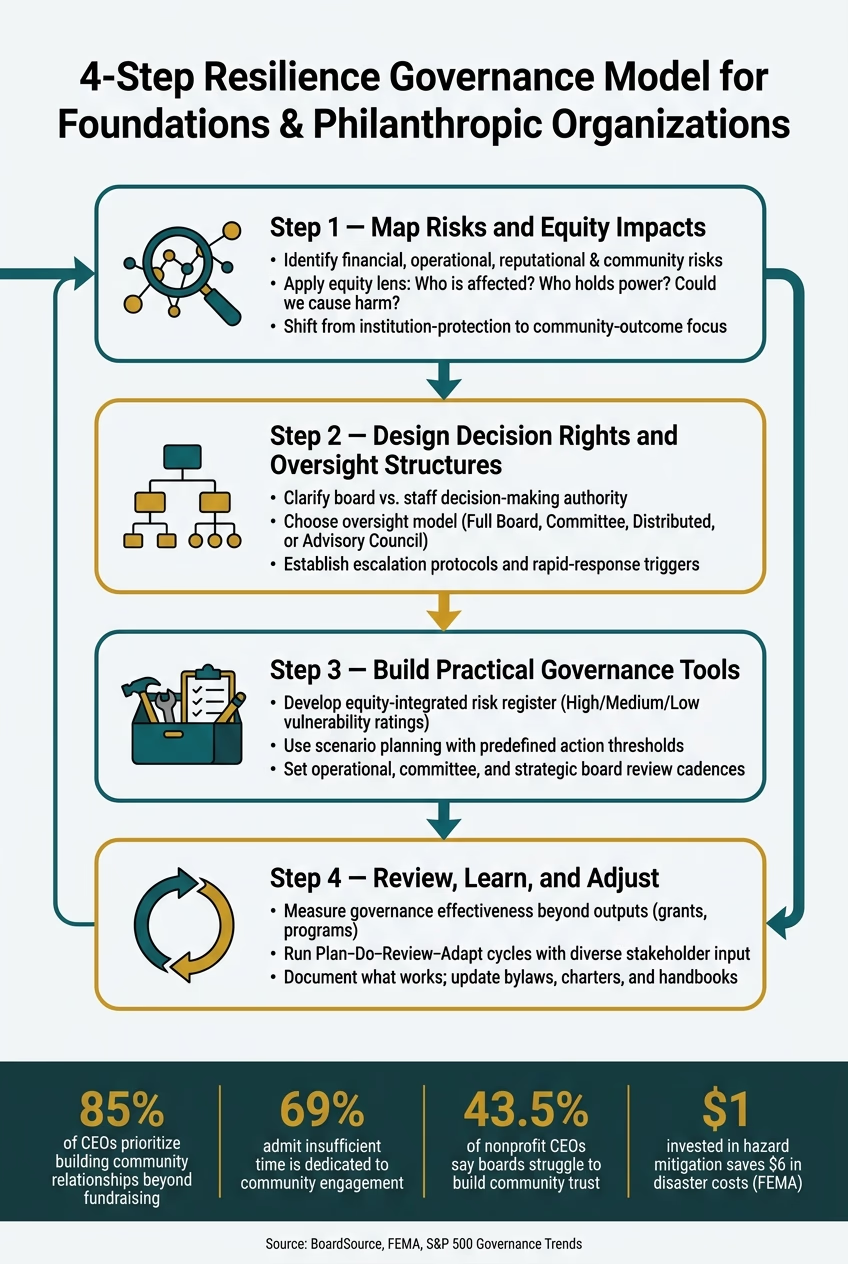
4-Step Resilience Governance Model for Foundations
Voices of Sustainability – Episode 53 | Designing the Future: Innovation, Investment and Equity
Step 1: Map Risks and Equity Impacts
Start by identifying potential risks and understanding how they affect both the foundation and the communities it serves.
Identifying Key Risk Categories
Foundations encounter various risks, including financial, operational, reputational, and those impacting the broader community. While boards often focus on financial and operational risks, they tend to neglect reputational and community-level consequences.
Using a tiered risk model, tailored by factors like grant size and the capacity of partners, helps safeguard both the foundation and its grantees. Incorporating an equity perspective into this assessment further refines the process.
Applying an Equity Lens to Risk Assessment
Looking at risks through an equity lens involves asking three critical questions:
Who will be most affected if this risk becomes a reality?
Who has the power to shape the response?
Could our actions unintentionally cause harm?
Risks don’t impact everyone equally. For example, stricter grant requirements can place a disproportionate burden on smaller nonprofits serving marginalized groups. Risk should also be evaluated in terms of maintaining community trust and staying true to the foundation's mission. Boards may need to consider whether absorbing more risk themselves could help stabilize the ecosystem they depend on. This perspective sets the stage for comparing traditional approaches to risk with those centered on equity.
Traditional vs. Equity-Centered Risk Review
The table below highlights the differences between conventional risk reviews and those that prioritize equity:
Feature | Traditional Risk Review | Equity-Centered Risk Review |
|---|---|---|
Primary Focus | Protecting the institution and its endowment | Ensuring mission integrity and positive community outcomes |
Risk Definition | Financial loss or legal non-compliance | Harm to the community or exacerbation of inequities |
Decision-Making | Top-down, board-driven, using internal benchmarks | Collaborative, involving those most affected |
Asset View | Assets are resources to be protected | Assets are tools to drive purpose |
Outcome Goal | Avoiding or mitigating risks for the foundation | Absorbing or redistributing risks to stabilize the ecosystem |
The need for this shift is clear. Recent findings show that 85% of CEOs and 86% of board chairs consider building community relationships - beyond just fundraising - a priority. However, 69% admit that insufficient time is dedicated to it [1]. When community voices are excluded from risk assessments, blind spots emerge, leading to decisions that may seem sound in theory but cause harm in practice.
Step 2: Design Decision Rights and Oversight Structures
Once risks have been identified and equity impacts analyzed, the next critical step is aligning decision-making authority with these insights. Without clear decision rights, even the most comprehensive risk assessments can become bogged down in committee debates or derailed by informal power struggles.
Defining Governance Roles and Responsibilities
The board's primary role is to establish the organization's risk tolerance and ensure that its assets are used to advance the mission - not simply to safeguard the endowment. This shift in perspective influences every decision that follows. Staff need clarity on which decisions they can handle independently, which require committee review, and which must be escalated to the full board. Documenting these responsibilities explicitly is essential - an organizational chart alone won’t suffice. Reviewing recent major decisions can help identify who the real decision-makers are. [6]
Interestingly, 43.5% of nonprofit CEOs report that their boards struggle to build community trust, highlighting a structural vulnerability that can skew risk decisions before they even begin. [1] To address this, appointing a Board Liaison - a staff member tasked with enhancing trustees’ financial and technical understanding - can strengthen board engagement and ensure all members contribute effectively to fiduciary oversight. [5]
Choosing the Right Oversight Structure
After clarifying roles and responsibilities, the next step is selecting an oversight framework that balances agility with equity. Below is a comparison of common models and their trade-offs:
Oversight Model | Best For | Trade-off |
|---|---|---|
Full Board | Small organizations; high mission alignment | Limited capacity for in-depth technical reviews |
Standalone Committee | High-risk exposure; complex equity or ESG needs | Risk of isolating risk from overall strategy |
Distributed (Pods/Networks) | Agility; rapid grantmaking cycles | Requires strong internal capacity and trust |
Advisory/Community Council | Equitable representation; lived experience | Lacks formal fiduciary authority unless legally structured |
One powerful example comes from the Peter and Elizabeth Tower Foundation, which in 2024 granted a team of young people (ages 18–26) with lived experience in disabilities formal authority over $200,000 annually through its "Community Expert Fund." These consultants review proposals and make final decisions, which are then reported to the board rather than being subject to approval. [5] This approach exemplifies the difference between mere consultation and genuine shared authority.
The importance of structured oversight is evident in corporate governance trends. By 2025, 58% of S&P 500 boards had assigned sustainability oversight to dedicated committees - up from 31% in 2020. Companies with active board-level oversight achieved 28% higher returns on equity over a decade compared to those with passive engagement. [7] For foundations, the same principle applies: structured oversight leads to better outcomes than a reactive or informal approach.
When and How to Escalate Decisions
Establishing escalation protocols is essential to avoid two common pitfalls: decisions that linger unresolved and those made hastily without proper input. Define triggers for escalation in advance. For instance, escalate decisions when core assumptions are challenged, or when the situation lies in a gray area between compliance and reputational risk. Escalation is also necessary when a choice involves a direct trade-off between upholding the mission and minimizing risk. [2][3]
For faster decision-making without compromising equity, consider rapid-response protocols. These can pre-authorize management to act within specified strategic boundaries between board meetings, provided equity considerations are built into those boundaries. [3] Pair this with "flipped agendas" that prioritize environmental scanning and critical topics at the beginning of board meetings, ensuring key risks are addressed while participants are most engaged. [3] Finally, encourage constructive dissent by creating space for team members to question assumptions - asking, “What if we’re wrong about this?” - to counteract groupthink during high-pressure decision-making.
Step 3: Build Practical Governance Tools
The focus now shifts to creating governance tools that enhance everyday operations. These tools bring the resilience and equity principles from earlier steps into actionable frameworks.
Developing a Risk Register and Equity Impact Checklist
A risk register is essential for identifying and preparing for potential challenges. However, for philanthropic organizations, a standard risk register falls short. It needs to integrate an equity perspective directly into its structure to address the unique needs of underserved communities.
The table below illustrates how equity considerations can be embedded into each component of a risk register:
Risk Register Component | Description | Equity Tailoring |
|---|---|---|
Asset Category | Includes physical assets (offices), people (staff and grantees), and services (grantmaking) | Emphasize support for frontline and environmental justice (EJ) communities |
Hazard Type | Local threats such as heatwaves, flooding, wildfires, or drought | Focus on hazards disproportionately affecting low-income areas, like urban heat islands |
Sensitivity | Measures how vulnerable an asset is to a specific hazard | Evaluate whether marginalized groups face higher risks due to limited resources |
Adaptive Capacity | The ability of an asset or community to recover post-crisis | Monitor access to critical resources like cooling centers, backup power, or insurance |
Vulnerability Rating | Rates vulnerability as High, Medium, or Low based on sensitivity and recovery capacity | Prioritize "High-High" risks in under-resourced areas |
To complement the risk register, use an equity-informed review tool. Questions such as "Who is most affected if this risk becomes reality?" and "Does our response plan adequately address the needs of the communities we serve?" ensure equity remains at the forefront. FEMA reports that investing $1 in hazard mitigation saves $6 in disaster costs, highlighting the importance of proactive, equity-centered planning over reactive responses [8].
With these tools in place, scenario planning becomes the next step for refining responses.
Using Scenario Planning and Action Thresholds
Scenario planning builds on the risk register, helping organizations prepare for various potential crises. The aim isn't to predict the future but to improve readiness when circumstances shift. Boards should explore financial scenarios, such as losing a major funding source or facing a reputational challenge, and assess their impact on the organization's mission.
Pair each scenario with a clear action threshold - a predefined trigger that prompts immediate action. For example, if the endowment falls below a specific percentage of annual grantmaking, a protocol would automatically activate. This approach eliminates uncertainty, enabling swift responses that minimize harm to the communities served.
Once scenarios and thresholds are established, regular reviews are key to maintaining an effective governance framework.
Setting Up Reporting and Review Cadences
Governance tools are only effective with consistent oversight. In volatile environments, quarterly board meetings may not suffice. Consider adopting a more frequent review schedule - monthly or bi-monthly - to stay aligned with changing conditions. Reviews can be structured across three levels:
Operational: Monthly staff-level evaluations to monitor day-to-day risks and equity impacts.
Committee: Bi-monthly sessions focused on specific areas like risk management and equity considerations.
Strategic Board Review: Monthly or bi-monthly high-level discussions on risk tolerance, mission alignment, and financial stability.
Assign follow-up actions from these reviews to relevant committees or task forces. Use a shared organizational dashboard to track progress, ensuring accountability and timely completion of tasks [2].
Step 4: Review, Learn, and Adjust Your Governance Model
This step focuses on validating the tools you’ve implemented and addressing areas that may not be performing as expected.
Measuring Governance Effectiveness
When evaluating governance, many organizations tend to focus on outputs like the number of grants given or programs initiated. However, resilience governance demands a broader perspective. The goal is to assess whether your model reduces harm to the community and mitigates risks to your institution.
One useful tool is the Sustainable Grantmaking Benchmark. This framework evaluates practices such as multi-year commitments and providing unrestricted funding through qualitative, self-reported assessments [9]. While it won’t deliver a single score, it highlights gaps in how your governance aligns with your values.
In addition to financial metrics, it’s crucial to measure how well your governance structure incorporates and respects diverse perspectives. This includes evaluating whether community voices actively shape the definition of success, rather than being consulted only after decisions are made [10]. For example, BoardSource reports that 20% of foundation CEOs believe their board members lack an understanding of how current conditions impact the communities they serve [1].
Running Cyclical Reviews and Gathering Stakeholder Feedback
Once you’ve quantified governance effectiveness, the next step is to refine your approach by gathering stakeholder feedback. However, periodic reviews are only effective if the right voices are included in the process. Generative agenda design - allocating most board time to strategic discussions - is an underutilized method for encouraging honest input from a diverse group of stakeholders [5].
"What becomes possible when communities are not merely consulted, but are truly authentic partners in decision making?" - Monika Kalra Varma, President & CEO, BoardSource [4]
The Peter and Elizabeth Tower Foundation provides a compelling example. By embedding community members with lived experience directly into the grantmaking process and granting them independent decision-making authority, they created a feedback loop that goes beyond mere consultation [5].
To maintain this kind of engagement, use a Plan–Do–Review–Adapt cycle. After each review, ask questions like: What lessons have we learned? What external changes have occurred? What adjustments are necessary? This approach ensures governance remains dynamic and responsive rather than a rigid compliance exercise.
Moving from Pilots to a Scalable Governance Model
Insights from cyclical reviews can help you formalize a governance framework that has broader and lasting impact. For example, in February 2026, the Betty and Davis Fitzgerald Foundation codified its governance model. They adopted a target board size of 8 to 12 trustees, replaced a one-third cap on community trustees with a more flexible guideline of up to one-half, and implemented renewable three-year terms. The firm Boldly Go supported them in transitioning from planning to execution [12].
"Writing expectations down is a gift to the next generation. When governance relies on custom and memory rather than shared guidance, community trustees and next-generation family members are left to navigate implied norms." - Brittany Collins, Executive Director, Betty & Davis Fitzgerald Foundation [12]
The lesson here is simple: document what works. Update key documents like bylaws, board charters, and handbooks to reflect the practices that have proven successful. Assign clear accountability for monitoring progress and suggesting adjustments [6]. Without these steps, even the best-designed governance frameworks risk reverting to outdated habits.
Conclusion: Key Takeaways for Building Resilience Governance Models
The Case for Equitable, Forward-Looking Governance
Thriving in disruptive environments doesn't come down to the size of a foundation's endowment - it’s about having governance structures that can respond effectively to change. Resilience governance shifts the focus from protecting the institution to addressing the broader conditions impacting its mission. This isn’t just a theoretical shift; it's a practical necessity. For instance, nearly half of foundation CEOs report lacking the right board members to build trust with the communities they serve [1]. Governance rooted in equity isn't just a moral choice; it’s a critical factor in achieving a foundation's purpose. These principles offer a roadmap for immediate, actionable steps.
Steps to Start Building Your Model Today
To bring this vision to life, start by examining risks through an equity-focused lens. Clearly define decision-making roles and responsibilities, and implement tools like a risk register and governance calendar with quarterly reviews. These tools ensure accountability across key areas, from mission alignment to stakeholder engagement. As Drew Giddings, Founder & Principal Consultant at GCG, explains:
"The best boards we work with have a clear rule: govern everything, manage nothing. They set the destination and check the compass. They do not grab the steering wheel." [13]
Long-Term Benefits for Foundations and Their Stakeholders
Governance that integrates equity into risk management delivers tangible benefits. Organizations with inclusive leadership are 36% more likely to achieve better financial results and report 30% higher employee productivity [11]. Despite this, 69% of CEOs and 70% of board chairs admit they don’t dedicate enough time to building relationships with their communities [1]. A well-structured governance model can bridge this gap, fostering both strategic advantages and stronger stakeholder trust.
The goal isn’t to create a static policy but to build a flexible model that adapts to evolving conditions, reflects your values, and prioritizes the needs of the communities you serve in every decision.
FAQs
How do we set risk tolerance without undermining equity goals?
To align risk tolerance with equity, it's essential to move away from rigid due diligence processes and adopt frameworks that are adaptable and sensitive to specific contexts. Start by clearly defining your organization's risk appetite, distinguishing between operational risks and mission-driven impacts. This approach ensures that mission-related risks are guided by the needs and priorities of the community being served.
Adjusting requirements, such as financial reserves, can also help avoid placing smaller organizations at a disadvantage. By institutionalizing investment beliefs at the board level and maintaining open feedback channels with stakeholders, governance structures can better support equity while steering clear of exclusionary practices.
What governance structure works best for shared community decision-making?
Shared community decision-making thrives when governance structures move past traditional hierarchies and empower those directly impacted by the outcomes. Multi-stakeholder models, which include representatives from frontline communities in key decision-making roles, have proven to be highly effective. Success in these models often hinges on a few critical practices:
Clear and Transparent Representation: Establishing clear criteria for who represents the community ensures fairness and trust in the process.
Equity-Focused Scoring: Projects are evaluated using scoring systems that prioritize fairness and address disparities.
Ongoing Feedback Mechanisms: Regular feedback loops allow for continuous improvement and ensure that the process remains responsive to community needs.
By co-creating decision-making processes over time, residents are recognized as experts in their own experiences and are given shared authority in final decisions. This approach fosters trust, inclusivity, and meaningful engagement.
What metrics show our governance is actually building resilience and trust?
To determine if your governance model is building resilience and trust, start by monitoring disaggregated demographic data to confirm that benefits are reaching all groups fairly, especially low-income and frontline communities. Pair this data with qualitative feedback and personal stories to gain deeper insights into community relationships and levels of stakeholder trust. Furthermore, evaluate whether community representatives hold formal decision-making authority, as this serves as a clear measure of equitable governance.
Related Blog Posts
Latest Articles
©2026

Narrative Change and Power Building: The Missing Half of Advocacy
Narrative change is the process of disrupting dominant narratives that normalize inequity and advancing new narratives from historically marginalized communities.

Funding Resilience Without Federal Grants
BRIC is unreliable and FEMA is shrinking. Here's how cities fund climate resilience with dedicated revenue, blended finance, and a coordinating authority.

The ESG Blind Spot: How AI Is Finding Risks in Companies Nobody Else Is Watching
Norway's sovereign wealth fund uses AI to screen 7,200 portfolio companies for forced labor and corruption within 24 hours. The real story is the emerging-market coverage gap that traditional ESG data vendors miss — and what it means for any company with a global supply chain.
Narrative Change and Power Building: The Missing Half of Advocacy
Narrative change is the process of disrupting dominant narratives that normalize inequity and advancing new narratives from historically marginalized communities.
Funding Resilience Without Federal Grants
BRIC is unreliable and FEMA is shrinking. Here's how cities fund climate resilience with dedicated revenue, blended finance, and a coordinating authority.
The ESG Blind Spot: How AI Is Finding Risks in Companies Nobody Else Is Watching
Norway's sovereign wealth fund uses AI to screen 7,200 portfolio companies for forced labor and corruption within 24 hours. The real story is the emerging-market coverage gap that traditional ESG data vendors miss — and what it means for any company with a global supply chain.
FAQ
01
What does it really mean to “redefine profit”?
02
What makes Council Fire different?
03
Who does Council Fire work with?
04
What does working with Council Fire actually look like?
05
How does Council Fire help organizations turn big goals into action?
06
How does Council Fire define and measure success?
07
How does technology fit into Council Fire’s work?
Jun 7, 2026
How to Build Resilience Governance Models That Balance Risk and Equity for Foundations & Philanthropic Organizations
Capacity Building
In This Article
Integrate risk management and equity to protect assets, advance mission, and build community trust with practical governance steps.
How to Build Resilience Governance Models That Balance Risk and Equity for Foundations & Philanthropic Organizations
Foundations face increasing challenges like economic instability, climate risks, and declining trust. To address these, resilience governance integrates risk management with equity and mission focus. This approach moves beyond protecting assets to prioritizing community outcomes and fairness in decision-making. Key steps include:
Assessing Risks with an Equity Lens: Identify who is most affected, who holds decision-making power, and potential harm to marginalized groups.
Defining Roles and Oversight: Clarify board and staff responsibilities, and choose governance structures that align with mission goals.
Developing Practical Tools: Use equity-focused risk registers and scenario planning to prepare for crises.
Regular Review and Feedback: Continuously evaluate governance effectiveness and adapt based on stakeholder input.
This model ensures foundations not only protect assets but also strengthen their mission and community trust.
4-Step Resilience Governance Model for Foundations
Voices of Sustainability – Episode 53 | Designing the Future: Innovation, Investment and Equity
Step 1: Map Risks and Equity Impacts
Start by identifying potential risks and understanding how they affect both the foundation and the communities it serves.
Identifying Key Risk Categories
Foundations encounter various risks, including financial, operational, reputational, and those impacting the broader community. While boards often focus on financial and operational risks, they tend to neglect reputational and community-level consequences.
Using a tiered risk model, tailored by factors like grant size and the capacity of partners, helps safeguard both the foundation and its grantees. Incorporating an equity perspective into this assessment further refines the process.
Applying an Equity Lens to Risk Assessment
Looking at risks through an equity lens involves asking three critical questions:
Who will be most affected if this risk becomes a reality?
Who has the power to shape the response?
Could our actions unintentionally cause harm?
Risks don’t impact everyone equally. For example, stricter grant requirements can place a disproportionate burden on smaller nonprofits serving marginalized groups. Risk should also be evaluated in terms of maintaining community trust and staying true to the foundation's mission. Boards may need to consider whether absorbing more risk themselves could help stabilize the ecosystem they depend on. This perspective sets the stage for comparing traditional approaches to risk with those centered on equity.
Traditional vs. Equity-Centered Risk Review
The table below highlights the differences between conventional risk reviews and those that prioritize equity:
Feature | Traditional Risk Review | Equity-Centered Risk Review |
|---|---|---|
Primary Focus | Protecting the institution and its endowment | Ensuring mission integrity and positive community outcomes |
Risk Definition | Financial loss or legal non-compliance | Harm to the community or exacerbation of inequities |
Decision-Making | Top-down, board-driven, using internal benchmarks | Collaborative, involving those most affected |
Asset View | Assets are resources to be protected | Assets are tools to drive purpose |
Outcome Goal | Avoiding or mitigating risks for the foundation | Absorbing or redistributing risks to stabilize the ecosystem |
The need for this shift is clear. Recent findings show that 85% of CEOs and 86% of board chairs consider building community relationships - beyond just fundraising - a priority. However, 69% admit that insufficient time is dedicated to it [1]. When community voices are excluded from risk assessments, blind spots emerge, leading to decisions that may seem sound in theory but cause harm in practice.
Step 2: Design Decision Rights and Oversight Structures
Once risks have been identified and equity impacts analyzed, the next critical step is aligning decision-making authority with these insights. Without clear decision rights, even the most comprehensive risk assessments can become bogged down in committee debates or derailed by informal power struggles.
Defining Governance Roles and Responsibilities
The board's primary role is to establish the organization's risk tolerance and ensure that its assets are used to advance the mission - not simply to safeguard the endowment. This shift in perspective influences every decision that follows. Staff need clarity on which decisions they can handle independently, which require committee review, and which must be escalated to the full board. Documenting these responsibilities explicitly is essential - an organizational chart alone won’t suffice. Reviewing recent major decisions can help identify who the real decision-makers are. [6]
Interestingly, 43.5% of nonprofit CEOs report that their boards struggle to build community trust, highlighting a structural vulnerability that can skew risk decisions before they even begin. [1] To address this, appointing a Board Liaison - a staff member tasked with enhancing trustees’ financial and technical understanding - can strengthen board engagement and ensure all members contribute effectively to fiduciary oversight. [5]
Choosing the Right Oversight Structure
After clarifying roles and responsibilities, the next step is selecting an oversight framework that balances agility with equity. Below is a comparison of common models and their trade-offs:
Oversight Model | Best For | Trade-off |
|---|---|---|
Full Board | Small organizations; high mission alignment | Limited capacity for in-depth technical reviews |
Standalone Committee | High-risk exposure; complex equity or ESG needs | Risk of isolating risk from overall strategy |
Distributed (Pods/Networks) | Agility; rapid grantmaking cycles | Requires strong internal capacity and trust |
Advisory/Community Council | Equitable representation; lived experience | Lacks formal fiduciary authority unless legally structured |
One powerful example comes from the Peter and Elizabeth Tower Foundation, which in 2024 granted a team of young people (ages 18–26) with lived experience in disabilities formal authority over $200,000 annually through its "Community Expert Fund." These consultants review proposals and make final decisions, which are then reported to the board rather than being subject to approval. [5] This approach exemplifies the difference between mere consultation and genuine shared authority.
The importance of structured oversight is evident in corporate governance trends. By 2025, 58% of S&P 500 boards had assigned sustainability oversight to dedicated committees - up from 31% in 2020. Companies with active board-level oversight achieved 28% higher returns on equity over a decade compared to those with passive engagement. [7] For foundations, the same principle applies: structured oversight leads to better outcomes than a reactive or informal approach.
When and How to Escalate Decisions
Establishing escalation protocols is essential to avoid two common pitfalls: decisions that linger unresolved and those made hastily without proper input. Define triggers for escalation in advance. For instance, escalate decisions when core assumptions are challenged, or when the situation lies in a gray area between compliance and reputational risk. Escalation is also necessary when a choice involves a direct trade-off between upholding the mission and minimizing risk. [2][3]
For faster decision-making without compromising equity, consider rapid-response protocols. These can pre-authorize management to act within specified strategic boundaries between board meetings, provided equity considerations are built into those boundaries. [3] Pair this with "flipped agendas" that prioritize environmental scanning and critical topics at the beginning of board meetings, ensuring key risks are addressed while participants are most engaged. [3] Finally, encourage constructive dissent by creating space for team members to question assumptions - asking, “What if we’re wrong about this?” - to counteract groupthink during high-pressure decision-making.
Step 3: Build Practical Governance Tools
The focus now shifts to creating governance tools that enhance everyday operations. These tools bring the resilience and equity principles from earlier steps into actionable frameworks.
Developing a Risk Register and Equity Impact Checklist
A risk register is essential for identifying and preparing for potential challenges. However, for philanthropic organizations, a standard risk register falls short. It needs to integrate an equity perspective directly into its structure to address the unique needs of underserved communities.
The table below illustrates how equity considerations can be embedded into each component of a risk register:
Risk Register Component | Description | Equity Tailoring |
|---|---|---|
Asset Category | Includes physical assets (offices), people (staff and grantees), and services (grantmaking) | Emphasize support for frontline and environmental justice (EJ) communities |
Hazard Type | Local threats such as heatwaves, flooding, wildfires, or drought | Focus on hazards disproportionately affecting low-income areas, like urban heat islands |
Sensitivity | Measures how vulnerable an asset is to a specific hazard | Evaluate whether marginalized groups face higher risks due to limited resources |
Adaptive Capacity | The ability of an asset or community to recover post-crisis | Monitor access to critical resources like cooling centers, backup power, or insurance |
Vulnerability Rating | Rates vulnerability as High, Medium, or Low based on sensitivity and recovery capacity | Prioritize "High-High" risks in under-resourced areas |
To complement the risk register, use an equity-informed review tool. Questions such as "Who is most affected if this risk becomes reality?" and "Does our response plan adequately address the needs of the communities we serve?" ensure equity remains at the forefront. FEMA reports that investing $1 in hazard mitigation saves $6 in disaster costs, highlighting the importance of proactive, equity-centered planning over reactive responses [8].
With these tools in place, scenario planning becomes the next step for refining responses.
Using Scenario Planning and Action Thresholds
Scenario planning builds on the risk register, helping organizations prepare for various potential crises. The aim isn't to predict the future but to improve readiness when circumstances shift. Boards should explore financial scenarios, such as losing a major funding source or facing a reputational challenge, and assess their impact on the organization's mission.
Pair each scenario with a clear action threshold - a predefined trigger that prompts immediate action. For example, if the endowment falls below a specific percentage of annual grantmaking, a protocol would automatically activate. This approach eliminates uncertainty, enabling swift responses that minimize harm to the communities served.
Once scenarios and thresholds are established, regular reviews are key to maintaining an effective governance framework.
Setting Up Reporting and Review Cadences
Governance tools are only effective with consistent oversight. In volatile environments, quarterly board meetings may not suffice. Consider adopting a more frequent review schedule - monthly or bi-monthly - to stay aligned with changing conditions. Reviews can be structured across three levels:
Operational: Monthly staff-level evaluations to monitor day-to-day risks and equity impacts.
Committee: Bi-monthly sessions focused on specific areas like risk management and equity considerations.
Strategic Board Review: Monthly or bi-monthly high-level discussions on risk tolerance, mission alignment, and financial stability.
Assign follow-up actions from these reviews to relevant committees or task forces. Use a shared organizational dashboard to track progress, ensuring accountability and timely completion of tasks [2].
Step 4: Review, Learn, and Adjust Your Governance Model
This step focuses on validating the tools you’ve implemented and addressing areas that may not be performing as expected.
Measuring Governance Effectiveness
When evaluating governance, many organizations tend to focus on outputs like the number of grants given or programs initiated. However, resilience governance demands a broader perspective. The goal is to assess whether your model reduces harm to the community and mitigates risks to your institution.
One useful tool is the Sustainable Grantmaking Benchmark. This framework evaluates practices such as multi-year commitments and providing unrestricted funding through qualitative, self-reported assessments [9]. While it won’t deliver a single score, it highlights gaps in how your governance aligns with your values.
In addition to financial metrics, it’s crucial to measure how well your governance structure incorporates and respects diverse perspectives. This includes evaluating whether community voices actively shape the definition of success, rather than being consulted only after decisions are made [10]. For example, BoardSource reports that 20% of foundation CEOs believe their board members lack an understanding of how current conditions impact the communities they serve [1].
Running Cyclical Reviews and Gathering Stakeholder Feedback
Once you’ve quantified governance effectiveness, the next step is to refine your approach by gathering stakeholder feedback. However, periodic reviews are only effective if the right voices are included in the process. Generative agenda design - allocating most board time to strategic discussions - is an underutilized method for encouraging honest input from a diverse group of stakeholders [5].
"What becomes possible when communities are not merely consulted, but are truly authentic partners in decision making?" - Monika Kalra Varma, President & CEO, BoardSource [4]
The Peter and Elizabeth Tower Foundation provides a compelling example. By embedding community members with lived experience directly into the grantmaking process and granting them independent decision-making authority, they created a feedback loop that goes beyond mere consultation [5].
To maintain this kind of engagement, use a Plan–Do–Review–Adapt cycle. After each review, ask questions like: What lessons have we learned? What external changes have occurred? What adjustments are necessary? This approach ensures governance remains dynamic and responsive rather than a rigid compliance exercise.
Moving from Pilots to a Scalable Governance Model
Insights from cyclical reviews can help you formalize a governance framework that has broader and lasting impact. For example, in February 2026, the Betty and Davis Fitzgerald Foundation codified its governance model. They adopted a target board size of 8 to 12 trustees, replaced a one-third cap on community trustees with a more flexible guideline of up to one-half, and implemented renewable three-year terms. The firm Boldly Go supported them in transitioning from planning to execution [12].
"Writing expectations down is a gift to the next generation. When governance relies on custom and memory rather than shared guidance, community trustees and next-generation family members are left to navigate implied norms." - Brittany Collins, Executive Director, Betty & Davis Fitzgerald Foundation [12]
The lesson here is simple: document what works. Update key documents like bylaws, board charters, and handbooks to reflect the practices that have proven successful. Assign clear accountability for monitoring progress and suggesting adjustments [6]. Without these steps, even the best-designed governance frameworks risk reverting to outdated habits.
Conclusion: Key Takeaways for Building Resilience Governance Models
The Case for Equitable, Forward-Looking Governance
Thriving in disruptive environments doesn't come down to the size of a foundation's endowment - it’s about having governance structures that can respond effectively to change. Resilience governance shifts the focus from protecting the institution to addressing the broader conditions impacting its mission. This isn’t just a theoretical shift; it's a practical necessity. For instance, nearly half of foundation CEOs report lacking the right board members to build trust with the communities they serve [1]. Governance rooted in equity isn't just a moral choice; it’s a critical factor in achieving a foundation's purpose. These principles offer a roadmap for immediate, actionable steps.
Steps to Start Building Your Model Today
To bring this vision to life, start by examining risks through an equity-focused lens. Clearly define decision-making roles and responsibilities, and implement tools like a risk register and governance calendar with quarterly reviews. These tools ensure accountability across key areas, from mission alignment to stakeholder engagement. As Drew Giddings, Founder & Principal Consultant at GCG, explains:
"The best boards we work with have a clear rule: govern everything, manage nothing. They set the destination and check the compass. They do not grab the steering wheel." [13]
Long-Term Benefits for Foundations and Their Stakeholders
Governance that integrates equity into risk management delivers tangible benefits. Organizations with inclusive leadership are 36% more likely to achieve better financial results and report 30% higher employee productivity [11]. Despite this, 69% of CEOs and 70% of board chairs admit they don’t dedicate enough time to building relationships with their communities [1]. A well-structured governance model can bridge this gap, fostering both strategic advantages and stronger stakeholder trust.
The goal isn’t to create a static policy but to build a flexible model that adapts to evolving conditions, reflects your values, and prioritizes the needs of the communities you serve in every decision.
FAQs
How do we set risk tolerance without undermining equity goals?
To align risk tolerance with equity, it's essential to move away from rigid due diligence processes and adopt frameworks that are adaptable and sensitive to specific contexts. Start by clearly defining your organization's risk appetite, distinguishing between operational risks and mission-driven impacts. This approach ensures that mission-related risks are guided by the needs and priorities of the community being served.
Adjusting requirements, such as financial reserves, can also help avoid placing smaller organizations at a disadvantage. By institutionalizing investment beliefs at the board level and maintaining open feedback channels with stakeholders, governance structures can better support equity while steering clear of exclusionary practices.
What governance structure works best for shared community decision-making?
Shared community decision-making thrives when governance structures move past traditional hierarchies and empower those directly impacted by the outcomes. Multi-stakeholder models, which include representatives from frontline communities in key decision-making roles, have proven to be highly effective. Success in these models often hinges on a few critical practices:
Clear and Transparent Representation: Establishing clear criteria for who represents the community ensures fairness and trust in the process.
Equity-Focused Scoring: Projects are evaluated using scoring systems that prioritize fairness and address disparities.
Ongoing Feedback Mechanisms: Regular feedback loops allow for continuous improvement and ensure that the process remains responsive to community needs.
By co-creating decision-making processes over time, residents are recognized as experts in their own experiences and are given shared authority in final decisions. This approach fosters trust, inclusivity, and meaningful engagement.
What metrics show our governance is actually building resilience and trust?
To determine if your governance model is building resilience and trust, start by monitoring disaggregated demographic data to confirm that benefits are reaching all groups fairly, especially low-income and frontline communities. Pair this data with qualitative feedback and personal stories to gain deeper insights into community relationships and levels of stakeholder trust. Furthermore, evaluate whether community representatives hold formal decision-making authority, as this serves as a clear measure of equitable governance.
Related Blog Posts
Latest Articles
©2026
Narrative Change and Power Building: The Missing Half of Advocacy
Narrative change is the process of disrupting dominant narratives that normalize inequity and advancing new narratives from historically marginalized communities.
Funding Resilience Without Federal Grants
BRIC is unreliable and FEMA is shrinking. Here's how cities fund climate resilience with dedicated revenue, blended finance, and a coordinating authority.
The ESG Blind Spot: How AI Is Finding Risks in Companies Nobody Else Is Watching
Norway's sovereign wealth fund uses AI to screen 7,200 portfolio companies for forced labor and corruption within 24 hours. The real story is the emerging-market coverage gap that traditional ESG data vendors miss — and what it means for any company with a global supply chain.
FAQ
01
What does it really mean to “redefine profit”?
02
What makes Council Fire different?
03
Who does Council Fire work with?
04
What does working with Council Fire actually look like?
05
How does Council Fire help organizations turn big goals into action?
06
How does Council Fire define and measure success?
07
How does technology fit into Council Fire’s work?
Jun 7, 2026
How to Build Resilience Governance Models That Balance Risk and Equity for Foundations & Philanthropic Organizations
Capacity Building
In This Article
Integrate risk management and equity to protect assets, advance mission, and build community trust with practical governance steps.
How to Build Resilience Governance Models That Balance Risk and Equity for Foundations & Philanthropic Organizations
Foundations face increasing challenges like economic instability, climate risks, and declining trust. To address these, resilience governance integrates risk management with equity and mission focus. This approach moves beyond protecting assets to prioritizing community outcomes and fairness in decision-making. Key steps include:
Assessing Risks with an Equity Lens: Identify who is most affected, who holds decision-making power, and potential harm to marginalized groups.
Defining Roles and Oversight: Clarify board and staff responsibilities, and choose governance structures that align with mission goals.
Developing Practical Tools: Use equity-focused risk registers and scenario planning to prepare for crises.
Regular Review and Feedback: Continuously evaluate governance effectiveness and adapt based on stakeholder input.
This model ensures foundations not only protect assets but also strengthen their mission and community trust.
4-Step Resilience Governance Model for Foundations
Voices of Sustainability – Episode 53 | Designing the Future: Innovation, Investment and Equity
Step 1: Map Risks and Equity Impacts
Start by identifying potential risks and understanding how they affect both the foundation and the communities it serves.
Identifying Key Risk Categories
Foundations encounter various risks, including financial, operational, reputational, and those impacting the broader community. While boards often focus on financial and operational risks, they tend to neglect reputational and community-level consequences.
Using a tiered risk model, tailored by factors like grant size and the capacity of partners, helps safeguard both the foundation and its grantees. Incorporating an equity perspective into this assessment further refines the process.
Applying an Equity Lens to Risk Assessment
Looking at risks through an equity lens involves asking three critical questions:
Who will be most affected if this risk becomes a reality?
Who has the power to shape the response?
Could our actions unintentionally cause harm?
Risks don’t impact everyone equally. For example, stricter grant requirements can place a disproportionate burden on smaller nonprofits serving marginalized groups. Risk should also be evaluated in terms of maintaining community trust and staying true to the foundation's mission. Boards may need to consider whether absorbing more risk themselves could help stabilize the ecosystem they depend on. This perspective sets the stage for comparing traditional approaches to risk with those centered on equity.
Traditional vs. Equity-Centered Risk Review
The table below highlights the differences between conventional risk reviews and those that prioritize equity:
Feature | Traditional Risk Review | Equity-Centered Risk Review |
|---|---|---|
Primary Focus | Protecting the institution and its endowment | Ensuring mission integrity and positive community outcomes |
Risk Definition | Financial loss or legal non-compliance | Harm to the community or exacerbation of inequities |
Decision-Making | Top-down, board-driven, using internal benchmarks | Collaborative, involving those most affected |
Asset View | Assets are resources to be protected | Assets are tools to drive purpose |
Outcome Goal | Avoiding or mitigating risks for the foundation | Absorbing or redistributing risks to stabilize the ecosystem |
The need for this shift is clear. Recent findings show that 85% of CEOs and 86% of board chairs consider building community relationships - beyond just fundraising - a priority. However, 69% admit that insufficient time is dedicated to it [1]. When community voices are excluded from risk assessments, blind spots emerge, leading to decisions that may seem sound in theory but cause harm in practice.
Step 2: Design Decision Rights and Oversight Structures
Once risks have been identified and equity impacts analyzed, the next critical step is aligning decision-making authority with these insights. Without clear decision rights, even the most comprehensive risk assessments can become bogged down in committee debates or derailed by informal power struggles.
Defining Governance Roles and Responsibilities
The board's primary role is to establish the organization's risk tolerance and ensure that its assets are used to advance the mission - not simply to safeguard the endowment. This shift in perspective influences every decision that follows. Staff need clarity on which decisions they can handle independently, which require committee review, and which must be escalated to the full board. Documenting these responsibilities explicitly is essential - an organizational chart alone won’t suffice. Reviewing recent major decisions can help identify who the real decision-makers are. [6]
Interestingly, 43.5% of nonprofit CEOs report that their boards struggle to build community trust, highlighting a structural vulnerability that can skew risk decisions before they even begin. [1] To address this, appointing a Board Liaison - a staff member tasked with enhancing trustees’ financial and technical understanding - can strengthen board engagement and ensure all members contribute effectively to fiduciary oversight. [5]
Choosing the Right Oversight Structure
After clarifying roles and responsibilities, the next step is selecting an oversight framework that balances agility with equity. Below is a comparison of common models and their trade-offs:
Oversight Model | Best For | Trade-off |
|---|---|---|
Full Board | Small organizations; high mission alignment | Limited capacity for in-depth technical reviews |
Standalone Committee | High-risk exposure; complex equity or ESG needs | Risk of isolating risk from overall strategy |
Distributed (Pods/Networks) | Agility; rapid grantmaking cycles | Requires strong internal capacity and trust |
Advisory/Community Council | Equitable representation; lived experience | Lacks formal fiduciary authority unless legally structured |
One powerful example comes from the Peter and Elizabeth Tower Foundation, which in 2024 granted a team of young people (ages 18–26) with lived experience in disabilities formal authority over $200,000 annually through its "Community Expert Fund." These consultants review proposals and make final decisions, which are then reported to the board rather than being subject to approval. [5] This approach exemplifies the difference between mere consultation and genuine shared authority.
The importance of structured oversight is evident in corporate governance trends. By 2025, 58% of S&P 500 boards had assigned sustainability oversight to dedicated committees - up from 31% in 2020. Companies with active board-level oversight achieved 28% higher returns on equity over a decade compared to those with passive engagement. [7] For foundations, the same principle applies: structured oversight leads to better outcomes than a reactive or informal approach.
When and How to Escalate Decisions
Establishing escalation protocols is essential to avoid two common pitfalls: decisions that linger unresolved and those made hastily without proper input. Define triggers for escalation in advance. For instance, escalate decisions when core assumptions are challenged, or when the situation lies in a gray area between compliance and reputational risk. Escalation is also necessary when a choice involves a direct trade-off between upholding the mission and minimizing risk. [2][3]
For faster decision-making without compromising equity, consider rapid-response protocols. These can pre-authorize management to act within specified strategic boundaries between board meetings, provided equity considerations are built into those boundaries. [3] Pair this with "flipped agendas" that prioritize environmental scanning and critical topics at the beginning of board meetings, ensuring key risks are addressed while participants are most engaged. [3] Finally, encourage constructive dissent by creating space for team members to question assumptions - asking, “What if we’re wrong about this?” - to counteract groupthink during high-pressure decision-making.
Step 3: Build Practical Governance Tools
The focus now shifts to creating governance tools that enhance everyday operations. These tools bring the resilience and equity principles from earlier steps into actionable frameworks.
Developing a Risk Register and Equity Impact Checklist
A risk register is essential for identifying and preparing for potential challenges. However, for philanthropic organizations, a standard risk register falls short. It needs to integrate an equity perspective directly into its structure to address the unique needs of underserved communities.
The table below illustrates how equity considerations can be embedded into each component of a risk register:
Risk Register Component | Description | Equity Tailoring |
|---|---|---|
Asset Category | Includes physical assets (offices), people (staff and grantees), and services (grantmaking) | Emphasize support for frontline and environmental justice (EJ) communities |
Hazard Type | Local threats such as heatwaves, flooding, wildfires, or drought | Focus on hazards disproportionately affecting low-income areas, like urban heat islands |
Sensitivity | Measures how vulnerable an asset is to a specific hazard | Evaluate whether marginalized groups face higher risks due to limited resources |
Adaptive Capacity | The ability of an asset or community to recover post-crisis | Monitor access to critical resources like cooling centers, backup power, or insurance |
Vulnerability Rating | Rates vulnerability as High, Medium, or Low based on sensitivity and recovery capacity | Prioritize "High-High" risks in under-resourced areas |
To complement the risk register, use an equity-informed review tool. Questions such as "Who is most affected if this risk becomes reality?" and "Does our response plan adequately address the needs of the communities we serve?" ensure equity remains at the forefront. FEMA reports that investing $1 in hazard mitigation saves $6 in disaster costs, highlighting the importance of proactive, equity-centered planning over reactive responses [8].
With these tools in place, scenario planning becomes the next step for refining responses.
Using Scenario Planning and Action Thresholds
Scenario planning builds on the risk register, helping organizations prepare for various potential crises. The aim isn't to predict the future but to improve readiness when circumstances shift. Boards should explore financial scenarios, such as losing a major funding source or facing a reputational challenge, and assess their impact on the organization's mission.
Pair each scenario with a clear action threshold - a predefined trigger that prompts immediate action. For example, if the endowment falls below a specific percentage of annual grantmaking, a protocol would automatically activate. This approach eliminates uncertainty, enabling swift responses that minimize harm to the communities served.
Once scenarios and thresholds are established, regular reviews are key to maintaining an effective governance framework.
Setting Up Reporting and Review Cadences
Governance tools are only effective with consistent oversight. In volatile environments, quarterly board meetings may not suffice. Consider adopting a more frequent review schedule - monthly or bi-monthly - to stay aligned with changing conditions. Reviews can be structured across three levels:
Operational: Monthly staff-level evaluations to monitor day-to-day risks and equity impacts.
Committee: Bi-monthly sessions focused on specific areas like risk management and equity considerations.
Strategic Board Review: Monthly or bi-monthly high-level discussions on risk tolerance, mission alignment, and financial stability.
Assign follow-up actions from these reviews to relevant committees or task forces. Use a shared organizational dashboard to track progress, ensuring accountability and timely completion of tasks [2].
Step 4: Review, Learn, and Adjust Your Governance Model
This step focuses on validating the tools you’ve implemented and addressing areas that may not be performing as expected.
Measuring Governance Effectiveness
When evaluating governance, many organizations tend to focus on outputs like the number of grants given or programs initiated. However, resilience governance demands a broader perspective. The goal is to assess whether your model reduces harm to the community and mitigates risks to your institution.
One useful tool is the Sustainable Grantmaking Benchmark. This framework evaluates practices such as multi-year commitments and providing unrestricted funding through qualitative, self-reported assessments [9]. While it won’t deliver a single score, it highlights gaps in how your governance aligns with your values.
In addition to financial metrics, it’s crucial to measure how well your governance structure incorporates and respects diverse perspectives. This includes evaluating whether community voices actively shape the definition of success, rather than being consulted only after decisions are made [10]. For example, BoardSource reports that 20% of foundation CEOs believe their board members lack an understanding of how current conditions impact the communities they serve [1].
Running Cyclical Reviews and Gathering Stakeholder Feedback
Once you’ve quantified governance effectiveness, the next step is to refine your approach by gathering stakeholder feedback. However, periodic reviews are only effective if the right voices are included in the process. Generative agenda design - allocating most board time to strategic discussions - is an underutilized method for encouraging honest input from a diverse group of stakeholders [5].
"What becomes possible when communities are not merely consulted, but are truly authentic partners in decision making?" - Monika Kalra Varma, President & CEO, BoardSource [4]
The Peter and Elizabeth Tower Foundation provides a compelling example. By embedding community members with lived experience directly into the grantmaking process and granting them independent decision-making authority, they created a feedback loop that goes beyond mere consultation [5].
To maintain this kind of engagement, use a Plan–Do–Review–Adapt cycle. After each review, ask questions like: What lessons have we learned? What external changes have occurred? What adjustments are necessary? This approach ensures governance remains dynamic and responsive rather than a rigid compliance exercise.
Moving from Pilots to a Scalable Governance Model
Insights from cyclical reviews can help you formalize a governance framework that has broader and lasting impact. For example, in February 2026, the Betty and Davis Fitzgerald Foundation codified its governance model. They adopted a target board size of 8 to 12 trustees, replaced a one-third cap on community trustees with a more flexible guideline of up to one-half, and implemented renewable three-year terms. The firm Boldly Go supported them in transitioning from planning to execution [12].
"Writing expectations down is a gift to the next generation. When governance relies on custom and memory rather than shared guidance, community trustees and next-generation family members are left to navigate implied norms." - Brittany Collins, Executive Director, Betty & Davis Fitzgerald Foundation [12]
The lesson here is simple: document what works. Update key documents like bylaws, board charters, and handbooks to reflect the practices that have proven successful. Assign clear accountability for monitoring progress and suggesting adjustments [6]. Without these steps, even the best-designed governance frameworks risk reverting to outdated habits.
Conclusion: Key Takeaways for Building Resilience Governance Models
The Case for Equitable, Forward-Looking Governance
Thriving in disruptive environments doesn't come down to the size of a foundation's endowment - it’s about having governance structures that can respond effectively to change. Resilience governance shifts the focus from protecting the institution to addressing the broader conditions impacting its mission. This isn’t just a theoretical shift; it's a practical necessity. For instance, nearly half of foundation CEOs report lacking the right board members to build trust with the communities they serve [1]. Governance rooted in equity isn't just a moral choice; it’s a critical factor in achieving a foundation's purpose. These principles offer a roadmap for immediate, actionable steps.
Steps to Start Building Your Model Today
To bring this vision to life, start by examining risks through an equity-focused lens. Clearly define decision-making roles and responsibilities, and implement tools like a risk register and governance calendar with quarterly reviews. These tools ensure accountability across key areas, from mission alignment to stakeholder engagement. As Drew Giddings, Founder & Principal Consultant at GCG, explains:
"The best boards we work with have a clear rule: govern everything, manage nothing. They set the destination and check the compass. They do not grab the steering wheel." [13]
Long-Term Benefits for Foundations and Their Stakeholders
Governance that integrates equity into risk management delivers tangible benefits. Organizations with inclusive leadership are 36% more likely to achieve better financial results and report 30% higher employee productivity [11]. Despite this, 69% of CEOs and 70% of board chairs admit they don’t dedicate enough time to building relationships with their communities [1]. A well-structured governance model can bridge this gap, fostering both strategic advantages and stronger stakeholder trust.
The goal isn’t to create a static policy but to build a flexible model that adapts to evolving conditions, reflects your values, and prioritizes the needs of the communities you serve in every decision.
FAQs
How do we set risk tolerance without undermining equity goals?
To align risk tolerance with equity, it's essential to move away from rigid due diligence processes and adopt frameworks that are adaptable and sensitive to specific contexts. Start by clearly defining your organization's risk appetite, distinguishing between operational risks and mission-driven impacts. This approach ensures that mission-related risks are guided by the needs and priorities of the community being served.
Adjusting requirements, such as financial reserves, can also help avoid placing smaller organizations at a disadvantage. By institutionalizing investment beliefs at the board level and maintaining open feedback channels with stakeholders, governance structures can better support equity while steering clear of exclusionary practices.
What governance structure works best for shared community decision-making?
Shared community decision-making thrives when governance structures move past traditional hierarchies and empower those directly impacted by the outcomes. Multi-stakeholder models, which include representatives from frontline communities in key decision-making roles, have proven to be highly effective. Success in these models often hinges on a few critical practices:
Clear and Transparent Representation: Establishing clear criteria for who represents the community ensures fairness and trust in the process.
Equity-Focused Scoring: Projects are evaluated using scoring systems that prioritize fairness and address disparities.
Ongoing Feedback Mechanisms: Regular feedback loops allow for continuous improvement and ensure that the process remains responsive to community needs.
By co-creating decision-making processes over time, residents are recognized as experts in their own experiences and are given shared authority in final decisions. This approach fosters trust, inclusivity, and meaningful engagement.
What metrics show our governance is actually building resilience and trust?
To determine if your governance model is building resilience and trust, start by monitoring disaggregated demographic data to confirm that benefits are reaching all groups fairly, especially low-income and frontline communities. Pair this data with qualitative feedback and personal stories to gain deeper insights into community relationships and levels of stakeholder trust. Furthermore, evaluate whether community representatives hold formal decision-making authority, as this serves as a clear measure of equitable governance.
Related Blog Posts
Latest Articles
©2026
Narrative Change and Power Building: The Missing Half of Advocacy
Narrative change is the process of disrupting dominant narratives that normalize inequity and advancing new narratives from historically marginalized communities.
Funding Resilience Without Federal Grants
BRIC is unreliable and FEMA is shrinking. Here's how cities fund climate resilience with dedicated revenue, blended finance, and a coordinating authority.
The ESG Blind Spot: How AI Is Finding Risks in Companies Nobody Else Is Watching
Norway's sovereign wealth fund uses AI to screen 7,200 portfolio companies for forced labor and corruption within 24 hours. The real story is the emerging-market coverage gap that traditional ESG data vendors miss — and what it means for any company with a global supply chain.
FAQ
What does it really mean to “redefine profit”?
What makes Council Fire different?
Who does Council Fire work with?
What does working with Council Fire actually look like?
How does Council Fire help organizations turn big goals into action?
How does Council Fire define and measure success?
How does technology fit into Council Fire’s work?