
Jan 22, 2026
How to Benchmark Sustainability Performance
ESG Strategy
In This Article
Step-by-step guide to benchmark ESG performance: set objectives, choose frameworks, collect and normalize data, analyze gaps, set SMART targets, and review regularly.
How to Benchmark Sustainability Performance
Want to measure your company's ESG performance effectively? Benchmarking is the key to understanding how your organization compares to industry peers and standards. By analyzing data within a broader context, you can identify gaps, improve strategies, and meet growing stakeholder expectations. Here's a quick guide to get started:
Set Clear Objectives: Define why you're benchmarking (e.g., investor reporting, regulatory compliance, or operational improvements) and engage stakeholders to prioritize key metrics.
Choose the Right Framework: Select from frameworks like CDP, GRI, or TCFD based on your goals - competitive ranking, flexible reporting, or regulatory compliance.
Collect and Normalize Data: Use direct measurements, standardize metrics (e.g., emissions per revenue), and follow reliable methodologies like the GHG Protocol.
Analyze and Take Action: Compare results to benchmarks, identify improvement areas, and set measurable targets using tools like risk matrices and SMART goals.
Repeat Regularly: Benchmarking isn't a one-time task. Regular reviews ensure you stay aligned with evolving standards and stakeholder needs.
Why it matters: With 91% of business leaders recognizing the importance of ESG, benchmarking not only builds trust but also highlights opportunities for growth and compliance in a rapidly changing landscape.
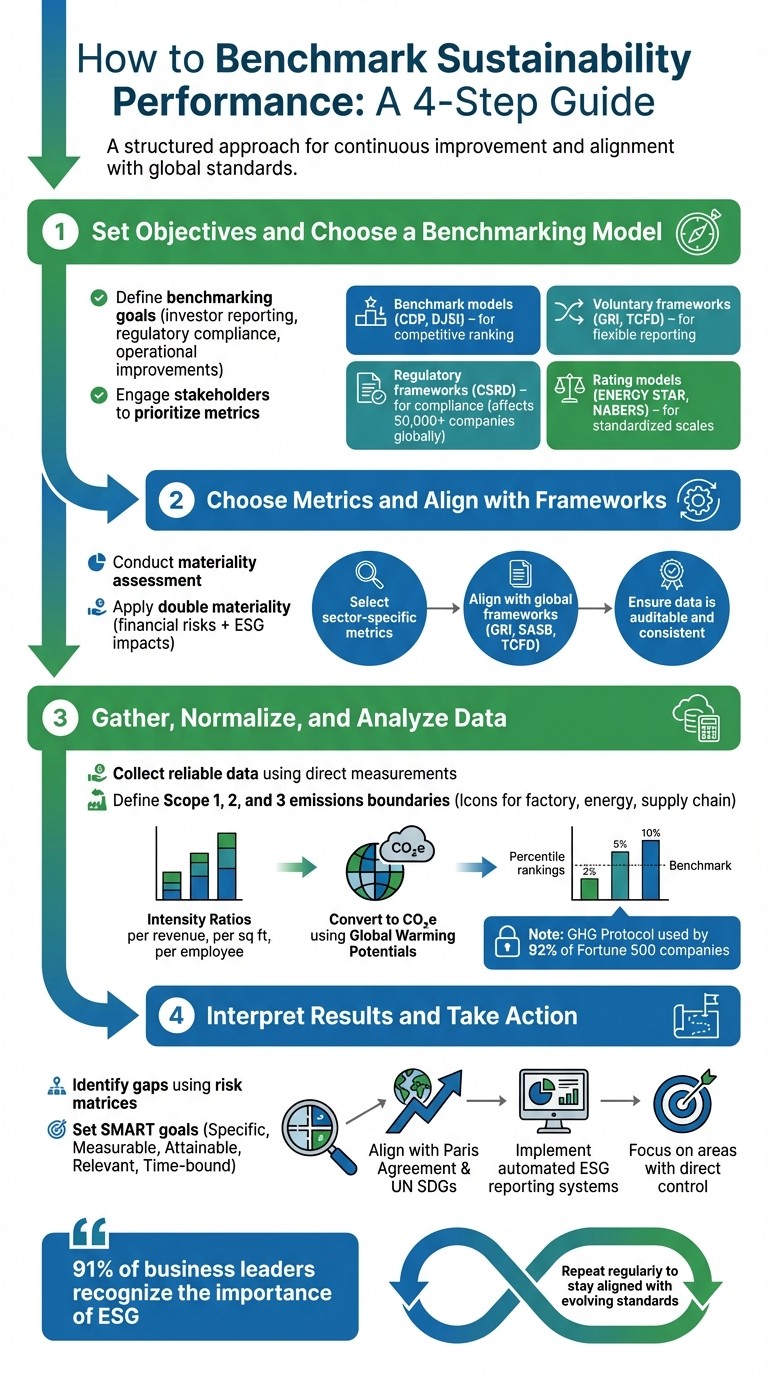
4-Step Process to Benchmark Sustainability Performance
Step 1: Set Objectives and Choose a Benchmarking Model
Define Your Benchmarking Goals
Before diving into data collection, it’s essential to clarify your purpose: why are you benchmarking? Your objectives will guide every decision, from the metrics you track to the frameworks you adopt. Start by identifying your audience. Are you benchmarking to inform investors about capital allocation, to meet regulatory compliance for government agencies, or to enhance internal operational efficiency? [5]
Engaging stakeholders is key to setting effective objectives. Collaborate with them to prioritize short-term and long-term disclosure topics. For example, if 86% of employees value working for companies that support shared causes [2], then social equity metrics should be considered alongside environmental goals.
Strive for balance in your goals - focus on key performance indicators while also considering qualitative impacts, such as biodiversity preservation and community well-being [2]. Once your objectives are clear, you’ll be ready to choose a benchmarking model that aligns with your strategy.
Select the Right Benchmarking Model
With well-defined objectives, the next step is selecting a benchmarking model that fits your needs. Frameworks like CDP or the Dow Jones Sustainability Indices (DJSI) are ideal for organizations looking to rank competitively or attract investor attention. These models use scoring systems to compare performance against peers, with the DJSI spotlighting the top 10% of high-performing companies in each industry as part of a “race to the top” [2].
For flexibility, voluntary frameworks such as GRI or TCFD allow you to focus on metrics that align with your materiality assessment. These are particularly useful for detailed sustainability reporting tailored to your organization’s unique priorities [7]. On the other hand, regulatory frameworks like the EU's Corporate Sustainability Reporting Directive (CSRD) - which affects over 50,000 companies globally, including nearly 10,000 outside the EU - set mandatory disclosure standards [7]. Similarly, rating and threshold models like ENERGY STAR or NABERS provide standardized scales (e.g., 1–100 or star ratings) to help building owners benchmark environmental performance [7].
| Framework Type | Examples | Ideal For | Key Feature |
| --- | --- | --- | --- |
| <strong>Benchmark</strong> | CDP, <a href="https://www.gresb.com/nl-en/" target="_blank" rel="nofollow noopener noreferrer" data-framer-link="Link:{"url":"https://www.gresb.com/nl-en/","type":"url"}" data-framer-open-in-new-tab="">GRESB</a>, DJSI | Competitive ranking, investor appeal | Scored and ranked against peers |
| <strong>Voluntary</strong> | GRI, <a href="https://sasb.ifrs.org/" target="_blank" rel="nofollow noopener noreferrer" data-framer-link="Link:{"url":"https://sasb.ifrs.org/","type":"url"}" data-framer-open-in-new-tab="">SASB</a>, TCFD | Flexible, materiality-based reporting | Select relevant metrics |
| <strong>Regulatory</strong> | CSRD, SECR | Compliance with government mandates | Mandatory transparency |
| <strong>Rating/Threshold</strong> | ENERGY STAR, NABERS | Building performance comparison | Standardized scales (1–100 or stars)
| Framework Type | Examples | Ideal For | Key Feature |
| --- | --- | --- | --- |
| <strong>Benchmark</strong> | CDP, <a href="https://www.gresb.com/nl-en/" target="_blank" rel="nofollow noopener noreferrer" data-framer-link="Link:{"url":"https://www.gresb.com/nl-en/","type":"url"}" data-framer-open-in-new-tab="">GRESB</a>, DJSI | Competitive ranking, investor appeal | Scored and ranked against peers |
| <strong>Voluntary</strong> | GRI, <a href="https://sasb.ifrs.org/" target="_blank" rel="nofollow noopener noreferrer" data-framer-link="Link:{"url":"https://sasb.ifrs.org/","type":"url"}" data-framer-open-in-new-tab="">SASB</a>, TCFD | Flexible, materiality-based reporting | Select relevant metrics |
| <strong>Regulatory</strong> | CSRD, SECR | Compliance with government mandates | Mandatory transparency |
| <strong>Rating/Threshold</strong> | ENERGY STAR, NABERS | Building performance comparison | Standardized scales (1–100 or stars)
A materiality assessment is essential before finalizing your choice. This process identifies the ESG issues that pose the greatest risks to your business and highlights areas where you can create the most impact [7]. Align your stakeholders’ expectations with a framework that addresses these priorities. For instance, choose SASB or TCFD if financial materiality is the focus, or the UN SDGs if the emphasis is on broader societal goals [7].
Council Fire emphasizes that aligning your benchmarking approach with your overall sustainability objectives is critical to ensuring compliance, building investor trust, and driving meaningful progress.
Step 2: Choose Metrics and Align with Frameworks
Select Your Key Metrics
Choosing the right metrics is a cornerstone of building an effective sustainability strategy. It starts with conducting a materiality assessment to pinpoint the areas where your efforts can make the most impact. This process helps you focus on what truly matters.
Incorporating "double materiality" is key - this means considering both financial risks and your environmental, social, and governance (ESG) impacts [7]. Stakeholders play a pivotal role in shaping this selection. For example, investors often look for disclosures aligned with frameworks like TCFD or SASB, which connect sustainability efforts to financial outcomes. On the other hand, employees may prioritize how your work aligns with the UN Sustainable Development Goals (SDGs) [7][2]. Across the board, aligning metrics with both environmental and social goals remains a top priority [2].
The relevance of your sector also significantly influences metric selection. For instance, real estate companies might focus on metrics tied to energy efficiency or building certifications, while manufacturing firms may prioritize supply chain emissions. Industry-specific frameworks, such as GRESB for real estate and infrastructure, can provide targeted guidance [7][5]. It’s better to concentrate on areas where you can directly make a difference - like procurement practices in your supply chain - rather than trying to measure everything [7].
Regulatory compliance is another critical driver. For companies operating in or with the European Union, the Corporate Sustainability Reporting Directive (CSRD) sets mandatory standards, impacting over 50,000 businesses globally, including nearly 10,000 based outside the EU [7]. These rules establish baseline metrics that must be tracked, leaving no room for optional compliance.
"The most valuable commodity in capital markets is reliable and auditable data." - IBM [7]
Once your metrics are clearly defined, the next step is to align them with widely recognized global frameworks to ensure consistency and credibility.
Align with Global Frameworks
After identifying your metrics, aligning them with established global frameworks enhances both comparability and trustworthiness. Frameworks like GRI, SASB, and TCFD each serve distinct purposes:
GRI covers economic, environmental, and social impacts, offering a modular approach for multi-stakeholder reporting.
SASB focuses on financially material ESG issues across 77 industry-specific standards, catering primarily to investors.
TCFD emphasizes climate-related financial risks and opportunities, making it particularly relevant for lenders and insurers [7][2].
Many organizations use a combination of these frameworks to provide a more comprehensive picture. For instance, you might rely on GRI for broad sustainability reporting while using SASB to meet investor-specific needs [5]. The key is to ensure your data collection system is adaptable enough to support multiple frameworks without creating redundant work.
The rise of automated data collection tools has made standardization more critical than ever. Modern methods, such as data scraping, require clear and consistent terminology to ensure metrics are auditable and accurately captured [7]. If your metrics don’t align with recognized standards, they could be overlooked or misinterpreted.
For companies aiming to meet regulatory requirements, the CSRD and its European Sustainability Reporting Standards (ESRS) have become the gold standard [7][5]. Even U.S.-based organizations that do business with EU companies or have subsidiaries in Europe may find these standards applicable. The global shift from voluntary to mandatory ESG disclosures is gaining momentum, with 91% of business leaders acknowledging their responsibility to address ESG issues [2].
Council Fire specializes in helping organizations navigate these complexities. By translating framework requirements into actionable data collection systems, they help businesses move beyond spreadsheets and adopt dedicated ESG reporting software. This ensures data is not only automated and accurate but also auditable - paving the way for reliable benchmarking [7].
Step 3: Gather, Normalize, and Analyze Data
Collect Reliable Data
Creating a trustworthy sustainability benchmark begins with gathering accurate and reliable data. Start by setting clear boundaries - decide on either an operational or financial control approach and define Scope 1, 2, and 3 emissions [8][11]. This ensures consistency and avoids discrepancies.
Whenever possible, rely on direct measurements instead of estimates. Use utility bills, fuel receipts, and meter readings as your primary data sources [8][11]. If direct data isn’t available - for instance, in international offices or leased spaces - apply regional averages systematically. For example, in cases where electricity data is missing, you can calculate total energy use with this formula: Total MWh = (Square Footage × kWh per Sq ft) / 1,000 (e.g., 15.40 kWh per square foot in cold climates) [11].
To keep the process organized, document everything in an Inventory Management Plan (IMP). This plan should outline who is responsible for data collection, where the data is stored, and how frequently it is reviewed [8]. You can also implement a RACI framework to assign roles and ensure subject matter experts validate the data before it’s used for external reporting [12].
"Reporting sustainability data is as important as publishing your company's financial data." - Marina Bulova, Climate Action & Nature Domain Champion at SLB [12]
Update emission factors annually to reflect changes in grid compositions, using resources like the EPA's GHG Emission Factors Hub or IEA data [8][10][12]. The GHG Protocol, used by 92% of Fortune 500 companies responding to the CDP in 2016, remains the go-to standard for ensuring accuracy and consistency [9].
Normalize Data for Fair Comparisons
Once you’ve collected reliable data, the next step is to convert raw numbers into metrics that allow for fair and meaningful comparisons. Intensity ratios - such as emissions per dollar of revenue, per square foot, or per employee - level the playing field when evaluating organizations of different sizes.
For businesses operating in shared commercial spaces, use an occupancy ratio. Divide your company’s square footage by the building’s total leasable area, then allocate energy use proportionally. For example, you might calculate energy use based on 150 square feet per employee, adjusted for regional energy factors like 19.10 kWh per square foot in hot, humid climates [11].
To ensure comparability, convert all greenhouse gases to carbon dioxide equivalent (CO₂e) using Global Warming Potentials (GWPs) [11]. For Scope 2 electricity emissions, report both location-based (grid average) and market-based (contractual) methods. This dual reporting is especially critical given that Scope 3 emissions often represent over 80% of total emissions in many industries [13].
Compare Performance Against Benchmarks
After normalizing your data, it’s time to assess performance against established benchmarks. Use the four-eyes principle - requiring at least two people to review each data point - to minimize errors before diving into the analysis [3]. Establish a base year and a recalculation policy; for example, the World Resources Institute (WRI) uses a 5% significance threshold, meaning any change that impacts the inventory by more than 5% triggers a base year update [11].
Visual tools, like value driver trees, can help you map the connections between ESG metrics, operational outcomes, and financial performance [13]. Ensure that data is validated by at least two reviewers from relevant departments before finalizing results [3]. Track progress over time by comparing current performance to your base year, and use centralized tracking systems to keep all supporting documentation and calculation methods easily accessible [12].
For deeper insights, consider using specialized tools that align with frameworks like the GHG Protocol. Reassess these tools annually to ensure they incorporate updated emission factors and meet evolving standards [12].
This structured approach transforms raw data into actionable insights, helping you understand your position relative to peers and uncover areas for improvement. The analysis lays the groundwork for targeted improvements in the next step.
Step 4: Interpret Results and Take Action
Identify Gaps and Strengths
Once the analysis is complete, the next step is to interpret what the data reveals about your organization. Percentile rankings can offer a clear perspective - being at the 50th percentile indicates you're average, while anything below highlights areas needing improvement [2]. Assess Environmental, Social, and Governance (ESG) issues not only for their financial implications but also for their broader societal impact [7]. Tools like a risk matrix can help prioritize vulnerabilities based on potential consequences. For instance, if your Scope 3 emissions exceed industry standards, it may be time to reassess your supply chain practices.
Incorporate qualitative insights by conducting stakeholder interviews. An impact-effort prioritization matrix is another useful tool, helping you identify sustainability improvements that offer the most significant return for the effort required [7].
Set Improvement Targets
After identifying gaps, turn insights into actionable and measurable goals. The SMART framework is an effective approach to create these targets: Specific (e.g., "reduce CO₂ emissions by 20%"), Measurable (using quantifiable KPIs), Attainable (realistic within your resources), Relevant (aligned with your organizational mission), and Time-bound (with a clear deadline) [15].
"Without good energy data, it is impossible to tell if you are really improving or not!"
– ENERGY STAR [4]
Align these goals with global initiatives like the Paris Agreement or the UN Sustainable Development Goals [3][14]. The Climate Action 100+ Net Zero Company Benchmark, which evaluated 164 companies in October 2025, serves as a helpful guide for creating decarbonization strategies [14]. Define specific KPIs for each target - such as tracking employee retention for social goals or monitoring water consumption for environmental objectives - and review these metrics regularly to stay aligned with evolving stakeholder expectations [15].
With these targets clearly defined, the next step is to implement changes that deliver measurable progress.
Turn Results into Action
The real value of benchmarking lies in its ability to drive action. Consider adopting automated ESG reporting systems to ensure accurate and auditable data for investor disclosures [7]. Establish clear governance structures around data management by assigning specific roles and responsibilities [2].
Focus your efforts on areas where your organization has the most direct control. For example, improving procurement practices within your supply chain can yield significant results [7]. Collaborate with industrial partner networks or participate in annual meetings to compare management strategies with peers [6]. Additionally, use maturity models to assess practices at the facility level, identifying specific operational shortcomings [6].
Council Fire specializes in translating these insights into actionable strategies. By applying systems thinking and fostering bold partnerships, they assist organizations in building climate resilience, advancing circular economies, and developing regenerative infrastructure. Their approach helps transform ambitious sustainability visions into practical, stakeholder-focused plans that achieve meaningful, system-wide results.
With 91% of business leaders acknowledging the responsibility to address ESG issues, the moment to move from analysis to action is now [2].
Conclusion: Ensure Continuous Improvement Through Regular Benchmarking
Key Takeaways
Benchmarking is most effective when guided by clear objectives, a well-suited model, and consistent follow-through. Start by identifying your goals and selecting a benchmarking framework tailored to your needs. Choose metrics that align with globally recognized standards, then gather and standardize data to enable fair comparisons. Each phase - from setting objectives to defining actionable targets - plays a vital role in sustaining progress. The real impact lies in interpreting results, uncovering gaps, and turning insights into measurable goals. This process underscores the importance of moving from analysis to meaningful action.
Why Benchmarking Should Be Repeated
Sustainability metrics are not static - they evolve as industries advance, macro trends shift, and methodologies are updated [16]. Regular benchmarking helps organizations track these changes through horizontal analysis, enabling them to monitor performance shifts over time [16].
"High ESG scores are a constantly-moving target as the scores are frequently impacted by the performance of other industry players, macro industry trends, and alterations to the scoring platform's internal methodologies."
– Corporate Finance Institute [16]
Benchmarking provides a roadmap of past performance, current standing, and future goals [1]. Companies that benchmark regularly often gain advantages in capital access, resilience, and reputation [13]. Annual reviews ensure methodologies stay aligned with the latest scientific insights and stakeholder expectations [12]. Additionally, as AI-driven rating agencies increasingly use public data to assess ESG performance, maintaining transparent and accurate benchmarking records becomes essential for managing your sustainability narrative [7].
Council Fire exemplifies how one-time evaluations can evolve into ongoing, system-level benchmarks. By focusing on stakeholder-driven planning and systems thinking, they turn sustainability data into actionable strategies that adapt to changing standards and deliver measurable outcomes over time.
How to Measure Your Company's ESG Performance
For organizations looking to build internal capacity, sustainability consulting can help develop the leadership needed to drive these performance improvements.
FAQs
What are the steps to effectively benchmark sustainability performance?
Benchmarking sustainability performance requires a clear and organized approach to measure your organization's efforts against industry standards or competitors. Begin by outlining the purpose of your benchmarking - whether your aim is to enhance efficiency, comply with regulations, or encourage innovation. From there, determine the specific metrics or sustainability indicators to evaluate, such as carbon emissions, resource consumption, or social responsibility initiatives.
Collect reliable data using established tools and frameworks, maintaining consistency and transparency throughout the process. Compare your performance to recognized benchmarks or peer organizations to pinpoint strengths and areas needing improvement. Use these findings to define actionable goals, share results with stakeholders, and implement strategies that promote ongoing progress. This process not only helps track sustainability goals but also translates them into measurable outcomes that drive real change.
How can my company choose the best ESG benchmarking framework?
Choosing the right ESG benchmarking framework requires thoughtful evaluation to align with your company’s objectives and operational needs. Begin by clarifying your primary purpose. Are you aiming to enhance internal performance, comply with regulations, or improve transparency with stakeholders? Understanding this will help you focus on frameworks that address your specific goals.
Make sure the framework addresses the ESG factors most relevant to your industry and long-term strategy. It should reflect the unique challenges and opportunities within your operations, ensuring that your efforts are both targeted and impactful.
Take a close look at the framework’s methodology. Prioritize those that offer clear methodologies, robust data verification processes, and alignment with global standards. Determine if the framework is voluntary or mandatory and assess its suitability based on your company’s size, sector, and geographic location. It’s also important to ensure it integrates smoothly with your current reporting systems and can evolve alongside your sustainability practices.
Lastly, gather insights from stakeholders and industry peers. Their feedback can provide valuable perspectives on the framework’s credibility and practical effectiveness. By carefully considering these elements, you can choose a benchmarking framework that not only tracks measurable progress but also aligns with your broader sustainability goals.
Why is it important to regularly benchmark sustainability performance?
Regularly evaluating sustainability performance through benchmarking plays a key role in helping organizations track their progress, pinpoint areas needing improvement, and keep their strategies aligned with shifting standards and objectives. By measuring their performance against peers or established benchmarks, businesses can ensure they remain on course and responsive to evolving environmental and social priorities.
Benchmarking also strengthens transparency and accountability by offering concrete evidence of achievements and areas that require attention. This not only builds trust with stakeholders but also supports more informed and effective decision-making. Beyond that, it sparks innovation and encourages continuous growth by fostering healthy competition and collaboration across industries, pushing collective progress toward sustainability goals.
Related Blog Posts
Latest Articles
©2025



FAQ
01
What does it really mean to “redefine profit”?
02
What makes Council Fire different?
03
Who does Council Fire you work with?
04
What does working with Council Fire actually look like?
05
How does Council Fire help organizations turn big goals into action?
06
How does Council Fire define and measure success?
Jan 22, 2026
How to Benchmark Sustainability Performance
ESG Strategy
In This Article
Step-by-step guide to benchmark ESG performance: set objectives, choose frameworks, collect and normalize data, analyze gaps, set SMART targets, and review regularly.
How to Benchmark Sustainability Performance
Want to measure your company's ESG performance effectively? Benchmarking is the key to understanding how your organization compares to industry peers and standards. By analyzing data within a broader context, you can identify gaps, improve strategies, and meet growing stakeholder expectations. Here's a quick guide to get started:
Set Clear Objectives: Define why you're benchmarking (e.g., investor reporting, regulatory compliance, or operational improvements) and engage stakeholders to prioritize key metrics.
Choose the Right Framework: Select from frameworks like CDP, GRI, or TCFD based on your goals - competitive ranking, flexible reporting, or regulatory compliance.
Collect and Normalize Data: Use direct measurements, standardize metrics (e.g., emissions per revenue), and follow reliable methodologies like the GHG Protocol.
Analyze and Take Action: Compare results to benchmarks, identify improvement areas, and set measurable targets using tools like risk matrices and SMART goals.
Repeat Regularly: Benchmarking isn't a one-time task. Regular reviews ensure you stay aligned with evolving standards and stakeholder needs.
Why it matters: With 91% of business leaders recognizing the importance of ESG, benchmarking not only builds trust but also highlights opportunities for growth and compliance in a rapidly changing landscape.
4-Step Process to Benchmark Sustainability Performance
Step 1: Set Objectives and Choose a Benchmarking Model
Define Your Benchmarking Goals
Before diving into data collection, it’s essential to clarify your purpose: why are you benchmarking? Your objectives will guide every decision, from the metrics you track to the frameworks you adopt. Start by identifying your audience. Are you benchmarking to inform investors about capital allocation, to meet regulatory compliance for government agencies, or to enhance internal operational efficiency? [5]
Engaging stakeholders is key to setting effective objectives. Collaborate with them to prioritize short-term and long-term disclosure topics. For example, if 86% of employees value working for companies that support shared causes [2], then social equity metrics should be considered alongside environmental goals.
Strive for balance in your goals - focus on key performance indicators while also considering qualitative impacts, such as biodiversity preservation and community well-being [2]. Once your objectives are clear, you’ll be ready to choose a benchmarking model that aligns with your strategy.
Select the Right Benchmarking Model
With well-defined objectives, the next step is selecting a benchmarking model that fits your needs. Frameworks like CDP or the Dow Jones Sustainability Indices (DJSI) are ideal for organizations looking to rank competitively or attract investor attention. These models use scoring systems to compare performance against peers, with the DJSI spotlighting the top 10% of high-performing companies in each industry as part of a “race to the top” [2].
For flexibility, voluntary frameworks such as GRI or TCFD allow you to focus on metrics that align with your materiality assessment. These are particularly useful for detailed sustainability reporting tailored to your organization’s unique priorities [7]. On the other hand, regulatory frameworks like the EU's Corporate Sustainability Reporting Directive (CSRD) - which affects over 50,000 companies globally, including nearly 10,000 outside the EU - set mandatory disclosure standards [7]. Similarly, rating and threshold models like ENERGY STAR or NABERS provide standardized scales (e.g., 1–100 or star ratings) to help building owners benchmark environmental performance [7].
| Framework Type | Examples | Ideal For | Key Feature |
| --- | --- | --- | --- |
| <strong>Benchmark</strong> | CDP, <a href="https://www.gresb.com/nl-en/" target="_blank" rel="nofollow noopener noreferrer" data-framer-link="Link:{"url":"https://www.gresb.com/nl-en/","type":"url"}" data-framer-open-in-new-tab="">GRESB</a>, DJSI | Competitive ranking, investor appeal | Scored and ranked against peers |
| <strong>Voluntary</strong> | GRI, <a href="https://sasb.ifrs.org/" target="_blank" rel="nofollow noopener noreferrer" data-framer-link="Link:{"url":"https://sasb.ifrs.org/","type":"url"}" data-framer-open-in-new-tab="">SASB</a>, TCFD | Flexible, materiality-based reporting | Select relevant metrics |
| <strong>Regulatory</strong> | CSRD, SECR | Compliance with government mandates | Mandatory transparency |
| <strong>Rating/Threshold</strong> | ENERGY STAR, NABERS | Building performance comparison | Standardized scales (1–100 or stars)
A materiality assessment is essential before finalizing your choice. This process identifies the ESG issues that pose the greatest risks to your business and highlights areas where you can create the most impact [7]. Align your stakeholders’ expectations with a framework that addresses these priorities. For instance, choose SASB or TCFD if financial materiality is the focus, or the UN SDGs if the emphasis is on broader societal goals [7].
Council Fire emphasizes that aligning your benchmarking approach with your overall sustainability objectives is critical to ensuring compliance, building investor trust, and driving meaningful progress.
Step 2: Choose Metrics and Align with Frameworks
Select Your Key Metrics
Choosing the right metrics is a cornerstone of building an effective sustainability strategy. It starts with conducting a materiality assessment to pinpoint the areas where your efforts can make the most impact. This process helps you focus on what truly matters.
Incorporating "double materiality" is key - this means considering both financial risks and your environmental, social, and governance (ESG) impacts [7]. Stakeholders play a pivotal role in shaping this selection. For example, investors often look for disclosures aligned with frameworks like TCFD or SASB, which connect sustainability efforts to financial outcomes. On the other hand, employees may prioritize how your work aligns with the UN Sustainable Development Goals (SDGs) [7][2]. Across the board, aligning metrics with both environmental and social goals remains a top priority [2].
The relevance of your sector also significantly influences metric selection. For instance, real estate companies might focus on metrics tied to energy efficiency or building certifications, while manufacturing firms may prioritize supply chain emissions. Industry-specific frameworks, such as GRESB for real estate and infrastructure, can provide targeted guidance [7][5]. It’s better to concentrate on areas where you can directly make a difference - like procurement practices in your supply chain - rather than trying to measure everything [7].
Regulatory compliance is another critical driver. For companies operating in or with the European Union, the Corporate Sustainability Reporting Directive (CSRD) sets mandatory standards, impacting over 50,000 businesses globally, including nearly 10,000 based outside the EU [7]. These rules establish baseline metrics that must be tracked, leaving no room for optional compliance.
"The most valuable commodity in capital markets is reliable and auditable data." - IBM [7]
Once your metrics are clearly defined, the next step is to align them with widely recognized global frameworks to ensure consistency and credibility.
Align with Global Frameworks
After identifying your metrics, aligning them with established global frameworks enhances both comparability and trustworthiness. Frameworks like GRI, SASB, and TCFD each serve distinct purposes:
GRI covers economic, environmental, and social impacts, offering a modular approach for multi-stakeholder reporting.
SASB focuses on financially material ESG issues across 77 industry-specific standards, catering primarily to investors.
TCFD emphasizes climate-related financial risks and opportunities, making it particularly relevant for lenders and insurers [7][2].
Many organizations use a combination of these frameworks to provide a more comprehensive picture. For instance, you might rely on GRI for broad sustainability reporting while using SASB to meet investor-specific needs [5]. The key is to ensure your data collection system is adaptable enough to support multiple frameworks without creating redundant work.
The rise of automated data collection tools has made standardization more critical than ever. Modern methods, such as data scraping, require clear and consistent terminology to ensure metrics are auditable and accurately captured [7]. If your metrics don’t align with recognized standards, they could be overlooked or misinterpreted.
For companies aiming to meet regulatory requirements, the CSRD and its European Sustainability Reporting Standards (ESRS) have become the gold standard [7][5]. Even U.S.-based organizations that do business with EU companies or have subsidiaries in Europe may find these standards applicable. The global shift from voluntary to mandatory ESG disclosures is gaining momentum, with 91% of business leaders acknowledging their responsibility to address ESG issues [2].
Council Fire specializes in helping organizations navigate these complexities. By translating framework requirements into actionable data collection systems, they help businesses move beyond spreadsheets and adopt dedicated ESG reporting software. This ensures data is not only automated and accurate but also auditable - paving the way for reliable benchmarking [7].
Step 3: Gather, Normalize, and Analyze Data
Collect Reliable Data
Creating a trustworthy sustainability benchmark begins with gathering accurate and reliable data. Start by setting clear boundaries - decide on either an operational or financial control approach and define Scope 1, 2, and 3 emissions [8][11]. This ensures consistency and avoids discrepancies.
Whenever possible, rely on direct measurements instead of estimates. Use utility bills, fuel receipts, and meter readings as your primary data sources [8][11]. If direct data isn’t available - for instance, in international offices or leased spaces - apply regional averages systematically. For example, in cases where electricity data is missing, you can calculate total energy use with this formula: Total MWh = (Square Footage × kWh per Sq ft) / 1,000 (e.g., 15.40 kWh per square foot in cold climates) [11].
To keep the process organized, document everything in an Inventory Management Plan (IMP). This plan should outline who is responsible for data collection, where the data is stored, and how frequently it is reviewed [8]. You can also implement a RACI framework to assign roles and ensure subject matter experts validate the data before it’s used for external reporting [12].
"Reporting sustainability data is as important as publishing your company's financial data." - Marina Bulova, Climate Action & Nature Domain Champion at SLB [12]
Update emission factors annually to reflect changes in grid compositions, using resources like the EPA's GHG Emission Factors Hub or IEA data [8][10][12]. The GHG Protocol, used by 92% of Fortune 500 companies responding to the CDP in 2016, remains the go-to standard for ensuring accuracy and consistency [9].
Normalize Data for Fair Comparisons
Once you’ve collected reliable data, the next step is to convert raw numbers into metrics that allow for fair and meaningful comparisons. Intensity ratios - such as emissions per dollar of revenue, per square foot, or per employee - level the playing field when evaluating organizations of different sizes.
For businesses operating in shared commercial spaces, use an occupancy ratio. Divide your company’s square footage by the building’s total leasable area, then allocate energy use proportionally. For example, you might calculate energy use based on 150 square feet per employee, adjusted for regional energy factors like 19.10 kWh per square foot in hot, humid climates [11].
To ensure comparability, convert all greenhouse gases to carbon dioxide equivalent (CO₂e) using Global Warming Potentials (GWPs) [11]. For Scope 2 electricity emissions, report both location-based (grid average) and market-based (contractual) methods. This dual reporting is especially critical given that Scope 3 emissions often represent over 80% of total emissions in many industries [13].
Compare Performance Against Benchmarks
After normalizing your data, it’s time to assess performance against established benchmarks. Use the four-eyes principle - requiring at least two people to review each data point - to minimize errors before diving into the analysis [3]. Establish a base year and a recalculation policy; for example, the World Resources Institute (WRI) uses a 5% significance threshold, meaning any change that impacts the inventory by more than 5% triggers a base year update [11].
Visual tools, like value driver trees, can help you map the connections between ESG metrics, operational outcomes, and financial performance [13]. Ensure that data is validated by at least two reviewers from relevant departments before finalizing results [3]. Track progress over time by comparing current performance to your base year, and use centralized tracking systems to keep all supporting documentation and calculation methods easily accessible [12].
For deeper insights, consider using specialized tools that align with frameworks like the GHG Protocol. Reassess these tools annually to ensure they incorporate updated emission factors and meet evolving standards [12].
This structured approach transforms raw data into actionable insights, helping you understand your position relative to peers and uncover areas for improvement. The analysis lays the groundwork for targeted improvements in the next step.
Step 4: Interpret Results and Take Action
Identify Gaps and Strengths
Once the analysis is complete, the next step is to interpret what the data reveals about your organization. Percentile rankings can offer a clear perspective - being at the 50th percentile indicates you're average, while anything below highlights areas needing improvement [2]. Assess Environmental, Social, and Governance (ESG) issues not only for their financial implications but also for their broader societal impact [7]. Tools like a risk matrix can help prioritize vulnerabilities based on potential consequences. For instance, if your Scope 3 emissions exceed industry standards, it may be time to reassess your supply chain practices.
Incorporate qualitative insights by conducting stakeholder interviews. An impact-effort prioritization matrix is another useful tool, helping you identify sustainability improvements that offer the most significant return for the effort required [7].
Set Improvement Targets
After identifying gaps, turn insights into actionable and measurable goals. The SMART framework is an effective approach to create these targets: Specific (e.g., "reduce CO₂ emissions by 20%"), Measurable (using quantifiable KPIs), Attainable (realistic within your resources), Relevant (aligned with your organizational mission), and Time-bound (with a clear deadline) [15].
"Without good energy data, it is impossible to tell if you are really improving or not!"
– ENERGY STAR [4]
Align these goals with global initiatives like the Paris Agreement or the UN Sustainable Development Goals [3][14]. The Climate Action 100+ Net Zero Company Benchmark, which evaluated 164 companies in October 2025, serves as a helpful guide for creating decarbonization strategies [14]. Define specific KPIs for each target - such as tracking employee retention for social goals or monitoring water consumption for environmental objectives - and review these metrics regularly to stay aligned with evolving stakeholder expectations [15].
With these targets clearly defined, the next step is to implement changes that deliver measurable progress.
Turn Results into Action
The real value of benchmarking lies in its ability to drive action. Consider adopting automated ESG reporting systems to ensure accurate and auditable data for investor disclosures [7]. Establish clear governance structures around data management by assigning specific roles and responsibilities [2].
Focus your efforts on areas where your organization has the most direct control. For example, improving procurement practices within your supply chain can yield significant results [7]. Collaborate with industrial partner networks or participate in annual meetings to compare management strategies with peers [6]. Additionally, use maturity models to assess practices at the facility level, identifying specific operational shortcomings [6].
Council Fire specializes in translating these insights into actionable strategies. By applying systems thinking and fostering bold partnerships, they assist organizations in building climate resilience, advancing circular economies, and developing regenerative infrastructure. Their approach helps transform ambitious sustainability visions into practical, stakeholder-focused plans that achieve meaningful, system-wide results.
With 91% of business leaders acknowledging the responsibility to address ESG issues, the moment to move from analysis to action is now [2].
Conclusion: Ensure Continuous Improvement Through Regular Benchmarking
Key Takeaways
Benchmarking is most effective when guided by clear objectives, a well-suited model, and consistent follow-through. Start by identifying your goals and selecting a benchmarking framework tailored to your needs. Choose metrics that align with globally recognized standards, then gather and standardize data to enable fair comparisons. Each phase - from setting objectives to defining actionable targets - plays a vital role in sustaining progress. The real impact lies in interpreting results, uncovering gaps, and turning insights into measurable goals. This process underscores the importance of moving from analysis to meaningful action.
Why Benchmarking Should Be Repeated
Sustainability metrics are not static - they evolve as industries advance, macro trends shift, and methodologies are updated [16]. Regular benchmarking helps organizations track these changes through horizontal analysis, enabling them to monitor performance shifts over time [16].
"High ESG scores are a constantly-moving target as the scores are frequently impacted by the performance of other industry players, macro industry trends, and alterations to the scoring platform's internal methodologies."
– Corporate Finance Institute [16]
Benchmarking provides a roadmap of past performance, current standing, and future goals [1]. Companies that benchmark regularly often gain advantages in capital access, resilience, and reputation [13]. Annual reviews ensure methodologies stay aligned with the latest scientific insights and stakeholder expectations [12]. Additionally, as AI-driven rating agencies increasingly use public data to assess ESG performance, maintaining transparent and accurate benchmarking records becomes essential for managing your sustainability narrative [7].
Council Fire exemplifies how one-time evaluations can evolve into ongoing, system-level benchmarks. By focusing on stakeholder-driven planning and systems thinking, they turn sustainability data into actionable strategies that adapt to changing standards and deliver measurable outcomes over time.
How to Measure Your Company's ESG Performance
For organizations looking to build internal capacity, sustainability consulting can help develop the leadership needed to drive these performance improvements.
FAQs
What are the steps to effectively benchmark sustainability performance?
Benchmarking sustainability performance requires a clear and organized approach to measure your organization's efforts against industry standards or competitors. Begin by outlining the purpose of your benchmarking - whether your aim is to enhance efficiency, comply with regulations, or encourage innovation. From there, determine the specific metrics or sustainability indicators to evaluate, such as carbon emissions, resource consumption, or social responsibility initiatives.
Collect reliable data using established tools and frameworks, maintaining consistency and transparency throughout the process. Compare your performance to recognized benchmarks or peer organizations to pinpoint strengths and areas needing improvement. Use these findings to define actionable goals, share results with stakeholders, and implement strategies that promote ongoing progress. This process not only helps track sustainability goals but also translates them into measurable outcomes that drive real change.
How can my company choose the best ESG benchmarking framework?
Choosing the right ESG benchmarking framework requires thoughtful evaluation to align with your company’s objectives and operational needs. Begin by clarifying your primary purpose. Are you aiming to enhance internal performance, comply with regulations, or improve transparency with stakeholders? Understanding this will help you focus on frameworks that address your specific goals.
Make sure the framework addresses the ESG factors most relevant to your industry and long-term strategy. It should reflect the unique challenges and opportunities within your operations, ensuring that your efforts are both targeted and impactful.
Take a close look at the framework’s methodology. Prioritize those that offer clear methodologies, robust data verification processes, and alignment with global standards. Determine if the framework is voluntary or mandatory and assess its suitability based on your company’s size, sector, and geographic location. It’s also important to ensure it integrates smoothly with your current reporting systems and can evolve alongside your sustainability practices.
Lastly, gather insights from stakeholders and industry peers. Their feedback can provide valuable perspectives on the framework’s credibility and practical effectiveness. By carefully considering these elements, you can choose a benchmarking framework that not only tracks measurable progress but also aligns with your broader sustainability goals.
Why is it important to regularly benchmark sustainability performance?
Regularly evaluating sustainability performance through benchmarking plays a key role in helping organizations track their progress, pinpoint areas needing improvement, and keep their strategies aligned with shifting standards and objectives. By measuring their performance against peers or established benchmarks, businesses can ensure they remain on course and responsive to evolving environmental and social priorities.
Benchmarking also strengthens transparency and accountability by offering concrete evidence of achievements and areas that require attention. This not only builds trust with stakeholders but also supports more informed and effective decision-making. Beyond that, it sparks innovation and encourages continuous growth by fostering healthy competition and collaboration across industries, pushing collective progress toward sustainability goals.
Related Blog Posts
FAQ
01
What does it really mean to “redefine profit”?
02
What makes Council Fire different?
03
Who does Council Fire you work with?
04
What does working with Council Fire actually look like?
05
How does Council Fire help organizations turn big goals into action?
06
How does Council Fire define and measure success?
Jan 22, 2026
How to Benchmark Sustainability Performance
ESG Strategy
In This Article
Step-by-step guide to benchmark ESG performance: set objectives, choose frameworks, collect and normalize data, analyze gaps, set SMART targets, and review regularly.
How to Benchmark Sustainability Performance
Want to measure your company's ESG performance effectively? Benchmarking is the key to understanding how your organization compares to industry peers and standards. By analyzing data within a broader context, you can identify gaps, improve strategies, and meet growing stakeholder expectations. Here's a quick guide to get started:
Set Clear Objectives: Define why you're benchmarking (e.g., investor reporting, regulatory compliance, or operational improvements) and engage stakeholders to prioritize key metrics.
Choose the Right Framework: Select from frameworks like CDP, GRI, or TCFD based on your goals - competitive ranking, flexible reporting, or regulatory compliance.
Collect and Normalize Data: Use direct measurements, standardize metrics (e.g., emissions per revenue), and follow reliable methodologies like the GHG Protocol.
Analyze and Take Action: Compare results to benchmarks, identify improvement areas, and set measurable targets using tools like risk matrices and SMART goals.
Repeat Regularly: Benchmarking isn't a one-time task. Regular reviews ensure you stay aligned with evolving standards and stakeholder needs.
Why it matters: With 91% of business leaders recognizing the importance of ESG, benchmarking not only builds trust but also highlights opportunities for growth and compliance in a rapidly changing landscape.
4-Step Process to Benchmark Sustainability Performance
Step 1: Set Objectives and Choose a Benchmarking Model
Define Your Benchmarking Goals
Before diving into data collection, it’s essential to clarify your purpose: why are you benchmarking? Your objectives will guide every decision, from the metrics you track to the frameworks you adopt. Start by identifying your audience. Are you benchmarking to inform investors about capital allocation, to meet regulatory compliance for government agencies, or to enhance internal operational efficiency? [5]
Engaging stakeholders is key to setting effective objectives. Collaborate with them to prioritize short-term and long-term disclosure topics. For example, if 86% of employees value working for companies that support shared causes [2], then social equity metrics should be considered alongside environmental goals.
Strive for balance in your goals - focus on key performance indicators while also considering qualitative impacts, such as biodiversity preservation and community well-being [2]. Once your objectives are clear, you’ll be ready to choose a benchmarking model that aligns with your strategy.
Select the Right Benchmarking Model
With well-defined objectives, the next step is selecting a benchmarking model that fits your needs. Frameworks like CDP or the Dow Jones Sustainability Indices (DJSI) are ideal for organizations looking to rank competitively or attract investor attention. These models use scoring systems to compare performance against peers, with the DJSI spotlighting the top 10% of high-performing companies in each industry as part of a “race to the top” [2].
For flexibility, voluntary frameworks such as GRI or TCFD allow you to focus on metrics that align with your materiality assessment. These are particularly useful for detailed sustainability reporting tailored to your organization’s unique priorities [7]. On the other hand, regulatory frameworks like the EU's Corporate Sustainability Reporting Directive (CSRD) - which affects over 50,000 companies globally, including nearly 10,000 outside the EU - set mandatory disclosure standards [7]. Similarly, rating and threshold models like ENERGY STAR or NABERS provide standardized scales (e.g., 1–100 or star ratings) to help building owners benchmark environmental performance [7].
| Framework Type | Examples | Ideal For | Key Feature |
| --- | --- | --- | --- |
| <strong>Benchmark</strong> | CDP, <a href="https://www.gresb.com/nl-en/" target="_blank" rel="nofollow noopener noreferrer" data-framer-link="Link:{"url":"https://www.gresb.com/nl-en/","type":"url"}" data-framer-open-in-new-tab="">GRESB</a>, DJSI | Competitive ranking, investor appeal | Scored and ranked against peers |
| <strong>Voluntary</strong> | GRI, <a href="https://sasb.ifrs.org/" target="_blank" rel="nofollow noopener noreferrer" data-framer-link="Link:{"url":"https://sasb.ifrs.org/","type":"url"}" data-framer-open-in-new-tab="">SASB</a>, TCFD | Flexible, materiality-based reporting | Select relevant metrics |
| <strong>Regulatory</strong> | CSRD, SECR | Compliance with government mandates | Mandatory transparency |
| <strong>Rating/Threshold</strong> | ENERGY STAR, NABERS | Building performance comparison | Standardized scales (1–100 or stars)
A materiality assessment is essential before finalizing your choice. This process identifies the ESG issues that pose the greatest risks to your business and highlights areas where you can create the most impact [7]. Align your stakeholders’ expectations with a framework that addresses these priorities. For instance, choose SASB or TCFD if financial materiality is the focus, or the UN SDGs if the emphasis is on broader societal goals [7].
Council Fire emphasizes that aligning your benchmarking approach with your overall sustainability objectives is critical to ensuring compliance, building investor trust, and driving meaningful progress.
Step 2: Choose Metrics and Align with Frameworks
Select Your Key Metrics
Choosing the right metrics is a cornerstone of building an effective sustainability strategy. It starts with conducting a materiality assessment to pinpoint the areas where your efforts can make the most impact. This process helps you focus on what truly matters.
Incorporating "double materiality" is key - this means considering both financial risks and your environmental, social, and governance (ESG) impacts [7]. Stakeholders play a pivotal role in shaping this selection. For example, investors often look for disclosures aligned with frameworks like TCFD or SASB, which connect sustainability efforts to financial outcomes. On the other hand, employees may prioritize how your work aligns with the UN Sustainable Development Goals (SDGs) [7][2]. Across the board, aligning metrics with both environmental and social goals remains a top priority [2].
The relevance of your sector also significantly influences metric selection. For instance, real estate companies might focus on metrics tied to energy efficiency or building certifications, while manufacturing firms may prioritize supply chain emissions. Industry-specific frameworks, such as GRESB for real estate and infrastructure, can provide targeted guidance [7][5]. It’s better to concentrate on areas where you can directly make a difference - like procurement practices in your supply chain - rather than trying to measure everything [7].
Regulatory compliance is another critical driver. For companies operating in or with the European Union, the Corporate Sustainability Reporting Directive (CSRD) sets mandatory standards, impacting over 50,000 businesses globally, including nearly 10,000 based outside the EU [7]. These rules establish baseline metrics that must be tracked, leaving no room for optional compliance.
"The most valuable commodity in capital markets is reliable and auditable data." - IBM [7]
Once your metrics are clearly defined, the next step is to align them with widely recognized global frameworks to ensure consistency and credibility.
Align with Global Frameworks
After identifying your metrics, aligning them with established global frameworks enhances both comparability and trustworthiness. Frameworks like GRI, SASB, and TCFD each serve distinct purposes:
GRI covers economic, environmental, and social impacts, offering a modular approach for multi-stakeholder reporting.
SASB focuses on financially material ESG issues across 77 industry-specific standards, catering primarily to investors.
TCFD emphasizes climate-related financial risks and opportunities, making it particularly relevant for lenders and insurers [7][2].
Many organizations use a combination of these frameworks to provide a more comprehensive picture. For instance, you might rely on GRI for broad sustainability reporting while using SASB to meet investor-specific needs [5]. The key is to ensure your data collection system is adaptable enough to support multiple frameworks without creating redundant work.
The rise of automated data collection tools has made standardization more critical than ever. Modern methods, such as data scraping, require clear and consistent terminology to ensure metrics are auditable and accurately captured [7]. If your metrics don’t align with recognized standards, they could be overlooked or misinterpreted.
For companies aiming to meet regulatory requirements, the CSRD and its European Sustainability Reporting Standards (ESRS) have become the gold standard [7][5]. Even U.S.-based organizations that do business with EU companies or have subsidiaries in Europe may find these standards applicable. The global shift from voluntary to mandatory ESG disclosures is gaining momentum, with 91% of business leaders acknowledging their responsibility to address ESG issues [2].
Council Fire specializes in helping organizations navigate these complexities. By translating framework requirements into actionable data collection systems, they help businesses move beyond spreadsheets and adopt dedicated ESG reporting software. This ensures data is not only automated and accurate but also auditable - paving the way for reliable benchmarking [7].
Step 3: Gather, Normalize, and Analyze Data
Collect Reliable Data
Creating a trustworthy sustainability benchmark begins with gathering accurate and reliable data. Start by setting clear boundaries - decide on either an operational or financial control approach and define Scope 1, 2, and 3 emissions [8][11]. This ensures consistency and avoids discrepancies.
Whenever possible, rely on direct measurements instead of estimates. Use utility bills, fuel receipts, and meter readings as your primary data sources [8][11]. If direct data isn’t available - for instance, in international offices or leased spaces - apply regional averages systematically. For example, in cases where electricity data is missing, you can calculate total energy use with this formula: Total MWh = (Square Footage × kWh per Sq ft) / 1,000 (e.g., 15.40 kWh per square foot in cold climates) [11].
To keep the process organized, document everything in an Inventory Management Plan (IMP). This plan should outline who is responsible for data collection, where the data is stored, and how frequently it is reviewed [8]. You can also implement a RACI framework to assign roles and ensure subject matter experts validate the data before it’s used for external reporting [12].
"Reporting sustainability data is as important as publishing your company's financial data." - Marina Bulova, Climate Action & Nature Domain Champion at SLB [12]
Update emission factors annually to reflect changes in grid compositions, using resources like the EPA's GHG Emission Factors Hub or IEA data [8][10][12]. The GHG Protocol, used by 92% of Fortune 500 companies responding to the CDP in 2016, remains the go-to standard for ensuring accuracy and consistency [9].
Normalize Data for Fair Comparisons
Once you’ve collected reliable data, the next step is to convert raw numbers into metrics that allow for fair and meaningful comparisons. Intensity ratios - such as emissions per dollar of revenue, per square foot, or per employee - level the playing field when evaluating organizations of different sizes.
For businesses operating in shared commercial spaces, use an occupancy ratio. Divide your company’s square footage by the building’s total leasable area, then allocate energy use proportionally. For example, you might calculate energy use based on 150 square feet per employee, adjusted for regional energy factors like 19.10 kWh per square foot in hot, humid climates [11].
To ensure comparability, convert all greenhouse gases to carbon dioxide equivalent (CO₂e) using Global Warming Potentials (GWPs) [11]. For Scope 2 electricity emissions, report both location-based (grid average) and market-based (contractual) methods. This dual reporting is especially critical given that Scope 3 emissions often represent over 80% of total emissions in many industries [13].
Compare Performance Against Benchmarks
After normalizing your data, it’s time to assess performance against established benchmarks. Use the four-eyes principle - requiring at least two people to review each data point - to minimize errors before diving into the analysis [3]. Establish a base year and a recalculation policy; for example, the World Resources Institute (WRI) uses a 5% significance threshold, meaning any change that impacts the inventory by more than 5% triggers a base year update [11].
Visual tools, like value driver trees, can help you map the connections between ESG metrics, operational outcomes, and financial performance [13]. Ensure that data is validated by at least two reviewers from relevant departments before finalizing results [3]. Track progress over time by comparing current performance to your base year, and use centralized tracking systems to keep all supporting documentation and calculation methods easily accessible [12].
For deeper insights, consider using specialized tools that align with frameworks like the GHG Protocol. Reassess these tools annually to ensure they incorporate updated emission factors and meet evolving standards [12].
This structured approach transforms raw data into actionable insights, helping you understand your position relative to peers and uncover areas for improvement. The analysis lays the groundwork for targeted improvements in the next step.
Step 4: Interpret Results and Take Action
Identify Gaps and Strengths
Once the analysis is complete, the next step is to interpret what the data reveals about your organization. Percentile rankings can offer a clear perspective - being at the 50th percentile indicates you're average, while anything below highlights areas needing improvement [2]. Assess Environmental, Social, and Governance (ESG) issues not only for their financial implications but also for their broader societal impact [7]. Tools like a risk matrix can help prioritize vulnerabilities based on potential consequences. For instance, if your Scope 3 emissions exceed industry standards, it may be time to reassess your supply chain practices.
Incorporate qualitative insights by conducting stakeholder interviews. An impact-effort prioritization matrix is another useful tool, helping you identify sustainability improvements that offer the most significant return for the effort required [7].
Set Improvement Targets
After identifying gaps, turn insights into actionable and measurable goals. The SMART framework is an effective approach to create these targets: Specific (e.g., "reduce CO₂ emissions by 20%"), Measurable (using quantifiable KPIs), Attainable (realistic within your resources), Relevant (aligned with your organizational mission), and Time-bound (with a clear deadline) [15].
"Without good energy data, it is impossible to tell if you are really improving or not!"
– ENERGY STAR [4]
Align these goals with global initiatives like the Paris Agreement or the UN Sustainable Development Goals [3][14]. The Climate Action 100+ Net Zero Company Benchmark, which evaluated 164 companies in October 2025, serves as a helpful guide for creating decarbonization strategies [14]. Define specific KPIs for each target - such as tracking employee retention for social goals or monitoring water consumption for environmental objectives - and review these metrics regularly to stay aligned with evolving stakeholder expectations [15].
With these targets clearly defined, the next step is to implement changes that deliver measurable progress.
Turn Results into Action
The real value of benchmarking lies in its ability to drive action. Consider adopting automated ESG reporting systems to ensure accurate and auditable data for investor disclosures [7]. Establish clear governance structures around data management by assigning specific roles and responsibilities [2].
Focus your efforts on areas where your organization has the most direct control. For example, improving procurement practices within your supply chain can yield significant results [7]. Collaborate with industrial partner networks or participate in annual meetings to compare management strategies with peers [6]. Additionally, use maturity models to assess practices at the facility level, identifying specific operational shortcomings [6].
Council Fire specializes in translating these insights into actionable strategies. By applying systems thinking and fostering bold partnerships, they assist organizations in building climate resilience, advancing circular economies, and developing regenerative infrastructure. Their approach helps transform ambitious sustainability visions into practical, stakeholder-focused plans that achieve meaningful, system-wide results.
With 91% of business leaders acknowledging the responsibility to address ESG issues, the moment to move from analysis to action is now [2].
Conclusion: Ensure Continuous Improvement Through Regular Benchmarking
Key Takeaways
Benchmarking is most effective when guided by clear objectives, a well-suited model, and consistent follow-through. Start by identifying your goals and selecting a benchmarking framework tailored to your needs. Choose metrics that align with globally recognized standards, then gather and standardize data to enable fair comparisons. Each phase - from setting objectives to defining actionable targets - plays a vital role in sustaining progress. The real impact lies in interpreting results, uncovering gaps, and turning insights into measurable goals. This process underscores the importance of moving from analysis to meaningful action.
Why Benchmarking Should Be Repeated
Sustainability metrics are not static - they evolve as industries advance, macro trends shift, and methodologies are updated [16]. Regular benchmarking helps organizations track these changes through horizontal analysis, enabling them to monitor performance shifts over time [16].
"High ESG scores are a constantly-moving target as the scores are frequently impacted by the performance of other industry players, macro industry trends, and alterations to the scoring platform's internal methodologies."
– Corporate Finance Institute [16]
Benchmarking provides a roadmap of past performance, current standing, and future goals [1]. Companies that benchmark regularly often gain advantages in capital access, resilience, and reputation [13]. Annual reviews ensure methodologies stay aligned with the latest scientific insights and stakeholder expectations [12]. Additionally, as AI-driven rating agencies increasingly use public data to assess ESG performance, maintaining transparent and accurate benchmarking records becomes essential for managing your sustainability narrative [7].
Council Fire exemplifies how one-time evaluations can evolve into ongoing, system-level benchmarks. By focusing on stakeholder-driven planning and systems thinking, they turn sustainability data into actionable strategies that adapt to changing standards and deliver measurable outcomes over time.
How to Measure Your Company's ESG Performance
For organizations looking to build internal capacity, sustainability consulting can help develop the leadership needed to drive these performance improvements.
FAQs
What are the steps to effectively benchmark sustainability performance?
Benchmarking sustainability performance requires a clear and organized approach to measure your organization's efforts against industry standards or competitors. Begin by outlining the purpose of your benchmarking - whether your aim is to enhance efficiency, comply with regulations, or encourage innovation. From there, determine the specific metrics or sustainability indicators to evaluate, such as carbon emissions, resource consumption, or social responsibility initiatives.
Collect reliable data using established tools and frameworks, maintaining consistency and transparency throughout the process. Compare your performance to recognized benchmarks or peer organizations to pinpoint strengths and areas needing improvement. Use these findings to define actionable goals, share results with stakeholders, and implement strategies that promote ongoing progress. This process not only helps track sustainability goals but also translates them into measurable outcomes that drive real change.
How can my company choose the best ESG benchmarking framework?
Choosing the right ESG benchmarking framework requires thoughtful evaluation to align with your company’s objectives and operational needs. Begin by clarifying your primary purpose. Are you aiming to enhance internal performance, comply with regulations, or improve transparency with stakeholders? Understanding this will help you focus on frameworks that address your specific goals.
Make sure the framework addresses the ESG factors most relevant to your industry and long-term strategy. It should reflect the unique challenges and opportunities within your operations, ensuring that your efforts are both targeted and impactful.
Take a close look at the framework’s methodology. Prioritize those that offer clear methodologies, robust data verification processes, and alignment with global standards. Determine if the framework is voluntary or mandatory and assess its suitability based on your company’s size, sector, and geographic location. It’s also important to ensure it integrates smoothly with your current reporting systems and can evolve alongside your sustainability practices.
Lastly, gather insights from stakeholders and industry peers. Their feedback can provide valuable perspectives on the framework’s credibility and practical effectiveness. By carefully considering these elements, you can choose a benchmarking framework that not only tracks measurable progress but also aligns with your broader sustainability goals.
Why is it important to regularly benchmark sustainability performance?
Regularly evaluating sustainability performance through benchmarking plays a key role in helping organizations track their progress, pinpoint areas needing improvement, and keep their strategies aligned with shifting standards and objectives. By measuring their performance against peers or established benchmarks, businesses can ensure they remain on course and responsive to evolving environmental and social priorities.
Benchmarking also strengthens transparency and accountability by offering concrete evidence of achievements and areas that require attention. This not only builds trust with stakeholders but also supports more informed and effective decision-making. Beyond that, it sparks innovation and encourages continuous growth by fostering healthy competition and collaboration across industries, pushing collective progress toward sustainability goals.
Related Blog Posts
FAQ
What does it really mean to “redefine profit”?
What makes Council Fire different?
Who does Council Fire you work with?
What does working with Council Fire actually look like?
How does Council Fire help organizations turn big goals into action?
How does Council Fire define and measure success?