
Apr 25, 2026
How to Transition to Renewable Energy Systems at the Local Level for Corporations
Sustainability Strategy
In This Article
A practical roadmap for corporations to assess, finance, and implement local renewable energy projects while meeting ESG goals.
How to Transition to Renewable Energy Systems at the Local Level for Corporations
Switching to renewable energy at a local level can cut costs, meet ESG goals, and improve energy reliability for corporations. Major companies like Google and Walmart have already shifted to 100% renewable electricity, and the benefits go beyond compliance - lower utility bills, faster ROI (3–7 years), and stronger brand reputation. Here's a quick guide:
Start with an Energy Audit: Identify inefficiencies and peak usage to plan upgrades like LED lighting or optimized HVAC systems.
Assess Local Resources: Evaluate solar, wind, and available space for installations. For example, rooftop solar is cost-effective at $1.50–$2.80 per watt.
Leverage Incentives: Use the 30% federal Investment Tax Credit (ITC), additional bonuses for domestic content, and state-level rebates.
Collaborate Locally: Partner with governments and organizations for shared projects, like Amazon’s solar farm with Arlington County.
Finance Smartly: Explore green bonds, PPAs, or tax credit transfers to reduce upfront costs and maximize returns.
Track Progress: Use tools like ENERGY STAR Portfolio Manager to monitor energy use and emissions reductions.
This roadmap ensures a structured, cost-effective shift to renewable energy while meeting corporate and community goals.
The Role of Corporate Demand in Driving Clean Energy Deployment
Assess Current Energy Use and Local Resources
Before diving into renewable energy investments, it’s crucial to analyze how your facilities currently consume power. This initial step helps uncover inefficiencies, identify peak usage periods, and determine which renewable options are the best fit for your specific location. Following this, energy audits, local resource evaluations, and a review of relevant policies will help craft a well-rounded plan.
Conduct Energy Audits
A solid renewable energy strategy starts with understanding your energy consumption patterns. Energy audits provide valuable insights into how your operations - from lighting and HVAC systems to manufacturing equipment and data centers - use power. These audits reveal areas where energy is wasted, highlight peak demand times, and help identify opportunities to shift or reduce loads. For example, a facility with a steady 24-hour demand will require a very different solar-plus-storage setup than one that peaks at 2,000 kW in the afternoon but drops to 500 kW off-peak. Additionally, audits can point out simple efficiency upgrades - like LED lighting or optimized HVAC systems - that reduce energy needs before investing in renewable infrastructure.
Evaluate Local Renewable Resources
Once energy consumption is understood, the next step is to assess the renewable resources available in your area. Solar and wind dominate the renewable energy landscape, with wind contributing 76% of total megawatt-hours in certified voluntary retail sales, and solar seeing exponential growth from 250,000 MWh to 34,000,000 MWh over nine years ending in 2024 [4]. In 2024, Texas and Oklahoma alone provided more than half - 56% - of certified renewable electricity in the U.S. [4].
To determine the feasibility of solar or wind installations, evaluate your site’s solar irradiance, wind speeds, and available space, such as rooftops or unused land. For instance, the PatterSun solar installation in New York, completed by TRC Companies and BQ Energy on a municipal landfill, illustrates how creative site use can align renewable projects with operational needs. This project, completed in 2016, even earned the 2015 Chairman's Award from The Business Council of New York [3]. Early interconnection studies are also essential to ensure your local grid can handle power imports or exports safely [3][5].
"Site selection is no longer just about transportation costs and labor availability - it's about energy strategy, sustainability, and long-term value." - Mary Ellen McCandless, Director of Digital Content, Group C Media [5]
Research Local Policies and Incentives
Regulations and incentives play a significant role in shaping the financial and operational viability of renewable energy projects. For instance, 29 states and D.C. enforce Renewable Portfolio Standards (RPS), with 16 states targeting 50% or more renewable energy and 4 aiming for 100% [6]. In addition, 34 states, along with D.C. and several territories, require net metering, which provides credits for surplus energy sent back to the grid [6]. Another key policy is the allowance for third-party Solar Power Purchase Agreements (PPAs) in 29 states, D.C., and Puerto Rico as of June 2025 [6].
Zoning regulations also need careful consideration. For example, height restrictions might limit wind turbine installations. On the federal level, the Investment Tax Credit (ITC) under Section 48(e) is available until December 2027, but projects must begin construction by July 4, 2026, to qualify [6]. The One Big Beautiful Bill Act (OBBBA), signed into law in July 2025, introduced stricter supply chain compliance, requiring that no more than 60% of total equipment costs come from Foreign Entities of Concern in 2026 [6]. Early supply chain reviews are critical to ensure tax credit eligibility and avoid unexpected hurdles.
Engage Stakeholders for Local Renewable Energy Projects
Partnering with local organizations can amplify the benefits of renewable energy projects, lower costs, and help navigate complex regulations. Across the U.S., over 200 local governments have pledged to achieve 100% renewable energy, while more than 300 prominent companies have joined the Renewable Energy Buyers Alliance [7].
To build on this momentum, seek out local collaborators such as municipalities, universities, and large energy consumers with public climate goals. For instance, reaching out to local government sustainability offices can help identify shared objectives. A great example of this is Amazon’s 2020 partnership with Arlington County, Virginia. Together with Dominion Energy, they developed a 120 MW solar farm. Amazon used 68% of the electricity to power its headquarters and local operations, while Arlington County utilized the remaining energy to meet 80% of its municipal renewable electricity needs [7].
Collaboration can take several forms, including education, joint procurement, addressing market barriers, and equitable community deployment. Joint procurement, for example, allows partners to combine their purchasing power for better contract terms and pricing. The Boston Green Ribbon Commission facilitated a power purchase agreement between Boston Medical Center, Friends of Post Office Square, and MIT, resulting in a 60 MW solar farm in North Carolina [7]. Similarly, in San Antonio, a partnership among the city’s municipal utility, a credit union, research institutions, and a solar developer led to a community solar program. This initiative provided 40 income-qualified families with annual energy savings of $215 [7].
These collaborative efforts also open doors for impactful policy engagement. Corporations can work together to advocate for regulatory changes by submitting joint comments to state Public Utility Commissions. For example, in 2019, Target and the City of Minneapolis successfully pushed Xcel Energy to revise its solar credit calculation, ensuring fair compensation for solar installations [7]. By teaming up, organizations can tackle market barriers that might be too challenging to address individually.
To ensure success, partnerships need clear agreements on roles, responsibilities, and staffing. Incorporate community benefits - such as local job creation or energy access programs - into proposals to promote fair development. Offering workshops can help smaller buyers gain procurement expertise, while public-private commissions can foster shared strategies for local climate action. By aligning efforts and pooling knowledge, these partnerships can meet both corporate and community renewable energy goals.
Select and Implement Cost-Effective Renewable Technologies
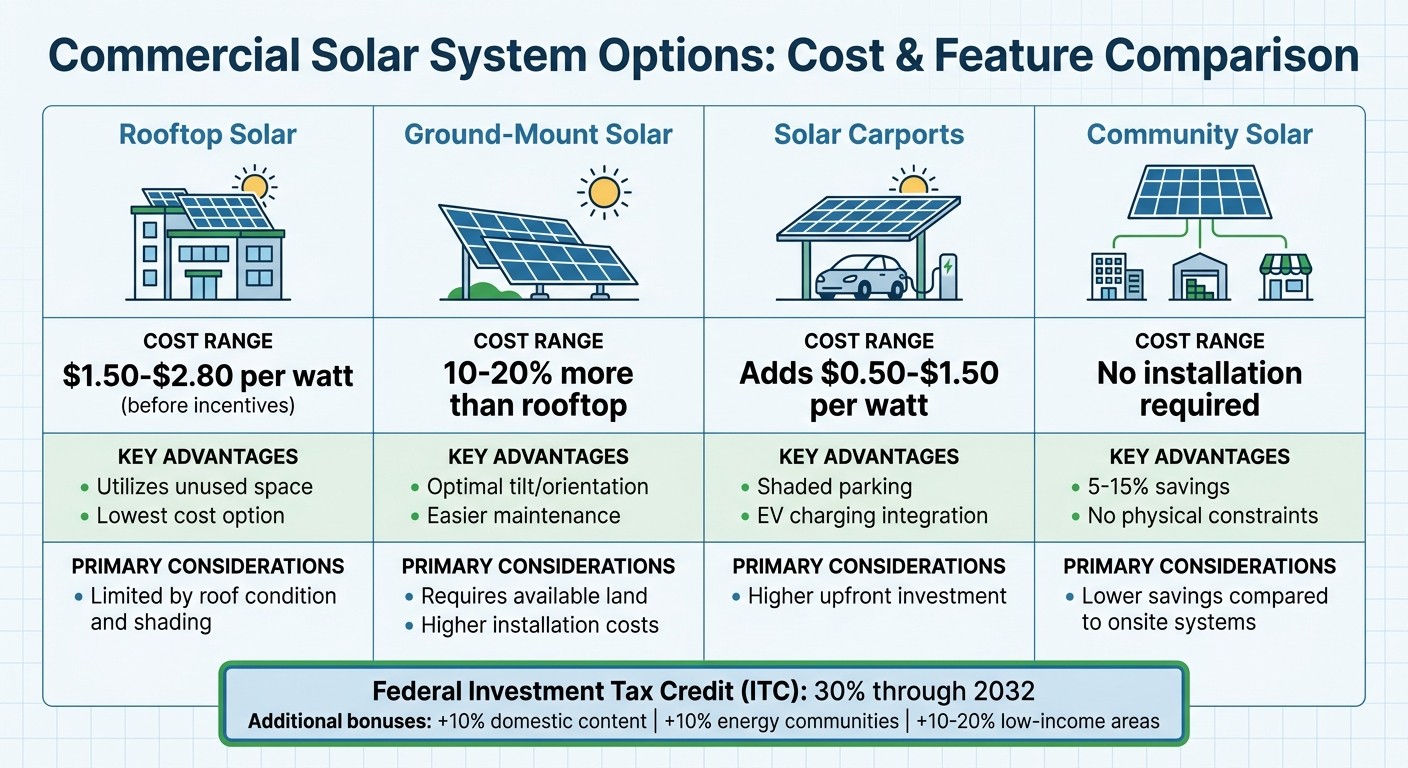
Commercial Solar System Types: Costs, Benefits, and Considerations Comparison
Compare Renewable Energy Options
Choosing the right renewable energy technology requires a clear comparison of financial performance and physical limitations. Commercial solar installations have surged, growing 25% year-over-year in 2025, largely due to their strong financial appeal. The unsubsidized levelized cost of energy (LCOE) for commercial solar systems now ranges between $0.04 and $0.06 per kilowatt-hour, significantly lower than the average commercial grid electricity rates of $0.13 to $0.22 per kWh [8].
To size systems accurately and optimize battery storage, collect 12-24 months of 15-minute interval utility data. Roofs must meet specific criteria, such as having at least 15 years of remaining life, the structural capacity to support 3-5 lbs per square foot, and minimal shading from HVAC equipment or nearby structures [8].
System Type | Cost Range (Before Incentives) | Key Advantages | Primary Considerations |
|---|---|---|---|
Rooftop Solar | $1.50-$2.80 per watt | Utilizes unused space; lowest cost option | Limited by roof condition and shading |
Ground-Mount Solar | 10-20% more than rooftop | Optimal tilt/orientation; easier maintenance | Requires available land; higher installation costs |
Solar Carports | Adds $0.50-$1.50 per watt | Shaded parking; EV charging integration | Higher upfront investment |
Community Solar | No installation required | 5-15% savings; no physical constraints | Lower savings compared to onsite systems |
The federal Investment Tax Credit (ITC) remains at 30% through 2032, decreasing to 26% in 2033 and 22% in 2034. Additional incentives include +10% for domestic content, +10% for energy communities, and +10-20% for low-income areas [8]. Businesses in the 21% federal corporate tax bracket can also benefit from MACRS accelerated depreciation, which provides an extra 12-15% in tax savings [8].
After weighing your options, decide whether onsite generation or offsite solutions better align with your facility's structural and financial needs.
Plan for Onsite and Offsite Solutions
Onsite generation typically offers the highest financial returns - 15-30% internal rate of return (IRR) - since businesses can directly benefit from all tax incentives. For example, a facility in Edison, New Jersey, installed a 1.1 MW rooftop solar system in 2023 for $1.87 million ($1.31 million after ITC), achieving a payback period of 3.8 years and projected 25-year net savings of $7.2 million [8].
However, when roof conditions are unsuitable or space is limited, offsite solutions like community solar or Power Purchase Agreements (PPAs) are better alternatives. PPAs require $0 upfront cost, as a third-party developer owns the system and captures the tax credits. In return, your business purchases electricity at a fixed rate, typically between $0.06 and $0.12 per kWh [8]. Community solar offers 5-15% savings without requiring any installation, making it ideal for businesses unable to host systems [10].
Pairing solar with battery storage can help reduce demand charges, which often account for 30-50% of electricity bills. For example, a Scottsdale, Arizona hotel installed a 225 kW rooftop and carport system with 200 kWh of battery storage in 2024. The total cost was $680,000 ($476,000 post-ITC), with a payback period of 6.7 years [8]. By 2026, commercial battery storage costs are expected to range between $400 and $700 per kWh of usable capacity, installed [8].
Once you've selected a solution, use the right tools to streamline implementation and ensure accuracy.
Use Planning and Deployment Tools
To verify energy production, rely on tools like NREL's PVWatts Calculator rather than solely trusting installer estimates [8]. The U.S. Department of Energy's Better Buildings Solution Center offers a wealth of resources, including implementation models and fact sheets, which have collectively supported over $24 billion in energy savings [9].
For location-specific procurement options, consult the National Laboratory's (NLR) renewable energy program list, organized by utility and municipality. In 2024, approximately 9.2 million customers sourced about 315 million MWh of renewable energy through voluntary power markets [10]. Platforms like SolarAPP+ are also simplifying local permitting processes, helping to cut down on soft costs, which currently account for around 40% of total installed costs in the U.S. [8].
When evaluating proposals, always obtain at least three bids and compare them based on LCOE rather than upfront costs. A structural engineering review is essential for rooftop systems to avoid safety or warranty concerns. Additionally, plan ahead for interconnection, as utility studies for systems larger than 25 kW can take anywhere from 30 to 120 days. Early applications are crucial to prevent delays [8].
Finance Renewable Energy Projects and Use Available Incentives
Once you've chosen renewable technologies and outlined your implementation strategies, the next step is securing the right financing. Federal tax credits are a cornerstone of renewable energy funding. The Investment Tax Credit (ITC) offers an upfront credit based on the eligible costs of your project, while the Production Tax Credit (PTC) provides payouts over 10 years based on the energy your project generates. Starting in 2026, the base ITC rate stands at 6% of eligible costs, increasing to 30% if prevailing wage and apprenticeship standards are met. Similarly, the PTC begins at 0.3¢ per kWh, rising to 1.5¢ per kWh with labor standards compliance [12][13].
As of January 1, 2025, these credits shifted to technology-neutral Clean Electricity Investment and Production Tax Credits, covering facilities with zero greenhouse gas emissions [13]. Additional incentives, which can add 10–20% more value, may further improve project economics. It's crucial to determine your site's eligibility early in the planning process [13].
The clean energy tax credit transfer market grew significantly, reaching $40 billion in 2025, a 30% jump from the previous year [11]. Corporations now have the option to purchase tax credits directly from renewable energy projects at rates of 88 to 95 cents on the dollar, allowing them to offset federal tax liabilities without taking on equity risks [11]. These credits are capped at 75% of your net income tax liability, with unused credits eligible for a three-year carryback or a 22-year carryforward period [11]. Timing your purchases with quarterly estimated tax payments can yield near-immediate cash flow benefits [11].
For additional state-level funding, explore the Database of State Incentives for Renewables & Efficiency (DSIRE) to identify rebates, grants, and localized programs [13]. Also, ensure compliance with 2026 restrictions on Foreign Entity of Concern (FEOC) regulations, as projects receiving "material assistance" from prohibited entities could lose eligibility for credits [11].
Use Green Financing Options
Renewable energy projects often rely on a mix of 70–80% debt and 20–30% equity or tax equity [14][15]. Debt pricing typically ranges from SOFR plus 150 to 400 basis points, with loan terms of 15–20 years for solar projects and 18–25 years for wind projects [15]. Green bonds, which appeal to ESG-focused investors, often carry interest rates 10–30 basis points lower than traditional bonds. In 2023 alone, global green bond issuance hit $575 billion [15].
Lenders tend to favor projects backed by strong Power Purchase Agreements (PPAs) with creditworthy buyers, as these agreements guarantee steady cash flow for debt repayment [14]. When seeking financing, clearly define your priorities - such as risk tolerance, ownership structure, and ESG objectives - and prepare a detailed, "lender-ready" data room. This should include standardized templates, reliable offtake agreements, and comprehensive project timelines to secure competitive debt terms [14]. Key metrics lenders consider include a Debt Service Coverage Ratio (DSCR) of at least 1.20x and a Loan Life Coverage Ratio (LLCR) between 1.30x and 1.40x for investment-grade projects [14][15].
Financing Type | Key Advantage | Primary Consideration |
|---|---|---|
Project Finance | Limited or no recourse to sponsor; spreads risk | Repayment depends solely on project cash flows |
Corporate Finance | Quick approval using company balance sheet | Full recourse to company assets |
Green Bonds | Access to ESG-focused investors; lower pricing | Requires clear reporting on fund usage |
A shift toward smaller, modular tax credit transactions is becoming more common, enabling corporations to manage varying tax positions more effectively [11]. In early 2025, demand for tax credits surged, with $9 of demand for every $1 of available Production Tax Credits [16]. Engaging early in the year can help secure better pricing and a broader selection of credit types [16]. Given the complexities of financing, expert guidance is often invaluable.
Work with Expert Consultants
To align your financing strategy with your renewable energy goals, consider working with consultants who specialize in tax credit markets. For example, Council Fire assists corporations in coordinating internal teams - such as CFO, Treasury, and Legal departments - to establish clear investment policies. These policies cover technology preferences, pricing benchmarks, and credit support requirements. Consultants also manage the entire diligence process, including cost segregation studies, third-party appraisals, and technical reviews of interconnection agreements [11][16].
"Effective tax credit transfers have the power to transform the tax department from a cost center into a profit center." - Tao Mantaras, Concentro [11]
Council Fire connects corporate buyers with appropriate projects through its network of vetted capital providers, ensuring tax liability and timing needs are met [14]. They also secure tax credit insurance and structure indemnities to protect against recapture risks [11]. Transactions typically close within three to seven weeks, and using standardized templates for Term Sheets and Tax Credit Transfer Agreements can expedite the process [11].
Consultants can also provide insights into whether ITCs or PTCs are more suitable based on market conditions and risk profiles. For instance, in late 2025, ITC pricing dropped by 2–3 cents due to increased project supply, while PTC pricing remained stable thanks to simpler qualification requirements and no recapture risks [11]. This type of market intelligence helps corporations refine their strategies and maximize returns.
Measure Progress and Scale Renewable Energy Initiatives
Once financing and deployment tools are in place, the next step is to measure progress and refine your renewable energy efforts for broader implementation.
Set and Monitor Key Metrics
Tracking key metrics transforms your renewable energy program into an ongoing improvement process. Start by establishing a baseline of your current energy performance, which is critical for calculating improvements and setting achievable goals [19]. For manufacturing facilities, energy intensity - measured in MMBtu per unit of production - is particularly useful. This metric normalizes energy use against production output, offering a clearer view of efficiency gains even when production levels vary [17].
Tools like the EPA's ENERGY STAR Portfolio Manager provide a robust platform for tracking energy consumption, greenhouse gas emissions, and water use across commercial properties [17]. For manufacturing plants, Energy Performance Indicators (EPIs) allow facilities to benchmark their performance against industry standards on a scale of 1 to 100. Facilities scoring 75 or higher may qualify for ENERGY STAR certification [17]. If you use onsite renewables like solar panels or wind turbines, it’s essential to separately track onsite generation and grid consumption to maintain accurate net metering [18].
Programs like Better Plants encourage participants to aim for a 25% reduction in energy intensity over a decade [9]. Through the Better Buildings & Better Plants initiative, participants have collectively saved over $24.2 billion in energy costs, along with substantial energy and water reductions [9]. The Department of Energy's Implementation Guidance Toolkit provides software and resources to streamline efficiency projects and communicate achievements effectively [20].
With metrics in place, focus on optimizing these systems for sustained success.
Optimize Systems for Long-Term Success
Scaling renewable energy across multiple sites calls for a portfolio management approach to balance costs and address energy price fluctuations [21]. In 2024, global corporate renewable energy procurement reached 46 GW of new power purchase agreements (PPAs), a 12% increase compared to 2023 [21]. Many companies are now adopting hourly matching, which synchronizes renewable energy generation with consumption on an hourly basis within the same grid area. This method avoids overstating climate impact, unlike annual netting [21].
For example, Google reported achieving 64% global hourly carbon-free energy (CFE) matching across its data centers in its 2024 Environmental Report, with Denmark facilities reaching an impressive 97% matching through time-matched PPAs and geothermal baseload contracts [21]. Similarly, Microsoft secured over 13.5 GW of renewable energy contracts between 2023 and 2025, creating the largest corporate renewable portfolio worldwide. These contracts ensure additionality by requiring projects to secure financial closure within 24 months of PPA signing [21].
When expanding to new locations, compare PPA prices with regional benchmarks like the LevelTen Energy PPA Price Index to ensure competitive terms. In the U.S., solar PPAs generally range from $25 to $55 per MWh, while onshore wind PPAs fall between $30 and $65 per MWh for new projects [21]. Managing basis risk - the price gap between the PPA settlement point and your actual delivery point - is essential, as it can reduce expected savings by 10% to 30% [21]. In congested grid areas, consider negotiating protections or price adjustments for delivery shortfalls caused by grid curtailment, which can sometimes exceed 10% [21].
To ensure your efforts drive real change, prioritize additionality by supporting new projects that begin operations within three to five years, rather than relying on certificates from existing assets. Currently, fewer than 30% of corporate renewable energy claims demonstrate verifiable additionality [21]. For instance, Iron Mountain achieved 100% renewable energy coverage for its global colocation data centers in 2024 through a mix of onsite solar, green tariffs, and virtual PPAs, maintaining an additionality score above 85% [21]. The DOE toolkits can help with planning and tracking these initiatives [20].
While operational improvements are critical, aligning these efforts with ESG goals ensures accountability and strategic alignment.
Align with ESG Goals
Connecting renewable energy progress to ESG objectives requires more than far-off targets - it demands near-term milestones, accountability, and detailed transition plans. Companies with SBTi-validated targets reduce emissions 4–5 times faster than those without verified goals [22]. Between 2015 and 2023, companies with approved science-based targets cut Scope 1 and 2 emissions by an average of 8.8% annually [22].
For example, Unilever allocated $1 billion for climate initiatives through 2030 in its Climate Transition Action Plan, published in 2021. By linking executive compensation to climate performance and creating sector-specific roadmaps, Unilever reduced its absolute Scope 1 and 2 emissions by 48% between 2015 and 2023 [22]. Similarly, Microsoft implemented an internal carbon fee of $100 per tonne across all emission scopes, generating over $70 million annually to fund internal efficiency projects and high-permanence carbon removal [22].
Council Fire's ESG services assist companies in developing comprehensive plans aligned with frameworks like the EU's Corporate Sustainability Reporting Directive (CSRD) and the UK's Transition Plan Taskforce (TPT). Companies with detailed plans reduce emissions at rates 1.5 times higher than those merely setting targets [22]. Establishing milestones for 2025, 2027, and 2030 - not just distant 2050 goals - ensures accountability and aligns with leadership cycles [22]. Additionally, moving from spend-based Scope 3 estimates to collecting primary data from top suppliers can create meaningful changes across the value chain [22].
Setting internal carbon prices above €100 per tonne (around $110 per tonne) encourages investment in low-carbon projects, while lower prices (below €50 per tonne) often fail to influence corporate behavior [22]. Revenues from carbon fees can fund renewable energy and efficiency projects, creating a cycle of ongoing improvement [22]. For emissions that can’t be directly reduced, focus on high-permanence carbon removal methods like geological sequestration, rather than relying on conventional offsets [22].
Conclusion
Shifting to local renewable energy demands a well-thought-out approach that delivers measurable benefits for both your business and the surrounding community. This journey involves conducting a thorough energy assessment to evaluate current usage, fostering stakeholder collaboration to overcome challenges, selecting smart technologies that balance onsite and offsite options, and crafting a financial plan that leverages federal, state, and local incentives to their fullest potential.
Examples from industry leaders highlight the success of this approach. Companies like Google, IKEA, and Walmart have achieved significant milestones in their renewable energy goals by employing strategic Power Purchase Agreements (PPAs) and installing visible renewable energy systems, boosting operational efficiency while earning public trust [23].
Building on initial assessments and collaborations, businesses can refine their strategies by securing long-term PPAs, standardizing specifications to encourage competitive bidding, and launching projects with local impact. Progress can be tracked using metrics such as megawatts installed, kilowatt-hours offset, and emissions reduced. Transparency is key - issuing annual reports on these metrics helps maintain accountability [2][23].
"Municipal-corporate collaborations can remove these barriers and advance renewable electricity generation and use across the United States." - World Resources Institute [1]
Leading organizations often begin with pilot projects, work closely with local governments, and develop in-house expertise. By following these steps - from conducting energy audits to aligning with broader ESG objectives - your business can reduce energy costs, shield itself from fossil fuel price swings, and create lasting benefits for both your company and the community. These actionable steps can reshape your energy strategy for the better.
FAQs
How do I decide between onsite solar, community solar, and a PPA?
Choosing the right solar option - onsite solar, community solar, or a Power Purchase Agreement (PPA) - depends on what your organization aims to achieve, along with its resources and risk preferences.
Onsite solar is ideal for businesses with enough roof or land space. It provides direct control over energy generation and can lead to significant long-term savings.
Community solar is a practical alternative when onsite solar isn't possible. It offers shared access to energy from offsite solar projects, making it a flexible choice.
PPAs are appealing for organizations seeking stable energy costs without upfront expenses. They shift the performance and maintenance responsibilities to a third party, reducing risk.
Each option offers distinct benefits, aligning with different organizational needs and circumstances.
What data do I need from my utility before sizing solar and storage?
To determine the right size for your solar and storage systems, start by collecting detailed information from your utility provider. Look at your energy consumption patterns, peak demand times, and historical usage data. Additionally, examine your rate structures, demand charges, and any interconnection requirements. These insights are crucial for understanding your energy needs and ensuring your system is tailored for maximum efficiency.
How can we prove renewable projects are “additional” for ESG reporting?
To demonstrate that renewable projects are "additional" in the context of ESG reporting, organizations need to provide evidence that these initiatives result in new, measurable clean energy generation that wouldn’t have happened without their direct participation. This is typically assessed using critical metrics such as additionality measures and hourly matching rates, both of which play a pivotal role in crafting reliable climate strategies.
Related Blog Posts
Latest Articles
©2025

Narrative Change and Power Building: The Missing Half of Advocacy
Narrative change is the process of disrupting dominant narratives that normalize inequity and advancing new narratives from historically marginalized communities.

Funding Resilience Without Federal Grants
BRIC is unreliable and FEMA is shrinking. Here's how cities fund climate resilience with dedicated revenue, blended finance, and a coordinating authority.

The ESG Blind Spot: How AI Is Finding Risks in Companies Nobody Else Is Watching
Norway's sovereign wealth fund uses AI to screen 7,200 portfolio companies for forced labor and corruption within 24 hours. The real story is the emerging-market coverage gap that traditional ESG data vendors miss — and what it means for any company with a global supply chain.
Narrative Change and Power Building: The Missing Half of Advocacy
Narrative change is the process of disrupting dominant narratives that normalize inequity and advancing new narratives from historically marginalized communities.
Funding Resilience Without Federal Grants
BRIC is unreliable and FEMA is shrinking. Here's how cities fund climate resilience with dedicated revenue, blended finance, and a coordinating authority.
The ESG Blind Spot: How AI Is Finding Risks in Companies Nobody Else Is Watching
Norway's sovereign wealth fund uses AI to screen 7,200 portfolio companies for forced labor and corruption within 24 hours. The real story is the emerging-market coverage gap that traditional ESG data vendors miss — and what it means for any company with a global supply chain.
FAQ
01
What does it really mean to “redefine profit”?
02
What makes Council Fire different?
03
Who does Council Fire work with?
04
What does working with Council Fire actually look like?
05
How does Council Fire help organizations turn big goals into action?
06
How does Council Fire define and measure success?
Apr 25, 2026
How to Transition to Renewable Energy Systems at the Local Level for Corporations
Sustainability Strategy
In This Article
A practical roadmap for corporations to assess, finance, and implement local renewable energy projects while meeting ESG goals.
How to Transition to Renewable Energy Systems at the Local Level for Corporations
Switching to renewable energy at a local level can cut costs, meet ESG goals, and improve energy reliability for corporations. Major companies like Google and Walmart have already shifted to 100% renewable electricity, and the benefits go beyond compliance - lower utility bills, faster ROI (3–7 years), and stronger brand reputation. Here's a quick guide:
Start with an Energy Audit: Identify inefficiencies and peak usage to plan upgrades like LED lighting or optimized HVAC systems.
Assess Local Resources: Evaluate solar, wind, and available space for installations. For example, rooftop solar is cost-effective at $1.50–$2.80 per watt.
Leverage Incentives: Use the 30% federal Investment Tax Credit (ITC), additional bonuses for domestic content, and state-level rebates.
Collaborate Locally: Partner with governments and organizations for shared projects, like Amazon’s solar farm with Arlington County.
Finance Smartly: Explore green bonds, PPAs, or tax credit transfers to reduce upfront costs and maximize returns.
Track Progress: Use tools like ENERGY STAR Portfolio Manager to monitor energy use and emissions reductions.
This roadmap ensures a structured, cost-effective shift to renewable energy while meeting corporate and community goals.
The Role of Corporate Demand in Driving Clean Energy Deployment
Assess Current Energy Use and Local Resources
Before diving into renewable energy investments, it’s crucial to analyze how your facilities currently consume power. This initial step helps uncover inefficiencies, identify peak usage periods, and determine which renewable options are the best fit for your specific location. Following this, energy audits, local resource evaluations, and a review of relevant policies will help craft a well-rounded plan.
Conduct Energy Audits
A solid renewable energy strategy starts with understanding your energy consumption patterns. Energy audits provide valuable insights into how your operations - from lighting and HVAC systems to manufacturing equipment and data centers - use power. These audits reveal areas where energy is wasted, highlight peak demand times, and help identify opportunities to shift or reduce loads. For example, a facility with a steady 24-hour demand will require a very different solar-plus-storage setup than one that peaks at 2,000 kW in the afternoon but drops to 500 kW off-peak. Additionally, audits can point out simple efficiency upgrades - like LED lighting or optimized HVAC systems - that reduce energy needs before investing in renewable infrastructure.
Evaluate Local Renewable Resources
Once energy consumption is understood, the next step is to assess the renewable resources available in your area. Solar and wind dominate the renewable energy landscape, with wind contributing 76% of total megawatt-hours in certified voluntary retail sales, and solar seeing exponential growth from 250,000 MWh to 34,000,000 MWh over nine years ending in 2024 [4]. In 2024, Texas and Oklahoma alone provided more than half - 56% - of certified renewable electricity in the U.S. [4].
To determine the feasibility of solar or wind installations, evaluate your site’s solar irradiance, wind speeds, and available space, such as rooftops or unused land. For instance, the PatterSun solar installation in New York, completed by TRC Companies and BQ Energy on a municipal landfill, illustrates how creative site use can align renewable projects with operational needs. This project, completed in 2016, even earned the 2015 Chairman's Award from The Business Council of New York [3]. Early interconnection studies are also essential to ensure your local grid can handle power imports or exports safely [3][5].
"Site selection is no longer just about transportation costs and labor availability - it's about energy strategy, sustainability, and long-term value." - Mary Ellen McCandless, Director of Digital Content, Group C Media [5]
Research Local Policies and Incentives
Regulations and incentives play a significant role in shaping the financial and operational viability of renewable energy projects. For instance, 29 states and D.C. enforce Renewable Portfolio Standards (RPS), with 16 states targeting 50% or more renewable energy and 4 aiming for 100% [6]. In addition, 34 states, along with D.C. and several territories, require net metering, which provides credits for surplus energy sent back to the grid [6]. Another key policy is the allowance for third-party Solar Power Purchase Agreements (PPAs) in 29 states, D.C., and Puerto Rico as of June 2025 [6].
Zoning regulations also need careful consideration. For example, height restrictions might limit wind turbine installations. On the federal level, the Investment Tax Credit (ITC) under Section 48(e) is available until December 2027, but projects must begin construction by July 4, 2026, to qualify [6]. The One Big Beautiful Bill Act (OBBBA), signed into law in July 2025, introduced stricter supply chain compliance, requiring that no more than 60% of total equipment costs come from Foreign Entities of Concern in 2026 [6]. Early supply chain reviews are critical to ensure tax credit eligibility and avoid unexpected hurdles.
Engage Stakeholders for Local Renewable Energy Projects
Partnering with local organizations can amplify the benefits of renewable energy projects, lower costs, and help navigate complex regulations. Across the U.S., over 200 local governments have pledged to achieve 100% renewable energy, while more than 300 prominent companies have joined the Renewable Energy Buyers Alliance [7].
To build on this momentum, seek out local collaborators such as municipalities, universities, and large energy consumers with public climate goals. For instance, reaching out to local government sustainability offices can help identify shared objectives. A great example of this is Amazon’s 2020 partnership with Arlington County, Virginia. Together with Dominion Energy, they developed a 120 MW solar farm. Amazon used 68% of the electricity to power its headquarters and local operations, while Arlington County utilized the remaining energy to meet 80% of its municipal renewable electricity needs [7].
Collaboration can take several forms, including education, joint procurement, addressing market barriers, and equitable community deployment. Joint procurement, for example, allows partners to combine their purchasing power for better contract terms and pricing. The Boston Green Ribbon Commission facilitated a power purchase agreement between Boston Medical Center, Friends of Post Office Square, and MIT, resulting in a 60 MW solar farm in North Carolina [7]. Similarly, in San Antonio, a partnership among the city’s municipal utility, a credit union, research institutions, and a solar developer led to a community solar program. This initiative provided 40 income-qualified families with annual energy savings of $215 [7].
These collaborative efforts also open doors for impactful policy engagement. Corporations can work together to advocate for regulatory changes by submitting joint comments to state Public Utility Commissions. For example, in 2019, Target and the City of Minneapolis successfully pushed Xcel Energy to revise its solar credit calculation, ensuring fair compensation for solar installations [7]. By teaming up, organizations can tackle market barriers that might be too challenging to address individually.
To ensure success, partnerships need clear agreements on roles, responsibilities, and staffing. Incorporate community benefits - such as local job creation or energy access programs - into proposals to promote fair development. Offering workshops can help smaller buyers gain procurement expertise, while public-private commissions can foster shared strategies for local climate action. By aligning efforts and pooling knowledge, these partnerships can meet both corporate and community renewable energy goals.
Select and Implement Cost-Effective Renewable Technologies
Commercial Solar System Types: Costs, Benefits, and Considerations Comparison
Compare Renewable Energy Options
Choosing the right renewable energy technology requires a clear comparison of financial performance and physical limitations. Commercial solar installations have surged, growing 25% year-over-year in 2025, largely due to their strong financial appeal. The unsubsidized levelized cost of energy (LCOE) for commercial solar systems now ranges between $0.04 and $0.06 per kilowatt-hour, significantly lower than the average commercial grid electricity rates of $0.13 to $0.22 per kWh [8].
To size systems accurately and optimize battery storage, collect 12-24 months of 15-minute interval utility data. Roofs must meet specific criteria, such as having at least 15 years of remaining life, the structural capacity to support 3-5 lbs per square foot, and minimal shading from HVAC equipment or nearby structures [8].
System Type | Cost Range (Before Incentives) | Key Advantages | Primary Considerations |
|---|---|---|---|
Rooftop Solar | $1.50-$2.80 per watt | Utilizes unused space; lowest cost option | Limited by roof condition and shading |
Ground-Mount Solar | 10-20% more than rooftop | Optimal tilt/orientation; easier maintenance | Requires available land; higher installation costs |
Solar Carports | Adds $0.50-$1.50 per watt | Shaded parking; EV charging integration | Higher upfront investment |
Community Solar | No installation required | 5-15% savings; no physical constraints | Lower savings compared to onsite systems |
The federal Investment Tax Credit (ITC) remains at 30% through 2032, decreasing to 26% in 2033 and 22% in 2034. Additional incentives include +10% for domestic content, +10% for energy communities, and +10-20% for low-income areas [8]. Businesses in the 21% federal corporate tax bracket can also benefit from MACRS accelerated depreciation, which provides an extra 12-15% in tax savings [8].
After weighing your options, decide whether onsite generation or offsite solutions better align with your facility's structural and financial needs.
Plan for Onsite and Offsite Solutions
Onsite generation typically offers the highest financial returns - 15-30% internal rate of return (IRR) - since businesses can directly benefit from all tax incentives. For example, a facility in Edison, New Jersey, installed a 1.1 MW rooftop solar system in 2023 for $1.87 million ($1.31 million after ITC), achieving a payback period of 3.8 years and projected 25-year net savings of $7.2 million [8].
However, when roof conditions are unsuitable or space is limited, offsite solutions like community solar or Power Purchase Agreements (PPAs) are better alternatives. PPAs require $0 upfront cost, as a third-party developer owns the system and captures the tax credits. In return, your business purchases electricity at a fixed rate, typically between $0.06 and $0.12 per kWh [8]. Community solar offers 5-15% savings without requiring any installation, making it ideal for businesses unable to host systems [10].
Pairing solar with battery storage can help reduce demand charges, which often account for 30-50% of electricity bills. For example, a Scottsdale, Arizona hotel installed a 225 kW rooftop and carport system with 200 kWh of battery storage in 2024. The total cost was $680,000 ($476,000 post-ITC), with a payback period of 6.7 years [8]. By 2026, commercial battery storage costs are expected to range between $400 and $700 per kWh of usable capacity, installed [8].
Once you've selected a solution, use the right tools to streamline implementation and ensure accuracy.
Use Planning and Deployment Tools
To verify energy production, rely on tools like NREL's PVWatts Calculator rather than solely trusting installer estimates [8]. The U.S. Department of Energy's Better Buildings Solution Center offers a wealth of resources, including implementation models and fact sheets, which have collectively supported over $24 billion in energy savings [9].
For location-specific procurement options, consult the National Laboratory's (NLR) renewable energy program list, organized by utility and municipality. In 2024, approximately 9.2 million customers sourced about 315 million MWh of renewable energy through voluntary power markets [10]. Platforms like SolarAPP+ are also simplifying local permitting processes, helping to cut down on soft costs, which currently account for around 40% of total installed costs in the U.S. [8].
When evaluating proposals, always obtain at least three bids and compare them based on LCOE rather than upfront costs. A structural engineering review is essential for rooftop systems to avoid safety or warranty concerns. Additionally, plan ahead for interconnection, as utility studies for systems larger than 25 kW can take anywhere from 30 to 120 days. Early applications are crucial to prevent delays [8].
Finance Renewable Energy Projects and Use Available Incentives
Once you've chosen renewable technologies and outlined your implementation strategies, the next step is securing the right financing. Federal tax credits are a cornerstone of renewable energy funding. The Investment Tax Credit (ITC) offers an upfront credit based on the eligible costs of your project, while the Production Tax Credit (PTC) provides payouts over 10 years based on the energy your project generates. Starting in 2026, the base ITC rate stands at 6% of eligible costs, increasing to 30% if prevailing wage and apprenticeship standards are met. Similarly, the PTC begins at 0.3¢ per kWh, rising to 1.5¢ per kWh with labor standards compliance [12][13].
As of January 1, 2025, these credits shifted to technology-neutral Clean Electricity Investment and Production Tax Credits, covering facilities with zero greenhouse gas emissions [13]. Additional incentives, which can add 10–20% more value, may further improve project economics. It's crucial to determine your site's eligibility early in the planning process [13].
The clean energy tax credit transfer market grew significantly, reaching $40 billion in 2025, a 30% jump from the previous year [11]. Corporations now have the option to purchase tax credits directly from renewable energy projects at rates of 88 to 95 cents on the dollar, allowing them to offset federal tax liabilities without taking on equity risks [11]. These credits are capped at 75% of your net income tax liability, with unused credits eligible for a three-year carryback or a 22-year carryforward period [11]. Timing your purchases with quarterly estimated tax payments can yield near-immediate cash flow benefits [11].
For additional state-level funding, explore the Database of State Incentives for Renewables & Efficiency (DSIRE) to identify rebates, grants, and localized programs [13]. Also, ensure compliance with 2026 restrictions on Foreign Entity of Concern (FEOC) regulations, as projects receiving "material assistance" from prohibited entities could lose eligibility for credits [11].
Use Green Financing Options
Renewable energy projects often rely on a mix of 70–80% debt and 20–30% equity or tax equity [14][15]. Debt pricing typically ranges from SOFR plus 150 to 400 basis points, with loan terms of 15–20 years for solar projects and 18–25 years for wind projects [15]. Green bonds, which appeal to ESG-focused investors, often carry interest rates 10–30 basis points lower than traditional bonds. In 2023 alone, global green bond issuance hit $575 billion [15].
Lenders tend to favor projects backed by strong Power Purchase Agreements (PPAs) with creditworthy buyers, as these agreements guarantee steady cash flow for debt repayment [14]. When seeking financing, clearly define your priorities - such as risk tolerance, ownership structure, and ESG objectives - and prepare a detailed, "lender-ready" data room. This should include standardized templates, reliable offtake agreements, and comprehensive project timelines to secure competitive debt terms [14]. Key metrics lenders consider include a Debt Service Coverage Ratio (DSCR) of at least 1.20x and a Loan Life Coverage Ratio (LLCR) between 1.30x and 1.40x for investment-grade projects [14][15].
Financing Type | Key Advantage | Primary Consideration |
|---|---|---|
Project Finance | Limited or no recourse to sponsor; spreads risk | Repayment depends solely on project cash flows |
Corporate Finance | Quick approval using company balance sheet | Full recourse to company assets |
Green Bonds | Access to ESG-focused investors; lower pricing | Requires clear reporting on fund usage |
A shift toward smaller, modular tax credit transactions is becoming more common, enabling corporations to manage varying tax positions more effectively [11]. In early 2025, demand for tax credits surged, with $9 of demand for every $1 of available Production Tax Credits [16]. Engaging early in the year can help secure better pricing and a broader selection of credit types [16]. Given the complexities of financing, expert guidance is often invaluable.
Work with Expert Consultants
To align your financing strategy with your renewable energy goals, consider working with consultants who specialize in tax credit markets. For example, Council Fire assists corporations in coordinating internal teams - such as CFO, Treasury, and Legal departments - to establish clear investment policies. These policies cover technology preferences, pricing benchmarks, and credit support requirements. Consultants also manage the entire diligence process, including cost segregation studies, third-party appraisals, and technical reviews of interconnection agreements [11][16].
"Effective tax credit transfers have the power to transform the tax department from a cost center into a profit center." - Tao Mantaras, Concentro [11]
Council Fire connects corporate buyers with appropriate projects through its network of vetted capital providers, ensuring tax liability and timing needs are met [14]. They also secure tax credit insurance and structure indemnities to protect against recapture risks [11]. Transactions typically close within three to seven weeks, and using standardized templates for Term Sheets and Tax Credit Transfer Agreements can expedite the process [11].
Consultants can also provide insights into whether ITCs or PTCs are more suitable based on market conditions and risk profiles. For instance, in late 2025, ITC pricing dropped by 2–3 cents due to increased project supply, while PTC pricing remained stable thanks to simpler qualification requirements and no recapture risks [11]. This type of market intelligence helps corporations refine their strategies and maximize returns.
Measure Progress and Scale Renewable Energy Initiatives
Once financing and deployment tools are in place, the next step is to measure progress and refine your renewable energy efforts for broader implementation.
Set and Monitor Key Metrics
Tracking key metrics transforms your renewable energy program into an ongoing improvement process. Start by establishing a baseline of your current energy performance, which is critical for calculating improvements and setting achievable goals [19]. For manufacturing facilities, energy intensity - measured in MMBtu per unit of production - is particularly useful. This metric normalizes energy use against production output, offering a clearer view of efficiency gains even when production levels vary [17].
Tools like the EPA's ENERGY STAR Portfolio Manager provide a robust platform for tracking energy consumption, greenhouse gas emissions, and water use across commercial properties [17]. For manufacturing plants, Energy Performance Indicators (EPIs) allow facilities to benchmark their performance against industry standards on a scale of 1 to 100. Facilities scoring 75 or higher may qualify for ENERGY STAR certification [17]. If you use onsite renewables like solar panels or wind turbines, it’s essential to separately track onsite generation and grid consumption to maintain accurate net metering [18].
Programs like Better Plants encourage participants to aim for a 25% reduction in energy intensity over a decade [9]. Through the Better Buildings & Better Plants initiative, participants have collectively saved over $24.2 billion in energy costs, along with substantial energy and water reductions [9]. The Department of Energy's Implementation Guidance Toolkit provides software and resources to streamline efficiency projects and communicate achievements effectively [20].
With metrics in place, focus on optimizing these systems for sustained success.
Optimize Systems for Long-Term Success
Scaling renewable energy across multiple sites calls for a portfolio management approach to balance costs and address energy price fluctuations [21]. In 2024, global corporate renewable energy procurement reached 46 GW of new power purchase agreements (PPAs), a 12% increase compared to 2023 [21]. Many companies are now adopting hourly matching, which synchronizes renewable energy generation with consumption on an hourly basis within the same grid area. This method avoids overstating climate impact, unlike annual netting [21].
For example, Google reported achieving 64% global hourly carbon-free energy (CFE) matching across its data centers in its 2024 Environmental Report, with Denmark facilities reaching an impressive 97% matching through time-matched PPAs and geothermal baseload contracts [21]. Similarly, Microsoft secured over 13.5 GW of renewable energy contracts between 2023 and 2025, creating the largest corporate renewable portfolio worldwide. These contracts ensure additionality by requiring projects to secure financial closure within 24 months of PPA signing [21].
When expanding to new locations, compare PPA prices with regional benchmarks like the LevelTen Energy PPA Price Index to ensure competitive terms. In the U.S., solar PPAs generally range from $25 to $55 per MWh, while onshore wind PPAs fall between $30 and $65 per MWh for new projects [21]. Managing basis risk - the price gap between the PPA settlement point and your actual delivery point - is essential, as it can reduce expected savings by 10% to 30% [21]. In congested grid areas, consider negotiating protections or price adjustments for delivery shortfalls caused by grid curtailment, which can sometimes exceed 10% [21].
To ensure your efforts drive real change, prioritize additionality by supporting new projects that begin operations within three to five years, rather than relying on certificates from existing assets. Currently, fewer than 30% of corporate renewable energy claims demonstrate verifiable additionality [21]. For instance, Iron Mountain achieved 100% renewable energy coverage for its global colocation data centers in 2024 through a mix of onsite solar, green tariffs, and virtual PPAs, maintaining an additionality score above 85% [21]. The DOE toolkits can help with planning and tracking these initiatives [20].
While operational improvements are critical, aligning these efforts with ESG goals ensures accountability and strategic alignment.
Align with ESG Goals
Connecting renewable energy progress to ESG objectives requires more than far-off targets - it demands near-term milestones, accountability, and detailed transition plans. Companies with SBTi-validated targets reduce emissions 4–5 times faster than those without verified goals [22]. Between 2015 and 2023, companies with approved science-based targets cut Scope 1 and 2 emissions by an average of 8.8% annually [22].
For example, Unilever allocated $1 billion for climate initiatives through 2030 in its Climate Transition Action Plan, published in 2021. By linking executive compensation to climate performance and creating sector-specific roadmaps, Unilever reduced its absolute Scope 1 and 2 emissions by 48% between 2015 and 2023 [22]. Similarly, Microsoft implemented an internal carbon fee of $100 per tonne across all emission scopes, generating over $70 million annually to fund internal efficiency projects and high-permanence carbon removal [22].
Council Fire's ESG services assist companies in developing comprehensive plans aligned with frameworks like the EU's Corporate Sustainability Reporting Directive (CSRD) and the UK's Transition Plan Taskforce (TPT). Companies with detailed plans reduce emissions at rates 1.5 times higher than those merely setting targets [22]. Establishing milestones for 2025, 2027, and 2030 - not just distant 2050 goals - ensures accountability and aligns with leadership cycles [22]. Additionally, moving from spend-based Scope 3 estimates to collecting primary data from top suppliers can create meaningful changes across the value chain [22].
Setting internal carbon prices above €100 per tonne (around $110 per tonne) encourages investment in low-carbon projects, while lower prices (below €50 per tonne) often fail to influence corporate behavior [22]. Revenues from carbon fees can fund renewable energy and efficiency projects, creating a cycle of ongoing improvement [22]. For emissions that can’t be directly reduced, focus on high-permanence carbon removal methods like geological sequestration, rather than relying on conventional offsets [22].
Conclusion
Shifting to local renewable energy demands a well-thought-out approach that delivers measurable benefits for both your business and the surrounding community. This journey involves conducting a thorough energy assessment to evaluate current usage, fostering stakeholder collaboration to overcome challenges, selecting smart technologies that balance onsite and offsite options, and crafting a financial plan that leverages federal, state, and local incentives to their fullest potential.
Examples from industry leaders highlight the success of this approach. Companies like Google, IKEA, and Walmart have achieved significant milestones in their renewable energy goals by employing strategic Power Purchase Agreements (PPAs) and installing visible renewable energy systems, boosting operational efficiency while earning public trust [23].
Building on initial assessments and collaborations, businesses can refine their strategies by securing long-term PPAs, standardizing specifications to encourage competitive bidding, and launching projects with local impact. Progress can be tracked using metrics such as megawatts installed, kilowatt-hours offset, and emissions reduced. Transparency is key - issuing annual reports on these metrics helps maintain accountability [2][23].
"Municipal-corporate collaborations can remove these barriers and advance renewable electricity generation and use across the United States." - World Resources Institute [1]
Leading organizations often begin with pilot projects, work closely with local governments, and develop in-house expertise. By following these steps - from conducting energy audits to aligning with broader ESG objectives - your business can reduce energy costs, shield itself from fossil fuel price swings, and create lasting benefits for both your company and the community. These actionable steps can reshape your energy strategy for the better.
FAQs
How do I decide between onsite solar, community solar, and a PPA?
Choosing the right solar option - onsite solar, community solar, or a Power Purchase Agreement (PPA) - depends on what your organization aims to achieve, along with its resources and risk preferences.
Onsite solar is ideal for businesses with enough roof or land space. It provides direct control over energy generation and can lead to significant long-term savings.
Community solar is a practical alternative when onsite solar isn't possible. It offers shared access to energy from offsite solar projects, making it a flexible choice.
PPAs are appealing for organizations seeking stable energy costs without upfront expenses. They shift the performance and maintenance responsibilities to a third party, reducing risk.
Each option offers distinct benefits, aligning with different organizational needs and circumstances.
What data do I need from my utility before sizing solar and storage?
To determine the right size for your solar and storage systems, start by collecting detailed information from your utility provider. Look at your energy consumption patterns, peak demand times, and historical usage data. Additionally, examine your rate structures, demand charges, and any interconnection requirements. These insights are crucial for understanding your energy needs and ensuring your system is tailored for maximum efficiency.
How can we prove renewable projects are “additional” for ESG reporting?
To demonstrate that renewable projects are "additional" in the context of ESG reporting, organizations need to provide evidence that these initiatives result in new, measurable clean energy generation that wouldn’t have happened without their direct participation. This is typically assessed using critical metrics such as additionality measures and hourly matching rates, both of which play a pivotal role in crafting reliable climate strategies.
Related Blog Posts
Latest Articles
©2025
Narrative Change and Power Building: The Missing Half of Advocacy
Narrative change is the process of disrupting dominant narratives that normalize inequity and advancing new narratives from historically marginalized communities.
Funding Resilience Without Federal Grants
BRIC is unreliable and FEMA is shrinking. Here's how cities fund climate resilience with dedicated revenue, blended finance, and a coordinating authority.
The ESG Blind Spot: How AI Is Finding Risks in Companies Nobody Else Is Watching
Norway's sovereign wealth fund uses AI to screen 7,200 portfolio companies for forced labor and corruption within 24 hours. The real story is the emerging-market coverage gap that traditional ESG data vendors miss — and what it means for any company with a global supply chain.
FAQ
01
What does it really mean to “redefine profit”?
02
What makes Council Fire different?
03
Who does Council Fire work with?
04
What does working with Council Fire actually look like?
05
How does Council Fire help organizations turn big goals into action?
06
How does Council Fire define and measure success?
Apr 25, 2026
How to Transition to Renewable Energy Systems at the Local Level for Corporations
Sustainability Strategy
In This Article
A practical roadmap for corporations to assess, finance, and implement local renewable energy projects while meeting ESG goals.
How to Transition to Renewable Energy Systems at the Local Level for Corporations
Switching to renewable energy at a local level can cut costs, meet ESG goals, and improve energy reliability for corporations. Major companies like Google and Walmart have already shifted to 100% renewable electricity, and the benefits go beyond compliance - lower utility bills, faster ROI (3–7 years), and stronger brand reputation. Here's a quick guide:
Start with an Energy Audit: Identify inefficiencies and peak usage to plan upgrades like LED lighting or optimized HVAC systems.
Assess Local Resources: Evaluate solar, wind, and available space for installations. For example, rooftop solar is cost-effective at $1.50–$2.80 per watt.
Leverage Incentives: Use the 30% federal Investment Tax Credit (ITC), additional bonuses for domestic content, and state-level rebates.
Collaborate Locally: Partner with governments and organizations for shared projects, like Amazon’s solar farm with Arlington County.
Finance Smartly: Explore green bonds, PPAs, or tax credit transfers to reduce upfront costs and maximize returns.
Track Progress: Use tools like ENERGY STAR Portfolio Manager to monitor energy use and emissions reductions.
This roadmap ensures a structured, cost-effective shift to renewable energy while meeting corporate and community goals.
The Role of Corporate Demand in Driving Clean Energy Deployment
Assess Current Energy Use and Local Resources
Before diving into renewable energy investments, it’s crucial to analyze how your facilities currently consume power. This initial step helps uncover inefficiencies, identify peak usage periods, and determine which renewable options are the best fit for your specific location. Following this, energy audits, local resource evaluations, and a review of relevant policies will help craft a well-rounded plan.
Conduct Energy Audits
A solid renewable energy strategy starts with understanding your energy consumption patterns. Energy audits provide valuable insights into how your operations - from lighting and HVAC systems to manufacturing equipment and data centers - use power. These audits reveal areas where energy is wasted, highlight peak demand times, and help identify opportunities to shift or reduce loads. For example, a facility with a steady 24-hour demand will require a very different solar-plus-storage setup than one that peaks at 2,000 kW in the afternoon but drops to 500 kW off-peak. Additionally, audits can point out simple efficiency upgrades - like LED lighting or optimized HVAC systems - that reduce energy needs before investing in renewable infrastructure.
Evaluate Local Renewable Resources
Once energy consumption is understood, the next step is to assess the renewable resources available in your area. Solar and wind dominate the renewable energy landscape, with wind contributing 76% of total megawatt-hours in certified voluntary retail sales, and solar seeing exponential growth from 250,000 MWh to 34,000,000 MWh over nine years ending in 2024 [4]. In 2024, Texas and Oklahoma alone provided more than half - 56% - of certified renewable electricity in the U.S. [4].
To determine the feasibility of solar or wind installations, evaluate your site’s solar irradiance, wind speeds, and available space, such as rooftops or unused land. For instance, the PatterSun solar installation in New York, completed by TRC Companies and BQ Energy on a municipal landfill, illustrates how creative site use can align renewable projects with operational needs. This project, completed in 2016, even earned the 2015 Chairman's Award from The Business Council of New York [3]. Early interconnection studies are also essential to ensure your local grid can handle power imports or exports safely [3][5].
"Site selection is no longer just about transportation costs and labor availability - it's about energy strategy, sustainability, and long-term value." - Mary Ellen McCandless, Director of Digital Content, Group C Media [5]
Research Local Policies and Incentives
Regulations and incentives play a significant role in shaping the financial and operational viability of renewable energy projects. For instance, 29 states and D.C. enforce Renewable Portfolio Standards (RPS), with 16 states targeting 50% or more renewable energy and 4 aiming for 100% [6]. In addition, 34 states, along with D.C. and several territories, require net metering, which provides credits for surplus energy sent back to the grid [6]. Another key policy is the allowance for third-party Solar Power Purchase Agreements (PPAs) in 29 states, D.C., and Puerto Rico as of June 2025 [6].
Zoning regulations also need careful consideration. For example, height restrictions might limit wind turbine installations. On the federal level, the Investment Tax Credit (ITC) under Section 48(e) is available until December 2027, but projects must begin construction by July 4, 2026, to qualify [6]. The One Big Beautiful Bill Act (OBBBA), signed into law in July 2025, introduced stricter supply chain compliance, requiring that no more than 60% of total equipment costs come from Foreign Entities of Concern in 2026 [6]. Early supply chain reviews are critical to ensure tax credit eligibility and avoid unexpected hurdles.
Engage Stakeholders for Local Renewable Energy Projects
Partnering with local organizations can amplify the benefits of renewable energy projects, lower costs, and help navigate complex regulations. Across the U.S., over 200 local governments have pledged to achieve 100% renewable energy, while more than 300 prominent companies have joined the Renewable Energy Buyers Alliance [7].
To build on this momentum, seek out local collaborators such as municipalities, universities, and large energy consumers with public climate goals. For instance, reaching out to local government sustainability offices can help identify shared objectives. A great example of this is Amazon’s 2020 partnership with Arlington County, Virginia. Together with Dominion Energy, they developed a 120 MW solar farm. Amazon used 68% of the electricity to power its headquarters and local operations, while Arlington County utilized the remaining energy to meet 80% of its municipal renewable electricity needs [7].
Collaboration can take several forms, including education, joint procurement, addressing market barriers, and equitable community deployment. Joint procurement, for example, allows partners to combine their purchasing power for better contract terms and pricing. The Boston Green Ribbon Commission facilitated a power purchase agreement between Boston Medical Center, Friends of Post Office Square, and MIT, resulting in a 60 MW solar farm in North Carolina [7]. Similarly, in San Antonio, a partnership among the city’s municipal utility, a credit union, research institutions, and a solar developer led to a community solar program. This initiative provided 40 income-qualified families with annual energy savings of $215 [7].
These collaborative efforts also open doors for impactful policy engagement. Corporations can work together to advocate for regulatory changes by submitting joint comments to state Public Utility Commissions. For example, in 2019, Target and the City of Minneapolis successfully pushed Xcel Energy to revise its solar credit calculation, ensuring fair compensation for solar installations [7]. By teaming up, organizations can tackle market barriers that might be too challenging to address individually.
To ensure success, partnerships need clear agreements on roles, responsibilities, and staffing. Incorporate community benefits - such as local job creation or energy access programs - into proposals to promote fair development. Offering workshops can help smaller buyers gain procurement expertise, while public-private commissions can foster shared strategies for local climate action. By aligning efforts and pooling knowledge, these partnerships can meet both corporate and community renewable energy goals.
Select and Implement Cost-Effective Renewable Technologies
Commercial Solar System Types: Costs, Benefits, and Considerations Comparison
Compare Renewable Energy Options
Choosing the right renewable energy technology requires a clear comparison of financial performance and physical limitations. Commercial solar installations have surged, growing 25% year-over-year in 2025, largely due to their strong financial appeal. The unsubsidized levelized cost of energy (LCOE) for commercial solar systems now ranges between $0.04 and $0.06 per kilowatt-hour, significantly lower than the average commercial grid electricity rates of $0.13 to $0.22 per kWh [8].
To size systems accurately and optimize battery storage, collect 12-24 months of 15-minute interval utility data. Roofs must meet specific criteria, such as having at least 15 years of remaining life, the structural capacity to support 3-5 lbs per square foot, and minimal shading from HVAC equipment or nearby structures [8].
System Type | Cost Range (Before Incentives) | Key Advantages | Primary Considerations |
|---|---|---|---|
Rooftop Solar | $1.50-$2.80 per watt | Utilizes unused space; lowest cost option | Limited by roof condition and shading |
Ground-Mount Solar | 10-20% more than rooftop | Optimal tilt/orientation; easier maintenance | Requires available land; higher installation costs |
Solar Carports | Adds $0.50-$1.50 per watt | Shaded parking; EV charging integration | Higher upfront investment |
Community Solar | No installation required | 5-15% savings; no physical constraints | Lower savings compared to onsite systems |
The federal Investment Tax Credit (ITC) remains at 30% through 2032, decreasing to 26% in 2033 and 22% in 2034. Additional incentives include +10% for domestic content, +10% for energy communities, and +10-20% for low-income areas [8]. Businesses in the 21% federal corporate tax bracket can also benefit from MACRS accelerated depreciation, which provides an extra 12-15% in tax savings [8].
After weighing your options, decide whether onsite generation or offsite solutions better align with your facility's structural and financial needs.
Plan for Onsite and Offsite Solutions
Onsite generation typically offers the highest financial returns - 15-30% internal rate of return (IRR) - since businesses can directly benefit from all tax incentives. For example, a facility in Edison, New Jersey, installed a 1.1 MW rooftop solar system in 2023 for $1.87 million ($1.31 million after ITC), achieving a payback period of 3.8 years and projected 25-year net savings of $7.2 million [8].
However, when roof conditions are unsuitable or space is limited, offsite solutions like community solar or Power Purchase Agreements (PPAs) are better alternatives. PPAs require $0 upfront cost, as a third-party developer owns the system and captures the tax credits. In return, your business purchases electricity at a fixed rate, typically between $0.06 and $0.12 per kWh [8]. Community solar offers 5-15% savings without requiring any installation, making it ideal for businesses unable to host systems [10].
Pairing solar with battery storage can help reduce demand charges, which often account for 30-50% of electricity bills. For example, a Scottsdale, Arizona hotel installed a 225 kW rooftop and carport system with 200 kWh of battery storage in 2024. The total cost was $680,000 ($476,000 post-ITC), with a payback period of 6.7 years [8]. By 2026, commercial battery storage costs are expected to range between $400 and $700 per kWh of usable capacity, installed [8].
Once you've selected a solution, use the right tools to streamline implementation and ensure accuracy.
Use Planning and Deployment Tools
To verify energy production, rely on tools like NREL's PVWatts Calculator rather than solely trusting installer estimates [8]. The U.S. Department of Energy's Better Buildings Solution Center offers a wealth of resources, including implementation models and fact sheets, which have collectively supported over $24 billion in energy savings [9].
For location-specific procurement options, consult the National Laboratory's (NLR) renewable energy program list, organized by utility and municipality. In 2024, approximately 9.2 million customers sourced about 315 million MWh of renewable energy through voluntary power markets [10]. Platforms like SolarAPP+ are also simplifying local permitting processes, helping to cut down on soft costs, which currently account for around 40% of total installed costs in the U.S. [8].
When evaluating proposals, always obtain at least three bids and compare them based on LCOE rather than upfront costs. A structural engineering review is essential for rooftop systems to avoid safety or warranty concerns. Additionally, plan ahead for interconnection, as utility studies for systems larger than 25 kW can take anywhere from 30 to 120 days. Early applications are crucial to prevent delays [8].
Finance Renewable Energy Projects and Use Available Incentives
Once you've chosen renewable technologies and outlined your implementation strategies, the next step is securing the right financing. Federal tax credits are a cornerstone of renewable energy funding. The Investment Tax Credit (ITC) offers an upfront credit based on the eligible costs of your project, while the Production Tax Credit (PTC) provides payouts over 10 years based on the energy your project generates. Starting in 2026, the base ITC rate stands at 6% of eligible costs, increasing to 30% if prevailing wage and apprenticeship standards are met. Similarly, the PTC begins at 0.3¢ per kWh, rising to 1.5¢ per kWh with labor standards compliance [12][13].
As of January 1, 2025, these credits shifted to technology-neutral Clean Electricity Investment and Production Tax Credits, covering facilities with zero greenhouse gas emissions [13]. Additional incentives, which can add 10–20% more value, may further improve project economics. It's crucial to determine your site's eligibility early in the planning process [13].
The clean energy tax credit transfer market grew significantly, reaching $40 billion in 2025, a 30% jump from the previous year [11]. Corporations now have the option to purchase tax credits directly from renewable energy projects at rates of 88 to 95 cents on the dollar, allowing them to offset federal tax liabilities without taking on equity risks [11]. These credits are capped at 75% of your net income tax liability, with unused credits eligible for a three-year carryback or a 22-year carryforward period [11]. Timing your purchases with quarterly estimated tax payments can yield near-immediate cash flow benefits [11].
For additional state-level funding, explore the Database of State Incentives for Renewables & Efficiency (DSIRE) to identify rebates, grants, and localized programs [13]. Also, ensure compliance with 2026 restrictions on Foreign Entity of Concern (FEOC) regulations, as projects receiving "material assistance" from prohibited entities could lose eligibility for credits [11].
Use Green Financing Options
Renewable energy projects often rely on a mix of 70–80% debt and 20–30% equity or tax equity [14][15]. Debt pricing typically ranges from SOFR plus 150 to 400 basis points, with loan terms of 15–20 years for solar projects and 18–25 years for wind projects [15]. Green bonds, which appeal to ESG-focused investors, often carry interest rates 10–30 basis points lower than traditional bonds. In 2023 alone, global green bond issuance hit $575 billion [15].
Lenders tend to favor projects backed by strong Power Purchase Agreements (PPAs) with creditworthy buyers, as these agreements guarantee steady cash flow for debt repayment [14]. When seeking financing, clearly define your priorities - such as risk tolerance, ownership structure, and ESG objectives - and prepare a detailed, "lender-ready" data room. This should include standardized templates, reliable offtake agreements, and comprehensive project timelines to secure competitive debt terms [14]. Key metrics lenders consider include a Debt Service Coverage Ratio (DSCR) of at least 1.20x and a Loan Life Coverage Ratio (LLCR) between 1.30x and 1.40x for investment-grade projects [14][15].
Financing Type | Key Advantage | Primary Consideration |
|---|---|---|
Project Finance | Limited or no recourse to sponsor; spreads risk | Repayment depends solely on project cash flows |
Corporate Finance | Quick approval using company balance sheet | Full recourse to company assets |
Green Bonds | Access to ESG-focused investors; lower pricing | Requires clear reporting on fund usage |
A shift toward smaller, modular tax credit transactions is becoming more common, enabling corporations to manage varying tax positions more effectively [11]. In early 2025, demand for tax credits surged, with $9 of demand for every $1 of available Production Tax Credits [16]. Engaging early in the year can help secure better pricing and a broader selection of credit types [16]. Given the complexities of financing, expert guidance is often invaluable.
Work with Expert Consultants
To align your financing strategy with your renewable energy goals, consider working with consultants who specialize in tax credit markets. For example, Council Fire assists corporations in coordinating internal teams - such as CFO, Treasury, and Legal departments - to establish clear investment policies. These policies cover technology preferences, pricing benchmarks, and credit support requirements. Consultants also manage the entire diligence process, including cost segregation studies, third-party appraisals, and technical reviews of interconnection agreements [11][16].
"Effective tax credit transfers have the power to transform the tax department from a cost center into a profit center." - Tao Mantaras, Concentro [11]
Council Fire connects corporate buyers with appropriate projects through its network of vetted capital providers, ensuring tax liability and timing needs are met [14]. They also secure tax credit insurance and structure indemnities to protect against recapture risks [11]. Transactions typically close within three to seven weeks, and using standardized templates for Term Sheets and Tax Credit Transfer Agreements can expedite the process [11].
Consultants can also provide insights into whether ITCs or PTCs are more suitable based on market conditions and risk profiles. For instance, in late 2025, ITC pricing dropped by 2–3 cents due to increased project supply, while PTC pricing remained stable thanks to simpler qualification requirements and no recapture risks [11]. This type of market intelligence helps corporations refine their strategies and maximize returns.
Measure Progress and Scale Renewable Energy Initiatives
Once financing and deployment tools are in place, the next step is to measure progress and refine your renewable energy efforts for broader implementation.
Set and Monitor Key Metrics
Tracking key metrics transforms your renewable energy program into an ongoing improvement process. Start by establishing a baseline of your current energy performance, which is critical for calculating improvements and setting achievable goals [19]. For manufacturing facilities, energy intensity - measured in MMBtu per unit of production - is particularly useful. This metric normalizes energy use against production output, offering a clearer view of efficiency gains even when production levels vary [17].
Tools like the EPA's ENERGY STAR Portfolio Manager provide a robust platform for tracking energy consumption, greenhouse gas emissions, and water use across commercial properties [17]. For manufacturing plants, Energy Performance Indicators (EPIs) allow facilities to benchmark their performance against industry standards on a scale of 1 to 100. Facilities scoring 75 or higher may qualify for ENERGY STAR certification [17]. If you use onsite renewables like solar panels or wind turbines, it’s essential to separately track onsite generation and grid consumption to maintain accurate net metering [18].
Programs like Better Plants encourage participants to aim for a 25% reduction in energy intensity over a decade [9]. Through the Better Buildings & Better Plants initiative, participants have collectively saved over $24.2 billion in energy costs, along with substantial energy and water reductions [9]. The Department of Energy's Implementation Guidance Toolkit provides software and resources to streamline efficiency projects and communicate achievements effectively [20].
With metrics in place, focus on optimizing these systems for sustained success.
Optimize Systems for Long-Term Success
Scaling renewable energy across multiple sites calls for a portfolio management approach to balance costs and address energy price fluctuations [21]. In 2024, global corporate renewable energy procurement reached 46 GW of new power purchase agreements (PPAs), a 12% increase compared to 2023 [21]. Many companies are now adopting hourly matching, which synchronizes renewable energy generation with consumption on an hourly basis within the same grid area. This method avoids overstating climate impact, unlike annual netting [21].
For example, Google reported achieving 64% global hourly carbon-free energy (CFE) matching across its data centers in its 2024 Environmental Report, with Denmark facilities reaching an impressive 97% matching through time-matched PPAs and geothermal baseload contracts [21]. Similarly, Microsoft secured over 13.5 GW of renewable energy contracts between 2023 and 2025, creating the largest corporate renewable portfolio worldwide. These contracts ensure additionality by requiring projects to secure financial closure within 24 months of PPA signing [21].
When expanding to new locations, compare PPA prices with regional benchmarks like the LevelTen Energy PPA Price Index to ensure competitive terms. In the U.S., solar PPAs generally range from $25 to $55 per MWh, while onshore wind PPAs fall between $30 and $65 per MWh for new projects [21]. Managing basis risk - the price gap between the PPA settlement point and your actual delivery point - is essential, as it can reduce expected savings by 10% to 30% [21]. In congested grid areas, consider negotiating protections or price adjustments for delivery shortfalls caused by grid curtailment, which can sometimes exceed 10% [21].
To ensure your efforts drive real change, prioritize additionality by supporting new projects that begin operations within three to five years, rather than relying on certificates from existing assets. Currently, fewer than 30% of corporate renewable energy claims demonstrate verifiable additionality [21]. For instance, Iron Mountain achieved 100% renewable energy coverage for its global colocation data centers in 2024 through a mix of onsite solar, green tariffs, and virtual PPAs, maintaining an additionality score above 85% [21]. The DOE toolkits can help with planning and tracking these initiatives [20].
While operational improvements are critical, aligning these efforts with ESG goals ensures accountability and strategic alignment.
Align with ESG Goals
Connecting renewable energy progress to ESG objectives requires more than far-off targets - it demands near-term milestones, accountability, and detailed transition plans. Companies with SBTi-validated targets reduce emissions 4–5 times faster than those without verified goals [22]. Between 2015 and 2023, companies with approved science-based targets cut Scope 1 and 2 emissions by an average of 8.8% annually [22].
For example, Unilever allocated $1 billion for climate initiatives through 2030 in its Climate Transition Action Plan, published in 2021. By linking executive compensation to climate performance and creating sector-specific roadmaps, Unilever reduced its absolute Scope 1 and 2 emissions by 48% between 2015 and 2023 [22]. Similarly, Microsoft implemented an internal carbon fee of $100 per tonne across all emission scopes, generating over $70 million annually to fund internal efficiency projects and high-permanence carbon removal [22].
Council Fire's ESG services assist companies in developing comprehensive plans aligned with frameworks like the EU's Corporate Sustainability Reporting Directive (CSRD) and the UK's Transition Plan Taskforce (TPT). Companies with detailed plans reduce emissions at rates 1.5 times higher than those merely setting targets [22]. Establishing milestones for 2025, 2027, and 2030 - not just distant 2050 goals - ensures accountability and aligns with leadership cycles [22]. Additionally, moving from spend-based Scope 3 estimates to collecting primary data from top suppliers can create meaningful changes across the value chain [22].
Setting internal carbon prices above €100 per tonne (around $110 per tonne) encourages investment in low-carbon projects, while lower prices (below €50 per tonne) often fail to influence corporate behavior [22]. Revenues from carbon fees can fund renewable energy and efficiency projects, creating a cycle of ongoing improvement [22]. For emissions that can’t be directly reduced, focus on high-permanence carbon removal methods like geological sequestration, rather than relying on conventional offsets [22].
Conclusion
Shifting to local renewable energy demands a well-thought-out approach that delivers measurable benefits for both your business and the surrounding community. This journey involves conducting a thorough energy assessment to evaluate current usage, fostering stakeholder collaboration to overcome challenges, selecting smart technologies that balance onsite and offsite options, and crafting a financial plan that leverages federal, state, and local incentives to their fullest potential.
Examples from industry leaders highlight the success of this approach. Companies like Google, IKEA, and Walmart have achieved significant milestones in their renewable energy goals by employing strategic Power Purchase Agreements (PPAs) and installing visible renewable energy systems, boosting operational efficiency while earning public trust [23].
Building on initial assessments and collaborations, businesses can refine their strategies by securing long-term PPAs, standardizing specifications to encourage competitive bidding, and launching projects with local impact. Progress can be tracked using metrics such as megawatts installed, kilowatt-hours offset, and emissions reduced. Transparency is key - issuing annual reports on these metrics helps maintain accountability [2][23].
"Municipal-corporate collaborations can remove these barriers and advance renewable electricity generation and use across the United States." - World Resources Institute [1]
Leading organizations often begin with pilot projects, work closely with local governments, and develop in-house expertise. By following these steps - from conducting energy audits to aligning with broader ESG objectives - your business can reduce energy costs, shield itself from fossil fuel price swings, and create lasting benefits for both your company and the community. These actionable steps can reshape your energy strategy for the better.
FAQs
How do I decide between onsite solar, community solar, and a PPA?
Choosing the right solar option - onsite solar, community solar, or a Power Purchase Agreement (PPA) - depends on what your organization aims to achieve, along with its resources and risk preferences.
Onsite solar is ideal for businesses with enough roof or land space. It provides direct control over energy generation and can lead to significant long-term savings.
Community solar is a practical alternative when onsite solar isn't possible. It offers shared access to energy from offsite solar projects, making it a flexible choice.
PPAs are appealing for organizations seeking stable energy costs without upfront expenses. They shift the performance and maintenance responsibilities to a third party, reducing risk.
Each option offers distinct benefits, aligning with different organizational needs and circumstances.
What data do I need from my utility before sizing solar and storage?
To determine the right size for your solar and storage systems, start by collecting detailed information from your utility provider. Look at your energy consumption patterns, peak demand times, and historical usage data. Additionally, examine your rate structures, demand charges, and any interconnection requirements. These insights are crucial for understanding your energy needs and ensuring your system is tailored for maximum efficiency.
How can we prove renewable projects are “additional” for ESG reporting?
To demonstrate that renewable projects are "additional" in the context of ESG reporting, organizations need to provide evidence that these initiatives result in new, measurable clean energy generation that wouldn’t have happened without their direct participation. This is typically assessed using critical metrics such as additionality measures and hourly matching rates, both of which play a pivotal role in crafting reliable climate strategies.
Related Blog Posts
Latest Articles
©2025
Narrative Change and Power Building: The Missing Half of Advocacy
Narrative change is the process of disrupting dominant narratives that normalize inequity and advancing new narratives from historically marginalized communities.
Funding Resilience Without Federal Grants
BRIC is unreliable and FEMA is shrinking. Here's how cities fund climate resilience with dedicated revenue, blended finance, and a coordinating authority.
The ESG Blind Spot: How AI Is Finding Risks in Companies Nobody Else Is Watching
Norway's sovereign wealth fund uses AI to screen 7,200 portfolio companies for forced labor and corruption within 24 hours. The real story is the emerging-market coverage gap that traditional ESG data vendors miss — and what it means for any company with a global supply chain.
FAQ
What does it really mean to “redefine profit”?
What makes Council Fire different?
Who does Council Fire work with?
What does working with Council Fire actually look like?
How does Council Fire help organizations turn big goals into action?
How does Council Fire define and measure success?