Apr 23, 2026
How to Build a Climate-Ready Energy & Water Infrastructure Plan for NGOs & Nonprofits
Sustainability Strategy
In This Article
A practical guide for NGOs to assess climate risks, secure funding, install renewables, conserve water, and keep operations running.
How to Build a Climate-Ready Energy & Water Infrastructure Plan for NGOs & Nonprofits
Nonprofits face growing challenges from climate change, including extreme weather, rising energy costs, and water-related disasters. Building resilient energy and water infrastructure is critical to maintaining operations and securing funding.
Key Takeaways:
Energy Costs: Energy expenses now account for 6–8% of operating budgets, up from 4–5% in 2019.
Climate Risks: Water-related disasters make up 90% of natural disasters globally.
Funding Opportunities: FEMA’s BRIC program and other grants can cover up to 90% of project costs.
Action Steps:
Assess climate risks using tools like FEMA Flood Maps and NOAA Climate Explorer.
Audit energy and water systems to identify vulnerabilities.
Install renewable energy systems and backup power solutions.
Adopt water conservation methods like stormwater capture and greywater recycling.
Engage communities and train staff for long-term resilience.
Every $1 spent on hazard mitigation saves $6 in disaster costs. Nonprofits must act now to protect their missions and strengthen relationships with funders and communities.
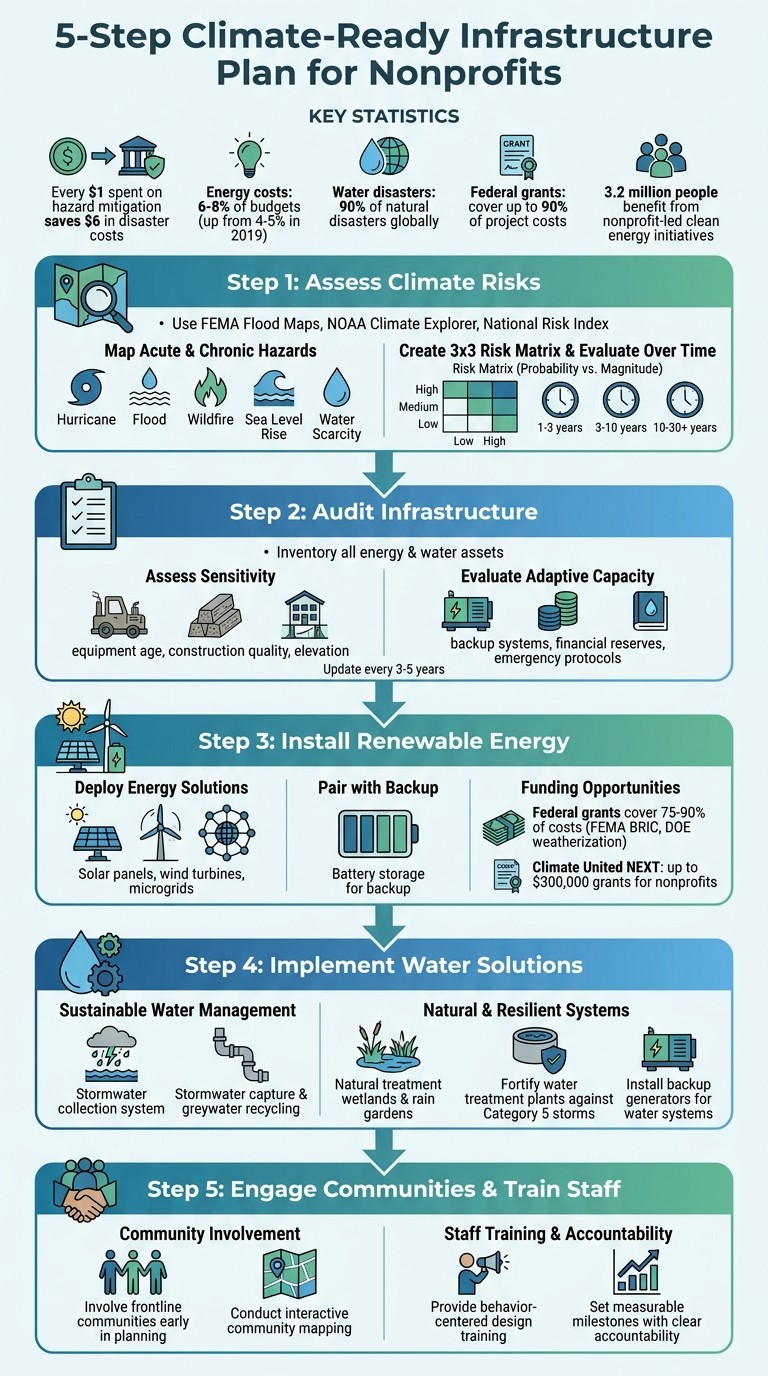
5-Step Climate-Ready Infrastructure Plan for Nonprofits
Assessing Climate Risks and Infrastructure Vulnerabilities
Map Climate Hazards and Profile Risks
Before reinforcing your infrastructure, it’s crucial to identify and categorize potential climate hazards. These hazards typically fall into two groups: Acute (e.g., hurricanes, floods, wildfires, extreme heat) and Chronic (e.g., sea level rise, water scarcity, or shifting precipitation patterns) [5].
Federal tools can help map these hazards in relation to your facility locations. Resources like the NOAA Climate Explorer and the National Climate Assessment provide projections for temperature and precipitation changes [1][5]. Meanwhile, FEMA Flood Maps and the National Risk Index allow you to evaluate the frequency of 18 different natural hazards across the U.S. [1][4]. For water-related risks, the WRI Aqueduct tool evaluates water stress and scarcity, and the Climate Mapping for Resilience and Adaptation (CMRA) portal consolidates multiple hazard layers into one platform [5][6].
After pinpointing hazards that could impact your locations, assess vulnerabilities across three dimensions: Exposure (physical threats to assets), Sensitivity (how susceptible systems are to damage), and Adaptive Capacity (current recovery measures) [1][4]. As Council Fire explains:
The intersection of high exposure, high sensitivity, and low adaptive capacity identifies your most vulnerable populations and systems. These must be the priority. [1]
To visualize risks, use a 3x3 matrix with probability on one axis and magnitude of consequences (financial or social costs) on the other [4]. Establish clear criteria for consistency; for instance, classify a hazard as "High Probability" if it is likely to occur within five years [4]. Evaluate risks over three timeframes - short-term (1–3 years), medium-term (3–10 years), and long-term (10–30+ years) - to align with the expected lifespan of your infrastructure [5].
This risk mapping process lays the foundation for conducting a detailed audit of your infrastructure.
Audit Your Current Energy and Water Infrastructure
The next step is auditing your energy and water systems. Start by creating an inventory of all energy and water assets, such as grid connections, generators, solar panels, wells, wastewater systems, and treatment facilities [4][1]. Use a spreadsheet to organize this data, adding columns for key factors like Potential Impact, Sensitivity, Adaptive Capacity, and overall Vulnerability [4].
Assess sensitivity by examining factors like the age of equipment, construction quality, elevation, and cooling capacity [1]. For example, older systems in flood-prone areas are typically more vulnerable. Then, evaluate adaptive capacity by reviewing backup systems, financial reserves, and emergency protocols [1]. Pay extra attention to assets that could cause cascading failures, such as a primary power substation or a main water source [4].
Use a combination of qualitative ratings (High, Medium, Low) and quantitative geospatial data for more complex systems [4][7]. Many organizations turn to Architecture and Engineering (A&E) firms or climate adaptation specialists to address technical challenges and document critical vulnerabilities [4]. Federal resilience grants can cover 75% to 90% of project costs, making professional assessments financially feasible [1].
Finally, treat your audit as a dynamic resource. Update it every 3–5 years to reflect new climate data and lessons learned from recent events [1]. This ensures your infrastructure remains prepared for evolving risks.
Developing Resilient and Sustainable Energy Solutions
Install Decentralized Renewable Energy Systems
Decentralized renewable energy systems, such as solar panels, wind turbines, and microgrids, provide a reliable way to maintain operations during disruptions while reducing emissions. Unlike traditional centralized grids that can fail during events like hurricanes or wildfires, these systems ensure critical facilities stay operational even when the main grid goes down.
To manage installation costs, cooperative purchasing programs can be utilized, and funding sources like federal grants are available to cover a significant portion of expenses. For instance, FEMA's BRIC program and DOE's weatherization assistance can offset 75%–90% of costs [1]. In November 2024, Climate United introduced the "Climate United NEXT" program, offering grants up to $300,000 to nonprofits, Indian tribes, and local governments for clean energy pre-development. This initiative, led by Chief Community Officer Krystal Langholz, aimed to help Native communities overcome financial barriers and promote energy independence. Langholz emphasized:
Every community in America deserves the benefits that clean energy provides, including more resilience, good-paying jobs, stronger local economies, and improved public health. [8]
When deciding on renewable technologies, consider local climate risks. For example, in flood-prone areas, solar components should be elevated above expected flood levels, while heat-prone regions should use equipment designed to withstand high temperatures [1][9]. These projects can also support local economies by creating jobs in installation and maintenance, fostering long-term economic stability and community support [1]. Currently, over 3.2 million individuals benefit from enhanced conservation and clean energy practices driven by nonprofit-led initiatives [3]. To further enhance reliability, pair renewable systems with secure backup solutions to address extended outages.
Design Backup Systems for Energy Security
To ensure uninterrupted operations, supplement renewable energy installations with reliable backup systems. Combining solar panels with battery storage, for example, can keep essential facilities like emergency shelters, water treatment plants, and community centers running during outages [9].
Focus on fortifying the most vulnerable facilities against specific climate threats, such as flooding, high winds, or extreme heat. In regions prone to wildfires or hurricanes, grid hardening measures - like burying power lines - can reduce the likelihood of outages [1].
Set clear goals, such as reducing outage durations or increasing the percentage of hardened infrastructure, and monitor progress over time [1]. Many federal resilience grants require matching funds, so securing local financial commitments early is crucial. Incorporate backup power systems into capital improvement plans and annual budgets to ensure their upkeep and reliability over the long term [1]. Regular updates to your strategy, informed by the latest climate data, will help maintain preparedness [1].
Incorporating Water Conservation and Resilience Strategies
Use Water Harvesting and Recycling Techniques
Capturing and reusing water is a practical way to reduce reliance on external sources while preparing for droughts and floods. For instance, stormwater capture systems can collect rainfall and redirect it for irrigation or other non-potable uses. This approach not only provides an alternative water supply during dry spells but also prevents runoff pollution [11]. Similarly, recycling greywater - water from sinks, showers, and laundry - offers an efficient solution. However, it’s crucial to establish safety protocols to ensure proper treatment before reuse [11].
Natural treatment wetlands are another effective option. They process wastewater while filtering and improving water quality, particularly during storm surges, which supports ecosystem health [11]. Green infrastructure elements like rain gardens, bioswales, and permeable pavements also play a key role in managing runoff and replenishing groundwater [1]. These measures are essential for safeguarding water supplies during extreme climate events. Additionally, hardscaped reservoirs or offline storage systems can capture peak water flows, ensuring availability during periods of scarcity [10][11].
To enhance efficiency, organizations should implement active leak detection systems and establish dedicated water management teams. Monitoring usage, identifying leaks promptly, and enforcing conservation policies can significantly reduce waste [10]. Moreover, diversifying water sources - such as using local supplies instead of relying solely on imported water - helps mitigate risks associated with droughts or supply interruptions [10].
These strategies collectively strengthen infrastructure and ensure resilience against both shortages and excesses of water.
Build Flood-Resistant and Drought-Tolerant Infrastructure
Infrastructure must be designed to handle both extreme floods and prolonged droughts. Dual-purpose solutions are particularly effective in addressing these challenges. Green infrastructure, for example, can manage heavy rainfall to reduce flooding while simultaneously recharging groundwater supplies to counteract droughts [1]. Rainwater harvesting systems are an excellent example, capturing stormwater runoff and storing it for use when external supplies are limited [13].
Critical facilities, such as water treatment plants and wells, should be fortified to withstand severe weather. Relocating these assets to safer areas using GIS tools and 500-year floodplain maps can minimize exposure to hazards [10][11]. Retrofitting water infrastructure to endure Category 5 storms, combined with backup generators, ensures continuity of service even during extended power outages [10][12]. Additionally, installing continuous deflection separation units in sewer systems helps prevent debris from contaminating water supplies during floods [11].
Natural ecosystem buffers like wetlands, riparian zones, and restored coastal habitats provide a critical line of defense against flooding. These natural barriers not only help manage floodwaters but also maintain local water cycles. For instance, restoration efforts have rehabilitated over 100,000 hectares of forests and coastal areas, benefiting more than 3.2 million people by bolstering climate resilience [3].
Engaging Stakeholders and Building Organizational Capacity
Involve Stakeholders in the Planning Process
Once technical vulnerabilities have been assessed, involving the community early in the planning process ensures that resilience strategies are both practical and inclusive. Stakeholder engagement should begin at the very start of a project, allowing plans to evolve in partnership with the community [14]. Instead of relying on formal meetings that may be inaccessible, connect with residents at familiar local hubs like community centers, schools, churches, and housing complexes.
A special focus should be placed on frontline communities - such as low-income neighborhoods, communities of color, immigrant populations, and the elderly - who often face the greatest climate risks. To encourage participation, address potential barriers by offering services like childcare, food, translation, and even compensation for local expertise.
Interactive community mapping is a powerful tool for empowering residents. It allows them to pinpoint local hazards and actively contribute to the resilience plan. For example, Rare, a global nonprofit, implemented a people-centered climate resilience program across nine countries. The initiative worked with 166,000 coastal fishers and 5,000 farmers in over 2,000 communities, using behavior-centered design and leadership training to achieve a 50% increase in sustainable fishing yields and restore over 100,000 hectares of forest and coastal habitats [3].
"Empowering frontline communities and securing their rights is central to achieving durable and long-lasting climate and justice solutions."
– Athena Ronquillo-Ballesteros, Independent Climate Advisor [3]
Identifying a "climate champion" - a trusted community leader who can amplify local concerns and guide implementation - is also key. The planning team should reflect the diversity of the community, particularly by including leaders from areas with limited resources, high pollution, or economic challenges. This inclusive approach helps prevent "climate gentrification", where infrastructure improvements unintentionally raise property values, displacing the very residents the initiatives aim to protect [1].
With the community's input in hand, the next step is equipping your team with the skills needed to bring these plans to life.
Provide Training and Capacity-Building Programs
For resilience strategies to succeed over the long term, staff and stakeholders need the skills to maintain and operate new systems effectively. Training should go beyond sharing information - it should incorporate behavior-centered design, which helps communities shift social norms and adopt sustainable practices that last [3]. Rare’s training programs, which have reached practitioners in more than 100 countries, show that combining human behavior insights with technology leads to better adoption and enduring benefits.
Structured e-learning courses can be a valuable resource for guiding teams through resilience measures. Programs like the U.S. Climate Resilience Toolkit’s "Steps to Resilience" course and NOAA’s Digital Coast Academy provide accessible training for climate adaptation and coastal management. Meanwhile, organizations like the Water Utility Climate Alliance and the Water Environment Federation offer specialized online training and technical webcasts tailored to water infrastructure needs [13][15]. These programs are essential components of a broader climate strategy, ensuring local expertise is built to support resilience efforts over time.
Equally important is fostering social resilience. Training initiatives like Community Emergency Response Teams (CERT) and neighborhood emergency preparedness networks empower residents to respond effectively to climate-related events. Peer-to-peer learning and leadership development further embed climate-resilient practices into the community’s fabric.
"Building resilience requires more than infrastructure upgrades. It demands social cohesion, equitable resource distribution, and governance structures that center the people most vulnerable to climate impacts."
– Council Fire [1]
To ensure progress, establish measurable milestones with clear accountability. For example, instead of vague goals, set specific targets like "Train 30 staff members in green infrastructure maintenance by December 2026." Treat resilience plans as dynamic, living documents that are revisited every 3–5 years. Regular updates should incorporate new climate data, lessons from past events, and ongoing community feedback [1].
Leveraging Council Fire Consulting for Implementation
Customized Sustainability Strategies
Developing a climate-focused plan is one hurdle; successfully implementing it within the constraints of nonprofit resources is another. Council Fire specializes in designing sustainability initiatives that not only conserve operational funds but also enhance the credibility of organizations with their funders. Their approach begins with detailed vulnerability assessments, which serve as a roadmap for execution.
Council Fire works with nonprofits to conduct in-depth vulnerability assessments, examining factors such as exposure to climate hazards, the resilience of essential systems like water and power, and the capacity to adapt based on available resources [1]. Using tools like NOAA's Climate Explorer and scenario analyses aligned with TCFD guidelines (1.5°C, 2°C, 4°C), they provide actionable insights [16]. For instance, Council Fire helped a coastal city craft a resilience strategy safeguarding 28,000 residents from climate risks. Similarly, they supported a coastal county in establishing a Municipal Resilience Authority, which successfully secured $340 million for infrastructure improvements [1].
Their planning process prioritizes equity, ensuring that infrastructure investments target the most vulnerable areas. Implementation is broken down into manageable phases, including immediate actions, 1–3 year priorities, and long-term investments. This phased approach prevents staff from becoming overwhelmed while maintaining steady progress [1]. Additionally, Council Fire identifies funding opportunities for infrastructure projects, tapping into resources like FEMA's BRIC program, EPA grants, green bonds, and energy savings reinvestment strategies.
Data-Driven Insights for Impact Analysis
Achieving measurable progress requires more than broad commitments. Council Fire helps nonprofits define clear, actionable goals. Instead of vague objectives like "improve energy resilience", they help organizations set specific targets, such as "install 50 bioswales in flood-prone neighborhoods by 2027" [1]. This clarity allows nonprofits to demonstrate tangible results to stakeholders, funders, and communities, building on prior risk assessments and infrastructure audits.
Council Fire also supports carbon footprinting across Scope 1, 2, and 3 emissions, covering areas such as facilities, travel, and supply chains [2]. They provide financial analyses that highlight the payback periods and net present value for projects like energy efficiency upgrades and renewable energy procurement [16]. Outcome metrics include reduced power outage durations following grid improvements, lower flood damage repair costs, and enhanced water security readiness scores [1][16]. For nonprofits lacking dedicated sustainability staff, Council Fire offers a repeatable annual process to measure carbon footprints and track progress over time [2].
Most organizations can complete their initial climate planning within 3–6 months, depending on how prepared their data is [1]. To ensure long-term success, Council Fire helps integrate resilience planning into governance structures by forming cross-functional working groups that include facilities, finance, and procurement teams [16]. This ensures that resilience strategies evolve as "living documents", revisited and updated every 3–5 years. These data-driven insights provide a strong foundation for refining and advancing climate strategies over time.
Conclusion: Taking Action for a Resilient Future
Key Takeaways
To maintain essential community services in the face of growing climate challenges, NGOs and nonprofits must prioritize building climate-resilient infrastructure. Start by conducting vulnerability assessments and system audits. From there, focus on practical solutions like decentralized renewable energy systems, water harvesting methods, and flood-resistant designs. However, infrastructure alone won't suffice. Success also depends on engaging frontline communities, establishing governance structures with dedicated climate leadership, and setting measurable milestones to track progress effectively.
The financial argument is strong: FEMA reports that every $1 invested in hazard mitigation results in $6 saved in disaster-related costs. Federal funding opportunities and rapid returns on investment further strengthen the case for immediate action [1][16]. With these principles in mind, consider the following steps to kickstart your efforts.
Next Steps for NGOs and Nonprofits
Start with actions that are within your control. Conduct a greenhouse gas inventory covering your facilities, travel, and supply chain. Appoint a climate action lead with the authority and budget to implement changes [16]. For organizations with limited resources, focus on impactful, low-cost measures such as creating emergency communication plans, identifying local cooling centers, or planting trees in urban areas prone to extreme heat [1].
Use your existing risk assessments to guide initial planning, aiming to complete this phase within three to six months [1]. Break larger goals into smaller, phased projects with clear targets. For instance, set objectives like "install backup power systems for water pumps by December 2027" or "reinforce three water treatment plants by 2028" [1]. Secure funding early by combining resources from FEMA BRIC grants, EPA Environmental Justice programs, state-level initiatives, and private donors to meet matching requirements [1]. Modern Climate Action Plans should emphasize forward-looking strategies and clear accountability rather than focusing solely on past actions [16].
Council Fire offers expertise in managing the complexities of climate data and funding. With their support, nonprofits can turn bold sustainability goals into actionable plans. Whether you need help with vulnerability assessments, carbon footprint analysis, or phased resilience strategies, leveraging external expertise can accelerate your progress and ensure your investments yield tangible environmental, social, and financial benefits.
Building Resilient Infrastructure for Sustainable Development
FAQs
Where do we start if we have limited staff and budget?
To begin with limited staff and budget, start by evaluating your community's specific vulnerabilities to climate and infrastructure risks. Conduct a focused vulnerability assessment to pinpoint hazards and determine which areas require immediate attention. From there, create a straightforward climate action plan with realistic and actionable goals - starting small is key.
Leverage tools such as climate models and local community data to gather insights. Involve community members in the process to strengthen resilience while keeping costs low. This collaborative approach can help you make meaningful progress without requiring substantial financial resources.
Which grants can help pay for energy and water resilience projects?
Grants supporting energy and water resilience projects include the EPA's Water Infrastructure Finance and Innovation Act (WIFIA) program. This initiative offers loans and credit assistance specifically for water infrastructure upgrades. Additionally, the U.S. Climate Resilience Toolkit provides a range of resources, such as resilience funding options and tools like flood funding finders. These programs aim to aid infrastructure improvements designed to address climate-related challenges effectively.
How do we decide what infrastructure to upgrade first?
To begin, perform a vulnerability assessment at the community level to pinpoint areas most exposed to climate risks, including flooding, heatwaves, or rising sea levels. Pay close attention to factors such as the condition and sensitivity of existing infrastructure and the community's ability to adapt to these challenges. Focus on upgrading critical systems and addressing the needs of the most at-risk areas. This approach ensures resources are allocated wisely while strengthening resilience against immediate climate threats.
Related Blog Posts
How to Build a Climate Resilience Plan for NGOs & Nonprofits
How to Integrate Climate Risk into Infrastructure Planning for Municipalities & Government Agencies
How to Integrate Climate Risk into Infrastructure Planning for NGOs & Nonprofits
How to Build a Climate-Ready Energy & Water Infrastructure Plan for Corporations
Latest Articles
©2025

Narrative Change and Power Building: The Missing Half of Advocacy
Narrative change is the process of disrupting dominant narratives that normalize inequity and advancing new narratives from historically marginalized communities.

Funding Resilience Without Federal Grants
BRIC is unreliable and FEMA is shrinking. Here's how cities fund climate resilience with dedicated revenue, blended finance, and a coordinating authority.

The ESG Blind Spot: How AI Is Finding Risks in Companies Nobody Else Is Watching
Norway's sovereign wealth fund uses AI to screen 7,200 portfolio companies for forced labor and corruption within 24 hours. The real story is the emerging-market coverage gap that traditional ESG data vendors miss — and what it means for any company with a global supply chain.
Narrative Change and Power Building: The Missing Half of Advocacy
Narrative change is the process of disrupting dominant narratives that normalize inequity and advancing new narratives from historically marginalized communities.
Funding Resilience Without Federal Grants
BRIC is unreliable and FEMA is shrinking. Here's how cities fund climate resilience with dedicated revenue, blended finance, and a coordinating authority.
The ESG Blind Spot: How AI Is Finding Risks in Companies Nobody Else Is Watching
Norway's sovereign wealth fund uses AI to screen 7,200 portfolio companies for forced labor and corruption within 24 hours. The real story is the emerging-market coverage gap that traditional ESG data vendors miss — and what it means for any company with a global supply chain.
FAQ
01
What does it really mean to “redefine profit”?
02
What makes Council Fire different?
03
Who does Council Fire work with?
04
What does working with Council Fire actually look like?
05
How does Council Fire help organizations turn big goals into action?
06
How does Council Fire define and measure success?
Apr 23, 2026
How to Build a Climate-Ready Energy & Water Infrastructure Plan for NGOs & Nonprofits
Sustainability Strategy
In This Article
A practical guide for NGOs to assess climate risks, secure funding, install renewables, conserve water, and keep operations running.
How to Build a Climate-Ready Energy & Water Infrastructure Plan for NGOs & Nonprofits
Nonprofits face growing challenges from climate change, including extreme weather, rising energy costs, and water-related disasters. Building resilient energy and water infrastructure is critical to maintaining operations and securing funding.
Key Takeaways:
Energy Costs: Energy expenses now account for 6–8% of operating budgets, up from 4–5% in 2019.
Climate Risks: Water-related disasters make up 90% of natural disasters globally.
Funding Opportunities: FEMA’s BRIC program and other grants can cover up to 90% of project costs.
Action Steps:
Assess climate risks using tools like FEMA Flood Maps and NOAA Climate Explorer.
Audit energy and water systems to identify vulnerabilities.
Install renewable energy systems and backup power solutions.
Adopt water conservation methods like stormwater capture and greywater recycling.
Engage communities and train staff for long-term resilience.
Every $1 spent on hazard mitigation saves $6 in disaster costs. Nonprofits must act now to protect their missions and strengthen relationships with funders and communities.
5-Step Climate-Ready Infrastructure Plan for Nonprofits
Assessing Climate Risks and Infrastructure Vulnerabilities
Map Climate Hazards and Profile Risks
Before reinforcing your infrastructure, it’s crucial to identify and categorize potential climate hazards. These hazards typically fall into two groups: Acute (e.g., hurricanes, floods, wildfires, extreme heat) and Chronic (e.g., sea level rise, water scarcity, or shifting precipitation patterns) [5].
Federal tools can help map these hazards in relation to your facility locations. Resources like the NOAA Climate Explorer and the National Climate Assessment provide projections for temperature and precipitation changes [1][5]. Meanwhile, FEMA Flood Maps and the National Risk Index allow you to evaluate the frequency of 18 different natural hazards across the U.S. [1][4]. For water-related risks, the WRI Aqueduct tool evaluates water stress and scarcity, and the Climate Mapping for Resilience and Adaptation (CMRA) portal consolidates multiple hazard layers into one platform [5][6].
After pinpointing hazards that could impact your locations, assess vulnerabilities across three dimensions: Exposure (physical threats to assets), Sensitivity (how susceptible systems are to damage), and Adaptive Capacity (current recovery measures) [1][4]. As Council Fire explains:
The intersection of high exposure, high sensitivity, and low adaptive capacity identifies your most vulnerable populations and systems. These must be the priority. [1]
To visualize risks, use a 3x3 matrix with probability on one axis and magnitude of consequences (financial or social costs) on the other [4]. Establish clear criteria for consistency; for instance, classify a hazard as "High Probability" if it is likely to occur within five years [4]. Evaluate risks over three timeframes - short-term (1–3 years), medium-term (3–10 years), and long-term (10–30+ years) - to align with the expected lifespan of your infrastructure [5].
This risk mapping process lays the foundation for conducting a detailed audit of your infrastructure.
Audit Your Current Energy and Water Infrastructure
The next step is auditing your energy and water systems. Start by creating an inventory of all energy and water assets, such as grid connections, generators, solar panels, wells, wastewater systems, and treatment facilities [4][1]. Use a spreadsheet to organize this data, adding columns for key factors like Potential Impact, Sensitivity, Adaptive Capacity, and overall Vulnerability [4].
Assess sensitivity by examining factors like the age of equipment, construction quality, elevation, and cooling capacity [1]. For example, older systems in flood-prone areas are typically more vulnerable. Then, evaluate adaptive capacity by reviewing backup systems, financial reserves, and emergency protocols [1]. Pay extra attention to assets that could cause cascading failures, such as a primary power substation or a main water source [4].
Use a combination of qualitative ratings (High, Medium, Low) and quantitative geospatial data for more complex systems [4][7]. Many organizations turn to Architecture and Engineering (A&E) firms or climate adaptation specialists to address technical challenges and document critical vulnerabilities [4]. Federal resilience grants can cover 75% to 90% of project costs, making professional assessments financially feasible [1].
Finally, treat your audit as a dynamic resource. Update it every 3–5 years to reflect new climate data and lessons learned from recent events [1]. This ensures your infrastructure remains prepared for evolving risks.
Developing Resilient and Sustainable Energy Solutions
Install Decentralized Renewable Energy Systems
Decentralized renewable energy systems, such as solar panels, wind turbines, and microgrids, provide a reliable way to maintain operations during disruptions while reducing emissions. Unlike traditional centralized grids that can fail during events like hurricanes or wildfires, these systems ensure critical facilities stay operational even when the main grid goes down.
To manage installation costs, cooperative purchasing programs can be utilized, and funding sources like federal grants are available to cover a significant portion of expenses. For instance, FEMA's BRIC program and DOE's weatherization assistance can offset 75%–90% of costs [1]. In November 2024, Climate United introduced the "Climate United NEXT" program, offering grants up to $300,000 to nonprofits, Indian tribes, and local governments for clean energy pre-development. This initiative, led by Chief Community Officer Krystal Langholz, aimed to help Native communities overcome financial barriers and promote energy independence. Langholz emphasized:
Every community in America deserves the benefits that clean energy provides, including more resilience, good-paying jobs, stronger local economies, and improved public health. [8]
When deciding on renewable technologies, consider local climate risks. For example, in flood-prone areas, solar components should be elevated above expected flood levels, while heat-prone regions should use equipment designed to withstand high temperatures [1][9]. These projects can also support local economies by creating jobs in installation and maintenance, fostering long-term economic stability and community support [1]. Currently, over 3.2 million individuals benefit from enhanced conservation and clean energy practices driven by nonprofit-led initiatives [3]. To further enhance reliability, pair renewable systems with secure backup solutions to address extended outages.
Design Backup Systems for Energy Security
To ensure uninterrupted operations, supplement renewable energy installations with reliable backup systems. Combining solar panels with battery storage, for example, can keep essential facilities like emergency shelters, water treatment plants, and community centers running during outages [9].
Focus on fortifying the most vulnerable facilities against specific climate threats, such as flooding, high winds, or extreme heat. In regions prone to wildfires or hurricanes, grid hardening measures - like burying power lines - can reduce the likelihood of outages [1].
Set clear goals, such as reducing outage durations or increasing the percentage of hardened infrastructure, and monitor progress over time [1]. Many federal resilience grants require matching funds, so securing local financial commitments early is crucial. Incorporate backup power systems into capital improvement plans and annual budgets to ensure their upkeep and reliability over the long term [1]. Regular updates to your strategy, informed by the latest climate data, will help maintain preparedness [1].
Incorporating Water Conservation and Resilience Strategies
Use Water Harvesting and Recycling Techniques
Capturing and reusing water is a practical way to reduce reliance on external sources while preparing for droughts and floods. For instance, stormwater capture systems can collect rainfall and redirect it for irrigation or other non-potable uses. This approach not only provides an alternative water supply during dry spells but also prevents runoff pollution [11]. Similarly, recycling greywater - water from sinks, showers, and laundry - offers an efficient solution. However, it’s crucial to establish safety protocols to ensure proper treatment before reuse [11].
Natural treatment wetlands are another effective option. They process wastewater while filtering and improving water quality, particularly during storm surges, which supports ecosystem health [11]. Green infrastructure elements like rain gardens, bioswales, and permeable pavements also play a key role in managing runoff and replenishing groundwater [1]. These measures are essential for safeguarding water supplies during extreme climate events. Additionally, hardscaped reservoirs or offline storage systems can capture peak water flows, ensuring availability during periods of scarcity [10][11].
To enhance efficiency, organizations should implement active leak detection systems and establish dedicated water management teams. Monitoring usage, identifying leaks promptly, and enforcing conservation policies can significantly reduce waste [10]. Moreover, diversifying water sources - such as using local supplies instead of relying solely on imported water - helps mitigate risks associated with droughts or supply interruptions [10].
These strategies collectively strengthen infrastructure and ensure resilience against both shortages and excesses of water.
Build Flood-Resistant and Drought-Tolerant Infrastructure
Infrastructure must be designed to handle both extreme floods and prolonged droughts. Dual-purpose solutions are particularly effective in addressing these challenges. Green infrastructure, for example, can manage heavy rainfall to reduce flooding while simultaneously recharging groundwater supplies to counteract droughts [1]. Rainwater harvesting systems are an excellent example, capturing stormwater runoff and storing it for use when external supplies are limited [13].
Critical facilities, such as water treatment plants and wells, should be fortified to withstand severe weather. Relocating these assets to safer areas using GIS tools and 500-year floodplain maps can minimize exposure to hazards [10][11]. Retrofitting water infrastructure to endure Category 5 storms, combined with backup generators, ensures continuity of service even during extended power outages [10][12]. Additionally, installing continuous deflection separation units in sewer systems helps prevent debris from contaminating water supplies during floods [11].
Natural ecosystem buffers like wetlands, riparian zones, and restored coastal habitats provide a critical line of defense against flooding. These natural barriers not only help manage floodwaters but also maintain local water cycles. For instance, restoration efforts have rehabilitated over 100,000 hectares of forests and coastal areas, benefiting more than 3.2 million people by bolstering climate resilience [3].
Engaging Stakeholders and Building Organizational Capacity
Involve Stakeholders in the Planning Process
Once technical vulnerabilities have been assessed, involving the community early in the planning process ensures that resilience strategies are both practical and inclusive. Stakeholder engagement should begin at the very start of a project, allowing plans to evolve in partnership with the community [14]. Instead of relying on formal meetings that may be inaccessible, connect with residents at familiar local hubs like community centers, schools, churches, and housing complexes.
A special focus should be placed on frontline communities - such as low-income neighborhoods, communities of color, immigrant populations, and the elderly - who often face the greatest climate risks. To encourage participation, address potential barriers by offering services like childcare, food, translation, and even compensation for local expertise.
Interactive community mapping is a powerful tool for empowering residents. It allows them to pinpoint local hazards and actively contribute to the resilience plan. For example, Rare, a global nonprofit, implemented a people-centered climate resilience program across nine countries. The initiative worked with 166,000 coastal fishers and 5,000 farmers in over 2,000 communities, using behavior-centered design and leadership training to achieve a 50% increase in sustainable fishing yields and restore over 100,000 hectares of forest and coastal habitats [3].
"Empowering frontline communities and securing their rights is central to achieving durable and long-lasting climate and justice solutions."
– Athena Ronquillo-Ballesteros, Independent Climate Advisor [3]
Identifying a "climate champion" - a trusted community leader who can amplify local concerns and guide implementation - is also key. The planning team should reflect the diversity of the community, particularly by including leaders from areas with limited resources, high pollution, or economic challenges. This inclusive approach helps prevent "climate gentrification", where infrastructure improvements unintentionally raise property values, displacing the very residents the initiatives aim to protect [1].
With the community's input in hand, the next step is equipping your team with the skills needed to bring these plans to life.
Provide Training and Capacity-Building Programs
For resilience strategies to succeed over the long term, staff and stakeholders need the skills to maintain and operate new systems effectively. Training should go beyond sharing information - it should incorporate behavior-centered design, which helps communities shift social norms and adopt sustainable practices that last [3]. Rare’s training programs, which have reached practitioners in more than 100 countries, show that combining human behavior insights with technology leads to better adoption and enduring benefits.
Structured e-learning courses can be a valuable resource for guiding teams through resilience measures. Programs like the U.S. Climate Resilience Toolkit’s "Steps to Resilience" course and NOAA’s Digital Coast Academy provide accessible training for climate adaptation and coastal management. Meanwhile, organizations like the Water Utility Climate Alliance and the Water Environment Federation offer specialized online training and technical webcasts tailored to water infrastructure needs [13][15]. These programs are essential components of a broader climate strategy, ensuring local expertise is built to support resilience efforts over time.
Equally important is fostering social resilience. Training initiatives like Community Emergency Response Teams (CERT) and neighborhood emergency preparedness networks empower residents to respond effectively to climate-related events. Peer-to-peer learning and leadership development further embed climate-resilient practices into the community’s fabric.
"Building resilience requires more than infrastructure upgrades. It demands social cohesion, equitable resource distribution, and governance structures that center the people most vulnerable to climate impacts."
– Council Fire [1]
To ensure progress, establish measurable milestones with clear accountability. For example, instead of vague goals, set specific targets like "Train 30 staff members in green infrastructure maintenance by December 2026." Treat resilience plans as dynamic, living documents that are revisited every 3–5 years. Regular updates should incorporate new climate data, lessons from past events, and ongoing community feedback [1].
Leveraging Council Fire Consulting for Implementation
Customized Sustainability Strategies
Developing a climate-focused plan is one hurdle; successfully implementing it within the constraints of nonprofit resources is another. Council Fire specializes in designing sustainability initiatives that not only conserve operational funds but also enhance the credibility of organizations with their funders. Their approach begins with detailed vulnerability assessments, which serve as a roadmap for execution.
Council Fire works with nonprofits to conduct in-depth vulnerability assessments, examining factors such as exposure to climate hazards, the resilience of essential systems like water and power, and the capacity to adapt based on available resources [1]. Using tools like NOAA's Climate Explorer and scenario analyses aligned with TCFD guidelines (1.5°C, 2°C, 4°C), they provide actionable insights [16]. For instance, Council Fire helped a coastal city craft a resilience strategy safeguarding 28,000 residents from climate risks. Similarly, they supported a coastal county in establishing a Municipal Resilience Authority, which successfully secured $340 million for infrastructure improvements [1].
Their planning process prioritizes equity, ensuring that infrastructure investments target the most vulnerable areas. Implementation is broken down into manageable phases, including immediate actions, 1–3 year priorities, and long-term investments. This phased approach prevents staff from becoming overwhelmed while maintaining steady progress [1]. Additionally, Council Fire identifies funding opportunities for infrastructure projects, tapping into resources like FEMA's BRIC program, EPA grants, green bonds, and energy savings reinvestment strategies.
Data-Driven Insights for Impact Analysis
Achieving measurable progress requires more than broad commitments. Council Fire helps nonprofits define clear, actionable goals. Instead of vague objectives like "improve energy resilience", they help organizations set specific targets, such as "install 50 bioswales in flood-prone neighborhoods by 2027" [1]. This clarity allows nonprofits to demonstrate tangible results to stakeholders, funders, and communities, building on prior risk assessments and infrastructure audits.
Council Fire also supports carbon footprinting across Scope 1, 2, and 3 emissions, covering areas such as facilities, travel, and supply chains [2]. They provide financial analyses that highlight the payback periods and net present value for projects like energy efficiency upgrades and renewable energy procurement [16]. Outcome metrics include reduced power outage durations following grid improvements, lower flood damage repair costs, and enhanced water security readiness scores [1][16]. For nonprofits lacking dedicated sustainability staff, Council Fire offers a repeatable annual process to measure carbon footprints and track progress over time [2].
Most organizations can complete their initial climate planning within 3–6 months, depending on how prepared their data is [1]. To ensure long-term success, Council Fire helps integrate resilience planning into governance structures by forming cross-functional working groups that include facilities, finance, and procurement teams [16]. This ensures that resilience strategies evolve as "living documents", revisited and updated every 3–5 years. These data-driven insights provide a strong foundation for refining and advancing climate strategies over time.
Conclusion: Taking Action for a Resilient Future
Key Takeaways
To maintain essential community services in the face of growing climate challenges, NGOs and nonprofits must prioritize building climate-resilient infrastructure. Start by conducting vulnerability assessments and system audits. From there, focus on practical solutions like decentralized renewable energy systems, water harvesting methods, and flood-resistant designs. However, infrastructure alone won't suffice. Success also depends on engaging frontline communities, establishing governance structures with dedicated climate leadership, and setting measurable milestones to track progress effectively.
The financial argument is strong: FEMA reports that every $1 invested in hazard mitigation results in $6 saved in disaster-related costs. Federal funding opportunities and rapid returns on investment further strengthen the case for immediate action [1][16]. With these principles in mind, consider the following steps to kickstart your efforts.
Next Steps for NGOs and Nonprofits
Start with actions that are within your control. Conduct a greenhouse gas inventory covering your facilities, travel, and supply chain. Appoint a climate action lead with the authority and budget to implement changes [16]. For organizations with limited resources, focus on impactful, low-cost measures such as creating emergency communication plans, identifying local cooling centers, or planting trees in urban areas prone to extreme heat [1].
Use your existing risk assessments to guide initial planning, aiming to complete this phase within three to six months [1]. Break larger goals into smaller, phased projects with clear targets. For instance, set objectives like "install backup power systems for water pumps by December 2027" or "reinforce three water treatment plants by 2028" [1]. Secure funding early by combining resources from FEMA BRIC grants, EPA Environmental Justice programs, state-level initiatives, and private donors to meet matching requirements [1]. Modern Climate Action Plans should emphasize forward-looking strategies and clear accountability rather than focusing solely on past actions [16].
Council Fire offers expertise in managing the complexities of climate data and funding. With their support, nonprofits can turn bold sustainability goals into actionable plans. Whether you need help with vulnerability assessments, carbon footprint analysis, or phased resilience strategies, leveraging external expertise can accelerate your progress and ensure your investments yield tangible environmental, social, and financial benefits.
Building Resilient Infrastructure for Sustainable Development
FAQs
Where do we start if we have limited staff and budget?
To begin with limited staff and budget, start by evaluating your community's specific vulnerabilities to climate and infrastructure risks. Conduct a focused vulnerability assessment to pinpoint hazards and determine which areas require immediate attention. From there, create a straightforward climate action plan with realistic and actionable goals - starting small is key.
Leverage tools such as climate models and local community data to gather insights. Involve community members in the process to strengthen resilience while keeping costs low. This collaborative approach can help you make meaningful progress without requiring substantial financial resources.
Which grants can help pay for energy and water resilience projects?
Grants supporting energy and water resilience projects include the EPA's Water Infrastructure Finance and Innovation Act (WIFIA) program. This initiative offers loans and credit assistance specifically for water infrastructure upgrades. Additionally, the U.S. Climate Resilience Toolkit provides a range of resources, such as resilience funding options and tools like flood funding finders. These programs aim to aid infrastructure improvements designed to address climate-related challenges effectively.
How do we decide what infrastructure to upgrade first?
To begin, perform a vulnerability assessment at the community level to pinpoint areas most exposed to climate risks, including flooding, heatwaves, or rising sea levels. Pay close attention to factors such as the condition and sensitivity of existing infrastructure and the community's ability to adapt to these challenges. Focus on upgrading critical systems and addressing the needs of the most at-risk areas. This approach ensures resources are allocated wisely while strengthening resilience against immediate climate threats.
Related Blog Posts
How to Build a Climate Resilience Plan for NGOs & Nonprofits
How to Integrate Climate Risk into Infrastructure Planning for Municipalities & Government Agencies
How to Integrate Climate Risk into Infrastructure Planning for NGOs & Nonprofits
How to Build a Climate-Ready Energy & Water Infrastructure Plan for Corporations
Latest Articles
©2025
Narrative Change and Power Building: The Missing Half of Advocacy
Narrative change is the process of disrupting dominant narratives that normalize inequity and advancing new narratives from historically marginalized communities.
Funding Resilience Without Federal Grants
BRIC is unreliable and FEMA is shrinking. Here's how cities fund climate resilience with dedicated revenue, blended finance, and a coordinating authority.
The ESG Blind Spot: How AI Is Finding Risks in Companies Nobody Else Is Watching
Norway's sovereign wealth fund uses AI to screen 7,200 portfolio companies for forced labor and corruption within 24 hours. The real story is the emerging-market coverage gap that traditional ESG data vendors miss — and what it means for any company with a global supply chain.
FAQ
01
What does it really mean to “redefine profit”?
02
What makes Council Fire different?
03
Who does Council Fire work with?
04
What does working with Council Fire actually look like?
05
How does Council Fire help organizations turn big goals into action?
06
How does Council Fire define and measure success?
Apr 23, 2026
How to Build a Climate-Ready Energy & Water Infrastructure Plan for NGOs & Nonprofits
Sustainability Strategy
In This Article
A practical guide for NGOs to assess climate risks, secure funding, install renewables, conserve water, and keep operations running.
How to Build a Climate-Ready Energy & Water Infrastructure Plan for NGOs & Nonprofits
Nonprofits face growing challenges from climate change, including extreme weather, rising energy costs, and water-related disasters. Building resilient energy and water infrastructure is critical to maintaining operations and securing funding.
Key Takeaways:
Energy Costs: Energy expenses now account for 6–8% of operating budgets, up from 4–5% in 2019.
Climate Risks: Water-related disasters make up 90% of natural disasters globally.
Funding Opportunities: FEMA’s BRIC program and other grants can cover up to 90% of project costs.
Action Steps:
Assess climate risks using tools like FEMA Flood Maps and NOAA Climate Explorer.
Audit energy and water systems to identify vulnerabilities.
Install renewable energy systems and backup power solutions.
Adopt water conservation methods like stormwater capture and greywater recycling.
Engage communities and train staff for long-term resilience.
Every $1 spent on hazard mitigation saves $6 in disaster costs. Nonprofits must act now to protect their missions and strengthen relationships with funders and communities.
5-Step Climate-Ready Infrastructure Plan for Nonprofits
Assessing Climate Risks and Infrastructure Vulnerabilities
Map Climate Hazards and Profile Risks
Before reinforcing your infrastructure, it’s crucial to identify and categorize potential climate hazards. These hazards typically fall into two groups: Acute (e.g., hurricanes, floods, wildfires, extreme heat) and Chronic (e.g., sea level rise, water scarcity, or shifting precipitation patterns) [5].
Federal tools can help map these hazards in relation to your facility locations. Resources like the NOAA Climate Explorer and the National Climate Assessment provide projections for temperature and precipitation changes [1][5]. Meanwhile, FEMA Flood Maps and the National Risk Index allow you to evaluate the frequency of 18 different natural hazards across the U.S. [1][4]. For water-related risks, the WRI Aqueduct tool evaluates water stress and scarcity, and the Climate Mapping for Resilience and Adaptation (CMRA) portal consolidates multiple hazard layers into one platform [5][6].
After pinpointing hazards that could impact your locations, assess vulnerabilities across three dimensions: Exposure (physical threats to assets), Sensitivity (how susceptible systems are to damage), and Adaptive Capacity (current recovery measures) [1][4]. As Council Fire explains:
The intersection of high exposure, high sensitivity, and low adaptive capacity identifies your most vulnerable populations and systems. These must be the priority. [1]
To visualize risks, use a 3x3 matrix with probability on one axis and magnitude of consequences (financial or social costs) on the other [4]. Establish clear criteria for consistency; for instance, classify a hazard as "High Probability" if it is likely to occur within five years [4]. Evaluate risks over three timeframes - short-term (1–3 years), medium-term (3–10 years), and long-term (10–30+ years) - to align with the expected lifespan of your infrastructure [5].
This risk mapping process lays the foundation for conducting a detailed audit of your infrastructure.
Audit Your Current Energy and Water Infrastructure
The next step is auditing your energy and water systems. Start by creating an inventory of all energy and water assets, such as grid connections, generators, solar panels, wells, wastewater systems, and treatment facilities [4][1]. Use a spreadsheet to organize this data, adding columns for key factors like Potential Impact, Sensitivity, Adaptive Capacity, and overall Vulnerability [4].
Assess sensitivity by examining factors like the age of equipment, construction quality, elevation, and cooling capacity [1]. For example, older systems in flood-prone areas are typically more vulnerable. Then, evaluate adaptive capacity by reviewing backup systems, financial reserves, and emergency protocols [1]. Pay extra attention to assets that could cause cascading failures, such as a primary power substation or a main water source [4].
Use a combination of qualitative ratings (High, Medium, Low) and quantitative geospatial data for more complex systems [4][7]. Many organizations turn to Architecture and Engineering (A&E) firms or climate adaptation specialists to address technical challenges and document critical vulnerabilities [4]. Federal resilience grants can cover 75% to 90% of project costs, making professional assessments financially feasible [1].
Finally, treat your audit as a dynamic resource. Update it every 3–5 years to reflect new climate data and lessons learned from recent events [1]. This ensures your infrastructure remains prepared for evolving risks.
Developing Resilient and Sustainable Energy Solutions
Install Decentralized Renewable Energy Systems
Decentralized renewable energy systems, such as solar panels, wind turbines, and microgrids, provide a reliable way to maintain operations during disruptions while reducing emissions. Unlike traditional centralized grids that can fail during events like hurricanes or wildfires, these systems ensure critical facilities stay operational even when the main grid goes down.
To manage installation costs, cooperative purchasing programs can be utilized, and funding sources like federal grants are available to cover a significant portion of expenses. For instance, FEMA's BRIC program and DOE's weatherization assistance can offset 75%–90% of costs [1]. In November 2024, Climate United introduced the "Climate United NEXT" program, offering grants up to $300,000 to nonprofits, Indian tribes, and local governments for clean energy pre-development. This initiative, led by Chief Community Officer Krystal Langholz, aimed to help Native communities overcome financial barriers and promote energy independence. Langholz emphasized:
Every community in America deserves the benefits that clean energy provides, including more resilience, good-paying jobs, stronger local economies, and improved public health. [8]
When deciding on renewable technologies, consider local climate risks. For example, in flood-prone areas, solar components should be elevated above expected flood levels, while heat-prone regions should use equipment designed to withstand high temperatures [1][9]. These projects can also support local economies by creating jobs in installation and maintenance, fostering long-term economic stability and community support [1]. Currently, over 3.2 million individuals benefit from enhanced conservation and clean energy practices driven by nonprofit-led initiatives [3]. To further enhance reliability, pair renewable systems with secure backup solutions to address extended outages.
Design Backup Systems for Energy Security
To ensure uninterrupted operations, supplement renewable energy installations with reliable backup systems. Combining solar panels with battery storage, for example, can keep essential facilities like emergency shelters, water treatment plants, and community centers running during outages [9].
Focus on fortifying the most vulnerable facilities against specific climate threats, such as flooding, high winds, or extreme heat. In regions prone to wildfires or hurricanes, grid hardening measures - like burying power lines - can reduce the likelihood of outages [1].
Set clear goals, such as reducing outage durations or increasing the percentage of hardened infrastructure, and monitor progress over time [1]. Many federal resilience grants require matching funds, so securing local financial commitments early is crucial. Incorporate backup power systems into capital improvement plans and annual budgets to ensure their upkeep and reliability over the long term [1]. Regular updates to your strategy, informed by the latest climate data, will help maintain preparedness [1].
Incorporating Water Conservation and Resilience Strategies
Use Water Harvesting and Recycling Techniques
Capturing and reusing water is a practical way to reduce reliance on external sources while preparing for droughts and floods. For instance, stormwater capture systems can collect rainfall and redirect it for irrigation or other non-potable uses. This approach not only provides an alternative water supply during dry spells but also prevents runoff pollution [11]. Similarly, recycling greywater - water from sinks, showers, and laundry - offers an efficient solution. However, it’s crucial to establish safety protocols to ensure proper treatment before reuse [11].
Natural treatment wetlands are another effective option. They process wastewater while filtering and improving water quality, particularly during storm surges, which supports ecosystem health [11]. Green infrastructure elements like rain gardens, bioswales, and permeable pavements also play a key role in managing runoff and replenishing groundwater [1]. These measures are essential for safeguarding water supplies during extreme climate events. Additionally, hardscaped reservoirs or offline storage systems can capture peak water flows, ensuring availability during periods of scarcity [10][11].
To enhance efficiency, organizations should implement active leak detection systems and establish dedicated water management teams. Monitoring usage, identifying leaks promptly, and enforcing conservation policies can significantly reduce waste [10]. Moreover, diversifying water sources - such as using local supplies instead of relying solely on imported water - helps mitigate risks associated with droughts or supply interruptions [10].
These strategies collectively strengthen infrastructure and ensure resilience against both shortages and excesses of water.
Build Flood-Resistant and Drought-Tolerant Infrastructure
Infrastructure must be designed to handle both extreme floods and prolonged droughts. Dual-purpose solutions are particularly effective in addressing these challenges. Green infrastructure, for example, can manage heavy rainfall to reduce flooding while simultaneously recharging groundwater supplies to counteract droughts [1]. Rainwater harvesting systems are an excellent example, capturing stormwater runoff and storing it for use when external supplies are limited [13].
Critical facilities, such as water treatment plants and wells, should be fortified to withstand severe weather. Relocating these assets to safer areas using GIS tools and 500-year floodplain maps can minimize exposure to hazards [10][11]. Retrofitting water infrastructure to endure Category 5 storms, combined with backup generators, ensures continuity of service even during extended power outages [10][12]. Additionally, installing continuous deflection separation units in sewer systems helps prevent debris from contaminating water supplies during floods [11].
Natural ecosystem buffers like wetlands, riparian zones, and restored coastal habitats provide a critical line of defense against flooding. These natural barriers not only help manage floodwaters but also maintain local water cycles. For instance, restoration efforts have rehabilitated over 100,000 hectares of forests and coastal areas, benefiting more than 3.2 million people by bolstering climate resilience [3].
Engaging Stakeholders and Building Organizational Capacity
Involve Stakeholders in the Planning Process
Once technical vulnerabilities have been assessed, involving the community early in the planning process ensures that resilience strategies are both practical and inclusive. Stakeholder engagement should begin at the very start of a project, allowing plans to evolve in partnership with the community [14]. Instead of relying on formal meetings that may be inaccessible, connect with residents at familiar local hubs like community centers, schools, churches, and housing complexes.
A special focus should be placed on frontline communities - such as low-income neighborhoods, communities of color, immigrant populations, and the elderly - who often face the greatest climate risks. To encourage participation, address potential barriers by offering services like childcare, food, translation, and even compensation for local expertise.
Interactive community mapping is a powerful tool for empowering residents. It allows them to pinpoint local hazards and actively contribute to the resilience plan. For example, Rare, a global nonprofit, implemented a people-centered climate resilience program across nine countries. The initiative worked with 166,000 coastal fishers and 5,000 farmers in over 2,000 communities, using behavior-centered design and leadership training to achieve a 50% increase in sustainable fishing yields and restore over 100,000 hectares of forest and coastal habitats [3].
"Empowering frontline communities and securing their rights is central to achieving durable and long-lasting climate and justice solutions."
– Athena Ronquillo-Ballesteros, Independent Climate Advisor [3]
Identifying a "climate champion" - a trusted community leader who can amplify local concerns and guide implementation - is also key. The planning team should reflect the diversity of the community, particularly by including leaders from areas with limited resources, high pollution, or economic challenges. This inclusive approach helps prevent "climate gentrification", where infrastructure improvements unintentionally raise property values, displacing the very residents the initiatives aim to protect [1].
With the community's input in hand, the next step is equipping your team with the skills needed to bring these plans to life.
Provide Training and Capacity-Building Programs
For resilience strategies to succeed over the long term, staff and stakeholders need the skills to maintain and operate new systems effectively. Training should go beyond sharing information - it should incorporate behavior-centered design, which helps communities shift social norms and adopt sustainable practices that last [3]. Rare’s training programs, which have reached practitioners in more than 100 countries, show that combining human behavior insights with technology leads to better adoption and enduring benefits.
Structured e-learning courses can be a valuable resource for guiding teams through resilience measures. Programs like the U.S. Climate Resilience Toolkit’s "Steps to Resilience" course and NOAA’s Digital Coast Academy provide accessible training for climate adaptation and coastal management. Meanwhile, organizations like the Water Utility Climate Alliance and the Water Environment Federation offer specialized online training and technical webcasts tailored to water infrastructure needs [13][15]. These programs are essential components of a broader climate strategy, ensuring local expertise is built to support resilience efforts over time.
Equally important is fostering social resilience. Training initiatives like Community Emergency Response Teams (CERT) and neighborhood emergency preparedness networks empower residents to respond effectively to climate-related events. Peer-to-peer learning and leadership development further embed climate-resilient practices into the community’s fabric.
"Building resilience requires more than infrastructure upgrades. It demands social cohesion, equitable resource distribution, and governance structures that center the people most vulnerable to climate impacts."
– Council Fire [1]
To ensure progress, establish measurable milestones with clear accountability. For example, instead of vague goals, set specific targets like "Train 30 staff members in green infrastructure maintenance by December 2026." Treat resilience plans as dynamic, living documents that are revisited every 3–5 years. Regular updates should incorporate new climate data, lessons from past events, and ongoing community feedback [1].
Leveraging Council Fire Consulting for Implementation
Customized Sustainability Strategies
Developing a climate-focused plan is one hurdle; successfully implementing it within the constraints of nonprofit resources is another. Council Fire specializes in designing sustainability initiatives that not only conserve operational funds but also enhance the credibility of organizations with their funders. Their approach begins with detailed vulnerability assessments, which serve as a roadmap for execution.
Council Fire works with nonprofits to conduct in-depth vulnerability assessments, examining factors such as exposure to climate hazards, the resilience of essential systems like water and power, and the capacity to adapt based on available resources [1]. Using tools like NOAA's Climate Explorer and scenario analyses aligned with TCFD guidelines (1.5°C, 2°C, 4°C), they provide actionable insights [16]. For instance, Council Fire helped a coastal city craft a resilience strategy safeguarding 28,000 residents from climate risks. Similarly, they supported a coastal county in establishing a Municipal Resilience Authority, which successfully secured $340 million for infrastructure improvements [1].
Their planning process prioritizes equity, ensuring that infrastructure investments target the most vulnerable areas. Implementation is broken down into manageable phases, including immediate actions, 1–3 year priorities, and long-term investments. This phased approach prevents staff from becoming overwhelmed while maintaining steady progress [1]. Additionally, Council Fire identifies funding opportunities for infrastructure projects, tapping into resources like FEMA's BRIC program, EPA grants, green bonds, and energy savings reinvestment strategies.
Data-Driven Insights for Impact Analysis
Achieving measurable progress requires more than broad commitments. Council Fire helps nonprofits define clear, actionable goals. Instead of vague objectives like "improve energy resilience", they help organizations set specific targets, such as "install 50 bioswales in flood-prone neighborhoods by 2027" [1]. This clarity allows nonprofits to demonstrate tangible results to stakeholders, funders, and communities, building on prior risk assessments and infrastructure audits.
Council Fire also supports carbon footprinting across Scope 1, 2, and 3 emissions, covering areas such as facilities, travel, and supply chains [2]. They provide financial analyses that highlight the payback periods and net present value for projects like energy efficiency upgrades and renewable energy procurement [16]. Outcome metrics include reduced power outage durations following grid improvements, lower flood damage repair costs, and enhanced water security readiness scores [1][16]. For nonprofits lacking dedicated sustainability staff, Council Fire offers a repeatable annual process to measure carbon footprints and track progress over time [2].
Most organizations can complete their initial climate planning within 3–6 months, depending on how prepared their data is [1]. To ensure long-term success, Council Fire helps integrate resilience planning into governance structures by forming cross-functional working groups that include facilities, finance, and procurement teams [16]. This ensures that resilience strategies evolve as "living documents", revisited and updated every 3–5 years. These data-driven insights provide a strong foundation for refining and advancing climate strategies over time.
Conclusion: Taking Action for a Resilient Future
Key Takeaways
To maintain essential community services in the face of growing climate challenges, NGOs and nonprofits must prioritize building climate-resilient infrastructure. Start by conducting vulnerability assessments and system audits. From there, focus on practical solutions like decentralized renewable energy systems, water harvesting methods, and flood-resistant designs. However, infrastructure alone won't suffice. Success also depends on engaging frontline communities, establishing governance structures with dedicated climate leadership, and setting measurable milestones to track progress effectively.
The financial argument is strong: FEMA reports that every $1 invested in hazard mitigation results in $6 saved in disaster-related costs. Federal funding opportunities and rapid returns on investment further strengthen the case for immediate action [1][16]. With these principles in mind, consider the following steps to kickstart your efforts.
Next Steps for NGOs and Nonprofits
Start with actions that are within your control. Conduct a greenhouse gas inventory covering your facilities, travel, and supply chain. Appoint a climate action lead with the authority and budget to implement changes [16]. For organizations with limited resources, focus on impactful, low-cost measures such as creating emergency communication plans, identifying local cooling centers, or planting trees in urban areas prone to extreme heat [1].
Use your existing risk assessments to guide initial planning, aiming to complete this phase within three to six months [1]. Break larger goals into smaller, phased projects with clear targets. For instance, set objectives like "install backup power systems for water pumps by December 2027" or "reinforce three water treatment plants by 2028" [1]. Secure funding early by combining resources from FEMA BRIC grants, EPA Environmental Justice programs, state-level initiatives, and private donors to meet matching requirements [1]. Modern Climate Action Plans should emphasize forward-looking strategies and clear accountability rather than focusing solely on past actions [16].
Council Fire offers expertise in managing the complexities of climate data and funding. With their support, nonprofits can turn bold sustainability goals into actionable plans. Whether you need help with vulnerability assessments, carbon footprint analysis, or phased resilience strategies, leveraging external expertise can accelerate your progress and ensure your investments yield tangible environmental, social, and financial benefits.
Building Resilient Infrastructure for Sustainable Development
FAQs
Where do we start if we have limited staff and budget?
To begin with limited staff and budget, start by evaluating your community's specific vulnerabilities to climate and infrastructure risks. Conduct a focused vulnerability assessment to pinpoint hazards and determine which areas require immediate attention. From there, create a straightforward climate action plan with realistic and actionable goals - starting small is key.
Leverage tools such as climate models and local community data to gather insights. Involve community members in the process to strengthen resilience while keeping costs low. This collaborative approach can help you make meaningful progress without requiring substantial financial resources.
Which grants can help pay for energy and water resilience projects?
Grants supporting energy and water resilience projects include the EPA's Water Infrastructure Finance and Innovation Act (WIFIA) program. This initiative offers loans and credit assistance specifically for water infrastructure upgrades. Additionally, the U.S. Climate Resilience Toolkit provides a range of resources, such as resilience funding options and tools like flood funding finders. These programs aim to aid infrastructure improvements designed to address climate-related challenges effectively.
How do we decide what infrastructure to upgrade first?
To begin, perform a vulnerability assessment at the community level to pinpoint areas most exposed to climate risks, including flooding, heatwaves, or rising sea levels. Pay close attention to factors such as the condition and sensitivity of existing infrastructure and the community's ability to adapt to these challenges. Focus on upgrading critical systems and addressing the needs of the most at-risk areas. This approach ensures resources are allocated wisely while strengthening resilience against immediate climate threats.
Related Blog Posts
How to Build a Climate Resilience Plan for NGOs & Nonprofits
How to Integrate Climate Risk into Infrastructure Planning for Municipalities & Government Agencies
How to Integrate Climate Risk into Infrastructure Planning for NGOs & Nonprofits
How to Build a Climate-Ready Energy & Water Infrastructure Plan for Corporations
Latest Articles
©2025
Narrative Change and Power Building: The Missing Half of Advocacy
Narrative change is the process of disrupting dominant narratives that normalize inequity and advancing new narratives from historically marginalized communities.
Funding Resilience Without Federal Grants
BRIC is unreliable and FEMA is shrinking. Here's how cities fund climate resilience with dedicated revenue, blended finance, and a coordinating authority.
The ESG Blind Spot: How AI Is Finding Risks in Companies Nobody Else Is Watching
Norway's sovereign wealth fund uses AI to screen 7,200 portfolio companies for forced labor and corruption within 24 hours. The real story is the emerging-market coverage gap that traditional ESG data vendors miss — and what it means for any company with a global supply chain.
FAQ
What does it really mean to “redefine profit”?
What makes Council Fire different?
Who does Council Fire work with?
What does working with Council Fire actually look like?
How does Council Fire help organizations turn big goals into action?
How does Council Fire define and measure success?