Apr 22, 2026
How to Build a Climate-Ready Energy & Water Infrastructure Plan for Municipalities & Government Agencies
Sustainability Strategy
In This Article
Municipalities must prioritize climate-ready energy and water planning that assesses risks, secures funding, and builds measurable resilience.
How to Build a Climate-Ready Energy & Water Infrastructure Plan for Municipalities & Government Agencies
Municipalities and government agencies are facing increasing challenges from climate change, with aging energy and water systems struggling to handle extreme weather. This article outlines a step-by-step guide to creating a climate-ready infrastructure plan that ensures reliable services, reduces risks, and saves costs. Key actions include:
Assessing Climate Risks: Identify hazards like flooding, drought, and heatwaves using tools such as FEMA maps and NOAA projections.
Evaluating Vulnerabilities: Examine critical infrastructure like water treatment plants and power grids for exposure, sensitivity, and recovery capacity.
Implementing Solutions: Combine nature-based methods (e.g., wetlands, rain gardens) with system upgrades (e.g., buried power lines, solar energy).
Securing Funding: Tap into federal programs like WIFIA and FEMA grants while leveraging public-private partnerships.
Engaging Stakeholders: Collaborate with communities and prioritize areas with the highest risks to ensure equitable outcomes.
Monitoring Progress: Use measurable goals and real-time data to track and refine your plan over time.
Investing in resilience now can save up to $6 for every $1 spent on mitigation, protect public health, and enhance long-term economic stability.
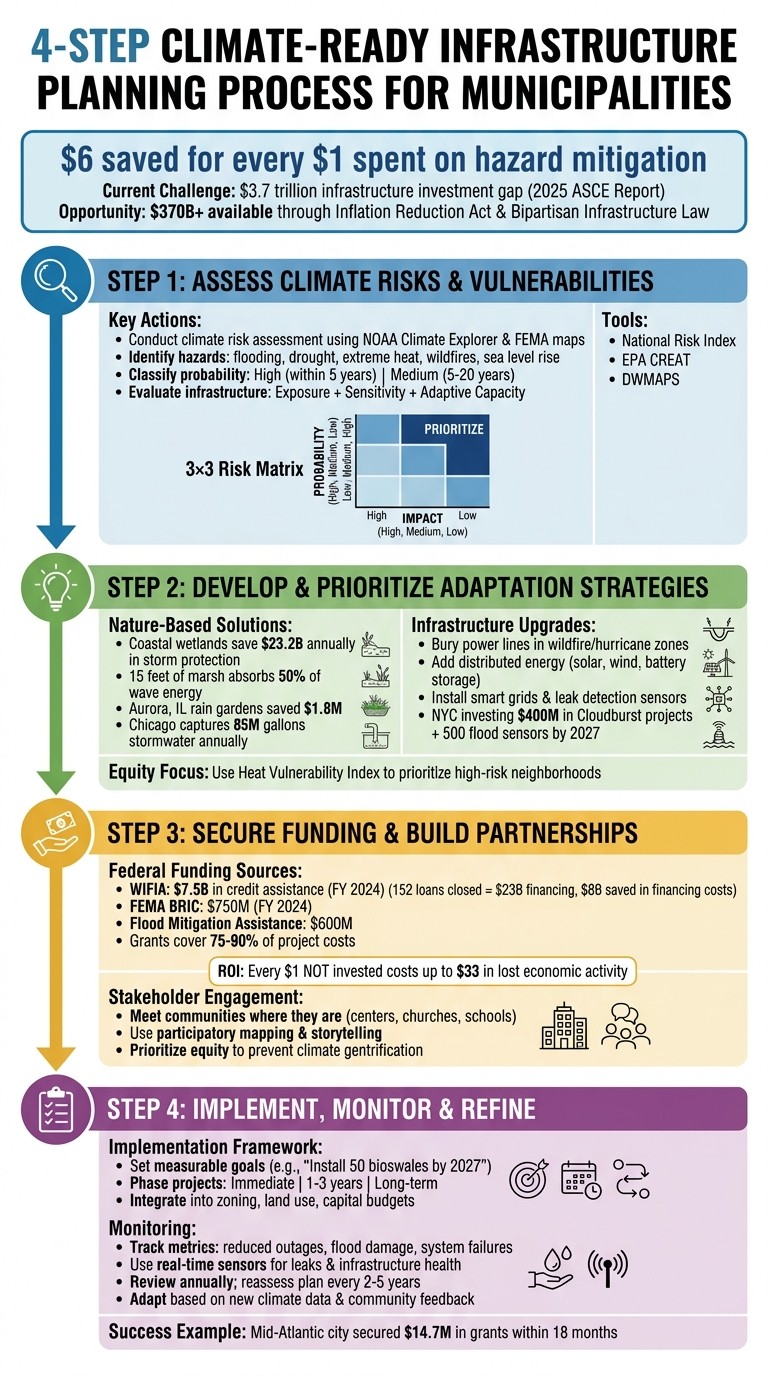
4-Step Climate-Ready Infrastructure Plan for Municipalities
Top Climate Resilient Infrastructure Solutions for Civil Engineers
Step 1: Assess Climate Risks and Infrastructure Vulnerabilities
This initial step establishes the foundation for building a resilient strategy by identifying potential threats and weaknesses in current energy and water systems. The process begins with a thorough evaluation of climate hazards and infrastructure vulnerabilities.
Conduct a Climate Risk Assessment
Start by determining which climate hazards pose the most significant risks to your community. The National Risk Index provides data and maps for 18 different natural hazards across the United States, making it an excellent resource for your analysis [7]. Focus on hazards such as flooding, drought, extreme heat, high winds, wildfires, and rising sea levels [2][6][3].
Instead of relying solely on historical data, incorporate forward-looking climate projections. Tools like the NOAA Climate Explorer offer downscaled climate models tailored to your region's future conditions [3]. For water and wastewater utilities, the EPA's Climate Resilience Evaluation and Awareness Tool (CREAT) provides localized climate change projections [10]. Additionally, DWMAPS (Drinking Water Mapping Application to Protect Source Waters) can help pinpoint vulnerabilities in drinking water supplies [11].
Risk assessment involves evaluating the likelihood of a hazard and the severity of its consequences [7][8]. As explained by the U.S. Climate Resilience Toolkit:
"Risk is a compound concept that describes the chance of sustaining a substantial loss. The first element of risk is the probability of a hazard occurring. The second element is the magnitude of consequences from the event" [7].
Classify hazards expected within five years as "high probability" and those anticipated within 5–20 years as "medium probability" [12]. Once key risks are identified, turn your attention to how these hazards could impact existing infrastructure.
Evaluate Infrastructure Vulnerabilities
After identifying relevant climate hazards, assess their potential effects on your infrastructure. Begin by listing critical assets such as water treatment plants, water supplies, wastewater and stormwater systems, pipelines, power grids, and hydro facilities [2][9][3]. For each asset, evaluate three critical factors: exposure, sensitivity, and adaptive capacity.
Exposure: Determine whether the asset is located in a hazard-prone area. Use resources like FEMA flood maps, NOAA storm data, wildfire history, and heat records to identify facilities at risk [3].
Sensitivity: Assess how prone the asset is to damage. Older infrastructure with aging materials is often more vulnerable, and factors like land subsidence can further increase susceptibility [9].
Adaptive Capacity: Analyze the system's ability to adapt or recover. This includes emergency response plans, financial resources (e.g., budgets or grants), and existing green infrastructure [3].
Rate each asset-hazard combination as having high, medium, or low vulnerability based on these criteria [7][8]. Utilize a 3×3 risk matrix to visualize the relationships between the probability of a hazard and the magnitude of potential loss. This approach helps identify "High-High" or "High-Medium" risk areas that demand immediate attention [12]. Pay special attention to assets whose failure could cause cascading disruptions, such as impacts on telecommunications or transportation systems. Additionally, consider how hazards like wildfires could affect watersheds and water reservoirs [7][9].
Many communities begin with qualitative assessments using basic rankings. However, more advanced systems can benefit from quantitative methods that integrate geospatial GIS data and property values to provide greater precision and reduce uncertainty [7][8][12].
Step 2: Develop and Prioritize Adaptation Strategies
Once vulnerabilities are identified, the next step is to implement solutions that strengthen resilience through nature-based methods, infrastructure improvements, and cutting-edge technologies.
Use Nature-Based Solutions
Nature-based approaches offer protection for infrastructure while delivering benefits that traditional systems often can't provide. For instance, coastal wetlands in the U.S. are estimated to save $23.2 billion annually in storm protection services. Just 15 feet of marsh can absorb up to 50% of incoming wave energy [13]. During Hurricane Sandy, wetlands played a crucial role, reducing property damages by over 22% in half of the impacted areas [13].
For managing stormwater, bioswales, rain gardens, and permeable pavements are effective in reducing flooding and improving water quality [22,23]. Aurora, Illinois, demonstrated this in 2013 by installing 28 rain gardens, which saved an estimated $1.8 million [13]. Similarly, Chicago's green roofs and permeable pavements have helped capture more than 85 million gallons of stormwater annually [13].
Urban forestry and green roofs also play a role in combating the heat island effect, easing cooling demands, and safeguarding energy systems from extreme heat stress [3,23]. In New York City, 70% of new "cool roofs" since 2017 have been installed in areas most vulnerable to heat [16]. Updating zoning laws to encourage Low Impact Development (LID) and establishing flood overlay districts can further boost resilience [15]. Additionally, using native, fire-resistant landscaping in public projects enhances safety and sustainability [14].
Ecosystem-based strategies, such as restoring watersheds and floodplains, are another effective tool. These approaches protect water supplies while reducing risks from wildfires and droughts [22,3]. For example, in FY2019, Falmouth, Massachusetts, used an MVP Action Grant to restore the Coonamessett River, removing a failing dam, replacing a culvert, and restoring cranberry bogs and river channels to improve flood resilience [15].
While these nature-based solutions are impactful, they work best when paired with upgrades to traditional systems.
Upgrade and Diversify Energy and Water Systems
Strengthening infrastructure involves retrofitting existing systems and diversifying resources. For energy systems, critical upgrades include increasing line tension to prevent sagging, adding external coolers to transformers to avoid overheating during heatwaves, and burying power lines in areas prone to wildfires or hurricanes [6,3]. Distributed energy resources like solar, wind, and battery storage can also provide backup power and reduce grid strain [6,27].
New York City's East Side Coastal Resiliency (ESCR) Project, running from 2023 to 2027, exemplifies this approach. The $1.45 billion initiative integrates a 2.4-mile flood protection system into public parks, safeguarding 110,000 residents, including 28,000 NYCHA residents, while upgrading underground drainage systems to enhance sewer capacity [16].
For water systems, diversification is key. Conservation ordinances and natural drainage systems can improve resilience [26,5]. In New Jersey, the Camden County Municipal Utilities Authority tackled combined sewer overflows by building rain gardens, adopting a conservation ordinance, and installing solar panels. By 2020, they aimed to operate off the grid with a new sludge digestion facility and combined heat and power system, all while keeping rates stable for 17 years [4].
Equity-based tools like the Heat Vulnerability Index (HVI) can help prioritize resources for neighborhoods facing the highest risks [26,3]. Integrating climate considerations into municipal budgets ensures that capital investments align with long-term resiliency objectives [16].
Apply Advanced Technologies
Advanced technologies enable real-time monitoring and optimization during climate events. Smart grids and microgrids with battery storage systems enhance power reliability and maintain service during outages [5]. Leak detection sensors are another tool, helping to safeguard drinking water supplies during droughts or earthquakes [6].
New York City is investing $400 million in "Cloudburst" projects, blending gray infrastructure (like sewer systems) with green solutions (such as rain gardens and porous pavements) to manage extreme rainfall in vulnerable areas [16]. The city also plans to install 500 flood sensors by 2027 to collect real-time data for future mitigation efforts [16].
3D visualization and GIS mapping tools are invaluable for identifying hazard zones and informing stakeholders [28,29]. Tools like DWMAPS (Drinking Water Mapping Application to Protect Source Waters) help pinpoint vulnerabilities in drinking water systems [11]. For wastewater treatment, innovative methods like Food Chain Reactors use plant roots from thousands of species to enhance treatment efficiency [6].
To future-proof infrastructure, update modeling standards to reflect projected climate conditions rather than relying on historical data [11]. Water management authorities can use these projections to redesign infrastructure, such as creating 500-year floodplain models [3,28]. Additionally, investing in backup generators for water systems ensures service continuity during power outages [14,28].
Step 3: Secure Funding and Build Stakeholder Partnerships
After assessing risks and developing strategies, the next crucial step is securing funding and establishing partnerships with stakeholders. Even the most well-thought-out plans for resilient infrastructure cannot succeed without proper financing and collaboration. The United States currently faces a $3.7 trillion infrastructure investment gap, as highlighted in the 2025 ASCE Report Card [19]. This underscores the importance of strategic funding and partnerships for municipalities and government agencies.
Identify Funding Sources
Federal programs play a significant role in supporting climate-resilient infrastructure. The Water Infrastructure Finance and Innovation Act (WIFIA), for example, offers long-term, low-cost loans for water infrastructure projects. In April 2026, the EPA announced $7.5 billion in credit assistance for the FY 2024 cycle, including $6.5 billion for general WIFIA and $1 billion for the State Infrastructure Financing Water Authority WIFIA (SWIFIA) [17]. Since its inception, WIFIA has closed 152 loans, providing $23 billion in financing, supporting $51 billion in total project costs, and saving communities an estimated $8 billion in financing costs [18].
Recent examples highlight WIFIA's impact. In April 2026, Daly City, California secured a $34 million WIFIA loan for water infrastructure upgrades. Similarly, the Grand Prairie Water Commission in Illinois and the Mountain Regional Special Service District in Utah closed loans for their own infrastructure improvements [18]. Municipalities can submit Letters of Interest on an ongoing basis, making this a flexible option for funding.
Another federal resource is FEMA's Hazard Mitigation Assistance programs. For FY 2024, the funding included $750 million for the Building Resilient Infrastructure and Communities (BRIC) program and $600 million for Flood Mitigation Assistance [17]. These grants typically cover 75% to 90% of project costs [3], but securing local matching funds early can significantly boost the competitiveness of applications. The U.S. Chamber of Commerce emphasizes the importance of resilience, noting that every $1 not invested in preparedness can cost communities up to $33 in lost future economic activity [19].
Beyond federal funding, municipalities can create local revenue streams. For instance, Florida's Penny for Pinellas program has successfully funded infrastructure projects like roads and stormwater systems through a local sales tax. This demonstrates how small individual contributions can collectively deliver substantial benefits [19]. Public-Private Partnerships (P3s) offer another avenue, helping to allocate risks effectively and reduce overall lifecycle costs.
Once funding is secured, the next step is to engage local stakeholders to ensure these investments achieve maximum impact.
Engage Stakeholders for Collaboration
Securing funding is just the beginning - collaborating with stakeholders is essential to successful project implementation. To foster engagement, meet residents where they are. Instead of relying solely on formal municipal meetings, hold sessions in community centers, churches, and schools, and offer services like childcare, food, and translation to make participation easier. This approach is especially important for frontline communities, which often stand to benefit the most from resilient infrastructure.
Using participatory methods, such as community mapping or storytelling circles, can empower residents and encourage meaningful involvement. Hiring and compensating local experts - like "block captains" or community health workers - can also help build trust and ensure that outreach is effective. As Council Fire has observed:
"Resilience planning fails without authentic community participation" [3].
When presenting plans to elected officials and private partners, frame resilience as a sound financial investment. Highlight how federal grants can cover most project costs, reducing the financial burden. Collaborating with industrial users, utilities, and tech companies can also help co-fund projects that serve both public and private interests. Businesses, for instance, may see resilience as a way to protect their workforce and customer base, making it a compelling argument.
Equity is another critical consideration. Pair infrastructure improvements with affordable housing protections to avoid "climate gentrification", which can displace vulnerable communities. Use tools like vulnerability mapping, which combines climate risk data with factors like age and poverty, to prioritize high-need areas. This ensures that investments deliver long-term benefits across all segments of the community, creating environmental, social, and economic improvements for everyone involved.
Step 4: Implement, Monitor, and Refine Your Plan
With funding secured and partnerships in place, it's time to turn planning into action. Successful municipalities approach implementation as an organized, measurable process rather than a one-off effort. This involves breaking the plan into achievable phases, tracking progress with specific metrics, and adjusting as conditions change.
Create an Implementation Framework
Start with a detailed action plan that outlines activities, funding sources, roles, and timelines [20]. Set measurable goals like "Install 50 bioswales in flood-prone neighborhoods by 2027" instead of vague objectives [3]. Organize your plan into immediate actions, medium-term priorities (1–3 years), and long-term investments to allocate resources efficiently [3,35].
For example, a coastal city with 28,000 residents adopted this phased approach in February 2026. Within 18 months, it secured $14.7 million in grants and achieved early wins, such as creating community resilience hubs and launching a property buyout program [1].
Focus on achieving quick successes early in the timeline to build credibility and attract further resources [21]. Establish working groups that meet regularly to address challenges, brainstorm solutions, and delegate tasks [20]. Formalize stakeholder commitments to maintain momentum and carefully schedule infrastructure projects to minimize disruptions [21].
Make resilience part of everyday municipal operations by integrating it into zoning, land use planning, development agreements, and capital improvement budgets. This approach embeds resilience into the core functions of your municipality, ensuring it becomes a routine consideration rather than a separate initiative [3,34].
Monitor and Evaluate Progress
As implementation begins, tracking progress through clear performance metrics is critical. Tailor these metrics to regional priorities, such as reducing power outages at critical facilities or increasing access to emergency shelters [20]. Measure both project milestones and broader outcomes, like reduced flood damage or shorter power outage durations [3].
Leverage technology for real-time insights. For instance, water pipeline sensors can detect leaks immediately, reducing resource loss and system failures [6]. Maintain transparency by publicly announcing the start of the implementation phase and providing regular updates, especially if delays occur [23]. Highlight early successes to demonstrate progress and build public and stakeholder confidence, which can help secure funding for larger projects [22].
Adopt a dual-track evaluation system: review specific resilience activities annually and reassess the overall plan every 2 to 5 years [20]. Treat the plan as a dynamic document, incorporating new climate data, lessons learned from events, and community feedback [3,34]. Council Fire Resources emphasizes:
"A resilience strategy without a clear implementation governance structure - who leads, who decides, how progress is tracked, how the plan adapts - will lose momentum after the initial political enthusiasm fades" [1].
If monitoring reveals that actions aren't delivering the intended results, revisit earlier planning stages to adjust your approach [22]. This adaptive management ensures your infrastructure plan stays effective as climate challenges evolve.
Conclusion
Developing a climate-ready energy and water infrastructure plan is no longer just a forward-thinking idea - it’s a financial necessity. For every $1 spent on hazard mitigation, municipalities save an estimated $6 in avoided disaster costs [3]. By planning ahead, cities and towns not only shield their budgets from future shocks but also safeguard their communities. This process involves assessing risks, designing strategies for adaptation, securing funding through collaboration, and taking measurable, impactful actions.
Success in this area requires more than technical expertise; it calls for teamwork and community involvement. Effective plans depend on coordination across departments, active engagement with residents, and governance structures that ensure progress continues even after initial enthusiasm wanes. Without strong leadership, defined decision-making processes, and systems to track progress, even the best resilience strategies risk losing momentum.
Council Fire has proven how strategic planning can turn climate goals into measurable achievements. For example, a Mid-Atlantic coastal city partnered with Council Fire and secured $14.7 million in federal and state grants within just 18 months [1]. This highlights how thoughtful preparation delivers real, impactful results.
With the funding opportunities created by the over $370 billion in climate investments under the Inflation Reduction Act and Bipartisan Infrastructure Law [24], municipalities now have a chance to act decisively. However, the competition for these resources is intensifying as climate impacts grow. Cities that act quickly - designing plans as "grant application toolkits" complete with benefit-cost analyses and equity considerations - will be better positioned to secure these funds. The real decision is whether to build climate resilience strategically or be forced to respond reactively.
FAQs
Where do we start if we have limited data and staff?
To kick things off, ensure your team is united under a clear vision and designate a dedicated leader or climate champion to steer the project. Begin with a straightforward vulnerability assessment, concentrating on significant hazards. Use readily available data, such as hazard maps and historical patterns, to keep things manageable. Make the most of existing resources and training opportunities to gradually strengthen your team’s capabilities. Early engagement with stakeholders is crucial - it helps amplify the project’s effectiveness, even when working with a small team.
How do we choose between green infrastructure and system upgrades?
When deciding between green infrastructure and system upgrades, the choice often hinges on the specific needs of the community, the potential environmental benefits, and the financial feasibility of each option. Green infrastructure - such as wetlands, rain gardens, and green roofs - offers a natural way to manage stormwater while also enhancing biodiversity and improving urban environments. On the other hand, system upgrades focus on enhancing existing infrastructure to better withstand the challenges brought by climate change, such as increased flooding or extreme weather events.
A thorough cost-benefit analysis can guide decision-makers in identifying the most suitable approach for their goals. In many cases, combining the two into hybrid solutions proves to be the most effective way forward. This approach blends the strengths of both strategies, fostering resilience, promoting environmental stewardship, and ensuring long-term efficiency tailored to the unique objectives of each community.
What funding sources can cover most project costs?
Most of the expenses for climate-adapted energy and water infrastructure can be addressed through a combination of federal, state, and local funding, as well as creative financing solutions. Significant resources include grants and loans from initiatives created under the Bipartisan Infrastructure Law (BIL) and the Inflation Reduction Act (IRA). Additionally, local governments have the option to consider private-sector collaborations, public-private partnerships (P3s), and specialized financial instruments. These approaches not only enhance resilience and long-term viability but also help diversify funding sources.
Related Blog Posts
Latest Articles
©2025

Narrative Change and Power Building: The Missing Half of Advocacy
Narrative change is the process of disrupting dominant narratives that normalize inequity and advancing new narratives from historically marginalized communities.

Funding Resilience Without Federal Grants
BRIC is unreliable and FEMA is shrinking. Here's how cities fund climate resilience with dedicated revenue, blended finance, and a coordinating authority.

The ESG Blind Spot: How AI Is Finding Risks in Companies Nobody Else Is Watching
Norway's sovereign wealth fund uses AI to screen 7,200 portfolio companies for forced labor and corruption within 24 hours. The real story is the emerging-market coverage gap that traditional ESG data vendors miss — and what it means for any company with a global supply chain.
Narrative Change and Power Building: The Missing Half of Advocacy
Narrative change is the process of disrupting dominant narratives that normalize inequity and advancing new narratives from historically marginalized communities.
Funding Resilience Without Federal Grants
BRIC is unreliable and FEMA is shrinking. Here's how cities fund climate resilience with dedicated revenue, blended finance, and a coordinating authority.
The ESG Blind Spot: How AI Is Finding Risks in Companies Nobody Else Is Watching
Norway's sovereign wealth fund uses AI to screen 7,200 portfolio companies for forced labor and corruption within 24 hours. The real story is the emerging-market coverage gap that traditional ESG data vendors miss — and what it means for any company with a global supply chain.
FAQ
01
What does it really mean to “redefine profit”?
02
What makes Council Fire different?
03
Who does Council Fire work with?
04
What does working with Council Fire actually look like?
05
How does Council Fire help organizations turn big goals into action?
06
How does Council Fire define and measure success?
Apr 22, 2026
How to Build a Climate-Ready Energy & Water Infrastructure Plan for Municipalities & Government Agencies
Sustainability Strategy
In This Article
Municipalities must prioritize climate-ready energy and water planning that assesses risks, secures funding, and builds measurable resilience.
How to Build a Climate-Ready Energy & Water Infrastructure Plan for Municipalities & Government Agencies
Municipalities and government agencies are facing increasing challenges from climate change, with aging energy and water systems struggling to handle extreme weather. This article outlines a step-by-step guide to creating a climate-ready infrastructure plan that ensures reliable services, reduces risks, and saves costs. Key actions include:
Assessing Climate Risks: Identify hazards like flooding, drought, and heatwaves using tools such as FEMA maps and NOAA projections.
Evaluating Vulnerabilities: Examine critical infrastructure like water treatment plants and power grids for exposure, sensitivity, and recovery capacity.
Implementing Solutions: Combine nature-based methods (e.g., wetlands, rain gardens) with system upgrades (e.g., buried power lines, solar energy).
Securing Funding: Tap into federal programs like WIFIA and FEMA grants while leveraging public-private partnerships.
Engaging Stakeholders: Collaborate with communities and prioritize areas with the highest risks to ensure equitable outcomes.
Monitoring Progress: Use measurable goals and real-time data to track and refine your plan over time.
Investing in resilience now can save up to $6 for every $1 spent on mitigation, protect public health, and enhance long-term economic stability.
4-Step Climate-Ready Infrastructure Plan for Municipalities
Top Climate Resilient Infrastructure Solutions for Civil Engineers
Step 1: Assess Climate Risks and Infrastructure Vulnerabilities
This initial step establishes the foundation for building a resilient strategy by identifying potential threats and weaknesses in current energy and water systems. The process begins with a thorough evaluation of climate hazards and infrastructure vulnerabilities.
Conduct a Climate Risk Assessment
Start by determining which climate hazards pose the most significant risks to your community. The National Risk Index provides data and maps for 18 different natural hazards across the United States, making it an excellent resource for your analysis [7]. Focus on hazards such as flooding, drought, extreme heat, high winds, wildfires, and rising sea levels [2][6][3].
Instead of relying solely on historical data, incorporate forward-looking climate projections. Tools like the NOAA Climate Explorer offer downscaled climate models tailored to your region's future conditions [3]. For water and wastewater utilities, the EPA's Climate Resilience Evaluation and Awareness Tool (CREAT) provides localized climate change projections [10]. Additionally, DWMAPS (Drinking Water Mapping Application to Protect Source Waters) can help pinpoint vulnerabilities in drinking water supplies [11].
Risk assessment involves evaluating the likelihood of a hazard and the severity of its consequences [7][8]. As explained by the U.S. Climate Resilience Toolkit:
"Risk is a compound concept that describes the chance of sustaining a substantial loss. The first element of risk is the probability of a hazard occurring. The second element is the magnitude of consequences from the event" [7].
Classify hazards expected within five years as "high probability" and those anticipated within 5–20 years as "medium probability" [12]. Once key risks are identified, turn your attention to how these hazards could impact existing infrastructure.
Evaluate Infrastructure Vulnerabilities
After identifying relevant climate hazards, assess their potential effects on your infrastructure. Begin by listing critical assets such as water treatment plants, water supplies, wastewater and stormwater systems, pipelines, power grids, and hydro facilities [2][9][3]. For each asset, evaluate three critical factors: exposure, sensitivity, and adaptive capacity.
Exposure: Determine whether the asset is located in a hazard-prone area. Use resources like FEMA flood maps, NOAA storm data, wildfire history, and heat records to identify facilities at risk [3].
Sensitivity: Assess how prone the asset is to damage. Older infrastructure with aging materials is often more vulnerable, and factors like land subsidence can further increase susceptibility [9].
Adaptive Capacity: Analyze the system's ability to adapt or recover. This includes emergency response plans, financial resources (e.g., budgets or grants), and existing green infrastructure [3].
Rate each asset-hazard combination as having high, medium, or low vulnerability based on these criteria [7][8]. Utilize a 3×3 risk matrix to visualize the relationships between the probability of a hazard and the magnitude of potential loss. This approach helps identify "High-High" or "High-Medium" risk areas that demand immediate attention [12]. Pay special attention to assets whose failure could cause cascading disruptions, such as impacts on telecommunications or transportation systems. Additionally, consider how hazards like wildfires could affect watersheds and water reservoirs [7][9].
Many communities begin with qualitative assessments using basic rankings. However, more advanced systems can benefit from quantitative methods that integrate geospatial GIS data and property values to provide greater precision and reduce uncertainty [7][8][12].
Step 2: Develop and Prioritize Adaptation Strategies
Once vulnerabilities are identified, the next step is to implement solutions that strengthen resilience through nature-based methods, infrastructure improvements, and cutting-edge technologies.
Use Nature-Based Solutions
Nature-based approaches offer protection for infrastructure while delivering benefits that traditional systems often can't provide. For instance, coastal wetlands in the U.S. are estimated to save $23.2 billion annually in storm protection services. Just 15 feet of marsh can absorb up to 50% of incoming wave energy [13]. During Hurricane Sandy, wetlands played a crucial role, reducing property damages by over 22% in half of the impacted areas [13].
For managing stormwater, bioswales, rain gardens, and permeable pavements are effective in reducing flooding and improving water quality [22,23]. Aurora, Illinois, demonstrated this in 2013 by installing 28 rain gardens, which saved an estimated $1.8 million [13]. Similarly, Chicago's green roofs and permeable pavements have helped capture more than 85 million gallons of stormwater annually [13].
Urban forestry and green roofs also play a role in combating the heat island effect, easing cooling demands, and safeguarding energy systems from extreme heat stress [3,23]. In New York City, 70% of new "cool roofs" since 2017 have been installed in areas most vulnerable to heat [16]. Updating zoning laws to encourage Low Impact Development (LID) and establishing flood overlay districts can further boost resilience [15]. Additionally, using native, fire-resistant landscaping in public projects enhances safety and sustainability [14].
Ecosystem-based strategies, such as restoring watersheds and floodplains, are another effective tool. These approaches protect water supplies while reducing risks from wildfires and droughts [22,3]. For example, in FY2019, Falmouth, Massachusetts, used an MVP Action Grant to restore the Coonamessett River, removing a failing dam, replacing a culvert, and restoring cranberry bogs and river channels to improve flood resilience [15].
While these nature-based solutions are impactful, they work best when paired with upgrades to traditional systems.
Upgrade and Diversify Energy and Water Systems
Strengthening infrastructure involves retrofitting existing systems and diversifying resources. For energy systems, critical upgrades include increasing line tension to prevent sagging, adding external coolers to transformers to avoid overheating during heatwaves, and burying power lines in areas prone to wildfires or hurricanes [6,3]. Distributed energy resources like solar, wind, and battery storage can also provide backup power and reduce grid strain [6,27].
New York City's East Side Coastal Resiliency (ESCR) Project, running from 2023 to 2027, exemplifies this approach. The $1.45 billion initiative integrates a 2.4-mile flood protection system into public parks, safeguarding 110,000 residents, including 28,000 NYCHA residents, while upgrading underground drainage systems to enhance sewer capacity [16].
For water systems, diversification is key. Conservation ordinances and natural drainage systems can improve resilience [26,5]. In New Jersey, the Camden County Municipal Utilities Authority tackled combined sewer overflows by building rain gardens, adopting a conservation ordinance, and installing solar panels. By 2020, they aimed to operate off the grid with a new sludge digestion facility and combined heat and power system, all while keeping rates stable for 17 years [4].
Equity-based tools like the Heat Vulnerability Index (HVI) can help prioritize resources for neighborhoods facing the highest risks [26,3]. Integrating climate considerations into municipal budgets ensures that capital investments align with long-term resiliency objectives [16].
Apply Advanced Technologies
Advanced technologies enable real-time monitoring and optimization during climate events. Smart grids and microgrids with battery storage systems enhance power reliability and maintain service during outages [5]. Leak detection sensors are another tool, helping to safeguard drinking water supplies during droughts or earthquakes [6].
New York City is investing $400 million in "Cloudburst" projects, blending gray infrastructure (like sewer systems) with green solutions (such as rain gardens and porous pavements) to manage extreme rainfall in vulnerable areas [16]. The city also plans to install 500 flood sensors by 2027 to collect real-time data for future mitigation efforts [16].
3D visualization and GIS mapping tools are invaluable for identifying hazard zones and informing stakeholders [28,29]. Tools like DWMAPS (Drinking Water Mapping Application to Protect Source Waters) help pinpoint vulnerabilities in drinking water systems [11]. For wastewater treatment, innovative methods like Food Chain Reactors use plant roots from thousands of species to enhance treatment efficiency [6].
To future-proof infrastructure, update modeling standards to reflect projected climate conditions rather than relying on historical data [11]. Water management authorities can use these projections to redesign infrastructure, such as creating 500-year floodplain models [3,28]. Additionally, investing in backup generators for water systems ensures service continuity during power outages [14,28].
Step 3: Secure Funding and Build Stakeholder Partnerships
After assessing risks and developing strategies, the next crucial step is securing funding and establishing partnerships with stakeholders. Even the most well-thought-out plans for resilient infrastructure cannot succeed without proper financing and collaboration. The United States currently faces a $3.7 trillion infrastructure investment gap, as highlighted in the 2025 ASCE Report Card [19]. This underscores the importance of strategic funding and partnerships for municipalities and government agencies.
Identify Funding Sources
Federal programs play a significant role in supporting climate-resilient infrastructure. The Water Infrastructure Finance and Innovation Act (WIFIA), for example, offers long-term, low-cost loans for water infrastructure projects. In April 2026, the EPA announced $7.5 billion in credit assistance for the FY 2024 cycle, including $6.5 billion for general WIFIA and $1 billion for the State Infrastructure Financing Water Authority WIFIA (SWIFIA) [17]. Since its inception, WIFIA has closed 152 loans, providing $23 billion in financing, supporting $51 billion in total project costs, and saving communities an estimated $8 billion in financing costs [18].
Recent examples highlight WIFIA's impact. In April 2026, Daly City, California secured a $34 million WIFIA loan for water infrastructure upgrades. Similarly, the Grand Prairie Water Commission in Illinois and the Mountain Regional Special Service District in Utah closed loans for their own infrastructure improvements [18]. Municipalities can submit Letters of Interest on an ongoing basis, making this a flexible option for funding.
Another federal resource is FEMA's Hazard Mitigation Assistance programs. For FY 2024, the funding included $750 million for the Building Resilient Infrastructure and Communities (BRIC) program and $600 million for Flood Mitigation Assistance [17]. These grants typically cover 75% to 90% of project costs [3], but securing local matching funds early can significantly boost the competitiveness of applications. The U.S. Chamber of Commerce emphasizes the importance of resilience, noting that every $1 not invested in preparedness can cost communities up to $33 in lost future economic activity [19].
Beyond federal funding, municipalities can create local revenue streams. For instance, Florida's Penny for Pinellas program has successfully funded infrastructure projects like roads and stormwater systems through a local sales tax. This demonstrates how small individual contributions can collectively deliver substantial benefits [19]. Public-Private Partnerships (P3s) offer another avenue, helping to allocate risks effectively and reduce overall lifecycle costs.
Once funding is secured, the next step is to engage local stakeholders to ensure these investments achieve maximum impact.
Engage Stakeholders for Collaboration
Securing funding is just the beginning - collaborating with stakeholders is essential to successful project implementation. To foster engagement, meet residents where they are. Instead of relying solely on formal municipal meetings, hold sessions in community centers, churches, and schools, and offer services like childcare, food, and translation to make participation easier. This approach is especially important for frontline communities, which often stand to benefit the most from resilient infrastructure.
Using participatory methods, such as community mapping or storytelling circles, can empower residents and encourage meaningful involvement. Hiring and compensating local experts - like "block captains" or community health workers - can also help build trust and ensure that outreach is effective. As Council Fire has observed:
"Resilience planning fails without authentic community participation" [3].
When presenting plans to elected officials and private partners, frame resilience as a sound financial investment. Highlight how federal grants can cover most project costs, reducing the financial burden. Collaborating with industrial users, utilities, and tech companies can also help co-fund projects that serve both public and private interests. Businesses, for instance, may see resilience as a way to protect their workforce and customer base, making it a compelling argument.
Equity is another critical consideration. Pair infrastructure improvements with affordable housing protections to avoid "climate gentrification", which can displace vulnerable communities. Use tools like vulnerability mapping, which combines climate risk data with factors like age and poverty, to prioritize high-need areas. This ensures that investments deliver long-term benefits across all segments of the community, creating environmental, social, and economic improvements for everyone involved.
Step 4: Implement, Monitor, and Refine Your Plan
With funding secured and partnerships in place, it's time to turn planning into action. Successful municipalities approach implementation as an organized, measurable process rather than a one-off effort. This involves breaking the plan into achievable phases, tracking progress with specific metrics, and adjusting as conditions change.
Create an Implementation Framework
Start with a detailed action plan that outlines activities, funding sources, roles, and timelines [20]. Set measurable goals like "Install 50 bioswales in flood-prone neighborhoods by 2027" instead of vague objectives [3]. Organize your plan into immediate actions, medium-term priorities (1–3 years), and long-term investments to allocate resources efficiently [3,35].
For example, a coastal city with 28,000 residents adopted this phased approach in February 2026. Within 18 months, it secured $14.7 million in grants and achieved early wins, such as creating community resilience hubs and launching a property buyout program [1].
Focus on achieving quick successes early in the timeline to build credibility and attract further resources [21]. Establish working groups that meet regularly to address challenges, brainstorm solutions, and delegate tasks [20]. Formalize stakeholder commitments to maintain momentum and carefully schedule infrastructure projects to minimize disruptions [21].
Make resilience part of everyday municipal operations by integrating it into zoning, land use planning, development agreements, and capital improvement budgets. This approach embeds resilience into the core functions of your municipality, ensuring it becomes a routine consideration rather than a separate initiative [3,34].
Monitor and Evaluate Progress
As implementation begins, tracking progress through clear performance metrics is critical. Tailor these metrics to regional priorities, such as reducing power outages at critical facilities or increasing access to emergency shelters [20]. Measure both project milestones and broader outcomes, like reduced flood damage or shorter power outage durations [3].
Leverage technology for real-time insights. For instance, water pipeline sensors can detect leaks immediately, reducing resource loss and system failures [6]. Maintain transparency by publicly announcing the start of the implementation phase and providing regular updates, especially if delays occur [23]. Highlight early successes to demonstrate progress and build public and stakeholder confidence, which can help secure funding for larger projects [22].
Adopt a dual-track evaluation system: review specific resilience activities annually and reassess the overall plan every 2 to 5 years [20]. Treat the plan as a dynamic document, incorporating new climate data, lessons learned from events, and community feedback [3,34]. Council Fire Resources emphasizes:
"A resilience strategy without a clear implementation governance structure - who leads, who decides, how progress is tracked, how the plan adapts - will lose momentum after the initial political enthusiasm fades" [1].
If monitoring reveals that actions aren't delivering the intended results, revisit earlier planning stages to adjust your approach [22]. This adaptive management ensures your infrastructure plan stays effective as climate challenges evolve.
Conclusion
Developing a climate-ready energy and water infrastructure plan is no longer just a forward-thinking idea - it’s a financial necessity. For every $1 spent on hazard mitigation, municipalities save an estimated $6 in avoided disaster costs [3]. By planning ahead, cities and towns not only shield their budgets from future shocks but also safeguard their communities. This process involves assessing risks, designing strategies for adaptation, securing funding through collaboration, and taking measurable, impactful actions.
Success in this area requires more than technical expertise; it calls for teamwork and community involvement. Effective plans depend on coordination across departments, active engagement with residents, and governance structures that ensure progress continues even after initial enthusiasm wanes. Without strong leadership, defined decision-making processes, and systems to track progress, even the best resilience strategies risk losing momentum.
Council Fire has proven how strategic planning can turn climate goals into measurable achievements. For example, a Mid-Atlantic coastal city partnered with Council Fire and secured $14.7 million in federal and state grants within just 18 months [1]. This highlights how thoughtful preparation delivers real, impactful results.
With the funding opportunities created by the over $370 billion in climate investments under the Inflation Reduction Act and Bipartisan Infrastructure Law [24], municipalities now have a chance to act decisively. However, the competition for these resources is intensifying as climate impacts grow. Cities that act quickly - designing plans as "grant application toolkits" complete with benefit-cost analyses and equity considerations - will be better positioned to secure these funds. The real decision is whether to build climate resilience strategically or be forced to respond reactively.
FAQs
Where do we start if we have limited data and staff?
To kick things off, ensure your team is united under a clear vision and designate a dedicated leader or climate champion to steer the project. Begin with a straightforward vulnerability assessment, concentrating on significant hazards. Use readily available data, such as hazard maps and historical patterns, to keep things manageable. Make the most of existing resources and training opportunities to gradually strengthen your team’s capabilities. Early engagement with stakeholders is crucial - it helps amplify the project’s effectiveness, even when working with a small team.
How do we choose between green infrastructure and system upgrades?
When deciding between green infrastructure and system upgrades, the choice often hinges on the specific needs of the community, the potential environmental benefits, and the financial feasibility of each option. Green infrastructure - such as wetlands, rain gardens, and green roofs - offers a natural way to manage stormwater while also enhancing biodiversity and improving urban environments. On the other hand, system upgrades focus on enhancing existing infrastructure to better withstand the challenges brought by climate change, such as increased flooding or extreme weather events.
A thorough cost-benefit analysis can guide decision-makers in identifying the most suitable approach for their goals. In many cases, combining the two into hybrid solutions proves to be the most effective way forward. This approach blends the strengths of both strategies, fostering resilience, promoting environmental stewardship, and ensuring long-term efficiency tailored to the unique objectives of each community.
What funding sources can cover most project costs?
Most of the expenses for climate-adapted energy and water infrastructure can be addressed through a combination of federal, state, and local funding, as well as creative financing solutions. Significant resources include grants and loans from initiatives created under the Bipartisan Infrastructure Law (BIL) and the Inflation Reduction Act (IRA). Additionally, local governments have the option to consider private-sector collaborations, public-private partnerships (P3s), and specialized financial instruments. These approaches not only enhance resilience and long-term viability but also help diversify funding sources.
Related Blog Posts
Latest Articles
©2025
Narrative Change and Power Building: The Missing Half of Advocacy
Narrative change is the process of disrupting dominant narratives that normalize inequity and advancing new narratives from historically marginalized communities.
Funding Resilience Without Federal Grants
BRIC is unreliable and FEMA is shrinking. Here's how cities fund climate resilience with dedicated revenue, blended finance, and a coordinating authority.
The ESG Blind Spot: How AI Is Finding Risks in Companies Nobody Else Is Watching
Norway's sovereign wealth fund uses AI to screen 7,200 portfolio companies for forced labor and corruption within 24 hours. The real story is the emerging-market coverage gap that traditional ESG data vendors miss — and what it means for any company with a global supply chain.
FAQ
01
What does it really mean to “redefine profit”?
02
What makes Council Fire different?
03
Who does Council Fire work with?
04
What does working with Council Fire actually look like?
05
How does Council Fire help organizations turn big goals into action?
06
How does Council Fire define and measure success?
Apr 22, 2026
How to Build a Climate-Ready Energy & Water Infrastructure Plan for Municipalities & Government Agencies
Sustainability Strategy
In This Article
Municipalities must prioritize climate-ready energy and water planning that assesses risks, secures funding, and builds measurable resilience.
How to Build a Climate-Ready Energy & Water Infrastructure Plan for Municipalities & Government Agencies
Municipalities and government agencies are facing increasing challenges from climate change, with aging energy and water systems struggling to handle extreme weather. This article outlines a step-by-step guide to creating a climate-ready infrastructure plan that ensures reliable services, reduces risks, and saves costs. Key actions include:
Assessing Climate Risks: Identify hazards like flooding, drought, and heatwaves using tools such as FEMA maps and NOAA projections.
Evaluating Vulnerabilities: Examine critical infrastructure like water treatment plants and power grids for exposure, sensitivity, and recovery capacity.
Implementing Solutions: Combine nature-based methods (e.g., wetlands, rain gardens) with system upgrades (e.g., buried power lines, solar energy).
Securing Funding: Tap into federal programs like WIFIA and FEMA grants while leveraging public-private partnerships.
Engaging Stakeholders: Collaborate with communities and prioritize areas with the highest risks to ensure equitable outcomes.
Monitoring Progress: Use measurable goals and real-time data to track and refine your plan over time.
Investing in resilience now can save up to $6 for every $1 spent on mitigation, protect public health, and enhance long-term economic stability.
4-Step Climate-Ready Infrastructure Plan for Municipalities
Top Climate Resilient Infrastructure Solutions for Civil Engineers
Step 1: Assess Climate Risks and Infrastructure Vulnerabilities
This initial step establishes the foundation for building a resilient strategy by identifying potential threats and weaknesses in current energy and water systems. The process begins with a thorough evaluation of climate hazards and infrastructure vulnerabilities.
Conduct a Climate Risk Assessment
Start by determining which climate hazards pose the most significant risks to your community. The National Risk Index provides data and maps for 18 different natural hazards across the United States, making it an excellent resource for your analysis [7]. Focus on hazards such as flooding, drought, extreme heat, high winds, wildfires, and rising sea levels [2][6][3].
Instead of relying solely on historical data, incorporate forward-looking climate projections. Tools like the NOAA Climate Explorer offer downscaled climate models tailored to your region's future conditions [3]. For water and wastewater utilities, the EPA's Climate Resilience Evaluation and Awareness Tool (CREAT) provides localized climate change projections [10]. Additionally, DWMAPS (Drinking Water Mapping Application to Protect Source Waters) can help pinpoint vulnerabilities in drinking water supplies [11].
Risk assessment involves evaluating the likelihood of a hazard and the severity of its consequences [7][8]. As explained by the U.S. Climate Resilience Toolkit:
"Risk is a compound concept that describes the chance of sustaining a substantial loss. The first element of risk is the probability of a hazard occurring. The second element is the magnitude of consequences from the event" [7].
Classify hazards expected within five years as "high probability" and those anticipated within 5–20 years as "medium probability" [12]. Once key risks are identified, turn your attention to how these hazards could impact existing infrastructure.
Evaluate Infrastructure Vulnerabilities
After identifying relevant climate hazards, assess their potential effects on your infrastructure. Begin by listing critical assets such as water treatment plants, water supplies, wastewater and stormwater systems, pipelines, power grids, and hydro facilities [2][9][3]. For each asset, evaluate three critical factors: exposure, sensitivity, and adaptive capacity.
Exposure: Determine whether the asset is located in a hazard-prone area. Use resources like FEMA flood maps, NOAA storm data, wildfire history, and heat records to identify facilities at risk [3].
Sensitivity: Assess how prone the asset is to damage. Older infrastructure with aging materials is often more vulnerable, and factors like land subsidence can further increase susceptibility [9].
Adaptive Capacity: Analyze the system's ability to adapt or recover. This includes emergency response plans, financial resources (e.g., budgets or grants), and existing green infrastructure [3].
Rate each asset-hazard combination as having high, medium, or low vulnerability based on these criteria [7][8]. Utilize a 3×3 risk matrix to visualize the relationships between the probability of a hazard and the magnitude of potential loss. This approach helps identify "High-High" or "High-Medium" risk areas that demand immediate attention [12]. Pay special attention to assets whose failure could cause cascading disruptions, such as impacts on telecommunications or transportation systems. Additionally, consider how hazards like wildfires could affect watersheds and water reservoirs [7][9].
Many communities begin with qualitative assessments using basic rankings. However, more advanced systems can benefit from quantitative methods that integrate geospatial GIS data and property values to provide greater precision and reduce uncertainty [7][8][12].
Step 2: Develop and Prioritize Adaptation Strategies
Once vulnerabilities are identified, the next step is to implement solutions that strengthen resilience through nature-based methods, infrastructure improvements, and cutting-edge technologies.
Use Nature-Based Solutions
Nature-based approaches offer protection for infrastructure while delivering benefits that traditional systems often can't provide. For instance, coastal wetlands in the U.S. are estimated to save $23.2 billion annually in storm protection services. Just 15 feet of marsh can absorb up to 50% of incoming wave energy [13]. During Hurricane Sandy, wetlands played a crucial role, reducing property damages by over 22% in half of the impacted areas [13].
For managing stormwater, bioswales, rain gardens, and permeable pavements are effective in reducing flooding and improving water quality [22,23]. Aurora, Illinois, demonstrated this in 2013 by installing 28 rain gardens, which saved an estimated $1.8 million [13]. Similarly, Chicago's green roofs and permeable pavements have helped capture more than 85 million gallons of stormwater annually [13].
Urban forestry and green roofs also play a role in combating the heat island effect, easing cooling demands, and safeguarding energy systems from extreme heat stress [3,23]. In New York City, 70% of new "cool roofs" since 2017 have been installed in areas most vulnerable to heat [16]. Updating zoning laws to encourage Low Impact Development (LID) and establishing flood overlay districts can further boost resilience [15]. Additionally, using native, fire-resistant landscaping in public projects enhances safety and sustainability [14].
Ecosystem-based strategies, such as restoring watersheds and floodplains, are another effective tool. These approaches protect water supplies while reducing risks from wildfires and droughts [22,3]. For example, in FY2019, Falmouth, Massachusetts, used an MVP Action Grant to restore the Coonamessett River, removing a failing dam, replacing a culvert, and restoring cranberry bogs and river channels to improve flood resilience [15].
While these nature-based solutions are impactful, they work best when paired with upgrades to traditional systems.
Upgrade and Diversify Energy and Water Systems
Strengthening infrastructure involves retrofitting existing systems and diversifying resources. For energy systems, critical upgrades include increasing line tension to prevent sagging, adding external coolers to transformers to avoid overheating during heatwaves, and burying power lines in areas prone to wildfires or hurricanes [6,3]. Distributed energy resources like solar, wind, and battery storage can also provide backup power and reduce grid strain [6,27].
New York City's East Side Coastal Resiliency (ESCR) Project, running from 2023 to 2027, exemplifies this approach. The $1.45 billion initiative integrates a 2.4-mile flood protection system into public parks, safeguarding 110,000 residents, including 28,000 NYCHA residents, while upgrading underground drainage systems to enhance sewer capacity [16].
For water systems, diversification is key. Conservation ordinances and natural drainage systems can improve resilience [26,5]. In New Jersey, the Camden County Municipal Utilities Authority tackled combined sewer overflows by building rain gardens, adopting a conservation ordinance, and installing solar panels. By 2020, they aimed to operate off the grid with a new sludge digestion facility and combined heat and power system, all while keeping rates stable for 17 years [4].
Equity-based tools like the Heat Vulnerability Index (HVI) can help prioritize resources for neighborhoods facing the highest risks [26,3]. Integrating climate considerations into municipal budgets ensures that capital investments align with long-term resiliency objectives [16].
Apply Advanced Technologies
Advanced technologies enable real-time monitoring and optimization during climate events. Smart grids and microgrids with battery storage systems enhance power reliability and maintain service during outages [5]. Leak detection sensors are another tool, helping to safeguard drinking water supplies during droughts or earthquakes [6].
New York City is investing $400 million in "Cloudburst" projects, blending gray infrastructure (like sewer systems) with green solutions (such as rain gardens and porous pavements) to manage extreme rainfall in vulnerable areas [16]. The city also plans to install 500 flood sensors by 2027 to collect real-time data for future mitigation efforts [16].
3D visualization and GIS mapping tools are invaluable for identifying hazard zones and informing stakeholders [28,29]. Tools like DWMAPS (Drinking Water Mapping Application to Protect Source Waters) help pinpoint vulnerabilities in drinking water systems [11]. For wastewater treatment, innovative methods like Food Chain Reactors use plant roots from thousands of species to enhance treatment efficiency [6].
To future-proof infrastructure, update modeling standards to reflect projected climate conditions rather than relying on historical data [11]. Water management authorities can use these projections to redesign infrastructure, such as creating 500-year floodplain models [3,28]. Additionally, investing in backup generators for water systems ensures service continuity during power outages [14,28].
Step 3: Secure Funding and Build Stakeholder Partnerships
After assessing risks and developing strategies, the next crucial step is securing funding and establishing partnerships with stakeholders. Even the most well-thought-out plans for resilient infrastructure cannot succeed without proper financing and collaboration. The United States currently faces a $3.7 trillion infrastructure investment gap, as highlighted in the 2025 ASCE Report Card [19]. This underscores the importance of strategic funding and partnerships for municipalities and government agencies.
Identify Funding Sources
Federal programs play a significant role in supporting climate-resilient infrastructure. The Water Infrastructure Finance and Innovation Act (WIFIA), for example, offers long-term, low-cost loans for water infrastructure projects. In April 2026, the EPA announced $7.5 billion in credit assistance for the FY 2024 cycle, including $6.5 billion for general WIFIA and $1 billion for the State Infrastructure Financing Water Authority WIFIA (SWIFIA) [17]. Since its inception, WIFIA has closed 152 loans, providing $23 billion in financing, supporting $51 billion in total project costs, and saving communities an estimated $8 billion in financing costs [18].
Recent examples highlight WIFIA's impact. In April 2026, Daly City, California secured a $34 million WIFIA loan for water infrastructure upgrades. Similarly, the Grand Prairie Water Commission in Illinois and the Mountain Regional Special Service District in Utah closed loans for their own infrastructure improvements [18]. Municipalities can submit Letters of Interest on an ongoing basis, making this a flexible option for funding.
Another federal resource is FEMA's Hazard Mitigation Assistance programs. For FY 2024, the funding included $750 million for the Building Resilient Infrastructure and Communities (BRIC) program and $600 million for Flood Mitigation Assistance [17]. These grants typically cover 75% to 90% of project costs [3], but securing local matching funds early can significantly boost the competitiveness of applications. The U.S. Chamber of Commerce emphasizes the importance of resilience, noting that every $1 not invested in preparedness can cost communities up to $33 in lost future economic activity [19].
Beyond federal funding, municipalities can create local revenue streams. For instance, Florida's Penny for Pinellas program has successfully funded infrastructure projects like roads and stormwater systems through a local sales tax. This demonstrates how small individual contributions can collectively deliver substantial benefits [19]. Public-Private Partnerships (P3s) offer another avenue, helping to allocate risks effectively and reduce overall lifecycle costs.
Once funding is secured, the next step is to engage local stakeholders to ensure these investments achieve maximum impact.
Engage Stakeholders for Collaboration
Securing funding is just the beginning - collaborating with stakeholders is essential to successful project implementation. To foster engagement, meet residents where they are. Instead of relying solely on formal municipal meetings, hold sessions in community centers, churches, and schools, and offer services like childcare, food, and translation to make participation easier. This approach is especially important for frontline communities, which often stand to benefit the most from resilient infrastructure.
Using participatory methods, such as community mapping or storytelling circles, can empower residents and encourage meaningful involvement. Hiring and compensating local experts - like "block captains" or community health workers - can also help build trust and ensure that outreach is effective. As Council Fire has observed:
"Resilience planning fails without authentic community participation" [3].
When presenting plans to elected officials and private partners, frame resilience as a sound financial investment. Highlight how federal grants can cover most project costs, reducing the financial burden. Collaborating with industrial users, utilities, and tech companies can also help co-fund projects that serve both public and private interests. Businesses, for instance, may see resilience as a way to protect their workforce and customer base, making it a compelling argument.
Equity is another critical consideration. Pair infrastructure improvements with affordable housing protections to avoid "climate gentrification", which can displace vulnerable communities. Use tools like vulnerability mapping, which combines climate risk data with factors like age and poverty, to prioritize high-need areas. This ensures that investments deliver long-term benefits across all segments of the community, creating environmental, social, and economic improvements for everyone involved.
Step 4: Implement, Monitor, and Refine Your Plan
With funding secured and partnerships in place, it's time to turn planning into action. Successful municipalities approach implementation as an organized, measurable process rather than a one-off effort. This involves breaking the plan into achievable phases, tracking progress with specific metrics, and adjusting as conditions change.
Create an Implementation Framework
Start with a detailed action plan that outlines activities, funding sources, roles, and timelines [20]. Set measurable goals like "Install 50 bioswales in flood-prone neighborhoods by 2027" instead of vague objectives [3]. Organize your plan into immediate actions, medium-term priorities (1–3 years), and long-term investments to allocate resources efficiently [3,35].
For example, a coastal city with 28,000 residents adopted this phased approach in February 2026. Within 18 months, it secured $14.7 million in grants and achieved early wins, such as creating community resilience hubs and launching a property buyout program [1].
Focus on achieving quick successes early in the timeline to build credibility and attract further resources [21]. Establish working groups that meet regularly to address challenges, brainstorm solutions, and delegate tasks [20]. Formalize stakeholder commitments to maintain momentum and carefully schedule infrastructure projects to minimize disruptions [21].
Make resilience part of everyday municipal operations by integrating it into zoning, land use planning, development agreements, and capital improvement budgets. This approach embeds resilience into the core functions of your municipality, ensuring it becomes a routine consideration rather than a separate initiative [3,34].
Monitor and Evaluate Progress
As implementation begins, tracking progress through clear performance metrics is critical. Tailor these metrics to regional priorities, such as reducing power outages at critical facilities or increasing access to emergency shelters [20]. Measure both project milestones and broader outcomes, like reduced flood damage or shorter power outage durations [3].
Leverage technology for real-time insights. For instance, water pipeline sensors can detect leaks immediately, reducing resource loss and system failures [6]. Maintain transparency by publicly announcing the start of the implementation phase and providing regular updates, especially if delays occur [23]. Highlight early successes to demonstrate progress and build public and stakeholder confidence, which can help secure funding for larger projects [22].
Adopt a dual-track evaluation system: review specific resilience activities annually and reassess the overall plan every 2 to 5 years [20]. Treat the plan as a dynamic document, incorporating new climate data, lessons learned from events, and community feedback [3,34]. Council Fire Resources emphasizes:
"A resilience strategy without a clear implementation governance structure - who leads, who decides, how progress is tracked, how the plan adapts - will lose momentum after the initial political enthusiasm fades" [1].
If monitoring reveals that actions aren't delivering the intended results, revisit earlier planning stages to adjust your approach [22]. This adaptive management ensures your infrastructure plan stays effective as climate challenges evolve.
Conclusion
Developing a climate-ready energy and water infrastructure plan is no longer just a forward-thinking idea - it’s a financial necessity. For every $1 spent on hazard mitigation, municipalities save an estimated $6 in avoided disaster costs [3]. By planning ahead, cities and towns not only shield their budgets from future shocks but also safeguard their communities. This process involves assessing risks, designing strategies for adaptation, securing funding through collaboration, and taking measurable, impactful actions.
Success in this area requires more than technical expertise; it calls for teamwork and community involvement. Effective plans depend on coordination across departments, active engagement with residents, and governance structures that ensure progress continues even after initial enthusiasm wanes. Without strong leadership, defined decision-making processes, and systems to track progress, even the best resilience strategies risk losing momentum.
Council Fire has proven how strategic planning can turn climate goals into measurable achievements. For example, a Mid-Atlantic coastal city partnered with Council Fire and secured $14.7 million in federal and state grants within just 18 months [1]. This highlights how thoughtful preparation delivers real, impactful results.
With the funding opportunities created by the over $370 billion in climate investments under the Inflation Reduction Act and Bipartisan Infrastructure Law [24], municipalities now have a chance to act decisively. However, the competition for these resources is intensifying as climate impacts grow. Cities that act quickly - designing plans as "grant application toolkits" complete with benefit-cost analyses and equity considerations - will be better positioned to secure these funds. The real decision is whether to build climate resilience strategically or be forced to respond reactively.
FAQs
Where do we start if we have limited data and staff?
To kick things off, ensure your team is united under a clear vision and designate a dedicated leader or climate champion to steer the project. Begin with a straightforward vulnerability assessment, concentrating on significant hazards. Use readily available data, such as hazard maps and historical patterns, to keep things manageable. Make the most of existing resources and training opportunities to gradually strengthen your team’s capabilities. Early engagement with stakeholders is crucial - it helps amplify the project’s effectiveness, even when working with a small team.
How do we choose between green infrastructure and system upgrades?
When deciding between green infrastructure and system upgrades, the choice often hinges on the specific needs of the community, the potential environmental benefits, and the financial feasibility of each option. Green infrastructure - such as wetlands, rain gardens, and green roofs - offers a natural way to manage stormwater while also enhancing biodiversity and improving urban environments. On the other hand, system upgrades focus on enhancing existing infrastructure to better withstand the challenges brought by climate change, such as increased flooding or extreme weather events.
A thorough cost-benefit analysis can guide decision-makers in identifying the most suitable approach for their goals. In many cases, combining the two into hybrid solutions proves to be the most effective way forward. This approach blends the strengths of both strategies, fostering resilience, promoting environmental stewardship, and ensuring long-term efficiency tailored to the unique objectives of each community.
What funding sources can cover most project costs?
Most of the expenses for climate-adapted energy and water infrastructure can be addressed through a combination of federal, state, and local funding, as well as creative financing solutions. Significant resources include grants and loans from initiatives created under the Bipartisan Infrastructure Law (BIL) and the Inflation Reduction Act (IRA). Additionally, local governments have the option to consider private-sector collaborations, public-private partnerships (P3s), and specialized financial instruments. These approaches not only enhance resilience and long-term viability but also help diversify funding sources.
Related Blog Posts
Latest Articles
©2025
Narrative Change and Power Building: The Missing Half of Advocacy
Narrative change is the process of disrupting dominant narratives that normalize inequity and advancing new narratives from historically marginalized communities.
Funding Resilience Without Federal Grants
BRIC is unreliable and FEMA is shrinking. Here's how cities fund climate resilience with dedicated revenue, blended finance, and a coordinating authority.
The ESG Blind Spot: How AI Is Finding Risks in Companies Nobody Else Is Watching
Norway's sovereign wealth fund uses AI to screen 7,200 portfolio companies for forced labor and corruption within 24 hours. The real story is the emerging-market coverage gap that traditional ESG data vendors miss — and what it means for any company with a global supply chain.
FAQ
What does it really mean to “redefine profit”?
What makes Council Fire different?
Who does Council Fire work with?
What does working with Council Fire actually look like?
How does Council Fire help organizations turn big goals into action?
How does Council Fire define and measure success?