
Jan 28, 2026
10 Steps to Map Stakeholders for Sustainability
Sustainability Strategy
In This Article
Practical 10-step process to identify, prioritize, and engage stakeholders in sustainability projects — map influence, manage impacts, and build an engagement plan.
10 Steps to Map Stakeholders for Sustainability
Mapping stakeholders is essential for any project aiming to balance business goals with social and environmental impact. This process identifies who is affected by your work, their concerns, and their influence. The result? A clear strategy to engage the right people, avoid conflicts, and build trust. Here's a quick overview of the 10 steps:
Define Your Project Scope and Goals: Set clear boundaries and objectives to guide your stakeholder list.
Create an Initial Stakeholder List: Brainstorm and use snowball sampling to identify affected groups.
Research and Verify the List: Cross-check your list through internal documents, workshops, and direct engagement.
Group Stakeholders by Type: Categorize stakeholders into groups like government, community, or investors.
Identify Stakeholder Interests: Understand specific priorities and concerns for each group through surveys or workshops.
Measure Influence and Power: Assess each stakeholder's ability to impact your project using criteria like decision-making authority or resource control.
Determine Project Impacts: Evaluate how the project benefits or affects each stakeholder group.
Map Stakeholders on an Influence-Interest Matrix: Visualize relationships to prioritize engagement strategies.
Rank Stakeholders by Priority: Focus efforts on high-influence, high-interest stakeholders while maintaining minimal engagement with lower-priority groups.
Build a Stakeholder Engagement Plan: Develop tailored communication and interaction strategies for each group.
These steps ensure your project aligns with diverse perspectives while addressing potential risks and maximizing positive outcomes.
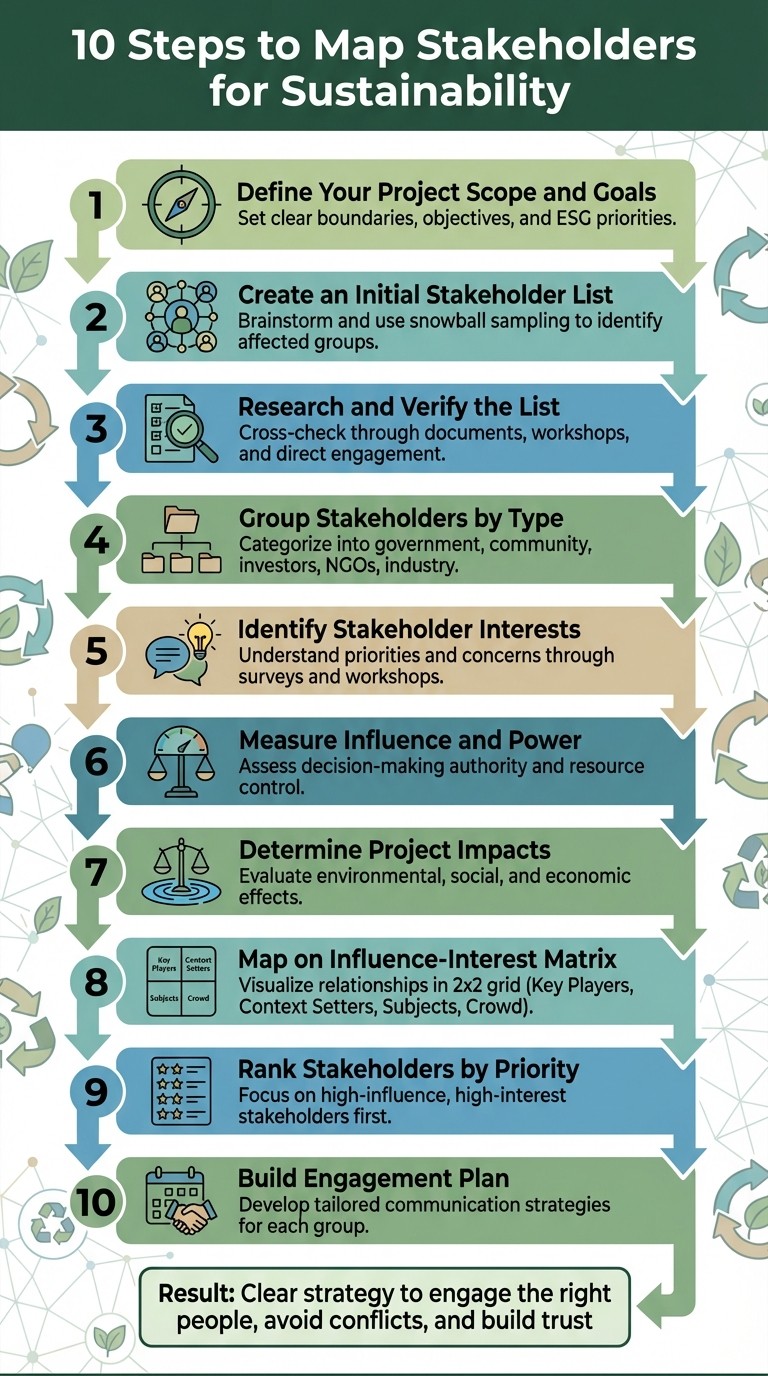
10-Step Stakeholder Mapping Process for Sustainability Projects
My Optimized Version for Stakeholder Mapping in Sustainability. Template Included.
Step 1: Define Your Project Scope and Goals
You can't hit a target you can't see. Before you start knocking on doors and building alliances, you need to know exactly what you're building - and why. Defining your project scope isn't just paperwork; it's the foundation that keeps your stakeholder list lean, focused, and actually useful.
Start by drawing hard lines around your project. What's the physical footprint? Are you reshaping a single facility or transforming a supply chain across three continents? What's your timeline - six months or six years? And let's talk money: what's the budget ceiling? Without these guardrails, your stakeholder list balloons into an unwieldy mess, or worse, misses the people who matter most.
Next, get crystal clear on your ESG priorities. Are you laser-focused on cutting carbon, conserving water, or ensuring fair wages across your supplier network? Your specific focus determines who sits at your table. A climate initiative means chatting with regulators, insurers, and communities living on the front lines of extreme weather. An efficiency push centers on your own people, suppliers, and utility partners. Whether you're managing risk, tightening operations, or building new value, your angle shapes your audience.
"Stakeholder engagement is - and will remain - a core element of the sustainability toolkit. It is a fundamental component of materiality assessments, which are then used to inform sustainability strategy, reporting, and disclosure." - BSR [3]
Don't just wing it - anchor your scope to proven frameworks. A double materiality assessment helps you spot issues that hit both your bottom line and the world around you. The Science Based Targets initiative (SBTi) puts hard science behind your climate goals. And the IAP2 Spectrum clarifies your engagement level: are you simply informing folks, consulting them, or handing over real decision-making power? These tools stop scope creep before it starts and set honest expectations from day one.
Try using "Stakeholder Scout Questions" as your safety net [1]. These prompts catch the people hiding in plain sight. Let's say you're building water infrastructure in drought country. Your scout questions should nudge you toward indigenous groups, downstream farmers, and conservation advocates - not just the usual suspects like contractors and agencies. This habit keeps your mapping thorough without becoming bloated.
With your boundaries locked down, you're ready to build your initial stakeholder list in Step 2.
Step 2: Create an Initial Stakeholder List
Now that your boundaries are set, it's time to figure out who belongs in this conversation. Your first cut at a stakeholder list isn't carved in stone - it's a rough draft. Think of it as casting a wide net before you sort the catch. Right now, you want quantity over quality. Names, roles, and groups just need to land on the page. You'll sharpen the edges later.
Start with brainstorming sessions that pull in people from every corner of your company. Bring in folks from every department that touches your sustainability issue. Set a 30-minute timer and let ideas flow freely. Your supply chain manager might mention Tier 3 suppliers you've never heard of, while your community relations lead recalls the neighborhood association that spoke up at your last town hall. The clock keeps energy high and stops everyone from overthinking.
Once you've tapped out internal knowledge, try snowball sampling to reach beyond the usual crowd. Ask the stakeholders you've already found who else you should talk to. A local environmental group might connect you with indigenous leaders or downstream water users. A supplier might introduce you to their own sustainability partners or the workers' cooperative that grows their raw materials. This approach works especially well for finding marginalized groups who often get left off formal lists [2].
"Stakeholders should be included in solution-finding in order to facilitate negotiation and mutual learning; reduce conflict; and increase support and actor buy-in for decisions made." - Leventon et al. [2]
Don't forget the silent stakeholders who can't show up to meetings. Future generations won't dial into your Zoom calls. Ecosystems don't send emails. Endangered species don't lobby. Yet they feel the effects of your decisions, often more than anyone else. That's where proxy representatives step in: conservation scientists, environmental NGOs, indigenous knowledge keepers, and advocacy groups who can speak for those without a voice. If your project involves water, land, or air, these proxies aren't optional - they're critical. Without them, your sustainability work risks becoming an echo chamber of self-interest [3].
Step 3: Research and Verify Your Stakeholder List
Once you've compiled an initial list, the next step is to ensure its accuracy and completeness through focused research. An unverified list can often be incomplete or outdated, so this phase involves turning assumptions into solid evidence. This is achieved by examining relevant documents, organizing verification workshops, and directly engaging with stakeholders to refine your list.
Start with a two-phase analysis. First, review internal documents like sustainability reports, materiality assessments, and engagement records to identify stakeholders from past initiatives. Then, expand your scope by examining external resources, such as reports from industry organizations, regulatory agencies, or community studies. This approach can help you identify overlooked groups, such as downstream water users or indigenous communities with land claims. These findings provide a solid basis for the next steps.
Verification workshops are another critical part of this process. Bring together a cross-functional team to discuss and refine the list. Ask targeted questions, like, "Which stakeholders might we be neglecting?" or "Who could impact the process negatively if excluded?" A neutral facilitator can guide these discussions to ensure balanced input. As the Syntropy Center explains:
"Stakeholder mapping is a collaborative process of research, debate, and discussion that draws from multiple perspectives to determine a key list of stakeholders across the entire stakeholder spectrum" [5].
Finally, take your research a step further by testing the list directly with stakeholders. Conduct interviews or distribute short questionnaires, asking questions like, "Is there anyone else we should involve in this project?" This can help uncover additional actors you might have missed. Visual tools like Net-Map can also be helpful, as they allow you to map relationships and influence dynamics among stakeholders, making it easier to spot gaps [2].
Step 4: Group Stakeholders by Type
Once your stakeholder list is verified, the next step is to group stakeholders into categories. This process helps clarify relationships, allocate resources wisely, and identify potential conflicts before they arise. As highlighted by the Syntropy Center:
"It is not practical and usually not necessary to engage with all stakeholder groups with the same level of intensity all of the time" [5].
Organizing stakeholders into groups ensures your efforts are focused where they matter most. This step lays the groundwork for crafting engagement strategies tailored to each group's needs in later stages.
How to Categorize Stakeholders
Start by using clear criteria to sort stakeholders. A common method is analytical categorization, which groups stakeholders by shared traits such as their role, sector, or relationship to your project. Typical groups include government agencies, investors, NGOs, local communities, and industry players. Each group has unique interests and priorities. For instance, regulators might prioritize compliance and safety, while local communities often care about health impacts and environmental concerns. Another approach is the linkage method, which categorizes stakeholders based on how they interact with your project - whether through collaboration, consultation, or reporting [1].
When assigning stakeholders to categories, go beyond their obvious roles. Consider factors like contribution, legitimacy, and necessity [5]. Some stakeholders may fit into multiple categories. For example, a university could act as both a research partner and a community hub. In such cases, use tools like Venn diagrams or cross-functional discussions to identify their primary role [2][5].
Stakeholder Categories at a Glance
The table below outlines common stakeholder categories, their attributes, and examples to guide your categorization process:
| Stakeholder Category | Typical Criteria/Attributes | Examples |
| --- | --- | --- |
| <strong>Owners/Investors</strong> | High influence, financial legitimacy, vested interest | Shareholders, analysts, rating agencies |
| <strong>Government</strong> | Regulatory authority, high power, public accountability | Regulators, local policymakers, public agencies |
| <strong>Civil Society</strong> | Advocacy-driven, high interest, urgency | NGOs, labor unions, faith-based groups |
| <strong>Industry</strong> | Market influence, supply chain connections | Suppliers, competitors, industry associations |
| <strong>Community</strong> | Directly impacted, high legitimacy, proximity | Local residents, schools, community organizations
| Stakeholder Category | Typical Criteria/Attributes | Examples |
| --- | --- | --- |
| <strong>Owners/Investors</strong> | High influence, financial legitimacy, vested interest | Shareholders, analysts, rating agencies |
| <strong>Government</strong> | Regulatory authority, high power, public accountability | Regulators, local policymakers, public agencies |
| <strong>Civil Society</strong> | Advocacy-driven, high interest, urgency | NGOs, labor unions, faith-based groups |
| <strong>Industry</strong> | Market influence, supply chain connections | Suppliers, competitors, industry associations |
| <strong>Community</strong> | Directly impacted, high legitimacy, proximity | Local residents, schools, community organizations
Planning for Potential Conflicts
Categorizing stakeholders also helps uncover potential friction points early. For example, local residents and industrial developers may have conflicting priorities. By identifying such dynamics upfront, you can design separate engagement strategies for each group, reducing tension before they interact [4]. This proactive approach not only minimizes conflict but also ensures smoother engagement down the line.
Step 5: Identify Stakeholder Interests and Expectations
Once stakeholders are grouped, the next step is to pinpoint what matters most to each group. This requires moving beyond assumptions to uncover their specific priorities, concerns, and expectations related to your project. Without these insights, engagement efforts can fall flat.
The best way to gather this information is by actively engaging with stakeholders. Surveys and interviews are excellent starting points for collecting direct feedback. For more in-depth insights, consider organizing workshops, advisory committees, or co-design sessions that bring stakeholders into the decision-making process. As highlighted by the U.S. Fish and Wildlife Service:
"The most effective public participation happens within the middle of the spectrum – at the consult, involve, and collaborate level" [4].
Start by conducting an internal review to clarify your project's scope, available resources, and the extent of influence stakeholders will have. This is crucial for managing expectations realistically. To broaden your reach, use snowball sampling, where initial contacts help identify additional, less obvious stakeholders [2]. This method ensures you capture a range of perspectives and priorities.
For each key stakeholder, aim to document at least three specific needs or priorities [5]. Avoid generic statements like "supports clean energy." Instead, dig into the details: Does a community group care more about creating local jobs, improving air quality, or protecting nearby wildlife? Does an investor prioritize measurable carbon reductions, regulatory compliance, or financial returns over the long term? Tools like stakeholder analysis matrices can help you organize and track each stakeholder's influence, needs, and potential contributions effectively [2][5].
Step 6: Measure Stakeholder Influence and Power
Stakeholders play different roles in shaping the success of your sustainability project. Building on the stakeholder groups identified in Step 4 and the interests outlined in Step 5, it's essential to assess their influence and power dynamics. Some stakeholders hold formal authority, like decision-makers in government or corporate leadership, while others exert informal influence through community connections, expertise, or their ability to shape public opinion. Grasping these distinctions helps you focus your engagement efforts where they matter most.
To evaluate influence, consider three key dimensions:
Formal Decision-Making: This includes stakeholders like city council members or tribal elders who directly affect decisions.
Resource Control: Stakeholders who control vital resources, such as funding or specialized knowledge.
Ability to Mobilize: Those capable of rallying public support or swaying policy discussions.
You can quantify these factors by rating stakeholders on a 1–10 scale for power and interest [6], or opt for qualitative measures like Low, Medium, and High to assess their contribution, legitimacy, willingness to engage, and role in the project’s success [5]. As the Syntropy Center emphasizes:
"You will need to clarify 'who' they influence, e.g., other companies, NGOs, consumers, investors, etc." [5]
It's crucial to identify stakeholders with "veto power" - those who could block or undermine the project if excluded [6]. These individuals or groups may not always be the most vocal but can hold substantial influence behind the scenes. Their engagement is critical to maintaining the project’s credibility and momentum.
Keep in mind that power dynamics are fluid. A stakeholder with minimal interest today might become highly involved as the project evolves or as its impacts become clearer. Regularly revisiting and updating your understanding of stakeholder power and influence ensures your engagement strategy remains relevant and effective. Use these insights to guide your prioritization in the next steps.
Step 7: Determine How the Project Affects Each Stakeholder
Understanding how your sustainability project impacts stakeholders is key to its success. This involves evaluating effects across environmental, social, and economic dimensions, considering both the benefits and any unintended consequences. By doing so, you create a foundation for effective impact management strategies tailored to each group.
Begin with a detailed situation analysis. Conduct both internal and external assessments to understand the broader public impact, particularly on marginalized communities [4]. For each stakeholder group, identify and document at least three specific needs or expectations [5]. This step helps you determine whether your project aligns with their objectives or unintentionally disrupts them. For instance, a renewable energy project might create economic opportunities for local contractors while simultaneously affecting residents who depend on traditional energy sector jobs.
Don’t overlook non-financial outcomes, such as community resilience, environmental health, social equity, and the preservation of cultural heritage [5]. Evaluate how your project influences these areas. For example, a watershed restoration effort might enhance water quality (an environmental gain) but also generate temporary construction noise, which could be a social drawback for nearby residents. By identifying potential conflicts early - such as investor financial gains clashing with local environmental concerns - you can address these issues before they escalate [4].
To ensure a comprehensive evaluation, bring together cross-functional teams from marketing, operations, finance, and community relations [5]. Use their insights to create a detailed matrix that outlines each stakeholder group, their interests, the identified impacts, and strategies for managing these effects [2]. This structured approach helps you balance competing priorities and foster stronger stakeholder relationships.
Step 8: Map Stakeholders on an Influence-Interest Matrix
A stakeholder influence-interest matrix offers a clear way to understand and organize stakeholder relationships. This 2×2 grid uses the vertical axis to measure influence (from low to high) and the horizontal axis to assess interest or impact (also from low to high). The result is four distinct quadrants, each suggesting a tailored engagement strategy.
To begin, evaluate each stakeholder as low, medium, or high in terms of their expertise, legitimacy, and willingness to engage [5]. Involving a cross-functional team in this process helps ensure a range of perspectives is considered [5]. In sustainability projects, stakeholders often include not just business partners but also NGOs, community members, policymakers, and other economic players [2].
"Researchers in natural resource management consistently find that stakeholders should be included in solution-finding in order to facilitate negotiation and mutual learning; reduce conflict; and increase support and actor buy-in for decisions made." - Leventon et al. [2]
This statement underscores the importance of systematic stakeholder mapping.
The matrix categorizes stakeholders into four groups:
Key Players: High influence, high interest. These stakeholders require active collaboration and regular communication.
Context Setters: High influence, low interest. Keeping them satisfied with occasional updates can prevent resistance.
Subjects: Low influence, high interest. Regular feedback and addressing their concerns help maintain their support.
Crowd: Low influence, low interest. Minimal monitoring suffices for this group [5].
Step 9: Rank Stakeholders by Priority
After mapping stakeholders on your influence–interest matrix, the next move is to rank them by priority. This ranking is essential for directing your resources effectively.
Start with the quadrant method: prioritize Key Players (high influence, high interest) first, followed by Context Setters, then Subjects, and finally the Crowd. Pay special attention to stakeholders whose absence could jeopardize the project. In sustainability work, this often includes local communities impacted by environmental shifts, regulatory agencies, or investors increasingly focused on ESG metrics [3]. Overlooking these groups can harm your social license to operate and lead to challenges that are both expensive and time-consuming to address.
Don't forget about silent stakeholders - such as marginalized communities and future generations - who may have limited influence now but stand to be deeply affected [2][5]. Including their perspectives ensures your efforts consider a broader range of needs, not just those of the most vocal groups. To refine your rankings, assign ratings like low, medium, or high based on factors such as expertise, willingness to participate, and the resources each stakeholder brings to the table [5].
This prioritized ranking helps allocate resources wisely: invest staff time and regular engagement with high-priority stakeholders, while using tools like automated updates to manage lower-priority groups [1][7]. By following this approach, you can maintain momentum toward your sustainability goals while fostering the trust and collaboration needed for long-term success. This ranking process lays a solid foundation for crafting your stakeholder engagement plan in the next step.
Step 10: Build a Stakeholder Engagement Plan
Now that stakeholders have been ranked in Step 9, the next step is turning those rankings into a concrete engagement plan. This step involves outlining how, when, and through which channels each stakeholder group will be engaged. The goal is to align your outreach efforts with the priorities and needs of each group, ensuring your stakeholder mapping translates into meaningful action.
To tailor your engagement, consider using the IAP2 spectrum to assign appropriate interaction levels. For high-priority stakeholders, focus on collaborative efforts, such as working groups or co-design sessions. For lower-priority groups, simpler methods like newsletters or website updates can suffice. As the U.S. Fish & Wildlife Service points out:
"The most effective public participation happens within the middle of the spectrum – at the consult, involve, and collaborate level" [4].
This middle-ground approach ensures a balance between resource investment and the quality of input received.
Tailored Communication and Engagement
For each stakeholder group, define specific communication channels and engagement frequencies. High-influence, high-interest stakeholders should receive active and consistent attention through methods like monthly meetings, direct consultations, or participation in advisory committees. Medium-priority groups may require less frequent but still consistent touchpoints, such as quarterly workshops or detailed email briefings. For lower-priority stakeholders, automated tools like scheduled email updates can provide sufficient interaction at weekly or monthly intervals [8]. Allison Hendricks from Simply Stakeholders underscores the importance of ongoing effort:
"Stakeholder mapping is not a set and forget exercise... it is a powerful tool for monitoring change" [8].
Feedback and Accountability
A strong engagement plan also incorporates feedback mechanisms. Make it clear how stakeholder input will be acknowledged, integrated into decisions, and communicated back to participants. This process not only builds trust but also strengthens your organization’s social license to operate. Assign clear responsibilities for managing stakeholder relationships, outline actions to take based on feedback, and track metrics like participation rates and trust levels to measure success [3].
Ensuring Accessibility and Inclusion
To foster meaningful participation, prioritize accessibility and inclusion. Offer multiple meeting formats - such as in-person, virtual, or hybrid options - and provide translation services where necessary. Additionally, consider compensating participants for their time or travel expenses to remove barriers for marginalized or less-heard communities. These steps ensure all voices are represented and valued in the engagement process.
Conclusion
Stakeholder mapping turns sustainability ambitions into tangible outcomes. By following the 10 steps outlined earlier, you can develop a clear understanding of who influences your project, what motivates them, and how to engage them effectively. These steps align closely with the broader process described above.
BSR highlights the importance of this approach:
"Stakeholder engagement is - and will remain - a core element of the sustainability toolkit" [3].
The most successful organizations don’t stop at identifying stakeholders - they nurture ongoing relationships that adapt as projects evolve and circumstances shift. This structured approach is the backbone of every sustainability effort, connecting thoughtful planning with meaningful engagement and measurable results.
Sustainability efforts don’t thrive in isolation. As Impact Africa Consulting Limited aptly states, "No company is an island and to achieve its sustainability goals, it needs to build strong relations with the outer world" [1]. Effective stakeholder mapping bridges the gap between high-level sustainability goals and actionable strategies, taking into account diverse perspectives, power structures, and potential outcomes.
Council Fire exemplifies this methodology by embedding stakeholder-focused strategies into sustainability initiatives. Council Fire supports organizations in moving beyond basic compliance to deliver measurable environmental, social, and economic outcomes. They specialize in turning sustainability visions into actionable plans that create lasting, meaningful results.
FAQs
How does stakeholder mapping help improve sustainability projects?
Stakeholder mapping plays a crucial role in refining sustainability projects by pinpointing and analyzing the people, groups, or organizations affected by or invested in the project. This process helps assess stakeholders based on their level of influence, interests, and potential impact, paving the way for more efficient communication and collaboration.
Through stakeholder mapping, organizations can proactively address concerns, foresee potential obstacles, and foster trust by promoting openness and inclusivity. This method not only supports smoother decision-making and minimizes conflicts but also ensures that project objectives align with stakeholder priorities, boosting the likelihood of achieving lasting and impactful sustainability results.
What strategies can help avoid scope creep during stakeholder mapping?
To keep scope creep at bay during stakeholder mapping, adopting structured methods and well-defined frameworks is key. Tools such as stakeholder matrices or charts are particularly effective, as they visually categorize stakeholders based on their influence and interest. This approach ensures attention is directed toward the most relevant groups, preventing the project’s scope from expanding unnecessarily.
Encouraging a collaborative process with cross-functional teams further strengthens the effort. By incorporating diverse perspectives in a systematic way, you can minimize the chances of unexpected changes or conflicting priorities. Staying focused on clear objectives, managing expectations, and adhering to the established plan are essential steps to ensure the stakeholder mapping process remains efficient and aligned with the project’s goals.
Why should silent stakeholders be considered in sustainability projects?
Silent stakeholders often remain in the background, but their influence can significantly shape the success of sustainability efforts. These individuals or groups - ranging from local community members and regulatory bodies to internal teams - may not actively participate in the process, yet their perspectives, support, or opposition can profoundly affect outcomes.
Recognizing and understanding these stakeholders allows organizations to address their concerns, reduce potential conflicts, and identify risks or opportunities that might otherwise go unnoticed. This approach fosters more inclusive decision-making and builds stronger, more adaptable sustainability strategies. Overlooking silent stakeholders can lead to missed insights, resistance, or even damage to reputation, underscoring their critical role in achieving long-term success.
Related Blog Posts
Latest Articles
©2025


FAQ
01
What does it really mean to “redefine profit”?
02
What makes Council Fire different?
03
Who does Council Fire you work with?
04
What does working with Council Fire actually look like?
05
How does Council Fire help organizations turn big goals into action?
06
How does Council Fire define and measure success?
Jan 28, 2026
10 Steps to Map Stakeholders for Sustainability
Sustainability Strategy
In This Article
Practical 10-step process to identify, prioritize, and engage stakeholders in sustainability projects — map influence, manage impacts, and build an engagement plan.
10 Steps to Map Stakeholders for Sustainability
Mapping stakeholders is essential for any project aiming to balance business goals with social and environmental impact. This process identifies who is affected by your work, their concerns, and their influence. The result? A clear strategy to engage the right people, avoid conflicts, and build trust. Here's a quick overview of the 10 steps:
Define Your Project Scope and Goals: Set clear boundaries and objectives to guide your stakeholder list.
Create an Initial Stakeholder List: Brainstorm and use snowball sampling to identify affected groups.
Research and Verify the List: Cross-check your list through internal documents, workshops, and direct engagement.
Group Stakeholders by Type: Categorize stakeholders into groups like government, community, or investors.
Identify Stakeholder Interests: Understand specific priorities and concerns for each group through surveys or workshops.
Measure Influence and Power: Assess each stakeholder's ability to impact your project using criteria like decision-making authority or resource control.
Determine Project Impacts: Evaluate how the project benefits or affects each stakeholder group.
Map Stakeholders on an Influence-Interest Matrix: Visualize relationships to prioritize engagement strategies.
Rank Stakeholders by Priority: Focus efforts on high-influence, high-interest stakeholders while maintaining minimal engagement with lower-priority groups.
Build a Stakeholder Engagement Plan: Develop tailored communication and interaction strategies for each group.
These steps ensure your project aligns with diverse perspectives while addressing potential risks and maximizing positive outcomes.
10-Step Stakeholder Mapping Process for Sustainability Projects
My Optimized Version for Stakeholder Mapping in Sustainability. Template Included.
Step 1: Define Your Project Scope and Goals
You can't hit a target you can't see. Before you start knocking on doors and building alliances, you need to know exactly what you're building - and why. Defining your project scope isn't just paperwork; it's the foundation that keeps your stakeholder list lean, focused, and actually useful.
Start by drawing hard lines around your project. What's the physical footprint? Are you reshaping a single facility or transforming a supply chain across three continents? What's your timeline - six months or six years? And let's talk money: what's the budget ceiling? Without these guardrails, your stakeholder list balloons into an unwieldy mess, or worse, misses the people who matter most.
Next, get crystal clear on your ESG priorities. Are you laser-focused on cutting carbon, conserving water, or ensuring fair wages across your supplier network? Your specific focus determines who sits at your table. A climate initiative means chatting with regulators, insurers, and communities living on the front lines of extreme weather. An efficiency push centers on your own people, suppliers, and utility partners. Whether you're managing risk, tightening operations, or building new value, your angle shapes your audience.
"Stakeholder engagement is - and will remain - a core element of the sustainability toolkit. It is a fundamental component of materiality assessments, which are then used to inform sustainability strategy, reporting, and disclosure." - BSR [3]
Don't just wing it - anchor your scope to proven frameworks. A double materiality assessment helps you spot issues that hit both your bottom line and the world around you. The Science Based Targets initiative (SBTi) puts hard science behind your climate goals. And the IAP2 Spectrum clarifies your engagement level: are you simply informing folks, consulting them, or handing over real decision-making power? These tools stop scope creep before it starts and set honest expectations from day one.
Try using "Stakeholder Scout Questions" as your safety net [1]. These prompts catch the people hiding in plain sight. Let's say you're building water infrastructure in drought country. Your scout questions should nudge you toward indigenous groups, downstream farmers, and conservation advocates - not just the usual suspects like contractors and agencies. This habit keeps your mapping thorough without becoming bloated.
With your boundaries locked down, you're ready to build your initial stakeholder list in Step 2.
Step 2: Create an Initial Stakeholder List
Now that your boundaries are set, it's time to figure out who belongs in this conversation. Your first cut at a stakeholder list isn't carved in stone - it's a rough draft. Think of it as casting a wide net before you sort the catch. Right now, you want quantity over quality. Names, roles, and groups just need to land on the page. You'll sharpen the edges later.
Start with brainstorming sessions that pull in people from every corner of your company. Bring in folks from every department that touches your sustainability issue. Set a 30-minute timer and let ideas flow freely. Your supply chain manager might mention Tier 3 suppliers you've never heard of, while your community relations lead recalls the neighborhood association that spoke up at your last town hall. The clock keeps energy high and stops everyone from overthinking.
Once you've tapped out internal knowledge, try snowball sampling to reach beyond the usual crowd. Ask the stakeholders you've already found who else you should talk to. A local environmental group might connect you with indigenous leaders or downstream water users. A supplier might introduce you to their own sustainability partners or the workers' cooperative that grows their raw materials. This approach works especially well for finding marginalized groups who often get left off formal lists [2].
"Stakeholders should be included in solution-finding in order to facilitate negotiation and mutual learning; reduce conflict; and increase support and actor buy-in for decisions made." - Leventon et al. [2]
Don't forget the silent stakeholders who can't show up to meetings. Future generations won't dial into your Zoom calls. Ecosystems don't send emails. Endangered species don't lobby. Yet they feel the effects of your decisions, often more than anyone else. That's where proxy representatives step in: conservation scientists, environmental NGOs, indigenous knowledge keepers, and advocacy groups who can speak for those without a voice. If your project involves water, land, or air, these proxies aren't optional - they're critical. Without them, your sustainability work risks becoming an echo chamber of self-interest [3].
Step 3: Research and Verify Your Stakeholder List
Once you've compiled an initial list, the next step is to ensure its accuracy and completeness through focused research. An unverified list can often be incomplete or outdated, so this phase involves turning assumptions into solid evidence. This is achieved by examining relevant documents, organizing verification workshops, and directly engaging with stakeholders to refine your list.
Start with a two-phase analysis. First, review internal documents like sustainability reports, materiality assessments, and engagement records to identify stakeholders from past initiatives. Then, expand your scope by examining external resources, such as reports from industry organizations, regulatory agencies, or community studies. This approach can help you identify overlooked groups, such as downstream water users or indigenous communities with land claims. These findings provide a solid basis for the next steps.
Verification workshops are another critical part of this process. Bring together a cross-functional team to discuss and refine the list. Ask targeted questions, like, "Which stakeholders might we be neglecting?" or "Who could impact the process negatively if excluded?" A neutral facilitator can guide these discussions to ensure balanced input. As the Syntropy Center explains:
"Stakeholder mapping is a collaborative process of research, debate, and discussion that draws from multiple perspectives to determine a key list of stakeholders across the entire stakeholder spectrum" [5].
Finally, take your research a step further by testing the list directly with stakeholders. Conduct interviews or distribute short questionnaires, asking questions like, "Is there anyone else we should involve in this project?" This can help uncover additional actors you might have missed. Visual tools like Net-Map can also be helpful, as they allow you to map relationships and influence dynamics among stakeholders, making it easier to spot gaps [2].
Step 4: Group Stakeholders by Type
Once your stakeholder list is verified, the next step is to group stakeholders into categories. This process helps clarify relationships, allocate resources wisely, and identify potential conflicts before they arise. As highlighted by the Syntropy Center:
"It is not practical and usually not necessary to engage with all stakeholder groups with the same level of intensity all of the time" [5].
Organizing stakeholders into groups ensures your efforts are focused where they matter most. This step lays the groundwork for crafting engagement strategies tailored to each group's needs in later stages.
How to Categorize Stakeholders
Start by using clear criteria to sort stakeholders. A common method is analytical categorization, which groups stakeholders by shared traits such as their role, sector, or relationship to your project. Typical groups include government agencies, investors, NGOs, local communities, and industry players. Each group has unique interests and priorities. For instance, regulators might prioritize compliance and safety, while local communities often care about health impacts and environmental concerns. Another approach is the linkage method, which categorizes stakeholders based on how they interact with your project - whether through collaboration, consultation, or reporting [1].
When assigning stakeholders to categories, go beyond their obvious roles. Consider factors like contribution, legitimacy, and necessity [5]. Some stakeholders may fit into multiple categories. For example, a university could act as both a research partner and a community hub. In such cases, use tools like Venn diagrams or cross-functional discussions to identify their primary role [2][5].
Stakeholder Categories at a Glance
The table below outlines common stakeholder categories, their attributes, and examples to guide your categorization process:
| Stakeholder Category | Typical Criteria/Attributes | Examples |
| --- | --- | --- |
| <strong>Owners/Investors</strong> | High influence, financial legitimacy, vested interest | Shareholders, analysts, rating agencies |
| <strong>Government</strong> | Regulatory authority, high power, public accountability | Regulators, local policymakers, public agencies |
| <strong>Civil Society</strong> | Advocacy-driven, high interest, urgency | NGOs, labor unions, faith-based groups |
| <strong>Industry</strong> | Market influence, supply chain connections | Suppliers, competitors, industry associations |
| <strong>Community</strong> | Directly impacted, high legitimacy, proximity | Local residents, schools, community organizations
Planning for Potential Conflicts
Categorizing stakeholders also helps uncover potential friction points early. For example, local residents and industrial developers may have conflicting priorities. By identifying such dynamics upfront, you can design separate engagement strategies for each group, reducing tension before they interact [4]. This proactive approach not only minimizes conflict but also ensures smoother engagement down the line.
Step 5: Identify Stakeholder Interests and Expectations
Once stakeholders are grouped, the next step is to pinpoint what matters most to each group. This requires moving beyond assumptions to uncover their specific priorities, concerns, and expectations related to your project. Without these insights, engagement efforts can fall flat.
The best way to gather this information is by actively engaging with stakeholders. Surveys and interviews are excellent starting points for collecting direct feedback. For more in-depth insights, consider organizing workshops, advisory committees, or co-design sessions that bring stakeholders into the decision-making process. As highlighted by the U.S. Fish and Wildlife Service:
"The most effective public participation happens within the middle of the spectrum – at the consult, involve, and collaborate level" [4].
Start by conducting an internal review to clarify your project's scope, available resources, and the extent of influence stakeholders will have. This is crucial for managing expectations realistically. To broaden your reach, use snowball sampling, where initial contacts help identify additional, less obvious stakeholders [2]. This method ensures you capture a range of perspectives and priorities.
For each key stakeholder, aim to document at least three specific needs or priorities [5]. Avoid generic statements like "supports clean energy." Instead, dig into the details: Does a community group care more about creating local jobs, improving air quality, or protecting nearby wildlife? Does an investor prioritize measurable carbon reductions, regulatory compliance, or financial returns over the long term? Tools like stakeholder analysis matrices can help you organize and track each stakeholder's influence, needs, and potential contributions effectively [2][5].
Step 6: Measure Stakeholder Influence and Power
Stakeholders play different roles in shaping the success of your sustainability project. Building on the stakeholder groups identified in Step 4 and the interests outlined in Step 5, it's essential to assess their influence and power dynamics. Some stakeholders hold formal authority, like decision-makers in government or corporate leadership, while others exert informal influence through community connections, expertise, or their ability to shape public opinion. Grasping these distinctions helps you focus your engagement efforts where they matter most.
To evaluate influence, consider three key dimensions:
Formal Decision-Making: This includes stakeholders like city council members or tribal elders who directly affect decisions.
Resource Control: Stakeholders who control vital resources, such as funding or specialized knowledge.
Ability to Mobilize: Those capable of rallying public support or swaying policy discussions.
You can quantify these factors by rating stakeholders on a 1–10 scale for power and interest [6], or opt for qualitative measures like Low, Medium, and High to assess their contribution, legitimacy, willingness to engage, and role in the project’s success [5]. As the Syntropy Center emphasizes:
"You will need to clarify 'who' they influence, e.g., other companies, NGOs, consumers, investors, etc." [5]
It's crucial to identify stakeholders with "veto power" - those who could block or undermine the project if excluded [6]. These individuals or groups may not always be the most vocal but can hold substantial influence behind the scenes. Their engagement is critical to maintaining the project’s credibility and momentum.
Keep in mind that power dynamics are fluid. A stakeholder with minimal interest today might become highly involved as the project evolves or as its impacts become clearer. Regularly revisiting and updating your understanding of stakeholder power and influence ensures your engagement strategy remains relevant and effective. Use these insights to guide your prioritization in the next steps.
Step 7: Determine How the Project Affects Each Stakeholder
Understanding how your sustainability project impacts stakeholders is key to its success. This involves evaluating effects across environmental, social, and economic dimensions, considering both the benefits and any unintended consequences. By doing so, you create a foundation for effective impact management strategies tailored to each group.
Begin with a detailed situation analysis. Conduct both internal and external assessments to understand the broader public impact, particularly on marginalized communities [4]. For each stakeholder group, identify and document at least three specific needs or expectations [5]. This step helps you determine whether your project aligns with their objectives or unintentionally disrupts them. For instance, a renewable energy project might create economic opportunities for local contractors while simultaneously affecting residents who depend on traditional energy sector jobs.
Don’t overlook non-financial outcomes, such as community resilience, environmental health, social equity, and the preservation of cultural heritage [5]. Evaluate how your project influences these areas. For example, a watershed restoration effort might enhance water quality (an environmental gain) but also generate temporary construction noise, which could be a social drawback for nearby residents. By identifying potential conflicts early - such as investor financial gains clashing with local environmental concerns - you can address these issues before they escalate [4].
To ensure a comprehensive evaluation, bring together cross-functional teams from marketing, operations, finance, and community relations [5]. Use their insights to create a detailed matrix that outlines each stakeholder group, their interests, the identified impacts, and strategies for managing these effects [2]. This structured approach helps you balance competing priorities and foster stronger stakeholder relationships.
Step 8: Map Stakeholders on an Influence-Interest Matrix
A stakeholder influence-interest matrix offers a clear way to understand and organize stakeholder relationships. This 2×2 grid uses the vertical axis to measure influence (from low to high) and the horizontal axis to assess interest or impact (also from low to high). The result is four distinct quadrants, each suggesting a tailored engagement strategy.
To begin, evaluate each stakeholder as low, medium, or high in terms of their expertise, legitimacy, and willingness to engage [5]. Involving a cross-functional team in this process helps ensure a range of perspectives is considered [5]. In sustainability projects, stakeholders often include not just business partners but also NGOs, community members, policymakers, and other economic players [2].
"Researchers in natural resource management consistently find that stakeholders should be included in solution-finding in order to facilitate negotiation and mutual learning; reduce conflict; and increase support and actor buy-in for decisions made." - Leventon et al. [2]
This statement underscores the importance of systematic stakeholder mapping.
The matrix categorizes stakeholders into four groups:
Key Players: High influence, high interest. These stakeholders require active collaboration and regular communication.
Context Setters: High influence, low interest. Keeping them satisfied with occasional updates can prevent resistance.
Subjects: Low influence, high interest. Regular feedback and addressing their concerns help maintain their support.
Crowd: Low influence, low interest. Minimal monitoring suffices for this group [5].
Step 9: Rank Stakeholders by Priority
After mapping stakeholders on your influence–interest matrix, the next move is to rank them by priority. This ranking is essential for directing your resources effectively.
Start with the quadrant method: prioritize Key Players (high influence, high interest) first, followed by Context Setters, then Subjects, and finally the Crowd. Pay special attention to stakeholders whose absence could jeopardize the project. In sustainability work, this often includes local communities impacted by environmental shifts, regulatory agencies, or investors increasingly focused on ESG metrics [3]. Overlooking these groups can harm your social license to operate and lead to challenges that are both expensive and time-consuming to address.
Don't forget about silent stakeholders - such as marginalized communities and future generations - who may have limited influence now but stand to be deeply affected [2][5]. Including their perspectives ensures your efforts consider a broader range of needs, not just those of the most vocal groups. To refine your rankings, assign ratings like low, medium, or high based on factors such as expertise, willingness to participate, and the resources each stakeholder brings to the table [5].
This prioritized ranking helps allocate resources wisely: invest staff time and regular engagement with high-priority stakeholders, while using tools like automated updates to manage lower-priority groups [1][7]. By following this approach, you can maintain momentum toward your sustainability goals while fostering the trust and collaboration needed for long-term success. This ranking process lays a solid foundation for crafting your stakeholder engagement plan in the next step.
Step 10: Build a Stakeholder Engagement Plan
Now that stakeholders have been ranked in Step 9, the next step is turning those rankings into a concrete engagement plan. This step involves outlining how, when, and through which channels each stakeholder group will be engaged. The goal is to align your outreach efforts with the priorities and needs of each group, ensuring your stakeholder mapping translates into meaningful action.
To tailor your engagement, consider using the IAP2 spectrum to assign appropriate interaction levels. For high-priority stakeholders, focus on collaborative efforts, such as working groups or co-design sessions. For lower-priority groups, simpler methods like newsletters or website updates can suffice. As the U.S. Fish & Wildlife Service points out:
"The most effective public participation happens within the middle of the spectrum – at the consult, involve, and collaborate level" [4].
This middle-ground approach ensures a balance between resource investment and the quality of input received.
Tailored Communication and Engagement
For each stakeholder group, define specific communication channels and engagement frequencies. High-influence, high-interest stakeholders should receive active and consistent attention through methods like monthly meetings, direct consultations, or participation in advisory committees. Medium-priority groups may require less frequent but still consistent touchpoints, such as quarterly workshops or detailed email briefings. For lower-priority stakeholders, automated tools like scheduled email updates can provide sufficient interaction at weekly or monthly intervals [8]. Allison Hendricks from Simply Stakeholders underscores the importance of ongoing effort:
"Stakeholder mapping is not a set and forget exercise... it is a powerful tool for monitoring change" [8].
Feedback and Accountability
A strong engagement plan also incorporates feedback mechanisms. Make it clear how stakeholder input will be acknowledged, integrated into decisions, and communicated back to participants. This process not only builds trust but also strengthens your organization’s social license to operate. Assign clear responsibilities for managing stakeholder relationships, outline actions to take based on feedback, and track metrics like participation rates and trust levels to measure success [3].
Ensuring Accessibility and Inclusion
To foster meaningful participation, prioritize accessibility and inclusion. Offer multiple meeting formats - such as in-person, virtual, or hybrid options - and provide translation services where necessary. Additionally, consider compensating participants for their time or travel expenses to remove barriers for marginalized or less-heard communities. These steps ensure all voices are represented and valued in the engagement process.
Conclusion
Stakeholder mapping turns sustainability ambitions into tangible outcomes. By following the 10 steps outlined earlier, you can develop a clear understanding of who influences your project, what motivates them, and how to engage them effectively. These steps align closely with the broader process described above.
BSR highlights the importance of this approach:
"Stakeholder engagement is - and will remain - a core element of the sustainability toolkit" [3].
The most successful organizations don’t stop at identifying stakeholders - they nurture ongoing relationships that adapt as projects evolve and circumstances shift. This structured approach is the backbone of every sustainability effort, connecting thoughtful planning with meaningful engagement and measurable results.
Sustainability efforts don’t thrive in isolation. As Impact Africa Consulting Limited aptly states, "No company is an island and to achieve its sustainability goals, it needs to build strong relations with the outer world" [1]. Effective stakeholder mapping bridges the gap between high-level sustainability goals and actionable strategies, taking into account diverse perspectives, power structures, and potential outcomes.
Council Fire exemplifies this methodology by embedding stakeholder-focused strategies into sustainability initiatives. Council Fire supports organizations in moving beyond basic compliance to deliver measurable environmental, social, and economic outcomes. They specialize in turning sustainability visions into actionable plans that create lasting, meaningful results.
FAQs
How does stakeholder mapping help improve sustainability projects?
Stakeholder mapping plays a crucial role in refining sustainability projects by pinpointing and analyzing the people, groups, or organizations affected by or invested in the project. This process helps assess stakeholders based on their level of influence, interests, and potential impact, paving the way for more efficient communication and collaboration.
Through stakeholder mapping, organizations can proactively address concerns, foresee potential obstacles, and foster trust by promoting openness and inclusivity. This method not only supports smoother decision-making and minimizes conflicts but also ensures that project objectives align with stakeholder priorities, boosting the likelihood of achieving lasting and impactful sustainability results.
What strategies can help avoid scope creep during stakeholder mapping?
To keep scope creep at bay during stakeholder mapping, adopting structured methods and well-defined frameworks is key. Tools such as stakeholder matrices or charts are particularly effective, as they visually categorize stakeholders based on their influence and interest. This approach ensures attention is directed toward the most relevant groups, preventing the project’s scope from expanding unnecessarily.
Encouraging a collaborative process with cross-functional teams further strengthens the effort. By incorporating diverse perspectives in a systematic way, you can minimize the chances of unexpected changes or conflicting priorities. Staying focused on clear objectives, managing expectations, and adhering to the established plan are essential steps to ensure the stakeholder mapping process remains efficient and aligned with the project’s goals.
Why should silent stakeholders be considered in sustainability projects?
Silent stakeholders often remain in the background, but their influence can significantly shape the success of sustainability efforts. These individuals or groups - ranging from local community members and regulatory bodies to internal teams - may not actively participate in the process, yet their perspectives, support, or opposition can profoundly affect outcomes.
Recognizing and understanding these stakeholders allows organizations to address their concerns, reduce potential conflicts, and identify risks or opportunities that might otherwise go unnoticed. This approach fosters more inclusive decision-making and builds stronger, more adaptable sustainability strategies. Overlooking silent stakeholders can lead to missed insights, resistance, or even damage to reputation, underscoring their critical role in achieving long-term success.
Related Blog Posts
FAQ
01
What does it really mean to “redefine profit”?
02
What makes Council Fire different?
03
Who does Council Fire you work with?
04
What does working with Council Fire actually look like?
05
How does Council Fire help organizations turn big goals into action?
06
How does Council Fire define and measure success?
Jan 28, 2026
10 Steps to Map Stakeholders for Sustainability
Sustainability Strategy
In This Article
Practical 10-step process to identify, prioritize, and engage stakeholders in sustainability projects — map influence, manage impacts, and build an engagement plan.
10 Steps to Map Stakeholders for Sustainability
Mapping stakeholders is essential for any project aiming to balance business goals with social and environmental impact. This process identifies who is affected by your work, their concerns, and their influence. The result? A clear strategy to engage the right people, avoid conflicts, and build trust. Here's a quick overview of the 10 steps:
Define Your Project Scope and Goals: Set clear boundaries and objectives to guide your stakeholder list.
Create an Initial Stakeholder List: Brainstorm and use snowball sampling to identify affected groups.
Research and Verify the List: Cross-check your list through internal documents, workshops, and direct engagement.
Group Stakeholders by Type: Categorize stakeholders into groups like government, community, or investors.
Identify Stakeholder Interests: Understand specific priorities and concerns for each group through surveys or workshops.
Measure Influence and Power: Assess each stakeholder's ability to impact your project using criteria like decision-making authority or resource control.
Determine Project Impacts: Evaluate how the project benefits or affects each stakeholder group.
Map Stakeholders on an Influence-Interest Matrix: Visualize relationships to prioritize engagement strategies.
Rank Stakeholders by Priority: Focus efforts on high-influence, high-interest stakeholders while maintaining minimal engagement with lower-priority groups.
Build a Stakeholder Engagement Plan: Develop tailored communication and interaction strategies for each group.
These steps ensure your project aligns with diverse perspectives while addressing potential risks and maximizing positive outcomes.
10-Step Stakeholder Mapping Process for Sustainability Projects
My Optimized Version for Stakeholder Mapping in Sustainability. Template Included.
Step 1: Define Your Project Scope and Goals
You can't hit a target you can't see. Before you start knocking on doors and building alliances, you need to know exactly what you're building - and why. Defining your project scope isn't just paperwork; it's the foundation that keeps your stakeholder list lean, focused, and actually useful.
Start by drawing hard lines around your project. What's the physical footprint? Are you reshaping a single facility or transforming a supply chain across three continents? What's your timeline - six months or six years? And let's talk money: what's the budget ceiling? Without these guardrails, your stakeholder list balloons into an unwieldy mess, or worse, misses the people who matter most.
Next, get crystal clear on your ESG priorities. Are you laser-focused on cutting carbon, conserving water, or ensuring fair wages across your supplier network? Your specific focus determines who sits at your table. A climate initiative means chatting with regulators, insurers, and communities living on the front lines of extreme weather. An efficiency push centers on your own people, suppliers, and utility partners. Whether you're managing risk, tightening operations, or building new value, your angle shapes your audience.
"Stakeholder engagement is - and will remain - a core element of the sustainability toolkit. It is a fundamental component of materiality assessments, which are then used to inform sustainability strategy, reporting, and disclosure." - BSR [3]
Don't just wing it - anchor your scope to proven frameworks. A double materiality assessment helps you spot issues that hit both your bottom line and the world around you. The Science Based Targets initiative (SBTi) puts hard science behind your climate goals. And the IAP2 Spectrum clarifies your engagement level: are you simply informing folks, consulting them, or handing over real decision-making power? These tools stop scope creep before it starts and set honest expectations from day one.
Try using "Stakeholder Scout Questions" as your safety net [1]. These prompts catch the people hiding in plain sight. Let's say you're building water infrastructure in drought country. Your scout questions should nudge you toward indigenous groups, downstream farmers, and conservation advocates - not just the usual suspects like contractors and agencies. This habit keeps your mapping thorough without becoming bloated.
With your boundaries locked down, you're ready to build your initial stakeholder list in Step 2.
Step 2: Create an Initial Stakeholder List
Now that your boundaries are set, it's time to figure out who belongs in this conversation. Your first cut at a stakeholder list isn't carved in stone - it's a rough draft. Think of it as casting a wide net before you sort the catch. Right now, you want quantity over quality. Names, roles, and groups just need to land on the page. You'll sharpen the edges later.
Start with brainstorming sessions that pull in people from every corner of your company. Bring in folks from every department that touches your sustainability issue. Set a 30-minute timer and let ideas flow freely. Your supply chain manager might mention Tier 3 suppliers you've never heard of, while your community relations lead recalls the neighborhood association that spoke up at your last town hall. The clock keeps energy high and stops everyone from overthinking.
Once you've tapped out internal knowledge, try snowball sampling to reach beyond the usual crowd. Ask the stakeholders you've already found who else you should talk to. A local environmental group might connect you with indigenous leaders or downstream water users. A supplier might introduce you to their own sustainability partners or the workers' cooperative that grows their raw materials. This approach works especially well for finding marginalized groups who often get left off formal lists [2].
"Stakeholders should be included in solution-finding in order to facilitate negotiation and mutual learning; reduce conflict; and increase support and actor buy-in for decisions made." - Leventon et al. [2]
Don't forget the silent stakeholders who can't show up to meetings. Future generations won't dial into your Zoom calls. Ecosystems don't send emails. Endangered species don't lobby. Yet they feel the effects of your decisions, often more than anyone else. That's where proxy representatives step in: conservation scientists, environmental NGOs, indigenous knowledge keepers, and advocacy groups who can speak for those without a voice. If your project involves water, land, or air, these proxies aren't optional - they're critical. Without them, your sustainability work risks becoming an echo chamber of self-interest [3].
Step 3: Research and Verify Your Stakeholder List
Once you've compiled an initial list, the next step is to ensure its accuracy and completeness through focused research. An unverified list can often be incomplete or outdated, so this phase involves turning assumptions into solid evidence. This is achieved by examining relevant documents, organizing verification workshops, and directly engaging with stakeholders to refine your list.
Start with a two-phase analysis. First, review internal documents like sustainability reports, materiality assessments, and engagement records to identify stakeholders from past initiatives. Then, expand your scope by examining external resources, such as reports from industry organizations, regulatory agencies, or community studies. This approach can help you identify overlooked groups, such as downstream water users or indigenous communities with land claims. These findings provide a solid basis for the next steps.
Verification workshops are another critical part of this process. Bring together a cross-functional team to discuss and refine the list. Ask targeted questions, like, "Which stakeholders might we be neglecting?" or "Who could impact the process negatively if excluded?" A neutral facilitator can guide these discussions to ensure balanced input. As the Syntropy Center explains:
"Stakeholder mapping is a collaborative process of research, debate, and discussion that draws from multiple perspectives to determine a key list of stakeholders across the entire stakeholder spectrum" [5].
Finally, take your research a step further by testing the list directly with stakeholders. Conduct interviews or distribute short questionnaires, asking questions like, "Is there anyone else we should involve in this project?" This can help uncover additional actors you might have missed. Visual tools like Net-Map can also be helpful, as they allow you to map relationships and influence dynamics among stakeholders, making it easier to spot gaps [2].
Step 4: Group Stakeholders by Type
Once your stakeholder list is verified, the next step is to group stakeholders into categories. This process helps clarify relationships, allocate resources wisely, and identify potential conflicts before they arise. As highlighted by the Syntropy Center:
"It is not practical and usually not necessary to engage with all stakeholder groups with the same level of intensity all of the time" [5].
Organizing stakeholders into groups ensures your efforts are focused where they matter most. This step lays the groundwork for crafting engagement strategies tailored to each group's needs in later stages.
How to Categorize Stakeholders
Start by using clear criteria to sort stakeholders. A common method is analytical categorization, which groups stakeholders by shared traits such as their role, sector, or relationship to your project. Typical groups include government agencies, investors, NGOs, local communities, and industry players. Each group has unique interests and priorities. For instance, regulators might prioritize compliance and safety, while local communities often care about health impacts and environmental concerns. Another approach is the linkage method, which categorizes stakeholders based on how they interact with your project - whether through collaboration, consultation, or reporting [1].
When assigning stakeholders to categories, go beyond their obvious roles. Consider factors like contribution, legitimacy, and necessity [5]. Some stakeholders may fit into multiple categories. For example, a university could act as both a research partner and a community hub. In such cases, use tools like Venn diagrams or cross-functional discussions to identify their primary role [2][5].
Stakeholder Categories at a Glance
The table below outlines common stakeholder categories, their attributes, and examples to guide your categorization process:
| Stakeholder Category | Typical Criteria/Attributes | Examples |
| --- | --- | --- |
| <strong>Owners/Investors</strong> | High influence, financial legitimacy, vested interest | Shareholders, analysts, rating agencies |
| <strong>Government</strong> | Regulatory authority, high power, public accountability | Regulators, local policymakers, public agencies |
| <strong>Civil Society</strong> | Advocacy-driven, high interest, urgency | NGOs, labor unions, faith-based groups |
| <strong>Industry</strong> | Market influence, supply chain connections | Suppliers, competitors, industry associations |
| <strong>Community</strong> | Directly impacted, high legitimacy, proximity | Local residents, schools, community organizations
Planning for Potential Conflicts
Categorizing stakeholders also helps uncover potential friction points early. For example, local residents and industrial developers may have conflicting priorities. By identifying such dynamics upfront, you can design separate engagement strategies for each group, reducing tension before they interact [4]. This proactive approach not only minimizes conflict but also ensures smoother engagement down the line.
Step 5: Identify Stakeholder Interests and Expectations
Once stakeholders are grouped, the next step is to pinpoint what matters most to each group. This requires moving beyond assumptions to uncover their specific priorities, concerns, and expectations related to your project. Without these insights, engagement efforts can fall flat.
The best way to gather this information is by actively engaging with stakeholders. Surveys and interviews are excellent starting points for collecting direct feedback. For more in-depth insights, consider organizing workshops, advisory committees, or co-design sessions that bring stakeholders into the decision-making process. As highlighted by the U.S. Fish and Wildlife Service:
"The most effective public participation happens within the middle of the spectrum – at the consult, involve, and collaborate level" [4].
Start by conducting an internal review to clarify your project's scope, available resources, and the extent of influence stakeholders will have. This is crucial for managing expectations realistically. To broaden your reach, use snowball sampling, where initial contacts help identify additional, less obvious stakeholders [2]. This method ensures you capture a range of perspectives and priorities.
For each key stakeholder, aim to document at least three specific needs or priorities [5]. Avoid generic statements like "supports clean energy." Instead, dig into the details: Does a community group care more about creating local jobs, improving air quality, or protecting nearby wildlife? Does an investor prioritize measurable carbon reductions, regulatory compliance, or financial returns over the long term? Tools like stakeholder analysis matrices can help you organize and track each stakeholder's influence, needs, and potential contributions effectively [2][5].
Step 6: Measure Stakeholder Influence and Power
Stakeholders play different roles in shaping the success of your sustainability project. Building on the stakeholder groups identified in Step 4 and the interests outlined in Step 5, it's essential to assess their influence and power dynamics. Some stakeholders hold formal authority, like decision-makers in government or corporate leadership, while others exert informal influence through community connections, expertise, or their ability to shape public opinion. Grasping these distinctions helps you focus your engagement efforts where they matter most.
To evaluate influence, consider three key dimensions:
Formal Decision-Making: This includes stakeholders like city council members or tribal elders who directly affect decisions.
Resource Control: Stakeholders who control vital resources, such as funding or specialized knowledge.
Ability to Mobilize: Those capable of rallying public support or swaying policy discussions.
You can quantify these factors by rating stakeholders on a 1–10 scale for power and interest [6], or opt for qualitative measures like Low, Medium, and High to assess their contribution, legitimacy, willingness to engage, and role in the project’s success [5]. As the Syntropy Center emphasizes:
"You will need to clarify 'who' they influence, e.g., other companies, NGOs, consumers, investors, etc." [5]
It's crucial to identify stakeholders with "veto power" - those who could block or undermine the project if excluded [6]. These individuals or groups may not always be the most vocal but can hold substantial influence behind the scenes. Their engagement is critical to maintaining the project’s credibility and momentum.
Keep in mind that power dynamics are fluid. A stakeholder with minimal interest today might become highly involved as the project evolves or as its impacts become clearer. Regularly revisiting and updating your understanding of stakeholder power and influence ensures your engagement strategy remains relevant and effective. Use these insights to guide your prioritization in the next steps.
Step 7: Determine How the Project Affects Each Stakeholder
Understanding how your sustainability project impacts stakeholders is key to its success. This involves evaluating effects across environmental, social, and economic dimensions, considering both the benefits and any unintended consequences. By doing so, you create a foundation for effective impact management strategies tailored to each group.
Begin with a detailed situation analysis. Conduct both internal and external assessments to understand the broader public impact, particularly on marginalized communities [4]. For each stakeholder group, identify and document at least three specific needs or expectations [5]. This step helps you determine whether your project aligns with their objectives or unintentionally disrupts them. For instance, a renewable energy project might create economic opportunities for local contractors while simultaneously affecting residents who depend on traditional energy sector jobs.
Don’t overlook non-financial outcomes, such as community resilience, environmental health, social equity, and the preservation of cultural heritage [5]. Evaluate how your project influences these areas. For example, a watershed restoration effort might enhance water quality (an environmental gain) but also generate temporary construction noise, which could be a social drawback for nearby residents. By identifying potential conflicts early - such as investor financial gains clashing with local environmental concerns - you can address these issues before they escalate [4].
To ensure a comprehensive evaluation, bring together cross-functional teams from marketing, operations, finance, and community relations [5]. Use their insights to create a detailed matrix that outlines each stakeholder group, their interests, the identified impacts, and strategies for managing these effects [2]. This structured approach helps you balance competing priorities and foster stronger stakeholder relationships.
Step 8: Map Stakeholders on an Influence-Interest Matrix
A stakeholder influence-interest matrix offers a clear way to understand and organize stakeholder relationships. This 2×2 grid uses the vertical axis to measure influence (from low to high) and the horizontal axis to assess interest or impact (also from low to high). The result is four distinct quadrants, each suggesting a tailored engagement strategy.
To begin, evaluate each stakeholder as low, medium, or high in terms of their expertise, legitimacy, and willingness to engage [5]. Involving a cross-functional team in this process helps ensure a range of perspectives is considered [5]. In sustainability projects, stakeholders often include not just business partners but also NGOs, community members, policymakers, and other economic players [2].
"Researchers in natural resource management consistently find that stakeholders should be included in solution-finding in order to facilitate negotiation and mutual learning; reduce conflict; and increase support and actor buy-in for decisions made." - Leventon et al. [2]
This statement underscores the importance of systematic stakeholder mapping.
The matrix categorizes stakeholders into four groups:
Key Players: High influence, high interest. These stakeholders require active collaboration and regular communication.
Context Setters: High influence, low interest. Keeping them satisfied with occasional updates can prevent resistance.
Subjects: Low influence, high interest. Regular feedback and addressing their concerns help maintain their support.
Crowd: Low influence, low interest. Minimal monitoring suffices for this group [5].
Step 9: Rank Stakeholders by Priority
After mapping stakeholders on your influence–interest matrix, the next move is to rank them by priority. This ranking is essential for directing your resources effectively.
Start with the quadrant method: prioritize Key Players (high influence, high interest) first, followed by Context Setters, then Subjects, and finally the Crowd. Pay special attention to stakeholders whose absence could jeopardize the project. In sustainability work, this often includes local communities impacted by environmental shifts, regulatory agencies, or investors increasingly focused on ESG metrics [3]. Overlooking these groups can harm your social license to operate and lead to challenges that are both expensive and time-consuming to address.
Don't forget about silent stakeholders - such as marginalized communities and future generations - who may have limited influence now but stand to be deeply affected [2][5]. Including their perspectives ensures your efforts consider a broader range of needs, not just those of the most vocal groups. To refine your rankings, assign ratings like low, medium, or high based on factors such as expertise, willingness to participate, and the resources each stakeholder brings to the table [5].
This prioritized ranking helps allocate resources wisely: invest staff time and regular engagement with high-priority stakeholders, while using tools like automated updates to manage lower-priority groups [1][7]. By following this approach, you can maintain momentum toward your sustainability goals while fostering the trust and collaboration needed for long-term success. This ranking process lays a solid foundation for crafting your stakeholder engagement plan in the next step.
Step 10: Build a Stakeholder Engagement Plan
Now that stakeholders have been ranked in Step 9, the next step is turning those rankings into a concrete engagement plan. This step involves outlining how, when, and through which channels each stakeholder group will be engaged. The goal is to align your outreach efforts with the priorities and needs of each group, ensuring your stakeholder mapping translates into meaningful action.
To tailor your engagement, consider using the IAP2 spectrum to assign appropriate interaction levels. For high-priority stakeholders, focus on collaborative efforts, such as working groups or co-design sessions. For lower-priority groups, simpler methods like newsletters or website updates can suffice. As the U.S. Fish & Wildlife Service points out:
"The most effective public participation happens within the middle of the spectrum – at the consult, involve, and collaborate level" [4].
This middle-ground approach ensures a balance between resource investment and the quality of input received.
Tailored Communication and Engagement
For each stakeholder group, define specific communication channels and engagement frequencies. High-influence, high-interest stakeholders should receive active and consistent attention through methods like monthly meetings, direct consultations, or participation in advisory committees. Medium-priority groups may require less frequent but still consistent touchpoints, such as quarterly workshops or detailed email briefings. For lower-priority stakeholders, automated tools like scheduled email updates can provide sufficient interaction at weekly or monthly intervals [8]. Allison Hendricks from Simply Stakeholders underscores the importance of ongoing effort:
"Stakeholder mapping is not a set and forget exercise... it is a powerful tool for monitoring change" [8].
Feedback and Accountability
A strong engagement plan also incorporates feedback mechanisms. Make it clear how stakeholder input will be acknowledged, integrated into decisions, and communicated back to participants. This process not only builds trust but also strengthens your organization’s social license to operate. Assign clear responsibilities for managing stakeholder relationships, outline actions to take based on feedback, and track metrics like participation rates and trust levels to measure success [3].
Ensuring Accessibility and Inclusion
To foster meaningful participation, prioritize accessibility and inclusion. Offer multiple meeting formats - such as in-person, virtual, or hybrid options - and provide translation services where necessary. Additionally, consider compensating participants for their time or travel expenses to remove barriers for marginalized or less-heard communities. These steps ensure all voices are represented and valued in the engagement process.
Conclusion
Stakeholder mapping turns sustainability ambitions into tangible outcomes. By following the 10 steps outlined earlier, you can develop a clear understanding of who influences your project, what motivates them, and how to engage them effectively. These steps align closely with the broader process described above.
BSR highlights the importance of this approach:
"Stakeholder engagement is - and will remain - a core element of the sustainability toolkit" [3].
The most successful organizations don’t stop at identifying stakeholders - they nurture ongoing relationships that adapt as projects evolve and circumstances shift. This structured approach is the backbone of every sustainability effort, connecting thoughtful planning with meaningful engagement and measurable results.
Sustainability efforts don’t thrive in isolation. As Impact Africa Consulting Limited aptly states, "No company is an island and to achieve its sustainability goals, it needs to build strong relations with the outer world" [1]. Effective stakeholder mapping bridges the gap between high-level sustainability goals and actionable strategies, taking into account diverse perspectives, power structures, and potential outcomes.
Council Fire exemplifies this methodology by embedding stakeholder-focused strategies into sustainability initiatives. Council Fire supports organizations in moving beyond basic compliance to deliver measurable environmental, social, and economic outcomes. They specialize in turning sustainability visions into actionable plans that create lasting, meaningful results.
FAQs
How does stakeholder mapping help improve sustainability projects?
Stakeholder mapping plays a crucial role in refining sustainability projects by pinpointing and analyzing the people, groups, or organizations affected by or invested in the project. This process helps assess stakeholders based on their level of influence, interests, and potential impact, paving the way for more efficient communication and collaboration.
Through stakeholder mapping, organizations can proactively address concerns, foresee potential obstacles, and foster trust by promoting openness and inclusivity. This method not only supports smoother decision-making and minimizes conflicts but also ensures that project objectives align with stakeholder priorities, boosting the likelihood of achieving lasting and impactful sustainability results.
What strategies can help avoid scope creep during stakeholder mapping?
To keep scope creep at bay during stakeholder mapping, adopting structured methods and well-defined frameworks is key. Tools such as stakeholder matrices or charts are particularly effective, as they visually categorize stakeholders based on their influence and interest. This approach ensures attention is directed toward the most relevant groups, preventing the project’s scope from expanding unnecessarily.
Encouraging a collaborative process with cross-functional teams further strengthens the effort. By incorporating diverse perspectives in a systematic way, you can minimize the chances of unexpected changes or conflicting priorities. Staying focused on clear objectives, managing expectations, and adhering to the established plan are essential steps to ensure the stakeholder mapping process remains efficient and aligned with the project’s goals.
Why should silent stakeholders be considered in sustainability projects?
Silent stakeholders often remain in the background, but their influence can significantly shape the success of sustainability efforts. These individuals or groups - ranging from local community members and regulatory bodies to internal teams - may not actively participate in the process, yet their perspectives, support, or opposition can profoundly affect outcomes.
Recognizing and understanding these stakeholders allows organizations to address their concerns, reduce potential conflicts, and identify risks or opportunities that might otherwise go unnoticed. This approach fosters more inclusive decision-making and builds stronger, more adaptable sustainability strategies. Overlooking silent stakeholders can lead to missed insights, resistance, or even damage to reputation, underscoring their critical role in achieving long-term success.
Related Blog Posts
FAQ
What does it really mean to “redefine profit”?
What makes Council Fire different?
Who does Council Fire you work with?
What does working with Council Fire actually look like?
How does Council Fire help organizations turn big goals into action?
How does Council Fire define and measure success?