
Jan 22, 2026
Stakeholder Coordination vs. Compliance: Key Differences
Sustainability Strategy
In This Article
Compare permitting stakeholder coordination and regulatory compliance: goals, risks, interplay, and methods to balance engagement with legal requirements.
Stakeholder Coordination vs. Compliance: Key Differences
Understanding Stakeholder Coordination and Compliance in Permitting
Stakeholder coordination and regulatory compliance are two critical processes in project permitting, each serving distinct roles. Compliance ensures adherence to legal standards, while stakeholder coordination focuses on engaging communities, building trust, and securing public support. Both are essential for project success, but their goals, methods, and challenges differ.
Key Points:
Regulatory Compliance: Focuses on meeting legal requirements (e.g., NEPA, Clean Water Act) through documentation, certifications, and agency approvals. Non-compliance can lead to penalties or project delays.
Stakeholder Coordination: Aims to build relationships, maintain transparency, and address community concerns to gain a "social license to operate." Poor coordination risks opposition and reputational harm.
Interconnection: Delays or inefficiencies in one process can disrupt the other, highlighting the need for careful planning and integration.
Quick Comparison
| Feature | Stakeholder Coordination | Regulatory Compliance |
| --- | --- | --- |
| <strong>Goal</strong> | Build trust and public support | Meet legal and procedural standards |
| <strong>Driver</strong> | Social norms and community expectations | Legal obligations and risk mitigation |
| <strong>Measurement</strong> | Engagement levels, public sentiment | Audits, inspections, legal approvals |
| <strong>Failure Risks</strong> | Opposition, delays, reputational damage | Fines, penalties, legal challenges |
| <strong>Key Activity</strong> | Communication, collaboration | Documentation, technical verification
| Feature | Stakeholder Coordination | Regulatory Compliance |
| --- | --- | --- |
| <strong>Goal</strong> | Build trust and public support | Meet legal and procedural standards |
| <strong>Driver</strong> | Social norms and community expectations | Legal obligations and risk mitigation |
| <strong>Measurement</strong> | Engagement levels, public sentiment | Audits, inspections, legal approvals |
| <strong>Failure Risks</strong> | Opposition, delays, reputational damage | Fines, penalties, legal challenges |
| <strong>Key Activity</strong> | Communication, collaboration | Documentation, technical verification
Conclusion:
Balancing these processes requires clear communication, early planning, and efficient coordination among stakeholders and agencies. Success depends on integrating both efforts to minimize delays, reduce risks, and ensure smooth project execution.
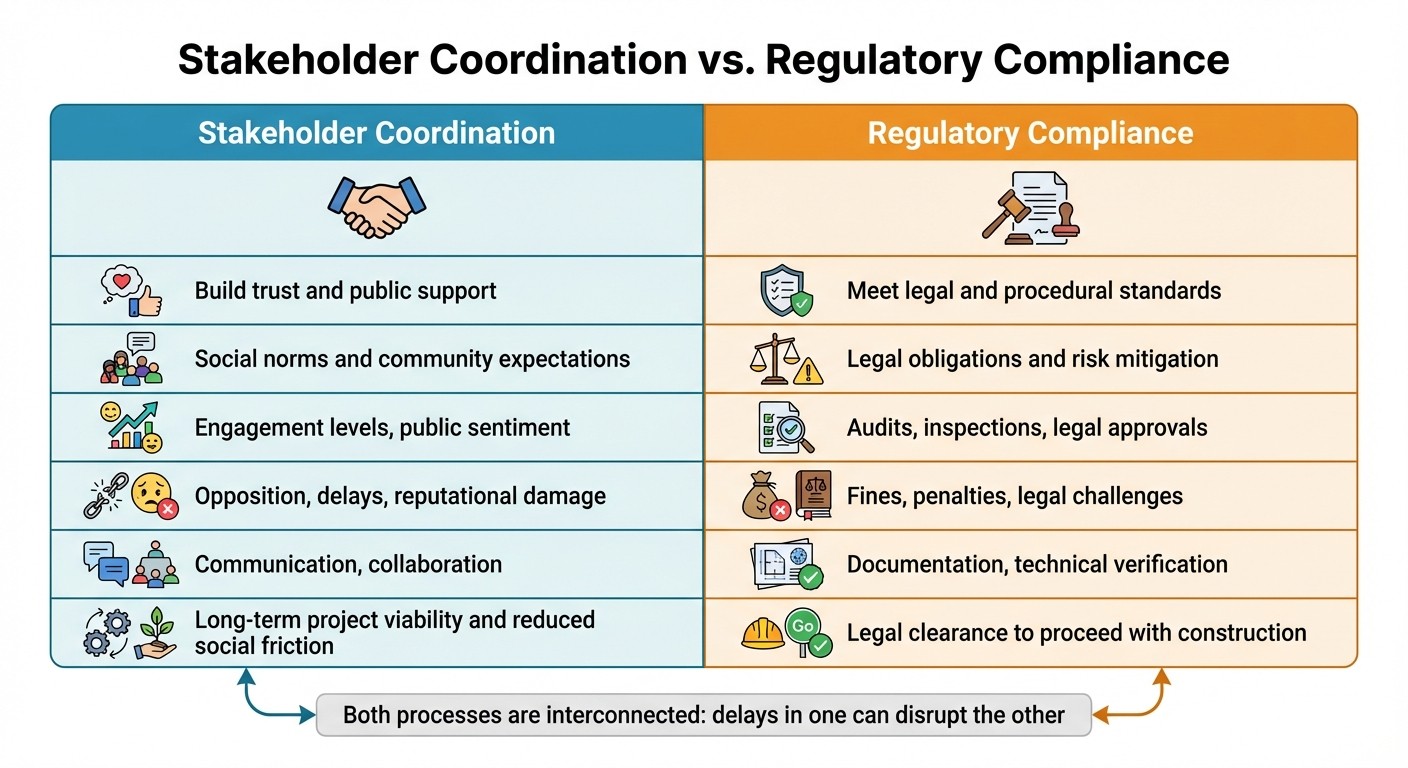
Stakeholder Coordination vs Regulatory Compliance in Permitting: Key Differences
Streamlining Permitting: Balancing Speed, Sustainability & Accountability | Resourcing Tomorrow 2025
What Is Regulatory Compliance in Permitting?
Regulatory compliance in permitting refers to the process of adhering to legal, environmental, and procedural standards mandated by federal, state, and local laws before any project can officially begin. This involves complying with laws such as the Clean Air Act (CAA), Clean Water Act (CWA), Resource Conservation and Recovery Act (RCRA), and the National Environmental Policy Act (NEPA). Meeting these requirements often entails preparing thorough documentation and obtaining formal certifications signed by responsible corporate officers, who may face personal liability for any violations.
For large-scale projects, compliance typically requires preparing detailed reports like Environmental Impact Statements (EIS) or Environmental Assessments (EA). Applicants must submit precise and complete records, alongside sworn certifications from corporate officers. Oversight responsibilities are divided among various agencies. For example, the US Army Corps of Engineers manages wetlands permits under the CWA, while the Environmental Protection Agency (EPA) provides oversight. State agencies often handle permits delegated to them.
Primary Focus of Compliance
The core of compliance lies in meeting legal obligations within strict timelines. This involves submitting accurate documentation, adhering to regulatory deadlines, and securing "written findings" from agencies confirming that all standards are satisfied. Permit approval is far from automatic - regulators conduct meticulous reviews of an applicant’s compliance history, ownership structure, and past performance. Under certain environmental laws, penalties for violations can be assessed on a per-day, per-violation basis, making precision and punctuality absolutely critical.
Common Compliance Challenges
Navigating the regulatory landscape comes with its fair share of challenges. One of the biggest hurdles is limited agency capacity - regulatory bodies often face funding and staffing shortages, which can delay permit reviews. Jamie Pleune from the S.J. Quinney College of Law highlights this issue:
"The strongest evidence finds that delays are caused by factors other than administrative processes and procedures themselves, such as limited agency resources, inexperienced agency staff, and structural barriers to inter-agency coordination" [3].
Inexperienced agency staff can further complicate and lengthen the review process, especially when dealing with intricate procedural requirements. Additionally, projects must contend with a maze of overlapping regulations at the local, state, and federal levels, which vary depending on the type and location of the project. Structural inefficiencies between agencies often result in inconsistent or redundant standards, adding another layer of complexity. Moreover, maintaining a spotless compliance record is crucial - prior violations can disqualify applicants from obtaining new permits, and permits issued without proper review can be suspended or revoked. This rigorous framework emphasizes the importance of aligning legal compliance with effective stakeholder engagement throughout the permitting process.
What Is Stakeholder Coordination in Permitting?
Stakeholder coordination in permitting involves engaging with various parties to foster relationships, gather feedback for better project outcomes, and empower communities to secure public support, often referred to as a "social license to operate" [4]. Unlike compliance, which focuses strictly on meeting legal requirements, coordination prioritizes trust and transparency. This means actively involving the public, encouraging dialogue between developers and communities, and helping project planners identify social and environmental impacts early on [1]. By doing so, developers gain insights that support more thoughtful and resilient project planning.
The importance of coordination extends far beyond checking off procedural boxes. When done effectively, it can uncover potential issues early, reducing risks and complementing the legal framework of compliance [4]. Rebecca Tepper, Secretary of Energy and Environmental Affairs (EEA), highlights this approach:
"By cutting red tape and building in better opportunities for meaningful stakeholder engagement, Massachusetts can ensure needed clean energy infrastructure is built more quickly and responsibly" [1].
Primary Focus of Coordination
The core of stakeholder coordination lies in fostering relationships, maintaining transparency, and aligning expectations among all involved parties - including government agencies, community members, and advocacy organizations [1][4]. This involves creating open communication channels with key entities such as the Federal Energy Regulatory Commission (FERC) and state environmental offices [5]. The objective is to ensure everyone - developers, contractors, and officials - has a clear understanding of the project’s scope and compliance needs as part of an integrated permitting process [5]. Engaging early with local communities and Tribal representatives can also minimize legal challenges and opposition down the line [5][7].
Common Coordination Challenges
Despite its benefits, stakeholder coordination often encounters significant hurdles. Poor engagement can weaken its effectiveness, particularly when marginalized communities are excluded, leading to unfair outcomes [1]. A superficial "tick the box" approach - treating engagement as a mere obligation rather than a genuine opportunity for collaboration - can erode trust [4]. Miscommunication is another frequent issue, especially when different groups, such as utilities, environmental advocates, and municipalities, lack shared objectives [1]. Additionally, competing interests among agencies with differing mandates can cause delays [8], while scattered data - spread across emails, hard drives, and physical files - creates inefficiencies [6]. Maria Belen Power, Undersecretary for Environmental Justice & Equity, underscores the importance of inclusivity:
"Environmental justice communities deserve a seat at the table when siting and permitting energy infrastructure. These recommendations are a first step in ensuring the process is inclusive of those who historically have been ignored and left behind" [1].
Key Differences Between Stakeholder Coordination and Compliance
Stakeholder coordination and regulatory compliance serve entirely different functions, each shaping project dynamics in unique ways. Compliance is rooted in adhering to legal frameworks and standards, often referred to as the "regulative pillar." On the other hand, stakeholder coordination is a collaborative process, shaped by social norms, values, and the need to build trust and consensus.
These approaches not only differ in methodology but also in the kind of friction they generate. Compliance can lead to bureaucratic slowdowns, while effective coordination encourages constructive discussions that highlight a project's value to the community. As Jane Sadler from RMI puts it:
"An effective state permitting process keeps the productive friction, which requires projects to prove that they will be good neighbors to their host communities, and reduces nonproductive friction, which can unnecessarily delay projects." [13]
The consequences of failure in these areas are also distinct. Falling short in compliance can result in legal penalties, fines, or even litigation. In contrast, poor stakeholder coordination risks community opposition, eroded trust, and, in some cases, project cancellation. For instance, between 2013 and 2022, 80% of NEPA-related appeals cases were resolved in favor of federal agencies. While this demonstrates that legal challenges can delay projects, they rarely alter the final outcome. This highlights a critical point: achieving compliance is necessary, but it doesn’t guarantee overall project success.
Comparison Table: Coordination vs. Compliance
| Feature | Stakeholder Coordination | Regulatory Compliance |
| --- | --- | --- |
| <strong>Primary Goal</strong> | Building trust, consensus, and social acceptance | Meeting legal statutes and environmental standards |
| <strong>Primary Driver</strong> | Normative pressure, reputation, and moral obligation | Regulative pressure, including legal and financial risks |
| <strong>Measurement</strong> | Stakeholder satisfaction, engagement levels, and social license | Audits, inspections, and documented legal authorizations |
| <strong>Failure Risk</strong> | Community opposition, reputational damage, and delays | Fines, legal penalties, and potential shutdowns |
| <strong>Key Activity</strong> | Communication, transparency, and collaborative planning | Rigorous documentation, technical verification, and compliance checks |
| <strong>Outcome</strong> | Long-term project viability and reduced social friction | Legal clearance to proceed with construction
| Feature | Stakeholder Coordination | Regulatory Compliance |
| --- | --- | --- |
| <strong>Primary Goal</strong> | Building trust, consensus, and social acceptance | Meeting legal statutes and environmental standards |
| <strong>Primary Driver</strong> | Normative pressure, reputation, and moral obligation | Regulative pressure, including legal and financial risks |
| <strong>Measurement</strong> | Stakeholder satisfaction, engagement levels, and social license | Audits, inspections, and documented legal authorizations |
| <strong>Failure Risk</strong> | Community opposition, reputational damage, and delays | Fines, legal penalties, and potential shutdowns |
| <strong>Key Activity</strong> | Communication, transparency, and collaborative planning | Rigorous documentation, technical verification, and compliance checks |
| <strong>Outcome</strong> | Long-term project viability and reduced social friction | Legal clearance to proceed with construction
While compliance relies on tools like audits, AI-driven code checks, and digital permitting for precision, stakeholder coordination uses strategies such as communication plans, stakeholder mapping, and public engagement to foster trust. Understanding these differences allows project teams to allocate resources wisely and highlights the importance of excelling in both areas.
How Coordination and Compliance Affect Each Other
Stakeholder coordination and regulatory compliance are deeply intertwined - issues in one area often ripple through and disrupt the other. They function as parts of a single, interconnected process, where inefficiencies or delays in one can derail the entire system.
How Poor Coordination Affects Compliance
When stakeholders fail to coordinate effectively, compliance timelines inevitably suffer. Many permits are interconnected, meaning delays in one agency's review can bring the entire process to a standstill. For example, obtaining a Clean Water Act Section 404 permit often hinges on securing a Section 401 certification first. If one agency lags behind, the entire compliance timeline grinds to a halt. In fact, studies show that in three out of four cases, a single delayed approval caused a domino effect, delaying other permits as well [14].
Poor coordination can also result in conflicting regulatory requirements. A California water project faced a situation where one agency's minimum standard directly clashed with another agency's maximum limit. This regulatory deadlock required extensive negotiations to resolve [14]. Additionally, without shared data systems, applicants often face redundant requests for information, leading to higher costs, increased errors, and extended timelines. Agencies, wary of potential legal challenges, frequently produce lengthy Environmental Impact Statements to "litigate-proof" their decisions, consuming significant resources without necessarily improving environmental outcomes [12].
The financial implications are staggering. Between $1.1 trillion and $1.5 trillion in infrastructure capital expenditure is currently tied up in the federal permitting process [12]. These challenges highlight the critical need for robust coordination to ensure compliance standards are met efficiently.
How Compliance Requirements Drive Coordination Needs
Just as poor coordination hinders compliance, strict compliance requirements amplify the need for effective stakeholder engagement. The interdependence of permits means that meeting one federal mandate often depends on approvals from other agencies. For instance, a Clean Water Act Section 404 permit requires a completed biological assessment under the Endangered Species Act before it can be issued [14]. This fragmented authority essentially gives multiple agencies veto power, making collaboration essential to prevent projects from stalling or becoming financially unfeasible [14].
Jamie Pleune from the S.J. Quinney College of Law emphasizes this point:
"Interagency coordination reduces delays caused by inconsistent or redundant standards across agencies." [3]
The complexity of compliance processes also underscores the need for tools like shared technical databases and joint application forms. Without these, agencies impose burdensome information requests that increase workloads for applicants [14]. However, when coordination is successful, compliance becomes much more manageable. A striking example occurred in June 2023, when the collapse of an Interstate 95 overpass in Philadelphia prompted the federal government to waive standard NEPA review requirements. By removing typical multi-agency coordination barriers, the overpass was repaired and reopened in just 12 days [12].
This example demonstrates how streamlined coordination can transform compliance from a costly obstacle into an achievable goal.
How to Balance Coordination and Compliance
Balancing the demands of stakeholder coordination and regulatory compliance requires a structured approach. The Federal Permitting Improvement Steering Council, or Permitting Council, provides annual "Recommended Best Practices" to help large infrastructure projects achieve greater transparency and accountability [15][16]. These guidelines are designed to align environmental reviews, like those mandated under the National Environmental Policy Act (NEPA), with specific permitting requirements. By doing so, they streamline project timelines while ensuring stakeholder input is incorporated early into compliance documentation.
Methods to Improve Coordination
Clear communication is the foundation of effective coordination. Establishing defined communication channels between project proponents, federal agencies, and local stakeholders is essential. Regularly scheduled stakeholder meetings - rather than ad hoc discussions when issues arise - help maintain alignment and resolve potential conflicts before they escalate into delays.
For projects that break new ground, such as nature-based infrastructure, early regulatory mapping is particularly important. These projects often face regulatory frameworks that are still evolving and may not align with traditional permitting categories [2]. Identifying which federal and state authorities have jurisdiction early in the project lifecycle can prevent last-minute surprises. A compliance expert at Access NEP emphasizes this point:
"Effective permit coordination means working directly with these individuals throughout the process - ensuring they fully understand and support the project" [9].
Improved coordination does more than streamline communication; it actively supports compliance by reducing missteps and delays.
Improving Compliance Through Better Coordination
Strong coordination practices naturally enhance compliance efforts. Establishing clear processes and shared information systems ensures that all permit conditions - whether pre-construction, during construction, or post-construction - are tracked and managed effectively. Centralized tracking systems mitigate the risk of losing critical commitments, a common issue during staff turnover or multi-year projects [11].
Interestingly, 60% of compliance responsibilities previously handled by specialized departments are now being managed by operational teams, making collaboration between frontline managers and compliance staff more important than ever [17]. Tools like shared technical databases and joint application forms simplify the process by eliminating redundant information requests. This allows agencies to work from a unified set of data, reducing costs for applicants and increasing efficiency.
Additionally, organizations that adopt stakeholder engagement software can maintain detailed records, ensuring accountability while addressing regulatory concerns tied to undocumented commitments [11]. By shifting compliance from a reactive task to a proactive strategy, these methods help keep projects on track and aligned with regulatory expectations.
Conclusion
Regulatory compliance and stakeholder coordination play distinct yet deeply connected roles in the permitting process. While compliance ensures that legal requirements are met, coordination builds the trust and collaboration needed to move projects forward smoothly [11]. As Paul Kirvan, an independent consultant, aptly states:
"Establishing a culture of compliance requires employee buy-in at all levels. Their actions and understanding of compliance procedures are crucial for success" [10].
This culture of compliance extends beyond internal teams to include external stakeholders, whose trust and support can determine whether a project progresses efficiently or encounters delays and opposition.
The relationship between compliance and coordination is a delicate balance. Inadequate record-keeping of stakeholder interactions can hinder the ability to demonstrate compliance during audits or legal challenges [11]. Conversely, failure to meet regulatory standards can damage credibility, making it harder to maintain productive relationships with stakeholders. Managing this interplay effectively helps organizations avoid fines, delays, and reputational harm while fostering transparent and accountable processes.
For projects navigating intricate regulatory frameworks - like nature-based infrastructure requiring adherence to NEPA, the Clean Water Act, and the Endangered Species Act - early engagement with regulatory agencies is crucial [18][2]. These early consultations can simplify approval processes and reduce potential roadblocks [18].
Addressing these challenges often calls for strategic collaborations. Successfully balancing compliance and coordination requires both disciplined internal processes and robust external partnerships. By integrating systems thinking with stakeholder-focused planning, strategic partnerships can help organizations achieve their sustainability objectives and turn ambitious ideas into actionable solutions. Groups like Council Fire (https://councilfire.org) support governments, NGOs, and businesses in moving beyond ESG compliance to deliver large-scale results. Their work includes building climate resilience, promoting circular economies, and creating regenerative infrastructure through innovative partnerships and data-driven approaches.
FAQs
How does poor stakeholder coordination affect regulatory compliance timelines?
Poor coordination among stakeholders often causes substantial delays in achieving regulatory compliance, primarily by introducing inefficiencies into the permitting process. When key groups - such as government agencies, community leaders, and industry representatives - fail to work in harmony, the result is often miscommunication, redundant efforts, or overlooked deadlines. These challenges can significantly slow down the review and approval stages, pushing project timelines further out.
On top of that, weak coordination can amplify disputes or concerns, particularly within complex stakeholder networks, which can lead to reputational damage and additional delays. To keep compliance efforts on track and avoid unnecessary setbacks, it’s crucial to establish clear communication and engage all parties proactively from the start.
How can organizations enhance both stakeholder coordination and regulatory compliance?
Improving coordination among stakeholders and ensuring regulatory compliance calls for a well-planned and cohesive strategy. Start by developing clearly defined agreements that detail roles, responsibilities, and communication protocols. This clarity helps keep everyone on the same page and ensures adherence to legal standards.
Engaging stakeholders early and consistently is key to building trust and maintaining transparency. Regular collaboration through joint planning sessions, scheduled meetings, and shared knowledge tools can help streamline activities, minimize overlap, and align objectives effectively.
Incorporating technology and data systems into the process can further simplify operations, improve coordination, and ensure compliance with environmental and permitting regulations. By prioritizing these approaches, organizations can meet regulatory requirements while fostering meaningful collaboration with stakeholders, setting the stage for sustained success.
Why is it important to engage with regulatory agencies early in the permitting process?
Engaging with regulatory agencies at the outset of the permitting process is a smart move for tackling the often complex legal and procedural hurdles. By initiating discussions early, project leaders can pinpoint potential obstacles, address regulatory concerns head-on, and steer clear of expensive delays or compliance setbacks.
Starting early also encourages open communication with agencies, giving them a chance to provide valuable feedback that can influence project design and planning. This kind of collaboration not only simplifies the approval process but also ensures projects meet environmental and legal requirements, paving the way for more efficient and responsible outcomes.
Related Blog Posts
Latest Articles
©2025



FAQ
01
What does it really mean to “redefine profit”?
02
What makes Council Fire different?
03
Who does Council Fire you work with?
04
What does working with Council Fire actually look like?
05
How does Council Fire help organizations turn big goals into action?
06
How does Council Fire define and measure success?
Jan 22, 2026
Stakeholder Coordination vs. Compliance: Key Differences
Sustainability Strategy
In This Article
Compare permitting stakeholder coordination and regulatory compliance: goals, risks, interplay, and methods to balance engagement with legal requirements.
Stakeholder Coordination vs. Compliance: Key Differences
Understanding Stakeholder Coordination and Compliance in Permitting
Stakeholder coordination and regulatory compliance are two critical processes in project permitting, each serving distinct roles. Compliance ensures adherence to legal standards, while stakeholder coordination focuses on engaging communities, building trust, and securing public support. Both are essential for project success, but their goals, methods, and challenges differ.
Key Points:
Regulatory Compliance: Focuses on meeting legal requirements (e.g., NEPA, Clean Water Act) through documentation, certifications, and agency approvals. Non-compliance can lead to penalties or project delays.
Stakeholder Coordination: Aims to build relationships, maintain transparency, and address community concerns to gain a "social license to operate." Poor coordination risks opposition and reputational harm.
Interconnection: Delays or inefficiencies in one process can disrupt the other, highlighting the need for careful planning and integration.
Quick Comparison
| Feature | Stakeholder Coordination | Regulatory Compliance |
| --- | --- | --- |
| <strong>Goal</strong> | Build trust and public support | Meet legal and procedural standards |
| <strong>Driver</strong> | Social norms and community expectations | Legal obligations and risk mitigation |
| <strong>Measurement</strong> | Engagement levels, public sentiment | Audits, inspections, legal approvals |
| <strong>Failure Risks</strong> | Opposition, delays, reputational damage | Fines, penalties, legal challenges |
| <strong>Key Activity</strong> | Communication, collaboration | Documentation, technical verification
Conclusion:
Balancing these processes requires clear communication, early planning, and efficient coordination among stakeholders and agencies. Success depends on integrating both efforts to minimize delays, reduce risks, and ensure smooth project execution.
Stakeholder Coordination vs Regulatory Compliance in Permitting: Key Differences
Streamlining Permitting: Balancing Speed, Sustainability & Accountability | Resourcing Tomorrow 2025
What Is Regulatory Compliance in Permitting?
Regulatory compliance in permitting refers to the process of adhering to legal, environmental, and procedural standards mandated by federal, state, and local laws before any project can officially begin. This involves complying with laws such as the Clean Air Act (CAA), Clean Water Act (CWA), Resource Conservation and Recovery Act (RCRA), and the National Environmental Policy Act (NEPA). Meeting these requirements often entails preparing thorough documentation and obtaining formal certifications signed by responsible corporate officers, who may face personal liability for any violations.
For large-scale projects, compliance typically requires preparing detailed reports like Environmental Impact Statements (EIS) or Environmental Assessments (EA). Applicants must submit precise and complete records, alongside sworn certifications from corporate officers. Oversight responsibilities are divided among various agencies. For example, the US Army Corps of Engineers manages wetlands permits under the CWA, while the Environmental Protection Agency (EPA) provides oversight. State agencies often handle permits delegated to them.
Primary Focus of Compliance
The core of compliance lies in meeting legal obligations within strict timelines. This involves submitting accurate documentation, adhering to regulatory deadlines, and securing "written findings" from agencies confirming that all standards are satisfied. Permit approval is far from automatic - regulators conduct meticulous reviews of an applicant’s compliance history, ownership structure, and past performance. Under certain environmental laws, penalties for violations can be assessed on a per-day, per-violation basis, making precision and punctuality absolutely critical.
Common Compliance Challenges
Navigating the regulatory landscape comes with its fair share of challenges. One of the biggest hurdles is limited agency capacity - regulatory bodies often face funding and staffing shortages, which can delay permit reviews. Jamie Pleune from the S.J. Quinney College of Law highlights this issue:
"The strongest evidence finds that delays are caused by factors other than administrative processes and procedures themselves, such as limited agency resources, inexperienced agency staff, and structural barriers to inter-agency coordination" [3].
Inexperienced agency staff can further complicate and lengthen the review process, especially when dealing with intricate procedural requirements. Additionally, projects must contend with a maze of overlapping regulations at the local, state, and federal levels, which vary depending on the type and location of the project. Structural inefficiencies between agencies often result in inconsistent or redundant standards, adding another layer of complexity. Moreover, maintaining a spotless compliance record is crucial - prior violations can disqualify applicants from obtaining new permits, and permits issued without proper review can be suspended or revoked. This rigorous framework emphasizes the importance of aligning legal compliance with effective stakeholder engagement throughout the permitting process.
What Is Stakeholder Coordination in Permitting?
Stakeholder coordination in permitting involves engaging with various parties to foster relationships, gather feedback for better project outcomes, and empower communities to secure public support, often referred to as a "social license to operate" [4]. Unlike compliance, which focuses strictly on meeting legal requirements, coordination prioritizes trust and transparency. This means actively involving the public, encouraging dialogue between developers and communities, and helping project planners identify social and environmental impacts early on [1]. By doing so, developers gain insights that support more thoughtful and resilient project planning.
The importance of coordination extends far beyond checking off procedural boxes. When done effectively, it can uncover potential issues early, reducing risks and complementing the legal framework of compliance [4]. Rebecca Tepper, Secretary of Energy and Environmental Affairs (EEA), highlights this approach:
"By cutting red tape and building in better opportunities for meaningful stakeholder engagement, Massachusetts can ensure needed clean energy infrastructure is built more quickly and responsibly" [1].
Primary Focus of Coordination
The core of stakeholder coordination lies in fostering relationships, maintaining transparency, and aligning expectations among all involved parties - including government agencies, community members, and advocacy organizations [1][4]. This involves creating open communication channels with key entities such as the Federal Energy Regulatory Commission (FERC) and state environmental offices [5]. The objective is to ensure everyone - developers, contractors, and officials - has a clear understanding of the project’s scope and compliance needs as part of an integrated permitting process [5]. Engaging early with local communities and Tribal representatives can also minimize legal challenges and opposition down the line [5][7].
Common Coordination Challenges
Despite its benefits, stakeholder coordination often encounters significant hurdles. Poor engagement can weaken its effectiveness, particularly when marginalized communities are excluded, leading to unfair outcomes [1]. A superficial "tick the box" approach - treating engagement as a mere obligation rather than a genuine opportunity for collaboration - can erode trust [4]. Miscommunication is another frequent issue, especially when different groups, such as utilities, environmental advocates, and municipalities, lack shared objectives [1]. Additionally, competing interests among agencies with differing mandates can cause delays [8], while scattered data - spread across emails, hard drives, and physical files - creates inefficiencies [6]. Maria Belen Power, Undersecretary for Environmental Justice & Equity, underscores the importance of inclusivity:
"Environmental justice communities deserve a seat at the table when siting and permitting energy infrastructure. These recommendations are a first step in ensuring the process is inclusive of those who historically have been ignored and left behind" [1].
Key Differences Between Stakeholder Coordination and Compliance
Stakeholder coordination and regulatory compliance serve entirely different functions, each shaping project dynamics in unique ways. Compliance is rooted in adhering to legal frameworks and standards, often referred to as the "regulative pillar." On the other hand, stakeholder coordination is a collaborative process, shaped by social norms, values, and the need to build trust and consensus.
These approaches not only differ in methodology but also in the kind of friction they generate. Compliance can lead to bureaucratic slowdowns, while effective coordination encourages constructive discussions that highlight a project's value to the community. As Jane Sadler from RMI puts it:
"An effective state permitting process keeps the productive friction, which requires projects to prove that they will be good neighbors to their host communities, and reduces nonproductive friction, which can unnecessarily delay projects." [13]
The consequences of failure in these areas are also distinct. Falling short in compliance can result in legal penalties, fines, or even litigation. In contrast, poor stakeholder coordination risks community opposition, eroded trust, and, in some cases, project cancellation. For instance, between 2013 and 2022, 80% of NEPA-related appeals cases were resolved in favor of federal agencies. While this demonstrates that legal challenges can delay projects, they rarely alter the final outcome. This highlights a critical point: achieving compliance is necessary, but it doesn’t guarantee overall project success.
Comparison Table: Coordination vs. Compliance
| Feature | Stakeholder Coordination | Regulatory Compliance |
| --- | --- | --- |
| <strong>Primary Goal</strong> | Building trust, consensus, and social acceptance | Meeting legal statutes and environmental standards |
| <strong>Primary Driver</strong> | Normative pressure, reputation, and moral obligation | Regulative pressure, including legal and financial risks |
| <strong>Measurement</strong> | Stakeholder satisfaction, engagement levels, and social license | Audits, inspections, and documented legal authorizations |
| <strong>Failure Risk</strong> | Community opposition, reputational damage, and delays | Fines, legal penalties, and potential shutdowns |
| <strong>Key Activity</strong> | Communication, transparency, and collaborative planning | Rigorous documentation, technical verification, and compliance checks |
| <strong>Outcome</strong> | Long-term project viability and reduced social friction | Legal clearance to proceed with construction
While compliance relies on tools like audits, AI-driven code checks, and digital permitting for precision, stakeholder coordination uses strategies such as communication plans, stakeholder mapping, and public engagement to foster trust. Understanding these differences allows project teams to allocate resources wisely and highlights the importance of excelling in both areas.
How Coordination and Compliance Affect Each Other
Stakeholder coordination and regulatory compliance are deeply intertwined - issues in one area often ripple through and disrupt the other. They function as parts of a single, interconnected process, where inefficiencies or delays in one can derail the entire system.
How Poor Coordination Affects Compliance
When stakeholders fail to coordinate effectively, compliance timelines inevitably suffer. Many permits are interconnected, meaning delays in one agency's review can bring the entire process to a standstill. For example, obtaining a Clean Water Act Section 404 permit often hinges on securing a Section 401 certification first. If one agency lags behind, the entire compliance timeline grinds to a halt. In fact, studies show that in three out of four cases, a single delayed approval caused a domino effect, delaying other permits as well [14].
Poor coordination can also result in conflicting regulatory requirements. A California water project faced a situation where one agency's minimum standard directly clashed with another agency's maximum limit. This regulatory deadlock required extensive negotiations to resolve [14]. Additionally, without shared data systems, applicants often face redundant requests for information, leading to higher costs, increased errors, and extended timelines. Agencies, wary of potential legal challenges, frequently produce lengthy Environmental Impact Statements to "litigate-proof" their decisions, consuming significant resources without necessarily improving environmental outcomes [12].
The financial implications are staggering. Between $1.1 trillion and $1.5 trillion in infrastructure capital expenditure is currently tied up in the federal permitting process [12]. These challenges highlight the critical need for robust coordination to ensure compliance standards are met efficiently.
How Compliance Requirements Drive Coordination Needs
Just as poor coordination hinders compliance, strict compliance requirements amplify the need for effective stakeholder engagement. The interdependence of permits means that meeting one federal mandate often depends on approvals from other agencies. For instance, a Clean Water Act Section 404 permit requires a completed biological assessment under the Endangered Species Act before it can be issued [14]. This fragmented authority essentially gives multiple agencies veto power, making collaboration essential to prevent projects from stalling or becoming financially unfeasible [14].
Jamie Pleune from the S.J. Quinney College of Law emphasizes this point:
"Interagency coordination reduces delays caused by inconsistent or redundant standards across agencies." [3]
The complexity of compliance processes also underscores the need for tools like shared technical databases and joint application forms. Without these, agencies impose burdensome information requests that increase workloads for applicants [14]. However, when coordination is successful, compliance becomes much more manageable. A striking example occurred in June 2023, when the collapse of an Interstate 95 overpass in Philadelphia prompted the federal government to waive standard NEPA review requirements. By removing typical multi-agency coordination barriers, the overpass was repaired and reopened in just 12 days [12].
This example demonstrates how streamlined coordination can transform compliance from a costly obstacle into an achievable goal.
How to Balance Coordination and Compliance
Balancing the demands of stakeholder coordination and regulatory compliance requires a structured approach. The Federal Permitting Improvement Steering Council, or Permitting Council, provides annual "Recommended Best Practices" to help large infrastructure projects achieve greater transparency and accountability [15][16]. These guidelines are designed to align environmental reviews, like those mandated under the National Environmental Policy Act (NEPA), with specific permitting requirements. By doing so, they streamline project timelines while ensuring stakeholder input is incorporated early into compliance documentation.
Methods to Improve Coordination
Clear communication is the foundation of effective coordination. Establishing defined communication channels between project proponents, federal agencies, and local stakeholders is essential. Regularly scheduled stakeholder meetings - rather than ad hoc discussions when issues arise - help maintain alignment and resolve potential conflicts before they escalate into delays.
For projects that break new ground, such as nature-based infrastructure, early regulatory mapping is particularly important. These projects often face regulatory frameworks that are still evolving and may not align with traditional permitting categories [2]. Identifying which federal and state authorities have jurisdiction early in the project lifecycle can prevent last-minute surprises. A compliance expert at Access NEP emphasizes this point:
"Effective permit coordination means working directly with these individuals throughout the process - ensuring they fully understand and support the project" [9].
Improved coordination does more than streamline communication; it actively supports compliance by reducing missteps and delays.
Improving Compliance Through Better Coordination
Strong coordination practices naturally enhance compliance efforts. Establishing clear processes and shared information systems ensures that all permit conditions - whether pre-construction, during construction, or post-construction - are tracked and managed effectively. Centralized tracking systems mitigate the risk of losing critical commitments, a common issue during staff turnover or multi-year projects [11].
Interestingly, 60% of compliance responsibilities previously handled by specialized departments are now being managed by operational teams, making collaboration between frontline managers and compliance staff more important than ever [17]. Tools like shared technical databases and joint application forms simplify the process by eliminating redundant information requests. This allows agencies to work from a unified set of data, reducing costs for applicants and increasing efficiency.
Additionally, organizations that adopt stakeholder engagement software can maintain detailed records, ensuring accountability while addressing regulatory concerns tied to undocumented commitments [11]. By shifting compliance from a reactive task to a proactive strategy, these methods help keep projects on track and aligned with regulatory expectations.
Conclusion
Regulatory compliance and stakeholder coordination play distinct yet deeply connected roles in the permitting process. While compliance ensures that legal requirements are met, coordination builds the trust and collaboration needed to move projects forward smoothly [11]. As Paul Kirvan, an independent consultant, aptly states:
"Establishing a culture of compliance requires employee buy-in at all levels. Their actions and understanding of compliance procedures are crucial for success" [10].
This culture of compliance extends beyond internal teams to include external stakeholders, whose trust and support can determine whether a project progresses efficiently or encounters delays and opposition.
The relationship between compliance and coordination is a delicate balance. Inadequate record-keeping of stakeholder interactions can hinder the ability to demonstrate compliance during audits or legal challenges [11]. Conversely, failure to meet regulatory standards can damage credibility, making it harder to maintain productive relationships with stakeholders. Managing this interplay effectively helps organizations avoid fines, delays, and reputational harm while fostering transparent and accountable processes.
For projects navigating intricate regulatory frameworks - like nature-based infrastructure requiring adherence to NEPA, the Clean Water Act, and the Endangered Species Act - early engagement with regulatory agencies is crucial [18][2]. These early consultations can simplify approval processes and reduce potential roadblocks [18].
Addressing these challenges often calls for strategic collaborations. Successfully balancing compliance and coordination requires both disciplined internal processes and robust external partnerships. By integrating systems thinking with stakeholder-focused planning, strategic partnerships can help organizations achieve their sustainability objectives and turn ambitious ideas into actionable solutions. Groups like Council Fire (https://councilfire.org) support governments, NGOs, and businesses in moving beyond ESG compliance to deliver large-scale results. Their work includes building climate resilience, promoting circular economies, and creating regenerative infrastructure through innovative partnerships and data-driven approaches.
FAQs
How does poor stakeholder coordination affect regulatory compliance timelines?
Poor coordination among stakeholders often causes substantial delays in achieving regulatory compliance, primarily by introducing inefficiencies into the permitting process. When key groups - such as government agencies, community leaders, and industry representatives - fail to work in harmony, the result is often miscommunication, redundant efforts, or overlooked deadlines. These challenges can significantly slow down the review and approval stages, pushing project timelines further out.
On top of that, weak coordination can amplify disputes or concerns, particularly within complex stakeholder networks, which can lead to reputational damage and additional delays. To keep compliance efforts on track and avoid unnecessary setbacks, it’s crucial to establish clear communication and engage all parties proactively from the start.
How can organizations enhance both stakeholder coordination and regulatory compliance?
Improving coordination among stakeholders and ensuring regulatory compliance calls for a well-planned and cohesive strategy. Start by developing clearly defined agreements that detail roles, responsibilities, and communication protocols. This clarity helps keep everyone on the same page and ensures adherence to legal standards.
Engaging stakeholders early and consistently is key to building trust and maintaining transparency. Regular collaboration through joint planning sessions, scheduled meetings, and shared knowledge tools can help streamline activities, minimize overlap, and align objectives effectively.
Incorporating technology and data systems into the process can further simplify operations, improve coordination, and ensure compliance with environmental and permitting regulations. By prioritizing these approaches, organizations can meet regulatory requirements while fostering meaningful collaboration with stakeholders, setting the stage for sustained success.
Why is it important to engage with regulatory agencies early in the permitting process?
Engaging with regulatory agencies at the outset of the permitting process is a smart move for tackling the often complex legal and procedural hurdles. By initiating discussions early, project leaders can pinpoint potential obstacles, address regulatory concerns head-on, and steer clear of expensive delays or compliance setbacks.
Starting early also encourages open communication with agencies, giving them a chance to provide valuable feedback that can influence project design and planning. This kind of collaboration not only simplifies the approval process but also ensures projects meet environmental and legal requirements, paving the way for more efficient and responsible outcomes.
Related Blog Posts
FAQ
01
What does it really mean to “redefine profit”?
02
What makes Council Fire different?
03
Who does Council Fire you work with?
04
What does working with Council Fire actually look like?
05
How does Council Fire help organizations turn big goals into action?
06
How does Council Fire define and measure success?
Jan 22, 2026
Stakeholder Coordination vs. Compliance: Key Differences
Sustainability Strategy
In This Article
Compare permitting stakeholder coordination and regulatory compliance: goals, risks, interplay, and methods to balance engagement with legal requirements.
Stakeholder Coordination vs. Compliance: Key Differences
Understanding Stakeholder Coordination and Compliance in Permitting
Stakeholder coordination and regulatory compliance are two critical processes in project permitting, each serving distinct roles. Compliance ensures adherence to legal standards, while stakeholder coordination focuses on engaging communities, building trust, and securing public support. Both are essential for project success, but their goals, methods, and challenges differ.
Key Points:
Regulatory Compliance: Focuses on meeting legal requirements (e.g., NEPA, Clean Water Act) through documentation, certifications, and agency approvals. Non-compliance can lead to penalties or project delays.
Stakeholder Coordination: Aims to build relationships, maintain transparency, and address community concerns to gain a "social license to operate." Poor coordination risks opposition and reputational harm.
Interconnection: Delays or inefficiencies in one process can disrupt the other, highlighting the need for careful planning and integration.
Quick Comparison
| Feature | Stakeholder Coordination | Regulatory Compliance |
| --- | --- | --- |
| <strong>Goal</strong> | Build trust and public support | Meet legal and procedural standards |
| <strong>Driver</strong> | Social norms and community expectations | Legal obligations and risk mitigation |
| <strong>Measurement</strong> | Engagement levels, public sentiment | Audits, inspections, legal approvals |
| <strong>Failure Risks</strong> | Opposition, delays, reputational damage | Fines, penalties, legal challenges |
| <strong>Key Activity</strong> | Communication, collaboration | Documentation, technical verification
Conclusion:
Balancing these processes requires clear communication, early planning, and efficient coordination among stakeholders and agencies. Success depends on integrating both efforts to minimize delays, reduce risks, and ensure smooth project execution.
Stakeholder Coordination vs Regulatory Compliance in Permitting: Key Differences
Streamlining Permitting: Balancing Speed, Sustainability & Accountability | Resourcing Tomorrow 2025
What Is Regulatory Compliance in Permitting?
Regulatory compliance in permitting refers to the process of adhering to legal, environmental, and procedural standards mandated by federal, state, and local laws before any project can officially begin. This involves complying with laws such as the Clean Air Act (CAA), Clean Water Act (CWA), Resource Conservation and Recovery Act (RCRA), and the National Environmental Policy Act (NEPA). Meeting these requirements often entails preparing thorough documentation and obtaining formal certifications signed by responsible corporate officers, who may face personal liability for any violations.
For large-scale projects, compliance typically requires preparing detailed reports like Environmental Impact Statements (EIS) or Environmental Assessments (EA). Applicants must submit precise and complete records, alongside sworn certifications from corporate officers. Oversight responsibilities are divided among various agencies. For example, the US Army Corps of Engineers manages wetlands permits under the CWA, while the Environmental Protection Agency (EPA) provides oversight. State agencies often handle permits delegated to them.
Primary Focus of Compliance
The core of compliance lies in meeting legal obligations within strict timelines. This involves submitting accurate documentation, adhering to regulatory deadlines, and securing "written findings" from agencies confirming that all standards are satisfied. Permit approval is far from automatic - regulators conduct meticulous reviews of an applicant’s compliance history, ownership structure, and past performance. Under certain environmental laws, penalties for violations can be assessed on a per-day, per-violation basis, making precision and punctuality absolutely critical.
Common Compliance Challenges
Navigating the regulatory landscape comes with its fair share of challenges. One of the biggest hurdles is limited agency capacity - regulatory bodies often face funding and staffing shortages, which can delay permit reviews. Jamie Pleune from the S.J. Quinney College of Law highlights this issue:
"The strongest evidence finds that delays are caused by factors other than administrative processes and procedures themselves, such as limited agency resources, inexperienced agency staff, and structural barriers to inter-agency coordination" [3].
Inexperienced agency staff can further complicate and lengthen the review process, especially when dealing with intricate procedural requirements. Additionally, projects must contend with a maze of overlapping regulations at the local, state, and federal levels, which vary depending on the type and location of the project. Structural inefficiencies between agencies often result in inconsistent or redundant standards, adding another layer of complexity. Moreover, maintaining a spotless compliance record is crucial - prior violations can disqualify applicants from obtaining new permits, and permits issued without proper review can be suspended or revoked. This rigorous framework emphasizes the importance of aligning legal compliance with effective stakeholder engagement throughout the permitting process.
What Is Stakeholder Coordination in Permitting?
Stakeholder coordination in permitting involves engaging with various parties to foster relationships, gather feedback for better project outcomes, and empower communities to secure public support, often referred to as a "social license to operate" [4]. Unlike compliance, which focuses strictly on meeting legal requirements, coordination prioritizes trust and transparency. This means actively involving the public, encouraging dialogue between developers and communities, and helping project planners identify social and environmental impacts early on [1]. By doing so, developers gain insights that support more thoughtful and resilient project planning.
The importance of coordination extends far beyond checking off procedural boxes. When done effectively, it can uncover potential issues early, reducing risks and complementing the legal framework of compliance [4]. Rebecca Tepper, Secretary of Energy and Environmental Affairs (EEA), highlights this approach:
"By cutting red tape and building in better opportunities for meaningful stakeholder engagement, Massachusetts can ensure needed clean energy infrastructure is built more quickly and responsibly" [1].
Primary Focus of Coordination
The core of stakeholder coordination lies in fostering relationships, maintaining transparency, and aligning expectations among all involved parties - including government agencies, community members, and advocacy organizations [1][4]. This involves creating open communication channels with key entities such as the Federal Energy Regulatory Commission (FERC) and state environmental offices [5]. The objective is to ensure everyone - developers, contractors, and officials - has a clear understanding of the project’s scope and compliance needs as part of an integrated permitting process [5]. Engaging early with local communities and Tribal representatives can also minimize legal challenges and opposition down the line [5][7].
Common Coordination Challenges
Despite its benefits, stakeholder coordination often encounters significant hurdles. Poor engagement can weaken its effectiveness, particularly when marginalized communities are excluded, leading to unfair outcomes [1]. A superficial "tick the box" approach - treating engagement as a mere obligation rather than a genuine opportunity for collaboration - can erode trust [4]. Miscommunication is another frequent issue, especially when different groups, such as utilities, environmental advocates, and municipalities, lack shared objectives [1]. Additionally, competing interests among agencies with differing mandates can cause delays [8], while scattered data - spread across emails, hard drives, and physical files - creates inefficiencies [6]. Maria Belen Power, Undersecretary for Environmental Justice & Equity, underscores the importance of inclusivity:
"Environmental justice communities deserve a seat at the table when siting and permitting energy infrastructure. These recommendations are a first step in ensuring the process is inclusive of those who historically have been ignored and left behind" [1].
Key Differences Between Stakeholder Coordination and Compliance
Stakeholder coordination and regulatory compliance serve entirely different functions, each shaping project dynamics in unique ways. Compliance is rooted in adhering to legal frameworks and standards, often referred to as the "regulative pillar." On the other hand, stakeholder coordination is a collaborative process, shaped by social norms, values, and the need to build trust and consensus.
These approaches not only differ in methodology but also in the kind of friction they generate. Compliance can lead to bureaucratic slowdowns, while effective coordination encourages constructive discussions that highlight a project's value to the community. As Jane Sadler from RMI puts it:
"An effective state permitting process keeps the productive friction, which requires projects to prove that they will be good neighbors to their host communities, and reduces nonproductive friction, which can unnecessarily delay projects." [13]
The consequences of failure in these areas are also distinct. Falling short in compliance can result in legal penalties, fines, or even litigation. In contrast, poor stakeholder coordination risks community opposition, eroded trust, and, in some cases, project cancellation. For instance, between 2013 and 2022, 80% of NEPA-related appeals cases were resolved in favor of federal agencies. While this demonstrates that legal challenges can delay projects, they rarely alter the final outcome. This highlights a critical point: achieving compliance is necessary, but it doesn’t guarantee overall project success.
Comparison Table: Coordination vs. Compliance
| Feature | Stakeholder Coordination | Regulatory Compliance |
| --- | --- | --- |
| <strong>Primary Goal</strong> | Building trust, consensus, and social acceptance | Meeting legal statutes and environmental standards |
| <strong>Primary Driver</strong> | Normative pressure, reputation, and moral obligation | Regulative pressure, including legal and financial risks |
| <strong>Measurement</strong> | Stakeholder satisfaction, engagement levels, and social license | Audits, inspections, and documented legal authorizations |
| <strong>Failure Risk</strong> | Community opposition, reputational damage, and delays | Fines, legal penalties, and potential shutdowns |
| <strong>Key Activity</strong> | Communication, transparency, and collaborative planning | Rigorous documentation, technical verification, and compliance checks |
| <strong>Outcome</strong> | Long-term project viability and reduced social friction | Legal clearance to proceed with construction
While compliance relies on tools like audits, AI-driven code checks, and digital permitting for precision, stakeholder coordination uses strategies such as communication plans, stakeholder mapping, and public engagement to foster trust. Understanding these differences allows project teams to allocate resources wisely and highlights the importance of excelling in both areas.
How Coordination and Compliance Affect Each Other
Stakeholder coordination and regulatory compliance are deeply intertwined - issues in one area often ripple through and disrupt the other. They function as parts of a single, interconnected process, where inefficiencies or delays in one can derail the entire system.
How Poor Coordination Affects Compliance
When stakeholders fail to coordinate effectively, compliance timelines inevitably suffer. Many permits are interconnected, meaning delays in one agency's review can bring the entire process to a standstill. For example, obtaining a Clean Water Act Section 404 permit often hinges on securing a Section 401 certification first. If one agency lags behind, the entire compliance timeline grinds to a halt. In fact, studies show that in three out of four cases, a single delayed approval caused a domino effect, delaying other permits as well [14].
Poor coordination can also result in conflicting regulatory requirements. A California water project faced a situation where one agency's minimum standard directly clashed with another agency's maximum limit. This regulatory deadlock required extensive negotiations to resolve [14]. Additionally, without shared data systems, applicants often face redundant requests for information, leading to higher costs, increased errors, and extended timelines. Agencies, wary of potential legal challenges, frequently produce lengthy Environmental Impact Statements to "litigate-proof" their decisions, consuming significant resources without necessarily improving environmental outcomes [12].
The financial implications are staggering. Between $1.1 trillion and $1.5 trillion in infrastructure capital expenditure is currently tied up in the federal permitting process [12]. These challenges highlight the critical need for robust coordination to ensure compliance standards are met efficiently.
How Compliance Requirements Drive Coordination Needs
Just as poor coordination hinders compliance, strict compliance requirements amplify the need for effective stakeholder engagement. The interdependence of permits means that meeting one federal mandate often depends on approvals from other agencies. For instance, a Clean Water Act Section 404 permit requires a completed biological assessment under the Endangered Species Act before it can be issued [14]. This fragmented authority essentially gives multiple agencies veto power, making collaboration essential to prevent projects from stalling or becoming financially unfeasible [14].
Jamie Pleune from the S.J. Quinney College of Law emphasizes this point:
"Interagency coordination reduces delays caused by inconsistent or redundant standards across agencies." [3]
The complexity of compliance processes also underscores the need for tools like shared technical databases and joint application forms. Without these, agencies impose burdensome information requests that increase workloads for applicants [14]. However, when coordination is successful, compliance becomes much more manageable. A striking example occurred in June 2023, when the collapse of an Interstate 95 overpass in Philadelphia prompted the federal government to waive standard NEPA review requirements. By removing typical multi-agency coordination barriers, the overpass was repaired and reopened in just 12 days [12].
This example demonstrates how streamlined coordination can transform compliance from a costly obstacle into an achievable goal.
How to Balance Coordination and Compliance
Balancing the demands of stakeholder coordination and regulatory compliance requires a structured approach. The Federal Permitting Improvement Steering Council, or Permitting Council, provides annual "Recommended Best Practices" to help large infrastructure projects achieve greater transparency and accountability [15][16]. These guidelines are designed to align environmental reviews, like those mandated under the National Environmental Policy Act (NEPA), with specific permitting requirements. By doing so, they streamline project timelines while ensuring stakeholder input is incorporated early into compliance documentation.
Methods to Improve Coordination
Clear communication is the foundation of effective coordination. Establishing defined communication channels between project proponents, federal agencies, and local stakeholders is essential. Regularly scheduled stakeholder meetings - rather than ad hoc discussions when issues arise - help maintain alignment and resolve potential conflicts before they escalate into delays.
For projects that break new ground, such as nature-based infrastructure, early regulatory mapping is particularly important. These projects often face regulatory frameworks that are still evolving and may not align with traditional permitting categories [2]. Identifying which federal and state authorities have jurisdiction early in the project lifecycle can prevent last-minute surprises. A compliance expert at Access NEP emphasizes this point:
"Effective permit coordination means working directly with these individuals throughout the process - ensuring they fully understand and support the project" [9].
Improved coordination does more than streamline communication; it actively supports compliance by reducing missteps and delays.
Improving Compliance Through Better Coordination
Strong coordination practices naturally enhance compliance efforts. Establishing clear processes and shared information systems ensures that all permit conditions - whether pre-construction, during construction, or post-construction - are tracked and managed effectively. Centralized tracking systems mitigate the risk of losing critical commitments, a common issue during staff turnover or multi-year projects [11].
Interestingly, 60% of compliance responsibilities previously handled by specialized departments are now being managed by operational teams, making collaboration between frontline managers and compliance staff more important than ever [17]. Tools like shared technical databases and joint application forms simplify the process by eliminating redundant information requests. This allows agencies to work from a unified set of data, reducing costs for applicants and increasing efficiency.
Additionally, organizations that adopt stakeholder engagement software can maintain detailed records, ensuring accountability while addressing regulatory concerns tied to undocumented commitments [11]. By shifting compliance from a reactive task to a proactive strategy, these methods help keep projects on track and aligned with regulatory expectations.
Conclusion
Regulatory compliance and stakeholder coordination play distinct yet deeply connected roles in the permitting process. While compliance ensures that legal requirements are met, coordination builds the trust and collaboration needed to move projects forward smoothly [11]. As Paul Kirvan, an independent consultant, aptly states:
"Establishing a culture of compliance requires employee buy-in at all levels. Their actions and understanding of compliance procedures are crucial for success" [10].
This culture of compliance extends beyond internal teams to include external stakeholders, whose trust and support can determine whether a project progresses efficiently or encounters delays and opposition.
The relationship between compliance and coordination is a delicate balance. Inadequate record-keeping of stakeholder interactions can hinder the ability to demonstrate compliance during audits or legal challenges [11]. Conversely, failure to meet regulatory standards can damage credibility, making it harder to maintain productive relationships with stakeholders. Managing this interplay effectively helps organizations avoid fines, delays, and reputational harm while fostering transparent and accountable processes.
For projects navigating intricate regulatory frameworks - like nature-based infrastructure requiring adherence to NEPA, the Clean Water Act, and the Endangered Species Act - early engagement with regulatory agencies is crucial [18][2]. These early consultations can simplify approval processes and reduce potential roadblocks [18].
Addressing these challenges often calls for strategic collaborations. Successfully balancing compliance and coordination requires both disciplined internal processes and robust external partnerships. By integrating systems thinking with stakeholder-focused planning, strategic partnerships can help organizations achieve their sustainability objectives and turn ambitious ideas into actionable solutions. Groups like Council Fire (https://councilfire.org) support governments, NGOs, and businesses in moving beyond ESG compliance to deliver large-scale results. Their work includes building climate resilience, promoting circular economies, and creating regenerative infrastructure through innovative partnerships and data-driven approaches.
FAQs
How does poor stakeholder coordination affect regulatory compliance timelines?
Poor coordination among stakeholders often causes substantial delays in achieving regulatory compliance, primarily by introducing inefficiencies into the permitting process. When key groups - such as government agencies, community leaders, and industry representatives - fail to work in harmony, the result is often miscommunication, redundant efforts, or overlooked deadlines. These challenges can significantly slow down the review and approval stages, pushing project timelines further out.
On top of that, weak coordination can amplify disputes or concerns, particularly within complex stakeholder networks, which can lead to reputational damage and additional delays. To keep compliance efforts on track and avoid unnecessary setbacks, it’s crucial to establish clear communication and engage all parties proactively from the start.
How can organizations enhance both stakeholder coordination and regulatory compliance?
Improving coordination among stakeholders and ensuring regulatory compliance calls for a well-planned and cohesive strategy. Start by developing clearly defined agreements that detail roles, responsibilities, and communication protocols. This clarity helps keep everyone on the same page and ensures adherence to legal standards.
Engaging stakeholders early and consistently is key to building trust and maintaining transparency. Regular collaboration through joint planning sessions, scheduled meetings, and shared knowledge tools can help streamline activities, minimize overlap, and align objectives effectively.
Incorporating technology and data systems into the process can further simplify operations, improve coordination, and ensure compliance with environmental and permitting regulations. By prioritizing these approaches, organizations can meet regulatory requirements while fostering meaningful collaboration with stakeholders, setting the stage for sustained success.
Why is it important to engage with regulatory agencies early in the permitting process?
Engaging with regulatory agencies at the outset of the permitting process is a smart move for tackling the often complex legal and procedural hurdles. By initiating discussions early, project leaders can pinpoint potential obstacles, address regulatory concerns head-on, and steer clear of expensive delays or compliance setbacks.
Starting early also encourages open communication with agencies, giving them a chance to provide valuable feedback that can influence project design and planning. This kind of collaboration not only simplifies the approval process but also ensures projects meet environmental and legal requirements, paving the way for more efficient and responsible outcomes.
Related Blog Posts
FAQ
What does it really mean to “redefine profit”?
What makes Council Fire different?
Who does Council Fire you work with?
What does working with Council Fire actually look like?
How does Council Fire help organizations turn big goals into action?
How does Council Fire define and measure success?