
Jul 3, 2026
SEC Climate Rules: Role of Climate Data
ESG Strategy
In This Article
How SEC climate rules turn emissions and asset-level risk data into audit-ready evidence — linking sustainability, finance, and legal controls.
SEC Climate Rules: Role of Climate Data
If your climate data cannot be traced, checked, and tied to financial reporting, your SEC disclosure is at risk.
I’d sum up the article this way: the SEC’s March 2024 climate rule turns climate reporting from a website exercise into a filing issue with legal, audit, and control pressure. The main problem is not writing the disclosure. It is proving, with records and controls, that the disclosure is right.
Here’s the short version:
Material climate risks must be disclosed in annual filings when a reasonable investor would care.
Board oversight and management processes must be described.
Large accelerated filers and accelerated filers may need to report material Scope 1 and Scope 2 emissions.
Climate-related financial effects from severe weather and sea level rise may need to appear in audited financial statement notes.
Climate targets and related spending may also need disclosure when they matter to the business.
Nearly 90% of Russell 1000 companies publish some climate information, but only about 20% of U.S. public companies report Scope 1 and Scope 2 emissions. That gap shows how far many companies still are from SEC-ready reporting.
What matters most, in my view, is this:
You need asset-level risk data, not broad estimates.
You need emissions data with source records like fuel logs and power bills.
You need ledger-linked weather cost tracking for footnotes.
You need written materiality decisions, not informal calls.
You need shared review steps across finance, legal, and sustainability teams.
A simple way to think about it: the rule asks, “What climate issues matter, how do you know, and can you prove it?” If the answer depends on scattered spreadsheets, weak audit trails, or teams using different definitions, filing risk goes up fast.
This article shows where the usual gaps are, what data each disclosure depends on, and how I’d build a reporting process that can hold up under SEC review.
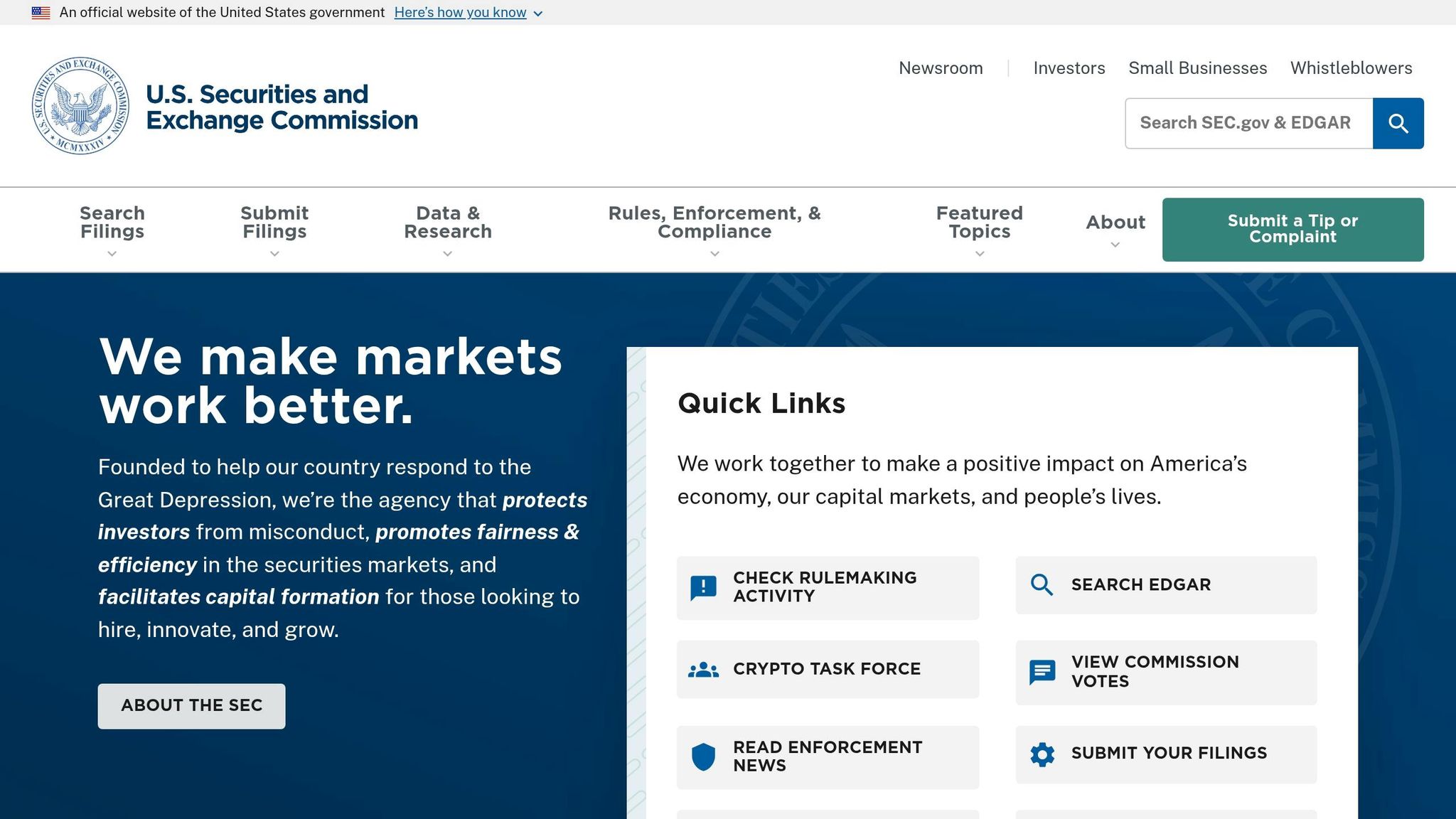
Climate-Related Disclosures for Investors | SEC Adopts Final Rules
What the SEC Rules Require and Why the Data Burden Is High

SEC Climate Disclosure Phase-In Timeline: Key Deadlines by Filer Type
The rules apply to SEC registrants that file annual reports and registration statements [1]. At first glance, the standard sounds simple: if a climate-related risk is material, it must be disclosed [4]. But that plain-language rule carries a heavy lift.
The SEC says a matter is material if a reasonable investor would see it as important to an investment or voting decision [3]. In practice, that means companies need dependable data on exposure, severity, and financial effect. Without that, it’s hard to support a materiality call. This is why climate compliance is not just a writing task for legal or IR teams. It’s a data problem that runs across the business.
Material Risk, Governance, and Strategy Disclosures
All registrants must disclose how the board oversees climate risk and how management identifies, assesses, and manages that risk. If physical risks, such as flooding or wildfire, and transition risks, such as carbon pricing, could materially affect the company’s strategy, business model, or financial condition, the company must disclose those risks and explain how they are identified, assessed, and managed [4].
That sounds straightforward, but the work behind it usually is not. Board governance details may sit in one place, risk reviews in another, and business-impact analysis somewhere else entirely. If those pieces don’t line up, disclosure gets shaky fast.
Emissions and Financial Statement Data Requirements
LAFs and AFs must disclose material Scope 1 and Scope 2 emissions [4]. SRCs and EGCs are exempt. All registrants must also disclose material financial impacts from severe weather and sea level rise in the audited financial statement note. Amounts that meet the 1% threshold must be reported, and that note falls under ICFR and audit requirements [4]. If a company has climate-related targets or goals that materially affect its business or financial condition, those must also be disclosed, along with related spending and effects on financial estimates [4].
Each requirement draws from different systems. Emissions data may come from EHS teams or utility records. Financial impacts sit in accounting systems. Climate targets may live with sustainability consulting, operations, or investor relations. That patchwork is where many compliance problems begin.
Timing, Filer Status, and Phase-In Requirements
The phase-in schedule sets the pace for how fast companies need to build their data and control systems.
Filer Type | Narrative Disclosures | Scope 1 & 2 Emissions | Limited Assurance | Reasonable Assurance |
|---|---|---|---|---|
LAFs (Large Accelerated Filers) | FYB 2025 | FYB 2026 | FYB 2029 | FYB 2033 |
AFs (Accelerated Filers, non-SRC/EGC) | FYB 2026 | FYB 2028 | FYB 2031 | N/A |
SRCs, EGCs, & Non-Accelerated Filers | FYB 2027 | Exempt | N/A | N/A |
FYB = fiscal years beginning in the calendar year listed.
The dates may look manageable on paper, but building reliable processes often takes more than one reporting cycle [1]. Teams need time to map data sources, test controls, sort out ownership, and fix gaps before disclosure deadlines hit. That’s why waiting for the first filing year can put companies on the back foot almost immediately.
The Core Compliance Problem: Data Gaps, Weak Controls, and Materiality Challenges
The phase-in timeline sets the deadline. The harder issue is data quality. Many companies still don't have complete, asset-level, finance-linked climate data that can stand up to assurance. Those gaps ripple across every SEC disclosure area, from risk narratives to emissions reporting and financial statement footnotes.
Fragmented Emissions and Physical Risk Data
In most companies, emissions data lives in pieces. Utility bills, fuel-use records, and other inputs sit across business units and partner systems, which makes it tough to build one consistent, auditable dataset. Physical risk data runs into the same wall. Hazard exposure is often modeled at a high level rather than tied to specific facilities or assets. When that happens, it becomes much harder to decide whether a physical risk is material to a given site or to the company's overall financial condition.
The table below shows how common data gaps affect SEC disclosures and where the compliance risk shows up. Same story, different line item: when the data is missing, disclosure starts to look like guesswork.
SEC Disclosure Area | Common Data Challenge | Resulting Compliance Risk |
|---|---|---|
GHG Emissions (Scope 1 & 2) | Fragmented utility and fuel-use records across facilities [5] | Inaccurate reporting; failure to meet assurance standards [3] |
Financial Statement Footnotes | Difficulty isolating severe weather costs from standard operational losses [4] | Audit findings; weak internal control over financial reporting (ICFR) [3] |
Materiality Assessments | Subjective qualitative judgments without documented evidence [3] | Legal liability; shareholder lawsuits over omitted material risks [6] |
Transition Plans & Targets | Weak audit trails for forward-looking progress metrics [3] | Greenwashing allegations; potential loss of safe harbor protections [6] |
Physical Risk Analytics | Limited asset-level hazard exposure data [5] | Inaccurate assessment of material impact on business strategy [4] |
Materiality Judgments and Assurance Readiness
Deciding what is material under the SEC standard takes both quantitative and qualitative analysis. It is not a one-and-done judgment call. It has to be documented, defensible, and repeatable. That's where many companies run into trouble. They rely on informal assessments with little written support, and that creates a weak record. If the basis for a materiality decision isn't written down, it's much harder to defend during a filing review or a dispute.
Assurance pushes the standard higher. Companies need documentation, testing protocols, and internal controls that can hold up under third-party review. Building that control structure takes time, especially when climate data is still scattered across systems and teams.
Why Finance, Legal, and Sustainability Teams Often Misalign
Even when the data exists, it often doesn't move cleanly across departments. Sustainability teams tend to focus on operational metrics and greenhouse gas accounting methods. Finance teams care about internal controls and what belongs in audited statements. Legal teams are focused on SEC filing language and liability exposure.
The problem is that these groups often work from different boundaries, definitions, and review calendars. That mismatch can lead to filing language that doesn't line up with the source data, and that's exactly the kind of inconsistency that draws regulatory scrutiny.
A clean filing process starts with shared definitions, shared data sources, and shared review checkpoints. Without that, teams are working off different maps and hoping they still end up in the same place. That's why the next step is a climate data system built for disclosure, control, and review.
How Climate Data Addresses Each SEC Disclosure Requirement
This section ties each SEC disclosure to the climate data behind it, along with the quality checks that make that data defensible. The last section focused on the gaps. This one focuses on what closes them.
Data for Climate Risk, Strategy, and Governance Disclosures
Physical risk disclosure starts with asset-level hazard data linked to specific facilities. It also needs supply chain dependency records so a company can show indirect exposure, not just what sits inside its own fence line. Governance disclosure leans on a different set of records: board minutes, management dashboards, and oversight logs that show who reviewed what, when, and how those issues moved through the business.
Data for Emissions, Assurance, and Financial Footnotes
Scope 1 and Scope 2 emissions calculations begin with raw activity data - fuel consumption records and purchased electricity invoices measured in kWh - then apply grid emission factors to produce emissions figures [4][7]. The calculation itself is straightforward. The harder part is the audit trail. Every input needs a traceable source record, and the organizational boundaries have to match the consolidated financial statements [7].
Financial statement footnotes need direct ledger reconciliation. The SEC requires companies to disclose capitalized costs, expenditures, and losses resulting from severe weather events if they exceed 1% of the relevant financial statement line item [4]. In plain terms, weather-related costs - storm damage, flood recovery, wildfire-related shutdowns - must be tracked in a way that ties straight back to the general ledger.
The table below maps each SEC disclosure area to the datasets it depends on and the quality attributes that matter most for compliance.
SEC Disclosure Area | Required Climate Datasets | Key Quality Attributes |
|---|---|---|
Material Climate Risks | Hazard maps, exposure data, supply chain dependency records | Location-specific, forward-looking, matched to reporting horizons |
Scope 1 & 2 Emissions | Fuel consumption records, purchased electricity invoices, grid emission factors, emissions calculations | Traceable to source, documented calculation methods, verified organizational boundaries |
Governance & Strategy | Board meeting minutes, management reporting dashboards, oversight logs | Documented and shows active oversight, integrated into enterprise risk management |
Financial Statement Notes | Capitalized costs, severe weather losses, CAPEX/OPEX records | Linked to the general ledger, meets the 1% threshold, auditable under ICFR controls [4] |
What Good Climate Data Looks Like in Practice
Good climate data is more than accurate data. For SEC reporting, it also has to be traceable, consistent, and defensible. Every figure needs a source record, a written method, and defined organizational boundaries before any calculation starts.
For large accelerated filers, the review process must support limited assurance - and later, reasonable assurance - on emissions data [4][7]. That bar should be built into the data process early, well before assurance deadlines show up. It comes down to systems, controls, and clear ownership.
Building a Climate Data System That Supports SEC Compliance and Better Decisions
Core Design Elements: Systems, Controls, and Documentation
Once the disclosure rules are clear, the next step is building a data system that can stand up year after year.
The goal is simple: create a centralized data architecture that pulls operations, finance, and supply chain data into one auditable record. When teams rely on scattered spreadsheets, version-control problems creep in fast, and audit trails become hard to piece back together. That’s where many reporting efforts start to wobble.
The table below lays out the main system options and the tradeoffs tied to each one.
System Option | Advantages | Implementation Limitations | Compliance Tradeoffs |
|---|---|---|---|
Spreadsheets | Low cost; flexible for initial data gathering | Prone to errors; no version control; hard to audit | High risk of failing reasonable assurance standards |
ERP-based Workflows | Aligns with financial reporting calendars; leverages existing ICFR | Complex setup; integrating non-financial data requires significant configuration | Strongest fit for financial statement footnote compliance |
Dedicated ESG Platforms | Centralizes ESG data and reporting | Requires new software investment; may need integration with financial systems | Best for comprehensive Scope 1, 2, and 3 tracking across value chains |
Picking a platform is only part of the job. The system also needs standard calculation methods written down, not just followed by habit. For Scope 1 and 2 calculations, use the GHG Protocol Corporate Accounting and Reporting Standard as the base. For materiality, use one documented framework that blends quantitative thresholds with qualitative factors. That way, teams are not making judgment calls on the fly every quarter.
Good controls matter just as much as good software. Change logs, reconciliations, evidence retention, and review checkpoints should all tie back to the financial reporting calendar. If the process can’t be traced, reviewed, and supported, it won’t hold up when scrutiny arrives.
Roles, Ownership, and Review Procedures
Even a well-built system breaks down without clear ownership.
The process works best when each function owns a defined part of the workflow. That keeps climate reporting from turning into a loose side project where everyone contributes a little and no one owns the outcome. The table below shows how responsibility should sit across the organization.
Function | Primary Role in the Climate Data System | Key Contribution to Compliance |
|---|---|---|
Sustainability / Operations | Data collection and GHG inventory management | Provides raw metrics for Scope 1 and Scope 2 emissions |
Finance | Financial statement footnotes and ICFR integration | Ensures climate-related expenditures are audit-ready |
Legal | Materiality determinations and filing oversight | Applies safe-harbor treatment to forward-looking statements |
Internal Audit | Pre-assurance testing and control testing | Identifies data gaps before third-party attestation |
Board / Management | Strategic oversight and risk governance | Sets accountability at the top and supports governance disclosure requirements |
One step often missed: bring in the assurance provider before data collection starts. Early alignment on documentation and testing can save a lot of pain later. It gives teams a clearer picture of what evidence will be needed and where control gaps may show up.
With that kind of ownership model in place, climate reporting stops being a manual scramble and becomes a repeatable control process.
Strategic Support From Council Fire

Council Fire helps organizations align climate resilience planning, stakeholder engagement, and data-driven solutions with SEC-ready disclosure and better long-term decisions.
Conclusion: Climate Data Is the Foundation of Credible SEC Climate Disclosure
The core problem isn't the rule text. It's the data needed to show compliance. The SEC's climate rules set specific obligations, not broad transparency goals, and each one leads back to the same question: can your data stand up to SEC scrutiny? [8]
For many U.S. registrants, that gap is still large. Voluntary climate reporting was built for voluntary use, not for SEC review. In many cases, it doesn't have the audit trails, internal controls, or clear ownership that SEC filings demand. That gap needs to be closed. [9][2]
That's why defensible climate data systems matter. Companies that put dependable systems in place are in a better spot across the board: investor confidence, capital planning, and compliance with other active mandates, including California's SB-253 and the EU's CSRD, which call for broader Scope 1, 2, and 3 reporting. [8]
Key Takeaways for U.S. Registrants
U.S. registrants should build climate data systems that connect sustainability, finance, and legal in one auditable workflow. That means clear ownership, documented controls, and materiality judgments that can be defended and reviewed again as facts change.
Climate disclosure should sit inside core corporate reporting, not off to the side as a separate exercise outside ICFR. When companies handle it well, climate disclosure supports compliance and sharpens decision-making.
FAQs
How do I know if a climate risk is material?
Under the SEC’s climate-related disclosure rules, a climate risk is material when a reasonable investor would see it as important to a buy or sell decision, or when leaving it out would meaningfully alter the total mix of information available.
Materiality depends on the facts. Companies should judge climate risk with the same level of care they use for other material risks, weighing both quantitative and qualitative factors. That judgment can shift over time as conditions, data, and business exposure change.
What data do we need for SEC-ready climate reporting?
You’ll need data across a few key areas:
A materiality assessment of physical and transition risks tied to your business strategy and financial condition
Accurate Scope 1 and Scope 2 GHG emissions, reported in metric tons of CO2e
Costs, losses, and recoveries from severe weather events when they exceed the 1% threshold
Material spending on carbon offsets, renewable energy certificates, targets, transition plans, and internal carbon pricing
This isn’t just a paperwork exercise. Each item points to a different part of how climate risk shows up in the business, from emissions data to storm-related losses to money spent on the path to lower emissions.
How can we prepare for climate disclosure assurance?
Strengthen internal controls and tighten data collection before reporting deadlines start to bite. Bring in an independent attestation provider early so everyone agrees on scope, method, and timing from the start.
Take a close look at your current controls, then update them for new reporting duties. The goal is simple: greenhouse gas emissions data and financial data should be complete, accurate, and transparent. Council Fire can help tie these requirements to your broader business and financial strategy.
Related Blog Posts
Latest Articles
©2025

Narrative Change and Power Building: The Missing Half of Advocacy
Narrative change is the process of disrupting dominant narratives that normalize inequity and advancing new narratives from historically marginalized communities.

Funding Resilience Without Federal Grants
BRIC is unreliable and FEMA is shrinking. Here's how cities fund climate resilience with dedicated revenue, blended finance, and a coordinating authority.

The ESG Blind Spot: How AI Is Finding Risks in Companies Nobody Else Is Watching
Norway's sovereign wealth fund uses AI to screen 7,200 portfolio companies for forced labor and corruption within 24 hours. The real story is the emerging-market coverage gap that traditional ESG data vendors miss — and what it means for any company with a global supply chain.
Narrative Change and Power Building: The Missing Half of Advocacy
Narrative change is the process of disrupting dominant narratives that normalize inequity and advancing new narratives from historically marginalized communities.
Funding Resilience Without Federal Grants
BRIC is unreliable and FEMA is shrinking. Here's how cities fund climate resilience with dedicated revenue, blended finance, and a coordinating authority.
The ESG Blind Spot: How AI Is Finding Risks in Companies Nobody Else Is Watching
Norway's sovereign wealth fund uses AI to screen 7,200 portfolio companies for forced labor and corruption within 24 hours. The real story is the emerging-market coverage gap that traditional ESG data vendors miss — and what it means for any company with a global supply chain.
FAQ
01
What does it really mean to “redefine profit”?
02
What makes Council Fire different?
03
Who does Council Fire work with?
04
What does working with Council Fire actually look like?
05
How does Council Fire help organizations turn big goals into action?
06
How does Council Fire define and measure success?
Jul 3, 2026
SEC Climate Rules: Role of Climate Data
ESG Strategy
In This Article
How SEC climate rules turn emissions and asset-level risk data into audit-ready evidence — linking sustainability, finance, and legal controls.
SEC Climate Rules: Role of Climate Data
If your climate data cannot be traced, checked, and tied to financial reporting, your SEC disclosure is at risk.
I’d sum up the article this way: the SEC’s March 2024 climate rule turns climate reporting from a website exercise into a filing issue with legal, audit, and control pressure. The main problem is not writing the disclosure. It is proving, with records and controls, that the disclosure is right.
Here’s the short version:
Material climate risks must be disclosed in annual filings when a reasonable investor would care.
Board oversight and management processes must be described.
Large accelerated filers and accelerated filers may need to report material Scope 1 and Scope 2 emissions.
Climate-related financial effects from severe weather and sea level rise may need to appear in audited financial statement notes.
Climate targets and related spending may also need disclosure when they matter to the business.
Nearly 90% of Russell 1000 companies publish some climate information, but only about 20% of U.S. public companies report Scope 1 and Scope 2 emissions. That gap shows how far many companies still are from SEC-ready reporting.
What matters most, in my view, is this:
You need asset-level risk data, not broad estimates.
You need emissions data with source records like fuel logs and power bills.
You need ledger-linked weather cost tracking for footnotes.
You need written materiality decisions, not informal calls.
You need shared review steps across finance, legal, and sustainability teams.
A simple way to think about it: the rule asks, “What climate issues matter, how do you know, and can you prove it?” If the answer depends on scattered spreadsheets, weak audit trails, or teams using different definitions, filing risk goes up fast.
This article shows where the usual gaps are, what data each disclosure depends on, and how I’d build a reporting process that can hold up under SEC review.
Climate-Related Disclosures for Investors | SEC Adopts Final Rules
What the SEC Rules Require and Why the Data Burden Is High
SEC Climate Disclosure Phase-In Timeline: Key Deadlines by Filer Type
The rules apply to SEC registrants that file annual reports and registration statements [1]. At first glance, the standard sounds simple: if a climate-related risk is material, it must be disclosed [4]. But that plain-language rule carries a heavy lift.
The SEC says a matter is material if a reasonable investor would see it as important to an investment or voting decision [3]. In practice, that means companies need dependable data on exposure, severity, and financial effect. Without that, it’s hard to support a materiality call. This is why climate compliance is not just a writing task for legal or IR teams. It’s a data problem that runs across the business.
Material Risk, Governance, and Strategy Disclosures
All registrants must disclose how the board oversees climate risk and how management identifies, assesses, and manages that risk. If physical risks, such as flooding or wildfire, and transition risks, such as carbon pricing, could materially affect the company’s strategy, business model, or financial condition, the company must disclose those risks and explain how they are identified, assessed, and managed [4].
That sounds straightforward, but the work behind it usually is not. Board governance details may sit in one place, risk reviews in another, and business-impact analysis somewhere else entirely. If those pieces don’t line up, disclosure gets shaky fast.
Emissions and Financial Statement Data Requirements
LAFs and AFs must disclose material Scope 1 and Scope 2 emissions [4]. SRCs and EGCs are exempt. All registrants must also disclose material financial impacts from severe weather and sea level rise in the audited financial statement note. Amounts that meet the 1% threshold must be reported, and that note falls under ICFR and audit requirements [4]. If a company has climate-related targets or goals that materially affect its business or financial condition, those must also be disclosed, along with related spending and effects on financial estimates [4].
Each requirement draws from different systems. Emissions data may come from EHS teams or utility records. Financial impacts sit in accounting systems. Climate targets may live with sustainability consulting, operations, or investor relations. That patchwork is where many compliance problems begin.
Timing, Filer Status, and Phase-In Requirements
The phase-in schedule sets the pace for how fast companies need to build their data and control systems.
Filer Type | Narrative Disclosures | Scope 1 & 2 Emissions | Limited Assurance | Reasonable Assurance |
|---|---|---|---|---|
LAFs (Large Accelerated Filers) | FYB 2025 | FYB 2026 | FYB 2029 | FYB 2033 |
AFs (Accelerated Filers, non-SRC/EGC) | FYB 2026 | FYB 2028 | FYB 2031 | N/A |
SRCs, EGCs, & Non-Accelerated Filers | FYB 2027 | Exempt | N/A | N/A |
FYB = fiscal years beginning in the calendar year listed.
The dates may look manageable on paper, but building reliable processes often takes more than one reporting cycle [1]. Teams need time to map data sources, test controls, sort out ownership, and fix gaps before disclosure deadlines hit. That’s why waiting for the first filing year can put companies on the back foot almost immediately.
The Core Compliance Problem: Data Gaps, Weak Controls, and Materiality Challenges
The phase-in timeline sets the deadline. The harder issue is data quality. Many companies still don't have complete, asset-level, finance-linked climate data that can stand up to assurance. Those gaps ripple across every SEC disclosure area, from risk narratives to emissions reporting and financial statement footnotes.
Fragmented Emissions and Physical Risk Data
In most companies, emissions data lives in pieces. Utility bills, fuel-use records, and other inputs sit across business units and partner systems, which makes it tough to build one consistent, auditable dataset. Physical risk data runs into the same wall. Hazard exposure is often modeled at a high level rather than tied to specific facilities or assets. When that happens, it becomes much harder to decide whether a physical risk is material to a given site or to the company's overall financial condition.
The table below shows how common data gaps affect SEC disclosures and where the compliance risk shows up. Same story, different line item: when the data is missing, disclosure starts to look like guesswork.
SEC Disclosure Area | Common Data Challenge | Resulting Compliance Risk |
|---|---|---|
GHG Emissions (Scope 1 & 2) | Fragmented utility and fuel-use records across facilities [5] | Inaccurate reporting; failure to meet assurance standards [3] |
Financial Statement Footnotes | Difficulty isolating severe weather costs from standard operational losses [4] | Audit findings; weak internal control over financial reporting (ICFR) [3] |
Materiality Assessments | Subjective qualitative judgments without documented evidence [3] | Legal liability; shareholder lawsuits over omitted material risks [6] |
Transition Plans & Targets | Weak audit trails for forward-looking progress metrics [3] | Greenwashing allegations; potential loss of safe harbor protections [6] |
Physical Risk Analytics | Limited asset-level hazard exposure data [5] | Inaccurate assessment of material impact on business strategy [4] |
Materiality Judgments and Assurance Readiness
Deciding what is material under the SEC standard takes both quantitative and qualitative analysis. It is not a one-and-done judgment call. It has to be documented, defensible, and repeatable. That's where many companies run into trouble. They rely on informal assessments with little written support, and that creates a weak record. If the basis for a materiality decision isn't written down, it's much harder to defend during a filing review or a dispute.
Assurance pushes the standard higher. Companies need documentation, testing protocols, and internal controls that can hold up under third-party review. Building that control structure takes time, especially when climate data is still scattered across systems and teams.
Why Finance, Legal, and Sustainability Teams Often Misalign
Even when the data exists, it often doesn't move cleanly across departments. Sustainability teams tend to focus on operational metrics and greenhouse gas accounting methods. Finance teams care about internal controls and what belongs in audited statements. Legal teams are focused on SEC filing language and liability exposure.
The problem is that these groups often work from different boundaries, definitions, and review calendars. That mismatch can lead to filing language that doesn't line up with the source data, and that's exactly the kind of inconsistency that draws regulatory scrutiny.
A clean filing process starts with shared definitions, shared data sources, and shared review checkpoints. Without that, teams are working off different maps and hoping they still end up in the same place. That's why the next step is a climate data system built for disclosure, control, and review.
How Climate Data Addresses Each SEC Disclosure Requirement
This section ties each SEC disclosure to the climate data behind it, along with the quality checks that make that data defensible. The last section focused on the gaps. This one focuses on what closes them.
Data for Climate Risk, Strategy, and Governance Disclosures
Physical risk disclosure starts with asset-level hazard data linked to specific facilities. It also needs supply chain dependency records so a company can show indirect exposure, not just what sits inside its own fence line. Governance disclosure leans on a different set of records: board minutes, management dashboards, and oversight logs that show who reviewed what, when, and how those issues moved through the business.
Data for Emissions, Assurance, and Financial Footnotes
Scope 1 and Scope 2 emissions calculations begin with raw activity data - fuel consumption records and purchased electricity invoices measured in kWh - then apply grid emission factors to produce emissions figures [4][7]. The calculation itself is straightforward. The harder part is the audit trail. Every input needs a traceable source record, and the organizational boundaries have to match the consolidated financial statements [7].
Financial statement footnotes need direct ledger reconciliation. The SEC requires companies to disclose capitalized costs, expenditures, and losses resulting from severe weather events if they exceed 1% of the relevant financial statement line item [4]. In plain terms, weather-related costs - storm damage, flood recovery, wildfire-related shutdowns - must be tracked in a way that ties straight back to the general ledger.
The table below maps each SEC disclosure area to the datasets it depends on and the quality attributes that matter most for compliance.
SEC Disclosure Area | Required Climate Datasets | Key Quality Attributes |
|---|---|---|
Material Climate Risks | Hazard maps, exposure data, supply chain dependency records | Location-specific, forward-looking, matched to reporting horizons |
Scope 1 & 2 Emissions | Fuel consumption records, purchased electricity invoices, grid emission factors, emissions calculations | Traceable to source, documented calculation methods, verified organizational boundaries |
Governance & Strategy | Board meeting minutes, management reporting dashboards, oversight logs | Documented and shows active oversight, integrated into enterprise risk management |
Financial Statement Notes | Capitalized costs, severe weather losses, CAPEX/OPEX records | Linked to the general ledger, meets the 1% threshold, auditable under ICFR controls [4] |
What Good Climate Data Looks Like in Practice
Good climate data is more than accurate data. For SEC reporting, it also has to be traceable, consistent, and defensible. Every figure needs a source record, a written method, and defined organizational boundaries before any calculation starts.
For large accelerated filers, the review process must support limited assurance - and later, reasonable assurance - on emissions data [4][7]. That bar should be built into the data process early, well before assurance deadlines show up. It comes down to systems, controls, and clear ownership.
Building a Climate Data System That Supports SEC Compliance and Better Decisions
Core Design Elements: Systems, Controls, and Documentation
Once the disclosure rules are clear, the next step is building a data system that can stand up year after year.
The goal is simple: create a centralized data architecture that pulls operations, finance, and supply chain data into one auditable record. When teams rely on scattered spreadsheets, version-control problems creep in fast, and audit trails become hard to piece back together. That’s where many reporting efforts start to wobble.
The table below lays out the main system options and the tradeoffs tied to each one.
System Option | Advantages | Implementation Limitations | Compliance Tradeoffs |
|---|---|---|---|
Spreadsheets | Low cost; flexible for initial data gathering | Prone to errors; no version control; hard to audit | High risk of failing reasonable assurance standards |
ERP-based Workflows | Aligns with financial reporting calendars; leverages existing ICFR | Complex setup; integrating non-financial data requires significant configuration | Strongest fit for financial statement footnote compliance |
Dedicated ESG Platforms | Centralizes ESG data and reporting | Requires new software investment; may need integration with financial systems | Best for comprehensive Scope 1, 2, and 3 tracking across value chains |
Picking a platform is only part of the job. The system also needs standard calculation methods written down, not just followed by habit. For Scope 1 and 2 calculations, use the GHG Protocol Corporate Accounting and Reporting Standard as the base. For materiality, use one documented framework that blends quantitative thresholds with qualitative factors. That way, teams are not making judgment calls on the fly every quarter.
Good controls matter just as much as good software. Change logs, reconciliations, evidence retention, and review checkpoints should all tie back to the financial reporting calendar. If the process can’t be traced, reviewed, and supported, it won’t hold up when scrutiny arrives.
Roles, Ownership, and Review Procedures
Even a well-built system breaks down without clear ownership.
The process works best when each function owns a defined part of the workflow. That keeps climate reporting from turning into a loose side project where everyone contributes a little and no one owns the outcome. The table below shows how responsibility should sit across the organization.
Function | Primary Role in the Climate Data System | Key Contribution to Compliance |
|---|---|---|
Sustainability / Operations | Data collection and GHG inventory management | Provides raw metrics for Scope 1 and Scope 2 emissions |
Finance | Financial statement footnotes and ICFR integration | Ensures climate-related expenditures are audit-ready |
Legal | Materiality determinations and filing oversight | Applies safe-harbor treatment to forward-looking statements |
Internal Audit | Pre-assurance testing and control testing | Identifies data gaps before third-party attestation |
Board / Management | Strategic oversight and risk governance | Sets accountability at the top and supports governance disclosure requirements |
One step often missed: bring in the assurance provider before data collection starts. Early alignment on documentation and testing can save a lot of pain later. It gives teams a clearer picture of what evidence will be needed and where control gaps may show up.
With that kind of ownership model in place, climate reporting stops being a manual scramble and becomes a repeatable control process.
Strategic Support From Council Fire
Council Fire helps organizations align climate resilience planning, stakeholder engagement, and data-driven solutions with SEC-ready disclosure and better long-term decisions.
Conclusion: Climate Data Is the Foundation of Credible SEC Climate Disclosure
The core problem isn't the rule text. It's the data needed to show compliance. The SEC's climate rules set specific obligations, not broad transparency goals, and each one leads back to the same question: can your data stand up to SEC scrutiny? [8]
For many U.S. registrants, that gap is still large. Voluntary climate reporting was built for voluntary use, not for SEC review. In many cases, it doesn't have the audit trails, internal controls, or clear ownership that SEC filings demand. That gap needs to be closed. [9][2]
That's why defensible climate data systems matter. Companies that put dependable systems in place are in a better spot across the board: investor confidence, capital planning, and compliance with other active mandates, including California's SB-253 and the EU's CSRD, which call for broader Scope 1, 2, and 3 reporting. [8]
Key Takeaways for U.S. Registrants
U.S. registrants should build climate data systems that connect sustainability, finance, and legal in one auditable workflow. That means clear ownership, documented controls, and materiality judgments that can be defended and reviewed again as facts change.
Climate disclosure should sit inside core corporate reporting, not off to the side as a separate exercise outside ICFR. When companies handle it well, climate disclosure supports compliance and sharpens decision-making.
FAQs
How do I know if a climate risk is material?
Under the SEC’s climate-related disclosure rules, a climate risk is material when a reasonable investor would see it as important to a buy or sell decision, or when leaving it out would meaningfully alter the total mix of information available.
Materiality depends on the facts. Companies should judge climate risk with the same level of care they use for other material risks, weighing both quantitative and qualitative factors. That judgment can shift over time as conditions, data, and business exposure change.
What data do we need for SEC-ready climate reporting?
You’ll need data across a few key areas:
A materiality assessment of physical and transition risks tied to your business strategy and financial condition
Accurate Scope 1 and Scope 2 GHG emissions, reported in metric tons of CO2e
Costs, losses, and recoveries from severe weather events when they exceed the 1% threshold
Material spending on carbon offsets, renewable energy certificates, targets, transition plans, and internal carbon pricing
This isn’t just a paperwork exercise. Each item points to a different part of how climate risk shows up in the business, from emissions data to storm-related losses to money spent on the path to lower emissions.
How can we prepare for climate disclosure assurance?
Strengthen internal controls and tighten data collection before reporting deadlines start to bite. Bring in an independent attestation provider early so everyone agrees on scope, method, and timing from the start.
Take a close look at your current controls, then update them for new reporting duties. The goal is simple: greenhouse gas emissions data and financial data should be complete, accurate, and transparent. Council Fire can help tie these requirements to your broader business and financial strategy.
Related Blog Posts
Latest Articles
©2025
Narrative Change and Power Building: The Missing Half of Advocacy
Narrative change is the process of disrupting dominant narratives that normalize inequity and advancing new narratives from historically marginalized communities.
Funding Resilience Without Federal Grants
BRIC is unreliable and FEMA is shrinking. Here's how cities fund climate resilience with dedicated revenue, blended finance, and a coordinating authority.
The ESG Blind Spot: How AI Is Finding Risks in Companies Nobody Else Is Watching
Norway's sovereign wealth fund uses AI to screen 7,200 portfolio companies for forced labor and corruption within 24 hours. The real story is the emerging-market coverage gap that traditional ESG data vendors miss — and what it means for any company with a global supply chain.
FAQ
01
What does it really mean to “redefine profit”?
02
What makes Council Fire different?
03
Who does Council Fire work with?
04
What does working with Council Fire actually look like?
05
How does Council Fire help organizations turn big goals into action?
06
How does Council Fire define and measure success?
Jul 3, 2026
SEC Climate Rules: Role of Climate Data
ESG Strategy
In This Article
How SEC climate rules turn emissions and asset-level risk data into audit-ready evidence — linking sustainability, finance, and legal controls.
SEC Climate Rules: Role of Climate Data
If your climate data cannot be traced, checked, and tied to financial reporting, your SEC disclosure is at risk.
I’d sum up the article this way: the SEC’s March 2024 climate rule turns climate reporting from a website exercise into a filing issue with legal, audit, and control pressure. The main problem is not writing the disclosure. It is proving, with records and controls, that the disclosure is right.
Here’s the short version:
Material climate risks must be disclosed in annual filings when a reasonable investor would care.
Board oversight and management processes must be described.
Large accelerated filers and accelerated filers may need to report material Scope 1 and Scope 2 emissions.
Climate-related financial effects from severe weather and sea level rise may need to appear in audited financial statement notes.
Climate targets and related spending may also need disclosure when they matter to the business.
Nearly 90% of Russell 1000 companies publish some climate information, but only about 20% of U.S. public companies report Scope 1 and Scope 2 emissions. That gap shows how far many companies still are from SEC-ready reporting.
What matters most, in my view, is this:
You need asset-level risk data, not broad estimates.
You need emissions data with source records like fuel logs and power bills.
You need ledger-linked weather cost tracking for footnotes.
You need written materiality decisions, not informal calls.
You need shared review steps across finance, legal, and sustainability teams.
A simple way to think about it: the rule asks, “What climate issues matter, how do you know, and can you prove it?” If the answer depends on scattered spreadsheets, weak audit trails, or teams using different definitions, filing risk goes up fast.
This article shows where the usual gaps are, what data each disclosure depends on, and how I’d build a reporting process that can hold up under SEC review.
Climate-Related Disclosures for Investors | SEC Adopts Final Rules
What the SEC Rules Require and Why the Data Burden Is High
SEC Climate Disclosure Phase-In Timeline: Key Deadlines by Filer Type
The rules apply to SEC registrants that file annual reports and registration statements [1]. At first glance, the standard sounds simple: if a climate-related risk is material, it must be disclosed [4]. But that plain-language rule carries a heavy lift.
The SEC says a matter is material if a reasonable investor would see it as important to an investment or voting decision [3]. In practice, that means companies need dependable data on exposure, severity, and financial effect. Without that, it’s hard to support a materiality call. This is why climate compliance is not just a writing task for legal or IR teams. It’s a data problem that runs across the business.
Material Risk, Governance, and Strategy Disclosures
All registrants must disclose how the board oversees climate risk and how management identifies, assesses, and manages that risk. If physical risks, such as flooding or wildfire, and transition risks, such as carbon pricing, could materially affect the company’s strategy, business model, or financial condition, the company must disclose those risks and explain how they are identified, assessed, and managed [4].
That sounds straightforward, but the work behind it usually is not. Board governance details may sit in one place, risk reviews in another, and business-impact analysis somewhere else entirely. If those pieces don’t line up, disclosure gets shaky fast.
Emissions and Financial Statement Data Requirements
LAFs and AFs must disclose material Scope 1 and Scope 2 emissions [4]. SRCs and EGCs are exempt. All registrants must also disclose material financial impacts from severe weather and sea level rise in the audited financial statement note. Amounts that meet the 1% threshold must be reported, and that note falls under ICFR and audit requirements [4]. If a company has climate-related targets or goals that materially affect its business or financial condition, those must also be disclosed, along with related spending and effects on financial estimates [4].
Each requirement draws from different systems. Emissions data may come from EHS teams or utility records. Financial impacts sit in accounting systems. Climate targets may live with sustainability consulting, operations, or investor relations. That patchwork is where many compliance problems begin.
Timing, Filer Status, and Phase-In Requirements
The phase-in schedule sets the pace for how fast companies need to build their data and control systems.
Filer Type | Narrative Disclosures | Scope 1 & 2 Emissions | Limited Assurance | Reasonable Assurance |
|---|---|---|---|---|
LAFs (Large Accelerated Filers) | FYB 2025 | FYB 2026 | FYB 2029 | FYB 2033 |
AFs (Accelerated Filers, non-SRC/EGC) | FYB 2026 | FYB 2028 | FYB 2031 | N/A |
SRCs, EGCs, & Non-Accelerated Filers | FYB 2027 | Exempt | N/A | N/A |
FYB = fiscal years beginning in the calendar year listed.
The dates may look manageable on paper, but building reliable processes often takes more than one reporting cycle [1]. Teams need time to map data sources, test controls, sort out ownership, and fix gaps before disclosure deadlines hit. That’s why waiting for the first filing year can put companies on the back foot almost immediately.
The Core Compliance Problem: Data Gaps, Weak Controls, and Materiality Challenges
The phase-in timeline sets the deadline. The harder issue is data quality. Many companies still don't have complete, asset-level, finance-linked climate data that can stand up to assurance. Those gaps ripple across every SEC disclosure area, from risk narratives to emissions reporting and financial statement footnotes.
Fragmented Emissions and Physical Risk Data
In most companies, emissions data lives in pieces. Utility bills, fuel-use records, and other inputs sit across business units and partner systems, which makes it tough to build one consistent, auditable dataset. Physical risk data runs into the same wall. Hazard exposure is often modeled at a high level rather than tied to specific facilities or assets. When that happens, it becomes much harder to decide whether a physical risk is material to a given site or to the company's overall financial condition.
The table below shows how common data gaps affect SEC disclosures and where the compliance risk shows up. Same story, different line item: when the data is missing, disclosure starts to look like guesswork.
SEC Disclosure Area | Common Data Challenge | Resulting Compliance Risk |
|---|---|---|
GHG Emissions (Scope 1 & 2) | Fragmented utility and fuel-use records across facilities [5] | Inaccurate reporting; failure to meet assurance standards [3] |
Financial Statement Footnotes | Difficulty isolating severe weather costs from standard operational losses [4] | Audit findings; weak internal control over financial reporting (ICFR) [3] |
Materiality Assessments | Subjective qualitative judgments without documented evidence [3] | Legal liability; shareholder lawsuits over omitted material risks [6] |
Transition Plans & Targets | Weak audit trails for forward-looking progress metrics [3] | Greenwashing allegations; potential loss of safe harbor protections [6] |
Physical Risk Analytics | Limited asset-level hazard exposure data [5] | Inaccurate assessment of material impact on business strategy [4] |
Materiality Judgments and Assurance Readiness
Deciding what is material under the SEC standard takes both quantitative and qualitative analysis. It is not a one-and-done judgment call. It has to be documented, defensible, and repeatable. That's where many companies run into trouble. They rely on informal assessments with little written support, and that creates a weak record. If the basis for a materiality decision isn't written down, it's much harder to defend during a filing review or a dispute.
Assurance pushes the standard higher. Companies need documentation, testing protocols, and internal controls that can hold up under third-party review. Building that control structure takes time, especially when climate data is still scattered across systems and teams.
Why Finance, Legal, and Sustainability Teams Often Misalign
Even when the data exists, it often doesn't move cleanly across departments. Sustainability teams tend to focus on operational metrics and greenhouse gas accounting methods. Finance teams care about internal controls and what belongs in audited statements. Legal teams are focused on SEC filing language and liability exposure.
The problem is that these groups often work from different boundaries, definitions, and review calendars. That mismatch can lead to filing language that doesn't line up with the source data, and that's exactly the kind of inconsistency that draws regulatory scrutiny.
A clean filing process starts with shared definitions, shared data sources, and shared review checkpoints. Without that, teams are working off different maps and hoping they still end up in the same place. That's why the next step is a climate data system built for disclosure, control, and review.
How Climate Data Addresses Each SEC Disclosure Requirement
This section ties each SEC disclosure to the climate data behind it, along with the quality checks that make that data defensible. The last section focused on the gaps. This one focuses on what closes them.
Data for Climate Risk, Strategy, and Governance Disclosures
Physical risk disclosure starts with asset-level hazard data linked to specific facilities. It also needs supply chain dependency records so a company can show indirect exposure, not just what sits inside its own fence line. Governance disclosure leans on a different set of records: board minutes, management dashboards, and oversight logs that show who reviewed what, when, and how those issues moved through the business.
Data for Emissions, Assurance, and Financial Footnotes
Scope 1 and Scope 2 emissions calculations begin with raw activity data - fuel consumption records and purchased electricity invoices measured in kWh - then apply grid emission factors to produce emissions figures [4][7]. The calculation itself is straightforward. The harder part is the audit trail. Every input needs a traceable source record, and the organizational boundaries have to match the consolidated financial statements [7].
Financial statement footnotes need direct ledger reconciliation. The SEC requires companies to disclose capitalized costs, expenditures, and losses resulting from severe weather events if they exceed 1% of the relevant financial statement line item [4]. In plain terms, weather-related costs - storm damage, flood recovery, wildfire-related shutdowns - must be tracked in a way that ties straight back to the general ledger.
The table below maps each SEC disclosure area to the datasets it depends on and the quality attributes that matter most for compliance.
SEC Disclosure Area | Required Climate Datasets | Key Quality Attributes |
|---|---|---|
Material Climate Risks | Hazard maps, exposure data, supply chain dependency records | Location-specific, forward-looking, matched to reporting horizons |
Scope 1 & 2 Emissions | Fuel consumption records, purchased electricity invoices, grid emission factors, emissions calculations | Traceable to source, documented calculation methods, verified organizational boundaries |
Governance & Strategy | Board meeting minutes, management reporting dashboards, oversight logs | Documented and shows active oversight, integrated into enterprise risk management |
Financial Statement Notes | Capitalized costs, severe weather losses, CAPEX/OPEX records | Linked to the general ledger, meets the 1% threshold, auditable under ICFR controls [4] |
What Good Climate Data Looks Like in Practice
Good climate data is more than accurate data. For SEC reporting, it also has to be traceable, consistent, and defensible. Every figure needs a source record, a written method, and defined organizational boundaries before any calculation starts.
For large accelerated filers, the review process must support limited assurance - and later, reasonable assurance - on emissions data [4][7]. That bar should be built into the data process early, well before assurance deadlines show up. It comes down to systems, controls, and clear ownership.
Building a Climate Data System That Supports SEC Compliance and Better Decisions
Core Design Elements: Systems, Controls, and Documentation
Once the disclosure rules are clear, the next step is building a data system that can stand up year after year.
The goal is simple: create a centralized data architecture that pulls operations, finance, and supply chain data into one auditable record. When teams rely on scattered spreadsheets, version-control problems creep in fast, and audit trails become hard to piece back together. That’s where many reporting efforts start to wobble.
The table below lays out the main system options and the tradeoffs tied to each one.
System Option | Advantages | Implementation Limitations | Compliance Tradeoffs |
|---|---|---|---|
Spreadsheets | Low cost; flexible for initial data gathering | Prone to errors; no version control; hard to audit | High risk of failing reasonable assurance standards |
ERP-based Workflows | Aligns with financial reporting calendars; leverages existing ICFR | Complex setup; integrating non-financial data requires significant configuration | Strongest fit for financial statement footnote compliance |
Dedicated ESG Platforms | Centralizes ESG data and reporting | Requires new software investment; may need integration with financial systems | Best for comprehensive Scope 1, 2, and 3 tracking across value chains |
Picking a platform is only part of the job. The system also needs standard calculation methods written down, not just followed by habit. For Scope 1 and 2 calculations, use the GHG Protocol Corporate Accounting and Reporting Standard as the base. For materiality, use one documented framework that blends quantitative thresholds with qualitative factors. That way, teams are not making judgment calls on the fly every quarter.
Good controls matter just as much as good software. Change logs, reconciliations, evidence retention, and review checkpoints should all tie back to the financial reporting calendar. If the process can’t be traced, reviewed, and supported, it won’t hold up when scrutiny arrives.
Roles, Ownership, and Review Procedures
Even a well-built system breaks down without clear ownership.
The process works best when each function owns a defined part of the workflow. That keeps climate reporting from turning into a loose side project where everyone contributes a little and no one owns the outcome. The table below shows how responsibility should sit across the organization.
Function | Primary Role in the Climate Data System | Key Contribution to Compliance |
|---|---|---|
Sustainability / Operations | Data collection and GHG inventory management | Provides raw metrics for Scope 1 and Scope 2 emissions |
Finance | Financial statement footnotes and ICFR integration | Ensures climate-related expenditures are audit-ready |
Legal | Materiality determinations and filing oversight | Applies safe-harbor treatment to forward-looking statements |
Internal Audit | Pre-assurance testing and control testing | Identifies data gaps before third-party attestation |
Board / Management | Strategic oversight and risk governance | Sets accountability at the top and supports governance disclosure requirements |
One step often missed: bring in the assurance provider before data collection starts. Early alignment on documentation and testing can save a lot of pain later. It gives teams a clearer picture of what evidence will be needed and where control gaps may show up.
With that kind of ownership model in place, climate reporting stops being a manual scramble and becomes a repeatable control process.
Strategic Support From Council Fire
Council Fire helps organizations align climate resilience planning, stakeholder engagement, and data-driven solutions with SEC-ready disclosure and better long-term decisions.
Conclusion: Climate Data Is the Foundation of Credible SEC Climate Disclosure
The core problem isn't the rule text. It's the data needed to show compliance. The SEC's climate rules set specific obligations, not broad transparency goals, and each one leads back to the same question: can your data stand up to SEC scrutiny? [8]
For many U.S. registrants, that gap is still large. Voluntary climate reporting was built for voluntary use, not for SEC review. In many cases, it doesn't have the audit trails, internal controls, or clear ownership that SEC filings demand. That gap needs to be closed. [9][2]
That's why defensible climate data systems matter. Companies that put dependable systems in place are in a better spot across the board: investor confidence, capital planning, and compliance with other active mandates, including California's SB-253 and the EU's CSRD, which call for broader Scope 1, 2, and 3 reporting. [8]
Key Takeaways for U.S. Registrants
U.S. registrants should build climate data systems that connect sustainability, finance, and legal in one auditable workflow. That means clear ownership, documented controls, and materiality judgments that can be defended and reviewed again as facts change.
Climate disclosure should sit inside core corporate reporting, not off to the side as a separate exercise outside ICFR. When companies handle it well, climate disclosure supports compliance and sharpens decision-making.
FAQs
How do I know if a climate risk is material?
Under the SEC’s climate-related disclosure rules, a climate risk is material when a reasonable investor would see it as important to a buy or sell decision, or when leaving it out would meaningfully alter the total mix of information available.
Materiality depends on the facts. Companies should judge climate risk with the same level of care they use for other material risks, weighing both quantitative and qualitative factors. That judgment can shift over time as conditions, data, and business exposure change.
What data do we need for SEC-ready climate reporting?
You’ll need data across a few key areas:
A materiality assessment of physical and transition risks tied to your business strategy and financial condition
Accurate Scope 1 and Scope 2 GHG emissions, reported in metric tons of CO2e
Costs, losses, and recoveries from severe weather events when they exceed the 1% threshold
Material spending on carbon offsets, renewable energy certificates, targets, transition plans, and internal carbon pricing
This isn’t just a paperwork exercise. Each item points to a different part of how climate risk shows up in the business, from emissions data to storm-related losses to money spent on the path to lower emissions.
How can we prepare for climate disclosure assurance?
Strengthen internal controls and tighten data collection before reporting deadlines start to bite. Bring in an independent attestation provider early so everyone agrees on scope, method, and timing from the start.
Take a close look at your current controls, then update them for new reporting duties. The goal is simple: greenhouse gas emissions data and financial data should be complete, accurate, and transparent. Council Fire can help tie these requirements to your broader business and financial strategy.
Related Blog Posts
Latest Articles
©2025
Narrative Change and Power Building: The Missing Half of Advocacy
Narrative change is the process of disrupting dominant narratives that normalize inequity and advancing new narratives from historically marginalized communities.
Funding Resilience Without Federal Grants
BRIC is unreliable and FEMA is shrinking. Here's how cities fund climate resilience with dedicated revenue, blended finance, and a coordinating authority.
The ESG Blind Spot: How AI Is Finding Risks in Companies Nobody Else Is Watching
Norway's sovereign wealth fund uses AI to screen 7,200 portfolio companies for forced labor and corruption within 24 hours. The real story is the emerging-market coverage gap that traditional ESG data vendors miss — and what it means for any company with a global supply chain.
FAQ
What does it really mean to “redefine profit”?
What makes Council Fire different?
Who does Council Fire work with?
What does working with Council Fire actually look like?
How does Council Fire help organizations turn big goals into action?
How does Council Fire define and measure success?