
Apr 7, 2026
How to Mobilize Community Stakeholders Around Sustainability Goals for Universities & Research Institutions
Sustainability Strategy
In This Article
Universities must mobilize community partners by mapping stakeholders, sharing decision-making, setting SDG-aligned goals, and tracking progress.
How to Mobilize Community Stakeholders Around Sustainability Goals for Universities & Research Institutions
Universities are uniquely positioned to address climate change and social challenges by collaborating with community stakeholders. Building partnerships with governments, businesses, nonprofits, and local communities transforms sustainability goals into actionable initiatives. Here’s how institutions can lead these efforts:
Engage Stakeholders Early: Identify key groups like students, faculty, local governments, businesses, and NGOs. Use frameworks like the Quadruple Helix Model to map their roles and influence.
Set Clear Goals: Align objectives with established frameworks like the UN SDGs or AASHE STARS. Conduct audits to establish baselines and define measurable targets.
Foster Collaboration: Create advisory committees, formal agreements, and shared decision-making structures to ensure all voices are heard.
Monitor Progress: Use tools like surveys, focus groups, and digital analytics to track outcomes and maintain transparency with stakeholders.
Provide Real-World Opportunities: Launch programs that connect students with community projects, such as entrepreneurship initiatives or local environmental efforts.
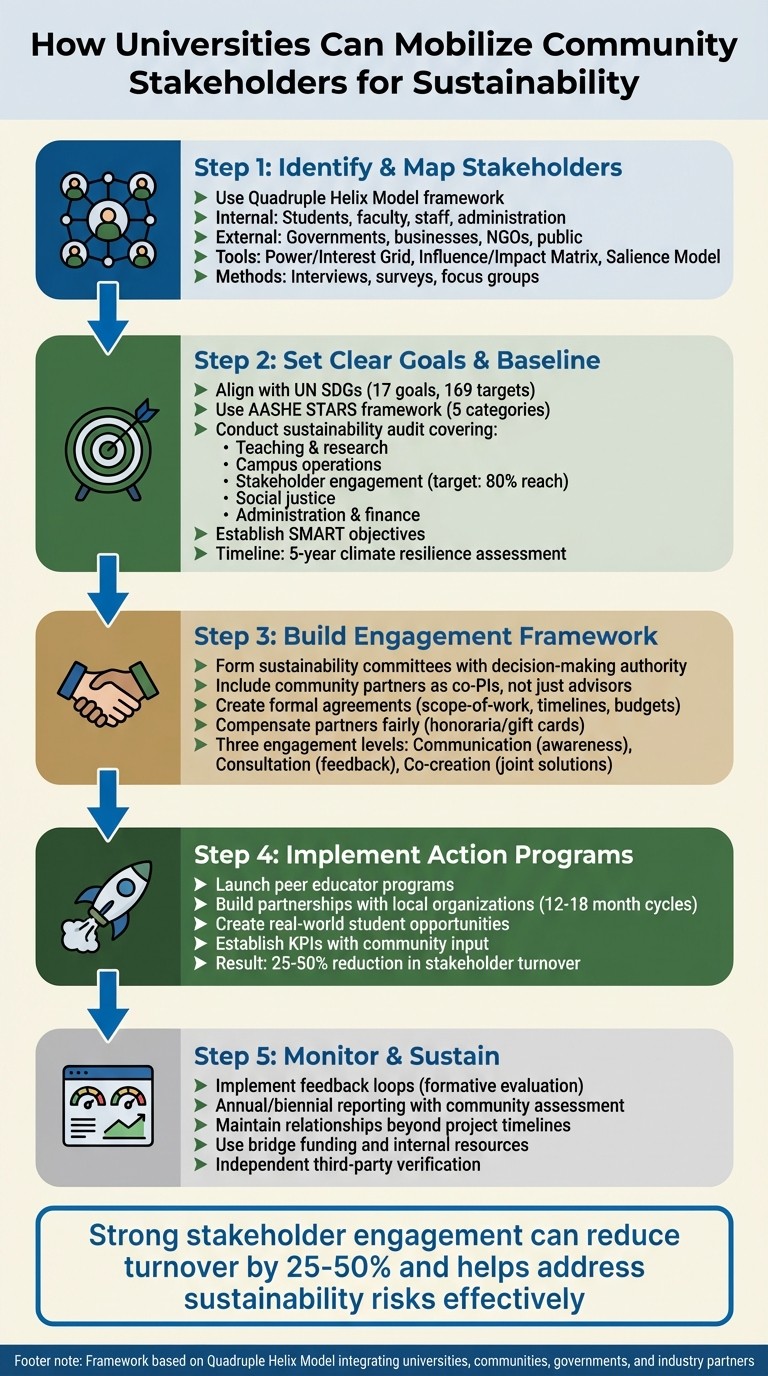
5-Step Framework for Mobilizing Community Stakeholders Around University Sustainability Goals
Empowering Students as Partners for Sustainability at Higher Education Institutions | March 24 2026
Identifying and Understanding Key Stakeholders
Before diving into sustainability efforts, it’s essential to pinpoint the key stakeholders involved. This structured approach lays the foundation for defining clear goals and fostering meaningful community collaboration. Universities operate within an intricate web of relationships, requiring a thoughtful balance between internal and external partners. The Quadruple Helix Model provides a helpful framework for organizing these stakeholders into four primary groups: the higher education institution itself, the community, government and regulatory bodies, and industrial partners [2]. This model serves as a guide for categorizing and analyzing stakeholder dynamics.
Core Stakeholder Groups to Engage
Stakeholders generally fall into two broad categories. Internal stakeholders include students, faculty, staff, administration, and the governing council - those directly involved in research, curriculum integration, and campus operations [2]. External stakeholders, on the other hand, encompass local and national governments, private businesses, non-governmental organizations (NGOs), and the broader public [2].
Each of these groups contributes uniquely to sustainability initiatives. Governments, both local and national, play a pivotal role by setting policies and enforcing regulations that promote sustainable practices. Private sector partners bring innovation to the table, adopting eco-friendly technologies and offering hands-on opportunities for students. NGOs and civil society groups act as advocates, public educators, and watchdogs, ensuring accountability. Meanwhile, the general public influences outcomes through choices as consumers, participation in politics, and involvement in community activities. Within the university itself, students often act as co-creators of knowledge through programs like "living labs" and service learning opportunities. Faculty members drive interdisciplinary research, while institutional leaders shape strategic policies and oversee sustainable transformations on campus [2].
Identifying these groups is just the first step. Understanding their unique concerns and influence is where the real work begins.
Mapping Stakeholder Interests and Influence
To effectively align sustainability goals with stakeholder priorities, it’s crucial to understand their interests and capacities. Conducting a materiality analysis can help match university objectives with the concerns of regional stakeholders [2]. This ensures that the process doesn’t rely solely on “the usual suspects,” which can inadvertently exclude important voices and lead to biased outcomes [4].
Several tools can assist in categorizing stakeholders, such as the Power/Interest Grid, Influence/Impact Matrix, and Salience Model, which evaluate groups based on factors like influence, legitimacy, and urgency [5].
Gathering detailed insights requires a mix of methods, including interviews, surveys (using platforms like Qualtrics), and focus groups [4][5]. When mapping stakeholders, consider key factors such as their geographic proximity, sector-specific priorities (e.g., corporate versus NGO perspectives), and their capacity to influence decisions directly. Importantly, engage stakeholders early in the process - once you have enough concrete details to discuss. Waiting until after major decisions are made can diminish the perceived value of their input [4].
A well-constructed stakeholder map enables universities to align their sustainability initiatives with broader community and institutional goals, paving the way for actionable and measurable progress.
Setting Clear Sustainability Goals and Establishing a Baseline
After mapping stakeholders, the next step is to define clear, measurable sustainability goals. Without specific targets, even the most enthusiastic community partners may struggle to contribute effectively. Universities must ground their sustainability efforts in established frameworks that provide both structure and credibility while addressing institutional priorities.
Aligning Goals with SDGs and STARS Frameworks
For higher education, two frameworks are particularly relevant: the UN Sustainable Development Goals (SDGs) and the AASHE Sustainability Tracking, Assessment & Rating System (STARS). The SDGs outline 17 global goals and 169 specific targets, offering a comprehensive guide for sustainability initiatives [9]. STARS, tailored for colleges and universities, organizes efforts into five categories: Academics, Engagement, Operations, Planning & Administration, and Innovation & Leadership.
Montana State University, for example, has adopted the STARS system with ambitious goals such as achieving a 90% waste diversion rate and carbon neutrality by 2040 [7]. Similarly, the University of Iowa implemented a phased approach to its 2030 goals. In Phase One (April 2020), the university focused on renewable fuels and greenhouse gas emissions, and in Phase Two (late 2020), expanded its scope to include academics, research, and operations [6]. This incremental strategy allowed the institution to secure early successes, building momentum before addressing more complex challenges.
"Campus sustainability efforts require collective action within all parts of the University, and across all campus missions – including, but not limited to, Research & Discovery, Student Success, and Engagement." - University of Iowa Sustainability Charter Committee [6]
To ensure buy-in across the institution, it's crucial to let individual departments contribute based on their strengths. For example, athletics departments might focus on reducing waste at events, while healthcare units could prioritize sustainable procurement. This departmental alignment transforms sustainability from a top-down directive into a shared mission, enabling stakeholders to rally around clear, actionable targets.
Before setting such ambitious goals, however, universities must first conduct a thorough audit to understand their current standing.
Conducting a Sustainability Audit
A detailed sustainability audit is essential for establishing a baseline before setting long-term targets like those for 2030 or 2040. This comprehensive evaluation should cover five key areas: teaching, learning, and research; stakeholder engagement; campus operations; racial equity and social justice; and administration and finance [11]. By identifying both strengths and gaps, the audit provides a roadmap for future action.
Begin by inventorying partnerships with government agencies, civil society organizations, and businesses tackling sustainability issues. Tools like AASHE’s templates for Excel and Google Sheets can help track these partnerships and align them with relevant SDG targets [13]. During the audit, keyword searches based on the Earth Charter and SDG targets can uncover sustainability-related research, courses, and initiatives [13]. For reporting purposes, these inventories are typically valid if completed within the past three years [14].
For climate resilience, a focused assessment within a five-year timeframe is recommended to evaluate the adaptability of social, economic, and environmental systems to climate change [11]. Including both institutional and community representatives in a campus-community task force ensures the audit reflects external realities, not just internal perspectives.
Stakeholder engagement metrics are another critical component. Institutions should aim to reach at least 80% of campus stakeholders through sustainability outreach and communication efforts [10]. Digital analytics, such as email open rates, website traffic, and social media engagement, can provide concrete data to measure current reach and track progress.
Harvard University’s Sustainability Action Plan, developed between 2020 and 2022, is an excellent example of how audits can inform goal-setting. Involving over 50,000 participants, including senior administrators and facilities teams, the plan is structured around four pillars: "How We Power", "How We Build", "How We Operate", and "How We Lead" [8]. This framework was directly shaped by audit findings, underscoring the importance of using baseline assessments to guide objectives.
| Audit Category | Focus Areas for Baseline Assessment |
| --- | --- |
| <strong>Teaching & Research</strong> | Sustainability course offerings, global challenge-focused research, employee training |
| <strong>Campus Operations</strong> | Energy and water efficiency, emissions, waste reduction, sustainable procurement |
| <strong>Stakeholder Engagement</strong> | Community partnerships, participation rates, outreach effectiveness |
| <strong>Social Justice</strong> | Pay equity, living wages, equitable student access, labor rights |
| <strong>Administration</strong> | Green investments, financial savings from sustainability, wellbeing reporting
| Audit Category | Focus Areas for Baseline Assessment |
| --- | --- |
| <strong>Teaching & Research</strong> | Sustainability course offerings, global challenge-focused research, employee training |
| <strong>Campus Operations</strong> | Energy and water efficiency, emissions, waste reduction, sustainable procurement |
| <strong>Stakeholder Engagement</strong> | Community partnerships, participation rates, outreach effectiveness |
| <strong>Social Justice</strong> | Pay equity, living wages, equitable student access, labor rights |
| <strong>Administration</strong> | Green investments, financial savings from sustainability, wellbeing reporting
Based on audit results, institutions can develop SMART objectives - Specific, Measurable, Achievable, Relevant, and Time-bound [11]. To maintain clarity, distinguish between "plans" (future measurable objectives) and "policies" (current standards, such as ENERGY STAR requirements) during reporting [11]. Additionally, independent third-party verification of sustainability progress is essential to ensure transparency and build trust with stakeholders [6].
With a solid foundation of clear goals and a thorough audit, universities can effectively design stakeholder engagement strategies that drive meaningful progress.
Building a Stakeholder Engagement Framework
Once goals are clearly defined and audit insights are in place, the next step is creating a structured approach to stakeholder engagement. Without formal processes, efforts can become chaotic, leading to disengagement and missed opportunities to create meaningful change.
Forming Sustainability Committees and Advisory Groups
A strong engagement framework often starts with a small internal team tasked with presenting initial sustainability ideas. Over time, this team evolves into a "change coalition", bringing together multiple departments to foster innovation [2]. However, this effort shouldn't remain internal. Expanding into a broader "change network" that includes external partners as active contributors is essential [2].
To make a real impact, community partners should have decision-making authority. Instead of keeping them in advisory roles, involve them as co-Principal Investigators or senior personnel on sustainability initiatives [1]. When forming committees, carefully select partners based on their geography, expertise, and influence to ensure all relevant groups are represented [4]. This approach aligns with the quadruple helix model, which integrates universities, communities, governments, and industry partners to guide committee composition [2].
Conducting a materiality analysis early on is critical to align your institution's sustainability goals with the priorities of regional stakeholders [2]. Additionally, compensate community partners fairly - whether through honoraria or gift cards - for participating in activities like advising student teams, contributing to proposals, or attending planning sessions [1].
"Stakeholder engagement is recognised as an important strategy, since involving diverse groups in decision-making processes, HEIs can harness a wealth of perspectives, expertise, and resources, fostering more inclusive, innovative, and effective approaches to sustainability." - Springer Nature [2]
Developing Communication and Collaboration Channels
The success of stakeholder engagement hinges on effective communication channels that match the level of involvement you aim to achieve. These channels generally fall into three categories:
Communication: Raising awareness through posters, exhibits, and community outreach.
Consultation: Gathering feedback via surveys, interviews, or focus groups.
Co-creation: Working together to develop solutions through collaborative groups and strategic plans [4].
Formal collaboration agreements and scope-of-work templates should be established at the start of each partnership [1]. These documents clarify roles, responsibilities, timelines, and budgets, ensuring transparency. For example, outlining how funds are allocated - ideally directing as much as possible to community organizations - builds trust and strengthens relationships.
Timing also matters. Engage stakeholders early enough to influence decisions [4]. Avoid premature outreach that lacks clarity, and schedule meetings at times and locations convenient for your audience, such as evening sessions for working professionals or alternating between university and community venues.
Use plain, straightforward language in all materials, avoiding technical jargon in leaflets, posters, or digital content. Regular feedback loops are essential to evaluate engagement efforts and demonstrate how stakeholder input has shaped decisions [2][4].
"Responsibilities and relationships should not end just because a project does. Maintain communication and connection to partners in between projects and funding cycles so as to build long-term, trusting relationships." - Center for Sustainable Communities Research and Education (SCoRE) [1]
Finally, be cautious of engagement fatigue. Overloading stakeholders with excessive meetings or demands can lead to burnout [4]. Instead, focus on fewer, well-organized touchpoints with clear goals and outcomes to maintain long-term engagement.
| Form of Engagement | Primary Goal | Example Activities |
| --- | --- | --- |
| <strong>Communication</strong> | Raise awareness | Science fairs, museum exhibits, community events |
| <strong>Consultation</strong> | Gather feedback | Surveys, focus groups, interviews |
| <strong>Co-creation</strong> | Develop solutions | Working groups, strategic plans, joint projects
| Form of Engagement | Primary Goal | Example Activities |
| --- | --- | --- |
| <strong>Communication</strong> | Raise awareness | Science fairs, museum exhibits, community events |
| <strong>Consultation</strong> | Gather feedback | Surveys, focus groups, interviews |
| <strong>Co-creation</strong> | Develop solutions | Working groups, strategic plans, joint projects
Implementing Strategies to Mobilize Stakeholders
With a solid framework in place, the next step is turning plans into action through well-designed programs and partnerships. These strategies focus on engaging stakeholders in ways that produce meaningful, measurable outcomes. Below, we explore initiatives that bring these goals to life.
Launching Peer Educator and Outreach Programs
Programs led by students can create a ripple effect, influencing both campus life and the broader community. By training students as sustainability ambassadors, universities leverage peer influence while giving participants hands-on experience. A compelling example is the University of Minnesota's collaboration with the City of Brooklyn Park. Over two semesters, students from risk management and environmental education courses worked with the city's parks and recreation manager to design nature-based play areas. The city implemented these student-led recommendations in several parks, showcasing how such initiatives can deliver real community benefits [3].
Another example comes from Bowling Green State University's Reimagining Rural Regions (R3) program. This initiative trains undergraduate "PaCE" fellows in economic development and grant writing. These students then contribute to local placemaking projects in rural Ohio communities like Van Wert and Gibsonburg, transforming spaces such as county fairgrounds and vacant lots. This approach highlights how place-based education can connect students directly to sustainability efforts while strengthening local resources [3].
Building Partnerships with Local Organizations
Effective partnerships require moving away from traditional, hierarchical models toward arrangements based on shared responsibilities. Programs like SURE illustrate the value of combining academic expertise with local entrepreneurial skills.
To ensure clarity and alignment, partnerships should include formal agreements outlining roles, responsibilities, and timelines. For instance, the University of Minnesota’s Resilient Communities Project (RCP), led by Mike Greco, typically partners with local governments for 12–18 months. These partnerships focus on sustainability and resilience, with timelines designed to align with academic schedules [3].
"Creating programs geared toward civic engagement, these partnerships are viewed as a 'win-win' by providing students with valuable 'real world' and hands-on learning, while helping communities solve complex and difficult societal issues." - Mitchell Berg, Mike Greco, Saleha Khumawala, and Maddi Menich [3]
Embedding Accountability and Transparency
To keep stakeholders engaged, accountability mechanisms are essential. Co-developing success metrics with community partners ensures that goals are meaningful and outcomes have lasting impact. This collaborative approach avoids imposing top-down targets and fosters a sense of shared ownership.
Research shows that strong stakeholder engagement can reduce turnover by 25–50% and helps in addressing sustainability risks [15]. Transparency is key - when people see their input leading to measurable progress, their commitment deepens.
Establish clear KPIs and share progress openly. Discuss budgets transparently and allocate as much funding as possible to community partners to build trust. Regular reporting not only demonstrates accountability but also provides opportunities to celebrate achievements and refine strategies. These practices ensure that initial successes lead to enduring collaborations, creating a foundation for ongoing engagement and continuous improvement.
Using Systems Thinking for Partnerships
Sustainability challenges often span multiple areas - departments, budgets, infrastructure, and community needs - making them deeply interconnected. A systems thinking approach allows universities to identify these links and address the underlying causes, creating a ripple effect that benefits both the institution and its surrounding community. This comprehensive perspective aligns closely with frameworks like the Quadruple Helix model.
The Quadruple Helix model highlights the interdependencies among universities, communities, governments, and industrial partners. When these groups unite around a shared vision for sustainability, they can tackle challenges that would otherwise be insurmountable for any single entity [2]. A focused materiality analysis helps pinpoint where these overlapping priorities align with regional sustainability objectives [2].
By mapping these connections, universities can shift seamlessly from planning to practical, integrated implementation. This transition often starts with what researchers describe as a "Transition Scheme" - a step-by-step process beginning with a small internal transition team. Over time, this team evolves into a coalition of change-makers, eventually growing into a broader network of external partners [2]. For example, central systems like heating and cooling plants can contribute 30–50% of total emissions, underscoring that smaller, peripheral measures alone won’t suffice [16]. Tackling such large-scale issues requires collaboration across facilities management, financial planning, academic leadership, and community partnerships.
Operationalizing Sustainability Goals with Expert Support
Turning strategic systems thinking into real, cost-effective sustainability solutions requires technical expertise and careful coordination. This is where expert assistance becomes crucial. Organizations like Council Fire provide universities with the tools to move from compliance-focused reporting to actionable outcomes. They guide institutions in areas such as decarbonization, circular economies, and stakeholder-driven planning.
One public research university with 35,000 students demonstrated the power of this approach in February 2026. By accelerating its carbon neutrality goal from 2040 to 2035, the university leveraged IRA direct pay provisions and implemented a three-phase plan to transition to ground-source heat pumps. This initiative reduced emissions by 35% and saved $2.8 million annually [16]. The project succeeded by applying systems thinking to financial modeling, starting with "quick-win" efficiency measures that delivered immediate savings. These savings then funded larger capital investments. Additionally, the university limited carbon offsets to 10% or less, prioritizing operational changes over external compensations [16].
Monitoring Progress and Ensuring Long-term Engagement
Sustainability efforts thrive on consistent dedication, not short-lived projects. What sets successful initiatives apart is their ability to maintain momentum through continuous monitoring and active involvement from stakeholders. Universities play a key role in establishing systems to track progress and nurture community participation. This ongoing commitment lays the groundwork for structured feedback channels and regular evaluations, ensuring that engagement remains purposeful and aligned with broader sustainability goals.
Implementing Feedback Loops and Annual Reporting
Effective monitoring builds on existing engagement frameworks by fostering open, two-way communication. The AASHE STARS Help Center highlights the importance of this process, stating that assessments should "address the reciprocity and mutual benefit of the partnerships and include feedback and/or assessment findings from community partners to the institution and from the institution to the community" [12]. Universities must not only report their achievements but also actively incorporate insights from the communities they serve.
Formative evaluation is essential to maintaining this dialogue. For instance, in 2024, Georgia Tech's SCoRE established principles requiring regular input from community leaders, enabling timely adjustments to ongoing projects [1]. This real-time feedback mechanism helps universities address potential challenges before they grow into larger obstacles.
A great example of this approach comes from Oregon State University’s Biennial Engagement Report in early 2025. Led by Vice Provost Kristopher Elliott, the report showcased impactful initiatives such as 14 public events, health screenings for 215 individuals (blood glucose) and 118 individuals (hypertension), and the "Plastics to Fuel" project. These efforts demonstrated measurable benefits to the community [17].
These examples highlight the importance of actionable metrics and responsive evaluations in sustaining progress. Long-term success depends on follow-up measures and bridge funding once initial projects conclude. As SCoRE emphasizes, "Responsibilities and relationships should not end just because a project does" [1]. When external funding runs out, universities can tap into internal resources such as student internships or shared spaces to maintain momentum. Additionally, compensating community partners for their contributions - whether through advising student teams or assisting with proposals - reflects a genuine institutional commitment. Financial recognition, combined with transparent reporting on shared goals, fosters lasting partnerships that deliver meaningful sustainability outcomes.
Conclusion
Engaging community stakeholders in sustainability efforts calls for universities and research institutions to rethink how they form and nurture partnerships. The Center for Sustainable Communities Research and Education underscores the importance of collaboration by stating that institutions should "work with community partners, not for them; be humble and learn from partners as experts and innovators" [1]. This philosophy shifts community input from being an afterthought to becoming a cornerstone of academic decision-making.
Programs like the University of Houston's SURE initiative illustrate the success of treating community members as equal contributors to knowledge creation. To build on this framework, institutions need to prioritize enduring relationships that extend beyond temporary funding, ensure fair compensation for community partners, and establish clear agreements through Memorandums of Understanding.
"Continual stakeholder engagement is not merely a strategic approach but a vital necessity for fostering sustainable development that is inclusive and equitable for both current and future generations." - Springer Nature [2]
The path forward relies on four essential principles:
Strong institutional leadership guided by the UN Sustainable Development Goals
Equitable governance that places decision-making power in the hands of the community
Ongoing feedback mechanisms for timely and adaptive decision-making
Fair compensation to honor the expertise of community partners
FAQs
How do we pick the right community stakeholders?
To identify the most suitable community stakeholders for sustainability initiatives, prioritize those directly connected to your objectives. Evaluate how their goals align with your mission, their influence within the community, and their ability to actively contribute. Take into account their past interactions with the community and aim to include a diverse mix, such as local organizations, government bodies, industry representatives, and academic institutions. Bringing together a wide array of perspectives encourages collaboration and amplifies the effectiveness of your initiatives.
What data should we collect for a sustainability baseline?
To establish a starting point for sustainability efforts, it’s crucial to collect detailed data across environmental, social, and operational dimensions. Focus on areas such as biodiversity (like species diversity and habitat health), infrastructure (including water and sanitation systems), and community engagement metrics. It’s also important to evaluate socio-economic factors, historical influences, and current partnerships. This thorough approach lays the groundwork for defining clear and attainable sustainability objectives.
How do we keep partners engaged long term?
To maintain lasting involvement in university sustainability efforts, prioritize trust, mutual benefits, and consistent communication. Establish partnerships that are fair and centered on shared objectives. Be adaptable to meet partners' changing needs and ensure decision-making processes are open and transparent. Understand their motivations - whether it’s addressing real-world challenges or contributing to societal progress - and highlight measurable outcomes. Frequent updates and collaborative efforts help reinforce their sense of value and dedication to the initiative.
Related Blog Posts
Latest Articles
©2025



FAQ
01
What does it really mean to “redefine profit”?
02
What makes Council Fire different?
03
Who does Council Fire you work with?
04
What does working with Council Fire actually look like?
05
How does Council Fire help organizations turn big goals into action?
06
How does Council Fire define and measure success?
Apr 7, 2026
How to Mobilize Community Stakeholders Around Sustainability Goals for Universities & Research Institutions
Sustainability Strategy
In This Article
Universities must mobilize community partners by mapping stakeholders, sharing decision-making, setting SDG-aligned goals, and tracking progress.
How to Mobilize Community Stakeholders Around Sustainability Goals for Universities & Research Institutions
Universities are uniquely positioned to address climate change and social challenges by collaborating with community stakeholders. Building partnerships with governments, businesses, nonprofits, and local communities transforms sustainability goals into actionable initiatives. Here’s how institutions can lead these efforts:
Engage Stakeholders Early: Identify key groups like students, faculty, local governments, businesses, and NGOs. Use frameworks like the Quadruple Helix Model to map their roles and influence.
Set Clear Goals: Align objectives with established frameworks like the UN SDGs or AASHE STARS. Conduct audits to establish baselines and define measurable targets.
Foster Collaboration: Create advisory committees, formal agreements, and shared decision-making structures to ensure all voices are heard.
Monitor Progress: Use tools like surveys, focus groups, and digital analytics to track outcomes and maintain transparency with stakeholders.
Provide Real-World Opportunities: Launch programs that connect students with community projects, such as entrepreneurship initiatives or local environmental efforts.
5-Step Framework for Mobilizing Community Stakeholders Around University Sustainability Goals
Empowering Students as Partners for Sustainability at Higher Education Institutions | March 24 2026
Identifying and Understanding Key Stakeholders
Before diving into sustainability efforts, it’s essential to pinpoint the key stakeholders involved. This structured approach lays the foundation for defining clear goals and fostering meaningful community collaboration. Universities operate within an intricate web of relationships, requiring a thoughtful balance between internal and external partners. The Quadruple Helix Model provides a helpful framework for organizing these stakeholders into four primary groups: the higher education institution itself, the community, government and regulatory bodies, and industrial partners [2]. This model serves as a guide for categorizing and analyzing stakeholder dynamics.
Core Stakeholder Groups to Engage
Stakeholders generally fall into two broad categories. Internal stakeholders include students, faculty, staff, administration, and the governing council - those directly involved in research, curriculum integration, and campus operations [2]. External stakeholders, on the other hand, encompass local and national governments, private businesses, non-governmental organizations (NGOs), and the broader public [2].
Each of these groups contributes uniquely to sustainability initiatives. Governments, both local and national, play a pivotal role by setting policies and enforcing regulations that promote sustainable practices. Private sector partners bring innovation to the table, adopting eco-friendly technologies and offering hands-on opportunities for students. NGOs and civil society groups act as advocates, public educators, and watchdogs, ensuring accountability. Meanwhile, the general public influences outcomes through choices as consumers, participation in politics, and involvement in community activities. Within the university itself, students often act as co-creators of knowledge through programs like "living labs" and service learning opportunities. Faculty members drive interdisciplinary research, while institutional leaders shape strategic policies and oversee sustainable transformations on campus [2].
Identifying these groups is just the first step. Understanding their unique concerns and influence is where the real work begins.
Mapping Stakeholder Interests and Influence
To effectively align sustainability goals with stakeholder priorities, it’s crucial to understand their interests and capacities. Conducting a materiality analysis can help match university objectives with the concerns of regional stakeholders [2]. This ensures that the process doesn’t rely solely on “the usual suspects,” which can inadvertently exclude important voices and lead to biased outcomes [4].
Several tools can assist in categorizing stakeholders, such as the Power/Interest Grid, Influence/Impact Matrix, and Salience Model, which evaluate groups based on factors like influence, legitimacy, and urgency [5].
Gathering detailed insights requires a mix of methods, including interviews, surveys (using platforms like Qualtrics), and focus groups [4][5]. When mapping stakeholders, consider key factors such as their geographic proximity, sector-specific priorities (e.g., corporate versus NGO perspectives), and their capacity to influence decisions directly. Importantly, engage stakeholders early in the process - once you have enough concrete details to discuss. Waiting until after major decisions are made can diminish the perceived value of their input [4].
A well-constructed stakeholder map enables universities to align their sustainability initiatives with broader community and institutional goals, paving the way for actionable and measurable progress.
Setting Clear Sustainability Goals and Establishing a Baseline
After mapping stakeholders, the next step is to define clear, measurable sustainability goals. Without specific targets, even the most enthusiastic community partners may struggle to contribute effectively. Universities must ground their sustainability efforts in established frameworks that provide both structure and credibility while addressing institutional priorities.
Aligning Goals with SDGs and STARS Frameworks
For higher education, two frameworks are particularly relevant: the UN Sustainable Development Goals (SDGs) and the AASHE Sustainability Tracking, Assessment & Rating System (STARS). The SDGs outline 17 global goals and 169 specific targets, offering a comprehensive guide for sustainability initiatives [9]. STARS, tailored for colleges and universities, organizes efforts into five categories: Academics, Engagement, Operations, Planning & Administration, and Innovation & Leadership.
Montana State University, for example, has adopted the STARS system with ambitious goals such as achieving a 90% waste diversion rate and carbon neutrality by 2040 [7]. Similarly, the University of Iowa implemented a phased approach to its 2030 goals. In Phase One (April 2020), the university focused on renewable fuels and greenhouse gas emissions, and in Phase Two (late 2020), expanded its scope to include academics, research, and operations [6]. This incremental strategy allowed the institution to secure early successes, building momentum before addressing more complex challenges.
"Campus sustainability efforts require collective action within all parts of the University, and across all campus missions – including, but not limited to, Research & Discovery, Student Success, and Engagement." - University of Iowa Sustainability Charter Committee [6]
To ensure buy-in across the institution, it's crucial to let individual departments contribute based on their strengths. For example, athletics departments might focus on reducing waste at events, while healthcare units could prioritize sustainable procurement. This departmental alignment transforms sustainability from a top-down directive into a shared mission, enabling stakeholders to rally around clear, actionable targets.
Before setting such ambitious goals, however, universities must first conduct a thorough audit to understand their current standing.
Conducting a Sustainability Audit
A detailed sustainability audit is essential for establishing a baseline before setting long-term targets like those for 2030 or 2040. This comprehensive evaluation should cover five key areas: teaching, learning, and research; stakeholder engagement; campus operations; racial equity and social justice; and administration and finance [11]. By identifying both strengths and gaps, the audit provides a roadmap for future action.
Begin by inventorying partnerships with government agencies, civil society organizations, and businesses tackling sustainability issues. Tools like AASHE’s templates for Excel and Google Sheets can help track these partnerships and align them with relevant SDG targets [13]. During the audit, keyword searches based on the Earth Charter and SDG targets can uncover sustainability-related research, courses, and initiatives [13]. For reporting purposes, these inventories are typically valid if completed within the past three years [14].
For climate resilience, a focused assessment within a five-year timeframe is recommended to evaluate the adaptability of social, economic, and environmental systems to climate change [11]. Including both institutional and community representatives in a campus-community task force ensures the audit reflects external realities, not just internal perspectives.
Stakeholder engagement metrics are another critical component. Institutions should aim to reach at least 80% of campus stakeholders through sustainability outreach and communication efforts [10]. Digital analytics, such as email open rates, website traffic, and social media engagement, can provide concrete data to measure current reach and track progress.
Harvard University’s Sustainability Action Plan, developed between 2020 and 2022, is an excellent example of how audits can inform goal-setting. Involving over 50,000 participants, including senior administrators and facilities teams, the plan is structured around four pillars: "How We Power", "How We Build", "How We Operate", and "How We Lead" [8]. This framework was directly shaped by audit findings, underscoring the importance of using baseline assessments to guide objectives.
| Audit Category | Focus Areas for Baseline Assessment |
| --- | --- |
| <strong>Teaching & Research</strong> | Sustainability course offerings, global challenge-focused research, employee training |
| <strong>Campus Operations</strong> | Energy and water efficiency, emissions, waste reduction, sustainable procurement |
| <strong>Stakeholder Engagement</strong> | Community partnerships, participation rates, outreach effectiveness |
| <strong>Social Justice</strong> | Pay equity, living wages, equitable student access, labor rights |
| <strong>Administration</strong> | Green investments, financial savings from sustainability, wellbeing reporting
Based on audit results, institutions can develop SMART objectives - Specific, Measurable, Achievable, Relevant, and Time-bound [11]. To maintain clarity, distinguish between "plans" (future measurable objectives) and "policies" (current standards, such as ENERGY STAR requirements) during reporting [11]. Additionally, independent third-party verification of sustainability progress is essential to ensure transparency and build trust with stakeholders [6].
With a solid foundation of clear goals and a thorough audit, universities can effectively design stakeholder engagement strategies that drive meaningful progress.
Building a Stakeholder Engagement Framework
Once goals are clearly defined and audit insights are in place, the next step is creating a structured approach to stakeholder engagement. Without formal processes, efforts can become chaotic, leading to disengagement and missed opportunities to create meaningful change.
Forming Sustainability Committees and Advisory Groups
A strong engagement framework often starts with a small internal team tasked with presenting initial sustainability ideas. Over time, this team evolves into a "change coalition", bringing together multiple departments to foster innovation [2]. However, this effort shouldn't remain internal. Expanding into a broader "change network" that includes external partners as active contributors is essential [2].
To make a real impact, community partners should have decision-making authority. Instead of keeping them in advisory roles, involve them as co-Principal Investigators or senior personnel on sustainability initiatives [1]. When forming committees, carefully select partners based on their geography, expertise, and influence to ensure all relevant groups are represented [4]. This approach aligns with the quadruple helix model, which integrates universities, communities, governments, and industry partners to guide committee composition [2].
Conducting a materiality analysis early on is critical to align your institution's sustainability goals with the priorities of regional stakeholders [2]. Additionally, compensate community partners fairly - whether through honoraria or gift cards - for participating in activities like advising student teams, contributing to proposals, or attending planning sessions [1].
"Stakeholder engagement is recognised as an important strategy, since involving diverse groups in decision-making processes, HEIs can harness a wealth of perspectives, expertise, and resources, fostering more inclusive, innovative, and effective approaches to sustainability." - Springer Nature [2]
Developing Communication and Collaboration Channels
The success of stakeholder engagement hinges on effective communication channels that match the level of involvement you aim to achieve. These channels generally fall into three categories:
Communication: Raising awareness through posters, exhibits, and community outreach.
Consultation: Gathering feedback via surveys, interviews, or focus groups.
Co-creation: Working together to develop solutions through collaborative groups and strategic plans [4].
Formal collaboration agreements and scope-of-work templates should be established at the start of each partnership [1]. These documents clarify roles, responsibilities, timelines, and budgets, ensuring transparency. For example, outlining how funds are allocated - ideally directing as much as possible to community organizations - builds trust and strengthens relationships.
Timing also matters. Engage stakeholders early enough to influence decisions [4]. Avoid premature outreach that lacks clarity, and schedule meetings at times and locations convenient for your audience, such as evening sessions for working professionals or alternating between university and community venues.
Use plain, straightforward language in all materials, avoiding technical jargon in leaflets, posters, or digital content. Regular feedback loops are essential to evaluate engagement efforts and demonstrate how stakeholder input has shaped decisions [2][4].
"Responsibilities and relationships should not end just because a project does. Maintain communication and connection to partners in between projects and funding cycles so as to build long-term, trusting relationships." - Center for Sustainable Communities Research and Education (SCoRE) [1]
Finally, be cautious of engagement fatigue. Overloading stakeholders with excessive meetings or demands can lead to burnout [4]. Instead, focus on fewer, well-organized touchpoints with clear goals and outcomes to maintain long-term engagement.
| Form of Engagement | Primary Goal | Example Activities |
| --- | --- | --- |
| <strong>Communication</strong> | Raise awareness | Science fairs, museum exhibits, community events |
| <strong>Consultation</strong> | Gather feedback | Surveys, focus groups, interviews |
| <strong>Co-creation</strong> | Develop solutions | Working groups, strategic plans, joint projects
Implementing Strategies to Mobilize Stakeholders
With a solid framework in place, the next step is turning plans into action through well-designed programs and partnerships. These strategies focus on engaging stakeholders in ways that produce meaningful, measurable outcomes. Below, we explore initiatives that bring these goals to life.
Launching Peer Educator and Outreach Programs
Programs led by students can create a ripple effect, influencing both campus life and the broader community. By training students as sustainability ambassadors, universities leverage peer influence while giving participants hands-on experience. A compelling example is the University of Minnesota's collaboration with the City of Brooklyn Park. Over two semesters, students from risk management and environmental education courses worked with the city's parks and recreation manager to design nature-based play areas. The city implemented these student-led recommendations in several parks, showcasing how such initiatives can deliver real community benefits [3].
Another example comes from Bowling Green State University's Reimagining Rural Regions (R3) program. This initiative trains undergraduate "PaCE" fellows in economic development and grant writing. These students then contribute to local placemaking projects in rural Ohio communities like Van Wert and Gibsonburg, transforming spaces such as county fairgrounds and vacant lots. This approach highlights how place-based education can connect students directly to sustainability efforts while strengthening local resources [3].
Building Partnerships with Local Organizations
Effective partnerships require moving away from traditional, hierarchical models toward arrangements based on shared responsibilities. Programs like SURE illustrate the value of combining academic expertise with local entrepreneurial skills.
To ensure clarity and alignment, partnerships should include formal agreements outlining roles, responsibilities, and timelines. For instance, the University of Minnesota’s Resilient Communities Project (RCP), led by Mike Greco, typically partners with local governments for 12–18 months. These partnerships focus on sustainability and resilience, with timelines designed to align with academic schedules [3].
"Creating programs geared toward civic engagement, these partnerships are viewed as a 'win-win' by providing students with valuable 'real world' and hands-on learning, while helping communities solve complex and difficult societal issues." - Mitchell Berg, Mike Greco, Saleha Khumawala, and Maddi Menich [3]
Embedding Accountability and Transparency
To keep stakeholders engaged, accountability mechanisms are essential. Co-developing success metrics with community partners ensures that goals are meaningful and outcomes have lasting impact. This collaborative approach avoids imposing top-down targets and fosters a sense of shared ownership.
Research shows that strong stakeholder engagement can reduce turnover by 25–50% and helps in addressing sustainability risks [15]. Transparency is key - when people see their input leading to measurable progress, their commitment deepens.
Establish clear KPIs and share progress openly. Discuss budgets transparently and allocate as much funding as possible to community partners to build trust. Regular reporting not only demonstrates accountability but also provides opportunities to celebrate achievements and refine strategies. These practices ensure that initial successes lead to enduring collaborations, creating a foundation for ongoing engagement and continuous improvement.
Using Systems Thinking for Partnerships
Sustainability challenges often span multiple areas - departments, budgets, infrastructure, and community needs - making them deeply interconnected. A systems thinking approach allows universities to identify these links and address the underlying causes, creating a ripple effect that benefits both the institution and its surrounding community. This comprehensive perspective aligns closely with frameworks like the Quadruple Helix model.
The Quadruple Helix model highlights the interdependencies among universities, communities, governments, and industrial partners. When these groups unite around a shared vision for sustainability, they can tackle challenges that would otherwise be insurmountable for any single entity [2]. A focused materiality analysis helps pinpoint where these overlapping priorities align with regional sustainability objectives [2].
By mapping these connections, universities can shift seamlessly from planning to practical, integrated implementation. This transition often starts with what researchers describe as a "Transition Scheme" - a step-by-step process beginning with a small internal transition team. Over time, this team evolves into a coalition of change-makers, eventually growing into a broader network of external partners [2]. For example, central systems like heating and cooling plants can contribute 30–50% of total emissions, underscoring that smaller, peripheral measures alone won’t suffice [16]. Tackling such large-scale issues requires collaboration across facilities management, financial planning, academic leadership, and community partnerships.
Operationalizing Sustainability Goals with Expert Support
Turning strategic systems thinking into real, cost-effective sustainability solutions requires technical expertise and careful coordination. This is where expert assistance becomes crucial. Organizations like Council Fire provide universities with the tools to move from compliance-focused reporting to actionable outcomes. They guide institutions in areas such as decarbonization, circular economies, and stakeholder-driven planning.
One public research university with 35,000 students demonstrated the power of this approach in February 2026. By accelerating its carbon neutrality goal from 2040 to 2035, the university leveraged IRA direct pay provisions and implemented a three-phase plan to transition to ground-source heat pumps. This initiative reduced emissions by 35% and saved $2.8 million annually [16]. The project succeeded by applying systems thinking to financial modeling, starting with "quick-win" efficiency measures that delivered immediate savings. These savings then funded larger capital investments. Additionally, the university limited carbon offsets to 10% or less, prioritizing operational changes over external compensations [16].
Monitoring Progress and Ensuring Long-term Engagement
Sustainability efforts thrive on consistent dedication, not short-lived projects. What sets successful initiatives apart is their ability to maintain momentum through continuous monitoring and active involvement from stakeholders. Universities play a key role in establishing systems to track progress and nurture community participation. This ongoing commitment lays the groundwork for structured feedback channels and regular evaluations, ensuring that engagement remains purposeful and aligned with broader sustainability goals.
Implementing Feedback Loops and Annual Reporting
Effective monitoring builds on existing engagement frameworks by fostering open, two-way communication. The AASHE STARS Help Center highlights the importance of this process, stating that assessments should "address the reciprocity and mutual benefit of the partnerships and include feedback and/or assessment findings from community partners to the institution and from the institution to the community" [12]. Universities must not only report their achievements but also actively incorporate insights from the communities they serve.
Formative evaluation is essential to maintaining this dialogue. For instance, in 2024, Georgia Tech's SCoRE established principles requiring regular input from community leaders, enabling timely adjustments to ongoing projects [1]. This real-time feedback mechanism helps universities address potential challenges before they grow into larger obstacles.
A great example of this approach comes from Oregon State University’s Biennial Engagement Report in early 2025. Led by Vice Provost Kristopher Elliott, the report showcased impactful initiatives such as 14 public events, health screenings for 215 individuals (blood glucose) and 118 individuals (hypertension), and the "Plastics to Fuel" project. These efforts demonstrated measurable benefits to the community [17].
These examples highlight the importance of actionable metrics and responsive evaluations in sustaining progress. Long-term success depends on follow-up measures and bridge funding once initial projects conclude. As SCoRE emphasizes, "Responsibilities and relationships should not end just because a project does" [1]. When external funding runs out, universities can tap into internal resources such as student internships or shared spaces to maintain momentum. Additionally, compensating community partners for their contributions - whether through advising student teams or assisting with proposals - reflects a genuine institutional commitment. Financial recognition, combined with transparent reporting on shared goals, fosters lasting partnerships that deliver meaningful sustainability outcomes.
Conclusion
Engaging community stakeholders in sustainability efforts calls for universities and research institutions to rethink how they form and nurture partnerships. The Center for Sustainable Communities Research and Education underscores the importance of collaboration by stating that institutions should "work with community partners, not for them; be humble and learn from partners as experts and innovators" [1]. This philosophy shifts community input from being an afterthought to becoming a cornerstone of academic decision-making.
Programs like the University of Houston's SURE initiative illustrate the success of treating community members as equal contributors to knowledge creation. To build on this framework, institutions need to prioritize enduring relationships that extend beyond temporary funding, ensure fair compensation for community partners, and establish clear agreements through Memorandums of Understanding.
"Continual stakeholder engagement is not merely a strategic approach but a vital necessity for fostering sustainable development that is inclusive and equitable for both current and future generations." - Springer Nature [2]
The path forward relies on four essential principles:
Strong institutional leadership guided by the UN Sustainable Development Goals
Equitable governance that places decision-making power in the hands of the community
Ongoing feedback mechanisms for timely and adaptive decision-making
Fair compensation to honor the expertise of community partners
FAQs
How do we pick the right community stakeholders?
To identify the most suitable community stakeholders for sustainability initiatives, prioritize those directly connected to your objectives. Evaluate how their goals align with your mission, their influence within the community, and their ability to actively contribute. Take into account their past interactions with the community and aim to include a diverse mix, such as local organizations, government bodies, industry representatives, and academic institutions. Bringing together a wide array of perspectives encourages collaboration and amplifies the effectiveness of your initiatives.
What data should we collect for a sustainability baseline?
To establish a starting point for sustainability efforts, it’s crucial to collect detailed data across environmental, social, and operational dimensions. Focus on areas such as biodiversity (like species diversity and habitat health), infrastructure (including water and sanitation systems), and community engagement metrics. It’s also important to evaluate socio-economic factors, historical influences, and current partnerships. This thorough approach lays the groundwork for defining clear and attainable sustainability objectives.
How do we keep partners engaged long term?
To maintain lasting involvement in university sustainability efforts, prioritize trust, mutual benefits, and consistent communication. Establish partnerships that are fair and centered on shared objectives. Be adaptable to meet partners' changing needs and ensure decision-making processes are open and transparent. Understand their motivations - whether it’s addressing real-world challenges or contributing to societal progress - and highlight measurable outcomes. Frequent updates and collaborative efforts help reinforce their sense of value and dedication to the initiative.
Related Blog Posts
FAQ
01
What does it really mean to “redefine profit”?
02
What makes Council Fire different?
03
Who does Council Fire you work with?
04
What does working with Council Fire actually look like?
05
How does Council Fire help organizations turn big goals into action?
06
How does Council Fire define and measure success?
Apr 7, 2026
How to Mobilize Community Stakeholders Around Sustainability Goals for Universities & Research Institutions
Sustainability Strategy
In This Article
Universities must mobilize community partners by mapping stakeholders, sharing decision-making, setting SDG-aligned goals, and tracking progress.
How to Mobilize Community Stakeholders Around Sustainability Goals for Universities & Research Institutions
Universities are uniquely positioned to address climate change and social challenges by collaborating with community stakeholders. Building partnerships with governments, businesses, nonprofits, and local communities transforms sustainability goals into actionable initiatives. Here’s how institutions can lead these efforts:
Engage Stakeholders Early: Identify key groups like students, faculty, local governments, businesses, and NGOs. Use frameworks like the Quadruple Helix Model to map their roles and influence.
Set Clear Goals: Align objectives with established frameworks like the UN SDGs or AASHE STARS. Conduct audits to establish baselines and define measurable targets.
Foster Collaboration: Create advisory committees, formal agreements, and shared decision-making structures to ensure all voices are heard.
Monitor Progress: Use tools like surveys, focus groups, and digital analytics to track outcomes and maintain transparency with stakeholders.
Provide Real-World Opportunities: Launch programs that connect students with community projects, such as entrepreneurship initiatives or local environmental efforts.
5-Step Framework for Mobilizing Community Stakeholders Around University Sustainability Goals
Empowering Students as Partners for Sustainability at Higher Education Institutions | March 24 2026
Identifying and Understanding Key Stakeholders
Before diving into sustainability efforts, it’s essential to pinpoint the key stakeholders involved. This structured approach lays the foundation for defining clear goals and fostering meaningful community collaboration. Universities operate within an intricate web of relationships, requiring a thoughtful balance between internal and external partners. The Quadruple Helix Model provides a helpful framework for organizing these stakeholders into four primary groups: the higher education institution itself, the community, government and regulatory bodies, and industrial partners [2]. This model serves as a guide for categorizing and analyzing stakeholder dynamics.
Core Stakeholder Groups to Engage
Stakeholders generally fall into two broad categories. Internal stakeholders include students, faculty, staff, administration, and the governing council - those directly involved in research, curriculum integration, and campus operations [2]. External stakeholders, on the other hand, encompass local and national governments, private businesses, non-governmental organizations (NGOs), and the broader public [2].
Each of these groups contributes uniquely to sustainability initiatives. Governments, both local and national, play a pivotal role by setting policies and enforcing regulations that promote sustainable practices. Private sector partners bring innovation to the table, adopting eco-friendly technologies and offering hands-on opportunities for students. NGOs and civil society groups act as advocates, public educators, and watchdogs, ensuring accountability. Meanwhile, the general public influences outcomes through choices as consumers, participation in politics, and involvement in community activities. Within the university itself, students often act as co-creators of knowledge through programs like "living labs" and service learning opportunities. Faculty members drive interdisciplinary research, while institutional leaders shape strategic policies and oversee sustainable transformations on campus [2].
Identifying these groups is just the first step. Understanding their unique concerns and influence is where the real work begins.
Mapping Stakeholder Interests and Influence
To effectively align sustainability goals with stakeholder priorities, it’s crucial to understand their interests and capacities. Conducting a materiality analysis can help match university objectives with the concerns of regional stakeholders [2]. This ensures that the process doesn’t rely solely on “the usual suspects,” which can inadvertently exclude important voices and lead to biased outcomes [4].
Several tools can assist in categorizing stakeholders, such as the Power/Interest Grid, Influence/Impact Matrix, and Salience Model, which evaluate groups based on factors like influence, legitimacy, and urgency [5].
Gathering detailed insights requires a mix of methods, including interviews, surveys (using platforms like Qualtrics), and focus groups [4][5]. When mapping stakeholders, consider key factors such as their geographic proximity, sector-specific priorities (e.g., corporate versus NGO perspectives), and their capacity to influence decisions directly. Importantly, engage stakeholders early in the process - once you have enough concrete details to discuss. Waiting until after major decisions are made can diminish the perceived value of their input [4].
A well-constructed stakeholder map enables universities to align their sustainability initiatives with broader community and institutional goals, paving the way for actionable and measurable progress.
Setting Clear Sustainability Goals and Establishing a Baseline
After mapping stakeholders, the next step is to define clear, measurable sustainability goals. Without specific targets, even the most enthusiastic community partners may struggle to contribute effectively. Universities must ground their sustainability efforts in established frameworks that provide both structure and credibility while addressing institutional priorities.
Aligning Goals with SDGs and STARS Frameworks
For higher education, two frameworks are particularly relevant: the UN Sustainable Development Goals (SDGs) and the AASHE Sustainability Tracking, Assessment & Rating System (STARS). The SDGs outline 17 global goals and 169 specific targets, offering a comprehensive guide for sustainability initiatives [9]. STARS, tailored for colleges and universities, organizes efforts into five categories: Academics, Engagement, Operations, Planning & Administration, and Innovation & Leadership.
Montana State University, for example, has adopted the STARS system with ambitious goals such as achieving a 90% waste diversion rate and carbon neutrality by 2040 [7]. Similarly, the University of Iowa implemented a phased approach to its 2030 goals. In Phase One (April 2020), the university focused on renewable fuels and greenhouse gas emissions, and in Phase Two (late 2020), expanded its scope to include academics, research, and operations [6]. This incremental strategy allowed the institution to secure early successes, building momentum before addressing more complex challenges.
"Campus sustainability efforts require collective action within all parts of the University, and across all campus missions – including, but not limited to, Research & Discovery, Student Success, and Engagement." - University of Iowa Sustainability Charter Committee [6]
To ensure buy-in across the institution, it's crucial to let individual departments contribute based on their strengths. For example, athletics departments might focus on reducing waste at events, while healthcare units could prioritize sustainable procurement. This departmental alignment transforms sustainability from a top-down directive into a shared mission, enabling stakeholders to rally around clear, actionable targets.
Before setting such ambitious goals, however, universities must first conduct a thorough audit to understand their current standing.
Conducting a Sustainability Audit
A detailed sustainability audit is essential for establishing a baseline before setting long-term targets like those for 2030 or 2040. This comprehensive evaluation should cover five key areas: teaching, learning, and research; stakeholder engagement; campus operations; racial equity and social justice; and administration and finance [11]. By identifying both strengths and gaps, the audit provides a roadmap for future action.
Begin by inventorying partnerships with government agencies, civil society organizations, and businesses tackling sustainability issues. Tools like AASHE’s templates for Excel and Google Sheets can help track these partnerships and align them with relevant SDG targets [13]. During the audit, keyword searches based on the Earth Charter and SDG targets can uncover sustainability-related research, courses, and initiatives [13]. For reporting purposes, these inventories are typically valid if completed within the past three years [14].
For climate resilience, a focused assessment within a five-year timeframe is recommended to evaluate the adaptability of social, economic, and environmental systems to climate change [11]. Including both institutional and community representatives in a campus-community task force ensures the audit reflects external realities, not just internal perspectives.
Stakeholder engagement metrics are another critical component. Institutions should aim to reach at least 80% of campus stakeholders through sustainability outreach and communication efforts [10]. Digital analytics, such as email open rates, website traffic, and social media engagement, can provide concrete data to measure current reach and track progress.
Harvard University’s Sustainability Action Plan, developed between 2020 and 2022, is an excellent example of how audits can inform goal-setting. Involving over 50,000 participants, including senior administrators and facilities teams, the plan is structured around four pillars: "How We Power", "How We Build", "How We Operate", and "How We Lead" [8]. This framework was directly shaped by audit findings, underscoring the importance of using baseline assessments to guide objectives.
| Audit Category | Focus Areas for Baseline Assessment |
| --- | --- |
| <strong>Teaching & Research</strong> | Sustainability course offerings, global challenge-focused research, employee training |
| <strong>Campus Operations</strong> | Energy and water efficiency, emissions, waste reduction, sustainable procurement |
| <strong>Stakeholder Engagement</strong> | Community partnerships, participation rates, outreach effectiveness |
| <strong>Social Justice</strong> | Pay equity, living wages, equitable student access, labor rights |
| <strong>Administration</strong> | Green investments, financial savings from sustainability, wellbeing reporting
Based on audit results, institutions can develop SMART objectives - Specific, Measurable, Achievable, Relevant, and Time-bound [11]. To maintain clarity, distinguish between "plans" (future measurable objectives) and "policies" (current standards, such as ENERGY STAR requirements) during reporting [11]. Additionally, independent third-party verification of sustainability progress is essential to ensure transparency and build trust with stakeholders [6].
With a solid foundation of clear goals and a thorough audit, universities can effectively design stakeholder engagement strategies that drive meaningful progress.
Building a Stakeholder Engagement Framework
Once goals are clearly defined and audit insights are in place, the next step is creating a structured approach to stakeholder engagement. Without formal processes, efforts can become chaotic, leading to disengagement and missed opportunities to create meaningful change.
Forming Sustainability Committees and Advisory Groups
A strong engagement framework often starts with a small internal team tasked with presenting initial sustainability ideas. Over time, this team evolves into a "change coalition", bringing together multiple departments to foster innovation [2]. However, this effort shouldn't remain internal. Expanding into a broader "change network" that includes external partners as active contributors is essential [2].
To make a real impact, community partners should have decision-making authority. Instead of keeping them in advisory roles, involve them as co-Principal Investigators or senior personnel on sustainability initiatives [1]. When forming committees, carefully select partners based on their geography, expertise, and influence to ensure all relevant groups are represented [4]. This approach aligns with the quadruple helix model, which integrates universities, communities, governments, and industry partners to guide committee composition [2].
Conducting a materiality analysis early on is critical to align your institution's sustainability goals with the priorities of regional stakeholders [2]. Additionally, compensate community partners fairly - whether through honoraria or gift cards - for participating in activities like advising student teams, contributing to proposals, or attending planning sessions [1].
"Stakeholder engagement is recognised as an important strategy, since involving diverse groups in decision-making processes, HEIs can harness a wealth of perspectives, expertise, and resources, fostering more inclusive, innovative, and effective approaches to sustainability." - Springer Nature [2]
Developing Communication and Collaboration Channels
The success of stakeholder engagement hinges on effective communication channels that match the level of involvement you aim to achieve. These channels generally fall into three categories:
Communication: Raising awareness through posters, exhibits, and community outreach.
Consultation: Gathering feedback via surveys, interviews, or focus groups.
Co-creation: Working together to develop solutions through collaborative groups and strategic plans [4].
Formal collaboration agreements and scope-of-work templates should be established at the start of each partnership [1]. These documents clarify roles, responsibilities, timelines, and budgets, ensuring transparency. For example, outlining how funds are allocated - ideally directing as much as possible to community organizations - builds trust and strengthens relationships.
Timing also matters. Engage stakeholders early enough to influence decisions [4]. Avoid premature outreach that lacks clarity, and schedule meetings at times and locations convenient for your audience, such as evening sessions for working professionals or alternating between university and community venues.
Use plain, straightforward language in all materials, avoiding technical jargon in leaflets, posters, or digital content. Regular feedback loops are essential to evaluate engagement efforts and demonstrate how stakeholder input has shaped decisions [2][4].
"Responsibilities and relationships should not end just because a project does. Maintain communication and connection to partners in between projects and funding cycles so as to build long-term, trusting relationships." - Center for Sustainable Communities Research and Education (SCoRE) [1]
Finally, be cautious of engagement fatigue. Overloading stakeholders with excessive meetings or demands can lead to burnout [4]. Instead, focus on fewer, well-organized touchpoints with clear goals and outcomes to maintain long-term engagement.
| Form of Engagement | Primary Goal | Example Activities |
| --- | --- | --- |
| <strong>Communication</strong> | Raise awareness | Science fairs, museum exhibits, community events |
| <strong>Consultation</strong> | Gather feedback | Surveys, focus groups, interviews |
| <strong>Co-creation</strong> | Develop solutions | Working groups, strategic plans, joint projects
Implementing Strategies to Mobilize Stakeholders
With a solid framework in place, the next step is turning plans into action through well-designed programs and partnerships. These strategies focus on engaging stakeholders in ways that produce meaningful, measurable outcomes. Below, we explore initiatives that bring these goals to life.
Launching Peer Educator and Outreach Programs
Programs led by students can create a ripple effect, influencing both campus life and the broader community. By training students as sustainability ambassadors, universities leverage peer influence while giving participants hands-on experience. A compelling example is the University of Minnesota's collaboration with the City of Brooklyn Park. Over two semesters, students from risk management and environmental education courses worked with the city's parks and recreation manager to design nature-based play areas. The city implemented these student-led recommendations in several parks, showcasing how such initiatives can deliver real community benefits [3].
Another example comes from Bowling Green State University's Reimagining Rural Regions (R3) program. This initiative trains undergraduate "PaCE" fellows in economic development and grant writing. These students then contribute to local placemaking projects in rural Ohio communities like Van Wert and Gibsonburg, transforming spaces such as county fairgrounds and vacant lots. This approach highlights how place-based education can connect students directly to sustainability efforts while strengthening local resources [3].
Building Partnerships with Local Organizations
Effective partnerships require moving away from traditional, hierarchical models toward arrangements based on shared responsibilities. Programs like SURE illustrate the value of combining academic expertise with local entrepreneurial skills.
To ensure clarity and alignment, partnerships should include formal agreements outlining roles, responsibilities, and timelines. For instance, the University of Minnesota’s Resilient Communities Project (RCP), led by Mike Greco, typically partners with local governments for 12–18 months. These partnerships focus on sustainability and resilience, with timelines designed to align with academic schedules [3].
"Creating programs geared toward civic engagement, these partnerships are viewed as a 'win-win' by providing students with valuable 'real world' and hands-on learning, while helping communities solve complex and difficult societal issues." - Mitchell Berg, Mike Greco, Saleha Khumawala, and Maddi Menich [3]
Embedding Accountability and Transparency
To keep stakeholders engaged, accountability mechanisms are essential. Co-developing success metrics with community partners ensures that goals are meaningful and outcomes have lasting impact. This collaborative approach avoids imposing top-down targets and fosters a sense of shared ownership.
Research shows that strong stakeholder engagement can reduce turnover by 25–50% and helps in addressing sustainability risks [15]. Transparency is key - when people see their input leading to measurable progress, their commitment deepens.
Establish clear KPIs and share progress openly. Discuss budgets transparently and allocate as much funding as possible to community partners to build trust. Regular reporting not only demonstrates accountability but also provides opportunities to celebrate achievements and refine strategies. These practices ensure that initial successes lead to enduring collaborations, creating a foundation for ongoing engagement and continuous improvement.
Using Systems Thinking for Partnerships
Sustainability challenges often span multiple areas - departments, budgets, infrastructure, and community needs - making them deeply interconnected. A systems thinking approach allows universities to identify these links and address the underlying causes, creating a ripple effect that benefits both the institution and its surrounding community. This comprehensive perspective aligns closely with frameworks like the Quadruple Helix model.
The Quadruple Helix model highlights the interdependencies among universities, communities, governments, and industrial partners. When these groups unite around a shared vision for sustainability, they can tackle challenges that would otherwise be insurmountable for any single entity [2]. A focused materiality analysis helps pinpoint where these overlapping priorities align with regional sustainability objectives [2].
By mapping these connections, universities can shift seamlessly from planning to practical, integrated implementation. This transition often starts with what researchers describe as a "Transition Scheme" - a step-by-step process beginning with a small internal transition team. Over time, this team evolves into a coalition of change-makers, eventually growing into a broader network of external partners [2]. For example, central systems like heating and cooling plants can contribute 30–50% of total emissions, underscoring that smaller, peripheral measures alone won’t suffice [16]. Tackling such large-scale issues requires collaboration across facilities management, financial planning, academic leadership, and community partnerships.
Operationalizing Sustainability Goals with Expert Support
Turning strategic systems thinking into real, cost-effective sustainability solutions requires technical expertise and careful coordination. This is where expert assistance becomes crucial. Organizations like Council Fire provide universities with the tools to move from compliance-focused reporting to actionable outcomes. They guide institutions in areas such as decarbonization, circular economies, and stakeholder-driven planning.
One public research university with 35,000 students demonstrated the power of this approach in February 2026. By accelerating its carbon neutrality goal from 2040 to 2035, the university leveraged IRA direct pay provisions and implemented a three-phase plan to transition to ground-source heat pumps. This initiative reduced emissions by 35% and saved $2.8 million annually [16]. The project succeeded by applying systems thinking to financial modeling, starting with "quick-win" efficiency measures that delivered immediate savings. These savings then funded larger capital investments. Additionally, the university limited carbon offsets to 10% or less, prioritizing operational changes over external compensations [16].
Monitoring Progress and Ensuring Long-term Engagement
Sustainability efforts thrive on consistent dedication, not short-lived projects. What sets successful initiatives apart is their ability to maintain momentum through continuous monitoring and active involvement from stakeholders. Universities play a key role in establishing systems to track progress and nurture community participation. This ongoing commitment lays the groundwork for structured feedback channels and regular evaluations, ensuring that engagement remains purposeful and aligned with broader sustainability goals.
Implementing Feedback Loops and Annual Reporting
Effective monitoring builds on existing engagement frameworks by fostering open, two-way communication. The AASHE STARS Help Center highlights the importance of this process, stating that assessments should "address the reciprocity and mutual benefit of the partnerships and include feedback and/or assessment findings from community partners to the institution and from the institution to the community" [12]. Universities must not only report their achievements but also actively incorporate insights from the communities they serve.
Formative evaluation is essential to maintaining this dialogue. For instance, in 2024, Georgia Tech's SCoRE established principles requiring regular input from community leaders, enabling timely adjustments to ongoing projects [1]. This real-time feedback mechanism helps universities address potential challenges before they grow into larger obstacles.
A great example of this approach comes from Oregon State University’s Biennial Engagement Report in early 2025. Led by Vice Provost Kristopher Elliott, the report showcased impactful initiatives such as 14 public events, health screenings for 215 individuals (blood glucose) and 118 individuals (hypertension), and the "Plastics to Fuel" project. These efforts demonstrated measurable benefits to the community [17].
These examples highlight the importance of actionable metrics and responsive evaluations in sustaining progress. Long-term success depends on follow-up measures and bridge funding once initial projects conclude. As SCoRE emphasizes, "Responsibilities and relationships should not end just because a project does" [1]. When external funding runs out, universities can tap into internal resources such as student internships or shared spaces to maintain momentum. Additionally, compensating community partners for their contributions - whether through advising student teams or assisting with proposals - reflects a genuine institutional commitment. Financial recognition, combined with transparent reporting on shared goals, fosters lasting partnerships that deliver meaningful sustainability outcomes.
Conclusion
Engaging community stakeholders in sustainability efforts calls for universities and research institutions to rethink how they form and nurture partnerships. The Center for Sustainable Communities Research and Education underscores the importance of collaboration by stating that institutions should "work with community partners, not for them; be humble and learn from partners as experts and innovators" [1]. This philosophy shifts community input from being an afterthought to becoming a cornerstone of academic decision-making.
Programs like the University of Houston's SURE initiative illustrate the success of treating community members as equal contributors to knowledge creation. To build on this framework, institutions need to prioritize enduring relationships that extend beyond temporary funding, ensure fair compensation for community partners, and establish clear agreements through Memorandums of Understanding.
"Continual stakeholder engagement is not merely a strategic approach but a vital necessity for fostering sustainable development that is inclusive and equitable for both current and future generations." - Springer Nature [2]
The path forward relies on four essential principles:
Strong institutional leadership guided by the UN Sustainable Development Goals
Equitable governance that places decision-making power in the hands of the community
Ongoing feedback mechanisms for timely and adaptive decision-making
Fair compensation to honor the expertise of community partners
FAQs
How do we pick the right community stakeholders?
To identify the most suitable community stakeholders for sustainability initiatives, prioritize those directly connected to your objectives. Evaluate how their goals align with your mission, their influence within the community, and their ability to actively contribute. Take into account their past interactions with the community and aim to include a diverse mix, such as local organizations, government bodies, industry representatives, and academic institutions. Bringing together a wide array of perspectives encourages collaboration and amplifies the effectiveness of your initiatives.
What data should we collect for a sustainability baseline?
To establish a starting point for sustainability efforts, it’s crucial to collect detailed data across environmental, social, and operational dimensions. Focus on areas such as biodiversity (like species diversity and habitat health), infrastructure (including water and sanitation systems), and community engagement metrics. It’s also important to evaluate socio-economic factors, historical influences, and current partnerships. This thorough approach lays the groundwork for defining clear and attainable sustainability objectives.
How do we keep partners engaged long term?
To maintain lasting involvement in university sustainability efforts, prioritize trust, mutual benefits, and consistent communication. Establish partnerships that are fair and centered on shared objectives. Be adaptable to meet partners' changing needs and ensure decision-making processes are open and transparent. Understand their motivations - whether it’s addressing real-world challenges or contributing to societal progress - and highlight measurable outcomes. Frequent updates and collaborative efforts help reinforce their sense of value and dedication to the initiative.
Related Blog Posts
FAQ
What does it really mean to “redefine profit”?
What makes Council Fire different?
Who does Council Fire you work with?
What does working with Council Fire actually look like?
How does Council Fire help organizations turn big goals into action?
How does Council Fire define and measure success?