Apr 1, 2026
How to Co-Design Climate-Ready Communities with Residents for Universities & Research Institutions
Capacity Building
In This Article
Universities must co-design climate-resilient plans with residents, blending local knowledge and nature-based solutions for lasting impact.
How to Co-Design Climate-Ready Communities with Residents for Universities & Research Institutions
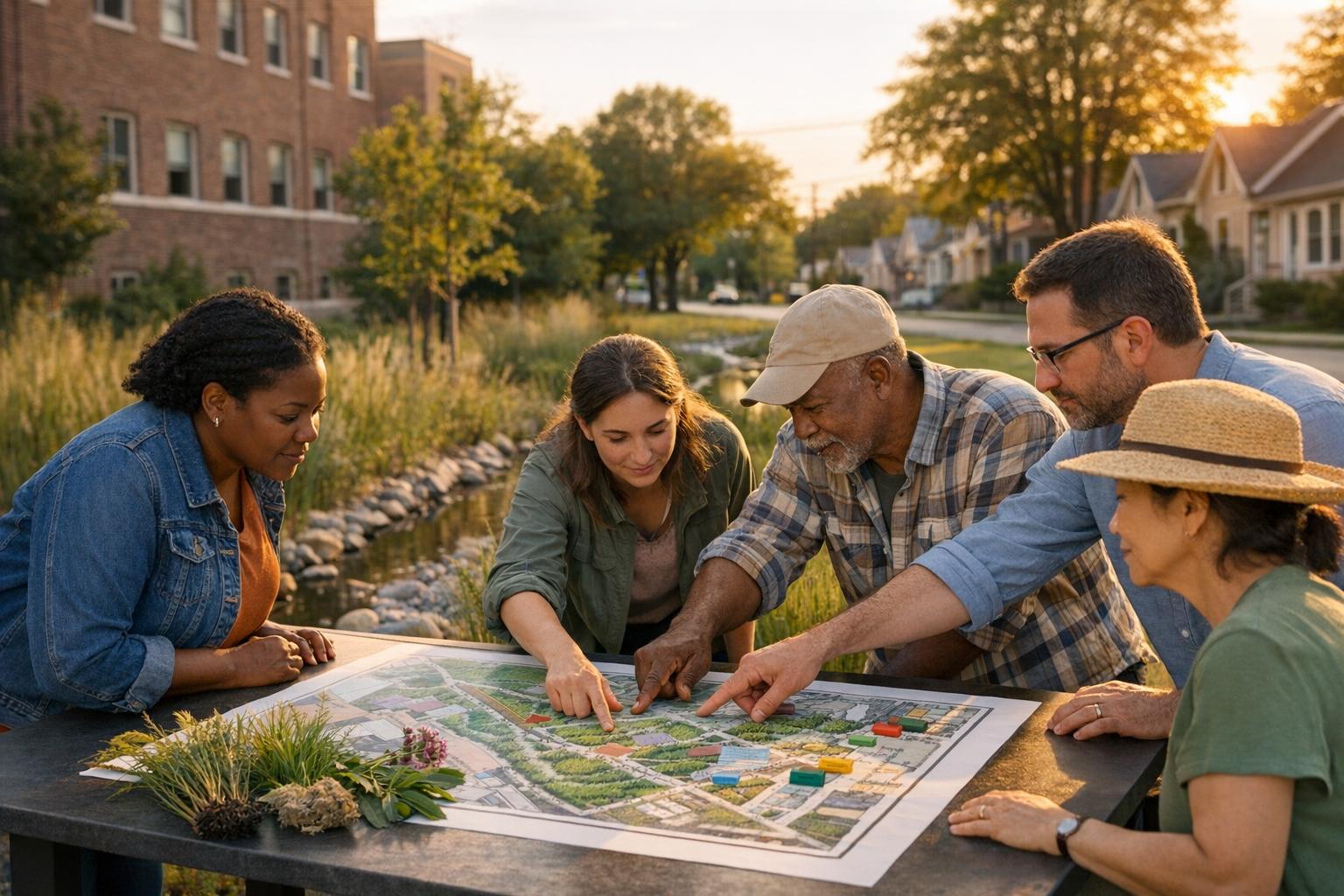
Universities and research institutions are uniquely positioned to help communities address climate challenges like flooding, extreme heat, and rising sea levels. The key to success lies in co-designing solutions with residents, combining academic expertise with local knowledge. This approach ensures plans are practical, inclusive, and address the needs of vulnerable populations. Here's how universities can effectively collaborate with communities:
Start with Community-Led Assessments: Engage residents to map climate hazards and vulnerabilities through participatory workshops, storytelling, and local data collection. Tools like FEMA Flood Maps and NOAA Climate Explorer can supplement local insights.
Use Participatory Methods: Involve residents in solution design using creative methods like photovoice projects, co-design workshops, and art-based engagement to ensure diverse voices are heard.
Implement Nature-Based Solutions: Tailor green infrastructure projects like rain gardens or urban tree canopies to local needs, integrating community input for long-term success.
Build Community Ownership: Hire and train local residents, compensate participants, and establish programs for ongoing care and management of solutions.
Develop Long-Term Roadmaps: Use frameworks like the RAFT or EPIC-N to align university resources with community priorities, secure funding, and maintain momentum.
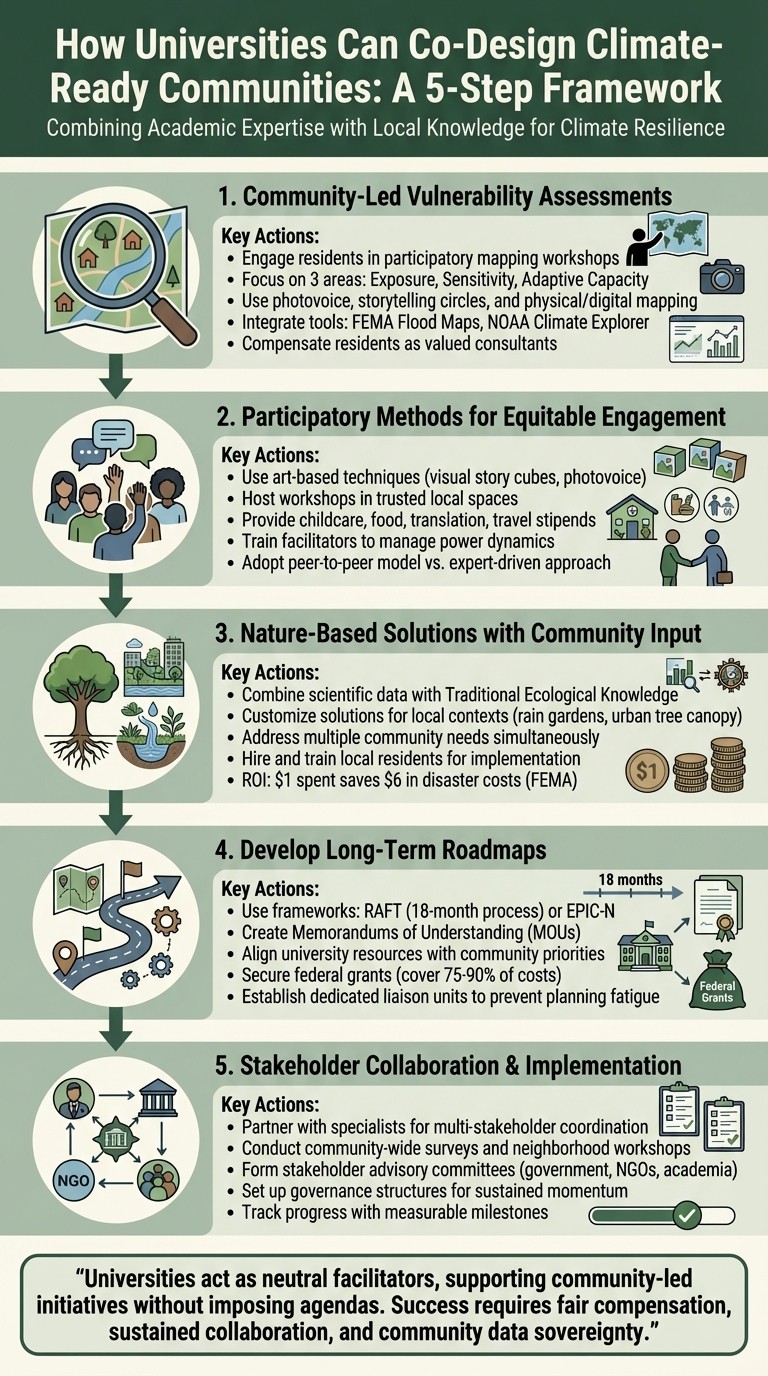
5-Step Framework for Co-Designing Climate-Ready Communities with Residents
Tamarack Institute Webinar: Bridging Community and Data for Climate Action (2024)
Step 1: Start with Community-Led Vulnerability Assessments
Building climate-resilient communities begins with understanding local vulnerabilities through the lens of resident experiences. A thorough vulnerability assessment focuses on three key areas: Exposure (the specific climate hazards a community faces), Sensitivity (how vulnerable systems and populations are to those hazards), and Adaptive Capacity (the resources available to respond effectively) [1]. The most pressing issues for intervention arise where high exposure, high sensitivity, and low adaptive capacity converge [1].
To achieve meaningful outcomes, universities need to move away from the traditional expert-driven model and adopt a peer-to-peer framework that respects and incorporates the lived experiences of residents as valuable data [9]. Collaborating with community-based organizations before launching assessments can help leverage existing trust networks. Hiring and compensating local leaders, such as block captains and faith leaders, ensures that the process remains culturally relevant and community-focused [1][9]. These foundational steps set the stage for the practical engagement techniques outlined below.
Engage Residents in Climate Hazard Mapping
Participatory mapping workshops turn residents into active contributors rather than passive observers. Hosting these sessions in accessible locations like community centers, schools, churches, or public libraries - rather than university campuses - encourages broader participation [1][9]. For example, in Ossining, New York, the NYS Department of Environmental Conservation displayed bilingual maps at a public library, allowing residents to use dot voting to highlight climate vulnerabilities. This approach effectively addressed language barriers, enabling diverse community input [9].
To reduce participation barriers, provide essential support such as childcare, food, travel stipends, and translation services during workshops [1][9]. Incorporate a variety of mapping tools to capture different perspectives, including:
Photovoice projects, where residents document climate impacts through photography
Storytelling circles, which gather historical climate data and personal experiences
Physical or digital mapping, where participants identify areas prone to flooding, extreme heat zones, cooling centers, and social hubs [1]
Facilitators should be trained to ensure balanced discussions, preventing dominant voices from overshadowing input from marginalized participants.
Use Tools for Local Data Collection
Once resident-led mapping is complete, technical tools can be integrated to strengthen the vulnerability profile. Combining scientific data with Traditional Ecological Knowledge (TEK) provides a richer, more accurate understanding of local conditions. TEK, which includes oral histories and observations from community elders, often captures ecological changes that scientific methods may overlook or take longer to document [7].
"Indigenous oral history often contains a knowledge of local ecosystems, not found in books, that can be used to understand and document the changes that are occurring." - U.S. Climate Resilience Toolkit [7]
To supplement personal accounts, use technical resources like NOAA Climate Explorer, FEMA Flood Maps, and state-level climate assessments to create a comprehensive vulnerability profile [1][9]. Tools like the Rapid Vulnerability & Adaptation Tool (RVAT) offer fillable templates that make the assessment process more straightforward [8]. Avoid one-off meetings by establishing multiple points of engagement to build lasting relationships with the community [1]. Treat residents as valued consultants, compensating them for their time and expertise rather than treating them solely as research subjects [1].
Step 2: Use Participatory Methods for Equitable Engagement
Once vulnerability assessments are complete, the next step is to actively involve residents in creating resilient solutions. This means moving away from traditional expert-driven meetings and embracing a peer-to-peer model where community knowledge is as important as scientific expertise [9]. The focus is on breaking down barriers that exclude marginalized groups and ensuring residents are fairly compensated for their time and contributions [10]. By integrating residents into the process, these methods transform vulnerability data into actionable, community-driven solutions.
Apply Art-Based Engagement Techniques
Art-based methods offer a creative way for residents to express their concerns about climate challenges without needing technical jargon or advanced literacy. These approaches go beyond standard surveys, using tools that make abstract climate issues more relatable. For example:
Visual story cubes: Dice featuring icons like “wildlife,” “soggy,” or “danger!” evoke sensory and memory-based responses during mapping exercises, helping participants connect personal experiences to climate impacts [11].
Photovoice projects: Residents document environmental challenges using photographs paired with personal narratives. This method allows participants to share their stories visually and emotionally.
In February 2024, researchers Carmen Valdez and Miriam Solis presented a photovoice exhibition at the Texas Advanced Computing Center (TACC) Visualization Lab in Austin. High school students from Pharr, Texas, captured images and wrote narratives highlighting environmental injustices in the Rio Grande Valley. Their work, part of the "Planning with the Future" initiative, directly influenced regional climate adaptation strategies [13].
"Incorporating knowledge derived from diverse populations actually strengthens the research and promises to increase uptake of findings, which is key in translation of research to practice." - Carmen Valdez, Professor, Dell Medical School [13]
Another inventive approach is hygroscopic paint installations, which become transparent when exposed to water. This technique physically connects participants to climate elements like rain. During the Ripple Project in Ballina, Ireland (February–July 2022), researchers from University College Dublin used hygroscopic paint alongside story cubes to engage residents of a social housing estate. The project, conducted in an area with 64.29% male unemployment, included six workshops that generated 16 co-designed solutions. Ultimately, residents selected the "Paradise Garden", an intergenerational space designed to manage rainwater runoff [11].
While creative methods are essential, structured workshops ensure all voices are heard and integrated into the process.
Run Co-Design Workshops That Include Everyone
To encourage meaningful participation, workshops must address the financial, logistical, and social barriers that often limit community involvement. Hosting sessions in trusted local spaces - such as housing complexes, churches, or community centers - can make attendance easier and more comfortable [1][9]. Providing supports like food, childcare, travel stipends, and translation services further reduces obstacles [9].
Barrier | Solution |
|---|---|
Financial Strain | |
Time Poverty | Schedule meetings at flexible times; provide childcare and meals [9] |
Language/Literacy | Use visual tools, bilingual maps, and translation services [9][11] |
Physical Access | Ensure venues are ADA compliant and centrally located [9] |
Power Imbalance | Adopt peer-to-peer models and shared leadership roles [9][10] |
Facilitators play a vital role in managing power dynamics, ensuring no single voice dominates the discussion. Techniques like rotating speaking tokens and visual timers help create balance [12]. Background materials should be distributed ahead of time, enabling participants to prepare and contribute effectively, regardless of technical expertise [9]. Fair compensation is also critical - treating residents as consultants rather than research subjects reinforces their value and expertise [1][10].
"Work with community partners, not for them; be humble and learn from partners as experts and innovators." - Center for Sustainable Communities Research and Education (SCoRE), Georgia Tech [10]
Workshops should follow a structured format to maximize participation and focus. A suggested agenda might include:
10-minute warm-up: Use prompts based on lived experiences to break the ice.
30 minutes for mapping: Participants use stickers to highlight key issues or areas of concern.
30 minutes for prototyping: Simple materials like cardboard and markers allow participants to create tangible solutions.
20 minutes for synthesis: Walk-and-talk sessions help summarize ideas collaboratively.
10 minutes for commitment boards: Participants outline the next steps and their roles in the process [12].
This structure keeps workshops productive while incorporating diverse forms of input, ensuring all participants feel heard and valued.
Step 3: Adapt Nature-Based Solutions with Community Input
To create truly effective nature-based solutions, it's essential to incorporate local knowledge and community insights. This process is not about imposing one-size-fits-all green infrastructure; instead, it’s about co-developing strategies that address specific local issues while offering multiple benefits to the community. Universities bring their scientific expertise and ability to secure grants, while residents contribute invaluable firsthand knowledge about what their neighborhoods need. The ultimate goal is to design solutions that residents are motivated to maintain because they see tangible benefits in their everyday lives. This collaborative effort lays the foundation for both effective design and long-term management of tailored solutions.
Customize Nature-Based Solutions for Local Contexts
The best nature-based solutions are rooted in a combination of scientific research and community-documented experiences. A great example of this approach is the Hyperlocalism (HyLo) Project led by the University of Miami between 2021 and 2022. Researchers Joanna Lombard, Tyler Harrison, and Amy Clement worked with 28 residents from Homestead and Little River, who used photovoice to capture issues like extreme heat and flooding. Researchers then combined these images with geospatial data on factors such as groundwater depth, tree canopy coverage, and access to air conditioning. The findings were clear: Little River needed more urban tree canopy to combat heat, while Homestead required improved bus shelters. These insights directly influenced Miami-Dade County’s Office of Resilience, which implemented an environmental protection plan for Little River and added bus shelters in southern Miami-Dade [15].
"The idea was to have a process that belongs to the citizens - a process they own." - Joanna Lombard, Professor, University of Miami School of Architecture [15]
For maximum community support, solutions should address multiple needs. For example, North Carolina State University’s Coastal Dynamics Design Lab (CDDL), led by Andy Fox and Carla Delcambre, partnered with Princeville, a town where 87% of the land lies within a 100-year floodplain. Together, they designed and installed over 5,000 square feet of rain gardens at Princeville Elementary School. These gardens serve dual purposes: managing stormwater and functioning as outdoor STEAM classrooms. Additionally, graduate students created movable "ed-YOU-cation" stations - planters on wheels that teachers can relocate during floods. This collaboration secured over $650,000 in grants and produced a "Landscape Curriculum and Care Guide" to help teachers integrate the gardens into their lessons [14].
The financial case for nature-based solutions is also compelling. Federal agencies estimate that every $1 spent on hazard mitigation saves $6 in avoided disaster costs [1]. Once solutions are tailored to local needs, the next step is to empower communities to take ownership.
Build Community Ownership of Solutions
To ensure long-term success, residents must be central to both implementing and maintaining these solutions. This requires creating formal programs for education and ongoing care. In Princeville, for example, the "Landscape Curriculum and Care Guide" equips teachers and staff with the tools to maintain the rain gardens and incorporate them into daily school activities, transforming the project into an enduring community resource [14].
"Research that ends at assessment instead of committing to implementation is extractive rather than additive." - Andy Fox and Carla Delcambre, North Carolina State University [14]
Another key aspect of building ownership is hiring locally. The University of Alaska Fairbanks’ Kake Climate Partnership offers a strong model. Collaborating with the Organized Village of Kake, the Kake Tribal Corporation, and the City of Kake, the project focused on monitoring ocean and freshwater health to protect traditional food sources. Between June and October 2020, the team hired 10 local residents to collect water and shellfish samples and trained 5 high school students through the TRAYLS program. By compensating local participants and creating paid roles, the project not only ensured community priorities were reflected but also built a local workforce for climate resilience [4].
To maintain trust and continuity, universities should also establish a dedicated liaison unit to act as a consistent point of contact. This prevents "planning fatigue", which can result from a revolving door of student researchers or faculty. NC State’s CDDL model highlights how a stable institutional presence fosters trust and ensures that community-driven needs remain at the forefront throughout long-term partnerships [14].
Step 4: Develop Climate Resilient Development Pathways Together
Once nature-based solutions and community ownership are in place, the next step is creating a roadmap that weaves together climate adaptation, economic growth, and local priorities. This process isn’t about imposing a plan on the community; it’s about working with residents to design pathways that align institutional resources with the community’s actual needs. Universities bring valuable scientific expertise and climate modeling, while communities contribute their lived experience and local insights. Together, these partnerships lay the groundwork for a shared vision, supported by proven frameworks for decision-making.
Use Established Frameworks to Guide Collaborative Planning
Collaborative frameworks can provide essential structure for developing climate-resilient pathways. One such tool is the Resilience Adaptability Feasibility Tool (RAFT). Developed through a partnership involving the University of Virginia, Old Dominion University, and Virginia Tech, RAFT supports localities and tribal nations in Virginia with an 18-month engagement process. This includes a scorecard for assessment, leadership workshops, and a checklist for setting one-year priorities. Importantly, this service is offered free of charge, funded by grants and donated resources [16].
"The goal of The RAFT is to help Virginia's localities and tribal nations increase their ability to respond to acute and chronic hazards and stressors while strengthening their economic and social viability." - The RAFT Collaborative [16]
Another approach is the Educational Partnerships for Innovation in Communities Network (EPIC-N). This framework connects university resources - students and faculty - with the needs of local governments. By focusing on real community challenges, EPIC-N ensures that academic projects have tangible impacts rather than existing solely as classroom exercises [2].
Shared decision-making is critical, especially in marginalized communities where trust must be built before technical work begins. Universities can act as neutral facilitators, using tools like public engagement sessions, surveys, and focus groups to ensure all voices are heard [2].
Once frameworks are in place, the next step is aligning university resources with the goals defined by the community.
Align Institutional Resources with Community Needs
With the community’s priorities clearly established, universities can channel their resources to meet these goals through formal agreements. For instance, crafting a Memorandum of Understanding (MOU) helps clarify roles, responsibilities, and communication channels between the institution and the community [2].
The University of Houston's SURE (Stimulated Urban Renewal Through Entrepreneurship) program is a strong example of this alignment in action. Under the leadership of Dr. Saleha Khumawala, the program collaborates with the City of Houston’s "Complete Communities" initiative. By June 2023, SURE had trained over 400 business students to mentor under-resourced entrepreneurs, resulting in the launch or expansion of more than 700 local businesses. This initiative ties economic development directly to community empowerment [2].
To address the constraints of academic calendars, universities can extend projects over multiple semesters or involve different classes in various project phases. The University of Minnesota's Resilient Communities Project (RCP) used this strategy in its partnership with Brooklyn Park. Over two semesters, students from different disciplines tackled complementary aspects of the project. Risk management students analyzed liabilities for nature play areas, while recreation administration students assessed parks and proposed strategies for nature-based programming. These student contributions have since been incorporated into several parks, promoting health and leadership development [2].
Land-grant universities can also leverage their extension programs, which often provide technical assistance for initiatives like downtown revitalization or community training. These programs serve as accessible starting points for communities seeking guidance [2]. Vulnerability mapping is another valuable tool, helping direct resources to areas most at risk while avoiding unintended consequences like "climate gentrification" [1].
"The involvement of higher education in local climate change adaptation efforts raises the legitimacy of the process." - James S. Gruber, et al. [3]
Breaking down long-term climate goals into smaller, measurable milestones helps maintain community momentum and build trust. Federal grants for resilience projects, which often cover 75% to 90% of costs, can be instrumental. Universities can support communities by assisting with grant writing and helping them secure funding they might not otherwise access [1].
Step 5: Work with Council Fire for Stakeholder Collaboration
Once frameworks are in place and resources are aligned, the next step is to transform plans into tangible results. Council Fire specializes in guiding research institutions through the intricate dynamics of multi-stakeholder climate resilience projects. Their approach prioritizes trust-building before goal-setting, achieved through one-on-one interviews and small-group discussions [18].
How Council Fire Aids Climate Resilience Planning
Council Fire addresses a common problem: plans that fail during the implementation phase. Their three-tier engagement process includes:
Community-wide surveys to gather broad input.
Neighborhood workshops offering childcare and translation services to ensure inclusivity.
Stakeholder advisory committees that unite representatives from government, businesses, NGOs, and academic institutions [17].
A notable example of their work took place between 2024 and February 2026 in a Mid-Atlantic coastal city with 28,000 residents. This city faced a staggering 300% rise in tidal flooding days. Over 14 months, Council Fire helped secure $14.7 million in grants, including a FEMA BRIC application that ranked in the top 15% nationally. The project also resulted in a 1.2-mile living shoreline that reduced wave energy by 40–60% during storms and restored 8 acres of wetland [17].
Their process blends technical assessments with meaningful community involvement. They utilize downscaled climate data from NOAA and LOCA2, GIS-based infrastructure analysis, and CDC Social Vulnerability Index mapping. A community resilience survey achieved an impressive 22% response rate, highlighting the effectiveness of their engagement efforts [17]. This approach helps universities pinpoint risks to critical facilities while amplifying the voices of vulnerable residents.
Tailored Consulting for Universities
For academic institutions managing long-term partnerships with their communities, Council Fire provides services that prepare resilience plans to meet federal and state funding standards from the outset. These plans are designed to double as "grant application toolkits", streamlining the process of securing funding [17].
In February 2026, Council Fire facilitated a regional climate compact involving 35 organizations, including four universities. Through 65 interviews, they developed an agreement that set a regional emissions reduction target of 50% by 2030, launched a workforce program enrolling 340 participants with an 85% job placement rate, and unlocked $280 million in coordinated climate investments [18].
Their expertise extends to governance during implementation, ensuring that plans maintain momentum. This includes setting up board-level oversight, assigning executive leadership, and creating cross-functional working groups. As Council Fire emphasizes:
"A resilience strategy without a clear implementation governance structure - who leads, who decides, how progress is tracked, how the plan adapts - will lose momentum after the initial political enthusiasm fades" [17].
Integrate Local Ecological Knowledge for Culturally Relevant Solutions
Combine Scientific and Local Knowledge
Bringing together scientific research and local ecological knowledge strengthens efforts to create climate resilience solutions that align with community values. While universities often bring technical expertise to the table, they may overlook the deep understanding that residents have about their environment - insights shaped by years of observing seasonal changes, species behavior, and local environmental shifts. Effective partnerships that incorporate both scientific and community perspectives from the outset can lead to more grounded and impactful solutions.
The Kake Climate Partnership offers a powerful example of this approach. By integrating Indigenous ecological knowledge with technical monitoring projects, the initiative ensured that local leadership and community priorities remained central. A formal "Declaration of Principles and Expectations" safeguarded community ownership of data, avoiding the pitfalls of extractive research where outside institutions benefit without leaving lasting value for the community.
Columbia University's Co-Production of Knowledge Initiative takes a similar approach by fostering collaboration between academic and Indigenous knowledge systems. Through residencies for Indigenous knowledge holders and interactive seminars involving faculty, students, and community members, the initiative creates meaningful exchanges. As the program describes:
"Knowledge co-production requires deep collaboration and the establishment of trusted relationships between those with the scientific, social, and/or policy expertise, and community members who have 'lived experience' within their natural, social, and cultural environments" [6].
Build Long-Term Community Relationships
For these efforts to succeed, they must go beyond short-term projects. Climate adaptation requires enduring relationships, not one-off studies that end when funding runs out. Universities need to invest in partnerships that last, which means hiring locally, offering fair compensation, and ensuring communities maintain control over how their knowledge is applied.
The Kake Climate Partnership demonstrates this commitment by embedding Indigenous knowledge into its climate resilience strategies. By training local high school students and archiving data with the Organized Village of Kake rather than the university, the project empowered the community to take charge of its future.
The U.S. Climate Resilience Toolkit highlights how blending Traditional Ecological Knowledge with Western science can spark innovative strategies for resilience [4]. Early and ongoing engagement with local leaders is essential to building trust and ensuring solutions address real community needs. This includes identifying priorities like preserving cultural heritage, ensuring food security, and documenting environmental changes. Engaging youth in these efforts also helps build the next generation of leaders and a capable workforce for the future.
Case Study: Co-Designing Nature-Based Solutions in Mathare Valley
Lessons from the Mathare Valley Workshop
The Mathare Valley workshop provides a hands-on example of applying co-design and nature-based solutions to real-world challenges. Between September 2024 and January 2025, Cornell University's College of Architecture, Art, and Planning conducted a field studio in Mathare 4B, Nairobi. This informal settlement, the oldest and second-largest in Kenya, faced severe flooding in the spring of 2024, displacing many residents. Led by Assistant Professor Felix Heisel, the project brought together students, Slum Dwellers International–Kenya, and the University of Nairobi to address critical issues of flood resilience and housing security [19].
The workshop emphasized immersive fieldwork and iterative feedback. Students walked through the settlement alongside residents, gaining firsthand insight into daily struggles. From these experiences, they developed four key upgrading strategies: circular material innovations, water capture through service walls, urban acupuncture (small-scale, impactful interventions like bridges or markets), and adaptable housing designs. These strategies were compiled into a catalog to guide discussions between residents and government officials. This collaborative approach highlights the importance of community-informed planning for resilience.
Throughout the process, students engaged with community elders, conducted listening sessions focusing on flood and eviction experiences, and presented their initial designs for feedback. Joe Muturi, Chair of Slum Dwellers International, shared his thoughts on the workshop's impact:
"The planning studio enabled the students to apply their knowledge in a practical setting while gaining insights into the challenges faced by slum dwellers. This hopefully will set a precedent in Kenya to adopt iterative and participatory approaches, fostering a collaborative environment where students / planners and slum communities work together throughout the planning process." [19]
How Universities Can Apply These Lessons
Universities around the world can adopt similar approaches by building strong local partnerships and focusing on incremental improvements rather than complete overhauls. Partnering with established intermediaries, like Slum Dwellers International, ensures access to communities and fosters trust. Professor Victoria Beard, Director of Cornell's Mui Ho Center for Cities, emphasized this point:
"Slum Dwellers International have the local relationships that allow students unprecedented access to the sites and interaction with residents." [19]
This model ensures that community priorities are integrated from the outset, creating a foundation for meaningful collaboration.
The Mathare workshop also demonstrated the effectiveness of focusing on upgrading strategies. Modular solutions, such as TwistBlocks - a fire-resistant concrete block system used at the Global One Primary School in Kibera - and interlocking adobe blocks, offered residents flexibility in designing and adapting their spaces. One team proposed service walls that managed water while also providing structural support for vertical expansion, showcasing how multifunctional designs can address multiple challenges at once.
Cross-disciplinary collaboration proved essential, allowing the team to tackle issues ranging from material sourcing to urban infrastructure. Filmmaking further enriched the project by documenting resident perspectives, ensuring that proposed solutions addressed both the physical and social aspects of climate resilience.
Comparison of Co-Design Methods and Frameworks
Participatory co-design methods have inspired a variety of frameworks, each offering specific ways to blend community insights with technical expertise. Universities can select frameworks based on their project’s context, timeline, and the unique characteristics of the communities involved.
Co-Production of Knowledge (CPK) is particularly effective when working with Indigenous or traditional communities that have extensive ecological knowledge. In this model, the community takes the lead in defining research priorities from the outset, ensuring strong local ownership. For example, the Kake Climate Partnership established data sovereignty through a Declaration of Principles, reflecting the importance of community-driven leadership [4].
The RAFT (Resilience Adaptability Feasibility Tool) offers a structured 18-month process designed for municipalities or tribal nations seeking a detailed roadmap. Developed by the University of Virginia, Old Dominion University, and Virginia Tech, this framework includes independent assessments, leadership workshops, and a Resilience Action Checklist. It also provides a year of implementation support, helping institutions allocate resources effectively while maintaining focus and momentum [21].
Living Labs with participatory modeling use models as shared tools to connect technical design with community needs. In Sadivayal Village, India, researchers collaborated with 20 farming households to co-develop an early sowing strategy. This effort resulted in a 60% adoption rate and reduced water stress under future climate scenarios. This approach is particularly suited to projects requiring a high degree of technical integration, such as those in agriculture or water management [20].
Community-Based Adaptation (CBA) emphasizes local leadership and ancestral knowledge, making it a strong option for vulnerable communities with deep-rooted traditions. This framework prioritizes restoring control to local populations and avoids imposing top-down solutions that could lead to what researchers describe as "dispossession." James S. Gruber of Antioch University New England highlights that university involvement in these efforts "raises the legitimacy of the process", a critical factor when working with historically marginalized communities [3][22].
These frameworks equip universities with specialized strategies to advance climate resilience, aligning technical expertise with the needs and strengths of local communities.
Conclusion: Drive System-Level Change Through Co-Design
Creating climate-ready communities isn’t just an abstract concept - it’s a hands-on approach to driving large-scale change, and universities and research institutions are uniquely equipped to take the lead. According to FEMA, every $1 invested in hazard mitigation results in $6 saved in avoided disaster costs [1]. But achieving this kind of return goes beyond technical know-how - it requires fostering social cohesion, ensuring resources are distributed fairly, and building governance systems that prioritize the needs of those most vulnerable to climate challenges [1]. Together, these technical and social efforts lay the groundwork for meaningful, long-term institutional leadership.
Universities play a critical role as neutral facilitators, supporting community-led initiatives without imposing their own agendas. This role becomes most impactful when institutions formalize partnerships through Memorandums of Understanding, fairly compensate residents for their expertise, and commit to sustained collaboration beyond the confines of a single semester [2]. Programs like the University of Houston's SURE initiative highlight how these partnerships can lead to real, positive change within communities [2].
The strategies discussed in this article, including Community-Based Adaptation and tools like the RAFT framework, provide structured approaches to turning climate science into actionable, local solutions. Success depends on addressing key challenges, such as eliminating obstacles to community autonomy [5], ensuring communities maintain control over their own data [4], and aligning resilience efforts with protections against climate gentrification [1]. The Kake Climate Partnership stands out as a strong example of how community ownership and data sovereignty can be achieved [4].
To bring these frameworks to life, specialized consulting services can help bridge the gap between planning and execution. For instance, Council Fire’s consulting expertise enables universities to put these principles into practice, often within just 3 to 6 months [1]. Their comprehensive approach covers every aspect of resilience planning - from securing diverse funding sources to setting clear milestones and accountability measures. This process leads to tangible outcomes, such as strengthened critical infrastructure and the development of green spaces that benefit both the environment and the community [1].
FAQs
How do we choose the right co-design framework (RAFT, EPIC-N, CBA) for our community?
Choosing the right framework depends on what your community aims to achieve and its specific needs:
RAFT: Suited for resilience evaluations and fostering collaborative planning efforts.
EPIC-N: Designed for participatory planning, emphasizing stakeholder involvement and engagement.
CBA: Centers on assessing projects through the lens of economic feasibility.
You can also mix and match frameworks to better align with your community’s resources and goals.
How can we pay and include residents without slowing down research timelines?
To ensure residents are included and compensated without slowing down research, consider adopting participatory research models that involve them from the outset. Hiring and training local residents for roles like data collection allows for their timely engagement in the process. Use frameworks designed to promote fair partnerships, which can help streamline collaboration efforts. Additionally, align funding structures to enable prompt payments and establish clear protocols that build on existing community relationships. This approach enhances efficiency while keeping residents actively involved.
How do we prevent climate gentrification while investing in resilience projects?
To tackle the issue of climate gentrification, it's crucial to embrace planning approaches that are fair and inclusive, ensuring vulnerable communities aren't pushed out. Involve all residents - particularly those most affected - in designing resilience efforts. Emphasize community-driven planning, fair allocation of resources, and policies that protect affordable housing. By integrating green infrastructure with input from local voices, it's possible to meet community needs while minimizing the risk of displacement. These strategies help ensure that resilience efforts benefit current residents without inadvertently inviting wealthier newcomers at their expense.
Related Blog Posts
How to Build a Climate Resilience Plan for Universities & Research Institutions
How to Integrate Climate Risk into Infrastructure Planning for Universities & Research Institutions
How to Design Coastal Resilience & Flood Mitigation for Universities & Research Institutions
How to Co-Design Climate-Ready Communities with Residents for Municipalities & Government Agencies
Latest Articles
©2025

Narrative Change and Power Building: The Missing Half of Advocacy
Narrative change is the process of disrupting dominant narratives that normalize inequity and advancing new narratives from historically marginalized communities.

Funding Resilience Without Federal Grants
BRIC is unreliable and FEMA is shrinking. Here's how cities fund climate resilience with dedicated revenue, blended finance, and a coordinating authority.

The ESG Blind Spot: How AI Is Finding Risks in Companies Nobody Else Is Watching
Norway's sovereign wealth fund uses AI to screen 7,200 portfolio companies for forced labor and corruption within 24 hours. The real story is the emerging-market coverage gap that traditional ESG data vendors miss — and what it means for any company with a global supply chain.
Narrative Change and Power Building: The Missing Half of Advocacy
Narrative change is the process of disrupting dominant narratives that normalize inequity and advancing new narratives from historically marginalized communities.
Funding Resilience Without Federal Grants
BRIC is unreliable and FEMA is shrinking. Here's how cities fund climate resilience with dedicated revenue, blended finance, and a coordinating authority.
The ESG Blind Spot: How AI Is Finding Risks in Companies Nobody Else Is Watching
Norway's sovereign wealth fund uses AI to screen 7,200 portfolio companies for forced labor and corruption within 24 hours. The real story is the emerging-market coverage gap that traditional ESG data vendors miss — and what it means for any company with a global supply chain.
FAQ
01
What does it really mean to “redefine profit”?
02
What makes Council Fire different?
03
Who does Council Fire work with?
04
What does working with Council Fire actually look like?
05
How does Council Fire help organizations turn big goals into action?
06
How does Council Fire define and measure success?
Apr 1, 2026
How to Co-Design Climate-Ready Communities with Residents for Universities & Research Institutions
Capacity Building
In This Article
Universities must co-design climate-resilient plans with residents, blending local knowledge and nature-based solutions for lasting impact.
How to Co-Design Climate-Ready Communities with Residents for Universities & Research Institutions
Universities and research institutions are uniquely positioned to help communities address climate challenges like flooding, extreme heat, and rising sea levels. The key to success lies in co-designing solutions with residents, combining academic expertise with local knowledge. This approach ensures plans are practical, inclusive, and address the needs of vulnerable populations. Here's how universities can effectively collaborate with communities:
Start with Community-Led Assessments: Engage residents to map climate hazards and vulnerabilities through participatory workshops, storytelling, and local data collection. Tools like FEMA Flood Maps and NOAA Climate Explorer can supplement local insights.
Use Participatory Methods: Involve residents in solution design using creative methods like photovoice projects, co-design workshops, and art-based engagement to ensure diverse voices are heard.
Implement Nature-Based Solutions: Tailor green infrastructure projects like rain gardens or urban tree canopies to local needs, integrating community input for long-term success.
Build Community Ownership: Hire and train local residents, compensate participants, and establish programs for ongoing care and management of solutions.
Develop Long-Term Roadmaps: Use frameworks like the RAFT or EPIC-N to align university resources with community priorities, secure funding, and maintain momentum.
5-Step Framework for Co-Designing Climate-Ready Communities with Residents
Tamarack Institute Webinar: Bridging Community and Data for Climate Action (2024)
Step 1: Start with Community-Led Vulnerability Assessments
Building climate-resilient communities begins with understanding local vulnerabilities through the lens of resident experiences. A thorough vulnerability assessment focuses on three key areas: Exposure (the specific climate hazards a community faces), Sensitivity (how vulnerable systems and populations are to those hazards), and Adaptive Capacity (the resources available to respond effectively) [1]. The most pressing issues for intervention arise where high exposure, high sensitivity, and low adaptive capacity converge [1].
To achieve meaningful outcomes, universities need to move away from the traditional expert-driven model and adopt a peer-to-peer framework that respects and incorporates the lived experiences of residents as valuable data [9]. Collaborating with community-based organizations before launching assessments can help leverage existing trust networks. Hiring and compensating local leaders, such as block captains and faith leaders, ensures that the process remains culturally relevant and community-focused [1][9]. These foundational steps set the stage for the practical engagement techniques outlined below.
Engage Residents in Climate Hazard Mapping
Participatory mapping workshops turn residents into active contributors rather than passive observers. Hosting these sessions in accessible locations like community centers, schools, churches, or public libraries - rather than university campuses - encourages broader participation [1][9]. For example, in Ossining, New York, the NYS Department of Environmental Conservation displayed bilingual maps at a public library, allowing residents to use dot voting to highlight climate vulnerabilities. This approach effectively addressed language barriers, enabling diverse community input [9].
To reduce participation barriers, provide essential support such as childcare, food, travel stipends, and translation services during workshops [1][9]. Incorporate a variety of mapping tools to capture different perspectives, including:
Photovoice projects, where residents document climate impacts through photography
Storytelling circles, which gather historical climate data and personal experiences
Physical or digital mapping, where participants identify areas prone to flooding, extreme heat zones, cooling centers, and social hubs [1]
Facilitators should be trained to ensure balanced discussions, preventing dominant voices from overshadowing input from marginalized participants.
Use Tools for Local Data Collection
Once resident-led mapping is complete, technical tools can be integrated to strengthen the vulnerability profile. Combining scientific data with Traditional Ecological Knowledge (TEK) provides a richer, more accurate understanding of local conditions. TEK, which includes oral histories and observations from community elders, often captures ecological changes that scientific methods may overlook or take longer to document [7].
"Indigenous oral history often contains a knowledge of local ecosystems, not found in books, that can be used to understand and document the changes that are occurring." - U.S. Climate Resilience Toolkit [7]
To supplement personal accounts, use technical resources like NOAA Climate Explorer, FEMA Flood Maps, and state-level climate assessments to create a comprehensive vulnerability profile [1][9]. Tools like the Rapid Vulnerability & Adaptation Tool (RVAT) offer fillable templates that make the assessment process more straightforward [8]. Avoid one-off meetings by establishing multiple points of engagement to build lasting relationships with the community [1]. Treat residents as valued consultants, compensating them for their time and expertise rather than treating them solely as research subjects [1].
Step 2: Use Participatory Methods for Equitable Engagement
Once vulnerability assessments are complete, the next step is to actively involve residents in creating resilient solutions. This means moving away from traditional expert-driven meetings and embracing a peer-to-peer model where community knowledge is as important as scientific expertise [9]. The focus is on breaking down barriers that exclude marginalized groups and ensuring residents are fairly compensated for their time and contributions [10]. By integrating residents into the process, these methods transform vulnerability data into actionable, community-driven solutions.
Apply Art-Based Engagement Techniques
Art-based methods offer a creative way for residents to express their concerns about climate challenges without needing technical jargon or advanced literacy. These approaches go beyond standard surveys, using tools that make abstract climate issues more relatable. For example:
Visual story cubes: Dice featuring icons like “wildlife,” “soggy,” or “danger!” evoke sensory and memory-based responses during mapping exercises, helping participants connect personal experiences to climate impacts [11].
Photovoice projects: Residents document environmental challenges using photographs paired with personal narratives. This method allows participants to share their stories visually and emotionally.
In February 2024, researchers Carmen Valdez and Miriam Solis presented a photovoice exhibition at the Texas Advanced Computing Center (TACC) Visualization Lab in Austin. High school students from Pharr, Texas, captured images and wrote narratives highlighting environmental injustices in the Rio Grande Valley. Their work, part of the "Planning with the Future" initiative, directly influenced regional climate adaptation strategies [13].
"Incorporating knowledge derived from diverse populations actually strengthens the research and promises to increase uptake of findings, which is key in translation of research to practice." - Carmen Valdez, Professor, Dell Medical School [13]
Another inventive approach is hygroscopic paint installations, which become transparent when exposed to water. This technique physically connects participants to climate elements like rain. During the Ripple Project in Ballina, Ireland (February–July 2022), researchers from University College Dublin used hygroscopic paint alongside story cubes to engage residents of a social housing estate. The project, conducted in an area with 64.29% male unemployment, included six workshops that generated 16 co-designed solutions. Ultimately, residents selected the "Paradise Garden", an intergenerational space designed to manage rainwater runoff [11].
While creative methods are essential, structured workshops ensure all voices are heard and integrated into the process.
Run Co-Design Workshops That Include Everyone
To encourage meaningful participation, workshops must address the financial, logistical, and social barriers that often limit community involvement. Hosting sessions in trusted local spaces - such as housing complexes, churches, or community centers - can make attendance easier and more comfortable [1][9]. Providing supports like food, childcare, travel stipends, and translation services further reduces obstacles [9].
Barrier | Solution |
|---|---|
Financial Strain | |
Time Poverty | Schedule meetings at flexible times; provide childcare and meals [9] |
Language/Literacy | Use visual tools, bilingual maps, and translation services [9][11] |
Physical Access | Ensure venues are ADA compliant and centrally located [9] |
Power Imbalance | Adopt peer-to-peer models and shared leadership roles [9][10] |
Facilitators play a vital role in managing power dynamics, ensuring no single voice dominates the discussion. Techniques like rotating speaking tokens and visual timers help create balance [12]. Background materials should be distributed ahead of time, enabling participants to prepare and contribute effectively, regardless of technical expertise [9]. Fair compensation is also critical - treating residents as consultants rather than research subjects reinforces their value and expertise [1][10].
"Work with community partners, not for them; be humble and learn from partners as experts and innovators." - Center for Sustainable Communities Research and Education (SCoRE), Georgia Tech [10]
Workshops should follow a structured format to maximize participation and focus. A suggested agenda might include:
10-minute warm-up: Use prompts based on lived experiences to break the ice.
30 minutes for mapping: Participants use stickers to highlight key issues or areas of concern.
30 minutes for prototyping: Simple materials like cardboard and markers allow participants to create tangible solutions.
20 minutes for synthesis: Walk-and-talk sessions help summarize ideas collaboratively.
10 minutes for commitment boards: Participants outline the next steps and their roles in the process [12].
This structure keeps workshops productive while incorporating diverse forms of input, ensuring all participants feel heard and valued.
Step 3: Adapt Nature-Based Solutions with Community Input
To create truly effective nature-based solutions, it's essential to incorporate local knowledge and community insights. This process is not about imposing one-size-fits-all green infrastructure; instead, it’s about co-developing strategies that address specific local issues while offering multiple benefits to the community. Universities bring their scientific expertise and ability to secure grants, while residents contribute invaluable firsthand knowledge about what their neighborhoods need. The ultimate goal is to design solutions that residents are motivated to maintain because they see tangible benefits in their everyday lives. This collaborative effort lays the foundation for both effective design and long-term management of tailored solutions.
Customize Nature-Based Solutions for Local Contexts
The best nature-based solutions are rooted in a combination of scientific research and community-documented experiences. A great example of this approach is the Hyperlocalism (HyLo) Project led by the University of Miami between 2021 and 2022. Researchers Joanna Lombard, Tyler Harrison, and Amy Clement worked with 28 residents from Homestead and Little River, who used photovoice to capture issues like extreme heat and flooding. Researchers then combined these images with geospatial data on factors such as groundwater depth, tree canopy coverage, and access to air conditioning. The findings were clear: Little River needed more urban tree canopy to combat heat, while Homestead required improved bus shelters. These insights directly influenced Miami-Dade County’s Office of Resilience, which implemented an environmental protection plan for Little River and added bus shelters in southern Miami-Dade [15].
"The idea was to have a process that belongs to the citizens - a process they own." - Joanna Lombard, Professor, University of Miami School of Architecture [15]
For maximum community support, solutions should address multiple needs. For example, North Carolina State University’s Coastal Dynamics Design Lab (CDDL), led by Andy Fox and Carla Delcambre, partnered with Princeville, a town where 87% of the land lies within a 100-year floodplain. Together, they designed and installed over 5,000 square feet of rain gardens at Princeville Elementary School. These gardens serve dual purposes: managing stormwater and functioning as outdoor STEAM classrooms. Additionally, graduate students created movable "ed-YOU-cation" stations - planters on wheels that teachers can relocate during floods. This collaboration secured over $650,000 in grants and produced a "Landscape Curriculum and Care Guide" to help teachers integrate the gardens into their lessons [14].
The financial case for nature-based solutions is also compelling. Federal agencies estimate that every $1 spent on hazard mitigation saves $6 in avoided disaster costs [1]. Once solutions are tailored to local needs, the next step is to empower communities to take ownership.
Build Community Ownership of Solutions
To ensure long-term success, residents must be central to both implementing and maintaining these solutions. This requires creating formal programs for education and ongoing care. In Princeville, for example, the "Landscape Curriculum and Care Guide" equips teachers and staff with the tools to maintain the rain gardens and incorporate them into daily school activities, transforming the project into an enduring community resource [14].
"Research that ends at assessment instead of committing to implementation is extractive rather than additive." - Andy Fox and Carla Delcambre, North Carolina State University [14]
Another key aspect of building ownership is hiring locally. The University of Alaska Fairbanks’ Kake Climate Partnership offers a strong model. Collaborating with the Organized Village of Kake, the Kake Tribal Corporation, and the City of Kake, the project focused on monitoring ocean and freshwater health to protect traditional food sources. Between June and October 2020, the team hired 10 local residents to collect water and shellfish samples and trained 5 high school students through the TRAYLS program. By compensating local participants and creating paid roles, the project not only ensured community priorities were reflected but also built a local workforce for climate resilience [4].
To maintain trust and continuity, universities should also establish a dedicated liaison unit to act as a consistent point of contact. This prevents "planning fatigue", which can result from a revolving door of student researchers or faculty. NC State’s CDDL model highlights how a stable institutional presence fosters trust and ensures that community-driven needs remain at the forefront throughout long-term partnerships [14].
Step 4: Develop Climate Resilient Development Pathways Together
Once nature-based solutions and community ownership are in place, the next step is creating a roadmap that weaves together climate adaptation, economic growth, and local priorities. This process isn’t about imposing a plan on the community; it’s about working with residents to design pathways that align institutional resources with the community’s actual needs. Universities bring valuable scientific expertise and climate modeling, while communities contribute their lived experience and local insights. Together, these partnerships lay the groundwork for a shared vision, supported by proven frameworks for decision-making.
Use Established Frameworks to Guide Collaborative Planning
Collaborative frameworks can provide essential structure for developing climate-resilient pathways. One such tool is the Resilience Adaptability Feasibility Tool (RAFT). Developed through a partnership involving the University of Virginia, Old Dominion University, and Virginia Tech, RAFT supports localities and tribal nations in Virginia with an 18-month engagement process. This includes a scorecard for assessment, leadership workshops, and a checklist for setting one-year priorities. Importantly, this service is offered free of charge, funded by grants and donated resources [16].
"The goal of The RAFT is to help Virginia's localities and tribal nations increase their ability to respond to acute and chronic hazards and stressors while strengthening their economic and social viability." - The RAFT Collaborative [16]
Another approach is the Educational Partnerships for Innovation in Communities Network (EPIC-N). This framework connects university resources - students and faculty - with the needs of local governments. By focusing on real community challenges, EPIC-N ensures that academic projects have tangible impacts rather than existing solely as classroom exercises [2].
Shared decision-making is critical, especially in marginalized communities where trust must be built before technical work begins. Universities can act as neutral facilitators, using tools like public engagement sessions, surveys, and focus groups to ensure all voices are heard [2].
Once frameworks are in place, the next step is aligning university resources with the goals defined by the community.
Align Institutional Resources with Community Needs
With the community’s priorities clearly established, universities can channel their resources to meet these goals through formal agreements. For instance, crafting a Memorandum of Understanding (MOU) helps clarify roles, responsibilities, and communication channels between the institution and the community [2].
The University of Houston's SURE (Stimulated Urban Renewal Through Entrepreneurship) program is a strong example of this alignment in action. Under the leadership of Dr. Saleha Khumawala, the program collaborates with the City of Houston’s "Complete Communities" initiative. By June 2023, SURE had trained over 400 business students to mentor under-resourced entrepreneurs, resulting in the launch or expansion of more than 700 local businesses. This initiative ties economic development directly to community empowerment [2].
To address the constraints of academic calendars, universities can extend projects over multiple semesters or involve different classes in various project phases. The University of Minnesota's Resilient Communities Project (RCP) used this strategy in its partnership with Brooklyn Park. Over two semesters, students from different disciplines tackled complementary aspects of the project. Risk management students analyzed liabilities for nature play areas, while recreation administration students assessed parks and proposed strategies for nature-based programming. These student contributions have since been incorporated into several parks, promoting health and leadership development [2].
Land-grant universities can also leverage their extension programs, which often provide technical assistance for initiatives like downtown revitalization or community training. These programs serve as accessible starting points for communities seeking guidance [2]. Vulnerability mapping is another valuable tool, helping direct resources to areas most at risk while avoiding unintended consequences like "climate gentrification" [1].
"The involvement of higher education in local climate change adaptation efforts raises the legitimacy of the process." - James S. Gruber, et al. [3]
Breaking down long-term climate goals into smaller, measurable milestones helps maintain community momentum and build trust. Federal grants for resilience projects, which often cover 75% to 90% of costs, can be instrumental. Universities can support communities by assisting with grant writing and helping them secure funding they might not otherwise access [1].
Step 5: Work with Council Fire for Stakeholder Collaboration
Once frameworks are in place and resources are aligned, the next step is to transform plans into tangible results. Council Fire specializes in guiding research institutions through the intricate dynamics of multi-stakeholder climate resilience projects. Their approach prioritizes trust-building before goal-setting, achieved through one-on-one interviews and small-group discussions [18].
How Council Fire Aids Climate Resilience Planning
Council Fire addresses a common problem: plans that fail during the implementation phase. Their three-tier engagement process includes:
Community-wide surveys to gather broad input.
Neighborhood workshops offering childcare and translation services to ensure inclusivity.
Stakeholder advisory committees that unite representatives from government, businesses, NGOs, and academic institutions [17].
A notable example of their work took place between 2024 and February 2026 in a Mid-Atlantic coastal city with 28,000 residents. This city faced a staggering 300% rise in tidal flooding days. Over 14 months, Council Fire helped secure $14.7 million in grants, including a FEMA BRIC application that ranked in the top 15% nationally. The project also resulted in a 1.2-mile living shoreline that reduced wave energy by 40–60% during storms and restored 8 acres of wetland [17].
Their process blends technical assessments with meaningful community involvement. They utilize downscaled climate data from NOAA and LOCA2, GIS-based infrastructure analysis, and CDC Social Vulnerability Index mapping. A community resilience survey achieved an impressive 22% response rate, highlighting the effectiveness of their engagement efforts [17]. This approach helps universities pinpoint risks to critical facilities while amplifying the voices of vulnerable residents.
Tailored Consulting for Universities
For academic institutions managing long-term partnerships with their communities, Council Fire provides services that prepare resilience plans to meet federal and state funding standards from the outset. These plans are designed to double as "grant application toolkits", streamlining the process of securing funding [17].
In February 2026, Council Fire facilitated a regional climate compact involving 35 organizations, including four universities. Through 65 interviews, they developed an agreement that set a regional emissions reduction target of 50% by 2030, launched a workforce program enrolling 340 participants with an 85% job placement rate, and unlocked $280 million in coordinated climate investments [18].
Their expertise extends to governance during implementation, ensuring that plans maintain momentum. This includes setting up board-level oversight, assigning executive leadership, and creating cross-functional working groups. As Council Fire emphasizes:
"A resilience strategy without a clear implementation governance structure - who leads, who decides, how progress is tracked, how the plan adapts - will lose momentum after the initial political enthusiasm fades" [17].
Integrate Local Ecological Knowledge for Culturally Relevant Solutions
Combine Scientific and Local Knowledge
Bringing together scientific research and local ecological knowledge strengthens efforts to create climate resilience solutions that align with community values. While universities often bring technical expertise to the table, they may overlook the deep understanding that residents have about their environment - insights shaped by years of observing seasonal changes, species behavior, and local environmental shifts. Effective partnerships that incorporate both scientific and community perspectives from the outset can lead to more grounded and impactful solutions.
The Kake Climate Partnership offers a powerful example of this approach. By integrating Indigenous ecological knowledge with technical monitoring projects, the initiative ensured that local leadership and community priorities remained central. A formal "Declaration of Principles and Expectations" safeguarded community ownership of data, avoiding the pitfalls of extractive research where outside institutions benefit without leaving lasting value for the community.
Columbia University's Co-Production of Knowledge Initiative takes a similar approach by fostering collaboration between academic and Indigenous knowledge systems. Through residencies for Indigenous knowledge holders and interactive seminars involving faculty, students, and community members, the initiative creates meaningful exchanges. As the program describes:
"Knowledge co-production requires deep collaboration and the establishment of trusted relationships between those with the scientific, social, and/or policy expertise, and community members who have 'lived experience' within their natural, social, and cultural environments" [6].
Build Long-Term Community Relationships
For these efforts to succeed, they must go beyond short-term projects. Climate adaptation requires enduring relationships, not one-off studies that end when funding runs out. Universities need to invest in partnerships that last, which means hiring locally, offering fair compensation, and ensuring communities maintain control over how their knowledge is applied.
The Kake Climate Partnership demonstrates this commitment by embedding Indigenous knowledge into its climate resilience strategies. By training local high school students and archiving data with the Organized Village of Kake rather than the university, the project empowered the community to take charge of its future.
The U.S. Climate Resilience Toolkit highlights how blending Traditional Ecological Knowledge with Western science can spark innovative strategies for resilience [4]. Early and ongoing engagement with local leaders is essential to building trust and ensuring solutions address real community needs. This includes identifying priorities like preserving cultural heritage, ensuring food security, and documenting environmental changes. Engaging youth in these efforts also helps build the next generation of leaders and a capable workforce for the future.
Case Study: Co-Designing Nature-Based Solutions in Mathare Valley
Lessons from the Mathare Valley Workshop
The Mathare Valley workshop provides a hands-on example of applying co-design and nature-based solutions to real-world challenges. Between September 2024 and January 2025, Cornell University's College of Architecture, Art, and Planning conducted a field studio in Mathare 4B, Nairobi. This informal settlement, the oldest and second-largest in Kenya, faced severe flooding in the spring of 2024, displacing many residents. Led by Assistant Professor Felix Heisel, the project brought together students, Slum Dwellers International–Kenya, and the University of Nairobi to address critical issues of flood resilience and housing security [19].
The workshop emphasized immersive fieldwork and iterative feedback. Students walked through the settlement alongside residents, gaining firsthand insight into daily struggles. From these experiences, they developed four key upgrading strategies: circular material innovations, water capture through service walls, urban acupuncture (small-scale, impactful interventions like bridges or markets), and adaptable housing designs. These strategies were compiled into a catalog to guide discussions between residents and government officials. This collaborative approach highlights the importance of community-informed planning for resilience.
Throughout the process, students engaged with community elders, conducted listening sessions focusing on flood and eviction experiences, and presented their initial designs for feedback. Joe Muturi, Chair of Slum Dwellers International, shared his thoughts on the workshop's impact:
"The planning studio enabled the students to apply their knowledge in a practical setting while gaining insights into the challenges faced by slum dwellers. This hopefully will set a precedent in Kenya to adopt iterative and participatory approaches, fostering a collaborative environment where students / planners and slum communities work together throughout the planning process." [19]
How Universities Can Apply These Lessons
Universities around the world can adopt similar approaches by building strong local partnerships and focusing on incremental improvements rather than complete overhauls. Partnering with established intermediaries, like Slum Dwellers International, ensures access to communities and fosters trust. Professor Victoria Beard, Director of Cornell's Mui Ho Center for Cities, emphasized this point:
"Slum Dwellers International have the local relationships that allow students unprecedented access to the sites and interaction with residents." [19]
This model ensures that community priorities are integrated from the outset, creating a foundation for meaningful collaboration.
The Mathare workshop also demonstrated the effectiveness of focusing on upgrading strategies. Modular solutions, such as TwistBlocks - a fire-resistant concrete block system used at the Global One Primary School in Kibera - and interlocking adobe blocks, offered residents flexibility in designing and adapting their spaces. One team proposed service walls that managed water while also providing structural support for vertical expansion, showcasing how multifunctional designs can address multiple challenges at once.
Cross-disciplinary collaboration proved essential, allowing the team to tackle issues ranging from material sourcing to urban infrastructure. Filmmaking further enriched the project by documenting resident perspectives, ensuring that proposed solutions addressed both the physical and social aspects of climate resilience.
Comparison of Co-Design Methods and Frameworks
Participatory co-design methods have inspired a variety of frameworks, each offering specific ways to blend community insights with technical expertise. Universities can select frameworks based on their project’s context, timeline, and the unique characteristics of the communities involved.
Co-Production of Knowledge (CPK) is particularly effective when working with Indigenous or traditional communities that have extensive ecological knowledge. In this model, the community takes the lead in defining research priorities from the outset, ensuring strong local ownership. For example, the Kake Climate Partnership established data sovereignty through a Declaration of Principles, reflecting the importance of community-driven leadership [4].
The RAFT (Resilience Adaptability Feasibility Tool) offers a structured 18-month process designed for municipalities or tribal nations seeking a detailed roadmap. Developed by the University of Virginia, Old Dominion University, and Virginia Tech, this framework includes independent assessments, leadership workshops, and a Resilience Action Checklist. It also provides a year of implementation support, helping institutions allocate resources effectively while maintaining focus and momentum [21].
Living Labs with participatory modeling use models as shared tools to connect technical design with community needs. In Sadivayal Village, India, researchers collaborated with 20 farming households to co-develop an early sowing strategy. This effort resulted in a 60% adoption rate and reduced water stress under future climate scenarios. This approach is particularly suited to projects requiring a high degree of technical integration, such as those in agriculture or water management [20].
Community-Based Adaptation (CBA) emphasizes local leadership and ancestral knowledge, making it a strong option for vulnerable communities with deep-rooted traditions. This framework prioritizes restoring control to local populations and avoids imposing top-down solutions that could lead to what researchers describe as "dispossession." James S. Gruber of Antioch University New England highlights that university involvement in these efforts "raises the legitimacy of the process", a critical factor when working with historically marginalized communities [3][22].
These frameworks equip universities with specialized strategies to advance climate resilience, aligning technical expertise with the needs and strengths of local communities.
Conclusion: Drive System-Level Change Through Co-Design
Creating climate-ready communities isn’t just an abstract concept - it’s a hands-on approach to driving large-scale change, and universities and research institutions are uniquely equipped to take the lead. According to FEMA, every $1 invested in hazard mitigation results in $6 saved in avoided disaster costs [1]. But achieving this kind of return goes beyond technical know-how - it requires fostering social cohesion, ensuring resources are distributed fairly, and building governance systems that prioritize the needs of those most vulnerable to climate challenges [1]. Together, these technical and social efforts lay the groundwork for meaningful, long-term institutional leadership.
Universities play a critical role as neutral facilitators, supporting community-led initiatives without imposing their own agendas. This role becomes most impactful when institutions formalize partnerships through Memorandums of Understanding, fairly compensate residents for their expertise, and commit to sustained collaboration beyond the confines of a single semester [2]. Programs like the University of Houston's SURE initiative highlight how these partnerships can lead to real, positive change within communities [2].
The strategies discussed in this article, including Community-Based Adaptation and tools like the RAFT framework, provide structured approaches to turning climate science into actionable, local solutions. Success depends on addressing key challenges, such as eliminating obstacles to community autonomy [5], ensuring communities maintain control over their own data [4], and aligning resilience efforts with protections against climate gentrification [1]. The Kake Climate Partnership stands out as a strong example of how community ownership and data sovereignty can be achieved [4].
To bring these frameworks to life, specialized consulting services can help bridge the gap between planning and execution. For instance, Council Fire’s consulting expertise enables universities to put these principles into practice, often within just 3 to 6 months [1]. Their comprehensive approach covers every aspect of resilience planning - from securing diverse funding sources to setting clear milestones and accountability measures. This process leads to tangible outcomes, such as strengthened critical infrastructure and the development of green spaces that benefit both the environment and the community [1].
FAQs
How do we choose the right co-design framework (RAFT, EPIC-N, CBA) for our community?
Choosing the right framework depends on what your community aims to achieve and its specific needs:
RAFT: Suited for resilience evaluations and fostering collaborative planning efforts.
EPIC-N: Designed for participatory planning, emphasizing stakeholder involvement and engagement.
CBA: Centers on assessing projects through the lens of economic feasibility.
You can also mix and match frameworks to better align with your community’s resources and goals.
How can we pay and include residents without slowing down research timelines?
To ensure residents are included and compensated without slowing down research, consider adopting participatory research models that involve them from the outset. Hiring and training local residents for roles like data collection allows for their timely engagement in the process. Use frameworks designed to promote fair partnerships, which can help streamline collaboration efforts. Additionally, align funding structures to enable prompt payments and establish clear protocols that build on existing community relationships. This approach enhances efficiency while keeping residents actively involved.
How do we prevent climate gentrification while investing in resilience projects?
To tackle the issue of climate gentrification, it's crucial to embrace planning approaches that are fair and inclusive, ensuring vulnerable communities aren't pushed out. Involve all residents - particularly those most affected - in designing resilience efforts. Emphasize community-driven planning, fair allocation of resources, and policies that protect affordable housing. By integrating green infrastructure with input from local voices, it's possible to meet community needs while minimizing the risk of displacement. These strategies help ensure that resilience efforts benefit current residents without inadvertently inviting wealthier newcomers at their expense.
Related Blog Posts
How to Build a Climate Resilience Plan for Universities & Research Institutions
How to Integrate Climate Risk into Infrastructure Planning for Universities & Research Institutions
How to Design Coastal Resilience & Flood Mitigation for Universities & Research Institutions
How to Co-Design Climate-Ready Communities with Residents for Municipalities & Government Agencies
Latest Articles
©2025
Narrative Change and Power Building: The Missing Half of Advocacy
Narrative change is the process of disrupting dominant narratives that normalize inequity and advancing new narratives from historically marginalized communities.
Funding Resilience Without Federal Grants
BRIC is unreliable and FEMA is shrinking. Here's how cities fund climate resilience with dedicated revenue, blended finance, and a coordinating authority.
The ESG Blind Spot: How AI Is Finding Risks in Companies Nobody Else Is Watching
Norway's sovereign wealth fund uses AI to screen 7,200 portfolio companies for forced labor and corruption within 24 hours. The real story is the emerging-market coverage gap that traditional ESG data vendors miss — and what it means for any company with a global supply chain.
FAQ
01
What does it really mean to “redefine profit”?
02
What makes Council Fire different?
03
Who does Council Fire work with?
04
What does working with Council Fire actually look like?
05
How does Council Fire help organizations turn big goals into action?
06
How does Council Fire define and measure success?
Apr 1, 2026
How to Co-Design Climate-Ready Communities with Residents for Universities & Research Institutions
Capacity Building
In This Article
Universities must co-design climate-resilient plans with residents, blending local knowledge and nature-based solutions for lasting impact.
How to Co-Design Climate-Ready Communities with Residents for Universities & Research Institutions
Universities and research institutions are uniquely positioned to help communities address climate challenges like flooding, extreme heat, and rising sea levels. The key to success lies in co-designing solutions with residents, combining academic expertise with local knowledge. This approach ensures plans are practical, inclusive, and address the needs of vulnerable populations. Here's how universities can effectively collaborate with communities:
Start with Community-Led Assessments: Engage residents to map climate hazards and vulnerabilities through participatory workshops, storytelling, and local data collection. Tools like FEMA Flood Maps and NOAA Climate Explorer can supplement local insights.
Use Participatory Methods: Involve residents in solution design using creative methods like photovoice projects, co-design workshops, and art-based engagement to ensure diverse voices are heard.
Implement Nature-Based Solutions: Tailor green infrastructure projects like rain gardens or urban tree canopies to local needs, integrating community input for long-term success.
Build Community Ownership: Hire and train local residents, compensate participants, and establish programs for ongoing care and management of solutions.
Develop Long-Term Roadmaps: Use frameworks like the RAFT or EPIC-N to align university resources with community priorities, secure funding, and maintain momentum.
5-Step Framework for Co-Designing Climate-Ready Communities with Residents
Tamarack Institute Webinar: Bridging Community and Data for Climate Action (2024)
Step 1: Start with Community-Led Vulnerability Assessments
Building climate-resilient communities begins with understanding local vulnerabilities through the lens of resident experiences. A thorough vulnerability assessment focuses on three key areas: Exposure (the specific climate hazards a community faces), Sensitivity (how vulnerable systems and populations are to those hazards), and Adaptive Capacity (the resources available to respond effectively) [1]. The most pressing issues for intervention arise where high exposure, high sensitivity, and low adaptive capacity converge [1].
To achieve meaningful outcomes, universities need to move away from the traditional expert-driven model and adopt a peer-to-peer framework that respects and incorporates the lived experiences of residents as valuable data [9]. Collaborating with community-based organizations before launching assessments can help leverage existing trust networks. Hiring and compensating local leaders, such as block captains and faith leaders, ensures that the process remains culturally relevant and community-focused [1][9]. These foundational steps set the stage for the practical engagement techniques outlined below.
Engage Residents in Climate Hazard Mapping
Participatory mapping workshops turn residents into active contributors rather than passive observers. Hosting these sessions in accessible locations like community centers, schools, churches, or public libraries - rather than university campuses - encourages broader participation [1][9]. For example, in Ossining, New York, the NYS Department of Environmental Conservation displayed bilingual maps at a public library, allowing residents to use dot voting to highlight climate vulnerabilities. This approach effectively addressed language barriers, enabling diverse community input [9].
To reduce participation barriers, provide essential support such as childcare, food, travel stipends, and translation services during workshops [1][9]. Incorporate a variety of mapping tools to capture different perspectives, including:
Photovoice projects, where residents document climate impacts through photography
Storytelling circles, which gather historical climate data and personal experiences
Physical or digital mapping, where participants identify areas prone to flooding, extreme heat zones, cooling centers, and social hubs [1]
Facilitators should be trained to ensure balanced discussions, preventing dominant voices from overshadowing input from marginalized participants.
Use Tools for Local Data Collection
Once resident-led mapping is complete, technical tools can be integrated to strengthen the vulnerability profile. Combining scientific data with Traditional Ecological Knowledge (TEK) provides a richer, more accurate understanding of local conditions. TEK, which includes oral histories and observations from community elders, often captures ecological changes that scientific methods may overlook or take longer to document [7].
"Indigenous oral history often contains a knowledge of local ecosystems, not found in books, that can be used to understand and document the changes that are occurring." - U.S. Climate Resilience Toolkit [7]
To supplement personal accounts, use technical resources like NOAA Climate Explorer, FEMA Flood Maps, and state-level climate assessments to create a comprehensive vulnerability profile [1][9]. Tools like the Rapid Vulnerability & Adaptation Tool (RVAT) offer fillable templates that make the assessment process more straightforward [8]. Avoid one-off meetings by establishing multiple points of engagement to build lasting relationships with the community [1]. Treat residents as valued consultants, compensating them for their time and expertise rather than treating them solely as research subjects [1].
Step 2: Use Participatory Methods for Equitable Engagement
Once vulnerability assessments are complete, the next step is to actively involve residents in creating resilient solutions. This means moving away from traditional expert-driven meetings and embracing a peer-to-peer model where community knowledge is as important as scientific expertise [9]. The focus is on breaking down barriers that exclude marginalized groups and ensuring residents are fairly compensated for their time and contributions [10]. By integrating residents into the process, these methods transform vulnerability data into actionable, community-driven solutions.
Apply Art-Based Engagement Techniques
Art-based methods offer a creative way for residents to express their concerns about climate challenges without needing technical jargon or advanced literacy. These approaches go beyond standard surveys, using tools that make abstract climate issues more relatable. For example:
Visual story cubes: Dice featuring icons like “wildlife,” “soggy,” or “danger!” evoke sensory and memory-based responses during mapping exercises, helping participants connect personal experiences to climate impacts [11].
Photovoice projects: Residents document environmental challenges using photographs paired with personal narratives. This method allows participants to share their stories visually and emotionally.
In February 2024, researchers Carmen Valdez and Miriam Solis presented a photovoice exhibition at the Texas Advanced Computing Center (TACC) Visualization Lab in Austin. High school students from Pharr, Texas, captured images and wrote narratives highlighting environmental injustices in the Rio Grande Valley. Their work, part of the "Planning with the Future" initiative, directly influenced regional climate adaptation strategies [13].
"Incorporating knowledge derived from diverse populations actually strengthens the research and promises to increase uptake of findings, which is key in translation of research to practice." - Carmen Valdez, Professor, Dell Medical School [13]
Another inventive approach is hygroscopic paint installations, which become transparent when exposed to water. This technique physically connects participants to climate elements like rain. During the Ripple Project in Ballina, Ireland (February–July 2022), researchers from University College Dublin used hygroscopic paint alongside story cubes to engage residents of a social housing estate. The project, conducted in an area with 64.29% male unemployment, included six workshops that generated 16 co-designed solutions. Ultimately, residents selected the "Paradise Garden", an intergenerational space designed to manage rainwater runoff [11].
While creative methods are essential, structured workshops ensure all voices are heard and integrated into the process.
Run Co-Design Workshops That Include Everyone
To encourage meaningful participation, workshops must address the financial, logistical, and social barriers that often limit community involvement. Hosting sessions in trusted local spaces - such as housing complexes, churches, or community centers - can make attendance easier and more comfortable [1][9]. Providing supports like food, childcare, travel stipends, and translation services further reduces obstacles [9].
Barrier | Solution |
|---|---|
Financial Strain | |
Time Poverty | Schedule meetings at flexible times; provide childcare and meals [9] |
Language/Literacy | Use visual tools, bilingual maps, and translation services [9][11] |
Physical Access | Ensure venues are ADA compliant and centrally located [9] |
Power Imbalance | Adopt peer-to-peer models and shared leadership roles [9][10] |
Facilitators play a vital role in managing power dynamics, ensuring no single voice dominates the discussion. Techniques like rotating speaking tokens and visual timers help create balance [12]. Background materials should be distributed ahead of time, enabling participants to prepare and contribute effectively, regardless of technical expertise [9]. Fair compensation is also critical - treating residents as consultants rather than research subjects reinforces their value and expertise [1][10].
"Work with community partners, not for them; be humble and learn from partners as experts and innovators." - Center for Sustainable Communities Research and Education (SCoRE), Georgia Tech [10]
Workshops should follow a structured format to maximize participation and focus. A suggested agenda might include:
10-minute warm-up: Use prompts based on lived experiences to break the ice.
30 minutes for mapping: Participants use stickers to highlight key issues or areas of concern.
30 minutes for prototyping: Simple materials like cardboard and markers allow participants to create tangible solutions.
20 minutes for synthesis: Walk-and-talk sessions help summarize ideas collaboratively.
10 minutes for commitment boards: Participants outline the next steps and their roles in the process [12].
This structure keeps workshops productive while incorporating diverse forms of input, ensuring all participants feel heard and valued.
Step 3: Adapt Nature-Based Solutions with Community Input
To create truly effective nature-based solutions, it's essential to incorporate local knowledge and community insights. This process is not about imposing one-size-fits-all green infrastructure; instead, it’s about co-developing strategies that address specific local issues while offering multiple benefits to the community. Universities bring their scientific expertise and ability to secure grants, while residents contribute invaluable firsthand knowledge about what their neighborhoods need. The ultimate goal is to design solutions that residents are motivated to maintain because they see tangible benefits in their everyday lives. This collaborative effort lays the foundation for both effective design and long-term management of tailored solutions.
Customize Nature-Based Solutions for Local Contexts
The best nature-based solutions are rooted in a combination of scientific research and community-documented experiences. A great example of this approach is the Hyperlocalism (HyLo) Project led by the University of Miami between 2021 and 2022. Researchers Joanna Lombard, Tyler Harrison, and Amy Clement worked with 28 residents from Homestead and Little River, who used photovoice to capture issues like extreme heat and flooding. Researchers then combined these images with geospatial data on factors such as groundwater depth, tree canopy coverage, and access to air conditioning. The findings were clear: Little River needed more urban tree canopy to combat heat, while Homestead required improved bus shelters. These insights directly influenced Miami-Dade County’s Office of Resilience, which implemented an environmental protection plan for Little River and added bus shelters in southern Miami-Dade [15].
"The idea was to have a process that belongs to the citizens - a process they own." - Joanna Lombard, Professor, University of Miami School of Architecture [15]
For maximum community support, solutions should address multiple needs. For example, North Carolina State University’s Coastal Dynamics Design Lab (CDDL), led by Andy Fox and Carla Delcambre, partnered with Princeville, a town where 87% of the land lies within a 100-year floodplain. Together, they designed and installed over 5,000 square feet of rain gardens at Princeville Elementary School. These gardens serve dual purposes: managing stormwater and functioning as outdoor STEAM classrooms. Additionally, graduate students created movable "ed-YOU-cation" stations - planters on wheels that teachers can relocate during floods. This collaboration secured over $650,000 in grants and produced a "Landscape Curriculum and Care Guide" to help teachers integrate the gardens into their lessons [14].
The financial case for nature-based solutions is also compelling. Federal agencies estimate that every $1 spent on hazard mitigation saves $6 in avoided disaster costs [1]. Once solutions are tailored to local needs, the next step is to empower communities to take ownership.
Build Community Ownership of Solutions
To ensure long-term success, residents must be central to both implementing and maintaining these solutions. This requires creating formal programs for education and ongoing care. In Princeville, for example, the "Landscape Curriculum and Care Guide" equips teachers and staff with the tools to maintain the rain gardens and incorporate them into daily school activities, transforming the project into an enduring community resource [14].
"Research that ends at assessment instead of committing to implementation is extractive rather than additive." - Andy Fox and Carla Delcambre, North Carolina State University [14]
Another key aspect of building ownership is hiring locally. The University of Alaska Fairbanks’ Kake Climate Partnership offers a strong model. Collaborating with the Organized Village of Kake, the Kake Tribal Corporation, and the City of Kake, the project focused on monitoring ocean and freshwater health to protect traditional food sources. Between June and October 2020, the team hired 10 local residents to collect water and shellfish samples and trained 5 high school students through the TRAYLS program. By compensating local participants and creating paid roles, the project not only ensured community priorities were reflected but also built a local workforce for climate resilience [4].
To maintain trust and continuity, universities should also establish a dedicated liaison unit to act as a consistent point of contact. This prevents "planning fatigue", which can result from a revolving door of student researchers or faculty. NC State’s CDDL model highlights how a stable institutional presence fosters trust and ensures that community-driven needs remain at the forefront throughout long-term partnerships [14].
Step 4: Develop Climate Resilient Development Pathways Together
Once nature-based solutions and community ownership are in place, the next step is creating a roadmap that weaves together climate adaptation, economic growth, and local priorities. This process isn’t about imposing a plan on the community; it’s about working with residents to design pathways that align institutional resources with the community’s actual needs. Universities bring valuable scientific expertise and climate modeling, while communities contribute their lived experience and local insights. Together, these partnerships lay the groundwork for a shared vision, supported by proven frameworks for decision-making.
Use Established Frameworks to Guide Collaborative Planning
Collaborative frameworks can provide essential structure for developing climate-resilient pathways. One such tool is the Resilience Adaptability Feasibility Tool (RAFT). Developed through a partnership involving the University of Virginia, Old Dominion University, and Virginia Tech, RAFT supports localities and tribal nations in Virginia with an 18-month engagement process. This includes a scorecard for assessment, leadership workshops, and a checklist for setting one-year priorities. Importantly, this service is offered free of charge, funded by grants and donated resources [16].
"The goal of The RAFT is to help Virginia's localities and tribal nations increase their ability to respond to acute and chronic hazards and stressors while strengthening their economic and social viability." - The RAFT Collaborative [16]
Another approach is the Educational Partnerships for Innovation in Communities Network (EPIC-N). This framework connects university resources - students and faculty - with the needs of local governments. By focusing on real community challenges, EPIC-N ensures that academic projects have tangible impacts rather than existing solely as classroom exercises [2].
Shared decision-making is critical, especially in marginalized communities where trust must be built before technical work begins. Universities can act as neutral facilitators, using tools like public engagement sessions, surveys, and focus groups to ensure all voices are heard [2].
Once frameworks are in place, the next step is aligning university resources with the goals defined by the community.
Align Institutional Resources with Community Needs
With the community’s priorities clearly established, universities can channel their resources to meet these goals through formal agreements. For instance, crafting a Memorandum of Understanding (MOU) helps clarify roles, responsibilities, and communication channels between the institution and the community [2].
The University of Houston's SURE (Stimulated Urban Renewal Through Entrepreneurship) program is a strong example of this alignment in action. Under the leadership of Dr. Saleha Khumawala, the program collaborates with the City of Houston’s "Complete Communities" initiative. By June 2023, SURE had trained over 400 business students to mentor under-resourced entrepreneurs, resulting in the launch or expansion of more than 700 local businesses. This initiative ties economic development directly to community empowerment [2].
To address the constraints of academic calendars, universities can extend projects over multiple semesters or involve different classes in various project phases. The University of Minnesota's Resilient Communities Project (RCP) used this strategy in its partnership with Brooklyn Park. Over two semesters, students from different disciplines tackled complementary aspects of the project. Risk management students analyzed liabilities for nature play areas, while recreation administration students assessed parks and proposed strategies for nature-based programming. These student contributions have since been incorporated into several parks, promoting health and leadership development [2].
Land-grant universities can also leverage their extension programs, which often provide technical assistance for initiatives like downtown revitalization or community training. These programs serve as accessible starting points for communities seeking guidance [2]. Vulnerability mapping is another valuable tool, helping direct resources to areas most at risk while avoiding unintended consequences like "climate gentrification" [1].
"The involvement of higher education in local climate change adaptation efforts raises the legitimacy of the process." - James S. Gruber, et al. [3]
Breaking down long-term climate goals into smaller, measurable milestones helps maintain community momentum and build trust. Federal grants for resilience projects, which often cover 75% to 90% of costs, can be instrumental. Universities can support communities by assisting with grant writing and helping them secure funding they might not otherwise access [1].
Step 5: Work with Council Fire for Stakeholder Collaboration
Once frameworks are in place and resources are aligned, the next step is to transform plans into tangible results. Council Fire specializes in guiding research institutions through the intricate dynamics of multi-stakeholder climate resilience projects. Their approach prioritizes trust-building before goal-setting, achieved through one-on-one interviews and small-group discussions [18].
How Council Fire Aids Climate Resilience Planning
Council Fire addresses a common problem: plans that fail during the implementation phase. Their three-tier engagement process includes:
Community-wide surveys to gather broad input.
Neighborhood workshops offering childcare and translation services to ensure inclusivity.
Stakeholder advisory committees that unite representatives from government, businesses, NGOs, and academic institutions [17].
A notable example of their work took place between 2024 and February 2026 in a Mid-Atlantic coastal city with 28,000 residents. This city faced a staggering 300% rise in tidal flooding days. Over 14 months, Council Fire helped secure $14.7 million in grants, including a FEMA BRIC application that ranked in the top 15% nationally. The project also resulted in a 1.2-mile living shoreline that reduced wave energy by 40–60% during storms and restored 8 acres of wetland [17].
Their process blends technical assessments with meaningful community involvement. They utilize downscaled climate data from NOAA and LOCA2, GIS-based infrastructure analysis, and CDC Social Vulnerability Index mapping. A community resilience survey achieved an impressive 22% response rate, highlighting the effectiveness of their engagement efforts [17]. This approach helps universities pinpoint risks to critical facilities while amplifying the voices of vulnerable residents.
Tailored Consulting for Universities
For academic institutions managing long-term partnerships with their communities, Council Fire provides services that prepare resilience plans to meet federal and state funding standards from the outset. These plans are designed to double as "grant application toolkits", streamlining the process of securing funding [17].
In February 2026, Council Fire facilitated a regional climate compact involving 35 organizations, including four universities. Through 65 interviews, they developed an agreement that set a regional emissions reduction target of 50% by 2030, launched a workforce program enrolling 340 participants with an 85% job placement rate, and unlocked $280 million in coordinated climate investments [18].
Their expertise extends to governance during implementation, ensuring that plans maintain momentum. This includes setting up board-level oversight, assigning executive leadership, and creating cross-functional working groups. As Council Fire emphasizes:
"A resilience strategy without a clear implementation governance structure - who leads, who decides, how progress is tracked, how the plan adapts - will lose momentum after the initial political enthusiasm fades" [17].
Integrate Local Ecological Knowledge for Culturally Relevant Solutions
Combine Scientific and Local Knowledge
Bringing together scientific research and local ecological knowledge strengthens efforts to create climate resilience solutions that align with community values. While universities often bring technical expertise to the table, they may overlook the deep understanding that residents have about their environment - insights shaped by years of observing seasonal changes, species behavior, and local environmental shifts. Effective partnerships that incorporate both scientific and community perspectives from the outset can lead to more grounded and impactful solutions.
The Kake Climate Partnership offers a powerful example of this approach. By integrating Indigenous ecological knowledge with technical monitoring projects, the initiative ensured that local leadership and community priorities remained central. A formal "Declaration of Principles and Expectations" safeguarded community ownership of data, avoiding the pitfalls of extractive research where outside institutions benefit without leaving lasting value for the community.
Columbia University's Co-Production of Knowledge Initiative takes a similar approach by fostering collaboration between academic and Indigenous knowledge systems. Through residencies for Indigenous knowledge holders and interactive seminars involving faculty, students, and community members, the initiative creates meaningful exchanges. As the program describes:
"Knowledge co-production requires deep collaboration and the establishment of trusted relationships between those with the scientific, social, and/or policy expertise, and community members who have 'lived experience' within their natural, social, and cultural environments" [6].
Build Long-Term Community Relationships
For these efforts to succeed, they must go beyond short-term projects. Climate adaptation requires enduring relationships, not one-off studies that end when funding runs out. Universities need to invest in partnerships that last, which means hiring locally, offering fair compensation, and ensuring communities maintain control over how their knowledge is applied.
The Kake Climate Partnership demonstrates this commitment by embedding Indigenous knowledge into its climate resilience strategies. By training local high school students and archiving data with the Organized Village of Kake rather than the university, the project empowered the community to take charge of its future.
The U.S. Climate Resilience Toolkit highlights how blending Traditional Ecological Knowledge with Western science can spark innovative strategies for resilience [4]. Early and ongoing engagement with local leaders is essential to building trust and ensuring solutions address real community needs. This includes identifying priorities like preserving cultural heritage, ensuring food security, and documenting environmental changes. Engaging youth in these efforts also helps build the next generation of leaders and a capable workforce for the future.
Case Study: Co-Designing Nature-Based Solutions in Mathare Valley
Lessons from the Mathare Valley Workshop
The Mathare Valley workshop provides a hands-on example of applying co-design and nature-based solutions to real-world challenges. Between September 2024 and January 2025, Cornell University's College of Architecture, Art, and Planning conducted a field studio in Mathare 4B, Nairobi. This informal settlement, the oldest and second-largest in Kenya, faced severe flooding in the spring of 2024, displacing many residents. Led by Assistant Professor Felix Heisel, the project brought together students, Slum Dwellers International–Kenya, and the University of Nairobi to address critical issues of flood resilience and housing security [19].
The workshop emphasized immersive fieldwork and iterative feedback. Students walked through the settlement alongside residents, gaining firsthand insight into daily struggles. From these experiences, they developed four key upgrading strategies: circular material innovations, water capture through service walls, urban acupuncture (small-scale, impactful interventions like bridges or markets), and adaptable housing designs. These strategies were compiled into a catalog to guide discussions between residents and government officials. This collaborative approach highlights the importance of community-informed planning for resilience.
Throughout the process, students engaged with community elders, conducted listening sessions focusing on flood and eviction experiences, and presented their initial designs for feedback. Joe Muturi, Chair of Slum Dwellers International, shared his thoughts on the workshop's impact:
"The planning studio enabled the students to apply their knowledge in a practical setting while gaining insights into the challenges faced by slum dwellers. This hopefully will set a precedent in Kenya to adopt iterative and participatory approaches, fostering a collaborative environment where students / planners and slum communities work together throughout the planning process." [19]
How Universities Can Apply These Lessons
Universities around the world can adopt similar approaches by building strong local partnerships and focusing on incremental improvements rather than complete overhauls. Partnering with established intermediaries, like Slum Dwellers International, ensures access to communities and fosters trust. Professor Victoria Beard, Director of Cornell's Mui Ho Center for Cities, emphasized this point:
"Slum Dwellers International have the local relationships that allow students unprecedented access to the sites and interaction with residents." [19]
This model ensures that community priorities are integrated from the outset, creating a foundation for meaningful collaboration.
The Mathare workshop also demonstrated the effectiveness of focusing on upgrading strategies. Modular solutions, such as TwistBlocks - a fire-resistant concrete block system used at the Global One Primary School in Kibera - and interlocking adobe blocks, offered residents flexibility in designing and adapting their spaces. One team proposed service walls that managed water while also providing structural support for vertical expansion, showcasing how multifunctional designs can address multiple challenges at once.
Cross-disciplinary collaboration proved essential, allowing the team to tackle issues ranging from material sourcing to urban infrastructure. Filmmaking further enriched the project by documenting resident perspectives, ensuring that proposed solutions addressed both the physical and social aspects of climate resilience.
Comparison of Co-Design Methods and Frameworks
Participatory co-design methods have inspired a variety of frameworks, each offering specific ways to blend community insights with technical expertise. Universities can select frameworks based on their project’s context, timeline, and the unique characteristics of the communities involved.
Co-Production of Knowledge (CPK) is particularly effective when working with Indigenous or traditional communities that have extensive ecological knowledge. In this model, the community takes the lead in defining research priorities from the outset, ensuring strong local ownership. For example, the Kake Climate Partnership established data sovereignty through a Declaration of Principles, reflecting the importance of community-driven leadership [4].
The RAFT (Resilience Adaptability Feasibility Tool) offers a structured 18-month process designed for municipalities or tribal nations seeking a detailed roadmap. Developed by the University of Virginia, Old Dominion University, and Virginia Tech, this framework includes independent assessments, leadership workshops, and a Resilience Action Checklist. It also provides a year of implementation support, helping institutions allocate resources effectively while maintaining focus and momentum [21].
Living Labs with participatory modeling use models as shared tools to connect technical design with community needs. In Sadivayal Village, India, researchers collaborated with 20 farming households to co-develop an early sowing strategy. This effort resulted in a 60% adoption rate and reduced water stress under future climate scenarios. This approach is particularly suited to projects requiring a high degree of technical integration, such as those in agriculture or water management [20].
Community-Based Adaptation (CBA) emphasizes local leadership and ancestral knowledge, making it a strong option for vulnerable communities with deep-rooted traditions. This framework prioritizes restoring control to local populations and avoids imposing top-down solutions that could lead to what researchers describe as "dispossession." James S. Gruber of Antioch University New England highlights that university involvement in these efforts "raises the legitimacy of the process", a critical factor when working with historically marginalized communities [3][22].
These frameworks equip universities with specialized strategies to advance climate resilience, aligning technical expertise with the needs and strengths of local communities.
Conclusion: Drive System-Level Change Through Co-Design
Creating climate-ready communities isn’t just an abstract concept - it’s a hands-on approach to driving large-scale change, and universities and research institutions are uniquely equipped to take the lead. According to FEMA, every $1 invested in hazard mitigation results in $6 saved in avoided disaster costs [1]. But achieving this kind of return goes beyond technical know-how - it requires fostering social cohesion, ensuring resources are distributed fairly, and building governance systems that prioritize the needs of those most vulnerable to climate challenges [1]. Together, these technical and social efforts lay the groundwork for meaningful, long-term institutional leadership.
Universities play a critical role as neutral facilitators, supporting community-led initiatives without imposing their own agendas. This role becomes most impactful when institutions formalize partnerships through Memorandums of Understanding, fairly compensate residents for their expertise, and commit to sustained collaboration beyond the confines of a single semester [2]. Programs like the University of Houston's SURE initiative highlight how these partnerships can lead to real, positive change within communities [2].
The strategies discussed in this article, including Community-Based Adaptation and tools like the RAFT framework, provide structured approaches to turning climate science into actionable, local solutions. Success depends on addressing key challenges, such as eliminating obstacles to community autonomy [5], ensuring communities maintain control over their own data [4], and aligning resilience efforts with protections against climate gentrification [1]. The Kake Climate Partnership stands out as a strong example of how community ownership and data sovereignty can be achieved [4].
To bring these frameworks to life, specialized consulting services can help bridge the gap between planning and execution. For instance, Council Fire’s consulting expertise enables universities to put these principles into practice, often within just 3 to 6 months [1]. Their comprehensive approach covers every aspect of resilience planning - from securing diverse funding sources to setting clear milestones and accountability measures. This process leads to tangible outcomes, such as strengthened critical infrastructure and the development of green spaces that benefit both the environment and the community [1].
FAQs
How do we choose the right co-design framework (RAFT, EPIC-N, CBA) for our community?
Choosing the right framework depends on what your community aims to achieve and its specific needs:
RAFT: Suited for resilience evaluations and fostering collaborative planning efforts.
EPIC-N: Designed for participatory planning, emphasizing stakeholder involvement and engagement.
CBA: Centers on assessing projects through the lens of economic feasibility.
You can also mix and match frameworks to better align with your community’s resources and goals.
How can we pay and include residents without slowing down research timelines?
To ensure residents are included and compensated without slowing down research, consider adopting participatory research models that involve them from the outset. Hiring and training local residents for roles like data collection allows for their timely engagement in the process. Use frameworks designed to promote fair partnerships, which can help streamline collaboration efforts. Additionally, align funding structures to enable prompt payments and establish clear protocols that build on existing community relationships. This approach enhances efficiency while keeping residents actively involved.
How do we prevent climate gentrification while investing in resilience projects?
To tackle the issue of climate gentrification, it's crucial to embrace planning approaches that are fair and inclusive, ensuring vulnerable communities aren't pushed out. Involve all residents - particularly those most affected - in designing resilience efforts. Emphasize community-driven planning, fair allocation of resources, and policies that protect affordable housing. By integrating green infrastructure with input from local voices, it's possible to meet community needs while minimizing the risk of displacement. These strategies help ensure that resilience efforts benefit current residents without inadvertently inviting wealthier newcomers at their expense.
Related Blog Posts
How to Build a Climate Resilience Plan for Universities & Research Institutions
How to Integrate Climate Risk into Infrastructure Planning for Universities & Research Institutions
How to Design Coastal Resilience & Flood Mitigation for Universities & Research Institutions
How to Co-Design Climate-Ready Communities with Residents for Municipalities & Government Agencies
Latest Articles
©2025
Narrative Change and Power Building: The Missing Half of Advocacy
Narrative change is the process of disrupting dominant narratives that normalize inequity and advancing new narratives from historically marginalized communities.
Funding Resilience Without Federal Grants
BRIC is unreliable and FEMA is shrinking. Here's how cities fund climate resilience with dedicated revenue, blended finance, and a coordinating authority.
The ESG Blind Spot: How AI Is Finding Risks in Companies Nobody Else Is Watching
Norway's sovereign wealth fund uses AI to screen 7,200 portfolio companies for forced labor and corruption within 24 hours. The real story is the emerging-market coverage gap that traditional ESG data vendors miss — and what it means for any company with a global supply chain.
FAQ
What does it really mean to “redefine profit”?
What makes Council Fire different?
Who does Council Fire work with?
What does working with Council Fire actually look like?
How does Council Fire help organizations turn big goals into action?
How does Council Fire define and measure success?