
Jul 26, 2026
Key ESG Clauses in Vendor Agreements
ESG Strategy
In This Article
Turn ESG goals into enforceable vendor duties: 10 contract clauses for reporting, audits, traceability, remediation, and termination.
Key ESG Clauses in Vendor Agreements
If ESG duties are not in the contract, they are hard to enforce. I’d boil this article down to one point: vendor agreements should turn ESG goals into clear vendor duties with deadlines, records, audit access, cure steps, and termination rights.
Here’s the short version of what matters most:
I need ESG clauses to cover 10 core areas, from supplier codes and due diligence to audits and termination rights.
U.S. pressure comes from forced-labor import rules, sanctions, anti-bribery rules, and climate disclosure demands.
Weak wording fails. Strong wording uses direct terms like “shall,” “must,” and named reporting deadlines.
High-risk topics such as forced labor, bribery, sanctions violations, falsified data, and traceability failures should trigger stronger remedies.
Good drafting depends on proof: records, certifications, emissions data, worker files, screening logs, and supply-chain mapping.
The article’s core message is simple: policies set expectations, but contracts create leverage. It walks through the 10 clauses that matter most, shows what each one should require, and explains how I’d fit them into a risk-based procurement program instead of using the same terms for every supplier.
Drafting and Negotiating Sustainable Procurement Contracts
Quick comparison
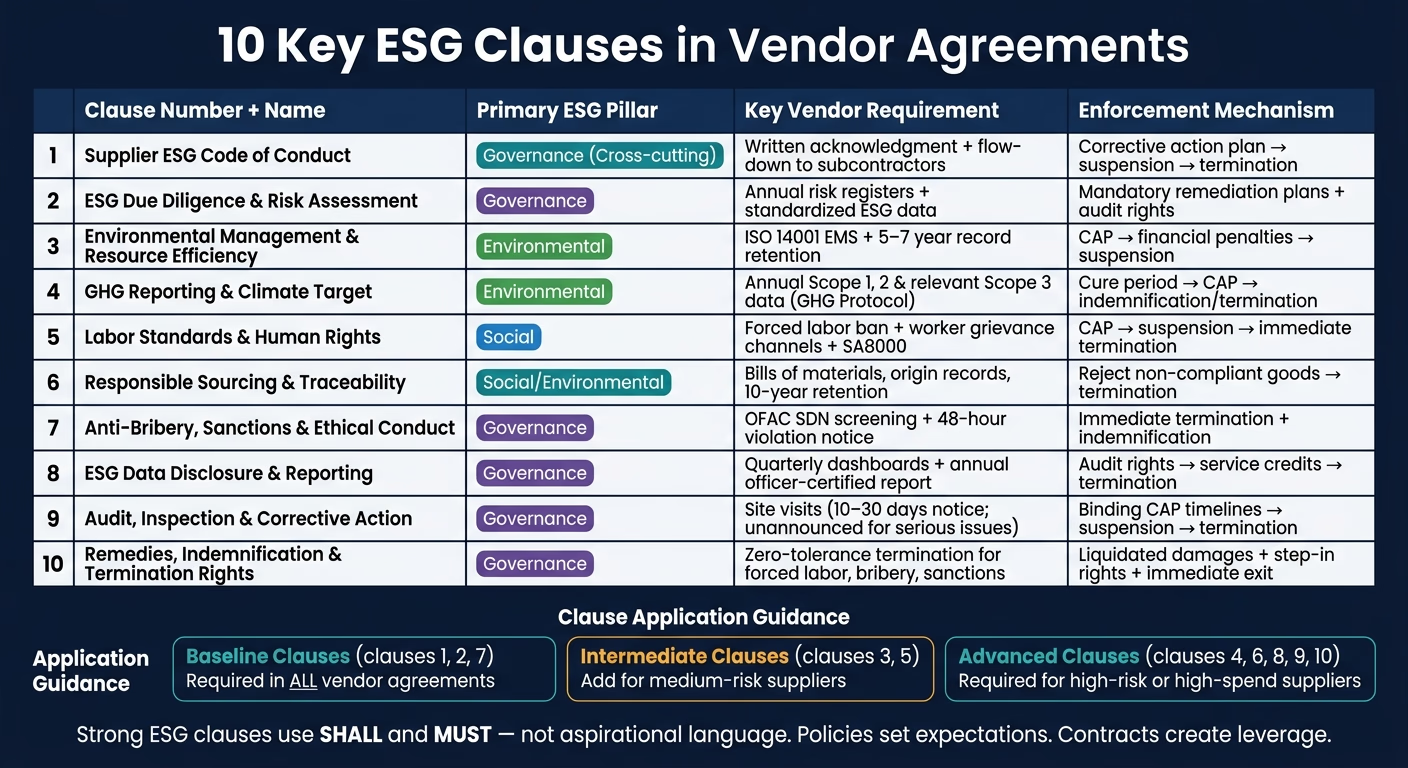
10 Key ESG Clauses in Vendor Agreements: What to Require & How to Enforce
Clause area | What it does | What I’d require |
|---|---|---|
Supplier code of conduct | Sets baseline ESG rules | Written acknowledgment, flow-down duties, breach status |
ESG due diligence | Finds and reports risk | Annual reviews, risk reports, buyer templates |
Resource and site management | Controls site-level impacts | Management system, permits, logs, record retention |
GHG reporting | Tracks emissions and targets | Scope 1/2 and relevant Scope 3 data, set deadlines |
Labor and human rights | Sets worker protections | Forced-labor ban, grievance channels, worker records |
Sourcing and traceability | Proves origin of goods | Bills of materials, origin records, chain-of-custody files |
Anti-bribery and sanctions | Controls corruption and trade risk | Screening, books and records, notice duties |
ESG reporting | Feeds buyer reporting and oversight | Quarterly and annual data, officer certification |
Audit and corrective action | Lets buyer check compliance | Site visits, record reviews, CAP timelines |
Remedies and termination | States what happens after breach | Suspension, indemnity, zero-tolerance termination |
In short, the piece is about moving from broad ESG language to terms a buyer can check, prove, and enforce.
Why ESG Clauses Matter in U.S. Vendor Agreements
In the United States, ESG risk in vendor deals does not come from one stand-alone ESG law. It comes from a stack of trade, labor, sanctions, and securities rules that can all hit at once. The UFLPA, Section 307 of the Tariff Act of 1930, OFAC sanctions rules, and the SEC's climate disclosure framework each create exposure tied to what vendors do - or fail to do. If a buyer does not build reporting and cooperation duties into the contract, it may not have the records needed to show compliance. That legal pressure turns straight into contract duties.
Forced-labor enforcement is a clear example. Under the UFLPA, U.S. Customs and Border Protection must presume that goods with inputs linked to Xinjiang or entities on the UFLPA Entity List were made with forced labor and block entry unless the importer can rebut that presumption with clear and convincing evidence.[7][8][9][10] And this is where things get hard fast: the presumption can apply even if the problem sits deep in the supply chain and involves only a small component. A buyer cannot fix that at the last minute. It needs contract terms that require supply-chain mapping, Entity List screening, and cooperation with CBP, so it has the paper trail and the leverage to respond when a shipment is stopped. That is why those terms belong in the agreement, not in a side policy no one reads.
Climate duties create a similar issue. The SEC's climate disclosure framework requires disclosure of material climate risk, including supplier-related impacts where that information is known or reasonably available.[11] So emissions data is no longer just a sustainability talking point. For many companies, it is now a procurement data need. If suppliers are not required to report the right data, the buyer may not be able to meet its own disclosure duties.
Legal risk is only part of the picture. Reputational damage can move just as fast, and sometimes faster. Public enforcement actions under the UFLPA can attract media attention quickly, and investors more and more treat ESG controversies as a sign that governance is weak.[1] That means ESG clauses should do more than sound good on paper. They should produce records a company can check and defend - things like compliant-contract coverage, audit findings, remediation rates, and supplier trend data.
What has changed, in plain English, is the move from broad promises to terms a company can actually use. Supplier codes of conduct used to sit off to the side as stand-alone policies. Now they are being folded into vendor agreements by reference and paired with audit rights, cure duties, and termination triggers. If a duty is missing from the contract, enforcing it gets much harder.
These pressures map directly to vendor obligations:
Pressure Point | Source | What It Demands From Vendors |
|---|---|---|
Forced labor import bans | UFLPA, Tariff Act §307 | Supply chain mapping, documentation, CBP cooperation |
Climate disclosure | SEC 2024 climate rule | Climate risk data, emissions reporting where material |
Anti-corruption and sanctions | OFAC, DOJ expectations | Certifications, screening, internal controls |
Board-level risk oversight | Governance expectations | Auditable ESG metrics, escalation mechanisms |
Reputational and investor pressure | ESG ratings, media scrutiny | Transparent, verifiable ESG performance |
The clauses below turn those pressures into terms vendors can be held to.
1. Supplier ESG Code of Conduct Clause
A Supplier ESG Code of Conduct clause sets the minimum ESG standards a vendor must meet to do business. It is the main ESG clause in a vendor agreement and the base layer for accountability across labor practices, non-discrimination, health and safety, environmental stewardship, anti-corruption, and management systems.
In practice, this clause works best when the code is attached as an exhibit or annex, the supplier gives written acknowledgment, and the agreement states that noncompliance is a material breach. The wording matters. "Supplier shall ensure..." carries legal force in a way that "Supplier is encouraged to..." does not.
The clause should also reach past Tier 1 suppliers. If a company wants the rule to mean anything, it should require suppliers to pass the same or equivalent standards down to subcontractors and sub-suppliers. Otherwise, risk can slip down the chain and stay out of view until it becomes a contract problem.
Beyond those flow-down duties, the code should spell out the main compliance risks the supplier must address. That includes forced labor, anti-bribery, sanctions, and climate-data cooperation where relevant.
Enforcement is where this clause stops being just paper and starts doing its job. A breach ladder should include:
30-day corrective action plans for issues that can be fixed
Suspension of purchase orders or payments for unresolved violations
Immediate termination for forced labor, child labor, or document falsification [12]
It also helps to add annual ESG self-assessments, audit rights, and indemnification for losses tied to supplier noncompliance. Put together, those terms make the code a live enforcement tool with real procurement leverage.
2. ESG Due Diligence and Risk Assessment Clause
An ESG due diligence and risk assessment clause should require suppliers to identify, assess, and report ESG risks across both their own operations and their supply chain. Those duties should start at onboarding and continue at least once a year after that, not just when the contract is signed. That first review sets the baseline for the supplier’s ongoing monitoring and reporting duties.[5][22][23]
For the clause to hold up, the language needs to be direct and measurable, not vague or aspirational. A supplier can be required to carry out ESG due diligence on its operations and supply chain at least annually and submit written reports to the buyer. The duty should also point to named risk areas, including forced labor, conflict minerals, sanctions, anti-bribery, and climate exposure.[5][4][21][6]
The reporting piece should spell out exactly what the supplier must provide and how often. In practice, that often includes:
annual risk registers
standardized ESG data
evidence of key policies and certifications
Standardized questionnaires or buyer-issued templates make this much easier to manage. They also help keep supplier data consistent, which matters when the buyer needs to use that information in its own ESG reporting.[14][15][19][21]
Accountability works best when the clause sets out a clear escalation path. If a material deficiency shows up, the supplier can be required to follow a corrective action plan within a set deadline. If the issue stays unresolved, the buyer may suspend new orders or remove the supplier from preferred status. For serious violations such as human rights abuses, environmental crimes, or corruption, termination for cause may be justified.[16][17][18][20]
The clause should also flow down to subcontractors and sub-suppliers so the duties do not stop at Tier 1. That matters because ESG risk often sits deeper in the chain, out of plain sight. Pulling those parties into the same review process gives the buyer a more dependable view of supply chain risk, and the findings can then shape the operational controls in the next clause.[14][17][20]
3. Environmental Management and Resource Efficiency Clause
Once risk is identified, the contract needs to govern day-to-day environmental performance. This is where the environmental management and resource efficiency clause does the heavy lifting. It should set clear, measurable duties for energy, water, waste, emissions, and pollution control. Put simply, it turns environmental performance into something the buyer can track and enforce.
The clause should require suppliers to implement and maintain an environmental management system, or EMS, aligned with ISO 14001 or a similar standard. It should also set clear performance targets with defined baselines and timelines. That may include metrics such as energy-intensity reduction, recycling targets, and landfill-diversion limits. For procurement teams, those numbers matter because they create a yardstick for supplier performance. Still, targets on paper mean very little unless the supplier can document results and back them up.
Draft these duties as covenants, representations, and warranties, not vague policy nods. The supplier should also be required to comply with all applicable federal, state, and local environmental rules, including air emissions, wastewater, hazardous waste, and chemical management. If the buyer has its own environmental policy, the clause should pull that policy in by reference. Where it fits, the contract should also state that supplier data will be used for Scope 3 and enterprise-level ESG reporting.
Recordkeeping matters here. Require suppliers to retain and provide EMS records, permits, filings, monitoring data, and incident logs. The retention period should run five to seven years[3][2][24]. The contract should also include warranties that reported data is accurate and complete, along with remedies if that data is materially false or misleading. That paper trail gives the buyer something solid to rely on when corrective action or enforcement becomes necessary.
Enforcement should scale with the problem:
Minor breaches trigger a CAP.
Repeated violations trigger credits or damages.
Falsified data or serious regulatory violations trigger suspension or termination.
The clause should also give the buyer audit rights, including site visits, emissions data review, meter checks, and third-party verification.
4. Greenhouse Gas Reporting and Climate Target Clause
General environmental terms aren't enough on their own. Vendor agreements should also spell out how suppliers measure, report, and cut greenhouse gas emissions. This clause deals with emissions accounting, disclosure, and climate targets. The goal is simple: make supplier emissions data and climate commitments enforceable under the contract, so emissions become a measurable part of supplier performance rather than a separate promise.
The contract should require annual reporting of Scope 1, Scope 2, and relevant Scope 3 emissions under the GHG Protocol, with a fixed submission deadline after each calendar year-end. It should also define the required data fields and the backup documents the supplier must provide. For U.S. buyers, this now works as a compliance tool, not just a reporting preference. California's SB 253 and similar federal contractor requirements depend on upstream emissions data.[26][27][28][29][31] If the agreement asks for that data, it should also give the buyer the right to verify it and spell out what happens when the supplier falls short.
Suppliers should keep climate targets in line with the buyer's climate plan and submit annual progress updates. That gives the buyer a live management tool, not a one-time statement that sits in a file. Audit rights should cover supporting calculations, source data, and third-party assurance for higher-impact suppliers.
The remedy structure should be direct:
Missed deadlines lead to a cure period.
Inaccurate data leads to a corrective action plan.
Materially false emissions data leads to indemnification, termination, or re-sourcing rights.
5. Labor Standards and Human Rights Clause
ESG clauses need to protect people, not just carbon targets and sourcing rules. In many supply chains, the hardest labor risks sit deeper down, in lower-tier suppliers where buyers have the least line of sight and the weakest leverage. A labor standards and human rights clause takes broad ESG language and turns it into clear, enforceable workplace rules that apply to the supplier and, through flow-down duties, to subcontractors and sub-suppliers.
The clause should plainly ban forced labor, human trafficking, child labor, discrimination, harassment, and unsafe working conditions.[4][33] It should tie those duties to the ILO Core Conventions, the UN Guiding Principles, and applicable U.S. labor law. For higher-risk sourcing, the contract should also require tighter traceability. That matters even more for U.S. importers. Under the UFLPA, Xinjiang-linked sourcing calls for heightened traceability.[40] From there, the contract needs to move beyond statements of principle and into day-to-day diligence, worker reporting, and enforcement.
A solid clause should require a risk-based human rights due diligence process, worker complaint channels, and flow-down duties for subcontractors.[34][36][39][41] It should also deal with buyer conduct that can make labor conditions worse, like unrealistic lead times or pricing pressure. That piece often gets missed, but it matters. If a buyer demands impossible delivery dates while squeezing margins, poor labor conditions don’t appear out of thin air. Orderly exit terms should also be included so a buyer does not cut ties overnight in a way that leaves workers exposed to harm.[35][38]
Once the standards are set, the contract should require proof, monitoring, and prompt remedies. Suppliers should keep labor-specific records, including wages, hours, age-verification files, safety logs, and evidence tied to grievance handling, and buyers should have audit rights to check them.[32][34][37] If forced labor or trafficking is found, the contract should trigger immediate remediation for affected workers, suspension of new orders, and termination rights if the problem is not fixed.[34][35][38][40]
6. Responsible Sourcing and Supply Chain Traceability Clause
A responsible sourcing clause should require suppliers to show where materials came from in fact, not just say the right things on paper. In the U.S., traceability is now a compliance matter, not a box-checking exercise. A broad no-forced-labor statement does not cut it. The clause needs to require proof of origin, not just a supplier promise.
Build the clause around specific evidence rather than broad assurances. Vague phrasing like a supplier will endeavor to source responsibly leaves too much room for drift. Use direct obligations instead. For example, require the supplier to implement and maintain supply chain traceability systems that comply with Buyer’s Standards and all applicable U.S. laws. Then tie that duty to named records: bills of materials, certificates of origin, shipping records, and chain-of-custody documents. Those records should be kept for at least 10 years so they are available for audits or regulatory requests.[44][45] The clause should also name the UFLPA and conflict minerals rules outright.[46][47][51]
Traceability also has to go past Tier 1. If the supplier only knows its own immediate source, the buyer is still left exposed when trouble sits farther upstream. The clause should require the direct supplier to flow down the same standards to subcontractors and upstream suppliers, and to take responsibility for making sure those lower tiers can produce supporting records on demand.[13][50][52]
Enforcement needs to be plain and usable. The clause should give the buyer audit and inspection rights, require corrective action plans with firm deadlines when gaps turn up, and allow the buyer to suspend deliveries or withhold payment until the missing records are produced.[48][49][52] For more serious problems - such as proof of forced labor, refusal to provide traceability data, or repeated failures in upstream mapping - the contract should treat those events as material breaches that trigger indemnification and termination rights.[42][13]
If a supplier pushes back on confidentiality grounds, the contract can still keep oversight in place without forcing a deadlock. One workable approach is to let an independent third-party auditor review the sensitive source data while the buyer receives a summary assurance report.[43][13] That way, the supplier’s sensitive details stay protected, but the buyer still gets enough visibility to assess compliance. Once origin is documented, the contract can then place reporting and escalation duties on top of that record base.
7. Anti-Bribery, Sanctions, and Ethical Conduct Clause
After labor and sourcing controls, the contract also needs governance terms that shape how a vendor behaves. This clause makes anti-corruption and sanctions duties enforceable in the contract, not just nice words on paper.
Call out the FCPA and OFAC programs by name. Then spell out what the vendor may not do: bribes, kickbacks, facilitation payments, and improper gifts, travel, or discounts. The clause should also require accurate books and records so every payment and expense tied to the relationship is documented in full. Add a whistleblowing policy with anonymous reporting, plus a prompt notice rule - such as within 48 hours of any suspected violation. That turns ethics into a day-to-day duty. It also creates the paper trail needed for the reporting clause that comes next.
These duties only matter if the buyer can check them.
The same clause should also deal with sanctions risk. Require vendors to screen counterparties and transactions against OFAC's Specially Designated Nationals (SDN) List and other applicable restricted party lists using documented screening tools. If any counterparty, owner, officer, or agent becomes sanctioned, the vendor should have to give prompt notice. The buyer should also have the right to suspend performance - including shipments or payments - while the matter is reviewed.
Don’t stop with the vendor itself. Extend these duties to agents, consultants, subcontractors, and other third parties through flow-down terms, due diligence, training, and record retention that the buyer may review on request. If bribery or sanctions violations are confirmed, the vendor should be blocked from future awards.
Use this remedy ladder:
Breach Severity | Buyer Response |
|---|---|
Minor / first-time non-conformity | Corrective action plan with a defined deadline |
Repeated or unresolved failure | Suspension of orders or payments |
Confirmed bribery or sanctions violation | Immediate termination + indemnification |
Refusal to cooperate with audit | Suspension pending investigation |
8. ESG Data Disclosure and Performance Reporting Clause
Once a contract sets ESG duties, it also needs a reporting system that turns those duties into something the buyer can track, test, and use. The safest way to do that is with firm contract language and a reporting exhibit that spells out the required ESG metrics, reporting cadence, file format, and certification rules. Common metrics include emissions, energy, water, waste, labor, safety, diversity, and traceability data. Definitions should tie back to recognized frameworks so the information can plug into formal reporting without guesswork.
The clause should require quarterly dashboards and one annual report due on a fixed date, in a set format, and signed by a named supplier officer. It should also require the supplier to certify that the data is complete, true, accurate, and not misleading. Just as important, the supplier should keep the source records behind each metric for a stated retention period - usually three to seven years, based on risk exposure.[30]
That matters for a simple reason: bad supplier data can flow straight into the buyer's own ESG disclosures and contract reports. If a supplier shuts down a plant, faces a labor enforcement action, or sees a major jump or drop in emissions intensity, the buyer may need to update its own reporting. So the clause should require prompt notice of any material change that could affect those obligations.
A step-by-step remedy path helps here. Start with a cure period. If that fails, move to a corrective action plan, then order suspension or a payment hold, and then termination if the supplier gives material false information or refuses to cooperate. In higher-risk supplier relationships, the buyer may also require an independent third-party assurance review or a re-audit at the supplier's expense when a major data gap shows up. Those reporting rights are only as strong as the buyer's ability to check them.
Reporting Element | What the Clause Should Specify |
|---|---|
Metrics | Named KPIs tied to a reporting schedule or exhibit (e.g., Scope 1 and 2 emissions, where feasible Scope 3 emissions, workplace injury rates, waste diversion %) |
Cadence | Quarterly dashboards plus an annual full report, aligned to the buyer's fiscal year |
Data quality | Accuracy warranty, methodology disclosure, and whether figures are measured or estimated |
Documentation | Source records retained for 3–7 years |
Remedies | Cure period → corrective action plan → order suspension → termination |
9. Audit, Inspection, and Corrective Action Clause
Audit rights make ESG terms enforceable. Without them, a buyer may set standards in a Supplier Code of Conduct, but it has no clear contract path to check compliance or look into misconduct. In plain terms, this clause is the enforcement backstop for every ESG commitment in the agreement.
The buyer, or an outside auditor acting on the buyer’s behalf, should be allowed to inspect facilities, review records, interview workers, and examine the management systems tied to ESG performance during normal business hours. For routine audits, 10 to 30 days’ notice is common. That said, the clause should also permit short-notice or unannounced inspections when there is a credible allegation of forced labor, hazardous waste dumping, or other serious misconduct. Audit rights should also reach critical subcontractors and lower-tier suppliers. If access is denied, that should count as a material breach.
Once the buyer gets access, the contract needs to spell out what can be reviewed. Suppliers should be required to keep and produce records such as:
GHG inventories
Energy and water logs
Waste permits
Employee rosters
Wage and overtime records
Safety logs
Anti-bribery training records
Traceability data
It also helps to name review standards. ISO 14001 can guide the environmental review, and SA8000 can guide the labor review. Still, those standards should work as benchmarks, not stand-ins for the supplier’s direct contract duties.
If an audit finds a gap, the clause should shift at once to remediation. The supplier should submit a CAP within 15 to 30 days, get buyer approval, and complete a follow-up audit that confirms the fix was done, not merely promised. For critical breaches, like trafficking or severe environmental harm, the timeline should be shorter.
If the supplier denies access, falsifies data, or fails to meet the CAP, the buyer may withhold payment, recover audit costs, suspend performance, and terminate for cause [12][25].
10. Remedies, Indemnification, and ESG Termination Rights Clause
An audit clause tells you what went wrong. This clause tells you what happens next. That difference matters. If the contract spots a problem but doesn't spell out the response, enforcement gets messy fast.
The remedy structure should scale with the seriousness of the breach. In plain terms, minor issues should lead to a documented fix. Severe misconduct should trigger swift action, up to and including immediate termination. The goal is simple: make each remedy immediate, measurable, and enforceable.
A stepped remedy ladder works well because it gives the buyer room to respond in proportion to the problem.
Remedy Type | When to Apply | Effect |
|---|---|---|
Corrective Action Plan | Minor or first-time breaches | Maintains relationship; requires documented fix |
Service Credit / Fee Reduction | Missed critical ESG KPIs | Immediate financial accountability without termination |
Suspension of Orders | Unresolved breach after cure period | Halts new business until remediation is verified |
Subcontractor Termination Requirement | Breach tied to a specific subcontractor, site, or facility linked to the breach | Removes the source of harm while preserving the primary relationship |
Termination for Material Breach | Repeated or uncured ESG failures | Full exit with documented justification |
Immediate Termination (Zero Tolerance) | Forced labor, bribery, sanctions violations | No cure period; protects buyer from regulatory and reputational exposure |
Some violations should sit in a zero-tolerance bucket from day one. Forced labor, child labor, bribery, sanctions violations, and serious environmental crimes should trigger immediate termination for cause. The contract should name these acts directly. If the language only refers to a "material ESG breach", the buyer may be left arguing over meaning at the exact moment it needs to move fast and defend the decision.
Indemnification should be just as clear. If a supplier's ESG failure creates costs, the supplier should cover the full hit. That includes:
regulatory fines
environmental cleanup
third-party claims
investigation costs
reasonable attorneys' fees
This duty should survive termination of the contract. False or incomplete ESG data should also be treated as its own material breach, not folded into a vague catchall.
The clause should do more than set financial and legal consequences. It should also explain how the buyer exits in a responsible way. Add terms for reasonable notice, payment for conforming goods already produced, and a review of worker impacts. Those points should sit directly in the termination clause, not in a side document or policy that may never control the dispute.
What Good ESG Clause Drafting Looks Like
These clauses only work when they read like measurable duties, not broad policy statements. That’s where many contracts fall apart. The main ESG drafting problem usually isn’t the absence of ESG language. It’s language so vague that no one can test it, audit it, or enforce it. One study found that 75% of sustainability clauses refer to general rules but leave out measurable duties.[53][54]
Start with definitions. Put them in one definitions section, define each key term once, and use those terms the same way throughout the agreement. It sounds basic, but this is where a lot of confusion starts. If “GHG emissions,” “high-risk subcontractor,” or “corrective action plan” mean different things in different parts of the contract, enforcement gets messy fast. It helps to tie those terms to recognized frameworks such as the GHG Protocol, ISO 14001, and SA8000.
After that, each obligation should be specific and tied to a deadline. A clause should tell the parties what must happen, who must do it, and by when. If it doesn’t, it’s mostly just good intentions on paper. The difference is clear below:
Clause Type | Weak / Aspirational | Strong / Enforceable |
|---|---|---|
Environmental | "Supplier shall act in an environmentally conscious manner." | "Supplier shall reduce Scope 1 GHG emissions by 20% by Dec. 31, 2026, against a 2024 baseline." |
Social/Labor | "Supplier will perform its activities ethically." | "Supplier shall maintain a valid SA8000 certification and permit bi-annual unannounced labor audits." |
Governance | "Supplier agrees to comply with all applicable ESG laws." | "Supplier shall maintain a whistleblowing policy with anonymous reporting and notify Buyer of any violations within 48 hours." |
The point is simple: contracts should back up ESG duties, not water them down.
One common weak spot is subcontractor flow-down. If a supplier can pass work to a subcontractor with lower standards, the clause loses much of its force. ESG duties should extend to subcontractors, especially where risk is material. It also helps to require an up-to-date list of high-risk subcontractors and direct cooperation with audit rights when needed.
Remedies need the same level of care. The contract should say which breaches allow immediate termination and which ones come with a 30- to 90-day cure period plus a documented corrective action plan. That split matters in practice. Not every miss should lead straight to termination, but core ESG duties shouldn’t be treated like minor paperwork slips either. Where it fits the deal, label those duties as essential terms and state that a failure to meet them counts as a material breach.
The snapshot below compares these drafting choices in one view.
Clause Comparison Snapshot
Use this snapshot to compare each clause’s job, the proof behind it, and how it can be enforced.
# | Clause | Primary Pillar | Main Purpose | Typical Vendor Evidence | Enforcement Mechanism | Maturity Level |
|---|---|---|---|---|---|---|
1 | Supplier ESG Code of Conduct | Cross-cutting (Governance anchor) | Establish minimum ethical and ESG behavioral expectations | Signed acknowledgment; internal policy alignment | Periodic reaffirmation; escalation to corrective action for breach | Baseline |
2 | ESG Due Diligence & Risk Assessment | Governance | Identify and disclose supply chain ESG risks | Completed ESG questionnaires; third-party risk screening reports | Mandatory remediation plans; audit rights for non-disclosure | Baseline → Intermediate |
3 | Environmental Management & Resource Efficiency | Environmental | Drive resource efficiency and legal environmental compliance | ISO 14001 certification; energy, water, and waste usage logs | Corrective action plan; financial penalties for non-compliance | Intermediate |
4 | GHG Reporting & Climate Target | Environmental | Track and reduce Scope 1, 2, and relevant Scope 3 emissions | Verified GHG inventory reports; climate target documentation | Mandatory reporting schedules; specified remedies for misreporting or failure to provide data | Advanced |
5 | Labor Standards & Human Rights | Social | Ensure fair wages, safe conditions, and human rights compliance | SA8000 certification; safety records; worker survey results | Corrective action plans; suspension or termination for severe violations | Intermediate |
6 | Responsible Sourcing & Supply Chain Traceability | Social / Environmental | Verify ethical origin of materials; screen for forced labor | Tier 1–3 supplier lists; conflict minerals reports; Fair Trade or FSC certifications | Cascading obligations to subcontractors; rejection of non-compliant goods | Advanced |
7 | Anti-Bribery, Sanctions & Ethical Conduct | Governance | Prevent corruption and sanctions exposure | Anti-bribery policies; sanctions screening records; training completion logs | Immediate termination rights; indemnification | Baseline |
8 | ESG Data Disclosure & Performance Reporting | Governance | Ensure ongoing transparency and performance tracking | Periodic GRI/SASB-aligned ESG reports; KPI scorecards; third-party assurance statements | Audit rights; service credits for reporting failures; KPIs tied to commercial terms | Advanced |
9 | Audit, Inspection & Corrective Action | Governance | Verify compliance through independent oversight | Third-party audit reports; corrective action plan progress records | Unannounced site visits (where lawful); binding corrective action timelines; escalation to suspension | Advanced |
10 | Remedies, Indemnification & ESG Termination Rights | Governance | Provide enforceable legal recourse for ESG breaches | Breach notices; proof of failed remediation; indemnity agreements | Liquidated damages; step-in rights; unilateral termination for material ESG breach | Advanced |
Most clauses fall under Governance for a simple reason: ESG accountability lives or dies on disclosure, oversight, and enforcement. You can have strong policy language on paper, but without reporting duties, review rights, and clear remedies, the contract has no teeth.
Clauses 3 and 4 both deal with environmental issues, but they do different work. Clause 3 focuses on day-to-day operations and efficiency - how a supplier manages energy, water, waste, and legal compliance. Clause 4 is narrower and more data-heavy. It deals with emissions tracking, climate targets, and Scope 3 reporting, which matters when procurement teams need numbers they can use in company-wide carbon reporting.
A practical way to use this chart is to treat the Baseline clauses as non-negotiable. Those belong in every agreement. Intermediate and Advanced clauses should then be added based on supplier risk, category, and geography. That approach keeps the contract aligned with the supplier’s actual risk profile instead of turning every deal into a one-size-fits-all exercise.
The big point here is simple: the contract should back up ESG obligations, not water them down. That’s often where procurement teams have the most room to tighten supplier control.
Next, use the matrix to decide which clauses belong in every template and which belong only in higher-risk supplier deals.
How to Integrate These Clauses Into a Procurement Program
Once you’ve defined the clause set, the next job is figuring out where it fits in the sourcing process. Not every vendor needs the same ESG terms, and treating them all the same usually slows things down. A simple two-tier model works well: baseline clauses for all vendors, then risk-based clauses for high-risk or high-spend suppliers. Save GHG reporting, onsite audits, corrective-action deadlines, and termination rights for suppliers that carry more exposure or account for more spend.
A modular ESG clause library makes this much easier to run. Think of it as a catalog of pre-approved contract language, grouped by topic: environmental performance, labor standards, responsible sourcing, anti-corruption, GHG reporting, audit rights, and remedy provisions. For each topic, keep a standard version and a stronger version for higher-risk deals. Add plain-language notes that explain when the clause should be used and who can approve changes. That gives teams a clear playbook, keeps language consistent, and cuts down back-and-forth in negotiations.
The clause library also needs to match your company’s ESG commitments. If the business has a net-zero target, the GHG reporting clause should support it by requiring emissions data in a format procurement can actually use. If circular economy is a stated priority, contracts with packaging or materials suppliers should deal with recycled content, take-back programs, and waste reduction. Council Fire helps translate sustainability goals into supplier-ready procurement language and governance.
Just as important, ESG clauses should show up across the full procurement lifecycle, not only in the final contract. That means:
updating RFPs and supplier questionnaires to reflect ESG requirements
scoring ESG performance during vendor evaluation
setting up contract management tools to track reporting deadlines and flag non-compliance
Roles should be clear from the start. Legal drafts. Procurement embeds. Compliance monitors. Sustainability sets priorities and KPIs. Without shared ownership across teams, even well-written clauses end up sitting on the shelf.
Conclusion
When ESG gets bolted on at the end, vendor accountability slips. Strong ESG clauses help manage risk, support resilience, and build long-term value. Just as important, they give procurement teams data they can actually use for climate, labor, sourcing, and governance oversight across the vendor base. That only happens when the contract language is specific enough to measure and enforce.
Clear duties, firm deadlines, audit rights, and defined remedies are what make ESG clauses enforceable. Supplier agreements should keep ESG metrics in vendor reviews right alongside cost, quality, and delivery. That shift turns supplier expectations into obligations that carry weight.
Council Fire helps turn sustainability commitments into supplier-ready contract language and measurable outcomes.
FAQs
Which ESG clauses are essential in every vendor agreement?
Essential clauses should turn ESG commitments into clear, enforceable terms. In plain English, that means moving from broad promises to terms a supplier can actually be held to.
Start with defined ESG performance requirements. Spell out what the supplier must do, which standards apply, and how performance will be measured. Vague language leaves too much room for debate later.
Add reporting obligations that require standardized data, set reporting timelines, and explain how that data will be checked. If verification depends on third-party review, site inspections, or document testing, say so in the clause rather than leaving it implied.
It also helps to draw a sharp line between obligations of means and obligations of result. Some duties require the supplier to use stated efforts and follow set processes. Others require an actual outcome. If that line stays blurry, enforcement can get messy fast.
You should also include termination rights for material breaches by naming key commitments as essential clauses. That gives the company a direct path to act when a supplier fails on a point that matters most, rather than getting stuck arguing over whether the breach is serious enough.
Finally, include audit rights to verify compliance with your supplier code of conduct. Those rights should cover access to records, supporting documents, and, where needed, on-site checks. Without that, a code of conduct can look solid on paper but be hard to test in practice.
How can buyers enforce ESG requirements against suppliers?
Use specific, enforceable contract clauses instead of vague promises. If an ESG commitment matters, treat it as an essential term of the agreement. Then spell out what happens if the supplier misses a KPI, whether that means liquidated damages, service credits, or a corrective action plan.
Accountability also needs a clear structure. Build in regular reporting, independent third-party audits, and flow-down duties so subcontractors must meet the same standards. In most cases, it makes sense to push for correction first and keep termination for a material breach.
How should ESG clauses differ for high-risk suppliers?
For high-risk suppliers, ESG clauses need more than a basic checklist. They should use a stricter, tiered model that matches the level of risk. That often means mandatory on-site audits, not just desk reviews or supplier self-assessments.
Contracts should also spell out clear, measurable duties so there’s less room for guesswork. They should require strong corrective action plans, offer co-investment support for needed upgrades, and keep termination as a last resort for severe violations that remain unresolved.
Related Blog Posts
Latest Articles
©2026

Narrative Change and Power Building: The Missing Half of Advocacy
Narrative change is the process of disrupting dominant narratives that normalize inequity and advancing new narratives from historically marginalized communities.

Funding Resilience Without Federal Grants
BRIC is unreliable and FEMA is shrinking. Here's how cities fund climate resilience with dedicated revenue, blended finance, and a coordinating authority.

The ESG Blind Spot: How AI Is Finding Risks in Companies Nobody Else Is Watching
Norway's sovereign wealth fund uses AI to screen 7,200 portfolio companies for forced labor and corruption within 24 hours. The real story is the emerging-market coverage gap that traditional ESG data vendors miss — and what it means for any company with a global supply chain.
Narrative Change and Power Building: The Missing Half of Advocacy
Narrative change is the process of disrupting dominant narratives that normalize inequity and advancing new narratives from historically marginalized communities.
Funding Resilience Without Federal Grants
BRIC is unreliable and FEMA is shrinking. Here's how cities fund climate resilience with dedicated revenue, blended finance, and a coordinating authority.
The ESG Blind Spot: How AI Is Finding Risks in Companies Nobody Else Is Watching
Norway's sovereign wealth fund uses AI to screen 7,200 portfolio companies for forced labor and corruption within 24 hours. The real story is the emerging-market coverage gap that traditional ESG data vendors miss — and what it means for any company with a global supply chain.
FAQ
01
What does it really mean to “redefine profit”?
02
What makes Council Fire different?
03
Who does Council Fire work with?
04
What does working with Council Fire actually look like?
05
How does Council Fire help organizations turn big goals into action?
06
How does Council Fire define and measure success?
07
How does technology fit into Council Fire’s work?
Jul 26, 2026
Key ESG Clauses in Vendor Agreements
ESG Strategy
In This Article
Turn ESG goals into enforceable vendor duties: 10 contract clauses for reporting, audits, traceability, remediation, and termination.
Key ESG Clauses in Vendor Agreements
If ESG duties are not in the contract, they are hard to enforce. I’d boil this article down to one point: vendor agreements should turn ESG goals into clear vendor duties with deadlines, records, audit access, cure steps, and termination rights.
Here’s the short version of what matters most:
I need ESG clauses to cover 10 core areas, from supplier codes and due diligence to audits and termination rights.
U.S. pressure comes from forced-labor import rules, sanctions, anti-bribery rules, and climate disclosure demands.
Weak wording fails. Strong wording uses direct terms like “shall,” “must,” and named reporting deadlines.
High-risk topics such as forced labor, bribery, sanctions violations, falsified data, and traceability failures should trigger stronger remedies.
Good drafting depends on proof: records, certifications, emissions data, worker files, screening logs, and supply-chain mapping.
The article’s core message is simple: policies set expectations, but contracts create leverage. It walks through the 10 clauses that matter most, shows what each one should require, and explains how I’d fit them into a risk-based procurement program instead of using the same terms for every supplier.
Drafting and Negotiating Sustainable Procurement Contracts
Quick comparison
10 Key ESG Clauses in Vendor Agreements: What to Require & How to Enforce
Clause area | What it does | What I’d require |
|---|---|---|
Supplier code of conduct | Sets baseline ESG rules | Written acknowledgment, flow-down duties, breach status |
ESG due diligence | Finds and reports risk | Annual reviews, risk reports, buyer templates |
Resource and site management | Controls site-level impacts | Management system, permits, logs, record retention |
GHG reporting | Tracks emissions and targets | Scope 1/2 and relevant Scope 3 data, set deadlines |
Labor and human rights | Sets worker protections | Forced-labor ban, grievance channels, worker records |
Sourcing and traceability | Proves origin of goods | Bills of materials, origin records, chain-of-custody files |
Anti-bribery and sanctions | Controls corruption and trade risk | Screening, books and records, notice duties |
ESG reporting | Feeds buyer reporting and oversight | Quarterly and annual data, officer certification |
Audit and corrective action | Lets buyer check compliance | Site visits, record reviews, CAP timelines |
Remedies and termination | States what happens after breach | Suspension, indemnity, zero-tolerance termination |
In short, the piece is about moving from broad ESG language to terms a buyer can check, prove, and enforce.
Why ESG Clauses Matter in U.S. Vendor Agreements
In the United States, ESG risk in vendor deals does not come from one stand-alone ESG law. It comes from a stack of trade, labor, sanctions, and securities rules that can all hit at once. The UFLPA, Section 307 of the Tariff Act of 1930, OFAC sanctions rules, and the SEC's climate disclosure framework each create exposure tied to what vendors do - or fail to do. If a buyer does not build reporting and cooperation duties into the contract, it may not have the records needed to show compliance. That legal pressure turns straight into contract duties.
Forced-labor enforcement is a clear example. Under the UFLPA, U.S. Customs and Border Protection must presume that goods with inputs linked to Xinjiang or entities on the UFLPA Entity List were made with forced labor and block entry unless the importer can rebut that presumption with clear and convincing evidence.[7][8][9][10] And this is where things get hard fast: the presumption can apply even if the problem sits deep in the supply chain and involves only a small component. A buyer cannot fix that at the last minute. It needs contract terms that require supply-chain mapping, Entity List screening, and cooperation with CBP, so it has the paper trail and the leverage to respond when a shipment is stopped. That is why those terms belong in the agreement, not in a side policy no one reads.
Climate duties create a similar issue. The SEC's climate disclosure framework requires disclosure of material climate risk, including supplier-related impacts where that information is known or reasonably available.[11] So emissions data is no longer just a sustainability talking point. For many companies, it is now a procurement data need. If suppliers are not required to report the right data, the buyer may not be able to meet its own disclosure duties.
Legal risk is only part of the picture. Reputational damage can move just as fast, and sometimes faster. Public enforcement actions under the UFLPA can attract media attention quickly, and investors more and more treat ESG controversies as a sign that governance is weak.[1] That means ESG clauses should do more than sound good on paper. They should produce records a company can check and defend - things like compliant-contract coverage, audit findings, remediation rates, and supplier trend data.
What has changed, in plain English, is the move from broad promises to terms a company can actually use. Supplier codes of conduct used to sit off to the side as stand-alone policies. Now they are being folded into vendor agreements by reference and paired with audit rights, cure duties, and termination triggers. If a duty is missing from the contract, enforcing it gets much harder.
These pressures map directly to vendor obligations:
Pressure Point | Source | What It Demands From Vendors |
|---|---|---|
Forced labor import bans | UFLPA, Tariff Act §307 | Supply chain mapping, documentation, CBP cooperation |
Climate disclosure | SEC 2024 climate rule | Climate risk data, emissions reporting where material |
Anti-corruption and sanctions | OFAC, DOJ expectations | Certifications, screening, internal controls |
Board-level risk oversight | Governance expectations | Auditable ESG metrics, escalation mechanisms |
Reputational and investor pressure | ESG ratings, media scrutiny | Transparent, verifiable ESG performance |
The clauses below turn those pressures into terms vendors can be held to.
1. Supplier ESG Code of Conduct Clause
A Supplier ESG Code of Conduct clause sets the minimum ESG standards a vendor must meet to do business. It is the main ESG clause in a vendor agreement and the base layer for accountability across labor practices, non-discrimination, health and safety, environmental stewardship, anti-corruption, and management systems.
In practice, this clause works best when the code is attached as an exhibit or annex, the supplier gives written acknowledgment, and the agreement states that noncompliance is a material breach. The wording matters. "Supplier shall ensure..." carries legal force in a way that "Supplier is encouraged to..." does not.
The clause should also reach past Tier 1 suppliers. If a company wants the rule to mean anything, it should require suppliers to pass the same or equivalent standards down to subcontractors and sub-suppliers. Otherwise, risk can slip down the chain and stay out of view until it becomes a contract problem.
Beyond those flow-down duties, the code should spell out the main compliance risks the supplier must address. That includes forced labor, anti-bribery, sanctions, and climate-data cooperation where relevant.
Enforcement is where this clause stops being just paper and starts doing its job. A breach ladder should include:
30-day corrective action plans for issues that can be fixed
Suspension of purchase orders or payments for unresolved violations
Immediate termination for forced labor, child labor, or document falsification [12]
It also helps to add annual ESG self-assessments, audit rights, and indemnification for losses tied to supplier noncompliance. Put together, those terms make the code a live enforcement tool with real procurement leverage.
2. ESG Due Diligence and Risk Assessment Clause
An ESG due diligence and risk assessment clause should require suppliers to identify, assess, and report ESG risks across both their own operations and their supply chain. Those duties should start at onboarding and continue at least once a year after that, not just when the contract is signed. That first review sets the baseline for the supplier’s ongoing monitoring and reporting duties.[5][22][23]
For the clause to hold up, the language needs to be direct and measurable, not vague or aspirational. A supplier can be required to carry out ESG due diligence on its operations and supply chain at least annually and submit written reports to the buyer. The duty should also point to named risk areas, including forced labor, conflict minerals, sanctions, anti-bribery, and climate exposure.[5][4][21][6]
The reporting piece should spell out exactly what the supplier must provide and how often. In practice, that often includes:
annual risk registers
standardized ESG data
evidence of key policies and certifications
Standardized questionnaires or buyer-issued templates make this much easier to manage. They also help keep supplier data consistent, which matters when the buyer needs to use that information in its own ESG reporting.[14][15][19][21]
Accountability works best when the clause sets out a clear escalation path. If a material deficiency shows up, the supplier can be required to follow a corrective action plan within a set deadline. If the issue stays unresolved, the buyer may suspend new orders or remove the supplier from preferred status. For serious violations such as human rights abuses, environmental crimes, or corruption, termination for cause may be justified.[16][17][18][20]
The clause should also flow down to subcontractors and sub-suppliers so the duties do not stop at Tier 1. That matters because ESG risk often sits deeper in the chain, out of plain sight. Pulling those parties into the same review process gives the buyer a more dependable view of supply chain risk, and the findings can then shape the operational controls in the next clause.[14][17][20]
3. Environmental Management and Resource Efficiency Clause
Once risk is identified, the contract needs to govern day-to-day environmental performance. This is where the environmental management and resource efficiency clause does the heavy lifting. It should set clear, measurable duties for energy, water, waste, emissions, and pollution control. Put simply, it turns environmental performance into something the buyer can track and enforce.
The clause should require suppliers to implement and maintain an environmental management system, or EMS, aligned with ISO 14001 or a similar standard. It should also set clear performance targets with defined baselines and timelines. That may include metrics such as energy-intensity reduction, recycling targets, and landfill-diversion limits. For procurement teams, those numbers matter because they create a yardstick for supplier performance. Still, targets on paper mean very little unless the supplier can document results and back them up.
Draft these duties as covenants, representations, and warranties, not vague policy nods. The supplier should also be required to comply with all applicable federal, state, and local environmental rules, including air emissions, wastewater, hazardous waste, and chemical management. If the buyer has its own environmental policy, the clause should pull that policy in by reference. Where it fits, the contract should also state that supplier data will be used for Scope 3 and enterprise-level ESG reporting.
Recordkeeping matters here. Require suppliers to retain and provide EMS records, permits, filings, monitoring data, and incident logs. The retention period should run five to seven years[3][2][24]. The contract should also include warranties that reported data is accurate and complete, along with remedies if that data is materially false or misleading. That paper trail gives the buyer something solid to rely on when corrective action or enforcement becomes necessary.
Enforcement should scale with the problem:
Minor breaches trigger a CAP.
Repeated violations trigger credits or damages.
Falsified data or serious regulatory violations trigger suspension or termination.
The clause should also give the buyer audit rights, including site visits, emissions data review, meter checks, and third-party verification.
4. Greenhouse Gas Reporting and Climate Target Clause
General environmental terms aren't enough on their own. Vendor agreements should also spell out how suppliers measure, report, and cut greenhouse gas emissions. This clause deals with emissions accounting, disclosure, and climate targets. The goal is simple: make supplier emissions data and climate commitments enforceable under the contract, so emissions become a measurable part of supplier performance rather than a separate promise.
The contract should require annual reporting of Scope 1, Scope 2, and relevant Scope 3 emissions under the GHG Protocol, with a fixed submission deadline after each calendar year-end. It should also define the required data fields and the backup documents the supplier must provide. For U.S. buyers, this now works as a compliance tool, not just a reporting preference. California's SB 253 and similar federal contractor requirements depend on upstream emissions data.[26][27][28][29][31] If the agreement asks for that data, it should also give the buyer the right to verify it and spell out what happens when the supplier falls short.
Suppliers should keep climate targets in line with the buyer's climate plan and submit annual progress updates. That gives the buyer a live management tool, not a one-time statement that sits in a file. Audit rights should cover supporting calculations, source data, and third-party assurance for higher-impact suppliers.
The remedy structure should be direct:
Missed deadlines lead to a cure period.
Inaccurate data leads to a corrective action plan.
Materially false emissions data leads to indemnification, termination, or re-sourcing rights.
5. Labor Standards and Human Rights Clause
ESG clauses need to protect people, not just carbon targets and sourcing rules. In many supply chains, the hardest labor risks sit deeper down, in lower-tier suppliers where buyers have the least line of sight and the weakest leverage. A labor standards and human rights clause takes broad ESG language and turns it into clear, enforceable workplace rules that apply to the supplier and, through flow-down duties, to subcontractors and sub-suppliers.
The clause should plainly ban forced labor, human trafficking, child labor, discrimination, harassment, and unsafe working conditions.[4][33] It should tie those duties to the ILO Core Conventions, the UN Guiding Principles, and applicable U.S. labor law. For higher-risk sourcing, the contract should also require tighter traceability. That matters even more for U.S. importers. Under the UFLPA, Xinjiang-linked sourcing calls for heightened traceability.[40] From there, the contract needs to move beyond statements of principle and into day-to-day diligence, worker reporting, and enforcement.
A solid clause should require a risk-based human rights due diligence process, worker complaint channels, and flow-down duties for subcontractors.[34][36][39][41] It should also deal with buyer conduct that can make labor conditions worse, like unrealistic lead times or pricing pressure. That piece often gets missed, but it matters. If a buyer demands impossible delivery dates while squeezing margins, poor labor conditions don’t appear out of thin air. Orderly exit terms should also be included so a buyer does not cut ties overnight in a way that leaves workers exposed to harm.[35][38]
Once the standards are set, the contract should require proof, monitoring, and prompt remedies. Suppliers should keep labor-specific records, including wages, hours, age-verification files, safety logs, and evidence tied to grievance handling, and buyers should have audit rights to check them.[32][34][37] If forced labor or trafficking is found, the contract should trigger immediate remediation for affected workers, suspension of new orders, and termination rights if the problem is not fixed.[34][35][38][40]
6. Responsible Sourcing and Supply Chain Traceability Clause
A responsible sourcing clause should require suppliers to show where materials came from in fact, not just say the right things on paper. In the U.S., traceability is now a compliance matter, not a box-checking exercise. A broad no-forced-labor statement does not cut it. The clause needs to require proof of origin, not just a supplier promise.
Build the clause around specific evidence rather than broad assurances. Vague phrasing like a supplier will endeavor to source responsibly leaves too much room for drift. Use direct obligations instead. For example, require the supplier to implement and maintain supply chain traceability systems that comply with Buyer’s Standards and all applicable U.S. laws. Then tie that duty to named records: bills of materials, certificates of origin, shipping records, and chain-of-custody documents. Those records should be kept for at least 10 years so they are available for audits or regulatory requests.[44][45] The clause should also name the UFLPA and conflict minerals rules outright.[46][47][51]
Traceability also has to go past Tier 1. If the supplier only knows its own immediate source, the buyer is still left exposed when trouble sits farther upstream. The clause should require the direct supplier to flow down the same standards to subcontractors and upstream suppliers, and to take responsibility for making sure those lower tiers can produce supporting records on demand.[13][50][52]
Enforcement needs to be plain and usable. The clause should give the buyer audit and inspection rights, require corrective action plans with firm deadlines when gaps turn up, and allow the buyer to suspend deliveries or withhold payment until the missing records are produced.[48][49][52] For more serious problems - such as proof of forced labor, refusal to provide traceability data, or repeated failures in upstream mapping - the contract should treat those events as material breaches that trigger indemnification and termination rights.[42][13]
If a supplier pushes back on confidentiality grounds, the contract can still keep oversight in place without forcing a deadlock. One workable approach is to let an independent third-party auditor review the sensitive source data while the buyer receives a summary assurance report.[43][13] That way, the supplier’s sensitive details stay protected, but the buyer still gets enough visibility to assess compliance. Once origin is documented, the contract can then place reporting and escalation duties on top of that record base.
7. Anti-Bribery, Sanctions, and Ethical Conduct Clause
After labor and sourcing controls, the contract also needs governance terms that shape how a vendor behaves. This clause makes anti-corruption and sanctions duties enforceable in the contract, not just nice words on paper.
Call out the FCPA and OFAC programs by name. Then spell out what the vendor may not do: bribes, kickbacks, facilitation payments, and improper gifts, travel, or discounts. The clause should also require accurate books and records so every payment and expense tied to the relationship is documented in full. Add a whistleblowing policy with anonymous reporting, plus a prompt notice rule - such as within 48 hours of any suspected violation. That turns ethics into a day-to-day duty. It also creates the paper trail needed for the reporting clause that comes next.
These duties only matter if the buyer can check them.
The same clause should also deal with sanctions risk. Require vendors to screen counterparties and transactions against OFAC's Specially Designated Nationals (SDN) List and other applicable restricted party lists using documented screening tools. If any counterparty, owner, officer, or agent becomes sanctioned, the vendor should have to give prompt notice. The buyer should also have the right to suspend performance - including shipments or payments - while the matter is reviewed.
Don’t stop with the vendor itself. Extend these duties to agents, consultants, subcontractors, and other third parties through flow-down terms, due diligence, training, and record retention that the buyer may review on request. If bribery or sanctions violations are confirmed, the vendor should be blocked from future awards.
Use this remedy ladder:
Breach Severity | Buyer Response |
|---|---|
Minor / first-time non-conformity | Corrective action plan with a defined deadline |
Repeated or unresolved failure | Suspension of orders or payments |
Confirmed bribery or sanctions violation | Immediate termination + indemnification |
Refusal to cooperate with audit | Suspension pending investigation |
8. ESG Data Disclosure and Performance Reporting Clause
Once a contract sets ESG duties, it also needs a reporting system that turns those duties into something the buyer can track, test, and use. The safest way to do that is with firm contract language and a reporting exhibit that spells out the required ESG metrics, reporting cadence, file format, and certification rules. Common metrics include emissions, energy, water, waste, labor, safety, diversity, and traceability data. Definitions should tie back to recognized frameworks so the information can plug into formal reporting without guesswork.
The clause should require quarterly dashboards and one annual report due on a fixed date, in a set format, and signed by a named supplier officer. It should also require the supplier to certify that the data is complete, true, accurate, and not misleading. Just as important, the supplier should keep the source records behind each metric for a stated retention period - usually three to seven years, based on risk exposure.[30]
That matters for a simple reason: bad supplier data can flow straight into the buyer's own ESG disclosures and contract reports. If a supplier shuts down a plant, faces a labor enforcement action, or sees a major jump or drop in emissions intensity, the buyer may need to update its own reporting. So the clause should require prompt notice of any material change that could affect those obligations.
A step-by-step remedy path helps here. Start with a cure period. If that fails, move to a corrective action plan, then order suspension or a payment hold, and then termination if the supplier gives material false information or refuses to cooperate. In higher-risk supplier relationships, the buyer may also require an independent third-party assurance review or a re-audit at the supplier's expense when a major data gap shows up. Those reporting rights are only as strong as the buyer's ability to check them.
Reporting Element | What the Clause Should Specify |
|---|---|
Metrics | Named KPIs tied to a reporting schedule or exhibit (e.g., Scope 1 and 2 emissions, where feasible Scope 3 emissions, workplace injury rates, waste diversion %) |
Cadence | Quarterly dashboards plus an annual full report, aligned to the buyer's fiscal year |
Data quality | Accuracy warranty, methodology disclosure, and whether figures are measured or estimated |
Documentation | Source records retained for 3–7 years |
Remedies | Cure period → corrective action plan → order suspension → termination |
9. Audit, Inspection, and Corrective Action Clause
Audit rights make ESG terms enforceable. Without them, a buyer may set standards in a Supplier Code of Conduct, but it has no clear contract path to check compliance or look into misconduct. In plain terms, this clause is the enforcement backstop for every ESG commitment in the agreement.
The buyer, or an outside auditor acting on the buyer’s behalf, should be allowed to inspect facilities, review records, interview workers, and examine the management systems tied to ESG performance during normal business hours. For routine audits, 10 to 30 days’ notice is common. That said, the clause should also permit short-notice or unannounced inspections when there is a credible allegation of forced labor, hazardous waste dumping, or other serious misconduct. Audit rights should also reach critical subcontractors and lower-tier suppliers. If access is denied, that should count as a material breach.
Once the buyer gets access, the contract needs to spell out what can be reviewed. Suppliers should be required to keep and produce records such as:
GHG inventories
Energy and water logs
Waste permits
Employee rosters
Wage and overtime records
Safety logs
Anti-bribery training records
Traceability data
It also helps to name review standards. ISO 14001 can guide the environmental review, and SA8000 can guide the labor review. Still, those standards should work as benchmarks, not stand-ins for the supplier’s direct contract duties.
If an audit finds a gap, the clause should shift at once to remediation. The supplier should submit a CAP within 15 to 30 days, get buyer approval, and complete a follow-up audit that confirms the fix was done, not merely promised. For critical breaches, like trafficking or severe environmental harm, the timeline should be shorter.
If the supplier denies access, falsifies data, or fails to meet the CAP, the buyer may withhold payment, recover audit costs, suspend performance, and terminate for cause [12][25].
10. Remedies, Indemnification, and ESG Termination Rights Clause
An audit clause tells you what went wrong. This clause tells you what happens next. That difference matters. If the contract spots a problem but doesn't spell out the response, enforcement gets messy fast.
The remedy structure should scale with the seriousness of the breach. In plain terms, minor issues should lead to a documented fix. Severe misconduct should trigger swift action, up to and including immediate termination. The goal is simple: make each remedy immediate, measurable, and enforceable.
A stepped remedy ladder works well because it gives the buyer room to respond in proportion to the problem.
Remedy Type | When to Apply | Effect |
|---|---|---|
Corrective Action Plan | Minor or first-time breaches | Maintains relationship; requires documented fix |
Service Credit / Fee Reduction | Missed critical ESG KPIs | Immediate financial accountability without termination |
Suspension of Orders | Unresolved breach after cure period | Halts new business until remediation is verified |
Subcontractor Termination Requirement | Breach tied to a specific subcontractor, site, or facility linked to the breach | Removes the source of harm while preserving the primary relationship |
Termination for Material Breach | Repeated or uncured ESG failures | Full exit with documented justification |
Immediate Termination (Zero Tolerance) | Forced labor, bribery, sanctions violations | No cure period; protects buyer from regulatory and reputational exposure |
Some violations should sit in a zero-tolerance bucket from day one. Forced labor, child labor, bribery, sanctions violations, and serious environmental crimes should trigger immediate termination for cause. The contract should name these acts directly. If the language only refers to a "material ESG breach", the buyer may be left arguing over meaning at the exact moment it needs to move fast and defend the decision.
Indemnification should be just as clear. If a supplier's ESG failure creates costs, the supplier should cover the full hit. That includes:
regulatory fines
environmental cleanup
third-party claims
investigation costs
reasonable attorneys' fees
This duty should survive termination of the contract. False or incomplete ESG data should also be treated as its own material breach, not folded into a vague catchall.
The clause should do more than set financial and legal consequences. It should also explain how the buyer exits in a responsible way. Add terms for reasonable notice, payment for conforming goods already produced, and a review of worker impacts. Those points should sit directly in the termination clause, not in a side document or policy that may never control the dispute.
What Good ESG Clause Drafting Looks Like
These clauses only work when they read like measurable duties, not broad policy statements. That’s where many contracts fall apart. The main ESG drafting problem usually isn’t the absence of ESG language. It’s language so vague that no one can test it, audit it, or enforce it. One study found that 75% of sustainability clauses refer to general rules but leave out measurable duties.[53][54]
Start with definitions. Put them in one definitions section, define each key term once, and use those terms the same way throughout the agreement. It sounds basic, but this is where a lot of confusion starts. If “GHG emissions,” “high-risk subcontractor,” or “corrective action plan” mean different things in different parts of the contract, enforcement gets messy fast. It helps to tie those terms to recognized frameworks such as the GHG Protocol, ISO 14001, and SA8000.
After that, each obligation should be specific and tied to a deadline. A clause should tell the parties what must happen, who must do it, and by when. If it doesn’t, it’s mostly just good intentions on paper. The difference is clear below:
Clause Type | Weak / Aspirational | Strong / Enforceable |
|---|---|---|
Environmental | "Supplier shall act in an environmentally conscious manner." | "Supplier shall reduce Scope 1 GHG emissions by 20% by Dec. 31, 2026, against a 2024 baseline." |
Social/Labor | "Supplier will perform its activities ethically." | "Supplier shall maintain a valid SA8000 certification and permit bi-annual unannounced labor audits." |
Governance | "Supplier agrees to comply with all applicable ESG laws." | "Supplier shall maintain a whistleblowing policy with anonymous reporting and notify Buyer of any violations within 48 hours." |
The point is simple: contracts should back up ESG duties, not water them down.
One common weak spot is subcontractor flow-down. If a supplier can pass work to a subcontractor with lower standards, the clause loses much of its force. ESG duties should extend to subcontractors, especially where risk is material. It also helps to require an up-to-date list of high-risk subcontractors and direct cooperation with audit rights when needed.
Remedies need the same level of care. The contract should say which breaches allow immediate termination and which ones come with a 30- to 90-day cure period plus a documented corrective action plan. That split matters in practice. Not every miss should lead straight to termination, but core ESG duties shouldn’t be treated like minor paperwork slips either. Where it fits the deal, label those duties as essential terms and state that a failure to meet them counts as a material breach.
The snapshot below compares these drafting choices in one view.
Clause Comparison Snapshot
Use this snapshot to compare each clause’s job, the proof behind it, and how it can be enforced.
# | Clause | Primary Pillar | Main Purpose | Typical Vendor Evidence | Enforcement Mechanism | Maturity Level |
|---|---|---|---|---|---|---|
1 | Supplier ESG Code of Conduct | Cross-cutting (Governance anchor) | Establish minimum ethical and ESG behavioral expectations | Signed acknowledgment; internal policy alignment | Periodic reaffirmation; escalation to corrective action for breach | Baseline |
2 | ESG Due Diligence & Risk Assessment | Governance | Identify and disclose supply chain ESG risks | Completed ESG questionnaires; third-party risk screening reports | Mandatory remediation plans; audit rights for non-disclosure | Baseline → Intermediate |
3 | Environmental Management & Resource Efficiency | Environmental | Drive resource efficiency and legal environmental compliance | ISO 14001 certification; energy, water, and waste usage logs | Corrective action plan; financial penalties for non-compliance | Intermediate |
4 | GHG Reporting & Climate Target | Environmental | Track and reduce Scope 1, 2, and relevant Scope 3 emissions | Verified GHG inventory reports; climate target documentation | Mandatory reporting schedules; specified remedies for misreporting or failure to provide data | Advanced |
5 | Labor Standards & Human Rights | Social | Ensure fair wages, safe conditions, and human rights compliance | SA8000 certification; safety records; worker survey results | Corrective action plans; suspension or termination for severe violations | Intermediate |
6 | Responsible Sourcing & Supply Chain Traceability | Social / Environmental | Verify ethical origin of materials; screen for forced labor | Tier 1–3 supplier lists; conflict minerals reports; Fair Trade or FSC certifications | Cascading obligations to subcontractors; rejection of non-compliant goods | Advanced |
7 | Anti-Bribery, Sanctions & Ethical Conduct | Governance | Prevent corruption and sanctions exposure | Anti-bribery policies; sanctions screening records; training completion logs | Immediate termination rights; indemnification | Baseline |
8 | ESG Data Disclosure & Performance Reporting | Governance | Ensure ongoing transparency and performance tracking | Periodic GRI/SASB-aligned ESG reports; KPI scorecards; third-party assurance statements | Audit rights; service credits for reporting failures; KPIs tied to commercial terms | Advanced |
9 | Audit, Inspection & Corrective Action | Governance | Verify compliance through independent oversight | Third-party audit reports; corrective action plan progress records | Unannounced site visits (where lawful); binding corrective action timelines; escalation to suspension | Advanced |
10 | Remedies, Indemnification & ESG Termination Rights | Governance | Provide enforceable legal recourse for ESG breaches | Breach notices; proof of failed remediation; indemnity agreements | Liquidated damages; step-in rights; unilateral termination for material ESG breach | Advanced |
Most clauses fall under Governance for a simple reason: ESG accountability lives or dies on disclosure, oversight, and enforcement. You can have strong policy language on paper, but without reporting duties, review rights, and clear remedies, the contract has no teeth.
Clauses 3 and 4 both deal with environmental issues, but they do different work. Clause 3 focuses on day-to-day operations and efficiency - how a supplier manages energy, water, waste, and legal compliance. Clause 4 is narrower and more data-heavy. It deals with emissions tracking, climate targets, and Scope 3 reporting, which matters when procurement teams need numbers they can use in company-wide carbon reporting.
A practical way to use this chart is to treat the Baseline clauses as non-negotiable. Those belong in every agreement. Intermediate and Advanced clauses should then be added based on supplier risk, category, and geography. That approach keeps the contract aligned with the supplier’s actual risk profile instead of turning every deal into a one-size-fits-all exercise.
The big point here is simple: the contract should back up ESG obligations, not water them down. That’s often where procurement teams have the most room to tighten supplier control.
Next, use the matrix to decide which clauses belong in every template and which belong only in higher-risk supplier deals.
How to Integrate These Clauses Into a Procurement Program
Once you’ve defined the clause set, the next job is figuring out where it fits in the sourcing process. Not every vendor needs the same ESG terms, and treating them all the same usually slows things down. A simple two-tier model works well: baseline clauses for all vendors, then risk-based clauses for high-risk or high-spend suppliers. Save GHG reporting, onsite audits, corrective-action deadlines, and termination rights for suppliers that carry more exposure or account for more spend.
A modular ESG clause library makes this much easier to run. Think of it as a catalog of pre-approved contract language, grouped by topic: environmental performance, labor standards, responsible sourcing, anti-corruption, GHG reporting, audit rights, and remedy provisions. For each topic, keep a standard version and a stronger version for higher-risk deals. Add plain-language notes that explain when the clause should be used and who can approve changes. That gives teams a clear playbook, keeps language consistent, and cuts down back-and-forth in negotiations.
The clause library also needs to match your company’s ESG commitments. If the business has a net-zero target, the GHG reporting clause should support it by requiring emissions data in a format procurement can actually use. If circular economy is a stated priority, contracts with packaging or materials suppliers should deal with recycled content, take-back programs, and waste reduction. Council Fire helps translate sustainability goals into supplier-ready procurement language and governance.
Just as important, ESG clauses should show up across the full procurement lifecycle, not only in the final contract. That means:
updating RFPs and supplier questionnaires to reflect ESG requirements
scoring ESG performance during vendor evaluation
setting up contract management tools to track reporting deadlines and flag non-compliance
Roles should be clear from the start. Legal drafts. Procurement embeds. Compliance monitors. Sustainability sets priorities and KPIs. Without shared ownership across teams, even well-written clauses end up sitting on the shelf.
Conclusion
When ESG gets bolted on at the end, vendor accountability slips. Strong ESG clauses help manage risk, support resilience, and build long-term value. Just as important, they give procurement teams data they can actually use for climate, labor, sourcing, and governance oversight across the vendor base. That only happens when the contract language is specific enough to measure and enforce.
Clear duties, firm deadlines, audit rights, and defined remedies are what make ESG clauses enforceable. Supplier agreements should keep ESG metrics in vendor reviews right alongside cost, quality, and delivery. That shift turns supplier expectations into obligations that carry weight.
Council Fire helps turn sustainability commitments into supplier-ready contract language and measurable outcomes.
FAQs
Which ESG clauses are essential in every vendor agreement?
Essential clauses should turn ESG commitments into clear, enforceable terms. In plain English, that means moving from broad promises to terms a supplier can actually be held to.
Start with defined ESG performance requirements. Spell out what the supplier must do, which standards apply, and how performance will be measured. Vague language leaves too much room for debate later.
Add reporting obligations that require standardized data, set reporting timelines, and explain how that data will be checked. If verification depends on third-party review, site inspections, or document testing, say so in the clause rather than leaving it implied.
It also helps to draw a sharp line between obligations of means and obligations of result. Some duties require the supplier to use stated efforts and follow set processes. Others require an actual outcome. If that line stays blurry, enforcement can get messy fast.
You should also include termination rights for material breaches by naming key commitments as essential clauses. That gives the company a direct path to act when a supplier fails on a point that matters most, rather than getting stuck arguing over whether the breach is serious enough.
Finally, include audit rights to verify compliance with your supplier code of conduct. Those rights should cover access to records, supporting documents, and, where needed, on-site checks. Without that, a code of conduct can look solid on paper but be hard to test in practice.
How can buyers enforce ESG requirements against suppliers?
Use specific, enforceable contract clauses instead of vague promises. If an ESG commitment matters, treat it as an essential term of the agreement. Then spell out what happens if the supplier misses a KPI, whether that means liquidated damages, service credits, or a corrective action plan.
Accountability also needs a clear structure. Build in regular reporting, independent third-party audits, and flow-down duties so subcontractors must meet the same standards. In most cases, it makes sense to push for correction first and keep termination for a material breach.
How should ESG clauses differ for high-risk suppliers?
For high-risk suppliers, ESG clauses need more than a basic checklist. They should use a stricter, tiered model that matches the level of risk. That often means mandatory on-site audits, not just desk reviews or supplier self-assessments.
Contracts should also spell out clear, measurable duties so there’s less room for guesswork. They should require strong corrective action plans, offer co-investment support for needed upgrades, and keep termination as a last resort for severe violations that remain unresolved.
Related Blog Posts
Latest Articles
©2026
Narrative Change and Power Building: The Missing Half of Advocacy
Narrative change is the process of disrupting dominant narratives that normalize inequity and advancing new narratives from historically marginalized communities.
Funding Resilience Without Federal Grants
BRIC is unreliable and FEMA is shrinking. Here's how cities fund climate resilience with dedicated revenue, blended finance, and a coordinating authority.
The ESG Blind Spot: How AI Is Finding Risks in Companies Nobody Else Is Watching
Norway's sovereign wealth fund uses AI to screen 7,200 portfolio companies for forced labor and corruption within 24 hours. The real story is the emerging-market coverage gap that traditional ESG data vendors miss — and what it means for any company with a global supply chain.
FAQ
01
What does it really mean to “redefine profit”?
02
What makes Council Fire different?
03
Who does Council Fire work with?
04
What does working with Council Fire actually look like?
05
How does Council Fire help organizations turn big goals into action?
06
How does Council Fire define and measure success?
07
How does technology fit into Council Fire’s work?
Jul 26, 2026
Key ESG Clauses in Vendor Agreements
ESG Strategy
In This Article
Turn ESG goals into enforceable vendor duties: 10 contract clauses for reporting, audits, traceability, remediation, and termination.
Key ESG Clauses in Vendor Agreements
If ESG duties are not in the contract, they are hard to enforce. I’d boil this article down to one point: vendor agreements should turn ESG goals into clear vendor duties with deadlines, records, audit access, cure steps, and termination rights.
Here’s the short version of what matters most:
I need ESG clauses to cover 10 core areas, from supplier codes and due diligence to audits and termination rights.
U.S. pressure comes from forced-labor import rules, sanctions, anti-bribery rules, and climate disclosure demands.
Weak wording fails. Strong wording uses direct terms like “shall,” “must,” and named reporting deadlines.
High-risk topics such as forced labor, bribery, sanctions violations, falsified data, and traceability failures should trigger stronger remedies.
Good drafting depends on proof: records, certifications, emissions data, worker files, screening logs, and supply-chain mapping.
The article’s core message is simple: policies set expectations, but contracts create leverage. It walks through the 10 clauses that matter most, shows what each one should require, and explains how I’d fit them into a risk-based procurement program instead of using the same terms for every supplier.
Drafting and Negotiating Sustainable Procurement Contracts
Quick comparison
10 Key ESG Clauses in Vendor Agreements: What to Require & How to Enforce
Clause area | What it does | What I’d require |
|---|---|---|
Supplier code of conduct | Sets baseline ESG rules | Written acknowledgment, flow-down duties, breach status |
ESG due diligence | Finds and reports risk | Annual reviews, risk reports, buyer templates |
Resource and site management | Controls site-level impacts | Management system, permits, logs, record retention |
GHG reporting | Tracks emissions and targets | Scope 1/2 and relevant Scope 3 data, set deadlines |
Labor and human rights | Sets worker protections | Forced-labor ban, grievance channels, worker records |
Sourcing and traceability | Proves origin of goods | Bills of materials, origin records, chain-of-custody files |
Anti-bribery and sanctions | Controls corruption and trade risk | Screening, books and records, notice duties |
ESG reporting | Feeds buyer reporting and oversight | Quarterly and annual data, officer certification |
Audit and corrective action | Lets buyer check compliance | Site visits, record reviews, CAP timelines |
Remedies and termination | States what happens after breach | Suspension, indemnity, zero-tolerance termination |
In short, the piece is about moving from broad ESG language to terms a buyer can check, prove, and enforce.
Why ESG Clauses Matter in U.S. Vendor Agreements
In the United States, ESG risk in vendor deals does not come from one stand-alone ESG law. It comes from a stack of trade, labor, sanctions, and securities rules that can all hit at once. The UFLPA, Section 307 of the Tariff Act of 1930, OFAC sanctions rules, and the SEC's climate disclosure framework each create exposure tied to what vendors do - or fail to do. If a buyer does not build reporting and cooperation duties into the contract, it may not have the records needed to show compliance. That legal pressure turns straight into contract duties.
Forced-labor enforcement is a clear example. Under the UFLPA, U.S. Customs and Border Protection must presume that goods with inputs linked to Xinjiang or entities on the UFLPA Entity List were made with forced labor and block entry unless the importer can rebut that presumption with clear and convincing evidence.[7][8][9][10] And this is where things get hard fast: the presumption can apply even if the problem sits deep in the supply chain and involves only a small component. A buyer cannot fix that at the last minute. It needs contract terms that require supply-chain mapping, Entity List screening, and cooperation with CBP, so it has the paper trail and the leverage to respond when a shipment is stopped. That is why those terms belong in the agreement, not in a side policy no one reads.
Climate duties create a similar issue. The SEC's climate disclosure framework requires disclosure of material climate risk, including supplier-related impacts where that information is known or reasonably available.[11] So emissions data is no longer just a sustainability talking point. For many companies, it is now a procurement data need. If suppliers are not required to report the right data, the buyer may not be able to meet its own disclosure duties.
Legal risk is only part of the picture. Reputational damage can move just as fast, and sometimes faster. Public enforcement actions under the UFLPA can attract media attention quickly, and investors more and more treat ESG controversies as a sign that governance is weak.[1] That means ESG clauses should do more than sound good on paper. They should produce records a company can check and defend - things like compliant-contract coverage, audit findings, remediation rates, and supplier trend data.
What has changed, in plain English, is the move from broad promises to terms a company can actually use. Supplier codes of conduct used to sit off to the side as stand-alone policies. Now they are being folded into vendor agreements by reference and paired with audit rights, cure duties, and termination triggers. If a duty is missing from the contract, enforcing it gets much harder.
These pressures map directly to vendor obligations:
Pressure Point | Source | What It Demands From Vendors |
|---|---|---|
Forced labor import bans | UFLPA, Tariff Act §307 | Supply chain mapping, documentation, CBP cooperation |
Climate disclosure | SEC 2024 climate rule | Climate risk data, emissions reporting where material |
Anti-corruption and sanctions | OFAC, DOJ expectations | Certifications, screening, internal controls |
Board-level risk oversight | Governance expectations | Auditable ESG metrics, escalation mechanisms |
Reputational and investor pressure | ESG ratings, media scrutiny | Transparent, verifiable ESG performance |
The clauses below turn those pressures into terms vendors can be held to.
1. Supplier ESG Code of Conduct Clause
A Supplier ESG Code of Conduct clause sets the minimum ESG standards a vendor must meet to do business. It is the main ESG clause in a vendor agreement and the base layer for accountability across labor practices, non-discrimination, health and safety, environmental stewardship, anti-corruption, and management systems.
In practice, this clause works best when the code is attached as an exhibit or annex, the supplier gives written acknowledgment, and the agreement states that noncompliance is a material breach. The wording matters. "Supplier shall ensure..." carries legal force in a way that "Supplier is encouraged to..." does not.
The clause should also reach past Tier 1 suppliers. If a company wants the rule to mean anything, it should require suppliers to pass the same or equivalent standards down to subcontractors and sub-suppliers. Otherwise, risk can slip down the chain and stay out of view until it becomes a contract problem.
Beyond those flow-down duties, the code should spell out the main compliance risks the supplier must address. That includes forced labor, anti-bribery, sanctions, and climate-data cooperation where relevant.
Enforcement is where this clause stops being just paper and starts doing its job. A breach ladder should include:
30-day corrective action plans for issues that can be fixed
Suspension of purchase orders or payments for unresolved violations
Immediate termination for forced labor, child labor, or document falsification [12]
It also helps to add annual ESG self-assessments, audit rights, and indemnification for losses tied to supplier noncompliance. Put together, those terms make the code a live enforcement tool with real procurement leverage.
2. ESG Due Diligence and Risk Assessment Clause
An ESG due diligence and risk assessment clause should require suppliers to identify, assess, and report ESG risks across both their own operations and their supply chain. Those duties should start at onboarding and continue at least once a year after that, not just when the contract is signed. That first review sets the baseline for the supplier’s ongoing monitoring and reporting duties.[5][22][23]
For the clause to hold up, the language needs to be direct and measurable, not vague or aspirational. A supplier can be required to carry out ESG due diligence on its operations and supply chain at least annually and submit written reports to the buyer. The duty should also point to named risk areas, including forced labor, conflict minerals, sanctions, anti-bribery, and climate exposure.[5][4][21][6]
The reporting piece should spell out exactly what the supplier must provide and how often. In practice, that often includes:
annual risk registers
standardized ESG data
evidence of key policies and certifications
Standardized questionnaires or buyer-issued templates make this much easier to manage. They also help keep supplier data consistent, which matters when the buyer needs to use that information in its own ESG reporting.[14][15][19][21]
Accountability works best when the clause sets out a clear escalation path. If a material deficiency shows up, the supplier can be required to follow a corrective action plan within a set deadline. If the issue stays unresolved, the buyer may suspend new orders or remove the supplier from preferred status. For serious violations such as human rights abuses, environmental crimes, or corruption, termination for cause may be justified.[16][17][18][20]
The clause should also flow down to subcontractors and sub-suppliers so the duties do not stop at Tier 1. That matters because ESG risk often sits deeper in the chain, out of plain sight. Pulling those parties into the same review process gives the buyer a more dependable view of supply chain risk, and the findings can then shape the operational controls in the next clause.[14][17][20]
3. Environmental Management and Resource Efficiency Clause
Once risk is identified, the contract needs to govern day-to-day environmental performance. This is where the environmental management and resource efficiency clause does the heavy lifting. It should set clear, measurable duties for energy, water, waste, emissions, and pollution control. Put simply, it turns environmental performance into something the buyer can track and enforce.
The clause should require suppliers to implement and maintain an environmental management system, or EMS, aligned with ISO 14001 or a similar standard. It should also set clear performance targets with defined baselines and timelines. That may include metrics such as energy-intensity reduction, recycling targets, and landfill-diversion limits. For procurement teams, those numbers matter because they create a yardstick for supplier performance. Still, targets on paper mean very little unless the supplier can document results and back them up.
Draft these duties as covenants, representations, and warranties, not vague policy nods. The supplier should also be required to comply with all applicable federal, state, and local environmental rules, including air emissions, wastewater, hazardous waste, and chemical management. If the buyer has its own environmental policy, the clause should pull that policy in by reference. Where it fits, the contract should also state that supplier data will be used for Scope 3 and enterprise-level ESG reporting.
Recordkeeping matters here. Require suppliers to retain and provide EMS records, permits, filings, monitoring data, and incident logs. The retention period should run five to seven years[3][2][24]. The contract should also include warranties that reported data is accurate and complete, along with remedies if that data is materially false or misleading. That paper trail gives the buyer something solid to rely on when corrective action or enforcement becomes necessary.
Enforcement should scale with the problem:
Minor breaches trigger a CAP.
Repeated violations trigger credits or damages.
Falsified data or serious regulatory violations trigger suspension or termination.
The clause should also give the buyer audit rights, including site visits, emissions data review, meter checks, and third-party verification.
4. Greenhouse Gas Reporting and Climate Target Clause
General environmental terms aren't enough on their own. Vendor agreements should also spell out how suppliers measure, report, and cut greenhouse gas emissions. This clause deals with emissions accounting, disclosure, and climate targets. The goal is simple: make supplier emissions data and climate commitments enforceable under the contract, so emissions become a measurable part of supplier performance rather than a separate promise.
The contract should require annual reporting of Scope 1, Scope 2, and relevant Scope 3 emissions under the GHG Protocol, with a fixed submission deadline after each calendar year-end. It should also define the required data fields and the backup documents the supplier must provide. For U.S. buyers, this now works as a compliance tool, not just a reporting preference. California's SB 253 and similar federal contractor requirements depend on upstream emissions data.[26][27][28][29][31] If the agreement asks for that data, it should also give the buyer the right to verify it and spell out what happens when the supplier falls short.
Suppliers should keep climate targets in line with the buyer's climate plan and submit annual progress updates. That gives the buyer a live management tool, not a one-time statement that sits in a file. Audit rights should cover supporting calculations, source data, and third-party assurance for higher-impact suppliers.
The remedy structure should be direct:
Missed deadlines lead to a cure period.
Inaccurate data leads to a corrective action plan.
Materially false emissions data leads to indemnification, termination, or re-sourcing rights.
5. Labor Standards and Human Rights Clause
ESG clauses need to protect people, not just carbon targets and sourcing rules. In many supply chains, the hardest labor risks sit deeper down, in lower-tier suppliers where buyers have the least line of sight and the weakest leverage. A labor standards and human rights clause takes broad ESG language and turns it into clear, enforceable workplace rules that apply to the supplier and, through flow-down duties, to subcontractors and sub-suppliers.
The clause should plainly ban forced labor, human trafficking, child labor, discrimination, harassment, and unsafe working conditions.[4][33] It should tie those duties to the ILO Core Conventions, the UN Guiding Principles, and applicable U.S. labor law. For higher-risk sourcing, the contract should also require tighter traceability. That matters even more for U.S. importers. Under the UFLPA, Xinjiang-linked sourcing calls for heightened traceability.[40] From there, the contract needs to move beyond statements of principle and into day-to-day diligence, worker reporting, and enforcement.
A solid clause should require a risk-based human rights due diligence process, worker complaint channels, and flow-down duties for subcontractors.[34][36][39][41] It should also deal with buyer conduct that can make labor conditions worse, like unrealistic lead times or pricing pressure. That piece often gets missed, but it matters. If a buyer demands impossible delivery dates while squeezing margins, poor labor conditions don’t appear out of thin air. Orderly exit terms should also be included so a buyer does not cut ties overnight in a way that leaves workers exposed to harm.[35][38]
Once the standards are set, the contract should require proof, monitoring, and prompt remedies. Suppliers should keep labor-specific records, including wages, hours, age-verification files, safety logs, and evidence tied to grievance handling, and buyers should have audit rights to check them.[32][34][37] If forced labor or trafficking is found, the contract should trigger immediate remediation for affected workers, suspension of new orders, and termination rights if the problem is not fixed.[34][35][38][40]
6. Responsible Sourcing and Supply Chain Traceability Clause
A responsible sourcing clause should require suppliers to show where materials came from in fact, not just say the right things on paper. In the U.S., traceability is now a compliance matter, not a box-checking exercise. A broad no-forced-labor statement does not cut it. The clause needs to require proof of origin, not just a supplier promise.
Build the clause around specific evidence rather than broad assurances. Vague phrasing like a supplier will endeavor to source responsibly leaves too much room for drift. Use direct obligations instead. For example, require the supplier to implement and maintain supply chain traceability systems that comply with Buyer’s Standards and all applicable U.S. laws. Then tie that duty to named records: bills of materials, certificates of origin, shipping records, and chain-of-custody documents. Those records should be kept for at least 10 years so they are available for audits or regulatory requests.[44][45] The clause should also name the UFLPA and conflict minerals rules outright.[46][47][51]
Traceability also has to go past Tier 1. If the supplier only knows its own immediate source, the buyer is still left exposed when trouble sits farther upstream. The clause should require the direct supplier to flow down the same standards to subcontractors and upstream suppliers, and to take responsibility for making sure those lower tiers can produce supporting records on demand.[13][50][52]
Enforcement needs to be plain and usable. The clause should give the buyer audit and inspection rights, require corrective action plans with firm deadlines when gaps turn up, and allow the buyer to suspend deliveries or withhold payment until the missing records are produced.[48][49][52] For more serious problems - such as proof of forced labor, refusal to provide traceability data, or repeated failures in upstream mapping - the contract should treat those events as material breaches that trigger indemnification and termination rights.[42][13]
If a supplier pushes back on confidentiality grounds, the contract can still keep oversight in place without forcing a deadlock. One workable approach is to let an independent third-party auditor review the sensitive source data while the buyer receives a summary assurance report.[43][13] That way, the supplier’s sensitive details stay protected, but the buyer still gets enough visibility to assess compliance. Once origin is documented, the contract can then place reporting and escalation duties on top of that record base.
7. Anti-Bribery, Sanctions, and Ethical Conduct Clause
After labor and sourcing controls, the contract also needs governance terms that shape how a vendor behaves. This clause makes anti-corruption and sanctions duties enforceable in the contract, not just nice words on paper.
Call out the FCPA and OFAC programs by name. Then spell out what the vendor may not do: bribes, kickbacks, facilitation payments, and improper gifts, travel, or discounts. The clause should also require accurate books and records so every payment and expense tied to the relationship is documented in full. Add a whistleblowing policy with anonymous reporting, plus a prompt notice rule - such as within 48 hours of any suspected violation. That turns ethics into a day-to-day duty. It also creates the paper trail needed for the reporting clause that comes next.
These duties only matter if the buyer can check them.
The same clause should also deal with sanctions risk. Require vendors to screen counterparties and transactions against OFAC's Specially Designated Nationals (SDN) List and other applicable restricted party lists using documented screening tools. If any counterparty, owner, officer, or agent becomes sanctioned, the vendor should have to give prompt notice. The buyer should also have the right to suspend performance - including shipments or payments - while the matter is reviewed.
Don’t stop with the vendor itself. Extend these duties to agents, consultants, subcontractors, and other third parties through flow-down terms, due diligence, training, and record retention that the buyer may review on request. If bribery or sanctions violations are confirmed, the vendor should be blocked from future awards.
Use this remedy ladder:
Breach Severity | Buyer Response |
|---|---|
Minor / first-time non-conformity | Corrective action plan with a defined deadline |
Repeated or unresolved failure | Suspension of orders or payments |
Confirmed bribery or sanctions violation | Immediate termination + indemnification |
Refusal to cooperate with audit | Suspension pending investigation |
8. ESG Data Disclosure and Performance Reporting Clause
Once a contract sets ESG duties, it also needs a reporting system that turns those duties into something the buyer can track, test, and use. The safest way to do that is with firm contract language and a reporting exhibit that spells out the required ESG metrics, reporting cadence, file format, and certification rules. Common metrics include emissions, energy, water, waste, labor, safety, diversity, and traceability data. Definitions should tie back to recognized frameworks so the information can plug into formal reporting without guesswork.
The clause should require quarterly dashboards and one annual report due on a fixed date, in a set format, and signed by a named supplier officer. It should also require the supplier to certify that the data is complete, true, accurate, and not misleading. Just as important, the supplier should keep the source records behind each metric for a stated retention period - usually three to seven years, based on risk exposure.[30]
That matters for a simple reason: bad supplier data can flow straight into the buyer's own ESG disclosures and contract reports. If a supplier shuts down a plant, faces a labor enforcement action, or sees a major jump or drop in emissions intensity, the buyer may need to update its own reporting. So the clause should require prompt notice of any material change that could affect those obligations.
A step-by-step remedy path helps here. Start with a cure period. If that fails, move to a corrective action plan, then order suspension or a payment hold, and then termination if the supplier gives material false information or refuses to cooperate. In higher-risk supplier relationships, the buyer may also require an independent third-party assurance review or a re-audit at the supplier's expense when a major data gap shows up. Those reporting rights are only as strong as the buyer's ability to check them.
Reporting Element | What the Clause Should Specify |
|---|---|
Metrics | Named KPIs tied to a reporting schedule or exhibit (e.g., Scope 1 and 2 emissions, where feasible Scope 3 emissions, workplace injury rates, waste diversion %) |
Cadence | Quarterly dashboards plus an annual full report, aligned to the buyer's fiscal year |
Data quality | Accuracy warranty, methodology disclosure, and whether figures are measured or estimated |
Documentation | Source records retained for 3–7 years |
Remedies | Cure period → corrective action plan → order suspension → termination |
9. Audit, Inspection, and Corrective Action Clause
Audit rights make ESG terms enforceable. Without them, a buyer may set standards in a Supplier Code of Conduct, but it has no clear contract path to check compliance or look into misconduct. In plain terms, this clause is the enforcement backstop for every ESG commitment in the agreement.
The buyer, or an outside auditor acting on the buyer’s behalf, should be allowed to inspect facilities, review records, interview workers, and examine the management systems tied to ESG performance during normal business hours. For routine audits, 10 to 30 days’ notice is common. That said, the clause should also permit short-notice or unannounced inspections when there is a credible allegation of forced labor, hazardous waste dumping, or other serious misconduct. Audit rights should also reach critical subcontractors and lower-tier suppliers. If access is denied, that should count as a material breach.
Once the buyer gets access, the contract needs to spell out what can be reviewed. Suppliers should be required to keep and produce records such as:
GHG inventories
Energy and water logs
Waste permits
Employee rosters
Wage and overtime records
Safety logs
Anti-bribery training records
Traceability data
It also helps to name review standards. ISO 14001 can guide the environmental review, and SA8000 can guide the labor review. Still, those standards should work as benchmarks, not stand-ins for the supplier’s direct contract duties.
If an audit finds a gap, the clause should shift at once to remediation. The supplier should submit a CAP within 15 to 30 days, get buyer approval, and complete a follow-up audit that confirms the fix was done, not merely promised. For critical breaches, like trafficking or severe environmental harm, the timeline should be shorter.
If the supplier denies access, falsifies data, or fails to meet the CAP, the buyer may withhold payment, recover audit costs, suspend performance, and terminate for cause [12][25].
10. Remedies, Indemnification, and ESG Termination Rights Clause
An audit clause tells you what went wrong. This clause tells you what happens next. That difference matters. If the contract spots a problem but doesn't spell out the response, enforcement gets messy fast.
The remedy structure should scale with the seriousness of the breach. In plain terms, minor issues should lead to a documented fix. Severe misconduct should trigger swift action, up to and including immediate termination. The goal is simple: make each remedy immediate, measurable, and enforceable.
A stepped remedy ladder works well because it gives the buyer room to respond in proportion to the problem.
Remedy Type | When to Apply | Effect |
|---|---|---|
Corrective Action Plan | Minor or first-time breaches | Maintains relationship; requires documented fix |
Service Credit / Fee Reduction | Missed critical ESG KPIs | Immediate financial accountability without termination |
Suspension of Orders | Unresolved breach after cure period | Halts new business until remediation is verified |
Subcontractor Termination Requirement | Breach tied to a specific subcontractor, site, or facility linked to the breach | Removes the source of harm while preserving the primary relationship |
Termination for Material Breach | Repeated or uncured ESG failures | Full exit with documented justification |
Immediate Termination (Zero Tolerance) | Forced labor, bribery, sanctions violations | No cure period; protects buyer from regulatory and reputational exposure |
Some violations should sit in a zero-tolerance bucket from day one. Forced labor, child labor, bribery, sanctions violations, and serious environmental crimes should trigger immediate termination for cause. The contract should name these acts directly. If the language only refers to a "material ESG breach", the buyer may be left arguing over meaning at the exact moment it needs to move fast and defend the decision.
Indemnification should be just as clear. If a supplier's ESG failure creates costs, the supplier should cover the full hit. That includes:
regulatory fines
environmental cleanup
third-party claims
investigation costs
reasonable attorneys' fees
This duty should survive termination of the contract. False or incomplete ESG data should also be treated as its own material breach, not folded into a vague catchall.
The clause should do more than set financial and legal consequences. It should also explain how the buyer exits in a responsible way. Add terms for reasonable notice, payment for conforming goods already produced, and a review of worker impacts. Those points should sit directly in the termination clause, not in a side document or policy that may never control the dispute.
What Good ESG Clause Drafting Looks Like
These clauses only work when they read like measurable duties, not broad policy statements. That’s where many contracts fall apart. The main ESG drafting problem usually isn’t the absence of ESG language. It’s language so vague that no one can test it, audit it, or enforce it. One study found that 75% of sustainability clauses refer to general rules but leave out measurable duties.[53][54]
Start with definitions. Put them in one definitions section, define each key term once, and use those terms the same way throughout the agreement. It sounds basic, but this is where a lot of confusion starts. If “GHG emissions,” “high-risk subcontractor,” or “corrective action plan” mean different things in different parts of the contract, enforcement gets messy fast. It helps to tie those terms to recognized frameworks such as the GHG Protocol, ISO 14001, and SA8000.
After that, each obligation should be specific and tied to a deadline. A clause should tell the parties what must happen, who must do it, and by when. If it doesn’t, it’s mostly just good intentions on paper. The difference is clear below:
Clause Type | Weak / Aspirational | Strong / Enforceable |
|---|---|---|
Environmental | "Supplier shall act in an environmentally conscious manner." | "Supplier shall reduce Scope 1 GHG emissions by 20% by Dec. 31, 2026, against a 2024 baseline." |
Social/Labor | "Supplier will perform its activities ethically." | "Supplier shall maintain a valid SA8000 certification and permit bi-annual unannounced labor audits." |
Governance | "Supplier agrees to comply with all applicable ESG laws." | "Supplier shall maintain a whistleblowing policy with anonymous reporting and notify Buyer of any violations within 48 hours." |
The point is simple: contracts should back up ESG duties, not water them down.
One common weak spot is subcontractor flow-down. If a supplier can pass work to a subcontractor with lower standards, the clause loses much of its force. ESG duties should extend to subcontractors, especially where risk is material. It also helps to require an up-to-date list of high-risk subcontractors and direct cooperation with audit rights when needed.
Remedies need the same level of care. The contract should say which breaches allow immediate termination and which ones come with a 30- to 90-day cure period plus a documented corrective action plan. That split matters in practice. Not every miss should lead straight to termination, but core ESG duties shouldn’t be treated like minor paperwork slips either. Where it fits the deal, label those duties as essential terms and state that a failure to meet them counts as a material breach.
The snapshot below compares these drafting choices in one view.
Clause Comparison Snapshot
Use this snapshot to compare each clause’s job, the proof behind it, and how it can be enforced.
# | Clause | Primary Pillar | Main Purpose | Typical Vendor Evidence | Enforcement Mechanism | Maturity Level |
|---|---|---|---|---|---|---|
1 | Supplier ESG Code of Conduct | Cross-cutting (Governance anchor) | Establish minimum ethical and ESG behavioral expectations | Signed acknowledgment; internal policy alignment | Periodic reaffirmation; escalation to corrective action for breach | Baseline |
2 | ESG Due Diligence & Risk Assessment | Governance | Identify and disclose supply chain ESG risks | Completed ESG questionnaires; third-party risk screening reports | Mandatory remediation plans; audit rights for non-disclosure | Baseline → Intermediate |
3 | Environmental Management & Resource Efficiency | Environmental | Drive resource efficiency and legal environmental compliance | ISO 14001 certification; energy, water, and waste usage logs | Corrective action plan; financial penalties for non-compliance | Intermediate |
4 | GHG Reporting & Climate Target | Environmental | Track and reduce Scope 1, 2, and relevant Scope 3 emissions | Verified GHG inventory reports; climate target documentation | Mandatory reporting schedules; specified remedies for misreporting or failure to provide data | Advanced |
5 | Labor Standards & Human Rights | Social | Ensure fair wages, safe conditions, and human rights compliance | SA8000 certification; safety records; worker survey results | Corrective action plans; suspension or termination for severe violations | Intermediate |
6 | Responsible Sourcing & Supply Chain Traceability | Social / Environmental | Verify ethical origin of materials; screen for forced labor | Tier 1–3 supplier lists; conflict minerals reports; Fair Trade or FSC certifications | Cascading obligations to subcontractors; rejection of non-compliant goods | Advanced |
7 | Anti-Bribery, Sanctions & Ethical Conduct | Governance | Prevent corruption and sanctions exposure | Anti-bribery policies; sanctions screening records; training completion logs | Immediate termination rights; indemnification | Baseline |
8 | ESG Data Disclosure & Performance Reporting | Governance | Ensure ongoing transparency and performance tracking | Periodic GRI/SASB-aligned ESG reports; KPI scorecards; third-party assurance statements | Audit rights; service credits for reporting failures; KPIs tied to commercial terms | Advanced |
9 | Audit, Inspection & Corrective Action | Governance | Verify compliance through independent oversight | Third-party audit reports; corrective action plan progress records | Unannounced site visits (where lawful); binding corrective action timelines; escalation to suspension | Advanced |
10 | Remedies, Indemnification & ESG Termination Rights | Governance | Provide enforceable legal recourse for ESG breaches | Breach notices; proof of failed remediation; indemnity agreements | Liquidated damages; step-in rights; unilateral termination for material ESG breach | Advanced |
Most clauses fall under Governance for a simple reason: ESG accountability lives or dies on disclosure, oversight, and enforcement. You can have strong policy language on paper, but without reporting duties, review rights, and clear remedies, the contract has no teeth.
Clauses 3 and 4 both deal with environmental issues, but they do different work. Clause 3 focuses on day-to-day operations and efficiency - how a supplier manages energy, water, waste, and legal compliance. Clause 4 is narrower and more data-heavy. It deals with emissions tracking, climate targets, and Scope 3 reporting, which matters when procurement teams need numbers they can use in company-wide carbon reporting.
A practical way to use this chart is to treat the Baseline clauses as non-negotiable. Those belong in every agreement. Intermediate and Advanced clauses should then be added based on supplier risk, category, and geography. That approach keeps the contract aligned with the supplier’s actual risk profile instead of turning every deal into a one-size-fits-all exercise.
The big point here is simple: the contract should back up ESG obligations, not water them down. That’s often where procurement teams have the most room to tighten supplier control.
Next, use the matrix to decide which clauses belong in every template and which belong only in higher-risk supplier deals.
How to Integrate These Clauses Into a Procurement Program
Once you’ve defined the clause set, the next job is figuring out where it fits in the sourcing process. Not every vendor needs the same ESG terms, and treating them all the same usually slows things down. A simple two-tier model works well: baseline clauses for all vendors, then risk-based clauses for high-risk or high-spend suppliers. Save GHG reporting, onsite audits, corrective-action deadlines, and termination rights for suppliers that carry more exposure or account for more spend.
A modular ESG clause library makes this much easier to run. Think of it as a catalog of pre-approved contract language, grouped by topic: environmental performance, labor standards, responsible sourcing, anti-corruption, GHG reporting, audit rights, and remedy provisions. For each topic, keep a standard version and a stronger version for higher-risk deals. Add plain-language notes that explain when the clause should be used and who can approve changes. That gives teams a clear playbook, keeps language consistent, and cuts down back-and-forth in negotiations.
The clause library also needs to match your company’s ESG commitments. If the business has a net-zero target, the GHG reporting clause should support it by requiring emissions data in a format procurement can actually use. If circular economy is a stated priority, contracts with packaging or materials suppliers should deal with recycled content, take-back programs, and waste reduction. Council Fire helps translate sustainability goals into supplier-ready procurement language and governance.
Just as important, ESG clauses should show up across the full procurement lifecycle, not only in the final contract. That means:
updating RFPs and supplier questionnaires to reflect ESG requirements
scoring ESG performance during vendor evaluation
setting up contract management tools to track reporting deadlines and flag non-compliance
Roles should be clear from the start. Legal drafts. Procurement embeds. Compliance monitors. Sustainability sets priorities and KPIs. Without shared ownership across teams, even well-written clauses end up sitting on the shelf.
Conclusion
When ESG gets bolted on at the end, vendor accountability slips. Strong ESG clauses help manage risk, support resilience, and build long-term value. Just as important, they give procurement teams data they can actually use for climate, labor, sourcing, and governance oversight across the vendor base. That only happens when the contract language is specific enough to measure and enforce.
Clear duties, firm deadlines, audit rights, and defined remedies are what make ESG clauses enforceable. Supplier agreements should keep ESG metrics in vendor reviews right alongside cost, quality, and delivery. That shift turns supplier expectations into obligations that carry weight.
Council Fire helps turn sustainability commitments into supplier-ready contract language and measurable outcomes.
FAQs
Which ESG clauses are essential in every vendor agreement?
Essential clauses should turn ESG commitments into clear, enforceable terms. In plain English, that means moving from broad promises to terms a supplier can actually be held to.
Start with defined ESG performance requirements. Spell out what the supplier must do, which standards apply, and how performance will be measured. Vague language leaves too much room for debate later.
Add reporting obligations that require standardized data, set reporting timelines, and explain how that data will be checked. If verification depends on third-party review, site inspections, or document testing, say so in the clause rather than leaving it implied.
It also helps to draw a sharp line between obligations of means and obligations of result. Some duties require the supplier to use stated efforts and follow set processes. Others require an actual outcome. If that line stays blurry, enforcement can get messy fast.
You should also include termination rights for material breaches by naming key commitments as essential clauses. That gives the company a direct path to act when a supplier fails on a point that matters most, rather than getting stuck arguing over whether the breach is serious enough.
Finally, include audit rights to verify compliance with your supplier code of conduct. Those rights should cover access to records, supporting documents, and, where needed, on-site checks. Without that, a code of conduct can look solid on paper but be hard to test in practice.
How can buyers enforce ESG requirements against suppliers?
Use specific, enforceable contract clauses instead of vague promises. If an ESG commitment matters, treat it as an essential term of the agreement. Then spell out what happens if the supplier misses a KPI, whether that means liquidated damages, service credits, or a corrective action plan.
Accountability also needs a clear structure. Build in regular reporting, independent third-party audits, and flow-down duties so subcontractors must meet the same standards. In most cases, it makes sense to push for correction first and keep termination for a material breach.
How should ESG clauses differ for high-risk suppliers?
For high-risk suppliers, ESG clauses need more than a basic checklist. They should use a stricter, tiered model that matches the level of risk. That often means mandatory on-site audits, not just desk reviews or supplier self-assessments.
Contracts should also spell out clear, measurable duties so there’s less room for guesswork. They should require strong corrective action plans, offer co-investment support for needed upgrades, and keep termination as a last resort for severe violations that remain unresolved.
Related Blog Posts
Latest Articles
©2026
Narrative Change and Power Building: The Missing Half of Advocacy
Narrative change is the process of disrupting dominant narratives that normalize inequity and advancing new narratives from historically marginalized communities.
Funding Resilience Without Federal Grants
BRIC is unreliable and FEMA is shrinking. Here's how cities fund climate resilience with dedicated revenue, blended finance, and a coordinating authority.
The ESG Blind Spot: How AI Is Finding Risks in Companies Nobody Else Is Watching
Norway's sovereign wealth fund uses AI to screen 7,200 portfolio companies for forced labor and corruption within 24 hours. The real story is the emerging-market coverage gap that traditional ESG data vendors miss — and what it means for any company with a global supply chain.
FAQ
What does it really mean to “redefine profit”?
What makes Council Fire different?
Who does Council Fire work with?
What does working with Council Fire actually look like?
How does Council Fire help organizations turn big goals into action?
How does Council Fire define and measure success?
How does technology fit into Council Fire’s work?