
Mar 3, 2026
How to Report Sustainable Procurement Results
ESG Strategy
In This Article
Report sustainable procurement with clear data, focused KPIs, validated metrics, and visuals that build stakeholder trust and meet regulations.
How to Report Sustainable Procurement Results
Sharing procurement results effectively is key to building trust, meeting regulations, and driving improvement. Here's what you need to know:
Why It Matters: Transparent reporting builds credibility with stakeholders and ensures compliance with increasing regulations like California's SB 253 and SEC mandates.
Frameworks: Use established standards like GRI, SASB, and TCFD to organize data and target specific audiences (e.g., investors, employees, communities).
Steps to Take:
Collect Data: Gather precise metrics on emissions, resource use, supplier diversity, and compliance. Automate processes to reduce errors.
Choose KPIs: Focus on 5–7 metrics aligned with your sustainability goals, such as Scope 3 emissions or supplier audits.
Structure Reports: Use an executive summary, detailed results, visuals, and future goals to create a clear narrative.
Validate and Share: Ensure accuracy through validation tools and third-party reviews, then tailor reports for audiences like investors or suppliers.
Tools and Support: Platforms like EcoVadis and Sedex simplify data collection, while partners like Council Fire provide expertise in reporting and communication.
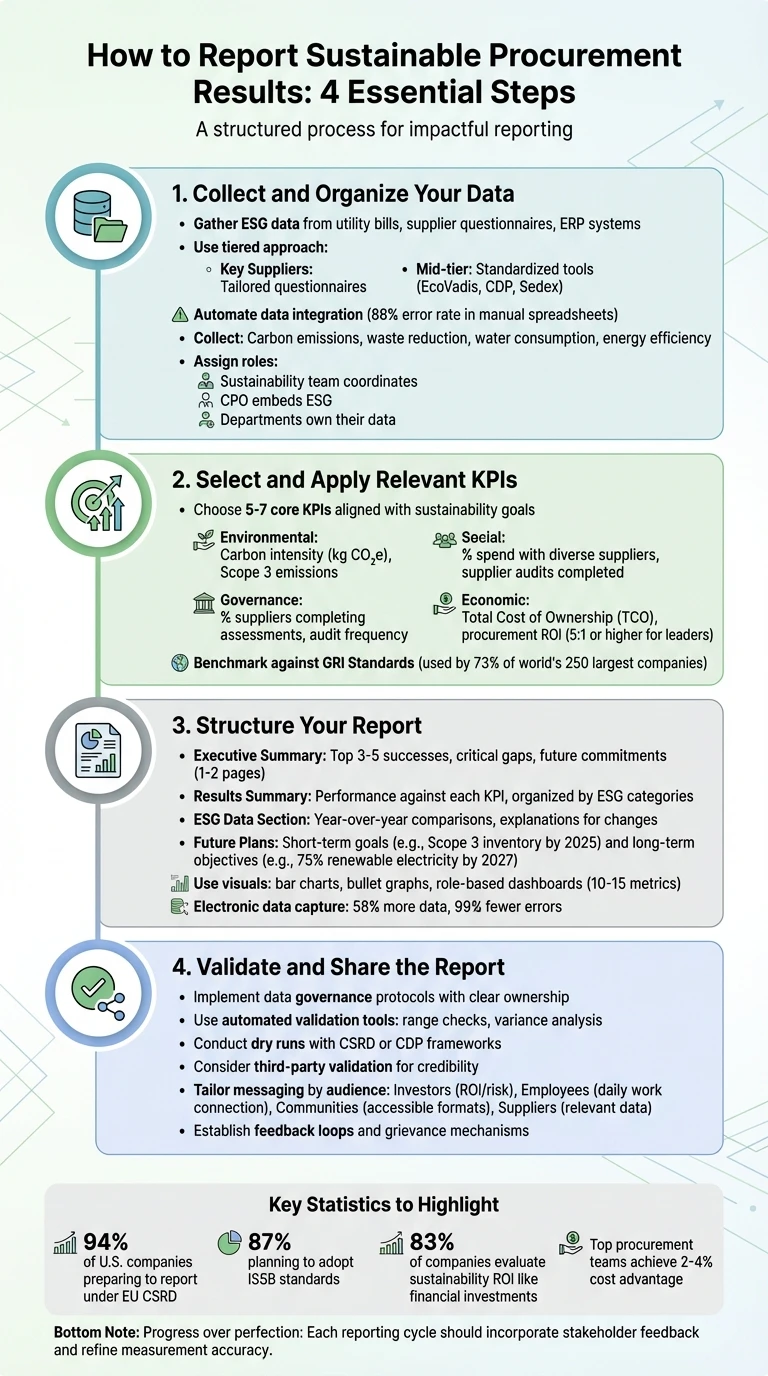
4-Step Process for Reporting Sustainable Procurement Results
ISO 20400 Explained: The Ultimate Guide to Sustainable Procurement
Step 1: Collect and Organize Your Data
Creating a dependable sustainability report begins with gathering precise ESG data, often dispersed across various sources like utility bills, supplier questionnaires, ERP systems, and third-party platforms [2]. A tiered approach works best: use tailored questionnaires for key suppliers, standardized tools like EcoVadis, CDP Supply Chain, or Sedex for mid-tier vendors, and sector-average estimates for smaller suppliers. This method balances accuracy with efficiency [2].
To minimize errors, automate data integration wherever possible. Relying on manual spreadsheets is risky - studies show an 88% error rate in such processes [2]. Instead, connect directly to utility portals, HR platforms, and IoT sensors for faster, more accurate data collection.
Gather Environmental Metrics
Start by collecting essential environmental data, including carbon emissions (from transportation, manufacturing, and product use), waste reduction efforts, water consumption, and energy efficiency improvements [2]. Direct integration with utility and building management systems can help capture detailed facility-level data. Pair this with spend analysis and recognized emission factors, ensuring you maintain a clear audit trail for every reported figure [2].
Assess Social and Governance Factors
For social metrics, pull workforce data from HR systems to evaluate supplier diversity, labor practices, and community initiatives. Governance data, on the other hand, can be sourced from compliance audits, ethical certifications, and supplier codes of conduct.
Assigning clear roles is crucial. As Council Fire Resources highlights:
"The sustainability team should coordinate, not collect" [2].
This means the Chief Procurement Officer should embed ESG considerations into procurement processes, while HR, facilities, and procurement teams take responsibility for their respective data. Use automated checks, like range validations and variance alerts, to detect errors early. With your data organized and verified, you’ll be ready to define KPIs and structure your report.
Step 2: Select and Apply Relevant KPIs
Choosing the right KPIs is critical to accurately measure the impact of your procurement activities. These metrics should align closely with your sustainability goals while remaining manageable. Start with 5–7 core KPIs to maintain focus and ensure data collection remains efficient and reliable [3].
The KPIs you select should also reflect the maturity of your procurement function. If your team is in the early stages, concentrate on foundational metrics like spend visibility and contract compliance. For more advanced teams, include metrics that track contributions to sustainability and innovation [3]. It's also essential to balance the cost of data collection with the value of the insights gained [3][5].
Key KPIs for Sustainable Procurement
To capture the full scope of your procurement process, prioritize KPIs that address environmental, social, and governance (ESG) dimensions.
For environmental impact, focus on metrics like carbon intensity (measured in kg CO₂e per unit of revenue or product). Pay particular attention to Scope 3 emissions, as they often represent the largest share of your carbon footprint and require close collaboration with suppliers [1][4]. On the social side, track metrics such as the percentage of spend with diverse suppliers and the number of suppliers audited against your Code of Conduct [1][4]. Governance metrics might include the percentage of suppliers completing self-assessment questionnaires and the frequency of supplier audits [1][3].
Economic metrics are equally important. Total Cost of Ownership (TCO) offers a complete financial picture by considering acquisition costs, energy and water usage, maintenance expenses, and end-of-life disposal costs [5]. Top-performing procurement organizations consistently achieve a 2–4% cost advantage over their peers, with leading teams often realizing procurement ROI ratios of 5:1 or higher [3].
Benchmark Against Standards
Once your KPIs are defined, compare your performance against established benchmarks. The GRI Standards, adopted by 73% of the world's 250 largest companies across more than 100 countries, provide a robust framework for metric selection. These standards include Universal, Sector, and Topic modules to guide your reporting efforts [1].
For environmental goals, align your targets with the 1.5°C global warming limit set by international climate agreements [4]. Social metrics can draw on methodologies like the Anker Living Wage to assess wage gaps, while the UN Global Compact offers guidance on embedding "decent work" principles through supplier training and engagement tracking [1][7]. Notably, 83% of companies now evaluate the returns on their sustainability initiatives with the same level of rigor as they do for core financial investments [6].
Step 3: Structure Your Report
Transforming raw data into a compelling narrative is essential for driving action. Once you've gathered your data and identified your KPIs, the final step is organizing your report to engage stakeholders effectively. With 94% of U.S.-based companies preparing to report under the EU Corporate Sustainability Reporting Directive (CSRD) and 87% planning to adopt International Sustainability Standards Board (ISSB) standards [8], the expectations for clarity and precision in reporting have never been higher. A well-structured report not only presents your metrics but also ensures your audience understands your progress and goals.
Report Components
Begin with an executive summary that captures your most important findings in one or two pages. This section should emphasize your top three to five successes, identify critical gaps, and outline your commitments for the future. Follow this with an overview of your procurement objectives, explaining how they align with your organization's broader sustainability goals.
The results summary is where you evaluate performance against each KPI defined in Step 2. Organize this section by ESG categories for clarity. Afterward, include a detailed ESG data section that features year-over-year comparisons and explanations for any significant changes. Conclude with future improvement plans, breaking down specific goals and timelines. Distinguish between short-term goals, such as completing a Scope 3 inventory for your top 100 suppliers by 2025, and long-term objectives, like achieving 75% renewable electricity in your operations by 2027.
Consistency in formatting throughout your report helps establish credibility and professionalism.
Use Visuals and Data Presentation
Visual elements like charts and graphs can simplify complex data, making it accessible to a broader audience. Overlaid bar charts or bullet graphs are particularly effective for showing progress against targets [9]. For example, a bullet graph can illustrate your current carbon intensity alongside your 2030 reduction goal.
"The easier it is to understand for your user, the more likely your data will be used effectively for decision-making." - George Gorczynski, Principal Consultant, Vizable Insights [9]
Visual aids enhance clarity when used thoughtfully. Establish a visual hierarchy by employing F-pattern or Z-pattern layouts to guide readers to the most critical KPIs first [9]. Use color selectively to emphasize key data points, but be mindful of its psychological impact - red, for instance, often signals poor performance or loss, which might not align with your message [9]. Stick to consistent chart types to help stakeholders quickly grasp complex sustainability concepts without unnecessary re-explanation [9].
For even greater impact, consider role-based dashboards tailored to different audiences. These dashboards should focus on 10–15 high-impact metrics to meet specific stakeholder needs [10]. Leveraging electronic data capture can improve efficiency, yielding 58% more data and reducing errors by 99% compared to manual processes. Investing in tools that support clean and effective visualization will ensure your data is presented in the best possible light [10].
Step 4: Validate and Share the Report
After gathering all the necessary data and selecting your KPIs, the next step is to validate your report to ensure accuracy and maintain stakeholder confidence. Errors in reporting can lead to mistrust or even regulatory issues, so this stage is crucial.
Validation Strategies
With your data in place, it’s time to focus on verifying its accuracy through thorough validation practices. Start by implementing clear data governance protocols. Assign responsibility for each ESG data point - from its initial collection to the final disclosure - and maintain a comprehensive audit trail that connects every number to its original source. This transparency is essential for accountability.
To minimize errors, leverage automated validation tools. These tools can perform tasks like range checks, variance analyses, and cross-metric comparisons to detect inconsistencies in real time. Moving away from spreadsheets and adopting structured ESG data management platforms can further reduce the risk of human error. It’s also wise to conduct a dry run, testing your data pipeline and generating practice reports aligned with frameworks like CSRD or CDP. This proactive approach helps identify and resolve potential issues before your official submission.
The trend toward "reasonable" assurance - akin to financial reporting standards - means companies must adopt stricter controls. To meet these expectations, document your calculation methods and assumptions so external reviewers can evaluate them thoroughly. For added credibility, consider third-party validation to enhance investor and regulatory trust.
Engage Stakeholders
Once your report is validated, the next step is sharing it effectively with your stakeholders. Accurate data lays the foundation for clear communication and meaningful engagement. Tailor your messaging based on your audience:
Investors typically prioritize ROI and risk summaries.
Employees value insights that connect ESG goals to their daily work.
Communities appreciate accessible, easy-to-understand formats.
Suppliers often require direct and relevant access to specific information.
After distributing the report, close the feedback loop by actively seeking input from stakeholders. Demonstrate how their feedback has influenced decisions or adjustments in your reporting. For instance, while internal metrics might show progress in local hiring, direct conversations with stakeholders can reveal whether those positions provide fair wages and opportunities for career advancement. Establish grievance mechanisms to allow stakeholders to voice concerns and seek resolutions, creating a dynamic feedback system that strengthens future reporting efforts. By integrating this feedback, you can refine your reports and maintain transparency over time.
Work with Council Fire for Expert Support
Producing effective sustainable procurement reports calls for a mix of strategic planning, collaboration with stakeholders, and clear communication. Council Fire offers a structured approach to sustainability reporting, helping organizations move from mere compliance to delivering results that are both measurable and impactful. Their expertise builds upon your existing data collection efforts and KPI frameworks to amplify the influence of your reports.
Partner for Impact Analysis
Council Fire specializes in conducting thorough impact analyses that combine hard data with feedback from stakeholders. This process uncovers critical insights, such as elevated Scope 3 emissions from transportation or deficiencies in supplier diversity. By using materiality assessments, they help ensure your reports stay focused on the most pressing issues.
Their materiality assessments balance environmental metrics - like carbon emissions per dollar spent, waste reduction rates, and renewable energy adoption - with social factors such as labor rights adherence and community influence. This ensures that your sustainability priorities align with business goals and stakeholder expectations. By complementing your chosen KPIs, this approach ensures each metric in your report is relevant. Additionally, they incorporate GRI benchmarks to provide deeper insights and improve overall transparency.
Develop Communication Strategies
Council Fire also excels at transforming complex procurement data into clear, compelling stories. Their "Good + Good" framework connects measurable objectives with engaging narratives, making reports resonate with diverse audiences - whether it’s investors looking for ROI, employees seeking meaningful work, or communities concerned about local developments.
They go beyond traditional static PDFs by designing interactive digital reports and dashboards. These tools use visual storytelling to enhance stakeholder engagement and highlight sustainability achievements. By embedding sustainability into every stage of your procurement narrative - from RFP criteria to annual updates on supplier performance - Council Fire helps foster trust through transparent, well-structured disclosures. Their strategies ensure consistency across all reporting stages, aligning seamlessly with previously outlined components and visuals.
Conclusion
Successful sustainable procurement reporting begins with thorough data collection across environmental, social, and governance areas. By focusing on KPIs that align with business goals and stakeholder priorities, organizations can transform raw data into actionable insights. Clear structure and engaging visuals enhance the effectiveness of reports, while internal reviews and third-party validation strengthen trust and credibility.
The reporting landscape is evolving quickly. For example, 94% of U.S.-based companies anticipate reporting under the EU Corporate Sustainability Reporting Directive, and 87% plan to adopt ISSB standards [8]. Standardized frameworks are becoming the norm rather than the exception. Companies that treat reporting as a mere compliance exercise risk falling behind. In contrast, those embedding transparency into procurement strategies gain a competitive edge by leveraging verified, product-specific data. This approach lays the groundwork for continuous improvement.
Striving for progress is more important than achieving perfection. Mechanisms like CBAM penalize companies using default values over actual emissions data with a 10% surcharge, creating a financial incentive to enhance data quality over time [8]. Each reporting cycle should incorporate stakeholder feedback and refine measurement accuracy.
True transparency means openly addressing gaps and committing to clear, measurable goals. Whether it’s tracking energy consumption per 1,000 product units or targeting a 90% waste diversion rate by 2026, the focus should be on consistent progress that can be verified and communicated effectively to investors, employees, and communities.
FAQs
How do I estimate Scope 3 data when suppliers can’t provide it?
To estimate Scope 3 emissions without direct input from suppliers, consider approaches such as spend-based data, activity data, or proxy data. Start by focusing on the categories that have the most significant environmental impact. This prioritization helps streamline efforts and ensures resources are directed where they matter most.
To improve supplier participation, simplify your requests and focus on engaging key suppliers. Over time, aim to enhance accuracy by transitioning to supplier-specific data. Building trust with suppliers and using established frameworks like the GHG Protocol can guide efforts in collecting and segmenting data effectively.
Which reporting framework should I use for procurement results?
When selecting a reporting framework, it's essential to align it with your organization's goals and the expectations of your stakeholders. Popular choices include ESG (Environmental, Social, Governance) and the Triple Bottom Line (TBL) approach. These frameworks provide structured ways to assess sustainability impacts across various dimensions.
To ensure effective communication of your sustainable procurement outcomes, focus on frameworks that resonate with your specific objectives. Highlight the metrics most relevant to your audience, emphasizing clarity and relevance in your reporting. This approach not only demonstrates accountability but also helps build trust and engagement with stakeholders.
How can I get my report ready for third-party assurance?
To get your report ready for third-party assurance, start by ensuring your data collection methods are consistent, transparent, and aligned with established frameworks like CDP, GRI, or TCFD. Prioritize standardizing your processes, verifying the accuracy of your data, and thoroughly documenting every step. Involving stakeholders and auditors early in the process can help uncover potential issues and strengthen the credibility of your report. Additionally, investing in a robust ESG data infrastructure will make your reporting audit-ready and simplify the assurance process.
Related Blog Posts
Latest Articles
©2026

Narrative Change and Power Building: The Missing Half of Advocacy
Narrative change is the process of disrupting dominant narratives that normalize inequity and advancing new narratives from historically marginalized communities.

Funding Resilience Without Federal Grants
BRIC is unreliable and FEMA is shrinking. Here's how cities fund climate resilience with dedicated revenue, blended finance, and a coordinating authority.

The ESG Blind Spot: How AI Is Finding Risks in Companies Nobody Else Is Watching
Norway's sovereign wealth fund uses AI to screen 7,200 portfolio companies for forced labor and corruption within 24 hours. The real story is the emerging-market coverage gap that traditional ESG data vendors miss — and what it means for any company with a global supply chain.
Narrative Change and Power Building: The Missing Half of Advocacy
Narrative change is the process of disrupting dominant narratives that normalize inequity and advancing new narratives from historically marginalized communities.
Funding Resilience Without Federal Grants
BRIC is unreliable and FEMA is shrinking. Here's how cities fund climate resilience with dedicated revenue, blended finance, and a coordinating authority.
The ESG Blind Spot: How AI Is Finding Risks in Companies Nobody Else Is Watching
Norway's sovereign wealth fund uses AI to screen 7,200 portfolio companies for forced labor and corruption within 24 hours. The real story is the emerging-market coverage gap that traditional ESG data vendors miss — and what it means for any company with a global supply chain.
FAQ
01
What does it really mean to “redefine profit”?
02
What makes Council Fire different?
03
Who does Council Fire work with?
04
What does working with Council Fire actually look like?
05
How does Council Fire help organizations turn big goals into action?
06
How does Council Fire define and measure success?
07
How does technology fit into Council Fire’s work?
Mar 3, 2026
How to Report Sustainable Procurement Results
ESG Strategy
In This Article
Report sustainable procurement with clear data, focused KPIs, validated metrics, and visuals that build stakeholder trust and meet regulations.
How to Report Sustainable Procurement Results
Sharing procurement results effectively is key to building trust, meeting regulations, and driving improvement. Here's what you need to know:
Why It Matters: Transparent reporting builds credibility with stakeholders and ensures compliance with increasing regulations like California's SB 253 and SEC mandates.
Frameworks: Use established standards like GRI, SASB, and TCFD to organize data and target specific audiences (e.g., investors, employees, communities).
Steps to Take:
Collect Data: Gather precise metrics on emissions, resource use, supplier diversity, and compliance. Automate processes to reduce errors.
Choose KPIs: Focus on 5–7 metrics aligned with your sustainability goals, such as Scope 3 emissions or supplier audits.
Structure Reports: Use an executive summary, detailed results, visuals, and future goals to create a clear narrative.
Validate and Share: Ensure accuracy through validation tools and third-party reviews, then tailor reports for audiences like investors or suppliers.
Tools and Support: Platforms like EcoVadis and Sedex simplify data collection, while partners like Council Fire provide expertise in reporting and communication.
4-Step Process for Reporting Sustainable Procurement Results
ISO 20400 Explained: The Ultimate Guide to Sustainable Procurement
Step 1: Collect and Organize Your Data
Creating a dependable sustainability report begins with gathering precise ESG data, often dispersed across various sources like utility bills, supplier questionnaires, ERP systems, and third-party platforms [2]. A tiered approach works best: use tailored questionnaires for key suppliers, standardized tools like EcoVadis, CDP Supply Chain, or Sedex for mid-tier vendors, and sector-average estimates for smaller suppliers. This method balances accuracy with efficiency [2].
To minimize errors, automate data integration wherever possible. Relying on manual spreadsheets is risky - studies show an 88% error rate in such processes [2]. Instead, connect directly to utility portals, HR platforms, and IoT sensors for faster, more accurate data collection.
Gather Environmental Metrics
Start by collecting essential environmental data, including carbon emissions (from transportation, manufacturing, and product use), waste reduction efforts, water consumption, and energy efficiency improvements [2]. Direct integration with utility and building management systems can help capture detailed facility-level data. Pair this with spend analysis and recognized emission factors, ensuring you maintain a clear audit trail for every reported figure [2].
Assess Social and Governance Factors
For social metrics, pull workforce data from HR systems to evaluate supplier diversity, labor practices, and community initiatives. Governance data, on the other hand, can be sourced from compliance audits, ethical certifications, and supplier codes of conduct.
Assigning clear roles is crucial. As Council Fire Resources highlights:
"The sustainability team should coordinate, not collect" [2].
This means the Chief Procurement Officer should embed ESG considerations into procurement processes, while HR, facilities, and procurement teams take responsibility for their respective data. Use automated checks, like range validations and variance alerts, to detect errors early. With your data organized and verified, you’ll be ready to define KPIs and structure your report.
Step 2: Select and Apply Relevant KPIs
Choosing the right KPIs is critical to accurately measure the impact of your procurement activities. These metrics should align closely with your sustainability goals while remaining manageable. Start with 5–7 core KPIs to maintain focus and ensure data collection remains efficient and reliable [3].
The KPIs you select should also reflect the maturity of your procurement function. If your team is in the early stages, concentrate on foundational metrics like spend visibility and contract compliance. For more advanced teams, include metrics that track contributions to sustainability and innovation [3]. It's also essential to balance the cost of data collection with the value of the insights gained [3][5].
Key KPIs for Sustainable Procurement
To capture the full scope of your procurement process, prioritize KPIs that address environmental, social, and governance (ESG) dimensions.
For environmental impact, focus on metrics like carbon intensity (measured in kg CO₂e per unit of revenue or product). Pay particular attention to Scope 3 emissions, as they often represent the largest share of your carbon footprint and require close collaboration with suppliers [1][4]. On the social side, track metrics such as the percentage of spend with diverse suppliers and the number of suppliers audited against your Code of Conduct [1][4]. Governance metrics might include the percentage of suppliers completing self-assessment questionnaires and the frequency of supplier audits [1][3].
Economic metrics are equally important. Total Cost of Ownership (TCO) offers a complete financial picture by considering acquisition costs, energy and water usage, maintenance expenses, and end-of-life disposal costs [5]. Top-performing procurement organizations consistently achieve a 2–4% cost advantage over their peers, with leading teams often realizing procurement ROI ratios of 5:1 or higher [3].
Benchmark Against Standards
Once your KPIs are defined, compare your performance against established benchmarks. The GRI Standards, adopted by 73% of the world's 250 largest companies across more than 100 countries, provide a robust framework for metric selection. These standards include Universal, Sector, and Topic modules to guide your reporting efforts [1].
For environmental goals, align your targets with the 1.5°C global warming limit set by international climate agreements [4]. Social metrics can draw on methodologies like the Anker Living Wage to assess wage gaps, while the UN Global Compact offers guidance on embedding "decent work" principles through supplier training and engagement tracking [1][7]. Notably, 83% of companies now evaluate the returns on their sustainability initiatives with the same level of rigor as they do for core financial investments [6].
Step 3: Structure Your Report
Transforming raw data into a compelling narrative is essential for driving action. Once you've gathered your data and identified your KPIs, the final step is organizing your report to engage stakeholders effectively. With 94% of U.S.-based companies preparing to report under the EU Corporate Sustainability Reporting Directive (CSRD) and 87% planning to adopt International Sustainability Standards Board (ISSB) standards [8], the expectations for clarity and precision in reporting have never been higher. A well-structured report not only presents your metrics but also ensures your audience understands your progress and goals.
Report Components
Begin with an executive summary that captures your most important findings in one or two pages. This section should emphasize your top three to five successes, identify critical gaps, and outline your commitments for the future. Follow this with an overview of your procurement objectives, explaining how they align with your organization's broader sustainability goals.
The results summary is where you evaluate performance against each KPI defined in Step 2. Organize this section by ESG categories for clarity. Afterward, include a detailed ESG data section that features year-over-year comparisons and explanations for any significant changes. Conclude with future improvement plans, breaking down specific goals and timelines. Distinguish between short-term goals, such as completing a Scope 3 inventory for your top 100 suppliers by 2025, and long-term objectives, like achieving 75% renewable electricity in your operations by 2027.
Consistency in formatting throughout your report helps establish credibility and professionalism.
Use Visuals and Data Presentation
Visual elements like charts and graphs can simplify complex data, making it accessible to a broader audience. Overlaid bar charts or bullet graphs are particularly effective for showing progress against targets [9]. For example, a bullet graph can illustrate your current carbon intensity alongside your 2030 reduction goal.
"The easier it is to understand for your user, the more likely your data will be used effectively for decision-making." - George Gorczynski, Principal Consultant, Vizable Insights [9]
Visual aids enhance clarity when used thoughtfully. Establish a visual hierarchy by employing F-pattern or Z-pattern layouts to guide readers to the most critical KPIs first [9]. Use color selectively to emphasize key data points, but be mindful of its psychological impact - red, for instance, often signals poor performance or loss, which might not align with your message [9]. Stick to consistent chart types to help stakeholders quickly grasp complex sustainability concepts without unnecessary re-explanation [9].
For even greater impact, consider role-based dashboards tailored to different audiences. These dashboards should focus on 10–15 high-impact metrics to meet specific stakeholder needs [10]. Leveraging electronic data capture can improve efficiency, yielding 58% more data and reducing errors by 99% compared to manual processes. Investing in tools that support clean and effective visualization will ensure your data is presented in the best possible light [10].
Step 4: Validate and Share the Report
After gathering all the necessary data and selecting your KPIs, the next step is to validate your report to ensure accuracy and maintain stakeholder confidence. Errors in reporting can lead to mistrust or even regulatory issues, so this stage is crucial.
Validation Strategies
With your data in place, it’s time to focus on verifying its accuracy through thorough validation practices. Start by implementing clear data governance protocols. Assign responsibility for each ESG data point - from its initial collection to the final disclosure - and maintain a comprehensive audit trail that connects every number to its original source. This transparency is essential for accountability.
To minimize errors, leverage automated validation tools. These tools can perform tasks like range checks, variance analyses, and cross-metric comparisons to detect inconsistencies in real time. Moving away from spreadsheets and adopting structured ESG data management platforms can further reduce the risk of human error. It’s also wise to conduct a dry run, testing your data pipeline and generating practice reports aligned with frameworks like CSRD or CDP. This proactive approach helps identify and resolve potential issues before your official submission.
The trend toward "reasonable" assurance - akin to financial reporting standards - means companies must adopt stricter controls. To meet these expectations, document your calculation methods and assumptions so external reviewers can evaluate them thoroughly. For added credibility, consider third-party validation to enhance investor and regulatory trust.
Engage Stakeholders
Once your report is validated, the next step is sharing it effectively with your stakeholders. Accurate data lays the foundation for clear communication and meaningful engagement. Tailor your messaging based on your audience:
Investors typically prioritize ROI and risk summaries.
Employees value insights that connect ESG goals to their daily work.
Communities appreciate accessible, easy-to-understand formats.
Suppliers often require direct and relevant access to specific information.
After distributing the report, close the feedback loop by actively seeking input from stakeholders. Demonstrate how their feedback has influenced decisions or adjustments in your reporting. For instance, while internal metrics might show progress in local hiring, direct conversations with stakeholders can reveal whether those positions provide fair wages and opportunities for career advancement. Establish grievance mechanisms to allow stakeholders to voice concerns and seek resolutions, creating a dynamic feedback system that strengthens future reporting efforts. By integrating this feedback, you can refine your reports and maintain transparency over time.
Work with Council Fire for Expert Support
Producing effective sustainable procurement reports calls for a mix of strategic planning, collaboration with stakeholders, and clear communication. Council Fire offers a structured approach to sustainability reporting, helping organizations move from mere compliance to delivering results that are both measurable and impactful. Their expertise builds upon your existing data collection efforts and KPI frameworks to amplify the influence of your reports.
Partner for Impact Analysis
Council Fire specializes in conducting thorough impact analyses that combine hard data with feedback from stakeholders. This process uncovers critical insights, such as elevated Scope 3 emissions from transportation or deficiencies in supplier diversity. By using materiality assessments, they help ensure your reports stay focused on the most pressing issues.
Their materiality assessments balance environmental metrics - like carbon emissions per dollar spent, waste reduction rates, and renewable energy adoption - with social factors such as labor rights adherence and community influence. This ensures that your sustainability priorities align with business goals and stakeholder expectations. By complementing your chosen KPIs, this approach ensures each metric in your report is relevant. Additionally, they incorporate GRI benchmarks to provide deeper insights and improve overall transparency.
Develop Communication Strategies
Council Fire also excels at transforming complex procurement data into clear, compelling stories. Their "Good + Good" framework connects measurable objectives with engaging narratives, making reports resonate with diverse audiences - whether it’s investors looking for ROI, employees seeking meaningful work, or communities concerned about local developments.
They go beyond traditional static PDFs by designing interactive digital reports and dashboards. These tools use visual storytelling to enhance stakeholder engagement and highlight sustainability achievements. By embedding sustainability into every stage of your procurement narrative - from RFP criteria to annual updates on supplier performance - Council Fire helps foster trust through transparent, well-structured disclosures. Their strategies ensure consistency across all reporting stages, aligning seamlessly with previously outlined components and visuals.
Conclusion
Successful sustainable procurement reporting begins with thorough data collection across environmental, social, and governance areas. By focusing on KPIs that align with business goals and stakeholder priorities, organizations can transform raw data into actionable insights. Clear structure and engaging visuals enhance the effectiveness of reports, while internal reviews and third-party validation strengthen trust and credibility.
The reporting landscape is evolving quickly. For example, 94% of U.S.-based companies anticipate reporting under the EU Corporate Sustainability Reporting Directive, and 87% plan to adopt ISSB standards [8]. Standardized frameworks are becoming the norm rather than the exception. Companies that treat reporting as a mere compliance exercise risk falling behind. In contrast, those embedding transparency into procurement strategies gain a competitive edge by leveraging verified, product-specific data. This approach lays the groundwork for continuous improvement.
Striving for progress is more important than achieving perfection. Mechanisms like CBAM penalize companies using default values over actual emissions data with a 10% surcharge, creating a financial incentive to enhance data quality over time [8]. Each reporting cycle should incorporate stakeholder feedback and refine measurement accuracy.
True transparency means openly addressing gaps and committing to clear, measurable goals. Whether it’s tracking energy consumption per 1,000 product units or targeting a 90% waste diversion rate by 2026, the focus should be on consistent progress that can be verified and communicated effectively to investors, employees, and communities.
FAQs
How do I estimate Scope 3 data when suppliers can’t provide it?
To estimate Scope 3 emissions without direct input from suppliers, consider approaches such as spend-based data, activity data, or proxy data. Start by focusing on the categories that have the most significant environmental impact. This prioritization helps streamline efforts and ensures resources are directed where they matter most.
To improve supplier participation, simplify your requests and focus on engaging key suppliers. Over time, aim to enhance accuracy by transitioning to supplier-specific data. Building trust with suppliers and using established frameworks like the GHG Protocol can guide efforts in collecting and segmenting data effectively.
Which reporting framework should I use for procurement results?
When selecting a reporting framework, it's essential to align it with your organization's goals and the expectations of your stakeholders. Popular choices include ESG (Environmental, Social, Governance) and the Triple Bottom Line (TBL) approach. These frameworks provide structured ways to assess sustainability impacts across various dimensions.
To ensure effective communication of your sustainable procurement outcomes, focus on frameworks that resonate with your specific objectives. Highlight the metrics most relevant to your audience, emphasizing clarity and relevance in your reporting. This approach not only demonstrates accountability but also helps build trust and engagement with stakeholders.
How can I get my report ready for third-party assurance?
To get your report ready for third-party assurance, start by ensuring your data collection methods are consistent, transparent, and aligned with established frameworks like CDP, GRI, or TCFD. Prioritize standardizing your processes, verifying the accuracy of your data, and thoroughly documenting every step. Involving stakeholders and auditors early in the process can help uncover potential issues and strengthen the credibility of your report. Additionally, investing in a robust ESG data infrastructure will make your reporting audit-ready and simplify the assurance process.
Related Blog Posts
Latest Articles
©2026
Narrative Change and Power Building: The Missing Half of Advocacy
Narrative change is the process of disrupting dominant narratives that normalize inequity and advancing new narratives from historically marginalized communities.
Funding Resilience Without Federal Grants
BRIC is unreliable and FEMA is shrinking. Here's how cities fund climate resilience with dedicated revenue, blended finance, and a coordinating authority.
The ESG Blind Spot: How AI Is Finding Risks in Companies Nobody Else Is Watching
Norway's sovereign wealth fund uses AI to screen 7,200 portfolio companies for forced labor and corruption within 24 hours. The real story is the emerging-market coverage gap that traditional ESG data vendors miss — and what it means for any company with a global supply chain.
FAQ
01
What does it really mean to “redefine profit”?
02
What makes Council Fire different?
03
Who does Council Fire work with?
04
What does working with Council Fire actually look like?
05
How does Council Fire help organizations turn big goals into action?
06
How does Council Fire define and measure success?
07
How does technology fit into Council Fire’s work?
Mar 3, 2026
How to Report Sustainable Procurement Results
ESG Strategy
In This Article
Report sustainable procurement with clear data, focused KPIs, validated metrics, and visuals that build stakeholder trust and meet regulations.
How to Report Sustainable Procurement Results
Sharing procurement results effectively is key to building trust, meeting regulations, and driving improvement. Here's what you need to know:
Why It Matters: Transparent reporting builds credibility with stakeholders and ensures compliance with increasing regulations like California's SB 253 and SEC mandates.
Frameworks: Use established standards like GRI, SASB, and TCFD to organize data and target specific audiences (e.g., investors, employees, communities).
Steps to Take:
Collect Data: Gather precise metrics on emissions, resource use, supplier diversity, and compliance. Automate processes to reduce errors.
Choose KPIs: Focus on 5–7 metrics aligned with your sustainability goals, such as Scope 3 emissions or supplier audits.
Structure Reports: Use an executive summary, detailed results, visuals, and future goals to create a clear narrative.
Validate and Share: Ensure accuracy through validation tools and third-party reviews, then tailor reports for audiences like investors or suppliers.
Tools and Support: Platforms like EcoVadis and Sedex simplify data collection, while partners like Council Fire provide expertise in reporting and communication.
4-Step Process for Reporting Sustainable Procurement Results
ISO 20400 Explained: The Ultimate Guide to Sustainable Procurement
Step 1: Collect and Organize Your Data
Creating a dependable sustainability report begins with gathering precise ESG data, often dispersed across various sources like utility bills, supplier questionnaires, ERP systems, and third-party platforms [2]. A tiered approach works best: use tailored questionnaires for key suppliers, standardized tools like EcoVadis, CDP Supply Chain, or Sedex for mid-tier vendors, and sector-average estimates for smaller suppliers. This method balances accuracy with efficiency [2].
To minimize errors, automate data integration wherever possible. Relying on manual spreadsheets is risky - studies show an 88% error rate in such processes [2]. Instead, connect directly to utility portals, HR platforms, and IoT sensors for faster, more accurate data collection.
Gather Environmental Metrics
Start by collecting essential environmental data, including carbon emissions (from transportation, manufacturing, and product use), waste reduction efforts, water consumption, and energy efficiency improvements [2]. Direct integration with utility and building management systems can help capture detailed facility-level data. Pair this with spend analysis and recognized emission factors, ensuring you maintain a clear audit trail for every reported figure [2].
Assess Social and Governance Factors
For social metrics, pull workforce data from HR systems to evaluate supplier diversity, labor practices, and community initiatives. Governance data, on the other hand, can be sourced from compliance audits, ethical certifications, and supplier codes of conduct.
Assigning clear roles is crucial. As Council Fire Resources highlights:
"The sustainability team should coordinate, not collect" [2].
This means the Chief Procurement Officer should embed ESG considerations into procurement processes, while HR, facilities, and procurement teams take responsibility for their respective data. Use automated checks, like range validations and variance alerts, to detect errors early. With your data organized and verified, you’ll be ready to define KPIs and structure your report.
Step 2: Select and Apply Relevant KPIs
Choosing the right KPIs is critical to accurately measure the impact of your procurement activities. These metrics should align closely with your sustainability goals while remaining manageable. Start with 5–7 core KPIs to maintain focus and ensure data collection remains efficient and reliable [3].
The KPIs you select should also reflect the maturity of your procurement function. If your team is in the early stages, concentrate on foundational metrics like spend visibility and contract compliance. For more advanced teams, include metrics that track contributions to sustainability and innovation [3]. It's also essential to balance the cost of data collection with the value of the insights gained [3][5].
Key KPIs for Sustainable Procurement
To capture the full scope of your procurement process, prioritize KPIs that address environmental, social, and governance (ESG) dimensions.
For environmental impact, focus on metrics like carbon intensity (measured in kg CO₂e per unit of revenue or product). Pay particular attention to Scope 3 emissions, as they often represent the largest share of your carbon footprint and require close collaboration with suppliers [1][4]. On the social side, track metrics such as the percentage of spend with diverse suppliers and the number of suppliers audited against your Code of Conduct [1][4]. Governance metrics might include the percentage of suppliers completing self-assessment questionnaires and the frequency of supplier audits [1][3].
Economic metrics are equally important. Total Cost of Ownership (TCO) offers a complete financial picture by considering acquisition costs, energy and water usage, maintenance expenses, and end-of-life disposal costs [5]. Top-performing procurement organizations consistently achieve a 2–4% cost advantage over their peers, with leading teams often realizing procurement ROI ratios of 5:1 or higher [3].
Benchmark Against Standards
Once your KPIs are defined, compare your performance against established benchmarks. The GRI Standards, adopted by 73% of the world's 250 largest companies across more than 100 countries, provide a robust framework for metric selection. These standards include Universal, Sector, and Topic modules to guide your reporting efforts [1].
For environmental goals, align your targets with the 1.5°C global warming limit set by international climate agreements [4]. Social metrics can draw on methodologies like the Anker Living Wage to assess wage gaps, while the UN Global Compact offers guidance on embedding "decent work" principles through supplier training and engagement tracking [1][7]. Notably, 83% of companies now evaluate the returns on their sustainability initiatives with the same level of rigor as they do for core financial investments [6].
Step 3: Structure Your Report
Transforming raw data into a compelling narrative is essential for driving action. Once you've gathered your data and identified your KPIs, the final step is organizing your report to engage stakeholders effectively. With 94% of U.S.-based companies preparing to report under the EU Corporate Sustainability Reporting Directive (CSRD) and 87% planning to adopt International Sustainability Standards Board (ISSB) standards [8], the expectations for clarity and precision in reporting have never been higher. A well-structured report not only presents your metrics but also ensures your audience understands your progress and goals.
Report Components
Begin with an executive summary that captures your most important findings in one or two pages. This section should emphasize your top three to five successes, identify critical gaps, and outline your commitments for the future. Follow this with an overview of your procurement objectives, explaining how they align with your organization's broader sustainability goals.
The results summary is where you evaluate performance against each KPI defined in Step 2. Organize this section by ESG categories for clarity. Afterward, include a detailed ESG data section that features year-over-year comparisons and explanations for any significant changes. Conclude with future improvement plans, breaking down specific goals and timelines. Distinguish between short-term goals, such as completing a Scope 3 inventory for your top 100 suppliers by 2025, and long-term objectives, like achieving 75% renewable electricity in your operations by 2027.
Consistency in formatting throughout your report helps establish credibility and professionalism.
Use Visuals and Data Presentation
Visual elements like charts and graphs can simplify complex data, making it accessible to a broader audience. Overlaid bar charts or bullet graphs are particularly effective for showing progress against targets [9]. For example, a bullet graph can illustrate your current carbon intensity alongside your 2030 reduction goal.
"The easier it is to understand for your user, the more likely your data will be used effectively for decision-making." - George Gorczynski, Principal Consultant, Vizable Insights [9]
Visual aids enhance clarity when used thoughtfully. Establish a visual hierarchy by employing F-pattern or Z-pattern layouts to guide readers to the most critical KPIs first [9]. Use color selectively to emphasize key data points, but be mindful of its psychological impact - red, for instance, often signals poor performance or loss, which might not align with your message [9]. Stick to consistent chart types to help stakeholders quickly grasp complex sustainability concepts without unnecessary re-explanation [9].
For even greater impact, consider role-based dashboards tailored to different audiences. These dashboards should focus on 10–15 high-impact metrics to meet specific stakeholder needs [10]. Leveraging electronic data capture can improve efficiency, yielding 58% more data and reducing errors by 99% compared to manual processes. Investing in tools that support clean and effective visualization will ensure your data is presented in the best possible light [10].
Step 4: Validate and Share the Report
After gathering all the necessary data and selecting your KPIs, the next step is to validate your report to ensure accuracy and maintain stakeholder confidence. Errors in reporting can lead to mistrust or even regulatory issues, so this stage is crucial.
Validation Strategies
With your data in place, it’s time to focus on verifying its accuracy through thorough validation practices. Start by implementing clear data governance protocols. Assign responsibility for each ESG data point - from its initial collection to the final disclosure - and maintain a comprehensive audit trail that connects every number to its original source. This transparency is essential for accountability.
To minimize errors, leverage automated validation tools. These tools can perform tasks like range checks, variance analyses, and cross-metric comparisons to detect inconsistencies in real time. Moving away from spreadsheets and adopting structured ESG data management platforms can further reduce the risk of human error. It’s also wise to conduct a dry run, testing your data pipeline and generating practice reports aligned with frameworks like CSRD or CDP. This proactive approach helps identify and resolve potential issues before your official submission.
The trend toward "reasonable" assurance - akin to financial reporting standards - means companies must adopt stricter controls. To meet these expectations, document your calculation methods and assumptions so external reviewers can evaluate them thoroughly. For added credibility, consider third-party validation to enhance investor and regulatory trust.
Engage Stakeholders
Once your report is validated, the next step is sharing it effectively with your stakeholders. Accurate data lays the foundation for clear communication and meaningful engagement. Tailor your messaging based on your audience:
Investors typically prioritize ROI and risk summaries.
Employees value insights that connect ESG goals to their daily work.
Communities appreciate accessible, easy-to-understand formats.
Suppliers often require direct and relevant access to specific information.
After distributing the report, close the feedback loop by actively seeking input from stakeholders. Demonstrate how their feedback has influenced decisions or adjustments in your reporting. For instance, while internal metrics might show progress in local hiring, direct conversations with stakeholders can reveal whether those positions provide fair wages and opportunities for career advancement. Establish grievance mechanisms to allow stakeholders to voice concerns and seek resolutions, creating a dynamic feedback system that strengthens future reporting efforts. By integrating this feedback, you can refine your reports and maintain transparency over time.
Work with Council Fire for Expert Support
Producing effective sustainable procurement reports calls for a mix of strategic planning, collaboration with stakeholders, and clear communication. Council Fire offers a structured approach to sustainability reporting, helping organizations move from mere compliance to delivering results that are both measurable and impactful. Their expertise builds upon your existing data collection efforts and KPI frameworks to amplify the influence of your reports.
Partner for Impact Analysis
Council Fire specializes in conducting thorough impact analyses that combine hard data with feedback from stakeholders. This process uncovers critical insights, such as elevated Scope 3 emissions from transportation or deficiencies in supplier diversity. By using materiality assessments, they help ensure your reports stay focused on the most pressing issues.
Their materiality assessments balance environmental metrics - like carbon emissions per dollar spent, waste reduction rates, and renewable energy adoption - with social factors such as labor rights adherence and community influence. This ensures that your sustainability priorities align with business goals and stakeholder expectations. By complementing your chosen KPIs, this approach ensures each metric in your report is relevant. Additionally, they incorporate GRI benchmarks to provide deeper insights and improve overall transparency.
Develop Communication Strategies
Council Fire also excels at transforming complex procurement data into clear, compelling stories. Their "Good + Good" framework connects measurable objectives with engaging narratives, making reports resonate with diverse audiences - whether it’s investors looking for ROI, employees seeking meaningful work, or communities concerned about local developments.
They go beyond traditional static PDFs by designing interactive digital reports and dashboards. These tools use visual storytelling to enhance stakeholder engagement and highlight sustainability achievements. By embedding sustainability into every stage of your procurement narrative - from RFP criteria to annual updates on supplier performance - Council Fire helps foster trust through transparent, well-structured disclosures. Their strategies ensure consistency across all reporting stages, aligning seamlessly with previously outlined components and visuals.
Conclusion
Successful sustainable procurement reporting begins with thorough data collection across environmental, social, and governance areas. By focusing on KPIs that align with business goals and stakeholder priorities, organizations can transform raw data into actionable insights. Clear structure and engaging visuals enhance the effectiveness of reports, while internal reviews and third-party validation strengthen trust and credibility.
The reporting landscape is evolving quickly. For example, 94% of U.S.-based companies anticipate reporting under the EU Corporate Sustainability Reporting Directive, and 87% plan to adopt ISSB standards [8]. Standardized frameworks are becoming the norm rather than the exception. Companies that treat reporting as a mere compliance exercise risk falling behind. In contrast, those embedding transparency into procurement strategies gain a competitive edge by leveraging verified, product-specific data. This approach lays the groundwork for continuous improvement.
Striving for progress is more important than achieving perfection. Mechanisms like CBAM penalize companies using default values over actual emissions data with a 10% surcharge, creating a financial incentive to enhance data quality over time [8]. Each reporting cycle should incorporate stakeholder feedback and refine measurement accuracy.
True transparency means openly addressing gaps and committing to clear, measurable goals. Whether it’s tracking energy consumption per 1,000 product units or targeting a 90% waste diversion rate by 2026, the focus should be on consistent progress that can be verified and communicated effectively to investors, employees, and communities.
FAQs
How do I estimate Scope 3 data when suppliers can’t provide it?
To estimate Scope 3 emissions without direct input from suppliers, consider approaches such as spend-based data, activity data, or proxy data. Start by focusing on the categories that have the most significant environmental impact. This prioritization helps streamline efforts and ensures resources are directed where they matter most.
To improve supplier participation, simplify your requests and focus on engaging key suppliers. Over time, aim to enhance accuracy by transitioning to supplier-specific data. Building trust with suppliers and using established frameworks like the GHG Protocol can guide efforts in collecting and segmenting data effectively.
Which reporting framework should I use for procurement results?
When selecting a reporting framework, it's essential to align it with your organization's goals and the expectations of your stakeholders. Popular choices include ESG (Environmental, Social, Governance) and the Triple Bottom Line (TBL) approach. These frameworks provide structured ways to assess sustainability impacts across various dimensions.
To ensure effective communication of your sustainable procurement outcomes, focus on frameworks that resonate with your specific objectives. Highlight the metrics most relevant to your audience, emphasizing clarity and relevance in your reporting. This approach not only demonstrates accountability but also helps build trust and engagement with stakeholders.
How can I get my report ready for third-party assurance?
To get your report ready for third-party assurance, start by ensuring your data collection methods are consistent, transparent, and aligned with established frameworks like CDP, GRI, or TCFD. Prioritize standardizing your processes, verifying the accuracy of your data, and thoroughly documenting every step. Involving stakeholders and auditors early in the process can help uncover potential issues and strengthen the credibility of your report. Additionally, investing in a robust ESG data infrastructure will make your reporting audit-ready and simplify the assurance process.
Related Blog Posts
Latest Articles
©2026
Narrative Change and Power Building: The Missing Half of Advocacy
Narrative change is the process of disrupting dominant narratives that normalize inequity and advancing new narratives from historically marginalized communities.
Funding Resilience Without Federal Grants
BRIC is unreliable and FEMA is shrinking. Here's how cities fund climate resilience with dedicated revenue, blended finance, and a coordinating authority.
The ESG Blind Spot: How AI Is Finding Risks in Companies Nobody Else Is Watching
Norway's sovereign wealth fund uses AI to screen 7,200 portfolio companies for forced labor and corruption within 24 hours. The real story is the emerging-market coverage gap that traditional ESG data vendors miss — and what it means for any company with a global supply chain.
FAQ
What does it really mean to “redefine profit”?
What makes Council Fire different?
Who does Council Fire work with?
What does working with Council Fire actually look like?
How does Council Fire help organizations turn big goals into action?
How does Council Fire define and measure success?
How does technology fit into Council Fire’s work?