
Apr 28, 2026
How to Integrate Water Management and Climate Resilience Strategies for Corporations
ESG Strategy
In This Article
Align water management with corporate climate resilience: assess basin and operational risks, strengthen infrastructure, and engage suppliers.
How to Integrate Water Management and Climate Resilience Strategies for Corporations
Water and climate risks are interconnected, and businesses must address them together to remain resilient. Climate change exacerbates water-related challenges like droughts, floods, and heatwaves, which disrupt operations, supply chains, and workforce productivity. Regulatory and market pressures are also increasing, making it essential for companies to act now.
Key Insights:
Rising Risks: Water-related disasters caused $164 billion in fire losses in the U.S. (2024-2025) and $4 billion in flood damages in Spain.
Regulatory Compliance: Laws like California's SB-261 and the EU's CSRD require firms to disclose financial risks tied to water and climate.
Financial Impacts: Only 46% of weather-related losses are insured, with a $142 billion global coverage gap.
Consumer Behavior: One-third of U.S. consumers avoid products with high water demands.
Action Plan for Businesses:
Assess Risks: Use tools like WRI Aqueduct and WWF Water Risk Filter to evaluate water and climate vulnerabilities.
Strengthen Infrastructure: Build facilities using forward-looking climate data and diversify assets across regions.
Update Processes: Modernize standards, implement predictive maintenance, and adjust workforce protocols for heat and water stress.
Optimize Water Use: Focus on high-risk water basins and adopt circular water practices like recycling.
Restore Watersheds: Partner with organizations to protect shared water resources and ensure long-term availability.
Collaborate: Work with communities, governments, and suppliers to build resilient systems and supply chains.
By integrating water management into climate resilience strategies, businesses can mitigate risks, meet regulatory demands, and maintain operational continuity in a changing climate.
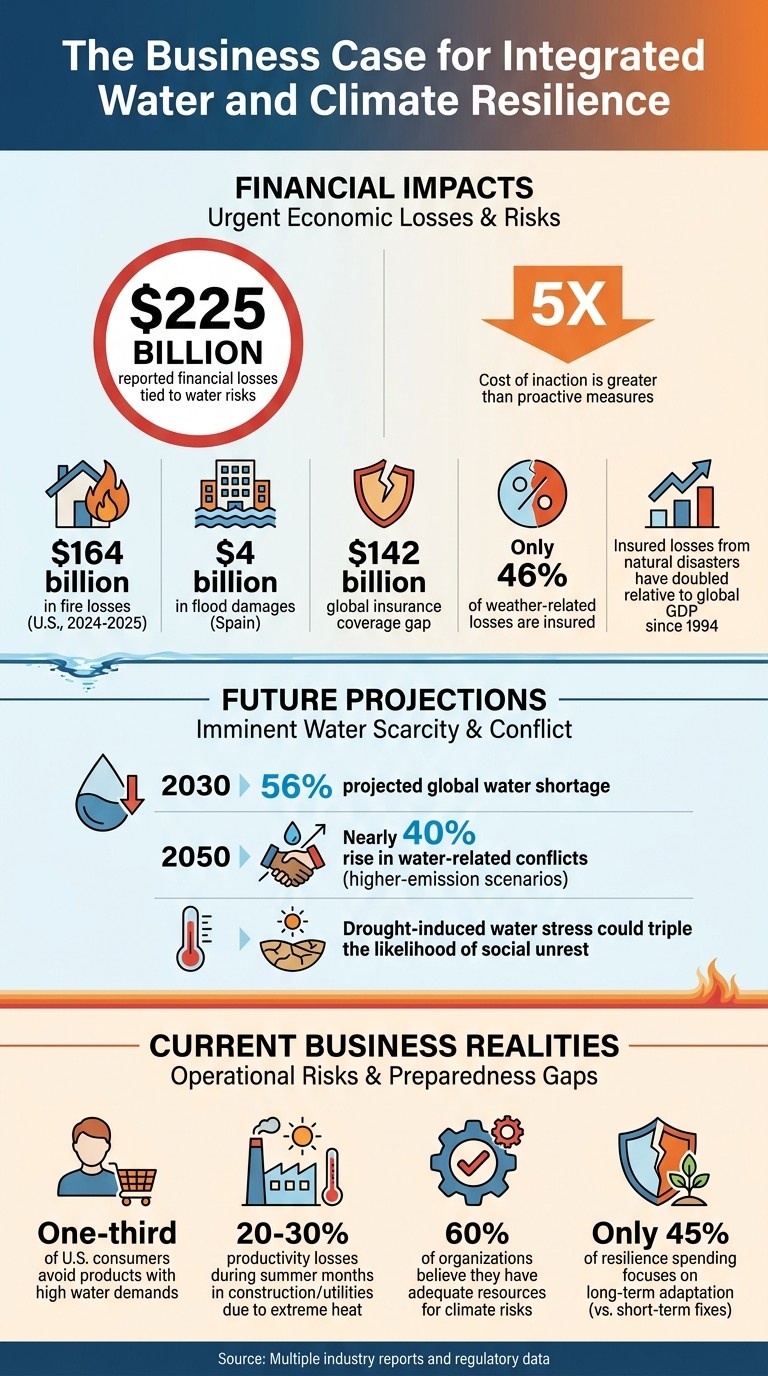
Water and Climate Risk Statistics: Financial Impact and Corporate Action
Assess Water and Climate Risks Using Data-Driven Frameworks
Conducting Vulnerability Assessments
To effectively evaluate vulnerability, focus on three key areas: sensitivity, business criticality, and adaptive capacity [8]. This approach ensures a more precise understanding of risks, moving beyond broad national averages. As Council Fire Resources explains, "National-level averages mask significant local variation and aren't useful for decision-making" [4]. Instead, this method pinpoints specific vulnerabilities within your operations.
Begin by mapping all critical assets - such as facilities, workforce locations, utilities, and supply chain nodes - using geographic coordinates. Align your analysis with standardized timeframes that meet TCFD and ISSB guidelines: short-term (1–3 years), medium-term (3–10 years), and long-term (10–30+ years) [4]. Evaluate both acute risks, like flooding and wildfires, and chronic risks, such as rising temperatures and persistent water shortages [4].
For water-related risks, consider two perspectives: basin risks (external factors like local droughts or regulatory gaps) and operational risks (how your facility's water usage and pollution impact or depend on local resources) [6]. This dual approach provides a thorough risk profile. The stakes are high - companies have already reported $225 billion in financial losses tied to water risks, and the cost of inaction is estimated to be five times greater than proactive measures [6].
Once the risk profile is clear, leveraging technology can enhance and speed up further evaluations.
Using Data and Technology
Advanced tools can make risk analysis more efficient and precise, building on the foundation of your vulnerability assessments. For global water risk mapping, the WRI Aqueduct Water Risk Atlas offers a "Prioritize Basins" tool, which flags areas where water stress surpasses the 40% threshold - a commonly used benchmark for high risk in the private sector [5]. Similarly, the WWF Water Risk Filter provides industry-specific modules to analyze and address both basin and operational risks [6]. For agricultural supply chains, Aqueduct Food combines geospatial crop production data with water risk indicators to highlight high-risk zones [5].
Climate risk assessments also benefit from both public and commercial platforms. Public resources like the NOAA Climate Explorer, World Bank Climate Change Knowledge Portal, and IPCC Interactive Atlas offer essential hazard data [4]. For more detailed, asset-level insights, commercial tools such as Moody's, MSCI Climate Lab, S&P Climanomics, and Jupiter Intelligence provide automated analyses [4]. To ensure robust stress-testing, use at least two scenarios - such as the IEA Net Zero Emissions (NZE) for orderly transitions or the IPCC Shared Socioeconomic Pathways (SSPs) for physical risk projections [4].
Integrate these findings into your Enterprise Risk Management (ERM) framework [4]. Monitor key metrics like days of operation lost due to climate events, the proportion of critical assets with resilience plans, and heat-related safety incidents [2]. These data points not only inform your corporate risk strategy but also strengthen the alignment of water management with broader climate resilience efforts.
Build Infrastructure and Processes for Climate Resilience
Designing Climate-Resilient Infrastructure
After identifying potential risks, the next step is creating infrastructure capable of withstanding those challenges. This requires a shift in approach - from relying on historical weather patterns to using forward-looking climate projections. Such projections provide a clearer picture of future risks, helping organizations design or upgrade facilities accordingly [2]. For instance, physical reinforcements like flood walls and enhanced cooling systems for heat-sensitive equipment are essential measures [2]. In addition, modern tools like digital twins allow organizations to simulate climate scenarios, enabling smarter investment decisions before committing resources [2].
Geographic diversification is another effective strategy. By spreading assets across various climate zones, businesses can minimize the impact of localized extreme weather events on their overall operations [2]. Nature-based solutions, such as restoring watersheds or using permeable surfaces, also play a crucial role. These solutions not only mitigate flooding and water shortages but also provide environmental benefits [2].
The insurance industry is increasingly pushing for these changes. With a $142 billion global protection gap and only 46% of weather-related losses currently insured [2], major insurers like Marsh, Zurich, and AXA now demand proactive risk management from corporations. This includes incorporating climate risk assessments into all capital expenditure decisions, ensuring resilience is prioritized in every infrastructure project [2].
Once the physical foundation is secure, the focus shifts to updating operational processes.
Updating Operational Standards
Modernizing operational standards is just as important as building resilient infrastructure. After conducting thorough risk assessments, companies need to adapt their protocols, maintenance routines, and workforce safety measures to address the realities of a changing climate. For example, extreme heat can significantly reduce productivity in sectors with outdoor or physically demanding work [2]. To counteract this, businesses can implement measures like adjusted work-rest cycles, cooling stations, and flexible schedules during heatwaves.
Predictive maintenance is another key advancement. By using climate data to anticipate equipment servicing needs, companies can avoid unexpected failures and extend the lifespan of their assets [2][9]. Similarly, updating procurement practices - such as requiring suppliers to conduct climate risk assessments and evaluate water dependencies - can strengthen supply chain resilience [1][2].
Embedding climate resilience into governance structures ensures these efforts are sustained. A "Hub-and-Spoke" model, where dedicated climate teams report directly to operational leaders, integrates climate considerations into everyday business decisions. Despite 60% of organizations believing they have adequate resources to address climate risks, only 45% of resilience spending currently focuses on long-term adaptation rather than short-term fixes [2].
Internal reporting also plays a critical role. Tracking non-financial climate impacts and setting trigger points for adaptive actions can serve as an early warning system, allowing companies to address emerging issues before they escalate [7][9]. These updates ensure that resilience is woven into both physical infrastructure and daily operations, aligning with a comprehensive approach to risk management.
Implement Water Management Practices
Improving Water Use Efficiency
With solid infrastructure and updated operations, businesses must take the next step: optimizing water use. This is no small task - by 2030, the global water shortage is expected to hit 56% [11]. Companies can't just focus on cutting water use at their own facilities; they need to address water consumption throughout the entire value chain, from suppliers to end users.
A tailored approach is proving more effective than blanket strategies. Instead of setting broad global reduction goals, many organizations are adopting "enterprise water targets." These focus on specific high-stress water basins where their operations have the greatest impact [11]. Tools like the Aqueduct Water Risk Atlas help pinpoint these high-risk locations, guiding businesses toward smarter efficiency investments [10].
In many cases, the largest portion of a company's water footprint happens during the product-use phase. For example, Procter & Gamble collaborated with the World Resources Institute in May 2023 to assess downstream water impacts. They identified two basins - Moctezuma in Mexico and Calleguas in the U.S. - that accounted for more than half of their consumer water use. This led them to set a goal to restore 110% of the water consumed in these basins, as well as at manufacturing sites in 18 other stressed basins [11].
Businesses can act now by using tools like the Water Risk Monetizer, which translates water scarcity and quality issues into financial terms, making the case for efficiency investments clearer [10]. Another resource, Volumetric Water Benefit Accounting (VWBA 2.0), provides a standardized way to evaluate and report the benefits of water stewardship projects [10]. Additionally, circular water management practices - such as recycling and reusing water - are becoming the norm, helping companies reduce scarcity risks and meet compliance requirements [10]. These efforts don’t just address water issues; they also strengthen climate resilience by minimizing operational vulnerabilities.
Engaging in Watershed Restoration
While efficiency improvements reduce direct consumption, safeguarding watersheds is key to ensuring long-term water availability. Protecting and restoring these areas not only secures resources for business operations but also benefits the environment and local communities. Nature-based solutions, like reforestation, offer multiple advantages, such as better water quality, carbon absorption, enhanced biodiversity, and greater resilience to climate change [12]. Forests and trees, in particular, play a vital role in maintaining shared water resources while supporting ecosystems and surrounding communities [13].
Successful watershed restoration often relies on partnerships with environmental organizations like The Nature Conservancy, WWF, and the Pacific Institute [12]. These collaborations ensure that projects align with local water security needs and deliver measurable outcomes. Businesses should adopt frameworks that measure replenishment projects not only by the volume of water restored but also by their contributions to climate goals and public health [12]. Tools such as CDP’s water platform can help companies visualize water risks and compare their restoration efforts with industry benchmarks [12].
Collaborate with Stakeholders to Build Resilient Systems
Partnering with Communities and Governments
Addressing water and climate challenges requires working together on a broader scale. The impacts of climate vulnerabilities often stretch beyond an organization’s direct influence, affecting shared infrastructure, supply chains, local communities, and ecosystems. These disruptions can have a ripple effect, reducing workforce availability and productivity.
"Climate resilience cannot be achieved alone. Companies consistently reported that their greatest vulnerabilities often lie outside their direct control - in supply chains, infrastructure systems, workforce communities, and natural ecosystems."
Engaging with municipalities, agricultural users, and conservation groups through watershed governance can help secure water resources for the long term and mitigate regulatory risks. Public–private partnerships allow businesses, governments, and local communities to pool resources for solutions that would be impossible for any single entity to achieve on its own.
The concept of "Social Cascades", as resilience practitioners describe it, highlights how failures in community infrastructure can have widespread effects. For example, extreme heat is already causing productivity losses of 20% to 30% during summer months in industries like construction and utilities [2]. Measures such as establishing local cooling centers, upgrading water systems, and strengthening emergency response services are not just community investments - they also ensure operational continuity for businesses.
These cooperative efforts strengthen the foundation of operational networks, which are essential for creating resilient supply chains.
Building Resilient Supply Chains
Once community collaboration is in place, the next step is reinforcing supply chain resilience. Supply chains are particularly vulnerable to climate risks, making it essential for large companies to incorporate resilience requirements into supplier agreements. Smaller suppliers often lack the resources to adapt, so offering them support through training, risk assessment tools, and financing can bridge this gap.
Rather than relying on basic compliance checklists, businesses can develop climate risk scores that turn environmental data into actionable procurement standards. By doing so, organizations can make informed decisions that align with long-term resilience goals.
It’s also crucial to update procurement policies to prioritize suppliers with strong climate strategies, diversify supplier networks geographically, and build redundancy for critical materials that may be at risk due to water scarcity or extreme weather. Despite 60% of organizations believing they have adequate resources to address climate risks, only 45% of resilience investments focus on long-term solutions rather than short-term fixes [2].
Conclusion
Key Takeaways for Corporate Leaders
The most tangible effects of climate change - such as altered precipitation patterns and severe droughts - manifest through disruptions in the water cycle. This connection highlights how water-related risks are at the heart of climate impacts [3], making the integration of water management and climate resilience a critical business priority.
Forward-thinking organizations weave resilience into their governance frameworks, understanding that risks extend far beyond their immediate operations to affect supply chains, communities, and ecosystems [2]. Many leading companies view this integration not as a compliance burden but as an opportunity to gain a competitive edge, especially in light of data showing that insured losses from natural disasters have more than doubled relative to global GDP since 1994 [2].
The stakes are high. Projections indicate a nearly 40% rise in water-related conflicts by 2050 under higher-emission scenarios, while drought-induced water stress could more than triple the likelihood of social unrest [1]. Despite these alarming trends, current resilience spending is misaligned - only 45% is allocated to long-term adaptation, with the rest focused on short-term fixes [2]. To navigate these challenges, corporate leaders must move beyond relying on historical data and adopt forward-looking climate models when setting engineering and operational standards. This shift is crucial as extreme heat and water scarcity become universal risks for businesses.
By understanding these risks and leveraging proven resilience strategies, companies can take actionable steps to safeguard their operations and communities. Expert guidance is essential to translate these strategies into measurable outcomes.
Next Steps: Partnering with Council Fire
Executing these strategies effectively requires seasoned expertise. Council Fire offers decades of experience in climate risk assessments, TCFD-aligned scenario analysis, and water resilience planning - delivering impactful results more efficiently than in-house efforts [4].
For example, in February 2026, Council Fire assisted a regional bank managing $28 billion in assets in implementing TCFD-aligned climate risk disclosures. Simultaneously, they worked with a Mid-Atlantic city to create a comprehensive climate resilience plan, protecting 28,000 residents from coastal hazards [4]. These efforts showcase how Council Fire seamlessly integrates climate and water risks into Enterprise Risk Management frameworks, while ensuring alignment with global reporting standards such as CSRD, ISSB, and SEC regulations.
To explore tailored solutions for your organization, schedule a consultation through Council Fire’s "Let's Talk" feature. Additionally, download their CSRD Readiness Checklist to assess your progress on sustainability reporting requirements [4]. Council Fire specializes in turning sustainability challenges into actionable strategies that drive long-term results and meaningful impact.
How to Assess and Boost your Corporate Water Resilience
FAQs
Where should we start if we don’t have water data for all sites?
To effectively assess water risks at specific sites, begin with local data and established risk evaluation frameworks. By leveraging the information at hand, you can pinpoint key priorities and craft targeted strategies tailored to the location's unique challenges. A place-based, data-driven approach helps you tackle immediate concerns while simultaneously enhancing your data collection methods over time. This way, actionable steps can be taken, even if complete data isn't yet available for every site.
How do we tie water risk findings into ERM and financial reporting?
To effectively manage water-related challenges, incorporate water risk data into your Enterprise Risk Management (ERM) framework and financial reporting. Evaluate how water risks affect supply chains, operational stability, and brand reputation. Convert these risks into measurable financial metrics and align them with broader climate resilience plans. By transparently disclosing water risks in sustainability reports and filings, you highlight their importance as material factors, fostering accountability and supporting the growth of long-term corporate value.
What metrics best show ROI from water efficiency and watershed projects?
Key indicators for showcasing the return on investment (ROI) from water efficiency and watershed initiatives include volumetric water benefits, enhanced water risk resilience, and alignment with regulatory and stakeholder expectations. These metrics provide tangible insights into operational cost savings, reduced risks, and strengthened community and stakeholder trust, delivering measurable advantages for businesses.
Related Blog Posts
Latest Articles
©2025

Narrative Change and Power Building: The Missing Half of Advocacy
Narrative change is the process of disrupting dominant narratives that normalize inequity and advancing new narratives from historically marginalized communities.

Funding Resilience Without Federal Grants
BRIC is unreliable and FEMA is shrinking. Here's how cities fund climate resilience with dedicated revenue, blended finance, and a coordinating authority.

The ESG Blind Spot: How AI Is Finding Risks in Companies Nobody Else Is Watching
Norway's sovereign wealth fund uses AI to screen 7,200 portfolio companies for forced labor and corruption within 24 hours. The real story is the emerging-market coverage gap that traditional ESG data vendors miss — and what it means for any company with a global supply chain.
Narrative Change and Power Building: The Missing Half of Advocacy
Narrative change is the process of disrupting dominant narratives that normalize inequity and advancing new narratives from historically marginalized communities.
Funding Resilience Without Federal Grants
BRIC is unreliable and FEMA is shrinking. Here's how cities fund climate resilience with dedicated revenue, blended finance, and a coordinating authority.
The ESG Blind Spot: How AI Is Finding Risks in Companies Nobody Else Is Watching
Norway's sovereign wealth fund uses AI to screen 7,200 portfolio companies for forced labor and corruption within 24 hours. The real story is the emerging-market coverage gap that traditional ESG data vendors miss — and what it means for any company with a global supply chain.
FAQ
01
What does it really mean to “redefine profit”?
02
What makes Council Fire different?
03
Who does Council Fire work with?
04
What does working with Council Fire actually look like?
05
How does Council Fire help organizations turn big goals into action?
06
How does Council Fire define and measure success?
Apr 28, 2026
How to Integrate Water Management and Climate Resilience Strategies for Corporations
ESG Strategy
In This Article
Align water management with corporate climate resilience: assess basin and operational risks, strengthen infrastructure, and engage suppliers.
How to Integrate Water Management and Climate Resilience Strategies for Corporations
Water and climate risks are interconnected, and businesses must address them together to remain resilient. Climate change exacerbates water-related challenges like droughts, floods, and heatwaves, which disrupt operations, supply chains, and workforce productivity. Regulatory and market pressures are also increasing, making it essential for companies to act now.
Key Insights:
Rising Risks: Water-related disasters caused $164 billion in fire losses in the U.S. (2024-2025) and $4 billion in flood damages in Spain.
Regulatory Compliance: Laws like California's SB-261 and the EU's CSRD require firms to disclose financial risks tied to water and climate.
Financial Impacts: Only 46% of weather-related losses are insured, with a $142 billion global coverage gap.
Consumer Behavior: One-third of U.S. consumers avoid products with high water demands.
Action Plan for Businesses:
Assess Risks: Use tools like WRI Aqueduct and WWF Water Risk Filter to evaluate water and climate vulnerabilities.
Strengthen Infrastructure: Build facilities using forward-looking climate data and diversify assets across regions.
Update Processes: Modernize standards, implement predictive maintenance, and adjust workforce protocols for heat and water stress.
Optimize Water Use: Focus on high-risk water basins and adopt circular water practices like recycling.
Restore Watersheds: Partner with organizations to protect shared water resources and ensure long-term availability.
Collaborate: Work with communities, governments, and suppliers to build resilient systems and supply chains.
By integrating water management into climate resilience strategies, businesses can mitigate risks, meet regulatory demands, and maintain operational continuity in a changing climate.
Water and Climate Risk Statistics: Financial Impact and Corporate Action
Assess Water and Climate Risks Using Data-Driven Frameworks
Conducting Vulnerability Assessments
To effectively evaluate vulnerability, focus on three key areas: sensitivity, business criticality, and adaptive capacity [8]. This approach ensures a more precise understanding of risks, moving beyond broad national averages. As Council Fire Resources explains, "National-level averages mask significant local variation and aren't useful for decision-making" [4]. Instead, this method pinpoints specific vulnerabilities within your operations.
Begin by mapping all critical assets - such as facilities, workforce locations, utilities, and supply chain nodes - using geographic coordinates. Align your analysis with standardized timeframes that meet TCFD and ISSB guidelines: short-term (1–3 years), medium-term (3–10 years), and long-term (10–30+ years) [4]. Evaluate both acute risks, like flooding and wildfires, and chronic risks, such as rising temperatures and persistent water shortages [4].
For water-related risks, consider two perspectives: basin risks (external factors like local droughts or regulatory gaps) and operational risks (how your facility's water usage and pollution impact or depend on local resources) [6]. This dual approach provides a thorough risk profile. The stakes are high - companies have already reported $225 billion in financial losses tied to water risks, and the cost of inaction is estimated to be five times greater than proactive measures [6].
Once the risk profile is clear, leveraging technology can enhance and speed up further evaluations.
Using Data and Technology
Advanced tools can make risk analysis more efficient and precise, building on the foundation of your vulnerability assessments. For global water risk mapping, the WRI Aqueduct Water Risk Atlas offers a "Prioritize Basins" tool, which flags areas where water stress surpasses the 40% threshold - a commonly used benchmark for high risk in the private sector [5]. Similarly, the WWF Water Risk Filter provides industry-specific modules to analyze and address both basin and operational risks [6]. For agricultural supply chains, Aqueduct Food combines geospatial crop production data with water risk indicators to highlight high-risk zones [5].
Climate risk assessments also benefit from both public and commercial platforms. Public resources like the NOAA Climate Explorer, World Bank Climate Change Knowledge Portal, and IPCC Interactive Atlas offer essential hazard data [4]. For more detailed, asset-level insights, commercial tools such as Moody's, MSCI Climate Lab, S&P Climanomics, and Jupiter Intelligence provide automated analyses [4]. To ensure robust stress-testing, use at least two scenarios - such as the IEA Net Zero Emissions (NZE) for orderly transitions or the IPCC Shared Socioeconomic Pathways (SSPs) for physical risk projections [4].
Integrate these findings into your Enterprise Risk Management (ERM) framework [4]. Monitor key metrics like days of operation lost due to climate events, the proportion of critical assets with resilience plans, and heat-related safety incidents [2]. These data points not only inform your corporate risk strategy but also strengthen the alignment of water management with broader climate resilience efforts.
Build Infrastructure and Processes for Climate Resilience
Designing Climate-Resilient Infrastructure
After identifying potential risks, the next step is creating infrastructure capable of withstanding those challenges. This requires a shift in approach - from relying on historical weather patterns to using forward-looking climate projections. Such projections provide a clearer picture of future risks, helping organizations design or upgrade facilities accordingly [2]. For instance, physical reinforcements like flood walls and enhanced cooling systems for heat-sensitive equipment are essential measures [2]. In addition, modern tools like digital twins allow organizations to simulate climate scenarios, enabling smarter investment decisions before committing resources [2].
Geographic diversification is another effective strategy. By spreading assets across various climate zones, businesses can minimize the impact of localized extreme weather events on their overall operations [2]. Nature-based solutions, such as restoring watersheds or using permeable surfaces, also play a crucial role. These solutions not only mitigate flooding and water shortages but also provide environmental benefits [2].
The insurance industry is increasingly pushing for these changes. With a $142 billion global protection gap and only 46% of weather-related losses currently insured [2], major insurers like Marsh, Zurich, and AXA now demand proactive risk management from corporations. This includes incorporating climate risk assessments into all capital expenditure decisions, ensuring resilience is prioritized in every infrastructure project [2].
Once the physical foundation is secure, the focus shifts to updating operational processes.
Updating Operational Standards
Modernizing operational standards is just as important as building resilient infrastructure. After conducting thorough risk assessments, companies need to adapt their protocols, maintenance routines, and workforce safety measures to address the realities of a changing climate. For example, extreme heat can significantly reduce productivity in sectors with outdoor or physically demanding work [2]. To counteract this, businesses can implement measures like adjusted work-rest cycles, cooling stations, and flexible schedules during heatwaves.
Predictive maintenance is another key advancement. By using climate data to anticipate equipment servicing needs, companies can avoid unexpected failures and extend the lifespan of their assets [2][9]. Similarly, updating procurement practices - such as requiring suppliers to conduct climate risk assessments and evaluate water dependencies - can strengthen supply chain resilience [1][2].
Embedding climate resilience into governance structures ensures these efforts are sustained. A "Hub-and-Spoke" model, where dedicated climate teams report directly to operational leaders, integrates climate considerations into everyday business decisions. Despite 60% of organizations believing they have adequate resources to address climate risks, only 45% of resilience spending currently focuses on long-term adaptation rather than short-term fixes [2].
Internal reporting also plays a critical role. Tracking non-financial climate impacts and setting trigger points for adaptive actions can serve as an early warning system, allowing companies to address emerging issues before they escalate [7][9]. These updates ensure that resilience is woven into both physical infrastructure and daily operations, aligning with a comprehensive approach to risk management.
Implement Water Management Practices
Improving Water Use Efficiency
With solid infrastructure and updated operations, businesses must take the next step: optimizing water use. This is no small task - by 2030, the global water shortage is expected to hit 56% [11]. Companies can't just focus on cutting water use at their own facilities; they need to address water consumption throughout the entire value chain, from suppliers to end users.
A tailored approach is proving more effective than blanket strategies. Instead of setting broad global reduction goals, many organizations are adopting "enterprise water targets." These focus on specific high-stress water basins where their operations have the greatest impact [11]. Tools like the Aqueduct Water Risk Atlas help pinpoint these high-risk locations, guiding businesses toward smarter efficiency investments [10].
In many cases, the largest portion of a company's water footprint happens during the product-use phase. For example, Procter & Gamble collaborated with the World Resources Institute in May 2023 to assess downstream water impacts. They identified two basins - Moctezuma in Mexico and Calleguas in the U.S. - that accounted for more than half of their consumer water use. This led them to set a goal to restore 110% of the water consumed in these basins, as well as at manufacturing sites in 18 other stressed basins [11].
Businesses can act now by using tools like the Water Risk Monetizer, which translates water scarcity and quality issues into financial terms, making the case for efficiency investments clearer [10]. Another resource, Volumetric Water Benefit Accounting (VWBA 2.0), provides a standardized way to evaluate and report the benefits of water stewardship projects [10]. Additionally, circular water management practices - such as recycling and reusing water - are becoming the norm, helping companies reduce scarcity risks and meet compliance requirements [10]. These efforts don’t just address water issues; they also strengthen climate resilience by minimizing operational vulnerabilities.
Engaging in Watershed Restoration
While efficiency improvements reduce direct consumption, safeguarding watersheds is key to ensuring long-term water availability. Protecting and restoring these areas not only secures resources for business operations but also benefits the environment and local communities. Nature-based solutions, like reforestation, offer multiple advantages, such as better water quality, carbon absorption, enhanced biodiversity, and greater resilience to climate change [12]. Forests and trees, in particular, play a vital role in maintaining shared water resources while supporting ecosystems and surrounding communities [13].
Successful watershed restoration often relies on partnerships with environmental organizations like The Nature Conservancy, WWF, and the Pacific Institute [12]. These collaborations ensure that projects align with local water security needs and deliver measurable outcomes. Businesses should adopt frameworks that measure replenishment projects not only by the volume of water restored but also by their contributions to climate goals and public health [12]. Tools such as CDP’s water platform can help companies visualize water risks and compare their restoration efforts with industry benchmarks [12].
Collaborate with Stakeholders to Build Resilient Systems
Partnering with Communities and Governments
Addressing water and climate challenges requires working together on a broader scale. The impacts of climate vulnerabilities often stretch beyond an organization’s direct influence, affecting shared infrastructure, supply chains, local communities, and ecosystems. These disruptions can have a ripple effect, reducing workforce availability and productivity.
"Climate resilience cannot be achieved alone. Companies consistently reported that their greatest vulnerabilities often lie outside their direct control - in supply chains, infrastructure systems, workforce communities, and natural ecosystems."
Engaging with municipalities, agricultural users, and conservation groups through watershed governance can help secure water resources for the long term and mitigate regulatory risks. Public–private partnerships allow businesses, governments, and local communities to pool resources for solutions that would be impossible for any single entity to achieve on its own.
The concept of "Social Cascades", as resilience practitioners describe it, highlights how failures in community infrastructure can have widespread effects. For example, extreme heat is already causing productivity losses of 20% to 30% during summer months in industries like construction and utilities [2]. Measures such as establishing local cooling centers, upgrading water systems, and strengthening emergency response services are not just community investments - they also ensure operational continuity for businesses.
These cooperative efforts strengthen the foundation of operational networks, which are essential for creating resilient supply chains.
Building Resilient Supply Chains
Once community collaboration is in place, the next step is reinforcing supply chain resilience. Supply chains are particularly vulnerable to climate risks, making it essential for large companies to incorporate resilience requirements into supplier agreements. Smaller suppliers often lack the resources to adapt, so offering them support through training, risk assessment tools, and financing can bridge this gap.
Rather than relying on basic compliance checklists, businesses can develop climate risk scores that turn environmental data into actionable procurement standards. By doing so, organizations can make informed decisions that align with long-term resilience goals.
It’s also crucial to update procurement policies to prioritize suppliers with strong climate strategies, diversify supplier networks geographically, and build redundancy for critical materials that may be at risk due to water scarcity or extreme weather. Despite 60% of organizations believing they have adequate resources to address climate risks, only 45% of resilience investments focus on long-term solutions rather than short-term fixes [2].
Conclusion
Key Takeaways for Corporate Leaders
The most tangible effects of climate change - such as altered precipitation patterns and severe droughts - manifest through disruptions in the water cycle. This connection highlights how water-related risks are at the heart of climate impacts [3], making the integration of water management and climate resilience a critical business priority.
Forward-thinking organizations weave resilience into their governance frameworks, understanding that risks extend far beyond their immediate operations to affect supply chains, communities, and ecosystems [2]. Many leading companies view this integration not as a compliance burden but as an opportunity to gain a competitive edge, especially in light of data showing that insured losses from natural disasters have more than doubled relative to global GDP since 1994 [2].
The stakes are high. Projections indicate a nearly 40% rise in water-related conflicts by 2050 under higher-emission scenarios, while drought-induced water stress could more than triple the likelihood of social unrest [1]. Despite these alarming trends, current resilience spending is misaligned - only 45% is allocated to long-term adaptation, with the rest focused on short-term fixes [2]. To navigate these challenges, corporate leaders must move beyond relying on historical data and adopt forward-looking climate models when setting engineering and operational standards. This shift is crucial as extreme heat and water scarcity become universal risks for businesses.
By understanding these risks and leveraging proven resilience strategies, companies can take actionable steps to safeguard their operations and communities. Expert guidance is essential to translate these strategies into measurable outcomes.
Next Steps: Partnering with Council Fire
Executing these strategies effectively requires seasoned expertise. Council Fire offers decades of experience in climate risk assessments, TCFD-aligned scenario analysis, and water resilience planning - delivering impactful results more efficiently than in-house efforts [4].
For example, in February 2026, Council Fire assisted a regional bank managing $28 billion in assets in implementing TCFD-aligned climate risk disclosures. Simultaneously, they worked with a Mid-Atlantic city to create a comprehensive climate resilience plan, protecting 28,000 residents from coastal hazards [4]. These efforts showcase how Council Fire seamlessly integrates climate and water risks into Enterprise Risk Management frameworks, while ensuring alignment with global reporting standards such as CSRD, ISSB, and SEC regulations.
To explore tailored solutions for your organization, schedule a consultation through Council Fire’s "Let's Talk" feature. Additionally, download their CSRD Readiness Checklist to assess your progress on sustainability reporting requirements [4]. Council Fire specializes in turning sustainability challenges into actionable strategies that drive long-term results and meaningful impact.
How to Assess and Boost your Corporate Water Resilience
FAQs
Where should we start if we don’t have water data for all sites?
To effectively assess water risks at specific sites, begin with local data and established risk evaluation frameworks. By leveraging the information at hand, you can pinpoint key priorities and craft targeted strategies tailored to the location's unique challenges. A place-based, data-driven approach helps you tackle immediate concerns while simultaneously enhancing your data collection methods over time. This way, actionable steps can be taken, even if complete data isn't yet available for every site.
How do we tie water risk findings into ERM and financial reporting?
To effectively manage water-related challenges, incorporate water risk data into your Enterprise Risk Management (ERM) framework and financial reporting. Evaluate how water risks affect supply chains, operational stability, and brand reputation. Convert these risks into measurable financial metrics and align them with broader climate resilience plans. By transparently disclosing water risks in sustainability reports and filings, you highlight their importance as material factors, fostering accountability and supporting the growth of long-term corporate value.
What metrics best show ROI from water efficiency and watershed projects?
Key indicators for showcasing the return on investment (ROI) from water efficiency and watershed initiatives include volumetric water benefits, enhanced water risk resilience, and alignment with regulatory and stakeholder expectations. These metrics provide tangible insights into operational cost savings, reduced risks, and strengthened community and stakeholder trust, delivering measurable advantages for businesses.
Related Blog Posts
Latest Articles
©2025
Narrative Change and Power Building: The Missing Half of Advocacy
Narrative change is the process of disrupting dominant narratives that normalize inequity and advancing new narratives from historically marginalized communities.
Funding Resilience Without Federal Grants
BRIC is unreliable and FEMA is shrinking. Here's how cities fund climate resilience with dedicated revenue, blended finance, and a coordinating authority.
The ESG Blind Spot: How AI Is Finding Risks in Companies Nobody Else Is Watching
Norway's sovereign wealth fund uses AI to screen 7,200 portfolio companies for forced labor and corruption within 24 hours. The real story is the emerging-market coverage gap that traditional ESG data vendors miss — and what it means for any company with a global supply chain.
FAQ
01
What does it really mean to “redefine profit”?
02
What makes Council Fire different?
03
Who does Council Fire work with?
04
What does working with Council Fire actually look like?
05
How does Council Fire help organizations turn big goals into action?
06
How does Council Fire define and measure success?
Apr 28, 2026
How to Integrate Water Management and Climate Resilience Strategies for Corporations
ESG Strategy
In This Article
Align water management with corporate climate resilience: assess basin and operational risks, strengthen infrastructure, and engage suppliers.
How to Integrate Water Management and Climate Resilience Strategies for Corporations
Water and climate risks are interconnected, and businesses must address them together to remain resilient. Climate change exacerbates water-related challenges like droughts, floods, and heatwaves, which disrupt operations, supply chains, and workforce productivity. Regulatory and market pressures are also increasing, making it essential for companies to act now.
Key Insights:
Rising Risks: Water-related disasters caused $164 billion in fire losses in the U.S. (2024-2025) and $4 billion in flood damages in Spain.
Regulatory Compliance: Laws like California's SB-261 and the EU's CSRD require firms to disclose financial risks tied to water and climate.
Financial Impacts: Only 46% of weather-related losses are insured, with a $142 billion global coverage gap.
Consumer Behavior: One-third of U.S. consumers avoid products with high water demands.
Action Plan for Businesses:
Assess Risks: Use tools like WRI Aqueduct and WWF Water Risk Filter to evaluate water and climate vulnerabilities.
Strengthen Infrastructure: Build facilities using forward-looking climate data and diversify assets across regions.
Update Processes: Modernize standards, implement predictive maintenance, and adjust workforce protocols for heat and water stress.
Optimize Water Use: Focus on high-risk water basins and adopt circular water practices like recycling.
Restore Watersheds: Partner with organizations to protect shared water resources and ensure long-term availability.
Collaborate: Work with communities, governments, and suppliers to build resilient systems and supply chains.
By integrating water management into climate resilience strategies, businesses can mitigate risks, meet regulatory demands, and maintain operational continuity in a changing climate.
Water and Climate Risk Statistics: Financial Impact and Corporate Action
Assess Water and Climate Risks Using Data-Driven Frameworks
Conducting Vulnerability Assessments
To effectively evaluate vulnerability, focus on three key areas: sensitivity, business criticality, and adaptive capacity [8]. This approach ensures a more precise understanding of risks, moving beyond broad national averages. As Council Fire Resources explains, "National-level averages mask significant local variation and aren't useful for decision-making" [4]. Instead, this method pinpoints specific vulnerabilities within your operations.
Begin by mapping all critical assets - such as facilities, workforce locations, utilities, and supply chain nodes - using geographic coordinates. Align your analysis with standardized timeframes that meet TCFD and ISSB guidelines: short-term (1–3 years), medium-term (3–10 years), and long-term (10–30+ years) [4]. Evaluate both acute risks, like flooding and wildfires, and chronic risks, such as rising temperatures and persistent water shortages [4].
For water-related risks, consider two perspectives: basin risks (external factors like local droughts or regulatory gaps) and operational risks (how your facility's water usage and pollution impact or depend on local resources) [6]. This dual approach provides a thorough risk profile. The stakes are high - companies have already reported $225 billion in financial losses tied to water risks, and the cost of inaction is estimated to be five times greater than proactive measures [6].
Once the risk profile is clear, leveraging technology can enhance and speed up further evaluations.
Using Data and Technology
Advanced tools can make risk analysis more efficient and precise, building on the foundation of your vulnerability assessments. For global water risk mapping, the WRI Aqueduct Water Risk Atlas offers a "Prioritize Basins" tool, which flags areas where water stress surpasses the 40% threshold - a commonly used benchmark for high risk in the private sector [5]. Similarly, the WWF Water Risk Filter provides industry-specific modules to analyze and address both basin and operational risks [6]. For agricultural supply chains, Aqueduct Food combines geospatial crop production data with water risk indicators to highlight high-risk zones [5].
Climate risk assessments also benefit from both public and commercial platforms. Public resources like the NOAA Climate Explorer, World Bank Climate Change Knowledge Portal, and IPCC Interactive Atlas offer essential hazard data [4]. For more detailed, asset-level insights, commercial tools such as Moody's, MSCI Climate Lab, S&P Climanomics, and Jupiter Intelligence provide automated analyses [4]. To ensure robust stress-testing, use at least two scenarios - such as the IEA Net Zero Emissions (NZE) for orderly transitions or the IPCC Shared Socioeconomic Pathways (SSPs) for physical risk projections [4].
Integrate these findings into your Enterprise Risk Management (ERM) framework [4]. Monitor key metrics like days of operation lost due to climate events, the proportion of critical assets with resilience plans, and heat-related safety incidents [2]. These data points not only inform your corporate risk strategy but also strengthen the alignment of water management with broader climate resilience efforts.
Build Infrastructure and Processes for Climate Resilience
Designing Climate-Resilient Infrastructure
After identifying potential risks, the next step is creating infrastructure capable of withstanding those challenges. This requires a shift in approach - from relying on historical weather patterns to using forward-looking climate projections. Such projections provide a clearer picture of future risks, helping organizations design or upgrade facilities accordingly [2]. For instance, physical reinforcements like flood walls and enhanced cooling systems for heat-sensitive equipment are essential measures [2]. In addition, modern tools like digital twins allow organizations to simulate climate scenarios, enabling smarter investment decisions before committing resources [2].
Geographic diversification is another effective strategy. By spreading assets across various climate zones, businesses can minimize the impact of localized extreme weather events on their overall operations [2]. Nature-based solutions, such as restoring watersheds or using permeable surfaces, also play a crucial role. These solutions not only mitigate flooding and water shortages but also provide environmental benefits [2].
The insurance industry is increasingly pushing for these changes. With a $142 billion global protection gap and only 46% of weather-related losses currently insured [2], major insurers like Marsh, Zurich, and AXA now demand proactive risk management from corporations. This includes incorporating climate risk assessments into all capital expenditure decisions, ensuring resilience is prioritized in every infrastructure project [2].
Once the physical foundation is secure, the focus shifts to updating operational processes.
Updating Operational Standards
Modernizing operational standards is just as important as building resilient infrastructure. After conducting thorough risk assessments, companies need to adapt their protocols, maintenance routines, and workforce safety measures to address the realities of a changing climate. For example, extreme heat can significantly reduce productivity in sectors with outdoor or physically demanding work [2]. To counteract this, businesses can implement measures like adjusted work-rest cycles, cooling stations, and flexible schedules during heatwaves.
Predictive maintenance is another key advancement. By using climate data to anticipate equipment servicing needs, companies can avoid unexpected failures and extend the lifespan of their assets [2][9]. Similarly, updating procurement practices - such as requiring suppliers to conduct climate risk assessments and evaluate water dependencies - can strengthen supply chain resilience [1][2].
Embedding climate resilience into governance structures ensures these efforts are sustained. A "Hub-and-Spoke" model, where dedicated climate teams report directly to operational leaders, integrates climate considerations into everyday business decisions. Despite 60% of organizations believing they have adequate resources to address climate risks, only 45% of resilience spending currently focuses on long-term adaptation rather than short-term fixes [2].
Internal reporting also plays a critical role. Tracking non-financial climate impacts and setting trigger points for adaptive actions can serve as an early warning system, allowing companies to address emerging issues before they escalate [7][9]. These updates ensure that resilience is woven into both physical infrastructure and daily operations, aligning with a comprehensive approach to risk management.
Implement Water Management Practices
Improving Water Use Efficiency
With solid infrastructure and updated operations, businesses must take the next step: optimizing water use. This is no small task - by 2030, the global water shortage is expected to hit 56% [11]. Companies can't just focus on cutting water use at their own facilities; they need to address water consumption throughout the entire value chain, from suppliers to end users.
A tailored approach is proving more effective than blanket strategies. Instead of setting broad global reduction goals, many organizations are adopting "enterprise water targets." These focus on specific high-stress water basins where their operations have the greatest impact [11]. Tools like the Aqueduct Water Risk Atlas help pinpoint these high-risk locations, guiding businesses toward smarter efficiency investments [10].
In many cases, the largest portion of a company's water footprint happens during the product-use phase. For example, Procter & Gamble collaborated with the World Resources Institute in May 2023 to assess downstream water impacts. They identified two basins - Moctezuma in Mexico and Calleguas in the U.S. - that accounted for more than half of their consumer water use. This led them to set a goal to restore 110% of the water consumed in these basins, as well as at manufacturing sites in 18 other stressed basins [11].
Businesses can act now by using tools like the Water Risk Monetizer, which translates water scarcity and quality issues into financial terms, making the case for efficiency investments clearer [10]. Another resource, Volumetric Water Benefit Accounting (VWBA 2.0), provides a standardized way to evaluate and report the benefits of water stewardship projects [10]. Additionally, circular water management practices - such as recycling and reusing water - are becoming the norm, helping companies reduce scarcity risks and meet compliance requirements [10]. These efforts don’t just address water issues; they also strengthen climate resilience by minimizing operational vulnerabilities.
Engaging in Watershed Restoration
While efficiency improvements reduce direct consumption, safeguarding watersheds is key to ensuring long-term water availability. Protecting and restoring these areas not only secures resources for business operations but also benefits the environment and local communities. Nature-based solutions, like reforestation, offer multiple advantages, such as better water quality, carbon absorption, enhanced biodiversity, and greater resilience to climate change [12]. Forests and trees, in particular, play a vital role in maintaining shared water resources while supporting ecosystems and surrounding communities [13].
Successful watershed restoration often relies on partnerships with environmental organizations like The Nature Conservancy, WWF, and the Pacific Institute [12]. These collaborations ensure that projects align with local water security needs and deliver measurable outcomes. Businesses should adopt frameworks that measure replenishment projects not only by the volume of water restored but also by their contributions to climate goals and public health [12]. Tools such as CDP’s water platform can help companies visualize water risks and compare their restoration efforts with industry benchmarks [12].
Collaborate with Stakeholders to Build Resilient Systems
Partnering with Communities and Governments
Addressing water and climate challenges requires working together on a broader scale. The impacts of climate vulnerabilities often stretch beyond an organization’s direct influence, affecting shared infrastructure, supply chains, local communities, and ecosystems. These disruptions can have a ripple effect, reducing workforce availability and productivity.
"Climate resilience cannot be achieved alone. Companies consistently reported that their greatest vulnerabilities often lie outside their direct control - in supply chains, infrastructure systems, workforce communities, and natural ecosystems."
Engaging with municipalities, agricultural users, and conservation groups through watershed governance can help secure water resources for the long term and mitigate regulatory risks. Public–private partnerships allow businesses, governments, and local communities to pool resources for solutions that would be impossible for any single entity to achieve on its own.
The concept of "Social Cascades", as resilience practitioners describe it, highlights how failures in community infrastructure can have widespread effects. For example, extreme heat is already causing productivity losses of 20% to 30% during summer months in industries like construction and utilities [2]. Measures such as establishing local cooling centers, upgrading water systems, and strengthening emergency response services are not just community investments - they also ensure operational continuity for businesses.
These cooperative efforts strengthen the foundation of operational networks, which are essential for creating resilient supply chains.
Building Resilient Supply Chains
Once community collaboration is in place, the next step is reinforcing supply chain resilience. Supply chains are particularly vulnerable to climate risks, making it essential for large companies to incorporate resilience requirements into supplier agreements. Smaller suppliers often lack the resources to adapt, so offering them support through training, risk assessment tools, and financing can bridge this gap.
Rather than relying on basic compliance checklists, businesses can develop climate risk scores that turn environmental data into actionable procurement standards. By doing so, organizations can make informed decisions that align with long-term resilience goals.
It’s also crucial to update procurement policies to prioritize suppliers with strong climate strategies, diversify supplier networks geographically, and build redundancy for critical materials that may be at risk due to water scarcity or extreme weather. Despite 60% of organizations believing they have adequate resources to address climate risks, only 45% of resilience investments focus on long-term solutions rather than short-term fixes [2].
Conclusion
Key Takeaways for Corporate Leaders
The most tangible effects of climate change - such as altered precipitation patterns and severe droughts - manifest through disruptions in the water cycle. This connection highlights how water-related risks are at the heart of climate impacts [3], making the integration of water management and climate resilience a critical business priority.
Forward-thinking organizations weave resilience into their governance frameworks, understanding that risks extend far beyond their immediate operations to affect supply chains, communities, and ecosystems [2]. Many leading companies view this integration not as a compliance burden but as an opportunity to gain a competitive edge, especially in light of data showing that insured losses from natural disasters have more than doubled relative to global GDP since 1994 [2].
The stakes are high. Projections indicate a nearly 40% rise in water-related conflicts by 2050 under higher-emission scenarios, while drought-induced water stress could more than triple the likelihood of social unrest [1]. Despite these alarming trends, current resilience spending is misaligned - only 45% is allocated to long-term adaptation, with the rest focused on short-term fixes [2]. To navigate these challenges, corporate leaders must move beyond relying on historical data and adopt forward-looking climate models when setting engineering and operational standards. This shift is crucial as extreme heat and water scarcity become universal risks for businesses.
By understanding these risks and leveraging proven resilience strategies, companies can take actionable steps to safeguard their operations and communities. Expert guidance is essential to translate these strategies into measurable outcomes.
Next Steps: Partnering with Council Fire
Executing these strategies effectively requires seasoned expertise. Council Fire offers decades of experience in climate risk assessments, TCFD-aligned scenario analysis, and water resilience planning - delivering impactful results more efficiently than in-house efforts [4].
For example, in February 2026, Council Fire assisted a regional bank managing $28 billion in assets in implementing TCFD-aligned climate risk disclosures. Simultaneously, they worked with a Mid-Atlantic city to create a comprehensive climate resilience plan, protecting 28,000 residents from coastal hazards [4]. These efforts showcase how Council Fire seamlessly integrates climate and water risks into Enterprise Risk Management frameworks, while ensuring alignment with global reporting standards such as CSRD, ISSB, and SEC regulations.
To explore tailored solutions for your organization, schedule a consultation through Council Fire’s "Let's Talk" feature. Additionally, download their CSRD Readiness Checklist to assess your progress on sustainability reporting requirements [4]. Council Fire specializes in turning sustainability challenges into actionable strategies that drive long-term results and meaningful impact.
How to Assess and Boost your Corporate Water Resilience
FAQs
Where should we start if we don’t have water data for all sites?
To effectively assess water risks at specific sites, begin with local data and established risk evaluation frameworks. By leveraging the information at hand, you can pinpoint key priorities and craft targeted strategies tailored to the location's unique challenges. A place-based, data-driven approach helps you tackle immediate concerns while simultaneously enhancing your data collection methods over time. This way, actionable steps can be taken, even if complete data isn't yet available for every site.
How do we tie water risk findings into ERM and financial reporting?
To effectively manage water-related challenges, incorporate water risk data into your Enterprise Risk Management (ERM) framework and financial reporting. Evaluate how water risks affect supply chains, operational stability, and brand reputation. Convert these risks into measurable financial metrics and align them with broader climate resilience plans. By transparently disclosing water risks in sustainability reports and filings, you highlight their importance as material factors, fostering accountability and supporting the growth of long-term corporate value.
What metrics best show ROI from water efficiency and watershed projects?
Key indicators for showcasing the return on investment (ROI) from water efficiency and watershed initiatives include volumetric water benefits, enhanced water risk resilience, and alignment with regulatory and stakeholder expectations. These metrics provide tangible insights into operational cost savings, reduced risks, and strengthened community and stakeholder trust, delivering measurable advantages for businesses.
Related Blog Posts
Latest Articles
©2025
Narrative Change and Power Building: The Missing Half of Advocacy
Narrative change is the process of disrupting dominant narratives that normalize inequity and advancing new narratives from historically marginalized communities.
Funding Resilience Without Federal Grants
BRIC is unreliable and FEMA is shrinking. Here's how cities fund climate resilience with dedicated revenue, blended finance, and a coordinating authority.
The ESG Blind Spot: How AI Is Finding Risks in Companies Nobody Else Is Watching
Norway's sovereign wealth fund uses AI to screen 7,200 portfolio companies for forced labor and corruption within 24 hours. The real story is the emerging-market coverage gap that traditional ESG data vendors miss — and what it means for any company with a global supply chain.
FAQ
What does it really mean to “redefine profit”?
What makes Council Fire different?
Who does Council Fire work with?
What does working with Council Fire actually look like?
How does Council Fire help organizations turn big goals into action?
How does Council Fire define and measure success?