Apr 22, 2026
How to Build a Climate-Ready Energy & Water Infrastructure Plan for Corporations
Sustainability Strategy
In This Article
Assess climate risks, prioritize energy and water adaptations, embed resilience into capital plans, and secure financing.
How to Build a Climate-Ready Energy & Water Infrastructure Plan for Corporations
Extreme weather and climate risks are disrupting business operations worldwide. Corporations must act now to secure energy and water systems against rising temperatures, water scarcity, and natural disasters. A climate-ready infrastructure plan focuses on:
Resilience: Protecting assets from acute and chronic climate risks like floods, heatwaves, and droughts.
Efficiency: Reducing costs through green infrastructure, water reuse, and energy upgrades.
Long-Term Planning: Using climate data and scenario analysis to future-proof systems.
Collaboration: Engaging stakeholders, leveraging funding tools like green bonds, and aligning with regulatory standards.
This guide outlines steps to assess risks, prioritize solutions, and integrate resilience into corporate planning. The goal? Ensure uninterrupted operations while managing costs and meeting stakeholder expectations.
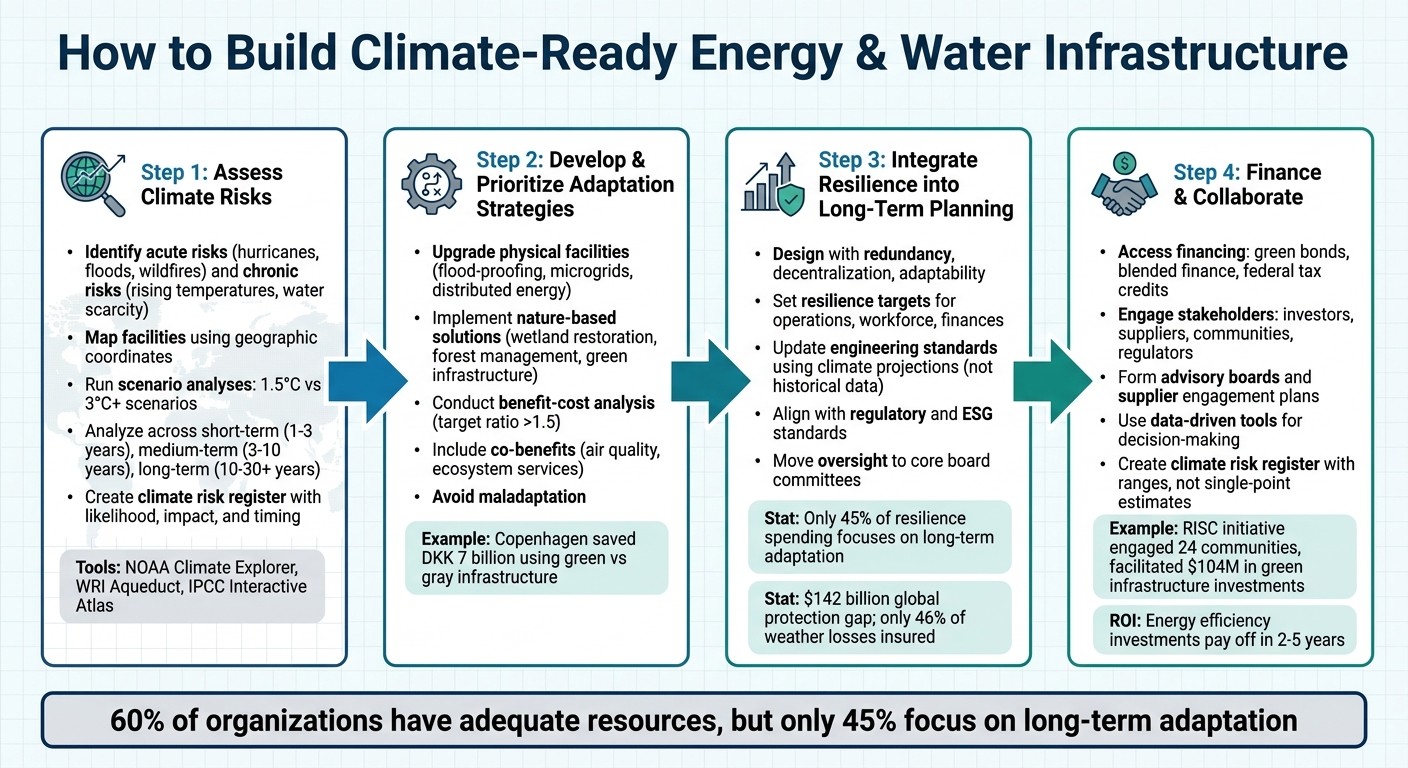
4-Step Framework for Building Climate-Ready Corporate Infrastructure
Step 1: Assess Climate Risks to Energy and Water Systems
Identify Physical and Operational Risks
Creating a robust, long-term infrastructure plan starts with understanding the climate challenges your energy and water systems face. Begin by categorizing threats into two main types: acute risks such as hurricanes, floods, wildfires, and severe storms, and chronic risks like rising temperatures, sea level rise, water scarcity, and shifting precipitation patterns [2].
Among these, extreme heat and water stress stand out as critical threats. Both can trigger cascading vulnerabilities across operations. For instance, extreme heat can damage equipment, reduce energy efficiency, and significantly increase cooling demands on the grid. Data centers and other energy-intensive facilities often require far more cooling as temperatures rise [1].
To pinpoint vulnerabilities, map all facilities - factories, data centers, warehouses, and water treatment plants - using exact geographic coordinates. Overlay these locations with climate hazard data to identify specific risks. Asset-level mapping is key because local variations in hazards like flooding or wildfires can differ drastically from regional or national averages [2]. Additionally, assess interdependencies. Even if your facility is unaffected, disruptions at a supplier's site or a public water treatment plant could bring your operations to a halt [1].
Once mapped, these risks should be translated into measurable metrics through scenario analysis.
Use Climate Risk Models and Data
Run scenario analyses to explore how different climate futures could impact your energy and water systems. Compare at least two scenarios: a 1.5°C "Orderly Transition" scenario and a 3°C+ "Hot House World" scenario. This approach ensures you capture the full spectrum of potential risks. Analyze these scenarios across short-term (1–3 years), medium-term (3–10 years), and long-term (10–30+ years) timelines to align with operational and infrastructure planning cycles [2].
Use reliable data sources to inform these analyses. For U.S.-specific climate projections, the NOAA Climate Explorer is a valuable tool. To assess water stress, turn to the WRI Aqueduct platform. For global hazard identification, the IPCC Interactive Atlas offers comprehensive insights [2]. Water utilities can also benefit from the EPA's "Resilient Strategies Guide for Water Utilities", which provides tools tailored to drought and water quality challenges [3].
Convert these projections into clear risk scores that integrate seamlessly with your engineering standards and capital planning. Create a detailed climate risk register, documenting the likelihood, financial impact, and the expected timing of risks for each infrastructure asset [2].
This register becomes the cornerstone for prioritizing and implementing strategies to strengthen climate resilience.
Step 2: Develop and Prioritize Adaptation Strategies
Site-Level Adaptations for Energy and Water Assets
To address climate risks, consider upgrading physical facilities to withstand environmental challenges. For energy infrastructure, this could mean raising equipment above flood levels, fortifying assets against storms, or constructing coastal barriers using green, gray, or hybrid approaches [4]. Thermoelectric plants, for instance, can reduce their vulnerability to drought and extreme heat by transitioning to air-cooled or low-water-use cooling systems [4].
Strengthen grid resilience by incorporating microgrids and distributed energy systems capable of operating independently during outages. Adding peak generation capacity and power storage can help manage the increased demand during heat waves [4]. For water utilities, addressing leaks, optimizing distribution systems, and implementing wastewater reuse programs can reduce non-revenue water and ensure reliable service during drought conditions [5]. A notable example comes from November 2022, when the Rzeszów Water Utility in Poland reported generating nearly half of its energy needs through on-site biofuel and solar installations, cutting costs and boosting energy resilience [5].
Operational flexibility is another critical area. This could involve upgrading equipment to handle wider temperature ranges, diversifying supply chains to reduce vulnerabilities, or relocating facilities from flood-prone zones to areas with more reliable water access [4].
In addition to these physical upgrades, consider integrating nature-based strategies into your adaptation plans.
Add Nature-Based Solutions
Nature-based solutions focus on preserving and enhancing natural systems to complement physical infrastructure. For example, in August 2022, Danone North America supported the Yuba II Forest Resilience Bond, which financed the restoration of 48,000 acres in California's Tahoe National Forest. This initiative aimed to lower wildfire risks and improve streamflow [7]. Similarly, Meta and Intel funded a project in New Mexico's Santa Fe National Forest, where artificial logjams, known as beaver dam analogs, were installed to create wetlands and enhance groundwater recharge [7].
Here are some examples of nature-based solutions and their applications:
Nature-Based Solution | Primary Climate Benefit | Corporate Infrastructure Application |
|---|---|---|
Wetland Restoration | Mitigates flooding & recharges groundwater | Shields coastal and low-lying facilities from storm surges |
Forest Management | Reduces wildfire risks & filters water | Ensures water quality and supply for industrial use |
Green Infrastructure | Lowers urban heat & manages stormwater | Cuts cooling costs and relieves urban drainage systems |
With forestlands supplying roughly 50% of the U.S. water and 63 million acres of national forests at high wildfire risk, large-scale watershed solutions are becoming increasingly important [7].
After identifying potential adaptation strategies, assess their economic feasibility to make informed investment decisions.
Evaluate Costs and Benefits of Adaptation Investments
To prioritize investments, compare the costs of inaction with the expenses of adaptation and the potential benefits, including avoided losses and added advantages like better water quality or enhanced biodiversity [6].
Benefit-cost analysis (BCA) is a valuable tool for major projects. A benefit-cost ratio above 1.5 typically indicates a cost-effective investment [6]. For instance, Copenhagen, Denmark, analyzed solutions for its Cloudburst Management Plan. Expanding sewers (a gray infrastructure approach) was estimated at DKK 20 billion, while a green infrastructure alternative cost DKK 13 billion. Both options prevented DKK 16 billion in damages, but the green solution resulted in a net gain of DKK 3 billion instead of a DKK 4 billion loss [6].
When calculating returns, include co-benefits like improved air quality, ecosystem services, and productivity boosts - they can significantly enhance the overall value of an investment [6]. Align time horizons with the lifespan of infrastructure, which often spans 10 to 30 years or more for energy and water systems, and factor in periodic maintenance costs [6]. Lastly, screen projects to avoid maladaptation, such as solutions that mitigate one risk but introduce another, like energy-intensive cooling systems that overburden the local grid [6].
Step 3: Integrate Resilience into Long-Term Infrastructure Planning
Design Resilient Energy and Water Systems
Creating infrastructure that can withstand climate challenges requires incorporating redundancy, decentralization, and adaptability. For energy systems, this involves measures like storm-proofing facilities, elevating water-sensitive equipment above flood risk levels, and building microgrids capable of operating independently during outages. Adding backup power through distributed generation, increasing peak generation capacity, and implementing power storage solutions can help manage demand spikes. Smart grid technologies further enhance resilience by enabling quick responses to localized disruptions. Shifting toward energy sources that use minimal water - such as wind and solar photovoltaic systems - and adapting thermoelectric plants to rely on air-cooled or low-water-use cooling systems can significantly reduce water demands. Additionally, strategies like diversifying supply chains, maintaining regional fuel reserves, and employing demand-response programs to shift energy use to off-peak periods can lessen the impact of disruptions [4].
For water infrastructure, resilience starts with using climate projections rather than outdated historical weather data when designing systems. Updating engineering standards for new projects and major upgrades ensures infrastructure is equipped to handle future conditions. These technical updates should be paired with measurable goals to ensure long-term resilience is prioritized [1].
Set Resilience and Sustainability Targets
Once resilient designs are in place, establish clear targets to maintain operational continuity. A detailed risk assessment should guide the integration of resilience into planning, with actionable goals spanning infrastructure, operations, workforce, finances, and environmental impact. Begin by identifying essential business outcomes that must be preserved during climate-related disruptions, such as uninterrupted service, safe work environments, or consistent production. Develop both standard and emergency targets to ensure systems can adapt to shocks. For example, in drought-prone areas, water systems should track water intensity per production unit, while energy systems should monitor the percentage of capacity from distributed or renewable sources that remain functional during grid outages.
Notably, while 60% of organizations feel they have adequate resources to address climate risks, only 45% of resilience spending focuses on long-term adaptation rather than short-term fixes [1]. To bridge this gap, make climate considerations a core requirement for all capital projects by embedding climate-informed design standards into operational and expenditure protocols.
Align with Regulatory and ESG Standards
Infrastructure plans must account for evolving regulations, not just react to them. Climate events often lead to mid-project policy changes, so incorporating flexibility into planning helps avoid expensive last-minute adjustments. Moving climate risk oversight from specialized sustainability committees to core board committees - such as audit, risk, and strategy - ensures resilience becomes a top priority for governance and compliance.
Proactive planning can also offer financial benefits. With a $142 billion global protection gap and only 46% of weather-related losses insured, strengthening infrastructure against climate risks is increasingly essential for securing coverage [1]. Additionally, external pressures - such as investor ESG evaluations, customer supply chain demands, and local disclosure requirements - can justify extending resilience investments beyond traditional planning timelines. Developing simplified climate risk scores aligned with ESG reporting frameworks can help communicate environmental data to stakeholders more effectively, reinforcing broader commitments to sustainability.
Step 4: Use Financing and Stakeholder Collaboration
Access Resilient Infrastructure Financing
Building climate-ready infrastructure relies on a mix of financial tools, stakeholder involvement, and data-driven strategies. Using innovative financing methods can help lower costs and spread out financial risks. Options like green bonds, blended financing that combines public and private investments, and project finance structures with Special Purpose Vehicles (SPVs) offer practical ways to fund projects while managing exposure [8][9][10].
Federal incentives, such as tax credits from the Inflation Reduction Act, can significantly reduce the financial burden of renewable energy and water efficiency upgrades [14]. Investments in energy efficiency often pay off within 2 to 5 years, making them an attractive option for internal funding [14]. Another effective approach is implementing internal carbon pricing, where business units are charged for their emissions. This not only creates a dedicated fund for resilience projects but also encourages decisions that favor low-carbon alternatives [14].
By combining these financial strategies, organizations can set the stage for collaborative and effective planning.
Engage Stakeholders for Collaborative Planning
Successful infrastructure projects depend on strong partnerships with local governments, communities, and other key players. Start by identifying stakeholders - such as investors, suppliers, community members, and regulators - and tailor how you communicate with each group [11]. Setting up advisory boards that include investors and partners can bring a range of perspectives into the planning process. Additionally, Supplier Engagement Plans ensure transparency and smooth data collection across your supply chain [11].
Collaboration on a regional level can significantly amplify the impact of resilience initiatives. For example, the Resilient Infrastructure for Sustainable Communities (RISC) initiative, launched in 2020 with support from the Great Lakes Protection Fund, created a network of municipal resilience officers and private sector leaders. By late 2023, this initiative had engaged nearly 24 communities, including Milwaukee, Buffalo, Chicago, Detroit, and Minneapolis, and facilitated over $104 million in green stormwater infrastructure investments [13]. Leadership of the project transitioned to the Green Infrastructure Leadership Exchange to ensure its long-term impact [13].
"Engaging your employees as stakeholders means consulting them about changes that may impact them, considering their perspectives and needs as stakeholders, and working to increase their buy-in or support for projects or initiatives."
Angela Rodgers, Stakeholder Management Professional, Simply Stakeholders[11]
Building trust with communities is equally important. Genuine two-way communication with affected groups ensures that decisions are both data-driven and informed by local needs [11][12].
With funding secured and partnerships in place, the next step is to leverage data for precise decision-making.
Use Data-Driven Insights for Decision-Making
Good decisions require strong data. Tools like hazard mapping and scenario analysis from NOAA, the World Bank, WRI Aqueduct, and commercial platforms like Moody's, MSCI Climate Lab, S&P Climanomics, and Jupiter Intelligence can provide the detailed insights needed to evaluate risks [2].
To prioritize investments systematically, use consistent data sources and scenario analysis methods to create a climate risk register. This register should document key details such as risk type, likelihood, potential financial impact, and time horizons [2].
Avoid relying solely on single-point estimates. Instead, present data in ranges, such as: "Under a $75/tCO₂ carbon price, operating costs increase by $2–4 million annually" [2]. Visual tools like heat maps, which plot hazard likelihood against financial impact, can make complex data easier for executives to understand and act on [2]. Additionally, forming cross-functional teams that include finance, facilities, procurement, and HR ensures that resilience plans align seamlessly across the organization [14].
Top Climate Resilient Infrastructure Solutions for Civil Engineers
Conclusion: Building a Resilient Future
Integrating resilient design with strong leadership is key to ensuring long-term success in a rapidly changing world.
Key Takeaways for Corporate Leaders
Effective climate planning starts with identifying vital assets, evaluating exposure to risks like drought, flooding, and water quality issues, and analyzing vulnerabilities. The most impactful strategies bring together drinking water, wastewater, and stormwater systems into a unified resilience framework, rather than addressing them as isolated components.
Resilience planning thrives on location-specific strategies that align with your system's unique needs and operational goals. Leveraging data-driven tools can help create tailored approaches for managing energy and water resources. Incorporating financial planning early - by identifying funding sources during the strategy phase - ensures smoother implementation. Clear, concise reporting is also critical to securing stakeholder engagement.
The focus must shift from building "bigger and stronger" systems to creating flexible, adaptive infrastructures. As Newsha Ajami, Chief Strategy and Development Officer for Research at Lawrence Berkeley National Laboratory, aptly puts it:
"We cannot continue facing today's challenges and solve tomorrow's problems with yesterday's solutions" [15].
Small, modular solutions often outperform large, rigid investments, especially in the face of a changing climate.
These strategies provide a solid foundation for leadership to drive meaningful climate action at the highest levels.
The Role of Leadership in Climate Action
Leadership plays a decisive role in turning climate resilience from a concept into actionable, measurable outcomes [1]. While 60% of organizations feel they have adequate resources to address climate risks, only 45% of resilience budgets focus on long-term adaptation [1]. This disconnect highlights the need for leaders who can bridge the gap between awareness and action.
Strong governance spreads climate risk oversight across audit, risk, and compensation committees instead of limiting it to sustainability departments [1]. Leaders who position resilience as a competitive strength - protecting critical infrastructure rather than treating it as a cost - can drive lasting change. Incorporating climate projections into engineering standards and capital expenditure policies ensures that resilience initiatives persist through leadership changes and become an integral part of organizational strategy [1].
FAQs
What climate data should we use for facility-level risk mapping?
To map risks at the facility level, rely on climate data that incorporates projections for physical hazards such as heat, precipitation, drought, sea level rise, and extreme weather events. This data should come from global climate models and localized scenarios, providing a detailed view of potential threats to your assets. Prioritize information that captures both present conditions and future risks to deliver a thorough and forward-looking assessment.
How do we prioritize resilience projects across multiple sites?
Assessing and prioritizing resilience projects begins with a thorough evaluation of climate-related risks and their strategic relevance. Conduct a climate risk assessment to identify vulnerabilities unique to each location, emphasizing physical risks such as extreme weather events or water scarcity. Incorporate tools like scenario analysis and quantitative modeling to inform decision-making with data-driven insights. To ensure alignment with resilience objectives, focus on regional hazards and prioritize initiatives that strengthen operational stability while supporting long-term goals.
How can we fund energy and water resilience without a big upfront spend?
Organizations have the opportunity to pursue energy and water resilience projects without bearing heavy upfront expenses by tapping into federal and state funding programs. Agencies like the EPA, USDA, and SBA offer resources that can support these efforts. By combining various funding sources and exploring creative financial strategies, organizations can implement resilience measures step by step. This method not only minimizes the burden of initial investments but also lays a foundation for sustained, long-term resilience.
Related Blog Posts
Latest Articles
©2025

Narrative Change and Power Building: The Missing Half of Advocacy
Narrative change is the process of disrupting dominant narratives that normalize inequity and advancing new narratives from historically marginalized communities.

Funding Resilience Without Federal Grants
BRIC is unreliable and FEMA is shrinking. Here's how cities fund climate resilience with dedicated revenue, blended finance, and a coordinating authority.

The ESG Blind Spot: How AI Is Finding Risks in Companies Nobody Else Is Watching
Norway's sovereign wealth fund uses AI to screen 7,200 portfolio companies for forced labor and corruption within 24 hours. The real story is the emerging-market coverage gap that traditional ESG data vendors miss — and what it means for any company with a global supply chain.
Narrative Change and Power Building: The Missing Half of Advocacy
Narrative change is the process of disrupting dominant narratives that normalize inequity and advancing new narratives from historically marginalized communities.
Funding Resilience Without Federal Grants
BRIC is unreliable and FEMA is shrinking. Here's how cities fund climate resilience with dedicated revenue, blended finance, and a coordinating authority.
The ESG Blind Spot: How AI Is Finding Risks in Companies Nobody Else Is Watching
Norway's sovereign wealth fund uses AI to screen 7,200 portfolio companies for forced labor and corruption within 24 hours. The real story is the emerging-market coverage gap that traditional ESG data vendors miss — and what it means for any company with a global supply chain.
FAQ
01
What does it really mean to “redefine profit”?
02
What makes Council Fire different?
03
Who does Council Fire work with?
04
What does working with Council Fire actually look like?
05
How does Council Fire help organizations turn big goals into action?
06
How does Council Fire define and measure success?
Apr 22, 2026
How to Build a Climate-Ready Energy & Water Infrastructure Plan for Corporations
Sustainability Strategy
In This Article
Assess climate risks, prioritize energy and water adaptations, embed resilience into capital plans, and secure financing.
How to Build a Climate-Ready Energy & Water Infrastructure Plan for Corporations
Extreme weather and climate risks are disrupting business operations worldwide. Corporations must act now to secure energy and water systems against rising temperatures, water scarcity, and natural disasters. A climate-ready infrastructure plan focuses on:
Resilience: Protecting assets from acute and chronic climate risks like floods, heatwaves, and droughts.
Efficiency: Reducing costs through green infrastructure, water reuse, and energy upgrades.
Long-Term Planning: Using climate data and scenario analysis to future-proof systems.
Collaboration: Engaging stakeholders, leveraging funding tools like green bonds, and aligning with regulatory standards.
This guide outlines steps to assess risks, prioritize solutions, and integrate resilience into corporate planning. The goal? Ensure uninterrupted operations while managing costs and meeting stakeholder expectations.
4-Step Framework for Building Climate-Ready Corporate Infrastructure
Step 1: Assess Climate Risks to Energy and Water Systems
Identify Physical and Operational Risks
Creating a robust, long-term infrastructure plan starts with understanding the climate challenges your energy and water systems face. Begin by categorizing threats into two main types: acute risks such as hurricanes, floods, wildfires, and severe storms, and chronic risks like rising temperatures, sea level rise, water scarcity, and shifting precipitation patterns [2].
Among these, extreme heat and water stress stand out as critical threats. Both can trigger cascading vulnerabilities across operations. For instance, extreme heat can damage equipment, reduce energy efficiency, and significantly increase cooling demands on the grid. Data centers and other energy-intensive facilities often require far more cooling as temperatures rise [1].
To pinpoint vulnerabilities, map all facilities - factories, data centers, warehouses, and water treatment plants - using exact geographic coordinates. Overlay these locations with climate hazard data to identify specific risks. Asset-level mapping is key because local variations in hazards like flooding or wildfires can differ drastically from regional or national averages [2]. Additionally, assess interdependencies. Even if your facility is unaffected, disruptions at a supplier's site or a public water treatment plant could bring your operations to a halt [1].
Once mapped, these risks should be translated into measurable metrics through scenario analysis.
Use Climate Risk Models and Data
Run scenario analyses to explore how different climate futures could impact your energy and water systems. Compare at least two scenarios: a 1.5°C "Orderly Transition" scenario and a 3°C+ "Hot House World" scenario. This approach ensures you capture the full spectrum of potential risks. Analyze these scenarios across short-term (1–3 years), medium-term (3–10 years), and long-term (10–30+ years) timelines to align with operational and infrastructure planning cycles [2].
Use reliable data sources to inform these analyses. For U.S.-specific climate projections, the NOAA Climate Explorer is a valuable tool. To assess water stress, turn to the WRI Aqueduct platform. For global hazard identification, the IPCC Interactive Atlas offers comprehensive insights [2]. Water utilities can also benefit from the EPA's "Resilient Strategies Guide for Water Utilities", which provides tools tailored to drought and water quality challenges [3].
Convert these projections into clear risk scores that integrate seamlessly with your engineering standards and capital planning. Create a detailed climate risk register, documenting the likelihood, financial impact, and the expected timing of risks for each infrastructure asset [2].
This register becomes the cornerstone for prioritizing and implementing strategies to strengthen climate resilience.
Step 2: Develop and Prioritize Adaptation Strategies
Site-Level Adaptations for Energy and Water Assets
To address climate risks, consider upgrading physical facilities to withstand environmental challenges. For energy infrastructure, this could mean raising equipment above flood levels, fortifying assets against storms, or constructing coastal barriers using green, gray, or hybrid approaches [4]. Thermoelectric plants, for instance, can reduce their vulnerability to drought and extreme heat by transitioning to air-cooled or low-water-use cooling systems [4].
Strengthen grid resilience by incorporating microgrids and distributed energy systems capable of operating independently during outages. Adding peak generation capacity and power storage can help manage the increased demand during heat waves [4]. For water utilities, addressing leaks, optimizing distribution systems, and implementing wastewater reuse programs can reduce non-revenue water and ensure reliable service during drought conditions [5]. A notable example comes from November 2022, when the Rzeszów Water Utility in Poland reported generating nearly half of its energy needs through on-site biofuel and solar installations, cutting costs and boosting energy resilience [5].
Operational flexibility is another critical area. This could involve upgrading equipment to handle wider temperature ranges, diversifying supply chains to reduce vulnerabilities, or relocating facilities from flood-prone zones to areas with more reliable water access [4].
In addition to these physical upgrades, consider integrating nature-based strategies into your adaptation plans.
Add Nature-Based Solutions
Nature-based solutions focus on preserving and enhancing natural systems to complement physical infrastructure. For example, in August 2022, Danone North America supported the Yuba II Forest Resilience Bond, which financed the restoration of 48,000 acres in California's Tahoe National Forest. This initiative aimed to lower wildfire risks and improve streamflow [7]. Similarly, Meta and Intel funded a project in New Mexico's Santa Fe National Forest, where artificial logjams, known as beaver dam analogs, were installed to create wetlands and enhance groundwater recharge [7].
Here are some examples of nature-based solutions and their applications:
Nature-Based Solution | Primary Climate Benefit | Corporate Infrastructure Application |
|---|---|---|
Wetland Restoration | Mitigates flooding & recharges groundwater | Shields coastal and low-lying facilities from storm surges |
Forest Management | Reduces wildfire risks & filters water | Ensures water quality and supply for industrial use |
Green Infrastructure | Lowers urban heat & manages stormwater | Cuts cooling costs and relieves urban drainage systems |
With forestlands supplying roughly 50% of the U.S. water and 63 million acres of national forests at high wildfire risk, large-scale watershed solutions are becoming increasingly important [7].
After identifying potential adaptation strategies, assess their economic feasibility to make informed investment decisions.
Evaluate Costs and Benefits of Adaptation Investments
To prioritize investments, compare the costs of inaction with the expenses of adaptation and the potential benefits, including avoided losses and added advantages like better water quality or enhanced biodiversity [6].
Benefit-cost analysis (BCA) is a valuable tool for major projects. A benefit-cost ratio above 1.5 typically indicates a cost-effective investment [6]. For instance, Copenhagen, Denmark, analyzed solutions for its Cloudburst Management Plan. Expanding sewers (a gray infrastructure approach) was estimated at DKK 20 billion, while a green infrastructure alternative cost DKK 13 billion. Both options prevented DKK 16 billion in damages, but the green solution resulted in a net gain of DKK 3 billion instead of a DKK 4 billion loss [6].
When calculating returns, include co-benefits like improved air quality, ecosystem services, and productivity boosts - they can significantly enhance the overall value of an investment [6]. Align time horizons with the lifespan of infrastructure, which often spans 10 to 30 years or more for energy and water systems, and factor in periodic maintenance costs [6]. Lastly, screen projects to avoid maladaptation, such as solutions that mitigate one risk but introduce another, like energy-intensive cooling systems that overburden the local grid [6].
Step 3: Integrate Resilience into Long-Term Infrastructure Planning
Design Resilient Energy and Water Systems
Creating infrastructure that can withstand climate challenges requires incorporating redundancy, decentralization, and adaptability. For energy systems, this involves measures like storm-proofing facilities, elevating water-sensitive equipment above flood risk levels, and building microgrids capable of operating independently during outages. Adding backup power through distributed generation, increasing peak generation capacity, and implementing power storage solutions can help manage demand spikes. Smart grid technologies further enhance resilience by enabling quick responses to localized disruptions. Shifting toward energy sources that use minimal water - such as wind and solar photovoltaic systems - and adapting thermoelectric plants to rely on air-cooled or low-water-use cooling systems can significantly reduce water demands. Additionally, strategies like diversifying supply chains, maintaining regional fuel reserves, and employing demand-response programs to shift energy use to off-peak periods can lessen the impact of disruptions [4].
For water infrastructure, resilience starts with using climate projections rather than outdated historical weather data when designing systems. Updating engineering standards for new projects and major upgrades ensures infrastructure is equipped to handle future conditions. These technical updates should be paired with measurable goals to ensure long-term resilience is prioritized [1].
Set Resilience and Sustainability Targets
Once resilient designs are in place, establish clear targets to maintain operational continuity. A detailed risk assessment should guide the integration of resilience into planning, with actionable goals spanning infrastructure, operations, workforce, finances, and environmental impact. Begin by identifying essential business outcomes that must be preserved during climate-related disruptions, such as uninterrupted service, safe work environments, or consistent production. Develop both standard and emergency targets to ensure systems can adapt to shocks. For example, in drought-prone areas, water systems should track water intensity per production unit, while energy systems should monitor the percentage of capacity from distributed or renewable sources that remain functional during grid outages.
Notably, while 60% of organizations feel they have adequate resources to address climate risks, only 45% of resilience spending focuses on long-term adaptation rather than short-term fixes [1]. To bridge this gap, make climate considerations a core requirement for all capital projects by embedding climate-informed design standards into operational and expenditure protocols.
Align with Regulatory and ESG Standards
Infrastructure plans must account for evolving regulations, not just react to them. Climate events often lead to mid-project policy changes, so incorporating flexibility into planning helps avoid expensive last-minute adjustments. Moving climate risk oversight from specialized sustainability committees to core board committees - such as audit, risk, and strategy - ensures resilience becomes a top priority for governance and compliance.
Proactive planning can also offer financial benefits. With a $142 billion global protection gap and only 46% of weather-related losses insured, strengthening infrastructure against climate risks is increasingly essential for securing coverage [1]. Additionally, external pressures - such as investor ESG evaluations, customer supply chain demands, and local disclosure requirements - can justify extending resilience investments beyond traditional planning timelines. Developing simplified climate risk scores aligned with ESG reporting frameworks can help communicate environmental data to stakeholders more effectively, reinforcing broader commitments to sustainability.
Step 4: Use Financing and Stakeholder Collaboration
Access Resilient Infrastructure Financing
Building climate-ready infrastructure relies on a mix of financial tools, stakeholder involvement, and data-driven strategies. Using innovative financing methods can help lower costs and spread out financial risks. Options like green bonds, blended financing that combines public and private investments, and project finance structures with Special Purpose Vehicles (SPVs) offer practical ways to fund projects while managing exposure [8][9][10].
Federal incentives, such as tax credits from the Inflation Reduction Act, can significantly reduce the financial burden of renewable energy and water efficiency upgrades [14]. Investments in energy efficiency often pay off within 2 to 5 years, making them an attractive option for internal funding [14]. Another effective approach is implementing internal carbon pricing, where business units are charged for their emissions. This not only creates a dedicated fund for resilience projects but also encourages decisions that favor low-carbon alternatives [14].
By combining these financial strategies, organizations can set the stage for collaborative and effective planning.
Engage Stakeholders for Collaborative Planning
Successful infrastructure projects depend on strong partnerships with local governments, communities, and other key players. Start by identifying stakeholders - such as investors, suppliers, community members, and regulators - and tailor how you communicate with each group [11]. Setting up advisory boards that include investors and partners can bring a range of perspectives into the planning process. Additionally, Supplier Engagement Plans ensure transparency and smooth data collection across your supply chain [11].
Collaboration on a regional level can significantly amplify the impact of resilience initiatives. For example, the Resilient Infrastructure for Sustainable Communities (RISC) initiative, launched in 2020 with support from the Great Lakes Protection Fund, created a network of municipal resilience officers and private sector leaders. By late 2023, this initiative had engaged nearly 24 communities, including Milwaukee, Buffalo, Chicago, Detroit, and Minneapolis, and facilitated over $104 million in green stormwater infrastructure investments [13]. Leadership of the project transitioned to the Green Infrastructure Leadership Exchange to ensure its long-term impact [13].
"Engaging your employees as stakeholders means consulting them about changes that may impact them, considering their perspectives and needs as stakeholders, and working to increase their buy-in or support for projects or initiatives."
Angela Rodgers, Stakeholder Management Professional, Simply Stakeholders[11]
Building trust with communities is equally important. Genuine two-way communication with affected groups ensures that decisions are both data-driven and informed by local needs [11][12].
With funding secured and partnerships in place, the next step is to leverage data for precise decision-making.
Use Data-Driven Insights for Decision-Making
Good decisions require strong data. Tools like hazard mapping and scenario analysis from NOAA, the World Bank, WRI Aqueduct, and commercial platforms like Moody's, MSCI Climate Lab, S&P Climanomics, and Jupiter Intelligence can provide the detailed insights needed to evaluate risks [2].
To prioritize investments systematically, use consistent data sources and scenario analysis methods to create a climate risk register. This register should document key details such as risk type, likelihood, potential financial impact, and time horizons [2].
Avoid relying solely on single-point estimates. Instead, present data in ranges, such as: "Under a $75/tCO₂ carbon price, operating costs increase by $2–4 million annually" [2]. Visual tools like heat maps, which plot hazard likelihood against financial impact, can make complex data easier for executives to understand and act on [2]. Additionally, forming cross-functional teams that include finance, facilities, procurement, and HR ensures that resilience plans align seamlessly across the organization [14].
Top Climate Resilient Infrastructure Solutions for Civil Engineers
Conclusion: Building a Resilient Future
Integrating resilient design with strong leadership is key to ensuring long-term success in a rapidly changing world.
Key Takeaways for Corporate Leaders
Effective climate planning starts with identifying vital assets, evaluating exposure to risks like drought, flooding, and water quality issues, and analyzing vulnerabilities. The most impactful strategies bring together drinking water, wastewater, and stormwater systems into a unified resilience framework, rather than addressing them as isolated components.
Resilience planning thrives on location-specific strategies that align with your system's unique needs and operational goals. Leveraging data-driven tools can help create tailored approaches for managing energy and water resources. Incorporating financial planning early - by identifying funding sources during the strategy phase - ensures smoother implementation. Clear, concise reporting is also critical to securing stakeholder engagement.
The focus must shift from building "bigger and stronger" systems to creating flexible, adaptive infrastructures. As Newsha Ajami, Chief Strategy and Development Officer for Research at Lawrence Berkeley National Laboratory, aptly puts it:
"We cannot continue facing today's challenges and solve tomorrow's problems with yesterday's solutions" [15].
Small, modular solutions often outperform large, rigid investments, especially in the face of a changing climate.
These strategies provide a solid foundation for leadership to drive meaningful climate action at the highest levels.
The Role of Leadership in Climate Action
Leadership plays a decisive role in turning climate resilience from a concept into actionable, measurable outcomes [1]. While 60% of organizations feel they have adequate resources to address climate risks, only 45% of resilience budgets focus on long-term adaptation [1]. This disconnect highlights the need for leaders who can bridge the gap between awareness and action.
Strong governance spreads climate risk oversight across audit, risk, and compensation committees instead of limiting it to sustainability departments [1]. Leaders who position resilience as a competitive strength - protecting critical infrastructure rather than treating it as a cost - can drive lasting change. Incorporating climate projections into engineering standards and capital expenditure policies ensures that resilience initiatives persist through leadership changes and become an integral part of organizational strategy [1].
FAQs
What climate data should we use for facility-level risk mapping?
To map risks at the facility level, rely on climate data that incorporates projections for physical hazards such as heat, precipitation, drought, sea level rise, and extreme weather events. This data should come from global climate models and localized scenarios, providing a detailed view of potential threats to your assets. Prioritize information that captures both present conditions and future risks to deliver a thorough and forward-looking assessment.
How do we prioritize resilience projects across multiple sites?
Assessing and prioritizing resilience projects begins with a thorough evaluation of climate-related risks and their strategic relevance. Conduct a climate risk assessment to identify vulnerabilities unique to each location, emphasizing physical risks such as extreme weather events or water scarcity. Incorporate tools like scenario analysis and quantitative modeling to inform decision-making with data-driven insights. To ensure alignment with resilience objectives, focus on regional hazards and prioritize initiatives that strengthen operational stability while supporting long-term goals.
How can we fund energy and water resilience without a big upfront spend?
Organizations have the opportunity to pursue energy and water resilience projects without bearing heavy upfront expenses by tapping into federal and state funding programs. Agencies like the EPA, USDA, and SBA offer resources that can support these efforts. By combining various funding sources and exploring creative financial strategies, organizations can implement resilience measures step by step. This method not only minimizes the burden of initial investments but also lays a foundation for sustained, long-term resilience.
Related Blog Posts
Latest Articles
©2025
Narrative Change and Power Building: The Missing Half of Advocacy
Narrative change is the process of disrupting dominant narratives that normalize inequity and advancing new narratives from historically marginalized communities.
Funding Resilience Without Federal Grants
BRIC is unreliable and FEMA is shrinking. Here's how cities fund climate resilience with dedicated revenue, blended finance, and a coordinating authority.
The ESG Blind Spot: How AI Is Finding Risks in Companies Nobody Else Is Watching
Norway's sovereign wealth fund uses AI to screen 7,200 portfolio companies for forced labor and corruption within 24 hours. The real story is the emerging-market coverage gap that traditional ESG data vendors miss — and what it means for any company with a global supply chain.
FAQ
01
What does it really mean to “redefine profit”?
02
What makes Council Fire different?
03
Who does Council Fire work with?
04
What does working with Council Fire actually look like?
05
How does Council Fire help organizations turn big goals into action?
06
How does Council Fire define and measure success?
Apr 22, 2026
How to Build a Climate-Ready Energy & Water Infrastructure Plan for Corporations
Sustainability Strategy
In This Article
Assess climate risks, prioritize energy and water adaptations, embed resilience into capital plans, and secure financing.
How to Build a Climate-Ready Energy & Water Infrastructure Plan for Corporations
Extreme weather and climate risks are disrupting business operations worldwide. Corporations must act now to secure energy and water systems against rising temperatures, water scarcity, and natural disasters. A climate-ready infrastructure plan focuses on:
Resilience: Protecting assets from acute and chronic climate risks like floods, heatwaves, and droughts.
Efficiency: Reducing costs through green infrastructure, water reuse, and energy upgrades.
Long-Term Planning: Using climate data and scenario analysis to future-proof systems.
Collaboration: Engaging stakeholders, leveraging funding tools like green bonds, and aligning with regulatory standards.
This guide outlines steps to assess risks, prioritize solutions, and integrate resilience into corporate planning. The goal? Ensure uninterrupted operations while managing costs and meeting stakeholder expectations.
4-Step Framework for Building Climate-Ready Corporate Infrastructure
Step 1: Assess Climate Risks to Energy and Water Systems
Identify Physical and Operational Risks
Creating a robust, long-term infrastructure plan starts with understanding the climate challenges your energy and water systems face. Begin by categorizing threats into two main types: acute risks such as hurricanes, floods, wildfires, and severe storms, and chronic risks like rising temperatures, sea level rise, water scarcity, and shifting precipitation patterns [2].
Among these, extreme heat and water stress stand out as critical threats. Both can trigger cascading vulnerabilities across operations. For instance, extreme heat can damage equipment, reduce energy efficiency, and significantly increase cooling demands on the grid. Data centers and other energy-intensive facilities often require far more cooling as temperatures rise [1].
To pinpoint vulnerabilities, map all facilities - factories, data centers, warehouses, and water treatment plants - using exact geographic coordinates. Overlay these locations with climate hazard data to identify specific risks. Asset-level mapping is key because local variations in hazards like flooding or wildfires can differ drastically from regional or national averages [2]. Additionally, assess interdependencies. Even if your facility is unaffected, disruptions at a supplier's site or a public water treatment plant could bring your operations to a halt [1].
Once mapped, these risks should be translated into measurable metrics through scenario analysis.
Use Climate Risk Models and Data
Run scenario analyses to explore how different climate futures could impact your energy and water systems. Compare at least two scenarios: a 1.5°C "Orderly Transition" scenario and a 3°C+ "Hot House World" scenario. This approach ensures you capture the full spectrum of potential risks. Analyze these scenarios across short-term (1–3 years), medium-term (3–10 years), and long-term (10–30+ years) timelines to align with operational and infrastructure planning cycles [2].
Use reliable data sources to inform these analyses. For U.S.-specific climate projections, the NOAA Climate Explorer is a valuable tool. To assess water stress, turn to the WRI Aqueduct platform. For global hazard identification, the IPCC Interactive Atlas offers comprehensive insights [2]. Water utilities can also benefit from the EPA's "Resilient Strategies Guide for Water Utilities", which provides tools tailored to drought and water quality challenges [3].
Convert these projections into clear risk scores that integrate seamlessly with your engineering standards and capital planning. Create a detailed climate risk register, documenting the likelihood, financial impact, and the expected timing of risks for each infrastructure asset [2].
This register becomes the cornerstone for prioritizing and implementing strategies to strengthen climate resilience.
Step 2: Develop and Prioritize Adaptation Strategies
Site-Level Adaptations for Energy and Water Assets
To address climate risks, consider upgrading physical facilities to withstand environmental challenges. For energy infrastructure, this could mean raising equipment above flood levels, fortifying assets against storms, or constructing coastal barriers using green, gray, or hybrid approaches [4]. Thermoelectric plants, for instance, can reduce their vulnerability to drought and extreme heat by transitioning to air-cooled or low-water-use cooling systems [4].
Strengthen grid resilience by incorporating microgrids and distributed energy systems capable of operating independently during outages. Adding peak generation capacity and power storage can help manage the increased demand during heat waves [4]. For water utilities, addressing leaks, optimizing distribution systems, and implementing wastewater reuse programs can reduce non-revenue water and ensure reliable service during drought conditions [5]. A notable example comes from November 2022, when the Rzeszów Water Utility in Poland reported generating nearly half of its energy needs through on-site biofuel and solar installations, cutting costs and boosting energy resilience [5].
Operational flexibility is another critical area. This could involve upgrading equipment to handle wider temperature ranges, diversifying supply chains to reduce vulnerabilities, or relocating facilities from flood-prone zones to areas with more reliable water access [4].
In addition to these physical upgrades, consider integrating nature-based strategies into your adaptation plans.
Add Nature-Based Solutions
Nature-based solutions focus on preserving and enhancing natural systems to complement physical infrastructure. For example, in August 2022, Danone North America supported the Yuba II Forest Resilience Bond, which financed the restoration of 48,000 acres in California's Tahoe National Forest. This initiative aimed to lower wildfire risks and improve streamflow [7]. Similarly, Meta and Intel funded a project in New Mexico's Santa Fe National Forest, where artificial logjams, known as beaver dam analogs, were installed to create wetlands and enhance groundwater recharge [7].
Here are some examples of nature-based solutions and their applications:
Nature-Based Solution | Primary Climate Benefit | Corporate Infrastructure Application |
|---|---|---|
Wetland Restoration | Mitigates flooding & recharges groundwater | Shields coastal and low-lying facilities from storm surges |
Forest Management | Reduces wildfire risks & filters water | Ensures water quality and supply for industrial use |
Green Infrastructure | Lowers urban heat & manages stormwater | Cuts cooling costs and relieves urban drainage systems |
With forestlands supplying roughly 50% of the U.S. water and 63 million acres of national forests at high wildfire risk, large-scale watershed solutions are becoming increasingly important [7].
After identifying potential adaptation strategies, assess their economic feasibility to make informed investment decisions.
Evaluate Costs and Benefits of Adaptation Investments
To prioritize investments, compare the costs of inaction with the expenses of adaptation and the potential benefits, including avoided losses and added advantages like better water quality or enhanced biodiversity [6].
Benefit-cost analysis (BCA) is a valuable tool for major projects. A benefit-cost ratio above 1.5 typically indicates a cost-effective investment [6]. For instance, Copenhagen, Denmark, analyzed solutions for its Cloudburst Management Plan. Expanding sewers (a gray infrastructure approach) was estimated at DKK 20 billion, while a green infrastructure alternative cost DKK 13 billion. Both options prevented DKK 16 billion in damages, but the green solution resulted in a net gain of DKK 3 billion instead of a DKK 4 billion loss [6].
When calculating returns, include co-benefits like improved air quality, ecosystem services, and productivity boosts - they can significantly enhance the overall value of an investment [6]. Align time horizons with the lifespan of infrastructure, which often spans 10 to 30 years or more for energy and water systems, and factor in periodic maintenance costs [6]. Lastly, screen projects to avoid maladaptation, such as solutions that mitigate one risk but introduce another, like energy-intensive cooling systems that overburden the local grid [6].
Step 3: Integrate Resilience into Long-Term Infrastructure Planning
Design Resilient Energy and Water Systems
Creating infrastructure that can withstand climate challenges requires incorporating redundancy, decentralization, and adaptability. For energy systems, this involves measures like storm-proofing facilities, elevating water-sensitive equipment above flood risk levels, and building microgrids capable of operating independently during outages. Adding backup power through distributed generation, increasing peak generation capacity, and implementing power storage solutions can help manage demand spikes. Smart grid technologies further enhance resilience by enabling quick responses to localized disruptions. Shifting toward energy sources that use minimal water - such as wind and solar photovoltaic systems - and adapting thermoelectric plants to rely on air-cooled or low-water-use cooling systems can significantly reduce water demands. Additionally, strategies like diversifying supply chains, maintaining regional fuel reserves, and employing demand-response programs to shift energy use to off-peak periods can lessen the impact of disruptions [4].
For water infrastructure, resilience starts with using climate projections rather than outdated historical weather data when designing systems. Updating engineering standards for new projects and major upgrades ensures infrastructure is equipped to handle future conditions. These technical updates should be paired with measurable goals to ensure long-term resilience is prioritized [1].
Set Resilience and Sustainability Targets
Once resilient designs are in place, establish clear targets to maintain operational continuity. A detailed risk assessment should guide the integration of resilience into planning, with actionable goals spanning infrastructure, operations, workforce, finances, and environmental impact. Begin by identifying essential business outcomes that must be preserved during climate-related disruptions, such as uninterrupted service, safe work environments, or consistent production. Develop both standard and emergency targets to ensure systems can adapt to shocks. For example, in drought-prone areas, water systems should track water intensity per production unit, while energy systems should monitor the percentage of capacity from distributed or renewable sources that remain functional during grid outages.
Notably, while 60% of organizations feel they have adequate resources to address climate risks, only 45% of resilience spending focuses on long-term adaptation rather than short-term fixes [1]. To bridge this gap, make climate considerations a core requirement for all capital projects by embedding climate-informed design standards into operational and expenditure protocols.
Align with Regulatory and ESG Standards
Infrastructure plans must account for evolving regulations, not just react to them. Climate events often lead to mid-project policy changes, so incorporating flexibility into planning helps avoid expensive last-minute adjustments. Moving climate risk oversight from specialized sustainability committees to core board committees - such as audit, risk, and strategy - ensures resilience becomes a top priority for governance and compliance.
Proactive planning can also offer financial benefits. With a $142 billion global protection gap and only 46% of weather-related losses insured, strengthening infrastructure against climate risks is increasingly essential for securing coverage [1]. Additionally, external pressures - such as investor ESG evaluations, customer supply chain demands, and local disclosure requirements - can justify extending resilience investments beyond traditional planning timelines. Developing simplified climate risk scores aligned with ESG reporting frameworks can help communicate environmental data to stakeholders more effectively, reinforcing broader commitments to sustainability.
Step 4: Use Financing and Stakeholder Collaboration
Access Resilient Infrastructure Financing
Building climate-ready infrastructure relies on a mix of financial tools, stakeholder involvement, and data-driven strategies. Using innovative financing methods can help lower costs and spread out financial risks. Options like green bonds, blended financing that combines public and private investments, and project finance structures with Special Purpose Vehicles (SPVs) offer practical ways to fund projects while managing exposure [8][9][10].
Federal incentives, such as tax credits from the Inflation Reduction Act, can significantly reduce the financial burden of renewable energy and water efficiency upgrades [14]. Investments in energy efficiency often pay off within 2 to 5 years, making them an attractive option for internal funding [14]. Another effective approach is implementing internal carbon pricing, where business units are charged for their emissions. This not only creates a dedicated fund for resilience projects but also encourages decisions that favor low-carbon alternatives [14].
By combining these financial strategies, organizations can set the stage for collaborative and effective planning.
Engage Stakeholders for Collaborative Planning
Successful infrastructure projects depend on strong partnerships with local governments, communities, and other key players. Start by identifying stakeholders - such as investors, suppliers, community members, and regulators - and tailor how you communicate with each group [11]. Setting up advisory boards that include investors and partners can bring a range of perspectives into the planning process. Additionally, Supplier Engagement Plans ensure transparency and smooth data collection across your supply chain [11].
Collaboration on a regional level can significantly amplify the impact of resilience initiatives. For example, the Resilient Infrastructure for Sustainable Communities (RISC) initiative, launched in 2020 with support from the Great Lakes Protection Fund, created a network of municipal resilience officers and private sector leaders. By late 2023, this initiative had engaged nearly 24 communities, including Milwaukee, Buffalo, Chicago, Detroit, and Minneapolis, and facilitated over $104 million in green stormwater infrastructure investments [13]. Leadership of the project transitioned to the Green Infrastructure Leadership Exchange to ensure its long-term impact [13].
"Engaging your employees as stakeholders means consulting them about changes that may impact them, considering their perspectives and needs as stakeholders, and working to increase their buy-in or support for projects or initiatives."
Angela Rodgers, Stakeholder Management Professional, Simply Stakeholders[11]
Building trust with communities is equally important. Genuine two-way communication with affected groups ensures that decisions are both data-driven and informed by local needs [11][12].
With funding secured and partnerships in place, the next step is to leverage data for precise decision-making.
Use Data-Driven Insights for Decision-Making
Good decisions require strong data. Tools like hazard mapping and scenario analysis from NOAA, the World Bank, WRI Aqueduct, and commercial platforms like Moody's, MSCI Climate Lab, S&P Climanomics, and Jupiter Intelligence can provide the detailed insights needed to evaluate risks [2].
To prioritize investments systematically, use consistent data sources and scenario analysis methods to create a climate risk register. This register should document key details such as risk type, likelihood, potential financial impact, and time horizons [2].
Avoid relying solely on single-point estimates. Instead, present data in ranges, such as: "Under a $75/tCO₂ carbon price, operating costs increase by $2–4 million annually" [2]. Visual tools like heat maps, which plot hazard likelihood against financial impact, can make complex data easier for executives to understand and act on [2]. Additionally, forming cross-functional teams that include finance, facilities, procurement, and HR ensures that resilience plans align seamlessly across the organization [14].
Top Climate Resilient Infrastructure Solutions for Civil Engineers
Conclusion: Building a Resilient Future
Integrating resilient design with strong leadership is key to ensuring long-term success in a rapidly changing world.
Key Takeaways for Corporate Leaders
Effective climate planning starts with identifying vital assets, evaluating exposure to risks like drought, flooding, and water quality issues, and analyzing vulnerabilities. The most impactful strategies bring together drinking water, wastewater, and stormwater systems into a unified resilience framework, rather than addressing them as isolated components.
Resilience planning thrives on location-specific strategies that align with your system's unique needs and operational goals. Leveraging data-driven tools can help create tailored approaches for managing energy and water resources. Incorporating financial planning early - by identifying funding sources during the strategy phase - ensures smoother implementation. Clear, concise reporting is also critical to securing stakeholder engagement.
The focus must shift from building "bigger and stronger" systems to creating flexible, adaptive infrastructures. As Newsha Ajami, Chief Strategy and Development Officer for Research at Lawrence Berkeley National Laboratory, aptly puts it:
"We cannot continue facing today's challenges and solve tomorrow's problems with yesterday's solutions" [15].
Small, modular solutions often outperform large, rigid investments, especially in the face of a changing climate.
These strategies provide a solid foundation for leadership to drive meaningful climate action at the highest levels.
The Role of Leadership in Climate Action
Leadership plays a decisive role in turning climate resilience from a concept into actionable, measurable outcomes [1]. While 60% of organizations feel they have adequate resources to address climate risks, only 45% of resilience budgets focus on long-term adaptation [1]. This disconnect highlights the need for leaders who can bridge the gap between awareness and action.
Strong governance spreads climate risk oversight across audit, risk, and compensation committees instead of limiting it to sustainability departments [1]. Leaders who position resilience as a competitive strength - protecting critical infrastructure rather than treating it as a cost - can drive lasting change. Incorporating climate projections into engineering standards and capital expenditure policies ensures that resilience initiatives persist through leadership changes and become an integral part of organizational strategy [1].
FAQs
What climate data should we use for facility-level risk mapping?
To map risks at the facility level, rely on climate data that incorporates projections for physical hazards such as heat, precipitation, drought, sea level rise, and extreme weather events. This data should come from global climate models and localized scenarios, providing a detailed view of potential threats to your assets. Prioritize information that captures both present conditions and future risks to deliver a thorough and forward-looking assessment.
How do we prioritize resilience projects across multiple sites?
Assessing and prioritizing resilience projects begins with a thorough evaluation of climate-related risks and their strategic relevance. Conduct a climate risk assessment to identify vulnerabilities unique to each location, emphasizing physical risks such as extreme weather events or water scarcity. Incorporate tools like scenario analysis and quantitative modeling to inform decision-making with data-driven insights. To ensure alignment with resilience objectives, focus on regional hazards and prioritize initiatives that strengthen operational stability while supporting long-term goals.
How can we fund energy and water resilience without a big upfront spend?
Organizations have the opportunity to pursue energy and water resilience projects without bearing heavy upfront expenses by tapping into federal and state funding programs. Agencies like the EPA, USDA, and SBA offer resources that can support these efforts. By combining various funding sources and exploring creative financial strategies, organizations can implement resilience measures step by step. This method not only minimizes the burden of initial investments but also lays a foundation for sustained, long-term resilience.
Related Blog Posts
Latest Articles
©2025
Narrative Change and Power Building: The Missing Half of Advocacy
Narrative change is the process of disrupting dominant narratives that normalize inequity and advancing new narratives from historically marginalized communities.
Funding Resilience Without Federal Grants
BRIC is unreliable and FEMA is shrinking. Here's how cities fund climate resilience with dedicated revenue, blended finance, and a coordinating authority.
The ESG Blind Spot: How AI Is Finding Risks in Companies Nobody Else Is Watching
Norway's sovereign wealth fund uses AI to screen 7,200 portfolio companies for forced labor and corruption within 24 hours. The real story is the emerging-market coverage gap that traditional ESG data vendors miss — and what it means for any company with a global supply chain.
FAQ
What does it really mean to “redefine profit”?
What makes Council Fire different?
Who does Council Fire work with?
What does working with Council Fire actually look like?
How does Council Fire help organizations turn big goals into action?
How does Council Fire define and measure success?