Apr 29, 2026
How to Integrate Water Management and Climate Resilience Strategies for NGOs & Nonprofits
Sustainability Strategy
In This Article
Practical steps for NGOs to combine water management and climate resilience: assessments, community-led solutions, funding, and metrics.
How to Integrate Water Management and Climate Resilience Strategies for NGOs & Nonprofits
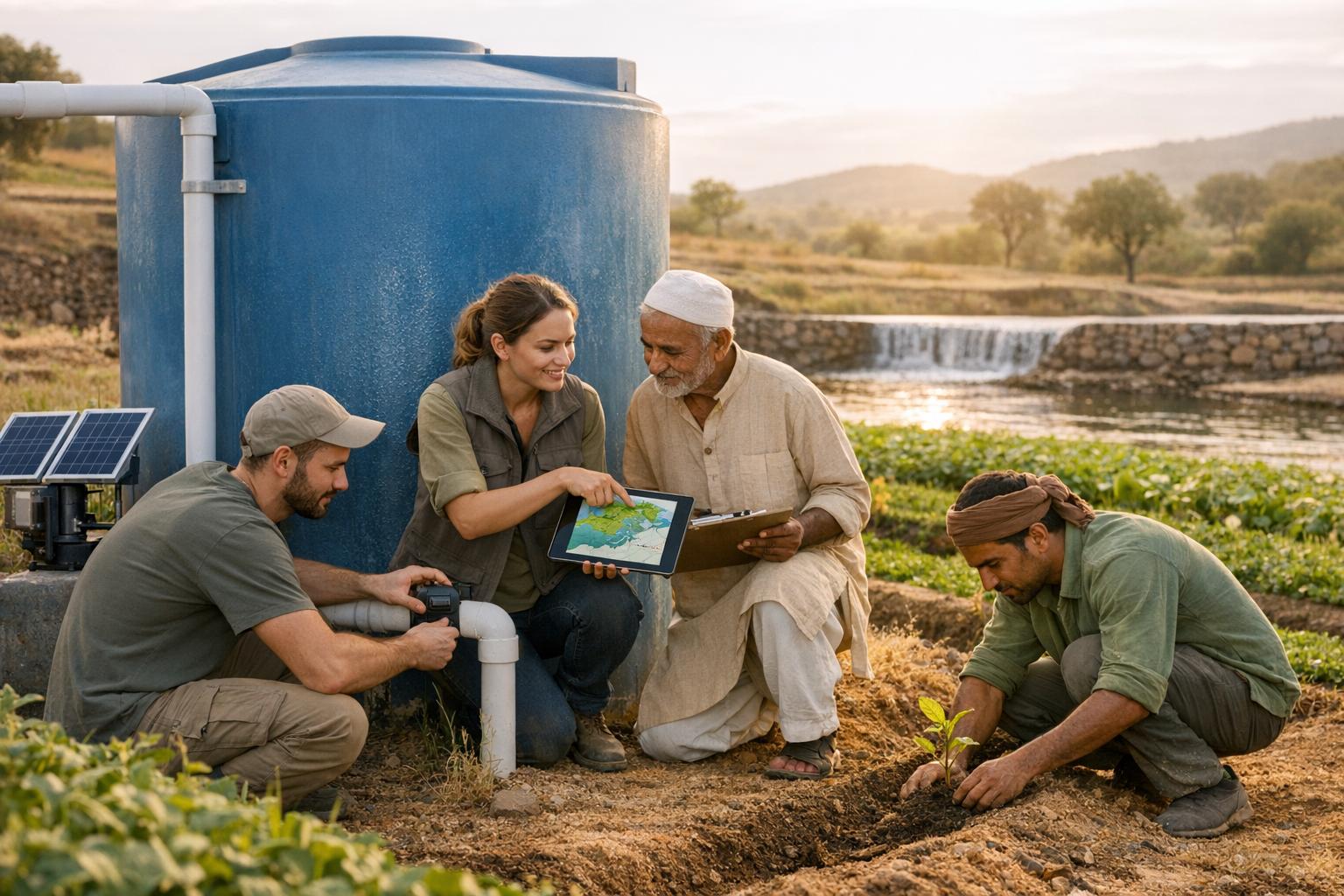
Water and climate challenges are inseparable - floods, droughts, and erratic rainfall are direct consequences of climate change, impacting health, agriculture, and livelihoods. For NGOs and nonprofits, integrating water management with climate resilience is not just environmentally responsible but also cost-effective, with every $1 spent on mitigation saving $6 in disaster costs. Here's how organizations can address these challenges effectively:
Conduct Vulnerability Assessments: Use tools like NOAA Climate Explorer or WRI Aqueduct to identify acute risks (e.g., floods) and chronic risks (e.g., water stress). Combine technical data with community insights for precise risk mapping.
Leverage Local Knowledge: Partner with communities, including Indigenous groups, to incorporate traditional ecological knowledge into planning. Engage residents through mapping exercises and storytelling to identify water risks.
Promote Watershed-Level Solutions: Implement ecosystem-based approaches like wetland restoration and reforestation. These natural systems reduce risks while improving water availability and biodiversity.
Secure Funding: Apply for grants like WaterSMART, partner with local water authorities, and track measurable outcomes to build donor trust.
Train Local Leaders: Empower community water champions to maintain systems and ensure long-term success.
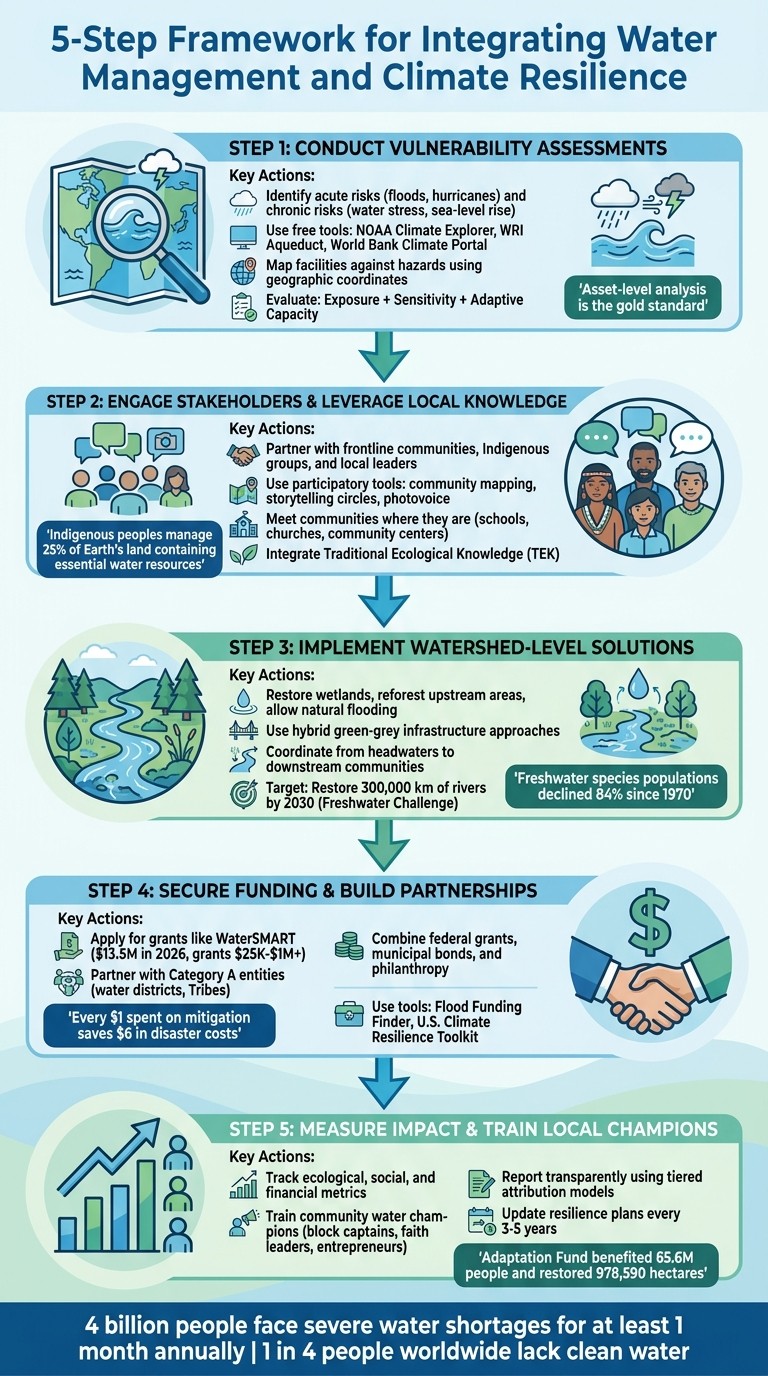
5-Step Framework for Integrating Water Management and Climate Resilience in NGOs
Integrated water management and climate resilience
Conducting Climate and Water Vulnerability Assessments
Understanding the connection between water and climate issues is just the starting point. To create effective and lasting solutions, begin by assessing your vulnerabilities. A thorough assessment not only highlights the areas where your organization and the communities you serve are most at risk but also pinpoints where your efforts can have the greatest impact.
Identifying Regional Climate Risks
Start by defining the parameters of your assessment. This includes setting a geographic focus, determining the scope of your organization’s involvement, and establishing time horizons - short-term (1–3 years), medium-term (3–10 years), and long-term (over 10 years) [3].
Next, identify the specific physical hazards affecting your region. These hazards fall into two main categories:
Acute risks: Sudden events such as floods, hurricanes, and wildfires.
Chronic risks: Long-term changes like sea-level rise, increasing average temperatures, and persistent water stress [3].
Leverage free tools like the NOAA Climate Explorer, the World Bank Climate Change Knowledge Portal, and the WRI Aqueduct tool to pinpoint areas with high water scarcity [3]. Then, map your facilities and target communities against these hazards using geographic coordinates. This asset-level analysis is far more precise and actionable than relying on national averages.
"Asset-level analysis is the gold standard - assessing each facility against location-specific hazard projections. National-level averages mask significant local variation and aren't useful for decision-making." - Council Fire Resources [3]
Evaluate risks by considering three key factors: Exposure (how many assets are in hazard-prone areas), Sensitivity (how vulnerable systems and populations are), and Adaptive Capacity (the resources available to respond). The overlap of high exposure, high sensitivity, and low adaptive capacity highlights your most vulnerable populations [1].
Assessing Water Security Challenges
Water security assessments require combining technical data with community-driven insights. Traditional top-down approaches often miss the nuances of local conditions and the unpredictability of water systems [4]. Engage communities directly by conducting mapping exercises where residents identify hazards, water sources, and vulnerable areas. Local experts, such as community health workers and faith leaders, can provide valuable perspectives on water usage and quality [1].
Establish baseline metrics to track both long-term stresses, like groundwater overuse, and sudden shocks, such as contamination or infrastructure failures [4]. Evaluate the condition of existing water and wastewater systems, including their age, construction quality, and pumping capacity [1]. Document historical trends and future projections to identify neighborhoods at the highest risk [1].
For organizations with limited resources, tools like the EPA’s Community-Based Water Resiliency (CBWR) Guide offer a structured approach to evaluate resilience against water service interruptions [5]. If your work also addresses social factors like gender equity and local governance, CARE’s Climate Vulnerability and Capacity Analysis (CVCA) provides a participatory framework tailored for community-level planning [6].
Once vulnerabilities are clearly identified, you can focus on prioritizing interventions where they are needed most.
Using Assessment Data to Guide Strategy
The insights gained from your assessments become actionable when organized into a clear risk register. This document should outline the likelihood, financial impact, and speed at which each threat could materialize [3]. By structuring your findings this way, you can prioritize strategies based on urgency and potential harm.
Target interventions in areas where high exposure and sensitivity intersect with low adaptive capacity [1]. Set specific, measurable goals, such as "Install 50 bioswales in flood-prone neighborhoods by 2027" [1]. Track both process metrics (e.g., number of projects completed, funds allocated) and outcome metrics (e.g., reductions in flood damage or waterborne illnesses) to measure progress [1].
Keep in mind that resilience plans should be dynamic, updated every 3–5 years to incorporate new climate data and lessons learned from recent events [1]. To sustain long-term projects, combine multiple funding sources, including federal grants, municipal bonds, and philanthropic contributions [1]. With a clear picture of your vulnerabilities and risks, you’ll be better equipped to engage stakeholders and turn plans into meaningful action.
Engaging Stakeholders and Using Local Knowledge
When addressing water resilience, leveraging local expertise and fostering community partnerships can make a world of difference. Combining technical know-how with the lived experiences of affected communities creates strategies that are both practical and inclusive.
Building Partnerships Across Communities
Effective water management begins with bringing together diverse groups. Organize working groups that include policymakers, water resource specialists, WASH (Water, Sanitation, and Hygiene) experts, civil society organizations, academics, and private sector representatives. This collaborative approach ensures that both technical challenges and social realities are addressed.
Frontline communities - those most affected by climate impacts, such as low-income neighborhoods, immigrant populations, and the elderly - must play a central role. Instead of expecting residents to come to formal meetings, meet them where they are. Host sessions in familiar places like schools, community centers, and churches. Make participation accessible by offering services like childcare, meals, and translation during these events.
Build trust by focusing on shared concerns, such as local water sources or ecosystems that resonate with everyone. Use participatory tools like community mapping, storytelling circles, and photovoice projects to let residents highlight risks and resources in their own words. Recognize and fairly compensate local leaders - block captains, faith leaders, and community health workers - who are already trusted within their communities. These individuals are essential in bridging the gap between organizations and residents.
"Building resilience requires more than infrastructure upgrades. It demands social cohesion, equitable resource distribution, and governance structures that center the people most vulnerable to climate impacts." - Council Fire [1]
Avoid relying on single public meetings to engage communities. Instead, maintain ongoing communication throughout the planning and implementation phases. This continuous dialogue strengthens social networks, paving the way for long-term initiatives like neighborhood emergency plans and mutual aid systems. These partnerships also open the door to incorporating Indigenous knowledge for a deeper, localized approach to water management.
Incorporating Indigenous and Local Knowledge
Community partnerships provide a foundation to integrate Traditional Ecological Knowledge (TEK), which offers insights that technical assessments often overlook. Indigenous peoples, though only 5% of the global population, manage or own about 25% of the Earth's land, much of which contains essential water and biodiversity resources [8].
Adopt a stewardship mindset that views water not just as a resource but as a living entity with cultural, social, and ecological significance. This means treating Indigenous communities as equal partners with rights and responsibilities, rather than simply consulting them [9]. Acknowledge the interconnectedness of people, plants, animals, and water systems to create a balanced approach [9].
A notable example comes from the Upper Snake River Tribes (USRT) Foundation, which partnered with Adaptation International and researchers to conduct a Climate Change Vulnerability Assessment in 2016. Covering 97,000 square miles, the project combined tribal observations with scientific data to address shared concerns such as drying sagebrush and shifting streamflows. This collaboration re-ranked species vulnerability based on local insights rather than relying solely on scientific models [7].
"What we are seeing on the Owyhee is probably due to less water, but, what else? Hot days. It has gotten very hot. Let's not leave it there…what do we do about it?" - Beverly Crum, Shoshone-Paiute Elder [7]
Participatory mapping and historical timelines can capture knowledge passed through generations. For instance, in the Marshall Islands, the Pacific Community (SPC) collaborated with local authorities to map freshwater lenses using a People-Centered Approach. Their findings highlighted a connection between storm surge-prone areas identified by the community and the absence of freshwater lenses in scientific surveys, leading to better water supply planning [11]. Similarly, in Peru's Yauyos region, Indigenous communities combine ancient terrace systems and canal networks with astronomical observations to manage mountain water and prepare for El Niño events [10].
Integrating such knowledge not only complements technical data but also strengthens the overall strategy by blending science with community wisdom.
Training Community Water Champions
Sustainable water management thrives on strong local leadership. Identify trusted community influencers like block captains, faith leaders, health workers, and small business owners. These individuals can become the backbone of resilience efforts.
Local shop owners and entrepreneurs can be trained to supply materials and handle repairs, ensuring the longevity of water systems while supporting the local economy. Water For People's "Everyone Forever" model exemplifies this approach: local governments provide structure, shop owners supply resources, entrepreneurs handle repairs, and families enjoy lasting access to clean water [12]. This is critical, especially as 1 in 4 people worldwide lack clean water and nearly half the global population lacks adequate sanitation [12].
Specialized teams like Community Emergency Response Teams (CERT) can be trained to address climate-related water challenges and lead grassroots efforts. Establish communities of practice where these champions can exchange ideas, learn, and scale their impact [2]. Embed these initiatives within existing social networks to avoid duplicating efforts.
"Everyone means no one is left behind. Forever means lasting, long-term solutions that keep water flowing for generations." - Water For People [12]
To ensure sustainability, compensate these champions as professionals, recognizing their vital role in building community capacity. This investment creates a foundation for self-sufficient water management, reinforcing broader resilience efforts and empowering communities to thrive independently.
Implementing Ecosystem-Based Water Management Systems
Building strong community connections sets the stage for implementing water management solutions that operate on an ecosystem scale. This approach focuses on system-wide interventions that align with natural processes, rather than working against them. It’s a critical shift, especially when considering that nearly two-thirds of the global population - around 4 billion people - face severe water shortages for at least one month annually [13]. By integrating these methods into broader resilience strategies, organizations can address water challenges more effectively.
Managing Water at the Watershed Level
Effective water management requires a shift in perspective - from focusing on individual sites to addressing entire watersheds. Coordinating actions across these regions, from upstream headwaters to downstream communities, ensures that solutions are both comprehensive and sustainable. Non-governmental organizations (NGOs) can adopt a three-part strategy for watershed management: demonstrating nature-based solutions such as reforestation and regenerative farming, providing technical tools and training to partners, and advocating for policy reforms to remove barriers to adoption [13].
The urgency for watershed-level action is clear. Freshwater species populations have plummeted by an average of 84% since 1970, and agricultural demand is expected to create a 42% gap in freshwater availability by 2030 [13]. Addressing these issues simultaneously is possible through watershed restoration. For instance, upstream wetland restoration can absorb seasonal excess water, while allowing rivers to naturally flood reduces downstream risks for communities [14].
"The water we use is directly dependent on the landscapes through which it flows." - The Nature Conservancy [13]
Collaboration is key. Governments, corporations, utilities, and local communities must work together to ensure that technical solutions align with social and economic realities. Initiatives like the "Freshwater Challenge", which aims to restore 300,000 kilometers of degraded rivers and 350 million hectares of wetlands by 2030, provide a global framework for local efforts [14]. This approach ties water security to broader climate adaptation goals.
Investing in Natural Infrastructure
Natural infrastructure - such as wetlands, forests, floodplains, and mangroves - offers a cost-effective and multifunctional alternative to traditional concrete-based solutions. These "green" systems are generally less expensive to establish and maintain than "grey" infrastructure like dams or levees. They also deliver additional benefits, including carbon storage, habitats for biodiversity, and natural water filtration [14].
A hybrid "green-grey" approach that combines natural and engineered solutions can deliver even greater results. Between 2017 and 2022, the United Nations Environment Programme (UNEP) and the Global Environment Facility (GEF) implemented the "Participatory Integrated Watershed Management" project in Comoros. This initiative, led by the Department of Environment and Forests, included planting 1.2 million resilient trees and building eco-friendly rainwater retention structures, such as earth ponds and stone dikes. These efforts reduced downstream flooding and provided alternative incomes for nearly 1 million residents through ecosystem restoration [17].
"Healthy freshwater and coastal ecosystems - rivers, lakes, floodplains, wetlands, mangroves and so on - are the best natural defenses against [climate] impacts, providing a critical buffer for our communities, companies and cities." - WWF [14]
Prioritizing ecosystem connectivity and using advanced tools like AI and high-resolution forecasts can enhance restoration efforts. By allowing rivers to meander, wetlands to expand seasonally, and forests to serve as corridors for wildlife, these systems can better adapt to climate change. While natural infrastructure strengthens regional resilience, localized efforts ensure community-specific benefits.
Promoting Community-Based Water Solutions
Small-scale, community-driven water solutions can have a big impact when properly supported and scaled. For example, a $17.5 million initiative by the UNDP and the Thai Ministry is improving water security in the Yom and Nan river basins from 2022 to 2027. This project combines infrastructure upgrades with on-farm ecosystem-based adaptation (EbA) measures, such as building farm ponds and introducing water-saving techniques like the System of Rice Intensification (SRI). It aims to directly benefit 62,000 people and enhance water security across approximately 7,700 square miles (20,000 km²) of agricultural land [15].
Scaling these efforts requires layered funding models, blending federal grants, municipal bonds, private philanthropy, and innovative mechanisms like community-based catastrophe pools [1].
"Nature-based solutions work. There is no more need for pilot projects. Nor more proof that they make a difference: they clearly do." - WWF [14]
Long-term success also depends on technical training. Strengthening local extension services helps farmers and residents adopt low-cost interventions like rainwater harvesting, soil conservation terraces, and permeable surfaces. In urban areas, implementing green infrastructure on just 25% of the land can reduce peak runoff by the same percentage [16]. Tools like the "Opportunity Mapping Tool for Eco-DRR" can pinpoint areas where restoration efforts will have the greatest impact on vulnerable populations [17]. This ensures that those most at risk benefit the most from these interventions.
Securing Funding and Measuring Impact
Water and climate resilience projects rely heavily on steady funding and clear, measurable outcomes. Programs like the WaterSMART Drought Response Program allocated $13.5 million in 2026, offering grants between $25,000 and over $1 million [18]. However, successfully accessing these funds often hinges on forming strategic partnerships.
Strengthening Grant Applications
Federal water grants frequently require nonprofits to apply as "Category B" partners, which must include a formal agreement with a "Category A" entity, such as a water district or Tribe with water delivery authority [18]. Securing these partnerships early is crucial - start by obtaining a letter of support that confirms the partner's participation and agreement with your application. Tools like the "Flood Funding Finder" and the "U.S. Climate Resilience Toolkit" can help identify funding opportunities aligned with your goals.
Grant applications are generally most successful when they focus on two areas: infrastructure investments that improve water supply reliability (Task A) and planning projects that use tools like modeling or decision support systems (Task B) [18]. To ensure your proposal aligns with fundable criteria, consult resources like the "Ready-to-Fund Resilience Toolkit." Keep in mind that projects often cannot begin construction until at least 12 months after submitting the application [18]. If your team lacks expertise in climate adaptation, consider bringing in specialists to strengthen your application. Once funding is secured, it becomes essential to measure how these resources translate into meaningful outcomes.
Tracking Water and Climate Resilience Metrics
To bolster funding efforts, track key indicators that span ecological, social, and financial dimensions. For example, the Adaptation Fund has preserved or restored 978,590 hectares of natural habitats and benefited 65.6 million people [19]. Your organization should aim to measure comparable outcomes tailored to your work - whether it’s the number of wetlands restored, people gaining improved water access, or lives safeguarded through early warning systems.
An "impact multiplier" can demonstrate your operational efficiency to potential donors. In 2024, Giving Green achieved a multiplier of 21.7, meaning every dollar spent on operations generated $21.70 in funding for climate organizations [20]. They also used a tiered attribution model with categories like "Certain", "Best Guess", and "Optimistic" to transparently report their influence on $17 million in donations - an increase from $10.9 million in 2023 [20]. This level of transparency is key to building lasting trust with funders.
Communicating Impact to Donors
Donors value honesty, especially when it comes to discussing changes, challenges, or even setbacks [20]. Shift the focus from basic output metrics to reporting on "systems change" - how your work influences policies, practices, or community resilience over time. Use diverse communication methods, such as impact reports, webinars, and localized project stories, to engage donors of all sizes.
Highlight the broader benefits of nature-based solutions, such as improved water quality, habitat restoration, and recreational opportunities [22]. For example, the Fairfield-Suisun Sewer District successfully reframed public perception of wastewater infrastructure, portraying it as "clean and safe" rather than "dirty and dangerous." When advocating for long-term funding, emphasize how flexible support can address the prolonged nature of climate challenges, rather than focusing solely on immediate needs [22].
In May 2023, NGOs in the Horn of Africa illustrated this approach by showing how late-2022 funding enabled them to scale rapid response efforts, ultimately preventing famine in Somalia, despite earlier losses of 43,000 lives [21].
"I deeply appreciate your transparency and look forward to seeing how your organization and recommendations change over time." - Giving Green donor [20]
Conclusion
Water management and climate resilience are deeply interconnected, and addressing them together is crucial for creating lasting solutions. As highlighted by the International Water Management Institute:
"Water management provides these vital levers and tools for resilience. Enhanced water management can thus be an enabler of adaptation, mitigation and more sustainable, water-conscious development across sectors and communities." [23]
For NGOs and nonprofits operating in vulnerable areas, integrating these priorities is vital to protecting communities and driving meaningful, long-term change. Below are essential strategies to guide immediate action.
Key Takeaways
Breaking down barriers between water supply planning and flood control is critical. A balanced approach should maximize water use efficiency while addressing potential hazards [16]. Blending "grey" infrastructure, like irrigation systems, with "green" innovations - such as rain gardens and permeable pavements - can deliver impactful results. Leverage data-driven tools like digital modeling and real-time monitoring to predict droughts and heavy rainfall. Foster cross-sector collaboration across agriculture, energy, and urban planning to enhance food security and economic stability. Above all, prioritize community-led solutions by incorporating indigenous knowledge and empowering local water advocates to maintain these initiatives over time.
Next Steps for NGOs
To act on these strategies, begin with a digital vulnerability assessment to pinpoint climate risks and water challenges specific to your region. Build early alliances with local water authorities and community leaders to ensure collaborative planning. Seek funding sources that align with your goals and emphasize projects that merge ecosystem-based adaptation - such as farm ponds or community nurseries - with conventional infrastructure upgrades [15]. Finally, establish clear metrics to measure ecological, social, and financial outcomes. Transparent reporting will not only strengthen donor confidence but also reinforce your organization's resilience.
FAQs
Where do we start if we have limited staff and data?
If your team is working with limited staff and data, consider starting with strategies that require fewer resources but can deliver meaningful results. Begin by engaging stakeholders and leveraging tools that are already available. Small, focused projects - like promoting water literacy, fostering trust, and pinpointing actionable water solutions - can make a real difference. Partnering with local communities and organizations can also pave the way for co-creating solutions, setting priorities, and steadily building resilience, even when resources are tight.
What’s the fastest way to partner with a local water authority?
To establish a partnership with a local water authority efficiently, it’s key to work alongside water utilities, suppliers, and regional stakeholders to tackle pressing water challenges. Prioritize developing comprehensive water supply plans that incorporate alternative sources, shared regional supplies, drought contingency measures, and conservation strategies. Use existing resilience assessments and planning efforts to simplify collaboration and ensure alignment with the community’s broader resilience objectives.
How can we prove impact to funders beyond counting outputs?
To demonstrate impact beyond just outputs, emphasize measurable shifts in resilience, behavior, or systems. Implement monitoring frameworks to evaluate outcomes such as reduced risks, improved adaptive capacity, and strengthened sustainability. Share tangible results through case studies, examples of ecosystem enhancements, and evidence of risk-informed planning. Additionally, using well-designed methodologies, like decision-making tools, can showcase how your strategies support long-term climate resilience while meeting funders’ expectations for meaningful and lasting change.
Related Blog Posts
Latest Articles
©2025

Narrative Change and Power Building: The Missing Half of Advocacy
Narrative change is the process of disrupting dominant narratives that normalize inequity and advancing new narratives from historically marginalized communities.
Funding Resilience Without Federal Grants
BRIC is unreliable and FEMA is shrinking. Here's how cities fund climate resilience with dedicated revenue, blended finance, and a coordinating authority.

The ESG Blind Spot: How AI Is Finding Risks in Companies Nobody Else Is Watching
Norway's sovereign wealth fund uses AI to screen 7,200 portfolio companies for forced labor and corruption within 24 hours. The real story is the emerging-market coverage gap that traditional ESG data vendors miss — and what it means for any company with a global supply chain.
Narrative Change and Power Building: The Missing Half of Advocacy
Narrative change is the process of disrupting dominant narratives that normalize inequity and advancing new narratives from historically marginalized communities.
Funding Resilience Without Federal Grants
BRIC is unreliable and FEMA is shrinking. Here's how cities fund climate resilience with dedicated revenue, blended finance, and a coordinating authority.
The ESG Blind Spot: How AI Is Finding Risks in Companies Nobody Else Is Watching
Norway's sovereign wealth fund uses AI to screen 7,200 portfolio companies for forced labor and corruption within 24 hours. The real story is the emerging-market coverage gap that traditional ESG data vendors miss — and what it means for any company with a global supply chain.
FAQ
01
What does it really mean to “redefine profit”?
02
What makes Council Fire different?
03
Who does Council Fire work with?
04
What does working with Council Fire actually look like?
05
How does Council Fire help organizations turn big goals into action?
06
How does Council Fire define and measure success?
Apr 29, 2026
How to Integrate Water Management and Climate Resilience Strategies for NGOs & Nonprofits
Sustainability Strategy
In This Article
Practical steps for NGOs to combine water management and climate resilience: assessments, community-led solutions, funding, and metrics.
How to Integrate Water Management and Climate Resilience Strategies for NGOs & Nonprofits
Water and climate challenges are inseparable - floods, droughts, and erratic rainfall are direct consequences of climate change, impacting health, agriculture, and livelihoods. For NGOs and nonprofits, integrating water management with climate resilience is not just environmentally responsible but also cost-effective, with every $1 spent on mitigation saving $6 in disaster costs. Here's how organizations can address these challenges effectively:
Conduct Vulnerability Assessments: Use tools like NOAA Climate Explorer or WRI Aqueduct to identify acute risks (e.g., floods) and chronic risks (e.g., water stress). Combine technical data with community insights for precise risk mapping.
Leverage Local Knowledge: Partner with communities, including Indigenous groups, to incorporate traditional ecological knowledge into planning. Engage residents through mapping exercises and storytelling to identify water risks.
Promote Watershed-Level Solutions: Implement ecosystem-based approaches like wetland restoration and reforestation. These natural systems reduce risks while improving water availability and biodiversity.
Secure Funding: Apply for grants like WaterSMART, partner with local water authorities, and track measurable outcomes to build donor trust.
Train Local Leaders: Empower community water champions to maintain systems and ensure long-term success.
5-Step Framework for Integrating Water Management and Climate Resilience in NGOs
Integrated water management and climate resilience
Conducting Climate and Water Vulnerability Assessments
Understanding the connection between water and climate issues is just the starting point. To create effective and lasting solutions, begin by assessing your vulnerabilities. A thorough assessment not only highlights the areas where your organization and the communities you serve are most at risk but also pinpoints where your efforts can have the greatest impact.
Identifying Regional Climate Risks
Start by defining the parameters of your assessment. This includes setting a geographic focus, determining the scope of your organization’s involvement, and establishing time horizons - short-term (1–3 years), medium-term (3–10 years), and long-term (over 10 years) [3].
Next, identify the specific physical hazards affecting your region. These hazards fall into two main categories:
Acute risks: Sudden events such as floods, hurricanes, and wildfires.
Chronic risks: Long-term changes like sea-level rise, increasing average temperatures, and persistent water stress [3].
Leverage free tools like the NOAA Climate Explorer, the World Bank Climate Change Knowledge Portal, and the WRI Aqueduct tool to pinpoint areas with high water scarcity [3]. Then, map your facilities and target communities against these hazards using geographic coordinates. This asset-level analysis is far more precise and actionable than relying on national averages.
"Asset-level analysis is the gold standard - assessing each facility against location-specific hazard projections. National-level averages mask significant local variation and aren't useful for decision-making." - Council Fire Resources [3]
Evaluate risks by considering three key factors: Exposure (how many assets are in hazard-prone areas), Sensitivity (how vulnerable systems and populations are), and Adaptive Capacity (the resources available to respond). The overlap of high exposure, high sensitivity, and low adaptive capacity highlights your most vulnerable populations [1].
Assessing Water Security Challenges
Water security assessments require combining technical data with community-driven insights. Traditional top-down approaches often miss the nuances of local conditions and the unpredictability of water systems [4]. Engage communities directly by conducting mapping exercises where residents identify hazards, water sources, and vulnerable areas. Local experts, such as community health workers and faith leaders, can provide valuable perspectives on water usage and quality [1].
Establish baseline metrics to track both long-term stresses, like groundwater overuse, and sudden shocks, such as contamination or infrastructure failures [4]. Evaluate the condition of existing water and wastewater systems, including their age, construction quality, and pumping capacity [1]. Document historical trends and future projections to identify neighborhoods at the highest risk [1].
For organizations with limited resources, tools like the EPA’s Community-Based Water Resiliency (CBWR) Guide offer a structured approach to evaluate resilience against water service interruptions [5]. If your work also addresses social factors like gender equity and local governance, CARE’s Climate Vulnerability and Capacity Analysis (CVCA) provides a participatory framework tailored for community-level planning [6].
Once vulnerabilities are clearly identified, you can focus on prioritizing interventions where they are needed most.
Using Assessment Data to Guide Strategy
The insights gained from your assessments become actionable when organized into a clear risk register. This document should outline the likelihood, financial impact, and speed at which each threat could materialize [3]. By structuring your findings this way, you can prioritize strategies based on urgency and potential harm.
Target interventions in areas where high exposure and sensitivity intersect with low adaptive capacity [1]. Set specific, measurable goals, such as "Install 50 bioswales in flood-prone neighborhoods by 2027" [1]. Track both process metrics (e.g., number of projects completed, funds allocated) and outcome metrics (e.g., reductions in flood damage or waterborne illnesses) to measure progress [1].
Keep in mind that resilience plans should be dynamic, updated every 3–5 years to incorporate new climate data and lessons learned from recent events [1]. To sustain long-term projects, combine multiple funding sources, including federal grants, municipal bonds, and philanthropic contributions [1]. With a clear picture of your vulnerabilities and risks, you’ll be better equipped to engage stakeholders and turn plans into meaningful action.
Engaging Stakeholders and Using Local Knowledge
When addressing water resilience, leveraging local expertise and fostering community partnerships can make a world of difference. Combining technical know-how with the lived experiences of affected communities creates strategies that are both practical and inclusive.
Building Partnerships Across Communities
Effective water management begins with bringing together diverse groups. Organize working groups that include policymakers, water resource specialists, WASH (Water, Sanitation, and Hygiene) experts, civil society organizations, academics, and private sector representatives. This collaborative approach ensures that both technical challenges and social realities are addressed.
Frontline communities - those most affected by climate impacts, such as low-income neighborhoods, immigrant populations, and the elderly - must play a central role. Instead of expecting residents to come to formal meetings, meet them where they are. Host sessions in familiar places like schools, community centers, and churches. Make participation accessible by offering services like childcare, meals, and translation during these events.
Build trust by focusing on shared concerns, such as local water sources or ecosystems that resonate with everyone. Use participatory tools like community mapping, storytelling circles, and photovoice projects to let residents highlight risks and resources in their own words. Recognize and fairly compensate local leaders - block captains, faith leaders, and community health workers - who are already trusted within their communities. These individuals are essential in bridging the gap between organizations and residents.
"Building resilience requires more than infrastructure upgrades. It demands social cohesion, equitable resource distribution, and governance structures that center the people most vulnerable to climate impacts." - Council Fire [1]
Avoid relying on single public meetings to engage communities. Instead, maintain ongoing communication throughout the planning and implementation phases. This continuous dialogue strengthens social networks, paving the way for long-term initiatives like neighborhood emergency plans and mutual aid systems. These partnerships also open the door to incorporating Indigenous knowledge for a deeper, localized approach to water management.
Incorporating Indigenous and Local Knowledge
Community partnerships provide a foundation to integrate Traditional Ecological Knowledge (TEK), which offers insights that technical assessments often overlook. Indigenous peoples, though only 5% of the global population, manage or own about 25% of the Earth's land, much of which contains essential water and biodiversity resources [8].
Adopt a stewardship mindset that views water not just as a resource but as a living entity with cultural, social, and ecological significance. This means treating Indigenous communities as equal partners with rights and responsibilities, rather than simply consulting them [9]. Acknowledge the interconnectedness of people, plants, animals, and water systems to create a balanced approach [9].
A notable example comes from the Upper Snake River Tribes (USRT) Foundation, which partnered with Adaptation International and researchers to conduct a Climate Change Vulnerability Assessment in 2016. Covering 97,000 square miles, the project combined tribal observations with scientific data to address shared concerns such as drying sagebrush and shifting streamflows. This collaboration re-ranked species vulnerability based on local insights rather than relying solely on scientific models [7].
"What we are seeing on the Owyhee is probably due to less water, but, what else? Hot days. It has gotten very hot. Let's not leave it there…what do we do about it?" - Beverly Crum, Shoshone-Paiute Elder [7]
Participatory mapping and historical timelines can capture knowledge passed through generations. For instance, in the Marshall Islands, the Pacific Community (SPC) collaborated with local authorities to map freshwater lenses using a People-Centered Approach. Their findings highlighted a connection between storm surge-prone areas identified by the community and the absence of freshwater lenses in scientific surveys, leading to better water supply planning [11]. Similarly, in Peru's Yauyos region, Indigenous communities combine ancient terrace systems and canal networks with astronomical observations to manage mountain water and prepare for El Niño events [10].
Integrating such knowledge not only complements technical data but also strengthens the overall strategy by blending science with community wisdom.
Training Community Water Champions
Sustainable water management thrives on strong local leadership. Identify trusted community influencers like block captains, faith leaders, health workers, and small business owners. These individuals can become the backbone of resilience efforts.
Local shop owners and entrepreneurs can be trained to supply materials and handle repairs, ensuring the longevity of water systems while supporting the local economy. Water For People's "Everyone Forever" model exemplifies this approach: local governments provide structure, shop owners supply resources, entrepreneurs handle repairs, and families enjoy lasting access to clean water [12]. This is critical, especially as 1 in 4 people worldwide lack clean water and nearly half the global population lacks adequate sanitation [12].
Specialized teams like Community Emergency Response Teams (CERT) can be trained to address climate-related water challenges and lead grassroots efforts. Establish communities of practice where these champions can exchange ideas, learn, and scale their impact [2]. Embed these initiatives within existing social networks to avoid duplicating efforts.
"Everyone means no one is left behind. Forever means lasting, long-term solutions that keep water flowing for generations." - Water For People [12]
To ensure sustainability, compensate these champions as professionals, recognizing their vital role in building community capacity. This investment creates a foundation for self-sufficient water management, reinforcing broader resilience efforts and empowering communities to thrive independently.
Implementing Ecosystem-Based Water Management Systems
Building strong community connections sets the stage for implementing water management solutions that operate on an ecosystem scale. This approach focuses on system-wide interventions that align with natural processes, rather than working against them. It’s a critical shift, especially when considering that nearly two-thirds of the global population - around 4 billion people - face severe water shortages for at least one month annually [13]. By integrating these methods into broader resilience strategies, organizations can address water challenges more effectively.
Managing Water at the Watershed Level
Effective water management requires a shift in perspective - from focusing on individual sites to addressing entire watersheds. Coordinating actions across these regions, from upstream headwaters to downstream communities, ensures that solutions are both comprehensive and sustainable. Non-governmental organizations (NGOs) can adopt a three-part strategy for watershed management: demonstrating nature-based solutions such as reforestation and regenerative farming, providing technical tools and training to partners, and advocating for policy reforms to remove barriers to adoption [13].
The urgency for watershed-level action is clear. Freshwater species populations have plummeted by an average of 84% since 1970, and agricultural demand is expected to create a 42% gap in freshwater availability by 2030 [13]. Addressing these issues simultaneously is possible through watershed restoration. For instance, upstream wetland restoration can absorb seasonal excess water, while allowing rivers to naturally flood reduces downstream risks for communities [14].
"The water we use is directly dependent on the landscapes through which it flows." - The Nature Conservancy [13]
Collaboration is key. Governments, corporations, utilities, and local communities must work together to ensure that technical solutions align with social and economic realities. Initiatives like the "Freshwater Challenge", which aims to restore 300,000 kilometers of degraded rivers and 350 million hectares of wetlands by 2030, provide a global framework for local efforts [14]. This approach ties water security to broader climate adaptation goals.
Investing in Natural Infrastructure
Natural infrastructure - such as wetlands, forests, floodplains, and mangroves - offers a cost-effective and multifunctional alternative to traditional concrete-based solutions. These "green" systems are generally less expensive to establish and maintain than "grey" infrastructure like dams or levees. They also deliver additional benefits, including carbon storage, habitats for biodiversity, and natural water filtration [14].
A hybrid "green-grey" approach that combines natural and engineered solutions can deliver even greater results. Between 2017 and 2022, the United Nations Environment Programme (UNEP) and the Global Environment Facility (GEF) implemented the "Participatory Integrated Watershed Management" project in Comoros. This initiative, led by the Department of Environment and Forests, included planting 1.2 million resilient trees and building eco-friendly rainwater retention structures, such as earth ponds and stone dikes. These efforts reduced downstream flooding and provided alternative incomes for nearly 1 million residents through ecosystem restoration [17].
"Healthy freshwater and coastal ecosystems - rivers, lakes, floodplains, wetlands, mangroves and so on - are the best natural defenses against [climate] impacts, providing a critical buffer for our communities, companies and cities." - WWF [14]
Prioritizing ecosystem connectivity and using advanced tools like AI and high-resolution forecasts can enhance restoration efforts. By allowing rivers to meander, wetlands to expand seasonally, and forests to serve as corridors for wildlife, these systems can better adapt to climate change. While natural infrastructure strengthens regional resilience, localized efforts ensure community-specific benefits.
Promoting Community-Based Water Solutions
Small-scale, community-driven water solutions can have a big impact when properly supported and scaled. For example, a $17.5 million initiative by the UNDP and the Thai Ministry is improving water security in the Yom and Nan river basins from 2022 to 2027. This project combines infrastructure upgrades with on-farm ecosystem-based adaptation (EbA) measures, such as building farm ponds and introducing water-saving techniques like the System of Rice Intensification (SRI). It aims to directly benefit 62,000 people and enhance water security across approximately 7,700 square miles (20,000 km²) of agricultural land [15].
Scaling these efforts requires layered funding models, blending federal grants, municipal bonds, private philanthropy, and innovative mechanisms like community-based catastrophe pools [1].
"Nature-based solutions work. There is no more need for pilot projects. Nor more proof that they make a difference: they clearly do." - WWF [14]
Long-term success also depends on technical training. Strengthening local extension services helps farmers and residents adopt low-cost interventions like rainwater harvesting, soil conservation terraces, and permeable surfaces. In urban areas, implementing green infrastructure on just 25% of the land can reduce peak runoff by the same percentage [16]. Tools like the "Opportunity Mapping Tool for Eco-DRR" can pinpoint areas where restoration efforts will have the greatest impact on vulnerable populations [17]. This ensures that those most at risk benefit the most from these interventions.
Securing Funding and Measuring Impact
Water and climate resilience projects rely heavily on steady funding and clear, measurable outcomes. Programs like the WaterSMART Drought Response Program allocated $13.5 million in 2026, offering grants between $25,000 and over $1 million [18]. However, successfully accessing these funds often hinges on forming strategic partnerships.
Strengthening Grant Applications
Federal water grants frequently require nonprofits to apply as "Category B" partners, which must include a formal agreement with a "Category A" entity, such as a water district or Tribe with water delivery authority [18]. Securing these partnerships early is crucial - start by obtaining a letter of support that confirms the partner's participation and agreement with your application. Tools like the "Flood Funding Finder" and the "U.S. Climate Resilience Toolkit" can help identify funding opportunities aligned with your goals.
Grant applications are generally most successful when they focus on two areas: infrastructure investments that improve water supply reliability (Task A) and planning projects that use tools like modeling or decision support systems (Task B) [18]. To ensure your proposal aligns with fundable criteria, consult resources like the "Ready-to-Fund Resilience Toolkit." Keep in mind that projects often cannot begin construction until at least 12 months after submitting the application [18]. If your team lacks expertise in climate adaptation, consider bringing in specialists to strengthen your application. Once funding is secured, it becomes essential to measure how these resources translate into meaningful outcomes.
Tracking Water and Climate Resilience Metrics
To bolster funding efforts, track key indicators that span ecological, social, and financial dimensions. For example, the Adaptation Fund has preserved or restored 978,590 hectares of natural habitats and benefited 65.6 million people [19]. Your organization should aim to measure comparable outcomes tailored to your work - whether it’s the number of wetlands restored, people gaining improved water access, or lives safeguarded through early warning systems.
An "impact multiplier" can demonstrate your operational efficiency to potential donors. In 2024, Giving Green achieved a multiplier of 21.7, meaning every dollar spent on operations generated $21.70 in funding for climate organizations [20]. They also used a tiered attribution model with categories like "Certain", "Best Guess", and "Optimistic" to transparently report their influence on $17 million in donations - an increase from $10.9 million in 2023 [20]. This level of transparency is key to building lasting trust with funders.
Communicating Impact to Donors
Donors value honesty, especially when it comes to discussing changes, challenges, or even setbacks [20]. Shift the focus from basic output metrics to reporting on "systems change" - how your work influences policies, practices, or community resilience over time. Use diverse communication methods, such as impact reports, webinars, and localized project stories, to engage donors of all sizes.
Highlight the broader benefits of nature-based solutions, such as improved water quality, habitat restoration, and recreational opportunities [22]. For example, the Fairfield-Suisun Sewer District successfully reframed public perception of wastewater infrastructure, portraying it as "clean and safe" rather than "dirty and dangerous." When advocating for long-term funding, emphasize how flexible support can address the prolonged nature of climate challenges, rather than focusing solely on immediate needs [22].
In May 2023, NGOs in the Horn of Africa illustrated this approach by showing how late-2022 funding enabled them to scale rapid response efforts, ultimately preventing famine in Somalia, despite earlier losses of 43,000 lives [21].
"I deeply appreciate your transparency and look forward to seeing how your organization and recommendations change over time." - Giving Green donor [20]
Conclusion
Water management and climate resilience are deeply interconnected, and addressing them together is crucial for creating lasting solutions. As highlighted by the International Water Management Institute:
"Water management provides these vital levers and tools for resilience. Enhanced water management can thus be an enabler of adaptation, mitigation and more sustainable, water-conscious development across sectors and communities." [23]
For NGOs and nonprofits operating in vulnerable areas, integrating these priorities is vital to protecting communities and driving meaningful, long-term change. Below are essential strategies to guide immediate action.
Key Takeaways
Breaking down barriers between water supply planning and flood control is critical. A balanced approach should maximize water use efficiency while addressing potential hazards [16]. Blending "grey" infrastructure, like irrigation systems, with "green" innovations - such as rain gardens and permeable pavements - can deliver impactful results. Leverage data-driven tools like digital modeling and real-time monitoring to predict droughts and heavy rainfall. Foster cross-sector collaboration across agriculture, energy, and urban planning to enhance food security and economic stability. Above all, prioritize community-led solutions by incorporating indigenous knowledge and empowering local water advocates to maintain these initiatives over time.
Next Steps for NGOs
To act on these strategies, begin with a digital vulnerability assessment to pinpoint climate risks and water challenges specific to your region. Build early alliances with local water authorities and community leaders to ensure collaborative planning. Seek funding sources that align with your goals and emphasize projects that merge ecosystem-based adaptation - such as farm ponds or community nurseries - with conventional infrastructure upgrades [15]. Finally, establish clear metrics to measure ecological, social, and financial outcomes. Transparent reporting will not only strengthen donor confidence but also reinforce your organization's resilience.
FAQs
Where do we start if we have limited staff and data?
If your team is working with limited staff and data, consider starting with strategies that require fewer resources but can deliver meaningful results. Begin by engaging stakeholders and leveraging tools that are already available. Small, focused projects - like promoting water literacy, fostering trust, and pinpointing actionable water solutions - can make a real difference. Partnering with local communities and organizations can also pave the way for co-creating solutions, setting priorities, and steadily building resilience, even when resources are tight.
What’s the fastest way to partner with a local water authority?
To establish a partnership with a local water authority efficiently, it’s key to work alongside water utilities, suppliers, and regional stakeholders to tackle pressing water challenges. Prioritize developing comprehensive water supply plans that incorporate alternative sources, shared regional supplies, drought contingency measures, and conservation strategies. Use existing resilience assessments and planning efforts to simplify collaboration and ensure alignment with the community’s broader resilience objectives.
How can we prove impact to funders beyond counting outputs?
To demonstrate impact beyond just outputs, emphasize measurable shifts in resilience, behavior, or systems. Implement monitoring frameworks to evaluate outcomes such as reduced risks, improved adaptive capacity, and strengthened sustainability. Share tangible results through case studies, examples of ecosystem enhancements, and evidence of risk-informed planning. Additionally, using well-designed methodologies, like decision-making tools, can showcase how your strategies support long-term climate resilience while meeting funders’ expectations for meaningful and lasting change.
Related Blog Posts
Latest Articles
©2025
Narrative Change and Power Building: The Missing Half of Advocacy
Narrative change is the process of disrupting dominant narratives that normalize inequity and advancing new narratives from historically marginalized communities.
Funding Resilience Without Federal Grants
BRIC is unreliable and FEMA is shrinking. Here's how cities fund climate resilience with dedicated revenue, blended finance, and a coordinating authority.
The ESG Blind Spot: How AI Is Finding Risks in Companies Nobody Else Is Watching
Norway's sovereign wealth fund uses AI to screen 7,200 portfolio companies for forced labor and corruption within 24 hours. The real story is the emerging-market coverage gap that traditional ESG data vendors miss — and what it means for any company with a global supply chain.
FAQ
01
What does it really mean to “redefine profit”?
02
What makes Council Fire different?
03
Who does Council Fire work with?
04
What does working with Council Fire actually look like?
05
How does Council Fire help organizations turn big goals into action?
06
How does Council Fire define and measure success?
Apr 29, 2026
How to Integrate Water Management and Climate Resilience Strategies for NGOs & Nonprofits
Sustainability Strategy
In This Article
Practical steps for NGOs to combine water management and climate resilience: assessments, community-led solutions, funding, and metrics.
How to Integrate Water Management and Climate Resilience Strategies for NGOs & Nonprofits
Water and climate challenges are inseparable - floods, droughts, and erratic rainfall are direct consequences of climate change, impacting health, agriculture, and livelihoods. For NGOs and nonprofits, integrating water management with climate resilience is not just environmentally responsible but also cost-effective, with every $1 spent on mitigation saving $6 in disaster costs. Here's how organizations can address these challenges effectively:
Conduct Vulnerability Assessments: Use tools like NOAA Climate Explorer or WRI Aqueduct to identify acute risks (e.g., floods) and chronic risks (e.g., water stress). Combine technical data with community insights for precise risk mapping.
Leverage Local Knowledge: Partner with communities, including Indigenous groups, to incorporate traditional ecological knowledge into planning. Engage residents through mapping exercises and storytelling to identify water risks.
Promote Watershed-Level Solutions: Implement ecosystem-based approaches like wetland restoration and reforestation. These natural systems reduce risks while improving water availability and biodiversity.
Secure Funding: Apply for grants like WaterSMART, partner with local water authorities, and track measurable outcomes to build donor trust.
Train Local Leaders: Empower community water champions to maintain systems and ensure long-term success.
5-Step Framework for Integrating Water Management and Climate Resilience in NGOs
Integrated water management and climate resilience
Conducting Climate and Water Vulnerability Assessments
Understanding the connection between water and climate issues is just the starting point. To create effective and lasting solutions, begin by assessing your vulnerabilities. A thorough assessment not only highlights the areas where your organization and the communities you serve are most at risk but also pinpoints where your efforts can have the greatest impact.
Identifying Regional Climate Risks
Start by defining the parameters of your assessment. This includes setting a geographic focus, determining the scope of your organization’s involvement, and establishing time horizons - short-term (1–3 years), medium-term (3–10 years), and long-term (over 10 years) [3].
Next, identify the specific physical hazards affecting your region. These hazards fall into two main categories:
Acute risks: Sudden events such as floods, hurricanes, and wildfires.
Chronic risks: Long-term changes like sea-level rise, increasing average temperatures, and persistent water stress [3].
Leverage free tools like the NOAA Climate Explorer, the World Bank Climate Change Knowledge Portal, and the WRI Aqueduct tool to pinpoint areas with high water scarcity [3]. Then, map your facilities and target communities against these hazards using geographic coordinates. This asset-level analysis is far more precise and actionable than relying on national averages.
"Asset-level analysis is the gold standard - assessing each facility against location-specific hazard projections. National-level averages mask significant local variation and aren't useful for decision-making." - Council Fire Resources [3]
Evaluate risks by considering three key factors: Exposure (how many assets are in hazard-prone areas), Sensitivity (how vulnerable systems and populations are), and Adaptive Capacity (the resources available to respond). The overlap of high exposure, high sensitivity, and low adaptive capacity highlights your most vulnerable populations [1].
Assessing Water Security Challenges
Water security assessments require combining technical data with community-driven insights. Traditional top-down approaches often miss the nuances of local conditions and the unpredictability of water systems [4]. Engage communities directly by conducting mapping exercises where residents identify hazards, water sources, and vulnerable areas. Local experts, such as community health workers and faith leaders, can provide valuable perspectives on water usage and quality [1].
Establish baseline metrics to track both long-term stresses, like groundwater overuse, and sudden shocks, such as contamination or infrastructure failures [4]. Evaluate the condition of existing water and wastewater systems, including their age, construction quality, and pumping capacity [1]. Document historical trends and future projections to identify neighborhoods at the highest risk [1].
For organizations with limited resources, tools like the EPA’s Community-Based Water Resiliency (CBWR) Guide offer a structured approach to evaluate resilience against water service interruptions [5]. If your work also addresses social factors like gender equity and local governance, CARE’s Climate Vulnerability and Capacity Analysis (CVCA) provides a participatory framework tailored for community-level planning [6].
Once vulnerabilities are clearly identified, you can focus on prioritizing interventions where they are needed most.
Using Assessment Data to Guide Strategy
The insights gained from your assessments become actionable when organized into a clear risk register. This document should outline the likelihood, financial impact, and speed at which each threat could materialize [3]. By structuring your findings this way, you can prioritize strategies based on urgency and potential harm.
Target interventions in areas where high exposure and sensitivity intersect with low adaptive capacity [1]. Set specific, measurable goals, such as "Install 50 bioswales in flood-prone neighborhoods by 2027" [1]. Track both process metrics (e.g., number of projects completed, funds allocated) and outcome metrics (e.g., reductions in flood damage or waterborne illnesses) to measure progress [1].
Keep in mind that resilience plans should be dynamic, updated every 3–5 years to incorporate new climate data and lessons learned from recent events [1]. To sustain long-term projects, combine multiple funding sources, including federal grants, municipal bonds, and philanthropic contributions [1]. With a clear picture of your vulnerabilities and risks, you’ll be better equipped to engage stakeholders and turn plans into meaningful action.
Engaging Stakeholders and Using Local Knowledge
When addressing water resilience, leveraging local expertise and fostering community partnerships can make a world of difference. Combining technical know-how with the lived experiences of affected communities creates strategies that are both practical and inclusive.
Building Partnerships Across Communities
Effective water management begins with bringing together diverse groups. Organize working groups that include policymakers, water resource specialists, WASH (Water, Sanitation, and Hygiene) experts, civil society organizations, academics, and private sector representatives. This collaborative approach ensures that both technical challenges and social realities are addressed.
Frontline communities - those most affected by climate impacts, such as low-income neighborhoods, immigrant populations, and the elderly - must play a central role. Instead of expecting residents to come to formal meetings, meet them where they are. Host sessions in familiar places like schools, community centers, and churches. Make participation accessible by offering services like childcare, meals, and translation during these events.
Build trust by focusing on shared concerns, such as local water sources or ecosystems that resonate with everyone. Use participatory tools like community mapping, storytelling circles, and photovoice projects to let residents highlight risks and resources in their own words. Recognize and fairly compensate local leaders - block captains, faith leaders, and community health workers - who are already trusted within their communities. These individuals are essential in bridging the gap between organizations and residents.
"Building resilience requires more than infrastructure upgrades. It demands social cohesion, equitable resource distribution, and governance structures that center the people most vulnerable to climate impacts." - Council Fire [1]
Avoid relying on single public meetings to engage communities. Instead, maintain ongoing communication throughout the planning and implementation phases. This continuous dialogue strengthens social networks, paving the way for long-term initiatives like neighborhood emergency plans and mutual aid systems. These partnerships also open the door to incorporating Indigenous knowledge for a deeper, localized approach to water management.
Incorporating Indigenous and Local Knowledge
Community partnerships provide a foundation to integrate Traditional Ecological Knowledge (TEK), which offers insights that technical assessments often overlook. Indigenous peoples, though only 5% of the global population, manage or own about 25% of the Earth's land, much of which contains essential water and biodiversity resources [8].
Adopt a stewardship mindset that views water not just as a resource but as a living entity with cultural, social, and ecological significance. This means treating Indigenous communities as equal partners with rights and responsibilities, rather than simply consulting them [9]. Acknowledge the interconnectedness of people, plants, animals, and water systems to create a balanced approach [9].
A notable example comes from the Upper Snake River Tribes (USRT) Foundation, which partnered with Adaptation International and researchers to conduct a Climate Change Vulnerability Assessment in 2016. Covering 97,000 square miles, the project combined tribal observations with scientific data to address shared concerns such as drying sagebrush and shifting streamflows. This collaboration re-ranked species vulnerability based on local insights rather than relying solely on scientific models [7].
"What we are seeing on the Owyhee is probably due to less water, but, what else? Hot days. It has gotten very hot. Let's not leave it there…what do we do about it?" - Beverly Crum, Shoshone-Paiute Elder [7]
Participatory mapping and historical timelines can capture knowledge passed through generations. For instance, in the Marshall Islands, the Pacific Community (SPC) collaborated with local authorities to map freshwater lenses using a People-Centered Approach. Their findings highlighted a connection between storm surge-prone areas identified by the community and the absence of freshwater lenses in scientific surveys, leading to better water supply planning [11]. Similarly, in Peru's Yauyos region, Indigenous communities combine ancient terrace systems and canal networks with astronomical observations to manage mountain water and prepare for El Niño events [10].
Integrating such knowledge not only complements technical data but also strengthens the overall strategy by blending science with community wisdom.
Training Community Water Champions
Sustainable water management thrives on strong local leadership. Identify trusted community influencers like block captains, faith leaders, health workers, and small business owners. These individuals can become the backbone of resilience efforts.
Local shop owners and entrepreneurs can be trained to supply materials and handle repairs, ensuring the longevity of water systems while supporting the local economy. Water For People's "Everyone Forever" model exemplifies this approach: local governments provide structure, shop owners supply resources, entrepreneurs handle repairs, and families enjoy lasting access to clean water [12]. This is critical, especially as 1 in 4 people worldwide lack clean water and nearly half the global population lacks adequate sanitation [12].
Specialized teams like Community Emergency Response Teams (CERT) can be trained to address climate-related water challenges and lead grassroots efforts. Establish communities of practice where these champions can exchange ideas, learn, and scale their impact [2]. Embed these initiatives within existing social networks to avoid duplicating efforts.
"Everyone means no one is left behind. Forever means lasting, long-term solutions that keep water flowing for generations." - Water For People [12]
To ensure sustainability, compensate these champions as professionals, recognizing their vital role in building community capacity. This investment creates a foundation for self-sufficient water management, reinforcing broader resilience efforts and empowering communities to thrive independently.
Implementing Ecosystem-Based Water Management Systems
Building strong community connections sets the stage for implementing water management solutions that operate on an ecosystem scale. This approach focuses on system-wide interventions that align with natural processes, rather than working against them. It’s a critical shift, especially when considering that nearly two-thirds of the global population - around 4 billion people - face severe water shortages for at least one month annually [13]. By integrating these methods into broader resilience strategies, organizations can address water challenges more effectively.
Managing Water at the Watershed Level
Effective water management requires a shift in perspective - from focusing on individual sites to addressing entire watersheds. Coordinating actions across these regions, from upstream headwaters to downstream communities, ensures that solutions are both comprehensive and sustainable. Non-governmental organizations (NGOs) can adopt a three-part strategy for watershed management: demonstrating nature-based solutions such as reforestation and regenerative farming, providing technical tools and training to partners, and advocating for policy reforms to remove barriers to adoption [13].
The urgency for watershed-level action is clear. Freshwater species populations have plummeted by an average of 84% since 1970, and agricultural demand is expected to create a 42% gap in freshwater availability by 2030 [13]. Addressing these issues simultaneously is possible through watershed restoration. For instance, upstream wetland restoration can absorb seasonal excess water, while allowing rivers to naturally flood reduces downstream risks for communities [14].
"The water we use is directly dependent on the landscapes through which it flows." - The Nature Conservancy [13]
Collaboration is key. Governments, corporations, utilities, and local communities must work together to ensure that technical solutions align with social and economic realities. Initiatives like the "Freshwater Challenge", which aims to restore 300,000 kilometers of degraded rivers and 350 million hectares of wetlands by 2030, provide a global framework for local efforts [14]. This approach ties water security to broader climate adaptation goals.
Investing in Natural Infrastructure
Natural infrastructure - such as wetlands, forests, floodplains, and mangroves - offers a cost-effective and multifunctional alternative to traditional concrete-based solutions. These "green" systems are generally less expensive to establish and maintain than "grey" infrastructure like dams or levees. They also deliver additional benefits, including carbon storage, habitats for biodiversity, and natural water filtration [14].
A hybrid "green-grey" approach that combines natural and engineered solutions can deliver even greater results. Between 2017 and 2022, the United Nations Environment Programme (UNEP) and the Global Environment Facility (GEF) implemented the "Participatory Integrated Watershed Management" project in Comoros. This initiative, led by the Department of Environment and Forests, included planting 1.2 million resilient trees and building eco-friendly rainwater retention structures, such as earth ponds and stone dikes. These efforts reduced downstream flooding and provided alternative incomes for nearly 1 million residents through ecosystem restoration [17].
"Healthy freshwater and coastal ecosystems - rivers, lakes, floodplains, wetlands, mangroves and so on - are the best natural defenses against [climate] impacts, providing a critical buffer for our communities, companies and cities." - WWF [14]
Prioritizing ecosystem connectivity and using advanced tools like AI and high-resolution forecasts can enhance restoration efforts. By allowing rivers to meander, wetlands to expand seasonally, and forests to serve as corridors for wildlife, these systems can better adapt to climate change. While natural infrastructure strengthens regional resilience, localized efforts ensure community-specific benefits.
Promoting Community-Based Water Solutions
Small-scale, community-driven water solutions can have a big impact when properly supported and scaled. For example, a $17.5 million initiative by the UNDP and the Thai Ministry is improving water security in the Yom and Nan river basins from 2022 to 2027. This project combines infrastructure upgrades with on-farm ecosystem-based adaptation (EbA) measures, such as building farm ponds and introducing water-saving techniques like the System of Rice Intensification (SRI). It aims to directly benefit 62,000 people and enhance water security across approximately 7,700 square miles (20,000 km²) of agricultural land [15].
Scaling these efforts requires layered funding models, blending federal grants, municipal bonds, private philanthropy, and innovative mechanisms like community-based catastrophe pools [1].
"Nature-based solutions work. There is no more need for pilot projects. Nor more proof that they make a difference: they clearly do." - WWF [14]
Long-term success also depends on technical training. Strengthening local extension services helps farmers and residents adopt low-cost interventions like rainwater harvesting, soil conservation terraces, and permeable surfaces. In urban areas, implementing green infrastructure on just 25% of the land can reduce peak runoff by the same percentage [16]. Tools like the "Opportunity Mapping Tool for Eco-DRR" can pinpoint areas where restoration efforts will have the greatest impact on vulnerable populations [17]. This ensures that those most at risk benefit the most from these interventions.
Securing Funding and Measuring Impact
Water and climate resilience projects rely heavily on steady funding and clear, measurable outcomes. Programs like the WaterSMART Drought Response Program allocated $13.5 million in 2026, offering grants between $25,000 and over $1 million [18]. However, successfully accessing these funds often hinges on forming strategic partnerships.
Strengthening Grant Applications
Federal water grants frequently require nonprofits to apply as "Category B" partners, which must include a formal agreement with a "Category A" entity, such as a water district or Tribe with water delivery authority [18]. Securing these partnerships early is crucial - start by obtaining a letter of support that confirms the partner's participation and agreement with your application. Tools like the "Flood Funding Finder" and the "U.S. Climate Resilience Toolkit" can help identify funding opportunities aligned with your goals.
Grant applications are generally most successful when they focus on two areas: infrastructure investments that improve water supply reliability (Task A) and planning projects that use tools like modeling or decision support systems (Task B) [18]. To ensure your proposal aligns with fundable criteria, consult resources like the "Ready-to-Fund Resilience Toolkit." Keep in mind that projects often cannot begin construction until at least 12 months after submitting the application [18]. If your team lacks expertise in climate adaptation, consider bringing in specialists to strengthen your application. Once funding is secured, it becomes essential to measure how these resources translate into meaningful outcomes.
Tracking Water and Climate Resilience Metrics
To bolster funding efforts, track key indicators that span ecological, social, and financial dimensions. For example, the Adaptation Fund has preserved or restored 978,590 hectares of natural habitats and benefited 65.6 million people [19]. Your organization should aim to measure comparable outcomes tailored to your work - whether it’s the number of wetlands restored, people gaining improved water access, or lives safeguarded through early warning systems.
An "impact multiplier" can demonstrate your operational efficiency to potential donors. In 2024, Giving Green achieved a multiplier of 21.7, meaning every dollar spent on operations generated $21.70 in funding for climate organizations [20]. They also used a tiered attribution model with categories like "Certain", "Best Guess", and "Optimistic" to transparently report their influence on $17 million in donations - an increase from $10.9 million in 2023 [20]. This level of transparency is key to building lasting trust with funders.
Communicating Impact to Donors
Donors value honesty, especially when it comes to discussing changes, challenges, or even setbacks [20]. Shift the focus from basic output metrics to reporting on "systems change" - how your work influences policies, practices, or community resilience over time. Use diverse communication methods, such as impact reports, webinars, and localized project stories, to engage donors of all sizes.
Highlight the broader benefits of nature-based solutions, such as improved water quality, habitat restoration, and recreational opportunities [22]. For example, the Fairfield-Suisun Sewer District successfully reframed public perception of wastewater infrastructure, portraying it as "clean and safe" rather than "dirty and dangerous." When advocating for long-term funding, emphasize how flexible support can address the prolonged nature of climate challenges, rather than focusing solely on immediate needs [22].
In May 2023, NGOs in the Horn of Africa illustrated this approach by showing how late-2022 funding enabled them to scale rapid response efforts, ultimately preventing famine in Somalia, despite earlier losses of 43,000 lives [21].
"I deeply appreciate your transparency and look forward to seeing how your organization and recommendations change over time." - Giving Green donor [20]
Conclusion
Water management and climate resilience are deeply interconnected, and addressing them together is crucial for creating lasting solutions. As highlighted by the International Water Management Institute:
"Water management provides these vital levers and tools for resilience. Enhanced water management can thus be an enabler of adaptation, mitigation and more sustainable, water-conscious development across sectors and communities." [23]
For NGOs and nonprofits operating in vulnerable areas, integrating these priorities is vital to protecting communities and driving meaningful, long-term change. Below are essential strategies to guide immediate action.
Key Takeaways
Breaking down barriers between water supply planning and flood control is critical. A balanced approach should maximize water use efficiency while addressing potential hazards [16]. Blending "grey" infrastructure, like irrigation systems, with "green" innovations - such as rain gardens and permeable pavements - can deliver impactful results. Leverage data-driven tools like digital modeling and real-time monitoring to predict droughts and heavy rainfall. Foster cross-sector collaboration across agriculture, energy, and urban planning to enhance food security and economic stability. Above all, prioritize community-led solutions by incorporating indigenous knowledge and empowering local water advocates to maintain these initiatives over time.
Next Steps for NGOs
To act on these strategies, begin with a digital vulnerability assessment to pinpoint climate risks and water challenges specific to your region. Build early alliances with local water authorities and community leaders to ensure collaborative planning. Seek funding sources that align with your goals and emphasize projects that merge ecosystem-based adaptation - such as farm ponds or community nurseries - with conventional infrastructure upgrades [15]. Finally, establish clear metrics to measure ecological, social, and financial outcomes. Transparent reporting will not only strengthen donor confidence but also reinforce your organization's resilience.
FAQs
Where do we start if we have limited staff and data?
If your team is working with limited staff and data, consider starting with strategies that require fewer resources but can deliver meaningful results. Begin by engaging stakeholders and leveraging tools that are already available. Small, focused projects - like promoting water literacy, fostering trust, and pinpointing actionable water solutions - can make a real difference. Partnering with local communities and organizations can also pave the way for co-creating solutions, setting priorities, and steadily building resilience, even when resources are tight.
What’s the fastest way to partner with a local water authority?
To establish a partnership with a local water authority efficiently, it’s key to work alongside water utilities, suppliers, and regional stakeholders to tackle pressing water challenges. Prioritize developing comprehensive water supply plans that incorporate alternative sources, shared regional supplies, drought contingency measures, and conservation strategies. Use existing resilience assessments and planning efforts to simplify collaboration and ensure alignment with the community’s broader resilience objectives.
How can we prove impact to funders beyond counting outputs?
To demonstrate impact beyond just outputs, emphasize measurable shifts in resilience, behavior, or systems. Implement monitoring frameworks to evaluate outcomes such as reduced risks, improved adaptive capacity, and strengthened sustainability. Share tangible results through case studies, examples of ecosystem enhancements, and evidence of risk-informed planning. Additionally, using well-designed methodologies, like decision-making tools, can showcase how your strategies support long-term climate resilience while meeting funders’ expectations for meaningful and lasting change.
Related Blog Posts
Latest Articles
©2025
Narrative Change and Power Building: The Missing Half of Advocacy
Narrative change is the process of disrupting dominant narratives that normalize inequity and advancing new narratives from historically marginalized communities.
Funding Resilience Without Federal Grants
BRIC is unreliable and FEMA is shrinking. Here's how cities fund climate resilience with dedicated revenue, blended finance, and a coordinating authority.
The ESG Blind Spot: How AI Is Finding Risks in Companies Nobody Else Is Watching
Norway's sovereign wealth fund uses AI to screen 7,200 portfolio companies for forced labor and corruption within 24 hours. The real story is the emerging-market coverage gap that traditional ESG data vendors miss — and what it means for any company with a global supply chain.
FAQ
What does it really mean to “redefine profit”?
What makes Council Fire different?
Who does Council Fire work with?
What does working with Council Fire actually look like?
How does Council Fire help organizations turn big goals into action?
How does Council Fire define and measure success?