
Apr 30, 2026
How to Integrate Water Management and Climate Resilience Strategies for Foundations & Philanthropic Organizations
Sustainability Strategy
In This Article
Practical guide for foundations to align water management with climate resilience, equity, nature-based solutions, and long-term funding.
How to Integrate Water Management and Climate Resilience Strategies for Foundations & Philanthropic Organizations
Water crises are worsening due to climate change, with droughts, floods, and failing infrastructure threatening communities, economies, and ecosystems. Foundations can play a critical role by integrating water management with climate resilience strategies to drive impactful change. Here's how:
Understand Risks: Conduct regional water risk assessments using tools like the Aqueduct Water Risk Atlas and local insights. Include social and environmental factors to address inequities.
Invest in Solutions: Support nature-based and hybrid approaches, such as wetlands restoration and green stormwater infrastructure, to improve water security and reduce costs.
Collaborate Broadly: Partner with governments, businesses, and communities to align efforts and maximize impact. Initiatives like the Water Funder Initiative showcase the power of pooled resources.
Prioritize Equity: Focus on underserved populations, such as Indigenous communities, and involve them in decision-making for more effective, inclusive solutions.
Secure Long-Term Funding: Shift from one-time grants to multi-year funding models and use innovative financing tools like Forest Resilience Bonds to sustain projects.
Monitor Progress: Track both environmental and social outcomes, ensuring investments deliver measurable, real-world benefits.
Foundations have a chance to address water and climate challenges while advancing equity and economic stability. The time to act is now.
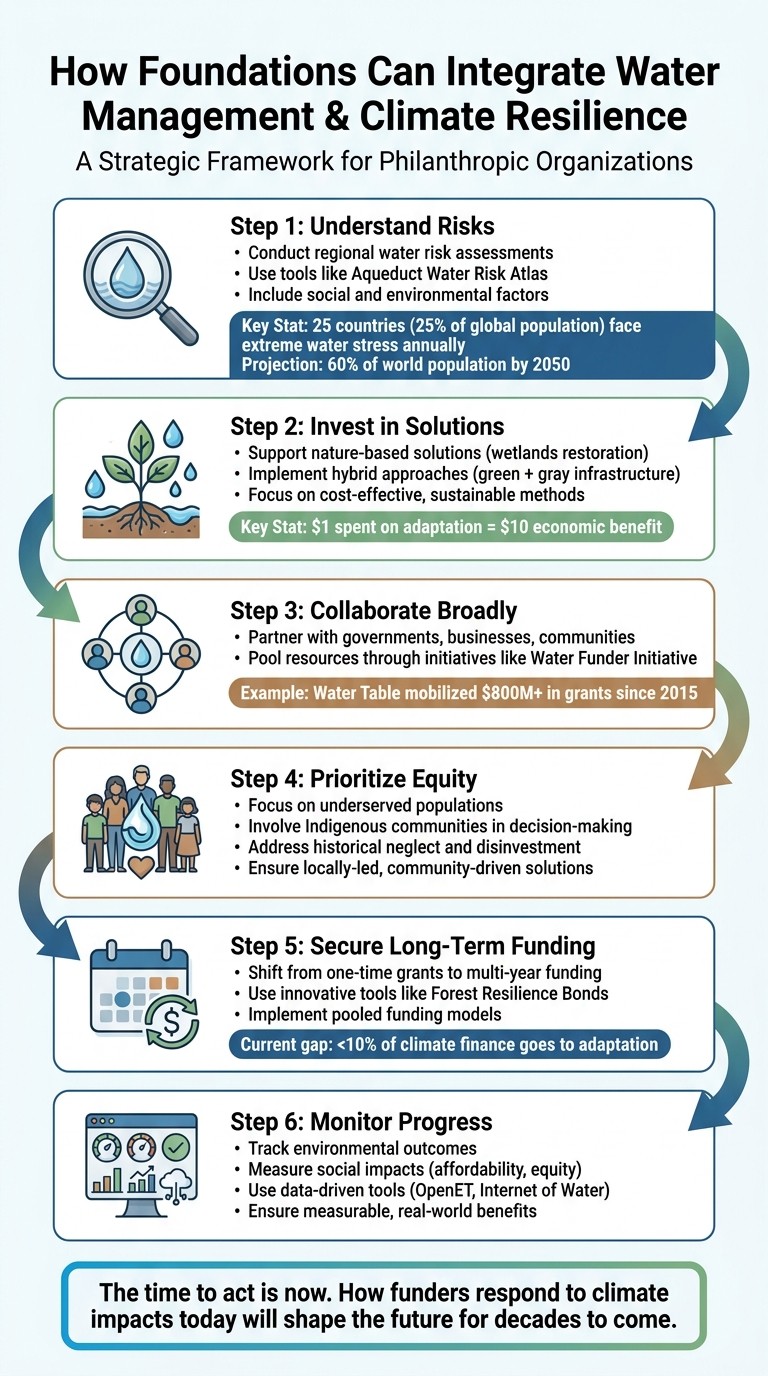
6-Step Framework for Integrating Water Management and Climate Resilience in Philanthropy
Implementation and Investment Lab: Climate-Resilient Water Systems & Participatory Governance
Identify Water-Climate Risks and Vulnerabilities
To address water-climate challenges effectively, it’s crucial to first understand the risks involved. Risk assessments must consider both ongoing issues, like persistent water scarcity, and sudden crises, such as floods and droughts that can devastate communities and economies [2]. Traditional, top-down technical models often fail to capture the full picture. They overlook the complexities of local water challenges, gaps in data, and the unique needs of diverse communities [2].
The scale of the problem is staggering. Right now, 25 countries - home to a quarter of the global population - experience extremely high water stress annually. By 2050, this could expand to 60% of the world's population [3]. In the United States, these challenges are already hitting hard, particularly for Indigenous populations and communities of color. For these groups, the problem is compounded by the lingering effects of discriminatory policies [4]. As USAID’s Sustainable Water Partnership explains:
Improving water security is about focusing actors and resources on key water risks. It is also about collaboratively planning and implementing specific activities to mitigate risks and provide tangible benefits to water users. [2]
Conduct Regional Water Risk Assessments
To get a clearer picture of water risks, a dual approach works best - combining global data with local insights. Start with data-driven tools that make complex hydrological data easier to understand and act on. For instance, the Aqueduct Water Risk Atlas offers 13 indicators covering water quantity, quality, and reputational risks, with projections for 2030, 2050, and 2080 under various climate scenarios [3]. While global tools highlight priority regions, they should be paired with local assessments to capture specific issues like harmful algal blooms, landslides, or aging infrastructure vulnerabilities [2].
Long-term planning is essential. Assess investments under multiple climate scenarios, such as the "business-as-usual" pathway (SSP 3 RCP 7.0) or the more severe "pessimistic" scenario (SSP 5 RCP 8.5). These models help foundations understand how risks might evolve, enabling smarter, more strategic funding decisions [3].
Evaluate Social and Environmental Impacts
Numbers alone don’t tell the full story. Effective assessments must also consider the human and environmental dimensions of water crises. Social equity is a critical factor - water challenges often hit low-income and marginalized communities hardest due to historical neglect and disinvestment [4]. Relying solely on technical models risks missing these nuanced realities, as well as the goals and lived experiences of affected communities [2]. As Maria Netto, Executive Director of Instituto Clima e Sociedade, points out:
Adaptation is a unifying thread across philanthropy. The report highlights clear opportunities to direct resources to underfunded regions, sectors, and locally led efforts. [5]
A shift toward participatory planning is essential. This means bringing local leaders, vulnerable populations, and ecosystem experts into the process from the start [2]. Such collaboration ensures that water risks are understood not just in terms of infrastructure or environmental data but also in how they intersect with public health, economic stability, and social cohesion. Water security planning must be cross-sectoral, recognizing that water crises can destabilize governments, disrupt supply chains, and weaken communities [2].
The potential return on investment is clear: for every $1 spent on climate adaptation, there’s a $10 economic benefit. But this payoff only happens when investments directly address the needs of those most affected [5]. By integrating these insights into their strategies, foundations can create plans that deliver both environmental progress and social equity.
Adopt Integrated Water Management Frameworks
Integrated management frameworks transform water-climate risk assessments into practical strategies. One such approach, Integrated Water Resources Management (IWRM), focuses on balancing water usage within basins to ensure sustainability for ecosystems, communities, and economies. By addressing competing demands, upgrading outdated infrastructure, and embedding social equity at every stage, IWRM provides a pathway to manage water challenges effectively [1].
This approach is increasingly urgent. Years of underinvestment have left the United States grappling with conflicts, lawsuits, and deteriorating infrastructure [1]. A comprehensive framework that prioritizes equity can redefine how water resources are managed. As Helen Mountford, President and CEO of ClimateWorks Foundation, highlights:
Climate resilience can save lives, transform communities, unlock new possibilities, and safeguard economies. How funders respond to climate impacts today will shape the future for decades to come. [5]
This integrated framework creates opportunities for collaboration among stakeholders and ensures that community needs are central to water management efforts.
Coordinate Stakeholder Needs
Addressing water security (SDG 6) and fostering collective action (SDG 17) requires collaboration across governments, private entities, and civil society [6]. A notable example is the Water Table, a funder collaborative that has mobilized over $800 million in water-related grants since 2015. Through initiatives like the Texas Wellspring Fund, the Water Table supports community organizations and advocacy efforts to provide safe, affordable water in areas of Texas with high climate risk and water inequities [7].
Another example is the Water Funder Initiative (WFI) Blueprint, developed with support from foundations like the S. D. Bechtel, Jr. Foundation and the Rockefeller Foundation. This blueprint outlines six key strategies for sustainable water management in the American West: fostering healthy water markets, securing new funding sources, improving governance, leveraging data for decision-making, enhancing communication and political support, and advancing technological solutions [1].
Prioritize Vulnerable Communities
Effective water management must focus on underserved and high-risk populations. The Water Table's Urban Water Initiative, for instance, promotes community-driven solutions in U.S. cities. By improving infrastructure and building a skilled local water workforce, this initiative aims to make water more affordable for those most in need [7]. This focus on equity also enhances overall effectiveness. Neil Watkins, Deputy Director of the Gates Foundation, emphasizes:
Philanthropy plays a vital role in accelerating innovations that help communities build resilience... progress depends on sustained, aligned investment at every level. [5]
To make meaningful progress, foundations should start by identifying communities most at risk - those dealing with outdated infrastructure, limited access to clean water, or historical neglect. Involving these communities in the planning process ensures that local insights shape practical, on-the-ground solutions that technical models alone might overlook [2].
Incorporate Nature-Based and Hybrid Solutions
Nature-based and hybrid solutions offer a practical way to enhance resilience while complementing traditional water management strategies. These approaches are not only effective but often more economical over time.
Nature-based solutions tackle water and climate challenges while providing additional benefits like better water quality and increased biodiversity. For example, wetlands act as natural sponges, absorbing water during wet seasons and releasing it during droughts. Similarly, rivers, floodplains, and mangroves help slow floods and shield against storm surges. Beyond their environmental role, these solutions often require less maintenance compared to conventional infrastructure and can even cool surrounding areas, benefiting communities [9].
The most impactful strategies blend green and gray infrastructure, striking a balance that maximizes both protection and adaptability. WWF refers to this as the "best mix" of solutions, where green systems like stormwater management complement traditional drainage systems. This hybrid approach not only boosts a city’s ability to handle extreme weather but also reduces long-term maintenance costs [9]. It's a forward-thinking strategy that lays the foundation for more detailed implementation efforts.
Implement Ecosystem-Based Adaptation (EbA)
Ecosystem-based adaptation (EbA) can be accelerated through creative financing mechanisms. A standout example is the Yuba Aspen and Meadows (YAM) Project in California's Sierra Nevada. Launched in 2025 by the nonprofit Blue Forest, the project secured $1.25 million in upfront funding through a Forest Resilience Bond. The initiative aims to restore 670 acres across three meadow sites using methods like beaver dam analogues to improve streamflow and removing conifers to protect floodplains. Partners, including the Tahoe National Forest and the Yuba Water Agency, expect the project to wrap up by late 2027 [8].
This builds on the earlier Yuba I Forest Resilience Bond, which provided $4 million to restore 7,000 acres along the North Fork of the Yuba River. Completed in 2023 - five years ahead of schedule - this project highlights how impactful EbA can be when supported by innovative funding [8]. With over 60% of California's developed water supply originating in mountain regions, restoring meadows is critical for ensuring water availability for millions [8].
To succeed in EbA, it's crucial to identify and measure the ecosystem benefits these projects provide. This data can attract third-party support from utilities and corporations. Foundations should start small, using pilot projects to build trust and demonstrate effectiveness before scaling up. Investing in thorough monitoring - such as groundwater wells and stream gauges - helps reduce uncertainty and strengthens the case for nature-based solutions [8]. By taking these steps, foundations can break through traditional funding barriers and build long-term resilience in their communities.
Combine Green and Gray Infrastructure
For hybrid infrastructure to succeed, green systems must be treated as integral, not optional. The Walder Foundation's efforts in Chicago highlight this approach. Between 2024 and 2026, the foundation provided grants to strengthen the city’s Green Stormwater Infrastructure (GSI) network. This included supporting the Alliance for the Great Lakes, which uses community-driven assessments to guide investments. Additionally, the foundation co-funded a Senior Water Policy Advisor to help the city update its GSI strategy by spring 2026 [10].
"Scaling nature‑based solutions goes beyond planting rain gardens; it requires building shared systems, strong leadership, and community partnerships."
Casey Sebetto, Program Officer, Environmental Sustainability, Walder Foundation [10]
Unlike traditional infrastructure, green systems demand specialized maintenance and workforce development to sustain their long-term benefits. Establishing well-funded maintenance plans and training programs during the planning phase is essential. Promoting community co-governance further ensures these projects remain effective and protected over time [10].
This integrated strategy not only enhances urban resilience but also provides a comprehensive framework for sustainable water management. By combining green and gray systems, foundations can create a balanced approach that protects water resources and strengthens climate resilience for the future.
Build Multi-Stakeholder Collaboration and Capacity
Effective water management thrives when diverse partners come together, each contributing their unique expertise. Philanthropic organizations play a key role by stepping in early to support innovation, taking on the initial risks to build systems that can later attract larger investments from public and private sectors [11]. This early involvement becomes even more impactful when foundations work in tandem rather than pursuing isolated efforts. By collaborating, they can develop integrated strategies to secure water resources and strengthen community resilience.
An excellent example of such collaboration is the Water Table initiative [7]. It embodies the "One Water" approach, which emphasizes managing all water - whether it comes from taps, rivers, storms, aquifers, or sewers - as a single, interconnected resource [12]. By breaking down traditional silos, this framework allows stakeholders to make decisions that benefit entire watersheds rather than focusing on individual systems.
Engage Stakeholders Across All Levels
Engaging stakeholders effectively requires broad consultation across various sectors. The Water Funder Initiative illustrates this through workshops that bring together NGO experts, policymakers, farmers, and utility executives to identify key strategies [1]. This inclusive approach ensures technical solutions align with political and economic realities shaped by local social and environmental conditions [17].
Bridging the gap between scientific recommendations and actionable policies calls for collaborative governance structures. These should involve water utility leaders, community organizations, and research institutions [15][16]. When working with Tribal Nations, it’s essential to prioritize sovereignty and learn directly from Tribal leaders to address pressing water challenges [7][14]. Ted Kowalski, Colorado River Initiative Lead at the Walton Family Foundation, emphasizes this point:
Any plan to protect the communities who rely on the river has to start with protecting the river itself [14].
True resilience means moving away from top-down aid and focusing on locally driven solutions where communities take ownership of their water systems [11][13]. For instance, the UNEP Participatory Integrated Watershed Management project in Comoros (2017–2022) achieved significant results by planting 1.2 million trees, establishing nurseries, and implementing agroforestry systems. These efforts not only reduced erosion but also improved water efficiency with stone dikes and cisterns, empowering local communities to manage their resources effectively [18].
Involving women in local water committees also strengthens governance, given their crucial role in managing household water and finances [13]. A notable example comes from the Central African Republic, where Water for Good collaborated with communities in 2022 to ensure sustainable water access. By connecting communities to locally owned businesses and government oversight, the organization supported the maintenance of 1,121 water points through 1,936 service visits, covering 12,977 miles that year [13].
These governance structures lay the groundwork for the capacity-building and early warning systems discussed next.
Invest in Education and Early Warning Systems
Building local capacity through training programs ensures water systems remain functional well beyond initial investments. Farmers and planners, for example, benefit from technical training that helps them understand how land use impacts climate risks and highlights the advantages of resilient tree species [18]. This transfer of knowledge creates systems that can sustain themselves without ongoing external assistance.
Early warning systems are another critical investment, offering significant economic and social returns. Every $1 spent on climate adaptation can yield over $10 in long-term benefits [11]. These systems enable communities to take proactive measures and improve disaster preparedness, particularly in vulnerable regions [17].
The Kresge Foundation's Climate Resilient and Equitable Water Systems (CREWS) initiative, launched in 2016, demonstrates the power of such investments. Supporting over 30 organizations, the initiative focuses on transforming urban stormwater systems by fostering collaboration among leaders, enhancing knowledge about climate and equity, and integrating these priorities into federal funding conversations, such as those surrounding the Bipartisan Infrastructure Law [16].
Philanthropic organizations also have a role in strategic communications and narrative-building to generate the public and political support needed for water reforms [1][7]. Despite the urgent need, less than 10% of global climate finance is allocated to adaptation, and only a small portion of that reaches local communities [11]. This funding gap presents a critical opportunity for philanthropy to step in and make a difference.
Establish Funding and Monitoring Mechanisms
As collaborative models pave the way for better water management, securing effective funding and monitoring systems is essential to sustain progress. By complementing the earlier discussed collaborative efforts, these mechanisms ensure that innovations in water and climate resilience can deliver long-term benefits. Below, we delve into funding approaches and monitoring strategies that can drive meaningful change.
Shifting from one-time grants to collaborative, pooled funding models offers a path to sustained support. The Water Table funder collaborative, which includes organizations like the Walton Family Foundation and the Cynthia & George Mitchell Foundation, demonstrates how shared funding can amplify impact by distributing both risks and rewards [7].
Catalytic philanthropy is another key driver, especially in de-risking early-stage projects. This approach helps attract larger investments from public and private sectors. For instance, every $1 spent on climate adaptation is estimated to generate a $10 return, yet adaptation efforts currently receive less than 10% of total climate financing [5]. This funding gap presents an opportunity for foundations to seed new initiatives and build the evidence needed to draw in larger-scale investors. Claire Harbron, CEO of the Howden Foundation, highlights the importance of this approach:
Every dollar invested in adaptation pays off with a $10 return. It is heartening to see new philanthropic actors step into this space. It's no longer a debate about whether to invest in adaptation or mitigation - to invest in a prosperous future, it's both [5].
Create Funding Models
To achieve lasting impact, funding strategies must align with long-term goals. For example, pooled funds like the Texas Wellspring Fund focus on climate-vulnerable regions, supporting community organizations and local advocacy to secure safe, affordable water. Similarly, the Water Solutions Fund works to ensure that federal infrastructure investments translate into measurable progress on water, climate, and equity at the local level [7].
Multi-year funding strategies are more effective than short-term projects, as transforming water systems requires sustained effort. Foundations can strengthen their impact by embedding a climate resilience perspective across their portfolios - spanning health, food security, and infrastructure - rather than isolating water management as a standalone issue. Furthermore, integrating tools like OpenET and the Internet of Water provides continuous data for evidence-based planning [7].
Monitor and Evaluate Impact
Once funding systems are in place, robust monitoring frameworks are critical to ensure investments deliver measurable results.
Effective monitoring goes beyond tracking infrastructure completion or water volume. It must also evaluate social outcomes, such as water affordability and workforce development, alongside ecosystem health metrics that reflect basin-wide resilience. The Water Table collaborative, for instance, employs specialized learning groups to identify early indicators - referred to as "Futures/Signals" - that could influence the future of water and climate resilience [7].
Foundations should establish key performance indicators (KPIs) that recognize water's interconnected role in health, food, climate, equity, and economic development. Aligning these monitoring efforts with federal investment outcomes ensures that private philanthropic contributions yield tangible results. Additionally, prioritizing community-led metrics in underserved areas helps track real improvements in water security, policy advancements, and community resilience. Neil Watkins, Deputy Director at the Gates Foundation, emphasizes this:
Philanthropy plays a vital role in accelerating innovations that help communities build resilience... progress depends on sustained, aligned investment at every level [5].
Conclusion
Water management and climate resilience are intertwined challenges that demand cohesive strategies from philanthropic organizations and foundations. As outlined in this guide, tackling these issues effectively means shifting from isolated efforts to comprehensive approaches. This includes collaborative funding, nature-based solutions, engaging diverse stakeholders, and implementing monitoring systems that measure both environmental and social progress.
The potential for philanthropy in this arena is immense. Investments in climate adaptation have shown strong returns, highlighting philanthropy's ability to drive meaningful change [5]. These efforts are essential for protecting advancements in areas like health, food security, poverty alleviation, and economic stability.
Integrating a climate resilience perspective into all types of investments is crucial. Whether focusing on education, infrastructure, social equity, or other areas, water and climate risks intersect with key objectives. Collaborative models, such as the Water Funder Initiative and the Water Table, have proven the power of this approach. Since 2015, the Water Table has helped coordinate over $800 million in grants by aligning philanthropic efforts around common goals [7].
Moving forward demands decisive action: fostering innovation, prioritizing community-driven solutions, and advocating for policy reforms. As Helen Mountford, President and CEO of ClimateWorks Foundation, aptly states:
How funders respond to climate impacts today will shape the future for decades to come. Local leaders are already driving innovative and catalytic adaptation on the ground, but the scale of progress depends on how boldly philanthropy invests in these solutions now [5].
FAQs
Where should we start if we don’t have in-house water expertise?
If your organization doesn’t have internal water management expertise, consider reaching out for external support and building strategic partnerships. Work with organizations that focus on water management and climate resilience, consult established research and frameworks, or team up with academic institutions or government agencies. Programs like the Kresge Foundation’s CREWS initiative highlight the importance of stakeholder engagement and policy development, providing practical guidance even for those without technical expertise.
How do we pick the right mix of nature-based and gray infrastructure?
Choosing the right combination of nature-based solutions and gray infrastructure depends heavily on the specific needs and conditions of a given area. Nature-based approaches, such as watershed investments, provide ecological advantages and work well alongside gray infrastructure to enhance water resilience. Experts suggest assessing local challenges, incorporating fair and flexible solutions, and prioritizing active involvement from stakeholders. This balanced strategy not only meets pressing demands but also taps into long-term environmental and community benefits.
What metrics best show both equity and water resilience impact?
Metrics that emphasize equity and water resilience focus on several critical areas. These include levels of community engagement, ensuring access to safe and affordable water, and addressing water-related disparities. Additional key indicators involve the reliability of water systems, their ability to withstand climate stressors, and the fair distribution of resources. Collectively, these measurements provide insight into advancements in both social well-being and environmental sustainability.
Related Blog Posts
Latest Articles
©2025

Narrative Change and Power Building: The Missing Half of Advocacy
Narrative change is the process of disrupting dominant narratives that normalize inequity and advancing new narratives from historically marginalized communities.

Funding Resilience Without Federal Grants
BRIC is unreliable and FEMA is shrinking. Here's how cities fund climate resilience with dedicated revenue, blended finance, and a coordinating authority.

The ESG Blind Spot: How AI Is Finding Risks in Companies Nobody Else Is Watching
Norway's sovereign wealth fund uses AI to screen 7,200 portfolio companies for forced labor and corruption within 24 hours. The real story is the emerging-market coverage gap that traditional ESG data vendors miss — and what it means for any company with a global supply chain.
Narrative Change and Power Building: The Missing Half of Advocacy
Narrative change is the process of disrupting dominant narratives that normalize inequity and advancing new narratives from historically marginalized communities.
Funding Resilience Without Federal Grants
BRIC is unreliable and FEMA is shrinking. Here's how cities fund climate resilience with dedicated revenue, blended finance, and a coordinating authority.
The ESG Blind Spot: How AI Is Finding Risks in Companies Nobody Else Is Watching
Norway's sovereign wealth fund uses AI to screen 7,200 portfolio companies for forced labor and corruption within 24 hours. The real story is the emerging-market coverage gap that traditional ESG data vendors miss — and what it means for any company with a global supply chain.
FAQ
01
What does it really mean to “redefine profit”?
02
What makes Council Fire different?
03
Who does Council Fire work with?
04
What does working with Council Fire actually look like?
05
How does Council Fire help organizations turn big goals into action?
06
How does Council Fire define and measure success?
Apr 30, 2026
How to Integrate Water Management and Climate Resilience Strategies for Foundations & Philanthropic Organizations
Sustainability Strategy
In This Article
Practical guide for foundations to align water management with climate resilience, equity, nature-based solutions, and long-term funding.
How to Integrate Water Management and Climate Resilience Strategies for Foundations & Philanthropic Organizations
Water crises are worsening due to climate change, with droughts, floods, and failing infrastructure threatening communities, economies, and ecosystems. Foundations can play a critical role by integrating water management with climate resilience strategies to drive impactful change. Here's how:
Understand Risks: Conduct regional water risk assessments using tools like the Aqueduct Water Risk Atlas and local insights. Include social and environmental factors to address inequities.
Invest in Solutions: Support nature-based and hybrid approaches, such as wetlands restoration and green stormwater infrastructure, to improve water security and reduce costs.
Collaborate Broadly: Partner with governments, businesses, and communities to align efforts and maximize impact. Initiatives like the Water Funder Initiative showcase the power of pooled resources.
Prioritize Equity: Focus on underserved populations, such as Indigenous communities, and involve them in decision-making for more effective, inclusive solutions.
Secure Long-Term Funding: Shift from one-time grants to multi-year funding models and use innovative financing tools like Forest Resilience Bonds to sustain projects.
Monitor Progress: Track both environmental and social outcomes, ensuring investments deliver measurable, real-world benefits.
Foundations have a chance to address water and climate challenges while advancing equity and economic stability. The time to act is now.
6-Step Framework for Integrating Water Management and Climate Resilience in Philanthropy
Implementation and Investment Lab: Climate-Resilient Water Systems & Participatory Governance
Identify Water-Climate Risks and Vulnerabilities
To address water-climate challenges effectively, it’s crucial to first understand the risks involved. Risk assessments must consider both ongoing issues, like persistent water scarcity, and sudden crises, such as floods and droughts that can devastate communities and economies [2]. Traditional, top-down technical models often fail to capture the full picture. They overlook the complexities of local water challenges, gaps in data, and the unique needs of diverse communities [2].
The scale of the problem is staggering. Right now, 25 countries - home to a quarter of the global population - experience extremely high water stress annually. By 2050, this could expand to 60% of the world's population [3]. In the United States, these challenges are already hitting hard, particularly for Indigenous populations and communities of color. For these groups, the problem is compounded by the lingering effects of discriminatory policies [4]. As USAID’s Sustainable Water Partnership explains:
Improving water security is about focusing actors and resources on key water risks. It is also about collaboratively planning and implementing specific activities to mitigate risks and provide tangible benefits to water users. [2]
Conduct Regional Water Risk Assessments
To get a clearer picture of water risks, a dual approach works best - combining global data with local insights. Start with data-driven tools that make complex hydrological data easier to understand and act on. For instance, the Aqueduct Water Risk Atlas offers 13 indicators covering water quantity, quality, and reputational risks, with projections for 2030, 2050, and 2080 under various climate scenarios [3]. While global tools highlight priority regions, they should be paired with local assessments to capture specific issues like harmful algal blooms, landslides, or aging infrastructure vulnerabilities [2].
Long-term planning is essential. Assess investments under multiple climate scenarios, such as the "business-as-usual" pathway (SSP 3 RCP 7.0) or the more severe "pessimistic" scenario (SSP 5 RCP 8.5). These models help foundations understand how risks might evolve, enabling smarter, more strategic funding decisions [3].
Evaluate Social and Environmental Impacts
Numbers alone don’t tell the full story. Effective assessments must also consider the human and environmental dimensions of water crises. Social equity is a critical factor - water challenges often hit low-income and marginalized communities hardest due to historical neglect and disinvestment [4]. Relying solely on technical models risks missing these nuanced realities, as well as the goals and lived experiences of affected communities [2]. As Maria Netto, Executive Director of Instituto Clima e Sociedade, points out:
Adaptation is a unifying thread across philanthropy. The report highlights clear opportunities to direct resources to underfunded regions, sectors, and locally led efforts. [5]
A shift toward participatory planning is essential. This means bringing local leaders, vulnerable populations, and ecosystem experts into the process from the start [2]. Such collaboration ensures that water risks are understood not just in terms of infrastructure or environmental data but also in how they intersect with public health, economic stability, and social cohesion. Water security planning must be cross-sectoral, recognizing that water crises can destabilize governments, disrupt supply chains, and weaken communities [2].
The potential return on investment is clear: for every $1 spent on climate adaptation, there’s a $10 economic benefit. But this payoff only happens when investments directly address the needs of those most affected [5]. By integrating these insights into their strategies, foundations can create plans that deliver both environmental progress and social equity.
Adopt Integrated Water Management Frameworks
Integrated management frameworks transform water-climate risk assessments into practical strategies. One such approach, Integrated Water Resources Management (IWRM), focuses on balancing water usage within basins to ensure sustainability for ecosystems, communities, and economies. By addressing competing demands, upgrading outdated infrastructure, and embedding social equity at every stage, IWRM provides a pathway to manage water challenges effectively [1].
This approach is increasingly urgent. Years of underinvestment have left the United States grappling with conflicts, lawsuits, and deteriorating infrastructure [1]. A comprehensive framework that prioritizes equity can redefine how water resources are managed. As Helen Mountford, President and CEO of ClimateWorks Foundation, highlights:
Climate resilience can save lives, transform communities, unlock new possibilities, and safeguard economies. How funders respond to climate impacts today will shape the future for decades to come. [5]
This integrated framework creates opportunities for collaboration among stakeholders and ensures that community needs are central to water management efforts.
Coordinate Stakeholder Needs
Addressing water security (SDG 6) and fostering collective action (SDG 17) requires collaboration across governments, private entities, and civil society [6]. A notable example is the Water Table, a funder collaborative that has mobilized over $800 million in water-related grants since 2015. Through initiatives like the Texas Wellspring Fund, the Water Table supports community organizations and advocacy efforts to provide safe, affordable water in areas of Texas with high climate risk and water inequities [7].
Another example is the Water Funder Initiative (WFI) Blueprint, developed with support from foundations like the S. D. Bechtel, Jr. Foundation and the Rockefeller Foundation. This blueprint outlines six key strategies for sustainable water management in the American West: fostering healthy water markets, securing new funding sources, improving governance, leveraging data for decision-making, enhancing communication and political support, and advancing technological solutions [1].
Prioritize Vulnerable Communities
Effective water management must focus on underserved and high-risk populations. The Water Table's Urban Water Initiative, for instance, promotes community-driven solutions in U.S. cities. By improving infrastructure and building a skilled local water workforce, this initiative aims to make water more affordable for those most in need [7]. This focus on equity also enhances overall effectiveness. Neil Watkins, Deputy Director of the Gates Foundation, emphasizes:
Philanthropy plays a vital role in accelerating innovations that help communities build resilience... progress depends on sustained, aligned investment at every level. [5]
To make meaningful progress, foundations should start by identifying communities most at risk - those dealing with outdated infrastructure, limited access to clean water, or historical neglect. Involving these communities in the planning process ensures that local insights shape practical, on-the-ground solutions that technical models alone might overlook [2].
Incorporate Nature-Based and Hybrid Solutions
Nature-based and hybrid solutions offer a practical way to enhance resilience while complementing traditional water management strategies. These approaches are not only effective but often more economical over time.
Nature-based solutions tackle water and climate challenges while providing additional benefits like better water quality and increased biodiversity. For example, wetlands act as natural sponges, absorbing water during wet seasons and releasing it during droughts. Similarly, rivers, floodplains, and mangroves help slow floods and shield against storm surges. Beyond their environmental role, these solutions often require less maintenance compared to conventional infrastructure and can even cool surrounding areas, benefiting communities [9].
The most impactful strategies blend green and gray infrastructure, striking a balance that maximizes both protection and adaptability. WWF refers to this as the "best mix" of solutions, where green systems like stormwater management complement traditional drainage systems. This hybrid approach not only boosts a city’s ability to handle extreme weather but also reduces long-term maintenance costs [9]. It's a forward-thinking strategy that lays the foundation for more detailed implementation efforts.
Implement Ecosystem-Based Adaptation (EbA)
Ecosystem-based adaptation (EbA) can be accelerated through creative financing mechanisms. A standout example is the Yuba Aspen and Meadows (YAM) Project in California's Sierra Nevada. Launched in 2025 by the nonprofit Blue Forest, the project secured $1.25 million in upfront funding through a Forest Resilience Bond. The initiative aims to restore 670 acres across three meadow sites using methods like beaver dam analogues to improve streamflow and removing conifers to protect floodplains. Partners, including the Tahoe National Forest and the Yuba Water Agency, expect the project to wrap up by late 2027 [8].
This builds on the earlier Yuba I Forest Resilience Bond, which provided $4 million to restore 7,000 acres along the North Fork of the Yuba River. Completed in 2023 - five years ahead of schedule - this project highlights how impactful EbA can be when supported by innovative funding [8]. With over 60% of California's developed water supply originating in mountain regions, restoring meadows is critical for ensuring water availability for millions [8].
To succeed in EbA, it's crucial to identify and measure the ecosystem benefits these projects provide. This data can attract third-party support from utilities and corporations. Foundations should start small, using pilot projects to build trust and demonstrate effectiveness before scaling up. Investing in thorough monitoring - such as groundwater wells and stream gauges - helps reduce uncertainty and strengthens the case for nature-based solutions [8]. By taking these steps, foundations can break through traditional funding barriers and build long-term resilience in their communities.
Combine Green and Gray Infrastructure
For hybrid infrastructure to succeed, green systems must be treated as integral, not optional. The Walder Foundation's efforts in Chicago highlight this approach. Between 2024 and 2026, the foundation provided grants to strengthen the city’s Green Stormwater Infrastructure (GSI) network. This included supporting the Alliance for the Great Lakes, which uses community-driven assessments to guide investments. Additionally, the foundation co-funded a Senior Water Policy Advisor to help the city update its GSI strategy by spring 2026 [10].
"Scaling nature‑based solutions goes beyond planting rain gardens; it requires building shared systems, strong leadership, and community partnerships."
Casey Sebetto, Program Officer, Environmental Sustainability, Walder Foundation [10]
Unlike traditional infrastructure, green systems demand specialized maintenance and workforce development to sustain their long-term benefits. Establishing well-funded maintenance plans and training programs during the planning phase is essential. Promoting community co-governance further ensures these projects remain effective and protected over time [10].
This integrated strategy not only enhances urban resilience but also provides a comprehensive framework for sustainable water management. By combining green and gray systems, foundations can create a balanced approach that protects water resources and strengthens climate resilience for the future.
Build Multi-Stakeholder Collaboration and Capacity
Effective water management thrives when diverse partners come together, each contributing their unique expertise. Philanthropic organizations play a key role by stepping in early to support innovation, taking on the initial risks to build systems that can later attract larger investments from public and private sectors [11]. This early involvement becomes even more impactful when foundations work in tandem rather than pursuing isolated efforts. By collaborating, they can develop integrated strategies to secure water resources and strengthen community resilience.
An excellent example of such collaboration is the Water Table initiative [7]. It embodies the "One Water" approach, which emphasizes managing all water - whether it comes from taps, rivers, storms, aquifers, or sewers - as a single, interconnected resource [12]. By breaking down traditional silos, this framework allows stakeholders to make decisions that benefit entire watersheds rather than focusing on individual systems.
Engage Stakeholders Across All Levels
Engaging stakeholders effectively requires broad consultation across various sectors. The Water Funder Initiative illustrates this through workshops that bring together NGO experts, policymakers, farmers, and utility executives to identify key strategies [1]. This inclusive approach ensures technical solutions align with political and economic realities shaped by local social and environmental conditions [17].
Bridging the gap between scientific recommendations and actionable policies calls for collaborative governance structures. These should involve water utility leaders, community organizations, and research institutions [15][16]. When working with Tribal Nations, it’s essential to prioritize sovereignty and learn directly from Tribal leaders to address pressing water challenges [7][14]. Ted Kowalski, Colorado River Initiative Lead at the Walton Family Foundation, emphasizes this point:
Any plan to protect the communities who rely on the river has to start with protecting the river itself [14].
True resilience means moving away from top-down aid and focusing on locally driven solutions where communities take ownership of their water systems [11][13]. For instance, the UNEP Participatory Integrated Watershed Management project in Comoros (2017–2022) achieved significant results by planting 1.2 million trees, establishing nurseries, and implementing agroforestry systems. These efforts not only reduced erosion but also improved water efficiency with stone dikes and cisterns, empowering local communities to manage their resources effectively [18].
Involving women in local water committees also strengthens governance, given their crucial role in managing household water and finances [13]. A notable example comes from the Central African Republic, where Water for Good collaborated with communities in 2022 to ensure sustainable water access. By connecting communities to locally owned businesses and government oversight, the organization supported the maintenance of 1,121 water points through 1,936 service visits, covering 12,977 miles that year [13].
These governance structures lay the groundwork for the capacity-building and early warning systems discussed next.
Invest in Education and Early Warning Systems
Building local capacity through training programs ensures water systems remain functional well beyond initial investments. Farmers and planners, for example, benefit from technical training that helps them understand how land use impacts climate risks and highlights the advantages of resilient tree species [18]. This transfer of knowledge creates systems that can sustain themselves without ongoing external assistance.
Early warning systems are another critical investment, offering significant economic and social returns. Every $1 spent on climate adaptation can yield over $10 in long-term benefits [11]. These systems enable communities to take proactive measures and improve disaster preparedness, particularly in vulnerable regions [17].
The Kresge Foundation's Climate Resilient and Equitable Water Systems (CREWS) initiative, launched in 2016, demonstrates the power of such investments. Supporting over 30 organizations, the initiative focuses on transforming urban stormwater systems by fostering collaboration among leaders, enhancing knowledge about climate and equity, and integrating these priorities into federal funding conversations, such as those surrounding the Bipartisan Infrastructure Law [16].
Philanthropic organizations also have a role in strategic communications and narrative-building to generate the public and political support needed for water reforms [1][7]. Despite the urgent need, less than 10% of global climate finance is allocated to adaptation, and only a small portion of that reaches local communities [11]. This funding gap presents a critical opportunity for philanthropy to step in and make a difference.
Establish Funding and Monitoring Mechanisms
As collaborative models pave the way for better water management, securing effective funding and monitoring systems is essential to sustain progress. By complementing the earlier discussed collaborative efforts, these mechanisms ensure that innovations in water and climate resilience can deliver long-term benefits. Below, we delve into funding approaches and monitoring strategies that can drive meaningful change.
Shifting from one-time grants to collaborative, pooled funding models offers a path to sustained support. The Water Table funder collaborative, which includes organizations like the Walton Family Foundation and the Cynthia & George Mitchell Foundation, demonstrates how shared funding can amplify impact by distributing both risks and rewards [7].
Catalytic philanthropy is another key driver, especially in de-risking early-stage projects. This approach helps attract larger investments from public and private sectors. For instance, every $1 spent on climate adaptation is estimated to generate a $10 return, yet adaptation efforts currently receive less than 10% of total climate financing [5]. This funding gap presents an opportunity for foundations to seed new initiatives and build the evidence needed to draw in larger-scale investors. Claire Harbron, CEO of the Howden Foundation, highlights the importance of this approach:
Every dollar invested in adaptation pays off with a $10 return. It is heartening to see new philanthropic actors step into this space. It's no longer a debate about whether to invest in adaptation or mitigation - to invest in a prosperous future, it's both [5].
Create Funding Models
To achieve lasting impact, funding strategies must align with long-term goals. For example, pooled funds like the Texas Wellspring Fund focus on climate-vulnerable regions, supporting community organizations and local advocacy to secure safe, affordable water. Similarly, the Water Solutions Fund works to ensure that federal infrastructure investments translate into measurable progress on water, climate, and equity at the local level [7].
Multi-year funding strategies are more effective than short-term projects, as transforming water systems requires sustained effort. Foundations can strengthen their impact by embedding a climate resilience perspective across their portfolios - spanning health, food security, and infrastructure - rather than isolating water management as a standalone issue. Furthermore, integrating tools like OpenET and the Internet of Water provides continuous data for evidence-based planning [7].
Monitor and Evaluate Impact
Once funding systems are in place, robust monitoring frameworks are critical to ensure investments deliver measurable results.
Effective monitoring goes beyond tracking infrastructure completion or water volume. It must also evaluate social outcomes, such as water affordability and workforce development, alongside ecosystem health metrics that reflect basin-wide resilience. The Water Table collaborative, for instance, employs specialized learning groups to identify early indicators - referred to as "Futures/Signals" - that could influence the future of water and climate resilience [7].
Foundations should establish key performance indicators (KPIs) that recognize water's interconnected role in health, food, climate, equity, and economic development. Aligning these monitoring efforts with federal investment outcomes ensures that private philanthropic contributions yield tangible results. Additionally, prioritizing community-led metrics in underserved areas helps track real improvements in water security, policy advancements, and community resilience. Neil Watkins, Deputy Director at the Gates Foundation, emphasizes this:
Philanthropy plays a vital role in accelerating innovations that help communities build resilience... progress depends on sustained, aligned investment at every level [5].
Conclusion
Water management and climate resilience are intertwined challenges that demand cohesive strategies from philanthropic organizations and foundations. As outlined in this guide, tackling these issues effectively means shifting from isolated efforts to comprehensive approaches. This includes collaborative funding, nature-based solutions, engaging diverse stakeholders, and implementing monitoring systems that measure both environmental and social progress.
The potential for philanthropy in this arena is immense. Investments in climate adaptation have shown strong returns, highlighting philanthropy's ability to drive meaningful change [5]. These efforts are essential for protecting advancements in areas like health, food security, poverty alleviation, and economic stability.
Integrating a climate resilience perspective into all types of investments is crucial. Whether focusing on education, infrastructure, social equity, or other areas, water and climate risks intersect with key objectives. Collaborative models, such as the Water Funder Initiative and the Water Table, have proven the power of this approach. Since 2015, the Water Table has helped coordinate over $800 million in grants by aligning philanthropic efforts around common goals [7].
Moving forward demands decisive action: fostering innovation, prioritizing community-driven solutions, and advocating for policy reforms. As Helen Mountford, President and CEO of ClimateWorks Foundation, aptly states:
How funders respond to climate impacts today will shape the future for decades to come. Local leaders are already driving innovative and catalytic adaptation on the ground, but the scale of progress depends on how boldly philanthropy invests in these solutions now [5].
FAQs
Where should we start if we don’t have in-house water expertise?
If your organization doesn’t have internal water management expertise, consider reaching out for external support and building strategic partnerships. Work with organizations that focus on water management and climate resilience, consult established research and frameworks, or team up with academic institutions or government agencies. Programs like the Kresge Foundation’s CREWS initiative highlight the importance of stakeholder engagement and policy development, providing practical guidance even for those without technical expertise.
How do we pick the right mix of nature-based and gray infrastructure?
Choosing the right combination of nature-based solutions and gray infrastructure depends heavily on the specific needs and conditions of a given area. Nature-based approaches, such as watershed investments, provide ecological advantages and work well alongside gray infrastructure to enhance water resilience. Experts suggest assessing local challenges, incorporating fair and flexible solutions, and prioritizing active involvement from stakeholders. This balanced strategy not only meets pressing demands but also taps into long-term environmental and community benefits.
What metrics best show both equity and water resilience impact?
Metrics that emphasize equity and water resilience focus on several critical areas. These include levels of community engagement, ensuring access to safe and affordable water, and addressing water-related disparities. Additional key indicators involve the reliability of water systems, their ability to withstand climate stressors, and the fair distribution of resources. Collectively, these measurements provide insight into advancements in both social well-being and environmental sustainability.
Related Blog Posts
Latest Articles
©2025
Narrative Change and Power Building: The Missing Half of Advocacy
Narrative change is the process of disrupting dominant narratives that normalize inequity and advancing new narratives from historically marginalized communities.
Funding Resilience Without Federal Grants
BRIC is unreliable and FEMA is shrinking. Here's how cities fund climate resilience with dedicated revenue, blended finance, and a coordinating authority.
The ESG Blind Spot: How AI Is Finding Risks in Companies Nobody Else Is Watching
Norway's sovereign wealth fund uses AI to screen 7,200 portfolio companies for forced labor and corruption within 24 hours. The real story is the emerging-market coverage gap that traditional ESG data vendors miss — and what it means for any company with a global supply chain.
FAQ
01
What does it really mean to “redefine profit”?
02
What makes Council Fire different?
03
Who does Council Fire work with?
04
What does working with Council Fire actually look like?
05
How does Council Fire help organizations turn big goals into action?
06
How does Council Fire define and measure success?
Apr 30, 2026
How to Integrate Water Management and Climate Resilience Strategies for Foundations & Philanthropic Organizations
Sustainability Strategy
In This Article
Practical guide for foundations to align water management with climate resilience, equity, nature-based solutions, and long-term funding.
How to Integrate Water Management and Climate Resilience Strategies for Foundations & Philanthropic Organizations
Water crises are worsening due to climate change, with droughts, floods, and failing infrastructure threatening communities, economies, and ecosystems. Foundations can play a critical role by integrating water management with climate resilience strategies to drive impactful change. Here's how:
Understand Risks: Conduct regional water risk assessments using tools like the Aqueduct Water Risk Atlas and local insights. Include social and environmental factors to address inequities.
Invest in Solutions: Support nature-based and hybrid approaches, such as wetlands restoration and green stormwater infrastructure, to improve water security and reduce costs.
Collaborate Broadly: Partner with governments, businesses, and communities to align efforts and maximize impact. Initiatives like the Water Funder Initiative showcase the power of pooled resources.
Prioritize Equity: Focus on underserved populations, such as Indigenous communities, and involve them in decision-making for more effective, inclusive solutions.
Secure Long-Term Funding: Shift from one-time grants to multi-year funding models and use innovative financing tools like Forest Resilience Bonds to sustain projects.
Monitor Progress: Track both environmental and social outcomes, ensuring investments deliver measurable, real-world benefits.
Foundations have a chance to address water and climate challenges while advancing equity and economic stability. The time to act is now.
6-Step Framework for Integrating Water Management and Climate Resilience in Philanthropy
Implementation and Investment Lab: Climate-Resilient Water Systems & Participatory Governance
Identify Water-Climate Risks and Vulnerabilities
To address water-climate challenges effectively, it’s crucial to first understand the risks involved. Risk assessments must consider both ongoing issues, like persistent water scarcity, and sudden crises, such as floods and droughts that can devastate communities and economies [2]. Traditional, top-down technical models often fail to capture the full picture. They overlook the complexities of local water challenges, gaps in data, and the unique needs of diverse communities [2].
The scale of the problem is staggering. Right now, 25 countries - home to a quarter of the global population - experience extremely high water stress annually. By 2050, this could expand to 60% of the world's population [3]. In the United States, these challenges are already hitting hard, particularly for Indigenous populations and communities of color. For these groups, the problem is compounded by the lingering effects of discriminatory policies [4]. As USAID’s Sustainable Water Partnership explains:
Improving water security is about focusing actors and resources on key water risks. It is also about collaboratively planning and implementing specific activities to mitigate risks and provide tangible benefits to water users. [2]
Conduct Regional Water Risk Assessments
To get a clearer picture of water risks, a dual approach works best - combining global data with local insights. Start with data-driven tools that make complex hydrological data easier to understand and act on. For instance, the Aqueduct Water Risk Atlas offers 13 indicators covering water quantity, quality, and reputational risks, with projections for 2030, 2050, and 2080 under various climate scenarios [3]. While global tools highlight priority regions, they should be paired with local assessments to capture specific issues like harmful algal blooms, landslides, or aging infrastructure vulnerabilities [2].
Long-term planning is essential. Assess investments under multiple climate scenarios, such as the "business-as-usual" pathway (SSP 3 RCP 7.0) or the more severe "pessimistic" scenario (SSP 5 RCP 8.5). These models help foundations understand how risks might evolve, enabling smarter, more strategic funding decisions [3].
Evaluate Social and Environmental Impacts
Numbers alone don’t tell the full story. Effective assessments must also consider the human and environmental dimensions of water crises. Social equity is a critical factor - water challenges often hit low-income and marginalized communities hardest due to historical neglect and disinvestment [4]. Relying solely on technical models risks missing these nuanced realities, as well as the goals and lived experiences of affected communities [2]. As Maria Netto, Executive Director of Instituto Clima e Sociedade, points out:
Adaptation is a unifying thread across philanthropy. The report highlights clear opportunities to direct resources to underfunded regions, sectors, and locally led efforts. [5]
A shift toward participatory planning is essential. This means bringing local leaders, vulnerable populations, and ecosystem experts into the process from the start [2]. Such collaboration ensures that water risks are understood not just in terms of infrastructure or environmental data but also in how they intersect with public health, economic stability, and social cohesion. Water security planning must be cross-sectoral, recognizing that water crises can destabilize governments, disrupt supply chains, and weaken communities [2].
The potential return on investment is clear: for every $1 spent on climate adaptation, there’s a $10 economic benefit. But this payoff only happens when investments directly address the needs of those most affected [5]. By integrating these insights into their strategies, foundations can create plans that deliver both environmental progress and social equity.
Adopt Integrated Water Management Frameworks
Integrated management frameworks transform water-climate risk assessments into practical strategies. One such approach, Integrated Water Resources Management (IWRM), focuses on balancing water usage within basins to ensure sustainability for ecosystems, communities, and economies. By addressing competing demands, upgrading outdated infrastructure, and embedding social equity at every stage, IWRM provides a pathway to manage water challenges effectively [1].
This approach is increasingly urgent. Years of underinvestment have left the United States grappling with conflicts, lawsuits, and deteriorating infrastructure [1]. A comprehensive framework that prioritizes equity can redefine how water resources are managed. As Helen Mountford, President and CEO of ClimateWorks Foundation, highlights:
Climate resilience can save lives, transform communities, unlock new possibilities, and safeguard economies. How funders respond to climate impacts today will shape the future for decades to come. [5]
This integrated framework creates opportunities for collaboration among stakeholders and ensures that community needs are central to water management efforts.
Coordinate Stakeholder Needs
Addressing water security (SDG 6) and fostering collective action (SDG 17) requires collaboration across governments, private entities, and civil society [6]. A notable example is the Water Table, a funder collaborative that has mobilized over $800 million in water-related grants since 2015. Through initiatives like the Texas Wellspring Fund, the Water Table supports community organizations and advocacy efforts to provide safe, affordable water in areas of Texas with high climate risk and water inequities [7].
Another example is the Water Funder Initiative (WFI) Blueprint, developed with support from foundations like the S. D. Bechtel, Jr. Foundation and the Rockefeller Foundation. This blueprint outlines six key strategies for sustainable water management in the American West: fostering healthy water markets, securing new funding sources, improving governance, leveraging data for decision-making, enhancing communication and political support, and advancing technological solutions [1].
Prioritize Vulnerable Communities
Effective water management must focus on underserved and high-risk populations. The Water Table's Urban Water Initiative, for instance, promotes community-driven solutions in U.S. cities. By improving infrastructure and building a skilled local water workforce, this initiative aims to make water more affordable for those most in need [7]. This focus on equity also enhances overall effectiveness. Neil Watkins, Deputy Director of the Gates Foundation, emphasizes:
Philanthropy plays a vital role in accelerating innovations that help communities build resilience... progress depends on sustained, aligned investment at every level. [5]
To make meaningful progress, foundations should start by identifying communities most at risk - those dealing with outdated infrastructure, limited access to clean water, or historical neglect. Involving these communities in the planning process ensures that local insights shape practical, on-the-ground solutions that technical models alone might overlook [2].
Incorporate Nature-Based and Hybrid Solutions
Nature-based and hybrid solutions offer a practical way to enhance resilience while complementing traditional water management strategies. These approaches are not only effective but often more economical over time.
Nature-based solutions tackle water and climate challenges while providing additional benefits like better water quality and increased biodiversity. For example, wetlands act as natural sponges, absorbing water during wet seasons and releasing it during droughts. Similarly, rivers, floodplains, and mangroves help slow floods and shield against storm surges. Beyond their environmental role, these solutions often require less maintenance compared to conventional infrastructure and can even cool surrounding areas, benefiting communities [9].
The most impactful strategies blend green and gray infrastructure, striking a balance that maximizes both protection and adaptability. WWF refers to this as the "best mix" of solutions, where green systems like stormwater management complement traditional drainage systems. This hybrid approach not only boosts a city’s ability to handle extreme weather but also reduces long-term maintenance costs [9]. It's a forward-thinking strategy that lays the foundation for more detailed implementation efforts.
Implement Ecosystem-Based Adaptation (EbA)
Ecosystem-based adaptation (EbA) can be accelerated through creative financing mechanisms. A standout example is the Yuba Aspen and Meadows (YAM) Project in California's Sierra Nevada. Launched in 2025 by the nonprofit Blue Forest, the project secured $1.25 million in upfront funding through a Forest Resilience Bond. The initiative aims to restore 670 acres across three meadow sites using methods like beaver dam analogues to improve streamflow and removing conifers to protect floodplains. Partners, including the Tahoe National Forest and the Yuba Water Agency, expect the project to wrap up by late 2027 [8].
This builds on the earlier Yuba I Forest Resilience Bond, which provided $4 million to restore 7,000 acres along the North Fork of the Yuba River. Completed in 2023 - five years ahead of schedule - this project highlights how impactful EbA can be when supported by innovative funding [8]. With over 60% of California's developed water supply originating in mountain regions, restoring meadows is critical for ensuring water availability for millions [8].
To succeed in EbA, it's crucial to identify and measure the ecosystem benefits these projects provide. This data can attract third-party support from utilities and corporations. Foundations should start small, using pilot projects to build trust and demonstrate effectiveness before scaling up. Investing in thorough monitoring - such as groundwater wells and stream gauges - helps reduce uncertainty and strengthens the case for nature-based solutions [8]. By taking these steps, foundations can break through traditional funding barriers and build long-term resilience in their communities.
Combine Green and Gray Infrastructure
For hybrid infrastructure to succeed, green systems must be treated as integral, not optional. The Walder Foundation's efforts in Chicago highlight this approach. Between 2024 and 2026, the foundation provided grants to strengthen the city’s Green Stormwater Infrastructure (GSI) network. This included supporting the Alliance for the Great Lakes, which uses community-driven assessments to guide investments. Additionally, the foundation co-funded a Senior Water Policy Advisor to help the city update its GSI strategy by spring 2026 [10].
"Scaling nature‑based solutions goes beyond planting rain gardens; it requires building shared systems, strong leadership, and community partnerships."
Casey Sebetto, Program Officer, Environmental Sustainability, Walder Foundation [10]
Unlike traditional infrastructure, green systems demand specialized maintenance and workforce development to sustain their long-term benefits. Establishing well-funded maintenance plans and training programs during the planning phase is essential. Promoting community co-governance further ensures these projects remain effective and protected over time [10].
This integrated strategy not only enhances urban resilience but also provides a comprehensive framework for sustainable water management. By combining green and gray systems, foundations can create a balanced approach that protects water resources and strengthens climate resilience for the future.
Build Multi-Stakeholder Collaboration and Capacity
Effective water management thrives when diverse partners come together, each contributing their unique expertise. Philanthropic organizations play a key role by stepping in early to support innovation, taking on the initial risks to build systems that can later attract larger investments from public and private sectors [11]. This early involvement becomes even more impactful when foundations work in tandem rather than pursuing isolated efforts. By collaborating, they can develop integrated strategies to secure water resources and strengthen community resilience.
An excellent example of such collaboration is the Water Table initiative [7]. It embodies the "One Water" approach, which emphasizes managing all water - whether it comes from taps, rivers, storms, aquifers, or sewers - as a single, interconnected resource [12]. By breaking down traditional silos, this framework allows stakeholders to make decisions that benefit entire watersheds rather than focusing on individual systems.
Engage Stakeholders Across All Levels
Engaging stakeholders effectively requires broad consultation across various sectors. The Water Funder Initiative illustrates this through workshops that bring together NGO experts, policymakers, farmers, and utility executives to identify key strategies [1]. This inclusive approach ensures technical solutions align with political and economic realities shaped by local social and environmental conditions [17].
Bridging the gap between scientific recommendations and actionable policies calls for collaborative governance structures. These should involve water utility leaders, community organizations, and research institutions [15][16]. When working with Tribal Nations, it’s essential to prioritize sovereignty and learn directly from Tribal leaders to address pressing water challenges [7][14]. Ted Kowalski, Colorado River Initiative Lead at the Walton Family Foundation, emphasizes this point:
Any plan to protect the communities who rely on the river has to start with protecting the river itself [14].
True resilience means moving away from top-down aid and focusing on locally driven solutions where communities take ownership of their water systems [11][13]. For instance, the UNEP Participatory Integrated Watershed Management project in Comoros (2017–2022) achieved significant results by planting 1.2 million trees, establishing nurseries, and implementing agroforestry systems. These efforts not only reduced erosion but also improved water efficiency with stone dikes and cisterns, empowering local communities to manage their resources effectively [18].
Involving women in local water committees also strengthens governance, given their crucial role in managing household water and finances [13]. A notable example comes from the Central African Republic, where Water for Good collaborated with communities in 2022 to ensure sustainable water access. By connecting communities to locally owned businesses and government oversight, the organization supported the maintenance of 1,121 water points through 1,936 service visits, covering 12,977 miles that year [13].
These governance structures lay the groundwork for the capacity-building and early warning systems discussed next.
Invest in Education and Early Warning Systems
Building local capacity through training programs ensures water systems remain functional well beyond initial investments. Farmers and planners, for example, benefit from technical training that helps them understand how land use impacts climate risks and highlights the advantages of resilient tree species [18]. This transfer of knowledge creates systems that can sustain themselves without ongoing external assistance.
Early warning systems are another critical investment, offering significant economic and social returns. Every $1 spent on climate adaptation can yield over $10 in long-term benefits [11]. These systems enable communities to take proactive measures and improve disaster preparedness, particularly in vulnerable regions [17].
The Kresge Foundation's Climate Resilient and Equitable Water Systems (CREWS) initiative, launched in 2016, demonstrates the power of such investments. Supporting over 30 organizations, the initiative focuses on transforming urban stormwater systems by fostering collaboration among leaders, enhancing knowledge about climate and equity, and integrating these priorities into federal funding conversations, such as those surrounding the Bipartisan Infrastructure Law [16].
Philanthropic organizations also have a role in strategic communications and narrative-building to generate the public and political support needed for water reforms [1][7]. Despite the urgent need, less than 10% of global climate finance is allocated to adaptation, and only a small portion of that reaches local communities [11]. This funding gap presents a critical opportunity for philanthropy to step in and make a difference.
Establish Funding and Monitoring Mechanisms
As collaborative models pave the way for better water management, securing effective funding and monitoring systems is essential to sustain progress. By complementing the earlier discussed collaborative efforts, these mechanisms ensure that innovations in water and climate resilience can deliver long-term benefits. Below, we delve into funding approaches and monitoring strategies that can drive meaningful change.
Shifting from one-time grants to collaborative, pooled funding models offers a path to sustained support. The Water Table funder collaborative, which includes organizations like the Walton Family Foundation and the Cynthia & George Mitchell Foundation, demonstrates how shared funding can amplify impact by distributing both risks and rewards [7].
Catalytic philanthropy is another key driver, especially in de-risking early-stage projects. This approach helps attract larger investments from public and private sectors. For instance, every $1 spent on climate adaptation is estimated to generate a $10 return, yet adaptation efforts currently receive less than 10% of total climate financing [5]. This funding gap presents an opportunity for foundations to seed new initiatives and build the evidence needed to draw in larger-scale investors. Claire Harbron, CEO of the Howden Foundation, highlights the importance of this approach:
Every dollar invested in adaptation pays off with a $10 return. It is heartening to see new philanthropic actors step into this space. It's no longer a debate about whether to invest in adaptation or mitigation - to invest in a prosperous future, it's both [5].
Create Funding Models
To achieve lasting impact, funding strategies must align with long-term goals. For example, pooled funds like the Texas Wellspring Fund focus on climate-vulnerable regions, supporting community organizations and local advocacy to secure safe, affordable water. Similarly, the Water Solutions Fund works to ensure that federal infrastructure investments translate into measurable progress on water, climate, and equity at the local level [7].
Multi-year funding strategies are more effective than short-term projects, as transforming water systems requires sustained effort. Foundations can strengthen their impact by embedding a climate resilience perspective across their portfolios - spanning health, food security, and infrastructure - rather than isolating water management as a standalone issue. Furthermore, integrating tools like OpenET and the Internet of Water provides continuous data for evidence-based planning [7].
Monitor and Evaluate Impact
Once funding systems are in place, robust monitoring frameworks are critical to ensure investments deliver measurable results.
Effective monitoring goes beyond tracking infrastructure completion or water volume. It must also evaluate social outcomes, such as water affordability and workforce development, alongside ecosystem health metrics that reflect basin-wide resilience. The Water Table collaborative, for instance, employs specialized learning groups to identify early indicators - referred to as "Futures/Signals" - that could influence the future of water and climate resilience [7].
Foundations should establish key performance indicators (KPIs) that recognize water's interconnected role in health, food, climate, equity, and economic development. Aligning these monitoring efforts with federal investment outcomes ensures that private philanthropic contributions yield tangible results. Additionally, prioritizing community-led metrics in underserved areas helps track real improvements in water security, policy advancements, and community resilience. Neil Watkins, Deputy Director at the Gates Foundation, emphasizes this:
Philanthropy plays a vital role in accelerating innovations that help communities build resilience... progress depends on sustained, aligned investment at every level [5].
Conclusion
Water management and climate resilience are intertwined challenges that demand cohesive strategies from philanthropic organizations and foundations. As outlined in this guide, tackling these issues effectively means shifting from isolated efforts to comprehensive approaches. This includes collaborative funding, nature-based solutions, engaging diverse stakeholders, and implementing monitoring systems that measure both environmental and social progress.
The potential for philanthropy in this arena is immense. Investments in climate adaptation have shown strong returns, highlighting philanthropy's ability to drive meaningful change [5]. These efforts are essential for protecting advancements in areas like health, food security, poverty alleviation, and economic stability.
Integrating a climate resilience perspective into all types of investments is crucial. Whether focusing on education, infrastructure, social equity, or other areas, water and climate risks intersect with key objectives. Collaborative models, such as the Water Funder Initiative and the Water Table, have proven the power of this approach. Since 2015, the Water Table has helped coordinate over $800 million in grants by aligning philanthropic efforts around common goals [7].
Moving forward demands decisive action: fostering innovation, prioritizing community-driven solutions, and advocating for policy reforms. As Helen Mountford, President and CEO of ClimateWorks Foundation, aptly states:
How funders respond to climate impacts today will shape the future for decades to come. Local leaders are already driving innovative and catalytic adaptation on the ground, but the scale of progress depends on how boldly philanthropy invests in these solutions now [5].
FAQs
Where should we start if we don’t have in-house water expertise?
If your organization doesn’t have internal water management expertise, consider reaching out for external support and building strategic partnerships. Work with organizations that focus on water management and climate resilience, consult established research and frameworks, or team up with academic institutions or government agencies. Programs like the Kresge Foundation’s CREWS initiative highlight the importance of stakeholder engagement and policy development, providing practical guidance even for those without technical expertise.
How do we pick the right mix of nature-based and gray infrastructure?
Choosing the right combination of nature-based solutions and gray infrastructure depends heavily on the specific needs and conditions of a given area. Nature-based approaches, such as watershed investments, provide ecological advantages and work well alongside gray infrastructure to enhance water resilience. Experts suggest assessing local challenges, incorporating fair and flexible solutions, and prioritizing active involvement from stakeholders. This balanced strategy not only meets pressing demands but also taps into long-term environmental and community benefits.
What metrics best show both equity and water resilience impact?
Metrics that emphasize equity and water resilience focus on several critical areas. These include levels of community engagement, ensuring access to safe and affordable water, and addressing water-related disparities. Additional key indicators involve the reliability of water systems, their ability to withstand climate stressors, and the fair distribution of resources. Collectively, these measurements provide insight into advancements in both social well-being and environmental sustainability.
Related Blog Posts
Latest Articles
©2025
Narrative Change and Power Building: The Missing Half of Advocacy
Narrative change is the process of disrupting dominant narratives that normalize inequity and advancing new narratives from historically marginalized communities.
Funding Resilience Without Federal Grants
BRIC is unreliable and FEMA is shrinking. Here's how cities fund climate resilience with dedicated revenue, blended finance, and a coordinating authority.
The ESG Blind Spot: How AI Is Finding Risks in Companies Nobody Else Is Watching
Norway's sovereign wealth fund uses AI to screen 7,200 portfolio companies for forced labor and corruption within 24 hours. The real story is the emerging-market coverage gap that traditional ESG data vendors miss — and what it means for any company with a global supply chain.
FAQ
What does it really mean to “redefine profit”?
What makes Council Fire different?
Who does Council Fire work with?
What does working with Council Fire actually look like?
How does Council Fire help organizations turn big goals into action?
How does Council Fire define and measure success?