Mar 30, 2026
How to Finance Ocean Conservation with Impact Investing for Universities & Research Institutions
Sustainability Strategy
In This Article
Universities can use impact investing, partnerships, and monitoring to finance scalable ocean conservation and blue carbon projects.
How to Finance Ocean Conservation with Impact Investing for Universities & Research Institutions
Universities and research institutions can drive ocean conservation by leveraging impact investing, which combines financial returns with measurable ecological outcomes. With global annual ocean conservation funding at approximately $1.3 billion, far below the estimated $175 billion needed, academic institutions can play a critical role in bridging this gap. Here's how:
Impact Investing: Moves beyond traditional grants by using market-based strategies to fund scalable conservation efforts, such as kelp forest restoration, coral reef protection, and sustainable fisheries.
Emerging Technologies: Tools like AI, satellite monitoring, and underwater vehicles enhance real-time data collection, improving conservation efficiency and measurable outcomes.
Blue Economy Opportunities: With a value of $1.5 trillion and rapid growth, the blue economy offers investment opportunities in sustainable aquaculture, pollution prevention, and blue carbon projects.
Collaborations: Partnerships with local communities, researchers, and private organizations can align conservation goals with innovative financial tools like blue bonds and ecosystem service payments.
Measuring Impact: Universities must use frameworks like SDG 14 and real-time monitoring to track and report the effectiveness of their investments.
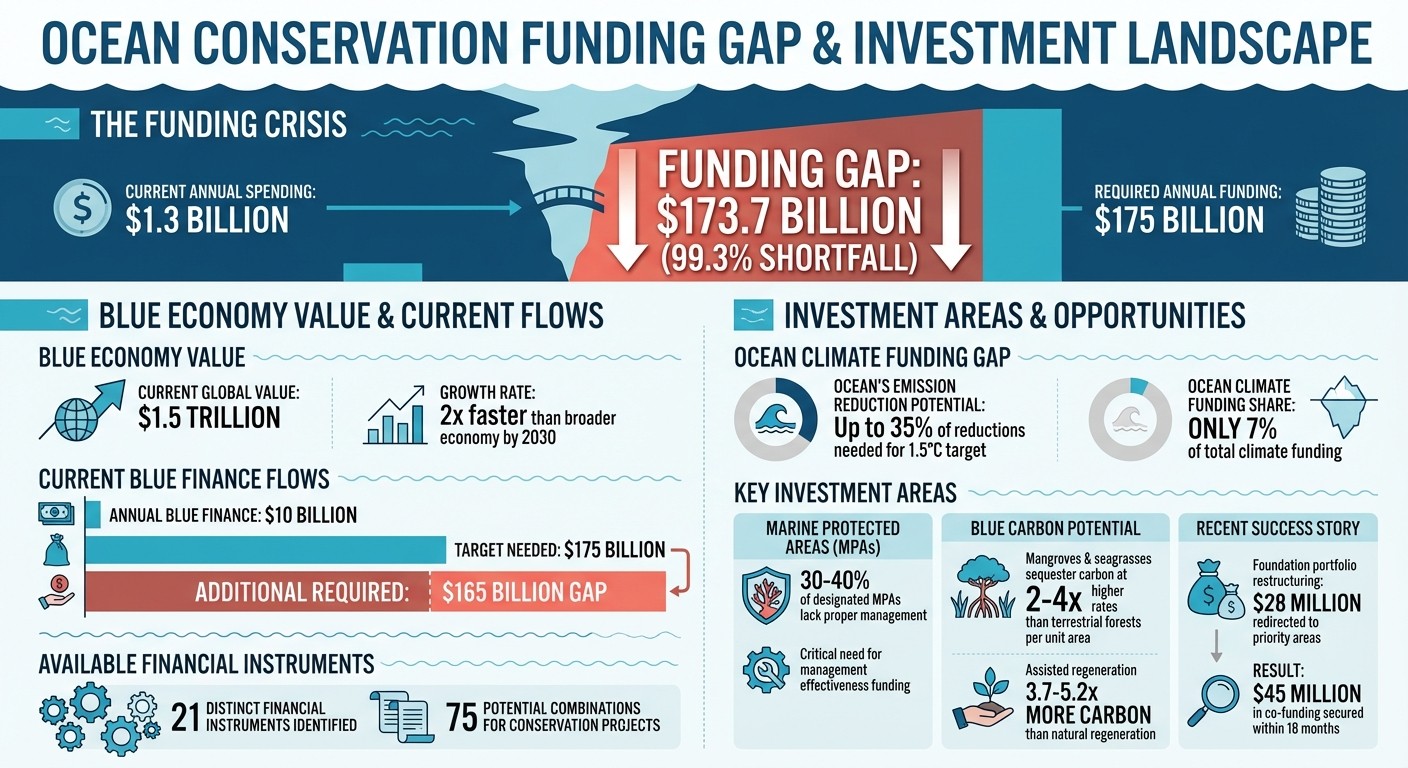
Ocean Conservation Funding Gap and Blue Economy Investment Opportunities
Assessing Financial Capacity and Conservation Goals
Evaluating Budget Constraints and Opportunities
Universities must rethink their funding strategies to expand efforts in ocean conservation. While global spending on ocean conservation currently stands at around $1.3 billion annually, the scale of investment needed to restore ocean health is exponentially higher [1]. This means finding additional financial pathways that work alongside existing grants and government budgets rather than replacing them.
To start, institutions should break down their projects by analyzing funding timelines, identifying key ecosystem services, and understanding the profiles of potential conservators [1]. A pilot study in Colombia highlighted how comprehensive indicators can uncover alternative funding sources, such as biodiversity offsets, which can supplement traditional government funding [7].
Once financial needs are clearly outlined, universities can align these findings with their specific conservation goals.
Defining Conservation Priorities
After assessing financial requirements, setting precise priorities ensures that funding is directed toward impactful conservation efforts. For example, the emLab at UC Santa Barbara collaborated with The Nature Conservancy California to apply a financing framework targeting four key areas: kelp forest protection, coral reef restoration, island biosecurity, and fisheries disaster relief [1].
"Breaking down projects to identify the timing of the financing need, attributes of ecosystem services generated, and conservator characteristics can reveal viable financing options." – emLab [1]
Universities can maximize their impact by mapping their research capabilities to regional marine challenges. This process helps determine which of the 21 financial instruments and 75 potential combinations best align with their institutional strengths and conservation goals [7].
Using Financial Assessment Tools
Financial assessment tools provide a practical way to evaluate and refine funding strategies. These tools complement market-oriented approaches by ensuring investments align with institutional capacity and conservation objectives. Researchers have developed Excel-based frameworks that analyze institutional contexts, highlighting both strengths and areas needing improvement [7].
For instance, the Colombian pilot study identified challenges like the absence of full-time management staff, which had to be addressed before implementing new funding mechanisms [7]. Similarly, universities can assess their marine projects to pinpoint gaps between conservation strategies and available financing options [1]. This structured approach prevents institutions from pursuing funding mechanisms without the necessary groundwork, saving resources while ensuring investments lead to measurable conservation outcomes.
Impact Investment Opportunities in Marine Projects
Sustainable Fisheries and Aquaculture
Universities now have the tools to focus on specialized marine investment opportunities, particularly in sustainable fisheries and aquaculture. By supporting technologies that reduce the strain on wild fish populations and improve aquaculture practices, they can make a meaningful impact. For example, MiAlgae raised £14 million in September 2024 to produce omega-3 from microalgae, while nextProtein secured funding in November 2025 to develop insect-based protein, offering scalable alternatives to fish oil and fishmeal [9].
Real-time monitoring technologies present another promising area. Norway’s OptoScale introduced a groundbreaking system for accurately measuring fish biomass in salmon farming, helping operators optimize feeding and manage fish health. The SWEN Blue Ocean fund exited this investment in May 2025 after aiding its expansion [9]. Additionally, the Galápagos Life Fund, launched in May 2023 as part of a $656 million debt conversion initiative, exemplifies how academic institutions can engage in marine finance. This nonprofit provides approximately $12 million annually for marine conservation and sustainable fishery projects and reserves a seat on its 11-member board for the academic community [8].
Blue Economy Innovations
The blue economy, valued at around $1.5 trillion globally, is projected to grow at twice the rate of the broader economy by 2030 [10]. Universities can play a critical role in accelerating this growth by establishing "living laboratories" and specialized testing environments. For instance, Tufts University hosted its first Bluetech Innovation Day in June 2023, highlighting startups like SeaDeep, which leverages AI innovations from Dean Karen Panetta’s School of Engineering lab. The event also showcased the BlueTech Lab in Bedford, a facility for in-water equipment testing prior to costly at-sea trials [12].
Academic platforms can also drive advancements in blue carbon projects. Studies indicate that assisted natural regeneration in abandoned aquaculture ponds can sequester 3.7 to 5.2 times more carbon than natural regeneration [11]. Bundling soil carbon and biomass credits in these projects can enhance returns and improve pricing through co-benefit certifications [11]. These efforts not only contribute to economic growth but also address critical challenges like marine pollution.
Pollution Prevention and Waste Management
Though the ocean could provide up to 35% of the emission reductions needed to cap global warming at 1.5 degrees, ocean-based climate solutions receive a mere 7% of total climate funding [13]. Universities can bridge this funding gap by supporting pollution prevention technologies that deliver measurable benefits. In March 2026, a team from MIT’s Department of Mechanical Engineering, led by MIT Sea Grant Director Michael Triantafyllou, developed wedge-shaped vortex generators for ship hulls. This innovation reduces drag and could lower fuel consumption by up to 7.5%, directly addressing pollution from cargo shipping [6].
Collaborative philanthropy offers another avenue for impact. In December 2023, ICONIQ Impact launched the Ocean Co-Lab, raising $42 million toward a $50 million target. This initiative provides three-year grants to 20 projects, including Pacific Environment’s "Ports for People" campaign, which aims to transition major shipping economies in South Korea, Japan, and China to zero-emission pathways [13]. As Matti Navellou, Head of ICONIQ Impact, noted:
"With the Ocean Co-Lab, we're looking to fill a critical funding gap and champion solutions that governments and the private sector often overlook or are too early-stage to fund" [13].
These initiatives align with universities' broader mission to advance sustainable ocean conservation while addressing pressing environmental challenges.
Creating Investment Strategies for Universities
Structuring Investment Portfolios
Once universities have conducted a thorough financial assessment and identified their conservation priorities, the next step is to create focused investment portfolios. To effectively address ocean conservation challenges, universities need to look beyond traditional philanthropic funding. While annual spending in this sector is around $1.3 billion, the resources required to restore ocean health far exceed this amount[1]. Investment portfolios should prioritize projects that deliver measurable ecosystem benefits, such as food security, biodiversity preservation, and climate resilience. These attributes can help attract a range of funding sources[1].
A detailed breakdown of project timelines, the ecosystem services provided, and the involved stakeholders is essential[1]. This process builds directly on earlier financial evaluations, converting budget data into actionable investment strategies. Universities can adopt proven models, like the UCSB emLab framework, to ensure that financial planning aligns with conservation goals.
"Breaking down projects to identify the timing of the financing need, attributes of ecosystem services generated, and conservator characteristics can reveal viable financing options."
emLab, UC Santa Barbara[1]
Building Partnerships with Researchers and Indigenous Communities
Universities have a unique opportunity to connect conservation science with practical financial solutions. By leveraging their research capabilities and collaborating with community organizations and local stakeholders, they can address specific regional challenges while ensuring that investments are genuinely beneficial to ocean ecosystems[16].
One example of such collaboration occurred in May 2021, when The Ocean Foundation partnered with Nippon Yusen Kaisha (NYK). This engagement led NYK, a major shipping company, to join the Ship Recycling Transparency Initiative. Under the leadership of President and CEO Hitoshi Nagasawa, NYK committed to a Science-Based Target certified plan to reduce energy intensity by 30% by 2030 and 50% by 2050. As the first Japanese shipping company to join this initiative, NYK demonstrated how academic partnerships can encourage corporate accountability.
"…if we cannot set out a clear road map for addressing environmental issues, the continuation of our business will become more challenging."
Hitoshi Nagasawa, President and CEO, NYK
Successful partnerships also focus on projects that integrate into local economies and support the inclusion of Indigenous communities[16]. Universities can also utilize fiscal sponsorship programs to simplify administrative processes, allowing researchers to focus on their primary goals while still securing necessary funding[16]. These collaborative efforts lay the groundwork for selecting the most effective investment tools.
Comparing Investment Vehicles
When it comes to choosing investment vehicles for ocean conservation, universities have several options, each with its own risk levels, return potential, and scalability. Understanding these distinctions is key to aligning financial resources with conservation objectives.
Investment Vehicle | Primary Mechanism | Risk/Return Profile | Scalability |
|---|---|---|---|
Public Equity Funds | Investing in public companies meeting ocean health criteria via mutual funds[16] | Market-based returns; lower risk through diversification[16] | High; widely accessible[16] |
Private Equity / Venture Building | Investing in blue tech startups and innovative ventures[16] | Higher risk; potential for high returns[16] | Moderate; depends on venture capital availability[16] |
Blue Bonds | Raising capital from impact investors for marine projects; often involves debt restructuring[15] | Lower risk if sovereign-backed; provides large-scale, low-cost funding[15] | High; taps into global capital markets[15] |
Payment for Ecosystem Services | Beneficiaries pay upstream providers to maintain ecosystem integrity[15] | Direct impact; relies on local valuation and stable payment flows[15] | Localized; harder to scale without bundling[15] |
The choice of investment vehicle should reflect the university’s priorities and resources. Institutions with larger endowments may prefer public equity funds for consistent returns, while those with strong marine technology programs might lean toward private equity investments in blue tech ventures. Regardless of the chosen approach, it is essential to base investments on reliable ecological data and to maintain rigorous systems for monitoring, reporting, and verification[14].
Unlocking Capital for a Regenerative Blue Economy with Melissa Walsh
Measuring and Reporting Impact Outcomes
Once investment strategies are in place, universities need to measure and report their outcomes to refine and expand conservation efforts effectively.
Frameworks for Measuring Success
To assess environmental and financial returns, universities rely on specific metrics. The UN Sustainable Development Goal 14 (SDG 14) serves as a global benchmark for tracking progress on "Life Below Water", with clear targets for reducing marine pollution, safeguarding ecosystems, and ending harmful fishing practices[3]. For those managing Marine Protected Areas (MPAs), the MPA Financing Tool offers a system of 100 indicators spanning environmental, governmental, socioeconomic, and management categories. This tool helps institutions determine which financial mechanisms are effective and where adjustments are needed[7].
Real-time monitoring has revolutionized how impact is measured. For instance, Global Fishing Watch uses high-resolution satellite imagery and AI to monitor ocean activity, identifying risks like illegal fishing and forced labor, as highlighted in recent analyses[2]. Similarly, computer vision applied to underwater video footage enables researchers to move from periodic snapshots to continuous fish population estimates, improving biodiversity tracking[6]. In March 2026, scientists from the Woodwell Climate Research Center and MIT Sea Grant published a study in Remote Sensing in Ecology and Conservation that demonstrated this innovative approach[6].
"Through Synchro we are testing and deploying multiple technologies capable of collecting samples and data that are low-cost, while also maintaining the quality of traditional approaches."
Collin Closek, Marine Scientist, Stanford Center for Ocean Solutions[5]
These tools provide the groundwork for expanding and replicating successful conservation efforts.
Scaling Successful Initiatives
Scaling conservation projects means focusing on measurable outcomes rather than just outputs. Universities should prioritize tangible improvements in marine ecosystem health, policy implementation, or community well-being. Achieving a "critical mass" in key areas is more effective than spreading resources across too many regions[18].
In February 2026, a private environmental foundation streamlined its $200 million ocean conservation portfolio, reducing its grant count from over 60 to 38 and concentrating on three specific outcome pathways. With guidance from Council Fire consultants, the foundation reallocated $28 million from lower-impact areas, like plastic cleanup, to MPA management and blue carbon initiatives. After 18 months, effectiveness scores improved at 8 of 12 priority sites, and the foundation secured an additional $45 million in co-funding from three other organizations[18].
Currently, 30% to 40% of designated Marine Protected Areas lack proper management[18]. Universities should focus on improving management effectiveness through initiatives like ranger training, advanced monitoring technologies, and sustainable financing. Without these, MPAs risk becoming "paper parks" - protected areas in name only, offering no real ecological benefits[18]. Blue carbon markets also present significant opportunities for scaling, as ecosystems like mangroves and seagrasses can sequester carbon at rates 2 to 4 times higher than terrestrial forests per unit area[18].
Transparent Reporting and Stakeholder Engagement
Transparent reporting is critical for accountability and building trust among partners. Universities should adopt performance-based tools that link financial returns to clear community and environmental outcomes[17]. Platforms like the Oceans Breakthroughs' Dashboard provide a standardized way to showcase good practices and compare progress across projects[17].
Annual blue finance flows currently stand at about $10 billion, far short of the estimated $175 billion needed each year to achieve global sustainability targets[17]. To attract more investment, universities must implement consistent Key Performance Indicator (KPI) protocols that allow donors to evaluate impact across various projects. Simplifying reporting while maintaining accountability can improve communication with stakeholders[17].
"Funding partnerships need to be structured in ways that put local actors in the lead of governance, design, and delivery mechanisms."
Empowering local actors enhances transparency. Universities should prioritize leadership roles for local and Indigenous communities in designing, governing, and delivering investment mechanisms[17]. This approach ensures that reporting reflects the values and priorities of those most affected, rather than focusing solely on institutional metrics. Open-access tools like the ASU Coral Atlas and Global Fishing Watch provide independently verifiable data, further strengthening accountability[2][4].
Conclusion
Universities and research institutions hold a pivotal role in advancing ocean conservation through impact-driven investing. Transitioning from traditional grantmaking to strategies focused on measurable outcomes demands clear frameworks, targeted funding, and partnerships that yield tangible results. Concentrating resources on high-impact areas - such as improving Marine Protected Area (MPA) management, advancing blue carbon initiatives, or reforming fisheries governance - can significantly enhance conservation efforts.
Currently, global annual spending on ocean conservation is around $1.3 billion, a figure far short of what's required to restore ocean health[1]. However, strategic restructuring of conservation portfolios can unlock additional resources. For instance, in February 2026, Council Fire assisted a private environmental foundation in overhauling its $200 million ocean portfolio. By focusing on three key outcomes - MPA management, fisheries reform, and blue carbon - the foundation redirected $28 million from less impactful areas to priority interventions. Within just 18 months, this shift led to measurable improvements at 8 of 12 priority sites and attracted $45 million in co-funding from other organizations[18]. These results underscore the importance of robust measurement systems to track and amplify progress.
"A poorly managed MPA is a paper park - it provides political cover without ecological benefit."
Council Fire[18]
Alarmingly, 30% to 40% of designated MPAs lack adequate management[18], rendering them ineffective despite their protected status. This highlights the urgent need for universities to prioritize management effectiveness over mere designation. Tools like the Management Effectiveness Tracking Tool (METT) offer standardized ways to measure progress and ensure accountability to stakeholders.
To achieve meaningful results, universities should collaborate with expert consultants who can help translate investments into measurable impacts. Consultants like Council Fire can assist in developing a theory of change, restructuring portfolios, and implementing outcome-based dashboards. As the sector embraces alternative financing mechanisms and blue carbon markets - where ecosystems like mangroves and seagrasses sequester carbon at rates 2 to 4 times higher than terrestrial forests[18] - universities require strategic guidance to align financial tools with conservation goals. This approach not only unlocks additional resources but also ensures that investments lead to concrete environmental benefits.
FAQs
How can a university start impact investing for ocean conservation?
To engage in impact investing for ocean conservation, universities can take practical steps to align their efforts with meaningful outcomes. Partnering with experts is a great starting point, as they can help identify investment opportunities that align with specific sustainability objectives. Beyond traditional philanthropy, exploring inventive financial tools and partnerships can open up new funding avenues. Prioritizing conservation projects that deliver clear, measurable environmental improvements ensures that investments contribute directly to ocean health. Additionally, confidential advising services can provide customized guidance to shape a focused and effective investment strategy.
What ocean projects can realistically generate both impact and returns?
Projects such as marine protected areas, sustainable fisheries, coral reef restoration, and blue carbon initiatives offer a pathway to achieve conservation objectives while delivering financial returns. By utilizing creative financing methods and impact investments, these initiatives successfully connect ecological benefits with economic sustainability.
How do we measure and report ocean outcomes from these investments?
Measuring and reporting progress in ocean conservation requires establishing clear success metrics and employing tools that track visible environmental changes. This process focuses on several key aspects, such as ecological recovery, policy advancements, and the effects on local communities. By monitoring these elements over time, organizations can assess their impact more effectively.
Frameworks that tie financial performance to measurable conservation outcomes ensure that progress remains both transparent and quantifiable. Partnerships with research institutions further enhance these efforts by translating scientific findings into actionable policies, improving both reporting practices and overall accountability.
Related Blog Posts
Latest Articles
©2025
Narrative Change and Power Building: The Missing Half of Advocacy
Narrative change is the process of disrupting dominant narratives that normalize inequity and advancing new narratives from historically marginalized communities.

Funding Resilience Without Federal Grants
BRIC is unreliable and FEMA is shrinking. Here's how cities fund climate resilience with dedicated revenue, blended finance, and a coordinating authority.

The ESG Blind Spot: How AI Is Finding Risks in Companies Nobody Else Is Watching
Norway's sovereign wealth fund uses AI to screen 7,200 portfolio companies for forced labor and corruption within 24 hours. The real story is the emerging-market coverage gap that traditional ESG data vendors miss — and what it means for any company with a global supply chain.
Narrative Change and Power Building: The Missing Half of Advocacy
Narrative change is the process of disrupting dominant narratives that normalize inequity and advancing new narratives from historically marginalized communities.
Funding Resilience Without Federal Grants
BRIC is unreliable and FEMA is shrinking. Here's how cities fund climate resilience with dedicated revenue, blended finance, and a coordinating authority.
The ESG Blind Spot: How AI Is Finding Risks in Companies Nobody Else Is Watching
Norway's sovereign wealth fund uses AI to screen 7,200 portfolio companies for forced labor and corruption within 24 hours. The real story is the emerging-market coverage gap that traditional ESG data vendors miss — and what it means for any company with a global supply chain.
FAQ
01
What does it really mean to “redefine profit”?
02
What makes Council Fire different?
03
Who does Council Fire work with?
04
What does working with Council Fire actually look like?
05
How does Council Fire help organizations turn big goals into action?
06
How does Council Fire define and measure success?
Mar 30, 2026
How to Finance Ocean Conservation with Impact Investing for Universities & Research Institutions
Sustainability Strategy
In This Article
Universities can use impact investing, partnerships, and monitoring to finance scalable ocean conservation and blue carbon projects.
How to Finance Ocean Conservation with Impact Investing for Universities & Research Institutions
Universities and research institutions can drive ocean conservation by leveraging impact investing, which combines financial returns with measurable ecological outcomes. With global annual ocean conservation funding at approximately $1.3 billion, far below the estimated $175 billion needed, academic institutions can play a critical role in bridging this gap. Here's how:
Impact Investing: Moves beyond traditional grants by using market-based strategies to fund scalable conservation efforts, such as kelp forest restoration, coral reef protection, and sustainable fisheries.
Emerging Technologies: Tools like AI, satellite monitoring, and underwater vehicles enhance real-time data collection, improving conservation efficiency and measurable outcomes.
Blue Economy Opportunities: With a value of $1.5 trillion and rapid growth, the blue economy offers investment opportunities in sustainable aquaculture, pollution prevention, and blue carbon projects.
Collaborations: Partnerships with local communities, researchers, and private organizations can align conservation goals with innovative financial tools like blue bonds and ecosystem service payments.
Measuring Impact: Universities must use frameworks like SDG 14 and real-time monitoring to track and report the effectiveness of their investments.
Ocean Conservation Funding Gap and Blue Economy Investment Opportunities
Assessing Financial Capacity and Conservation Goals
Evaluating Budget Constraints and Opportunities
Universities must rethink their funding strategies to expand efforts in ocean conservation. While global spending on ocean conservation currently stands at around $1.3 billion annually, the scale of investment needed to restore ocean health is exponentially higher [1]. This means finding additional financial pathways that work alongside existing grants and government budgets rather than replacing them.
To start, institutions should break down their projects by analyzing funding timelines, identifying key ecosystem services, and understanding the profiles of potential conservators [1]. A pilot study in Colombia highlighted how comprehensive indicators can uncover alternative funding sources, such as biodiversity offsets, which can supplement traditional government funding [7].
Once financial needs are clearly outlined, universities can align these findings with their specific conservation goals.
Defining Conservation Priorities
After assessing financial requirements, setting precise priorities ensures that funding is directed toward impactful conservation efforts. For example, the emLab at UC Santa Barbara collaborated with The Nature Conservancy California to apply a financing framework targeting four key areas: kelp forest protection, coral reef restoration, island biosecurity, and fisheries disaster relief [1].
"Breaking down projects to identify the timing of the financing need, attributes of ecosystem services generated, and conservator characteristics can reveal viable financing options." – emLab [1]
Universities can maximize their impact by mapping their research capabilities to regional marine challenges. This process helps determine which of the 21 financial instruments and 75 potential combinations best align with their institutional strengths and conservation goals [7].
Using Financial Assessment Tools
Financial assessment tools provide a practical way to evaluate and refine funding strategies. These tools complement market-oriented approaches by ensuring investments align with institutional capacity and conservation objectives. Researchers have developed Excel-based frameworks that analyze institutional contexts, highlighting both strengths and areas needing improvement [7].
For instance, the Colombian pilot study identified challenges like the absence of full-time management staff, which had to be addressed before implementing new funding mechanisms [7]. Similarly, universities can assess their marine projects to pinpoint gaps between conservation strategies and available financing options [1]. This structured approach prevents institutions from pursuing funding mechanisms without the necessary groundwork, saving resources while ensuring investments lead to measurable conservation outcomes.
Impact Investment Opportunities in Marine Projects
Sustainable Fisheries and Aquaculture
Universities now have the tools to focus on specialized marine investment opportunities, particularly in sustainable fisheries and aquaculture. By supporting technologies that reduce the strain on wild fish populations and improve aquaculture practices, they can make a meaningful impact. For example, MiAlgae raised £14 million in September 2024 to produce omega-3 from microalgae, while nextProtein secured funding in November 2025 to develop insect-based protein, offering scalable alternatives to fish oil and fishmeal [9].
Real-time monitoring technologies present another promising area. Norway’s OptoScale introduced a groundbreaking system for accurately measuring fish biomass in salmon farming, helping operators optimize feeding and manage fish health. The SWEN Blue Ocean fund exited this investment in May 2025 after aiding its expansion [9]. Additionally, the Galápagos Life Fund, launched in May 2023 as part of a $656 million debt conversion initiative, exemplifies how academic institutions can engage in marine finance. This nonprofit provides approximately $12 million annually for marine conservation and sustainable fishery projects and reserves a seat on its 11-member board for the academic community [8].
Blue Economy Innovations
The blue economy, valued at around $1.5 trillion globally, is projected to grow at twice the rate of the broader economy by 2030 [10]. Universities can play a critical role in accelerating this growth by establishing "living laboratories" and specialized testing environments. For instance, Tufts University hosted its first Bluetech Innovation Day in June 2023, highlighting startups like SeaDeep, which leverages AI innovations from Dean Karen Panetta’s School of Engineering lab. The event also showcased the BlueTech Lab in Bedford, a facility for in-water equipment testing prior to costly at-sea trials [12].
Academic platforms can also drive advancements in blue carbon projects. Studies indicate that assisted natural regeneration in abandoned aquaculture ponds can sequester 3.7 to 5.2 times more carbon than natural regeneration [11]. Bundling soil carbon and biomass credits in these projects can enhance returns and improve pricing through co-benefit certifications [11]. These efforts not only contribute to economic growth but also address critical challenges like marine pollution.
Pollution Prevention and Waste Management
Though the ocean could provide up to 35% of the emission reductions needed to cap global warming at 1.5 degrees, ocean-based climate solutions receive a mere 7% of total climate funding [13]. Universities can bridge this funding gap by supporting pollution prevention technologies that deliver measurable benefits. In March 2026, a team from MIT’s Department of Mechanical Engineering, led by MIT Sea Grant Director Michael Triantafyllou, developed wedge-shaped vortex generators for ship hulls. This innovation reduces drag and could lower fuel consumption by up to 7.5%, directly addressing pollution from cargo shipping [6].
Collaborative philanthropy offers another avenue for impact. In December 2023, ICONIQ Impact launched the Ocean Co-Lab, raising $42 million toward a $50 million target. This initiative provides three-year grants to 20 projects, including Pacific Environment’s "Ports for People" campaign, which aims to transition major shipping economies in South Korea, Japan, and China to zero-emission pathways [13]. As Matti Navellou, Head of ICONIQ Impact, noted:
"With the Ocean Co-Lab, we're looking to fill a critical funding gap and champion solutions that governments and the private sector often overlook or are too early-stage to fund" [13].
These initiatives align with universities' broader mission to advance sustainable ocean conservation while addressing pressing environmental challenges.
Creating Investment Strategies for Universities
Structuring Investment Portfolios
Once universities have conducted a thorough financial assessment and identified their conservation priorities, the next step is to create focused investment portfolios. To effectively address ocean conservation challenges, universities need to look beyond traditional philanthropic funding. While annual spending in this sector is around $1.3 billion, the resources required to restore ocean health far exceed this amount[1]. Investment portfolios should prioritize projects that deliver measurable ecosystem benefits, such as food security, biodiversity preservation, and climate resilience. These attributes can help attract a range of funding sources[1].
A detailed breakdown of project timelines, the ecosystem services provided, and the involved stakeholders is essential[1]. This process builds directly on earlier financial evaluations, converting budget data into actionable investment strategies. Universities can adopt proven models, like the UCSB emLab framework, to ensure that financial planning aligns with conservation goals.
"Breaking down projects to identify the timing of the financing need, attributes of ecosystem services generated, and conservator characteristics can reveal viable financing options."
emLab, UC Santa Barbara[1]
Building Partnerships with Researchers and Indigenous Communities
Universities have a unique opportunity to connect conservation science with practical financial solutions. By leveraging their research capabilities and collaborating with community organizations and local stakeholders, they can address specific regional challenges while ensuring that investments are genuinely beneficial to ocean ecosystems[16].
One example of such collaboration occurred in May 2021, when The Ocean Foundation partnered with Nippon Yusen Kaisha (NYK). This engagement led NYK, a major shipping company, to join the Ship Recycling Transparency Initiative. Under the leadership of President and CEO Hitoshi Nagasawa, NYK committed to a Science-Based Target certified plan to reduce energy intensity by 30% by 2030 and 50% by 2050. As the first Japanese shipping company to join this initiative, NYK demonstrated how academic partnerships can encourage corporate accountability.
"…if we cannot set out a clear road map for addressing environmental issues, the continuation of our business will become more challenging."
Hitoshi Nagasawa, President and CEO, NYK
Successful partnerships also focus on projects that integrate into local economies and support the inclusion of Indigenous communities[16]. Universities can also utilize fiscal sponsorship programs to simplify administrative processes, allowing researchers to focus on their primary goals while still securing necessary funding[16]. These collaborative efforts lay the groundwork for selecting the most effective investment tools.
Comparing Investment Vehicles
When it comes to choosing investment vehicles for ocean conservation, universities have several options, each with its own risk levels, return potential, and scalability. Understanding these distinctions is key to aligning financial resources with conservation objectives.
Investment Vehicle | Primary Mechanism | Risk/Return Profile | Scalability |
|---|---|---|---|
Public Equity Funds | Investing in public companies meeting ocean health criteria via mutual funds[16] | Market-based returns; lower risk through diversification[16] | High; widely accessible[16] |
Private Equity / Venture Building | Investing in blue tech startups and innovative ventures[16] | Higher risk; potential for high returns[16] | Moderate; depends on venture capital availability[16] |
Blue Bonds | Raising capital from impact investors for marine projects; often involves debt restructuring[15] | Lower risk if sovereign-backed; provides large-scale, low-cost funding[15] | High; taps into global capital markets[15] |
Payment for Ecosystem Services | Beneficiaries pay upstream providers to maintain ecosystem integrity[15] | Direct impact; relies on local valuation and stable payment flows[15] | Localized; harder to scale without bundling[15] |
The choice of investment vehicle should reflect the university’s priorities and resources. Institutions with larger endowments may prefer public equity funds for consistent returns, while those with strong marine technology programs might lean toward private equity investments in blue tech ventures. Regardless of the chosen approach, it is essential to base investments on reliable ecological data and to maintain rigorous systems for monitoring, reporting, and verification[14].
Unlocking Capital for a Regenerative Blue Economy with Melissa Walsh
Measuring and Reporting Impact Outcomes
Once investment strategies are in place, universities need to measure and report their outcomes to refine and expand conservation efforts effectively.
Frameworks for Measuring Success
To assess environmental and financial returns, universities rely on specific metrics. The UN Sustainable Development Goal 14 (SDG 14) serves as a global benchmark for tracking progress on "Life Below Water", with clear targets for reducing marine pollution, safeguarding ecosystems, and ending harmful fishing practices[3]. For those managing Marine Protected Areas (MPAs), the MPA Financing Tool offers a system of 100 indicators spanning environmental, governmental, socioeconomic, and management categories. This tool helps institutions determine which financial mechanisms are effective and where adjustments are needed[7].
Real-time monitoring has revolutionized how impact is measured. For instance, Global Fishing Watch uses high-resolution satellite imagery and AI to monitor ocean activity, identifying risks like illegal fishing and forced labor, as highlighted in recent analyses[2]. Similarly, computer vision applied to underwater video footage enables researchers to move from periodic snapshots to continuous fish population estimates, improving biodiversity tracking[6]. In March 2026, scientists from the Woodwell Climate Research Center and MIT Sea Grant published a study in Remote Sensing in Ecology and Conservation that demonstrated this innovative approach[6].
"Through Synchro we are testing and deploying multiple technologies capable of collecting samples and data that are low-cost, while also maintaining the quality of traditional approaches."
Collin Closek, Marine Scientist, Stanford Center for Ocean Solutions[5]
These tools provide the groundwork for expanding and replicating successful conservation efforts.
Scaling Successful Initiatives
Scaling conservation projects means focusing on measurable outcomes rather than just outputs. Universities should prioritize tangible improvements in marine ecosystem health, policy implementation, or community well-being. Achieving a "critical mass" in key areas is more effective than spreading resources across too many regions[18].
In February 2026, a private environmental foundation streamlined its $200 million ocean conservation portfolio, reducing its grant count from over 60 to 38 and concentrating on three specific outcome pathways. With guidance from Council Fire consultants, the foundation reallocated $28 million from lower-impact areas, like plastic cleanup, to MPA management and blue carbon initiatives. After 18 months, effectiveness scores improved at 8 of 12 priority sites, and the foundation secured an additional $45 million in co-funding from three other organizations[18].
Currently, 30% to 40% of designated Marine Protected Areas lack proper management[18]. Universities should focus on improving management effectiveness through initiatives like ranger training, advanced monitoring technologies, and sustainable financing. Without these, MPAs risk becoming "paper parks" - protected areas in name only, offering no real ecological benefits[18]. Blue carbon markets also present significant opportunities for scaling, as ecosystems like mangroves and seagrasses can sequester carbon at rates 2 to 4 times higher than terrestrial forests per unit area[18].
Transparent Reporting and Stakeholder Engagement
Transparent reporting is critical for accountability and building trust among partners. Universities should adopt performance-based tools that link financial returns to clear community and environmental outcomes[17]. Platforms like the Oceans Breakthroughs' Dashboard provide a standardized way to showcase good practices and compare progress across projects[17].
Annual blue finance flows currently stand at about $10 billion, far short of the estimated $175 billion needed each year to achieve global sustainability targets[17]. To attract more investment, universities must implement consistent Key Performance Indicator (KPI) protocols that allow donors to evaluate impact across various projects. Simplifying reporting while maintaining accountability can improve communication with stakeholders[17].
"Funding partnerships need to be structured in ways that put local actors in the lead of governance, design, and delivery mechanisms."
Empowering local actors enhances transparency. Universities should prioritize leadership roles for local and Indigenous communities in designing, governing, and delivering investment mechanisms[17]. This approach ensures that reporting reflects the values and priorities of those most affected, rather than focusing solely on institutional metrics. Open-access tools like the ASU Coral Atlas and Global Fishing Watch provide independently verifiable data, further strengthening accountability[2][4].
Conclusion
Universities and research institutions hold a pivotal role in advancing ocean conservation through impact-driven investing. Transitioning from traditional grantmaking to strategies focused on measurable outcomes demands clear frameworks, targeted funding, and partnerships that yield tangible results. Concentrating resources on high-impact areas - such as improving Marine Protected Area (MPA) management, advancing blue carbon initiatives, or reforming fisheries governance - can significantly enhance conservation efforts.
Currently, global annual spending on ocean conservation is around $1.3 billion, a figure far short of what's required to restore ocean health[1]. However, strategic restructuring of conservation portfolios can unlock additional resources. For instance, in February 2026, Council Fire assisted a private environmental foundation in overhauling its $200 million ocean portfolio. By focusing on three key outcomes - MPA management, fisheries reform, and blue carbon - the foundation redirected $28 million from less impactful areas to priority interventions. Within just 18 months, this shift led to measurable improvements at 8 of 12 priority sites and attracted $45 million in co-funding from other organizations[18]. These results underscore the importance of robust measurement systems to track and amplify progress.
"A poorly managed MPA is a paper park - it provides political cover without ecological benefit."
Council Fire[18]
Alarmingly, 30% to 40% of designated MPAs lack adequate management[18], rendering them ineffective despite their protected status. This highlights the urgent need for universities to prioritize management effectiveness over mere designation. Tools like the Management Effectiveness Tracking Tool (METT) offer standardized ways to measure progress and ensure accountability to stakeholders.
To achieve meaningful results, universities should collaborate with expert consultants who can help translate investments into measurable impacts. Consultants like Council Fire can assist in developing a theory of change, restructuring portfolios, and implementing outcome-based dashboards. As the sector embraces alternative financing mechanisms and blue carbon markets - where ecosystems like mangroves and seagrasses sequester carbon at rates 2 to 4 times higher than terrestrial forests[18] - universities require strategic guidance to align financial tools with conservation goals. This approach not only unlocks additional resources but also ensures that investments lead to concrete environmental benefits.
FAQs
How can a university start impact investing for ocean conservation?
To engage in impact investing for ocean conservation, universities can take practical steps to align their efforts with meaningful outcomes. Partnering with experts is a great starting point, as they can help identify investment opportunities that align with specific sustainability objectives. Beyond traditional philanthropy, exploring inventive financial tools and partnerships can open up new funding avenues. Prioritizing conservation projects that deliver clear, measurable environmental improvements ensures that investments contribute directly to ocean health. Additionally, confidential advising services can provide customized guidance to shape a focused and effective investment strategy.
What ocean projects can realistically generate both impact and returns?
Projects such as marine protected areas, sustainable fisheries, coral reef restoration, and blue carbon initiatives offer a pathway to achieve conservation objectives while delivering financial returns. By utilizing creative financing methods and impact investments, these initiatives successfully connect ecological benefits with economic sustainability.
How do we measure and report ocean outcomes from these investments?
Measuring and reporting progress in ocean conservation requires establishing clear success metrics and employing tools that track visible environmental changes. This process focuses on several key aspects, such as ecological recovery, policy advancements, and the effects on local communities. By monitoring these elements over time, organizations can assess their impact more effectively.
Frameworks that tie financial performance to measurable conservation outcomes ensure that progress remains both transparent and quantifiable. Partnerships with research institutions further enhance these efforts by translating scientific findings into actionable policies, improving both reporting practices and overall accountability.
Related Blog Posts
Latest Articles
©2025
Narrative Change and Power Building: The Missing Half of Advocacy
Narrative change is the process of disrupting dominant narratives that normalize inequity and advancing new narratives from historically marginalized communities.
Funding Resilience Without Federal Grants
BRIC is unreliable and FEMA is shrinking. Here's how cities fund climate resilience with dedicated revenue, blended finance, and a coordinating authority.
The ESG Blind Spot: How AI Is Finding Risks in Companies Nobody Else Is Watching
Norway's sovereign wealth fund uses AI to screen 7,200 portfolio companies for forced labor and corruption within 24 hours. The real story is the emerging-market coverage gap that traditional ESG data vendors miss — and what it means for any company with a global supply chain.
FAQ
01
What does it really mean to “redefine profit”?
02
What makes Council Fire different?
03
Who does Council Fire work with?
04
What does working with Council Fire actually look like?
05
How does Council Fire help organizations turn big goals into action?
06
How does Council Fire define and measure success?
Mar 30, 2026
How to Finance Ocean Conservation with Impact Investing for Universities & Research Institutions
Sustainability Strategy
In This Article
Universities can use impact investing, partnerships, and monitoring to finance scalable ocean conservation and blue carbon projects.
How to Finance Ocean Conservation with Impact Investing for Universities & Research Institutions
Universities and research institutions can drive ocean conservation by leveraging impact investing, which combines financial returns with measurable ecological outcomes. With global annual ocean conservation funding at approximately $1.3 billion, far below the estimated $175 billion needed, academic institutions can play a critical role in bridging this gap. Here's how:
Impact Investing: Moves beyond traditional grants by using market-based strategies to fund scalable conservation efforts, such as kelp forest restoration, coral reef protection, and sustainable fisheries.
Emerging Technologies: Tools like AI, satellite monitoring, and underwater vehicles enhance real-time data collection, improving conservation efficiency and measurable outcomes.
Blue Economy Opportunities: With a value of $1.5 trillion and rapid growth, the blue economy offers investment opportunities in sustainable aquaculture, pollution prevention, and blue carbon projects.
Collaborations: Partnerships with local communities, researchers, and private organizations can align conservation goals with innovative financial tools like blue bonds and ecosystem service payments.
Measuring Impact: Universities must use frameworks like SDG 14 and real-time monitoring to track and report the effectiveness of their investments.
Ocean Conservation Funding Gap and Blue Economy Investment Opportunities
Assessing Financial Capacity and Conservation Goals
Evaluating Budget Constraints and Opportunities
Universities must rethink their funding strategies to expand efforts in ocean conservation. While global spending on ocean conservation currently stands at around $1.3 billion annually, the scale of investment needed to restore ocean health is exponentially higher [1]. This means finding additional financial pathways that work alongside existing grants and government budgets rather than replacing them.
To start, institutions should break down their projects by analyzing funding timelines, identifying key ecosystem services, and understanding the profiles of potential conservators [1]. A pilot study in Colombia highlighted how comprehensive indicators can uncover alternative funding sources, such as biodiversity offsets, which can supplement traditional government funding [7].
Once financial needs are clearly outlined, universities can align these findings with their specific conservation goals.
Defining Conservation Priorities
After assessing financial requirements, setting precise priorities ensures that funding is directed toward impactful conservation efforts. For example, the emLab at UC Santa Barbara collaborated with The Nature Conservancy California to apply a financing framework targeting four key areas: kelp forest protection, coral reef restoration, island biosecurity, and fisheries disaster relief [1].
"Breaking down projects to identify the timing of the financing need, attributes of ecosystem services generated, and conservator characteristics can reveal viable financing options." – emLab [1]
Universities can maximize their impact by mapping their research capabilities to regional marine challenges. This process helps determine which of the 21 financial instruments and 75 potential combinations best align with their institutional strengths and conservation goals [7].
Using Financial Assessment Tools
Financial assessment tools provide a practical way to evaluate and refine funding strategies. These tools complement market-oriented approaches by ensuring investments align with institutional capacity and conservation objectives. Researchers have developed Excel-based frameworks that analyze institutional contexts, highlighting both strengths and areas needing improvement [7].
For instance, the Colombian pilot study identified challenges like the absence of full-time management staff, which had to be addressed before implementing new funding mechanisms [7]. Similarly, universities can assess their marine projects to pinpoint gaps between conservation strategies and available financing options [1]. This structured approach prevents institutions from pursuing funding mechanisms without the necessary groundwork, saving resources while ensuring investments lead to measurable conservation outcomes.
Impact Investment Opportunities in Marine Projects
Sustainable Fisheries and Aquaculture
Universities now have the tools to focus on specialized marine investment opportunities, particularly in sustainable fisheries and aquaculture. By supporting technologies that reduce the strain on wild fish populations and improve aquaculture practices, they can make a meaningful impact. For example, MiAlgae raised £14 million in September 2024 to produce omega-3 from microalgae, while nextProtein secured funding in November 2025 to develop insect-based protein, offering scalable alternatives to fish oil and fishmeal [9].
Real-time monitoring technologies present another promising area. Norway’s OptoScale introduced a groundbreaking system for accurately measuring fish biomass in salmon farming, helping operators optimize feeding and manage fish health. The SWEN Blue Ocean fund exited this investment in May 2025 after aiding its expansion [9]. Additionally, the Galápagos Life Fund, launched in May 2023 as part of a $656 million debt conversion initiative, exemplifies how academic institutions can engage in marine finance. This nonprofit provides approximately $12 million annually for marine conservation and sustainable fishery projects and reserves a seat on its 11-member board for the academic community [8].
Blue Economy Innovations
The blue economy, valued at around $1.5 trillion globally, is projected to grow at twice the rate of the broader economy by 2030 [10]. Universities can play a critical role in accelerating this growth by establishing "living laboratories" and specialized testing environments. For instance, Tufts University hosted its first Bluetech Innovation Day in June 2023, highlighting startups like SeaDeep, which leverages AI innovations from Dean Karen Panetta’s School of Engineering lab. The event also showcased the BlueTech Lab in Bedford, a facility for in-water equipment testing prior to costly at-sea trials [12].
Academic platforms can also drive advancements in blue carbon projects. Studies indicate that assisted natural regeneration in abandoned aquaculture ponds can sequester 3.7 to 5.2 times more carbon than natural regeneration [11]. Bundling soil carbon and biomass credits in these projects can enhance returns and improve pricing through co-benefit certifications [11]. These efforts not only contribute to economic growth but also address critical challenges like marine pollution.
Pollution Prevention and Waste Management
Though the ocean could provide up to 35% of the emission reductions needed to cap global warming at 1.5 degrees, ocean-based climate solutions receive a mere 7% of total climate funding [13]. Universities can bridge this funding gap by supporting pollution prevention technologies that deliver measurable benefits. In March 2026, a team from MIT’s Department of Mechanical Engineering, led by MIT Sea Grant Director Michael Triantafyllou, developed wedge-shaped vortex generators for ship hulls. This innovation reduces drag and could lower fuel consumption by up to 7.5%, directly addressing pollution from cargo shipping [6].
Collaborative philanthropy offers another avenue for impact. In December 2023, ICONIQ Impact launched the Ocean Co-Lab, raising $42 million toward a $50 million target. This initiative provides three-year grants to 20 projects, including Pacific Environment’s "Ports for People" campaign, which aims to transition major shipping economies in South Korea, Japan, and China to zero-emission pathways [13]. As Matti Navellou, Head of ICONIQ Impact, noted:
"With the Ocean Co-Lab, we're looking to fill a critical funding gap and champion solutions that governments and the private sector often overlook or are too early-stage to fund" [13].
These initiatives align with universities' broader mission to advance sustainable ocean conservation while addressing pressing environmental challenges.
Creating Investment Strategies for Universities
Structuring Investment Portfolios
Once universities have conducted a thorough financial assessment and identified their conservation priorities, the next step is to create focused investment portfolios. To effectively address ocean conservation challenges, universities need to look beyond traditional philanthropic funding. While annual spending in this sector is around $1.3 billion, the resources required to restore ocean health far exceed this amount[1]. Investment portfolios should prioritize projects that deliver measurable ecosystem benefits, such as food security, biodiversity preservation, and climate resilience. These attributes can help attract a range of funding sources[1].
A detailed breakdown of project timelines, the ecosystem services provided, and the involved stakeholders is essential[1]. This process builds directly on earlier financial evaluations, converting budget data into actionable investment strategies. Universities can adopt proven models, like the UCSB emLab framework, to ensure that financial planning aligns with conservation goals.
"Breaking down projects to identify the timing of the financing need, attributes of ecosystem services generated, and conservator characteristics can reveal viable financing options."
emLab, UC Santa Barbara[1]
Building Partnerships with Researchers and Indigenous Communities
Universities have a unique opportunity to connect conservation science with practical financial solutions. By leveraging their research capabilities and collaborating with community organizations and local stakeholders, they can address specific regional challenges while ensuring that investments are genuinely beneficial to ocean ecosystems[16].
One example of such collaboration occurred in May 2021, when The Ocean Foundation partnered with Nippon Yusen Kaisha (NYK). This engagement led NYK, a major shipping company, to join the Ship Recycling Transparency Initiative. Under the leadership of President and CEO Hitoshi Nagasawa, NYK committed to a Science-Based Target certified plan to reduce energy intensity by 30% by 2030 and 50% by 2050. As the first Japanese shipping company to join this initiative, NYK demonstrated how academic partnerships can encourage corporate accountability.
"…if we cannot set out a clear road map for addressing environmental issues, the continuation of our business will become more challenging."
Hitoshi Nagasawa, President and CEO, NYK
Successful partnerships also focus on projects that integrate into local economies and support the inclusion of Indigenous communities[16]. Universities can also utilize fiscal sponsorship programs to simplify administrative processes, allowing researchers to focus on their primary goals while still securing necessary funding[16]. These collaborative efforts lay the groundwork for selecting the most effective investment tools.
Comparing Investment Vehicles
When it comes to choosing investment vehicles for ocean conservation, universities have several options, each with its own risk levels, return potential, and scalability. Understanding these distinctions is key to aligning financial resources with conservation objectives.
Investment Vehicle | Primary Mechanism | Risk/Return Profile | Scalability |
|---|---|---|---|
Public Equity Funds | Investing in public companies meeting ocean health criteria via mutual funds[16] | Market-based returns; lower risk through diversification[16] | High; widely accessible[16] |
Private Equity / Venture Building | Investing in blue tech startups and innovative ventures[16] | Higher risk; potential for high returns[16] | Moderate; depends on venture capital availability[16] |
Blue Bonds | Raising capital from impact investors for marine projects; often involves debt restructuring[15] | Lower risk if sovereign-backed; provides large-scale, low-cost funding[15] | High; taps into global capital markets[15] |
Payment for Ecosystem Services | Beneficiaries pay upstream providers to maintain ecosystem integrity[15] | Direct impact; relies on local valuation and stable payment flows[15] | Localized; harder to scale without bundling[15] |
The choice of investment vehicle should reflect the university’s priorities and resources. Institutions with larger endowments may prefer public equity funds for consistent returns, while those with strong marine technology programs might lean toward private equity investments in blue tech ventures. Regardless of the chosen approach, it is essential to base investments on reliable ecological data and to maintain rigorous systems for monitoring, reporting, and verification[14].
Unlocking Capital for a Regenerative Blue Economy with Melissa Walsh
Measuring and Reporting Impact Outcomes
Once investment strategies are in place, universities need to measure and report their outcomes to refine and expand conservation efforts effectively.
Frameworks for Measuring Success
To assess environmental and financial returns, universities rely on specific metrics. The UN Sustainable Development Goal 14 (SDG 14) serves as a global benchmark for tracking progress on "Life Below Water", with clear targets for reducing marine pollution, safeguarding ecosystems, and ending harmful fishing practices[3]. For those managing Marine Protected Areas (MPAs), the MPA Financing Tool offers a system of 100 indicators spanning environmental, governmental, socioeconomic, and management categories. This tool helps institutions determine which financial mechanisms are effective and where adjustments are needed[7].
Real-time monitoring has revolutionized how impact is measured. For instance, Global Fishing Watch uses high-resolution satellite imagery and AI to monitor ocean activity, identifying risks like illegal fishing and forced labor, as highlighted in recent analyses[2]. Similarly, computer vision applied to underwater video footage enables researchers to move from periodic snapshots to continuous fish population estimates, improving biodiversity tracking[6]. In March 2026, scientists from the Woodwell Climate Research Center and MIT Sea Grant published a study in Remote Sensing in Ecology and Conservation that demonstrated this innovative approach[6].
"Through Synchro we are testing and deploying multiple technologies capable of collecting samples and data that are low-cost, while also maintaining the quality of traditional approaches."
Collin Closek, Marine Scientist, Stanford Center for Ocean Solutions[5]
These tools provide the groundwork for expanding and replicating successful conservation efforts.
Scaling Successful Initiatives
Scaling conservation projects means focusing on measurable outcomes rather than just outputs. Universities should prioritize tangible improvements in marine ecosystem health, policy implementation, or community well-being. Achieving a "critical mass" in key areas is more effective than spreading resources across too many regions[18].
In February 2026, a private environmental foundation streamlined its $200 million ocean conservation portfolio, reducing its grant count from over 60 to 38 and concentrating on three specific outcome pathways. With guidance from Council Fire consultants, the foundation reallocated $28 million from lower-impact areas, like plastic cleanup, to MPA management and blue carbon initiatives. After 18 months, effectiveness scores improved at 8 of 12 priority sites, and the foundation secured an additional $45 million in co-funding from three other organizations[18].
Currently, 30% to 40% of designated Marine Protected Areas lack proper management[18]. Universities should focus on improving management effectiveness through initiatives like ranger training, advanced monitoring technologies, and sustainable financing. Without these, MPAs risk becoming "paper parks" - protected areas in name only, offering no real ecological benefits[18]. Blue carbon markets also present significant opportunities for scaling, as ecosystems like mangroves and seagrasses can sequester carbon at rates 2 to 4 times higher than terrestrial forests per unit area[18].
Transparent Reporting and Stakeholder Engagement
Transparent reporting is critical for accountability and building trust among partners. Universities should adopt performance-based tools that link financial returns to clear community and environmental outcomes[17]. Platforms like the Oceans Breakthroughs' Dashboard provide a standardized way to showcase good practices and compare progress across projects[17].
Annual blue finance flows currently stand at about $10 billion, far short of the estimated $175 billion needed each year to achieve global sustainability targets[17]. To attract more investment, universities must implement consistent Key Performance Indicator (KPI) protocols that allow donors to evaluate impact across various projects. Simplifying reporting while maintaining accountability can improve communication with stakeholders[17].
"Funding partnerships need to be structured in ways that put local actors in the lead of governance, design, and delivery mechanisms."
Empowering local actors enhances transparency. Universities should prioritize leadership roles for local and Indigenous communities in designing, governing, and delivering investment mechanisms[17]. This approach ensures that reporting reflects the values and priorities of those most affected, rather than focusing solely on institutional metrics. Open-access tools like the ASU Coral Atlas and Global Fishing Watch provide independently verifiable data, further strengthening accountability[2][4].
Conclusion
Universities and research institutions hold a pivotal role in advancing ocean conservation through impact-driven investing. Transitioning from traditional grantmaking to strategies focused on measurable outcomes demands clear frameworks, targeted funding, and partnerships that yield tangible results. Concentrating resources on high-impact areas - such as improving Marine Protected Area (MPA) management, advancing blue carbon initiatives, or reforming fisheries governance - can significantly enhance conservation efforts.
Currently, global annual spending on ocean conservation is around $1.3 billion, a figure far short of what's required to restore ocean health[1]. However, strategic restructuring of conservation portfolios can unlock additional resources. For instance, in February 2026, Council Fire assisted a private environmental foundation in overhauling its $200 million ocean portfolio. By focusing on three key outcomes - MPA management, fisheries reform, and blue carbon - the foundation redirected $28 million from less impactful areas to priority interventions. Within just 18 months, this shift led to measurable improvements at 8 of 12 priority sites and attracted $45 million in co-funding from other organizations[18]. These results underscore the importance of robust measurement systems to track and amplify progress.
"A poorly managed MPA is a paper park - it provides political cover without ecological benefit."
Council Fire[18]
Alarmingly, 30% to 40% of designated MPAs lack adequate management[18], rendering them ineffective despite their protected status. This highlights the urgent need for universities to prioritize management effectiveness over mere designation. Tools like the Management Effectiveness Tracking Tool (METT) offer standardized ways to measure progress and ensure accountability to stakeholders.
To achieve meaningful results, universities should collaborate with expert consultants who can help translate investments into measurable impacts. Consultants like Council Fire can assist in developing a theory of change, restructuring portfolios, and implementing outcome-based dashboards. As the sector embraces alternative financing mechanisms and blue carbon markets - where ecosystems like mangroves and seagrasses sequester carbon at rates 2 to 4 times higher than terrestrial forests[18] - universities require strategic guidance to align financial tools with conservation goals. This approach not only unlocks additional resources but also ensures that investments lead to concrete environmental benefits.
FAQs
How can a university start impact investing for ocean conservation?
To engage in impact investing for ocean conservation, universities can take practical steps to align their efforts with meaningful outcomes. Partnering with experts is a great starting point, as they can help identify investment opportunities that align with specific sustainability objectives. Beyond traditional philanthropy, exploring inventive financial tools and partnerships can open up new funding avenues. Prioritizing conservation projects that deliver clear, measurable environmental improvements ensures that investments contribute directly to ocean health. Additionally, confidential advising services can provide customized guidance to shape a focused and effective investment strategy.
What ocean projects can realistically generate both impact and returns?
Projects such as marine protected areas, sustainable fisheries, coral reef restoration, and blue carbon initiatives offer a pathway to achieve conservation objectives while delivering financial returns. By utilizing creative financing methods and impact investments, these initiatives successfully connect ecological benefits with economic sustainability.
How do we measure and report ocean outcomes from these investments?
Measuring and reporting progress in ocean conservation requires establishing clear success metrics and employing tools that track visible environmental changes. This process focuses on several key aspects, such as ecological recovery, policy advancements, and the effects on local communities. By monitoring these elements over time, organizations can assess their impact more effectively.
Frameworks that tie financial performance to measurable conservation outcomes ensure that progress remains both transparent and quantifiable. Partnerships with research institutions further enhance these efforts by translating scientific findings into actionable policies, improving both reporting practices and overall accountability.
Related Blog Posts
Latest Articles
©2025
Narrative Change and Power Building: The Missing Half of Advocacy
Narrative change is the process of disrupting dominant narratives that normalize inequity and advancing new narratives from historically marginalized communities.
Funding Resilience Without Federal Grants
BRIC is unreliable and FEMA is shrinking. Here's how cities fund climate resilience with dedicated revenue, blended finance, and a coordinating authority.
The ESG Blind Spot: How AI Is Finding Risks in Companies Nobody Else Is Watching
Norway's sovereign wealth fund uses AI to screen 7,200 portfolio companies for forced labor and corruption within 24 hours. The real story is the emerging-market coverage gap that traditional ESG data vendors miss — and what it means for any company with a global supply chain.
FAQ
What does it really mean to “redefine profit”?
What makes Council Fire different?
Who does Council Fire work with?
What does working with Council Fire actually look like?
How does Council Fire help organizations turn big goals into action?
How does Council Fire define and measure success?